Wedding veil cost can vary dramatically, from simple budget-friendly tulle veils to handcrafted designer pieces costing well over a thousand dollars. While those price differences may seem confusing at first, they usually reflect clear factors such as fabric quality, veil length, embellishments, and the amount of handwork involved.
Understanding what actually influences the price makes shopping much easier. Rather than focusing only on the number on the price tag, brides can evaluate whether a veil offers genuine value based on its materials, craftsmanship, and how well it complements their wedding dress and overall bridal style.
This guide explains everything you need to know about wedding veil cost, including average price ranges, the biggest factors that influence pricing, when it makes sense to invest more, when a budget-friendly veil is the smarter choice, and the hidden costs many brides overlook.
What Wedding Veils Typically Cost
Before breaking down the variables, it helps to see the landscape. Veil pricing is genuinely wide, but it follows consistent patterns once you understand what each tier usually delivers.
| Price Range | What to Expect | Typical Construction |
|---|---|---|
| Under $100 | Simple styles, shorter lengths, basic tulle | Synthetic bridal illusion tulle, raw or rolled edge, machine-finished |
| $100–$250 | Clean construction, light embellishment options, wider length range | Quality tulle, ribbon or simple lace edge trim, may include comb hardware |
| $250–$500 | More detailed edging, longer lengths, better fabric options | Finer tulle or organza, scalloped lace trim, pearl scatter or pearl edge |
| $500–$1,000+ | Substantial embellishment, couture construction, custom or designer options | Silk tulle, hand-applied lace, custom embroidery, intricate beadwork |
These ranges apply to veils purchased from bridal boutiques and online bridal retailers. Veils bought directly from independent designers or made to order can fall anywhere in this spectrum — quality-to-price ratio varies more at that level, but so does the possibility of getting something genuinely unique for a reasonable amount.
What Actually Drives the Price
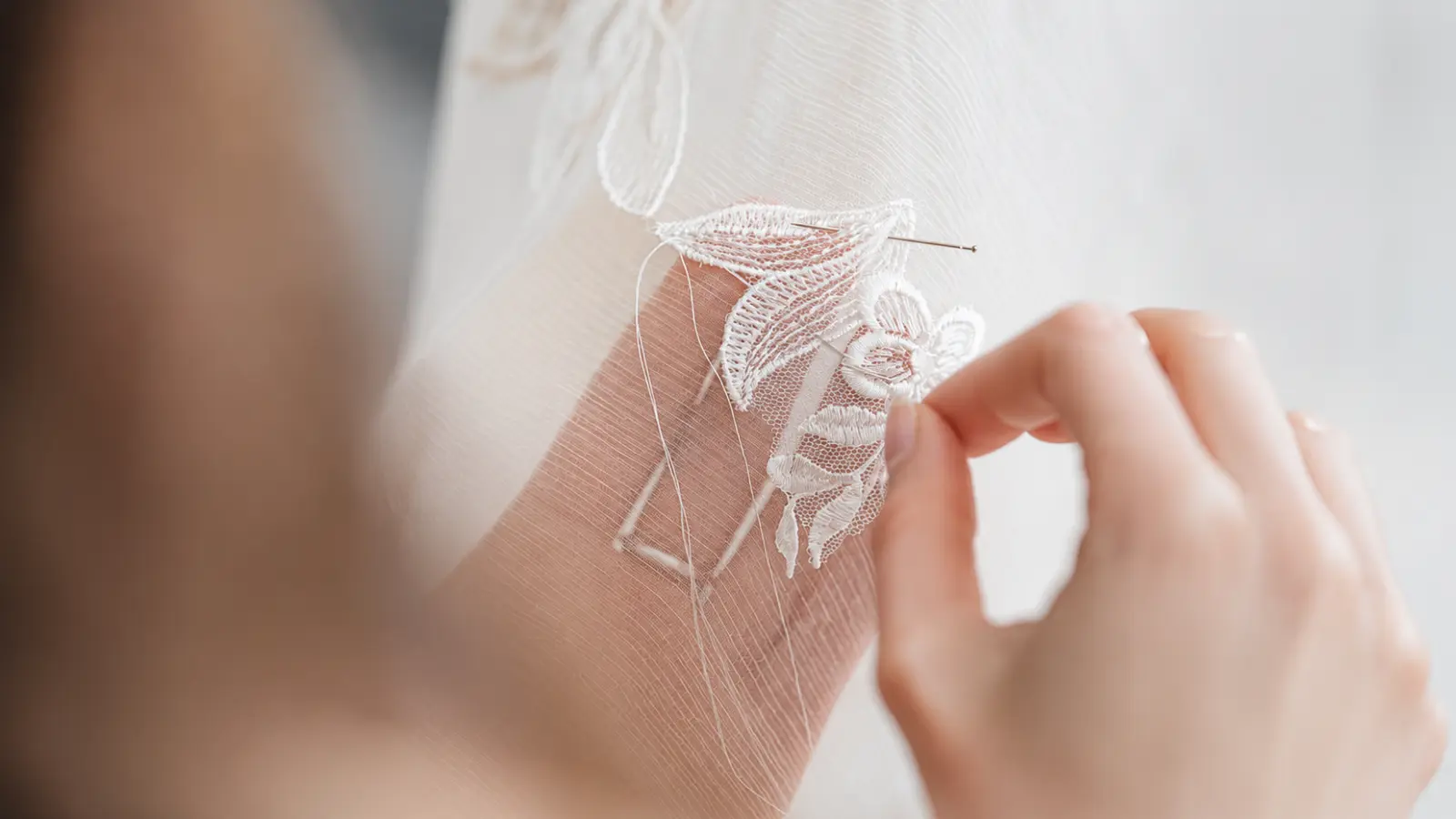
A veil is not a complicated object in its most basic form — it is fabric, an edge finish, and a comb. What makes the price range so broad is how dramatically each of those three elements can vary. Understanding the real levers helps you evaluate whether a specific veil is priced fairly and decide where your own money is best spent.
The main cost drivers are fabric quality, veil length, edge treatment, and the amount of hand labor in embellishment. A plain, short veil in synthetic tulle with a machine-stitched rolled edge requires very little of any of those things. A cathedral-length veil in silk tulle with hand-applied French lace and individually sewn crystal beads requires a great deal of each. Most veils live somewhere between those two endpoints, and understanding where yours sits on that spectrum is the clearest guide to whether a price makes sense.
Brand and boutique markup are also real factors, separate from the veil’s actual construction. A veil with the same fabric and finish can carry a meaningfully different retail price depending on where it is sold. This is one reason the same veil can look expensive in a high-end bridal salon and accessible through a different retailer — the underlying product may be nearly identical.
How Length Affects Cost
Length is the most straightforward cost variable. More fabric costs more. A cathedral-length veil uses roughly three to four times as much material as an elbow-length veil in the same style. When you also factor in that longer veils require more time to cut, press, and finish, the price difference compounds quickly.
| Veil Length | Approximate Measurement | Cost Impact |
|---|---|---|
| Shoulder / Elbow | 20–30 inches | Lowest material cost; shortest finishing time |
| Fingertip | 36–40 inches | Moderate; most common mid-range length |
| Waltz / Ballet | 50–60 inches | Noticeable step up in fabric cost |
| Chapel / Floor | 85–95 inches | Significant material cost; more edge to finish |
| Cathedral | 108–120 inches | Among the highest material cost per style |
| Royal / Monarch | 144+ inches | Maximum material and finishing cost |
For a bride on a tighter budget who loves the look of a longer veil, this is worth knowing: a plain chapel-length veil in quality tulle with a minimal edge can cost less than a shorter veil with heavy embellishment. Length alone doesn’t make a veil expensive — length combined with detailed finishing is what accelerates the price most. For the full breakdown of how each wedding veil length looks, measures, and wears, see our complete veil length guide.
How Fabric and Material Affect Cost
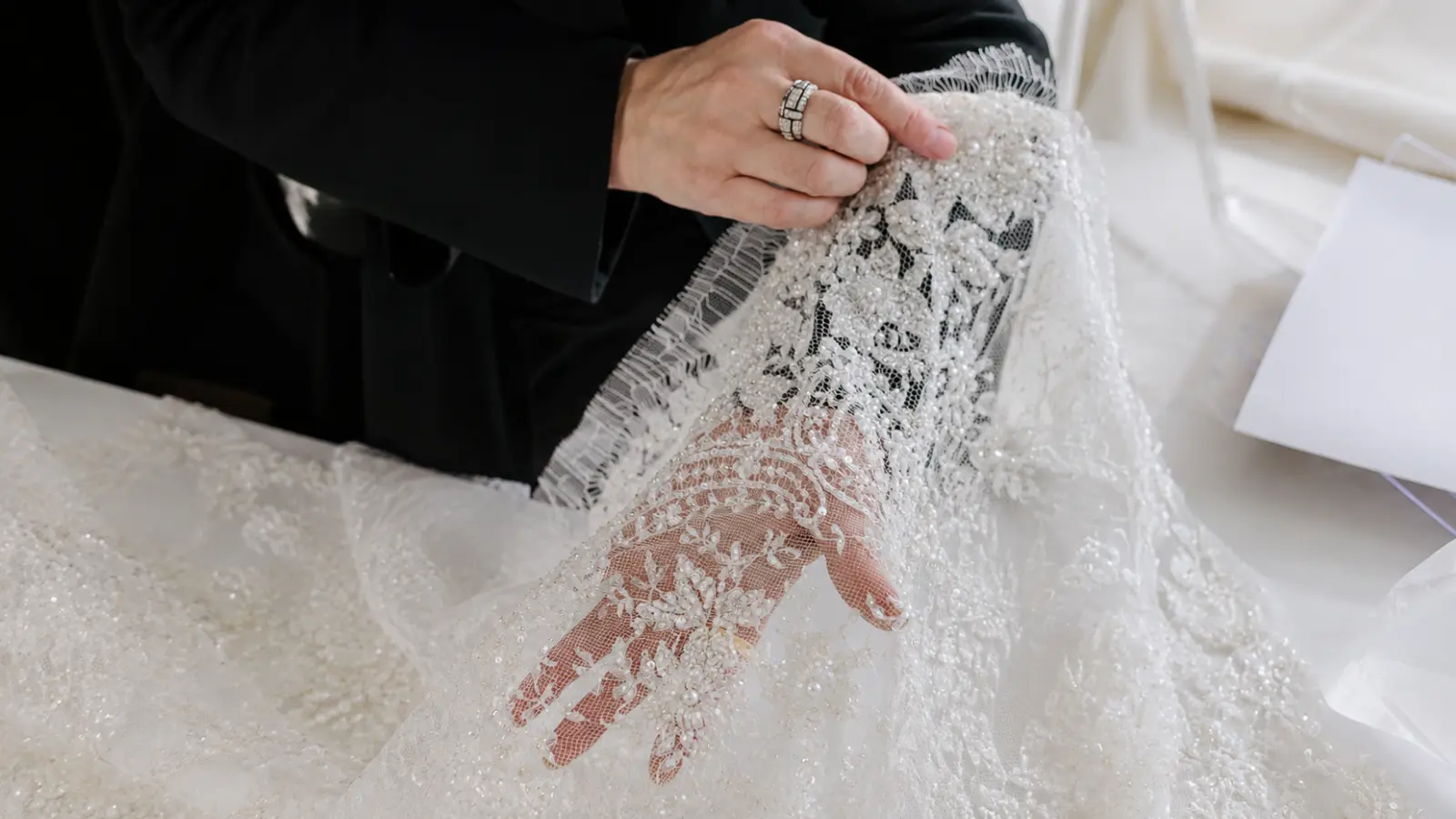
The fabric a veil is made from has a significant effect on both price and how the veil looks and behaves. Most veils sold in the mid-range are made from bridal illusion tulle — a synthetic net that is widely available, durable, and generally forgiving. It photographs well, holds its shape, and works at most price points. It is the standard for a reason.
Silk tulle is in a different category. It is softer, more fluid, and significantly more expensive than synthetic alternatives. It catches light differently — more luminous and less stiff — and drapes rather than holds its shape. For brides who have handled both, the difference is immediately obvious. The trade-off is that silk tulle is more delicate, more difficult to handle on a windy day, and can require more careful pressing and storage.
Other fabrics occupy their own positions on the cost spectrum. Organza is typically priced similarly to quality synthetic tulle but offers a crisper, more structured look. Chiffon is soft and moves beautifully but is better suited to informal settings; the fabric itself is not necessarily more expensive, but fewer bridal veils are made from it, which affects availability and pricing. For a deep look at how each fabric behaves and what it looks like in person, the wedding veil materials covers this thoroughly.
Lace, Pearls, and Embroidery: The Detailing Premium
Embellishment is where veil pricing becomes genuinely stratified. The difference between a $150 veil and a $600 veil is often not the length or even the fabric — it is the work put into the edge and the surface of the veil itself. Understanding how that work translates into cost helps you evaluate whether you’re paying for something real.
Lace Edging and Appliqué
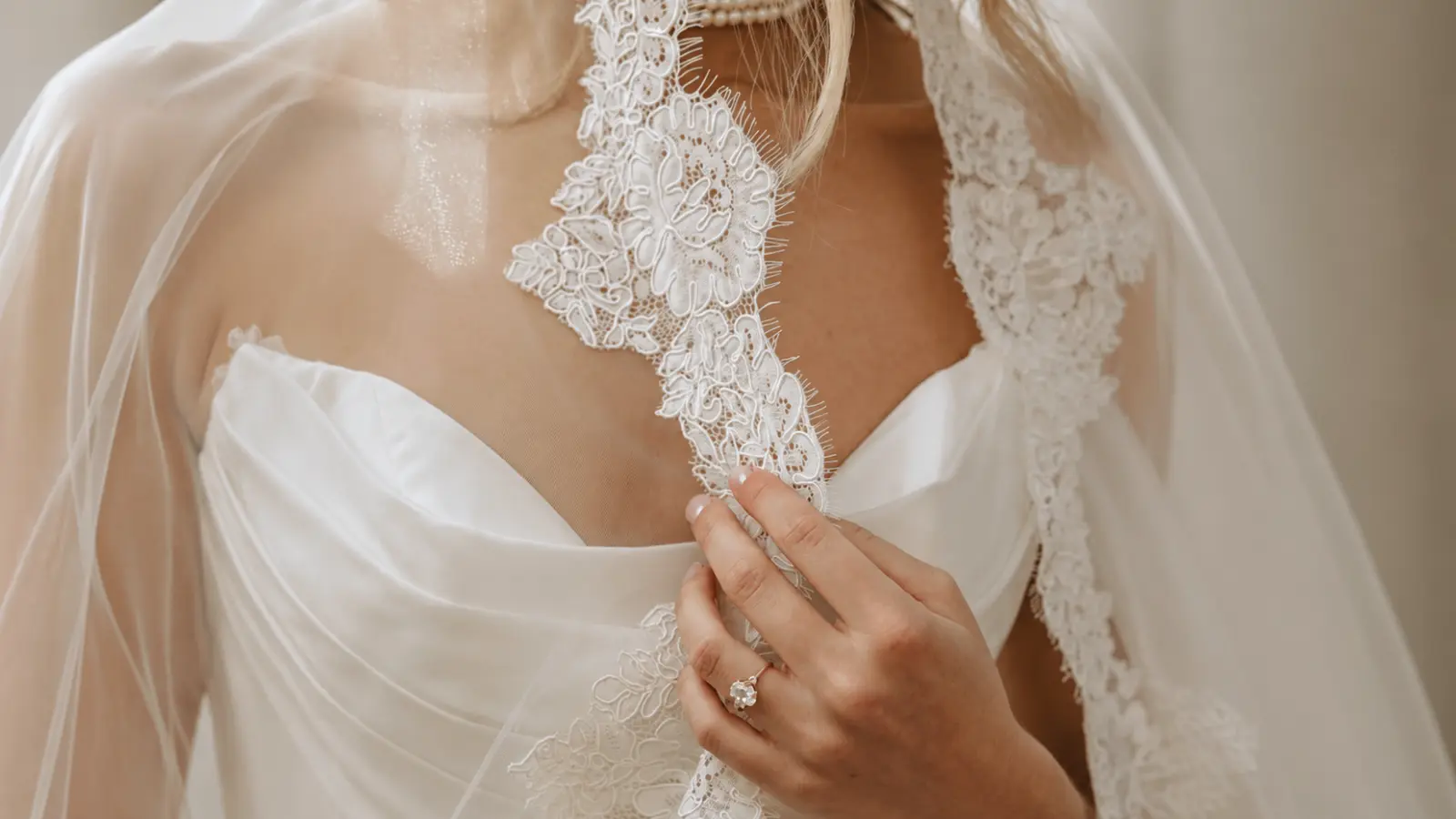
Lace trim is one of the most common forms of veil embellishment. At lower price points, lace is machine-cut and machine-applied — the result is clean but lacks the subtlety and variation of handwork. At higher price points, lace trim is hand-applied or made from higher-quality lace (such as Chantilly or Venetian point lace), which requires substantially more time and carries higher material costs. A full mantilla veil — all-over lace, no tulle base — is one of the most labor-intensive constructions in the veil category and is priced accordingly. For more on how to match lace veils with specific dress styles, see our lace wedding veil.
Pearls and Beadwork
Pearl embellishment ranges from simple pearl-edge trim to individually sewn freshwater or glass pearls scattered across the veil’s surface. Machine-applied pearl trim is accessible and attractive. Hand-sewn pearl detailing — particularly on longer veils where hundreds of individual pearls may be involved — adds significant labor cost. Glass pearls, plastic pearls, and genuine freshwater pearls all differ in weight and quality, which also affects price. For pairing ideas and a closer look at how this detailing reads on camera, see our pearl wedding veil.
Custom Embroidery
Custom embroidery — monograms, floral designs, or personal motifs worked into the veil’s surface — is typically the most expensive embellishment category. Even simple monogram embroidery involves pattern work and skilled execution. More elaborate custom designs, worked by hand or with high-quality machine embroidery, can add several hundred dollars to the base cost of the veil. If custom embroidery is something you’re considering, budget for it specifically rather than treating it as a minor addition.
Custom vs. Ready-Made: When the Difference Is Worth It
Ready-made veils — purchased from bridal boutiques, department stores, or online retailers — are the default for most brides, and there is nothing wrong with that. The range available off the rack has expanded significantly, and it is entirely possible to find a beautiful, high-quality veil without commissioning anything custom.
Custom veils make sense in a few specific situations. If you have a dress with unusual embellishment that you want the veil to echo precisely, a custom order allows a maker to match the lace, the motif, or the edge treatment to your specific gown. If you are getting married in a very unconventional silhouette or at an unusual size, a custom veil may fit and fall differently than anything available off the rack. And if you have a particular vision — a name, a date, a floral design — that genuinely matters to you, the custom route is the only way to get it.
Editorial Note: The Rush Fee
One cost that surprises many brides: ordering a veil close to the wedding date. Most bridal veils, even those that appear to be in stock, have lead times of 8 to 16 weeks through bridal boutiques. Custom orders run longer. If you are ordering within a few weeks of your wedding, ask directly about rush fees — they can add 20 to 30 percent to the base price, and not every retailer is upfront about this at the start of the conversation.
The cost of a custom veil varies as widely as the range of custom makers. An independent bridal seamstress might produce a simple custom veil for $150 to $300. An established bridal designer with a waiting list may charge $800 to $2,000 or more for a made-to-order piece. Before you commit, ask to see examples of the maker’s prior work in a similar style, and clarify exactly what is included in the price — fabric, comb, and any alterations or adjustments.
Affordable vs. Cheap: A Real Distinction
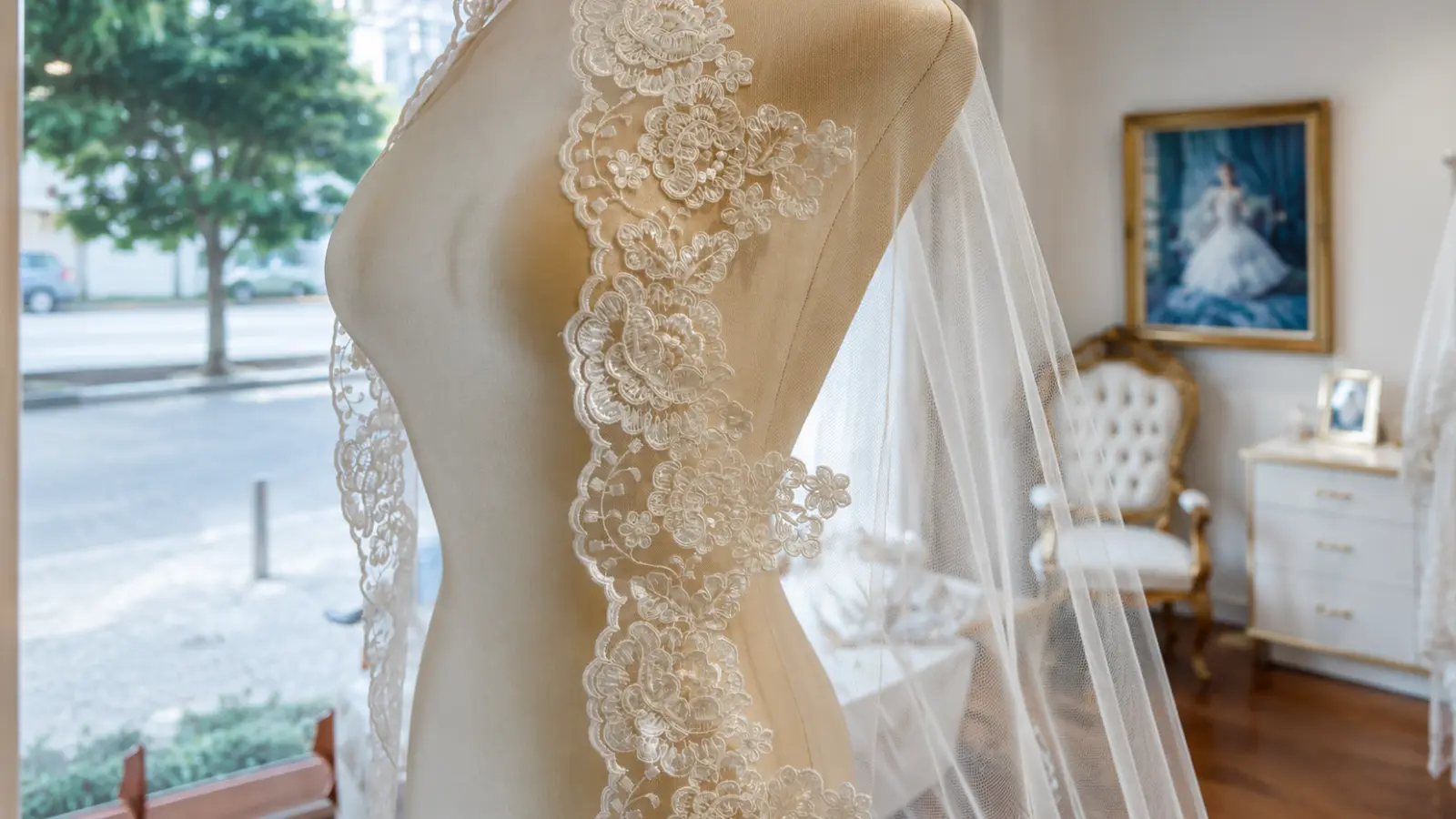
These two words get used interchangeably in veil shopping, and they describe different things. An affordable veil is one that delivers genuine quality at a lower price point — clean construction, a well-finished edge, and a fabric that holds up through a full wedding day. A cheap veil is one where cost was the primary consideration and quality gave way to it: rough finishing, flimsy fabric, or embellishment that doesn’t read well in photos or in person.
The distinction matters because it is possible to find genuinely good veils at accessible price points — and it is also possible to spend $200 on a veil that performs like one half that price. A few things to evaluate when you are looking at a lower-priced option:
- Edge finish quality. The edge of a veil is one of the first things that reads in photos. A rolled or raw edge that is cleanly done is far better than a machine-stitched lace trim that is uneven or bunching.
- Fabric weight. Hold the veil up and look through it. Quality bridal tulle should feel light but have some body — it should not feel limp or papery.
- Comb construction. The comb is what keeps the veil in your hair all day. Plastic combs bend under the weight of longer veils. Metal combs with a secure attachment to the veil’s header are worth looking for, even in a lower-priced option.
- Embellishment security. Shake a pearl-edged veil gently and see if anything falls. Beads or pearls that are not securely attached are going to shed during the ceremony or in photos — a detail that photographs well at $200 and loses half its pearls by cocktail hour is not an affordable veil. It is a cheap one.
The language around budget veils tends to imply that spending less is a compromise. It is not — it is a different set of choices. A plain, clean veil can be exactly right for the right dress and the right look. What you want to avoid is spending any amount of money on a veil that does not hold up to the day it is meant for.
When to Spend More on a Veil
There are specific situations where a higher-priced veil returns real value — not as a status choice, but as a practical one. Recognizing when those situations apply to your wedding makes the spending decision a cleaner one.
If your dress is relatively simple — a minimalist crepe column, a clean satin A-line, a plain chiffon gown — the veil carries more of the visual weight. In that case, fabric quality, edge detail, and how the veil moves all matter more than they would with a heavily embellished dress. A silk tulle veil with a fine lace edge might be exactly what a minimal dress needs, and that investment makes sense.
If your ceremony is in a grand venue — a large church, a formal ballroom, a cathedral — scale and drama serve a real visual purpose. A longer, more structured veil photographs well in those spaces, and the investment in quality fabric is justified by how prominently the veil will feature in photos taken at that distance and in that light.
If you plan to pass the veil down or preserve it as a keepsake, quality matters differently. Silk tulle and carefully applied natural lace will hold up better over decades than synthetic alternatives. The preservation value is part of what you are paying for.
When a Less Expensive Veil Makes Complete Sense
There are equally real situations where a simpler, more accessible veil is not just fine — it is the better choice.
If your dress carries significant embellishment — heavy beading, intricate lace appliqué, a dramatic train — a plain, simple veil in quality tulle lets the dress remain the focal point. Pairing an elaborately detailed veil with an already-detailed dress can make the overall look feel overworked. In this case, spending less on the veil is not a budget compromise. It is an aesthetic one.
If your ceremony is outdoors — a garden, a beach, a lawn — a shorter, lighter veil is going to behave better in wind and on uneven terrain than a long, heavily embellished one. The investment in a dramatic cathedral veil is harder to justify when the practical conditions of the day work against it.
If you are planning to remove the veil immediately after the ceremony and portraits, a very long or elaborately detailed one has limited wearing time. A beautiful but simpler veil for an hour of use is a reasonable allocation of your overall accessories budget.
DIY as a Budget Option
Making your own veil is a legitimate option for brides who want to keep veil costs low — and for the right skill level and the right style, it can produce a genuinely beautiful result. The most important thing to know before committing to this path is which styles are realistically DIY-friendly and which are not.
A single-tier tulle veil with a raw or rolled edge is one of the most accessible DIY projects in bridal accessories. The materials are inexpensive, the construction is straightforward, and the result, if done carefully, looks clean and intentional. A simple gathered veil with a basic comb falls in the same category. These styles require minimal sewing experience and can typically be completed in a few hours.
A veil with hand-applied lace, a scalloped edge, or surface embroidery is a different project. Cutting and applying lace cleanly requires patience and practice; a rushed or inexperienced application reads clearly in close-up photos. Custom embroidery without the right equipment produces inconsistent results. If you are drawn to any of these styles, the DIY savings may not be worth the execution risk on an occasion where the stakes are high.
On the material side, expect to spend roughly $20 to $60 for a basic DIY veil, depending on the length and fabric. A comb adds a few dollars. If you choose to use higher-quality bridal tulle rather than the least expensive option available, you’ll spend more — but the result will behave and photograph closer to what you’d buy retail. For a full step-by-step walkthrough of the DIY process, see our guide on how to make a wedding veil.
The Costs Most Brides Don’t Budget For
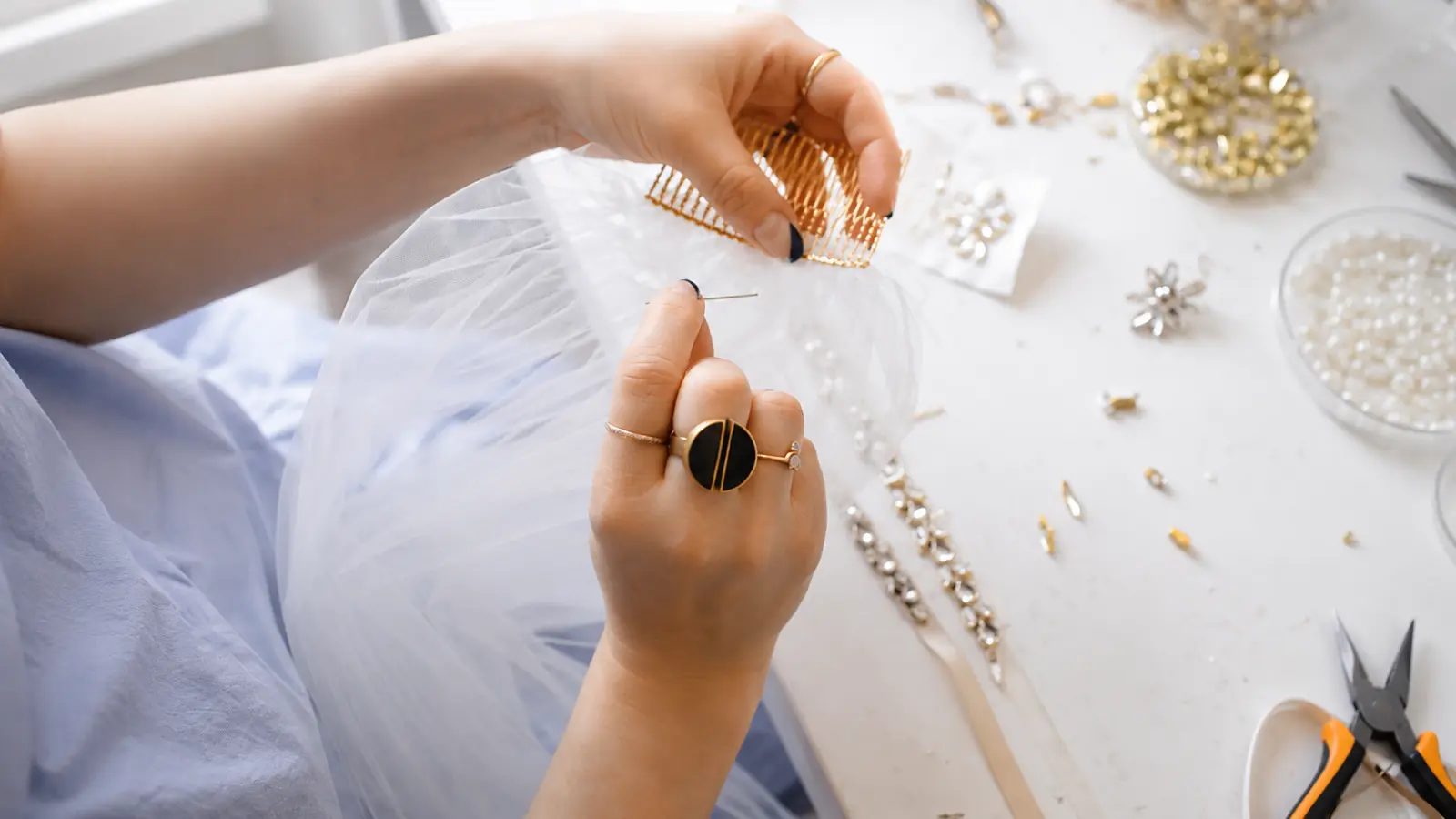
The purchase price is not the only number that matters. A few additional costs are worth factoring in when you are setting a veil budget — particularly if you’re choosing a longer or more embellished option.
Professional Steaming
Veils ship and travel folded, which means they arrive creased. Knowing how to steam and store a wedding veil properly can help you decide whether professional care is worth adding to your budget. Most bridal boutiques and dry cleaners that handle bridal items offer steaming; the cost typically runs between $25 and $75 depending on the veil’s length and complexity. Some boutiques include steaming with purchase — worth asking about before your appointment. If you plan to steam the veil yourself, use a garment steamer on a low setting and work from a distance; direct contact or high heat can damage synthetic tulle permanently.
Preservation
If the veil has sentimental value — whether as a piece you plan to keep, display, or eventually pass down — proper preservation protects the investment. This typically involves boxing the veil with acid-free tissue paper in archival conditions; when done professionally, it usually adds $50 to $150 to the cost, sometimes bundled with dress preservation. An improperly stored veil yellows, and tulle can become brittle over time. If preservation is important to you, plan for it specifically and ask your dry cleaner about bridal fabric experience before choosing one.
Alterations and Adjustments
If a veil needs its length trimmed, its comb repositioned, or its edge releveled after purchase, that work costs money. Most alterations are minor, but a cathedral veil that needs six inches removed is not a five-minute job, and a lace edge that needs reapplication after trimming requires skill. Ask your seamstress about veil work specifically — not every bridal seamstress handles veils, and the pricing is separate from dress alterations.
Replacement Combs
Many veils — including expensive ones — come with plastic combs that work fine for some hair types and slip on others. Replacing a plastic comb with a metal one, or adding comb extensions for fine hair, typically costs $10 to $30 and can be done by a seamstress or, in some cases, by a careful hand at home. It is a small cost that makes a significant practical difference on the day.
Wedding Veil Budget Inspiration
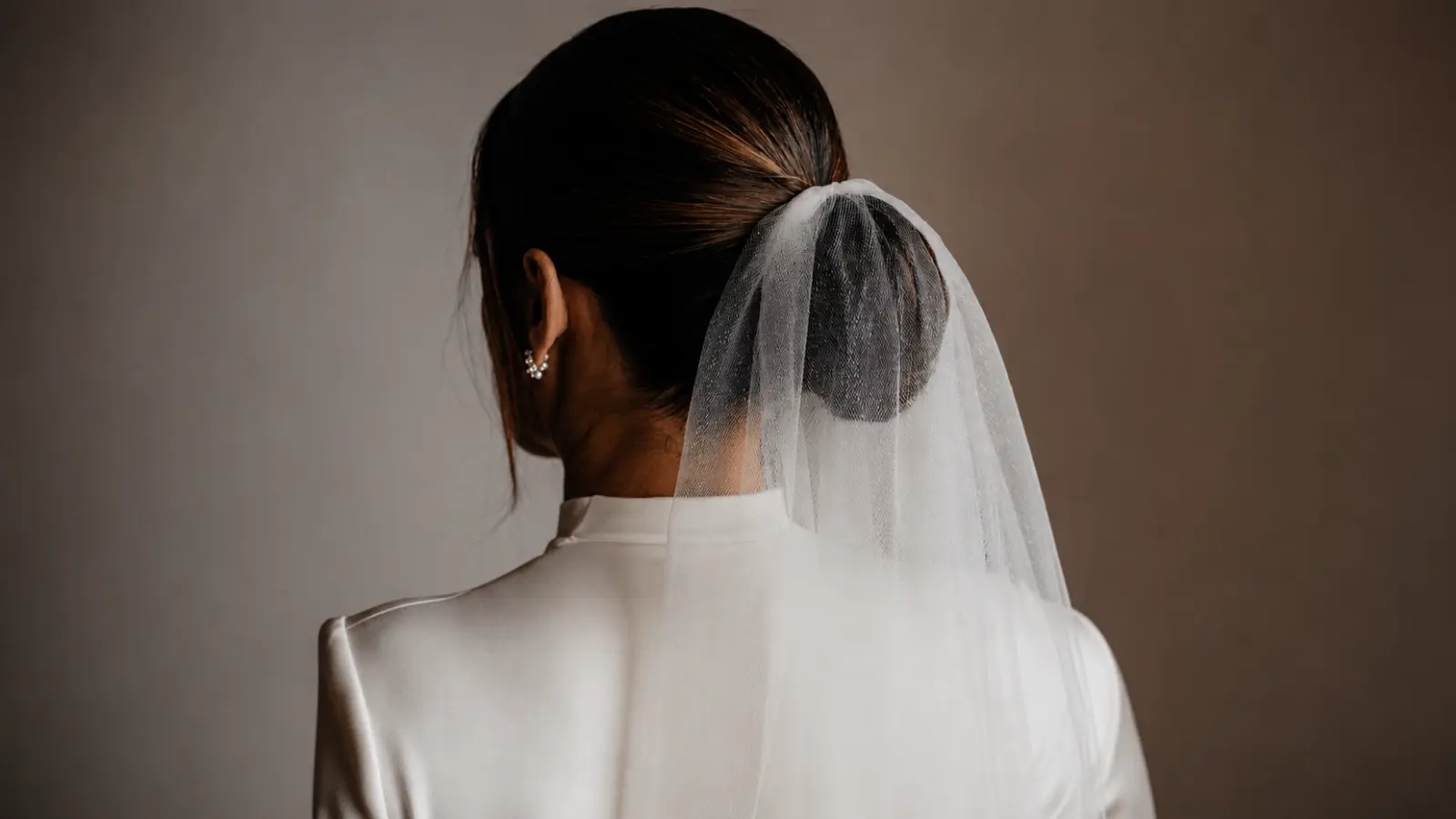
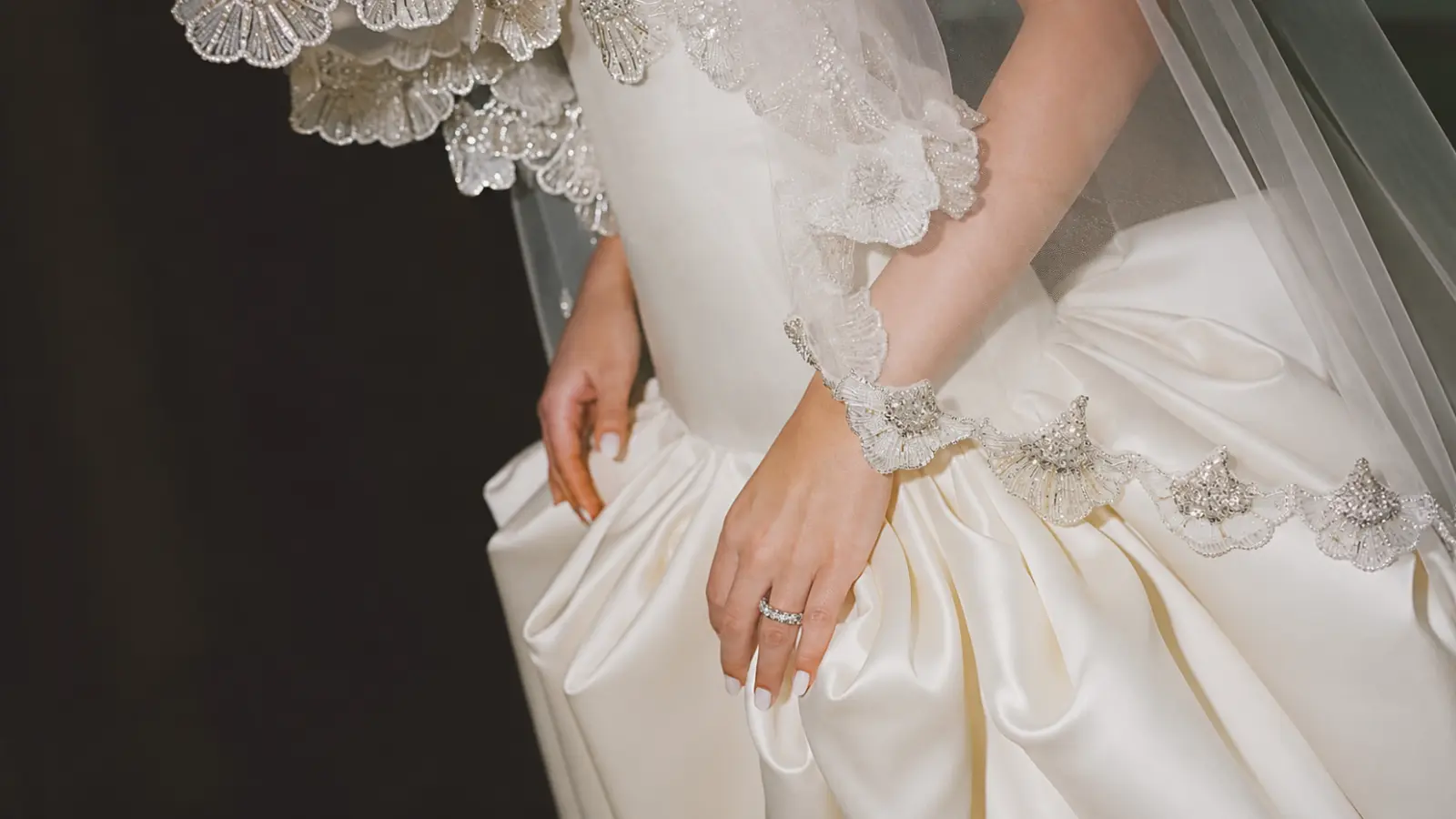
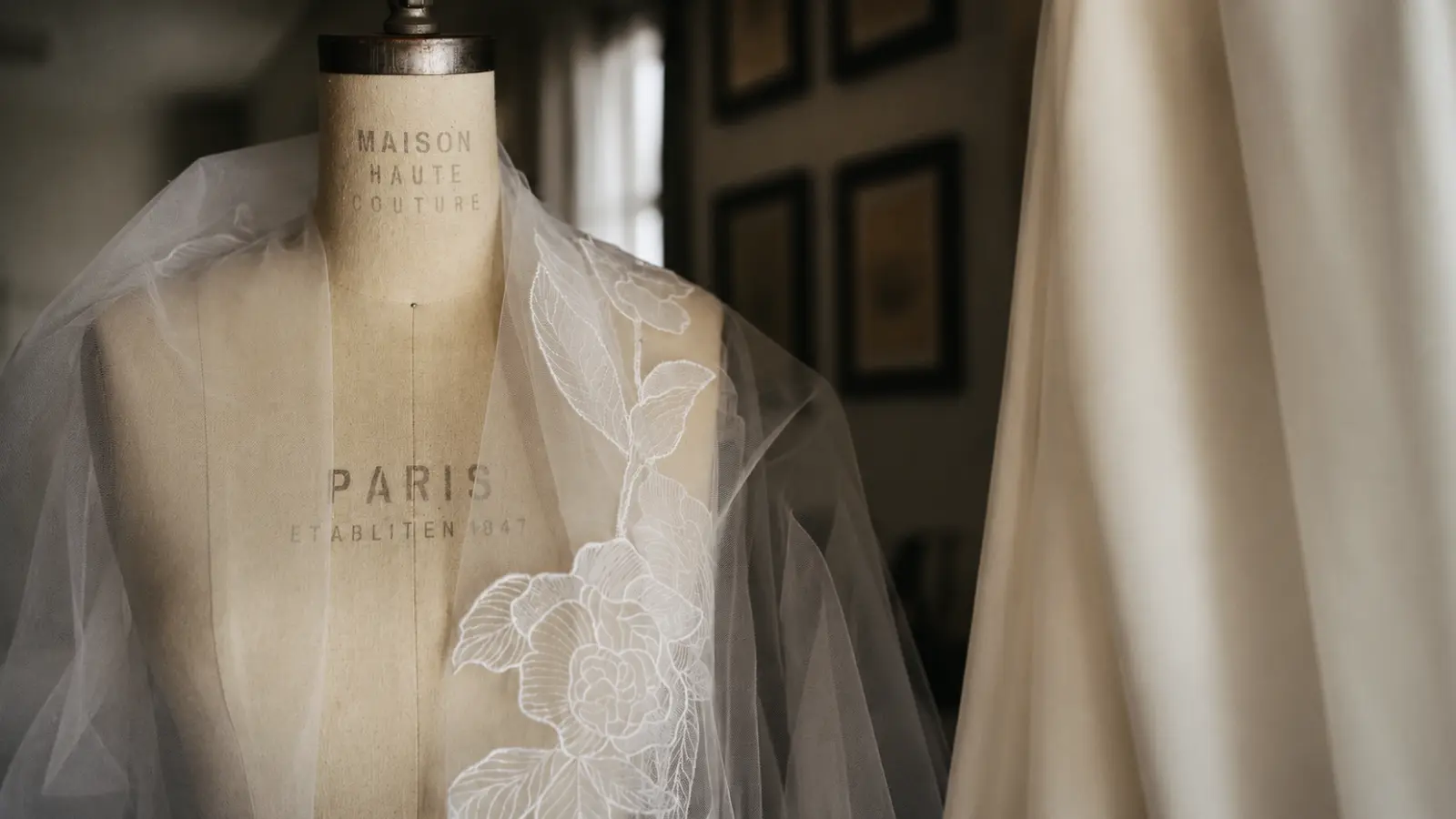
Discover wedding veil budget inspiration featuring affordable bridal veils, luxury designer styles, lace details, pearl embellishments, and beautiful options across every price range. Explore smart budgeting ideas to find a veil that perfectly matches your dress, style, and wedding budget.
How Much Should You Spend on a Wedding Veil?
The right wedding veil isn’t determined by its price but by how well it complements your dress, your ceremony, and your overall bridal vision. A beautifully made simple veil can create just as much impact as an elaborate designer piece when it suits the rest of your bridal styling.
Understanding how fabric, length, craftsmanship, and embellishments affect pricing allows you to spend confidently where it truly matters. By focusing on value instead of price alone, you’ll choose a veil that feels beautiful, practical, and perfectly suited to your wedding day.
Frequently asked questions (FAQ)
How much should you budget for a wedding veil?
Most brides spend somewhere between $50 and $500 depending on the veil’s length, fabric, and detailing. Instead of choosing a budget first, it is usually more helpful to decide what role the veil will play in your overall bridal look and then invest accordingly.
How much does a wedding veil cost on average?
Basic veils typically cost between $50 and $150. Mid-range veils with lace, pearls, or light embellishment usually range from $150 to $400, while designer or custom veils often exceed $500. Material quality, length, and handwork are the biggest factors behind the price.
Why are some wedding veils so expensive?
Expensive veils usually require higher-quality fabrics, longer lengths, and many hours of skilled handwork. Silk tulle, hand-applied lace, embroidery, and individually sewn pearls all increase production time and cost.
Are affordable wedding veils lower quality?
Not necessarily. Many affordable veils use quality bridal illusion tulle and clean finishing techniques. The biggest differences usually appear in embellishment, fabric refinement, and construction details rather than in the basic function of the veil.
Is it cheaper to make your own wedding veil?
Yes, especially for simple single-tier tulle veils. DIY projects can cost significantly less in materials, but they also require time and careful execution. More elaborate lace or embroidered veils are usually better purchased from experienced makers.
What hidden costs should you budget for?
Besides the veil itself, remember to account for professional steaming, preservation, possible alterations, replacement combs, and rush-order fees if your wedding date is approaching. These expenses are easy to overlook during early planning.
Should the veil cost as much as the dress?
No. Most brides spend only a small percentage of their dress budget on the veil. A beautifully balanced bridal look depends much more on proportion and styling than on matching price tags.