Wedding updos with veil remain one of the most timeless and elegant bridal hairstyle combinations. Whether you’re planning a sleek chignon, a romantic low bun, a textured updo, or a classic bridal bun, the way your veil is positioned can completely change the final look and how it photographs throughout the day.
While many brides focus on choosing the perfect hairstyle or veil separately, the most important decision often comes later: where the veil should be attached in relation to the updo. Placement, veil length, hairstyle structure, and attachment method all work together to create a look that feels balanced, comfortable, and secure from the ceremony through the reception.
This guide explains everything you need to know about wearing wedding updos with a veil, including above-versus-below bun placement, which veil lengths work best with different updos, how to combine cathedral and mantilla veils with pinned hairstyles, and the practical styling tips that help your veil stay beautiful all day long.
Above the Bun vs. Below the Bun
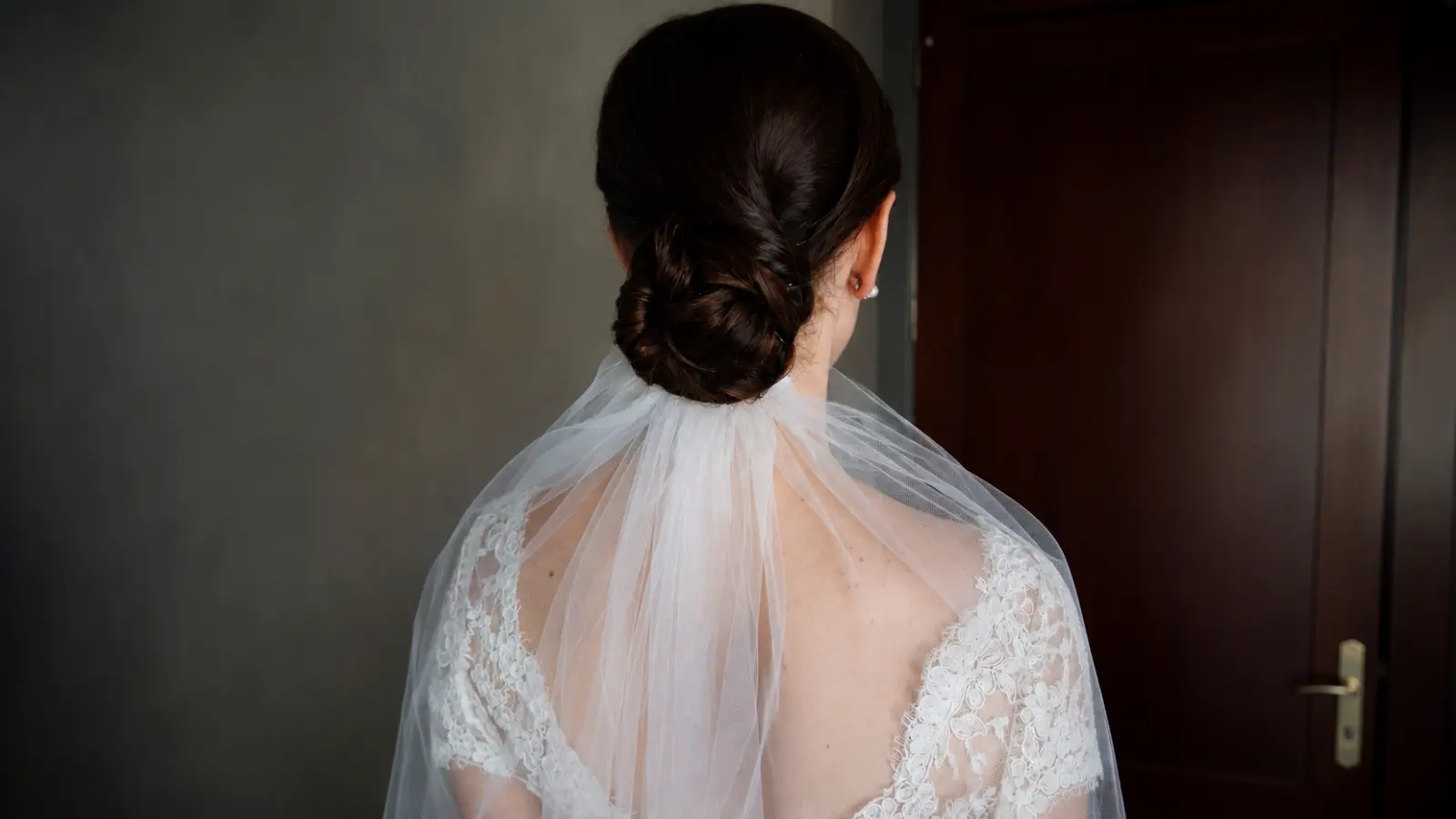
This is the central styling decision for wedding hairstyles with veil placement, and it deserves more attention than it usually gets. With an updo, the placement point — where the comb actually attaches in relation to the bun — determines the overall silhouette as much as the veil length or hairstyle itself.
Veil Above the Bun
When the veil is placed at the crown of the head or at mid-head, above where the bun sits, it creates the more traditional bridal silhouette. The veil cascades down over and around the bun, framing it rather than competing with it. From the front, you see the full veil falling behind the bride. From the back — which is what most of your guests will see during the processional — the veil takes center stage, with the bun peeking out from underneath.
This placement works especially well with cathedral and chapel-length veils, because the full length of the fabric is visible from the attachment point down. It also tends to suit more formal, traditional aesthetics and works naturally with high buns, where the crown is already the focal point of the hairstyle.
Veil Below the Bun
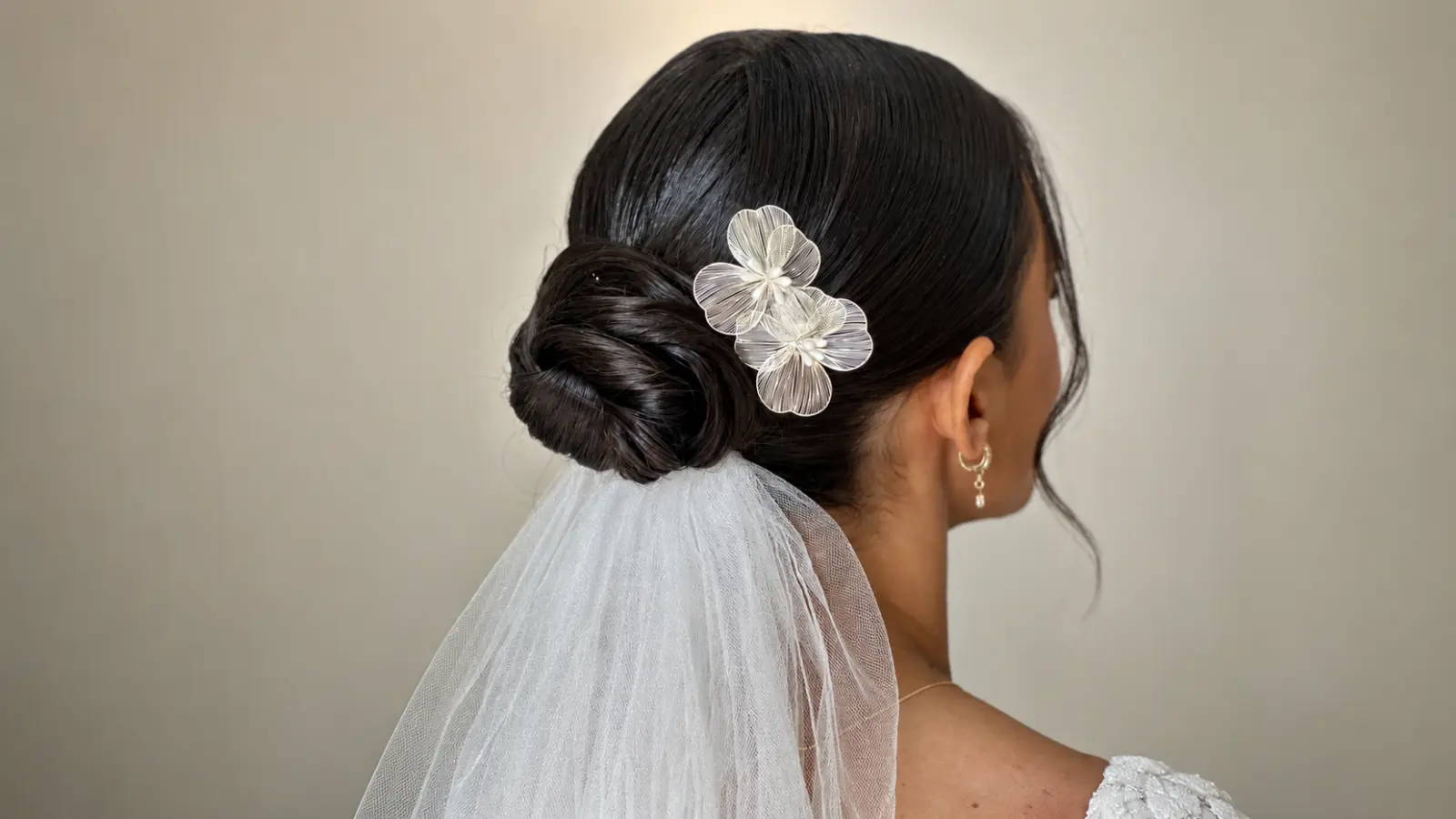
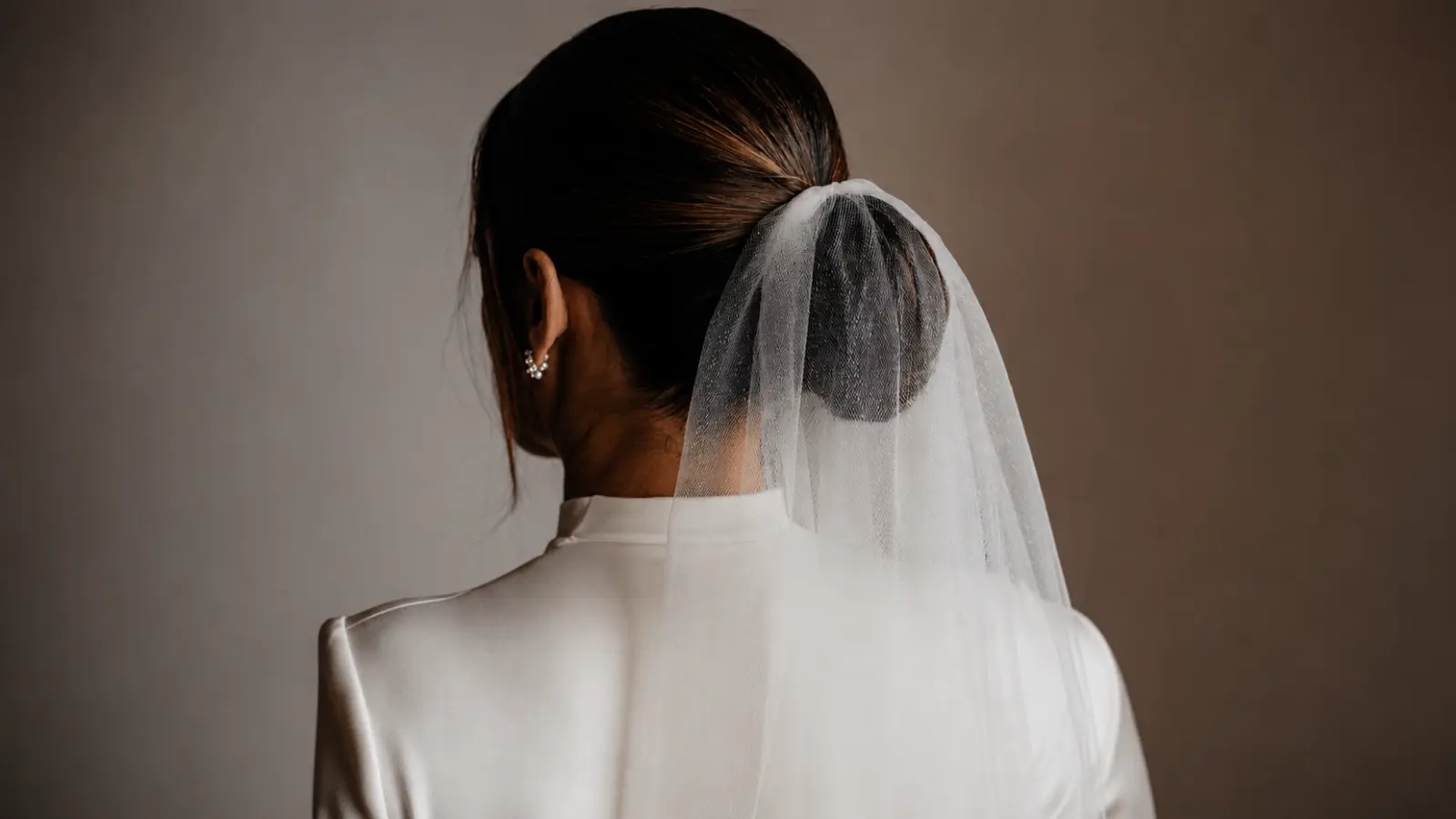
When the veil comb is inserted below the bun — at the nape of the neck or just beneath the bun itself — the bun sits above the veil rather than inside it. This creates a cleaner, more architectural look. The bun reads as a distinct element at the top, and the veil flows from beneath it, often with more of a waterfall effect depending on the length. In photos from the back, the bun is the clear focal point, with the veil as a supporting element rather than the dominant one.
This placement is particularly popular for low buns and chignons, where the bun itself is already a statement. Shorter veil lengths — elbow, fingertip, waltz — often read better below the bun than above it, because a very long veil attached at the nape can feel heavy and can pool awkwardly. Brides going for a more modern or editorial aesthetic tend to prefer this placement for exactly that reason: it feels less “traditional bridal” and more considered.
How to Decide
The clearest way to think about it: above the bun puts the veil first; below the bun puts the updo first. If you want the veil to be the dominant element of your back-of-the-head view, place it above. If you want the hairstyle to read clearly and the veil to complement it, place it below. Neither is more formal or more appropriate — they’re just different design choices, and the right one depends on what you want the photographs to show.
Placement by Updo Style
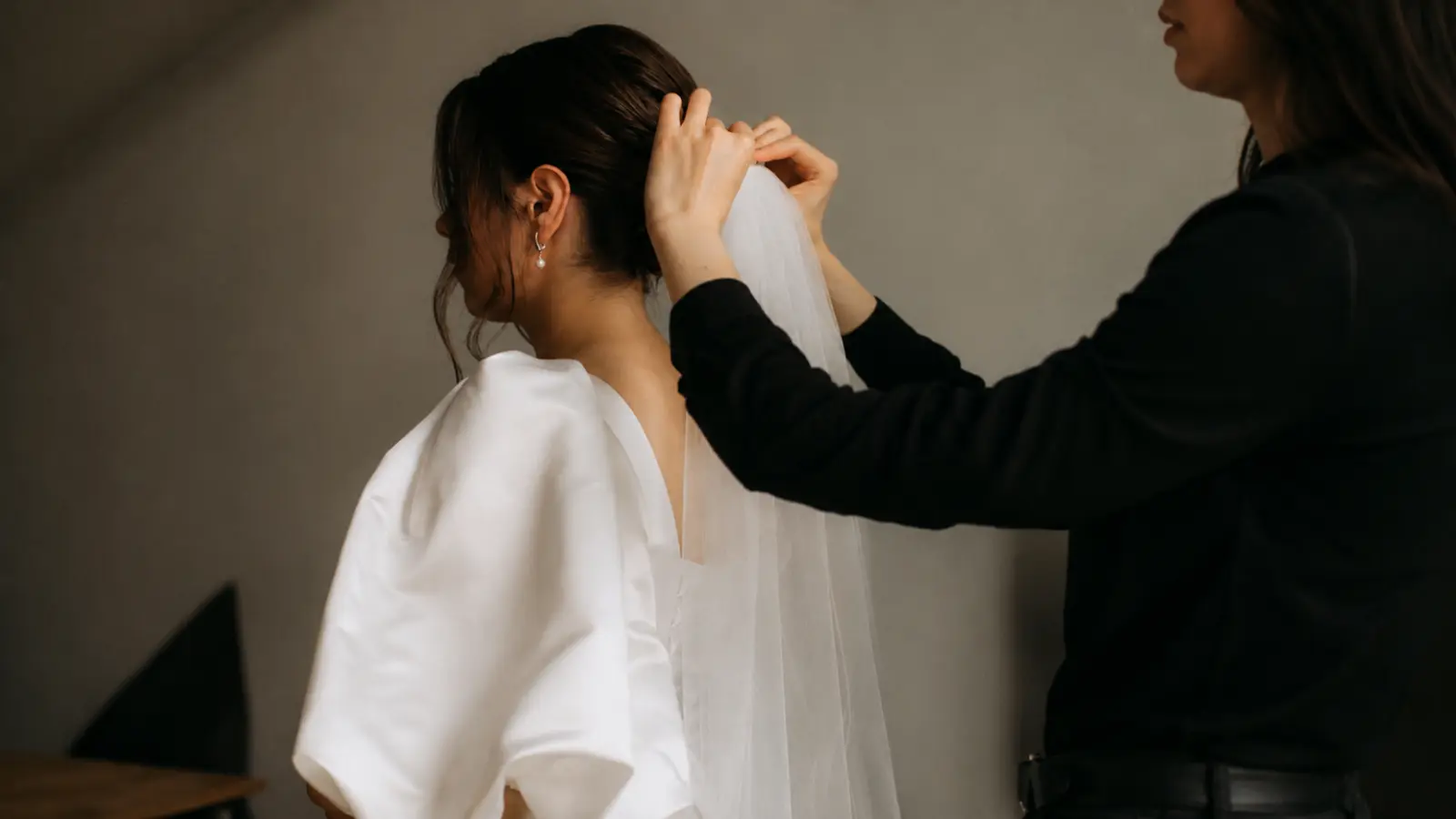
The updo style you choose shapes which placements are actually practical, not just aesthetically possible. A high bun and a low chignon invite different solutions, and it’s worth understanding what each style naturally supports before you get to the hair trial.
High Bun
A high bun — sitting at or above the crown of the head — is one of the most veil-friendly updo styles. Because the bun is at the top, placing the veil at the crown puts it above or at the same level as the bun’s base, which creates a clean attachment. The veil flows down the full length of the back, and the bun functions as a natural anchor point that keeps the comb secure. This style pairs naturally with above-the-bun placement and handles longer veil lengths, including cathedral, with ease.
Low Bun
A low bun sits at the nape or just above it, which gives you two genuinely distinct placement options. Above the bun puts the comb mid-head, letting the veil drape over the bun entirely — a look that reads very romantically, especially with soft textures and longer lengths. Below the bun puts the comb at the nape itself, which can feel clean and minimalist, but requires careful pinning because there’s less hair structure at that point to anchor a comb. Both work, but below the bun at nape level requires a stylist who is experienced with this specific attachment point.
Chignon
A chignon — the classic smooth, coiled updo — typically sits at the mid-back of the head or at the nape. It’s one of the most versatile updo styles for veil pairing, partly because its flat, compact shape gives the veil room to hang without the fabric catching on a voluminous style. Below-the-bun placement is particularly elegant with a chignon, letting the comb sit neatly underneath the coil. Above the chignon works well too, especially if the chignon sits lower and you want the veil to cascade from higher up.
Textured and Braided Updos
Braided updos, twisted styles, and textured knots introduce some practical considerations. The texture that makes these styles beautiful can also make veil attachment trickier — loose braids and intentionally undone styles don’t always grip a comb as cleanly as smooth, structured ones. For these styles, your stylist will usually build a pin anchor into the hair beneath the visible texture, giving the comb a solid base to catch. The placement choice is less constrained by the style itself and more by where your stylist can create that secure foundation, which is why the hair trial is particularly important for textured updos.
Sleek Updo
A sleek, polished updo — flat-ironed, lacquered, with no visible texture — is the updo style most likely to make a comb slip. The smoother the hair, the less friction the comb has to grip. Experienced stylists handle this with a combination of teased understructure, pins, and sometimes a small piece of mesh or netting beneath the comb to give it traction. If you’re set on a sleek updo, ask your stylist at the trial to show you how they’re planning to anchor the comb — and then shake your head. The veil should stay completely still.
Updo Type, Veil Placement, and Best Veil Length
This table is a starting reference, not a strict guide. Individual results depend on your specific hair texture, the veil’s fabric weight, and your stylist’s technique. But it gives you a useful framework before your trial appointment.
| Updo Type | Best Veil Placement | Best Veil Lengths | Notes |
|---|---|---|---|
| High bun | Above the bun (crown) | Fingertip, chapel, cathedral | Natural anchor point; suits longer, formal veils well |
| Low bun | Above or below the bun | Elbow to cathedral (above); elbow to waltz (below) | Below-bun placement at nape needs strong pin anchor |
| Chignon (mid or low) | Above or below the chignon | Elbow to cathedral | Flat profile accommodates both placements cleanly |
| Textured / braided updo | Within or above the texture | Elbow to fingertip | Pin anchor essential; avoid very heavy veils |
| Sleek, polished updo | Above the style (mid-head) | Fingertip to chapel | Requires teased understructure to grip comb |
| French twist | Above the twist (crown) | Elbow to fingertip | Limited structure at the back; lighter veils safer |
One thing to notice in this table: as wedding veil lengths become longer and heavier, a secure, high attachment point with real structure underneath becomes increasingly important. A cathedral veil attached at the nape with nothing but a comb is a common cause of veil slippage mid-ceremony.
Cathedral Veil With an Updo
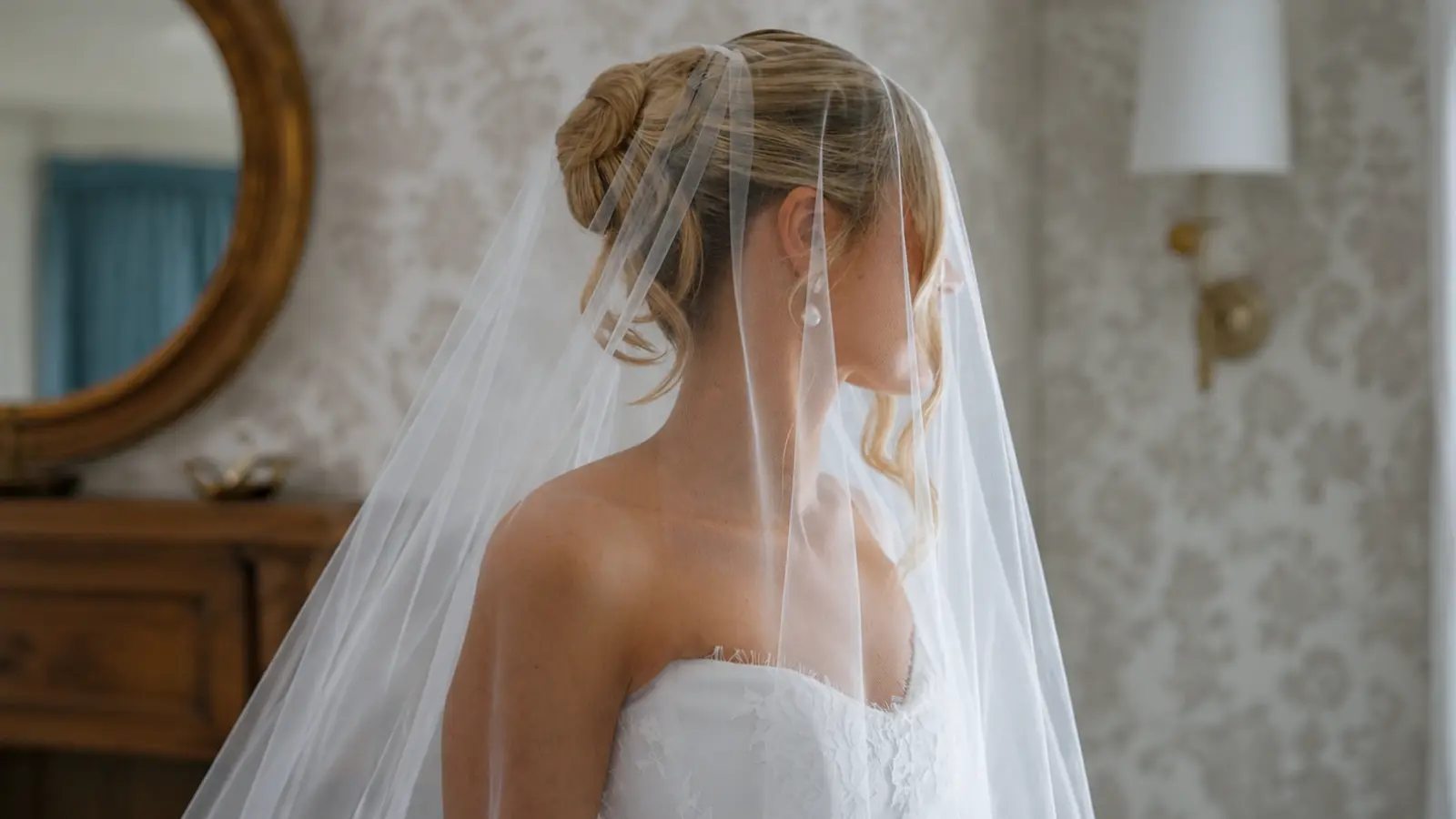
The cathedral veil is the longest standard bridal length, typically running 108 to 120 inches from the attachment point, and it pairs remarkably well with an updo. Contrary to what some brides assume, you don’t need flowing hair to carry a cathedral veil — an updo actually gives the veil a more visible, elevated starting point, which means the full dramatic length reads more clearly in photographs.
For a cathedral veil with an updo, above-the-bun placement at the crown is almost always the better choice. Attaching a cathedral veil at the nape of the neck reduces the visible length and can cause the fabric to pool or bunch rather than sweep cleanly. At the crown, the veil begins high and extends fully, creating the dramatic sweep down the back that makes this length so striking.
Practical considerations matter here too. A cathedral veil is heavy, and a high bun or a structured chignon provides significantly more grip than a softer, looser style. Your stylist should create a pin base at the attachment point before inserting the comb — never just sliding the comb into the hair without additional pins on either side. At a dress of this scale, it’s also worth discussing with your coordinator who will be responsible for arranging the veil before you walk down the aisle, since a cathedral veil doesn’t arrange itself.
For a full breakdown of cathedral veils — lengths, dress pairing, and ceremony logistics — see our cathedral wedding veil.
Mantilla Veil With an Updo
The mantilla is a different animal. Where other veils attach via a comb at a single point, a mantilla is draped over the head and falls around the face and shoulders — secured with pins throughout rather than gathered at one spot. This means the relationship between the mantilla and the updo is more about the overall head shape than about comb placement.
Mantilla veils work best with updos that have a relatively flat, smooth top. A sleek chignon or a low bun gives the mantilla a clean surface to drape over. Voluminous or very textured updos — particularly high buns with significant height — can push the mantilla up and forward, distorting the lace frame around the face that makes the style so distinctive.
If you’re committed to both a mantilla and an updo, a mid or low chignon is the safest combination. Bring both to the trial, and have your stylist drape the mantilla over the updo before pinning anything — it should fall naturally without you needing to hold it in place. If it keeps lifting or shifting, the updo may have too much volume for this veil style. For more detail on how a mantilla is styled and worn, see our mantilla wedding veil.
Tiara and Headpieces With an Updo and Veil
Adding a tiara or structured headpiece to an updo-and-veil combination is one of the most formal bridal looks possible, and one that requires some advance planning to pull off without looking crowded.
The general rule is that the tiara and the veil should occupy different zones of the head rather than competing for the same space. With a veil placed above the bun at the crown, a tiara typically sits in front of the veil attachment point — closer to the hairline, framing the face from the front while the veil handles the back. With a veil placed below the bun, there’s more room at the crown for a tiara to sit independently, with the veil flowing beneath it.
What doesn’t work as cleanly: a tiara and a mantilla veil, since the mantilla lies flat across the crown and leaves no space for a structured headpiece. And a tiara placed directly on top of a veil comb creates an unstable layered structure that’s prone to shifting during the ceremony.
The most important thing here is to try both elements together at the hair trial — not separately. A tiara and a veil that each look beautiful on their own can read as conflicting when they’re worn at the same time. Give your stylist both pieces at the appointment and ask them to make the call, rather than arriving on the wedding day with untested combinations. For more on this specific pairing, see our guide to wearing a wedding veil with a tiara.
Pins, Combs and Keeping It Secure
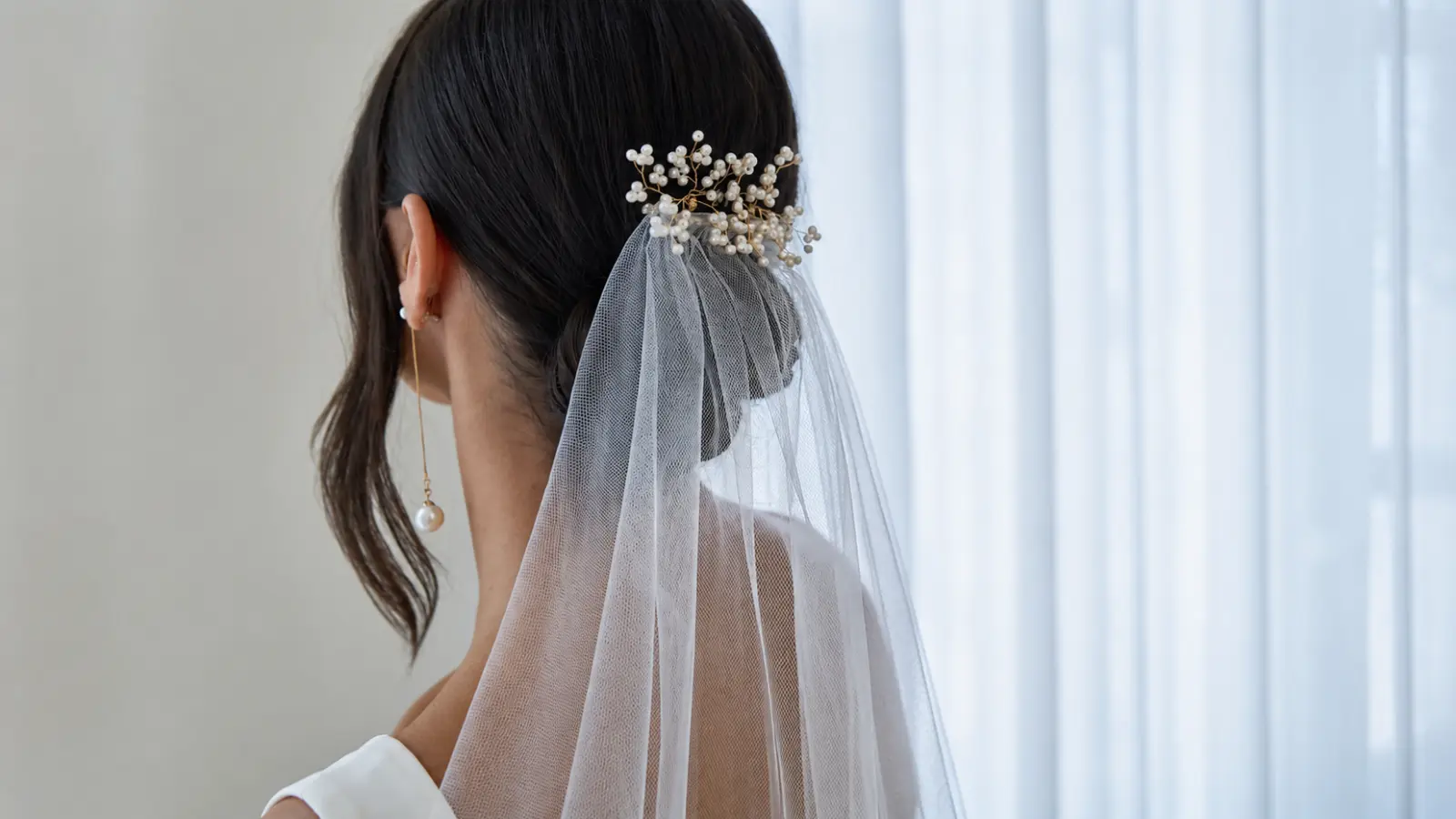
The attachment method is where most veil problems on wedding days actually originate. Knowing how to wear a wedding veil securely helps prevent slipping, pulling, and constant adjustment during the ceremony and portraits.
Most veils come with a comb already attached. That comb is the starting point, not the complete solution. For an updo, your stylist should supplement the comb with additional bobby pins or hairpins on either side of the comb, inserted at angles to catch it from multiple directions. For heavier or longer veils, some stylists create a small base of crisscrossed pins at the intended attachment point before the comb goes in, giving the comb a more solid foundation to grip.
There are a few things worth confirming at your trial. First, once the veil is pinned, ask your stylist to give it a gentle, deliberate tug — the kind that might happen if someone accidentally steps on it or if the wind catches it outdoors. The veil should resist without pulling your hair or the comb dislodging. Second, walk around for a few minutes after it’s placed. Any slippage that’s going to happen tends to reveal itself within about ten minutes of movement.
For outdoor or high-humidity ceremonies, ask your stylist about finishing products that can add grip to the hair at the attachment point. A cathedral veil in a humid coastal setting behaves very differently than the same veil in a climate-controlled ballroom, and a good stylist will plan for the conditions of your specific venue, not just the ideal salon environment.
Removing the Veil After the Ceremony
Most brides with updos remove their veil after the ceremony portraits and before the reception begins — or just after the first dance. The updo actually makes this process easier than it sounds. Because the hair is already secured, removing the comb doesn’t threaten the hairstyle the way it would with hair worn down or in a half-up style. One person, working carefully, can remove the veil without disturbing the rest of the look.
The key is that this shouldn’t be improvised on the day. At your hair trial, ask your stylist to walk through the removal process. Then brief your maid of honor — or whoever will be managing your veil — on exactly what to do: which direction to slide the comb, whether there are additional pins to remove first, and how to hold the veil fabric as it comes off so it doesn’t catch on the dress or the earrings.
Once the veil is off, it should go somewhere specific — not draped over a chair or handed to a passing bridesmaid. A veil stored loosely at a reception gets stepped on, sat on, or lost. Have a designated spot planned: a garment bag, a box, or a bag that someone keeps with them. Cathedral and chapel veils especially need to be rolled carefully rather than folded, to avoid permanent creasing in the fabric.
What to Avoid
A few consistent mistakes come up when brides are combining updos and veils. Most of them are easy to prevent once you know what to watch for.
- Deciding on placement without trying it in person. “Above or below the bun” sounds like a simple choice until you see both options on your actual hair. What looks balanced in one version can look off in the other, depending on your face shape, your dress neckline, and the veil’s specific fabric. Always try both at the trial before committing.
- Attaching a heavy veil to a soft, loosely pinned updo. A textured, intentionally undone updo is beautiful, but it typically has less structural grip than a firm, pinned style. A cathedral veil attached to a loosely gathered bun with nothing but a comb is a setup for a veil that slides within the first twenty minutes. The softer the updo, the more important the additional pins are.
- Skipping the hair trial with the actual veil. Trials without the real veil tell you what the hairstyle looks like, not whether the hairstyle and veil work together. Bring your veil — or, if it isn’t in yet, the most similar sample you can borrow from the salon — and use the trial to test both the placement and the security.
- Assuming a longer veil always needs to be above the bun. While above-the-bun placement generally works better for very long veils, a well-anchored below-the-bun placement can handle waltz or even chapel lengths on a chignon. The limiting factor is the anchor quality, not a fixed rule about length and placement.
- Leaving veil removal unplanned. This applies to every bridal hairstyle, but it’s especially worth mentioning for updos because the assumption is that removal will be easy. It usually is — but only if someone knows what they’re doing. A comb removed in the wrong direction can pull the entire back section of a structured updo loose.
The thread running through most of these is the same one that runs through most bridal styling decisions: things that seem like they’ll work out tend to work out, and things that haven’t been tested tend to surprise you. The hair trial is the time to be thorough, not optimistic.
Wedding Updo With Veil Inspiration
Discover elegant wedding updo with veil inspiration featuring classic chignons, romantic low buns, textured bridal updos, sleek hairstyles, and timeless veil placement ideas. Explore beautiful combinations with cathedral, chapel, fingertip, and mantilla veils to create a sophisticated bridal look for every wedding style.
Are Wedding Updos With a Veil Right for You?
Wedding updos with a veil remain one of the most elegant and versatile bridal combinations because they provide a secure foundation for the veil while beautifully highlighting your dress, neckline, and facial features. Whether you choose a classic bun, a polished chignon, or a softly textured updo, the right veil placement enhances both the hairstyle and the overall bridal look.
The key to achieving a flawless result is planning the hairstyle and veil together rather than treating them as separate decisions. By testing different placement options during your hair trial and choosing a veil that complements your hairstyle, you’ll create a bridal look that feels timeless, balanced, comfortable, and effortless from the ceremony to your final photographs.
Frequently asked questions (FAQ)
What wedding updo works best with a veil?
Structured updos such as low buns, chignons, high buns, and sleek twists generally provide the strongest foundation for a wedding veil. The best choice depends on the veil’s length, weight, and placement. High and structured updos support longer veils well, while low buns and chignons offer more flexibility for placing the veil either above or below the hairstyle.
Should the veil go above or below the bun?
Both placements work, but they create different focal points. Placing the veil above the bun produces a fuller, more traditional silhouette and makes the veil the dominant element. Placing it below the bun creates a cleaner, more modern look and allows the updo itself to remain fully visible.
Can you wear a cathedral veil with an updo?
Yes. An updo provides one of the most secure foundations for a cathedral veil. Crown or above-the-bun placement usually works best because it displays the full veil length and gives the comb enough structure to support the fabric. Additional pins and a reinforced anchor are essential because cathedral veils are heavier than shorter styles.
How do you attach a veil to a low bun?
A veil can be attached above a low bun so that it cascades over the hairstyle, or below the bun so that it falls from the nape. Below-the-bun placement requires a secure pin base because there is less natural structure at the nape. Both options should be tested with the actual veil during the hair trial.
Can you wear a mantilla veil with an updo?
Yes, but mantilla veils work best with low, smooth updos such as sleek chignons or compact buns. Because the mantilla drapes over the head instead of gathering at a single comb, excessive height or volume can distort the lace framing around the face.
How do you keep a veil secure in an updo?
The veil comb should be reinforced with bobby pins or hairpins inserted from multiple angles. For heavier veils, the stylist may create a crisscrossed pin base beneath the visible hairstyle before inserting the comb. The complete attachment should be tested through movement during the hair trial.
Can you wear a tiara with an updo and veil?
Yes. When the veil is placed above the bun, the tiara usually sits in front of the veil attachment point. When the veil is placed below the bun, the tiara has more independent space at the crown. Both accessories should always be tried together because they may compete visually or physically when combined.