What to do with wedding veil after wedding is a question many brides don’t think about until the celebration is over. After months of carefully choosing the perfect veil, it often ends up folded away without a clear plan, even though it may hold significant sentimental and financial value.
Whether you want to preserve it as a keepsake, display it in your home, pass it down to a family member, sell it, donate it, or transform it into something new, each option requires different care to protect the fabric and ensure the veil remains in excellent condition.
This guide explores everything you need to know about what to do with your wedding veil after the wedding, including proper cleaning, long-term storage, preservation, creative display ideas, resale, donation, and meaningful ways to give your veil a second life.
Before You Decide: Cleaning and Timing
Before you commit to any path — keeping, displaying, selling, or donating — the veil needs to be cleaned. This is the step most brides skip, and it is the one that matters most for long-term outcomes. A veil that looks clean immediately after the wedding may still be carrying residue from hairspray, skin oils, light perspiration, or handling throughout the day. Those residues are invisible at first and become a problem slowly, turning white or ivory fabric yellow in ways that are permanent and cannot be corrected after the fact.
Timing matters, too. The longer a veil sits uncleaned, the harder those residues are to remove. Ideally, cleaning should happen within a few weeks of the wedding, not months later. If your dress is going to a professional cleaner, ask whether they handle veils — many bridal dry cleaners will clean them together for a combined fee, which is typically the most cost-effective approach.
For veils with lace, pearls, embroidery, or crystal embellishment, professional dry cleaning by someone experienced with bridal fabrics is the safest route. Plain illusion tulle veils can sometimes be hand-washed carefully in cool water with a small amount of gentle detergent and laid flat to dry, but if there is any uncertainty about the fabric or the edge treatment, a professional is worth the cost. Once the veil is clean and fully dry, you can make a considered decision about what to do next.
Your Options at a Glance
The right choice depends on what the veil means to you, how much sentimental weight it carries, and how much time and effort you are willing to put into the process. Some options require almost nothing from you; others involve a seamstress, a framing project, or an active resale process. This table gives you an honest overview before you go deeper.
| Option | Best For | What to Know |
|---|---|---|
| Preserve and store | Brides who want to keep the veil but don’t have a specific plan yet | Requires proper cleaning and acid-free materials; easy to do if done correctly |
| Shadow box or frame display | Brides who want a visible, permanent keepsake in their home | Works best with veils that have meaningful detail; requires a deep frame and UV-protective glass |
| Pass down as an heirloom | Brides with a family member who may wear it someday | Needs careful long-term storage; fabric and style need to hold up over time |
| Repurpose the fabric | Brides who want something functional or wearable from the veil | Requires a seamstress for most projects; tulle is delicate and not easy to work with at home |
| Anniversary or boudoir photos | Brides planning a photo session or vow renewal | Store properly until the session; have it steamed beforehand |
| Sell it | Brides who do not feel a strong attachment and want to recoup some cost | Condition, detail level, and photography quality affect resale value significantly |
| Donate it | Brides who want the veil to be worn again by someone who needs it | Several nonprofits accept bridal accessories; conditions vary by organization |
Most brides land on one of the first three options without much deliberation. But if you are not sure yet, reading through each section below will help you make the decision with a clearer sense of what each path actually involves.
Preserve and Store It as a Keepsake
Keeping the veil as a keepsake is the most common choice, and it is a perfectly legitimate one — as long as it is done correctly. A veil stored in a plastic bag in a closet without cleaning will not hold up well. A veil stored with care can remain in excellent condition for decades.
The principles of proper storage are simple: clean, dry, loosely folded, acid-free materials, and a stable environment. Learning how to steam and store a wedding veil properly helps protect the fabric before those long-term preservation steps begin. Regular cardboard boxes, standard tissue paper, and plastic bags all introduce acids or trap moisture that degrade fabric over time. Acid-free tissue paper and archival-quality storage boxes are inexpensive and widely available, and they make a real difference in how the veil looks twenty or thirty years from now.
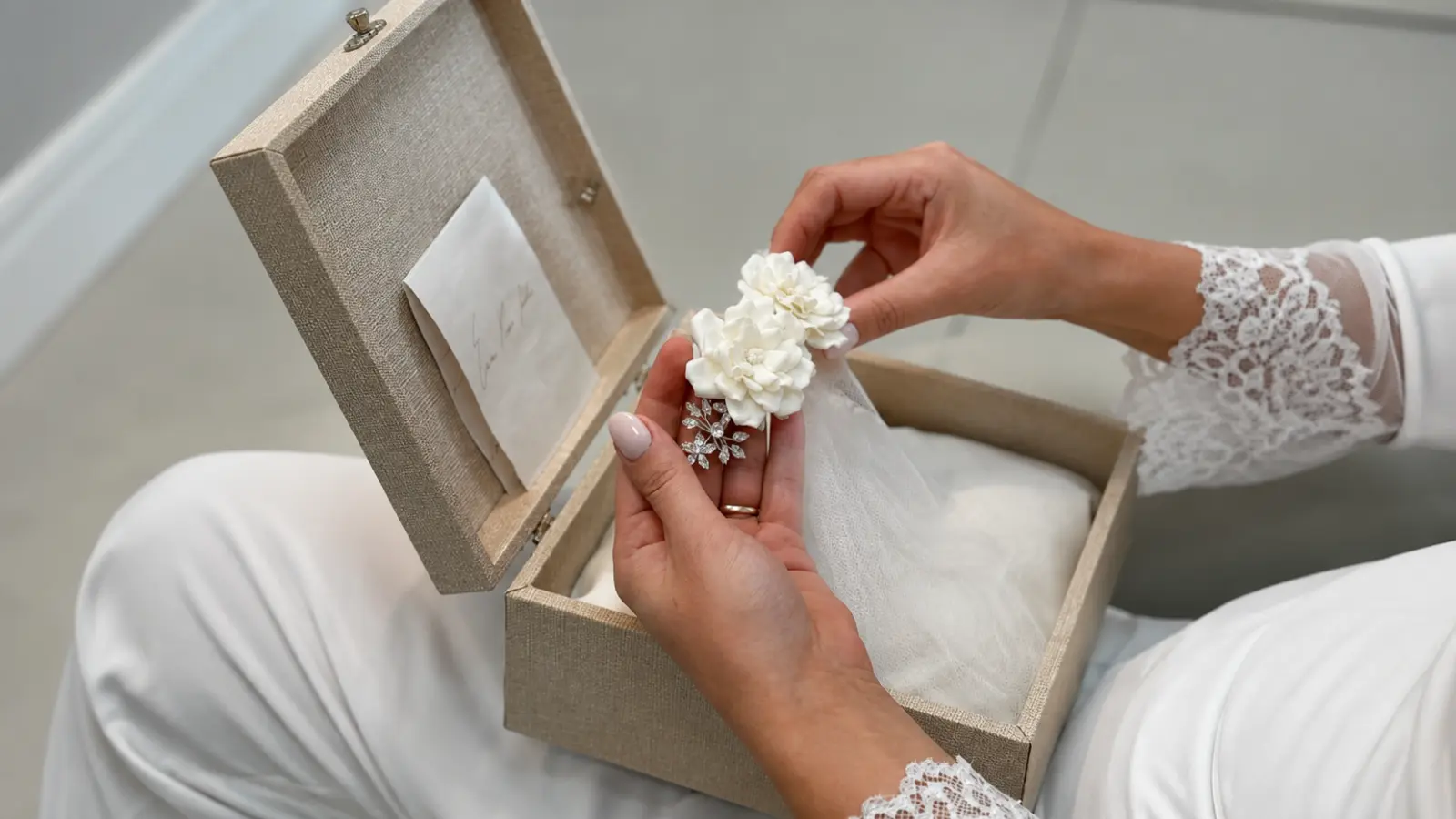
If you had your dress professionally preserved — boxed and sealed by a bridal preservation service — ask whether they can include the veil in the same box. Many do, either as part of the standard service or for a small additional fee. This keeps everything together and ensures the veil benefits from the same archival treatment as the dress. For the full step-by-step on what correct storage requires, see the checklist later in this article.
Display It: Shadow Box, Frame, or Wall Art
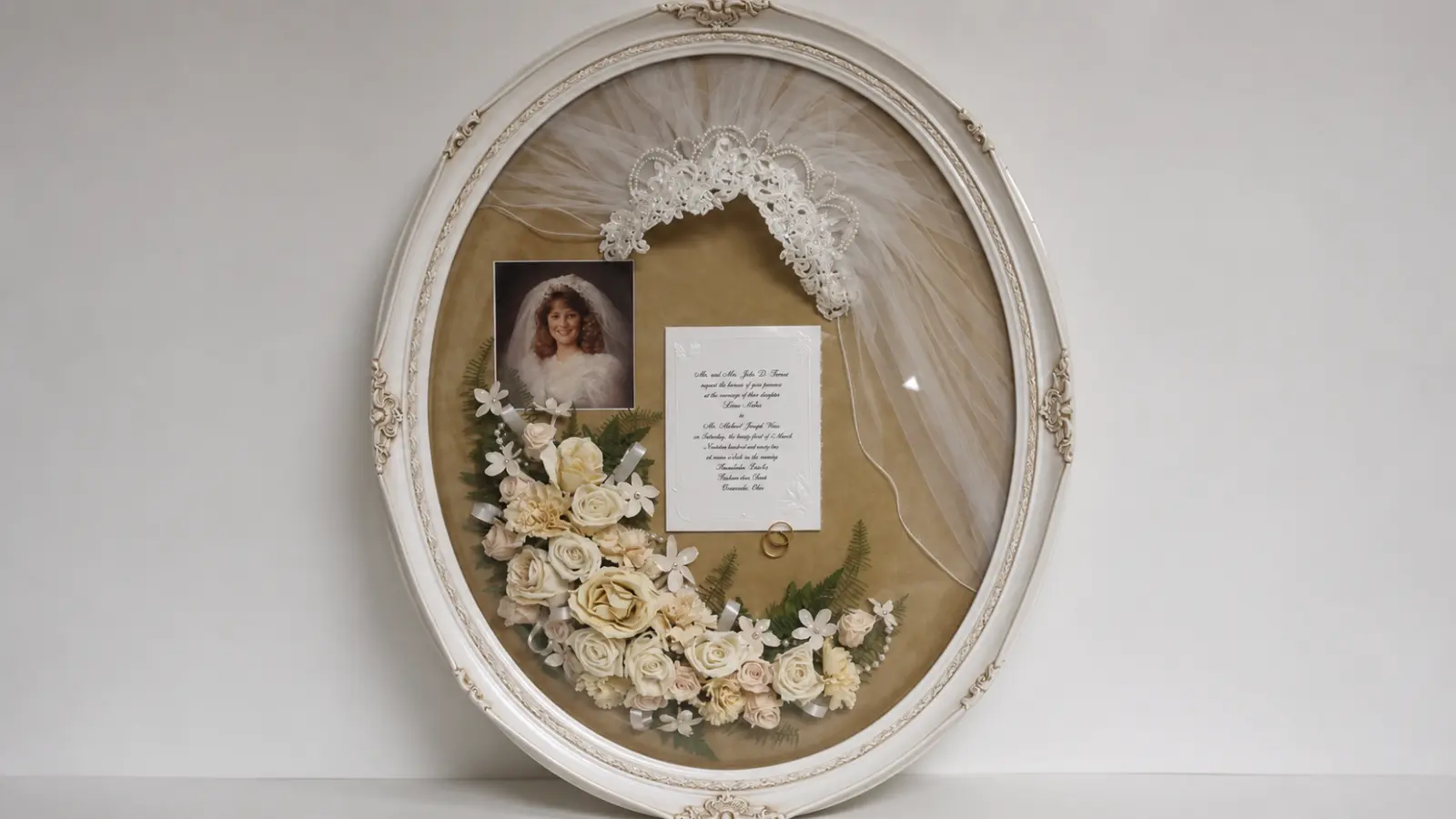
For brides who want the veil visible rather than boxed, display is a meaningful option. Done well, it turns a stored object into something you can actually see and appreciate. Done carelessly, it exposes the fabric to the light and humidity conditions that cause the most damage over time.
Shadow Box Display
A deep shadow box frame is the most common way to display a veil. The veil does not need to be fully laid out; a loose fold or soft gather, arranged intentionally in the frame, often looks more considered than trying to show the entire piece. Many brides pair the veil in a shadow box with other items from the wedding day: a small photo from the ceremony, a dried flower from the bouquet, a ribbon from the invitations, or a small memento from the day. The combination creates something that tells the story of the day more completely than any single object would.
The practical requirements: use a shadow box deep enough to accommodate the veil without compressing it. Use acid-free backing material inside the frame. Choose glass with UV protection, which reduces — though does not eliminate — the fading and yellowing that sunlight causes over time. And place it somewhere in your home that does not receive direct sunlight for most of the day.
Framed Wall Art
For a shorter or more delicate veil — a birdcage style, a mantilla, or a fingertip-length veil with a beautiful lace edge — framing it as flat wall art is an option that can look genuinely elegant. The veil is laid flat, positioned so the edge detail reads clearly, and mounted under glass in a large frame. This works best when the veil has a distinctive shape or a detail worth showing: a scalloped lace border, a specific embroidery motif, or an unusual silhouette. A plain, full tulle veil framed flat can look incomplete; the frame works better when there is something specific to see.
Pass It Down as a Family Heirloom
Passing a veil to a daughter, a niece, or another family member is one of the most meaningful things you can do with it — and also one of the most practical, because it removes the decision pressure from you entirely. The veil goes into proper storage with a clear purpose, and someone in your family wears it on their own day with its history intact.
The honest consideration here is how well the veil will hold up over time and whether its style will still work for whoever might wear it. A plain, well-made tulle veil in a classic length is a strong candidate for passing down. A very trend-specific style, an unusual length, or a veil with significant embellishment that was specifically chosen to match your dress may be harder to incorporate into a different bride’s look years or decades later. This is not a reason to rule out the heirloom path, but it is worth thinking about honestly before committing to it.
If you are keeping the veil specifically to pass it down, store it correctly from the start. The difference between a veil that is still beautiful twenty years later and one that has yellowed past wearing is almost entirely a function of how it was stored in the first years after the wedding. For more on the meaning and tradition behind veil inheritance, see our guide to wedding veil meaning and history.
Repurpose the Veil Into Something New
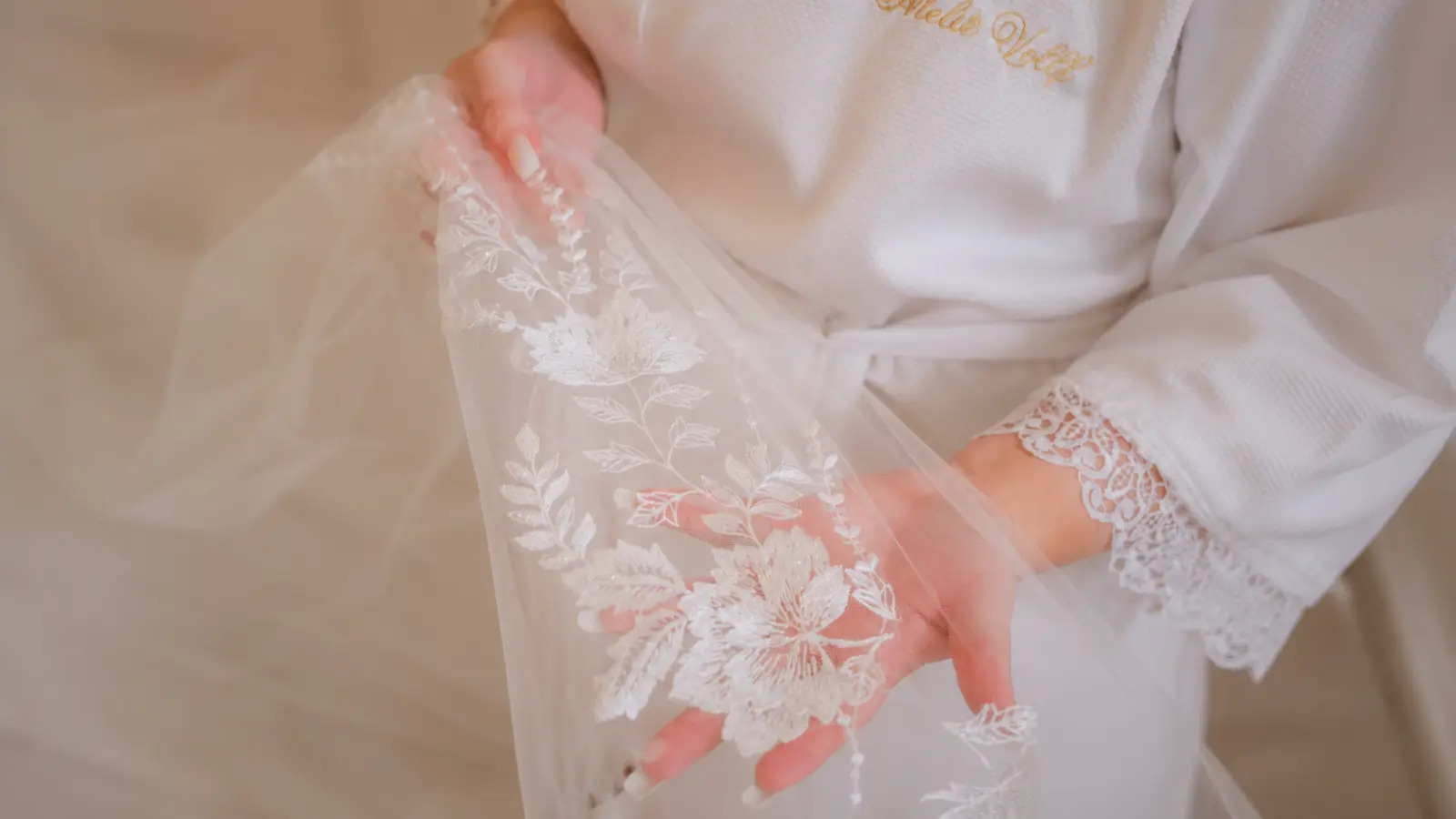
Repurposing gives the veil a second life in a different form, which appeals to brides who want to keep the fabric close without storing a veil indefinitely. The key to making this work is being realistic about what tulle and lace can become. Bridal veil fabric is delicate, sheer, and not as versatile as heavier fabrics — the repurposing ideas that work are specific ones, and they almost always require a skilled seamstress.
A few repurposing options that are genuinely achievable:
- A flower girl sash or skirt overlay. A layer of veil tulle sewn onto a simple skirt creates a delicate overlay effect for a flower girl or a young family member in a later ceremony. The work is relatively simple for a seamstress, and it gives the fabric a clear new purpose.
- A ring bearer pillow. A small portion of the veil’s fabric, particularly if it has lace or embroidery, can be fashioned into a ring bearer pillow for a sibling’s or child’s future wedding. The sentiment is obvious and the construction is straightforward.
- A christening accessory. In some families, veil fabric is incorporated into a christening gown or bonnet. This is a longer tradition than most people realize, and for a bride with strong family or religious ties, it carries real meaning.
- A framed art piece from the edge detail only. If the veil has a beautiful lace edge but the tulle itself is damaged or too large to display, a seamstress can cut and remount just the lace border as a standalone framed piece. This works particularly well for mantilla-style veils with significant lace.
What does not work as well: repurposing a plain tulle veil into clothing, table runners, or decorative items that require structural fabric. Bridal illusion tulle is too sheer and too fragile for most functional applications. The projects that succeed are the ones that use the fabric’s lightness as a feature, not as a limitation.
Use It for Anniversary or Boudoir Photos
If you are planning an anniversary photo session, a vow renewal, or a boudoir shoot in the years after your wedding, the veil has an obvious second use. It photographs beautifully in intimate and editorial settings, and wearing it again — in a different context, with more distance from the day — can be a genuinely moving experience for many couples.
The practical requirement is the same as for long-term storage: clean it and store it correctly so it is still in good condition when the session happens. Have it steamed before the shoot rather than trying to hand-smooth creases yourself. A garment steamer used carelessly on tulle can cause irreversible damage; a professional who handles bridal fabrics knows the right distance, temperature, and technique.
If the photo session is more than a year or two away, treat the veil the same as you would a long-term keepsake in the meantime. Do not leave it loosely folded in a bag on the assumption that you will deal with it closer to the date.
Sell It
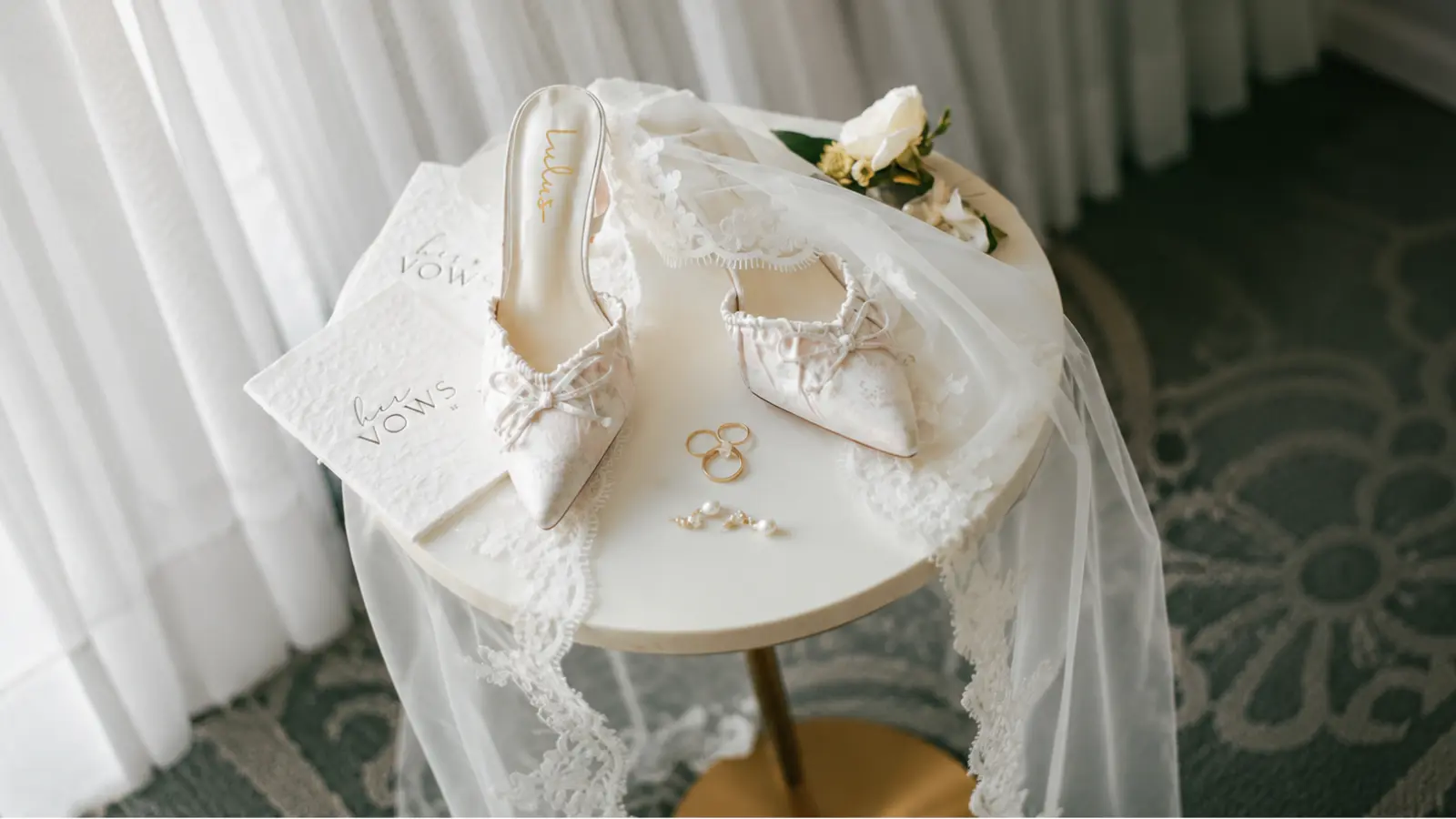
Selling a used wedding veil is a realistic option, and for brides who do not feel a strong attachment to the piece, it makes practical sense. Used veils sell consistently through resale platforms, local Facebook groups, bridal consignment shops, and peer-to-peer marketplaces. The key to a successful sale is managing expectations about price and presenting the veil honestly.
Used veils generally sell for 30 to 60 percent of their original retail price, and sometimes less for very plain or simple styles. Understanding the factors behind wedding veil cost — including fabric, length, lace, pearls, and custom work — can help you judge why some used veils retain more resale value than others. Condition matters significantly: a veil with hairspray residue, faint staining, or a bent comb will sell for less, or not at all. Clean it before you photograph it.
Photograph the veil on a clean, light background in natural daylight. Show the full length, the edge detail up close, and the comb or attachment point. In the listing, note the length in inches, the fabric type if you know it, the edge treatment, and any flaws honestly. Buyers of used bridal items expect transparency about condition; being upfront about a minor mark or a small repair protects you from disputes later.
Donate It
Donating a wedding veil is a meaningful option for brides who want it to be worn again by someone who genuinely needs it. Several nonprofit organizations across the United States accept bridal accessories, including veils, and provide them at no cost to brides facing financial hardship or personal circumstances that make buying new difficult. Brides Against Breast Cancer, Adorned in Grace, and various local bridal nonprofits are examples of organizations that have operated in this space, though availability and acceptance criteria vary by region and over time — it is worth searching for current programs in your area before assuming any specific one is still active.
Before donating, verify what the organization accepts. Some take veils in any condition; others have standards around cleaning, embellishment type, or minimum length. Clean the veil before donating, just as you would before selling or storing it, and package it carefully so it arrives in usable condition.
Donating does not require a grand gesture. Passing a veil to a friend, a coworker, or a family member who is engaged and cannot afford one is equally valid — and often more personal.
Storage Checklist
Whether you are keeping the veil indefinitely, waiting for an anniversary session, or holding it until a family member can use it, correct storage is what determines how it looks when you open the box years from now. Run through this checklist before putting it away.
- Clean the veil first. No exceptions. Invisible residues from hairspray, skin oils, and sweat cause yellowing that cannot be undone. Professional cleaning is the safest option for any veil with embellishment; plain tulle can sometimes be hand-washed gently in cool water and laid flat to dry.
- Allow it to dry completely. Any moisture sealed into a storage box will promote mildew. Even after professional cleaning, give the veil time to air fully before boxing it.
- Use acid-free tissue paper between folds. Regular tissue paper and packing paper contain acids that transfer to fabric over time. Acid-free tissue paper is inexpensive and prevents the color transfer and fiber breakdown that comes from contact with reactive materials.
- Fold loosely, not tightly. Tight folds create crease lines that, over time, become permanent. A loose, soft fold with tissue paper between the layers holds up far better.
- Store in an acid-free box or a breathable fabric bag. Plastic bags and bins trap moisture and off-gas chemicals that accelerate yellowing. An acid-free archival box or a cotton muslin bag allows the fabric to breathe.
- Choose the right location. Cool, dark, and dry — away from attics, basements, and exterior walls where temperature and humidity fluctuate. A closet shelf in a climate-controlled interior room is the most practical option for most homes.
- Keep it away from direct light. UV light fades and weakens fabric over time. Even indirect window light, accumulated over years, causes visible change in white and ivory fabrics.
- Check it periodically. Once a year, open the box, inspect the veil, and refold it in a slightly different configuration. This prevents permanent crease lines from setting and gives you a chance to catch any storage issues before they become irreversible.
If your veil was expensive, has significant embellishment, or is being kept as a potential heirloom, professional preservation is worth the cost. A bridal preservation service will clean, treat, and box the veil in archival conditions that are difficult to replicate at home. Ask the same professional who is handling your dress whether they include veil preservation in the package.
What to Avoid
A few common mistakes show up repeatedly when brides decide what to do with a veil after the wedding. Most are easy to avoid once you know to look for them.
- Storing it without cleaning it. Already covered — but worth repeating because it is the most consequential mistake. A veil that looks pristine coming off your hair may still be carrying invisible residue that will yellow the fabric within months.
- Using plastic bags or bins for long-term storage. Plastic traps moisture and releases compounds that react with fabric. Even a zip-lock bag can cause damage over years. Use acid-free materials instead.
- Hanging it for storage. Hanging a veil on a hook or hanger for months stretches the tulle at the attachment point and distorts the shape. Veils should be stored flat or loosely folded, never hanging.
- Keeping it in an attic or basement. Temperature and humidity fluctuations in these spaces are exactly the conditions that age fabric most rapidly. What goes in looking white and crisp can come out looking yellowed and brittle.
- Attempting DIY repairs before selling or donating. If the veil has a small tear, a loose pearl, or a bent comb, resist the impulse to fix it yourself unless you have genuine experience with delicate fabric. A poorly repaired veil is less valuable than an honestly described one with a known minor flaw.
- Framing it without UV-protective glass. Standard glass provides no UV protection. A framed veil in a sunny room with standard glass will show visible fading within a few years. UV-filtering glass or acrylic is the practical choice for any display meant to last.
The thread through most of these is the same: neglect is the real enemy of a veil after the wedding, not the decision you make about what to do with it. A few straightforward choices in the first weeks after the wedding determine how the veil looks in every scenario that follows.
Wedding Veil Keepsake Inspiration
Discover beautiful wedding veil keepsake inspiration featuring elegant shadow boxes, framed veil displays, heirloom storage ideas, sentimental bridal keepsakes, and creative ways to preserve or repurpose your wedding veil after the celebration.
What Should You Do With Your Wedding Veil?
There is no single right answer for what to do with your wedding veil after the wedding. Whether you choose to preserve it as a family heirloom, display it as meaningful artwork, donate it, sell it, or transform it into a new keepsake, the best decision is the one that reflects the memories and meaning your veil holds for you.
The most important step comes before any of those choices: cleaning and storing the veil properly. By protecting the fabric immediately after the wedding, you preserve every future possibility and ensure your veil remains beautiful for years—or even generations—to come.
Frequently asked questions (FAQ)
What should you do with your wedding veil first after the wedding?
Before deciding whether to keep, sell, donate, or repurpose your veil, have it cleaned. Invisible residues from hairspray, skin oils, and perspiration can permanently yellow the fabric if it sits untreated for too long.
Should I clean my wedding veil before storing it?
Yes. Cleaning is the most important step in preserving a wedding veil. Professional cleaning is recommended for embellished veils, while very simple tulle styles may sometimes be washed gently by hand.
How do you store a wedding veil long-term?
Store the veil only after it is completely clean and dry. Fold it loosely with acid-free tissue paper, place it in an acid-free box or breathable fabric bag, and keep it in a cool, dry, dark location away from sunlight and humidity.
How do you display a wedding veil in a shadow box?
Arrange the veil in soft folds inside a deep shadow box together with meaningful keepsakes such as a wedding photo or bouquet flower. Always use acid-free materials and UV-protective glass to reduce long-term fabric damage.
Can you sell a used wedding veil?
Yes. Well-maintained veils sell regularly through bridal resale platforms and consignment shops. Detailed listings, accurate measurements, and honest descriptions help attract buyers and improve resale value.
What can you do with a wedding veil besides keeping it?
You can frame it, donate it, pass it down as a family heirloom, repurpose part of the fabric into another meaningful item, or sell it so another bride can wear it. The best option depends on the sentimental value the veil holds for you.
Is it better to keep or sell your wedding veil?
There is no universal answer. Brides who see the veil as a family keepsake often preserve it, while others prefer selling or donating it so it continues to be used. The right choice depends on whether its emotional value is greater than its financial value.