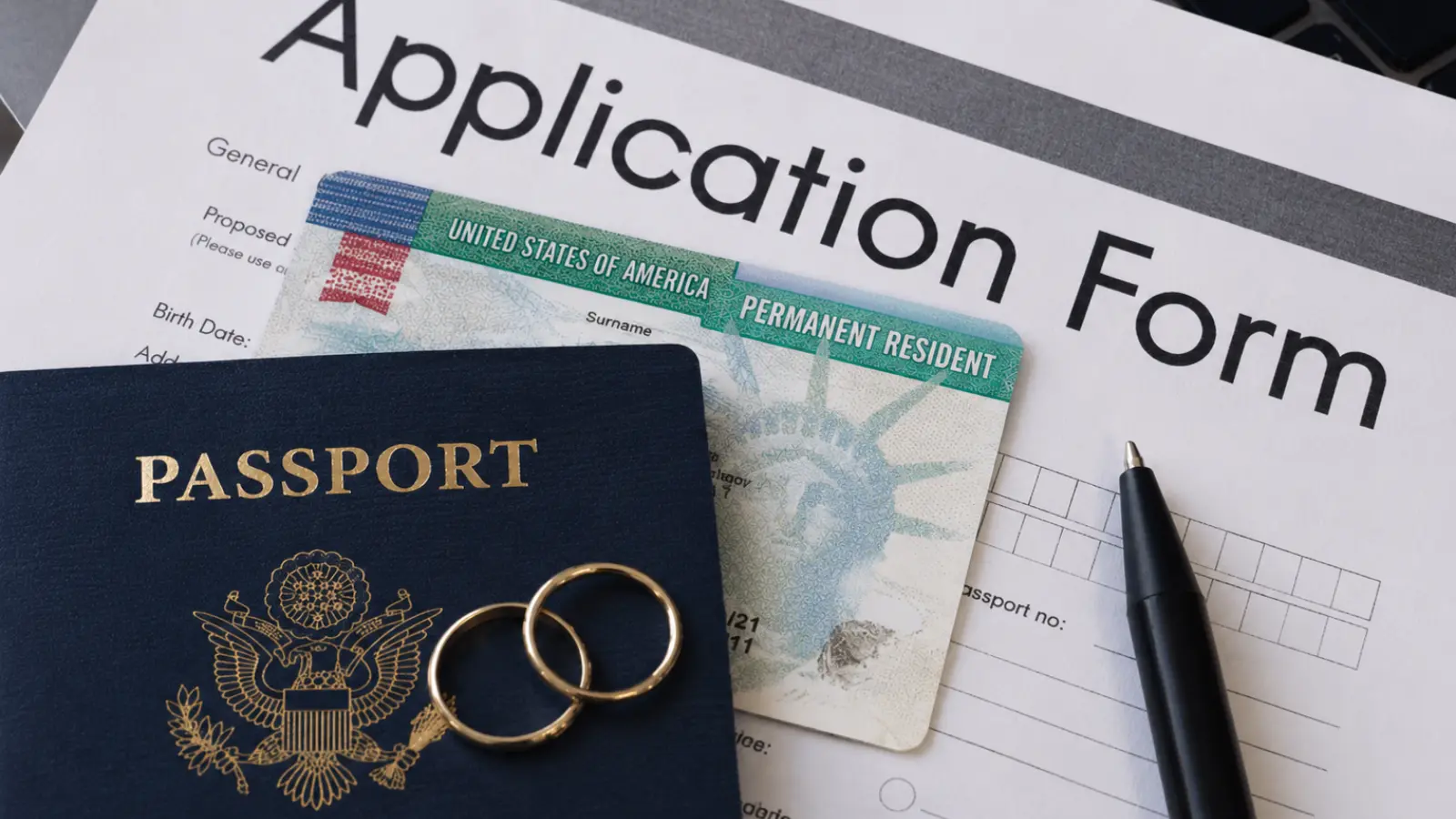
Getting married abroad legal requirements depend on the country and locality where the legal ceremony takes place. A destination wedding can be symbolic, legally binding, or both, but a ceremony abroad does not automatically create a valid marriage unless the couple follows the local eligibility, document, ceremony, registration, and filing rules.
Depending on the destination, couples may need passports, certified birth records, proof that previous marriages ended, residency or waiting periods, an affidavit of eligibility to marry, certified translations, apostilles or other authentication, a local marriage license, an authorized officiant, witnesses, and an official foreign marriage certificate after the ceremony.
This guide explains getting married abroad legal requirements from beginning to end, including how to decide between a legal foreign marriage and a symbolic destination ceremony, which documents may be required, how residency and timing work, when translations and apostilles may be necessary, how foreign marriage certificates are issued, how U.S. recognition generally works, and what couples should prepare before traveling and after returning home.
A Legal Marriage and a Destination Celebration Are Not the Same
A destination wedding can be ceremonial, legal, or both. The distinction depends on whether the couple completes the foreign country’s legally required process and whether the event is registered with the proper civil authority.
There are three common structures:
- Legal marriage abroad. The couple follows local law, completes the authorized ceremony, registers it, and receives a foreign marriage certificate.
- Legal marriage in the United States first. The destination event is a symbolic celebration with no second marriage application.
- Destination celebration first and U.S. marriage later. The overseas event has personal meaning, but legal marital status begins only after the later U.S. marriage.
Destination wedding legal requirements should be confirmed with the government authority, not inferred from a venue’s use of “legal ceremony.” Ask who issues the authorization, registers the marriage, and provides the final certificate.
Local Marriage Law Controls
The destination’s law determines eligibility, license procedure, ceremony authority, witnesses, registration, and proof. Citizenship or residence in the United States does not exempt a traveler from those rules.
The U.S. Department of State’s official marriage-abroad guidance advises couples to investigate requirements before travel. Marriage abroad requirements may include residency, age rules, proof that prior marriages ended, translations, authentication, and proof of legal ability to marry.
Start with the foreign civil registry, municipality, court, ministry, or other office that issues marriage records at the ceremony location. An embassy page, tourism office, or venue can help identify the authority, but the civil authority should confirm the operative requirements. General U.S. marriage license requirements can help couples recognize document categories, but they cannot be substituted for the destination country’s application or eligibility rules.
Marriage Abroad Documents and Requirements
The exact list depends on the destination, but most countries draw from the same pool of civil documents. Use this table as a starting checklist, then confirm the specifics with the local authority.
| Requirement | Why Needed | Issued By | Authentication Possible | Verify Before Travel |
|---|---|---|---|---|
| Passport or identity document | Identity, nationality, and age | National government | Usually not for the passport itself | Validity, name, accepted copy |
| Birth certificate | Birth facts, age, or parentage | State or vital-records authority | Apostille or authentication may apply | Long form, issue date, certified copy |
| Divorce, annulment, or death record | Proof a prior marriage ended | Court or vital-records authority | Frequently possible | Finality, certification, issue date |
| Affidavit of eligibility to marry | Statement of legal capacity or single status | Applicant, notary, or authority specified locally | Notarization or authentication may apply | Required wording and age of document |
| Residency evidence | Satisfy local presence requirement | Hotel, immigration, municipal, or other records | Depends on evidence | Required days and qualifying proof |
| Certified translation | Make foreign-language records acceptable | Translator accepted by receiving authority | Translator signature may need certification | Translator qualifications and format |
| Foreign marriage license or authorization | Permission to complete the marriage | Local civil authority | Normally not needed before local use | Application, waiting period, expiration |
| Foreign marriage certificate | Official proof after registration | Foreign civil registry or designated authority | Apostille or legalization may apply | Certified version, copies, processing time |
Treat this list as a planning baseline, not a guarantee. Some destinations ask for less; others add requirements this table cannot anticipate, which is why the civil authority has the final word.
Residency, Waiting Periods, and Timing
Some destinations allow nonresidents to marry after a short application process. Others require one or both parties to be present for a defined period before applying or before the ceremony.
Clarify whether “residency” means legal domicile, continuous physical presence, hotel registration, immigration entry, or a specified number of business days. Arrival and departure days may be counted differently, and public holidays can affect office availability.
Build the timeline backward from the ceremony and include:
- document-ordering time in the United States;
- apostille or authentication processing;
- translation and correction time;
- foreign application appointments;
- residency or waiting periods;
- license validity and ceremony scheduling;
- post-ceremony registration and certificate issuance.
A working-day requirement can make a trip legally impractical. Confirm dates before purchasing nonrefundable travel.
Identification and Birth Certificates
Passports are commonly used for identity and nationality, but the local authority may also request a birth certificate, entry record, residence evidence, or copies in a prescribed format.
Ask whether the birth certificate must be long-form, recently issued, certified, translated, and authenticated. A hospital keepsake or ordinary photocopy may not qualify as a civil record. Names should also be consistent across every document; if they differ because of a prior marriage, adoption, court order, or transliteration, ask which connecting documents are required.
The guide to a certified copy of a marriage certificate explains the broader distinction between an official government-certified record and a normal photocopy. The same distinction matters when preparing other civil records for international use.
Previous Divorce, Annulment, or Death Records
A person who was previously married may need to prove that every prior marriage ended legally. Depending on the destination, acceptable proof can include a final divorce decree, annulment order, or former spouse’s death certificate.
Confirm whether the full judgment or a short certificate is required, whether a recent certified copy is necessary, and whether an additional waiting period applies. A decree marked “filed” is not always final, so verify the court signature, seal, certification, and finality language.
Affidavit of Eligibility to Marry
Some countries request proof that a person is legally free to marry. The document may be called an affidavit of eligibility, affidavit of marital status, certificate of no impediment, single-status declaration, or another local term.
The United States does not maintain one national registry that enables the federal government to certify a citizen’s current marital status. An applicant may be able to make a written eligibility statement and schedule a consular notarial appointment when needed abroad.
Notarization verifies the signing process; it does not make the U.S. government a guarantor of the statement’s truth or establish that the destination will accept it. Obtain the required wording, supporting records, issue-date limit, notarization, translation, and authentication instructions before drafting the affidavit.
Translations
Marriage abroad documents may need translation into the destination’s official language before the application. Later, the foreign marriage certificate may need an English translation for a U.S. agency.
“Certified translation” is not universally defined. The receiving authority may require:
- a sworn or court-approved translator;
- a translator registered in that country;
- a signed certification of accuracy and competence;
- notarization of the translator’s signature;
- translation of seals, stamps, marginal notes, and reverse-side text;
- the original document attached to the translation.
Do not translate names, dates, or legal terms casually. Compare every field after translation, especially different date formats and accented characters.
Apostille, Authentication, and Legalization
Authentication confirms the origin of a public document or the authority behind its signature and seal. It does not confirm that the document’s factual contents are true and does not by itself create a valid marriage.
Under the Apostille Convention, an apostille replaces the traditional legalization chain for covered public documents moving between participating jurisdictions. The Hague Conference’s official Apostille Section explains that the certificate is issued by a designated competent authority in the place where the document originates.
The applicable route depends on the direction the document is traveling:
- a U.S. birth certificate used abroad follows the route for its U.S. issuing authority;
- a foreign marriage certificate used in the United States follows the route of the country where it originated.
If the relevant countries or document fall outside the Convention’s operation, consular legalization or another authentication chain may apply, and the receiving authority should state what it accepts.
The dedicated guide to a marriage certificate apostille explains certified copies, competent authorities, Hague and non-Hague routes, translations, and common rejections in greater detail.
Local Officiant and Witnesses
The destination’s law decides who may solemnize the marriage. The authorized person may be a civil registrar, mayor, judge, religious representative, notary, or another locally defined official, and a resort celebrant, planner, ship captain, or friend does not become authorized merely by leading the event. Ask for the person’s legal category, credentials, and filing responsibility.
Witness rules can include a minimum number, age, identification, physical presence, nationality, or signature requirement. Some venues provide witnesses, but the civil authority should confirm that the arrangement satisfies local law.
EVORÉ’s wedding officiant guide distinguishes ceremonial skill from legal authority. That distinction becomes more important abroad because unfamiliar titles may not translate directly into U.S. categories.
The Foreign Marriage Certificate
The ceremony document, decorative certificate, local license, and final civil record may be different items. Before traveling home, determine which document proves that the marriage was registered.
The official certificate should ordinarily come from the foreign civil registry or another authority designated by local law. Check names, dates, place, registration number, signatures, and seals as soon as the document is available.
Ask whether:
- registration happens automatically after the ceremony;
- the couple or officiant must file a return;
- the certificate is issued immediately or later;
- a multilingual or international version exists;
- certified copies can be ordered before departure;
- an apostille can be obtained locally after issuance.
The marriage certificate guide explains original records, certified copies, informational copies, common uses, errors, and corrections. Foreign terminology varies, so identify the legal function rather than relying only on the document title.
The comparison of marriage license vs marriage certificate also helps distinguish pre-ceremony authorization from the proof created after registration.
What a U.S. Embassy or Consulate Cannot Do
A U.S. embassy is not an overseas county clerk. Department of State guidance states that U.S. embassy and consulate employees cannot perform marriages in foreign countries; local law determines who can perform them.
Diplomatic premises do not remove the ceremony from the host country’s law. An embassy generally does not issue the foreign marriage license, register the marriage in place of local authorities, or convert the result into a U.S. marriage certificate.
Consular staff may provide information, identify local resources, or perform an available notarial service. Those services do not replace local eligibility, solemnization, registration, or certificate requirements.
Is a Foreign Marriage Valid in the U.S.?
The search question “is foreign marriage valid in US” has a generally favorable but qualified answer. A marriage validly performed under the law of the place of celebration is generally recognized in the United States, subject to applicable state and federal rules and limited exceptions.
Recognition is not the same as exchanging the foreign record for a new federal certificate. There is no universal U.S. re-registration process; the foreign marriage certificate remains the foundational proof.
A state agency, federal agency, employer, insurer, court, bank, or other recipient may ask for:
- an original or certified foreign certificate;
- a complete certified English translation;
- an apostille, authentication, or legalization;
- identification connecting current and certificate names;
- additional evidence when the record is unavailable or unusual.
The Department of State advises contacting the attorney general’s office in the state of residence regarding recognition and required documentation. If substantial rights depend on recognition, obtain advice for that specific state and use rather than relying on a venue’s assurance.
Immigration Use, Briefly
For immigration purposes, the place-of-celebration rule is a starting point, but a case can also involve federal definitions, prior marriages, evidence, procedures, and exceptions beyond this article.
The USCIS Policy Manual states the general rule that a marriage is valid for immigration purposes when valid under the law of the jurisdiction where it was performed. The Department of State’s civil-document instructions require records from the official issuing authority and address certified translations and evidence that prior marriages ended.
A marriage certificate is evidence, not an approved petition or visa. Couples with immigration consequences should follow the instructions for the exact benefit and obtain qualified assistance when needed.
Alternative: Legal U.S. Marriage and Symbolic Ceremony Abroad
Getting legally married overseas may be worthwhile when the country is personally meaningful and the couple can satisfy its process. It is not mandatory for a destination celebration.
A legal U.S. marriage before the trip can avoid foreign residency, civil-document, translation, authentication, and registration requirements. The destination event can still include vows, rings, readings, cultural traditions, guests, and a full celebration.
This approach is often practical when:
- the trip is too short for a residency or waiting period;
- certified or authenticated records cannot arrive in time;
- the venue offers only symbolic ceremonies;
- local law limits who can officiate or marry there;
- the foreign certificate would be difficult to obtain or use later.
Tell the venue and ceremony leader that the event is symbolic. Do not sign a foreign marriage application or civil return unless the couple intends to complete that country’s legal process, and do not misstate current marital status.
Getting Copies After Returning Home
A U.S. state vital-records office generally cannot issue a replacement for a marriage recorded by a foreign government. Requests usually go to the foreign civil registry or other authority that holds the record.
Before leaving, save:
- the registry name, address, and website;
- the record or registration number;
- payment instructions and accepted currency;
- request methods, such as online, by mail, through a representative, or in person only.
The guide on how to get a copy of a marriage certificate explains the general ordering workflow, certified versus informational copies, identity evidence, processing, missing records, and fraudulent websites. For a foreign record, the country of registration remains the starting point.
Order more than one certified copy when future access is difficult, but do not apostille every copy automatically. Authentication should be matched to a known receiving authority and use.
A Practical Legal Timeline
Six to Twelve Months Before Travel
Decide whether the marriage will be legal abroad. Identify the civil authority and confirm residency, eligibility, document age, officiant, witness, registration, and certificate rules.
Three to Six Months Before Travel
Order certified birth, divorce, annulment, or death records. Complete required apostilles or authentication in the correct sequence and arrange accepted translations.
During the Trip
Complete the local application, preserve receipts, review the license, conduct the authorized ceremony, obtain signatures, and confirm who registers the marriage.
After Returning to the United States
Secure the original record, complete any required English translation, and use the after-marriage checklist for name, identity, employer, insurance, financial, and other administrative updates.
Common Legal and Document Mistakes
Assuming the Venue Handles Everything
A package may coordinate the ceremony without securing the legal license, registration, certificate, or authentication.
Using Unofficial Document Copies
Scans, hospital records, decorative certificates, and uncertified court printouts may not satisfy a foreign civil authority.
Completing Authentication in the Wrong Order
The document’s issuing authority, destination, and intended use determine the correct apostille or legalization route.
Confusing the Ceremony Paper with the Registered Record
The document handed over at the venue may not be the foreign marriage certificate needed for later official use.
Leaving Without Ordering Proof
International replacement requests can be slow, expensive, and difficult when the couple lacks the registration number and local office details.
Decide Where the Legal Marriage Will Happen First
Getting married abroad can create a legally valid marriage, but the destination celebration and the legal marriage should never be treated as automatically identical. The strongest plan begins by deciding whether the foreign ceremony will actually create the marriage or whether the couple will complete the legal process in the United States and use the destination event as a symbolic celebration.
If the marriage will occur abroad, verify the destination’s current eligibility rules, required civil documents, residency and timing requirements, translation and authentication standards, officiant and witness rules, registration procedure, and process for obtaining the final marriage certificate. Preparing those steps before travel makes the foreign marriage easier to document and use later in the United States.
Frequently asked questions (FAQ)
What are the legal requirements for getting married abroad?
The requirements depend on the country and locality where the legal marriage takes place. Couples may need passports, birth certificates, proof that prior marriages ended, residency or waiting periods, an affidavit of eligibility to marry, certified translations, document authentication, a local marriage license or authorization, an approved officiant, witnesses, civil registration, and an official foreign marriage certificate.
Is a foreign marriage valid in the United States?
A marriage that was legally performed under the law of the place where it occurred is generally recognized in the United States, subject to applicable state and federal rules and limited exceptions. For official use, a U.S. agency may require the foreign marriage certificate, a certified English translation, authentication or an apostille, and other supporting documentation.
Can a U.S. embassy or consulate perform a marriage abroad?
No. U.S. embassy and consulate employees cannot perform marriages abroad, and they do not replace the foreign civil authority that creates and records the marriage. A consular office may provide certain notarial services or information when available, but the couple must still satisfy the destination country’s legal marriage requirements.
Do you need an apostille for a marriage certificate from another country?
Not always. Whether an apostille or another form of authentication is required depends on the country that issued the certificate, the receiving authority, and the intended use. When the Apostille Convention applies, the apostille is issued by a designated competent authority in the country where the document originated.
Do you need a marriage license to get married abroad?
The destination country determines which authorization is required. Some jurisdictions issue a marriage license, while others use civil applications, certificates of legal capacity, registry appointments, or differently named documents. Couples should follow the process required by the local civil authority rather than assuming the U.S. marriage-license system applies abroad.
Is it easier to marry legally in the U.S. and have a symbolic wedding abroad?
Often, yes. Marrying legally in the United States first can avoid foreign residency, eligibility, translation, authentication, officiant, and registration requirements while allowing the couple to hold a full destination celebration overseas. The foreign event should then be treated clearly as symbolic rather than as a second legal marriage process.

About the Author
Débora Justo
Founder and editor of EVORÉ, creating practical wedding planning resources, thoughtful inspiration and useful tools for the decisions that shape a celebration.
Read more about the author →