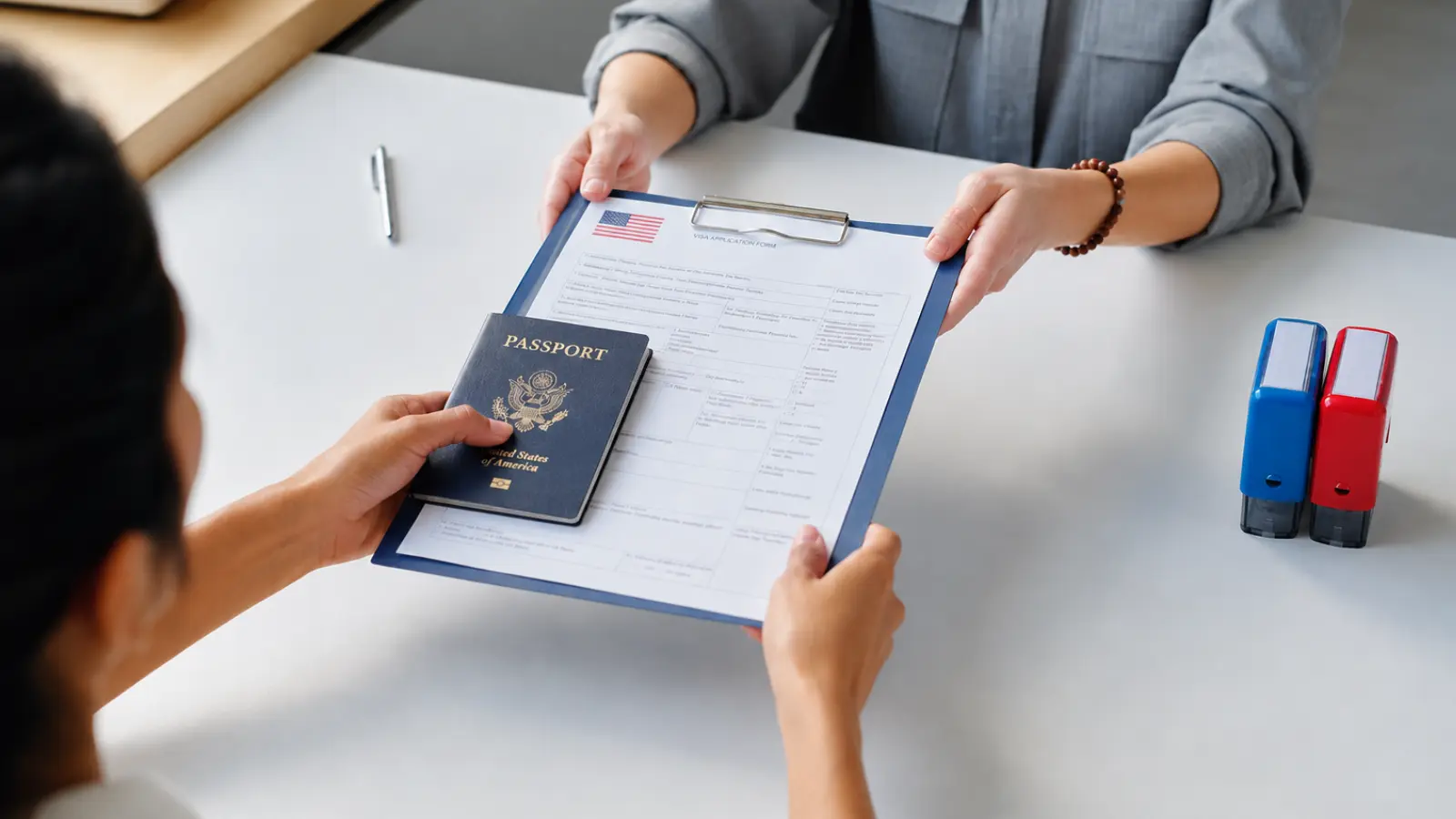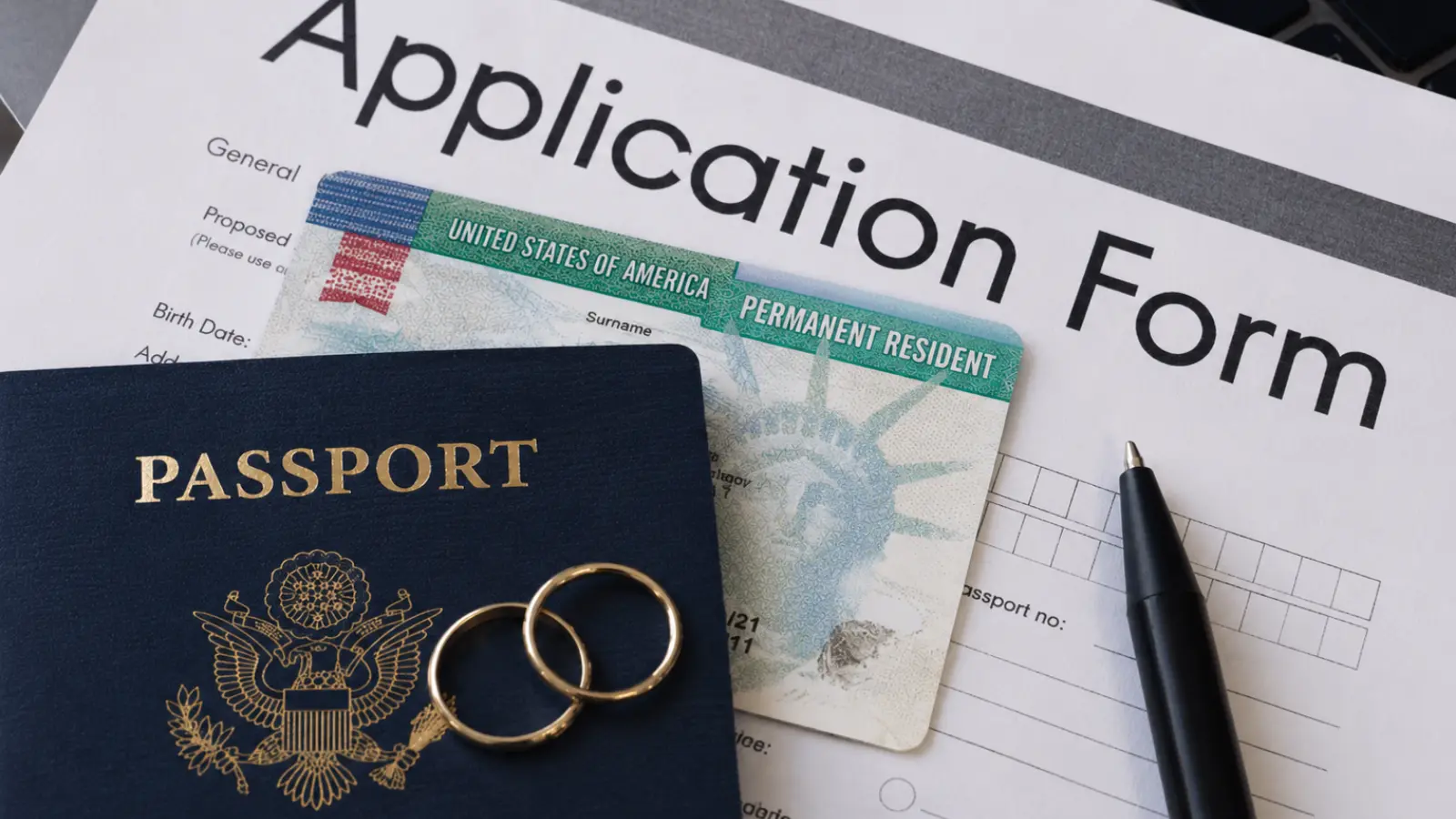

A proxy marriage is a legally authorized marriage in which a representative stands in for one absent party during the ceremony. In the much less common double proxy format, representatives may stand in for both parties. Neither arrangement is a general remote-wedding option, and availability depends entirely on the law of the jurisdiction where the marriage is formed.
Even when proxy marriage is permitted, the couple must still satisfy the applicable marriage-license, eligibility, consent, authorization, officiant, ceremony, signature, and filing requirements. Military status, residency, deployment, written proxy authorization, notarization, or other conditions may also apply, depending on the jurisdiction and the type of proxy marriage involved.
This proxy marriage guide explains how single and double proxy marriages work, where they may be authorized, which documents and representatives may be required, how the marriage license and ceremony are completed, how the certificate is recorded, and why validity in the state where the marriage was formed does not automatically determine recognition by another state, federal agency, benefits program, or U.S. immigration authority.
What Is a Proxy Marriage?
A proxy represents an absent person during a legally significant event. In a proxy wedding, that representative participates in the ceremony on the absent party’s behalf under authority recognized by the jurisdiction.
The representative is not becoming married and does not replace the absent party’s identity or consent. The marriage is between the two named applicants. The proxy performs only the role permitted by the written authorization and applicable law.
A valid process may require:
- a state law expressly allowing proxy solemnization;
- qualifying military, residency, deployment, or other circumstances;
- a marriage license application signed as directed;
- a notarized affidavit or written proxy authorization;
- identity evidence for the absent party and representative;
- an authorized officiant willing to conduct the ceremony;
- accurate completion and return of the certificate.
Video participation is not automatically marriage by proxy. A remote ceremony may involve both parties appearing electronically, while a proxy ceremony uses a third person to stand in for an absent party. Each format requires its own legal authority.
Single Proxy vs Double Proxy Marriage
The two formats differ in how many representatives stand in for the couple, and the difference matters because most laws only authorize one of them:
- Single proxy marriage. One intended spouse is present at the ceremony, and a representative acts for the absent person. Most laws and forms that mention “a party” or “the absent party” should not be expanded beyond their text.
- Double proxy marriage. Neither intended spouse is physically present, and two representatives participate. This option is substantially rarer and may be subject to special military, residency, appearance, or fee provisions.
Montana is closely associated with the double-proxy format. Its current solemnization statute permits a party who cannot be present to authorize a third person in writing and requires one party to be on federal active duty or a Montana resident at the license application. An official Montana court fee schedule separately identifies a double-proxy marriage license, but that example does not create double-proxy authority elsewhere; the exact statute, license form, court practice, and current eligibility rule must support both absences.
Proxy marriage is also different from a self-uniting marriage. In self-uniting marriage, the couple performs the legal solemnization without a separate officiant; in proxy marriage, a representative appears because an intended spouse is absent.
Why Couples Consider Marriage by Proxy
The most established context is military separation. A service member may be deployed or stationed where travel to the ceremony is impossible, while the other party and the authorized representatives complete a state process.
Other circumstances sometimes associated with proxy requests include government-contract work supporting military operations, serious travel barriers, confinement, or exceptional inability to attend. Their legal relevance depends entirely on the statute. A personal hardship does not qualify unless the governing law recognizes it.
A proxy process should not be selected merely to save time, avoid an appointment, obtain benefits sooner, or work around a law that requires presence. If the facts do not fit the authorized category, the couple should wait, choose a lawful in-person route, or obtain advice about another legitimate option.
Proxy Marriage States and Jurisdiction Availability
Searches for “proxy marriage states” often suggest that one current list will answer every question. It cannot. States can authorize different formats, limit eligibility, amend statutes, and assign application details to clerks or courts.
Availability should be tested through five questions:
- Does current law authorize proxy solemnization?
- Does it permit one absent party, both absent parties, or only a defined category?
- Which residency, military, age, and incapacity conditions apply?
- Who must appear for the application and ceremony?
- Which office issues and records the marriage?
Colorado provides a useful contrast with Montana. Denver’s official marriage FAQ describes a proxy route tied to armed-forces members and government contractors supporting U.S. military operations, along with residency, age, application, affidavit, identification, and power-of-attorney conditions.
These examples illustrate variation; they are not a nationwide directory. Confirm current law before relying on a company, social-media post, or old county form.
Formation and Recognition Questions
The same seven checkpoints keep coming up as a proxy marriage moves from license to ceremony to later use, and each one splits into a state-law question and a separate recognition question. This table lays out that split so nothing gets confused along the way.
| Question | State-Law Issue | Federal/Other Recognition Issue | Official Source to Check |
|---|---|---|---|
| May a party be absent? | Statutory eligibility and permitted proxy format | Absence may trigger a purpose-specific federal rule | State legislature, issuing court or clerk |
| Who applies for the license? | Appearance, signature, affidavit, identity, and residency | Later agency may review formation evidence | Marriage-license office |
| Who represents the absent party? | Written authorization and proxy qualifications | Representative does not establish later eligibility | Statute, court, clerk, approved form |
| Who conducts the ceremony? | Authorized officiant and required declarations | Agency may ask whether ceremony was valid | Solemnization statute and officiant authority |
| Is the certificate recorded? | Completion, signatures, return, and registration | Certificate may not satisfy every purpose alone | Recording office and vital records |
| Will another state recognize it? | Validity where celebrated and receiving-state law | Benefits or federal rules may add conditions | Receiving-state authority and relevant agency |
| Does it qualify for immigration? | Valid state-law marriage is the starting point | Post-ceremony consummation rule may apply | USCIS, Department of State, federal law |
Notice that almost every row has two answers, not one. A “yes” from the state that formed the marriage is rarely the same question as a “yes” from the agency or state being asked to accept it later.
Marriage License Application
A proxy marriage still begins with the correct marriage license. The issuing jurisdiction determines whether both parties sign, who must appear, whether an absentee affidavit is accepted, and which identity or status evidence is required.
Possible documents include:
- completed marriage application;
- government identification for both parties;
- proof of residence or federal active-duty status;
- notarized absentee affidavit;
- written power of attorney or proxy designation;
- identity information for the representative;
- proof that previous marriages ended;
- court authorization when the statute provides that route.
The applicable marriage license requirements still govern age, capacity, prohibited relationships, prior marriages, identification, timing, and license validity. Proxy authorization addresses absence, not ordinary eligibility.
Do not use a general financial or medical power of attorney without confirmation. The marriage statute or clerk may require ceremony-specific wording, notarization, identification, effective dates, or an approved form.
The Proxy Representative
The representative’s role is limited. That person appears, responds, signs, or participates only as authorized for the absent party and does not exercise independent judgment about whether the absent person wishes to marry.
A reliable authorization should identify the intended spouses, representative, ceremony jurisdiction, permitted acts, date or validity period, signature, and required notarization. The officiant and issuing office may need to review it before the ceremony.
Consent must be current and voluntary. If the authorization is revoked, inconsistent, expired, or doubtful, the process should stop until the authority is resolved.
Ceremony and Officiant Responsibilities
Proxy does not mean officiant-free. The ceremony normally requires a person authorized under the formation state’s law who is willing to solemnize a marriage involving an absent party.
The officiant may need to verify:
- the valid marriage license;
- the absent party’s qualifying circumstances;
- written authorization and consent;
- the identity and role of the proxy;
- required declarations and witness participation;
- the correct certificate fields and return procedure.
Official permission to issue a proxy license does not require every officiant to accept the ceremony. The guide to who can officiate a wedding explains why ceremonial willingness and legal authority must both be confirmed.
A proxy ceremony can include personal vows, readings, rings, guests, and remote communication with the absent party when allowed. Those choices do not replace the statutory act or cure a defective authorization.
Marriage Certificate and Recording
After the ceremony, the officiant or other responsible person completes the marriage certificate and returns it to the issuing or recording office. The exact form may identify the proxy, absent party, officiant, ceremony place, date, and authority.
The guide to marriage license vs marriage certificate explains why the pre-ceremony authorization and post-ceremony proof are different. A license issued for a proxy marriage does not prove that the ceremony and filing were completed.
Confirm recording before using marital status for insurance, benefits, taxes, identity updates, or another legal purpose. Obtain a marriage certificate or certified copy from the official record holder rather than relying only on the ceremony document.
Recognition in Other States
A marriage valid where celebrated is generally evaluated under the same recognition principle applied to other out-of-state marriages. Proxy marriage recognition can nevertheless raise additional questions because the receiving authority may want evidence of the formation state’s law, written authorization, and proper recording.
The receiving state may consider:
- whether the formation jurisdiction authorized the exact proxy format;
- whether all eligibility and consent requirements were met;
- whether its own law or public policy creates an exception;
- which benefit, proceeding, or document request is involved;
- whether the certificate and supporting records are sufficient.
Do not assume that a driver’s-license office, insurer, pension plan, court, or employer will answer recognition identically. The legal status and the evidence required for a transaction are related but separate issues.
A certified copy of the marriage certificate is normally stronger proof than a photocopy, but an unusual certificate may still require explanation or verification from the issuing office.
Federal Recognition Is a Separate Question
State-law validity is the starting point for many federal programs, not always the final answer. Each statute, regulation, and agency can define spouse, marriage, evidence, residence, or effective dates for its own purpose.
A couple should identify the exact federal use:
- immigration or visa classification;
- military enrollment or benefits;
- Social Security or another federal benefit;
- federal tax filing;
- employee, retirement, or survivor benefits.
The office administering that use should confirm its current recognition and evidence rules. A vendor’s statement that a proxy marriage is “federally recognized” is too broad to answer a purpose-specific question.
Immigration Recognition and Consummation
Federal immigration law treats certain proxy marriages differently when the parties were not physically present together during the marriage ceremony.
The USCIS Policy Manual explains that a proxy marriage must be consummated after the ceremony before it can qualify as a spousal relationship under the applicable immigration rule. Consummation means marital relations after the legal ceremony; a relationship before the proxy wedding does not satisfy that timing requirement. This is an additional federal requirement, not a finding that the state marriage never existed, so a proxy marriage can be valid under formation law while not yet meeting the federal definition for a particular immigration benefit.
Evidence, exceptions, bona fides, prior marriages, petition requirements, and visa procedures are outside this article. Couples facing immigration consequences should use current USCIS and Department of State instructions and obtain qualified guidance.
Military Context
Military deployment explains many modern proxy laws, but the armed forces do not issue the marriage license or create the marriage. State law controls formation.
Eligibility may depend on:
- federal active-duty status;
- stationing or deployment outside the state or country;
- support for combat or another military operation;
- government-contractor status tied to military support;
- proof of orders, assignment, residence, or identity.
Military status can open a state-law route without guaranteeing enrollment in a benefits system. The couple should separately confirm the recorded certificate and the evidence requested by the relevant military office.
For a service member or contractor stationed overseas, the guide to getting married abroad legal requirements explains the alternative of marrying under foreign local law and the documents needed for later U.S. use.
Risks and Common Problems
Using an Outdated State List
Statutes and administrative practices change. Verify the current law, not only an article naming proxy marriage states.
Assuming Hardship Creates Eligibility
Deployment, illness, incarceration, travel expense, or scheduling matters only if the law recognizes the circumstance.
Using the Wrong Power of Attorney
A broad document may not contain the marriage-specific consent, identification, notarization, and authority required.
Confusing Application Absence with Ceremony Proxy
An absentee license application does not necessarily authorize an absent party during solemnization. Each stage needs separate authority.
Relying Entirely on a Commercial Provider
A company can coordinate documents without controlling the clerk, officiant, formation law, receiving state, or federal agency.
Failing to Confirm Recording
Benefits and identity updates can stall if the certificate was incomplete, returned late, or never entered into the public record.
Assuming One Recognition Decision Controls Every Use
Acceptance by one office does not bind a different state, federal agency, insurer, court, or benefits program.
Verification Checklist
The risks above share one root cause: skipping a step because an earlier one went smoothly. Work through the full sequence, in order, before treating the process as settled.
- Identify the formation jurisdiction. Confirm where the license will be issued, ceremony performed, and certificate recorded.
- Read current official law. Determine whether single or double proxy is authorized and under which conditions.
- Confirm eligibility. Verify age, residence, military or contractor status, prior marriages, and reason for absence.
- Confirm each appearance. Ask who must appear for application, license issuance, ceremony, and filing.
- Obtain approved documents. Use the required affidavit, proxy authorization, identification, and notarization.
- Verify the officiant. Confirm authority and willingness to perform the proxy ceremony.
- Review the certificate. Check names, roles, signatures, date, place, return method, and deadline.
- Confirm recording. Search or contact the official record holder and order certified proof.
- Check the intended use separately. Ask the receiving state, federal agency, court, employer, or program what it recognizes and requires.
Preserve copies of the statute, clerk instructions, written authorization, affidavits, ceremony documents, recorded certificate, and delivery confirmations. The marriage records guide explains the distinction between searchable indexes, official verification, and certified documents.
Verify Formation and Recognition Separately
A proxy marriage can be legally valid when the jurisdiction where it is formed expressly permits the applicable proxy procedure and every requirement for eligibility, consent, representation, solemnization, and recording is satisfied. That does not mean proxy marriage is universally available or that one state’s procedure can be used elsewhere.
After confirming that the marriage can be legally formed, evaluate recognition for the specific purpose separately. Another state, federal agency, court, benefits program, employer, or immigration authority may apply its own rules or request additional evidence. Treating formation, interstate recognition, and purpose-specific federal recognition as separate legal checkpoints is the safest way to evaluate a proxy marriage.
Frequently asked questions (FAQ)
What is a proxy marriage?
A proxy marriage is a legally authorized marriage in which a representative stands in for one absent party during the ceremony, or in much narrower cases representatives stand in for both parties. The marriage must still satisfy the applicable rules for eligibility, consent, licensing, representation, solemnization, signatures, and recording.
What is the difference between a single and double proxy marriage?
In a single proxy marriage, one intended spouse is present while a representative acts for the absent spouse. In a double proxy marriage, neither intended spouse is physically present and representatives act for both. Double proxy marriage is significantly more limited and must be expressly supported by the applicable law and procedure.
Is proxy marriage legal in the United States?
It can be legal in jurisdictions that specifically authorize the relevant proxy-marriage procedure. It is not a nationwide option available to every couple. Eligibility may depend on residency, military or contractor status, the reason for absence, written authorization, application procedures, and other state-specific requirements.
Does a proxy marriage require a power of attorney?
A proxy marriage often requires written authorization for the representative, but the exact document depends on the jurisdiction. A general power of attorney should not automatically be assumed sufficient. The issuing office may require a marriage-specific authorization, affidavit, notarization, approved form, or particular wording.
Will another state recognize a proxy marriage?
A proxy marriage that was validly formed under the law of the place where it occurred may generally be considered for recognition elsewhere, but the answer can depend on the receiving state, the purpose for which recognition is requested, public-policy rules, and the available evidence. A recorded certified marriage certificate may also be required.
Does a proxy marriage count for U.S. immigration purposes?
Not automatically. U.S. immigration law applies an additional rule to certain marriages in which the parties were not physically present together during the ceremony. USCIS generally requires the marriage to have been consummated after the ceremony before it can qualify as a spousal relationship for the relevant immigration purpose.

About the Author
Débora Justo
Founder and editor of EVORÉ, creating practical wedding planning resources, thoughtful inspiration and useful tools for the decisions that shape a celebration.
Read more about the author →