
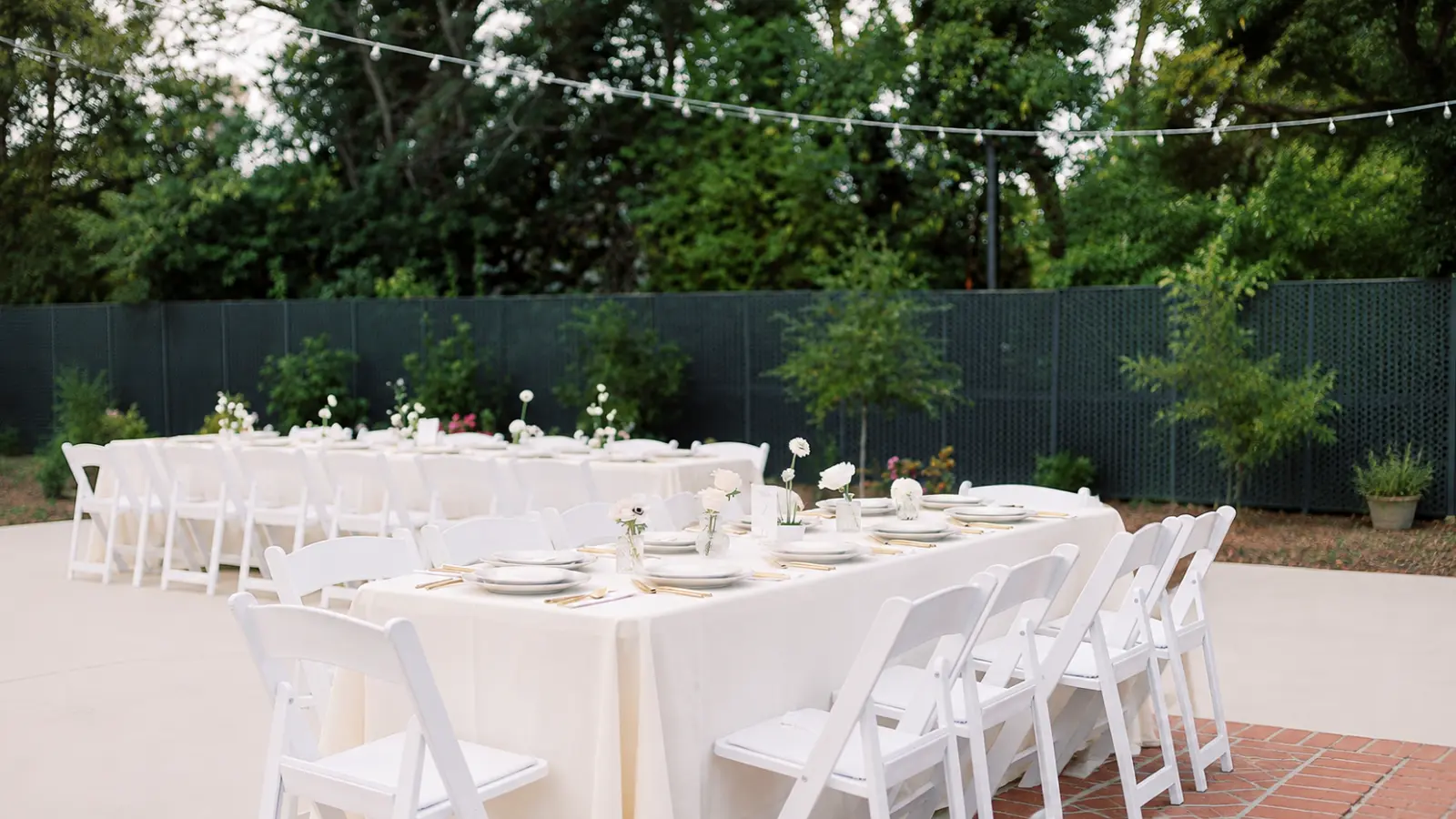
Learning how to plan a small wedding is not simply learning how to shrink a larger one. A reduced guest count can change the structure of the entire celebration: different venues become possible, seating can feel more conversational, food service can become more flexible, entertainment can match a smaller room, and the couple can realistically spend more time with each person invited.
The important decision is not whether your wedding fits someone else’s numerical definition of “small.” It is whether you are intentionally limiting attendance enough for the guest count to shape the experience rather than simply reduce the number of chairs.
This guide shows how to plan a small wedding around that structural advantage, from the guest list, venue, and budget to the ceremony, reception, seating, food, entertainment, and photography. The goal is to build a celebration that feels intentionally designed for fewer people instead of using a large-wedding format at a smaller scale.
Start With the Guest Count, Not the Venue
The guest count is the defining structural decision in small wedding planning. Set the maximum number you are genuinely willing to host before a venue’s capacity, package, or aesthetic starts pushing the list upward.
A small wedding can mean different things to different couples, and major wedding publications use different numerical definitions. The more useful approach is to decide what “small” needs to accomplish for you. Perhaps you want enough time to speak with every guest, one dinner table instead of a room of separate groups, a restaurant buyout rather than a ballroom, or a budget that prioritizes food and photography over headcount.
Write down the experience the smaller list is meant to protect. That becomes the standard for every later decision.
What a Smaller Guest Count Changes
Fewer guests create advantages, but only if the wedding is designed to use them. The table below shows where a reduced count can open options—and where couples sometimes assume the savings or simplicity will be larger than they actually are.
| Decision | Small Wedding Advantage | Watch Out |
|---|---|---|
| Guest List | More time with each person and clearer relationship priorities | Family pressure, plus-ones, and exceptions can expand the list quickly |
| Venue | Restaurants, private rooms, courtyards, homes, galleries, and smaller venue spaces become viable | Large rooms can feel empty; some venues have fixed fees or minimums |
| Budget | More flexibility to redirect spending toward priorities | Photography, attire, music, rentals, and site fees may not shrink with guest count |
| Ceremony | Closer seating and stronger visibility of personal moments | An oversized ceremony setup can undermine the intimate scale |
| Seating | Long tables, one-table dinners, or compact layouts may work well | One awkward relationship can affect the entire room more noticeably |
| Food | Restaurant-style dining or more detailed service may become practical | Minimum spends and staffing can still apply |
| Entertainment | Music and activities can be tailored to the group’s actual energy | A large production can overpower a small room |
| Photography | More guest interactions can realistically be documented | Do not assume fewer guests means much less coverage is needed |
The strongest small weddings use the guest count as permission to choose a different format, not simply a smaller floor plan.
Build a Guest List That Can Stay Small
A small guest list needs a clear invitation rule before individual names become emotional negotiations. Decide which relationship tier belongs at the wedding, then apply the rule consistently enough that the list does not expand one exception at a time.
Start with the people you would actively notice missing. Then decide how you are handling spouses or established partners, plus-ones, children, extended family, coworkers, family friends, and parental invitations.
If parents or relatives are contributing names, set their allowance before the venue is booked. A 40-person plan can become a 70-person plan surprisingly quickly when each side adds “just a few” people—and every invitation should represent a seat you are actually prepared to provide, not a name added because you expect them to decline.
Choose a Venue That Fits the Group
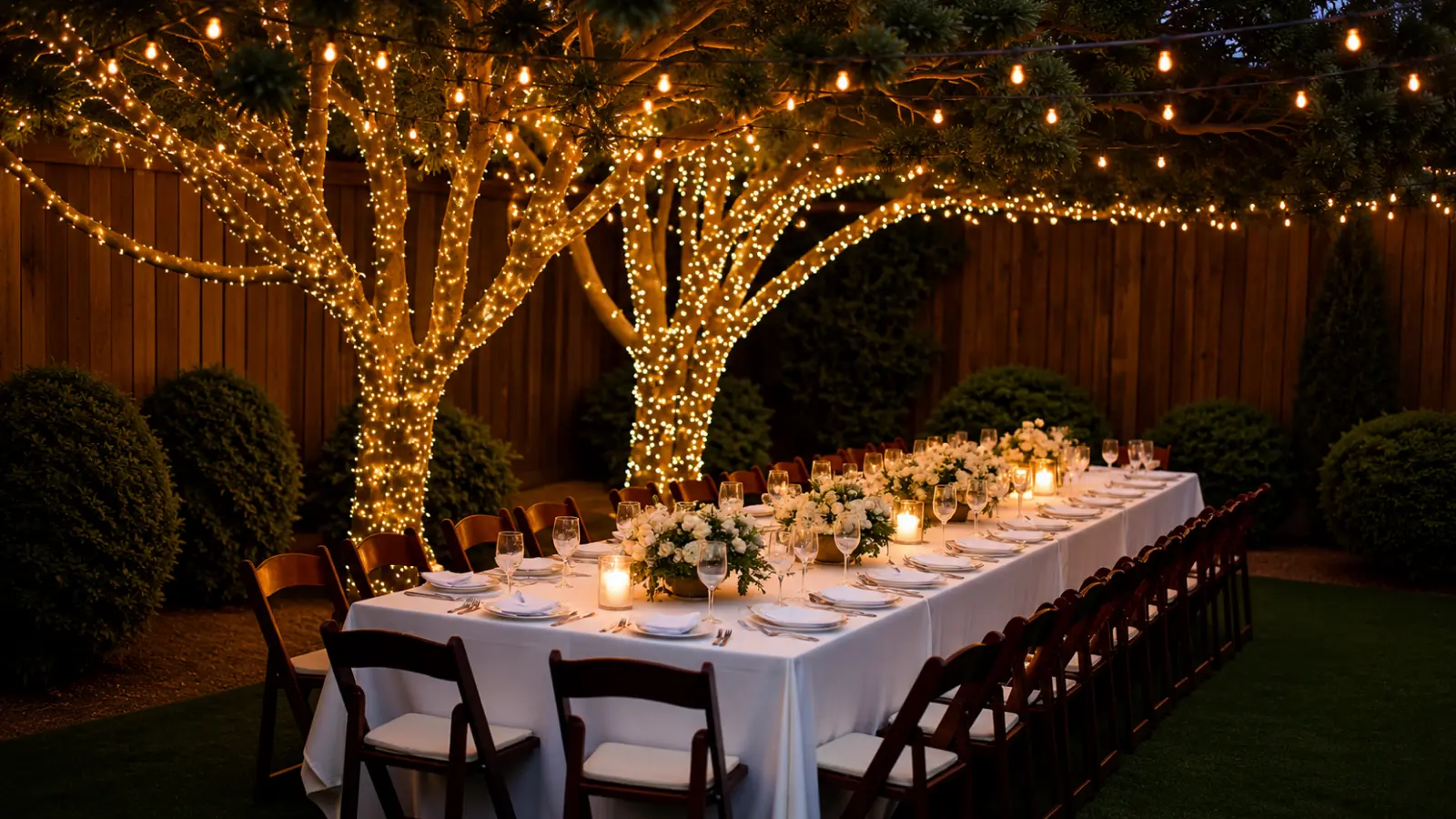
A smaller guest list widens the venue search in useful ways. Restaurants, private dining rooms, courtyards, boutique hotels, galleries, gardens, homes, and smaller spaces inside traditional venues may become realistic options.
The key is scale. A venue should feel appropriately occupied when your expected guest count is seated, dining, and moving through the event. Too much empty space can make a deliberately small wedding feel unfinished rather than intimate.
At the same time, small does not automatically mean inexpensive. Some venues have site fees, food-and-beverage minimums, staffing requirements, or rental costs that remain largely fixed regardless of attendance, so compare the total event a venue creates rather than simply whether the room can hold your guest count.
Use the Budget Differently, Not Automatically Less
A smaller guest count can reduce variable costs such as meals, drinks, rentals, stationery quantities, and some transportation needs. It does not reduce every category in the same proportion.
Photography coverage, attire, entertainment, planning, ceremony services, florals, and venue site fees may remain similar whether 35 people attend or 135. That means a small wedding can cost less overall, but it can also cost a similar amount with more spending per guest.
Decide which outcome you actually want. You may use the smaller list to lower the total spending ceiling, redirect money into priorities, or combine both approaches—the reduced count is a budget lever, not a promise that every proposal will suddenly be smaller.
Make the Ceremony Work at Close Range
A small ceremony can feel especially personal because guests are physically closer to the couple and to one another. Use that proximity intentionally.
Avoid creating a long aisle or wide seating layout simply because that is how the venue normally stages a ceremony. Chairs can often be arranged more compactly, curved slightly toward the couple, or grouped around a meaningful focal point when the property allows it.
Sound still matters. A small guest count does not guarantee everyone can hear vows outdoors or in a reverberant room, so evaluate acoustics rather than assuming amplification is unnecessary—the goal is a ceremony that feels designed for the people present, not a large ceremony waiting for missing rows.
Design the Reception for Conversation
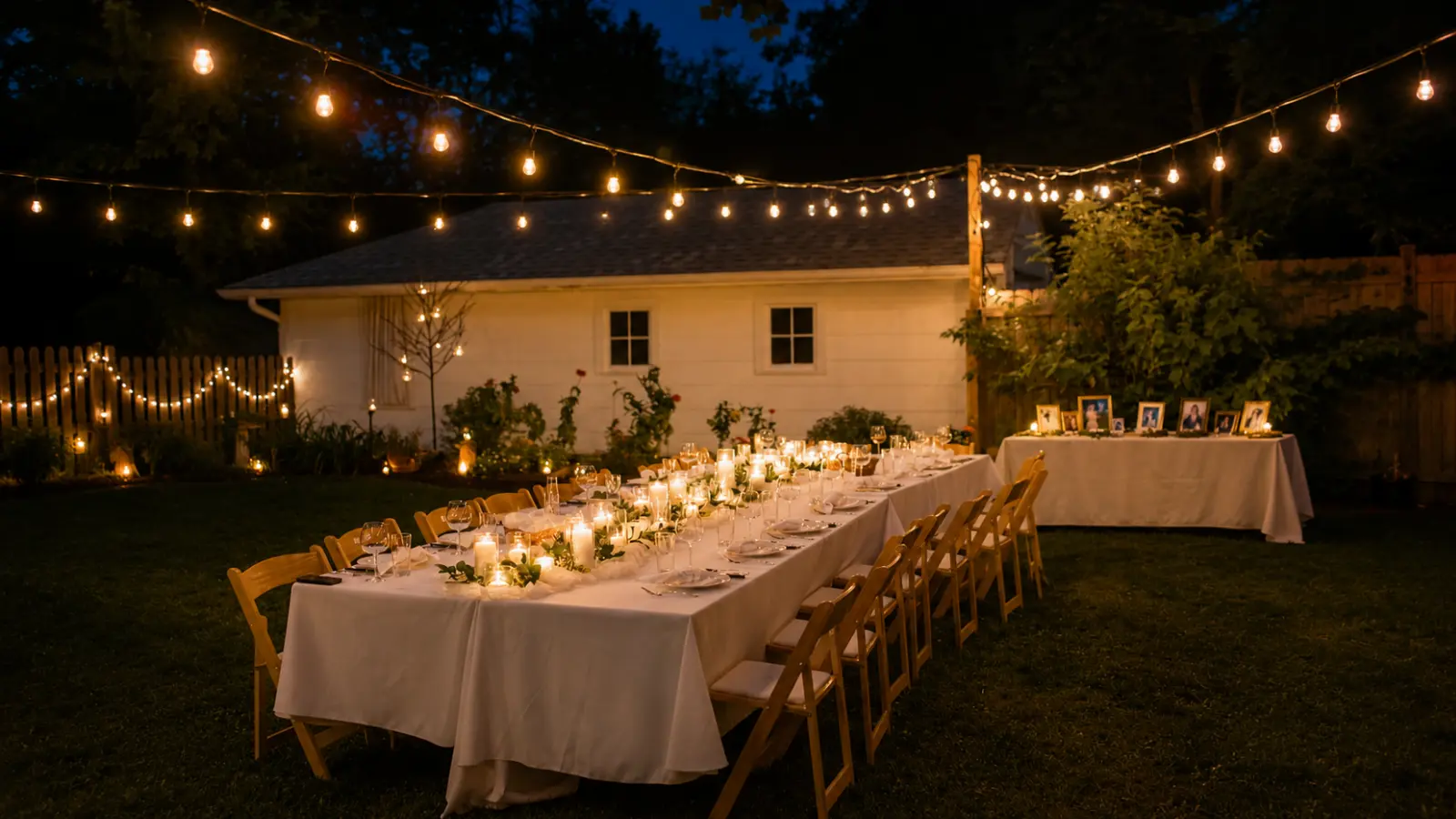
At a small wedding, the reception can function more like one shared social experience than several separate tables happening in parallel.
That opens options such as one long dinner table, a U-shaped layout, a private restaurant room, family-style dining, a cocktail-and-dinner format, or a seated meal where the couple can realistically interact with everyone.
Do not over-program the evening simply because fewer guests make the schedule easier to control. A small group often benefits from more conversational space, not more activities—build the reception around what the group will naturally enjoy together.
Rethink Seating Instead of Copying a Ballroom Layout
Seating has more social weight when there are fewer tables. At a large wedding, one imperfect table assignment affects a small part of the room. At a small wedding, one uncomfortable pairing can influence the entire dinner.
Use the reduced count to prioritize conversation. Long tables can work well when the group already has connections across families and friend circles. Several smaller tables may be better when relationships are more segmented or when accessibility and movement require additional flexibility.
The couple can also choose to sit centrally rather than at a separate sweetheart table if that better supports the experience—the layout should serve human interaction first and symmetry second.
Choose Food Service for the Room You Actually Have
Food can become one of the strongest advantages of a smaller wedding because fewer guests may open formats that are difficult to execute at scale.
A restaurant dinner, family-style meal, tasting menu, chef-led experience, elevated brunch, or more detailed plated service may become practical depending on the venue and budget.
But small weddings still need operational clarity. Ask about minimum spend, staffing, kitchen capacity, dietary needs, service timing, bar structure, cake or dessert service, and whether the room is private during the event—fewer plates do not eliminate food-service logistics, they simply create more freedom to choose what those plates can be.
Match Entertainment to the Energy of the Group
A small wedding does not require minimal entertainment. It requires entertainment that feels proportionate to the room and the people in it.
A solo musician, duo, small band, DJ, curated playlist with professional sound, live performance, or interactive activity can all work. The right choice depends on whether the group wants to dance, talk, dine slowly, or move between several experiences.
If dancing matters, make sure the room still creates enough energy for it. A small dance floor can feel lively; a large empty ballroom can make the same number of dancers feel sparse. Entertainment should support the scale rather than trying to make the wedding feel larger than it is.
Plan Photography Around Access and Interaction
Photography can take advantage of a small wedding because the photographer has a realistic chance to document more of the guest interactions that matter to the couple.
That does not automatically mean fewer hours of coverage are needed. Getting ready, ceremony, portraits, dinner, speeches, dancing, and evening events still happen on a timeline even when fewer people attend.
Instead of reducing coverage purely by headcount, decide what parts of the day deserve documentation. A smaller group may also make a full guest photograph, more family combinations, or candid images with nearly every attendee easier to accomplish—use the smaller list to deepen the record of the day, not simply shorten it.
A Small Wedding Checklist Before You Book
Before signing major contracts, make sure the reduced guest count is actually shaping the wedding rather than sitting beside a standard large-event plan.
- Guest-count ceiling: agree on the maximum before venue shopping.
- Invitation rules: settle plus-ones, children, extended family, and parental additions.
- Venue scale: confirm the room feels appropriate at your expected attendance.
- Budget intention: decide whether fewer guests should lower total spending, increase spending per guest, or both.
- Reception format: choose seating, food, and entertainment that benefit from a smaller group.
- Fixed costs: identify fees that will not shrink just because the guest list does.
If those six decisions are clear, the rest of the plan can stay intentionally small instead of gradually expanding into a different wedding.
Let the Smaller Guest List Shape the Wedding
The best reason to plan a small wedding is not simply to invite fewer people. It is to create a celebration that works differently because fewer people are there — with spaces that feel appropriately scaled, seating that supports conversation, food and entertainment that fit the group, and more time to actually connect with the people you invited.
Protect the guest-count ceiling once you set it, then let that decision guide the rest of the plan. When the venue, reception, budget, and guest experience are designed around the smaller group from the beginning, the wedding feels intentional rather than reduced.
Frequently asked questions (FAQ)
How many guests are considered a small wedding?
There is no universal number that defines a small wedding. The more useful approach is to choose a guest-count ceiling that supports the experience you want, whether that means spending meaningful time with every guest, using a smaller venue, sharing one dinner table, or creating a more conversational celebration.
How do you keep a small wedding guest list from growing?
Set your invitation rules before discussing individual names. Decide how you will handle partners, plus-ones, children, extended family, coworkers, family friends, and parental additions, then apply those rules consistently. Treat every invitation as a seat you are genuinely prepared to provide rather than assuming some guests will decline.
Is a small wedding always less expensive?
No. Fewer guests can reduce variable costs such as catering, drinks, rentals, stationery, and some transportation, but many expenses do not shrink much with attendance. Venue fees, photography, attire, entertainment, planning, and other fixed costs may remain similar, so a smaller wedding can lower the total cost or simply allow more spending per guest.
Can you have a full reception at a small wedding?
Yes. A small wedding can still include a complete reception with dinner, speeches, music, dancing, cake, and other traditions you want to keep. The advantage of fewer guests is that you can adapt the format to the group, using options such as a private dining room, one long table, family-style service, or a smaller dance floor.
How do you keep a small wedding from feeling empty?
Choose a venue and layout that are proportionate to the number of guests. Smaller rooms, compact seating, appropriately sized ceremony areas, and a dance floor that matches the group usually feel more intentional than placing a small number of people in a large ballroom. The goal is to make the space feel designed for the attendance you actually expect.
Can a small wedding still feel formal?
Yes. Formality comes from the setting, attire, service, invitations, food, music, timing, and overall way the event is hosted, not from the number of guests. A small wedding can be highly formal, just as a much larger celebration can be relaxed and casual.