

Learning how to plan a surprise wedding starts with one important distinction: the couple knows they are getting married and is planning the wedding together. The surprise is for the guests, who are invited to what appears to be an engagement party, birthday, reunion, anniversary, or another believable event and discover the real celebration only after they arrive.
That extra layer changes several parts of wedding planning. The cover story needs to be convincing enough to protect the secret, formal enough to get guests dressed appropriately, and important enough that the people you care about actually attend. The venue and vendors also need to support a reveal without giving the wedding away too early.
This guide shows how to plan a surprise wedding around those specific challenges, including the cover event, guest list, attendance risk, venue, vendor coordination, legal logistics, dress code, reveal, and photography. The wedding itself can follow a familiar structure — the real planning difference is making sure the surprise survives without compromising the experience.
Choose a Cover Event That Can Carry the Weight
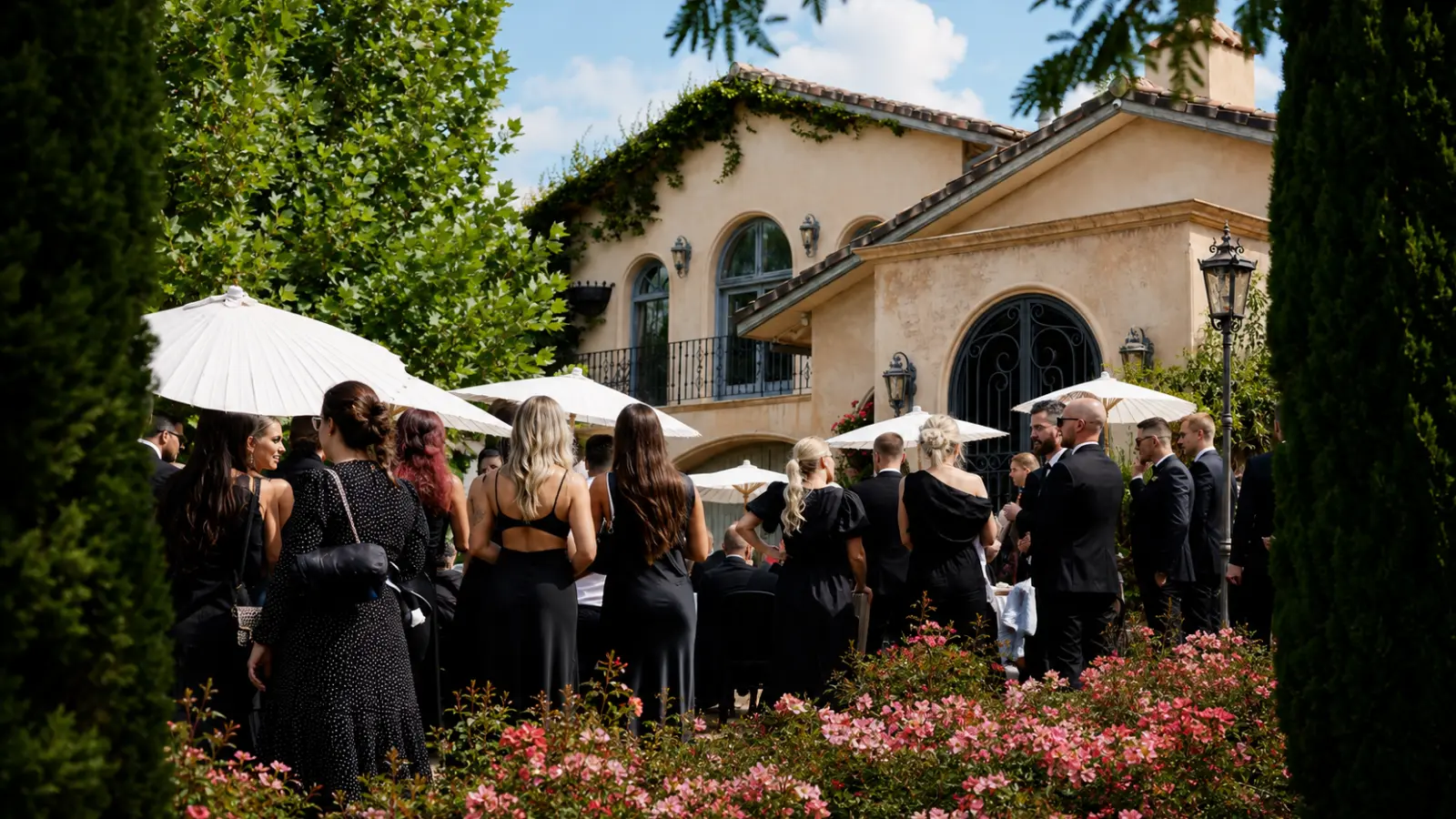
The cover event needs to do one job well: give every guest on your list a real reason to show up, dressed appropriately, on a specific date, without asking too many questions. A milestone birthday, an engagement celebration, a holiday gathering, or an anniversary trip all work because they’re already events people expect an invitation to and don’t interrogate.
Match the cover event to your actual wedding in scale and formality, not just in plausibility. If your real ceremony calls for formal attire and a seated dinner, a casual backyard barbecue is a weak cover: guests will show up underdressed, and the mismatch becomes its own tell. Choose a cover story elaborate enough to justify the real event hiding inside it.
Keep the story simple enough that everyone repeating it (you, your partner, close family who are in on it) tells the same version. A cover event with too many moving parts is harder to maintain consistently, and one person’s slightly different answer to a casual question is often what gives a surprise away before the day arrives.
Decide Who’s In On It Before You Build the Guest List
Every guest on a surprise wedding list falls into one of two groups, and deciding which group each person belongs to is one of the first real planning decisions. A small circle needs to know the truth in advance: the venue, any vendor who needs to prepare specifically for a ceremony, and anyone with a formal role, like a parent giving a toast or a witness signing the license. Everyone else, including guests who are close to the couple, can find out at the event itself.
Keep the circle of people who know deliberately small. Every person let in on the secret is another person who might mention it in the wrong text thread, the wrong conversation, or the wrong social post. This isn’t about trust. It’s about math. Ten people keeping a secret perfectly is a reasonable bet; forty people keeping the same secret for months is not.
Brief the people who do know on what they’re allowed to say and to whom. A parent who knows about the ceremony still needs a consistent story for questions from other guests, vendors, or even other family members who aren’t in on it. Give them the same cover story you’re using yourself, not just a general “keep it quiet.”
Weigh the Real Risk: Attendance You Can’t Fully Control
A surprise wedding trades one kind of certainty for another. With a traditional wedding, guests RSVP to a wedding and you know who’s confirmed for your ceremony specifically. With a surprise wedding, guests RSVP to the cover event, which means your actual ceremony attendance depends on how many people show up to what they think is a birthday party or engagement celebration.
This matters most for anyone whose presence is essential: immediate family, a specific witness, anyone the couple would consider the day incomplete without. If someone’s attendance genuinely can’t be left to chance, either loop them in ahead of time or build enough flexibility into your plan that their absence wouldn’t derail the ceremony itself.
Large or geographically spread-out guest lists carry more of this risk than smaller, local ones. A cover event that’s easy to skip, a casual weeknight gathering, an optional drop-in, will naturally have softer attendance than one built around a milestone people plan travel around. If your guest list is large or dispersed, choose a cover story people are unlikely to miss, and build in a backup plan for the ceremony itself if a handful of key people can’t make it.
Choose a Venue That Doesn’t Give Away the Ending
A venue that reads as an obvious wedding location will compromise the surprise before anyone walks in. A property known primarily for weddings, or one with visible ceremony setup from the parking lot, tips off guests before the reveal has a chance to land.
Look instead for spaces with a natural sense of arrival that don’t announce themselves: restaurants, private event rooms, boutique hotels, or venues that regularly host events other than weddings. A space that already feels intentional and a little elevated makes it easier for guests to accept an unfamiliar setup without immediately guessing why.
Confirm with the venue, early and directly, that they can support a genuine reveal: a hidden ceremony setup, a room transition, or a moment where the space itself changes character partway through the event. Not every venue is equipped to stage that kind of transition, and a venue coordinator who understands the format in advance will plan logistics very differently than one who thinks they’re hosting a standard party.
Brief Vendors on the Real Event, Not the Cover Story
Every vendor who needs to prepare specifically for a wedding, officiant, photographer, florist, caterer, needs the truth from the start. They can’t plan a ceremony timeline, a bridal bouquet, or a wedding-appropriate menu around a cover story that doesn’t match what they’re actually being asked to deliver.
Where vendors do need to help maintain the secret, be specific about what that means in practice: no wedding-specific language in emails guests might see, no public social posts before the reveal, and careful handling of deliveries or setup that might tip off staff at the cover venue. A vendor experienced with surprise weddings will already know to keep language generic in any shared documents or on-site communication.
Confirm this experience directly rather than assuming it. Ask any vendor you’re considering whether they’ve worked a surprise or secret wedding before, and what they’d do differently for the setup and staffing compared with a standard event. A vendor with real experience will have a specific answer; one without it may still be a fine choice, but plan for more hands-on coordination from your side.
Legal Basics, Briefly
A surprise wedding is legally the same as any other wedding: the marriage license, officiant requirements, and any required witnesses work exactly as they would for a ceremony everyone knew about in advance. The secret is about the guests, not about the paperwork.
Apply for the marriage license through the appropriate local office ahead of time, the same as you would for any wedding, and confirm your state’s witness requirements: some states require one or two people to sign the license, and others don’t require witnesses at all. Since your witnesses may need to be part of the small circle who knows about the ceremony in advance, confirm who’s filling that role early, not on the day itself.
Because license timing, waiting periods, and witness rules vary by state and sometimes by county, verify the specifics with the office issuing your license rather than assuming they match what worked for a friend’s wedding elsewhere. The marriage and legal requirements guide covers what to confirm in more depth.
Give Guests Just Enough Without Giving It Away
Guests need enough information to show up appropriately dressed, even if they don’t know what they’re actually attending. A vague or missing dress code is one of the more common ways a surprise unravels: guests who show up underdressed for a ceremony feel caught off guard in a way that undercuts the moment, and guests who show up overdressed too early can accidentally tip off everyone else.
Set the dress code to match the real event, using language appropriate to the cover story. “For a cocktail-level wedding, a cover event with a matching cocktail dress code can feel completely natural without raising questions.” If your real ceremony calls for a more formal dress code than the cover story would normally suggest, lean into a detail from the cover story that justifies it: a milestone birthday at an upscale venue, for instance, can reasonably call for formal attire on its own.
Communicate the dress code through the same invitation and RSVP process you’re using for the cover event, so there’s no separate wedding-specific communication that could reach the wrong person. Consistency here does double duty: it protects the secret and makes sure guests are actually comfortable and appropriately dressed when the reveal happens.
Plan the Reveal With As Much Care As the Ceremony Itself
The reveal is the moment the entire plan has been building toward, and it deserves the same level of planning as any other part of the wedding, not a vague hope that “everyone will figure it out.” Decide specifically how and when guests learn what they’re actually witnessing.
Common approaches include a speech partway through the cover event that transitions into the real announcement, a physical reveal (doors opening to a hidden ceremony setup, a room transformation), or simply beginning the ceremony itself once the group is gathered, letting the moment speak for itself as guests realize what’s happening. The right choice depends on your venue, your guest list’s size, and how much of a moment you want the realization itself to be.
Rehearse the reveal the same way you’d rehearse any other transition in a wedding-day timeline. Whoever is managing the moment, a planner, a coordinator, or a trusted friend, needs a clear cue, a clear sequence, and a backup plan if something doesn’t go exactly as scripted. The wedding day timeline guide covers how to build that kind of sequence from fixed anchors once your reveal moment is set.
Photograph the Reaction, Not Just the Ceremony
The guest reactions at the moment of the reveal are often the images couples value most from a surprise wedding: genuinely surprised faces are hard to recreate and impossible to stage after the fact. Brief your photographer specifically on this: where the reveal will happen, where guests will be standing or seated, and where the best sightline for capturing real reactions will be.
Because the reveal happens once and can’t be reset, treat it the way a photographer would treat any single unrepeatable moment: with a second shooter if the budget allows, multiple angles if possible, and a clear plan for where the photographer positions themselves before the reveal rather than scrambling to find a good angle in the moment.
Confirm with your photographer whether they’ve shot a surprise wedding reveal before. The skill involved is different from documenting a traditional ceremony: it’s less about a posed sequence of events and more about being ready to capture an unscripted moment the instant it happens.
How a Surprise Wedding Differs from a Traditional One
Most of what goes into a surprise wedding is identical to a traditional one. A handful of specific needs work differently, and knowing which ones carry real risk if handled carelessly helps you focus planning energy where it actually matters.
| Need | Normal Wedding | Surprise Wedding | Risk |
|---|---|---|---|
| Guest invitations | Sent as a wedding | Sent as the cover event | Low, if wording stays consistent |
| RSVP tracking | Confirms ceremony attendance directly | Confirms cover event only | Moderate — true attendance is an estimate |
| Venue selection | Can look like a wedding venue | Needs to avoid an obvious wedding look | Moderate — a wrong choice tips guests off |
| Vendor briefing | Standard wedding brief | Standard brief plus secrecy protocol | Moderate — one slip can spoil it |
| Marriage license and witnesses | Arranged openly | Same requirements, arranged quietly | Low — logistics only, not legal difference |
| The reveal | Not applicable | A planned, rehearsed moment | High — the one moment with no retry |
The pattern is clear once it’s laid out: most of the added complexity in a surprise wedding sits in logistics and secrecy, not in the wedding itself. Put the extra planning attention where the table shows real risk, and let the rest run like any other wedding.
Keep the Surprise Where It Belongs
A surprise wedding works best when the secret stays with the guests, not between the people getting married. Build a cover story strong enough to protect attendance and dress expectations, keep the circle who knows deliberately small, and make sure the venue and vendors understand exactly how the reveal is supposed to work.
Once those pieces are secure, the rest can function like any well-planned wedding. The goal is not to make guests feel tricked; it is to give them a celebration they did not expect, while making sure the people, logistics, and moments that matter were never left to chance.
Frequently asked questions (FAQ)
How do you plan a surprise wedding?
Plan the wedding itself as you normally would, then add a cover event that explains why guests should attend without revealing the ceremony. Confirm the venue, legal requirements, vendors, guest logistics, and wedding-day timeline using the real event details, while keeping wedding-specific information limited to the small group who needs to know. The cover story, attendance strategy, and reveal require the most additional planning.
How do you keep a surprise wedding secret from guests?
Keep the circle who knows the truth as small as possible and give everyone in it the same cover story. Vendors who need to prepare specifically for the wedding should know the real plan, but guest-facing emails, invitations, deliveries, social posts, and conversations should use only cover-event language until the reveal.
What is a good cover story for a surprise wedding?
Choose an event guests already have a believable reason to prioritize, such as an engagement party, milestone birthday, anniversary celebration, holiday gathering, or another meaningful event. The cover story should also match the wedding’s actual formality and scale closely enough that guests arrive appropriately dressed and prepared without becoming suspicious.
What happens if an important guest does not show up to the cover event?
A surprise wedding cannot guarantee attendance in the same way a direct wedding invitation can. If someone’s presence is essential to the ceremony or to you personally, consider telling that person the truth in advance or creating a plan that does not depend on their attendance. The more important the guest, the less sensible it is to leave their presence entirely to chance.
Do you still need a marriage license for a surprise wedding?
Yes. A surprise wedding follows the same marriage-license, officiant, witness, and filing requirements as any other wedding in the jurisdiction where the ceremony takes place. Only the guest-facing nature of the event is a surprise. Confirm the current legal requirements directly with the appropriate local government office before the wedding.
How should you reveal a surprise wedding to guests?
Plan the reveal as a specific moment in the wedding-day timeline rather than expecting guests to figure it out gradually. You might transition from a speech into the ceremony, open a space that reveals the ceremony setup, or gather everyone before making the announcement. Give the person managing the reveal a clear cue and sequence, and position the photographer in advance because the guests’ first reactions cannot be recreated.