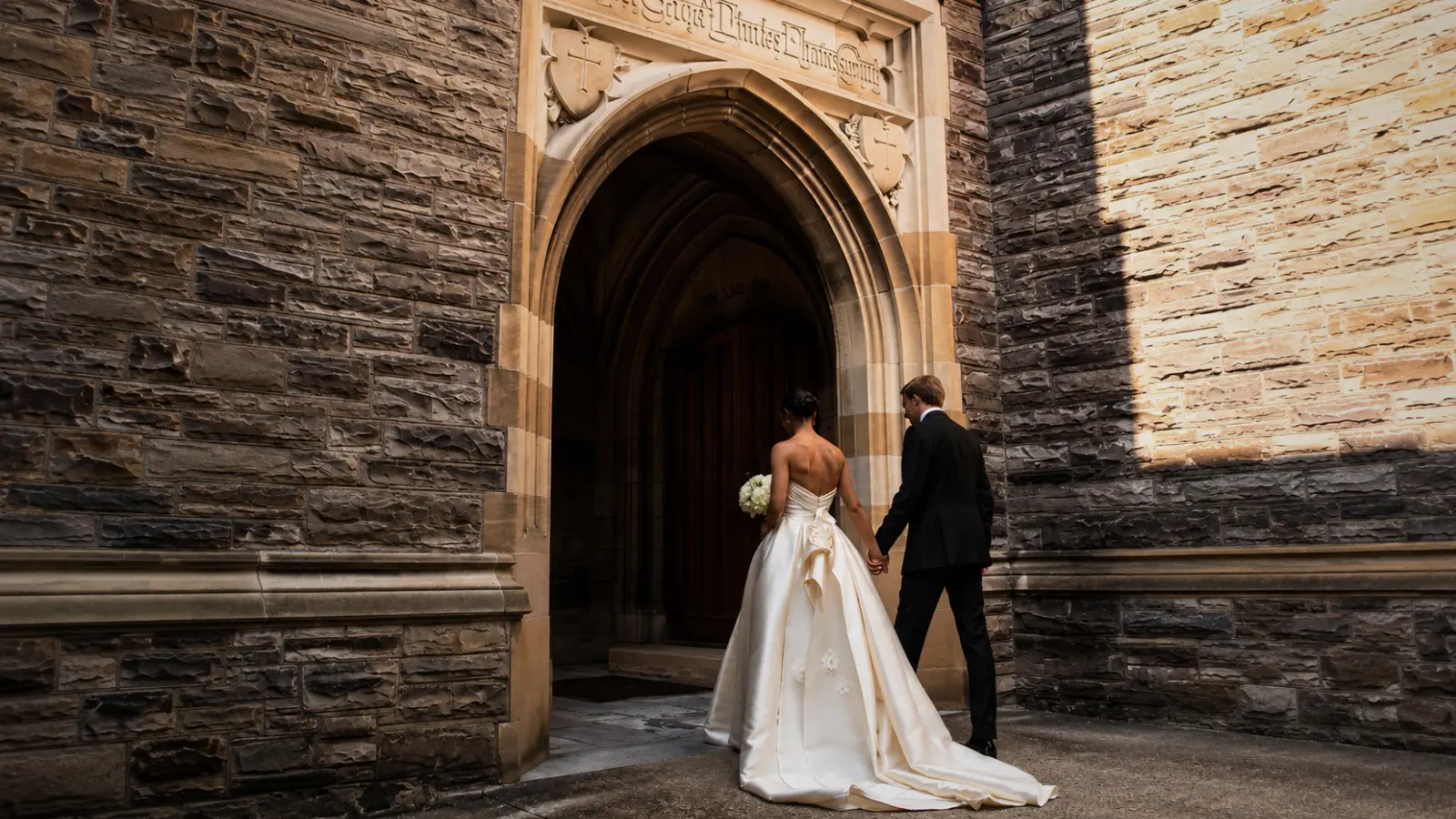

A Wedding Day Timeline should do more than place the ceremony, dinner, and first dance on a clock. It should show who needs to be where, what must happen before each moment can begin, how long movement and transitions actually take, and where the schedule has enough flexibility to absorb a delay without disrupting the rest of the day.
The most reliable way to build the schedule is to start with fixed anchors: venue access, ceremony start, meal service, transportation windows, contracted vendor hours, venue end time, and any light-dependent photography that matters to you. From there, work backward into getting ready, portraits, and guest arrival, then forward through cocktail hour, reception, dinner, dancing, and the exit.
This Wedding Day Timeline guide shows how to build each block around real dependencies, required people, vendor setup, travel, transitions, and buffers. It focuses only on the wedding day itself; for the months leading up to the event, use the separate wedding planning timeline.
Wedding Day Timeline Framework
The table below is not a universal sample schedule. It is a planning framework showing what each block needs before it can be timed accurately.
| Event | Start | Duration | Required People | Buffer |
|---|---|---|---|---|
| Vendor setup | From venue access | Contract- and scope-dependent | Relevant vendor teams, venue lead | Before guest-facing setup must be complete |
| Getting ready | Work backward from departure / portraits | Based on people and services | Couple, attendants, hair/makeup if applicable | Completion buffer before dressing/departure |
| First look | Before portraits if used | Photography-dependent | Couple, photographer/video if applicable | Transition to portraits |
| Portraits | Around first look or ceremony | Shot-list and group dependent | Couple, wedding party, selected family | People-gathering and travel buffer |
| Guest arrival | Before ceremony | Venue/access dependent | Guests, ushers/venue team as applicable | Protects ceremony start |
| Ceremony | Fixed anchor | Format dependent | Couple, officiant, participants | Post-ceremony transition |
| Cocktail hour | After ceremony | Reception plan dependent | Guests, catering/bar team | Room reset / portraits / guest movement |
| Reception opening | After room readiness | Sequence dependent | Guests, couple, emcee/DJ, venue/catering | Transition into dinner or formalities |
| Dinner | Service anchor | Service style dependent | Guests, catering, couple | Between courses / before next formal moment |
| Toasts | At a defined reception point | Speaker count dependent | Speakers, couple, guests, AV/DJ | Short reset before next activity |
| Dancing | After formal obligations are sufficiently complete | Reception length dependent | Guests, DJ/band | Avoid too many interruptions |
| Exit | Before venue/vendor end constraints | Exit format dependent | Couple, guests if staged, photo/video, transport | Travel / cleanup / hard stop |
The strongest wedding timeline is not the one with the most precise timestamps. It is the one where every timestamp is supported by the people, setup, travel, and decisions that make it possible.
Start With Fixed Anchors
If you are wondering how to organize a wedding day, begin with the parts of the schedule that are hardest to move. These anchors give the rest of the day its shape.
Common fixed or semi-fixed anchors include venue access, ceremony start, transportation pickup, meal service, vendor contracted hours, venue end time, and any light-dependent photography the couple strongly values. Some are truly contractual; others are simply high-priority decisions that should not keep moving after the timeline is built.
Place those anchors first, then work backward. If the ceremony begins at a fixed time, ask when guests should begin arriving, when the wedding party must be hidden or staged, when portraits must end, when travel must begin, and when getting ready must be complete.
Then work forward from the ceremony into cocktail hour, room transitions, dinner, formalities, dancing, and exit. Building in both directions exposes conflicts early instead of hiding them inside a pretty sample schedule.
Build Vendor Setup Before Guest-Facing Events
Vendor setup is part of the wedding day schedule even though guests never see most of it. If setup is missing from the timeline, the guest-facing schedule can appear possible when the room is not actually ready.
Start with venue access and ask each vendor what must happen before their service is operational. Catering may need kitchen or service access. Rentals may need delivery and placement. Florals may depend on tables being positioned first. Entertainment may need load-in, power, sound check, or stage access. Photography may need detail items ready before the couple is dressed.
The goal is not to micromanage every vendor minute. It is to make sure setup dependencies do not collide. If two teams need the same loading area at the same time, that conflict belongs in the timeline before the wedding day.
Setup should end with enough margin that guest arrival does not become the deadline for finishing the room.
Getting Ready: Work Backward From Departure
Getting ready should be timed from the moment everyone needs to be ready to leave or ready for portraits, not from an arbitrary morning start time.
Identify who is receiving hair, makeup, grooming, dressing assistance, or other preparation services and how many people can be served at once. Then build backward from the completion time using the actual service plan provided by the professionals involved.
Separate “services finished” from “fully dressed and ready.” The couple may still need to eat, dress, gather personal items, handle final photography details, or move between rooms after beauty or grooming is complete.
The buffer belongs at the end of getting ready, not only at the beginning. A delayed service is much easier to absorb when departure was not scheduled for the exact minute the last person was supposed to finish.
First Look: Decide What It Unlocks
A first look is a timeline choice as much as a photography choice. Its biggest scheduling value is that it can move some couple, wedding-party, or family portraits before the ceremony.
If you include one, determine what photography you intend to complete afterward. A first look that saves only a few minutes but still leaves every group portrait until after the ceremony may not change the schedule much. A first look followed by a substantial portrait block can reduce the amount of photography competing with cocktail hour.
Also account for privacy, travel, staging, and the time it takes to gather the required people afterward. The first look itself is only one part of that block.
If you skip it, the timeline simply needs to protect a larger post-ceremony portrait window.
Portraits: Schedule People, Not Just Photo Blocks
Portraits are one of the easiest places to underestimate time because the schedule often says “family photos” without accounting for how many people must be found, moved, arranged, and released.
Break portrait planning into groups: couple, wedding party, immediate family, extended family if included, and any special combinations. Ask the photographer which groups are best completed before the ceremony and which are more practical afterward.
Assign someone who knows the families to help gather people if the photographer recommends it. The photographer can create the image; they should not have to identify every relative in a crowded cocktail hour.
Travel matters too. A 20-minute portrait block at another location is not a 20-minute timeline block if the couple needs transportation, loading time, or a walk through the property to reach it.
Guest Arrival: Protect the Ceremony Start
Guest arrival should have its own window before the ceremony rather than being treated as the same timestamp. Guests need time to park, walk, check in where applicable, find seats, use restrooms, and absorb any directions from ushers or venue staff.
The exact arrival window depends on the property, transportation plan, guest profile, and how far people must move from parking or shuttles to the ceremony space.
Vendor setup should also be substantially complete before this window begins. Once guests enter the space, the wedding has moved from setup mode into live-event mode.
A schedule that protects guest arrival protects the ceremony start without making the couple or officiant wait on avoidable movement.
Ceremony: Build From the Actual Format
The ceremony duration should come from the ceremony you are actually having, not a generic number copied from another wedding. Processional structure, readings, rituals, music, vows, religious elements, and the number of participants all affect timing.
Build the timeline around the full block: staging before the processional, the ceremony itself, recessional, immediate congratulations, and the transition afterward.
If the ceremony and reception are in different locations, travel becomes a major dependency. If they are in the same venue, the key question may be whether the ceremony space must be flipped or whether guests move directly elsewhere.
The ceremony is a fixed anchor because everything before it must be ready on time and everything after it inherits any delay.
Cocktail Hour: Use It as a Transition Window

Cocktail hour is not merely a drinks block. Operationally, it can absorb post-ceremony portraits, room changes, catering resets, guest movement, and the transition from ceremony mode into reception mode.
That makes it one of the most useful buffers in the wedding timeline, but only if the couple does not overload it with too many competing tasks.
If portraits are happening during cocktail hour, decide which groups are essential and how the couple will transition into the reception. If the venue is flipping a room, confirm that the setup team has enough time to complete it before guests are invited in.
Do not assume cocktail hour can fix every delay. It is a transition window, not unlimited spare time.
Reception: Sequence the Room, Not Just the Traditions
The reception schedule should prioritize room flow and guest energy before stacking traditional moments in a predetermined order.
Decide what happens when guests enter: seating, introductions, a welcome, first dance, dinner, or another opening structure. Then look at what catering, entertainment, photography, and the couple need to be ready for each transition.
Formal moments such as dances, cake cutting, toasts, cultural traditions, or special performances can be distributed through the evening instead of clustered into one long sequence that keeps guests waiting for open dancing.
The wedding day schedule should make the reception feel like an evening, not an agenda being read aloud.
Dinner: Protect Service Flow
Dinner is one of the strongest operational anchors in the reception because catering needs a predictable service window. The exact duration depends on guest count, service style, number of courses, venue layout, and the caterer’s execution plan.
Coordinate speeches, dances, or other formalities with the catering team rather than inserting them wherever they look convenient on paper. A long toast at the wrong moment can conflict with hot food leaving the kitchen; a room-wide activity can make service unnecessarily difficult.
If formalities happen during dinner, define the point at which they occur and who cues them. Do not make the DJ, planner, and caterer independently guess when the next event starts.
A well-run dinner timeline protects both service quality and guest attention.
Toasts: Give Them a Defined Place
Toasts need a defined slot, a known speaker list, and someone responsible for cueing them. Without those boundaries, a small formal moment can expand unpredictably into the rest of the reception.
Decide how many speakers are included and when the room will naturally be attentive. Coordinate microphone access and any AV needs in advance.
The purpose of the timeline is not to script what people say. It is to prevent uncertainty about who is speaking next, when they begin, and which vendor is waiting for the room to move on.
A clear toast block protects the transition into the next reception phase.
Dancing: Avoid Over-Scheduling the Floor
Once dancing begins, the timeline usually benefits from fewer interruptions. A reception can lose momentum when guests are repeatedly called away from the dance floor for another formal moment.
Place the most important traditions before or around the opening of dancing, then group later events thoughtfully. Cake cutting, late-night food, anniversary dances, bouquet traditions, or other optional moments should earn their place based on the couple’s priorities rather than habit.
Build enough open time for the reception to feel social instead of continuously programmed.
The schedule should support the party, not compete with it.
Exit: Plan the Last 20 Minutes, Not Just the Photo
An exit needs more planning than “sparkler exit at 10:00.” It may involve gathering guests, preparing props if used, positioning the photographer or videographer, moving transportation into place, collecting personal belongings, and respecting the venue’s end time.
Decide whether the exit is a true departure or a staged photo moment. Those are operationally different. A staged exit may require guests to return to the reception; a real exit needs the couple’s transport and belongings fully ready.
Also assign ownership for gifts, cards, attire, décor, leftover items, rentals, and anything that must leave the property.
The last scheduled moment should not create an unscheduled hour of cleanup and confusion afterward.
Buffers: Where the Schedule Needs Breathing Room
Buffers are what make a wedding timeline usable in real life. They should be placed where uncertainty is most likely to accumulate, not sprinkled randomly throughout the day.
Useful buffer zones include:
- After getting ready: for dressing, food, personal items, and small service delays.
- Before departure: for loading people and belongings into transportation.
- Around portraits: for gathering groups, walking, travel, and location changes.
- Before ceremony: to protect the fixed start from earlier delays.
- During cocktail hour: for portraits, room changes, and guest transitions.
- Before dinner or reception formalities: for room readiness and vendor cueing.
- Before the hard venue end: for exit, transportation, and final movement.
A buffer is not wasted time. It is capacity the schedule can use when reality does not match the spreadsheet exactly.
How to Create a Wedding Timeline Step by Step
If you are building the schedule from a blank page, use this order. It keeps the process centered on dependencies rather than decoration.
- Place fixed anchors first. Venue access, ceremony, meal service, transportation, contracted end times, and any immovable event commitments.
- Add vendor setup. Work from venue access toward the point when guest-facing spaces must be complete.
- Build backward from the ceremony. Guest arrival, staging, portraits, first look if used, travel, getting-ready completion.
- Build forward from the ceremony. Cocktail hour, room transitions, reception opening, dinner, formalities, dancing, exit.
- Add required people to each block. A timeline is not usable if the schedule never shows who must be present.
- Add buffers where uncertainty accumulates. Travel, group photos, room flips, setup, and handoffs deserve extra capacity.
- Have vendors review their relevant sections. They can identify conflicts in setup, service, arrival, or transition assumptions.
- Create audience-specific versions. The master timeline can contain more information than the version given to family, wedding party, or individual vendors.
The wedding day timeline generator can help turn these dependencies into a first draft, but the final schedule should still reflect the actual venue, vendor, travel, and people involved.
Build a Timeline People Can Actually Follow
A Wedding Day Timeline works when every important time is supported by the people, setup, travel, and transitions required to make it possible. Start with the anchors that cannot easily move, build the day around their dependencies, and add buffers where real-life delays are most likely to accumulate.
The goal is not to control every minute of the wedding. It is to give vendors, the venue, the wedding party, and the day-of lead a schedule they can execute without constantly asking the couple what happens next. When the timeline works operationally, the important moments can feel natural even though a great deal of coordination is happening behind them.
Frequently asked questions (FAQ)
What should a wedding day timeline include?
A wedding day timeline should include the fixed anchors that shape the day, such as venue access, ceremony time, meal service, transportation, vendor hours, and venue end time. From there, add vendor setup, getting ready, portraits, guest arrival, ceremony, cocktail hour, reception events, dinner, toasts, dancing, exit, required people, travel time, and buffers around the transitions most likely to run late.
What is a wedding timeline?
A wedding timeline is the operating schedule for the wedding day. It shows when important events happen, who needs to be present, what each part of the day depends on, and how vendors, the wedding party, guests, and the couple move from one stage of the event to the next.
Who should create the wedding day timeline?
The couple may create the first draft, but the final timeline should incorporate input from the planner or coordinator, venue, photographer, catering team, entertainment, transportation, and any other vendor whose work depends on timing. One person should ultimately own the master version so conflicting schedules do not circulate.
How early should you create the wedding day schedule?
Start collecting timing information once the venue, major vendors, ceremony structure, transportation, and other key logistics are established. Build a working draft during the final months, then refine it as vendor arrival times, guest logistics, and other constraints become reliable. Avoid locking the schedule before the information it depends on is settled.
How much buffer should a wedding timeline have?
There is no single amount of buffer that fits every wedding. Add extra time where uncertainty naturally accumulates, especially around getting ready, travel, loading and unloading, group portraits, guest movement, room flips, vendor setup, and transitions involving several people. The goal is to prevent one small delay from pushing every later event off schedule.
What is the biggest mistake when creating a wedding timeline?
The biggest mistake is building the timeline around ideal timestamps without accounting for the dependencies behind them. A schedule may look precise while still being unrealistic if it ignores setup time, travel, gathering people for photos, guest arrival, catering service, room transitions, or the time vendors need to prepare before the next event begins.