A Wedding Morning Timeline should be built backward from one question: what time does everyone actually need to be fully ready? Once that finish time is fixed, hair, makeup, breakfast, detail photos, dressing, a first look, travel, and the necessary buffers can be placed around it without guessing.
The important distinction is that hair and makeup completion is not the same as being ready to leave. Dressing, accessories, touch-ups, photos, gathering personal items, loading vehicles, and travel may all still need time afterward. Starting with the true ready time protects those transitions instead of forcing them into whatever minutes happen to remain.
This Wedding Morning Timeline shows how to organize the getting-ready schedule from the final ready time backward, including beauty services, breakfast, detail photography, dressing, first look timing, travel, and buffers. The goal is not to start as early as possible — it is to create enough structure and margin that the morning reaches the next fixed event without feeling rushed.
Start With the Ready Time
The “ready time” is the moment the couple or wedding party must be fully prepared for the next fixed event—not the moment the last hair or makeup service ends.
That distinction matters because several things still happen after beauty is complete: getting dressed, putting on jewelry and shoes, gathering personal items, taking a few portraits, using the restroom, eating something, or moving to another room or vehicle.
Start with the next immovable block. If first-look portraits begin at 2:30 PM and travel to the location takes 20 minutes, the couple may need to be fully dressed and ready well before 2:00 PM. If there is no first look, the ready time may instead be tied to ceremony staging or departure.
Once the true finish time is clear, every earlier appointment becomes much easier to calculate.
Wedding Morning Schedule Framework
This table shows the fields that matter most in a wedding getting ready schedule. The specific times and durations should come from the actual people and professionals involved.
| Person/Task | Start | Duration | Finish | Buffer |
|---|---|---|---|---|
| Breakfast / hydration | Before active services fill the room | Flexible | Before getting ready becomes fragmented | Leave room for later snacks |
| Hair / makeup services | Calculated backward from completion | Artist- and person-dependent | Before dressing / portraits | Completion margin for delays |
| Detail photos | During beauty or before dressing | Photography-dependent | Before key items are needed | Items gathered in advance |
| Dressing | After services are sufficiently complete | Attire-dependent | Before portraits or departure | Extra time for closures, accessories, touch-ups |
| First look | After both partners are ready | Photography-dependent | Before portrait block | Transition / walking time |
| Travel | After dressing / portraits as planned | Route-dependent | Before ceremony staging | Loading, traffic, parking, walking |
The purpose of the table is to expose the handoffs. If one task finishes at the exact moment the next task is supposed to begin, the morning has no room to absorb normal movement.
Build the Hair and Makeup Schedule Backward
A hair makeup wedding timeline should be based on completion time and service capacity, not on a single “start hair and makeup” line.
First identify who is receiving services and which people need to be finished earliest. The person getting married may need to be camera-ready sooner than an attendant who is not in pre-ceremony portraits. Someone helping with dressing may also need to be finished before the person they are assisting.
Then ask the beauty professionals how many people they can serve at once and how they prefer to sequence services. Their real working plan should determine start times.
Build in a completion buffer before dressing. If the entire schedule assumes the last service ends at 1:30 PM and the dress must be on at 1:30 PM, one delay immediately becomes a photography or travel delay.
Schedule Breakfast Before the Morning Gets Busy
Breakfast belongs in the timeline because once services begin, people often become scattered between chairs, rooms, photos, steaming, dressing, and vendor questions.
Place the main breakfast or substantial early meal before the busiest service block whenever possible. Then plan simple food and water that remain easy to access during the morning.
The point is not to create a formal brunch event unless the couple wants one. It is to protect enough uninterrupted time for people to eat before preparation becomes continuous.
If food delivery is involved, assign someone other than the couple to receive it, confirm quantities, and keep the getting-ready space from turning into another logistics problem.
Give Detail Photos a Real Window
Detail photos work best when the photographer can access the important items before those items are being worn, packed, or moved elsewhere.
Gather invitations, rings if appropriate, jewelry, shoes, perfume, accessories, vows, heirlooms, and other requested details in one place before photography begins. That prevents the couple from stopping hair or makeup to search for an item.
The exact items depend on the photographer’s approach and the couple’s priorities. The timeline should simply reserve a window when those objects are available and the room is not constantly changing.
Once details are finished, return essential items to the person or place responsible for them. Photography should not create a new handoff problem later in the morning.
Separate Beauty Finish From Dressing Time
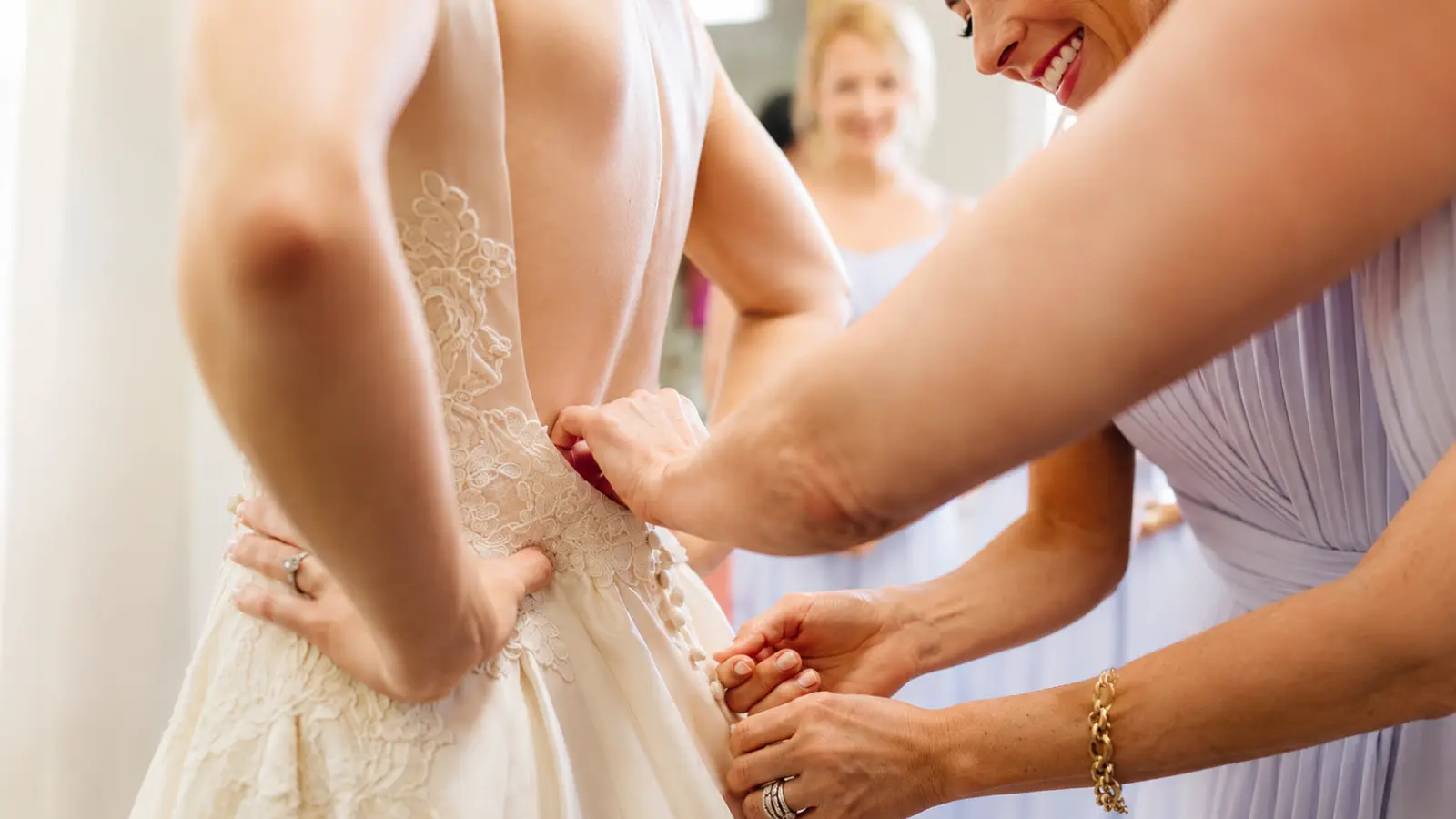
Dressing deserves its own block. Hair and makeup completion does not mean the person is ready to leave.
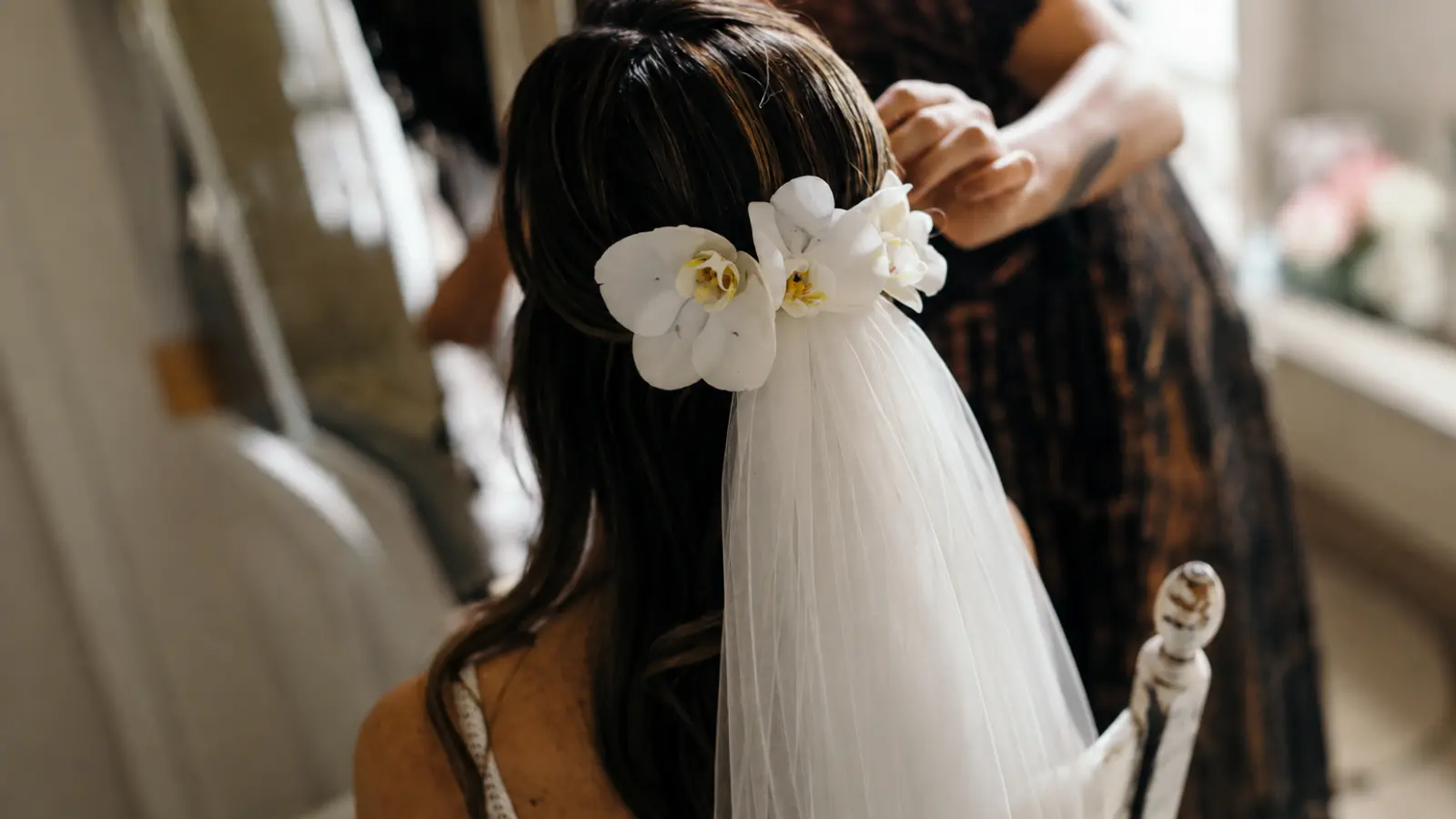
Attire may involve steaming, multiple closures, special undergarments, jewelry, shoes, veil or headpiece placement, boutonnières, pocket squares, cuff links, or other accessories. Some outfits are quick; others require help and careful handling.
Decide who needs to be present for dressing photos or practical assistance and make sure those people are already dressed themselves. It is easy to create a circular delay when the person helping the couple is still in a beauty chair.
Leave enough margin after dressing for touch-ups, personal items, and a calm transition into portraits or departure.
Add a First Look Without Compressing Everything Else
A first look should be added only after the morning can support it. It is not just a five-minute meeting; it usually creates a staging, photography, and transition block.
Work backward from the first-look start time. Both partners need to be ready, transported or positioned if they are in separate areas, and available without guest traffic interfering.
If the first look is followed by couple or wedding-party portraits, treat those as one larger pre-ceremony photography window rather than isolated appointments.
If the schedule becomes too tight, the solution is usually to move beauty completion earlier, reduce pre-ceremony portrait scope, or skip the first look—not remove the travel or buffer that still has to happen.
Protect Travel Time to the Ceremony or Photo Location
Travel is often underestimated because the map time is treated as the whole timeline block. In reality, people need time to gather belongings, get into vehicles, load attire carefully, park, unload, and walk to the final staging area.
Add those transition steps around the actual drive. If a shuttle, party bus, or multiple vehicles are involved, account for boarding and coordination rather than assuming everyone leaves at the same second.
The more people moving together, the more important it is to avoid scheduling departure at the exact latest possible time.
Travel buffer is one of the easiest ways to protect the ceremony from a delay that began much earlier in the morning.
Where the Wedding Morning Needs Buffer
Buffers should sit where uncertainty is most likely to accumulate. A few well-placed margins are more useful than adding random extra minutes to every line.
The most valuable places for wedding-morning buffer are:
- after the final beauty service: before dressing or portraits;
- after dressing: for touch-ups and personal items;
- before departure: for loading people and belongings;
- around group photos: for gathering and repositioning people;
- around travel: for traffic, parking, walking, or vehicle coordination;
- before ceremony staging: so the morning does not consume the final pre-ceremony window.
A strong wedding morning timeline does not eliminate idle minutes. It uses a small amount of open space to protect the moments that cannot start late.
Work Backward From the Moment You Need to Be Ready
A Wedding Morning Timeline works best when the finish time controls everything that comes before it. Start with the next fixed event, subtract travel and portrait time, allow a real dressing window, then build hair and makeup around the completion time the morning actually requires.
Protect the transitions instead of scheduling every task back-to-back. When beauty services, dressing, photography, belongings, and travel all have enough room to happen, the morning becomes a controlled countdown to readiness rather than a race against the ceremony.
Frequently asked questions (FAQ)
What should a wedding morning timeline include?
A wedding morning timeline should include the final ready time, hair and makeup services, breakfast or early food, detail photos, dressing, accessories and touch-ups, first look or pre-ceremony portraits if planned, travel, and buffers before departure or ceremony staging. Build the schedule backward from the time everyone must actually be ready rather than starting with an arbitrary morning appointment.
What time should hair and makeup start on a wedding morning?
The start time depends on the final ready time, the number of people receiving services, how many artists are working, and how long each service requires. Ask the beauty team for their actual service plan, then work backward from completion while leaving enough margin for dressing, photos, and travel afterward.
Who should get hair and makeup done first?
Schedule people according to when they need to be finished, not simply by wedding-party hierarchy. Anyone needed early for portraits, dressing assistance, travel, or another responsibility may need an earlier slot. The hair and makeup team may also recommend an order based on the services booked and how they work most efficiently.
How much time should you allow between hair and makeup and getting dressed?
Do not schedule dressing for the exact minute the final beauty service ends. Leave enough room for normal delays, restroom breaks, dressing, closures, jewelry, shoes, veil or accessories, touch-ups, and gathering personal items. The exact amount depends on the attire and how many people are involved.
When should detail photos happen on the wedding morning?
Detail photos can usually happen while hair and makeup are underway or shortly before dressing, as long as the photographer has access to the requested items. Gather important details in one place beforehand so the couple does not have to interrupt services to search for rings, stationery, shoes, jewelry, vows, or other items.
What is the most common wedding-morning scheduling mistake?
Using hair and makeup completion as the final ready time. Beauty services ending does not mean the couple is ready to leave. Dressing, accessories, touch-ups, photographs, gathering belongings, loading vehicles, travel, and ceremony staging may still need substantial time afterward.