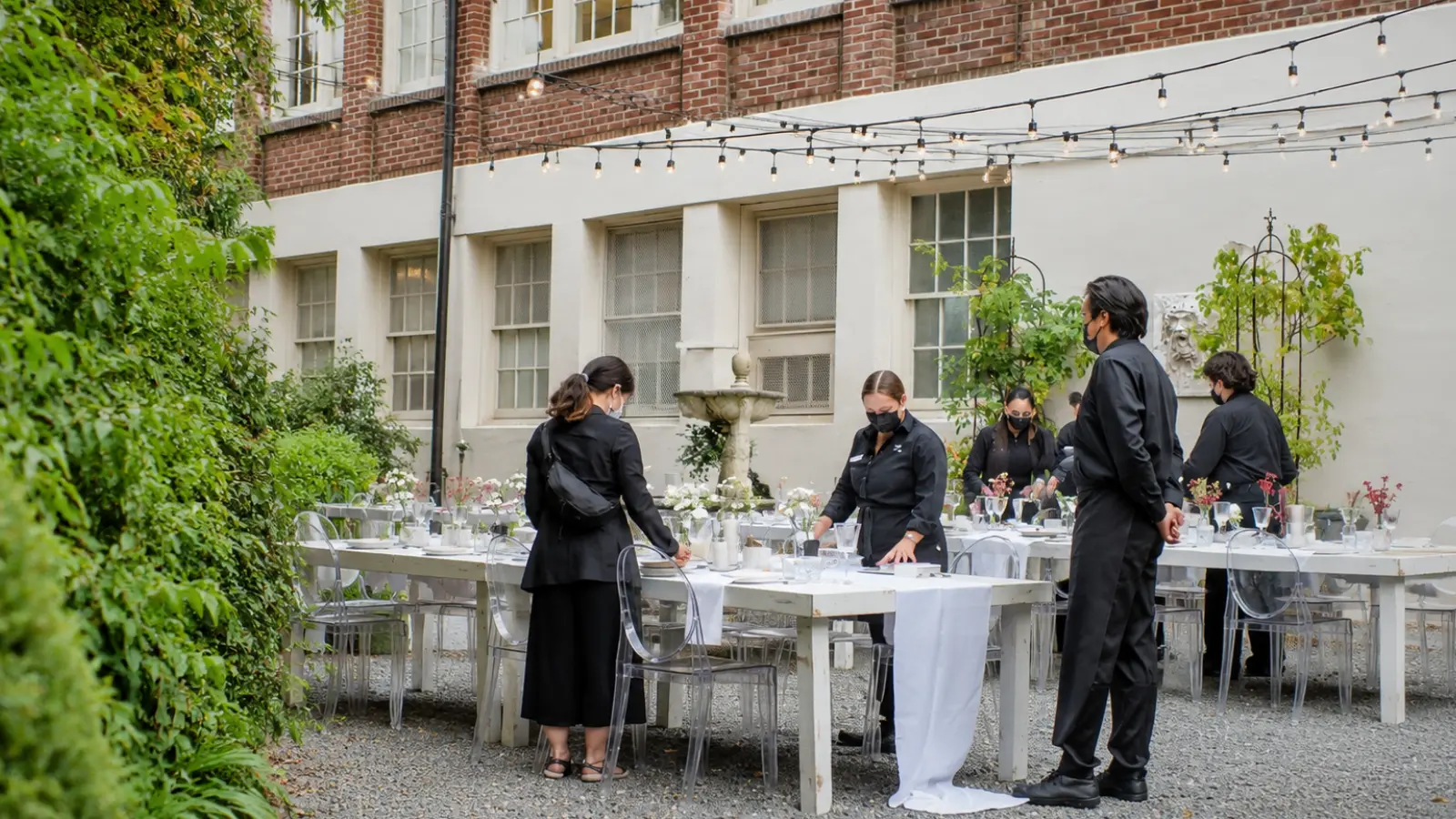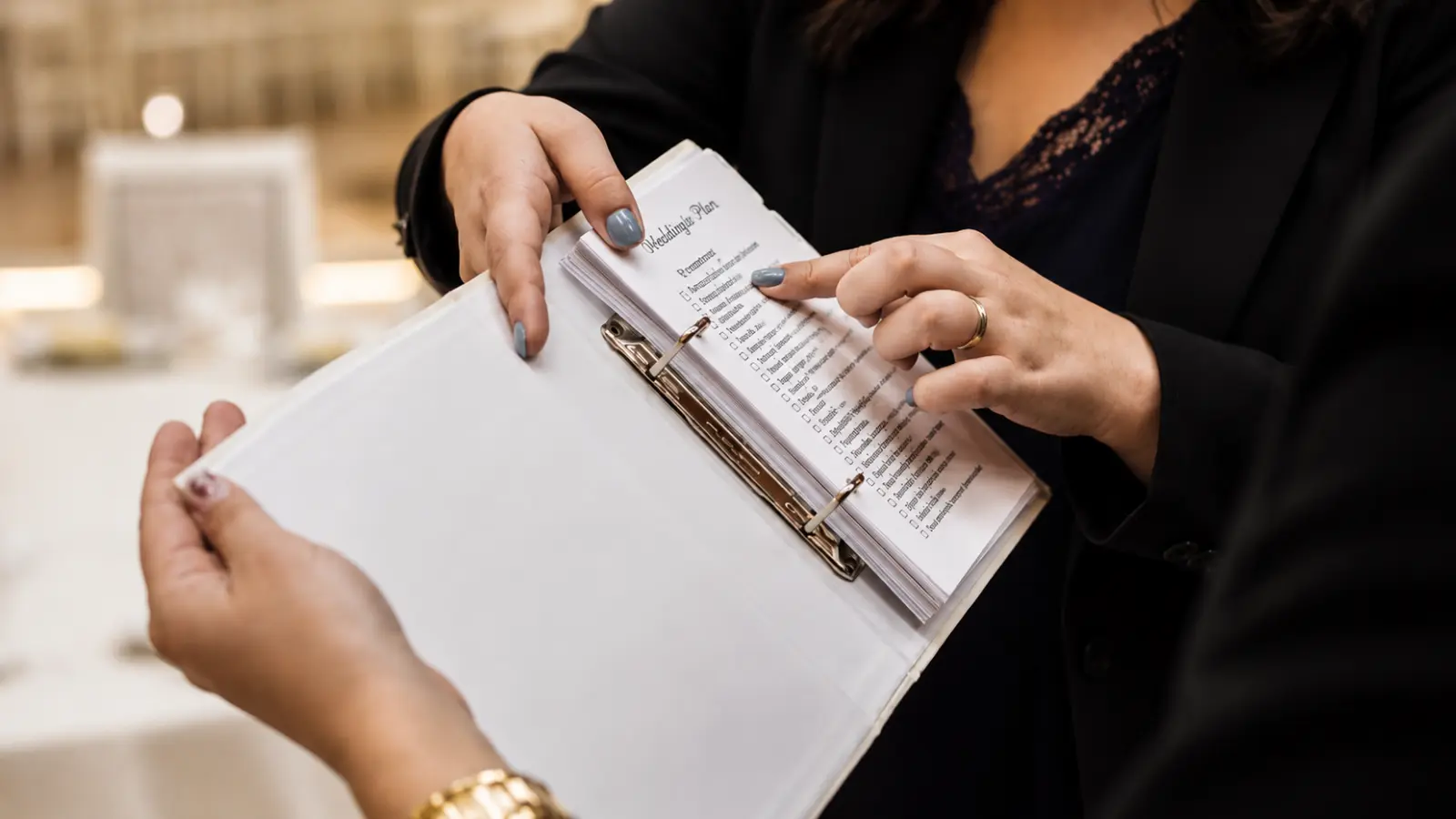

Learning How to Plan a Wedding Ceremony means making a series of connected decisions in the right order. Format, officiant, venue setup, seating, processional, readings, vows, rings, music, audio, décor, accessibility, weather, and rehearsal all affect one another, and decisions made too early often have to be redone later.
The most efficient approach is to start with the choices that shape everything downstream. Decide the ceremony format, confirm the officiant and space, then build the seating, processional, readings, music, and operational details around those foundations. Sound, accessibility, weather backup, and rehearsal should support the structure rather than being treated as last-minute extras.
This guide explains How to Plan a Wedding Ceremony step by step, including who should own each decision, what needs to be confirmed first, and how to turn the ceremony from a collection of ideas into one sequence that can actually be executed on the wedding day.
Wedding Ceremony Planning Checklist at a Glance
Every ceremony element below needs a decision, an owner, and a point by which it has to be locked in. Some of these depend on your venue or officiant, so the earlier rows tend to unlock the later ones rather than the other way around.
| Element | Decision | Owner | Confirm By |
|---|---|---|---|
| Format | Religious, civil, spiritual, or hybrid ceremony | Couple | Before booking an officiant |
| Officiant | Who leads the ceremony and files the paperwork | Couple | Before venue is finalized, if format-dependent |
| Venue and setup | Layout, capacity, backup space | Couple / venue | At booking, revisited closer to the date |
| Seating chart | Reserved rows, aisle width, guest flow | Couple / coordinator | 2–4 weeks out |
| Processional order | Who walks, in what order, with whom | Couple | Before the rehearsal |
| Readings | Selections and readers | Couple / officiant | 4–6 weeks out |
| Vows | Traditional, personal, or a blend | Couple | Final draft the week before |
| Rings | Purchased, sized, and assigned a carrier | Couple | Weeks before, not day-of |
| Music | Prelude, processional, recessional selections | Couple / musician | 3–4 weeks out |
| Audio | Microphones and sound check | Venue / vendor | Rehearsal or day-of setup |
| Decor | Arch, aisle, signage, seating markers | Couple / florist | Final order 2–3 weeks out |
| Accessibility | Seating, pathways, sightlines, hearing needs | Couple / venue | Before invitations are finalized |
| Weather plan | Indoor backup, timing trigger, owner of the call | Couple / venue / coordinator | At booking, confirmed final week |
| Rehearsal | Full run-through with participants | Couple / officiant | Day or two before the wedding |
Treat this table as a dependency chain, not a to-do list to attack in any order. A seating chart built before the venue layout is confirmed, or a processional order set before you know who is officiating and where they will stand, usually gets redone.
Choose Your Ceremony Format First
The format is the first real decision because it determines who is qualified to officiate, what the legal requirements are, and how much structure the rest of the ceremony needs. Most American weddings fall into one of a few broad categories: a religious ceremony led by clergy within a specific faith tradition, a civil ceremony led by a judge, magistrate, or officiant ordained for the purpose, a spiritual or non-denominational ceremony that borrows structure without a specific religious framework, or a hybrid that blends family religious tradition with personal, secular elements.
Each format comes with its own expectations around length, readings, ritual elements, and sometimes venue. A Catholic Mass ceremony, for example, typically runs longer and follows a set liturgical structure that a couple does not usually rewrite. A civil or non-denominational ceremony offers far more flexibility in length, content, and order, which is exactly why couples who want a highly personalized ceremony often choose it.
If either partner’s family expects a specific religious format, have that conversation before booking a venue or officiant, since it can affect where the ceremony can legally and practically take place. Once the format is set, everything else in this guide has a frame to fit into.
Choose Your Officiant
Your officiant needs to be booked early enough that they can help shape the format, not just show up and read a script. For a religious ceremony, this usually means a member of clergy tied to a specific congregation, who may have their own requirements around premarital counseling, readings, or ceremony structure. For a civil or non-denominational ceremony, couples typically choose a judge, a professional officiant, or a friend or family member who becomes ordained for the occasion.
Whoever officiates is also usually the person responsible for making sure the marriage is legally executed correctly: signing the license, confirming witness requirements, and returning the completed document to the appropriate office. Requirements for who may legally officiate, and what paperwork has to happen around the ceremony, vary by state and sometimes by county, so this is not a detail to assume based on what a friend’s wedding looked like in a different state. Confirm the specifics directly with the local office that issues marriage licenses where your ceremony will take place.
Ask your officiant early how much involvement they expect in writing or reviewing the ceremony script, whether they require a meeting before the wedding, and how they prefer to coordinate with your other vendors on the day. A well-matched officiant makes the rest of ceremony planning noticeably easier.
Confirm the Ceremony Venue and Setup
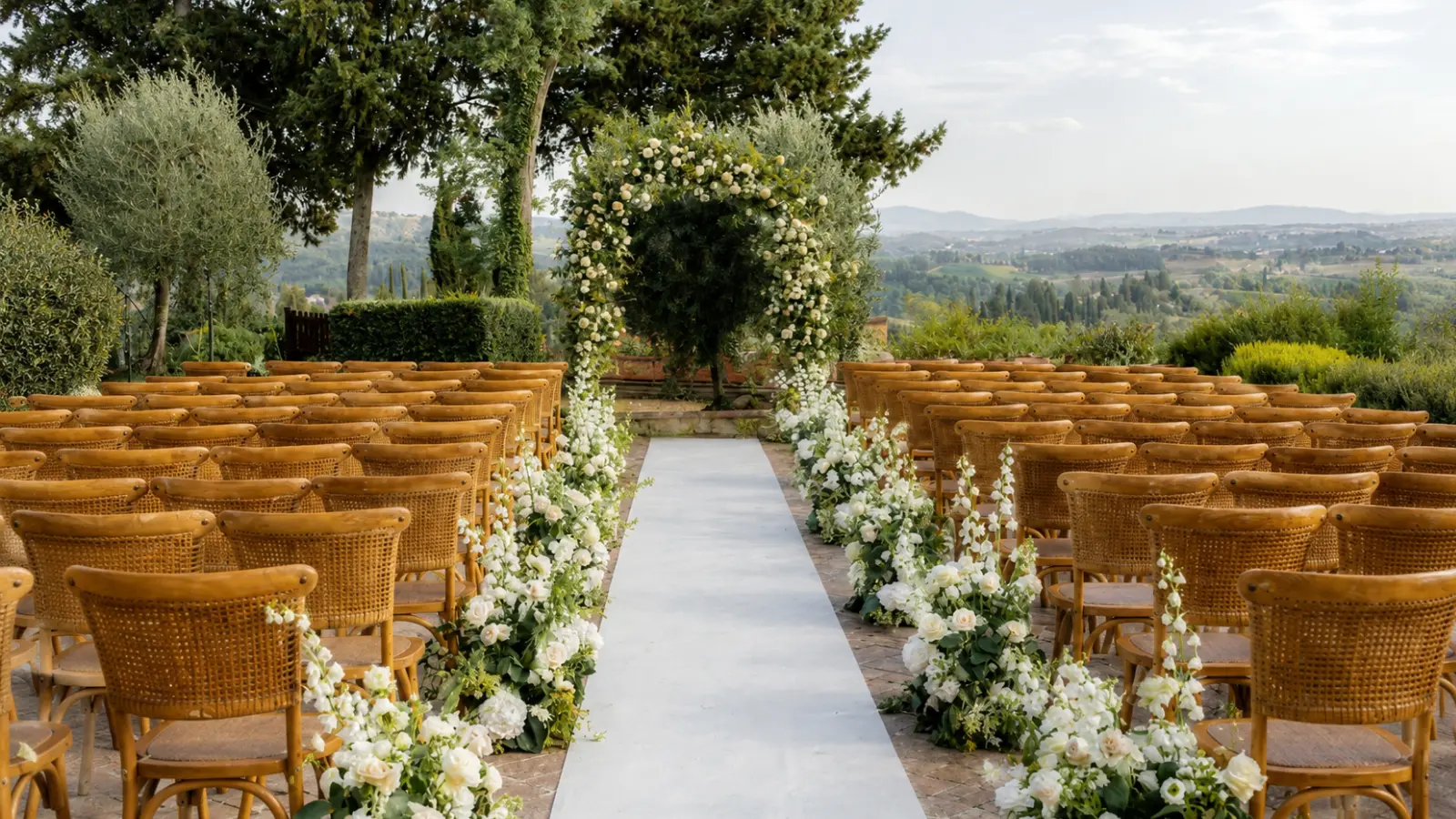
Once the format and officiant are settled, the venue conversation shifts from “does this space feel right” to “does this space actually work for this ceremony.” Confirm capacity for your guest count, aisle length and width, where the officiant and couple will stand, and whether the space accommodates any religious or cultural elements your format requires, such as a chuppah, a unity ritual, or specific seating arrangements.
If the ceremony and reception are in different locations, factor in travel time for guests between the two, and make sure someone owns communicating that transition clearly. If the ceremony and reception share one venue, confirm how and when the room will be reset, since that turnover time affects your overall day-of timeline more than couples usually expect.
Walk the actual ceremony space with your officiant or coordinator if possible, not just the general venue tour. Standing where you will stand tells you more about sightlines, sun position, and sound than a floor plan ever will.
Plan Seating and Reserved Rows
Ceremony seating is simpler than reception seating, but it still needs a plan. Most American ceremonies reserve the first one or two rows on each side for immediate family, with ushers or the wedding party directing guests to fill in from the front. Decide early whether you are using the traditional “couple’s side” division or a more open seating approach, since that decision affects your signage and any instructions given to ushers.
Reserved seating should be confirmed with actual names, not just “family,” since blended families, seating-related family tension, or guests with mobility needs often require specific placement. Aisle width matters more than couples expect if anyone is walking with a cane, a walker, or in a wheelchair, or if the aisle needs to accommodate a longer train or formal procession.
Give your ushers or wedding party a short, clear brief — who sits where, how to handle late arrivals, and who to flag if a seating conflict comes up in the moment. A seating plan only works if the people executing it actually know it.
Set the Processional and Recessional Order
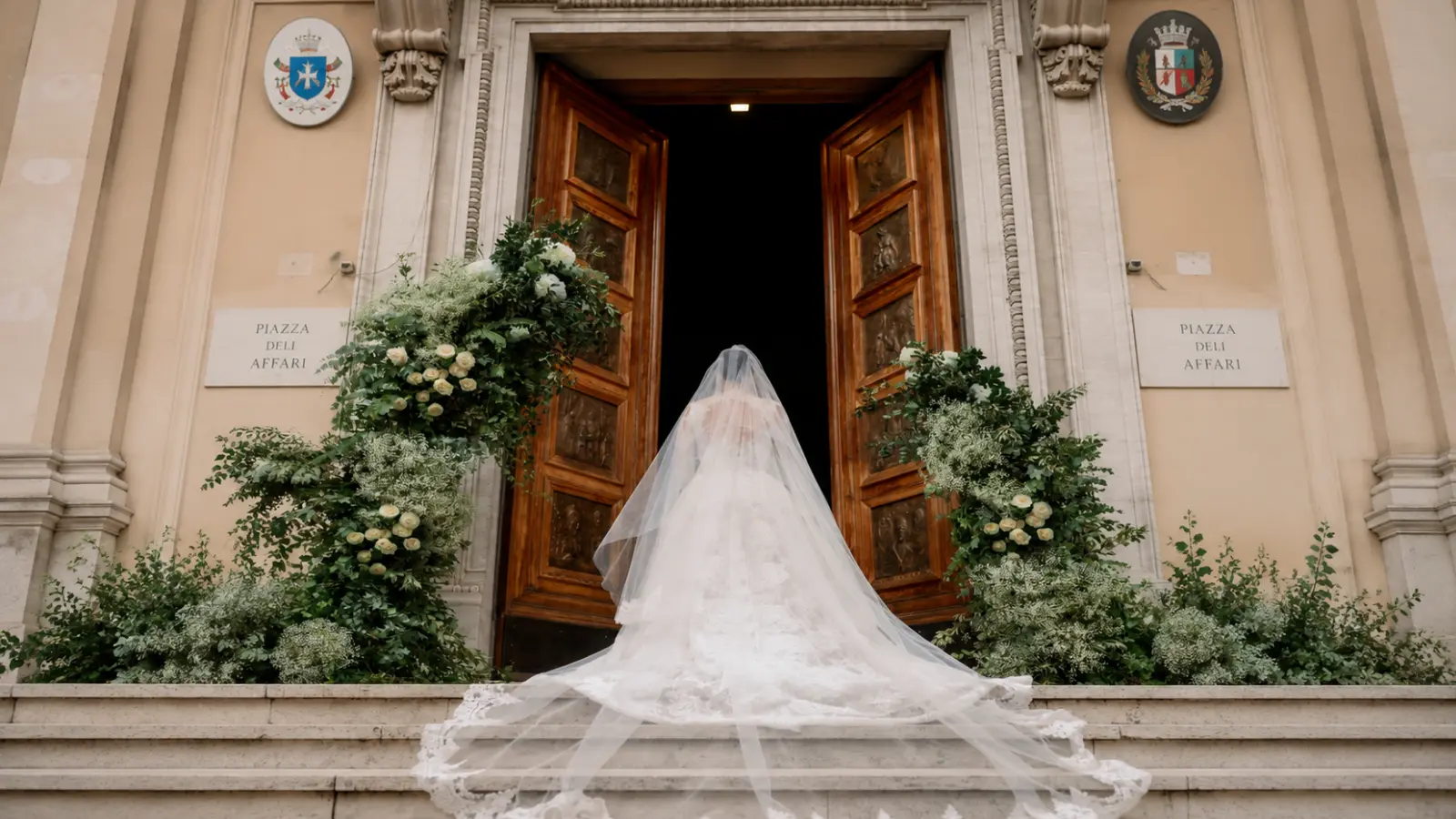
The processional is the sequence guests actually watch, so it deserves real planning rather than a last-minute decision at the rehearsal. Traditional American processional order typically moves from officiant and groom or one partner, through the wedding party in pairs or individually, to the ring bearer and flower girl, and finally the person or people walking the other partner down the aisle. Same-sex couples, blended families, and couples without a traditional “walk down the aisle” structure often adjust this order to reflect who is actually present and what feels right for their relationships — there is no single required sequence.
Decide early who walks with whom, at what pace, and to what point they stop. Also decide how you want to handle any complicated family dynamics in the order, since this is often where divorced parents, stepparents, or estranged relationships need a thoughtful placement decision rather than a default arrangement.
The recessional matters just as much and gets far less attention. Confirm who exits first, how quickly the space needs to clear for photos or the next event, and whether guests are meant to follow immediately or wait for direction. A recessional that stalls at the aisle’s end because no one told the wedding party where to go next is one of the most common small missteps in an otherwise well-planned ceremony.
Choose Readings and Readers
Readings give a ceremony pacing and personality between the more structural elements. Choose selections that fit your format: a religious ceremony may have required or traditional texts, while a civil or personalized ceremony has more room for poetry, prose, or passages that reflect your relationship specifically.
Choose readers as thoughtfully as you choose the readings themselves. A reading is a meaningful role, and the person delivering it should be comfortable speaking in front of your guest count and confident with the material. Give readers their selection with enough lead time to practice, and let them know roughly how long they will be speaking and where to stand.
If you are including more than one reading, space them so the ceremony has rhythm rather than feeling front-loaded. Two readings back-to-back early in the ceremony, followed by nothing until the vows, tends to feel unbalanced compared to spacing them across the ceremony’s structure.
Vows and Rings, Briefly
Vows are one of the most personal parts of the day, and they deserve their own dedicated planning time rather than a rushed paragraph here — this guide focuses on how they fit into your ceremony structure, not on writing them. Decide early whether you are using traditional vows provided by your officiant, fully personal vows, or a blend of the two, since that decision affects how much writing time to budget and whether your officiant needs to review a draft in advance.
Rings are a smaller decision logistically but an easy one to mishandle. Purchase and size rings well before the wedding, not in the final weeks, since resizing and engraving both take real time. Assign a specific ring bearer or wedding party member to carry them, and have a backup plan — many couples use a stand-in ring for the ceremony walk and keep the real rings safely with the officiant or a trusted attendant until the exchange.
Plan the Ceremony Music
Ceremony music breaks into three distinct moments, and each one sets a different tone: prelude music while guests are seated, processional music as the wedding party and couple enter, and recessional music as everyone exits. Choose selections for each moment separately rather than picking one playlist and hoping it works throughout, since the energy of a processional and the energy of a recessional are usually meant to feel different.
Whether you are working with a live musician, a string quartet, an officiant with a speaker system, or a simple playlist run by a coordinator, confirm timing in advance. Your musician or DJ needs to know exactly when to start the processional track and how to read the room if the pace of the walk is slower or faster than expected. A song cued to start the moment the doors open, rather than tied to a fixed countdown, tends to feel far more natural.
Get the Audio Right
Audio is the ceremony element guests notice most when it fails and almost never notice when it works. Outdoor ceremonies, in particular, need real sound planning: wind, open space, and guest chatter can make an officiant or reader inaudible past the first few rows even when they seem plenty loud standing close by.
Confirm who is providing microphones, whether the officiant needs a lavalier or handheld mic, and whether readers and anyone delivering vows will use amplified sound or rely on projection alone. Run an actual sound check at the ceremony space, not just at the reception setup, since acoustics differ significantly between an open lawn, a reflective indoor room, and a tented space.
If your venue does not provide audio equipment, this becomes a rental or vendor decision that needs its own line in your ceremony budget and its own point of contact for setup and troubleshooting on the day.
Ceremony Decor: Function Before Style
Ceremony decor works best when it solves a real problem first and adds visual polish second. An arch, arbor, or floral installation often anchors where the couple stands and gives photographers a natural focal point, which is a functional reason to invest in it beyond aesthetics alone. Aisle markers, runners, and directional signage help guests understand where to sit and how the space is organized, which matters more in a venue without an obvious layout.
Let your venue do some of the visual work before adding to it. A space with strong existing architecture, a scenic backdrop, or built-in landscaping often needs far less added decor than an open room or a blank field. Decide what is genuinely functional — shade, seating markers, an aisle that is clearly defined — before layering in decorative elements that are purely aesthetic.
Whatever you choose, confirm who installs it, when they have access to the space, and who is responsible for removing it afterward. Decor that looks finished in a vendor’s portfolio still needs a real setup and breakdown plan tied to your specific venue’s timing.
Plan for Accessibility
Accessibility should be part of the ceremony plan from the start, not an adjustment made after a guest requests one. Confirm that pathways to and around the ceremony space accommodate wheelchairs, walkers, and canes, that seating includes accessible options without isolating a guest from their group, and that the aisle and any steps or uneven ground have been walked in advance by someone thinking specifically about mobility.
For guests who are hard of hearing, consider sightlines to the officiant and readers, since many guests rely on lip reading or visual cues in addition to sound. If a guest has specifically requested accommodations, follow up directly with them or their party to confirm the plan addresses their actual needs rather than a general assumption about what “accessible” means.
This is worth finalizing before invitations go out, since a guest deciding whether they can attend needs accurate information, not a promise to figure it out later.
Build a Real Weather Plan
An outdoor or partially outdoor ceremony needs a weather plan with a real decision point, not a vague hope that it works out. Confirm what the indoor or covered backup actually is, how long it takes to execute a move if needed, and by what time on the wedding day that call has to be made. A backup plan that requires two hours of setup is not useful if the decision gets made ninety minutes before the ceremony starts.
Name one person — a coordinator, a planner, or a specific trusted individual — who is authorized to make the weather call. Without a named owner, this decision tends to default to the couple in the middle of getting ready, which is the worst possible moment for it.
Confirm the plan with your venue and any outdoor-dependent vendors well before the final week, since a floral installation, an audio setup, or a seating plan built entirely for the outdoor space may need real adjustments for the indoor version.
Rehearse the Whole Sequence
A rehearsal is where every decision above gets tested together for the first time, and it usually happens the day or two before the wedding. This is not simply a walk-through of the processional — it is the moment to confirm timing, spacing, cues for music and audio, hand-offs like the rings or the person walking a partner down the aisle, and what happens if someone is late or out of place.
Bring everyone who has an active role: the wedding party, readers, anyone walking a partner down the aisle, the officiant, and whoever is running music or audio cues. A short, focused rehearsal that actually walks the full sequence is far more useful than a longer one that only covers the parts that feel exciting to practice.
Because the rehearsal deserves its own detailed walk-through — who attends, what to actually practice, and how to handle common hiccups like children in the wedding party — this guide treats it as the final checkpoint rather than covering it in full here.
Build the Ceremony in the Order the Decisions Depend on Each Other
How to Plan a Wedding Ceremony becomes much easier when the major structural decisions come first. Set the format, officiant, venue setup, and seating before refining the processional, readings, vows, rings, music, décor, and other details that depend on them.
Then use accessibility, audio, weather planning, and the rehearsal to test whether the ceremony can actually function the way it was designed. A strong ceremony plan is not simply a list of beautiful moments — it is a sequence where every person knows where to be, what happens next, and who owns the decisions behind it.
Frequently asked questions (FAQ)
How do you plan a wedding ceremony step by step?
Start by choosing the ceremony format, then book the officiant and confirm that the venue can support the ceremony structure you want. Next, finalize seating, reserved rows, processional and recessional order, readings, vows and ring logistics, music, audio, décor, accessibility, and the weather backup plan. Once those pieces are settled, use the rehearsal to test the full sequence and confirm who owns each cue and handoff.
How far in advance should you plan a wedding ceremony?
Begin once the wedding date and ceremony venue are confirmed. The officiant, ceremony format, and any requirements connected to the venue or ceremony type should be handled early, while readings, music, seating details, décor, and final sequencing can usually be completed later. The exact timeline depends on the officiant, venue, ceremony format, and any logistical or religious requirements involved.
Who officiates a wedding ceremony if you are not religious?
Couples planning a nonreligious ceremony may choose a civil officiant, judge, magistrate, professional wedding officiant, or another person who is legally permitted to perform the marriage where the ceremony takes place. Requirements vary by jurisdiction, so verify who may legally officiate and what paperwork is required with the appropriate local authority.
How long should a wedding ceremony be?
There is no required length. Many ceremonies are relatively short, while religious services or ceremonies with several readings, rituals, or cultural elements may run longer. The right length should come from the ceremony format and the elements you genuinely want to include rather than from trying to reach a particular number of minutes.
Do you need a wedding program for the ceremony?
No. A wedding program is optional, but it can be useful when guests would benefit from seeing the ceremony order, names of participants, readings, music, or explanations of cultural or religious traditions. If the ceremony is simple and easy to follow without one, a printed program is not necessary.
What happens if it rains during an outdoor wedding ceremony?
Use a backup plan that was confirmed before the wedding day. The plan should identify the indoor or covered alternative, how much time is required to move or reset the ceremony, which vendors need to adjust, and who has authority to make the weather call. The backup only works if the venue, coordinator, and affected vendors already know how it will be executed.