
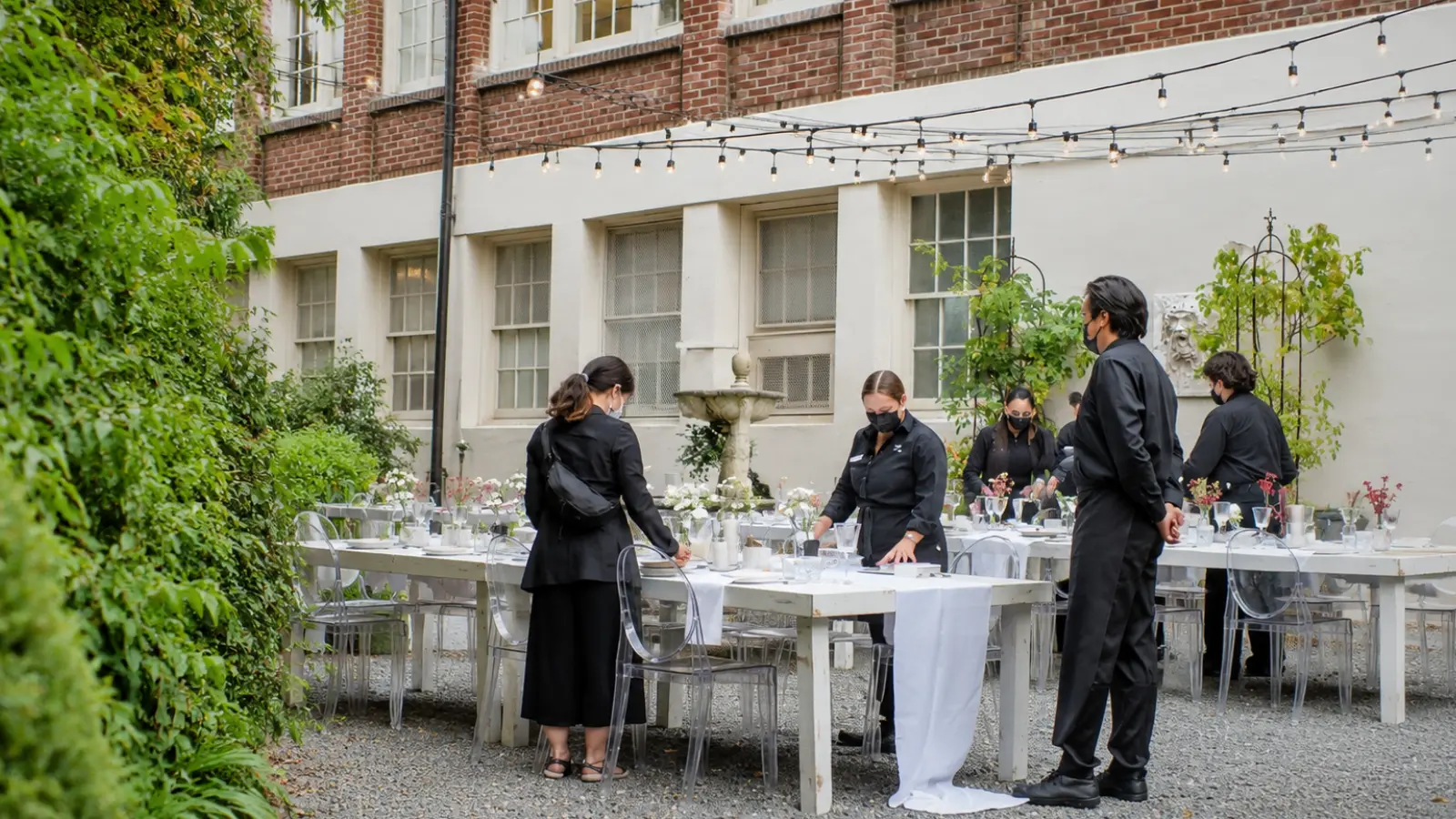
A Wedding Setup Checklist should answer more than what needs to arrive at the venue. It should identify who receives each item, who installs it, when the work happens, where the item stays during the event, who removes it afterward, and where it goes when the wedding is over.
That matters because booking a rental company, florist, baker, or décor vendor does not automatically mean every physical handoff is covered. Tables may be delivered without setup, ceremony florals may need to move to the reception, personal décor may have no vendor responsible for it, and gifts, cards, signage, or borrowed items still need someone to take them home at the end of the night.
This Wedding Setup Checklist organizes setup, breakdown, storage, cleanup, rentals, flowers, signage, personal décor, cake delivery, gifts and cards, vendor arrival times, and returns so every physical item has an owner on both ends of the event.
The Wedding Setup and Breakdown Checklist at a Glance
The table below is a starting frame, not a finished plan — swap in the actual vendors, times, and people who apply to your wedding. What matters most is that every row has both a setup owner and a breakdown owner, since the two are rarely the same person, and the second one is the one couples forget to name.
| Task | Setup Time | Owner | Breakdown | Destination |
|---|---|---|---|---|
| Rental delivery (tables, chairs, linens) | Morning of, per rental contract | Rental company / venue staff | Rental company, at pickup | Back to rental company |
| Table and chair setup | After delivery, before decor | Venue staff or day-of coordinator | Venue staff | Stays with venue |
| Ceremony florals (arch, aisle) | 1–3 hours before ceremony | Florist | Florist or a designated helper | Moved to reception, or taken home |
| Reception centerpieces | Same window as rentals | Florist | Florist or designated breakdown owner, per contract | Guest tables during event; then florist pickup, approved guest takeaway, donation, compost, or disposal plan |
| Signage (welcome sign, seating chart, table numbers) | With decor setup | Couple, planner, or a named friend | Same person | Home with couple |
| Personal decor (photos, heirlooms) | With decor setup | One specifically named family member | Same person, immediately after | Home with couple or family member |
| Cake | 1–2 hours before reception | Baker or delivery service | Caterer plates remaining tiers | Top tier home with couple |
| Gift and card table | Doors open | One named, sober family member | Same person, right after last dance | Home with couple or trusted family member that night |
| Final venue cleanup (trash, floor sweep) | End of night | Venue staff or contracted crew | Venue staff | N/A |
Once every row has two names attached — one for arrival, one for departure — the rest of this guide fills in the reasoning behind each category, starting with the access window that everything else has to fit inside.
Confirm Venue Access Windows First
Everything downstream depends on when the venue’s doors are actually open, not when the ceremony starts. Most venue contracts define a fixed load-in and load-out window, and running past it can mean an overtime fee charged by the hour rather than a warning.
Confirm three specific times directly with your venue: the earliest a vendor can arrive, whether early access is possible for a full-day setup, and the hard departure time everything must be out by. If the venue hosts another event the same day, that window can be tighter than the contract implies. Ask, too, whether your cleaning or damage deposit releases automatically or only after a staff walkthrough confirms breakdown is complete.
Once that window is locked in, it becomes the frame the rest of this plan fits inside — starting with the rental delivery that usually opens the day.
Track Every Rental, Table, and Chair
Rentals are typically the first major delivery of the day and the largest physical footprint in the room, so they set the pace for everything that follows. Two details are worth confirming before the wedding week, not during it.
First, check whether your rental contract covers full setup — tables placed, chairs unstacked and arranged — or only a drop-off at the door. Many companies charge separately for setup and breakdown service, and assuming it’s included when it isn’t leaves a job with no one assigned to it. Second, confirm who signs for the delivery and does a quick count against the order; a short chair count is easier to fix at drop-off than during cocktail hour.
Pickup timing matters just as much as delivery. Some rental companies collect everything the same night, others come the next business day, which means someone needs to stage the returnable items somewhere dry and out of the way until then. A staging area protected from weather and foot traffic saves your deposit more reliably than hoping nothing gets damaged overnight.
Flowers, Signage, and Personal Decor: Who Installs What
This section is about logistics, not design — what you choose for florals, signage, or personal touches is its own decision covered elsewhere. What matters here is who physically gets each category in and out of the venue.
Florists typically have their own install window that overlaps with rental setup, working around the tables and chairs already in place. Ceremony florals like an arch or aisle markers are frequently reused at the reception, but confirm with your florist whether that move is part of their service or something a separate helper needs to handle — it’s a detail that falls through the cracks more often than it should.
Signage is rarely covered by any vendor contract at all. A welcome sign, seating chart, and table numbers usually need a named person — the couple, a planner, or a detail-oriented friend — who also collects them at the end of the night, since these pieces tend to be either expensive or genuinely irreplaceable if left behind. Personal decor, including family photos or a passed-down cake topper, deserves that same specificity. It’s the category most likely to actually go missing, so name one person for it rather than leaving it to whoever happens to be nearby.
The Cake: Delivery, Display, and Cutting Logistics
The cake is usually delivered directly to the reception venue one to two hours before guests arrive, which gives it time to settle before it’s on display without sitting out so long that heat or direct sun becomes a problem, particularly for buttercream finishes.
Confirm with your baker whether the display stand and cutting utensils are provided or need to be rented separately, and check with your caterer whether cutting and plating the remaining tiers is included in their service or billed as a separate cake-cutting fee. Decide in advance who takes the top tier home and how it will stay cold on the drive, rather than working that out while everyone else is dancing.
Vendor and Helper Arrival Times
This is separate from the ceremony processional, which the wedding rehearsal guide already covers in detail. This is about the setup crew: the sequence of vendors and helpers arriving before any guest does.
Build a simple sequenced timeline for the morning — venue opens, rentals arrive, florist arrives, decor goes up, caterer arrives, photographer arrives — and share it with everyone involved rather than assuming each vendor already knows when the others are showing up. Two vendors needing the same loading entrance at the same time is a common and avoidable snag.
Name one point of contact on-site to receive vendors, whether that’s a coordinator, a planner, or a trusted friend. Without one, calls and questions tend to land on the couple while they’re getting dressed, which is the worst possible moment for a delivery question.
Storage During the Event
Once the event is running, a handful of items need somewhere to physically sit so they aren’t knocked over, rained on, or wandered off with: guest coats, gift cards, the cake topper, and the welcome sign are the usual suspects.
A locked room, a coordinator’s car, or one clearly designated table with a helper assigned to it all work — the specific method matters less than having one at all. Ask your venue directly whether they can lock a room for valuables during the reception; many can, and it’s rarely offered unless you ask for it.
Breakdown: What Happens After the Last Dance
Breakdown responsibility usually splits between venue staff, who typically handle tables, chairs, and general trash as part of what you’ve already paid for, and the couple’s own crew, who handle personal items, decor, signage, and gifts. Confirm exactly where that line falls in your venue contract, since assumptions here are one of the more common last-minute surprises.
Avoid assigning breakdown to the couple, immediate family, or the wedding party — the people who should reasonably be able to leave with their guests instead of tearing down a room at midnight. A hired coordinator or a few friends and extended family members, lined up weeks in advance and thanked accordingly, tend to make far better breakdown crews than whoever is still standing at the end of the night.
Gifts, Cards, and Envelopes: The Easiest Thing to Lose
Cards and cash gifts are the highest-value, least-secured items at most weddings, and it’s common enough advice among wedding planners that the card box deserves a dedicated, sober adult watching it — not a member of the wedding party who will be dancing, drinking, and generally distracted for most of the night.
That person stays responsible for the gift table from the moment doors open until the box leaves with the couple or a designated family member right after the reception ends — not “sometime the next morning” — and it should go straight home or to a secure location, not sit in a car overnight.
Returns: Getting Rentals and Borrowed Items Back
Confirm your rental pickup logistics the same way you confirmed delivery: same night or next business day, and where staged items sit in the meantime, protected from weather. Do a final count against the order before packing anything up, since a short return is what typically triggers a deduction from the deposit.
Borrowed items — a family heirloom vase, a friend’s cake stand, a relative’s veil — deserve the same attention as rentals, even though there’s no deposit attached. Returning them within a week or two is a considerate norm rather than a hard rule, but it’s worth naming who’s responsible before the wedding rather than leaving it as a loose promise made in the moment.
Give Every Item an Arrival Owner and a Departure Owner
A Wedding Setup Checklist is complete when every physical item has a clear path into the venue and back out again. Confirm access windows, deliveries, installation, storage, breakdown, returns, and the final destination of personal items before the wedding day begins.
Most setup problems are visible early because everyone is arriving and preparing for the event. Breakdown gaps are easier to miss because the celebration is over and many of the people who planned it are ready to leave. Assign both sides deliberately. If you know who receives an item, who handles it during the event, who removes it, and where it goes afterward, the physical logistics are actually finished.
Frequently asked questions (FAQ)
What should be included in a wedding setup and breakdown plan?
Include every physical item or installation that must enter the venue, be placed, remain secure during the event, and leave afterward. Track venue access windows, rental delivery and pickup, tables and chairs, florals, signage, personal décor, cake, gifts and cards, storage, cleanup, returns, and the destination of each item. Assign a specific setup owner and a specific breakdown owner rather than assuming the same person handles both.
Who is responsible for wedding setup and breakdown the couple or the venue?
Responsibility is usually divided among the venue, vendors, coordinator, and people chosen by the couple. Venues may handle their own furniture and general cleanup, while florists, rental companies, or other vendors manage their contracted installations. Personal décor, signage, gifts, and other couple-owned items often need separate owners. Confirm the exact split in writing rather than assuming the venue handles everything.
How many hours before a wedding should setup start?
There is no universal setup window. Start with the venue’s actual load-in time and work backward from how long rentals, florals, décor, catering, audio, and other installations require. A simple setup may need only a few hours, while a complex production may require substantially more. The venue contract and vendor timelines should determine the schedule.
What happens if a rental delivery is missing an item?
Check the delivery against the rental order as soon as it arrives and contact the rental company immediately if something is missing or incorrect. The best time to resolve a shortage is while the delivery team is still present or early enough for a replacement to be sent, not after guests begin arriving.
Should the wedding party help with breakdown?
They can, but they are usually not the best default breakdown crew. Wedding-party members and immediate family are often the people you most want free to enjoy the final part of the celebration. A coordinator, contracted team, or specifically assigned friends or relatives can be a better option when they understand the tasks and have agreed in advance.
How do you keep wedding gifts and cards safe during the reception?
Assign one trusted adult or designated event professional to oversee the gift and card area, and decide exactly when and where those items will be moved after the reception. The card box and other valuables should leave the venue with a named person and go directly to a secure location rather than remaining unattended overnight.

About the Author
Débora Justo
Founder and editor of EVORÉ, creating practical wedding planning resources, thoughtful inspiration and useful tools for the decisions that shape a celebration.
Read more about the author →