A Wedding Rehearsal exists to test how the ceremony actually moves in real space. A processional order can look perfectly clear on paper and still become confusing once the wedding party is standing at the entrance, music is playing, people are trying to judge spacing, and several physical hand-offs have to happen in sequence.
The rehearsal should therefore focus on the moments that benefit from a real walk-through: processional and recessional order, standing positions, spacing, escort hand-offs, rings, microphones, readings, children in the wedding party, and the cues that move one moment into the next. Purely verbal content usually needs confirmation rather than a full performance.
This Wedding Rehearsal guide explains who should attend, what to practice physically, what can be handled with a brief verbal note, how to rehearse the most common hand-offs, and how to run the walk-through efficiently without turning it into a rehearsal of every word in the ceremony.
Who Attends the Wedding Rehearsal
Anyone with an active role in the ceremony needs to be at the rehearsal. This isn’t a general family gathering, and treating it as one is how rehearsals run long without actually accomplishing anything. Attendance should cover the officiant, both partners, the full wedding party, anyone walking a partner down the aisle, readers, and whoever is running music or audio cues.
Parents and grandparents with a specific processional or seating role should attend, even if their part is brief, since their placement affects the timing and spacing of everyone around them. Guests who are simply attending the wedding do not need to be at the rehearsal, and neither does anyone without an assigned role. A crowded rehearsal makes it harder to actually walk through the sequence with the people who need to practice it.
If your officiant cannot attend in person, confirm in advance who will run the rehearsal in their place using the same cues and order they plan to use on the wedding day.
What to Practice at the Rehearsal
Not every ceremony element needs a full physical walk-through. Some just need a clear verbal explanation, and treating every detail as equally rehearsal-worthy is how a thirty-minute rehearsal turns into ninety minutes of restating things everyone already understands. The table below sorts the main ceremony moments by what actually benefits from practice.
| Moment | Practice? | Participants | Cue |
|---|---|---|---|
| Processional entrance and order | Yes, full walk-through | Wedding party, officiant, couple | Music start / door open |
| Standing positions at the altar | Yes | Wedding party, officiant, couple | Arrival at front |
| Giving-away or escort moment | Yes | Couple, escort, officiant | End of processional walk |
| Reading delivery and timing | Brief walk-through, not full read | Reader(s), officiant | Officiant introduction |
| Ring exchange hand-off | Yes | Ring bearer or holder, officiant | Officiant prompt |
| Vow delivery | Verbal note only | Couple | Officiant prompt |
| Microphone hand-offs | Yes | Officiant, readers, AV cue person | Before each speaking moment |
| Recessional order and exit | Yes, full walk-through | Couple, wedding party | Officiant closing line |
The pattern here is straightforward: anything involving movement, spacing, or a physical hand-off deserves a real walk-through, while content that’s purely verbal, like the exact wording of a vow, usually just needs a quick confirmation of when it happens, not a full performance.
Rehearse the Processional and Spacing
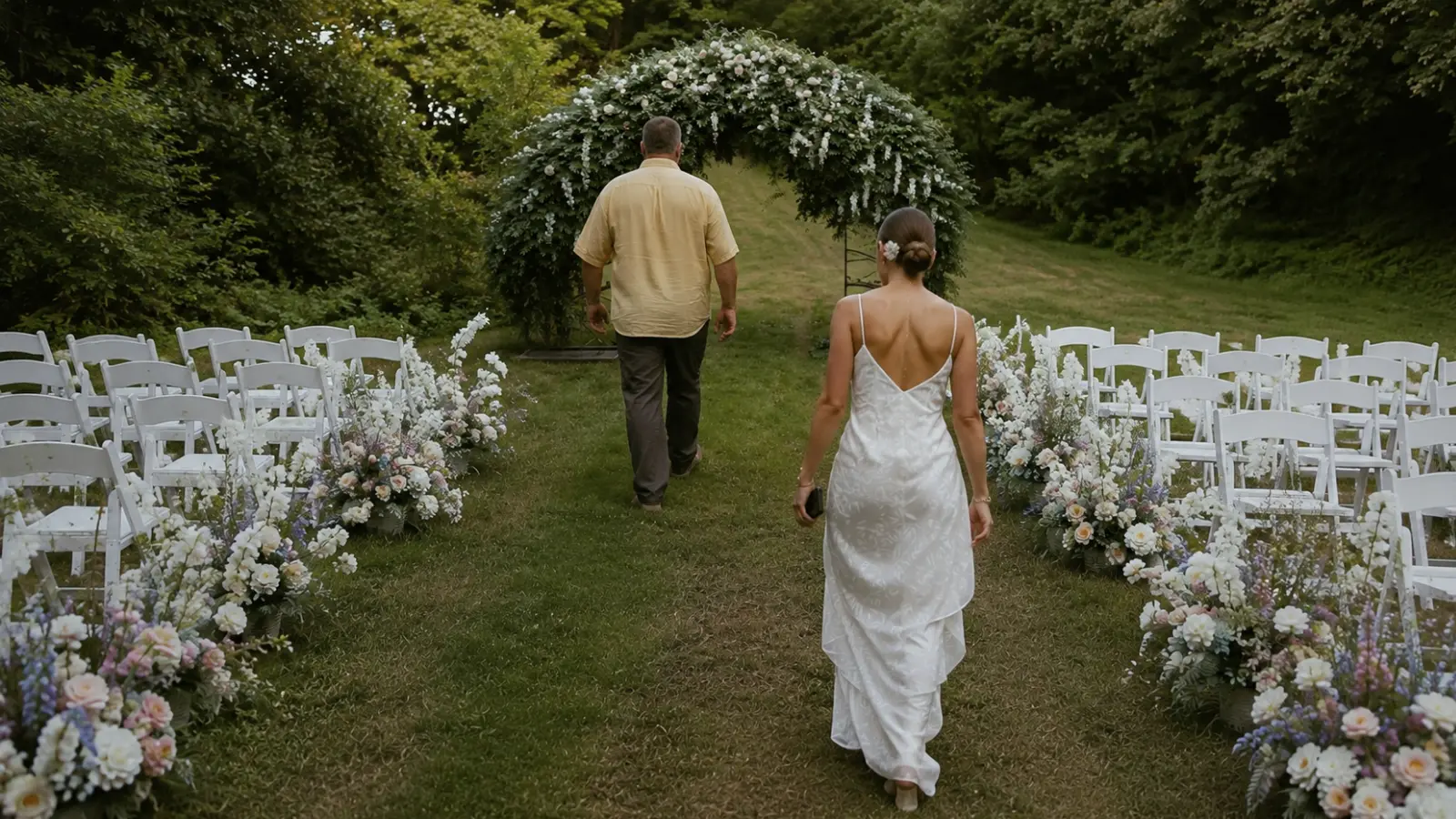
The processional is worth running more than once, since it’s the part of the ceremony guests actually watch from start to finish, and small spacing issues are much easier to fix in a hallway than mid-ceremony. Walk the actual pace you want, not a rushed version to save time at the rehearsal, since a walking speed that feels fine practicing in five minutes can feel completely different once the real music and nerves are involved.
Pay attention to spacing between each pair or individual in the processional. A gap that’s too tight makes the line look rushed and bunched at the altar; a gap that’s too wide can make the processional feel slow or disjointed, especially with a long musical piece. Confirm where each person stops and stands once they reach the front, since “somewhere near the altar” is not a real instruction once eight people are trying to figure it out simultaneously.
If your ceremony space has any uneven ground, steps, or a particularly long aisle, walk it in the actual shoes or heel height being worn on the day, not sneakers. Footwear changes pacing and balance more than people expect.
Rehearse the Hand-Offs
Every ceremony has a handful of small physical hand-offs, and these are exactly the moments that go wrong when they haven’t been rehearsed, not because they’re complicated, but because nobody thought to actually practice them. The ring exchange, the moment a partner is escorted and then handed off to the other partner, and any object passed between people during the ceremony all deserve a specific walk-through.
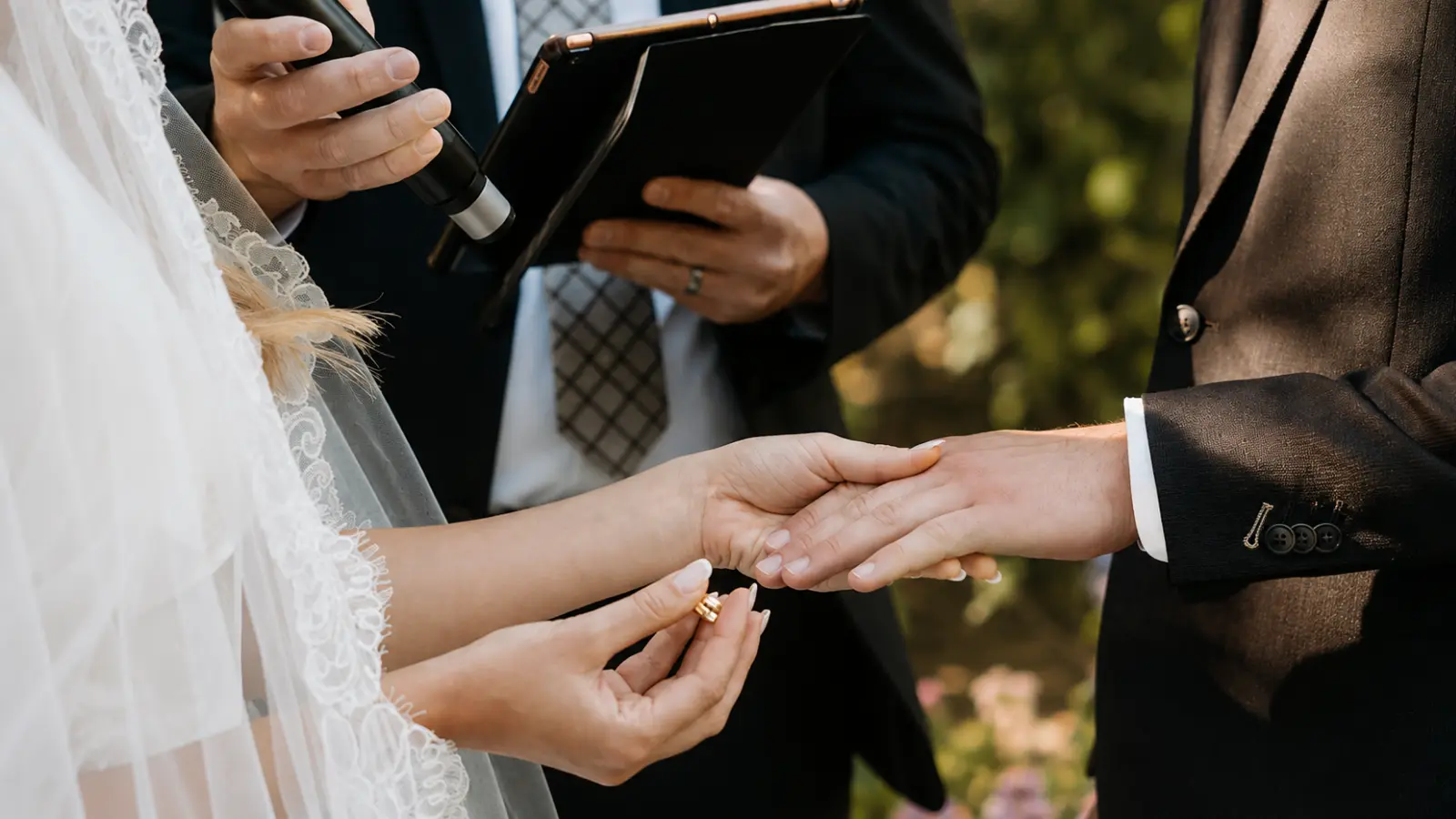
Confirm exactly who is holding the rings before the exchange, how they signal the handoff to the officiant, and where they stand afterward. If you’re using a stand-in ring during the processional with the real rings kept safely by the officiant or an attendant, rehearse that swap specifically so it doesn’t become a scramble in the moment.
The escort hand-off deserves its own attention too. Confirm the exact point where an escort steps back, whether there’s a specific gesture or moment involved, and where the escort goes afterward rather than lingering awkwardly at the front.
Readings and Microphones
Readers don’t need to perform their full reading at the rehearsal. A quick walk to the podium or designated spot, a confirmation of when their moment happens, and a note on pacing is usually enough. Save the full read for their own preparation time rather than making everyone else at the rehearsal sit through it.
Microphone hand-offs are a different story and deserve real practice, especially if multiple people are using the same mic throughout the ceremony. Confirm who hands the microphone to whom, where it sits between uses, and who is responsible for it if there’s a technical issue. This is also the moment to run an actual sound check if your rehearsal is happening in the real ceremony space, since acoustics in an empty room can be misleading once the space is full of guests.
Rehearse the Recessional
The recessional gets far less attention than the processional, and it’s exactly the reason so many ceremonies stall right after the officiant’s closing line. Confirm who exits first, at what pace, and where everyone actually goes once they clear the aisle, not just “outside,” but a specific location where photos, receiving lines, or the next part of the day picks up.
If children are part of the recessional, walk through their exit specifically, since a flower girl or ring bearer who nailed the processional can still freeze or wander during the exit once the formal part of the ceremony feels “over” to them. A recessional with a clear, rehearsed pace keeps the transition into the rest of the day from feeling like an afterthought.
Rehearsing With Children in the Wedding Party
Children in the wedding party benefit from a shorter, more focused version of the walk-through rather than sitting through the full rehearsal timing built for adults. Practice their specific part, usually the processional entrance, a couple of times, and keep instructions simple and physical rather than abstract, like “walk to where I’m standing” instead of a longer verbal explanation.
Have a backup plan and communicate it kindly: a young child who becomes overwhelmed on the actual day is common and not a reflection of how well the rehearsal went. Identify a trusted adult who can quietly step in and walk with a nervous child if needed, and mention this plan during the rehearsal itself so it doesn’t feel like an improvised fix in the moment.
How Long a Rehearsal Actually Takes
Most wedding rehearsals run between thirty minutes and an hour, depending on the size of the wedding party, the complexity of the ceremony, and how many times the processional needs to be run before it feels comfortable. A smaller, simpler ceremony can often wrap up closer to thirty minutes, while a large wedding party or a ceremony with several distinct ritual elements may need closer to an hour.
Schedule the rehearsal for a time when the ceremony space is actually available, ideally the day or two before the wedding, and confirm that timing with your venue well in advance. A rehearsal squeezed in around another event at the same venue tends to feel rushed in exactly the moments that need patience.
Practice the Movement, Not the Entire Ceremony
A Wedding Rehearsal is most useful when it focuses on the moments that can become confusing in real space. Walk the processional and recessional, confirm standing positions, practice rings and microphone hand-offs, test the cues between participants, and make sure everyone knows where to go after each transition.
Keep purely verbal elements brief unless they create a timing or technical issue that needs testing. The goal is not to perform the wedding before the wedding — it is to remove uncertainty so every person with an active role knows exactly what happens next.
Frequently asked questions (FAQ)
What should you practice at a wedding rehearsal?
Practice the parts of the ceremony that depend on movement, spacing, timing, or physical hand-offs. That includes the processional, standing positions, escort transitions, ring hand-off, microphone movement, reader placement, and the recessional. You usually do not need to perform full vows or complete readings; the rehearsal should test how the ceremony moves rather than recreate the entire ceremony.
Who needs to attend the wedding rehearsal?
The officiant, both partners, the full wedding party, anyone walking a partner down the aisle, readers, and whoever is responsible for music or audio cues should attend. Parents, grandparents, or other family members should also be there when they have a specific processional, seating, or ceremony role.
Do you need to rehearse your vows?
Usually not word for word, especially if you are writing personal vows. Practice those privately. At the rehearsal, confirm when the vows happen, where you stand, how the officiant transitions into them, and whether a microphone or vow book needs to be handed to anyone.
When should the wedding rehearsal happen?
Most rehearsals happen the day or two before the wedding, once the key participants are in town and the ceremony plan is final enough to test. Confirm venue access well in advance, especially if another event is using the ceremony space around the same time.
What if the officiant cannot attend the wedding rehearsal?
Choose another person to lead the walk-through and give them the exact ceremony order, processional sequence, cues, standing positions, and hand-offs the officiant plans to use. The rehearsal should follow the same operating plan as the wedding day so participants are not taught one version and expected to perform another.
Is a wedding rehearsal necessary for a small or simple ceremony?
It is still useful, even if it only takes 15 to 20 minutes. A brief walk-through can catch aisle spacing, standing positions, ring hand-offs, music cues, microphone movement, and recessional confusion that would otherwise appear for the first time during the actual ceremony.

About the Author
Débora Justo
Founder and editor of EVORÉ, creating practical wedding planning resources, thoughtful inspiration and useful tools for the decisions that shape a celebration.
Read more about the author →