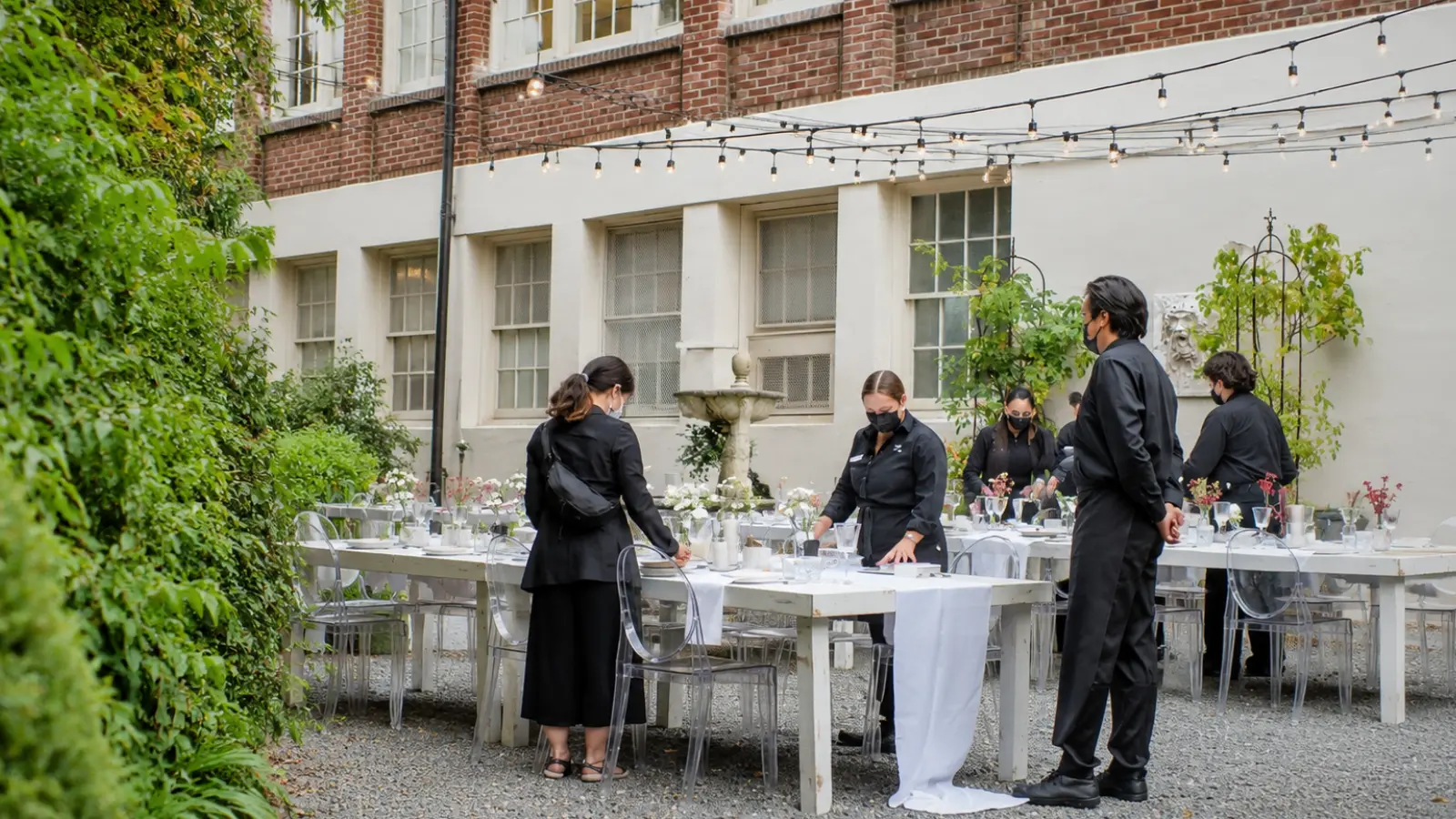
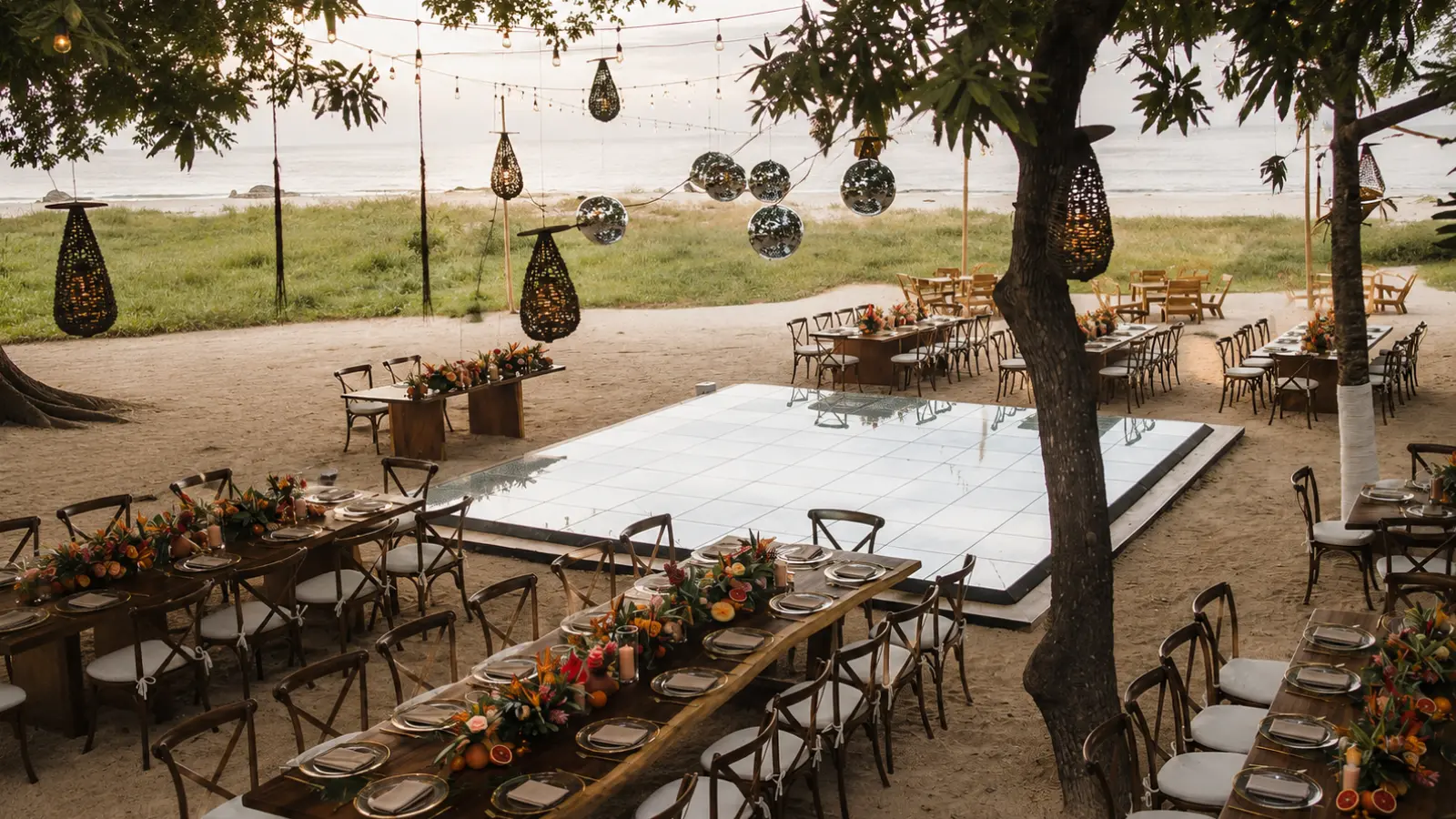
Learning How to Plan a Wedding Reception means coordinating several systems that have to work at the same time: guest arrival, seating, food service, bar operations, music, speeches, dancing, transportation, and the timeline connecting every transition.
The most efficient way to build the reception is to start with the decisions that shape everything else. Confirm the venue layout and realistic guest count first, then use those foundations to plan seating, catering, bar service, rentals, entertainment, and the schedule. Lighting, décor, transportation, and breakdown should support that operating structure rather than being added independently at the end.
This guide explains How to Plan a Wedding Reception step by step, including venue layout, guest flow, seating, catering logistics, bar service, rentals, music, timeline, speeches, dessert, lighting, transportation, and end-of-night responsibilities. Specialized choices such as menus, cocktails, bands, and cake design remain in their dedicated guides so this page can stay focused on how the reception works as one event.
Wedding Reception Planning at a Glance
Reception planning has more true dependencies than ceremony planning, since almost every vendor decision touches the guest experience in some way. The table below shows which area typically drives which vendor, and what has to be settled first for that decision to make sense.
| Area | Decision | Vendor | Dependency |
|---|---|---|---|
| Venue and layout | Room flow, capacity, included furniture | Venue | Guest count, budget |
| Guests and seating | Table layout, assigned or open seating | Couple / coordinator | Final RSVP count, venue layout |
| Catering | Service style, meal count, dietary needs | Caterer / venue | Guest count, venue kitchen access |
| Bar service | Open, limited, or cash bar; staffing | Bar vendor / venue | Venue alcohol policy, guest count |
| Rentals | Tables, chairs, linens, dishware | Rental company | What the venue does not already provide |
| Music and entertainment | DJ, band, or other entertainment | Entertainment vendor | Venue sound rules, timeline |
| Timeline | Meal, toasts, dances, and transitions | Coordinator | All vendor arrival and service windows |
| Toasts and speeches | Who speaks, in what order | Couple | Timeline, microphone availability |
| Cake and dessert | Style, service format, cutting timing | Baker | Guest count, timeline |
| Lighting and decor | Ambient lighting, centerpieces, signage | Florist / lighting vendor | Venue architecture, layout |
| Transportation | Guest shuttle, ride logistics | Transport vendor | Venue location, hotel blocks |
| Cleanup and handoff | Breakdown, returns, end-of-night owners | Venue / coordinator | Venue contract end time |
Notice how many rows depend on the venue and guest count. That’s why those two decisions come first in the sections below — nearly everything else on this list adjusts around them, not the other way around.
Start With Venue and Layout
Your reception venue determines more than where the party happens — it sets the ceiling on guest capacity, the flow between dinner and dancing, and how much you’ll need to rent versus what’s already included. Before booking, confirm exactly what furniture, dishware, and linens come with the space, since “included” varies enormously between venues and can shift your rental budget significantly.
Walk the actual reception layout with capacity in mind, not just the room’s general size. A space that comfortably seats 150 for a plated dinner may feel tight once you add a dance floor, a bar setup, and a DJ booth. Ask your venue or planner to mock up the floor plan at your real guest count before assuming the room works the way it looked on a tour with no furniture in it.
If your ceremony and reception share one venue, confirm the turnover plan — how much time exists between the two, who resets the room, and where guests go during that gap. That transition affects your entire reception timeline more than most couples expect going in.
Plan Guests and Seating
Reception seating should wait until RSVPs are in and your final guest count is stable — building a seating chart from a preliminary list is one of the most common sources of late rework in reception planning. Once the count is firm, decide between assigned seating, which works well for plated meals and larger guest lists, and open seating, which suits more casual formats like buffets or cocktail-style receptions.
Assigned seating needs a real system: table numbers, place cards or a seating display, and a plan for last-minute changes if a guest cancels close to the date. Factor in accessibility needs, family dynamics that might call for a specific table arrangement, and how guests will actually find their seats when they walk in.
Whichever approach you choose, confirm it with your caterer, since table count and seating format directly affect service timing and staffing.
Catering: What the Reception Plan Needs to Know
Your reception timeline and staffing needs shift significantly depending on catering style — a plated dinner runs on a fixed service schedule, a buffet moves guests through in waves, and a family-style or stationed format sits somewhere in between. This guide isn’t the place to choose a menu or a caterer, but the format you pick has real planning consequences worth flagging here.
Confirm your final headcount and any dietary restrictions with your caterer well ahead of the deadline in your contract, since that number drives their staffing, food quantities, and often their pricing. Also confirm venue kitchen access and any restrictions on outside catering, since some venues require an approved vendor list or charge a fee for bringing in an outside caterer.
The service format you choose also shapes your timeline directly — a plated dinner needs a clear cue for when service begins, while a buffet needs a release order by table to avoid one long line forming all at once.
Bar Service and Logistics
Bar service is one of the areas where venue policy, not personal preference, often makes the decision for you. Some venues require you to use their in-house bar service, others allow an outside vendor, and some have specific rules around liquor licensing, hours of service, or last-call timing that you need to confirm early.
Decide between an open bar, a limited bar with a defined selection, or a cash bar, and communicate that choice clearly if it affects guest expectations. Confirm staffing levels for your guest count, since an under-staffed bar creates bottlenecks that ripple into your entire reception timeline.
If alcohol service has a hard cutoff time due to venue policy or local regulation, build that into your timeline deliberately rather than discovering it mid-reception.
Rentals: Filling the Gaps
Rentals exist to cover whatever your venue doesn’t already provide, and the smartest way to approach this category is to start from your venue’s inclusion list, not from a rental catalog. Common reception rentals include tables, chairs, linens, dishware, glassware, a dance floor, and lighting fixtures, but the actual list depends entirely on what’s already built into your venue package.
Order rentals against your confirmed guest count and finalized seating format, not an early estimate, since quantities that seemed right during initial planning often shift once RSVPs settle. Confirm delivery, setup, and pickup timing directly with the rental company, and coordinate that timing with your venue’s access windows so there’s no gap between when rentals arrive and when someone is actually there to receive them.
A rental order finalized too early tends to need revision anyway — most couples get a more accurate rental list once the guest count and seating plan are locked.
Music and Entertainment
Reception entertainment sets the pace for the entire night, from background music during dinner to the energy on the dance floor afterward. This guide won’t walk you through choosing between a DJ and a live band — that decision depends on budget, venue sound restrictions, and personal taste — but a few logistics belong on your reception plan regardless of which you choose.
Confirm your venue’s sound policy, including any curfew or volume restrictions, especially for outdoor or residential-adjacent venues. Give your entertainment vendor your finalized timeline, including toasts, special dances, and any specific songs or moments you want cued precisely, and confirm how they’ll coordinate announcements with your coordinator or venue staff throughout the night.
The vendor running your music is often also the one keeping the reception moving on schedule, so treat that coordination as an operational decision, not just a music preference.
Build the Reception Timeline
The reception timeline is what actually holds every other decision on this page together. Start with fixed points that can’t move — venue end time, catering service windows, and any vendor contracts with specific hours — and build backward and forward from those anchors rather than scheduling every moment edge to edge.
A typical reception moves through guest arrival, dinner service, toasts, cake cutting, and open dancing, but the order and length of each block depends on your format, guest count, and personal priorities. Build in real transition time between blocks — moving 150 guests from dinner seating to a dance floor takes longer than it looks on paper.
Share the finalized timeline with every vendor who has a role in it: caterer, bar, entertainment, photographer, and venue staff. A timeline that only lives with the couple isn’t an operating plan — it’s a wish list.
Toasts and Speeches
Confirm early who is speaking, roughly how long each toast will run, and where they fit in your timeline. Traditional toast order often includes the best man, maid or matron of honor, and sometimes parents, but there’s no fixed rule — couples increasingly choose whoever they want to hear from, in whatever order feels right for their families.
Give anyone speaking a rough time guideline in advance, and confirm with your entertainment vendor exactly how the microphone handoff will work. A toast that runs long isn’t usually the problem — a toast where nobody knows when to start or how to get the mic is what actually derails a timeline.
Cake and Dessert on the Reception Timeline
The cake is a smaller logistical item than its visual presence suggests, but it still needs a spot on your reception plan. Confirm delivery timing with your baker, where the cake will be displayed and for how long before cutting, and whether it needs refrigeration that your venue can accommodate.
Cake cutting is often treated as a photo moment more than a dessert-service moment, so confirm with your caterer or venue staff how the cake actually gets served to guests afterward — plated at each table, self-serve, or boxed to go. Choosing a cake design and flavor deserves its own dedicated attention elsewhere; here, the job is simply making sure it shows up, gets photographed, and gets served without a gap in your timeline.
Lighting and Decor
Reception lighting does more functional work than couples often expect — it shapes photography, sets the mood for dinner versus dancing, and can solve problems a venue’s existing fixtures don’t address, like a room that reads as too bright or too dim once it’s full of guests. Confirm what lighting your venue already has before adding uplighting, string lights, or other fixtures purely for atmosphere.
Centerpieces, table numbers, and signage should serve a function — helping guests find their seats, understand the flow of the night, or simply enjoy the room — before they serve as pure decoration. Let a venue with strong existing architecture or a scenic setting do some of that visual work rather than layering decor on top of a space that doesn’t need much.
Whatever decor you choose, confirm installation and removal timing with your florist or decor vendor against your venue’s actual access windows, since a beautiful setup still needs a real setup and breakdown plan behind it.
Guest Transportation
Transportation becomes a real planning item any time your ceremony and reception are in different locations, your venue is far from where most guests are staying, or you’re hosting a significant number of out-of-town guests. A shuttle or rideshare plan reduces the risk of guests driving after drinking and keeps arrivals from being staggered across an hour when your timeline needs them seated on time.
Coordinate shuttle timing with your hotel block, if you have one, and communicate pickup times and locations clearly in your guest communications well before the wedding. If you’re not providing transportation, at least confirm parking availability at the venue and share that information so guests aren’t left guessing.
Cleanup and Handoff
Every reception ends with a breakdown, and that breakdown needs owners assigned well before the night itself. Confirm with your venue what cleanup falls under their contract versus what you’re responsible for, including rental returns, personal decor removal, and anything left behind that the venue cannot store.
Name specific people for end-of-night responsibilities: who collects gifts and cards, who takes home any leftover cake or florals, who confirms rentals are packed for pickup, and who does a final walkthrough of the space. If those answers are all “the couple,” the plan isn’t ready — nobody wants to be assigning tasks at midnight in formal wear.
Because setup and breakdown span both the ceremony and reception spaces and involve enough moving parts to deserve their own walkthrough, this guide treats cleanup as the final checkpoint rather than covering every detail here.
Build the Reception Around the Decisions Everything Else Depends On
How to Plan a Wedding Reception becomes much easier when the venue, guest count, and room layout are settled before the downstream details. Those decisions shape seating, catering, bar service, rentals, entertainment, transportation, and the amount of time each transition requires.
Once those foundations are stable, build one timeline that every vendor can actually use and assign clear ownership for setup, service, transitions, and breakdown. A strong reception is not simply a collection of well-chosen elements — it is a sequence in which guests can move naturally, vendors know what happens next, and the couple is not responsible for operating the event while attending it.
Frequently asked questions (FAQ)
How do you plan a wedding reception step by step?
Start with the venue, guest count, and floor plan because they determine seating, catering style, rentals, bar setup, and guest flow. Then confirm catering and bar service, fill venue gaps with rentals, organize music and entertainment, and build the reception timeline around fixed points such as meal service, venue end time, and vendor service windows. Finish with toasts, cake service, lighting and décor, transportation, and a clear cleanup and end-of-night handoff.
How far in advance should you plan a wedding reception?
Begin once the venue and working guest count are established, since those decisions affect almost every major reception vendor. High-demand vendors such as catering and entertainment may need to be secured well in advance, while seating assignments, final rental quantities, meal counts, and the detailed operating timeline are usually finalized closer to the wedding after RSVP information is stable.
What is the biggest planning mistake couples make with wedding receptions?
One of the biggest mistakes is locking seating, rentals, or service quantities before the guest count is reliable. Another is building a reception timeline without coordinating it with the caterer, bar, entertainment, photographer, venue, and coordinator. A timeline only works when every vendor whose service depends on it is using the same version.
Do you need a wedding coordinator for the reception?
Not necessarily, but someone should own reception execution. The reception has multiple vendors, guest transitions, meal service, speeches, music cues, and timing decisions happening at once. If you do not hire a coordinator, assign a trusted person who understands the full plan and can handle vendor questions and schedule adjustments without relying on the couple.
How long should a wedding reception last?
There is no required length. Many receptions run several hours, but the right duration depends on venue hours, meal service, guest count, entertainment, transportation, and how much time you want for dancing and other formal moments. Start with the venue’s contracted end time and build the schedule backward so dinner, speeches, dessert, and dancing all have realistic space.
What vendors need the final wedding reception timeline?
Share the final timeline with every vendor whose work is tied to specific reception moments, especially the caterer, bar team, DJ or band, photographer, videographer when applicable, venue staff, transportation provider when timing is connected, and the planner or coordinator. Everyone should receive the same current version so service cues and transitions remain aligned.

About the Author
Débora Justo
Founder and editor of EVORÉ, creating practical wedding planning resources, thoughtful inspiration and useful tools for the decisions that shape a celebration.
Read more about the author →