
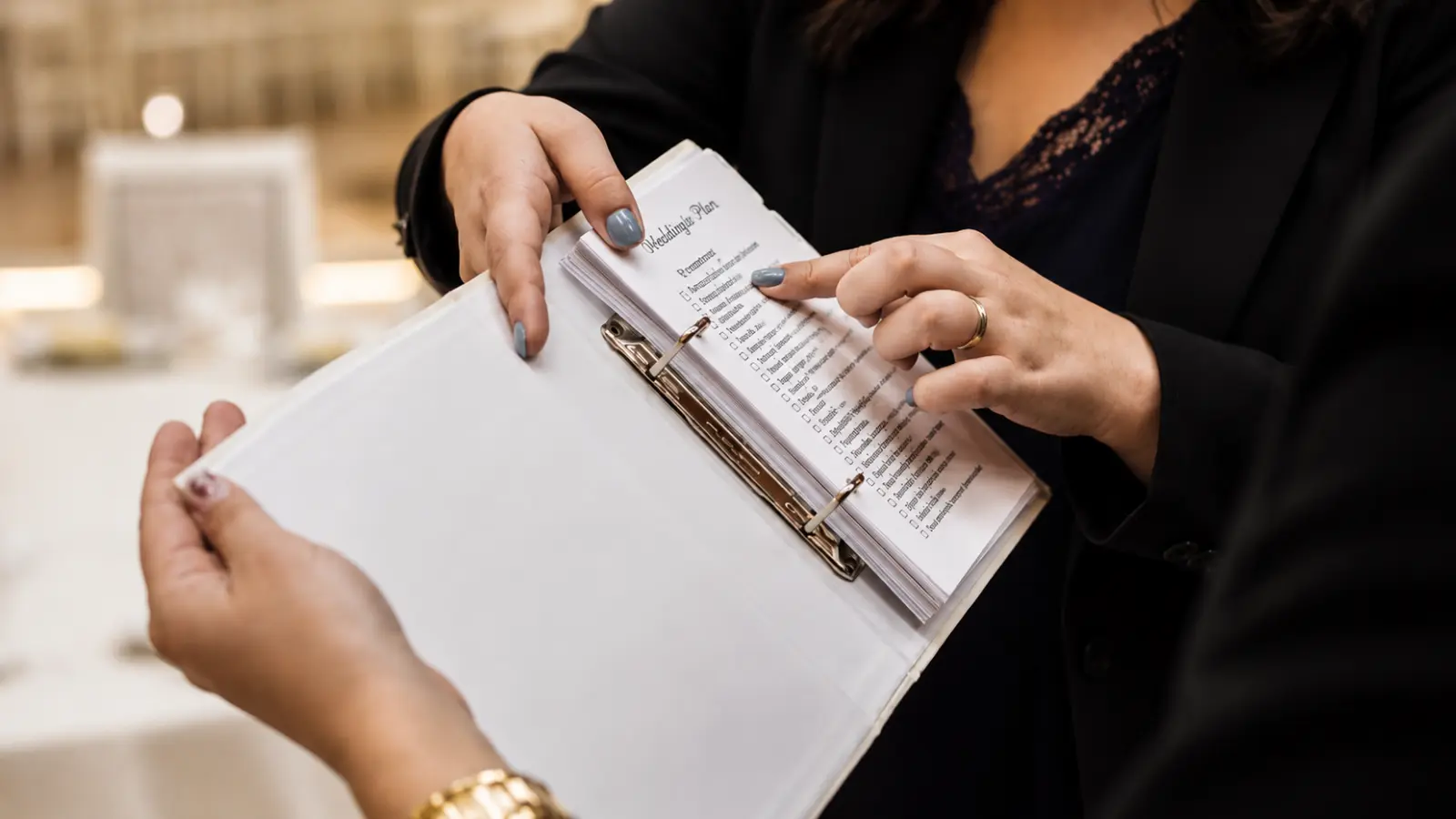
A Wedding Ceremony Checklist is most useful once the major decisions are already made and the remaining job is confirmation. By the final weeks, you should not still be deciding what the ceremony is — you should be checking whether every person, document, ring, cue, setup detail, backup plan, and rehearsal responsibility has a clear owner and a confirmed status.
That distinction matters. An officiant can be booked without being briefed, music can be selected without anyone knowing the cues, décor can be ordered without a confirmed setup window, and a weather backup can exist without anyone having authority to activate it.
This Wedding Ceremony Checklist helps you close those gaps before the wedding day by confirming people and roles, documents, rings, music and audio, readings, processional order, seating, accessibility, décor, setup, weather backup, and rehearsal. Use it as a working checklist rather than another planning guide.
The Wedding Ceremony Checklist
Run through this table two to four weeks before the wedding, then again in the final week. The “Owner” column should always be a specific person, not “us” or “someone” — a checklist item without a real owner is the one that gets missed.
| Item | Owner | Vendor/Venue | Confirmed |
|---|---|---|---|
| Officiant booked and briefed on format | Couple | Officiant | ☐ |
| Marriage license obtained and stored | Couple | — | ☐ |
| Witnesses confirmed, if required | Couple | — | ☐ |
| Rings purchased, sized, and assigned a carrier | Couple | Jeweler | ☐ |
| Prelude, processional, and recessional music selected | Couple | Musician/DJ | ☐ |
| Microphones and sound check scheduled | Coordinator | Venue/AV vendor | ☐ |
| Readings finalized and readers confirmed | Couple | — | ☐ |
| Processional and recessional order set | Couple | Officiant | ☐ |
| Reserved seating assigned by name | Couple | Ushers | ☐ |
| Accessibility needs confirmed with affected guests | Couple | Venue | ☐ |
| Decor vendor access and setup window confirmed | Coordinator | Florist/rentals | ☐ |
| Weather backup space and decision owner confirmed | Coordinator | Venue | ☐ |
| Rehearsal scheduled with all participants | Couple | Officiant | ☐ |
If more than a few rows are still unconfirmed inside the final month, that is a signal to stop adding new ceremony ideas and close out what is already on the list. The sections below walk through each category in more detail.
People and Roles
Every ceremony has a short list of people whose absence or confusion actually derails the event: the officiant, the person or people walking a partner down the aisle, the wedding party, readers, and whoever is running music or audio cues. Confirm that each of them knows their role, their timing, and where to be before the ceremony starts.
Ushers deserve a specific brief, not a general one. Give them the reserved-seating plan, instructions for late arrivals, and a name to flag if a seating conflict comes up. A role assigned verbally a week before the wedding is easy to forget under pressure, so write it down and hand it to the person directly.
Documents, Briefly
The marriage license and any required identification need to be obtained, signed correctly, and stored somewhere specific — not left loose in a bag that travels between the ceremony and reception. Confirm who is physically responsible for the license on the wedding day and who returns or files it afterward, since requirements for witnesses, signatures, and filing vary by state and sometimes by county.
This checklist is not the place to research those requirements — verify them directly with the office that issues marriage licenses in the state where your ceremony is taking place, well before the final week. Treat this line item as a confirmation step, not a research task to complete under deadline pressure.
Rings
Rings are a small physical object with an outsized capacity to cause stress if no one owns them clearly. Confirm the rings are purchased, sized correctly, and in the hands of a specific person — usually the ring bearer, a member of the wedding party, or the officiant — well before the ceremony begins.
Many couples use a stand-in ring for the processional walk and keep the real rings with the officiant or a trusted attendant until the exchange, which removes the risk of a real ring being dropped or lost during the walk itself. Whichever approach you use, confirm it during the rehearsal so the ring carrier knows exactly what they’re holding and when to hand it off.
Music and Audio
Your prelude, processional, and recessional selections need to be finalized with whoever is playing them, and the person cueing the music has to know the actual order of the ceremony, not just the song list. A musician or DJ who has the songs but not the sequence can miss the moment a cue actually needs to happen.
Audio needs its own confirmation, separate from music. Schedule a real sound check at the ceremony space itself, confirm who is providing microphones for the officiant and any readers, and identify a point of contact for troubleshooting if something goes wrong right before the ceremony starts. Outdoor spaces are the most common place this gets missed, since a sound level that feels fine standing close by can disappear past the first few rows.
Readings and Processional
Confirm your final reading selections are in the hands of your readers, that each reader knows roughly how long they’ll be speaking, and that they’ve had a chance to practice the material out loud at least once. A reading assigned the week of the wedding, with no practice run, is where most reading-related stumbles happen.
The processional and recessional order should be written down, not just discussed. Confirm who walks with whom, at what pace, and where they stop — and make sure that order matches what your officiant is expecting, since a mismatch here is one of the more common rehearsal surprises.
Seating and Reserved Rows
Reserved seating needs real names attached, not a general instruction to “save the front rows for family.” Confirm with your ushers exactly who sits where, how wide the aisle needs to be for anyone using a cane, walker, or wheelchair, and what to do if a reserved guest has not arrived by the time the ceremony is set to start.
If any guest has requested accessibility accommodations, this is the point to confirm the plan directly with them or their party rather than assuming a general seating adjustment covers what they actually need. A seating plan finalized in the final week should already reflect any changes to attendance or family dynamics that came up during planning.
Decor and Setup
Confirm exactly when your florist, rental company, or decor vendor has access to the ceremony space, how much time they need to set up, and who is responsible for removing everything afterward. This is also the point to confirm your weather backup, since a decor plan built entirely around an outdoor arch or aisle installation may need real adjustments for an indoor version.
Vendor access windows are easy to assume and surprisingly easy to get wrong, especially at a venue hosting more than one event in a day. Confirm the actual time in writing rather than relying on a general understanding from the initial booking conversation.
Weather Backup
If any part of your ceremony is outdoors, confirm three specific things: what the indoor or covered backup space actually is, how long it takes to execute a move if needed, and who is authorized to make that call on the day. A backup plan without a named decision-maker tends to default to the couple at the worst possible moment.
Confirm this with your venue and any outdoor-dependent vendors before the final week, not the morning of. A floral installation, audio setup, or seating plan built for the outdoor space may need real adjustments for the indoor alternative, and those adjustments take time your vendors won’t have if the call comes too late.
Rehearsal
Your rehearsal needs to be scheduled with every person who has an active role: the wedding party, readers, anyone walking a partner down the aisle, the officiant, and whoever is running music or audio cues. This is the last point where timing, spacing, and hand-offs like the rings get tested together before the actual day.
Rehearsal planning has enough moving parts to deserve its own guide, covering exactly what to practice and how to handle common situations like children in the wedding party — the wedding rehearsal guide covers that in full once this item is on your calendar.
Confirm the Ceremony Before You Rehearse It
A Wedding Ceremony Checklist is complete when every important detail has both an answer and an owner. Confirm the officiant, documents, rings, music and audio, readers, processional order, reserved seating, accessibility, décor setup, weather backup, and rehearsal responsibilities before the final days begin.
If something is still marked “someone will handle it,” it is not actually confirmed. Close those ownership gaps first, then use the rehearsal to test the finished ceremony as one sequence. By the wedding day, the ceremony should no longer depend on the couple remembering what happens next.
Frequently asked questions (FAQ)
What should be on a wedding ceremony checklist?
A complete wedding ceremony checklist should cover the officiant and other ceremony roles, required documents, wedding rings, music and audio, readings, processional and recessional order, reserved seating and accessibility, décor and setup access, the weather backup plan, and the rehearsal. Each item should have a specific owner and a confirmed status rather than simply existing as an unfinished plan.
When should you start using a wedding ceremony checklist?
Start using the checklist about two to four weeks before the wedding, once the major ceremony decisions are already settled. Review it again during the final week to catch anything that remains unconfirmed with the officiant, venue, vendors, wedding party, readers, ushers, or family members.
When should everything on the wedding ceremony checklist be finalized?
Most operational details should be confirmed before the final week so that the last few days are used for verification rather than new decisions. The rehearsal can serve as the final test of the processional, recessional, ceremony cues, rings, readings, music, and participant roles, while weather-dependent decisions may remain open until the venue’s agreed decision point.
Who is responsible for wedding ceremony setup and breakdown?
Responsibility depends on the venue and vendor contracts. Confirm specifically who installs floral or rental items, who places personal décor, who removes everything after the ceremony, and whether those duties change if the ceremony moves to a weather backup location. Do not assume the same team handles both setup and breakdown.
What is often forgotten on a wedding ceremony checklist?
Audio is one of the easiest details to underestimate, especially for outdoor ceremonies. Couples also commonly leave accessibility arrangements too vague, forget to assign a specific person to the wedding rings or marriage documents, or create a weather backup without naming who has authority to make the final call.
Should the officiant attend the wedding rehearsal?
Usually, yes, because the officiant is closely connected to the ceremony structure, positioning, and cues. If the officiant cannot attend, confirm in advance who will lead the rehearsal and make sure that person is using the same processional order, ceremony sequence, and handoff plan that will be followed on the wedding day.

About the Author
Débora Justo
Founder and editor of EVORÉ, creating practical wedding planning resources, thoughtful inspiration and useful tools for the decisions that shape a celebration.
Read more about the author →