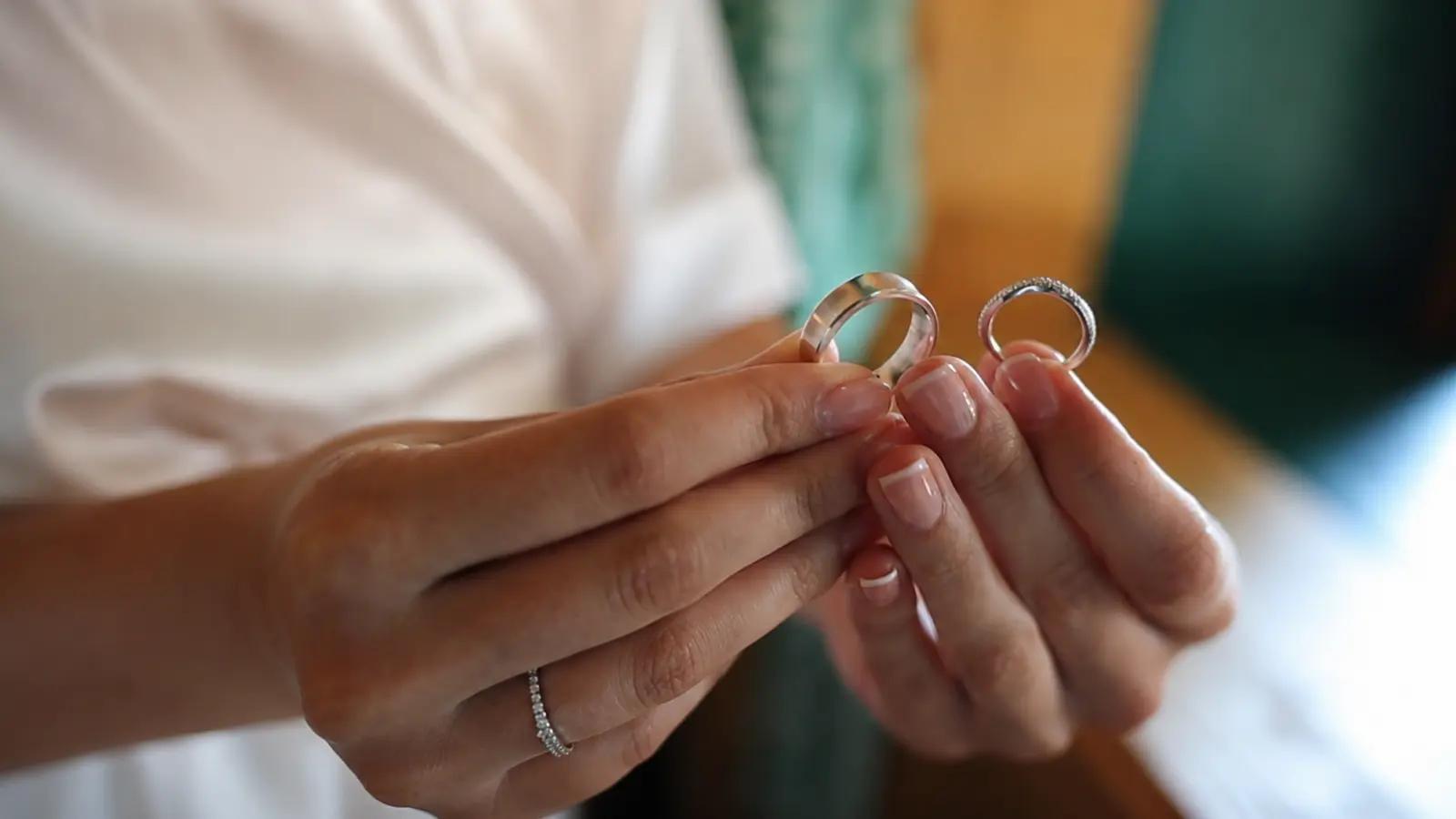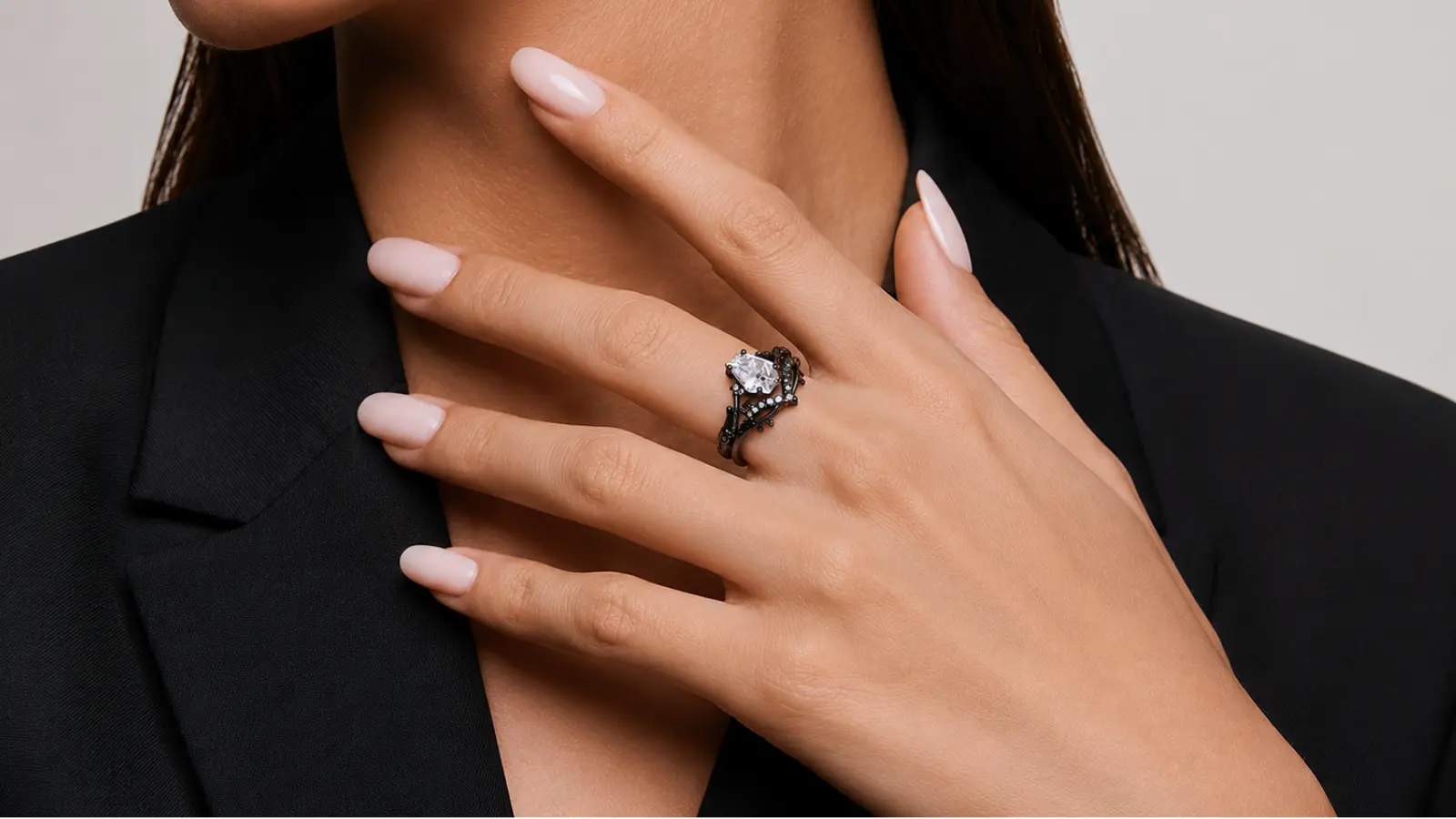
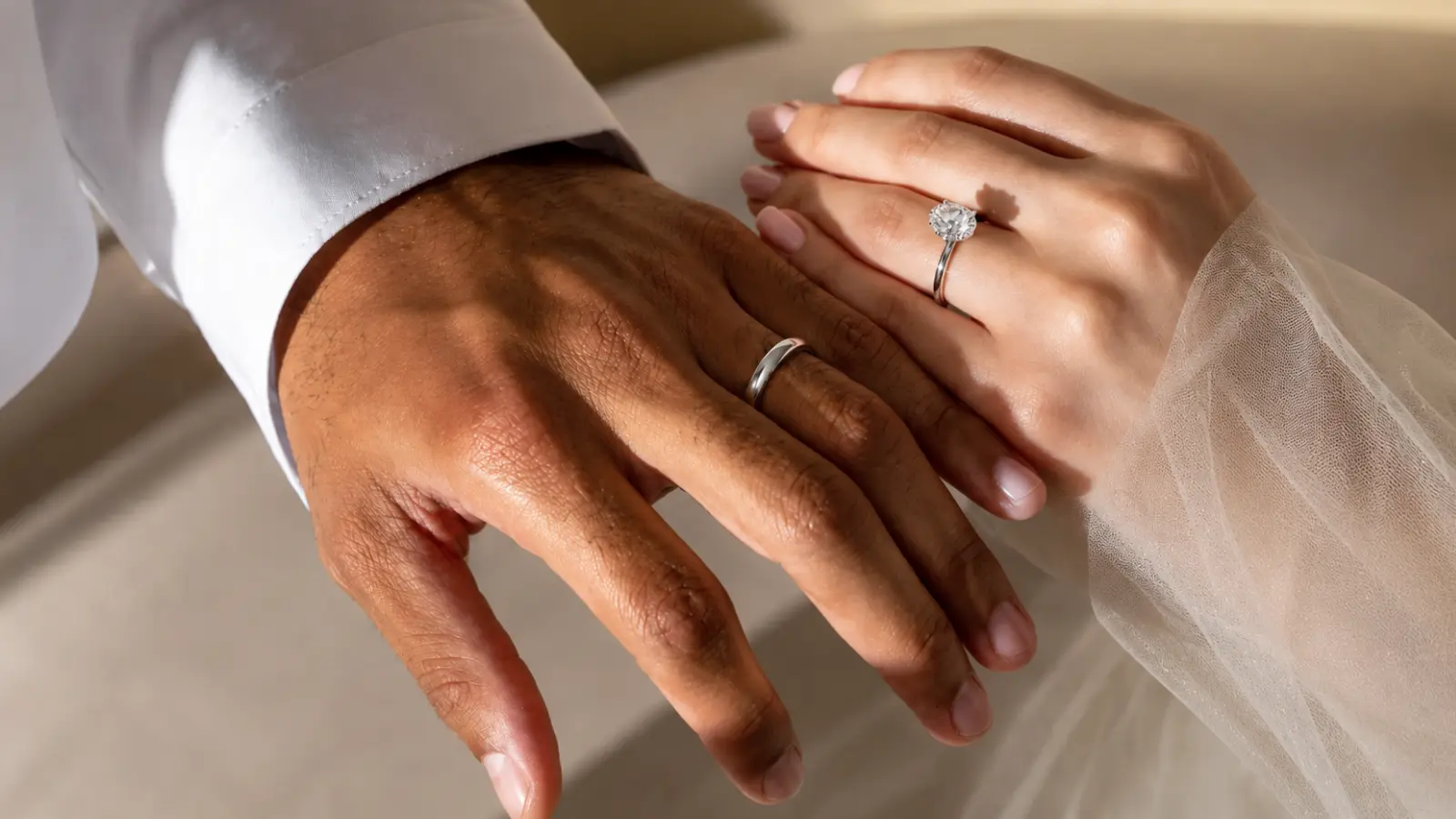
Wedding rings are symbolic pieces of jewelry exchanged during a wedding ceremony to represent marriage, commitment, and the lifelong connection between two partners. Unlike many wedding details that only exist for one day, wedding rings are designed to be worn every day, making the choice of style, metal, comfort, and durability especially important.
Choosing the right wedding ring is about more than finding a beautiful design. Couples need to consider how the ring fits their lifestyle and budget, how different metals age over time, whether it pairs with an engagement ring, and which style will continue to feel meaningful years later.
This guide explains everything couples need to know about wedding rings and wedding bands, including the difference between them, engagement rings vs. wedding rings, styles for women and men, gold and platinum options, diamond bands, costs, ring sets, traditions, and how to choose the right wedding ring for everyday life.
What Is a Wedding Ring?
A wedding ring is a ring exchanged between partners during a wedding ceremony as a formal symbol of their marriage. In the United States, both partners typically wear wedding rings, placed on the fourth finger of the left hand — the ring finger — at the moment of the vows. The circular shape carries symbolic meaning that predates any particular culture or religion: a circle has no beginning and no end, which is why it became the shape assigned to a commitment meant to last a lifetime.
What distinguishes a wedding ring from other rings is not its appearance but its context. It is exchanged during the ceremony — handed from one partner to the other, placed on the finger, and worn from that moment forward. That act of exchange is what gives the ring its meaning. The ring itself can be a plain gold band that cost two hundred dollars or a platinum pavé design that cost ten thousand. The significance is the same.
Wedding rings in the United States have no legal requirement attached to them — a marriage is legally complete without any rings being exchanged. The tradition is cultural and personal, carried by the weight of what the gesture represents rather than any formal mandate. Which is also why, increasingly, couples make their own decisions about what kind of ring to wear, whether to wear matching sets, and even which finger to wear it on.
Wedding Ring vs. Wedding Band — Is There a Difference?
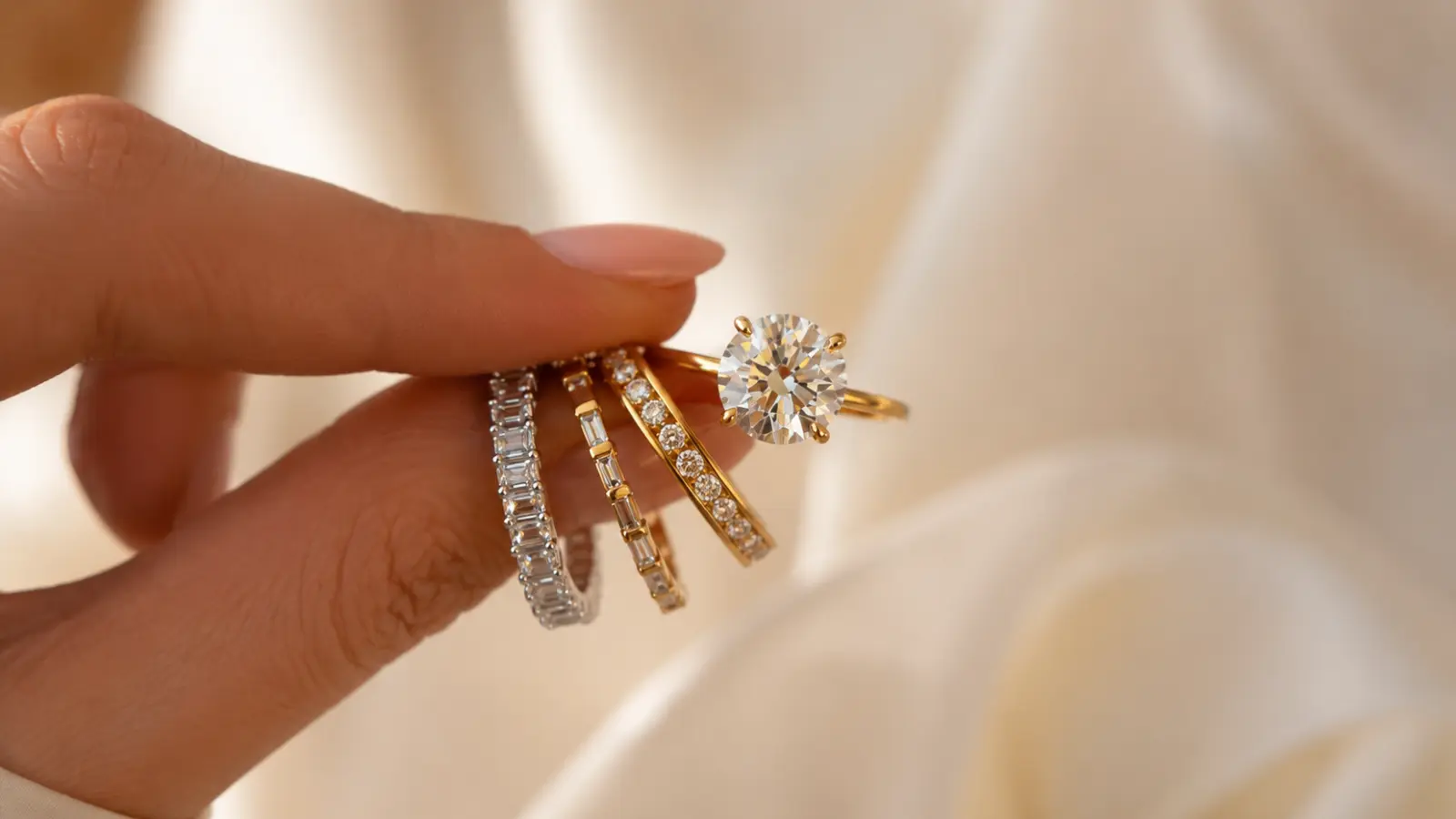
In everyday American usage, wedding band vs. wedding ring is mostly a terminology question, since both terms are used interchangeably — by couples, by jewelers, by wedding planners, and by everyone else involved in the process. If you use one term and your jeweler uses the other, they are talking about the same object.
There is a historical distinction worth knowing, even if it rarely matters in practice. Traditionally, a wedding band referred to a plain metal circle — unadorned, no stones, the simplest possible version of a ring. A wedding ring could include stones, engravings, and more elaborate design elements. That distinction began dissolving as more elaborate band styles became popular and the terms became functionally synonymous. Today, jewelers often use “wedding band” in their product categories and “wedding ring” in conversation, but neither term implies a specific style or level of embellishment.
What the terms definitively do not mean: neither one is a synonym for an engagement ring. An engagement ring and a wedding ring are two separate pieces of jewelry with separate symbolic functions — which is the next thing worth understanding clearly.
Engagement Ring vs. Wedding Ring
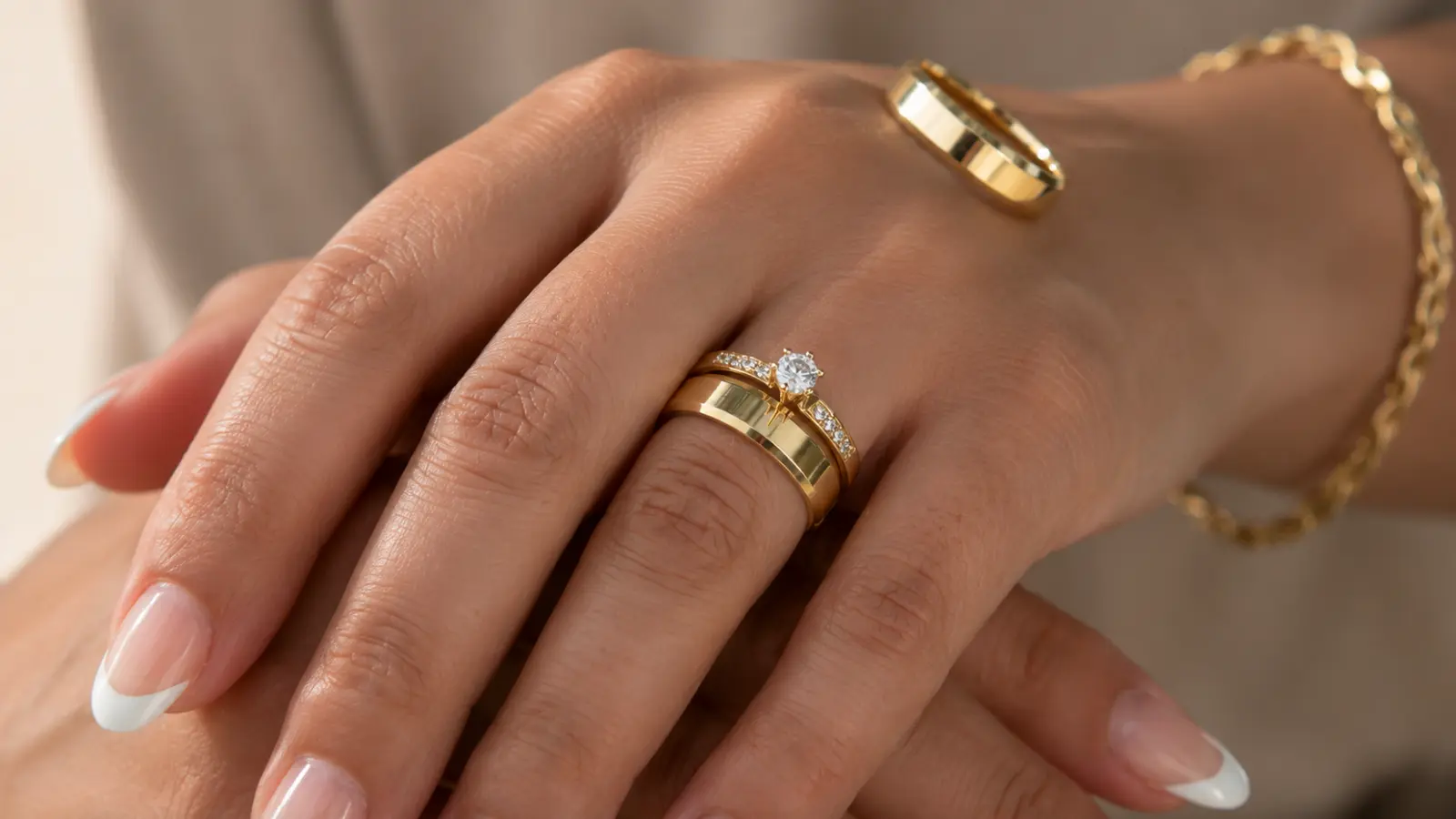
Understanding engagement ring vs. wedding ring matters for how you shop, budget, and wear the two together.
The engagement ring comes first, chronologically and ceremonially. It is given during the proposal — a private moment, often a surprise — and it marks the beginning of the engagement period. It is traditionally worn by one partner (historically the woman, though that convention is shifting), and it is typically the more elaborate of the two rings: a prominent center stone, usually a diamond, set in a design meant to stand out. The engagement ring is worn throughout the engagement and then — after the ceremony — stacked with the wedding ring on the same finger.
The wedding ring comes at the ceremony. Both partners exchange wedding rings during the vows. These rings tend to be simpler and lower-profile than engagement rings — designed for comfortable, permanent daily wear rather than visual impact. After the ceremony, the wedding ring is typically worn beneath the engagement ring on the left ring finger, positioned closer to the heart according to long-standing tradition.
Do you need both?
No. Many couples choose not to have a separate engagement ring, wearing only a wedding ring after the ceremony. Many others choose an engagement ring that functions as the only ring they wear — a design substantial enough to stand alone. Both approaches are completely valid. The engagement ring is a tradition, not a requirement, and the wedding ring is where the real symbolic weight lives regardless.
If you are building a set — an engagement ring and a wedding ring meant to be worn together — the most important consideration is how the two rings sit together on the finger. A curved or contoured wedding band can be designed to nest against the engagement ring’s setting without gaps. A straight band may leave space or sit slightly askew depending on the engagement ring’s profile. The physical relationship between the two rings on the finger is worth more attention than most couples give it before purchasing.
Wedding Rings for Women
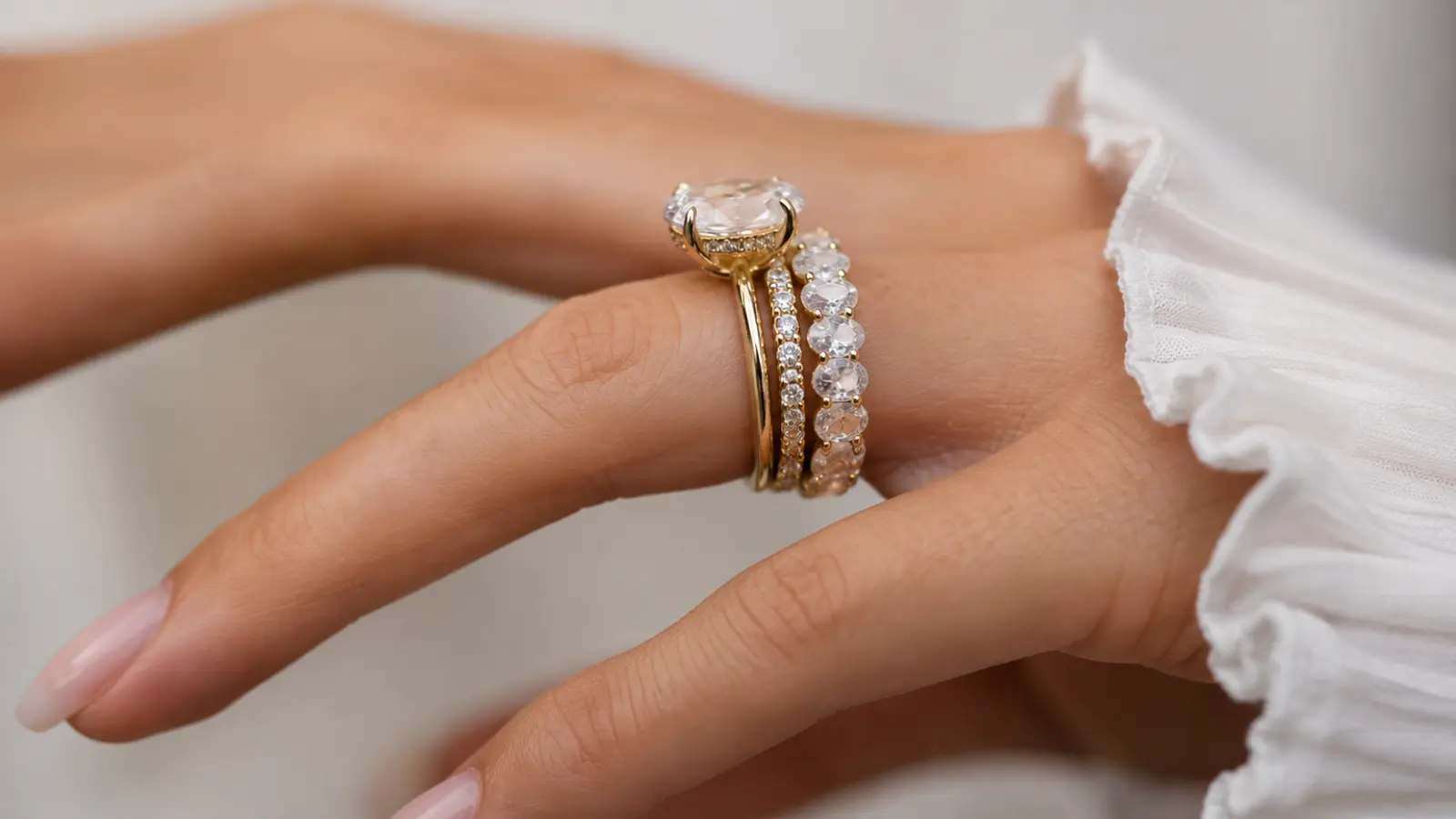
Women’s wedding rings now cover a wide range of styles, from classic plain bands to diamond, curved, stackable, and mixed-metal designs. The shift away from prescribed tradition — toward personal expression and rings chosen for the wearer’s actual life rather than a generic romantic ideal — has produced a landscape where a simple hammered gold band and a fully paved diamond eternity ring exist in the same conversation, and both are equally legitimate choices.
Styles women frequently choose
The classic plain band remains the most enduring choice — a smooth, unadorned ring in yellow gold, white gold, or platinum. It works with any engagement ring, suits any lifestyle, and ages without going out of fashion. Width typically runs between 2mm and 4mm for women’s bands; thinner bands feel more delicate, wider bands make more of a statement and tend to photograph more visibly.
The diamond band — whether a half-eternity with stones on the top half only, a full eternity running all the way around, or a paved design — has grown significantly in popularity. Diamond wedding bands can be worn with an engagement ring to add sparkle or worn alone as a complete ring in their own right. The channel-set style, where diamonds sit flush within grooves in the metal, offers security and comfort for active wearers. Prong-set and pavé styles maximize light return and visual impact.
The curved or contoured band is designed specifically to nest against the profile of a particular engagement ring. If the engagement ring has a raised center setting, a curved wedding band eliminates the gap that a straight band would leave, creating a seamless, unified look. These are ordered to match a specific engagement ring and require more planning but reward couples who want the two rings to feel like a single piece.
The stackable band is chosen with the intention of adding more bands over time — at anniversaries, milestones, or simply when the couple wants to add to the ring story they are building. Thin, delicate bands in the 1.5mm to 2mm range stack most comfortably without creating bulk.
For a full curated guide to women’s wedding ring styles, metals, and recommendations at every budget, see our dedicated wedding rings for women guide.
Common metal choices for women’s wedding rings
Metal choice shapes everything from how the ring looks against the skin to how it ages over decades. The table below covers the most common options and what each does well.
| Metal | Why It’s Chosen | Best For |
|---|---|---|
| Yellow gold (14k) | Warmth, timelessness, works with most skin tones, durable for daily wear | Classic and vintage aesthetics · pairs well with colored stones |
| White gold (14k) | Platinum look at a lower price, pairs with most engagement rings, contemporary feel | Modern and minimalist styles · matching white engagement ring sets |
| Rose gold (14k) | Romantic warmth, distinctive look, flatters most skin tones | Vintage and romantic aesthetics · standalone statement bands |
| Platinum | Most durable, never needs replating, natural white color, hypoallergenic | Long-term investment · diamond settings · sensitive skin |
| Two-tone / mixed metal | Bridges engagement ring in one metal with preferred wedding ring metal | Couples whose engagement and preferred wedding ring metals differ |
If budget is a factor in this decision, yellow gold in 14k is the most versatile starting point — it holds value, suits nearly every skin tone, and pairs with a wider range of engagement ring styles than white gold does.
Men’s Wedding Rings and Wedding Bands
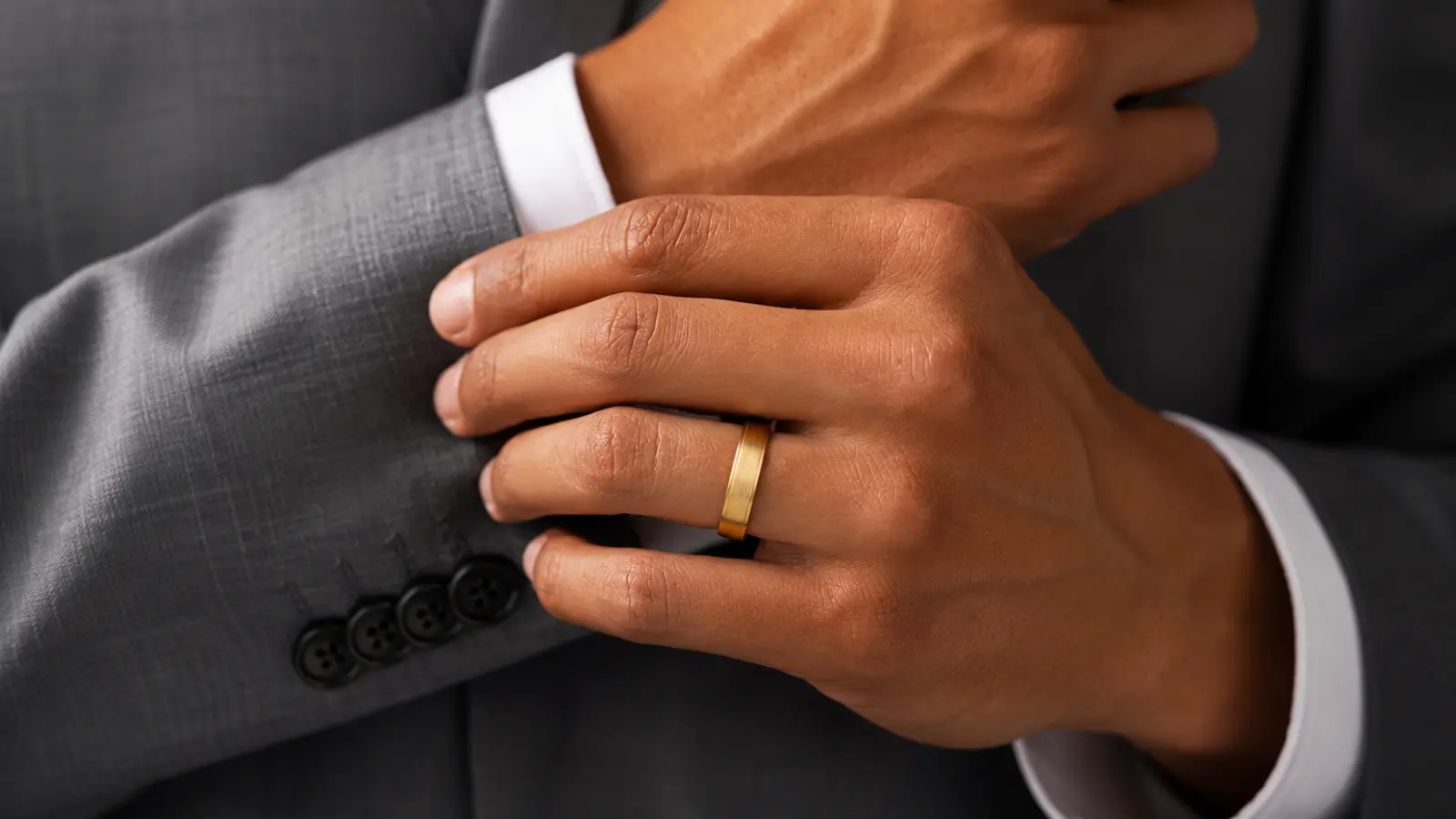
Men’s wedding rings have changed more dramatically than women’s over the past two decades. The options have expanded from a narrow range of plain gold or platinum bands into a full spectrum of metals, finishes, widths, and design approaches — and men are paying more attention to the choice than previous generations did, which has driven both the variety and the quality of what is available.
The most significant shift is the normalization of non-precious metals for men’s bands. Titanium, tungsten carbide, and cobalt chrome have moved from niche alternatives to mainstream choices, particularly for men whose work or physical activity makes a precious metal ring impractical. These metals offer extreme durability, comfortable weight options, and a modern aesthetic at a fraction of the cost of gold or platinum.
Men’s wedding band widths and what they communicate
Width is the most visible design decision in a men’s wedding band. Narrower bands (4mm to 5mm) feel understated and traditional — the closest equivalent to the plain gold band that has been the standard for generations. Medium widths (6mm to 7mm) are the most popular, offering presence without bulk. Wider bands (8mm and above) make a deliberate statement and tend to suit men who want the ring to be noticed.
Finish is the second major decision. A high-polish finish catches light and looks more formal. A brushed or matte finish has a quieter, contemporary feel and shows fewer scratches in daily wear. Many men’s bands combine both — a brushed center channel with polished beveled edges — creating textural interest without committing to one extreme.
Men’s wedding ring metals at a glance
Choosing the right metal for a men’s band comes down to three real-world priorities: how much daily wear it needs to survive, whether the ring will ever need to be resized, and how much you want to spend. This table covers the practical answers across all common options.
| Metal | Weight Feel | Resizable? | Price Range | Best For |
|---|---|---|---|---|
| 14k Yellow Gold | Medium | Yes | $300–$900 | Traditional look, long-term heirloom value |
| Platinum | Heavy | Yes | $800–$2,500 | Maximum durability, hypoallergenic, premium feel |
| Titanium | Very light | Difficult | $50–$300 | Active lifestyle, comfort, hypoallergenic |
| Tungsten Carbide | Heavy | No | $50–$400 | Scratch resistance, substantial feel, modern look |
| Cobalt Chrome | Medium | Limited | $100–$500 | Platinum aesthetic, durability, mid-range budget |
| Silicone | Negligible | N/A | $20–$60 | Work environments where metal rings are unsafe |
For full style and recommendation coverage, see our men’s wedding bands guide, which covers everything from classic gold to black tungsten and wood inlay designs.overs everything from classic gold to black tungsten and wood inlay designs.
Wedding Ring Metals Explained
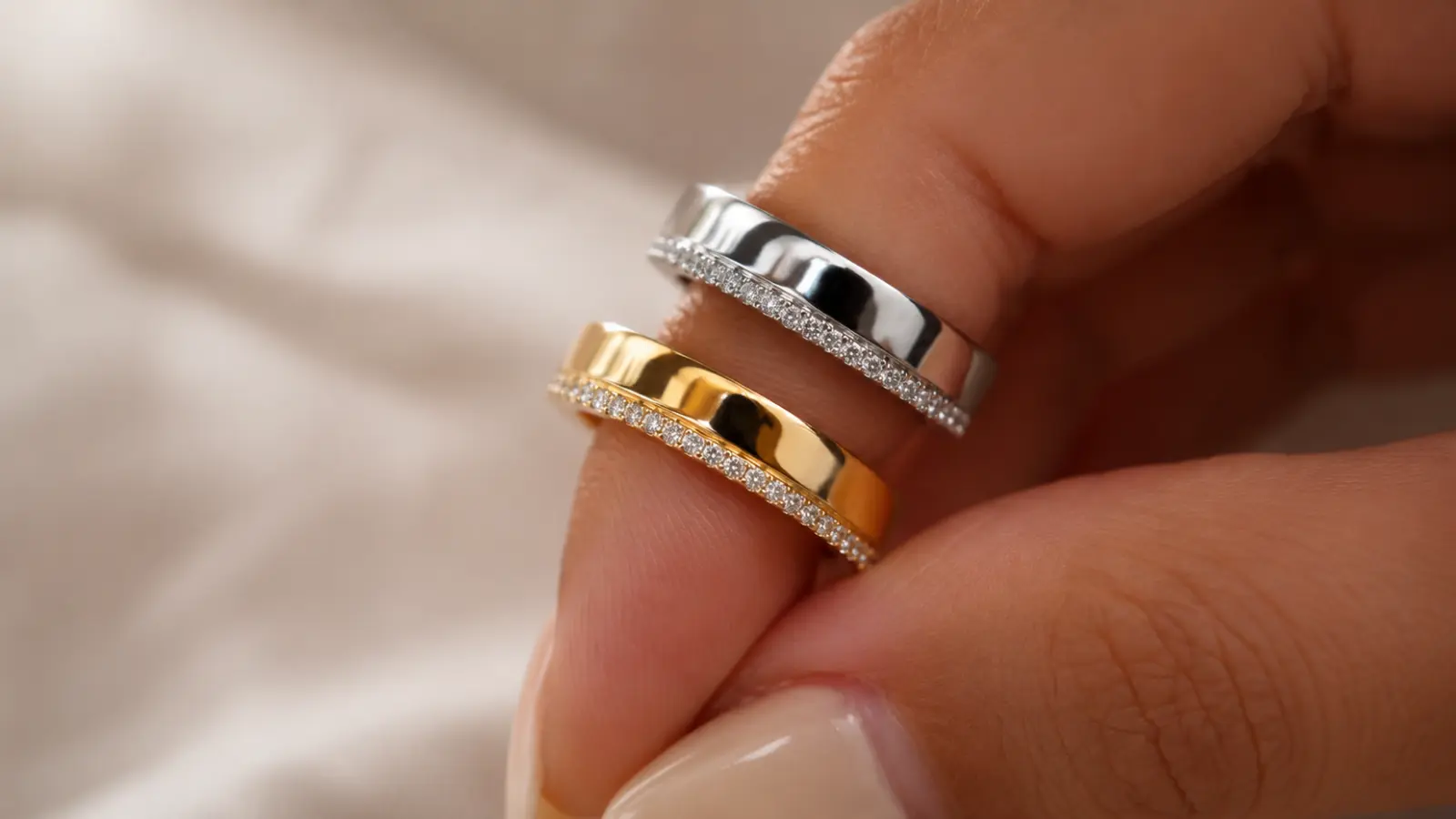
Metal is the most consequential decision in choosing a wedding ring — more than style, more than stones, more than brand. The metal determines how the ring wears over years, whether it can be resized as your finger changes, how it interacts with your skin, and what it will look like in a decade. Style preferences change; metal properties do not.
Gold
Gold is the traditional wedding ring metal in the United States and has been for most of the country’s history. Pure gold (24k) is too soft for daily wear, so wedding rings are made from gold alloys — gold mixed with other metals for durability. The karat system measures how much of the alloy is pure gold: 14k gold is 58.3% pure gold, 18k gold is 75% pure gold.
14k gold is the most popular choice for American wedding rings because it strikes the right balance between durability and gold content. It is harder than 18k, holds up better to daily wear, and costs less while still containing more than half gold by weight. 18k gold has a richer, deeper color and is the preferred choice in fine jewelry globally, but it scratches more easily. For most people choosing a ring they will wear every day, 14k is the more practical choice.
Gold comes in three primary colors, all from different alloy compositions. Yellow gold is the classic, timeless option. White gold is yellow gold alloyed with white metals, then plated with rhodium for a bright white finish — it requires replating every few years as the plating wears. Rose gold is yellow gold alloyed with copper, which creates its warm pink-red color. All three are available in 14k and 18k, and all three are genuine gold in every meaningful sense.
For in-depth guidance, see our gold wedding rings guide.
Platinum
Platinum is the premium choice — more durable than gold, naturally white without any plating, hypoallergenic, and denser, which gives it a satisfying weight. It does not wear away over time the way gold does; instead, it develops a patina called a “platinum bloom” — a gentle matte finish — which many wearers prefer and which a jeweler can polish out if desired. Platinum holds diamond settings more securely than any other metal and requires less maintenance than white gold over a lifetime of wear.
The trade-off is cost. Platinum is significantly more expensive than gold, and it scratches more visibly in daily use than tungsten or titanium — though the scratched material redistributes across the surface rather than flaking away. For couples who want a ring that requires minimal ongoing care and will hold its character for decades, platinum makes a strong case. For those whose budget does not support it, 14k white gold is the practical alternative.
See our platinum wedding rings guide for a full comparison and options.
Titanium
Titanium is three times stronger than steel, lighter than almost any other metal used in jewelry, hypoallergenic, and very affordable. It is the preferred choice for people whose work or physical lifestyle makes a heavier or more precious ring impractical — medical professionals, athletes, and people who work with their hands. The aesthetic is modern and understated, typically a silver-gray that can be polished, matte, or anodized in other colors.
The significant limitation: titanium rings cannot be resized by traditional methods. As fingers change with age, this can become a real problem. Some couples choose a titanium ring with the understanding that it may need to be replaced someday — treating it as a practical daily ring rather than a lifetime heirloom. That is a reasonable approach, particularly given the low cost of replacement.
Tungsten Carbide
Tungsten carbide is the most scratch-resistant metal available for wedding rings — dramatically harder than gold, platinum, or titanium. It holds a polish indefinitely in a way that softer metals cannot. The weight is substantial, which many men find satisfying. Tungsten bands are very affordable compared to precious metals and offer a modern aesthetic in both silver and black finishes.
The limitations are real and worth knowing before purchasing. Tungsten cannot be resized at all, and it is brittle — meaning it can crack under extreme pressure rather than bending, as gold or platinum would. For medical emergency situations where a ring needs to be removed quickly, tungsten requires cracking rather than cutting. Some couples keep a silicone ring as a backup for situations where the tungsten ring’s properties create practical concerns.
Silicone
Silicone wedding bands are not meant to replace a precious metal ring — they are a practical option for situations where a metal ring is impractical or unsafe. Surgeons, mechanics, electricians, rock climbers, and gym-goers frequently wear silicone rings in professional or physical contexts and switch to their actual wedding rings for everyday life. They are inexpensive, flexible, and available in a wide range of colors.
For more, see our silicone wedding bands guide.
Metal comparison at a glance
This table summarizes the key practical differences between all common wedding ring metals, making it easier to weigh the trade-offs side by side.
| Metal | Durability | Resizable | Hypoallergenic | Maintenance | Cost Level |
|---|---|---|---|---|---|
| 14k Gold | Good | Yes | Usually | Low | Moderate |
| 18k Gold | Moderate | Yes | Usually | Low | Moderate–High |
| White Gold | Good | Yes | Varies | Needs replating | Moderate |
| Platinum | Excellent | Yes | Yes | Very low | High |
| Titanium | Excellent | Difficult | Yes | Very low | Low |
| Tungsten | Highest | No | Usually | Very low | Low |
| Silicone | Flexible | N/A | Yes | None | Very low |
If one thing stands out from this comparison, it is the resizability column. Fingers change over time — with age, weight shifts, and pregnancy — and choosing a metal that can be resized is the single most future-proof decision most couples can make at the time of purchase.
Wedding Ring Styles
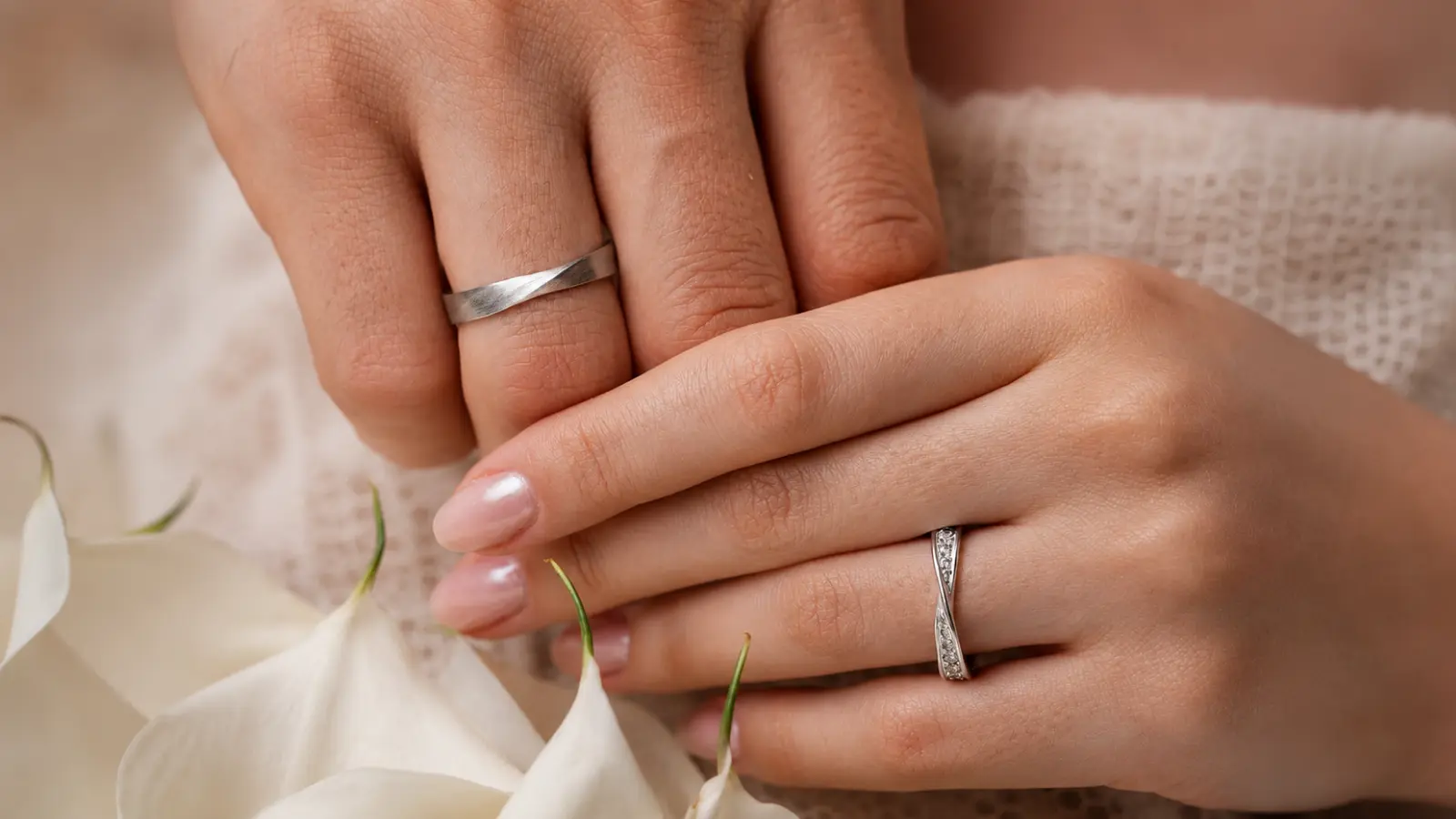
Choosing among different wedding ring styles is where personal expression enters the decision. More useful: what do you wear every day, what is your engagement ring doing (if you have one), and what do you want the ring to feel like on your hand in a decade? Style follows from those answers more naturally than it does from browsing photos alone.
Classic / Plain Band
The plain band — no stones, smooth surface, consistent width — is the oldest and most enduring wedding ring style. It is not a default chosen by people who did not think about it. It is a deliberate choice made by people who want the ring’s meaning to come entirely from what it represents, with no additional visual complexity. A plain 4mm yellow gold band worn every day for forty years develops a character that no elaborately designed ring can replicate. It becomes, over time, exactly the right object for what it is.
Diamond Band
Diamond wedding bands range from a single stone set modestly in a plain band to full eternity rings set with diamonds all the way around the circumference. The half-eternity — stones on the visible top half only — is more practical for daily wear and easier to resize; stones on the inner surface of the ring can cause discomfort over time. The full eternity is the most visually dramatic choice and cannot be resized, which is worth knowing before purchasing.
Diamond bands can be worn as wedding rings alongside an engagement ring, as solo rings without an engagement ring, or as anniversary bands added to a set over time. They sit at a wide price range depending on stone size, number, cut, and metal. For full guidance, see our diamond wedding bands guide.
Vintage and Antique Styles
Vintage-inspired wedding bands draw from specific design periods — Art Deco geometric precision, Victorian filigree, Edwardian milgrain — and typically feature engraved or detailed metalwork rather than clean modern lines. They pair naturally with vintage engagement rings and suit wearers whose overall aesthetic tends toward the romantic and historical. Milgrain edges (tiny beaded detail along the band’s border) are the most common vintage-inspired design element and one of the few that works well at any scale, from a delicate 2mm band to a wider statement piece.
Modern and Minimalist
Modern wedding bands emphasize clean geometry and intentional simplicity. Thin bands under 2mm, bezel-set single stones, brushed finishes, and architectural shapes define this category. The minimalist approach pairs well with the preference for rings that are barely noticeable in daily life — comfortable, unobtrusive, recognizable only when you look for them. For people who have never worn rings before, a slim minimalist band is also the most practical starting point for building the habit of wearing jewelry daily.
Unique and Unconventional
This category covers everything that does not fit a conventional description: rings with colored gemstones instead of diamonds, textured surfaces (hammered, engraved, wood-grain), mixed materials (gold with wood inlay, titanium with carbon fiber), and entirely custom designs. The most meaningful unique wedding bands reflect something genuinely specific about the wearer — a material connected to their work or interests, a design that carries personal symbolism — rather than being unconventional for its own sake. For inspiration, see our unique wedding bands guide.
Black Wedding Bands
Black wedding bands have moved from an unconventional niche into a recognized mainstream category, particularly for men. Black tungsten, black titanium, and black ceramic bands offer a distinctive, high-contrast aesthetic at accessible price points. The surface color is typically achieved through a coating or treatment — tungsten holds the black finish most durably of the three, making it the most practical choice if the look matters long-term. Our black wedding bands guide covers the full category.
Wedding Ring Sets and Matching Bands
A wedding ring set is a coordinated pair of rings — typically sold together — designed to work as a visual and proportional unit. Sets most commonly consist of a women’s and men’s band in matching metal and finish, or, in the bridal set format, an engagement ring and matching wedding band designed to sit flush together. Whether to buy a set or two separate rings is a real decision with practical implications beyond aesthetics.
Bridal sets
A bridal set includes an engagement ring and a coordinating wedding band, designed by the same jeweler to nest together without gaps or proportion issues. Buying the two rings as a set solves the most common problem couples encounter when purchasing them separately: mismatched scales, metals, or profiles that create an awkward visual when worn together. The trade-off is less individual expression — both rings are chosen at the same time, which limits the opportunity for the wedding band to reflect who the wearer has become between the proposal and the wedding.
Matching couples sets
Matching couples sets — coordinated bands for both partners — have grown in popularity as couples increasingly approach the ring purchase as a shared decision rather than a separate one. Matching sets typically share a metal, a finish, and a design language while differing in width (women’s bands tend to be narrower). They create a visual connection between the two rings without requiring identical jewelry on two different people.
Matching is a preference, not a requirement. Many couples choose entirely different rings and feel no less married for it. The question worth asking honestly: does the visual connection between the rings matter to you as a couple? If it does, a set is the cleanest way to achieve it. For options, see our wedding ring sets guide.
How Much Do Wedding Rings Cost?
Wedding ring prices range more widely than most couples expect — from under $50 for a silicone band to several thousand dollars for a platinum pavé design. There is no standard rule for what to spend, and the guideline most often cited in wedding planning (“spend two months’ salary”) applies to engagement rings, not wedding bands. The two purchases are separate, with separate functions and separate budgets.
What the price of a wedding ring actually reflects is the cost of the metal and, if present, the stones. Labor, brand, and where you buy also factor in, but metal weight and stone quality are the largest variables. Understanding what drives cost in each category helps couples make a decision that is genuinely theirs rather than driven by industry norms.
Wedding ring cost by category
The ranges below reflect what couples typically encounter across standard retail channels. Prices can vary significantly based on where you shop — which the section after this table addresses.
| Ring Type | Typical Price Range | What Drives the Cost |
|---|---|---|
| Plain 14k gold band | $200 – $600 | Gold weight, width, retailer |
| Plain platinum band | $600 – $1,800 | Platinum weight and density |
| Diamond wedding band (half-eternity) | $500 – $3,000+ | Stone count, carat weight, quality |
| Full eternity diamond band | $1,500 – $6,000+ | Stones all around, higher stone count |
| Men’s titanium or tungsten band | $50 – $400 | Finish, inlay materials, brand |
| Silicone band | $20 – $60 | Material, brand |
| Custom design | $800 – $5,000+ | Design complexity, metal, stones, jeweler |
One thing worth knowing: the same ring can cost significantly different amounts depending on where it is purchased. Large retailers and brand jewelers carry a markup that reflects their overhead and marketing. Independent jewelers and direct-to-consumer fine jewelry brands frequently offer comparable quality at lower prices — often with more personalized service. Online retailers have made it possible to purchase high-quality rings at substantially lower prices than in-store equivalents, though trying on styles in person before ordering online is worth the extra step.
Budget should also account for maintenance. Gold and platinum rings benefit from annual polishing and inspection by a jeweler; white gold requires periodic rhodium replating. Tungsten and titanium need almost no maintenance. The long-term cost of ownership is worth factoring into the initial decision, not just the purchase price.
Best Wedding Ring Direction by Lifestyle
The most useful way to start narrowing down the choice is not by style or price but by how you actually live. A ring that works perfectly on the wedding day and becomes impractical six months into a new job is not the right ring. The table below translates common lifestyle situations into the most suitable ring directions — not prescriptions, but reliable starting points for a more focused conversation with your jeweler.
| Lifestyle or Priority | Recommended Direction | Why It Works |
|---|---|---|
| Classic couple, no strong preference | Plain yellow gold or platinum band | Timeless, never needs updating, ages beautifully |
| Active lifestyle, physical work | Titanium or tungsten band · silicone backup | Durability, scratch resistance, lighter weight, low cost to replace |
| Sensitive skin or metal allergy | Platinum or titanium | Both are hypoallergenic and free of common irritants like nickel |
| Vintage or romantic aesthetic | Yellow gold, milgrain detail, engraved band | Warm metal tones and handcrafted details suit vintage-inspired styles |
| Minimalist style | Thin plain band, 2mm–3mm, in gold or platinum | Understated, comfortable for daily wear, complements rather than competes |
| Statement aesthetic | Diamond band, black band, or mixed-metal design | Visual impact, intentional design that reads as a deliberate choice |
| Budget-conscious | 14k gold, titanium, or tungsten | All three offer genuine durability and daily wearability at accessible prices |
| Planning to add rings over time | Thin stackable band as the foundation | Leaves room to add anniversary bands without overcrowding the finger |
One pattern worth noting: couples who start with lifestyle often end up happier with their final choice than those who start with style. The ring that fits how you live tends to be the one you are still glad to wear years later.
How to Choose the Right Wedding Ring
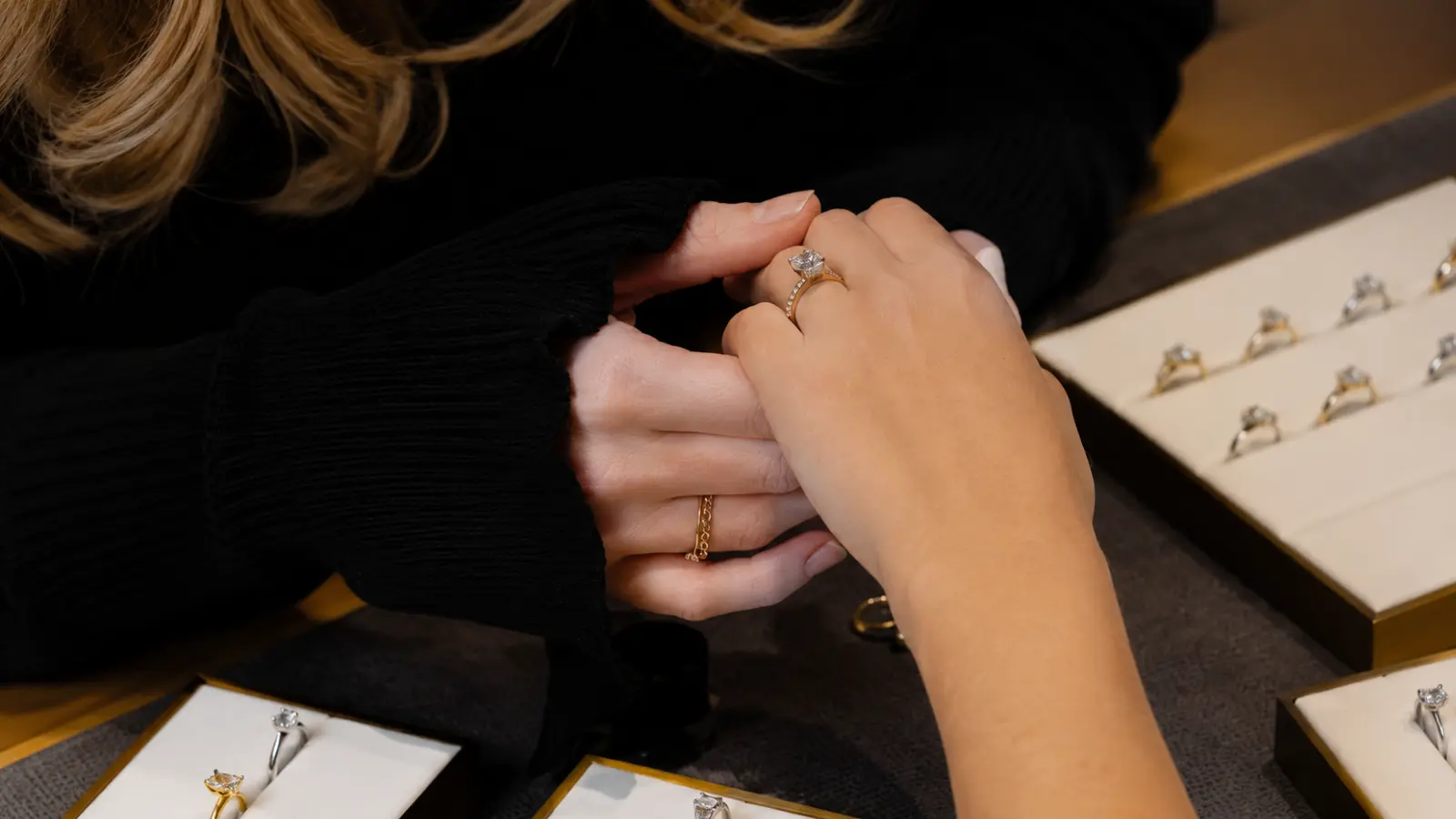
The wedding ring decision is simpler when you approach it in the right order. Most couples start with style — browsing photos and reacting to aesthetics — and end up needing to work backward to figure out whether the ring they fell in love with will actually work for their daily life. The better sequence starts with life, then material, then style.
Step 1 — Think about your hands, not the photo
The most important thing a wedding ring needs to do is work in your actual daily life. What do you do with your hands? If you are a surgeon, an electrician, a rock climber, or anyone whose work involves machinery or physical risk, a metal ring may be unsafe or impractical in those contexts — which is a reason to consider a silicone backup, not a reason to skip the ring entirely. If you work with your hands in less extreme ways — cooking, gardening, general physical activity — you need a metal that resists scratches and a profile that does not catch on things.
Step 2 — Choose the metal based on your real priorities
If you have an engagement ring, the wedding band should be in a metal that is compatible — preferably the same or harder. Pairing a softer metal against a harder one causes the softer metal to scratch over time. If you want flexibility to resize the ring over your lifetime, avoid tungsten and titanium. If you have a nickel sensitivity — which white gold contains — platinum or palladium are the alternatives worth exploring.
Step 3 — Consider how it wears with your engagement ring
Try on the wedding ring with your engagement ring before committing. The two rings will live together on that finger every day — the way they sit, whether there is a gap between them, how the combined width feels — matters more than how either looks individually. A curved band that nests against your engagement ring’s profile may look less interesting on its own but dramatically better when worn together. That is the version you will actually be living with.
Step 4 — Budget honestly
Wedding ring budgets do not need to follow any rule. A plain 14k gold band and a platinum pavé design are equally valid wedding rings regardless of what they cost. What the budget does determine is the metal and stone category available to you. For couples where cost is a primary consideration, titanium and tungsten offer rings that will last a lifetime at a fraction of the price of precious metals — without any meaningful compromise in durability. For more options across price points, see our affordable wedding rings.
What most couples overlook
Band width affects how a ring feels after a full day of wear more than most people anticipate. Wider bands require more adjustment time and can feel restricting to people who have never worn rings before. If either of you is new to wearing rings daily, a narrower band under 5mm is worth considering for comfort — it is much easier to upgrade to a wider band later than to realize the ring you chose feels wrong every single day.
Wedding ring size can change with age, temperature, weight, and pregnancy, so a ring that fits at 28 may need resizing at 45. This is a strong argument for choosing a metal that can be resized — gold or platinum — over one that cannot, unless you accept and plan for the potential replacement cost.
For full decision-making guidance on stacking order and everyday practicalities, see our how to wear wedding rings guide.
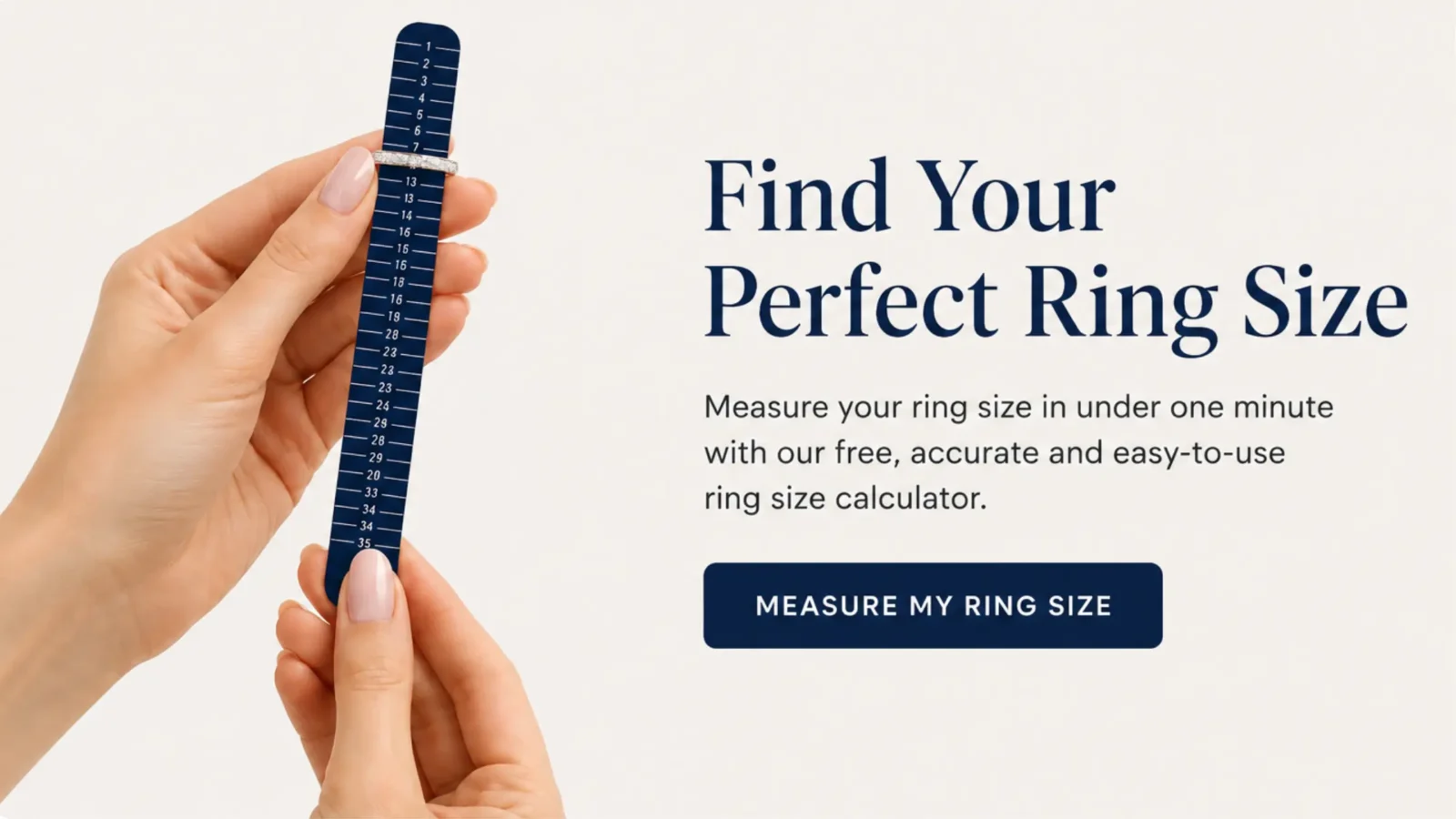
Find Your Ring Size Before You Order
Not sure which size to order? Use our free ring size calculator to measure an existing ring, enter a known measurement, or measure your finger at home.
Wedding Ring Meaning and Etiquette
The wedding ring is one of the oldest symbolic objects in human culture. In essentially every civilization that used jewelry, some version of a ring exchanged between partners at marriage existed. The specific form it takes has changed across time and culture, but the underlying meaning has not: the ring is a visible, permanent declaration of a commitment made to another person.
Why a circle
The circular shape is not arbitrary. A circle has no beginning and no end, which made it the natural object to assign to a commitment meant to last indefinitely. The hole at the center — the negative space — was sometimes interpreted as a gateway to the future. The unbroken line communicated what words could not guarantee: that the commitment would continue, with no endpoint in sight.
Which hand and which finger
In the United States, the wedding ring is worn on the fourth finger of the left hand. The tradition derives from a Roman belief in the “vena amoris,” or vein of love: the idea that a vein ran directly from this finger to the heart. Modern anatomy has no vein of love, but the tradition has survived long enough to feel self-reinforcing — it is the ring finger because it is where wedding rings go.
In several European countries — Germany, Russia, Norway, Poland, Greece — the wedding ring is worn on the right hand. In Jewish tradition, the ring is placed on the right index finger during the ceremony and often moved to the left ring finger afterward. Same-sex couples and modern couples in the United States wear the ring wherever it feels most meaningful to them, with no convention requiring either hand.
Stacking order with the engagement ring
When wearing both a wedding ring and an engagement ring, the conventional order is the wedding ring beneath — closer to the heart — and the engagement ring on top. This comes from the tradition of removing the engagement ring during the ceremony, placing the wedding ring first, then replacing the engagement ring over it. Many couples reverse this for practical reasons, and there is no meaningful tradition requiring either arrangement.
Engraving
Wedding ring engraving — a short inscription on the inside of the band — is one of the oldest and most personal ways to make a ring uniquely yours. Common engravings include the wedding date, initials, a short phrase from the vows, a word that carries private meaning, or coordinates. The inside of the band is invisible when worn, which gives the engraving a quietly personal quality. See our wedding ring engraving guide for ideas, character limits, and font options.
When to remove the ring
There is no universal rule about when a wedding ring must be removed. Taking it off for exercise, manual work, cooking, or any activity where it might be damaged or lost is practical, not disrespectful. Many people who wear their rings continuously for years develop a strong preference for never removing them; others take them off every night. Both approaches are normal. The ring is a symbol of the marriage — the marriage does not depend on the ring being physically present at all times.
Wedding Ring Inspiration Board
Wedding rings can look completely different depending on the metal, width, finish, setting, and the way they are paired with an engagement ring or other jewelry. Explore our wedding ring inspiration board for classic gold bands, diamond wedding rings, modern styles, vintage designs, matching ring sets, men’s wedding bands, and beautiful ideas to help you discover the style that feels right for you.
Choosing a Wedding Ring That Lasts a Lifetime
The best wedding ring is not always the most expensive, the most unique, or the one that follows the latest jewelry trend. It is the ring that fits naturally into your everyday life — your style, your routine, your comfort, your budget, and the meaning you want it to carry.
Whether you choose a simple gold band, a diamond wedding ring, a modern design, or a matching wedding ring set, the most important choice is finding something you will still feel connected to years from now. A wedding ring is not only part of the wedding day — it becomes part of the life that follows.
Frequently asked questions (FAQ)
What is the biggest mistake couples make when choosing wedding rings?
The biggest mistake is choosing a wedding ring only for how it looks during the wedding season instead of how it will work for everyday life. A wedding ring is not a one-day accessory — it is something most people wear through different jobs, lifestyles, ages, and personal style changes. Comfort, durability, and long-term wear matter just as much as appearance.
Should you choose a trendy wedding ring or a timeless design?
Neither choice is automatically better. A timeless ring usually focuses on materials, proportions, and details that have stayed relevant for decades, while a trend-focused ring reflects a specific moment and personal style. The safest approach is choosing a ring because it genuinely feels like you — not only because it is popular right now.
How do you know if a wedding ring is right for your lifestyle?
Think about what your hands do every day. Someone who works with tools, exercises often, or rarely wears jewelry may need a very different ring from someone who wants a delicate diamond band. The best wedding ring is not the most expensive one — it is the one you can comfortably wear without constantly thinking about it.
Is it better to spend more money on wedding rings?
A higher price does not automatically mean a better wedding ring. Expensive materials like platinum and diamonds can offer advantages, but a simple gold band chosen carefully can last a lifetime. Value comes from quality, comfort, durability, and meaning — not only from the price tag.
Should couples choose wedding rings together?
Many couples do, and it can make the decision more meaningful. Choosing rings together allows both people to consider budget, style, comfort, and how they want their rings to represent their relationship. However, the rings do not need to match or follow the same design rules.
What do jewelers recommend couples think about before buying wedding rings?
Experienced jewelers usually encourage couples to think beyond the first impression. They consider metal durability, resizing possibilities, maintenance, lifestyle, comfort, and how the ring will age over decades. The best wedding rings are chosen for real life — not only for the moment they are exchanged.