Platinum wedding rings are wedding rings made from platinum, a naturally white, dense, and highly durable precious metal known for its purity, weight, and long-term performance. Unlike white gold, platinum does not require rhodium plating because its bright color comes from the metal itself.
Platinum has earned its reputation as one of the most premium choices in wedding jewelry, but the higher price is not only about rarity or luxury. Its durability, hypoallergenic properties, natural patina, and low maintenance make it a practical choice for some couples — while others may find white gold offers a similar look for a lower cost.
This guide explains platinum wedding rings, including platinum vs white gold, pros and cons, durability, weight, cost, styles for women and men, and how to decide where platinum fits among other wedding rings and wedding bands.
What Platinum Actually Is
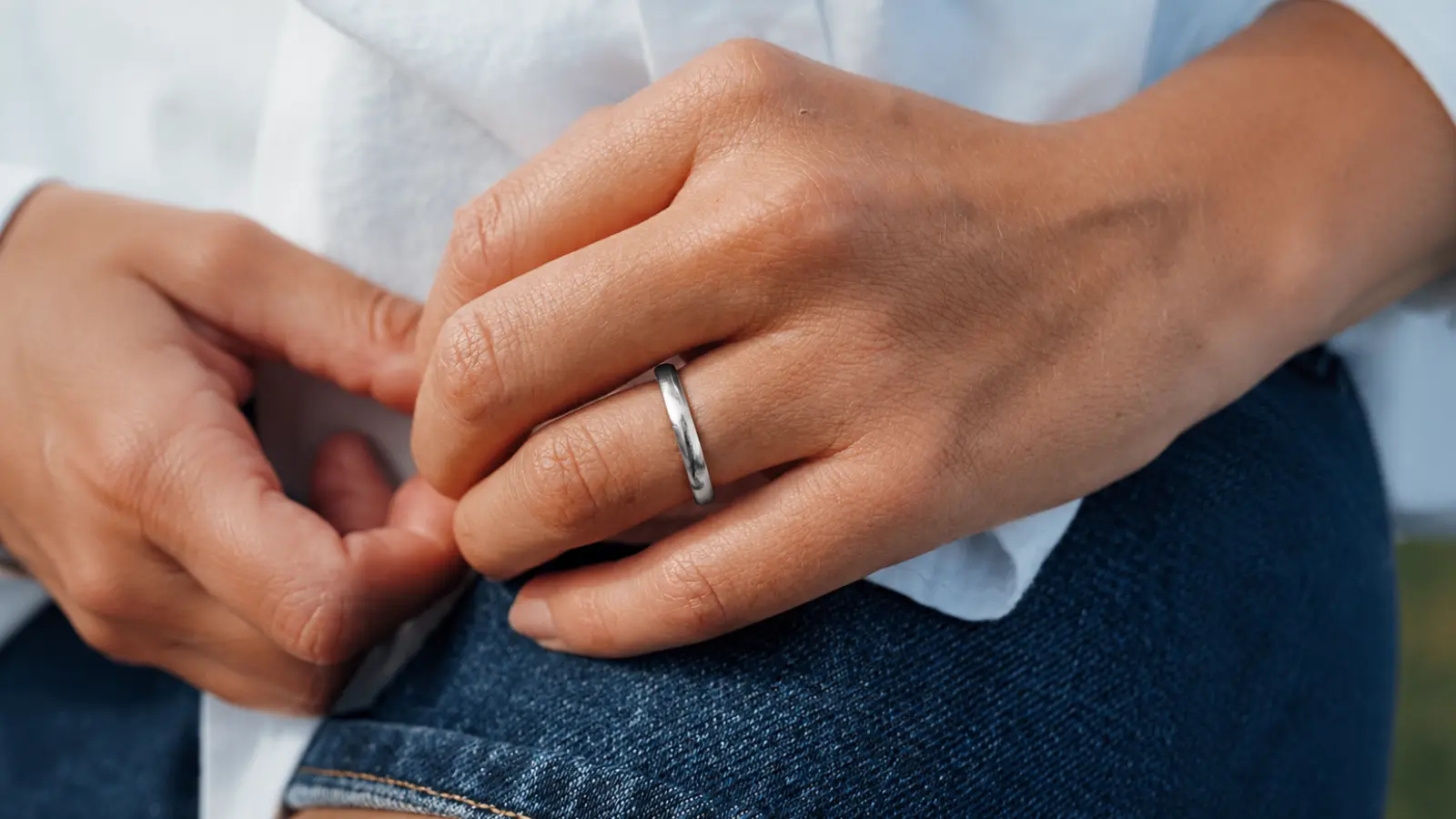
Platinum is not simply a more expensive version of white gold. It is a fundamentally different metal with different properties, different behavior over time, and a different set of reasons to choose it. Understanding what platinum actually is — not just what it looks like — is the only way to evaluate whether it belongs on your finger.
The Metal Itself
Platinum is one of the rarest elements on earth. It is mined primarily in South Africa and Russia, in quantities that are a small fraction of annual gold production. It is dense — nearly twice the density of gold by volume — which is why platinum rings feel noticeably heavier than gold rings of the same dimensions. It is naturally white, resistant to tarnish, and chemically stable in ways that most other metals are not.
In jewelry, platinum is used at a purity of 95% — stamped as 950 Pt. The remaining 5% is typically iridium, ruthenium, or cobalt, added to improve workability during casting without compromising the metal’s core properties. Compare this with gold wedding rings made in 14k or 18k — platinum is by a significant margin the purest metal used in fine jewelry, which affects its cost, its weight, and its behavior over time.
How Platinum Behaves Over Time
The most important practical fact about platinum is how it responds to scratching — and it is different from gold in a way that matters over a lifetime of wear. When a gold ring is scratched, tiny amounts of metal are displaced and lost. Over decades, this gradual loss can make a gold ring noticeably thinner. When a platinum ring is scratched, the metal moves rather than disappears: it pushes to the sides of the scratch rather than wearing away. The ring retains its full weight and volume.
Those fine surface scratches accumulate over time and blend together into a consistent matte texture called a patina — a soft, satin-like surface that most platinum wearers come to prefer over the original high-polish finish. It gives the ring a quality that feels earned rather than maintained. A jeweler can polish a platinum ring back to its original mirror shine at any time; many people choose not to.
What Platinum Is Not
Platinum is not indestructible. It scratches — every precious metal does. It is not immune to denting or deforming under significant force, though its density makes serious damage less likely than with softer metals. It is not scratch-proof; it is scratch-retaining, which is a meaningfully different thing. And it is not universally the right choice — there are real situations where gold is the better answer, and those are worth naming honestly rather than quietly omitting.
Platinum vs. White Gold Wedding Rings
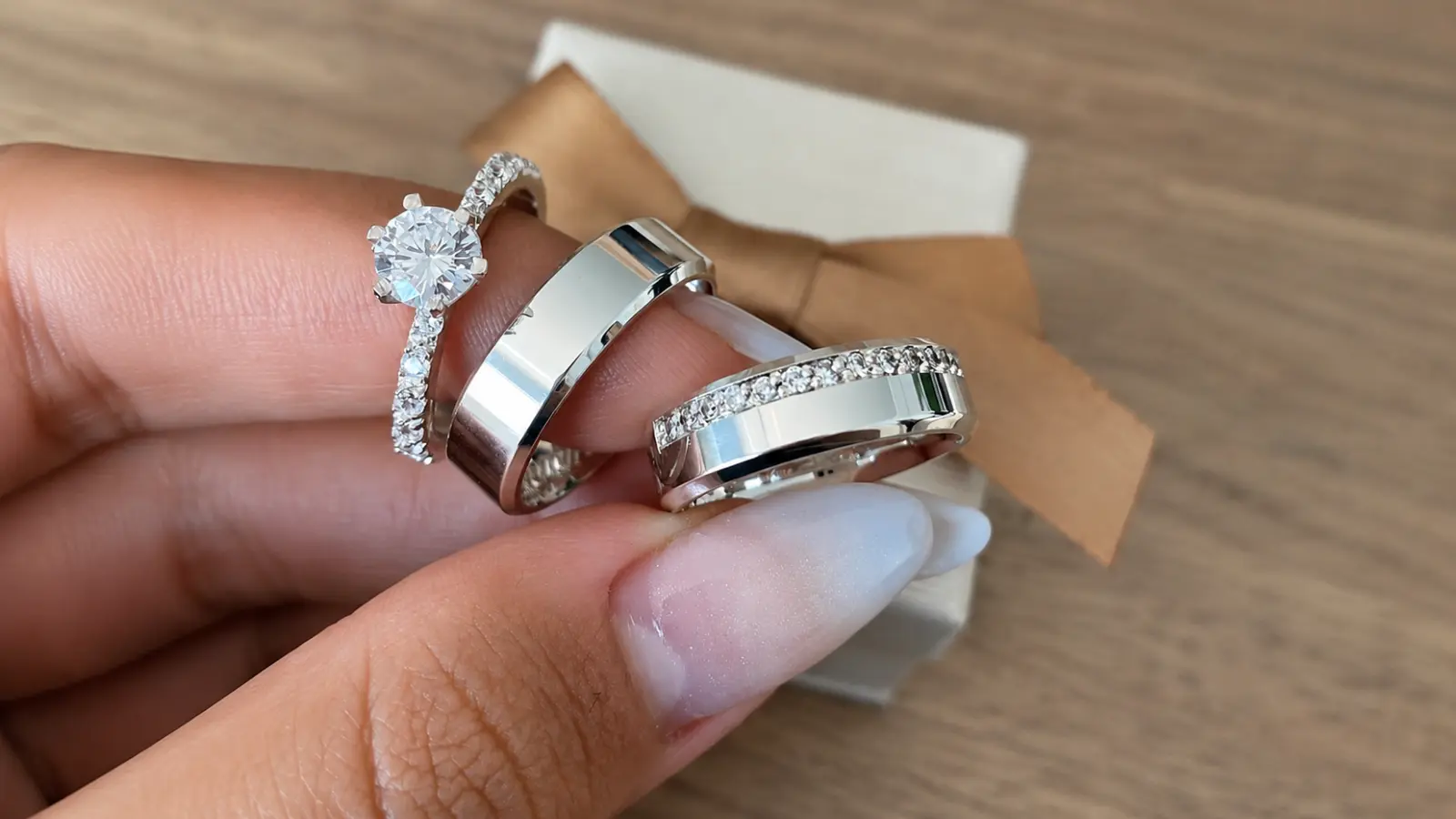
This is the comparison most buyers end up making, because platinum and white gold look almost identical when the white gold is freshly rhodium-plated. The question of which to choose often comes down to a single honest question: what are you actually paying the premium for?
| Factor | Platinum | White Gold (14k) |
|---|---|---|
| Color | Naturally white — permanent, no treatment needed | White via rhodium plating — gradually warms as plating wears |
| Maintenance | No replating required · patina develops naturally · polish when desired | Rhodium replating every 1–3 years · $30–$75 per service |
| Durability over decades | Metal displaces on scratch — ring retains full weight and volume | Metal gradually wears away · very slow but cumulative over long periods |
| Short-term scratch visibility | Scratches show clearly before patina develops | Scratches less visible on freshly plated surface |
| Weight | Noticeably heavier — ~60% more than comparable 14k gold | Lighter — more comfortable for first-time ring wearers |
| Hypoallergenic | Yes — no nickel, naturally non-reactive | Depends on alloy — nickel-based alloys can cause reactions |
| Diamond settings | Most secure long-term — dense metal holds prongs with less wear | Secure for most wearers — prong checks recommended every 1–2 years |
| Resizability | Yes — requires platinum-experienced jeweler · costs more than gold resizing | Yes — straightforward at most jewelry shops |
| Cost | 40–60% more than comparable white gold at point of purchase | Lower upfront · small ongoing replating cost |
The Case for Choosing Platinum over White Gold
The argument for platinum over white gold is most compelling when one or more of the following are true. First, skin sensitivity: if you have reacted to nickel-containing jewelry in the past, platinum eliminates the concern entirely. Second, diamond security: for a ring set with a high-quality diamond — particularly one with a significant value — platinum’s density means the prongs will hold their tension longer, with less risk of gradual loosening over years of wear. Third, maintenance philosophy: if the idea of scheduling replating visits every year or two feels like a genuine inconvenience, platinum’s zero-replating requirement is a real quality-of-life advantage over decades.
The Case for White Gold over Platinum
White gold’s argument is simpler: it looks virtually identical to platinum when freshly plated, costs significantly less, and the maintenance it requires is neither expensive nor time-consuming when understood honestly. The replating gap — platinum’s primary practical advantage — narrows considerably when you recognize that a rhodium replate costs $30 to $75 and takes an afternoon. For buyers who are not dealing with nickel sensitivity, who are not setting a diamond worth thousands of dollars, and who are working within a budget that makes the platinum premium meaningful, white gold is a rational and beautiful choice.
For a full breakdown of white gold’s properties and what to expect from it over time, see our white gold wedding rings.
Pros and Cons of Platinum Wedding Rings
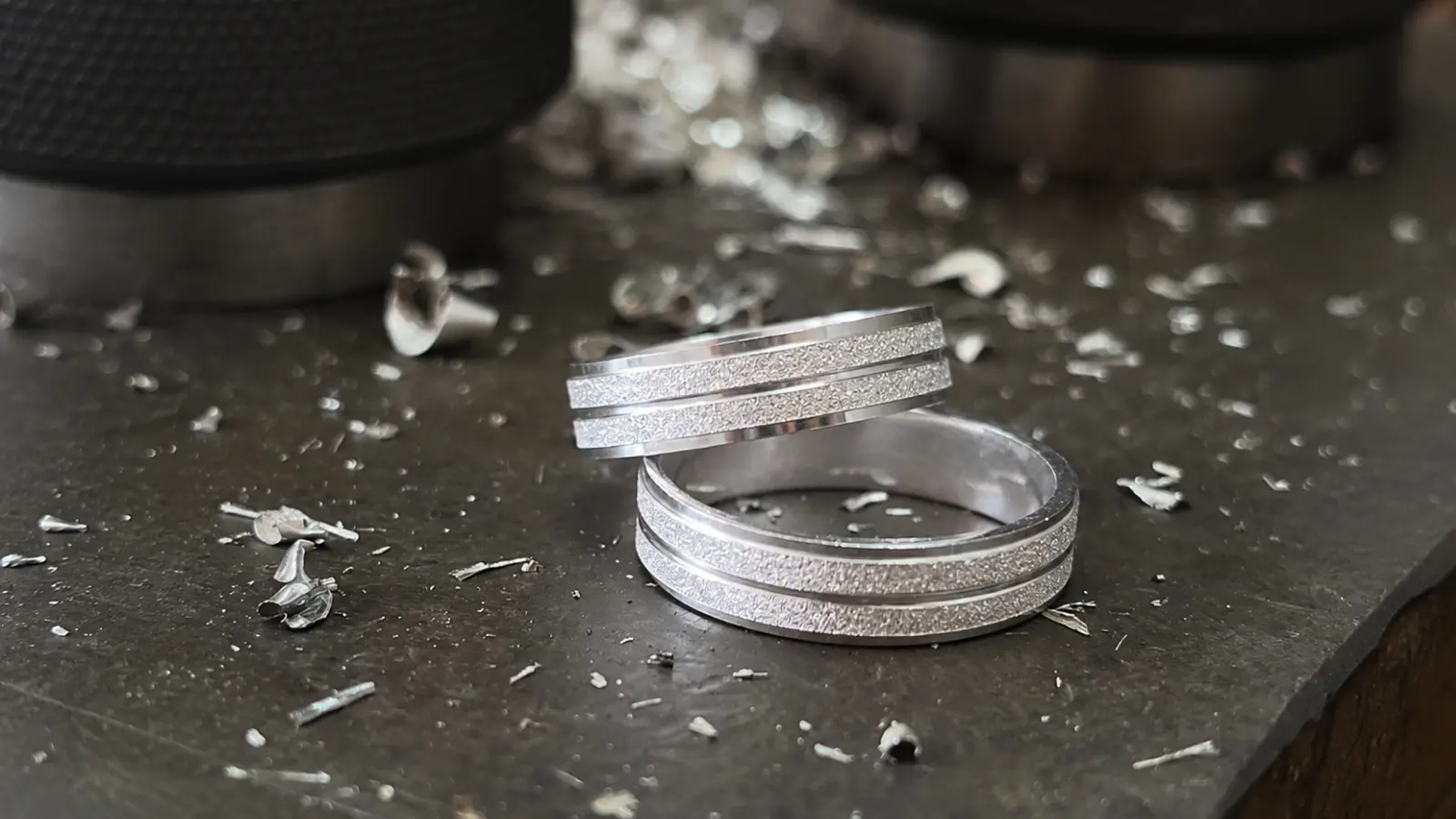
Platinum earns its reputation in some areas and falls short of it in others. Here is an honest account — written for someone deciding whether the premium is worth it, not for someone who has already decided.
What Platinum Genuinely Delivers
Color That Never Needs Attention
This is the clearest practical advantage platinum holds over white gold, and it compounds over time. There is no replating appointment to schedule, no gradual yellowing to monitor, no visual shift between visits to the jeweler. The ring looks the same on the fiftieth anniversary as it did on the wedding day — not because nothing has happened to it, but because the color is in the metal itself rather than in a surface treatment. For people who want their ring to simply exist on their finger without requiring management, this matters more than most descriptions convey.
Metal Displacement Rather Than Loss
As described above, platinum scratches differently from gold — the metal moves rather than wears away. On a forty-year time horizon, a platinum ring will still have all the metal it started with. A gold ring will have lost some, however incrementally. This is not a reason to avoid gold, which holds up perfectly well for a lifetime of normal wear, but it is a real and meaningful difference for buyers who are thinking in genuinely long-term terms.
Hypoallergenic — No Conditions, No Caveats
White gold may or may not contain nickel depending on the alloy, and palladium-alloyed white gold can be harder to confirm at some retailers. Platinum’s hypoallergenic status is unconditional — there is no alloy variation to research, no question to ask the jeweler, no doubt to carry. For people with sensitive skin or known metal allergies, this clarity alone can be worth the premium before considering any other factor.
The Most Secure Setting for Diamonds
Platinum’s density means that prongs cast in platinum maintain their tension and shape better over time than gold prongs. For a diamond of significant size or value — where the consequence of a lost stone is expensive rather than merely inconvenient — platinum settings offer a meaningful margin of additional security. This is why many high-end jewelry houses use platinum for their most significant diamond wedding rings regardless of budget constraints.
Weight That Feels Substantial
Many platinum wearers describe the weight of the ring as one of their favorite things about it. The physical presence — heavier than gold, unmistakably there on the finger — gives the ring a quality that is difficult to describe as anything other than satisfying. It is the most literally weighty choice in precious metal jewelry, and many people find that weight meaningful in a way that goes beyond the practical.
Where Platinum Requires Honest Consideration
It Scratches Visibly — Especially Early
In the first months of wear, before the patina develops, a platinum ring accumulates fine scratches that show clearly on the high-polish surface. Some wearers find this alarming before they understand that it is normal and expected behavior. The scratches are not damage — they are the beginning of the patina that platinum wearers typically come to prefer. But if the idea of watching a new ring develop surface marks bothers you, the early phase of platinum ownership requires either patience or a jeweler’s polishing every few months while you adjust.
The Cost Is Real and Upfront
Unlike white gold, where some of the cost difference manifests gradually in maintenance, platinum’s premium is fully visible at the point of purchase. A plain 4mm platinum band starts around $600 to $900; 14k white gold equivalents are typically available for $300 to $500. On more elaborate designs, the gap widens. This is the number on the price tag, and it is real — not a hidden cost or a delayed cost, but a straightforward difference that matters at the moment of buying.
Resizing Requires a Specialist
Platinum can be resized, but it requires a jeweler who works with the metal regularly. The higher melting point and different working characteristics make wedding ring resizing more specialized with platinum than with gold. This is not an insurmountable obstacle, but it is worth confirming with your jeweler before purchase rather than discovering after a ring size change that the nearest specialist is inconveniently far.
The Weight Is Not for Everyone
The same quality that many platinum wearers love — the substantial, heavy feel on the finger — is a genuine discomfort for some people, particularly those who have never worn rings before. A ring that weighs significantly more than expected can feel distracting after a full day of wear. This is one of the strongest arguments for trying platinum rings in person rather than purchasing sight-unseen — a five-minute trial in a jewelry store tells you far more about whether you are a platinum-weight person than any description can.
Platinum Wedding Bands for Women
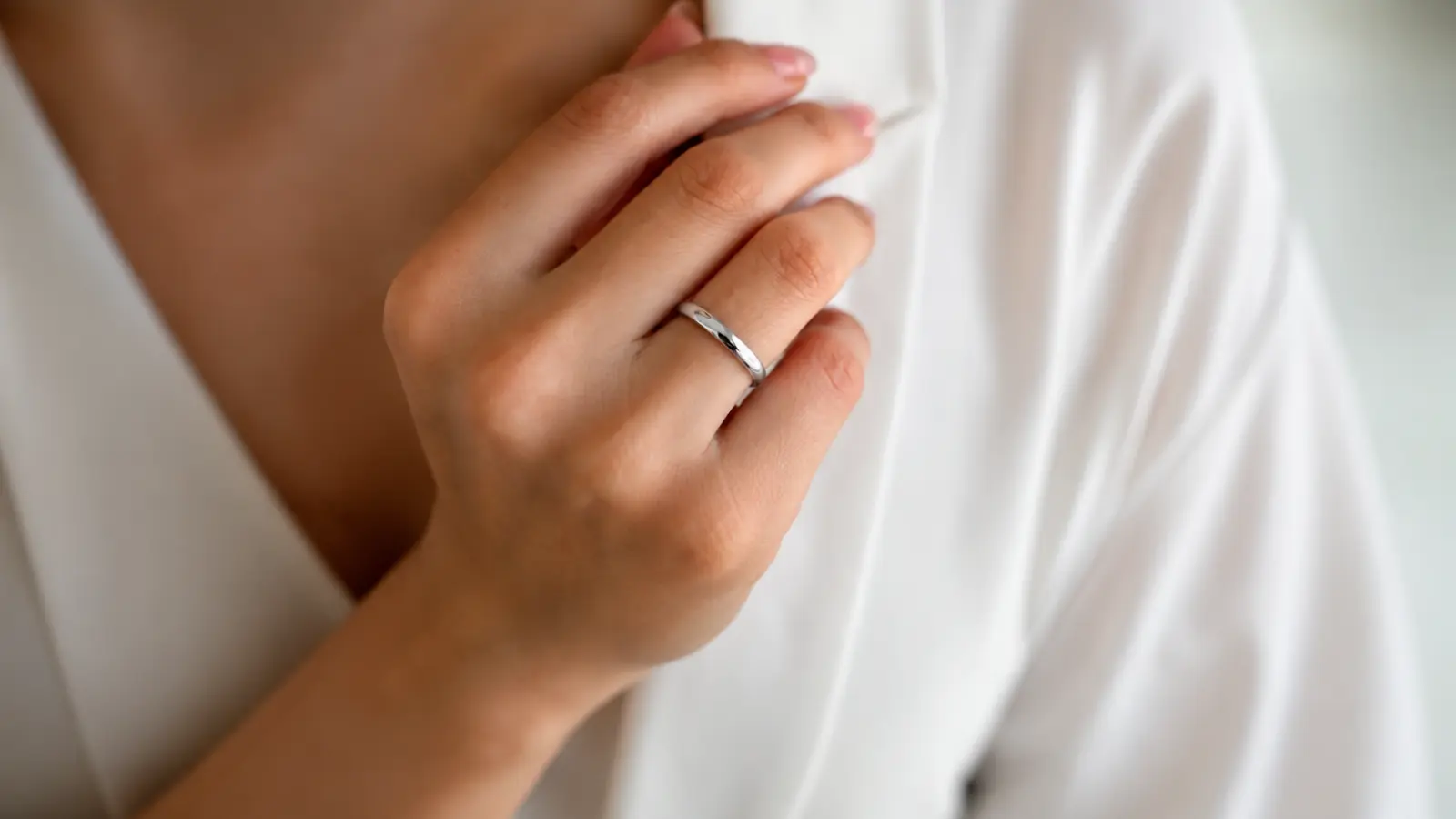
Platinum’s strongest arguments in women’s wedding jewelry converge in one area: diamond settings. For women pairing a wedding band with a diamond engagement ring, or choosing a diamond-set wedding band as a standalone piece, platinum is frequently the most compelling metal choice available. The combination of a naturally white surface, superior prong security, and color permanence creates conditions where a diamond can perform at its best — without any ongoing management of the setting metal.
Styles That Work Particularly Well in Platinum
A plain platinum band at 2mm to 3mm is among the most quietly enduring choices in women’s wedding jewelry. It requires nothing — no maintenance, no replating, no decisions to revisit. The surface develops its patina and becomes, over years, a ring that looks like it has lived a life rather than one that has been periodically restored to newness. For women who value this kind of graceful aging over permanent shine, a simple wedding ring in platinum can be exactly the right answer.
Diamond-set bands in platinum are where the metal earns its premium most visibly. The rhodium-plated surface of white gold reflects into diamonds brilliantly in the short term, but over time the replating schedule becomes part of owning a diamond ring. Platinum removes that variable entirely. The prongs stay secure, the color stays white, the diamonds stay bright — for a ring meant to be worn daily for fifty years, that consistency has genuine value.
Pavé and micro-pavé bands in platinum benefit specifically from the metal’s density. The tiny beads that hold each diamond in place are more durable in platinum than in gold — there is less risk of the delicate metal beads wearing thin over years of daily contact. For styles where the setting is particularly intricate and the stones numerous, platinum reduces the long-term maintenance requirement meaningfully.
Pairing Platinum with Yellow Gold or Rose Gold
One situation that occasionally surprises couples: if the engagement ring is in yellow gold or rose gold, a platinum wedding band will create a visible contrast in metal color. This is not inherently a problem — mixed-metal stacks have become increasingly common and can look intentional — but it is worth seeing in person before committing. Some couples specifically like the cool-warm contrast; others find it visually unsatisfying. The answer depends entirely on the specific rings together, not on a general rule about mixed metals.
For the full range of women’s wedding ring styles across metals, see our wedding rings for women.
Platinum Wedding Rings for Men
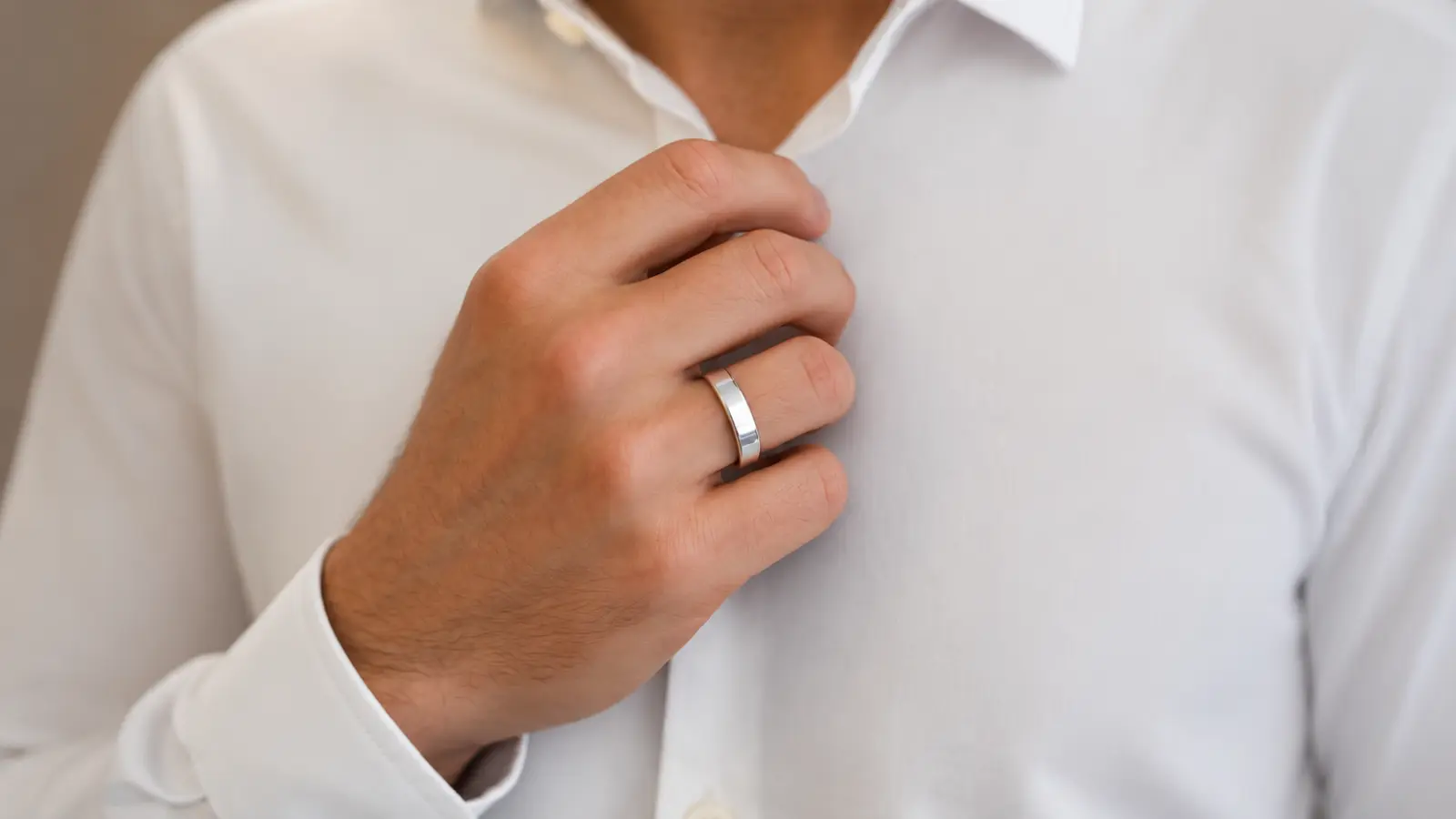
For men, platinum occupies a specific position in the wedding band landscape: it is the premium precious metal choice for someone who wants the look of a fine silver-toned ring without the maintenance requirements of white gold, and who finds the weight and density of the metal appealing rather than inconvenient.
Men’s platinum bands are most commonly chosen by men who work in environments where the ring needs to maintain its appearance without regular professional attention, who have sensitive skin that has previously reacted to other metals, or who are building a matched set with a partner’s platinum engagement ring or wedding band. The metal’s low-maintenance profile is particularly relevant for men who are not accustomed to caring for jewelry and prefer a ring that asks little of them.
The Weight Question for Men
Platinum’s weight is a more prominent consideration for men’s bands than for women’s, because men’s bands are typically wider — 5mm to 8mm is the common range — and a wider band means more metal and therefore more weight. A 6mm platinum band is noticeably heavier than a 6mm white gold band at the same width. For men who find weight grounding — who like the physical awareness of the ring on their finger — this is one of platinum’s most appealing qualities. For men who are sensitive to having things on their hands or who work in conditions where an unusually heavy ring could be a distraction, trying the weight in person before committing is worth the extra step.
Finish Options for Men’s Platinum Bands
A high-polish platinum band starts bright and mirror-like, then transitions gradually into the patina that defines aged platinum. Many men find this progression preferable to a gold ring that needs replating to maintain its appearance — the ring changes naturally rather than requiring intervention to look its best.
A brushed or matte finish starts the patina process earlier, in a sense. By intentionally creating a consistent surface texture from the beginning, the ring bypasses the initial high-polish phase and goes directly to an appearance that is closer to where platinum ends up anyway. This is a particularly practical choice for men who want consistency from the first day of wear and do not want to manage the transition from polished to patinated.
A combination finish — brushed center, polished edges — works in platinum as it does in other metals, with an added quality: the contrast between textures is more durable in platinum than in gold. The polished edges hold their definition longer before they meld into the brushed center, because platinum’s hardness slows the process. For men who want visual interest without a high-maintenance ring, this is often the most satisfying long-term option.
For the complete range of men’s wedding band options across all metals, see our men’s wedding bands.
Is Platinum Worth the Higher Price?
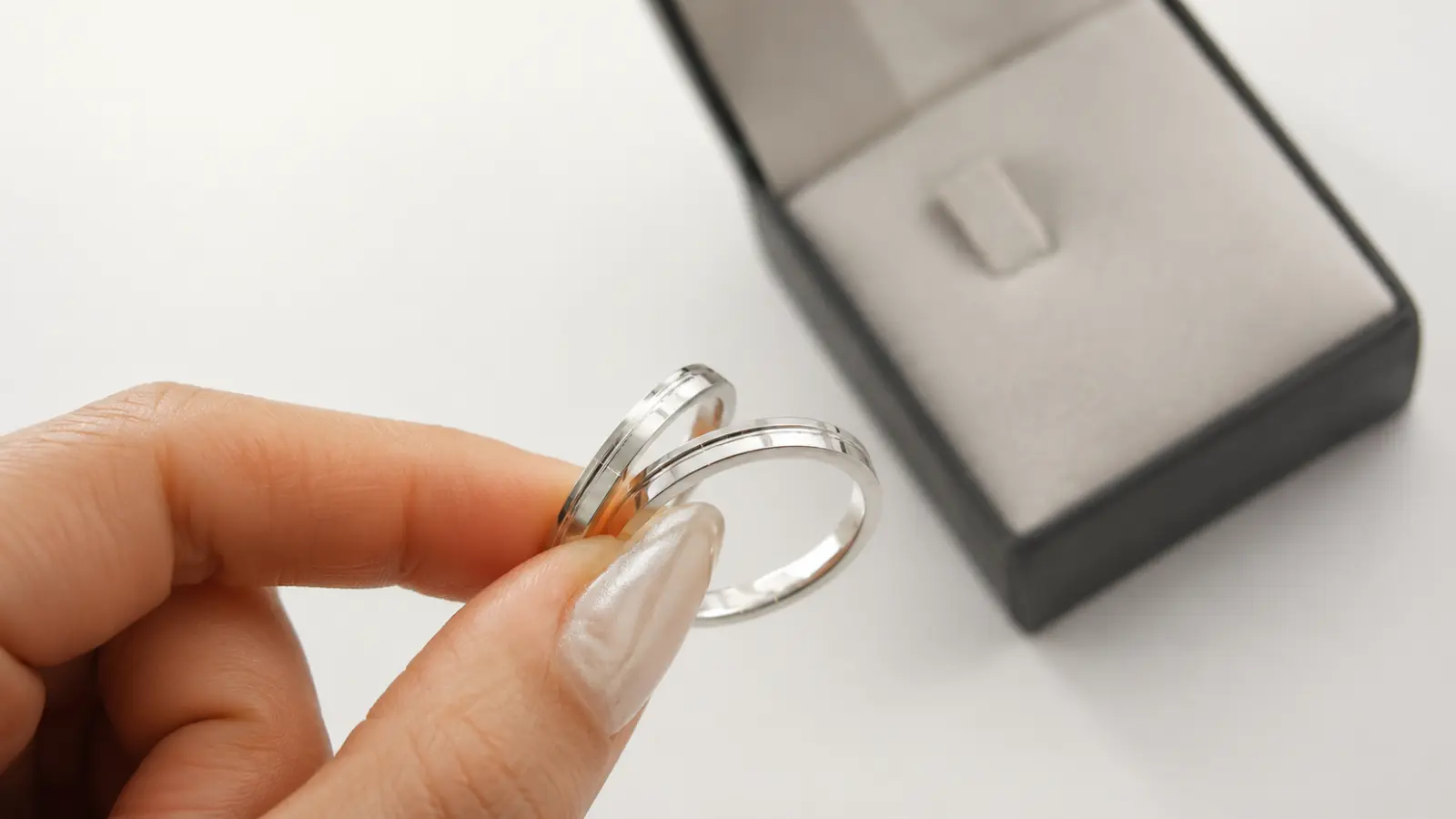
This is the question the article title promises to answer, and it deserves a direct one — which requires resisting the temptation to say “it depends” and leave it at that. It does depend, but it depends on specific things, and naming those things is more useful than a hedge.
Platinum Makes the Most Sense When You…
- Have sensitive skin or a known nickel allergy. Platinum’s hypoallergenic status is unconditional. No alloy variation to investigate, no need to ask which whitening agent was used. The ring will not cause a reaction — and for people who have dealt with metal sensitivity, that single fact can make the premium worthwhile before considering anything else.
- Are setting a high-value diamond and want the most secure setting available. Platinum prongs hold their tension better than gold prongs over decades of daily wear. For a diamond of significant financial and sentimental value, the added security is proportional to what is at stake.
- Want a ring that requires absolutely no color maintenance — ever. The replating requirement of white gold is genuinely minor when described accurately, but some people find it more bothersome in practice than they anticipated. If you know yourself to be someone who resists routine maintenance tasks, platinum removes the task from the equation permanently.
- Value the weight and physical presence of the ring. This is more personal than practical, but it is real. The physical presence of a platinum ring on the finger is unlike any other metal in fine jewelry, and many wearers describe it as one of the primary reasons they would choose platinum again.
When one or more of these factors apply to your situation, platinum earns its premium genuinely — not as a marketing claim, but as a solution to a real, specific need.
The Premium Is Less Justified When You…
- Would be better served putting the budget difference elsewhere. On the engagement ring, the honeymoon, a home, or anything else that matters more to your life than the metal composition of a ring that will look nearly identical in white gold for a fraction of the price — the choice is clear.
- Have never worn rings before and are unsure about the weight. A heavy ring that distracts you or feels uncomfortable is not better than a lighter ring you forget you are wearing, regardless of what it is made of. Try both metals in person before deciding — a few minutes in a jewelry store is the only reliable way to know which weight suits you.
- Are choosing based on appearance alone. Freshly rhodium-plated white gold and platinum are visually indistinguishable to most observers, including most jewelers not looking specifically for differences. If the goal is a bright white ring, white gold achieves it at substantially lower cost.
- Expect to replace or upgrade the ring in ten to fifteen years. Platinum’s long-term advantages are most meaningful on a genuinely long time horizon. On a shorter one, the premium buys less of what makes the metal distinctive.
Neither list makes the decision for you — but the honest answer for most buyers is that platinum is worth it for specific, named reasons, and less clearly worth it when those reasons are absent.
The Bottom Line
Platinum is the best precious metal available for a wedding ring in purely technical terms. It is more durable, more hypoallergenic, lower maintenance, and physically superior to gold on every objective measure. It is not, however, categorically worth its premium for every buyer — because many buyers do not need the specific advantages that premium delivers.
White gold at $400 with a replate every two years and a prong check annually is a ring that will last a lifetime and look beautiful doing it. Platinum at $900 is also a ring that will last a lifetime and look beautiful doing it, with fewer appointments and more weight on the finger. The question is not which is better in the abstract. The question is which is better for the specific person who will wear it, in the specific life they are living.
Platinum Wedding Ring Inspiration
Platinum wedding rings can range from simple classic bands to detailed diamond designs and modern styles. Explore our inspiration board for platinum bands, pavé rings, eternity bands, brushed finishes, minimalist designs, and timeless wedding ring ideas for women and men.
Choosing a Platinum Wedding Ring That Lasts
A platinum wedding ring is not only a choice about price or prestige. It is a choice about how a ring will feel, age, and become part of everyday life over decades of wear. The value of platinum comes from its durability, natural color, low maintenance, and the quiet changes that make each ring more personal over time.
Whether you choose platinum, white gold, or another metal, the best wedding ring is the one that matches your lifestyle, priorities, and the way you want your ring to be part of the years ahead.
Frequently asked questions (FAQ)
Why are platinum wedding rings more expensive?
Platinum wedding rings are more expensive because platinum is rarer, denser, and used at a much higher purity level than gold jewelry. Most platinum rings contain about 95% pure platinum, while 14k gold contains 58.3% pure gold. Platinum’s higher price also comes from the amount of metal needed to create the ring because it is significantly heavier than gold.
Is platinum actually better than gold for a wedding ring?
Platinum is better than gold in some areas, but not for every person. Platinum is naturally white, hypoallergenic, requires no replating, and keeps its metal volume extremely well over decades of wear. Gold is lighter, usually more affordable, easier to resize, and available in more colors. The better choice depends on budget, lifestyle, and what qualities matter most to the wearer.
Does a platinum wedding ring last forever?
A platinum wedding ring can last for generations with proper care. One reason platinum is valued for wedding jewelry is that the metal moves when scratched instead of gradually wearing away like many other metals. Over time, platinum develops a natural patina, but the ring itself can remain structurally strong for decades.
Why does platinum look scratched after wearing it?
Platinum develops visible surface marks because of how the metal reacts to everyday wear. Instead of losing material, platinum shifts and forms a soft matte texture called patina. Some people love this aged appearance because it shows the history of the ring, while others choose to have the ring professionally polished to restore a brighter finish.
Is platinum worth it if it looks like white gold?
Platinum and white gold can look very similar at first, but they age differently. Platinum stays naturally white without maintenance, while white gold usually needs rhodium replating to maintain its bright white appearance. Platinum is usually worth the higher cost for people who value low maintenance, sensitive-skin compatibility, and long-term durability.
What should you know before buying a platinum wedding ring?
Before buying platinum, consider the weight, cost, and how the metal changes over time. Platinum feels heavier than gold, develops a natural patina instead of staying perfectly polished, and usually costs more upfront. These qualities are exactly why some people love platinum, but they may not be ideal for someone who wants a lighter or lower-cost ring.