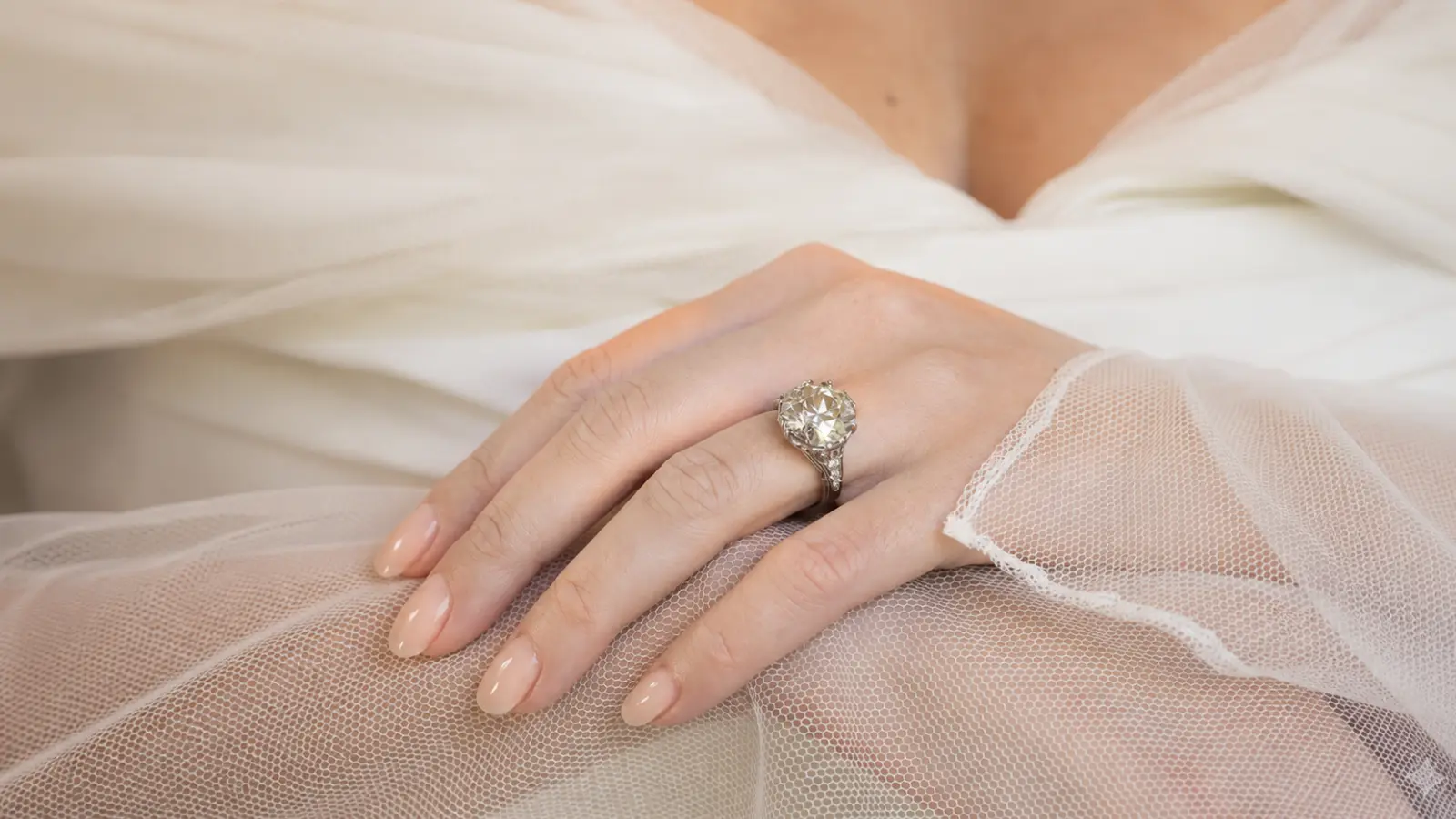
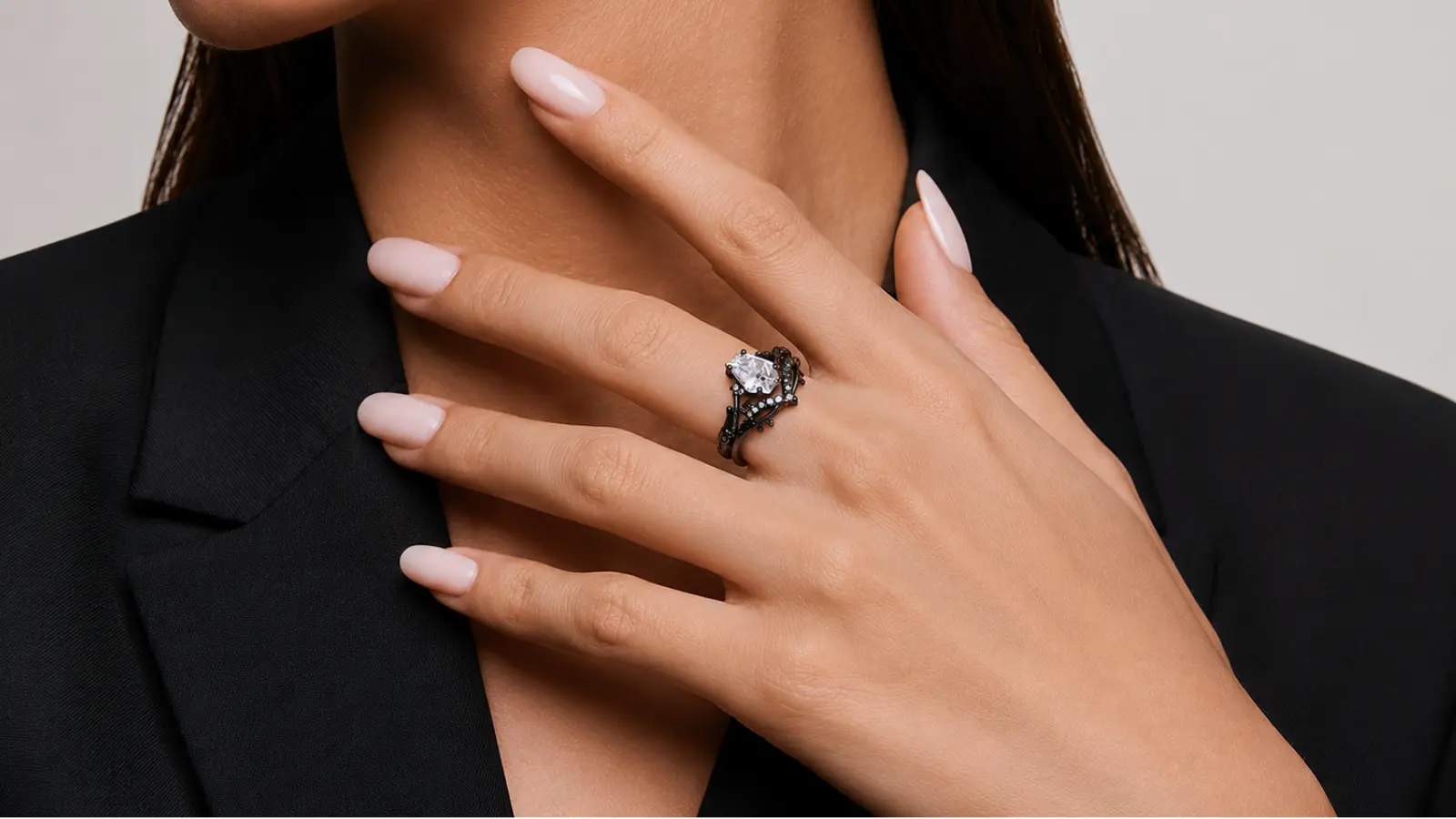
Gothic wedding rings are wedding rings inspired by dark romantic design, often featuring black stones, dark metals, ornate details, vintage influences, and elements from Gothic Revival and Victorian jewelry traditions. Unlike costume jewelry, a well-designed gothic ring focuses on craftsmanship, symbolism, and intentional details.
Choosing a gothic wedding ring is not about rejecting traditional wedding jewelry — it is about choosing a style that feels more personal. Black diamonds, deep gemstones, engraved metals, filigree details, and dramatic designs can create rings that feel elegant, meaningful, and timeless when they are made with quality materials.
This guide explains gothic wedding rings, including popular stones, dark metals, vintage styles, designs for men and women, how to avoid the costume look, and how gothic designs fit within different wedding rings and wedding bands for everyday wear.
Gothic Wedding Rings Explained
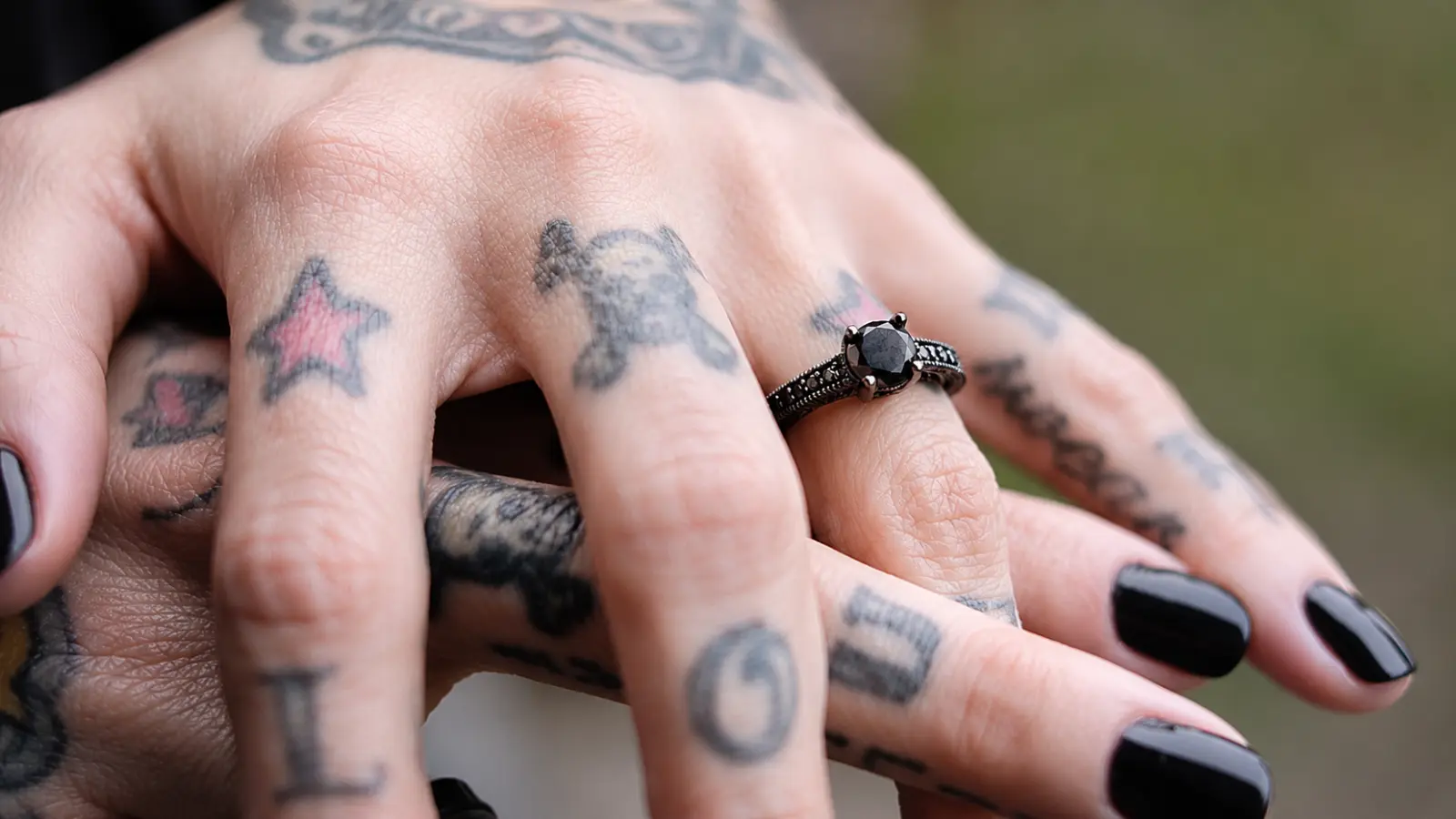
Gothic, as a design aesthetic, has been misappropriated so many times, by fashion, by Halloween retail, by film costuming, that its actual visual language is worth recovering before talking about rings. The gothic aesthetic in fine jewelry does not mean skulls on everything. It does not mean black for the sake of shock. It does not mean theatrical and overwrought. It means a specific set of design principles, most of which originated in Gothic Revival architecture and Victorian decorative arts, and most of which have more in common with cathedral stonework and Pre-Raphaelite illustration than with anything sold at a costume shop.
The four visual principles that define the gothic ring aesthetic in a fine jewelry context:
- Darkness as a deliberate material choice. Not darkness as absence or as edginess, but as a specific chromatic decision, the way a Victorian jeweler chose deep garnets over pale topaz, or the way a Gothic Revival architect chose weathered stone over clean white marble. The darkness in a gothic ring is purposeful and considered, not accidental.
- Ornate detail over minimalism. Gothic design is not spare. It is layered: filigree over a carved surface, milgrain at the edge of an engraved band, claw prongs that themselves become decorative elements. The detail work is where the category lives. A plain black band is a black ring; a black ring with fine engraving and claw-set stones is a gothic ring.
- Historical or natural motifs. Roses, thorns, serpents, ravens, celestial bodies, foliage, architectural arch shapes; these motifs appear in gothic jewelry because they appeared in Gothic art and architecture first. They carry centuries of accumulated visual significance. When they are executed well, they read as art historical references. When they are executed poorly, they read as costume retail.
- Romantic darkness, not nihilistic darkness. The gothic aesthetic is not about death or destruction; it is about the beauty that exists alongside those things. Victorian mourning jewelry, one of the clearest ancestors of modern gothic ring design, was made with extraordinary craft and sentiment. It was not created to be frightening. It was created to be beautiful in the presence of grief. That emotional register, romance alongside darkness, beauty alongside weight, is what separates the gothic aesthetic from simple macabre decoration.
Understanding these four principles is what separates a genuinely gothic ring from a ring that’s merely dark, a distinction worth keeping in mind through every material and design decision covered below.
Where Gothic Wedding Rings Come from Historically
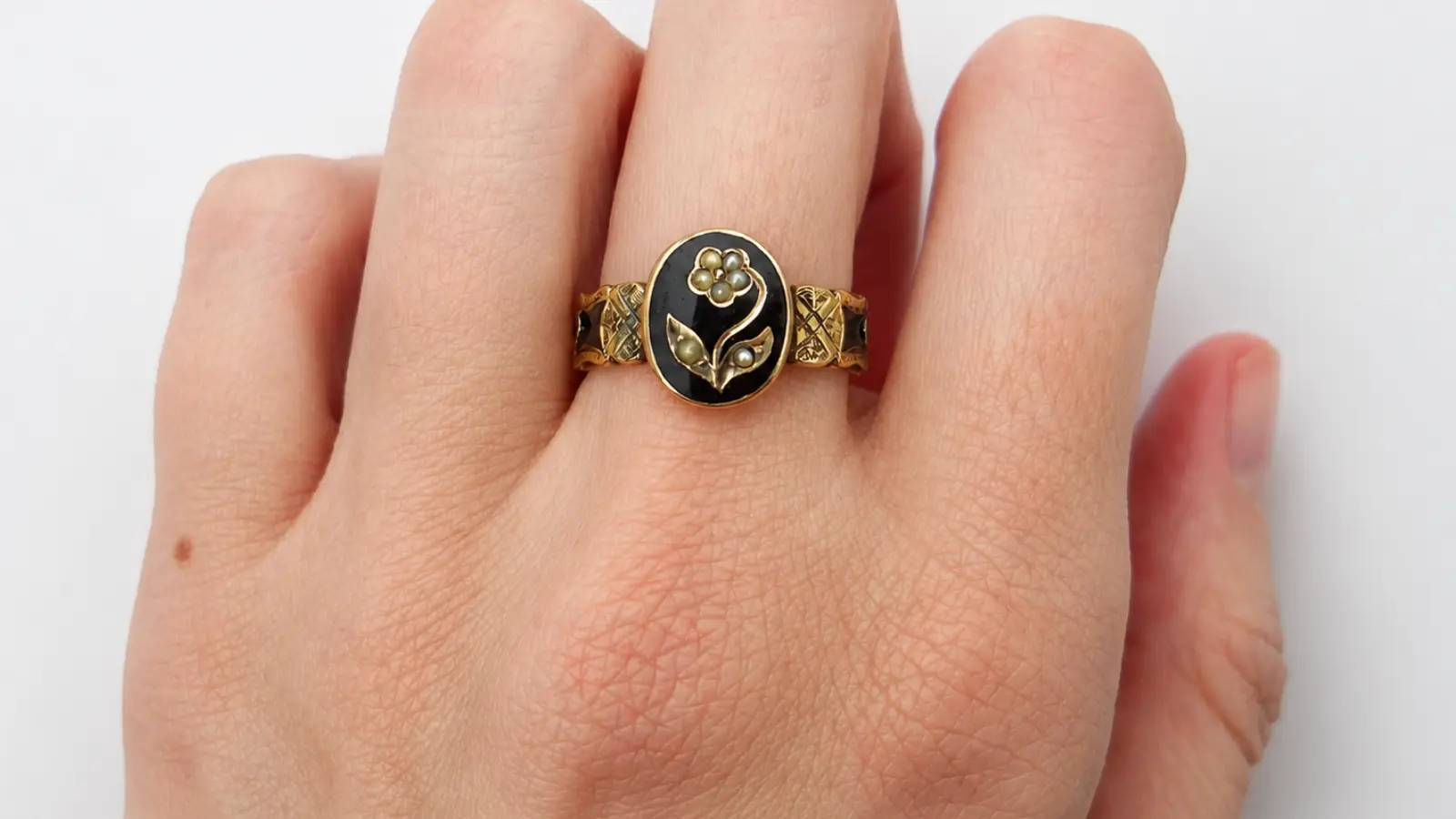
Two distinct jewelry traditions feed into the modern gothic wedding ring. The first is Victorian mourning jewelry, the rings, brooches, and lockets made in England during the long mourning culture of the nineteenth century, when death was a constant social presence and the objects created to mark it were among the most elaborately crafted of the era. These pieces used jet (a type of lignite coal, deeply black), hairwork, onyx, and dark enamel in settings of extraordinary delicacy. They were made to last. Many of them have.
The second is Gothic Revival architecture and decorative arts, which ran from roughly the 1740s to the early twentieth century and produced an enormous body of ornamental design, pointed arches, tracery patterns, gargoyles, intricate stonework, that filtered into jewelry, textiles, furniture, and eventually popular culture. The rings that draw from this tradition tend toward architectural shapes: pointed settings, tracery-like filigree, bands that suggest the ribs of a vaulted ceiling in miniature.
Both traditions were taken seriously in their time. The designers who produced them were not making novelty objects. Understanding this context is what allows a modern gothic ring to participate in a genuine design tradition rather than imitating an aesthetic it has no real connection to.
Black Stones and Dark Metals
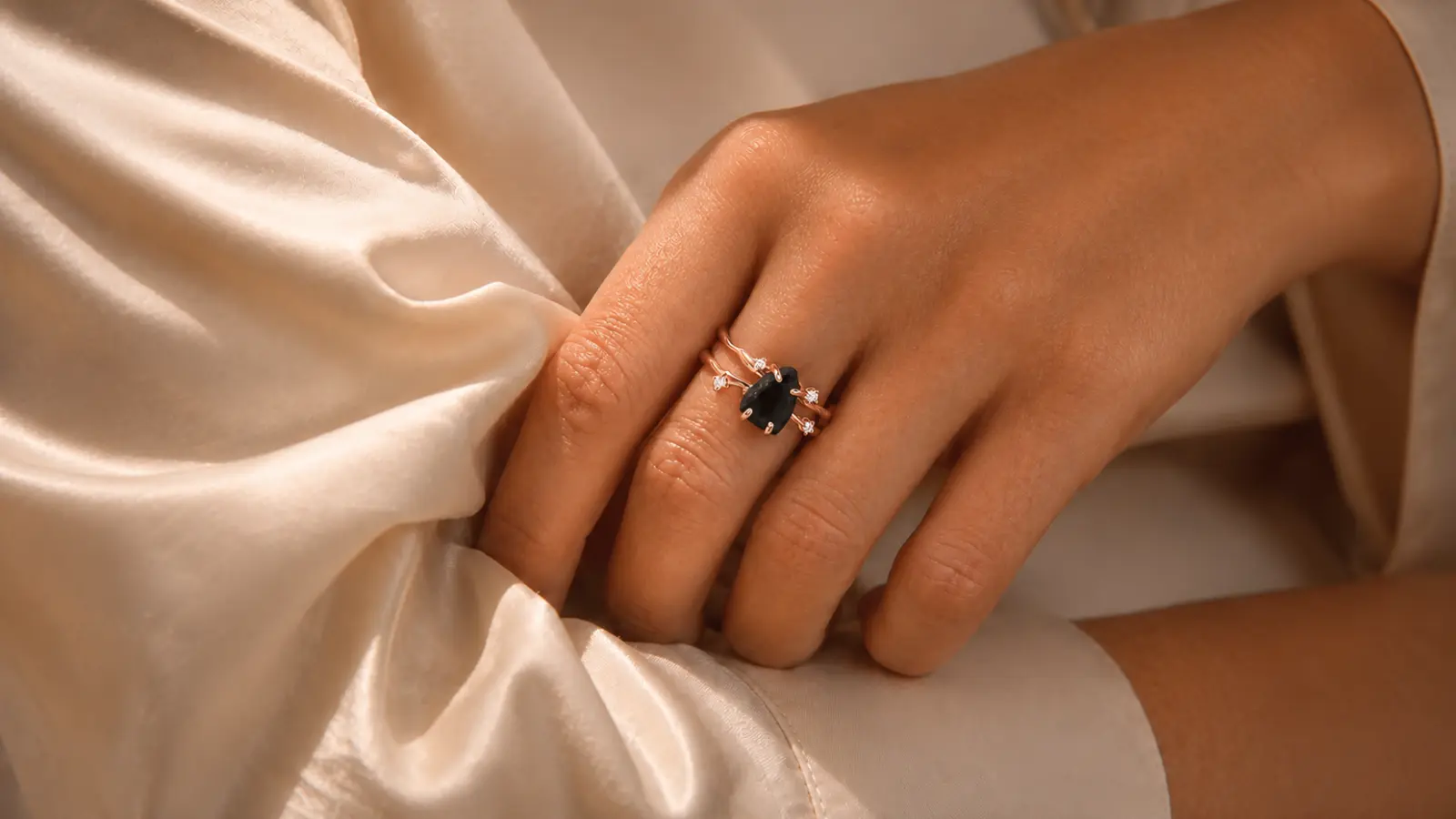
The material choices in a gothic wedding ring are where the difference between an elegant piece and a costume piece is most clearly established. Quality materials in a gothic setting produce fine jewelry. Poor materials in a gothic setting produce exactly what the mainstream expects when they hear the words “gothic ring”: something theatrical and temporary.
Stones for Gothic Wedding Rings
The stones below define most of the gothic palette, and each comes with a real trade-off between visual drama, durability, and price:
- Black diamonds. The most popular stone in contemporary gothic wedding jewelry, and for good reason. Black diamonds are real diamonds, scoring a 10 on the Mohs hardness scale, making them among the most durable ring stones available. The color comes from graphite inclusions throughout the crystal, which absorb light rather than reflecting it, producing a matte, deep black appearance. They do not sparkle the way a white diamond does; they absorb light in a way that’s dramatic and visually distinctive. Black diamonds can be set in virtually any style, solitaire, halo, pavé, and they hold their appearance for decades of daily wear.
- Black moissanite. A lab-created alternative to black diamond that offers a similar visual appearance at a significantly lower price. Black moissanite is nearly as hard as diamond and extremely durable for daily wear. The color can vary between manufacturers; some produce a more matte black, others a slightly more reflective surface. For couples who want the look of a black diamond center stone at a more accessible budget, black moissanite is one of the stronger current options.
- Onyx. The most historically significant black stone in gothic and mourning jewelry tradition. Pure black, opaque, and visually bold. Onyx is significantly softer than diamond or moissanite, scoring a 6.5 to 7 on the Mohs scale, which means it will show wear over time in a daily-wear ring. The trade-off is that onyx produces a depth and evenness of black that diamonds rarely match, and its historical associations with mourning jewelry give it a specificity newer stones don’t have. It works well in rings where the stone sits in a protective bezel rather than exposed prongs.
- Garnet. Specifically deep red or almandine garnet, one of the quintessential Victorian mourning stones. Garnet in this color reads as dark and romantic without being as stark as black. It photographs beautifully against darkened metal. The historical significance of garnet in Victorian jewelry makes it a particularly well-grounded choice for gothic rings aiming to feel period-influenced rather than contemporary-alternative.
- Black sapphire and black spinel. Both are durable, deeply dark stones sometimes overlooked in favor of black diamond but worth considering as excellent alternatives. Black spinel in particular has a surface quality some jewelers prefer to black diamond, a slight reflectivity that reads as both dark and alive. Black sapphire is very hard (9 on the Mohs scale) and holds up extremely well in daily-wear settings.
- Dark amethyst and smoky quartz. For gothic rings that lean toward the deep purple or smoky brown end of the dark spectrum rather than full black. Both are more affordable than the stones above and can produce a gothic aesthetic that feels slightly warmer and less severe, useful for couples who want the dark romantic quality without committing fully to black.
Most couples land on black diamond or black moissanite, especially when comparing durable diamond wedding rings and similar dark-stone alternatives for everyday wear, but the less common stones above are worth a look for anyone whose priority is historical specificity over hardness alone.
Metals for Gothic Wedding Rings
The metal does as much work as the stone in defining whether a gothic ring reads as fine jewelry or as something temporary, and the options below differ meaningfully in durability and upkeep:
- Black rhodium-plated white gold. The most practical and most popular metal choice for gothic fine jewelry. Rhodium is a platinum-group metal applied as a thin electroplating layer over white gold; black rhodium produces a deep, dark finish that reads as nearly black on the ring surface. The base is solid 14k or 18k white gold, so the structural integrity of the ring is that of a fine gold piece. The finish will wear over time, particularly on the inner shank where the finger creates friction, and will need periodic re-plating, a routine jeweler’s service.
- Oxidized sterling silver. The traditional metal of gothic and alternative jewelry for most of the twentieth century. Oxidization darkens silver through a chemical process that produces a deep grey to near-black surface with a slightly aged, textured quality. The finish is not as uniform as rhodium plating and wears even faster; daily contact with skin, soap, and water will gradually remove the oxidized layer. For a wedding ring intended for permanent daily wear, oxidized silver requires more maintenance than white gold with black rhodium, and is more appropriate for occasional wear or for a wearer who doesn’t mind active upkeep.
- Darkened or anodized titanium. Titanium is naturally grey rather than black, but it can be anodized to produce darker surface tones. It is extremely durable, lightweight, and hypoallergenic, qualities that make it practical for daily wear. It cannot be resized, which is the relevant limitation: a titanium ring is the size it is when purchased. For couples with stable ring sizes who want a gothic alternative metal at a lower price point than gold, darkened titanium is worth considering.
- Antique or vintage yellow gold with dark finishes. For gothic rings that lean toward Victorian romance rather than contemporary darkness. A yellow gold ring with oxidized recesses in engraved patterns, the dark oxidization contrasting with the bright gold ridges, produces a look that’s distinctly gothic in a warm, historically rooted way. This finish technique was common in Victorian decorative metalwork and reads as genuinely period-influenced rather than alternative.
The table below lines up stones and metals side by side on the three factors that matter most for a ring worn daily: visual quality, durability, and the maintenance it will actually need over time.
| Material | Visual Quality | Durability for Daily Wear | Maintenance |
|---|---|---|---|
| Black diamond | Matte, light-absorbing deep black | Excellent — Mohs 10 | Low — stone requires no special care |
| Black moissanite | Similar to black diamond; slight variation by brand | Excellent — Mohs 9.25 | Low |
| Onyx | Even, opaque, deeply black | Moderate — Mohs 6.5–7; will scratch over time | Moderate — protective setting recommended |
| Garnet (deep red) | Rich dark red; historically significant | Good — Mohs 6.5–7.5 | Low to moderate |
| Black rhodium on white gold | Deep black surface over white gold base | Excellent base; finish wears | Re-plate every 1–3 years ($50–$150) |
| Oxidized silver | Grey-black; slightly textured surface | Good base; finish wears faster than rhodium | Re-oxidize periodically; not ideal for daily wear |
| Darkened titanium | Dark grey to near-black | Excellent; cannot be resized | Low |
If durability and low maintenance matter most, black diamond or moissanite on a solid metal base is the most dependable combination on this table; if historical authenticity matters more than convenience, garnet and oxidized silver carry the most period weight, at the cost of more upkeep down the line.
Vintage Gothic Wedding Rings
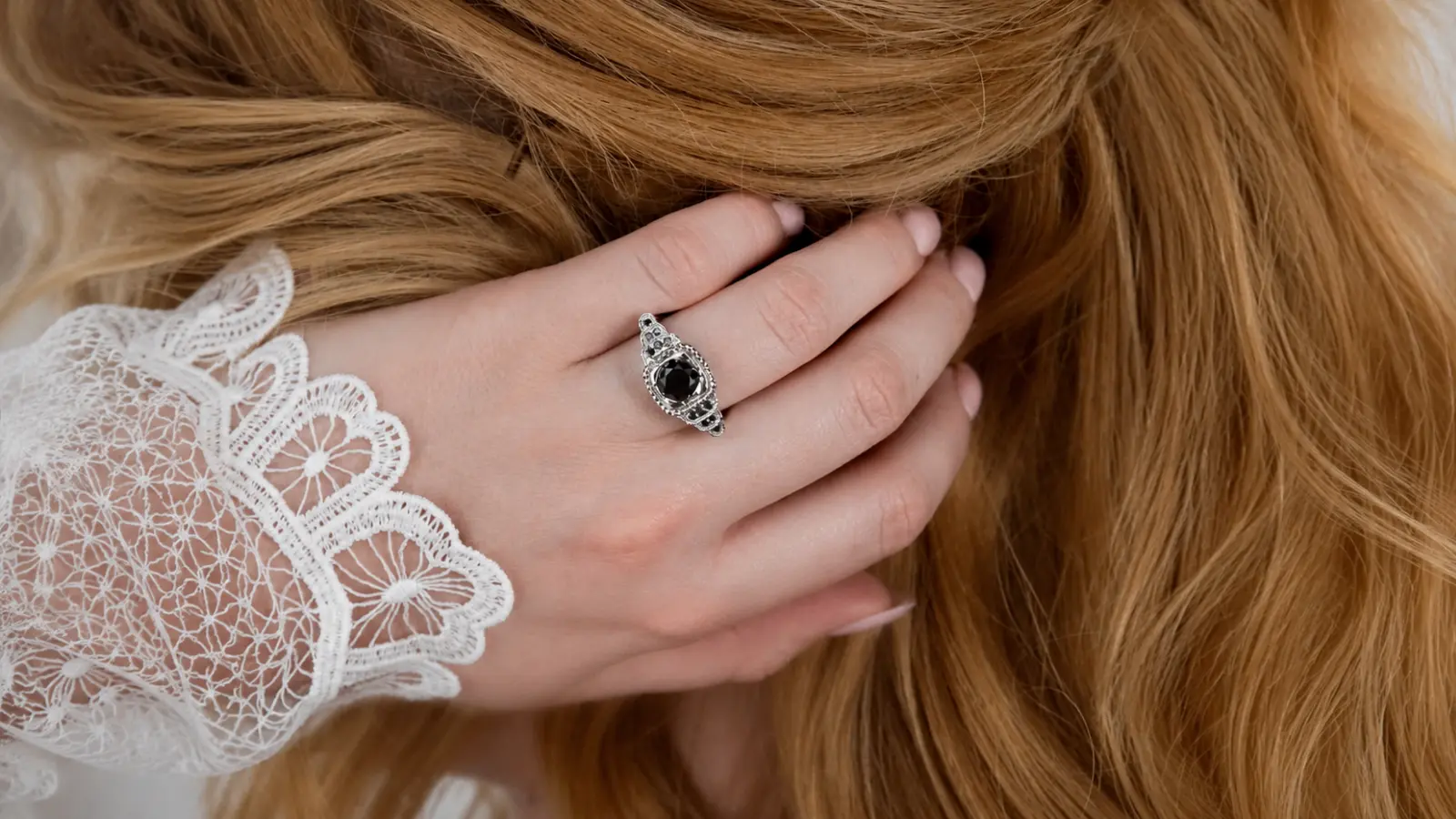
Vintage gothic wedding rings occupy a specific and particularly rewarding corner of the gothic ring category, one where the aesthetic has a genuine historical context rather than a contemporary interpretation of one. A Victorian mourning ring or a Gothic Revival piece from the mid-nineteenth century is not a gothic ring in the sense that it was designed to look gothic. It is gothic because it was made in that period, with those visual influences, by craftsmen working within a living design tradition.
For couples drawn to vintage wedding rings, the vintage-inspired approach can reproduce much of the period character without the complications of an actual antique. The design language of Victorian gothic jewelry is well documented and well understood by contemporary artisan jewelers, many of whom specialize specifically in period-influenced work. The result is a ring that carries the visual weight of the tradition without the fragility or provenance complications of an actual antique.
What Defines the Vintage Gothic Ring Style
Several design characteristics appear consistently in rings that draw from Victorian and Gothic Revival sources:
- Rose-cut stones. The rose cut, a flat-bottomed, domed-top stone with triangular facets, was the dominant cutting style for diamonds and other gems in the nineteenth century. It produces a softer, more diffuse reflection than a modern brilliant cut and sits much lower in the setting. A rose-cut black diamond in a vintage-inspired gothic ring is one of the most historically accurate and visually distinctive stone choices available.
- Filigree metalwork. Intricate twisted wire worked into lace-like patterns, a metalworking technique with roots going back thousands of years that reached a particular peak of refinement in Victorian jewelry. Filigree in a gothic ring creates a visual complexity that reads as genuinely handmade and historically grounded.
- Milgrain edging. A border of tiny beaded metal dots along the edge of the setting or band, a technique borrowed from Edwardian and Victorian jewelry that creates a finished, precise look distinctive to period pieces.
- Engraving. Band engraving in scroll, vine, thorn, or geometric patterns was standard in Victorian wedding rings. In a gothic ring, deep engraving with oxidized recesses, the dark filling contrasting with the bright metal of the ridge, produces a surface that reads as genuinely aged and historical.
- Mourning motifs used with intention. Forget-me-nots, serpents eating their own tails (ouroboros, a symbol of eternity), true-love knots, and weeping willows were all common mourning jewelry motifs that carry specific historical meaning. Used with awareness of that meaning, they transform a ring from decorative to deeply significant.
Any one of these details, used with intention rather than stacked together for effect, is usually enough to give a ring a genuine sense of period authenticity.
Vintage vs. Vintage-Inspired
Actual antique gothic rings, estate pieces from the Victorian era, are available through antique jewelry dealers, auction houses, and estate sales. They come with the advantage of genuine historical provenance and the charm of accumulated wear and age. They also come with fixed sizing, and wedding ring resizing can compromise delicate filigree or engraving on antique pieces.
Vintage-inspired gothic rings, contemporary pieces made to reference Victorian or Gothic Revival aesthetics, are available in any size, can be customized to specific stone and metal preferences, and are made with modern construction standards that give them a longer service life. For most couples who want the vintage gothic look as a permanent daily-wear ring, the vintage-inspired contemporary piece is the more practical choice.
Gothic Rings for Men and Women
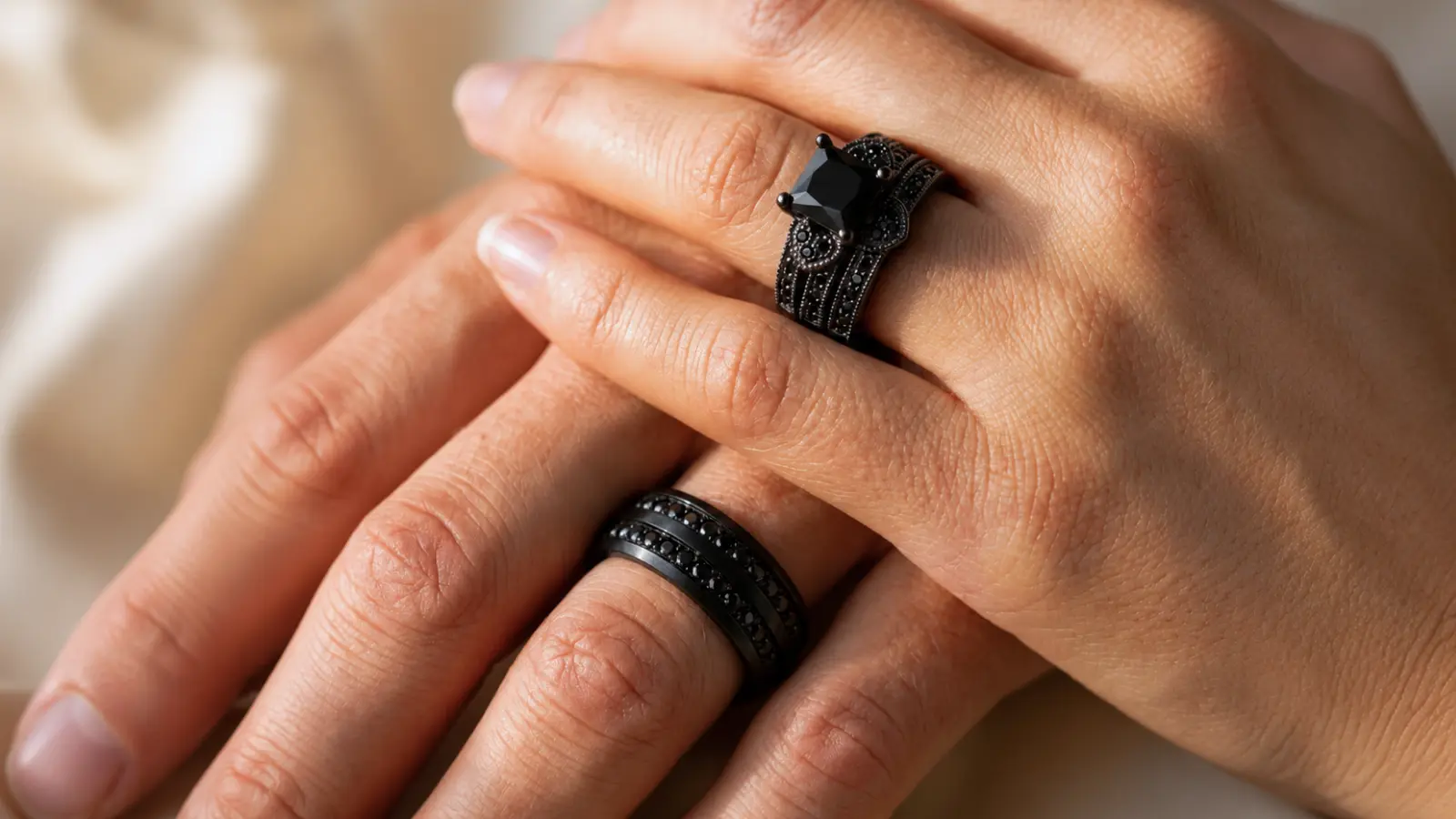
The gothic ring aesthetic applies differently to men’s and women’s rings not because the design language changes, but because the ring proportions and the design vocabulary that reads as elegant rather than theatrical differ by typical ring width and hand scale.
Gothic Wedding Rings for Women
Women’s gothic rings have the widest range of design options within the category. The thinner bands typical of women’s fine jewelry allow for delicate filigree work, rose-cut stone settings, and intricate milgrain that reads as genuinely refined rather than heavy. For a broader sense of where simpler styles sit alongside these more ornate ones, our guide to wedding rings for women covers the full range. The design challenge specific to gothic styles is keeping the ornateness from becoming cluttered: in a narrow ring, too many competing design elements produce visual noise rather than visual interest.
The most consistently elegant women’s gothic ring designs:
- A solitaire black diamond or black moissanite in a claw or cathedral setting on a black rhodium band with simple engraving, one stone, one dark metal, one decorative technique. The restraint is the elegance.
- A rose-cut black diamond in a bezel setting on a blackened silver or white gold band with milgrain edges. The flat-bottomed rose cut creates a low profile that’s practical for daily wear and historically appropriate.
- A dark garnet surrounded by smaller black diamonds in a cluster or halo setting, the contrast between the deep red and the surrounding black creating visual depth that reads as Victorian without being literal about it.
- A full-eternity band in pavé black diamonds on a black rhodium band. Simple in concept, visually striking in execution, and practical for daily wear because there’s no protruding stone to catch on anything.
Each of these works because it leans on one strong idea rather than several competing ones, which is the same principle that defines elegant gothic design at any scale.
Gothic Wedding Rings for Men
Men’s gothic rings tend to work best when the gothic elements are expressed through proportion and texture rather than elaborate motifs. A wide band with deep engraving and an oxidized surface reads as intentionally dark and decorative without entering the category of theatrical jewelry. The same design principles apply, quality materials, restrained motifs, expert execution, but the scale shifts.
The most consistently successful men’s gothic ring designs:
- A wide black rhodium band (7mm to 9mm) with deep engraving, a scrollwork pattern, a thorn motif, an architectural tracery, and a matte finish. No stones, all metalwork. The width allows the engraving to breathe and read as deliberate.
- A black tungsten or titanium band with a hammered or textured surface, less ornate than filigree-based designs, but unmistakably non-conventional. Hammered dark metal has an organic quality that reads as gothic without being elaborate.
- A black rhodium white gold band with a flush-set black diamond or black sapphire, the stone set level with the surface of the band, creating a subtle dark detail that’s practical for active daily wear and visible only in close proximity.
- A two-tone band, black rhodium on the outside surface, yellow gold or rose gold visible on the inside and beveled edges, that produces a contrast between the dark exterior presentation and the warm metal visible when the ring is turned.
For a broader look at the range of men’s non-conventional ring options, the men’s wedding bands covers alternative metal and aesthetic choices across categories.
How to Keep a Gothic Ring Elegant
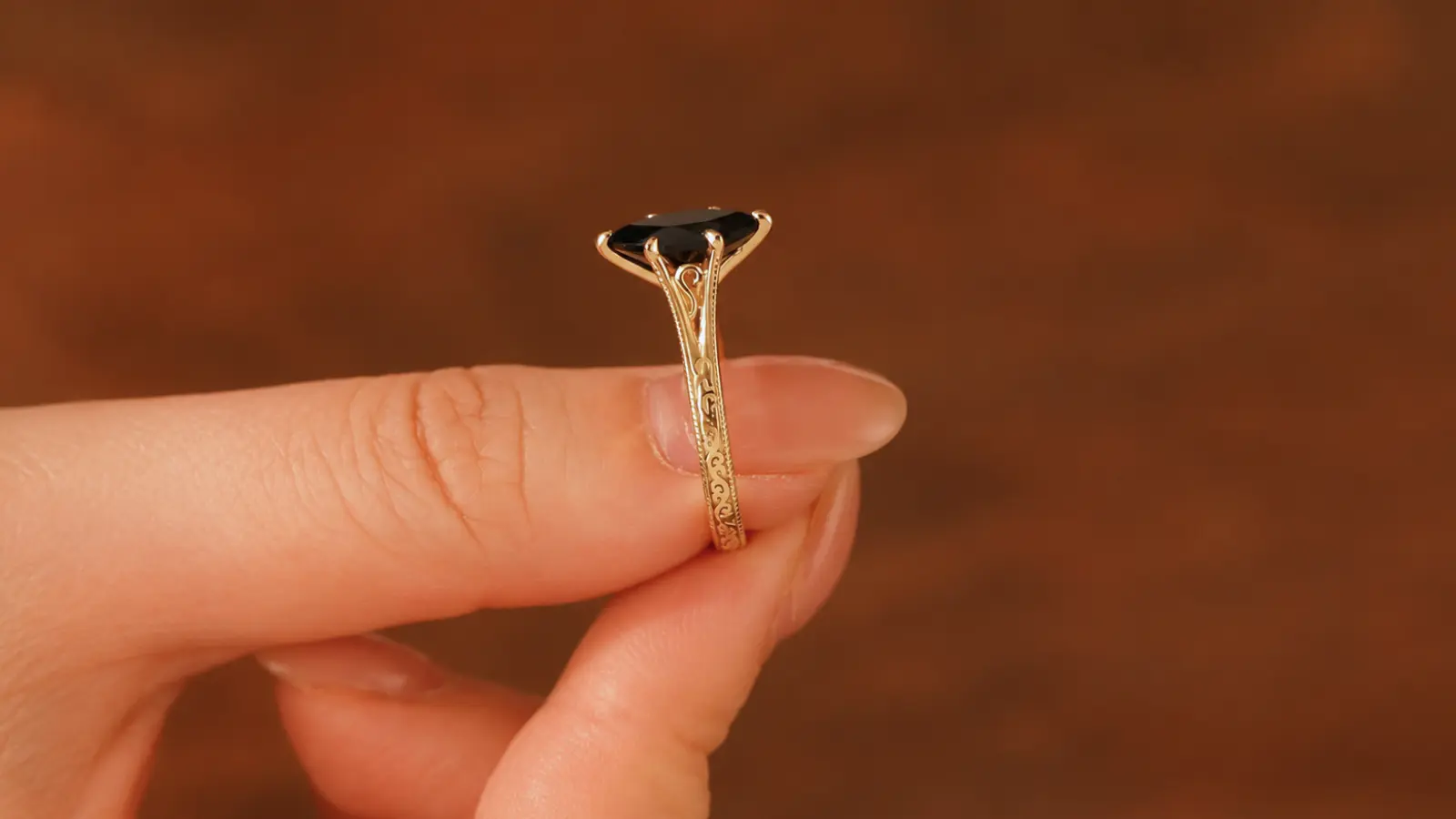
This is the central design question for any gothic wedding ring, and it has a direct answer: the line between elegant gothic jewelry and costume gothic jewelry is drawn by the quality of the materials, the restraint of the motifs, and the craftsmanship of the execution. Every element of the ring can be evaluated against those three criteria, and the evaluation is almost always diagnostic.
The Quality Test
Fine jewelry materials produce fine jewelry results. A black diamond in a solid 14k white gold setting with black rhodium plating, made by a jeweler whose work is consistent in quality across the whole piece, will read as a sophisticated jewelry choice to anyone who looks at it closely. The same ring made in silver-plated base metal with a dyed black cubic zirconia will read as an accessory within a year, because the materials reveal themselves through wear.
Gothic rings are particularly vulnerable to this problem because the dark metals and dark stones that define the aesthetic tend to mask quality differences in photographs. A ring that photographs identically to a fine jewelry piece may be constructed entirely from materials that won’t survive regular wear. Before purchasing, ask specifically about the base metal, the plating process, and the stone origin. If the seller can’t answer these questions with specificity, the ring is probably not worth the investment for a permanently worn piece.
The Restraint Test
Gothic motifs work best when used with intention rather than accumulation. A ring with one well-executed gothic element, an intricate filigree pattern, a single rose-cut black diamond, a deep engraved thorn motif, reads as a coherent design choice. A ring with skulls, crossbones, serpents, ravens, and bats on the same band reads as a checklist of gothic references rather than a piece of jewelry. The accumulation of motifs is what produces the costume effect most reliably.
The question to ask about any gothic design element: does this motif serve the ring’s overall aesthetic, or is it there because it’s gothic? The first is design; the second is decoration for its own sake, which tends to produce results that feel neither genuinely gothic nor genuinely elegant.
The Craftsmanship Test
In fine jewelry, the quality of the craftsmanship is visible. Milgrain work is either consistent or it isn’t. Filigree is either even and deliberate or it’s lumpy and irregular. Stone settings are either secure and precise or they’re loose and approximate. Close examination of a gothic ring, which will have more surface detail than a plain band, reveals the quality of the work quickly. Look at the ring under magnification if possible, or at least in bright light with the naked eye. The detail work on a quality gothic ring holds up over years. The detail work on a costume piece does not.
What to Avoid Specifically
A few specific patterns come up again and again in gothic rings that don’t hold up, and they’re worth watching for directly when shopping:
- Novelty motifs applied without restraint. Skulls are the most common example, they appear in Victorian mourning jewelry and therefore have a legitimate gothic history, but their ubiquity in mass-market alternative jewelry has made them read as novelty items rather than fine jewelry references. A single, beautifully executed skull on a wide band can be genuinely striking; multiple skulls of varying quality across the same ring is a different category of object.
- Black plating over base metal. The plating will wear away within months on a daily-wear ring, revealing the base metal beneath. This isn’t a problem with plating itself, black rhodium over white gold is a perfectly valid approach, but it’s a problem with using plating to disguise the true material composition of the ring. Ask what the base metal is before assuming “black metal” means gold or silver.
- Synthetic or simulated stones presented as natural ones. This isn’t a gothic-specific problem, but gothic rings are among the categories where synthetic stones are most commonly used and least disclosed. A synthetic onyx or a glass “black stone” in a gothic setting isn’t fine jewelry, it’s costume jewelry in a gothic aesthetic. Confirm what the stone is before purchasing.
- Designs that prioritize the gothic reference over the ring itself. The gothic aesthetic isn’t the point; the ring is the point. If the design decisions were made primarily to communicate “gothic” rather than to make a beautiful ring, the result almost always reflects that ordering of priorities.
Run any ring under consideration through this short list before purchase, and the gap between a fine jewelry piece and a costume piece tends to become obvious fairly quickly.
Gothic vs. Black Wedding Rings
This is a distinction that matters primarily for shopping and research, because the two categories overlap significantly in product imagery and retail labeling while describing meaningfully different design intentions.
A black wedding ring is any ring in a dark or blackened finish. The most common examples are plain bands in black tungsten, black ceramic, or black zirconium, simple rings whose defining characteristic is their color. They may be completely devoid of ornamentation: a flat, matte black circle of tungsten, 6mm wide, no engraving, no stone. This is a black ring. It’s a perfectly valid wedding ring choice for couples who prefer dark aesthetics or simply like the look of black metal. It is not a gothic ring. Our dedicated black wedding rings covers that category in full.
A gothic ring, as described throughout this guide, draws from a specific design tradition, Victorian and Gothic Revival, characterized by ornate detail, historical or natural motifs, dark gemstones, and the specific emotional register of dark romanticism. Gothic rings are almost always dark in color, but the darkness is one element among several rather than the defining characteristic of the design.
| Gothic Wedding Ring | Black Wedding Ring | |
|---|---|---|
| Defining element | Design tradition — Victorian, ornate, historically influenced | Color — dark or blackened finish as the primary choice |
| Is it dark? | Almost always | By definition |
| Design complexity | High — filigree, engraving, claw settings, motifs | Often low — plain band is a core style |
| Common metals | Black rhodium over white gold; oxidized silver; antique gold | Black tungsten; black ceramic; black zirconium; black titanium |
| Typical aesthetic | Ornate, romantic, historical | Minimal, modern, industrial, or alternative |
| Who it works for | Couples drawn to Victorian aesthetics, dark romanticism, or elaborate design | Couples who prefer dark colors and a modern or understated look |
| Can they overlap? | Yes — a black rhodium ring with gothic engraving is both | |
The overlap is worth noting: a black rhodium ring with gothic engraving and a claw-set black diamond is both a black ring and a gothic ring simultaneously. The categories aren’t mutually exclusive. But not every black ring is gothic, and not every gothic ring needs to be entirely black. A yellow gold ring with deep garnet stones and Victorian engraving is a gothic ring that isn’t particularly black. A plain black tungsten band is a black ring that has nothing gothic about it except the color.
Buying a Gothic Wedding Ring
The gothic wedding ring market spans a wider quality range than almost any other fine jewelry category, from handmade artisan pieces in solid gold to mass-produced costume jewelry priced for quick turnover. Navigating this range requires more active due diligence than buying a conventional solitaire from a mainstream jeweler.
Where to Look
Independent jewelry designers on platforms like Etsy represent the strongest current market for handmade gothic fine jewelry in the United States. Search specifically for jewelers who show their materials clearly, gold purity, stone origin, plating details, and whose portfolios demonstrate consistent quality across multiple pieces rather than impressive photography of a single piece. Many of the best gothic jewelry designers work exclusively through their own studios and Etsy shops, bypassing traditional retail entirely.
Dedicated gothic and alternative jewelry brands vary significantly in quality. Some produce genuinely well-made pieces in quality materials at appropriate price points. Others produce mass-manufactured pieces in base metals with aggressive pricing that masks poor construction. The research process is the same: ask about materials, ask about craftsmanship, look at the full portfolio rather than the best photograph.
Custom orders through local or online jewelers who specialize in custom work represent the most expensive and most reliable option. Bringing a design reference, a Victorian ring, a sketch, or a collection of images to a skilled jeweler can produce custom wedding rings made specifically to your specification. For a ring intended for permanent daily wear across decades, the custom approach is worth the premium if the budget allows.
Questions to Ask Before Purchasing
Before committing to any gothic ring, a short round of direct questions to the seller or jeweler will tell you almost everything you need to know:
- What is the base metal, the structural material beneath any plating?
- What is the plating material and process, black rhodium, black ion plating, something else?
- How long does the finish typically last before re-plating, and what’s the estimated re-plating cost?
- What is the stone, natural, lab-created, synthetic, or simulated?
- Is the ring resizable? (Particularly relevant for titanium and some alternative metals that cannot be resized.)
- What is the warranty or guarantee policy?
A seller who answers all six of these clearly and specifically is almost always a safe choice. One who deflects or gives vague answers is worth a second look before committing. For a broader look at how gothic rings compare to other unconventional options across the wedding ring market, the unique wedding rings covers the full range of alternative aesthetics and materials.
Gothic Wedding Ring Inspiration
Gothic wedding rings combine dark romance, vintage influence, and detailed craftsmanship to create a style that feels personal and distinctive. Explore our inspiration board for black diamonds, dark metals, Victorian-inspired designs, ornate bands, and elegant gothic wedding ring ideas.
Choosing a Gothic Wedding Ring That Feels Timeless
A gothic wedding ring is not about choosing something different simply for the sake of being different. At its best, this style represents a connection to detailed craftsmanship, meaningful symbolism, dark romance, and a design language that has existed for generations.
Whether you choose a black diamond, a vintage-inspired setting, an ornate band, or a darker metal, the right gothic wedding ring should feel like a natural extension of your personal style. A meaningful ring is not defined by how closely it follows tradition, but by how honestly it represents the person wearing it.
Frequently asked questions (FAQ)
What makes a wedding ring gothic?
A gothic wedding ring is defined by its design style rather than one specific color, stone, or material. Gothic rings often include dark metals, black or deep-colored gemstones, detailed engraving, filigree, vintage influences, and romantic or architectural details. The best gothic wedding rings focus on craftsmanship and atmosphere instead of simply adding dark symbols or dramatic decoration.
Can gothic wedding rings look elegant instead of costume-like?
Yes. A gothic wedding ring can look elegant when it uses quality materials, balanced design, and skilled craftsmanship. Fine details like black diamonds, deep gemstones, careful engraving, and refined metalwork can create a sophisticated dark romantic style. A ring usually starts looking costume-like when it relies only on exaggerated symbols or cheap materials rather than thoughtful design.
What stones are best for gothic wedding rings?
Popular stones for gothic wedding rings include black diamonds, black moissanite, onyx, garnet, black sapphire, and other deep-colored gemstones. Black diamonds and sapphires are often chosen for durability, while stones like onyx and garnet are loved for their historical connection to gothic and Victorian-inspired jewelry. The best choice depends on whether you prioritize durability, symbolism, or appearance.
What is the difference between a gothic wedding ring and a black wedding ring?
A black wedding ring is defined mainly by its color, while a gothic wedding ring is defined by its design language. A simple black tungsten band can be a black wedding ring without being gothic. Gothic rings usually include additional elements such as vintage inspiration, ornate details, dark gemstones, or romantic historical influences. The two styles can overlap, but they are not the same.
Are gothic wedding rings practical for everyday wear?
Gothic wedding rings can be practical for everyday wear when they are made with durable materials and secure settings. The gothic style itself does not make a ring fragile — the metal, gemstone, and construction determine durability. Detailed designs, softer stones, or certain dark finishes may require more maintenance, so choosing the right materials is especially important.
What should you know before choosing a gothic wedding ring?
Before choosing a gothic wedding ring, consider whether you love the deeper design style or only a temporary aesthetic trend. Look carefully at the quality of the metal, stone durability, craftsmanship, and how the design fits your long-term personal style. The strongest gothic wedding rings feel meaningful and artistic, not like a costume or short-lived fashion statement.