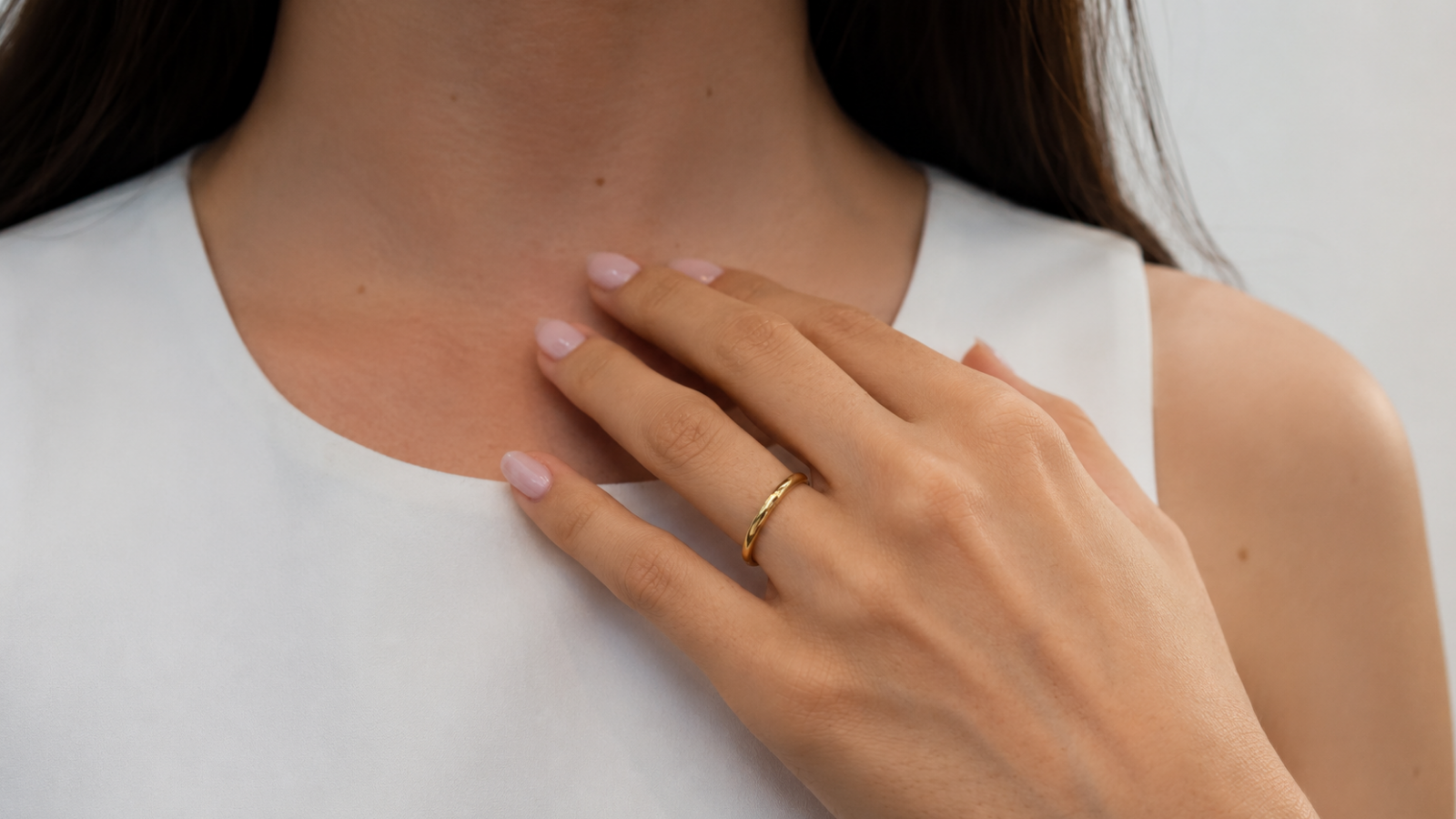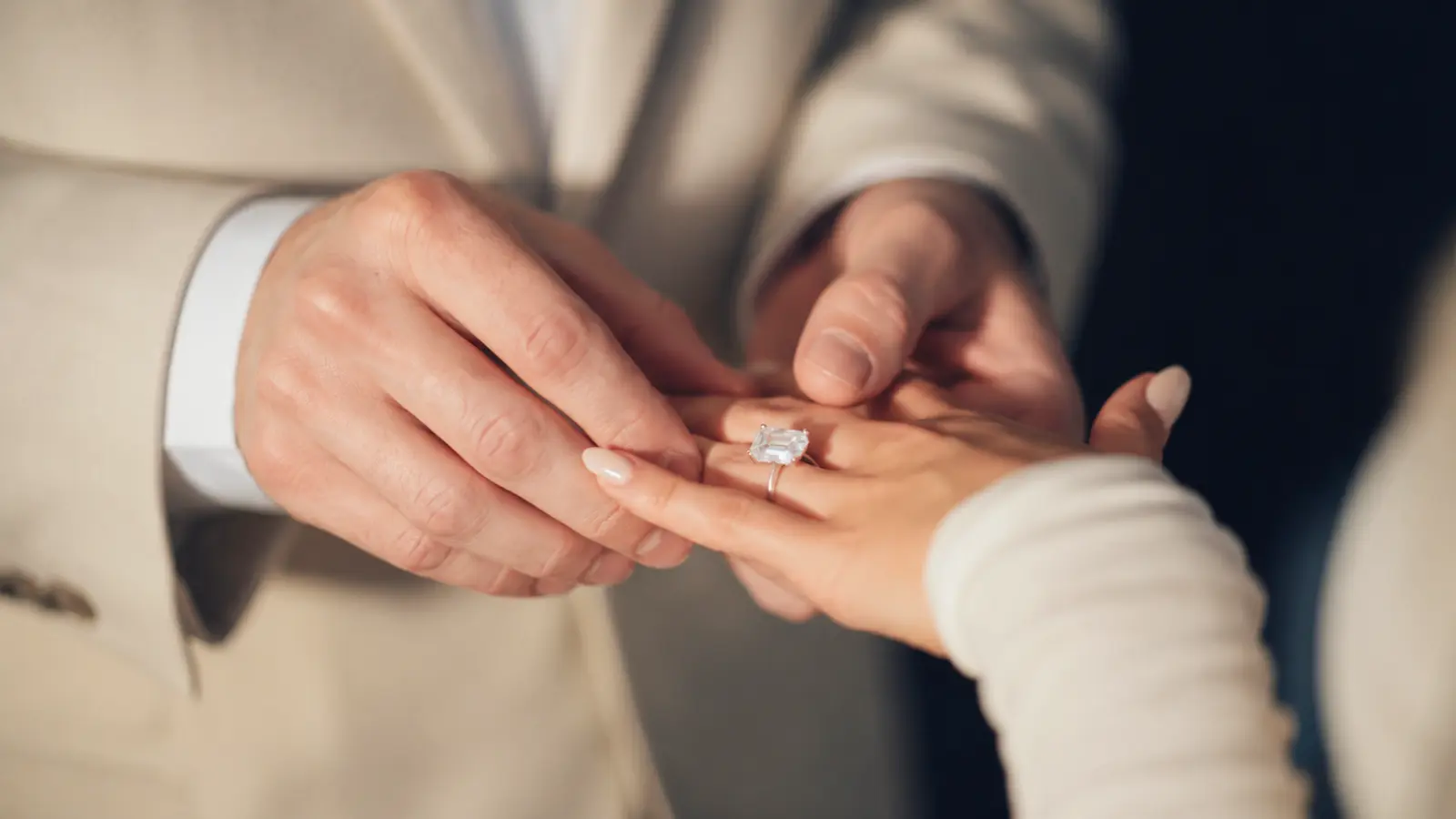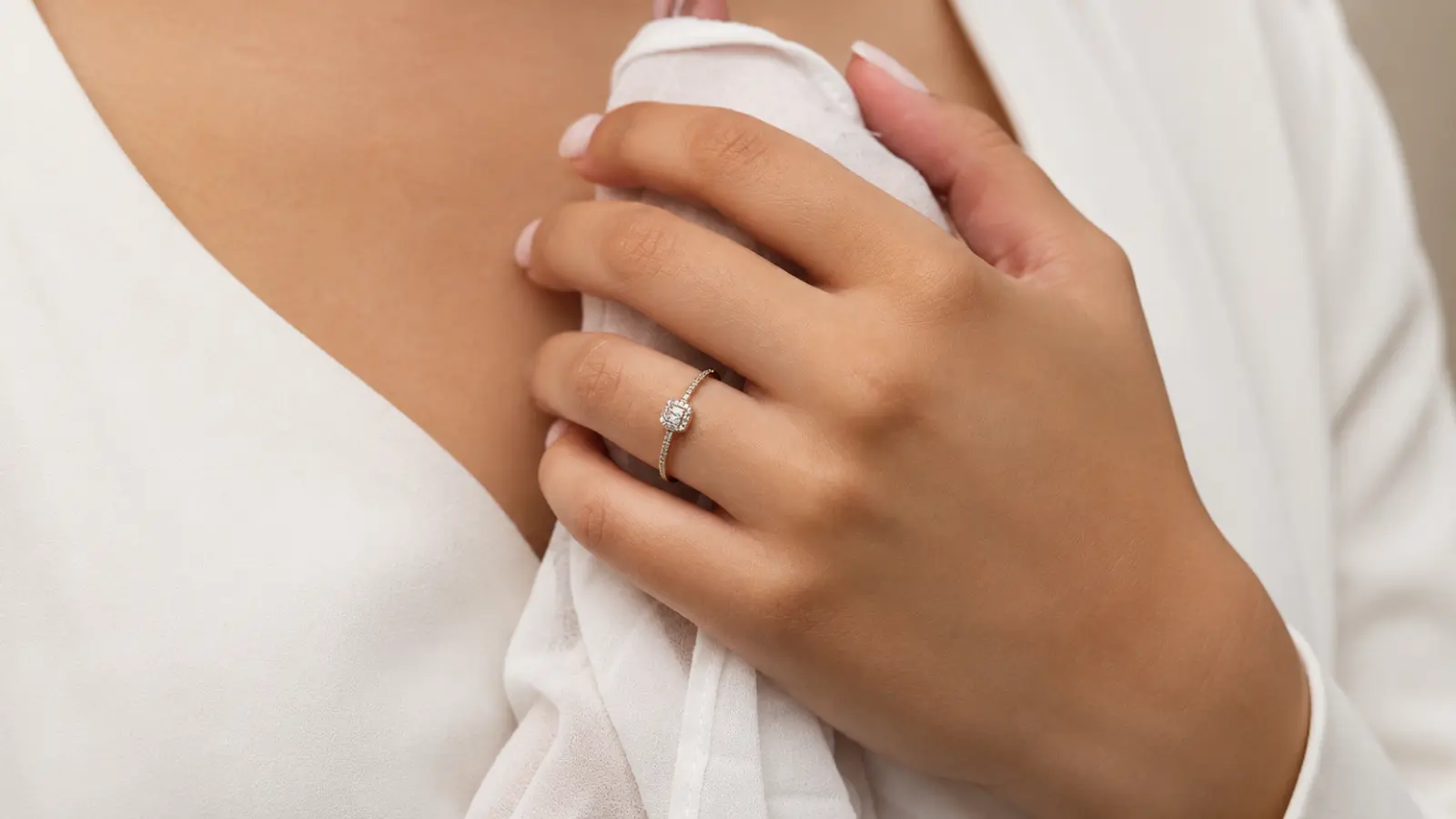
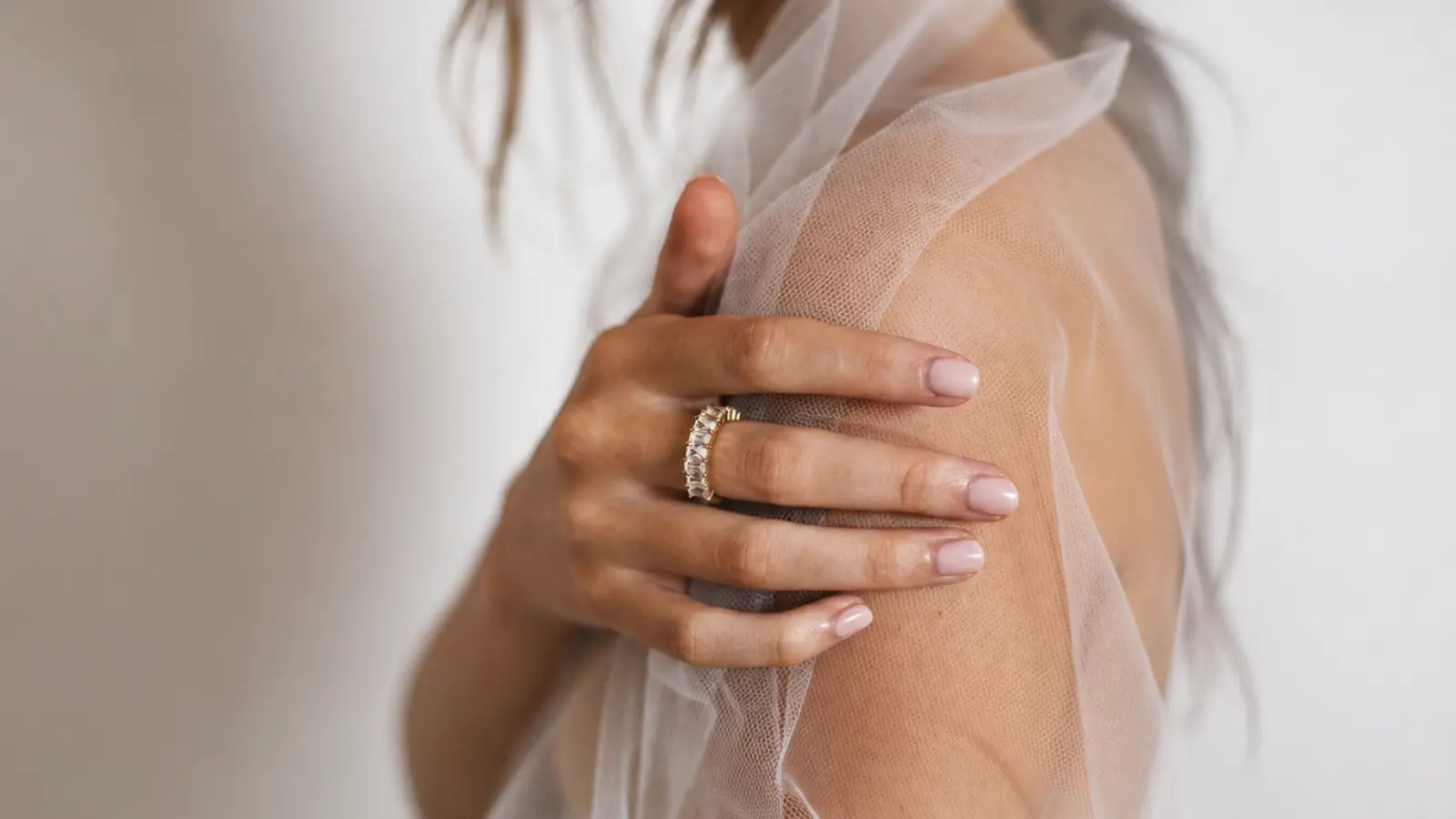
Diamond wedding rings for women are wedding rings or bands designed with diamonds set into the ring itself, creating extra brilliance while still representing the commitment and symbolism of marriage. Unlike most diamond engagement rings, which focus on a center stone, diamond wedding rings usually feature smaller diamonds arranged across the band.
Choosing the right diamond wedding ring is about more than finding the most sparkle. The setting style, diamond placement, durability, maintenance, and how the ring pairs with an engagement ring all affect how comfortable and practical it feels during everyday wear.
This guide explains the most popular diamond wedding rings for women, including pavé bands, channel settings, eternity bands, lab-grown vs natural diamonds, maintenance, and how to choose a diamond wedding ring that fits your lifestyle.
Diamond Wedding Rings vs. Diamond Wedding Bands
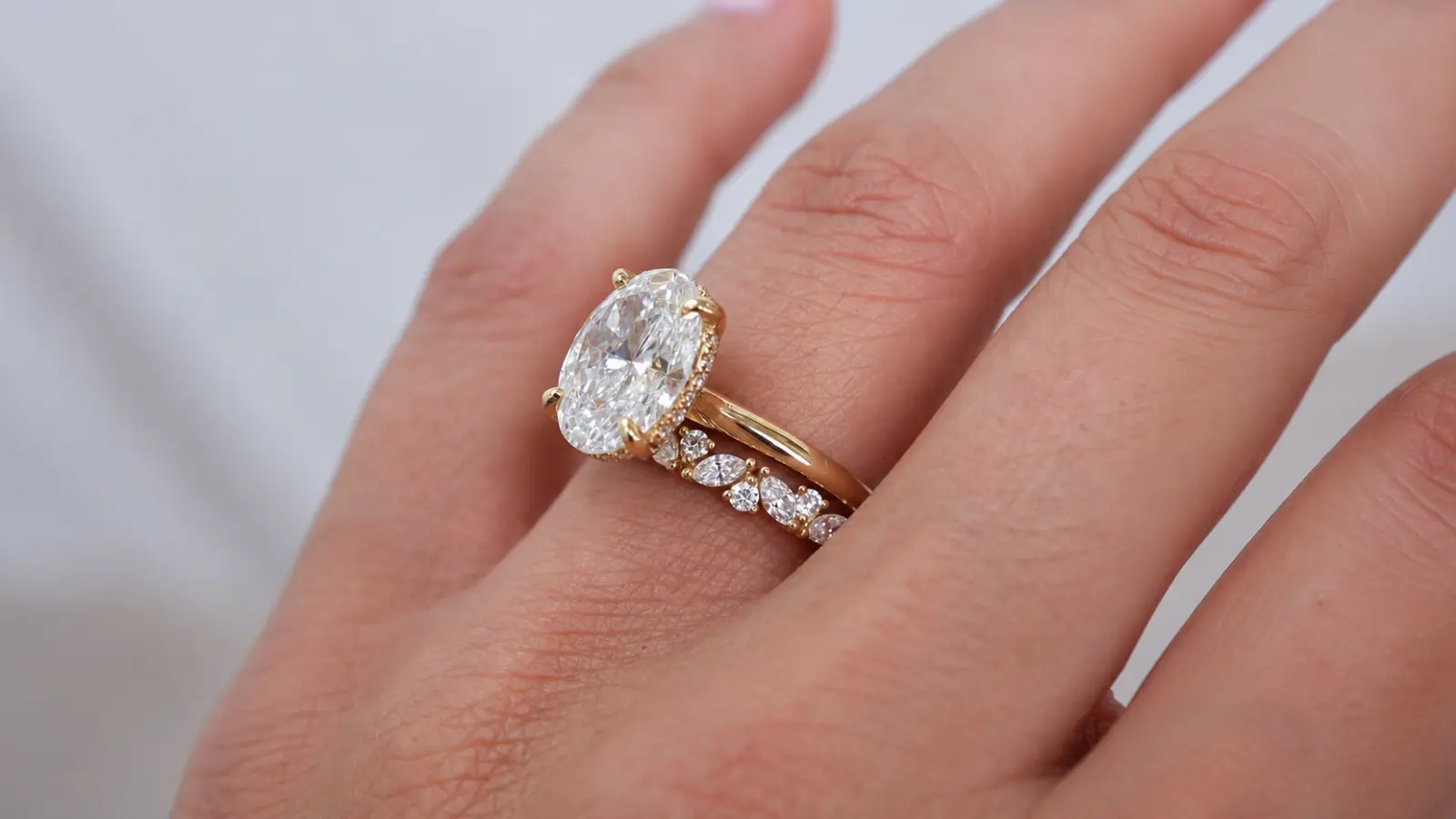
Before getting into setting styles, it is worth clearing up the distinction that causes the most confusion: “diamond wedding ring” and “diamond wedding band” are, in nearly every practical sense, the same thing. The more meaningful distinction is between a diamond wedding ring and a diamond engagement ring — and this is where design logic genuinely diverges.
How an engagement ring is built
A diamond engagement ring is typically architected around a single center stone — the diamond is the point of the ring, raised in a setting (most often prongs) specifically to let light reach it from as many angles as possible and to make it the visual focus of the hand. Everything else about the ring tends to support that one stone: the band is often simpler, narrower, or designed to recede slightly so the center stone reads as the main event.
How a diamond wedding ring is built differently
A diamond wedding ring takes the opposite approach. There is typically no single dominant stone — instead, diamonds are distributed across the band in a continuous or near-continuous arrangement, and the overall effect comes from the band as a whole rather than from any one stone. This is part of why a diamond wedding band pairs so naturally with an engagement ring: the two do not compete for the same visual role. The engagement ring’s center stone remains the focal point, while the wedding band’s diamonds add a continuous shimmer that frames it without trying to match it.
This distinction also explains why women whose engagement ring has no diamond at all — a colored stone, or no engagement ring — often gravitate toward a diamond wedding band specifically. Without a center-stone diamond elsewhere on the hand, the wedding band becomes where that traditional diamond sparkle lives, distributed across the band rather than concentrated in one spot. For a broader look at how these two ring types relate to each other, the engagement ring vs. wedding ring guide covers the full comparison.
Eternity Wedding Bands
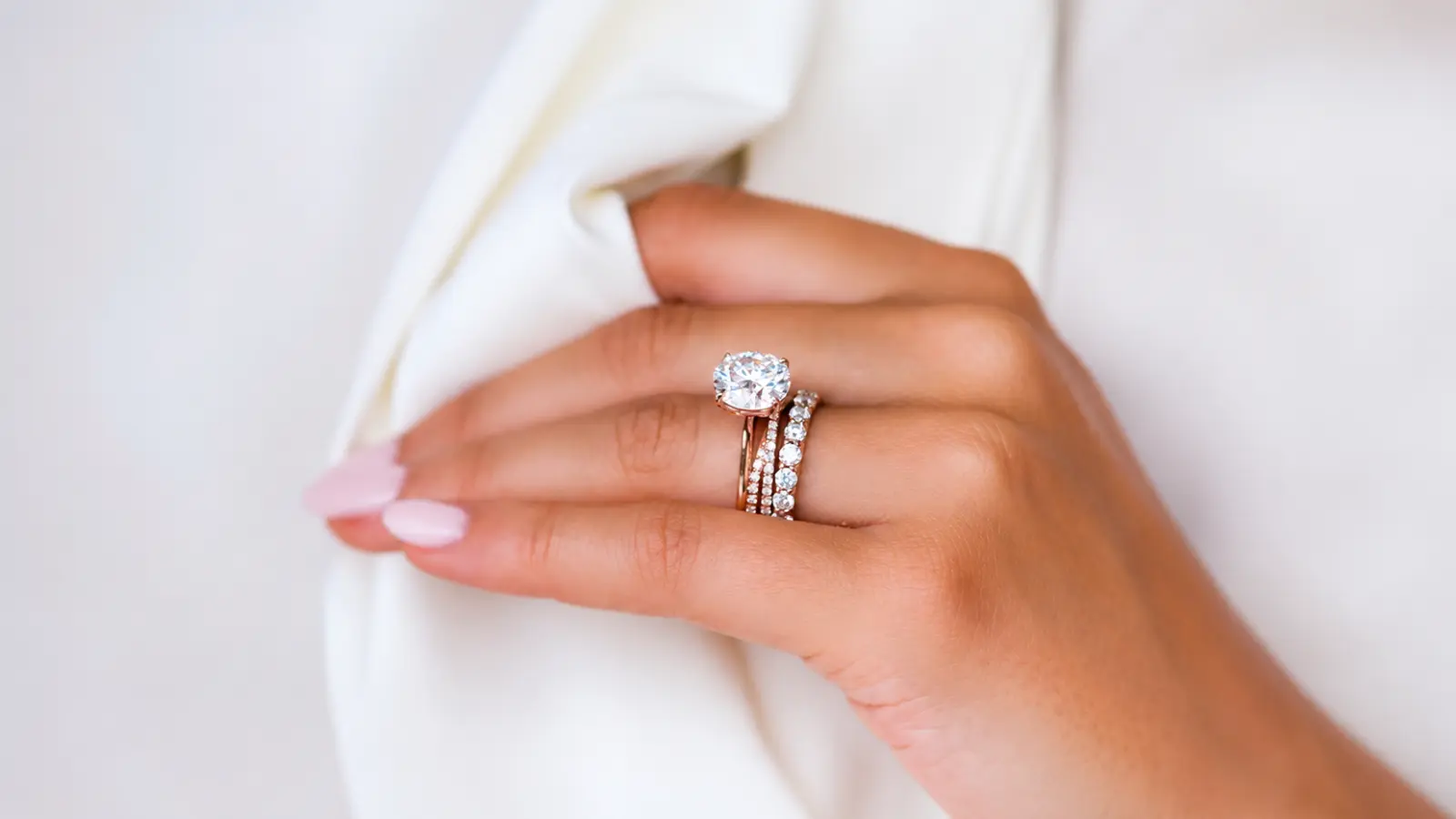
An eternity band takes the “distributed diamonds” concept to its fullest expression: diamonds set continuously around the entire circumference of the band, with no plain metal section anywhere. The name reflects the idea directly — an unbroken circle of stones echoing the unbroken circle of the ring itself, a visual reinforcement of the same symbolism that gives wedding rings their circular shape in the first place.
Full eternity bands
From the front, a full eternity band and a band with diamonds only across the top look essentially the same — the visual difference only becomes apparent when the ring is turned to view the underside. What matters more in practice is what happens at the jeweler’s bench. Because a full eternity band has no plain metal anywhere, wedding ring resizing becomes much more difficult and sometimes not possible without removing stones near the section that needs to be cut and rejoined — which can affect how those stones sit afterward and may add meaningful cost.
Half-eternity bands
Half-eternity bands exist as a distinct, frequently chosen alternative: diamonds run across roughly the top half of the band — the portion visible when the hand is at rest — while the underside remains plain metal. For most women, a half-eternity band delivers the visual effect they actually want (a ring that appears fully set from any normal viewing angle) while leaving a jeweler the plain metal needed to resize using standard methods.
Full eternity bands make the most sense for women who are confident in their ring size long-term and who have a specific reason to want diamonds genuinely continuous around the entire band. For most others, a half-eternity band offers nearly the same look with considerably more flexibility down the road — particularly relevant given that ring size can shift over years due to weather, weight changes, or pregnancy.
Pavé Diamond Wedding Bands
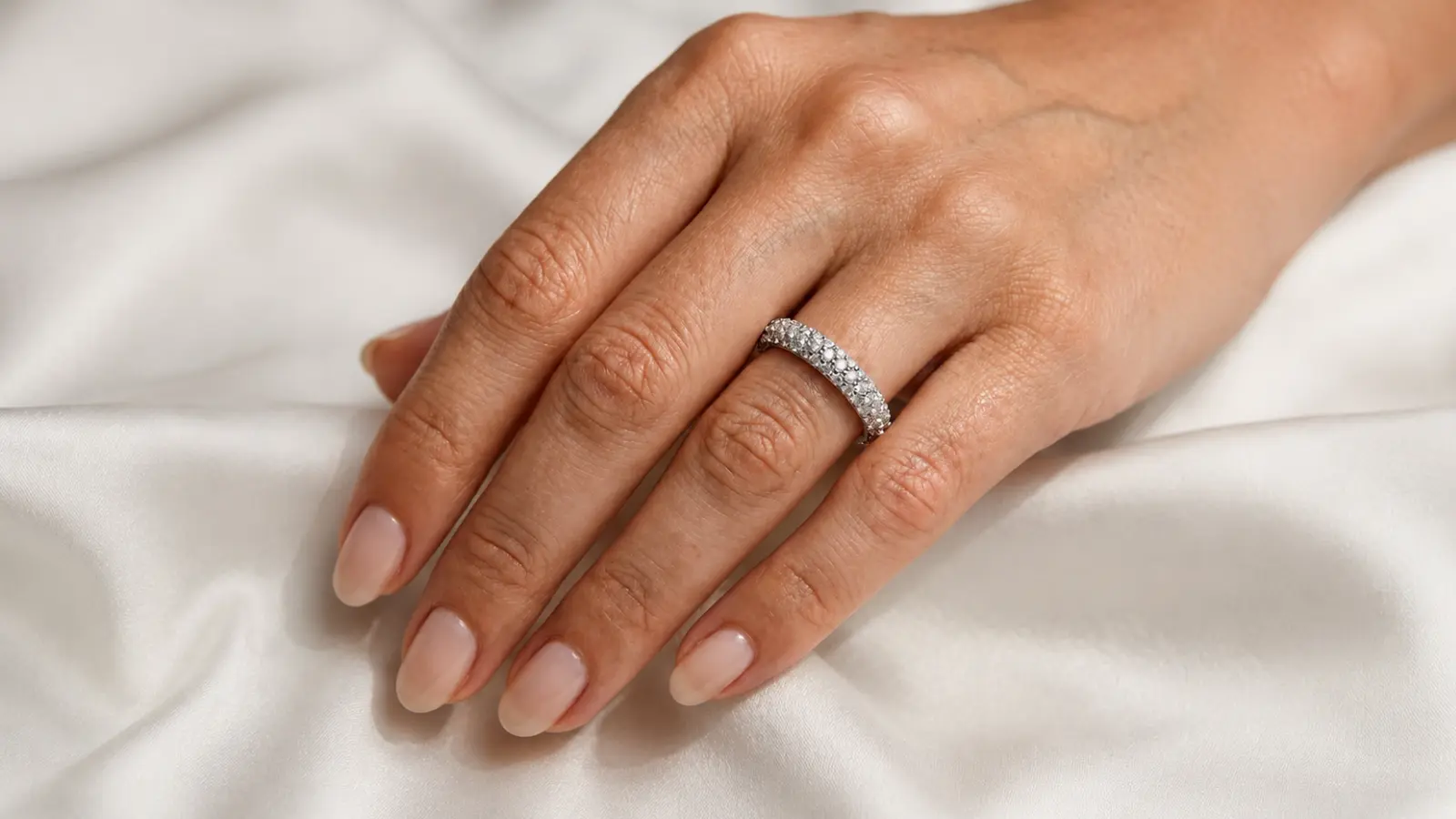
Pavé setting is, for many women, the style that comes to mind first when picturing a “diamond wedding band” — and it is worth understanding both why it has that reputation and what it is actually like to wear.
What makes pavé distinctive
In a pavé setting, small diamonds are held in place by tiny prongs, often shared between adjacent stones rather than each stone having its own complete set. The stones are packed closely together with very little visible metal between them — the term comes from the French word for “paved,” describing a surface that looks almost continuously covered. Because so much of each stone’s surface is exposed to light from multiple directions, pavé bands tend to produce more sparkle, and more sparkle from a wider range of angles, than other setting styles using diamonds of comparable size.
The practical trade-offs
That same quality — small stones, minimal metal, many tiny prongs — also defines pavé’s practical considerations. The prongs holding pavé diamonds in place are necessarily small, and small prongs can wear down gradually over years of contact with daily activities: typing, washing dishes, putting on gloves, anything involving friction against the ring’s surface. A worn prong does not typically cause a stone to fall out suddenly — more often, a stone becomes slightly loose and can be felt or noticed before it is lost, which is why periodic prong checks matter more for pavé bands than for other setting styles.
None of this means pavé bands are not practical — many women wear them daily for years without issue. It does mean that a pavé band rewards a woman who is comfortable with an annual jeweler check-in as part of her routine, in exchange for a level of continuous sparkle that other settings do not quite replicate. For a comparison of all major setting styles side by side, the women’s wedding bands guide covers channel, shared-prong, and bezel options in full detail.
Lab-Grown vs. Natural Diamonds
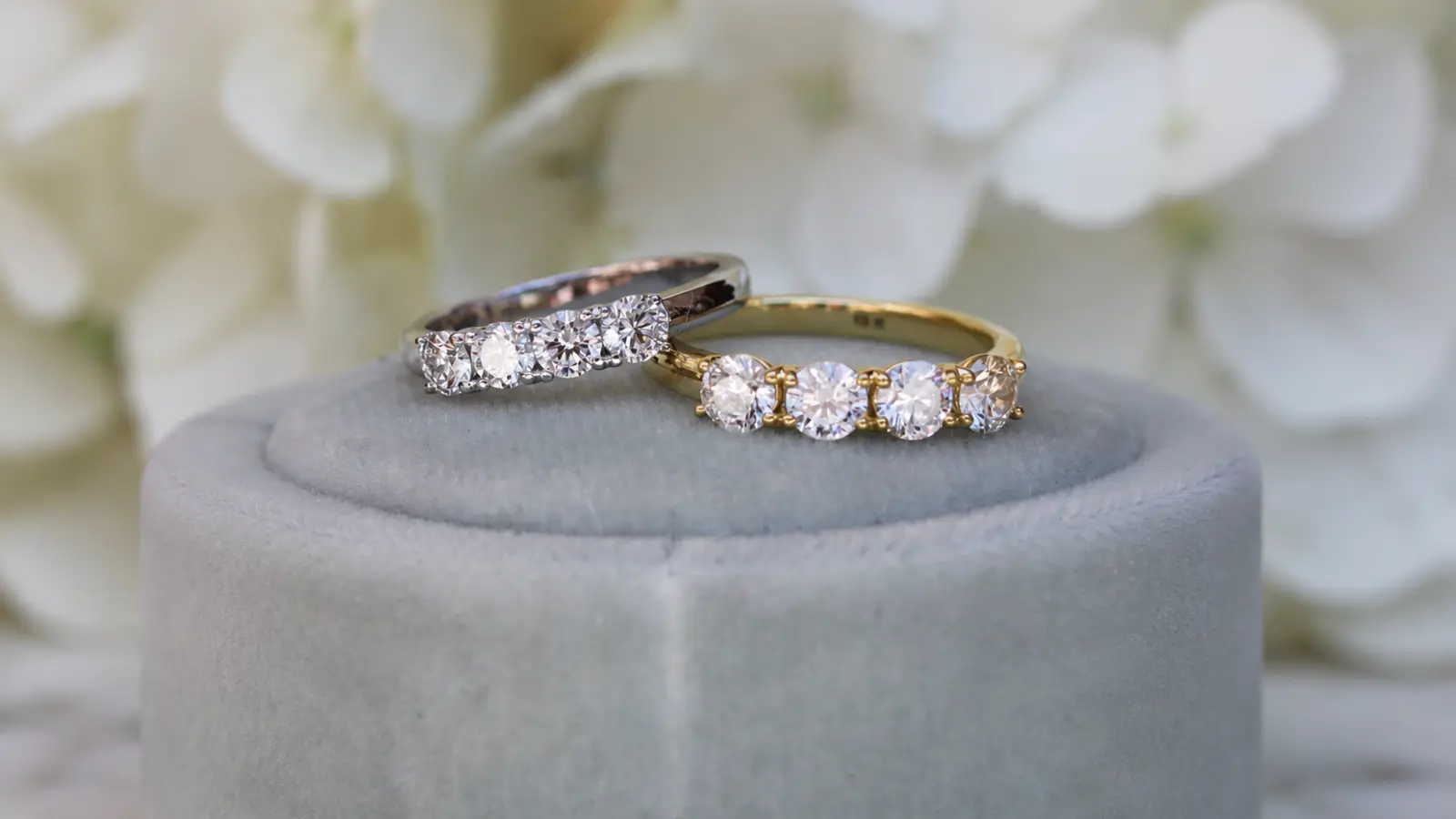
The lab-grown versus natural diamond decision has become more relevant to wedding bands specifically in recent years, largely because lab-grown diamonds have become widely available, well-regulated in terms of grading, and significantly more affordable — which matters more for a wedding band, where diamonds are often smaller and more numerous, than for a single engagement ring stone.
What the difference actually is
The most important fact to understand: lab-grown diamonds are not a different material. They are chemically identical to natural diamonds — pure carbon in the same crystal structure — and are graded using the same scales (cut, color, clarity, carat) by the same gemological laboratories. The difference is entirely about origin and formation. A natural diamond forms over a billion years or more under intense heat and pressure deep within the earth. A lab-grown diamond forms under similar conditions replicated in a controlled facility, over a period of weeks to a couple of months. The result, atom for atom, is the same substance.
What it means for a wedding band specifically
For a wedding band, where the practical priorities tend to be durability, daily wearability, and how the stones look and perform over years of wear, lab-grown diamonds perform identically to natural ones. A lab-grown diamond in a pavé or channel setting will hold up exactly as well, sparkle the same way, and require the same maintenance as a natural diamond of the same quality.
Where the decision comes down to something meaningful is cost, sourcing values, and — for some people — long-term considerations around rarity. Lab-grown diamonds are generally significantly less expensive than natural diamonds of comparable size and quality, which matters more for a wedding band since a band might contain anywhere from a dozen to several dozen individual stones.
Some women feel strongly about the sourcing transparency that lab-grown diamonds offer; others place value specifically on a stone’s natural origin independent of whether the result differs. Neither position is more “correct” — it is a values and budget decision layered on top of two materials that are, for all practical wearing purposes, identical.
Are Diamond Wedding Rings Practical?
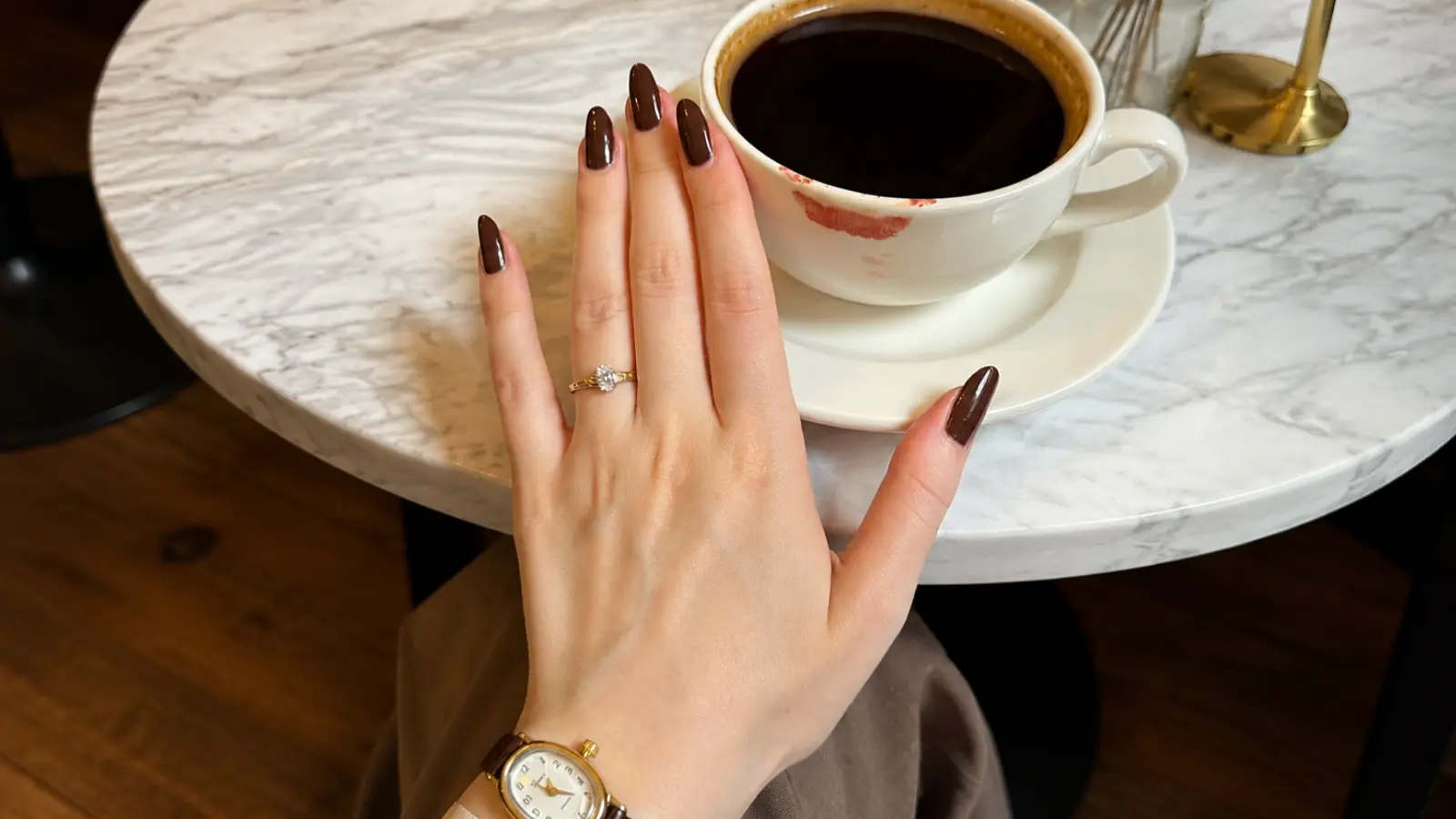
This is the question that tends to get skipped in favor of style discussions — and it is the one that actually determines whether a woman loves her ring five years in or finds herself reaching for a plain band on most days. The honest answer depends almost entirely on the setting style and what a woman’s hands actually do during a typical week.
The most practical settings for daily wear
Channel-set and bezel-set diamond bands are generally the most practical setting styles for daily wear. In both cases, nothing protrudes above the surface of the band — channel setting recesses stones between metal walls, while bezel setting surrounds each stone with a thin rim of metal rather than prongs. The result is a smooth profile with very few points where fabric, hair, or anything else can catch. These settings also tend to need less frequent professional attention, since there are no small prongs to wear down over time.
Pavé and shared-prong settings in daily life
Pavé and shared-prong settings are practical for the vast majority of daily activities but involve a small amount of ongoing care — primarily the annual prong check. For women whose routines involve a lot of manual work, frequent glove use, or activities with significant hand-to-surface contact (gardening, certain sports, manual trades), these settings are still wearable, but it is worth being realistic that they may need slightly more frequent jeweler visits than a channel-set or plain band would.
The factor that predicts satisfaction more than setting style
The clearest predictor of long-term satisfaction is how a woman already relates to the jewelry she wears daily, if any. A woman who already wears rings, bracelets, or watches without much thought and rarely notices them tends to adapt easily to a diamond band, regardless of setting. A woman who finds jewelry generally distracting, tends to remove rings during the day, or has a job involving frequent handwashing or manual tasks may find that setting style matters considerably more — which is exactly why it is worth thinking through before choosing, rather than after.
How to Choose a Diamond Wedding Ring for Everyday Wear
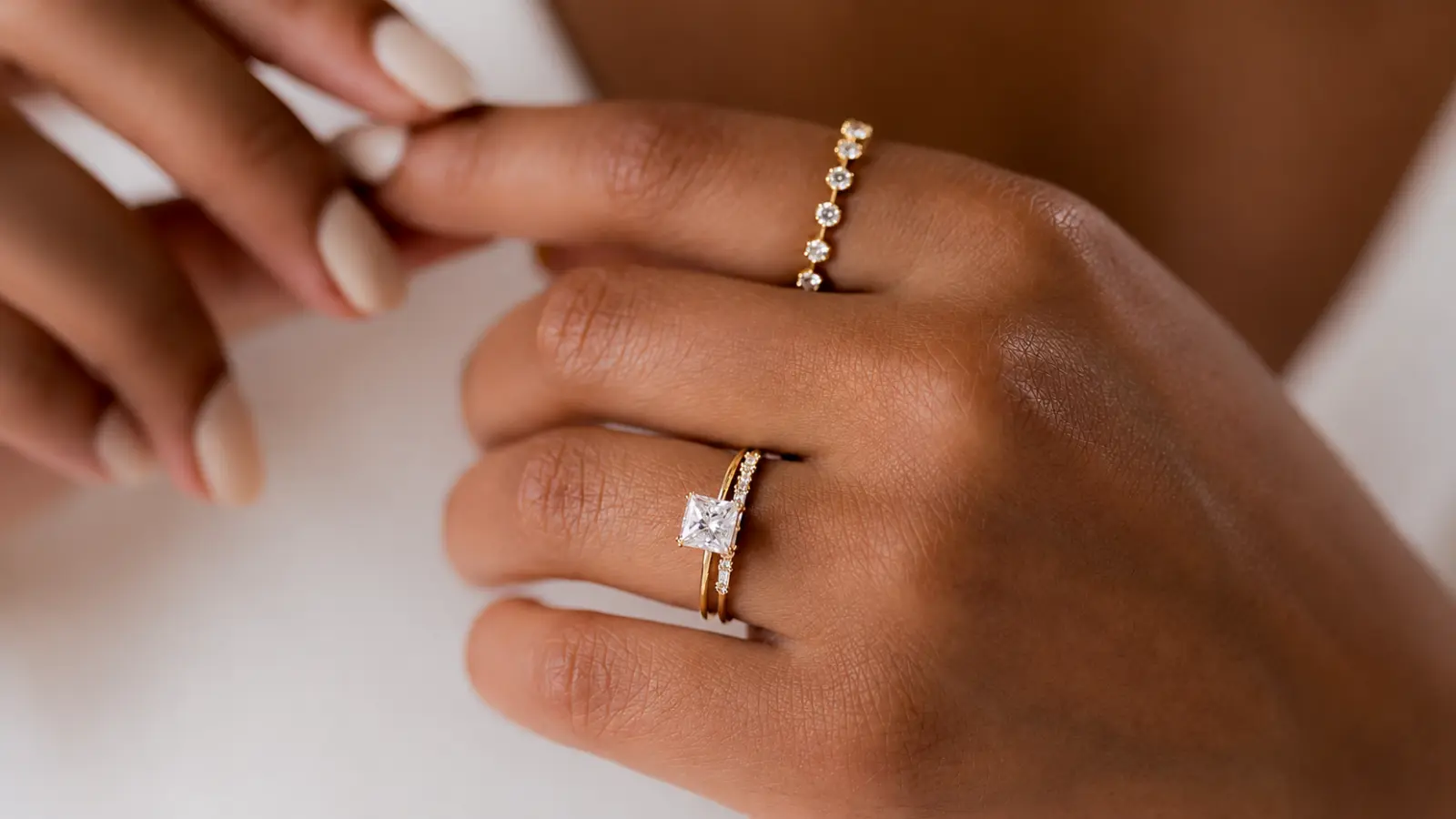
Bringing all of the above together, a few questions tend to cut through most of the decision-making. Working through them in order tends to be more useful than browsing designs and hoping one feels right.
What does a typical week look like for your hands?
Not the wedding day, not date nights — an ordinary Tuesday. Office work with a lot of typing, manual or active work, frequent handwashing, sports or hobbies that involve the hands directly: each of these points toward channel or bezel settings being the lower-maintenance choice. A more low-key daily routine leaves more room for pavé or shared-prong settings without much added consideration.
Will this ring be worn alone, stacked, or both?
If the diamond band will be stacked with an engagement ring most of the time, a thinner profile and a setting that complements rather than competes with the engagement ring’s center stone tends to work best — which often points toward pavé or channel settings rather than anything with its own large stones. If the band needs to function as a standalone piece on days the engagement ring stays home, a slightly wider band or a half-eternity style tends to read as more complete on its own.
Full eternity or half-eternity?
Unless there is a specific personal reason to want diamonds genuinely all the way around, half-eternity gives nearly the same look with considerably more flexibility if the ring ever needs to be resized. This is a meaningful consideration given how many things — including time itself — can affect ring size over the years.
Lab-grown or natural?
For a wedding band specifically, this is largely a budget and values decision rather than a quality decision, since the two are physically identical. Lab-grown diamonds often make it possible to get a more substantial-looking band — more stones, or larger stones — for the same budget that would buy a more modest natural-diamond design. Neither is the “right” choice in any objective sense; both result in a real diamond ring that wears identically over time. For more on how a diamond band pairs with an engagement ring once both are on the same finger, the guide on how to wear your wedding ring and engagement ring together covers stacking order and fit in detail.
Diamond Wedding Ring Inspiration
Diamond wedding rings for women come in many styles, from delicate pavé bands to timeless eternity rings and modern diamond designs. Explore our inspiration board for diamond wedding bands, sparkling ring stacks, classic styles, and elegant ideas to help you find a ring that fits your everyday life.
Choosing a Diamond Wedding Ring for Everyday Life
A diamond wedding ring is not only defined by how much it sparkles, but by how naturally it fits into your everyday life. The setting style, diamond placement, maintenance, and how it pairs with your other rings all help determine which design will feel right for years to come.
Whether you choose a delicate pavé band, a classic eternity ring, a channel-set design, or a diamond ring you wear on its own, the best choice is one that balances beauty, comfort, and the moments you will wear it through.
Frequently asked questions (FAQ)
What are the best diamond wedding rings for women?
The best diamond wedding rings for women depend on lifestyle, personal style, and how the ring will be worn every day. Popular options include pavé diamond bands, channel-set bands, eternity bands, and half-eternity bands. The best choice balances sparkle, comfort, durability, and how well the ring pairs with an engagement ring.
Is a diamond wedding ring the same as a diamond engagement ring?
No. A diamond engagement ring usually features a main center stone and represents the proposal, while a diamond wedding ring is exchanged during the wedding ceremony and typically has smaller diamonds set along the band. Many women wear both together after marriage.
Are diamond wedding rings worth it?
Diamond wedding rings can be worth it for people who love the extra sparkle and want a ring that feels special while still being wearable every day. However, the best wedding ring is not always the one with the most diamonds — comfort, quality, setting style, and lifestyle are more important than choosing the most expensive option.
Can you wear a diamond wedding ring every day?
Yes. Diamond wedding rings are designed for daily wear, but some settings require more care than others. Low-profile settings like channel or bezel designs are usually easier for active lifestyles, while pavé and prong settings may need more regular checks to keep stones secure.
What is the difference between pavé and channel diamond wedding bands?
Pavé diamond bands use tiny prongs to hold small diamonds close together, creating a more sparkling appearance. Channel-set bands place diamonds between two metal edges, creating a smoother surface that is often more practical for everyday wear.
Is an eternity or half-eternity diamond band better?
Neither option is automatically better. A full eternity band has diamonds around the entire ring for a continuous design, while a half-eternity band has diamonds only across part of the band. Many people choose half-eternity bands because they create a similar look while allowing easier resizing.