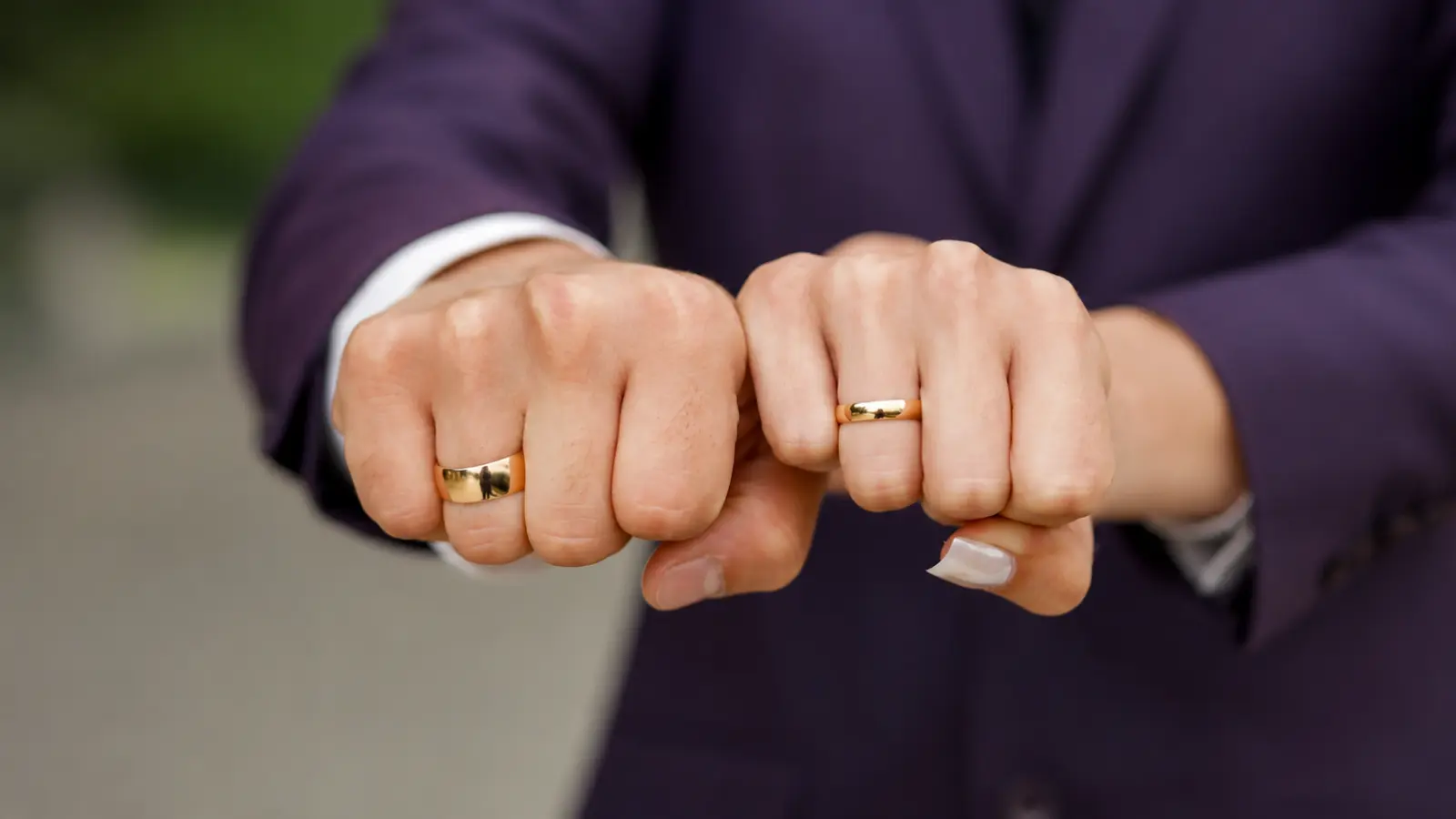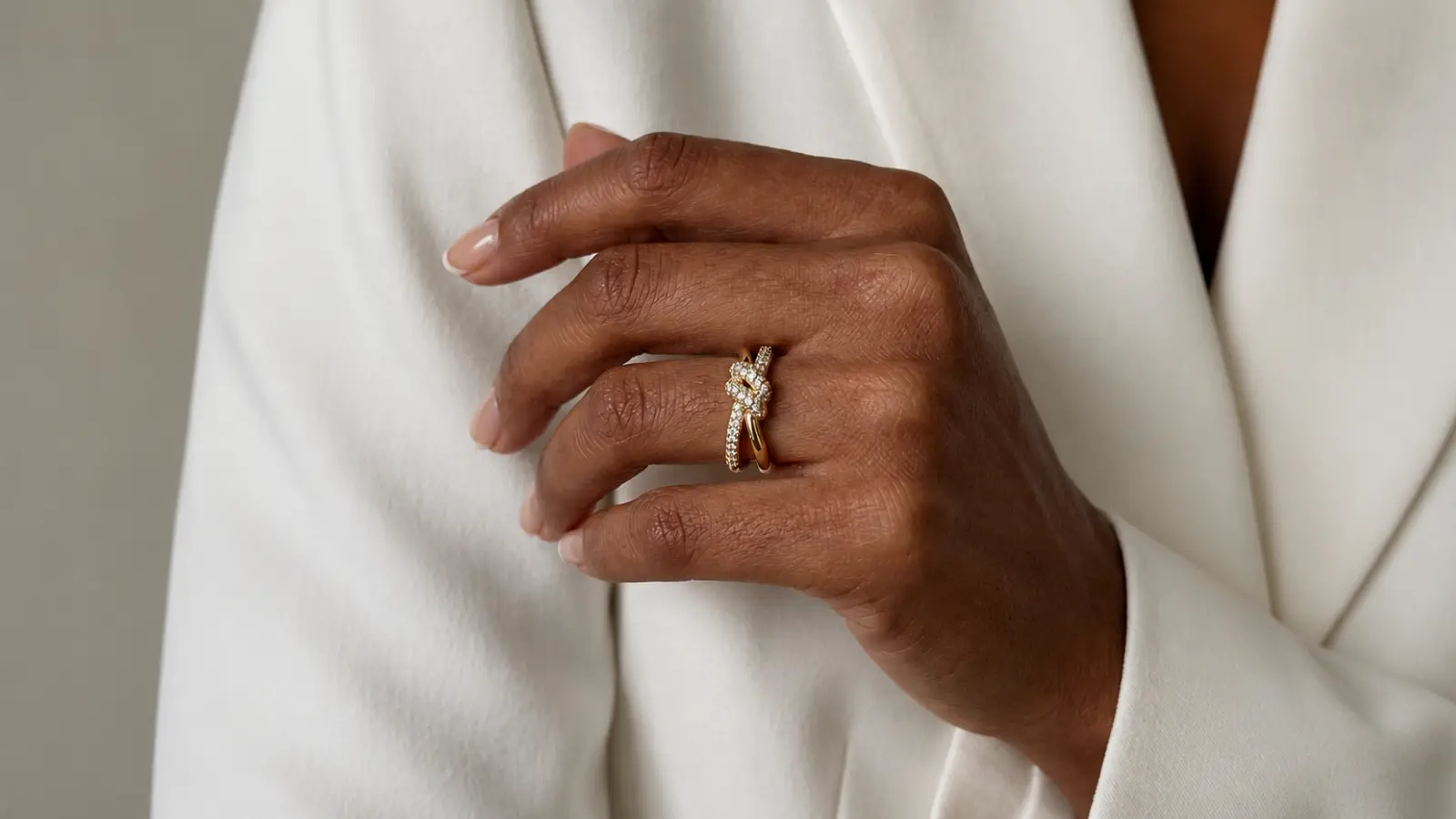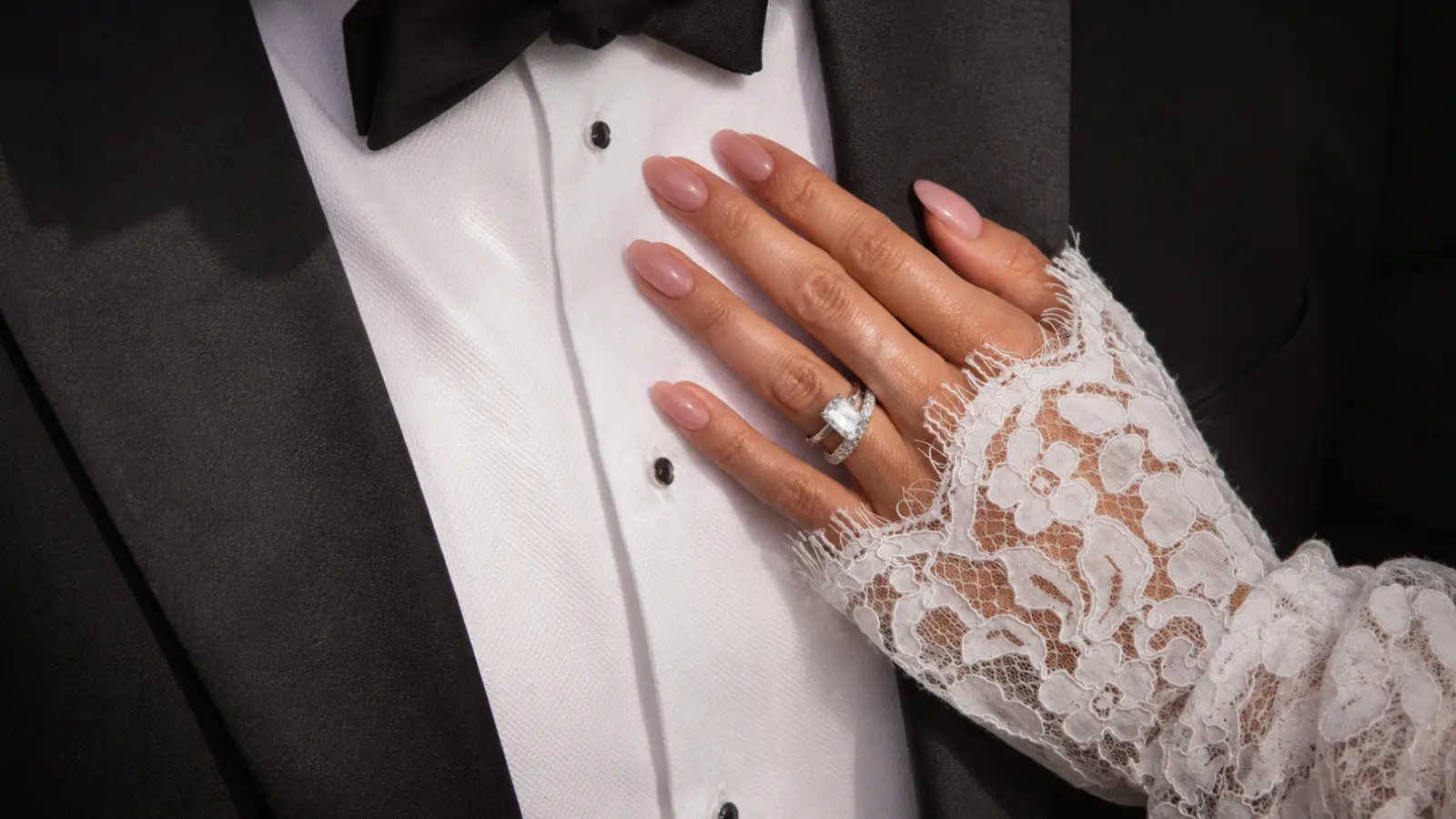
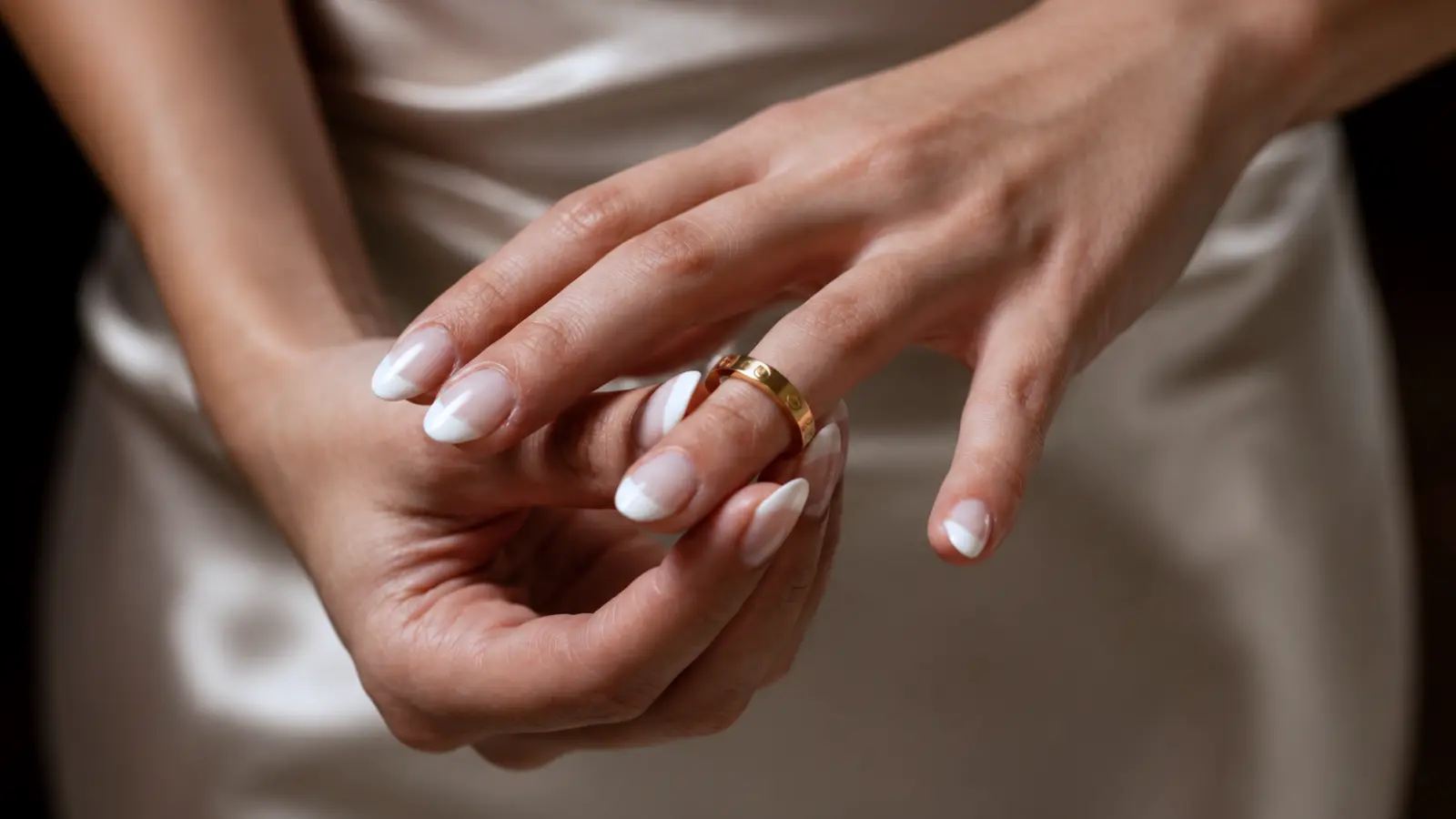
Women’s wedding bands are rings exchanged during a wedding ceremony and designed to represent marriage, either worn alone or paired with an engagement ring. They range from simple metal bands to diamond, eternity, curved, and stackable designs, with each style offering a different balance of appearance, comfort, and everyday wear.
Choosing the right wedding band is not only about finding a beautiful design. The shape, width, stone setting, and how the band fits beside an engagement ring can all affect how the ring looks and feels over years of daily use.
This guide explains different types of women’s wedding bands, including classic styles, diamond bands, eternity and half-eternity designs, curved bands, different widths, and how to choose a band that works with your engagement ring and lifestyle.
Classic Women’s Wedding Bands
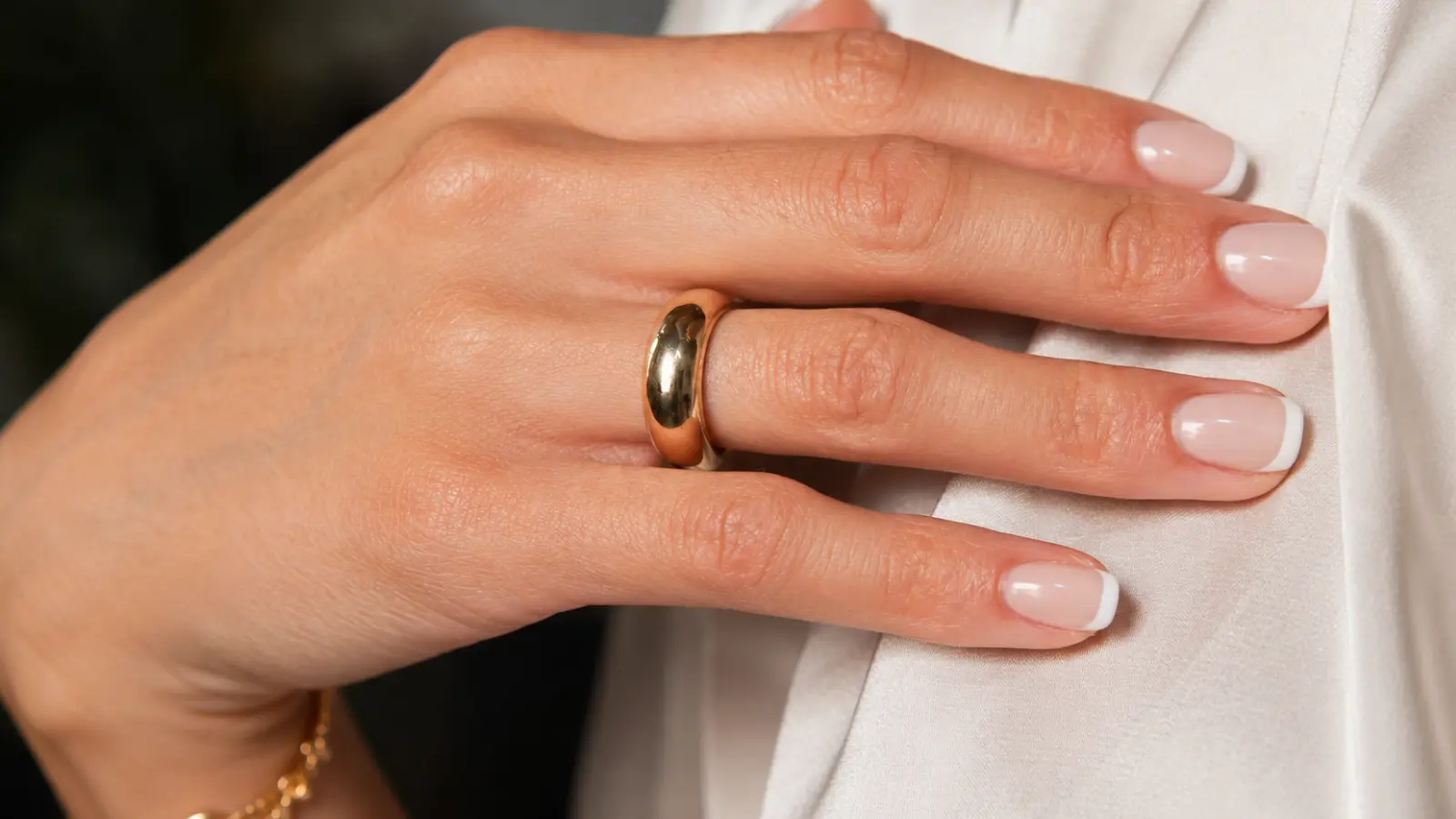
A classic band, in its purest form, is a plain circle of metal — no stones, no surface decoration beyond the finish applied to the metal itself. On the surface, it’s the category that seems to offer the least to discuss. In practice, “plain band” contains meaningful variation that’s worth understanding before ruling it out or settling for whatever is closest.
Profile: how the band’s cross-section is shaped
The profile of the band — the shape of its cross-section — is the first variable. A flat profile has straight sides and a flat top, giving a band a more architectural, modern look. A court or comfort-fit profile is rounded on both the outside and inside, which tends to feel smoother against the skin and slide on and off more easily. A half-round profile is rounded on the outside but flat on the inside, sitting between the two. These profile differences are subtle in a photograph but noticeable on the hand, particularly over years of continuous wear.
Surface finish: how the metal is treated
A high-polish finish is the traditional, reflective shine most people picture by default. A brushed or matte finish has a soft, non-reflective texture that shows fingerprints and everyday marks less visibly — a practical advantage for a ring worn daily. A hammered finish has a deliberately textured, faceted surface that gives an otherwise simple band a handcrafted quality. Some bands combine finishes — a brushed center with polished edges, for example — which adds visual interest without introducing any stones.
Edge treatment: the detail that changes a band’s character
Edge treatment is the smallest variable, but it shifts a band’s personality more than its size would suggest. A milgrain edge — a thin row of tiny beaded detail along the border — gives a plain band a vintage quality. A beveled edge, where the corners are angled rather than sharp, gives a more tailored, contemporary look. A plain, unadorned edge keeps the focus entirely on the metal and its finish.
The combination of profile, finish, and edge gives classic bands more range than they first appear to have. A plain band done thoughtfully often photographs and wears better over decades than a more elaborate design that was chosen primarily because it felt like more of an “occasion” ring.
Diamond Wedding Bands for Women
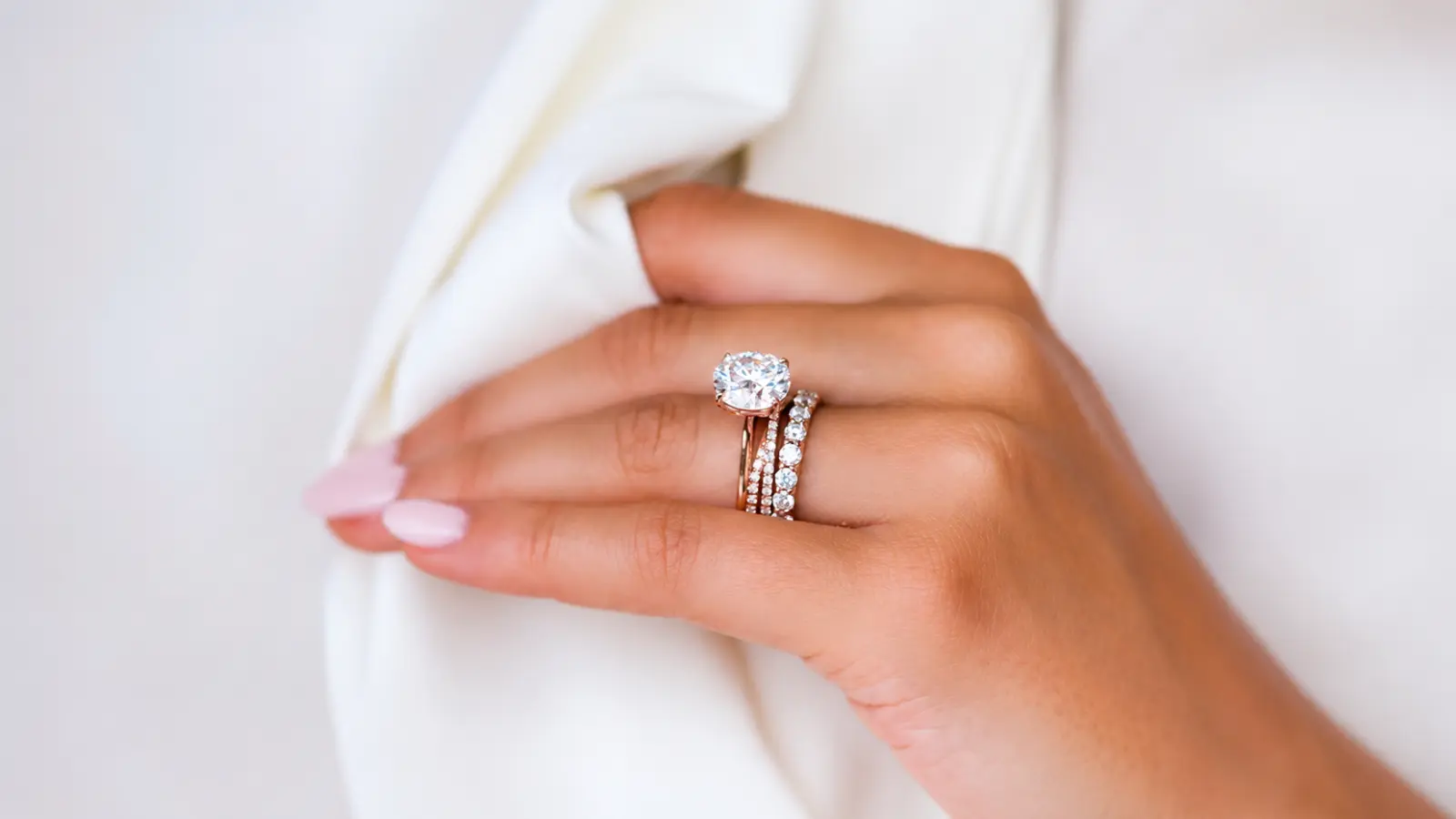
Diamond bands share many design principles with diamond wedding rings, especially when sparkle becomes the primary design feature. The setting style is what defines how a diamond band looks and wears — more than the size or number of the stones themselves.
Pavé setting
Pavé setting uses very small diamonds held in place by tiny shared prongs, packed closely together so the metal between stones is minimal. The effect is a surface that looks almost continuously covered in light — the term comes from the French word for “paved.” Pavé bands tend to sparkle from more angles, but the small prongs require periodic checking: any prong that wears down slightly can eventually let a stone loosen, so a yearly check with a jeweler is worth adding to the maintenance routine.
Channel setting
Channel setting holds stones between two parallel walls of metal, with no prongs visible at all. This gives channel-set bands a smoother, more streamlined profile — nothing protrudes above the surface of the band — which makes them more snag-resistant during daily activities. The trade-off is that channel-set stones sit slightly recessed, so they can appear marginally less bright than pavé stones of the same quality, since less light reaches them from the sides. For women whose daily wardrobe includes delicate fabrics or who work frequently with their hands, channel setting tends to be the more practical choice.
Shared-prong setting
Shared-prong setting sits between the two styles — stones are held by prongs, but adjacent stones share prongs with each other rather than each stone having its own full set. This reduces the amount of visible metal compared to traditional prong setting while still allowing more light to reach each stone than channel setting does. It’s a common middle-ground choice for women who want noticeable sparkle without the maintenance demands of a full pavé surface.
Eternity vs. Half-Eternity Bands
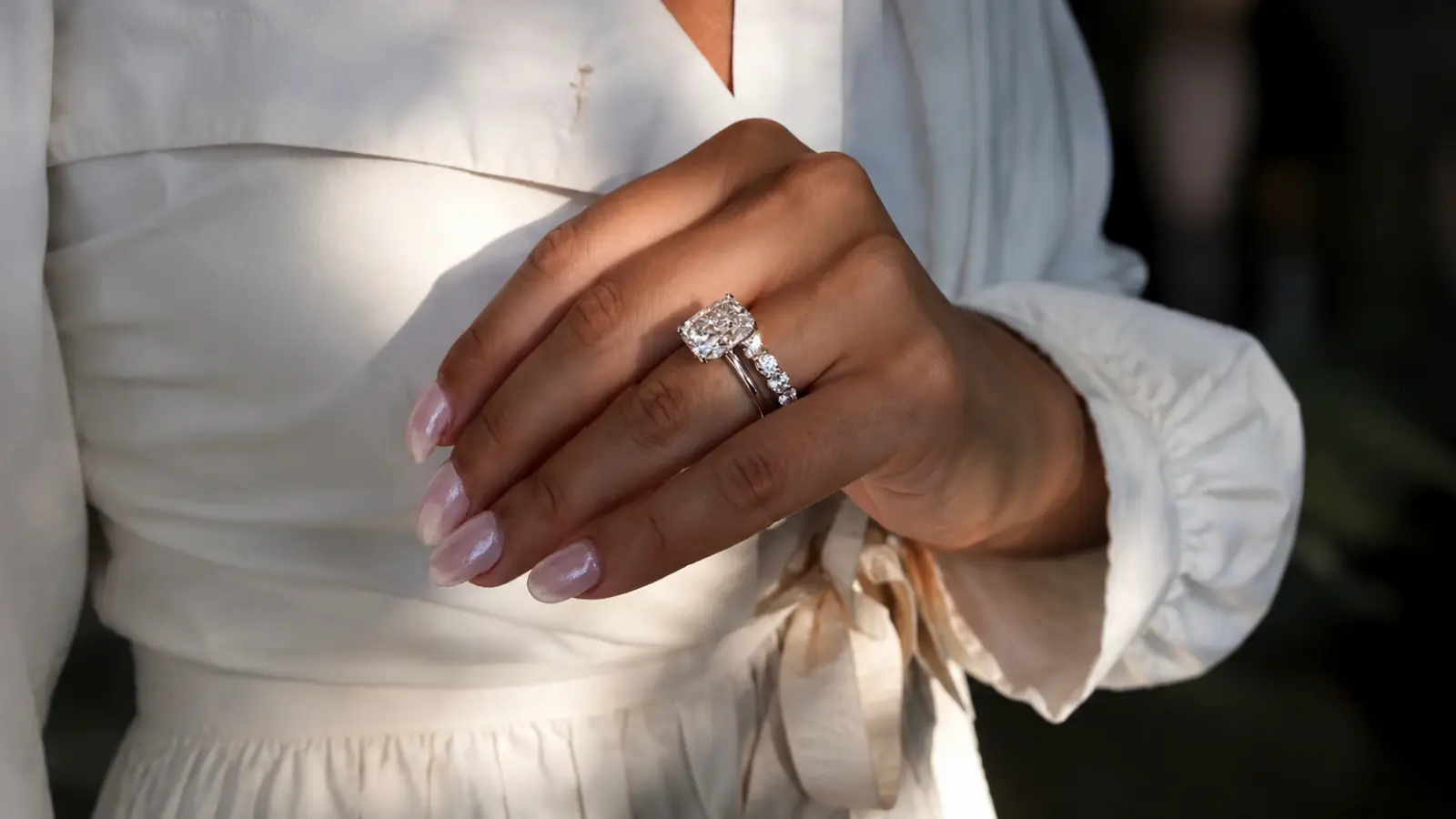
Eternity bands extend the idea of a diamond band to its logical conclusion: instead of stones running across only the visible front portion, they continue all the way around the entire circumference of the ring. The name reflects the symbolism — an unbroken circle of stones mirroring the unbroken circle of the band itself. The choice between a full and half-eternity band is almost entirely a practical one.
Full eternity bands
A full eternity band has stones set continuously, with no plain metal section anywhere around the ring. Visually, the ring looks complete and finished from every angle — there is no “back” of the ring that looks different from the front. The trade-off is practical: because stones occupy the entire band, resizing a full eternity band is difficult and sometimes impossible without removing or resetting stones near wherever the metal needs to be cut and rejoined. For women who are confident in their ring size and don’t anticipate future adjustments, this is rarely a problem in practice. It becomes relevant for women anticipating pregnancy, significant weight changes, or who are simply not yet certain of their permanent size.
Half-eternity bands
A half-eternity band sets stones across roughly the top half of the ring — the portion visible when the hand is at rest — while the bottom portion remains plain metal. From the front, a half-eternity band can look nearly identical to a full eternity band. The difference becomes meaningful at the jeweler’s bench: that plain bottom section gives room to cut, adjust, and resize using standard techniques, without disturbing any stones. For most women, a half-eternity band offers the visual effect they’re looking for while preserving the ability to consider wedding ring resizing later if needed.
Curved and Contoured Wedding Bands
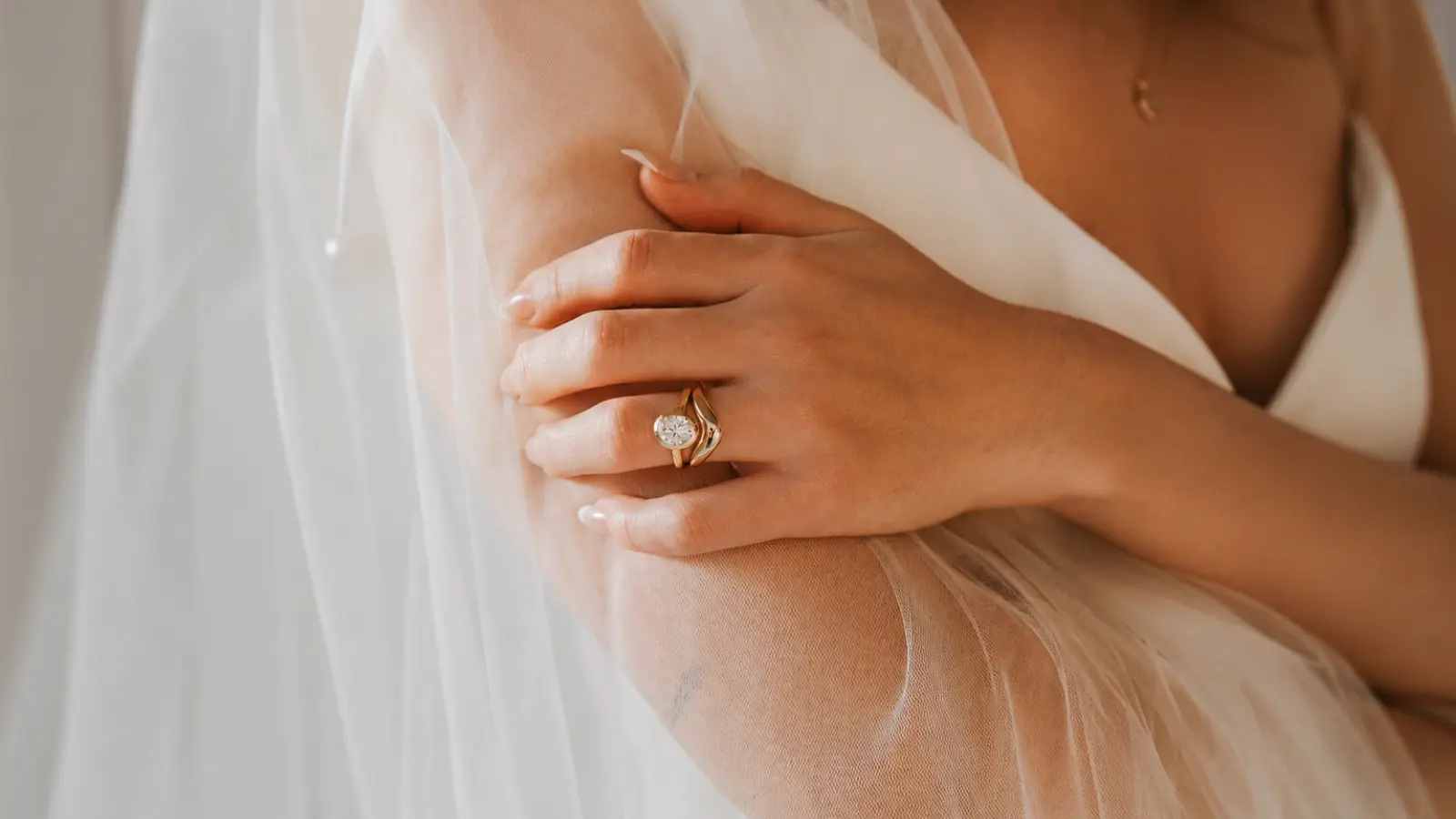
A curved or contoured band is shaped — through a notch, a dip, a gentle wave, or a more pronounced cutout — to fit around the setting of an engagement ring so the two rings sit flush against each other when worn together. This style exists to solve a specific, very common problem.
Why curved bands exist
Many engagement ring settings — particularly those with raised prongs, side stones, halos, or vintage-inspired silhouettes — have a profile that doesn’t sit flat against a straight-edged band. Worn side by side, a straight band and a raised engagement ring setting can leave a visible gap that’s not just distracting but also practical: dirt and lint collect in that gap, and the gap itself can catch on things more than either ring would alone.
Choosing a contoured band
Contoured bands are most often designed with a particular engagement ring style in mind. A curve cut for a classic solitaire with a simple four-prong setting will look and fit differently than a curve designed for a halo setting, which has a wider base, or a vintage-style ring with filigree detail along the sides. Because of this specificity, contoured bands are often chosen after the engagement ring is already settled — sometimes custom-shaped by a jeweler working from the engagement ring itself to ensure the curve matches exactly.
One thing worth knowing: a curved wedding band designed around one engagement ring generally won’t transfer well to a different one. If an engagement ring is ever reset or the center stone upgraded, a contoured band shaped for the original setting may no longer fit flush. For women planning a future reset, a straight-edged band — or one with a shallower curve — tends to be more versatile over time. The wedding ring sets guide covers matched and pre-coordinated pairs if you’re starting both rings from scratch.
Thin vs. Wide Wedding Bands
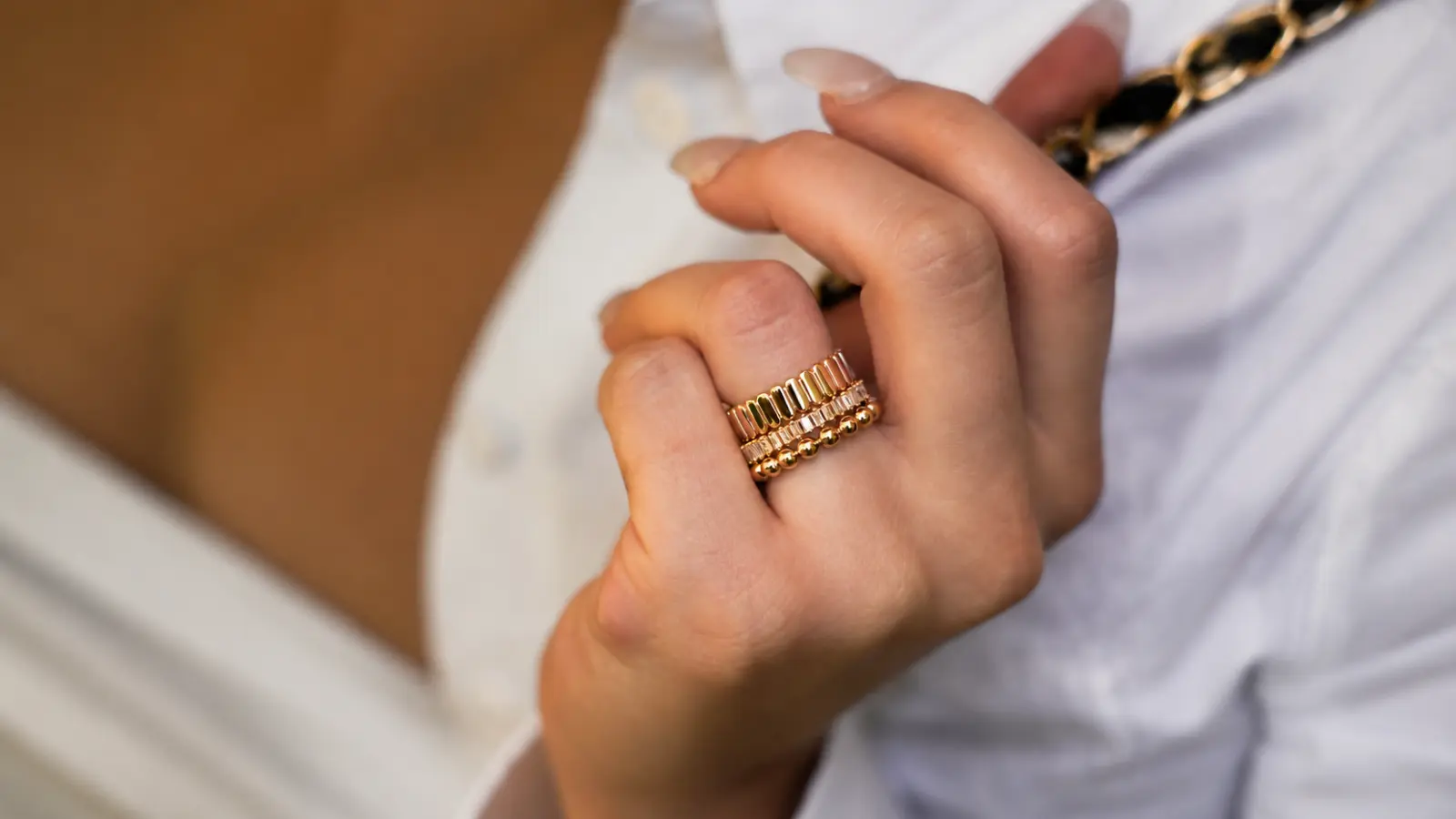
Width is one of the simplest variables in band design, but it has an outsized effect on both how a band looks and how it feels — and it interacts directly with the style choices already covered above.
Thin bands (1.5mm to 2.5mm)
Thin bands are the most common width for bands worn alongside an engagement ring. A thinner band takes up less visual space, which keeps the engagement ring as the focal point of the stack rather than competing with it. Thin bands are also the standard choice for creating stackable wedding rings, especially when additional bands may be added over time — when a woman plans to wear multiple rings together, thinner widths keep the overall stack from feeling heavy or bulky. For women adding rings over time (anniversary bands, personal purchases), starting thin leaves the most room to grow the stack without it becoming uncomfortable.
Wide bands (4mm and up)
Wide bands read as more substantial and tend to be chosen by women who plan to wear the wedding band on its own — without an engagement ring, or on a different hand from the engagement ring. A wider band gives a jeweler more surface to work with, which is why wider bands can accommodate things narrower bands typically can’t: multiple rows of stones, more elaborate engraving, or wider milgrain and edge detailing. A wider band also tends to command attention as a standalone piece in a way that a thin band does not.
The middle range (3mm to 4mm)
A band in the 3mm to 4mm range often functions as a “does both” width — substantial enough to feel complete when worn alone, but not so wide that it overwhelms an engagement ring when stacked beside one. For women who aren’t entirely sure how they’ll want to wear the ring day to day, this middle width tends to leave the most options open.
One practical note that doesn’t always come up in stores: a band’s width can affect how a ring size feels. A wider band takes up more space around the finger, so some women find they need a slightly larger size than expected. Checking your fit with our ring size calculator before ordering can help avoid surprises. Worth mentioning to a jeweler during sizing, especially if you’ve already reviewed a wedding ring size guide before comparing different widths.
How to Pair a Band with Your Engagement Ring
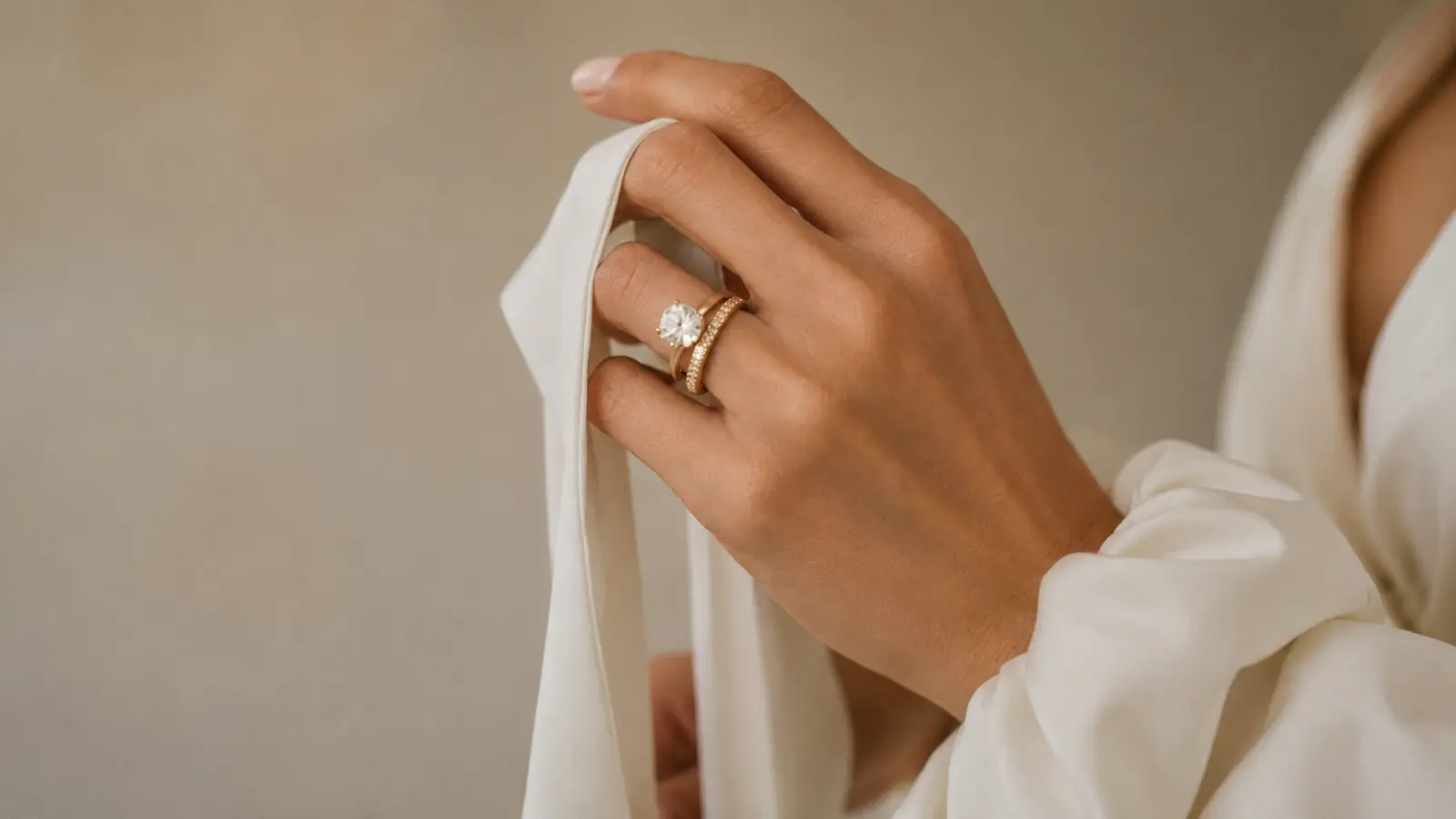
Once a band’s style, setting, and width have been chosen individually, many brides also compare engagement ring and wedding band sets to achieve a seamless fit — which is a different question from how it looks on its own.
Match the metal color
The most consistent piece of guidance across jewelers is to match the metal color between the band and the engagement ring. A white gold or platinum engagement ring next to a yellow gold band tends to look like an unintentional mismatch rather than a deliberate styling choice, even when each ring is individually well made. This is the one area where guidance converges on a single recommendation rather than offering a range of options. Everything else is flexible.
Consider fit before visual balance
Beyond metal, fit is the next consideration — and it’s where the band styles covered above become directly relevant. If the engagement ring has a raised or wide setting, a straight-edged band may leave a gap. That’s the scenario a curved or contoured band is designed to solve. If the engagement ring is a simple solitaire with a narrow band of its own, a straight-edged wedding band will generally sit flush without any special shaping needed. Getting fit right matters more than any aesthetic consideration, because a gap or misalignment is visible every time both rings are on the hand.
Visual balance: contrast is fine, mismatch is not
A band doesn’t need to be identical for matching wedding bands to look intentional beside an engagement ring. In fact, a band that’s plainer than the engagement ring, or one that introduces a small amount of contrast, often reads as more intentional than an exact match would. What tends to look unintentional isn’t contrast itself but a gap in formality — a very simple thin band next to an elaborate, wide engagement ring can look like an afterthought, just as an ornate band can overwhelm a delicate solitaire.
The most reliable way to get this right is the simplest: try the band on next to the actual engagement ring, on the actual finger, before buying. A band that looks complete on its own can look entirely different once it’s adjacent to a specific ring on a hand. If the rings are being purchased at different times or from different jewelers, bringing the engagement ring along — or having precise measurements — removes most of the guesswork. For more on how the two rings are worn day to day, including stacking order and what to do if they don’t sit flush, see the guide on how to wear your wedding ring and engagement ring together.
Women’s Wedding Band Inspiration
Women’s wedding bands come in many styles, from simple classic bands to diamond designs, curved shapes, and modern stacks. Explore our inspiration board for timeless bands, eternity rings, stackable styles, and beautiful wedding band ideas to help you find the design that feels right for you.
Choosing a Wedding Band Made for Everyday Life
Almost every women’s wedding band comes down to more than the way it looks. The stones, shape, width, and how the band pairs with other rings all influence how it feels and how naturally it becomes part of your daily routine.
Whether you choose a simple classic band, a diamond wedding band, an eternity style, or a stack you continue building over time, the best wedding band is one that matches both your personal style and the life you will wear it through.
Frequently asked questions (FAQ)
What are the best wedding bands for women?
The best wedding bands for women depend on how the ring will be worn every day. Classic metal bands, diamond bands, eternity bands, curved bands, and stackable bands are all popular choices. The best option is usually the one that balances personal style, comfort, durability, and how well it pairs with an engagement ring.
What is the difference between a wedding ring and a wedding band for women?
A wedding ring and a wedding band usually mean the same thing today. Both describe the ring exchanged during the wedding ceremony and worn as a symbol of marriage. Traditionally, “band” referred to a simpler circular design, while “ring” could include more decorative styles, but the terms are now commonly used interchangeably.
What is the most popular wedding band style for women?
Some of the most common women’s wedding band styles include plain gold bands, diamond bands, eternity bands, and curved bands. A simple engagement ring is often paired with a more detailed wedding band, while a statement engagement ring is often balanced with a simpler band.
Is a plain or diamond wedding band better?
Neither style is better for everyone. Plain wedding bands are timeless, durable, and usually require less maintenance. Diamond wedding bands add sparkle and can make the wedding band stand out when worn alone. The best choice depends on lifestyle, personal taste, and how much attention you want the band to have.
What is the difference between an eternity and half-eternity wedding band?
A full eternity band has stones that continue around the entire ring, creating an unbroken design. A half-eternity band has stones across only part of the ring, usually the visible top section. Half-eternity bands often provide a similar appearance while being easier to resize in the future.
What is a curved wedding band and who needs one?
A curved or contoured wedding band is designed to fit around the shape of an engagement ring. It is especially useful for engagement rings with raised settings, halos, or unique shapes that do not sit naturally against a straight wedding band.