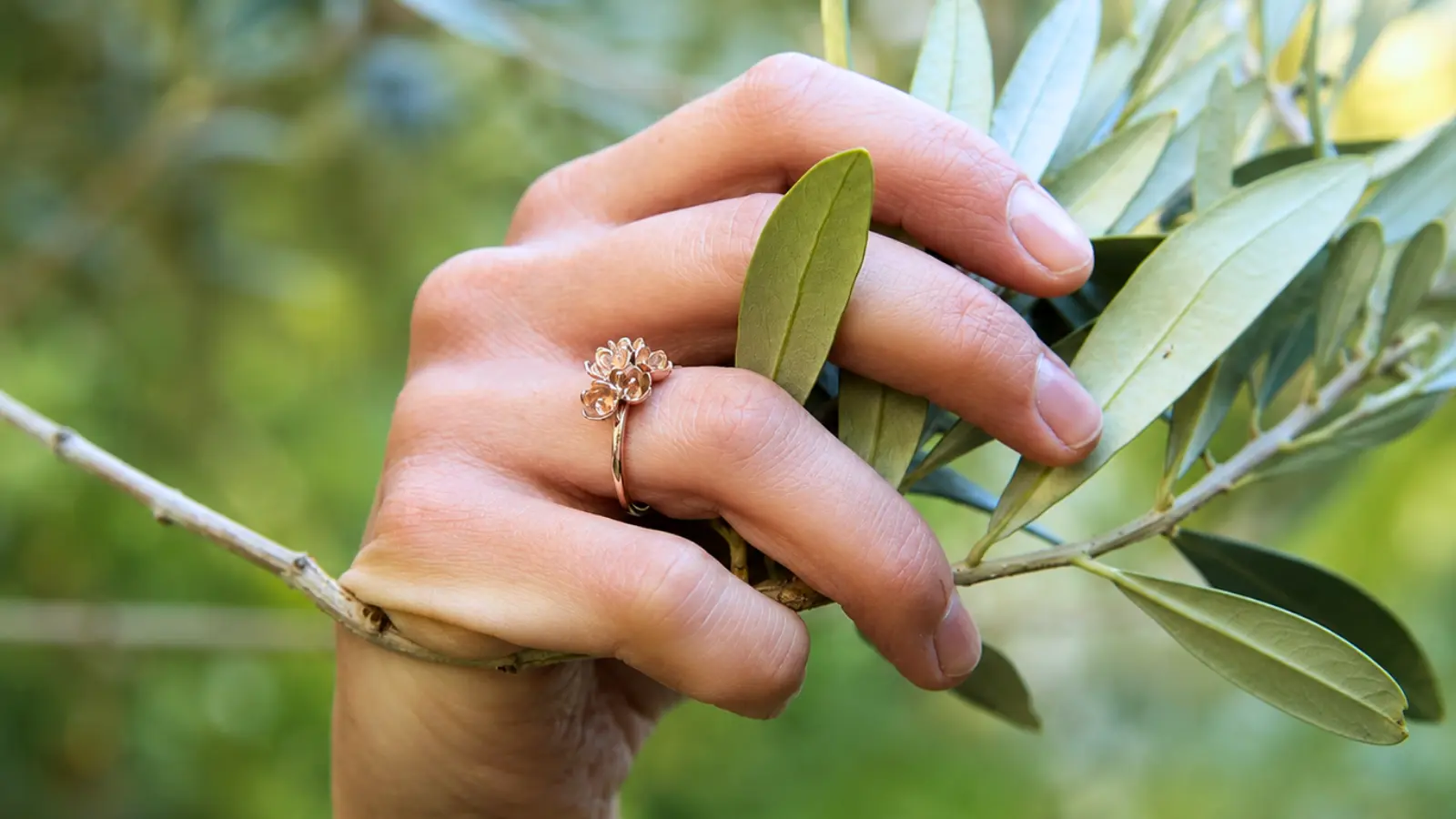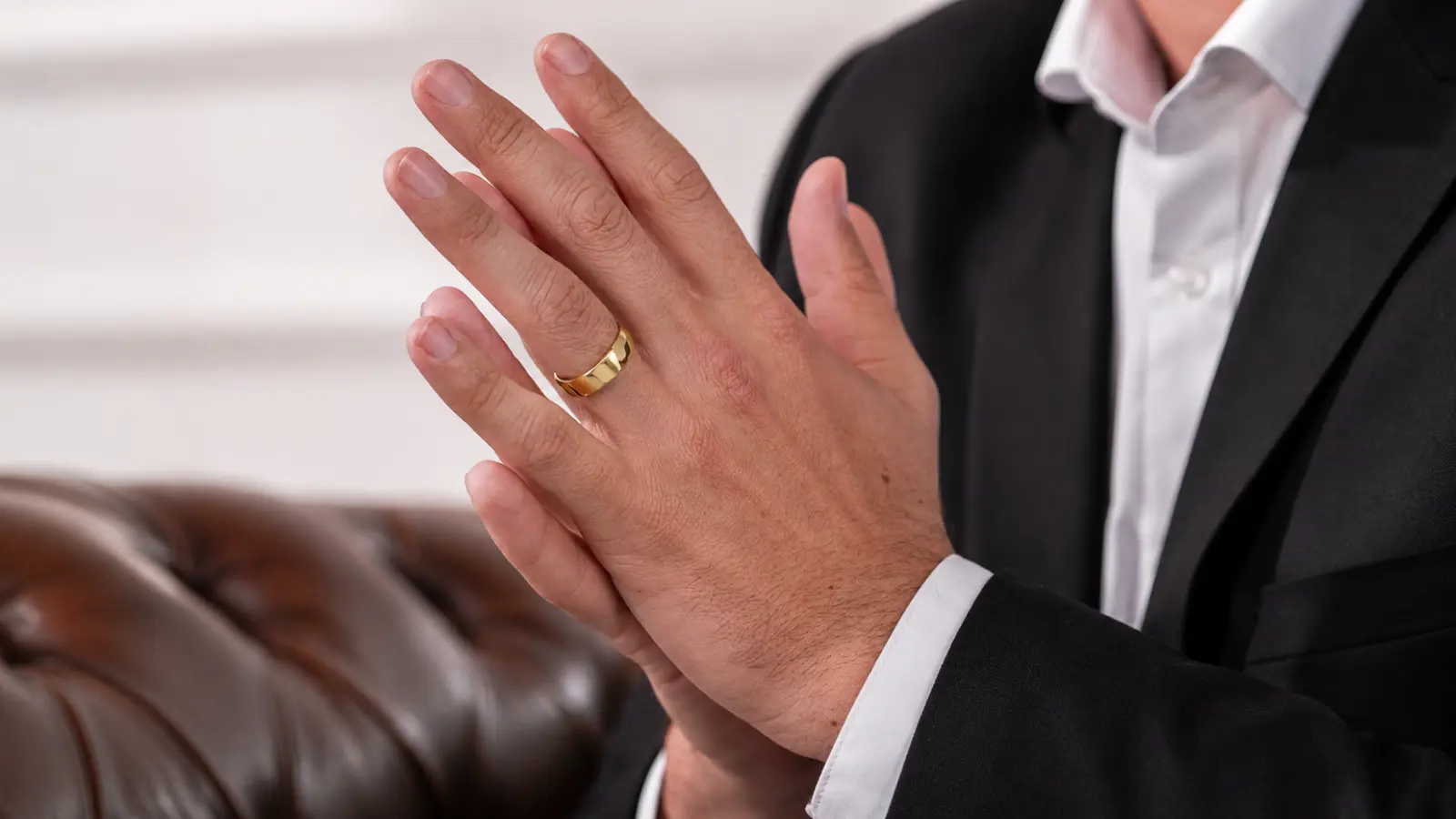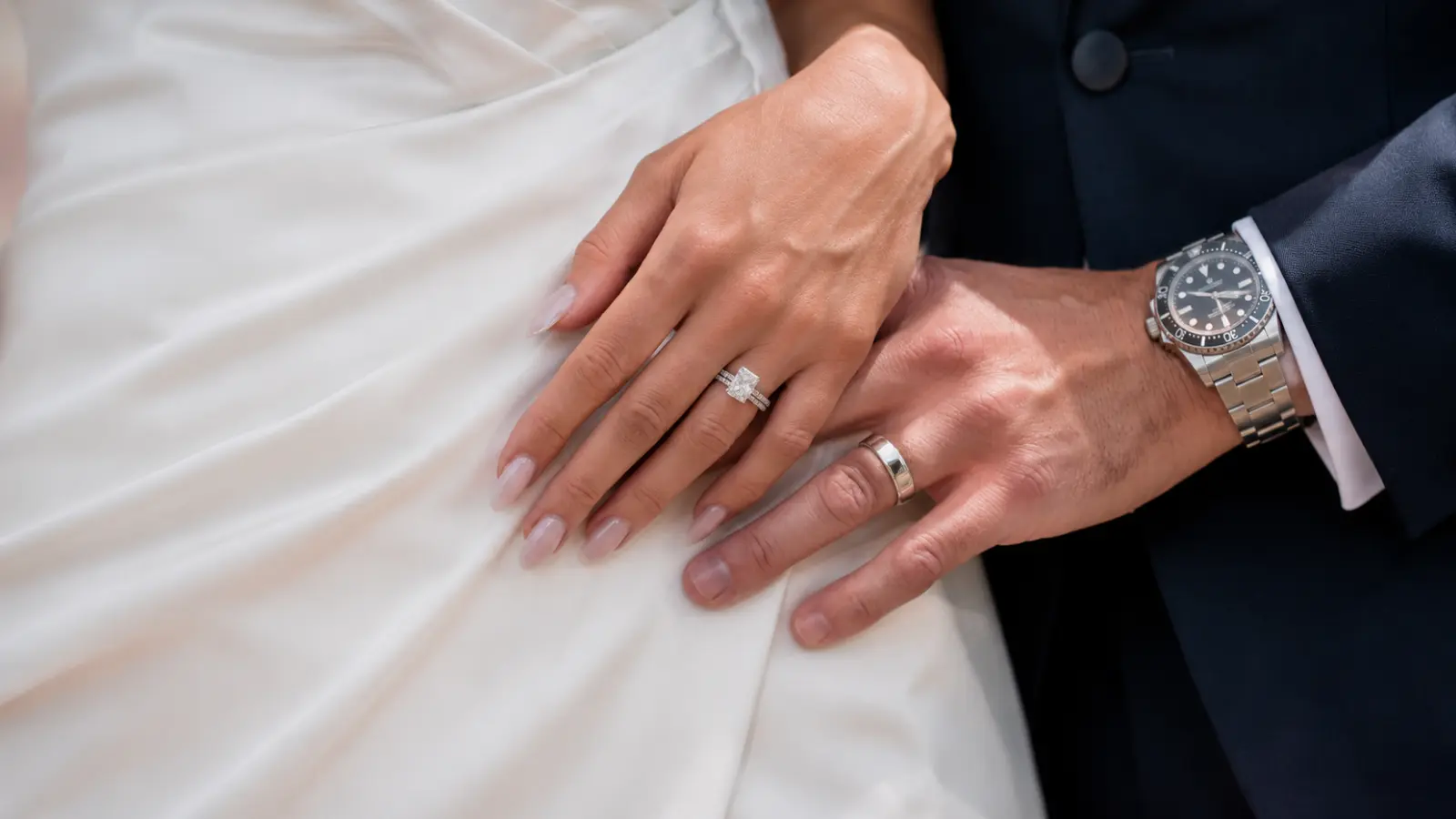
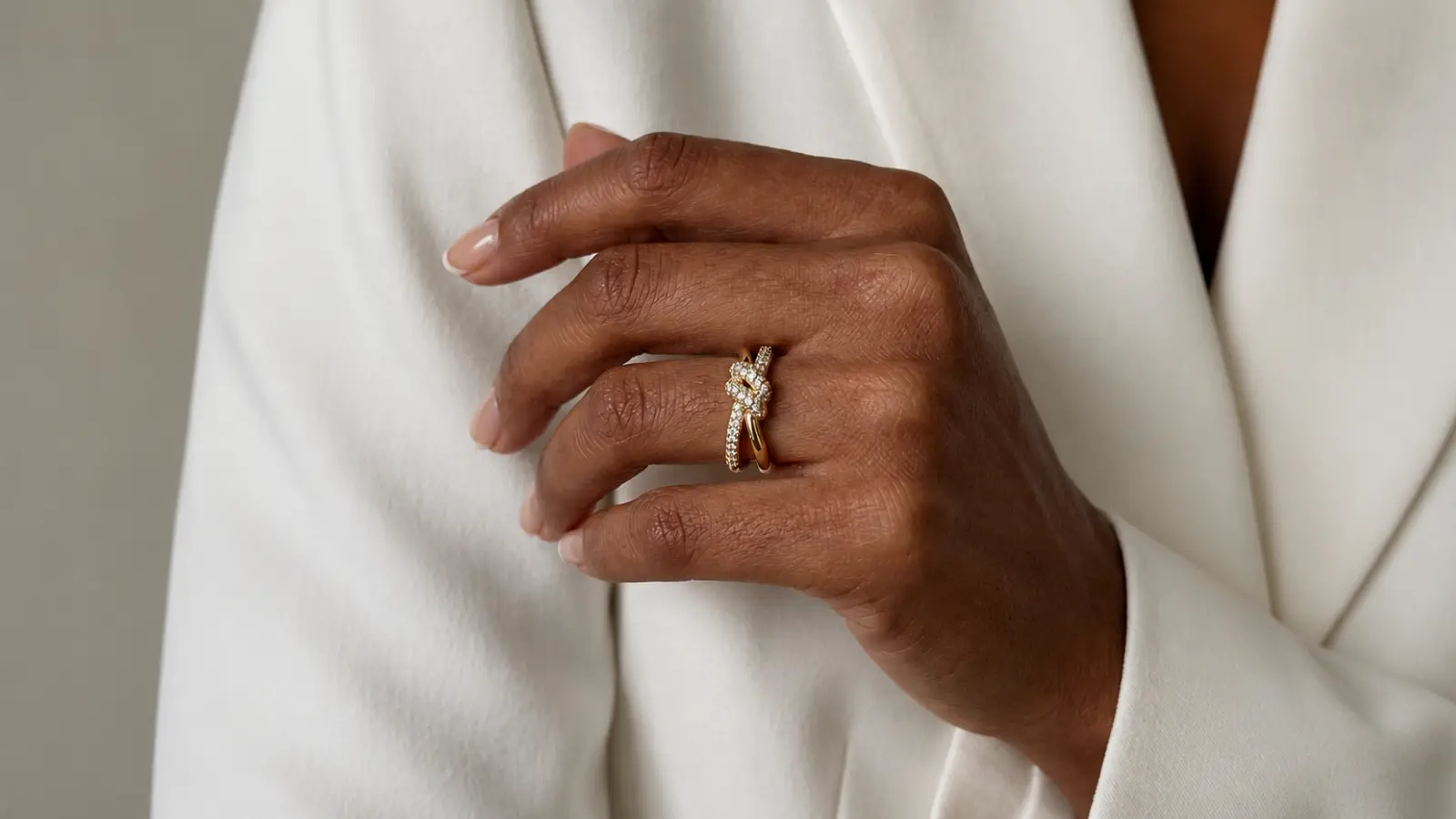
Unique wedding rings are wedding rings that use distinctive materials, gemstones, designs, finishes, or personal details to create a style that feels different from a traditional wedding band. A unique ring may include an alternative metal, a colored stone, custom engraving, vintage details, or a design created specifically for the person wearing it.
The best unique wedding rings are not chosen only because they look unusual. They are chosen because they reflect something meaningful about the wearer — a personal style, a shared story, a favorite material, or a detail that will continue to matter long after the wedding day.
This guide explores unique wedding rings for women and men, including non-traditional designs, alternative materials, colored gemstones, vintage rings, custom ideas, engraving options, and how these choices fit within the wider world of wedding rings and wedding bands.
What Makes a Wedding Ring Unique?
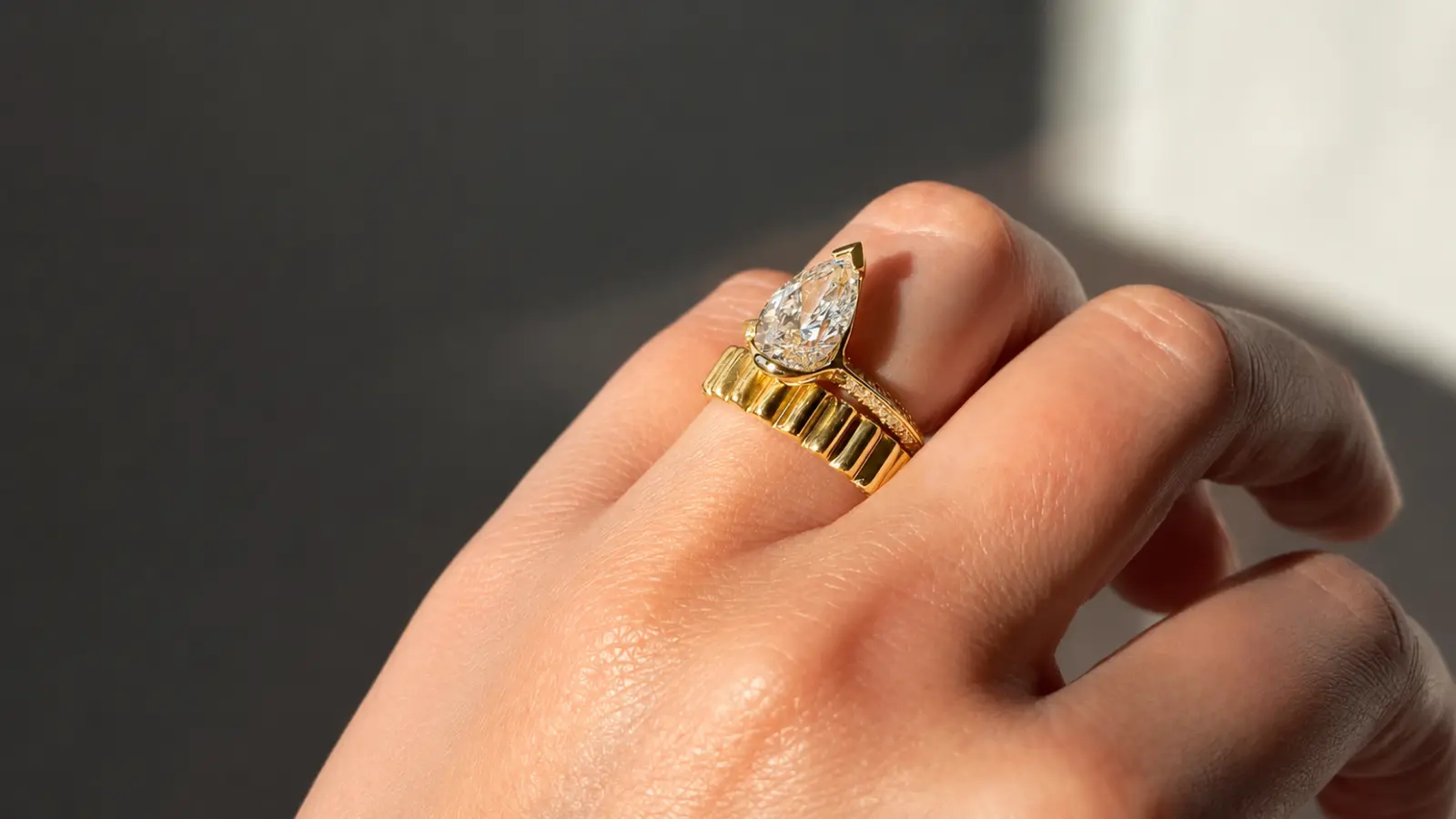
Uniqueness in a wedding ring can come from several directions (material, stone, finish, shape, or personalization) and the strongest versions of it tend to involve more than one. A ring in an unexpected metal with a meaningful interior inscription is more distinctively personal than one that is merely made of an unusual material. A vintage ring chosen because its era resonates with the wearer’s sensibility is more specifically “theirs” than one chosen because it looked different in a display case.
The categories worth thinking through:
Material
Most wedding rings are gold (yellow, white, or rose) or platinum. Any departure from these is already a meaningful distinction. Alternative metals like tungsten, titanium, cobalt chrome, and black zirconium offer finishes and durability profiles that the precious metals do not. Mixed-metal designs combine two metals in a single band (rose gold and white gold braided together, or a platinum band with a yellow gold inlay), creating a ring that reads distinctively without requiring an unconventional material. Non-metal bands in wood, silicone, or ceramic are less conventional still and serve specific practical needs as much as aesthetic ones.
Stone
A diamond is not the only option for a stone-set wedding band, and it has not always been the default. Colored gemstones (sapphires, rubies, garnets, morganite, tourmaline) bring color and personal meaning to a band that a diamond eternity ring does not. Salt-and-pepper diamonds, which include natural inclusions that give each stone a distinct pattern, have become a notably popular choice for couples who want the material of a diamond without the uniform clarity that most diamond rings aim for. The stone choice becomes genuinely personal when it is guided by meaning, a birthstone, a stone associated with the wedding location, a stone both partners find beautiful for reasons specific to them, rather than by what is currently appearing most frequently in wedding photography.
Finish
The finish of a metal band (how the surface has been treated) affects how the ring looks and how it ages. High-polish is the standard, producing a mirror-like surface that reflects light sharply. Matte and brushed finishes are subtler, with a softer visual quality that many people find more understated and wearable. Hammered finishes introduce deliberate texture across the band, creating a surface that catches light differently at every angle. Sandblasted surfaces are rougher and more organic-looking. Each of these finishes is achievable in any of the standard metals, which means a ring can be made distinctive purely through how its surface is treated without changing the material or silhouette at all.
Shape and silhouette
Most wedding bands are round. A band that is square-edged, faceted, beveled, or designed with an architectural cross-section rather than a standard rounded profile reads very differently from the conventional band, sometimes dramatically so, sometimes subtly. Wider bands (6mm and above) have a presence on the finger that a standard 2mm to 4mm band does not. Asymmetrical designs and sculptural profiles move further from convention and work best when the wearer’s aesthetic consistently extends in the same direction across all jewelry they wear.
Unique Wedding Rings for Women
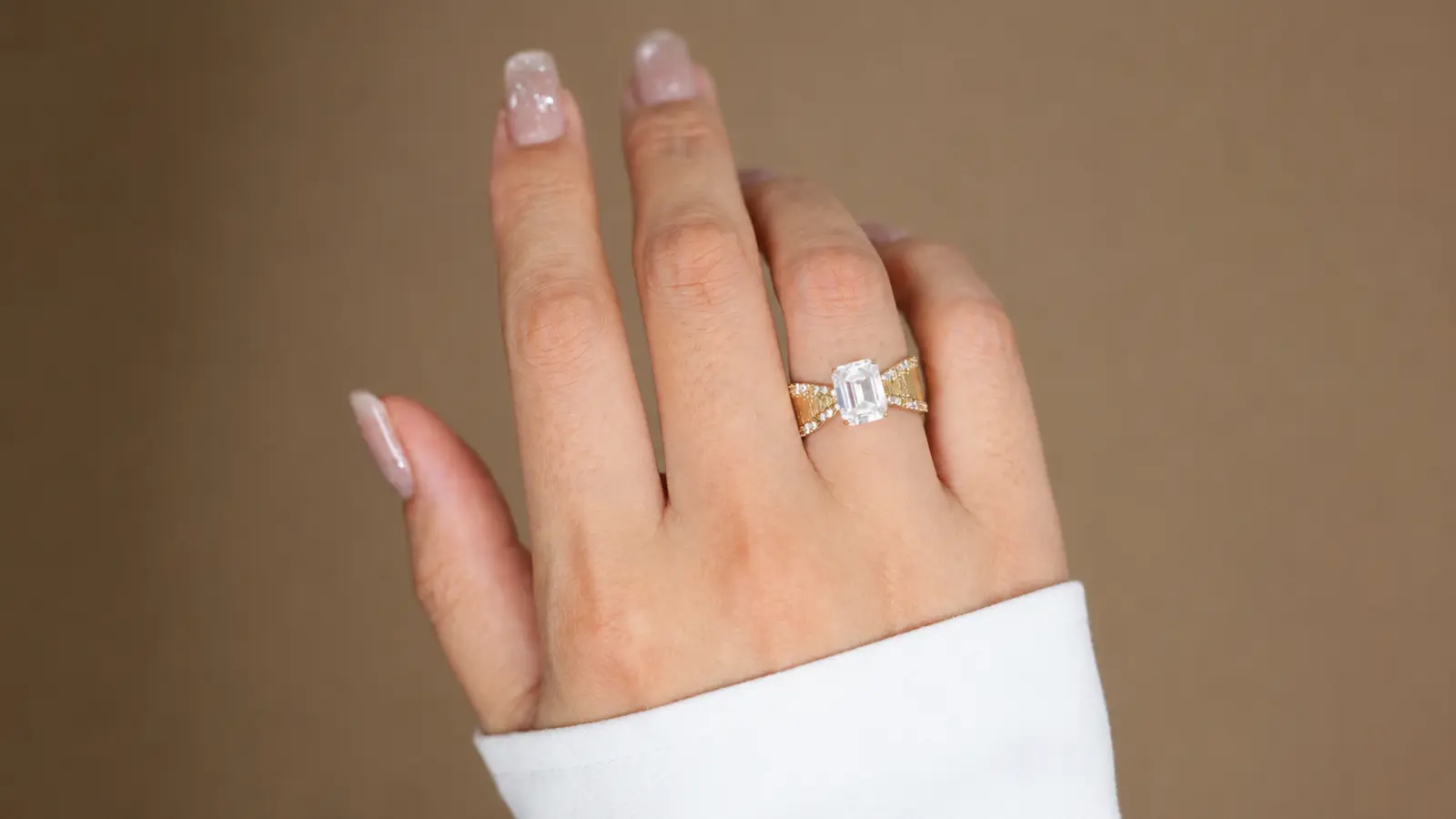
The conventional wedding ring for women is a narrow gold or platinum band, plain or set with small diamonds, worn alongside or in place of an engagement ring. Everything outside that description is, in some sense, a departure, but the range of that departure is enormous, and many of the most distinctive choices are also among the most historically grounded.
Colored gemstone bands
A wedding band set with sapphires, rubies, emeralds, or other colored stones has a far longer history than the diamond band, which became the dominant choice in the twentieth century. Sapphires in particular have been used as both engagement and wedding stones for centuries: the blue associated with faithfulness, the hardness (rated 9 on the Mohs scale) making them well-suited for daily wear. A full eternity band in blue sapphires or alternating sapphires and diamonds looks immediately distinctive without reading as trendy. Morganite (a pale peachy-pink beryl) has become popular more recently and suits warm skin tones particularly well. Ruby, garnet, and tourmaline offer the deep red spectrum for those drawn to it.
The practical note: not all colored stones are equally suited to daily wear. Sapphire and ruby are excellent. Emerald is beautiful but more brittle than most people expect; it chips under the same conditions that sapphire would not. Opal, while striking, is far too soft for a ring worn every day without a very protective bezel setting. Stone hardness is worth researching specifically before choosing, since the ring will be worn under conditions quite different from jewelry worn only occasionally.
Vintage and Art Deco styles
Women’s wedding bands with filigree work, milgrain edging, geometric patterning, or the architectural lines characteristic of Art Deco wedding rings (roughly the 1920s through 1930s) look distinctively different from contemporary minimalist bands, and hold up exceptionally well over decades because they belong to a specific aesthetic tradition with its own internal logic rather than to a passing trend. A ring that looks like it comes from 1928 will still look like it comes from 1928 in thirty years. That kind of anchoring in a specific period gives the ring an identity that persists regardless of what is currently fashionable.
Stacking bands
Rather than a single band, some women wear a curated stack of two, three, or more thin bands on the same finger: a combination that can be adjusted, expanded, or rearranged over time. A stack of stackable wedding rings might include a plain yellow gold band, a thin diamond eternity band, and a simple rose gold band, worn together in an arrangement that reads as intentional rather than accumulated. The appeal of the stack is that it is genuinely personal (the specific combination is unlikely to be identical to anyone else’s) and it allows for future additions that mark moments in the marriage.
Signet-style and statement bands
A wider band with a flat-top surface (sometimes called a signet band) can carry an engraved motif, an initial, a symbol, or a custom design on the top face rather than around the circumference. This gives the band a surface area for design that a standard round band does not have, and the result is a ring that reads more like a statement piece than a traditional wedding band. These work particularly well for women who wear few other rings and want the wedding band to carry significant visual weight on its own.
Unique Wedding Rings for Men
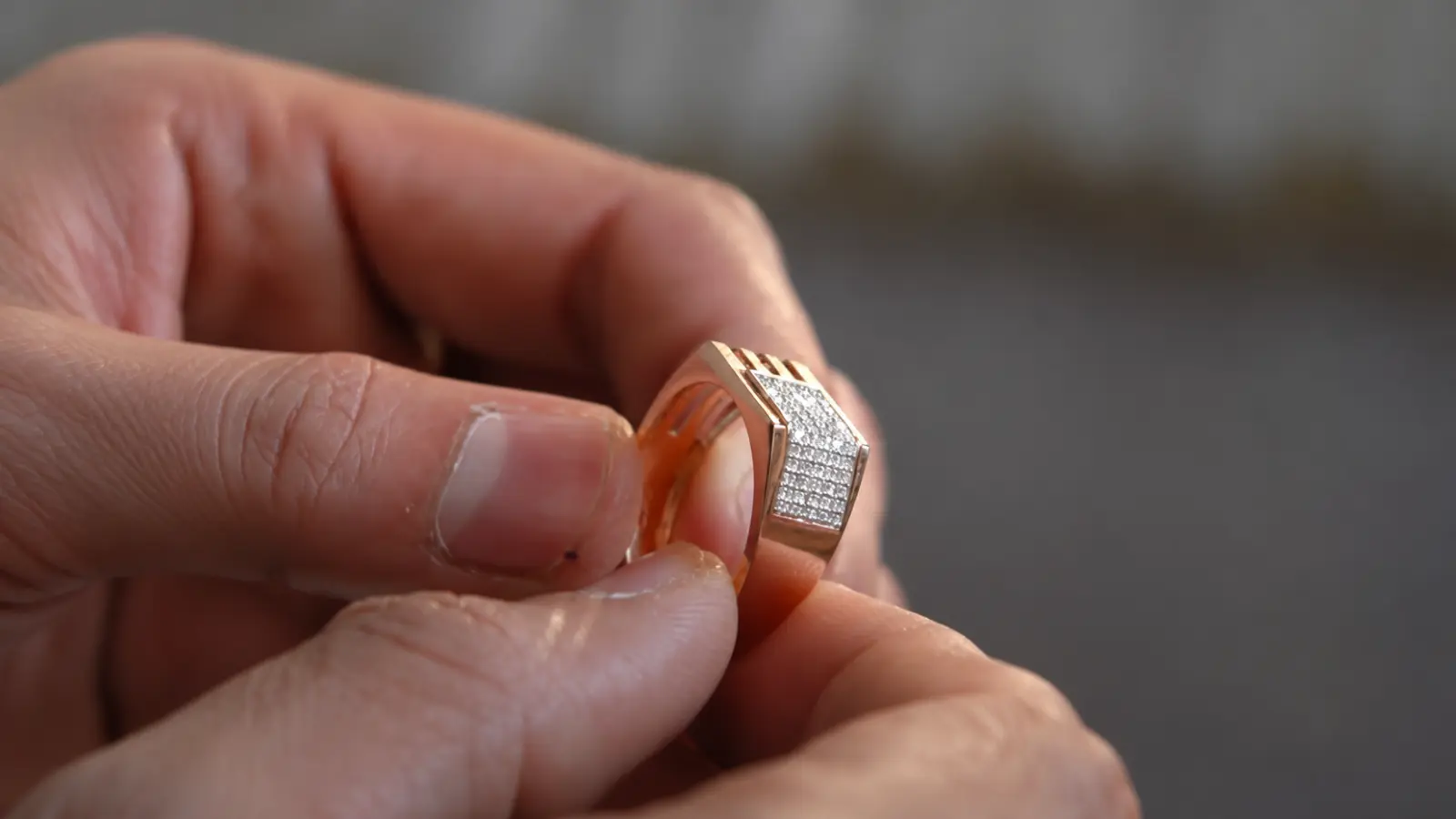
Men’s wedding bands have historically had a narrower range of accepted design variation than women’s: the plain gold or platinum band was the expectation for decades, and departing from it required either confidence or a clear reason. That constraint has loosened considerably. A wide range of metals, finishes, materials, and design approaches are now in common use for men’s wedding bands, and the defining question has shifted from “is this acceptable?” to “is this actually right for this person?”
Alternative metals and dark finishes
Tungsten carbide, titanium, cobalt chrome, and black zirconium are among the more popular choices for men’s bands outside the traditional precious metals. Tungsten is extremely hard (it holds its finish longer than gold or platinum and resists scratching well) and is available in both silver-toned and dark finishes. Black zirconium, which is a zirconium ring whose surface has been heat-treated to produce a deep black color, has a distinctive appearance that reads quite differently from any precious metal. Titanium is notable for being very lightweight (significantly lighter on the finger than gold or platinum at the same width), which some men prefer and others find makes the ring feel less substantial.
The important caveat with all of these: most alternative metal rings cannot be resized, or can only be adjusted within a very narrow range. This is a significant practical limitation for a ring intended to be worn for life, since ring size often changes over decades. Couples choosing alternative metals should understand this clearly and factor in the possibility of replacement rather than resizing if fit changes later.
Texture and finish
A hammered finish on a yellow gold or platinum band produces a very different ring from the same band in high-polish: rougher, more organic-looking, with a surface that catches light in an irregular pattern rather than reflecting it uniformly. Many men who prefer understated jewelry find that a matte or brushed finish feels more like them than the high-polish standard. A sandblasted surface on a wide titanium band has a quality that is almost industrial, not decorative in the conventional sense, but visually distinctive and consistent with a certain kind of aesthetic sensibility.
Inlaid materials
Wood inlay, meteorite inlay, carbon fiber, and colored resin are all used as design elements within metal bands, typically as a section or strip of inlaid material running around the circumference of a ring that is otherwise metal. A band with a strip of actual meteorite inlay (typically Gibeon meteorite, which has a distinctive crystalline pattern called a Widmanstätten pattern) is visually unlike anything in conventional jewelry and has an obvious narrative quality: the material is genuinely from outer space, which carries a specific kind of meaning for certain wearers. Wood inlay is warmer and more organic-looking. Carbon fiber is sleek and modern. Each of these inlay materials changes the visual character of the ring significantly without requiring the wearer to give up the structural integrity and durability of a metal band.
Wide bands with architectural profiles
A band that is 8mm or wider, with a faceted or beveled profile rather than a standard round cross-section, has a presence on the hand that a conventional 4mm to 5mm band does not. For men with larger hands and broader fingers, a wider band often looks more proportionate than a standard width, and the architectural quality of a beveled or flat-top profile adds a visual interest that a plain round band does not offer.
Non-Traditional Wedding Ring Ideas
Beyond specific materials or stones, some of the most distinctive wedding ring choices involve rethinking the category itself: what the ring is, how it is worn, or what it is made to do.
Rings that tell a story
Some of the most personal wedding rings are built around a specific narrative: a stone from a meaningful location, a metal that belonged to a family member’s ring and was melted down and recast, a design that references a place where the couple spent significant time, or a motif that connects to something both partners share. A ring with that kind of origin story is unique in the most literal sense (there is no other ring with the same provenance) and the story becomes part of the ring’s meaning in a way that accumulates rather than fades over time.
Asymmetrical and sculptural designs
Some contemporary jewelers work in ring forms that depart from the standard band silhouette significantly: rings that wrap partially around the finger, rings with raised sculptural elements, rings with negative space built into the design. These are genuinely distinctive objects that cannot be mistaken for conventional jewelry. They also require a wearer whose aesthetic extends in the same direction consistently: someone who wears this ring and a pair of pearl earrings and a conservative work wardrobe will find the combination harder to carry than someone whose personal style already runs toward the unconventional.
Rings without a center stone
The expectation for a women’s wedding band (or for an engagement ring) to feature a prominent center stone is a relatively recent convention, not a permanent feature of wedding jewelry history. A beautifully crafted all-metal band, whether plain or textured or engraved, is a completely legitimate wedding ring with centuries of precedent behind it. For couples where one or both partners prefers clean lines and minimal ornamentation, the plain band is not a compromise; it is often the most considered choice.
Tattooed rings
A small but genuine subset of couples chooses finger tattoos in place of, or alongside, traditional metal rings. A simple geometric line, a significant date rendered in small numerals, matching designs on both partners’ ring fingers: these are permanent in a way that a metal ring is not, which carries its own kind of symbolic weight. The practical considerations are real: finger tattoos fade faster than tattoos in other locations due to the amount of movement and contact that hand skin experiences, and they may be less compatible with certain professional environments. But for couples to whom the permanence resonates and the practical limitations are acceptable, a tattooed ring is a meaningful and genuinely distinctive choice.
Alternative Wedding Ring Materials
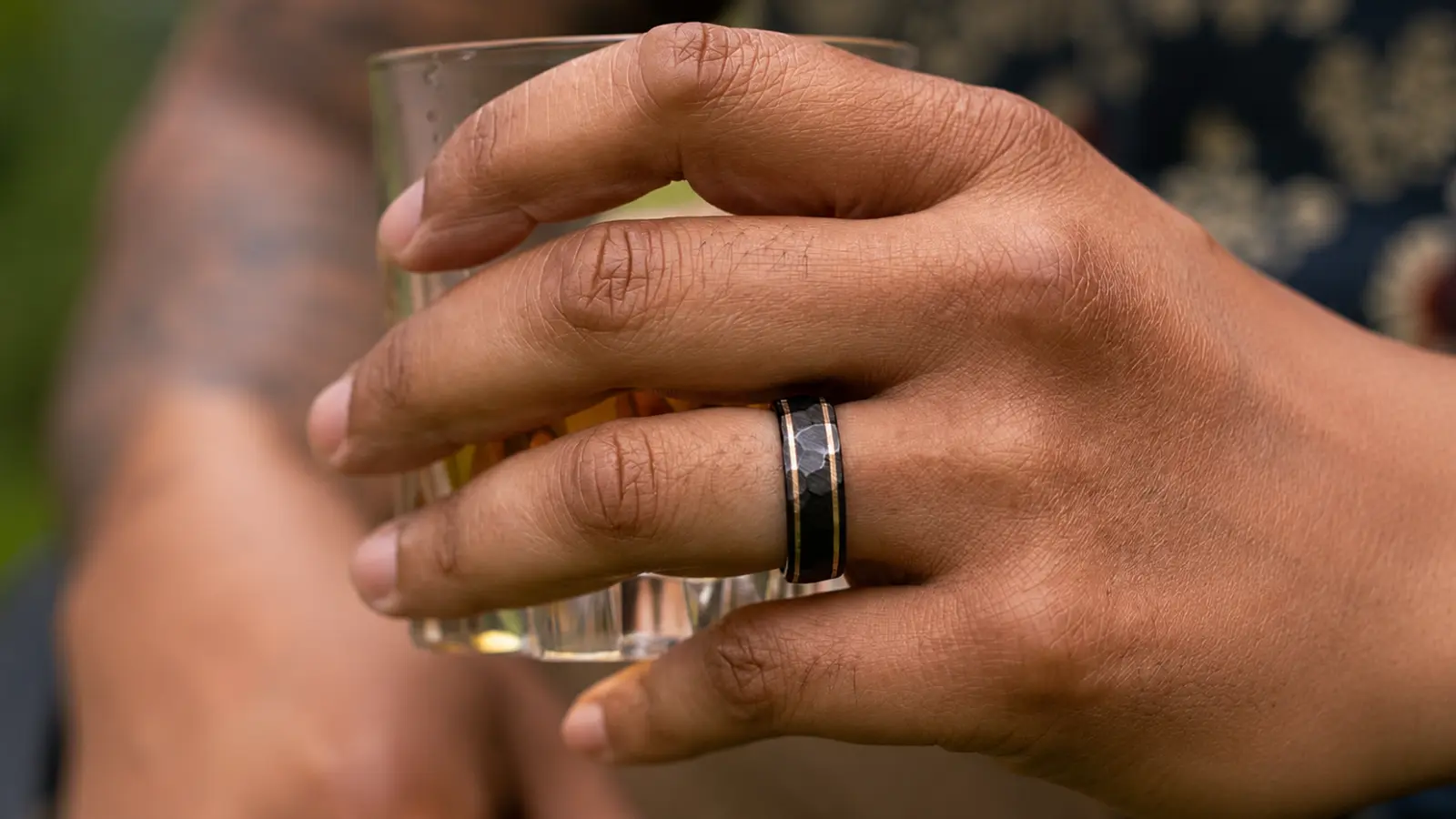
The choice of material is often the most consequential unique element of a wedding ring: it affects the appearance, the durability, the weight on the finger, and the practical options available for resizing and repair over the life of the ring. Each alternative material involves a specific set of trade-offs worth understanding before the purchase is made.
Tungsten carbide
Tungsten is one of the hardest metals used in jewelry, which makes it extremely resistant to scratching and capable of holding a finish for a very long time without polishing. It is available in silver-toned and dark finishes and works particularly well as a wide band because the weight and hardness together give the ring a substantial feel. The limitations: tungsten cannot be resized; it cannot be cut off in a medical emergency with standard ring cutters (though specialized tools do exist), and while it resists scratching, it can crack under significant impact rather than bending the way gold or platinum would. For wearers who want a ring that will look essentially the same in ten years as it does today, tungsten delivers on that promise. For wearers who anticipate meaningful changes in ring size, it requires the expectation of replacement rather than wedding ring resizing.
Titanium
Titanium is significantly lighter than gold or platinum (often surprisingly so for a ring of the same apparent size) and is hypoallergenic, which makes it a good option for wearers with metal sensitivities. It is strong and durable, holds a matte or brushed finish well, and is available in a wide range of widths. Like tungsten, it is difficult to resize, and most titanium rings require replacement rather than adjustment if size changes significantly. Its lightness is appreciated by some wearers (it barely registers on the finger) and less satisfying to others (who want a ring to feel substantial). The trade-off is genuine and worth trying in person rather than assuming the preference.
Black zirconium
Black zirconium starts as a silver-colored metal (zirconium) that is then heated to high temperatures, oxidizing the surface to produce a deep, permanent black finish. The result is a ring that is black in a way that is not a coating or plating (which can chip or wear away) but an integral part of the surface itself. The finish is exceptionally durable. Black zirconium rings have a visual weight that reads as both contemporary and distinctive: they work well alongside dark clothing and more fashion-forward aesthetics, and for men in particular they offer a strong alternative to the conventional silver or gold band.
Wood inlay and mixed organic materials
Wooden wedding bands worn as standalone rings (not inlaid into metal) are not well-suited to daily wear. Wood is affected by water, humidity, and impact in ways that make it a poor choice for a ring worn continuously on a working hand. The alternative, and the approach most commonly used in actual jewelry production, is a metal band with a wood inlay: a strip of polished wood set into a channel in the metal, so the ring has structural integrity from the metal and visual warmth from the wood. The wood in these inlaid designs can include stabilized wood (wood that has been treated to prevent further degradation), reclaimed wood from meaningful sources, or decorative hardwoods. The inlay should be examined for how it is sealed and protected, since different approaches have different long-term durability outcomes.
Meteorite inlay
Gibeon meteorite (an iron-nickel meteorite from Namibia, among the most commonly used in jewelry) has a natural crystalline structure called a Widmanstätten pattern, visible on the polished surface as a distinctive geometric lattice that formed over billions of years of slow cooling in space. A ring with a section of Gibeon meteorite inlay carries a material that is genuinely ancient in the most extreme sense: older than the Earth itself. The meteorite is prone to rusting if not properly sealed and maintained, which is a practical consideration the seller should address explicitly. Well-maintained meteorite inlay, however, holds its appearance well and the visual pattern is unlike anything else in jewelry.
Silicone
Silicone rings are not a design choice in the same sense as the materials above; they are primarily a practical solution for specific circumstances. Many people in professions where metal rings are unsafe (surgery, electrical work, industrial environments) or sports where ring avulsion is a risk (CrossFit, climbing, gymnastics) wear silicone rings in place of metal during those activities. Some couples choose silicone as their primary ring; others use it as a secondary ring for situations where the primary ring stays home. Silicone rings are available in a wide range of colors and widths, are inexpensive, and are fully replaceable. They are not the same kind of object as a fine metal ring, which is a reason some people dismiss them and a reason others value them precisely.
Vintage and Estate Wedding Rings
A vintage or estate ring is unique by definition: it is a specific object that existed in a specific time, and there is no duplicate of it. Vintage wedding rings carry the aesthetic language of the period in which they were made, the geometric precision of Art Deco, the organic curves and naturalistic motifs of Art Nouveau, the broad sculptural forms of the Retro era, the restrained modernism of Mid-Century design. A ring that belongs authentically to one of these periods has an identity that does not depend on current fashion and cannot be replicated by a new ring, however carefully designed.
What to look for in vintage rings
The practical considerations with vintage jewelry are worth taking seriously. Prong settings in very old rings may need to be retipped or rebuilt before the ring is worn daily, decades of wear can leave the prongs holding a stone thin and fragile. The shank (the bottom of the band that sits against the finger) may have been worn down over years of wear and may need to be built up or replaced. A reputable estate jeweler or a jeweler experienced with antique pieces can assess the structural integrity of a vintage ring and advise on what needs to be addressed before it is worn regularly.
Authenticity matters differently in jewelry than in some other categories. An authenticated Art Deco ring has provenance and historical specificity; a vintage-inspired ring designed and manufactured today has neither. Both can be beautiful; they are different objects. Buying from an estate jeweler who can document the age and condition of a ring is the way to ensure you are getting the actual vintage piece rather than a reproduction.
Vintage-inspired as an alternative
For couples who are drawn to the aesthetic of a specific period but want the practical advantages of a new ring (known provenance, a fresh prong setting, a guarantee from the jeweler, no undisclosed wear) a vintage-inspired design is a legitimate and often visually indistinguishable alternative. A skilled jeweler can produce a ring that is aesthetically consistent with 1925 Art Deco while being structurally new, properly sized, and covered by a contemporary warranty.
Custom and Engraved Wedding Rings
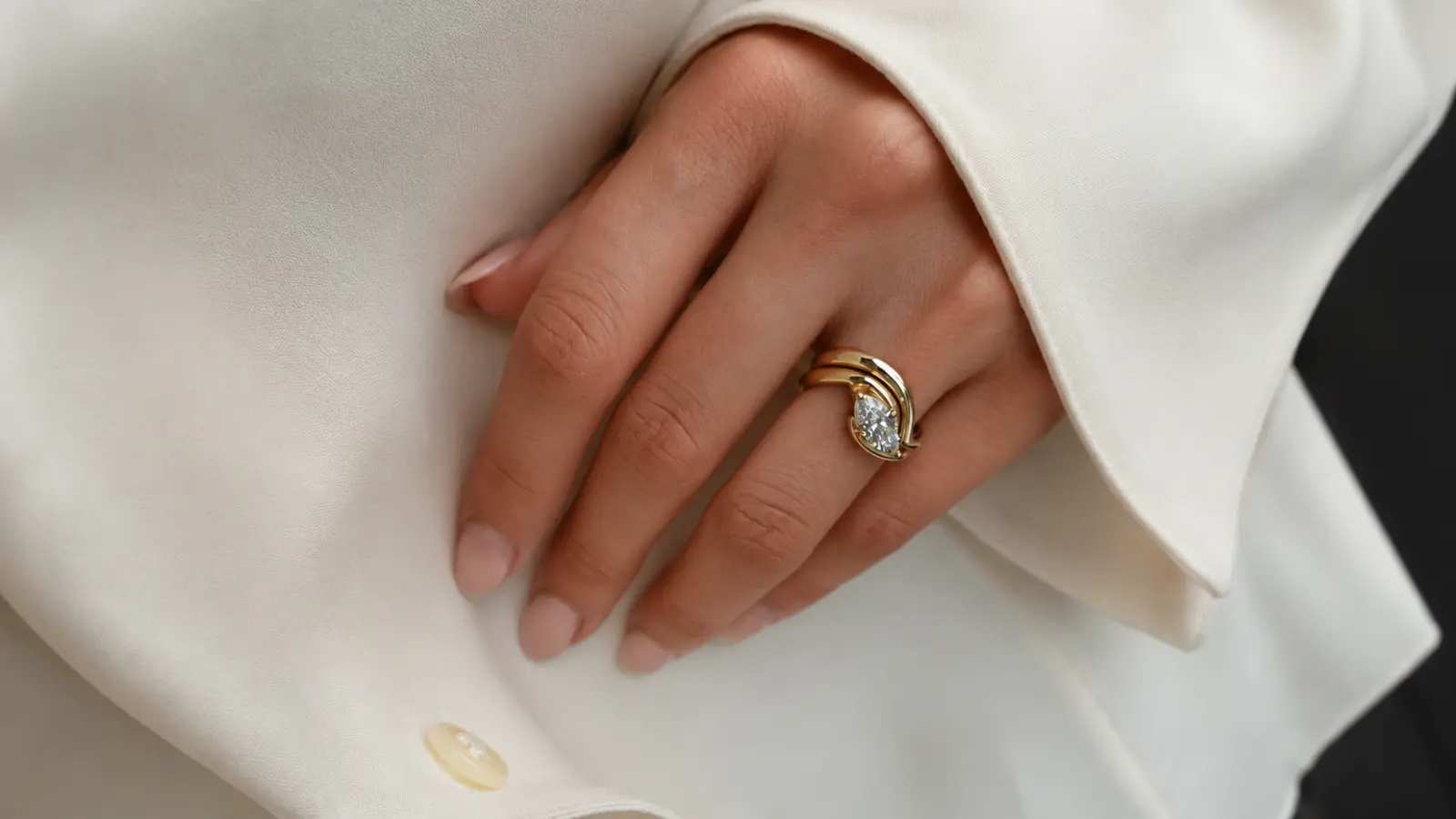
The most directly personal approach to a unique wedding ring is to commission one, to work with a jeweler or independent designer to create a ring that does not exist in any catalog and was not designed for anyone but you. Custom design produces a ring that is unique in the most literal sense: there is one of it, it was made for a specific person, and the design decisions were made by or with that person rather than by a product development team working to appeal to the broadest possible market.
What the custom process actually involves
A custom ring design typically begins with a consultation, a conversation with a jeweler about aesthetic preferences, lifestyle considerations, budget, and any specific elements the wearer wants to include. From that conversation, a designer produces sketches or digital renderings of a proposed design, which the client reviews and refines. Once the design is finalized, the ring is produced, either by hand by a craftsperson, by CAD-driven casting, or by a combination of both. The process takes anywhere from four to twelve weeks depending on the complexity of the design and the workload of the jeweler, and it costs more than a catalog ring at the same specification because it involves dedicated design and production time.
The result is a ring that no one else has, but more importantly, a ring that was made in response to a specific set of preferences rather than in anticipation of a broad market. That specificity is what tends to produce the deepest long-term satisfaction with a ring.
Engraving as personalization
For couples who want a personal ring but not the cost or lead time of full custom design, engraving is one of the oldest and most consistently effective forms of personalization. An interior inscription (a date, a phrase, a word, initials) adds a private layer of meaning to a ring that is otherwise visible to everyone. The inscription is seen only by the wearer and by whoever they choose to show it to, which gives it a quality of privacy and intimacy that no exterior design element quite replicates.
Exterior engraving is also possible and can transform the visual character of a plain band significantly. Hand-engraved botanical patterns, geometric designs, or custom motifs (applied to the outer surface of the band rather than the interior) produce a ring that looks entirely distinct from anything mass-produced. For more on engraving options, meaningful inscription ideas, and what to discuss with a jeweler before committing to a text, the wedding ring engraving covers the full range.
How to Choose a Unique Ring You Will Still Love Later
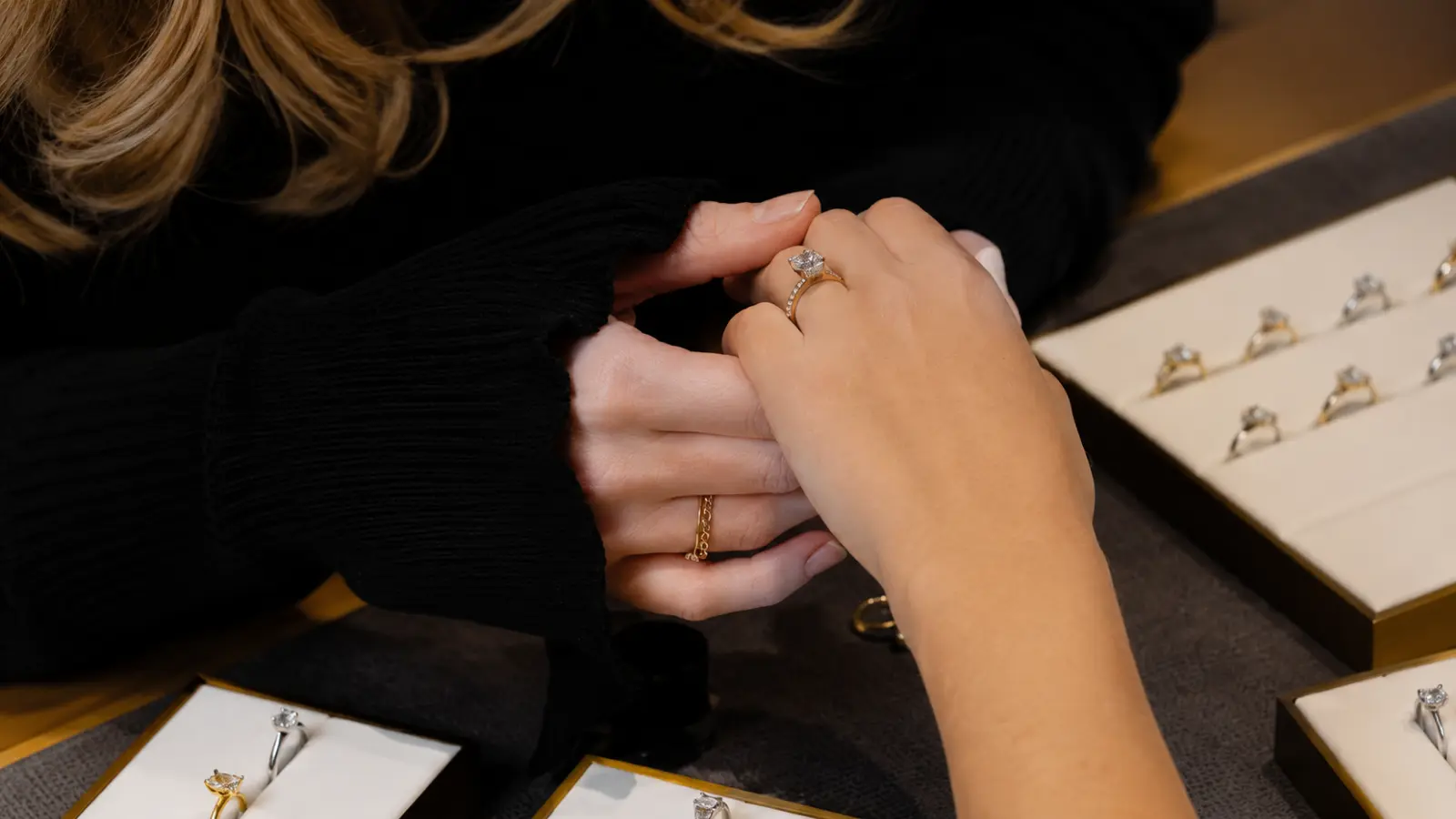
The specific anxiety about choosing a unique wedding ring (one that most people would not articulate but many feel) is the fear of a decision that feels right now and regrettable later. Trends change. Tastes evolve. A ring that feels fresh and distinctive at the time of purchase can feel dated within a decade if its appeal was primarily about being different from what was popular at that moment.
The couples who seem to avoid this outcome are not the ones who chose the most conservative ring available. They are the ones who chose a ring that was genuinely, specifically right for them (grounded in something stable about their aesthetic or their relationship) rather than a ring that was simply unusual in comparison to the current mainstream.
The difference between personal and trendy
A useful distinction: a ring chosen because “I have always been drawn to geometric design” is in a different category from one chosen because “geometric rings are everywhere right now.” Both may look identical in a photograph. Ten years later, they will feel different to the wearer. One will still feel like them; the other may feel like a record of what was fashionable when they got married. Asking yourself (honestly, before the purchase) whether the ring reflects an aesthetic preference you have held for years, or one that emerged recently in response to what you have been seeing, is a useful piece of self-knowledge.
The practical test
A ring that is genuinely right for the wearer passes a simple practical test: among different wedding ring styles, it should be wearable in every context of that person’s daily life without feeling mismatched. A sculptural ring that is beautiful on the weekend but awkward in professional settings will create a daily decision about whether to wear it or not, and that decision, made repeatedly, tends to reduce how much the ring is actually worn over time.
A ring that feels appropriate everywhere, or that the wearer is consistently comfortable choosing, will be worn continuously, which is both the practical point and the symbolic point of a wedding ring.
Research materials fully before purchasing
Alternative materials (alternative metals, inlaid organic materials, non-standard gemstones) all have practical characteristics that are not obvious at the point of purchase and become highly relevant after years of daily wear. A tungsten ring that cannot be resized is not a problem until ring size changes significantly, at which point it becomes a real one. An emerald that seemed like a distinguished choice for a stone turns out to be softer and more prone to chipping than sapphire would have been. Wood inlay that was not properly sealed begins to show moisture damage within a few years. These are not arguments against unusual materials; they are arguments for knowing what you are choosing and making the decision with full information rather than partial awareness. Any question you have about a material’s durability, resizability, or long-term maintenance requirements is worth asking the jeweler explicitly before finalizing the purchase.
The simplest test of all
Ask yourself: would I have loved this ring ten years ago, before I saw the current landscape of wedding jewelry? And do I genuinely expect to love it ten years from now? A ring that passes both questions is grounded in something real. A ring that only passes the second one may be more about the present moment than it appears. The distinction is not always obvious (personal taste does evolve, and that is not a failure) but it is worth sitting with before a decision that is meant to last a lifetime.
Unique Wedding Ring Inspiration
Unique wedding rings can reflect personal style through meaningful details, unexpected materials, gemstones, colors, and custom designs. Explore our inspiration board for vintage rings, engraved bands, alternative metals, colored gemstones, black wedding bands, and creative wedding ring ideas.
Choosing a Unique Wedding Ring That Still Feels Like You
A unique wedding ring is not about choosing the rarest design, the most unusual material, or the ring that looks the most different from everyone else’s. It is about choosing something with enough personal meaning that it continues to feel like yours through every stage of life.
Whether that comes from a custom design, a meaningful gemstone, a vintage piece, or a simple detail only you know about, the strongest wedding rings are the ones chosen with intention. A ring does not have to follow tradition to become timeless — it only has to represent something you still recognize as your own years later.
Frequently asked questions (FAQ)
What makes a wedding ring truly unique?
A wedding ring becomes truly unique when its design reflects something personal about the person wearing it, not only because it looks different. Unique details can come from the material, gemstone, finish, engraving, custom design, or the story behind the ring. The most meaningful unique wedding rings usually combine individuality with a style the wearer can imagine loving for many years.
How do you choose a unique wedding ring you will not regret?
Choose a unique wedding ring based on long-term personal style rather than what feels unusual right now. Ask whether you would have loved the design years ago and whether it matches the jewelry, clothing, and aesthetics you naturally prefer. The strongest unique rings feel like an extension of the person wearing them, not simply a reaction against traditional designs.
What are the best unique wedding ring ideas?
Some of the best unique wedding ring ideas include colored gemstones, vintage-inspired designs, custom engravings, mixed metals, textured finishes, alternative metals, and meaningful materials such as wood or meteorite inlays. The best choice depends on why the element feels special to you — a personal connection usually lasts longer than choosing something only because it is uncommon.
Are non-traditional wedding rings a good idea?
Non-traditional wedding rings can be an excellent choice when the design matches your lifestyle and personal taste. The key is understanding the practical side of your choice. Some alternative materials cannot be resized, and some gemstones require extra care. A non-traditional ring works best when you love both the appearance and the reality of wearing it every day.
Is it better to customize a wedding ring or buy a finished design?
A custom wedding ring is ideal if you want a specific design, meaningful detail, or combination of elements that does not already exist. A finished design can be a better choice if you find a ring that already represents your style and prefer a simpler process. Custom does not automatically make a ring more meaningful — the connection behind the choice matters more.
Can a unique wedding ring still be timeless?
Yes. A unique wedding ring can absolutely be timeless when it is based on personal meaning, quality materials, and a design that fits the wearer’s natural style. Timeless does not always mean simple or traditional. A ring can be unusual and still age beautifully if it was chosen for authentic reasons rather than because it followed a short-lived trend.