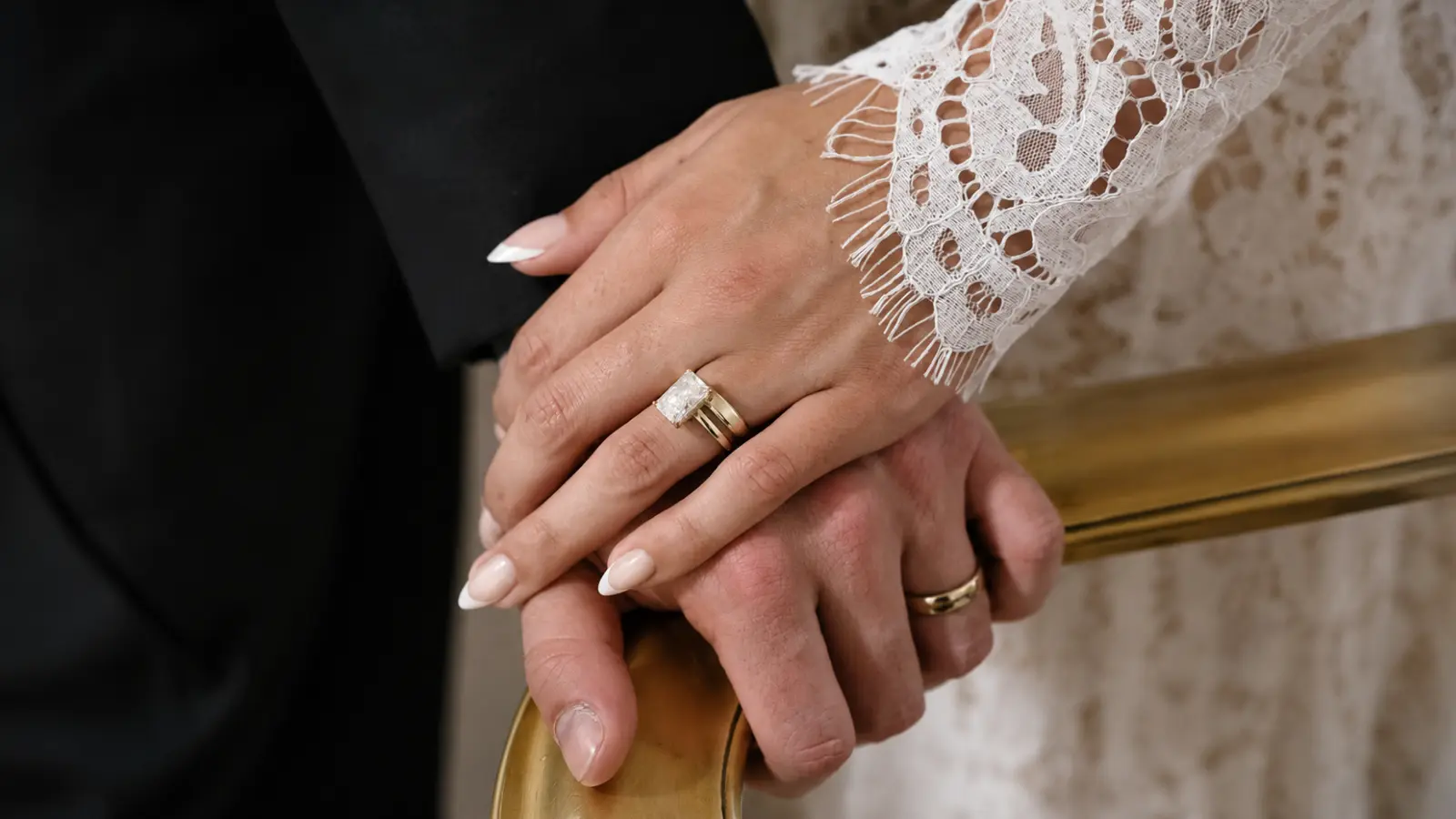
Wedding ring styles are the different designs, shapes, settings, and structures that define how a wedding ring looks, feels, and functions for everyday wear. From simple plain bands to diamond rings, eternity bands, curved designs, and stackable styles, each option offers a different balance of appearance, comfort, durability, and personal meaning.
Choosing a wedding ring style is about more than finding a design you like in a photo. The right style depends on your lifestyle, whether the ring will be worn alone or with an engagement ring, how much maintenance you prefer, and how the design will continue to feel years after the wedding day.
This guide explains the most popular wedding ring styles and types, including plain bands, diamond wedding bands, eternity rings, curved and contoured bands, stackable rings, vintage and modern designs, and how these options fit within different wedding rings and wedding bands.
Plain Wedding Bands
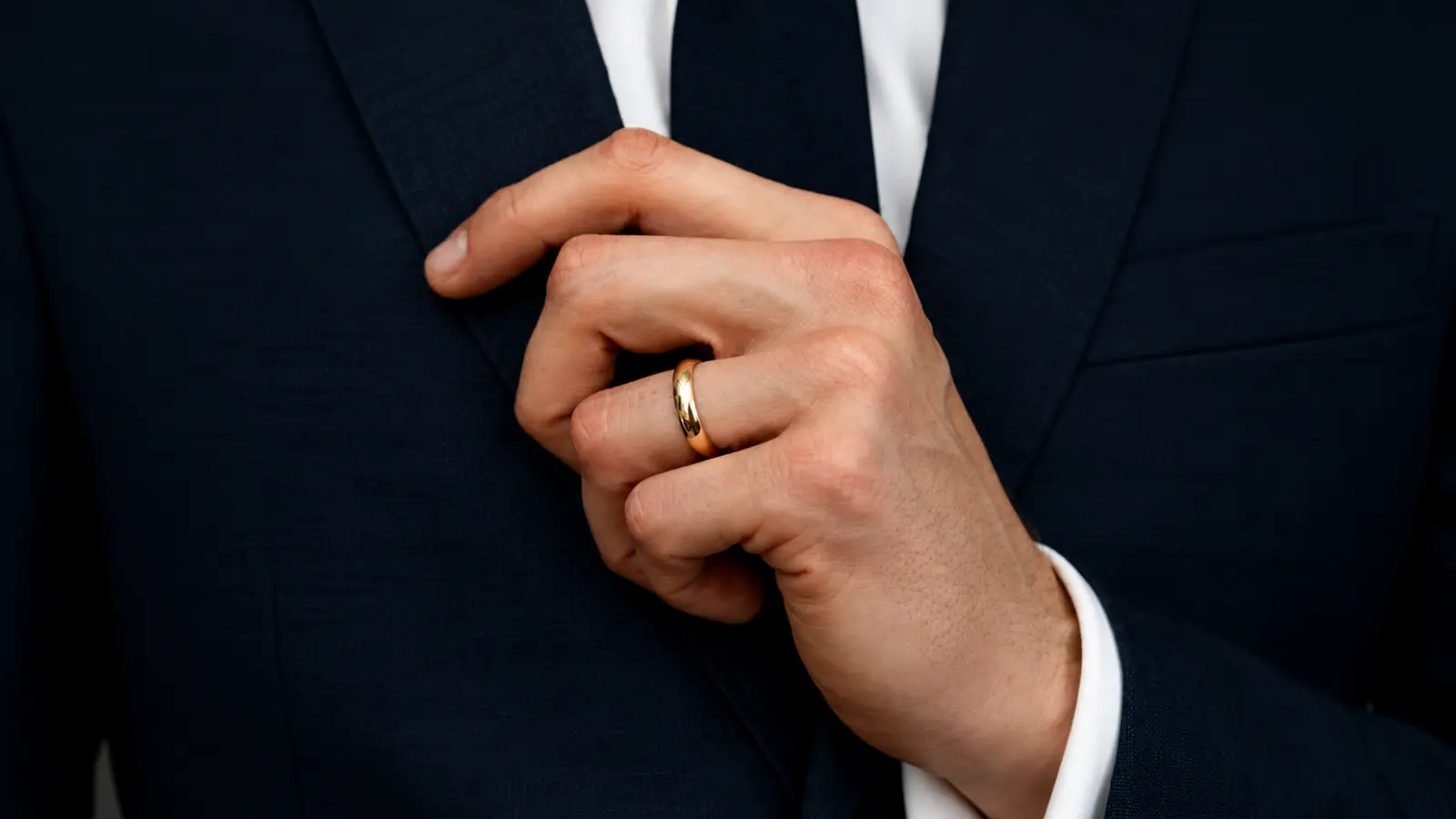
The plain wedding band, smooth metal, no stones, no decorative engraving, is the oldest continuous form of the wedding ring and remains one of the most widely chosen. This is not a default made by people who did not look at the options. It is a deliberate choice made by people who understand that the ring’s meaning comes from what it represents, not from what it contains, and that a well-made plain band in good metal worn every day for forty years develops a character that no more elaborate design can replicate.
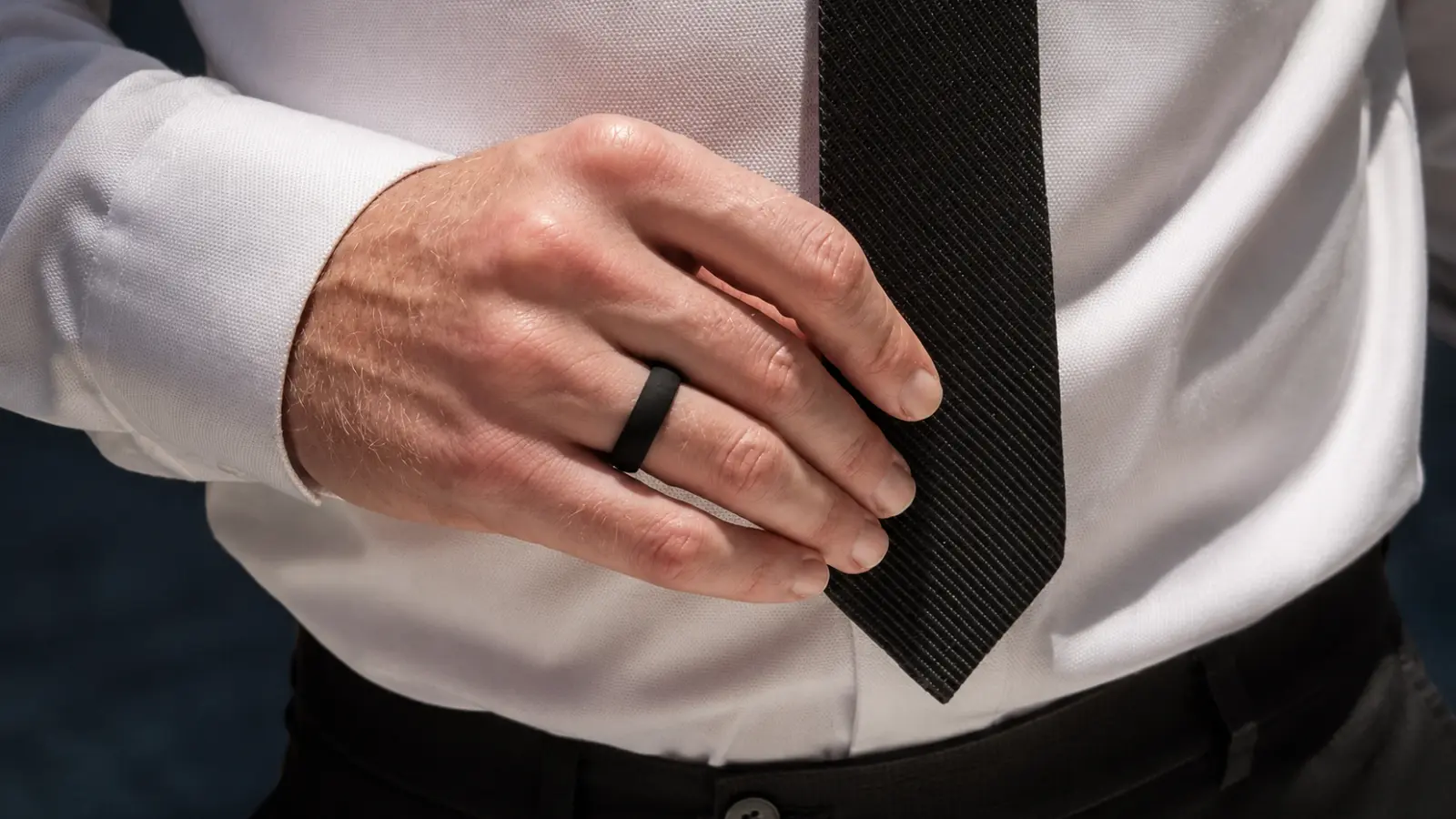
Plain bands come in every metal: yellow gold, white gold, rose gold, platinum, palladium, titanium, tungsten, and cobalt chrome. Width is the primary design variable — narrower bands (2mm to 3mm) feel delicate and understated; medium widths (4mm to 5mm) are the most common choice for women; wider bands (6mm and above) are the standard range for men’s rings and make a more substantial visual statement. Profile is the secondary variable: a flat profile reads as modern and clean; a court profile (domed on both the inside and outside) is the most comfortable for continuous wear; a D-shape profile (flat inside, domed outside) is the traditional English wedding band shape.
Finish variations on plain bands
Plain does not mean identical. The surface finish of a plain band dramatically affects its visual character. A high-polish finish produces a mirror-like shine that catches light and reads as formal. A brushed or matte finish creates a softer, more industrial look that shows fewer scratches in daily wear. A hammered finish introduces texture through deliberate surface marks, with each band slightly different and a handcrafted quality. A satin finish sits between polish and matte: a soft sheen rather than a full mirror.
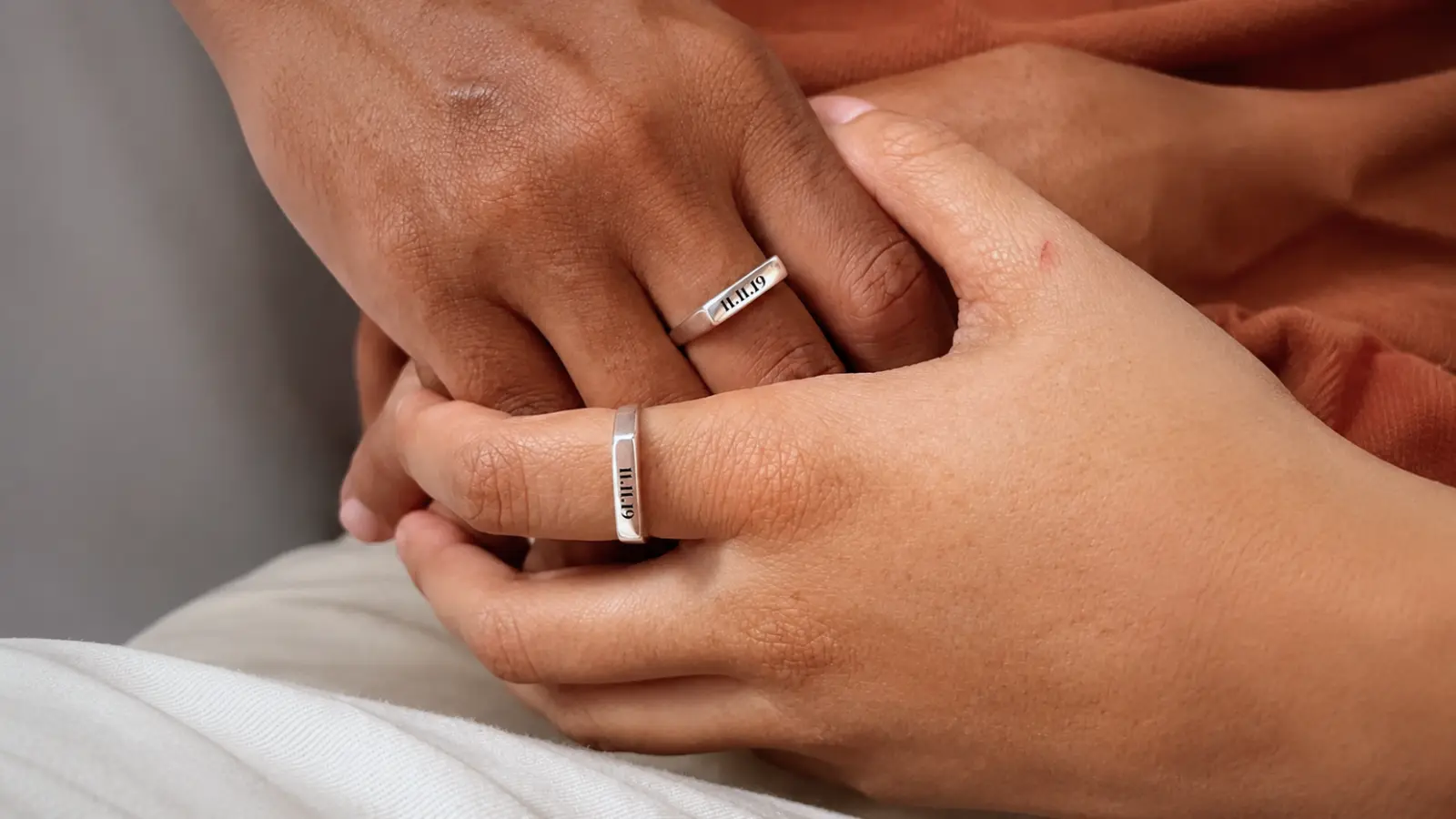
Many plain bands combine finishes (a brushed center with polished beveled edges is one of the most common configurations for men’s rings), creating textural interest without introducing stones or engraving. Engraved plain bands, where patterns or text are cut into the metal surface, occupy a middle ground between plain and decorative, offering personalization (wedding dates, initials, short phrases) visible only on the inside or visible across the exterior surface depending on the design.
Diamond Wedding Bands
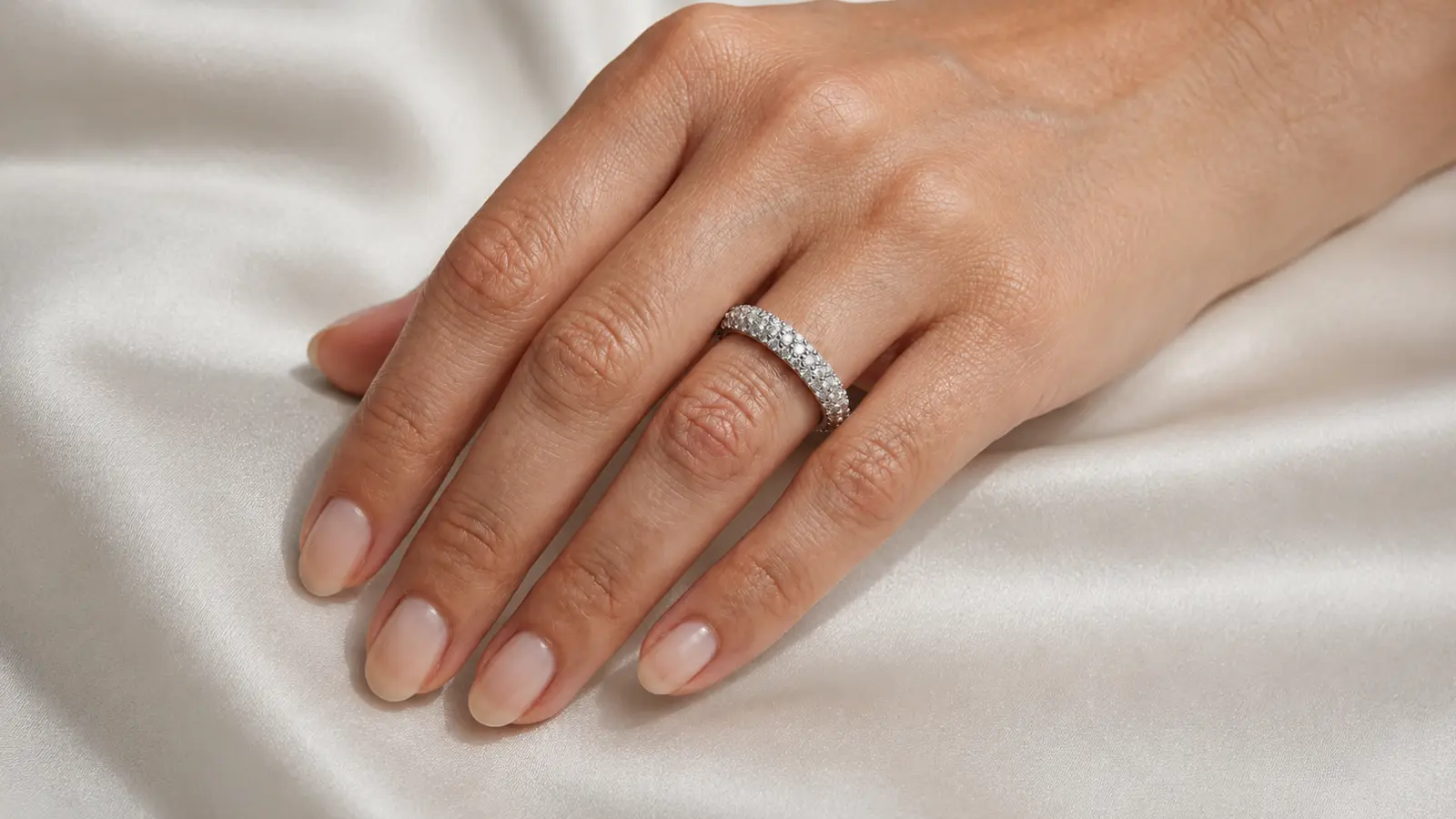
Diamond wedding bands introduce stones into the ring without necessarily changing its fundamental band format. The stone setting style determines how the diamonds look, how they wear, how securely they are held, and how much maintenance they require over time. There are four primary setting styles used in diamond wedding bands, and the differences between them are practical as well as aesthetic.
Channel setting
In a channel setting, diamonds sit in a groove cut into the metal, held in place by the metal walls on either side rather than by individual prongs. The stones sit flush or near-flush with the band’s surface, which means no prongs to catch on fabric and minimal exposure of the stone’s vulnerable girdle edges. Channel-set diamond bands are among the most durable diamond ring configurations for daily wear — practical for active lifestyles and for people who work with their hands. The trade-off: channel-set stones are more difficult to replace individually if one chips or loosens, since the metal groove must be opened to access the stone.
Pavé setting
In a pavé setting, small diamonds are set closely together across the band’s surface, held by tiny beads or prongs of metal between each stone. The result is a continuous surface of sparkle — the metal largely disappears under the density of the stones. Pavé bands create the maximum light return and visual brilliance of any diamond band style. They are more delicate than channel-set bands: the small prongs holding each stone can catch on fabric and bend over time, and individual stones can loosen and fall out with enough wear. Pavé bands benefit from annual jeweler inspection to catch any loose stones before they are lost.
Prong setting
Prong-set diamond bands feature individual diamonds each held by small claws of metal — the same principle as an engagement ring solitaire, applied across a band format. Prong settings maximize the visibility of each stone and allow maximum light to enter from all angles, but they leave more of each stone exposed than channel or bezel settings. Prongs can catch on fabric and wear down over time; like pavé settings, prong-set bands benefit from regular professional inspection.
Bezel setting
In a bezel setting, each diamond is individually enclosed by a rim of metal that wraps around its perimeter. Bezel-set diamond bands offer the most protection of any setting style (the metal surrounds the stone’s entire edge) and the cleanest, most modern aesthetic. Bezel settings are the most practical choice for people who want diamond sparkle with minimal maintenance concern. The trade-off is slightly reduced brilliance compared to prong or pavé, since the surrounding metal blocks some of the light angles that contribute to diamond fire.
For a full guide to diamond band styles, stone grades, and recommendations across budgets, see the diamond wedding rings.
Eternity Wedding Bands
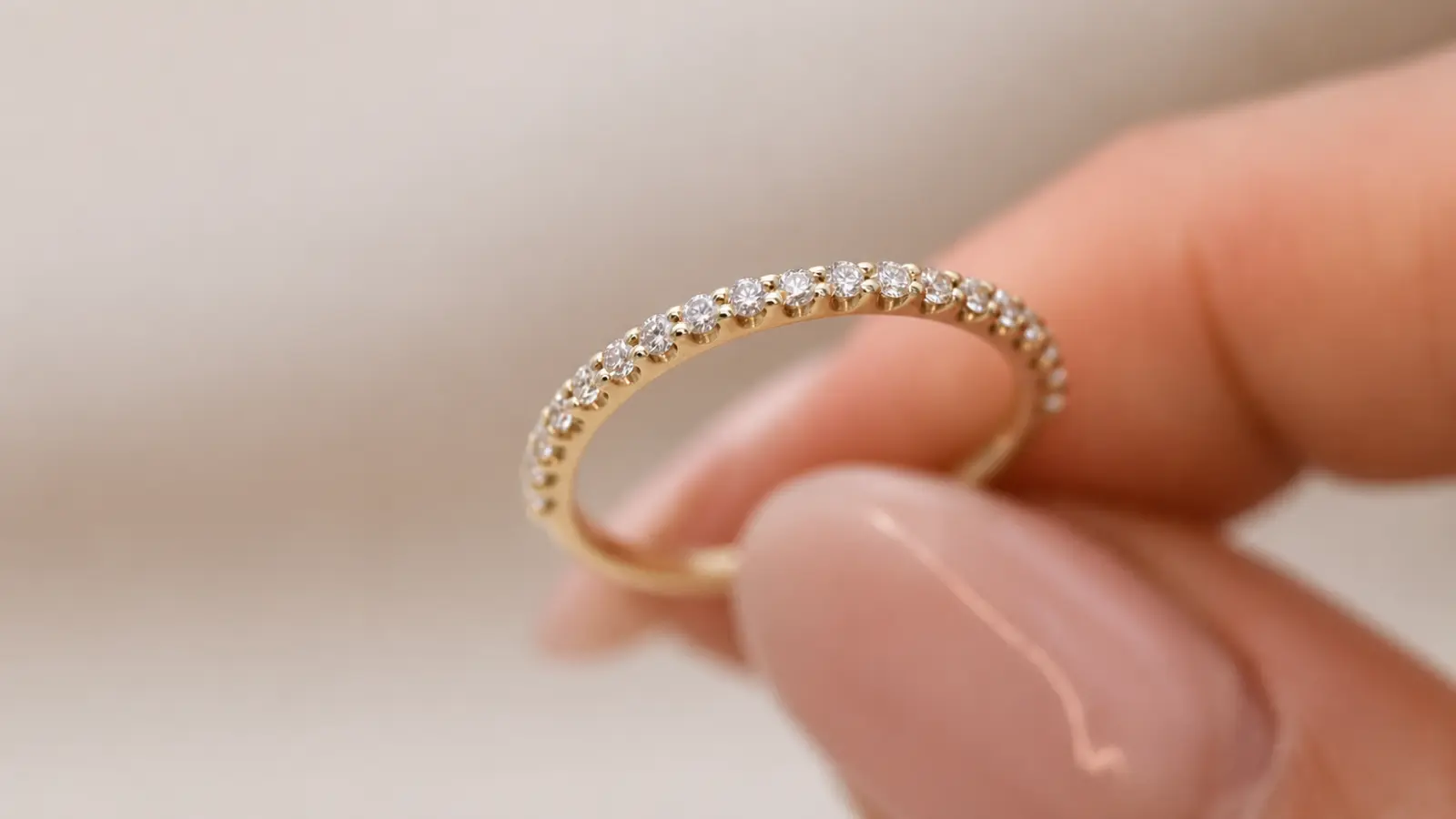
Eternity bands carry their name honestly: diamonds or gemstones set continuously around the entire circumference of the ring, with no break in coverage. The symbolism, a circle with no beginning and no end, covered entirely in stones, is the most explicit visual statement available in wedding ring design. The full eternity band is also the style with the most significant practical limitation: it cannot be resized.
Because the stone setting runs all the way around the ring, there is no unset section of metal that a jeweler can cut and expand or compress to adjust the size. A full eternity band is a fixed size at purchase. Given that fingers change over decades, with age, weight change, pregnancy, and temperature, this is a real consideration, not a hypothetical one. Many couples who choose full eternity bands purchase them in a size that accommodates anticipated future change or accept that the ring may eventually need to be replaced rather than resized.
Half-eternity bands
The half-eternity band sets stones only across the top half of the band, the visible portion when worn on the finger, while the lower half remains plain metal. This single design difference creates meaningful practical advantages. The lower portion of plain metal can be cut and adjusted by a jeweler, making the ring resizable. Stones on the inner surface of the ring (which the full eternity has and the half-eternity does not) can cause irritation, particularly with larger stones or prong settings; the half-eternity eliminates this entirely. The visual effect of a half-eternity when worn is indistinguishable from a full eternity from the front-facing angle, since only the top half is visible on the hand.
For most couples who want the eternity band aesthetic, the half-eternity is the more practical choice. The full eternity makes most sense when the couple has strong confidence in their ring size stability and a specific commitment to the full-circle symbolism.
Eternity bands as anniversary rings
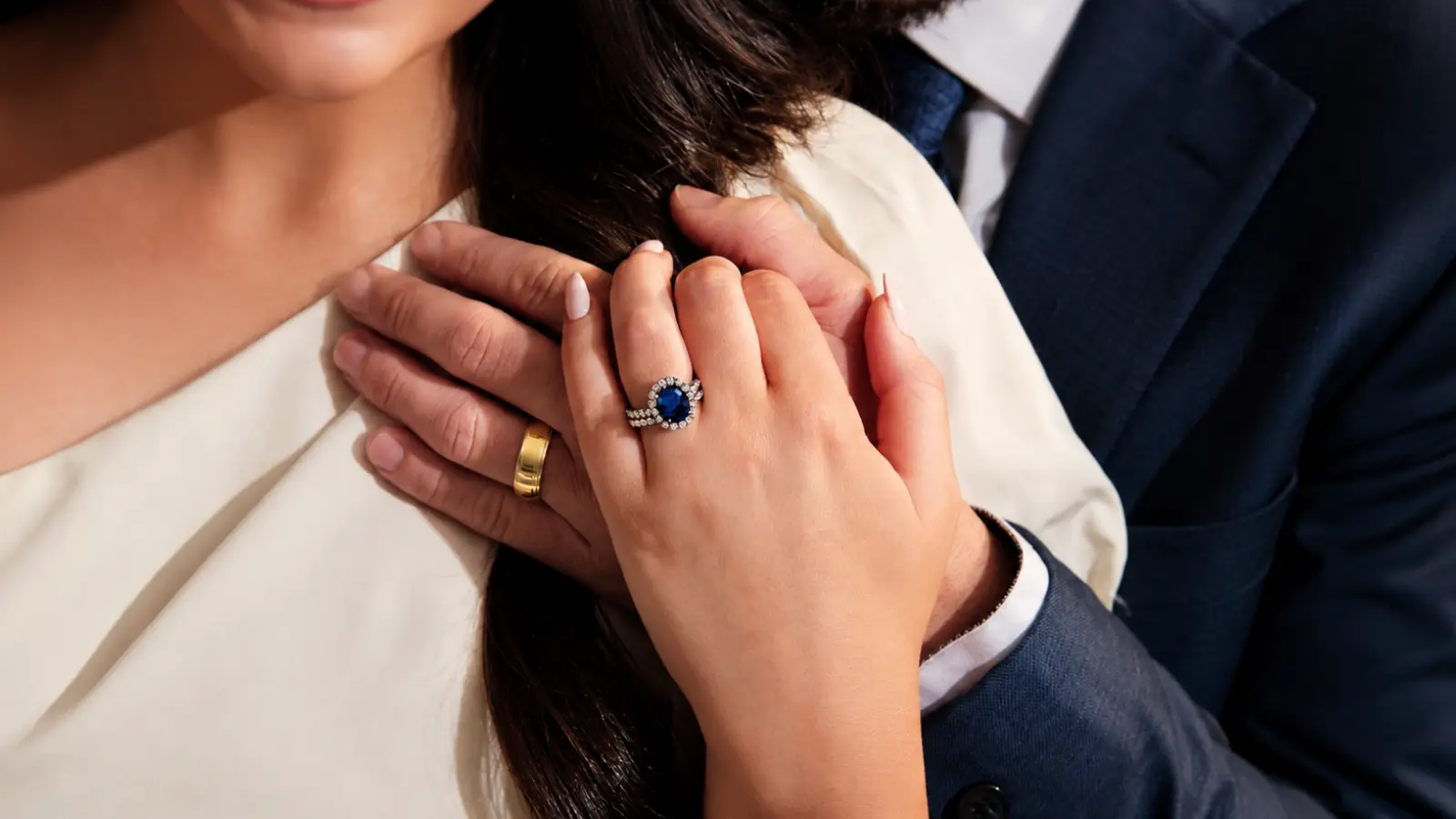
Eternity bands are among the most common anniversary ring choices — particularly for milestone anniversaries where adding a significant ring to the existing wedding set is a meaningful gesture. Worn as a third ring alongside an engagement ring and a plain wedding band, a diamond eternity band completes a layered ring look that many couples build toward over years rather than choosing all at once on the wedding day.
Curved and Contoured Bands
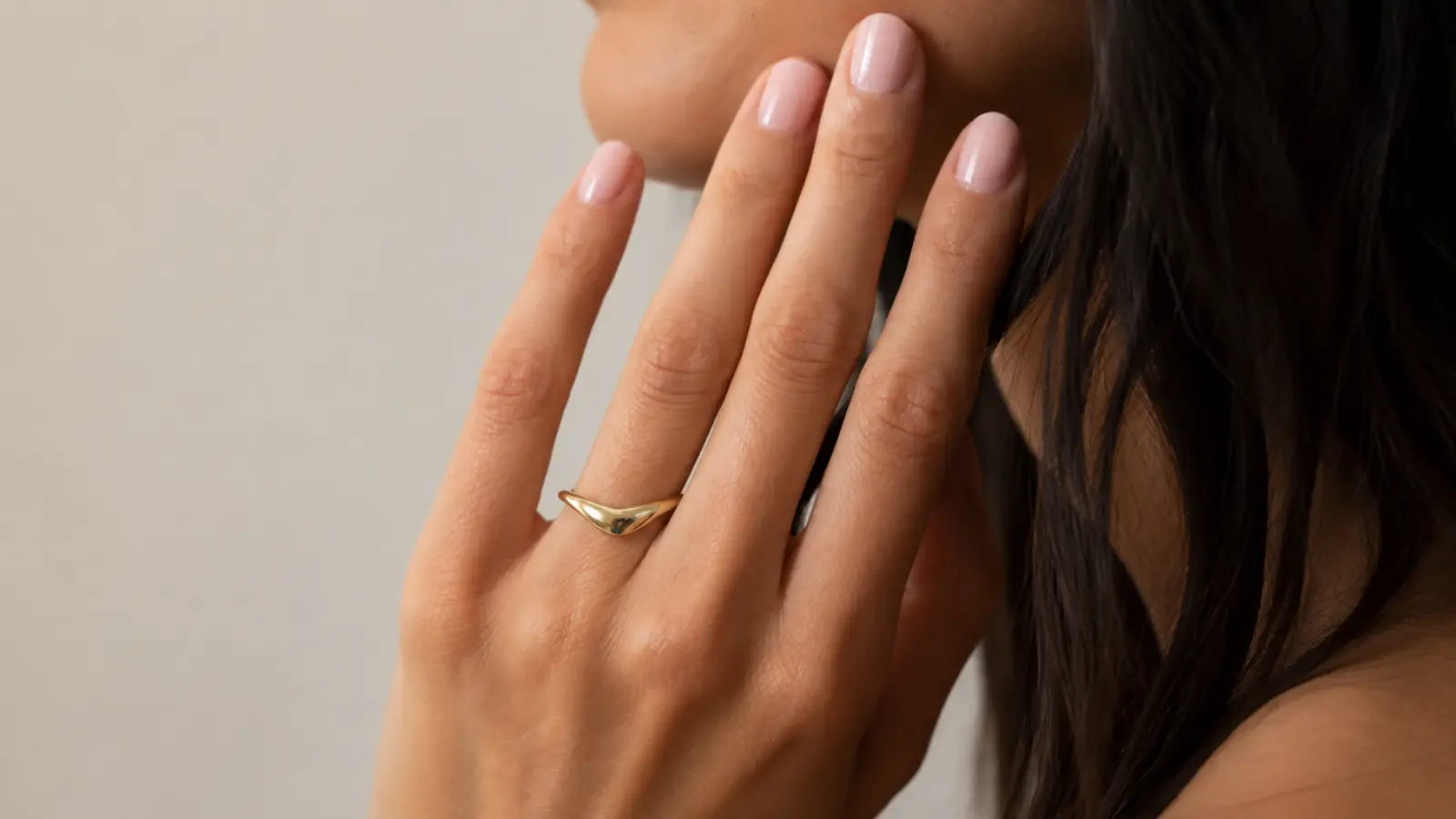
The curved wedding band is a solution to a specific physical problem: most engagement ring settings are raised above the finger’s surface, which means a straight wedding band does not sit flush against them. The gap between a straight band and a cathedral, halo, or raised solitaire engagement ring is not merely aesthetic — it creates space for debris to collect, it allows both rings to shift independently, and it means the combined look is two separate objects rather than one unified piece.
A curved band is shaped at the top, bent inward at an angle or formed with a notch or shadow, so it nests against the specific profile of the engagement ring it will accompany. When the two rings are worn together, they sit flush with no gap, creating the appearance of a single designed piece. The visual coherence of a well-matched curved band and engagement ring is something that a straight band cannot replicate regardless of how beautiful each ring is individually.
How curved bands are purchased
Curved bands are most often purchased or custom-ordered to match a specific engagement ring. Many engagement ring designers offer matching curved bands designed for their settings — the simplest way to guarantee fit. Custom jewelers can create a curved band shaped to any engagement ring’s profile, using the ring itself as a template. Some couples purchase both rings at the same time from the same designer; others buy the curved wedding band later, once the engagement ring has been worn long enough to know exactly how a band needs to sit against it.
The one practical consideration: a curved band worn without the engagement ring, during times when only one ring is worn, may look slightly unusual, since the curve at the top is specifically designed for the other ring’s presence. This is worth knowing before committing to a design where the curved band is intended to be worn alone on occasion.
Contoured bands
A contoured band is similar in concept to a curved band but shaped to follow the full three-dimensional profile of the engagement ring rather than just curving at a single point. Where a curved band typically bends inward at the top, a contoured band may wrap, shadow, or mirror the engagement ring’s silhouette across its full shape. Contoured bands are more custom in nature and typically more expensive; they reward couples who want the paired ring combination to function visually as one designed object.
Stackable Wedding Rings
The stackable ring approach treats the wedding ring not as a single permanent piece but as the foundation of a ring story that accumulates over time. A plain or thin diamond band at the wedding, an anniversary band added at year five, a colored stone band at year ten — the stack builds with the marriage, each ring marking a different moment while contributing to a whole that becomes more personal with each addition.
Stackable rings are typically thin, 1.5mm to 2.5mm, to allow multiple bands to be worn without creating uncomfortable bulk or overwhelming the finger. Width discipline matters: three 2mm stackable wedding rings create 6mm of combined width, which is noticeable on the hand. Five stacked bands, even thin ones, will feel more substantial than many people anticipate. Trying on the intended combination before committing to the full stack is worth the effort.
What makes rings stack well together
Stacks work best when the individual rings share some common element that creates visual coherence — the same metal, a similar finish, a complementary scale. Rings that are genuinely random in metal, width, and style can look chaotic rather than intentional. The most successful stacks tend to have a through-line: all yellow gold in varying textures, or all white metal in varying stone settings, or a deliberate mixed-metal palette chosen as a design choice rather than an accident of accumulation.
Plain bands stack with almost anything. Diamond bands add sparkle but need more careful placement — a pavé band against another pavé band creates visual competition; a pavé band between two plain bands creates a focal point. Colored stone bands introduce color that requires more careful coordination with existing rings in the stack.
For full guidance on how to wear rings together, including stacking order, comfort, and daily arrangement, see the how to wear wedding rings. For styled sets designed to stack together, the wedding ring sets covers bridal sets and coordinated band collections.
Ring Enhancers and Guards
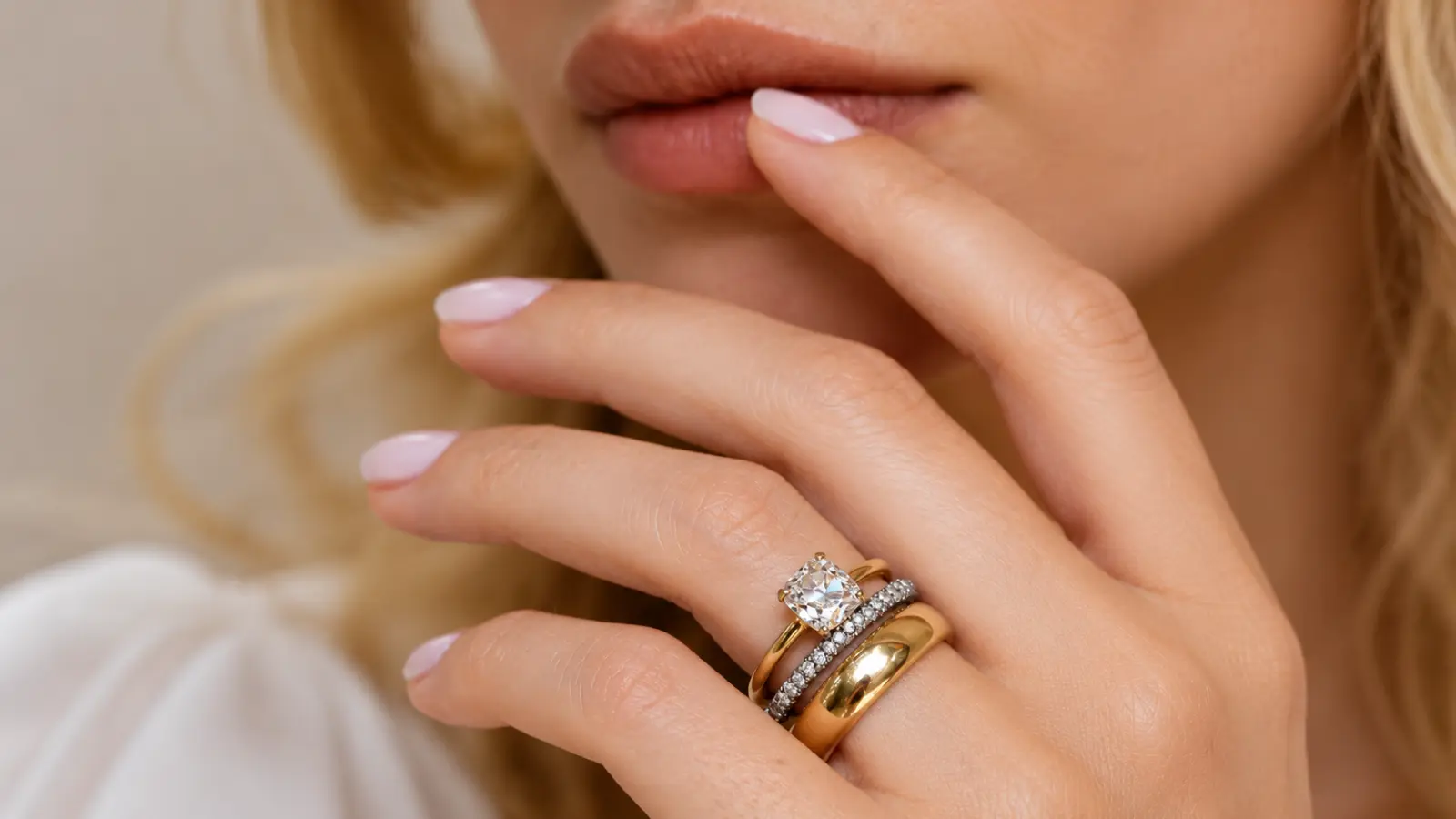
A ring enhancer, also called a ring guard or ring wrap, is a piece of jewelry designed to surround an existing ring rather than replace it. The concept addresses a specific situation: a couple has a ring they love, and they want to add to it without changing it. The enhancer frames the original ring, typically adding diamonds or decorative metalwork in a surround that transforms the ring’s visual presence while leaving the original piece intact and centered.
Common uses for ring enhancers
Upgrading a simple solitaire. A solitaire engagement ring or a plain wedding band gains visual complexity and sparkle when framed by an enhancer — without removing or replacing the original ring. Many couples who received simple rings early in their relationship choose enhancers at later milestones as a way of adding to the original rather than superseding it.
Anniversary additions. Ring enhancers are a natural anniversary gift choice — they are meaningful (directly connected to the original ring), significant (a substantial piece of jewelry), and additive rather than substitutional. An enhancer given at the 10th or 25th anniversary adds to the visual history of the ring rather than starting over.
Protection for vulnerable rings. Some enhancers are chosen specifically to add metal framing around a stone that sits exposed in a simple setting, adding a layer of protection against impact to the sides of the stone.
Permanent vs. removable enhancers
Some wedding ring enhancers are designed to be permanently soldered to the existing ring, creating a unified piece. Others clip or slide onto the existing ring and can be removed — worn when the couple wants the full enhanced look, removed when the original ring is preferred alone. Removable enhancers are more versatile; permanent ones create a cleaner visual with no risk of the enhancer shifting on the finger. A jeweler can advise on which approach suits the specific rings involved and the wearer’s daily habits.
Style Aesthetics: Vintage, Modern, Classic, and Unique
Beyond the structural categories above, wedding ring styles are often described in aesthetic terms — and these aesthetic frameworks cut across structural types. A plain band can be classic or modern. A diamond band can be vintage or unique. Understanding the aesthetic language helps couples communicate what they are looking for with jewelers and narrow options across the full range of available styles.
Classic
Classic wedding ring style means timeless: designs that looked appropriate in 1950 and will look appropriate in 2050, with no period-specific details that will eventually feel dated. Classic styles include smooth plain bands in traditional widths, simple half-eternity diamonds in channel or bezel settings, and solitaire-adjacent designs with no strong trend influence. A classic ring is not a boring ring; it is a ring whose beauty does not depend on being contemporary.
Vintage
Vintage-inspired wedding rings draw from specific historical design periods: Art Deco (1920s–1930s, geometric patterns, black and white contrast, strong symmetry), Victorian (1837–1901, intricate metalwork, romantic motifs, rose gold and yellow gold), and Edwardian (1901–1910, lacy filigree, milgrain detail, platinum). Milgrain, a border of tiny beaded metal detail along the edges of the band, is the single most widely used vintage design element, present in contemporary rings far beyond strictly vintage-styled pieces. Filigree (open metalwork creating lace-like patterns) and engraved floral motifs are also common. Vintage rings suit brides whose overall aesthetic leans romantic and historical; they pair most naturally with vintage-inspired engagement rings or with round brilliant and oval-cut stones.
Modern and minimalist
Modern wedding ring styles favor clean geometry, negative space, and intentional simplicity. Thin bands under 2mm, bezel-set single stones, brushed or matte finishes, and architectural shapes characterize this aesthetic. The minimalist approach has grown significantly — the ring that is barely there, present on the hand but not demanding attention, is a deliberate and increasingly popular choice. Modern styles tend to photograph subtly and wear comfortably precisely because they prioritize understatement.
Unique
The unique wedding band category covers everything that resists straightforward classification: rings with colored gemstones instead of diamonds, mixed materials (gold with wood inlay, titanium with carbon fiber, tungsten with opal inlay), entirely custom designs, nature-inspired forms, and unconventional shapes. A unique wedding band is most successful when it reflects something genuinely specific about the wearer, such as a material connected to their work or interests or a design with personal symbolic meaning, rather than being unusual for the sake of contrast. The unique wedding rings guide covers this category in full.
All Wedding Ring Styles at a Glance
| Style | Key Characteristic | Resizable? | Best For | Pairs With |
|---|---|---|---|---|
| Plain band | Smooth unadorned metal, all finishes | Yes | Any lifestyle, classic aesthetic, active wearers | Any engagement ring, any stack |
| Channel-set diamond band | Diamonds recessed in metal groove | Usually | Active lifestyles, durability-conscious | Solitaire or halo engagement rings |
| Pavé diamond band | Dense small diamonds, maximum sparkle | Sometimes | Statement look, classic or modern aesthetic | Plain solitaire engagement rings |
| Bezel-set diamond band | Each diamond enclosed in metal rim | Usually | Modern aesthetic, protective setting preference | Modern or minimalist engagement rings |
| Full eternity band | Stones all the way around | No | Strong size confidence, maximum symbolic statement | Worn alone or as anniversary addition |
| Half-eternity band | Stones on top half only | Yes | Eternity look with resizing flexibility | Any engagement ring, stacks well |
| Curved / contoured band | Shaped to nest against specific ring | Limited | Pairing with raised engagement ring settings | Solitaire, halo, cathedral, vintage rings |
| Stackable band | Thin, 1.5mm–2.5mm, designed to layer | Yes | Building ring set over time, versatile wearers | Other stackable bands, plain bands |
| Ring enhancer / guard | Frames an existing ring | N/A | Adding to existing ring, anniversary upgrade | Solitaire rings, plain bands |
| Vintage / milgrain band | Beaded detail, engraving, filigree | Usually | Romantic aesthetic, vintage engagement ring pairing | Vintage and antique engagement rings |
| Unique / alternative band | Non-standard materials or design | Varies | Strong personal aesthetic, non-traditional couples | Depends on specific design |
How to Choose the Right Style
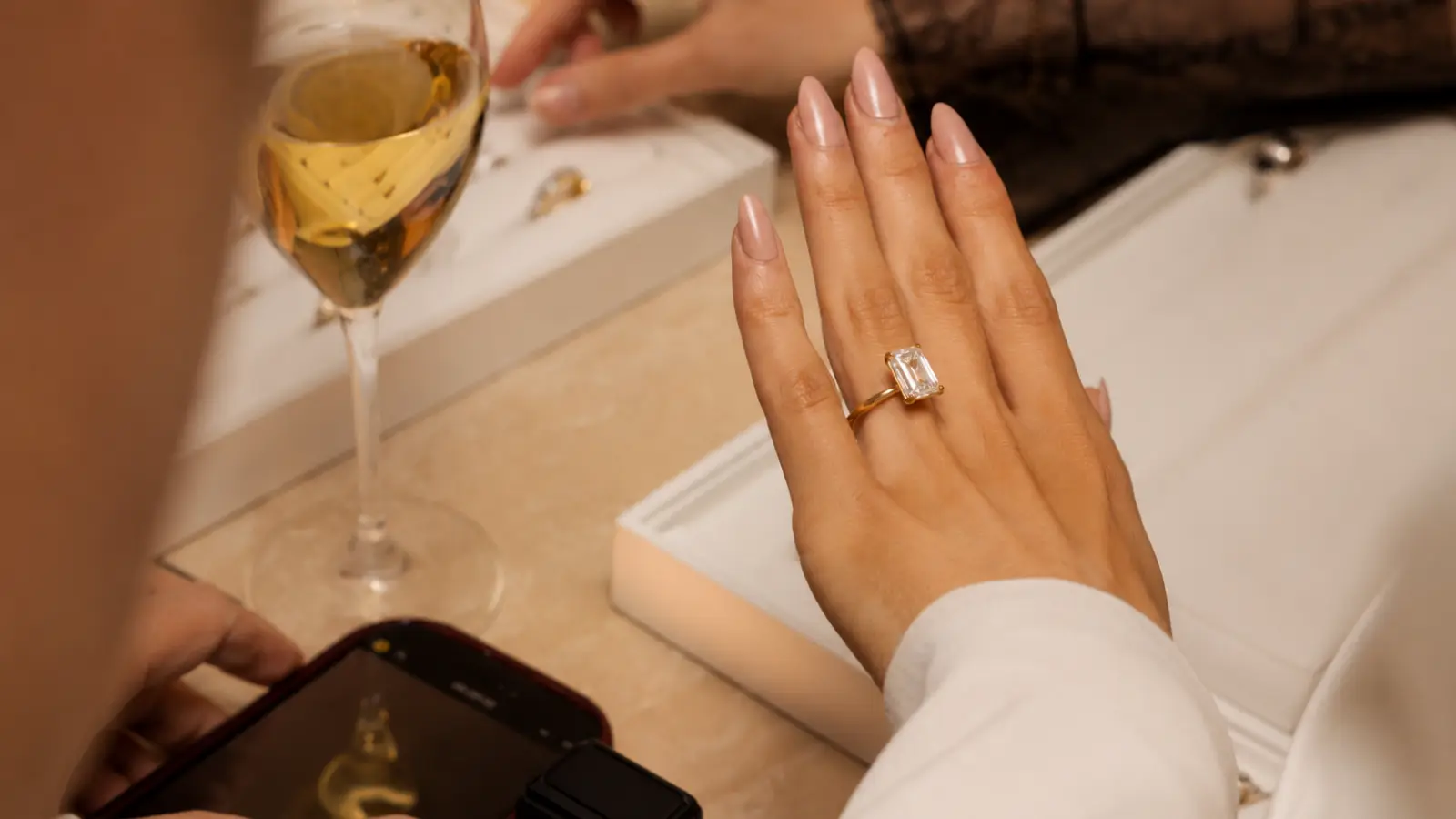
The right wedding ring style is rarely discovered by browsing — it is reached by answering a series of specific questions about the wearer’s life, existing jewelry, and long-term relationship with the ring. Style preferences are a useful starting point, but they are not a reliable endpoint on their own.
Start with the engagement ring, if there is one
For anyone pairing a wedding band with an engagement ring, the engagement ring drives the first decision: does the band need to curve or contour to nest against the engagement ring’s setting, or does it sit flush against a setting low enough to allow a straight band? This is a physical question, not a stylistic one, and it should be answered with both rings present — either in a jeweler’s setting or by ordering trial rings. Choosing a style before establishing this eliminates many options and wastes shopping time.
The metal of the engagement ring is the second constraint. Pairing two different metals on the same finger is done deliberately by couples who want mixed-metal stacks, but it requires intentionality — accidentally pairing mismatched metals because they were purchased separately without coordination tends to look unplanned. If the goal is visual cohesion, the wedding band metal should match or deliberately complement the engagement ring metal.
Match style to lifestyle, not to inspiration images
A pavé diamond band photographed on a model’s hand looks extraordinary. On the hand of someone who works in healthcare and washes their hands twelve times a day, it is a maintenance challenge that will show its age more quickly than a channel-set or plain band in the same metal. The most photographically appealing option and the most appropriate option for daily wear over decades are often different rings — and the daily wear consideration is more important.
Active hands, including exercise, gardening, physical work, and regular cooking, favor lower-profile settings (channel, bezel, plain) over higher-profile ones (prong, pavé with prominent stones). Desk work and indoor professional environments allow a wider range. The lifestyle question is not about limiting choices; it is about choosing a ring that will look as good in ten years as it does today.
Consider resizability as a long-term factor
Finger size changes. Not always dramatically, but reliably over decades, with weight fluctuation, pregnancy, and the gradual changes that come with age. A ring purchased in a size that fits perfectly at 28 may need wedding ring resizing by 45. Full eternity bands cannot be resized; neither can most tungsten and titanium rings. Plain bands, half-eternity bands, and most diamond bands in gold or platinum can be resized by a jeweler. This consideration is easy to overlook when the ring fits perfectly; it matters most years later, when it does not.
Decide whether the ring should work alone or always in a pair
Some wedding rings are worn constantly alongside an engagement ring and are rarely seen without it. Others are the only ring on the hand, either because no engagement ring was chosen, or because the engagement ring is only worn on special occasions. These two situations call for different design decisions. A wedding band that will always be seen with an engagement ring can afford to be understated, since the pair creates the complete visual. A wedding band intended to stand alone needs to be complete on its own terms: interesting enough, substantial enough, and expressive enough to function as the only piece of jewelry on that finger.
For further guidance on women’s styles specifically, see the wedding rings for women. For men’s styles, widths, metals, and finish options, the men’s wedding bands covers the full range.
Wedding Ring Style Inspiration
Wedding ring styles can completely change the look and feeling of a wedding set, from simple classic bands to detailed diamond designs. Explore our inspiration board for plain wedding bands, eternity rings, vintage styles, modern designs, stackable rings, and unique ideas to help you find a style that feels right for you.
Choosing a Wedding Ring Style That Fits Your Life
The best wedding ring style is not always the most detailed, the most expensive, or the one that stands out the most in photos. It is the style that feels natural in your everyday life — the one that matches your routine, your personality, your comfort, and the way you want to wear your ring for years.
Whether you choose a simple plain band, a diamond wedding ring, a vintage design, or a stack of meaningful pieces built over time, the right style becomes more than a wedding choice. It becomes a piece of your daily life and part of the story that continues after the wedding day.
Frequently asked questions (FAQ)
What is the most popular wedding ring style?
The most popular wedding ring styles are classic plain bands, diamond bands, and half-eternity bands because they balance appearance, comfort, and long-term practicality. Plain bands remain timeless because they work with almost any lifestyle, while diamond and half-eternity bands add sparkle without becoming overly difficult to wear every day. The best style is not always the most popular one — it is the one that matches how you plan to wear the ring for decades.
How do you choose a wedding ring style that will not go out of fashion?
Choose a wedding ring style based on proportion, comfort, and personal taste rather than short-term trends. Simple metal bands, classic diamond settings, and balanced designs tend to age well because they are not connected to one specific fashion moment. Unique or modern rings can also be timeless when they reflect your actual style instead of a temporary trend.
Should your wedding ring match your engagement ring?
Your wedding ring does not have to match your engagement ring exactly, but the two rings should feel intentional together. Consider the metal color, width, height, and how closely the rings sit next to each other. Some engagement rings look best with a matching curved or contoured band, while others pair beautifully with a contrasting style.
Is a full eternity or half-eternity wedding band better?
A half-eternity wedding band is usually the more practical choice for everyday wear because it creates a similar appearance while allowing easier resizing and greater comfort. A full eternity band offers diamonds or gemstones around the entire ring and has strong symbolism, but it is harder to adjust if your finger size changes over time.
What wedding ring style is best for an active lifestyle?
For an active lifestyle, lower-maintenance styles are usually best. Plain bands, channel-set diamond bands, and bezel-set bands have fewer exposed details and are less likely to catch, loosen, or require frequent repairs. More delicate designs like pavé bands can still work, but they may need more regular inspections and care.
Should you choose a simple or unique wedding ring?
A simple wedding ring is best for someone who values versatility, tradition, and a design that works with everything. A unique wedding ring is better for someone who wants their jewelry to reflect a specific personality, story, or aesthetic. The most important question is not whether a ring is simple or different — it is whether the design still feels like you after many years of wearing it.