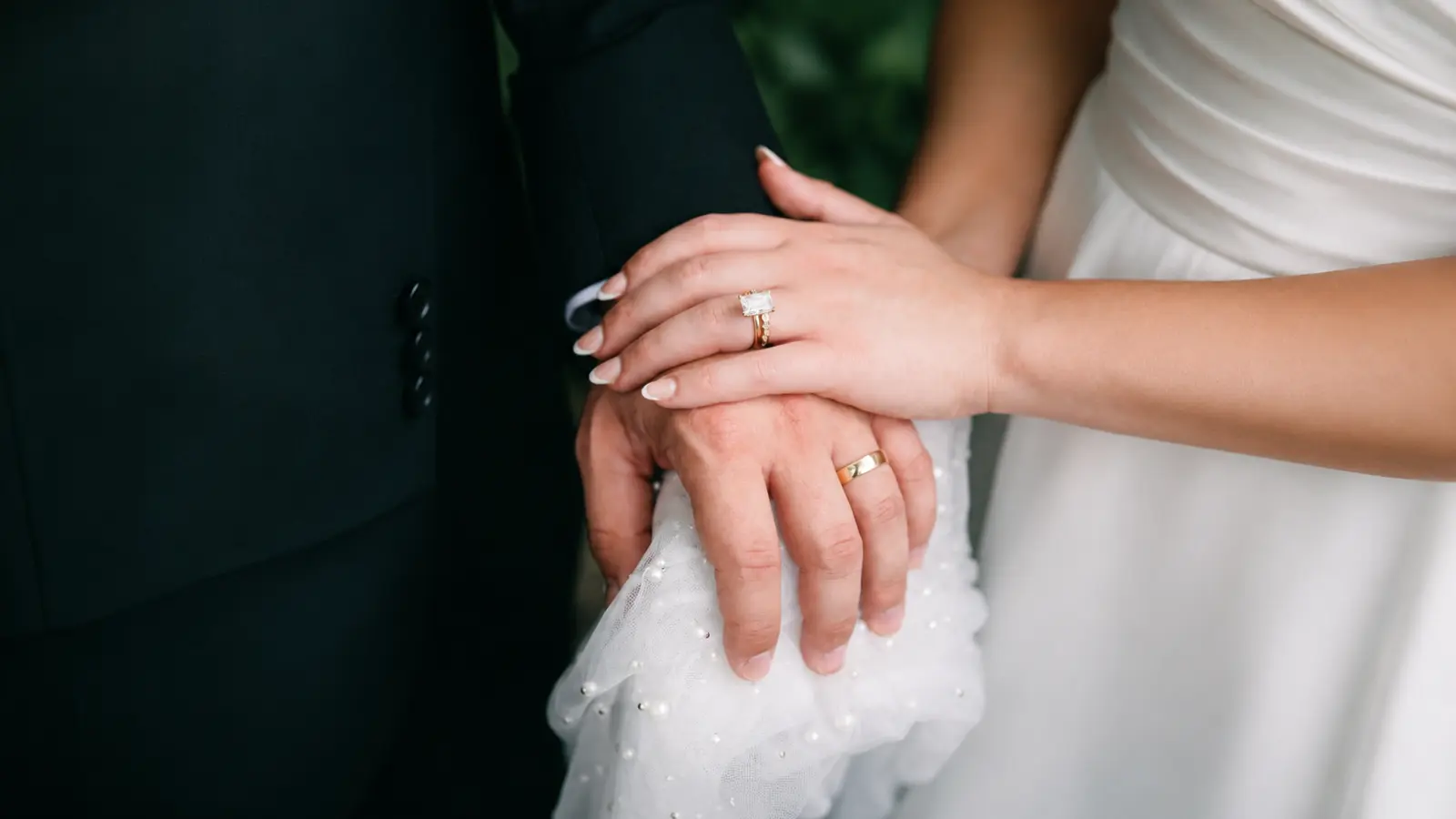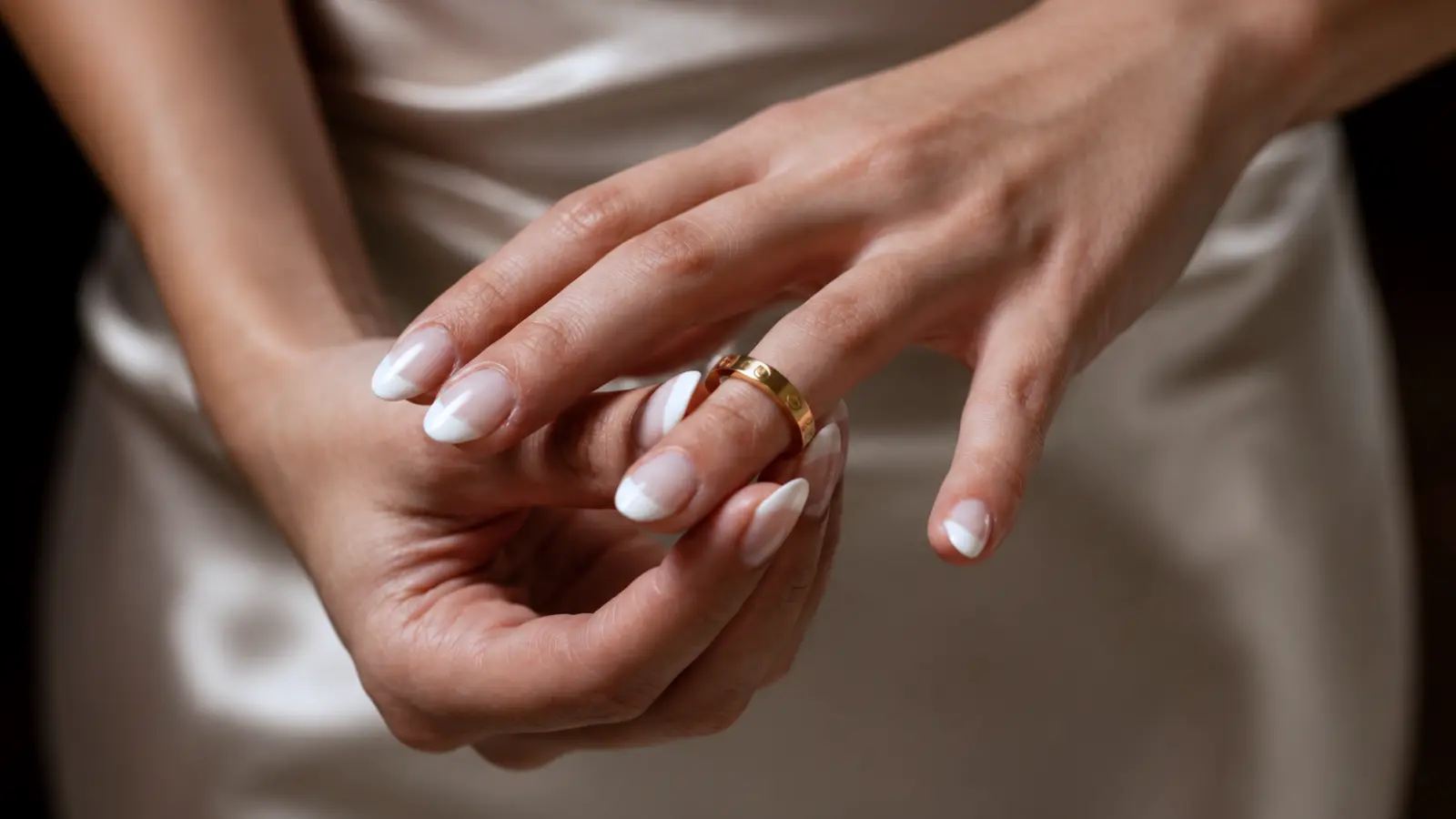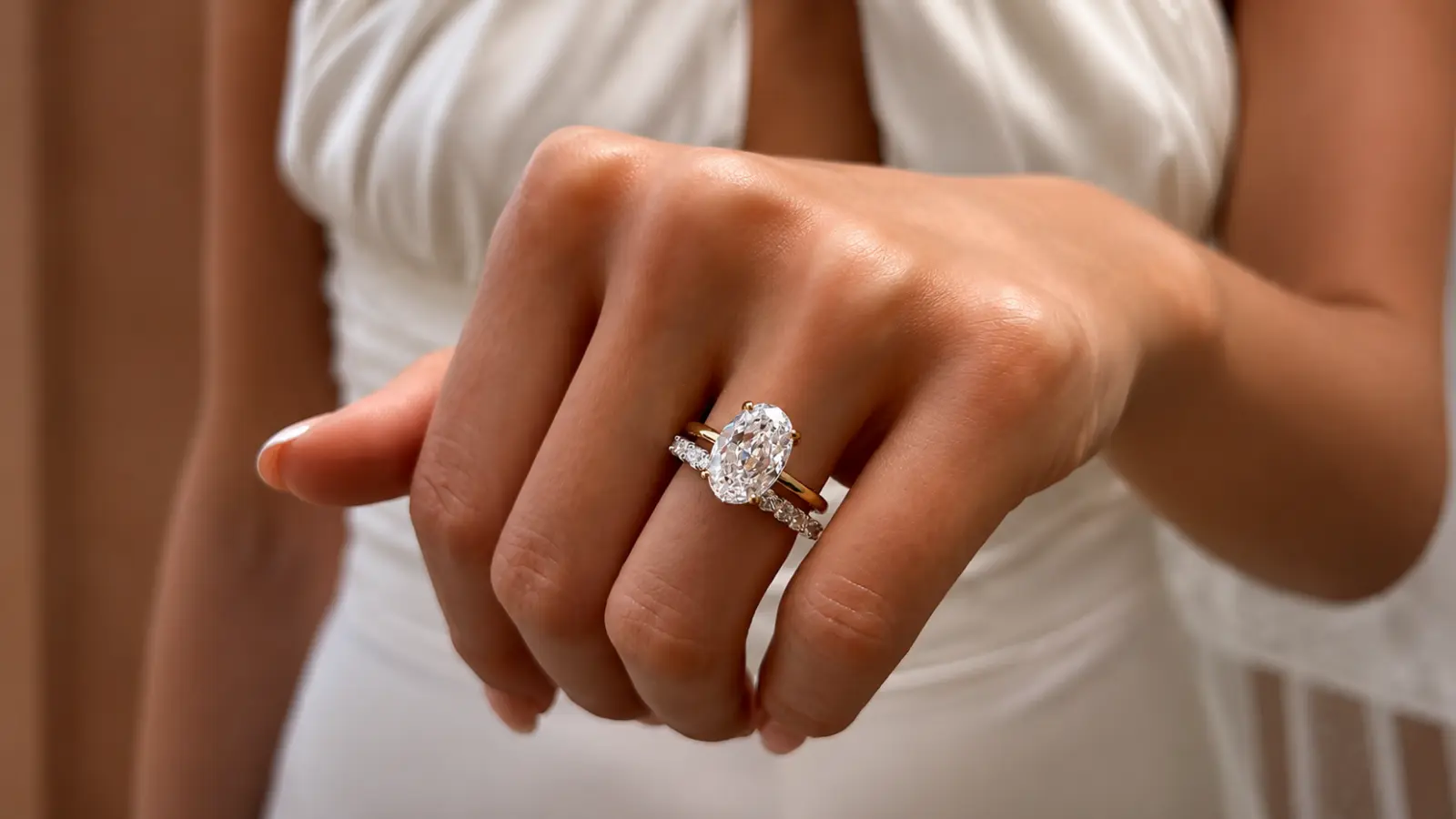
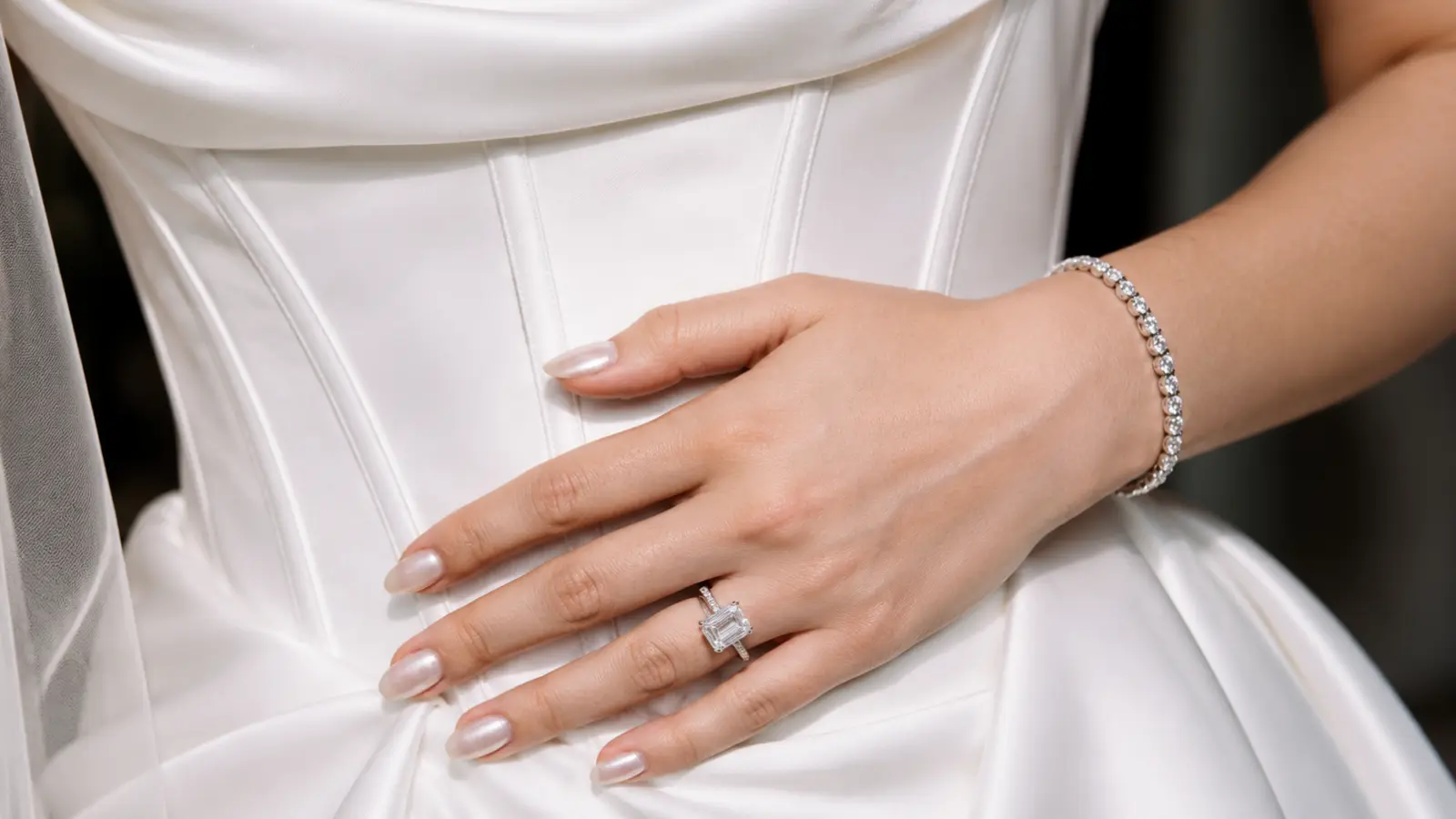
Wedding Rings for women are rings exchanged during the wedding ceremony and designed to be worn as a daily symbol of marriage, either alone or paired with an engagement ring. They come in many styles, including simple gold bands, diamond wedding rings, eternity bands, curved bands, and modern stackable designs.
Choosing the right wedding ring is about more than finding a beautiful style. The best choice depends on your lifestyle, the engagement ring it may sit beside, the metal you prefer, the level of maintenance you want, and how comfortable the ring feels during everyday life.
This guide explains different types of wedding rings for women, including styles, gold and platinum options, diamond bands, stackable designs, how to match a wedding ring with an engagement ring, and how to choose a ring you will love wearing for years.
Best Wedding Ring Styles for Women
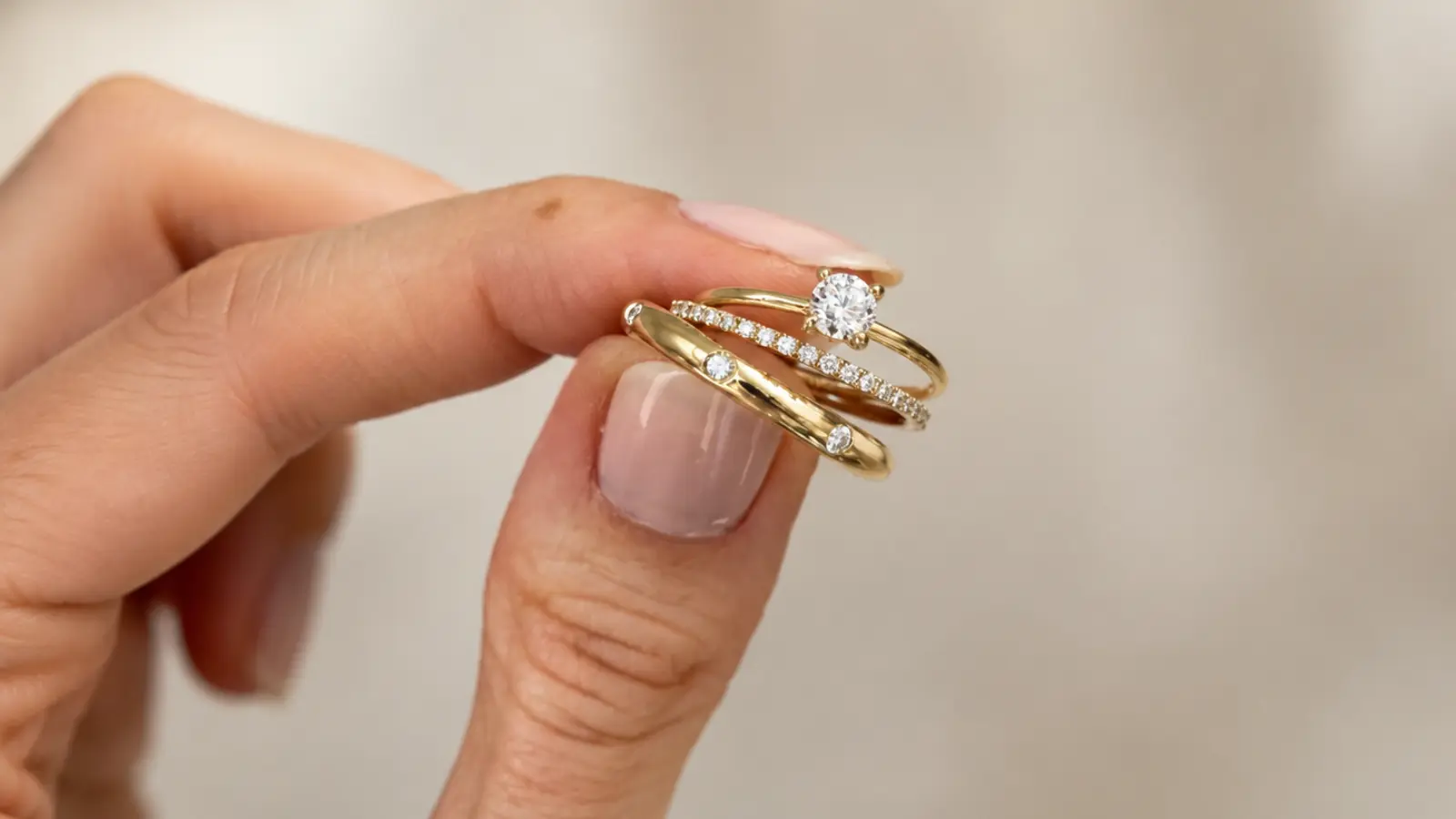
The style categories below are not mutually exclusive — many rings combine elements of more than one — but understanding them as distinct starting points makes it easier to know what you are actually looking for when you begin trying rings on.
Plain bands
A plain band is a continuous circle of metal with no stones and no surface decoration beyond the finish of the metal itself. It is, in a quiet way, the most versatile option available. A plain band works as a standalone ring for women who skip an engagement ring entirely, as a simple counterpoint to a more elaborate engagement ring, or as the foundation of a stack that grows over the years.
The appeal of a plain band tends to grow rather than fade. Many women who chose something more elaborate for their wedding ring find themselves drawn to a simple band years later — for travel, for daily tasks, or as a second ring to wear when the full set feels like too much. A plain band in a slightly domed or comfort-fit profile, rather than perfectly flat, also tends to feel better against the skin over the course of a long day, since it has no sharp edges to catch.
Diamond bands
Diamond wedding bands add a continuous or near-continuous line of stones along the band, typically in one of a few setting styles. Pavé setting uses small diamonds held by tiny shared prongs, creating a surface that looks almost paved with light. Channel setting holds stones between two metal walls with no visible prongs — a style that wears well for active hands since nothing is raised to catch. Shared-prong setting sits between the two, using fewer prongs shared between adjacent stones for a balance of sparkle and durability.
Diamond bands are frequently chosen by women whose engagement ring does not include a diamond, or whose engagement ring features a colored stone and they want some traditional sparkle in the stack. They are also a strong choice for women who want their wedding ring to read as a complete piece on its own — a ring that looks intentional without anything stacked alongside it.
Eternity bands
An eternity band takes the diamond band concept all the way around the circumference of the ring, with stones set continuously rather than across only the front-facing portion. The symbolism is part of the appeal — an unbroken circle of stones echoes the unbroken circle of the band itself. But the practical implications are worth understanding before choosing one.
Because the stones run all the way around, eternity bands are significantly more difficult to resize, and in some cases cannot be resized at all without disturbing the setting. Half-eternity bands — where stones cover roughly the top half of the ring and the underside remains plain metal — offer a visual compromise that is easier to resize, since the plain portion gives a jeweler room to work. This makes half-eternity bands a practical middle ground for women who love the look but are not yet certain about their long-term ring size.
Curved bands
A curved or contoured band is shaped with a notch, dip, or wave designed to follow the outline of an engagement ring’s setting, allowing the two rings to sit flush against each other rather than leaving a visible gap. This style exists almost entirely to solve a practical problem: engagement rings with raised settings, side stones, or unusual silhouettes often do not sit comfortably next to a straight band.
Curved bands are typically designed around a specific engagement ring style — a curve cut for a solitaire with a thin band will not necessarily work for a halo setting or a vintage-style ring with a wider profile. Because of this, curved bands are often chosen after the engagement ring, sometimes even custom-shaped by a jeweler to match the exact ring they will sit beside. For women already working with a ring set, the wedding ring sets guide covers matched and coordinated pairs in detail.
Plain vs. Diamond Wedding Rings
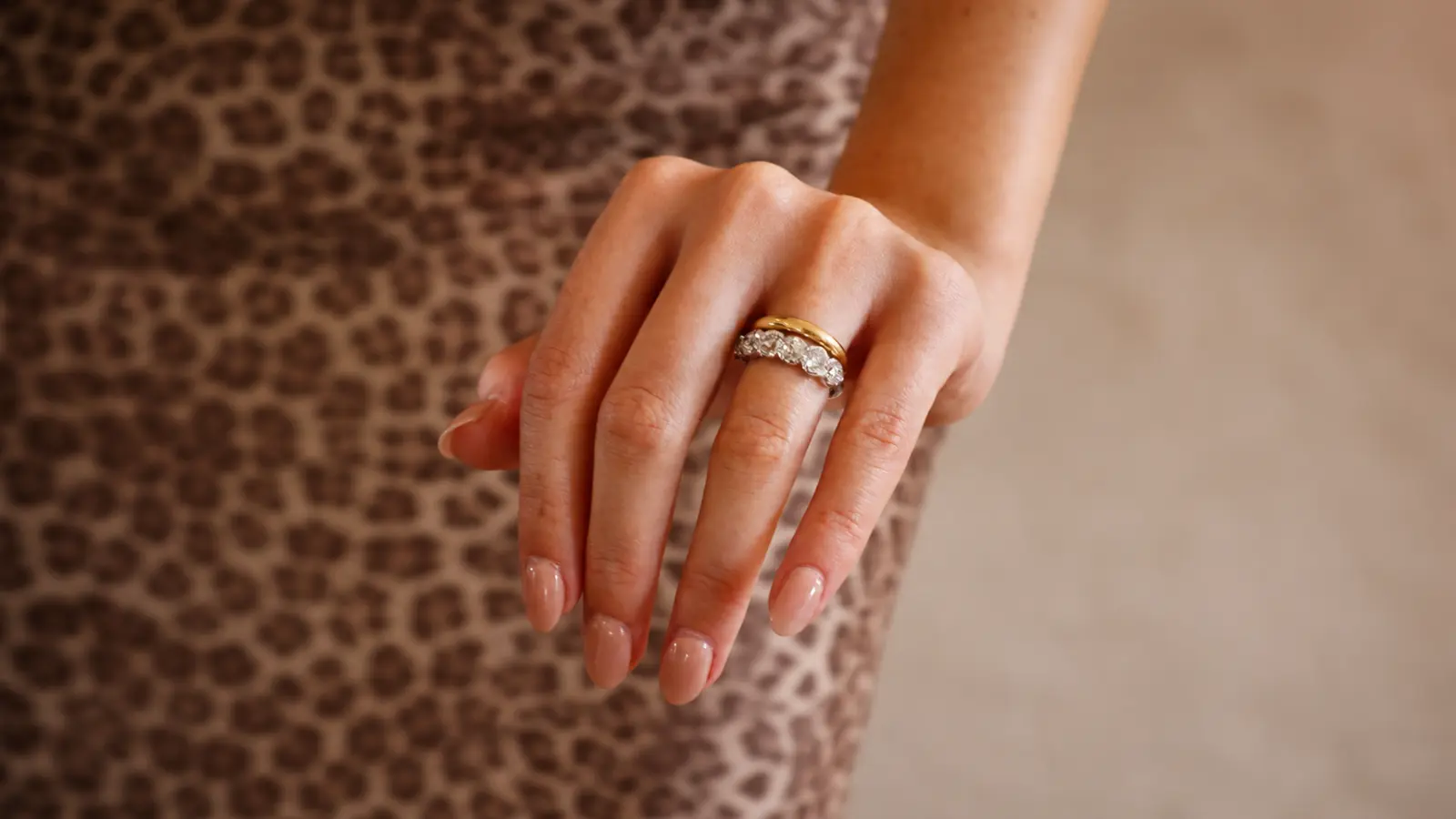
The decision between a plain band and a diamond band is less about which is objectively better and more about what role the wedding ring will play once it is permanently on your hand.
When a plain band makes sense
A plain band tends to work best when the engagement ring already carries the visual weight — a large center stone, a halo, or an ornate setting. In that case, a plain wedding band acts as a frame, letting the engagement ring remain the focal point while the band quietly does its job underneath. Plain bands also tend to be the lower-maintenance choice: fewer stones means fewer settings to check, less risk of a stone loosening over years of wear, and generally a more accessible price point.
When a diamond band makes sense
A diamond band makes more sense when a woman wants her wedding ring to read as a complete piece on its own — particularly relevant for women who do not wear an engagement ring at all, women whose engagement ring features a colored stone rather than a diamond, or women who simply want more sparkle in daily life than a single engagement ring provides. Diamond bands also tend to photograph well in close-up hand shots, which is a small but real consideration for some.
One detail worth knowing: a diamond band does not need to be expensive to look substantial. A well-executed pavé or channel-set band with smaller, well-matched stones often reads as more cohesive than a band with fewer, larger stones spaced unevenly — and the smaller-stone approach is frequently the more budget-friendly route as well.
Gold, Platinum and White Gold Wedding Rings
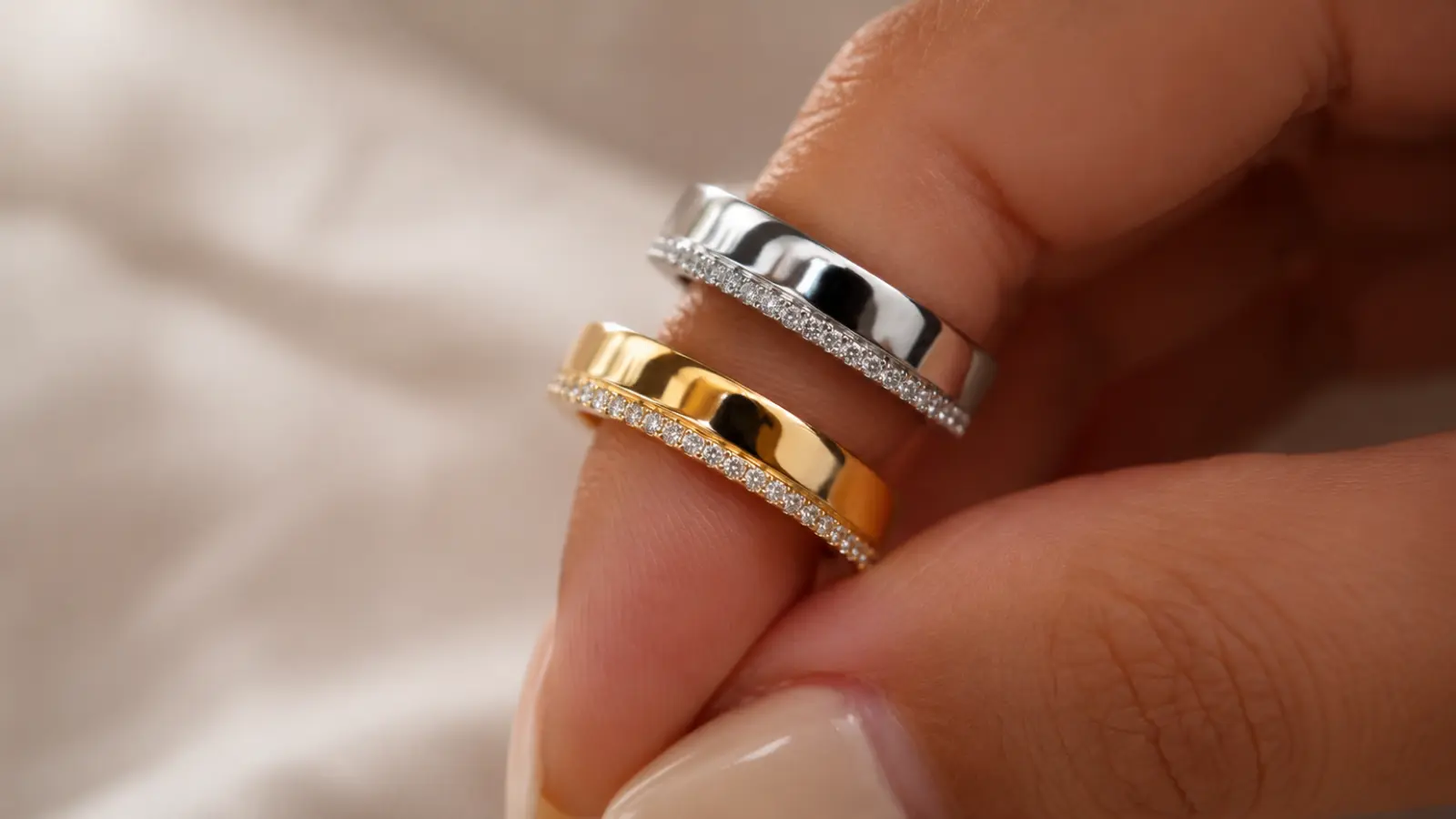
Metal choice affects more than appearance — it affects how the ring wears, how it ages, and how much upkeep it asks of you over the years. The three most common choices for women’s wedding rings each come with a different set of trade-offs.
Yellow and rose gold
14k and 18k gold remain the most widely chosen metals for wedding rings in the U.S., largely because they balance durability, cost, and warmth of color well. 18k gold has a richer, deeper color because it contains a higher percentage of pure gold, but that also makes it slightly softer and more prone to scratching over time. 14k gold is more durable for daily wear and is the more common choice for rings that will see heavy use.
Rose gold has remained popular long enough that it is reasonable to consider it a standard option rather than a passing trend. Its pink-toned color comes from a higher copper content in the alloy, which also makes rose gold slightly more durable than yellow gold of the same karat — a small practical bonus alongside the aesthetic one.
White gold
White gold is gold alloyed with white metals and then plated with rhodium to achieve its bright white finish. That rhodium plating is the detail most women are not told about until after the fact: it wears off gradually, typically over one to three years depending on how the ring is worn, and the ring will need periodic replating to maintain its color. Underneath the plating, white gold has a naturally pale gray-yellow tone.
This is not a reason to avoid white gold — it remains one of the most popular choices precisely because it offers a platinum-like look at a more accessible price. But it is worth knowing going in, so the need for replating down the road does not come as a surprise. For women comparing ring costs and materials across a range of budgets, the complete wedding rings covers pricing across metals in more detail.
Platinum
Platinum is naturally white and does not require plating, which is its primary advantage over white gold. It is also denser and more resistant to deformation under daily wear, meaning a platinum band tends to hold its shape and any stone settings more securely over decades of use. The trade-off is cost — platinum is significantly more expensive than gold of comparable design — and it develops a matte surface patina over time from microscopic surface scratches. Some people find this patina beautiful; others prefer to have it polished back periodically.
For women with metal sensitivities, platinum is one of the more hypoallergenic options available, which can matter for anyone who has had reactions to other jewelry metals in the past. If you are already wearing a platinum engagement ring, matching with a platinum band is also the most straightforward way to ensure both rings age consistently.
How to Match a Wedding Ring with an Engagement Ring
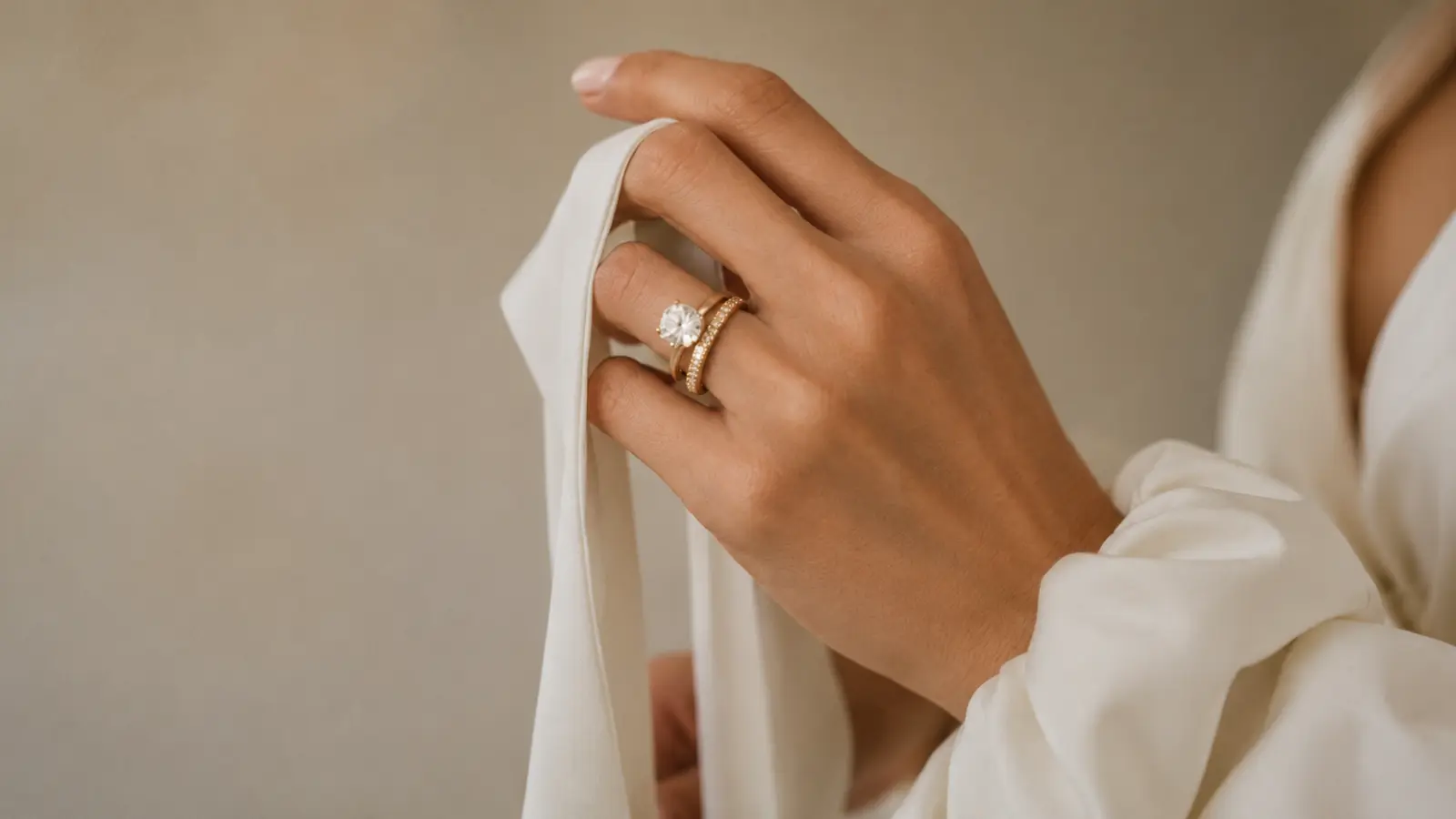
The most important rule — and the one that most jewelers agree on without exception — is to match the metal color between the engagement ring and the wedding band. A yellow gold engagement ring next to a white gold wedding band can look like two rings that ended up on the same finger by coincidence, even if each ring is beautiful on its own. Keeping the metal consistent is what makes a stack read as a considered look rather than an accident.
Beyond metal color, almost everything else is genuinely flexible.
Three ways to approach the pairing
Matching sets — designed and sold together, with the wedding band shaped specifically to nestle against the engagement ring — offer the most seamless fit and the least guesswork. This is a strong option for women who want certainty and do not want to think too hard about whether the two rings will sit well together.
Complementary but not identical pairings are far more common than an exact match, and often more interesting. A textured wedding band next to a smooth engagement ring, a slightly different width, or a band with smaller stones that echo (without copying) the engagement ring’s stone — all of these work well, as long as the overall feeling reads as intentional rather than random.
Deliberate contrast — a plain, simple wedding band next to a more ornate or vintage-style engagement ring, for example — can also be beautiful, and tends to make both rings more visible for what they individually are, rather than blending into a single busy look.
One detail that often gets overlooked: try the engagement ring and the prospective wedding band on together, on the actual finger, before finalizing either purchase. A wedding band that looks fine on its own can sit awkwardly against a particular engagement ring setting — too high, too low, or with a visible gap — and this is far easier to address before the rings are purchased than after. For more on navigating this on your actual hand, the guide on how to wear your wedding ring and engagement ring together covers it in detail.
Stackable Wedding Rings
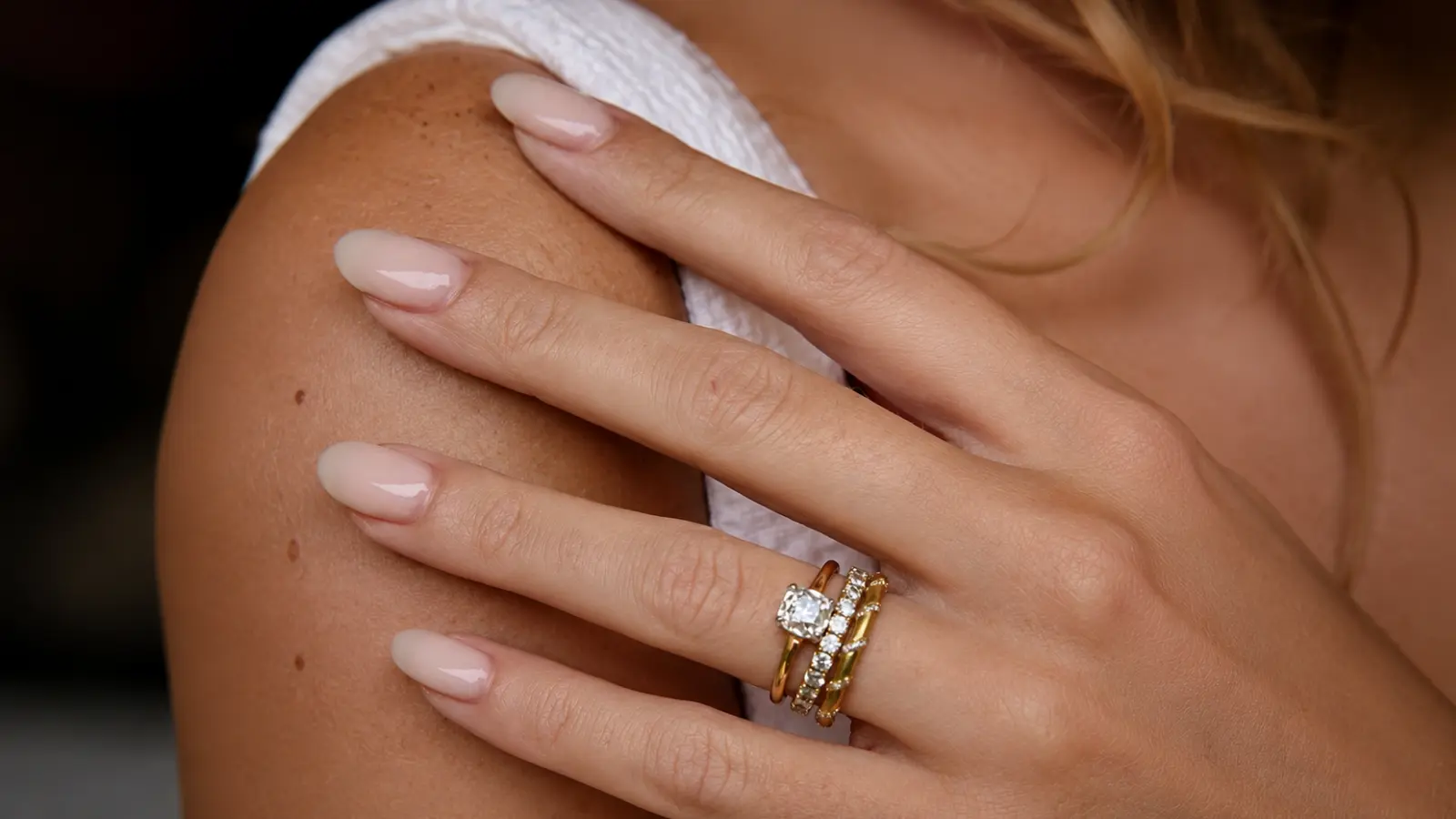
Stackable wedding rings have become increasingly popular because they allow women to build a collection over time while keeping the wedding band at the center — an engagement ring and a wedding band worn together on the same finger is technically a stack of two rings. What has shifted in recent years is the addition of more rings to that stack purely as a style choice: thin accent bands, anniversary bands added at milestones, and sets explicitly designed to be layered.
Practical tips for stacking
Thinner bands (often 1mm to 2mm) are typically used for additional stacked rings, since stacking several wider bands together can feel bulky and may not fit comfortably. Mixing metal tones within a stack — combining yellow gold, white gold, and rose gold — has become a widely accepted look, even though it runs counter to the “match your metals” guidance given for the core engagement ring and wedding band pairing. The distinction tends to be that the foundational pieces match, while additional stacked rings have more freedom to introduce variation.
A stack can also be built gradually rather than all at once — a wedding band at the ceremony, an anniversary band added at a meaningful year, another ring added as a gift or personal purchase later. There is no requirement to commit to a full stack on day one, and many of the stacks that look most considered were assembled slowly over years rather than purchased as a complete set. For women drawn to rings with a more distinctive look, the unique wedding bands guide covers non-traditional options worth knowing about.
Classic vs. Modern Wedding Band Styles
“Classic” and “modern” are useful shorthand, but they describe a spectrum rather than two fixed categories, and most rings sit somewhere along it rather than firmly at either end.
Classic styles
Classic styles tend to favor symmetry, traditional proportions, and design elements that have remained largely unchanged for decades — a rounded comfort-fit band, a milgrain edge (the tiny beaded detail along the border common in vintage and vintage-inspired designs), or a simple row of round brilliant diamonds. These styles tend to feel genuinely timeless in the sense that they do not look distinctly tied to any particular decade when you look back at photos years later.
Modern styles
Modern styles tend to favor asymmetry, mixed textures (a brushed or matte finish alongside polished metal), unconventional stone shapes (baguette, marquise, or unusual cuts used in nontraditional arrangements), and geometric rather than rounded silhouettes. These styles can feel more distinctive and personal, though — as with any design that leans into a particular aesthetic moment — they may read as more clearly “of their time” when looked at decades later.
Neither direction is more correct. The choice often comes down less to the ring itself and more to how a woman generally dresses and what she’s drawn to in other parts of her life — jewelry she already owns, the style of her engagement ring, even the design she gravitates toward at home. A wedding ring worn every day for decades tends to feel most right when it fits naturally into that broader pattern, rather than standing apart from it.
How to Choose a Ring for Everyday Wear
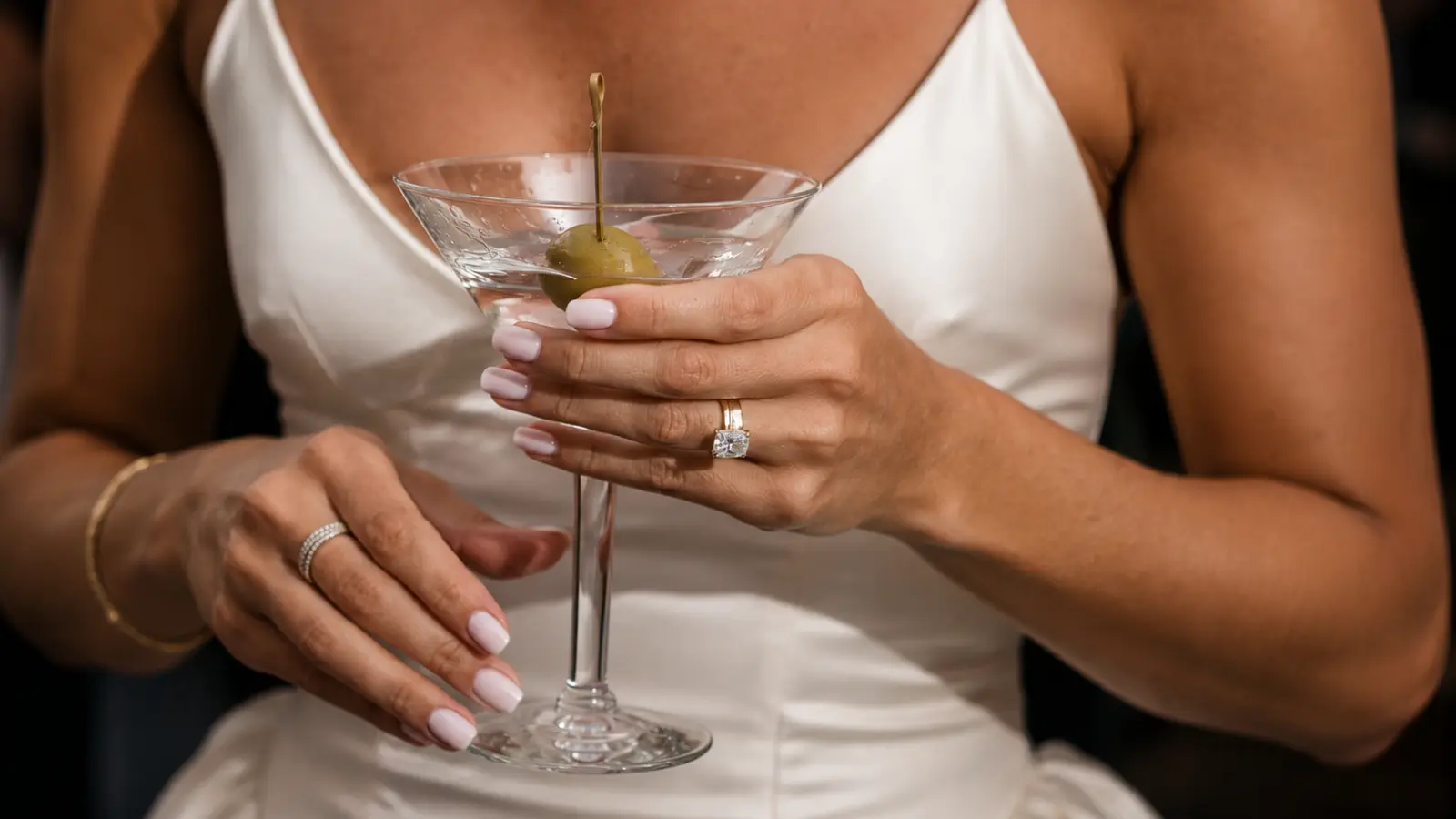
All of the style and metal considerations above matter, but the factor that most determines whether a woman loves her wedding ring five years in often comes down to something simpler: how it feels and behaves during an ordinary day. A few practical things worth thinking through before you decide:
Think about your hands, not the engagement photos
Do you wash dishes often, type for hours, work with your hands in a hobby or job, or wear gloves frequently? A ring with a raised setting or sharp edges that looks elegant in a photograph can become genuinely inconvenient if it catches on fabric, gets in the way during typing, or needs to be removed multiple times a day for practical reasons. A lower-profile setting — where any stones sit close to the band rather than elevated — tends to solve this before it becomes an issue.
Comfort-fit profiles make a real difference
A band with a rounded interior, rather than a flat one, slides on and off more easily and distributes pressure more evenly around the finger. This is a small detail that is easy to overlook when trying rings on for a few minutes in a store, but it becomes noticeable after wearing a ring for ten or twelve hours straight, day after day. If you are uncertain, ask the jeweler to show you the same ring in both a standard and comfort-fit profile — the difference is immediately apparent when you hold them side by side.
Width affects how noticeable the ring feels
Women who are not used to wearing rings often find that a narrower band (around 2mm) feels more natural sooner, simply because there is less metal to be aware of. A wider band is not a problem — many women love the more substantial feel — but the adjustment period tends to be shorter with a narrower profile. If you are choosing between two widths and cannot decide, it is usually worth going narrower: you can always add a second ring to a stack later, but you cannot un-widen a band that feels too heavy on a daily basis.
Plan for resizing flexibility
Ring size can shift due to weather, time of day, pregnancy, or simply over the years. Choosing a metal and style that can be resized gives you flexibility, especially if you first follow a reliable wedding ring size that a ring which cannot be resized does not. This is a detail worth raising directly with a jeweler, particularly for eternity bands or rings in metals like titanium and tungsten that resist resizing. For women still figuring out their sizing, try our free ring size calculator before scheduling a fitting or placing an order — sizing appointments taken in the evening typically produce more accurate results.
Wedding Rings for Women Inspiration
Wedding rings for women come in endless styles, from timeless gold bands to diamond designs, modern stacks, and vintage-inspired details. Explore our inspiration board for classic wedding rings, eternity bands, curved bands, stackable rings, and beautiful ideas to help you find a style that feels personal.
Choosing a Wedding Ring You Will Love for Years
The wedding ring you choose does not need to be the most expensive, the most detailed, or the one that follows every current jewelry trend. The right ring is the one that fits naturally into your everyday life — your style, your routine, your comfort, and the way you want to wear it.
Whether you choose a simple gold band, a diamond wedding ring, an eternity style, or a stack you build over time, the best choice is the one you will still enjoy seeing on your hand years from now. A wedding ring is not only chosen for the wedding day — it becomes part of the everyday moments that come after.
Frequently asked questions (FAQ)
What are the best wedding rings for women?
The best wedding rings for women depend on personal style, lifestyle, and how the ring will be worn every day. Popular choices include classic gold bands, diamond wedding bands, eternity bands, curved bands that fit around an engagement ring, and stackable styles. The best choice is a ring that feels comfortable, durable, and matches the wearer’s everyday life.
What is the most popular style of wedding ring for women?
Some of the most common wedding ring styles for women include plain metal bands, diamond bands, and curved or contoured bands designed to sit beside an engagement ring. Simple bands are often chosen for a timeless look, while diamond bands add more sparkle and detail.
Should a woman’s wedding band match her engagement ring?
A wedding band does not have to match an engagement ring exactly. Many women choose a band that complements the engagement ring instead of copying it. Matching the metal color is a common approach, but the width, stones, texture, and design can vary depending on personal style.
Is a plain or diamond wedding band better?
Neither option is better for everyone. Plain wedding bands are classic, low-maintenance, and work well with detailed engagement rings. Diamond wedding bands add sparkle and can stand out more when worn alone. The better choice depends on lifestyle, budget, and how much attention you want the wedding ring to have.
What metal is best for women’s wedding rings?
Gold and platinum are two of the most popular choices for women’s wedding rings. Gold offers many options, including yellow, white, and rose gold, while platinum is valued for durability and its naturally white color. The best metal depends on appearance, maintenance, budget, and everyday wear.
Can a woman wear only a wedding band?
Yes. Many women choose to wear only a wedding band instead of pairing it with an engagement ring. A wedding band alone can be more comfortable, practical, or better suited to someone’s personal style. Diamond bands, wider bands, and detailed designs are often chosen when the wedding ring will be worn by itself.