Wedding ring size determines how comfortably a ring fits your finger, but finding the right size involves more than matching a number on a chart. Band width, ring shape, comfort fit designs, temperature changes, and daily finger fluctuations can all affect how a wedding ring feels once it is worn every day.
Choosing the correct wedding ring size matters because some adjustments are simple while others depend on the material and design of the ring. Gold and platinum bands can often be resized, while materials like tungsten, ceramic, and some titanium rings leave much less room for changes after purchase.
This guide explains how to find your wedding ring size, including measuring methods, ring width adjustments, comfort fit sizing, when to size up or down, resizing options, and the details to consider before choosing the right wedding ring.
How to Measure Wedding Ring Size
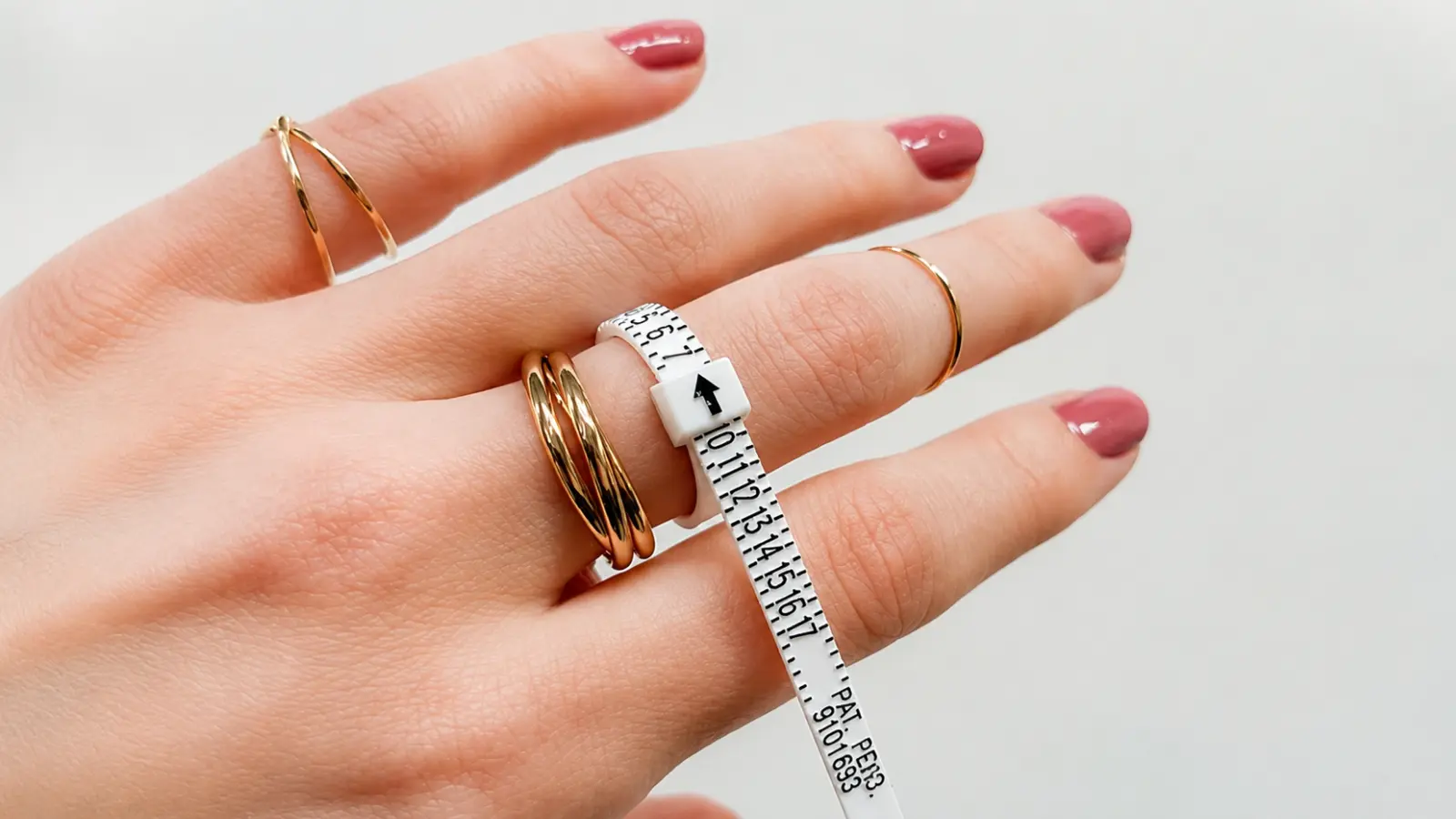
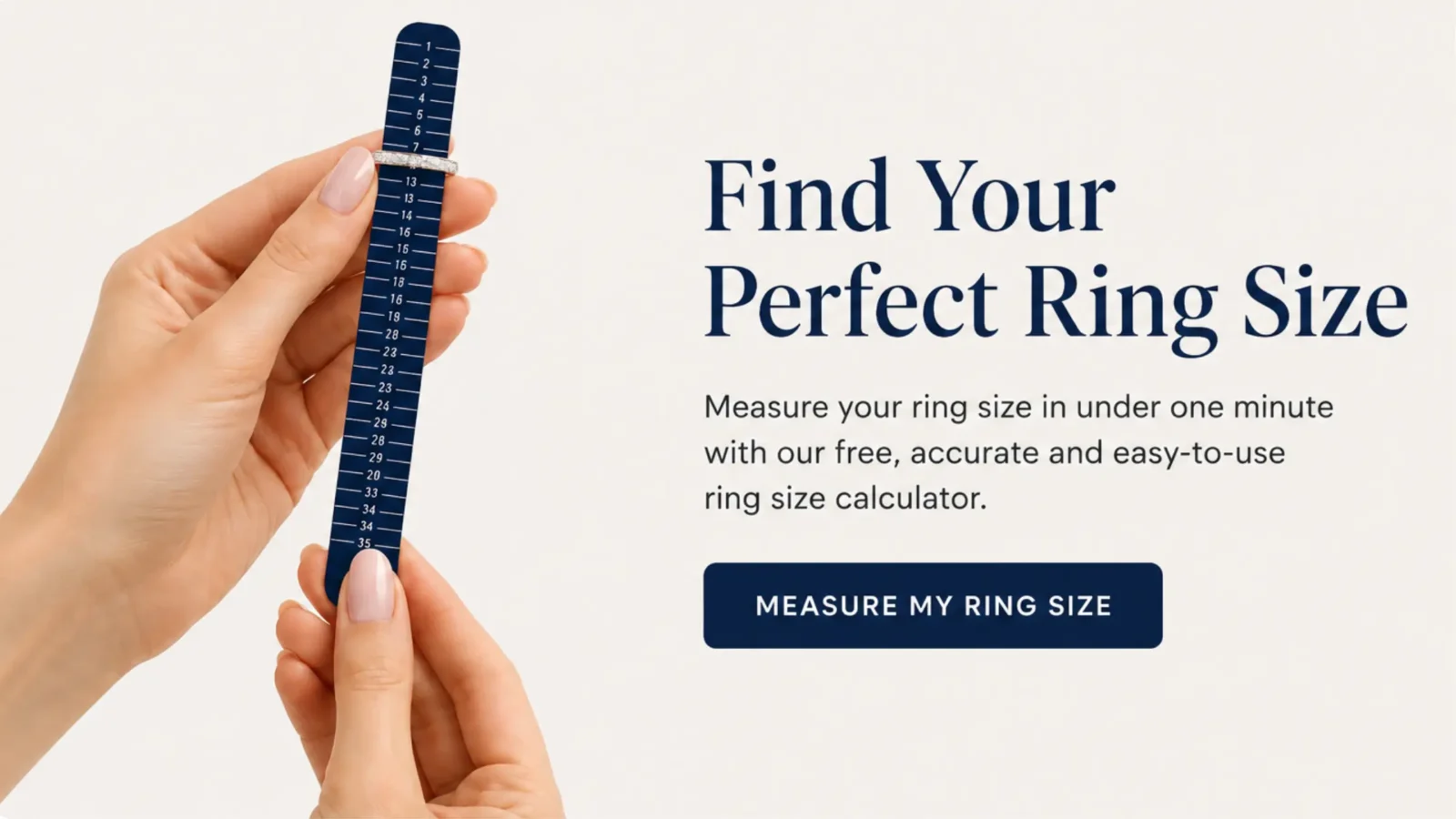
Ring size is measured as the inside circumference (or, equivalently, the inside diameter) of the band, expressed using a sizing system — in the U.S., a numerical scale that typically runs from about 3 to 13, often with half and quarter sizes in between. There are several ways to arrive at this measurement, and they vary in accuracy.
Measuring an Existing Ring
If there’s a ring that already fits the finger well — even if it’s not a wedding band — measuring its inside diameter is generally one of the more reliable methods available without professional equipment. This can be done by placing the ring over a printable ring sizing chart (widely available as PDFs designed to be printed at actual size) and matching the inside edge of the ring to the corresponding circle on the chart, or by measuring the inside diameter with a ruler and comparing that measurement to a size conversion chart.
This method works best with a ring that’s worn on the same finger as the intended wedding band, since finger size varies between fingers and even between hands.
Measuring the Finger Directly
Wrapping a thin strip of paper or a piece of string around the base of the finger, marking where the two ends meet, and measuring that length gives a circumference measurement that can be compared to a sizing chart. This method is widely used because it requires no special tools, but it has a built-in source of error: paper and string can compress the finger slightly as they’re wrapped, especially if pulled too tight, which can produce a reading slightly smaller than the finger’s true resting size.
To reduce this error, it helps to wrap the material loosely enough that it could still slide over the knuckle — since the ring itself will need to do exactly that — rather than wrapping it as tightly as possible at the base of the finger.
Professional Sizing
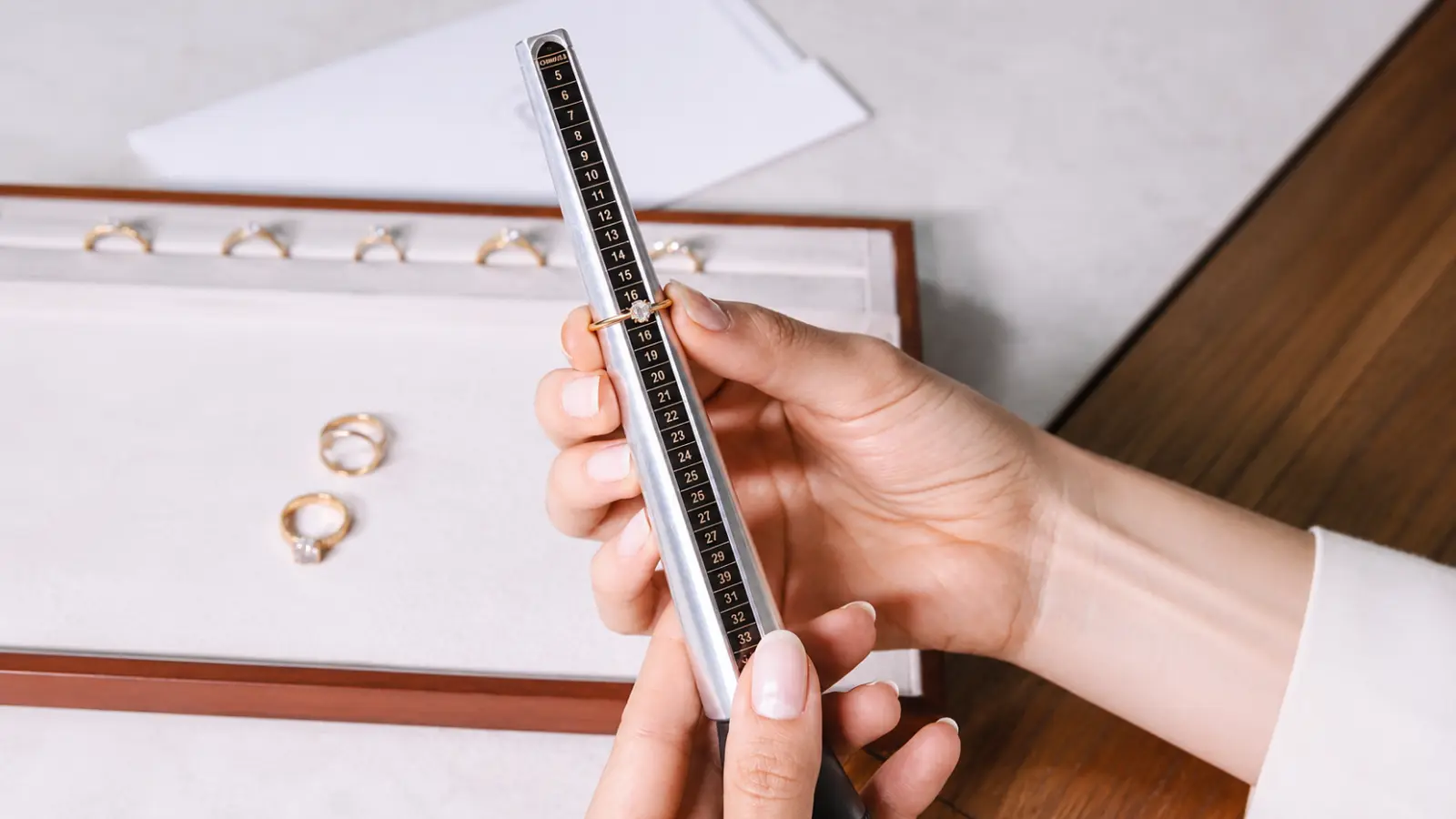
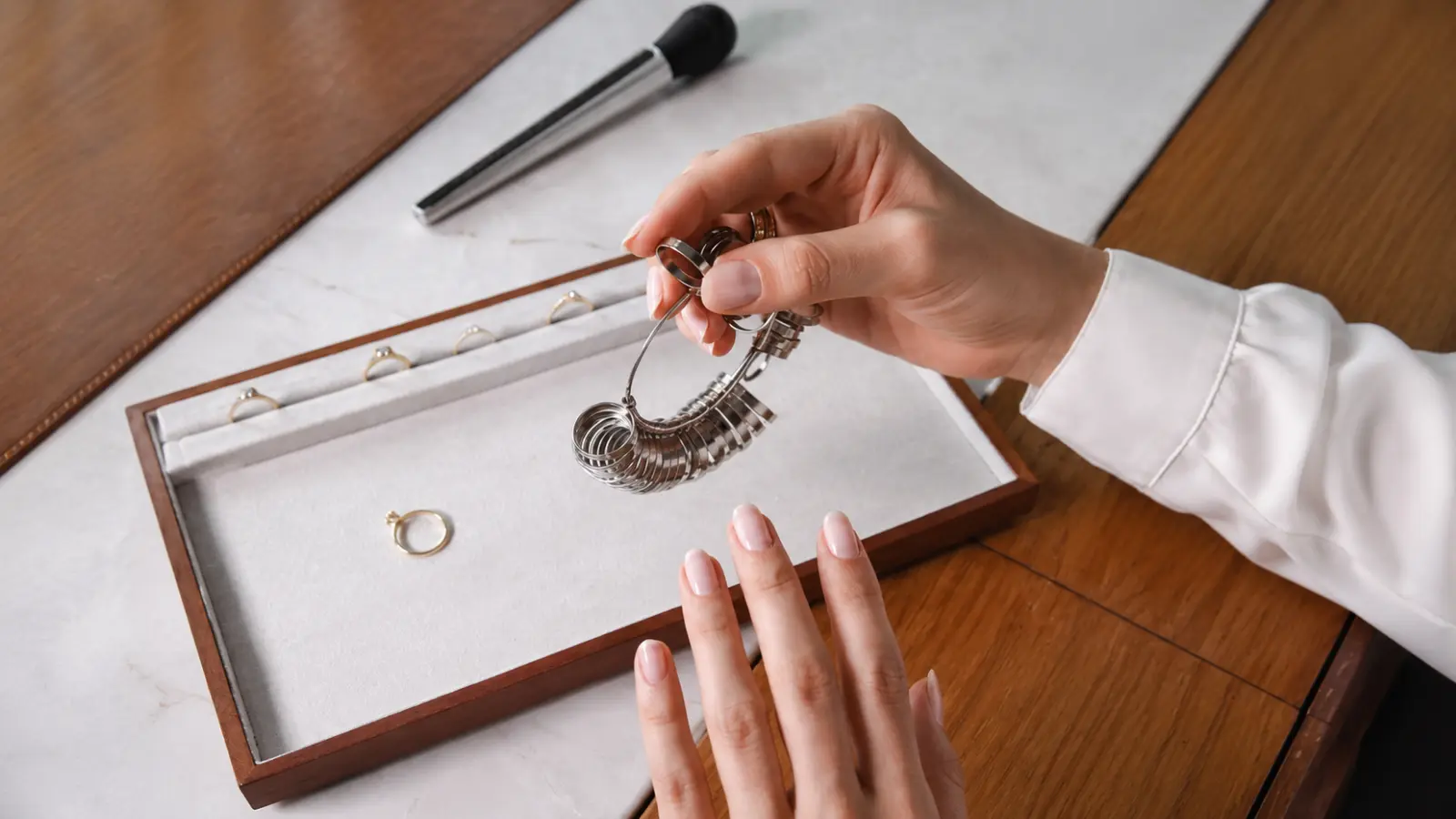
A jeweler’s ring sizer — a set of metal rings in graduated sizes that can be tried on directly — tends to be the most accurate method, since it accounts for how the finger actually feels with a rigid metal band, including how it passes over the knuckle. Many jewelers offer sizing as a quick, no-cost service, and for a purchase as significant as a wedding ring, an in-person sizing session is generally worth the trip if one is accessible, even if the ring itself will ultimately be ordered elsewhere.
Timing Matters More Than People Expect
Whichever method is used, when the measurement happens can matter as much as how it’s done. Finger size isn’t fixed — it shifts with temperature, time of day, hydration, and other factors covered in more detail below. Measuring first thing in the morning, when fingers tend to be at their smallest, can produce a size that feels tight by afternoon. Many jewelers recommend measuring in the evening, at normal room temperature, and ideally measuring more than once across different days to see if the result is consistent or if it varies meaningfully.
Why Ring Width Affects Fit
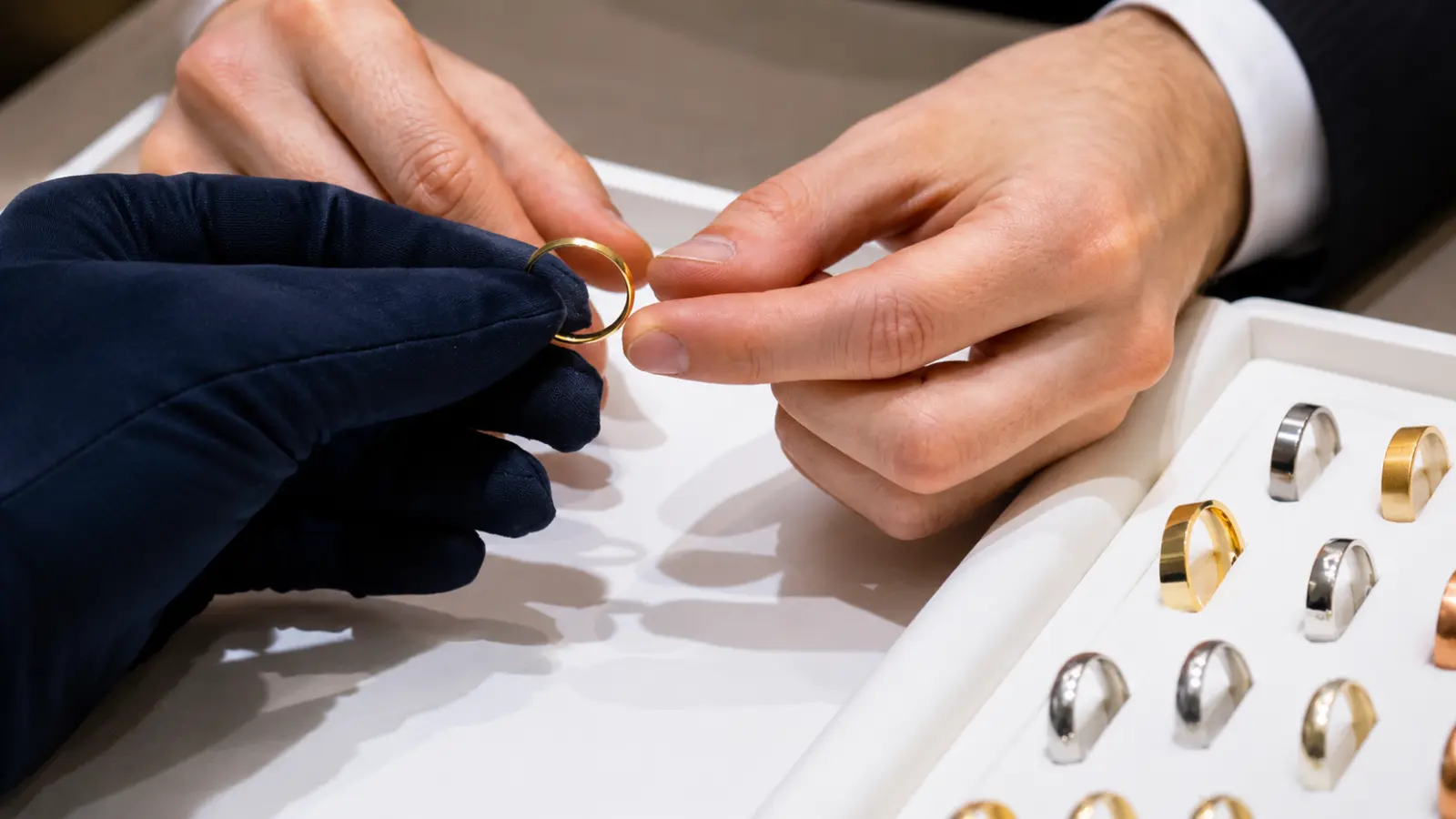
One of the most common reasons a ring that seemed correctly sized ends up feeling tight has nothing to do with the measurement being wrong — it has to do with the width of the band that was actually ordered being different from the width of the ring (or sizer) used to take the measurement.
The Mechanics of Why Width Matters
A ring has to pass over the knuckle — generally the widest part of the finger — to get on and off, and then sit comfortably at the base of the finger, which is generally narrower. A thin band has a small amount of surface area in contact with the finger at the knuckle, so it can be sized relatively close to the knuckle’s actual width without feeling restrictive. A wide band has significantly more surface area in contact with the same knuckle, which means that same knuckle width has to accommodate more material — and a wide band sized to the knuckle’s exact circumference can feel noticeably tighter passing over it than a thin band at that same circumference would.
Put simply: the wider the band, the more the knuckle “notices” it, even at the same nominal size.
General Guidance on Sizing for Width
| Band Width | Typical Sizing Adjustment | Why |
|---|---|---|
| Under 4mm (thin) | Often matches a standard sizing measurement closely | Minimal surface area at the knuckle; closest to a “baseline” fit |
| 4–6mm (medium) | May need a slight increase, often a quarter size, for some people | Moderate increase in surface area at the knuckle |
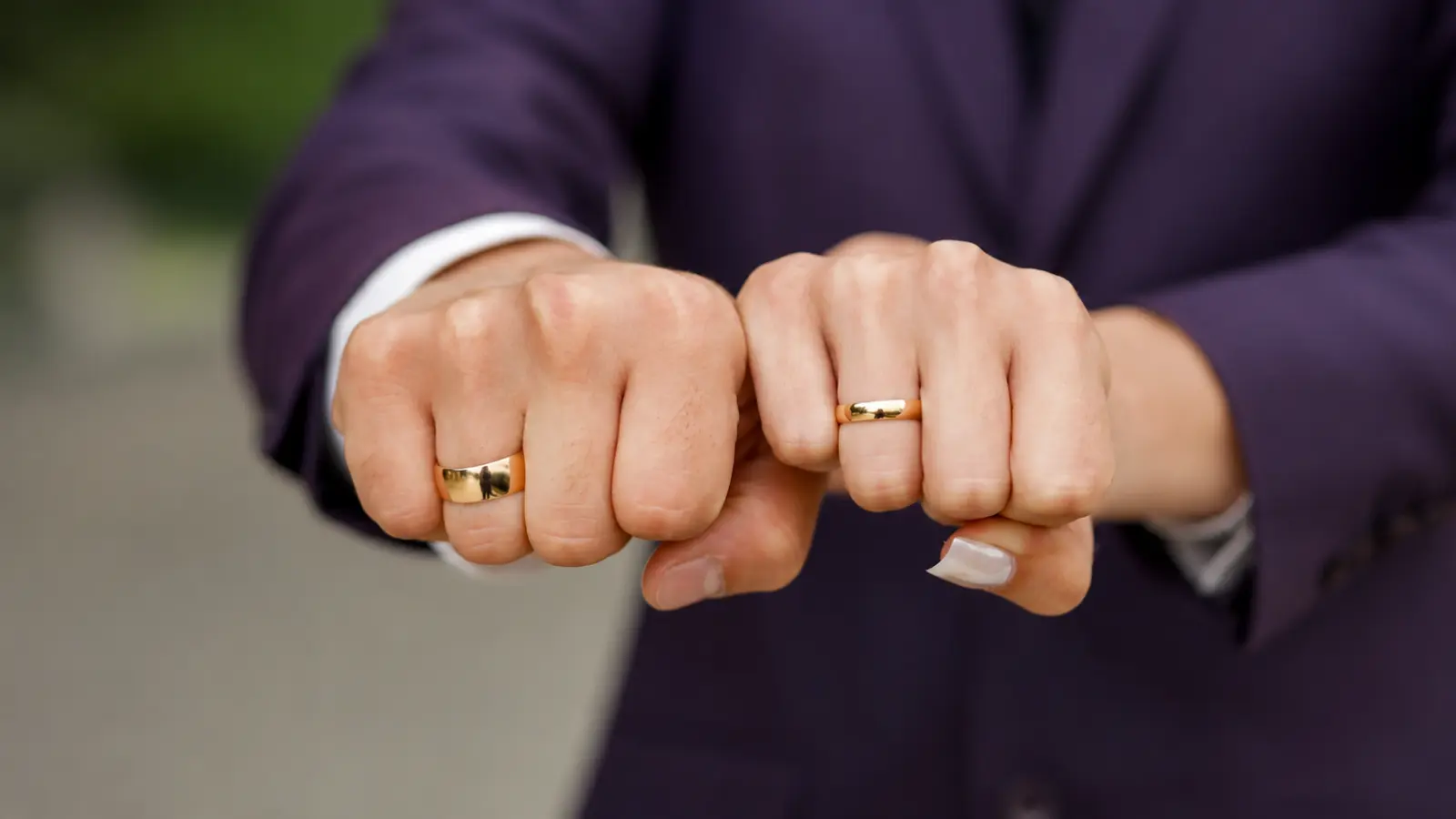
| 6–8mm (wide) | Often sized up by a quarter to half a size compared to a thin band | Noticeably more surface area passing over the knuckle |
| 8mm and above (very wide) | May need a half size or more increase, and benefits especially from comfort fit | Significant surface area; comfort fit profile becomes particularly relevant |
These adjustments are general tendencies rather than fixed rules — the right adjustment for a specific person depends on their individual knuckle and finger proportions, which is part of why trying on the actual width (or a sample band of the same width) matters more than relying on a measurement taken with a different width entirely.
The Most Common Mistake Related to Width
A frequent scenario: someone is sized using a thin sizer ring at a jeweler, gets a number, and then orders a band that’s considerably wider than the sizer — without adjusting the size to account for the difference. The result is a ring that fits the original measurement perfectly in terms of circumference, but feels tighter than expected because the wider band is contacting more of the knuckle on the way on and off. Asking specifically to try on (or be sized with) a ring close to the actual width being ordered — not just any sizer — helps avoid this.
Comfort Fit Explained
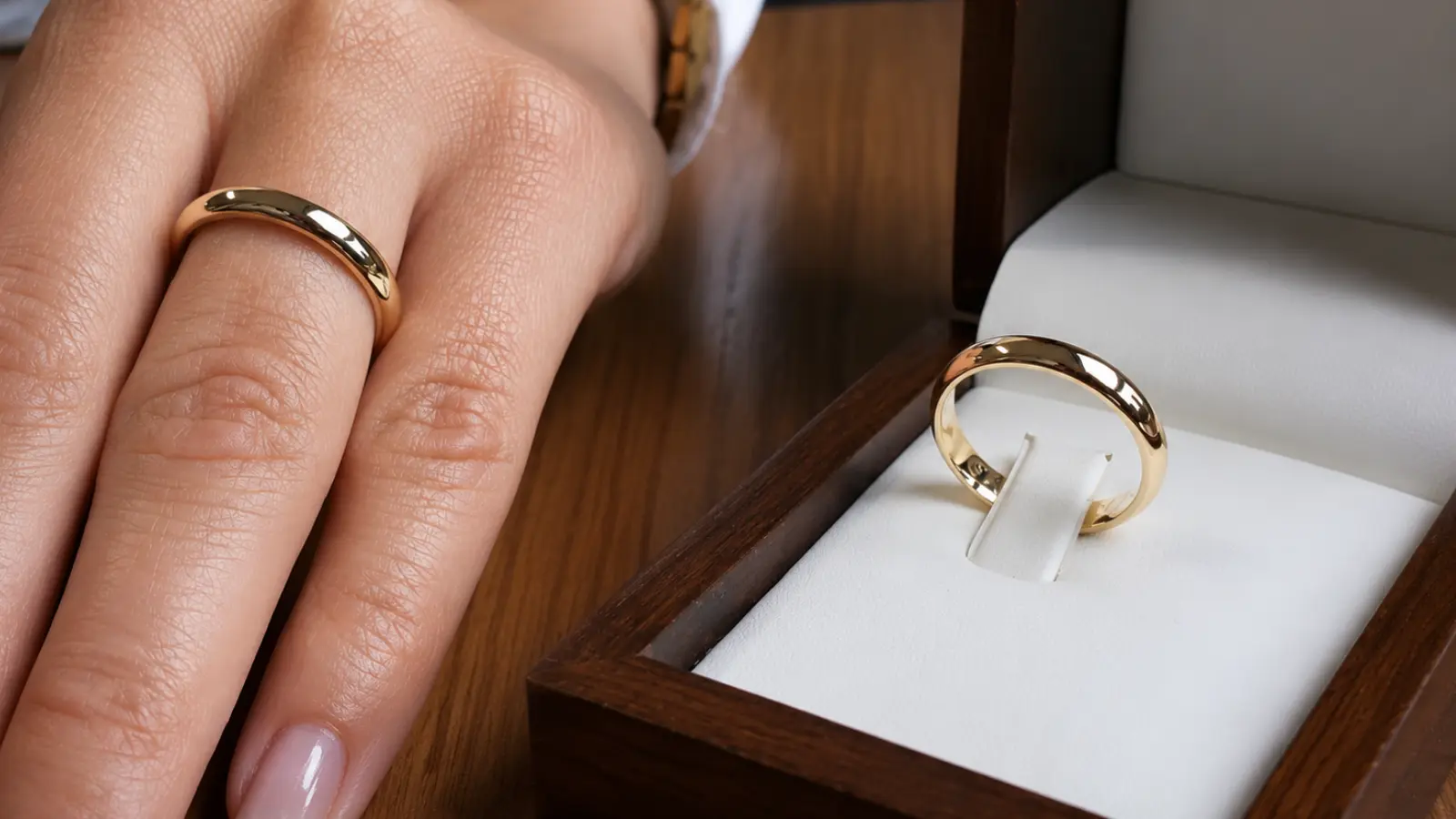
Comfort fit refers to the interior profile of the band — specifically, whether the inside of the ring is flat or domed (rounded). This is separate from other wedding ring styles, widths, and materials, and it has a meaningful effect on both how a ring feels and what size tends to fit best.
What Comfort Fit Actually Changes
A standard fit band has a flat interior — the inside surface of the ring is a flat plane that sits against the finger. A comfort fit band has a rounded or domed interior — the inside surface curves outward toward the center, so that less of the band’s interior is in direct contact with the finger at any given point, particularly at the edges of the band.
This reduced contact area has two practical effects. First, the ring tends to slide on and off more easily, since the rounded interior doesn’t create the same friction along its full width that a flat interior does. Second — and this is the part that affects sizing — a comfort fit band of a given labeled size often feels like it fits slightly larger than a standard fit band of the same labeled size, because less material is actually pressing against the finger.
Sizing Adjustment for Comfort Fit
Because of this effect, many jewelers suggest that someone moving from a standard fit to a comfort fit band in the same style might consider going down approximately half a size, to account for the fact that the comfort fit version will likely feel roomier at the same labeled size. This isn’t a universal rule — the degree of the effect can vary depending on how pronounced the dome of the interior is — but it’s a common enough pattern that it’s worth raising directly with a jeweler when comparing a standard and comfort fit version of the same band.
Who Tends to Prefer Comfort Fit
Comfort fit is particularly often chosen for wider bands, where the increased surface area discussed in the previous section makes the reduced-contact benefit of a domed interior more noticeable. It’s also frequently preferred by people who take their ring on and off more often — for work, sports, or other reasons — since the easier on/off motion is one of its more immediately noticeable benefits. For more on situations where a ring needs to come on and off frequently, the silicone wedding bands covers a different approach to some of the same underlying concerns.
When to Size Up or Down
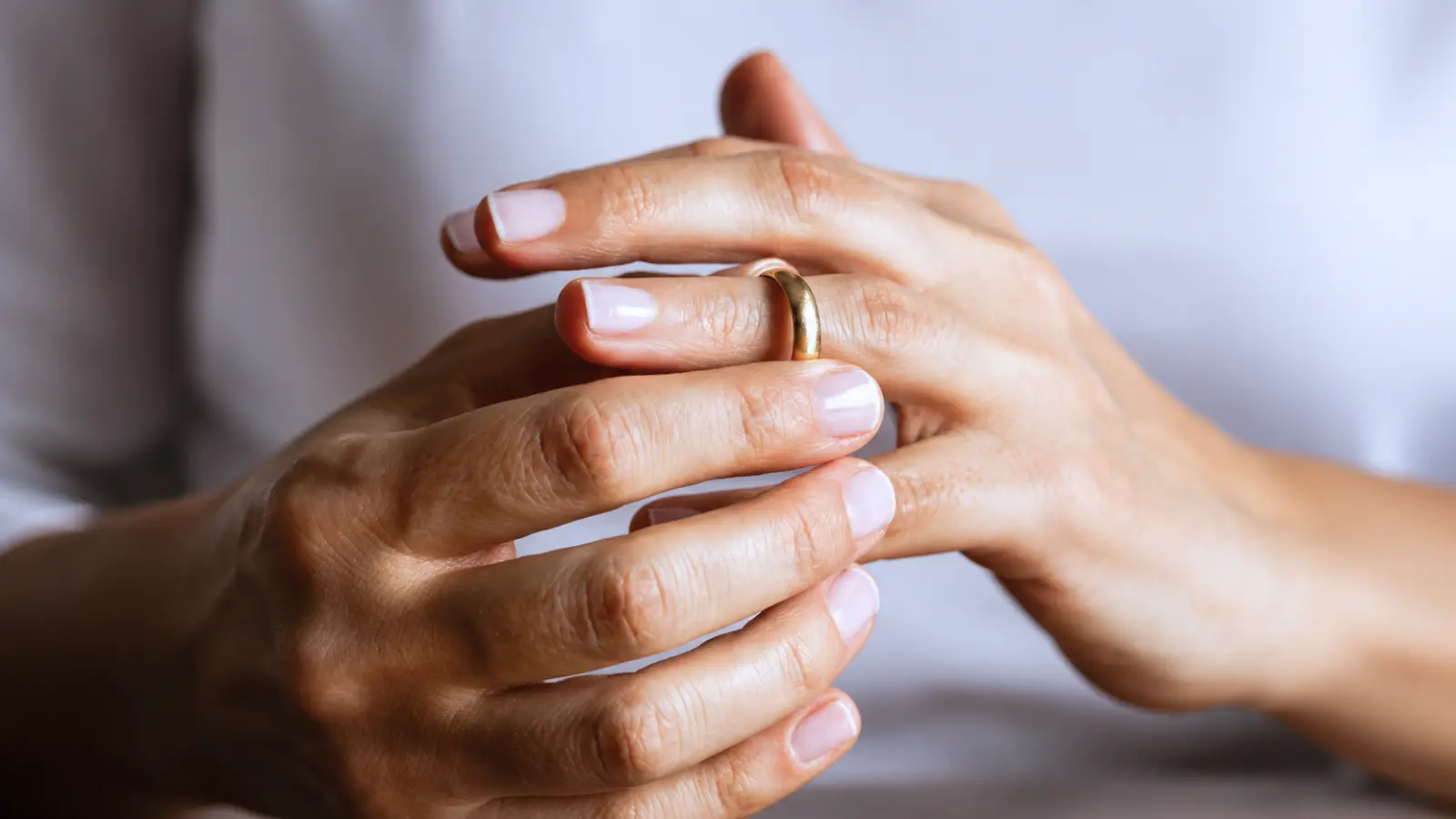
Beyond width and comfort fit, finger size itself isn’t a fixed number — it fluctuates, sometimes by what feels like a meaningful amount, based on factors that have nothing to do with the ring at all. Understanding these fluctuations helps explain why a ring can feel perfect on one day and slightly tight or loose on another, even with no change to the ring itself.
What Causes Finger Size to Fluctuate
Several everyday factors can shift finger size by enough to make a well-sized ring feel slightly different from one day to the next. None of these are unusual or a sign of a sizing mistake — they’re simply normal physiology worth understanding:
- Temperature. Cold causes blood vessels to constrict, which can make fingers measurably smaller; heat causes the opposite. This is one of the most noticeable effects — a ring that fits comfortably indoors can feel looser outside in winter, or tighter during a hot summer day.
- Time of day. Many people’s fingers are smaller in the morning and gradually swell slightly over the course of the day, due to fluid shifts that happen naturally with activity and gravity.
- Sodium and fluid intake. A salty meal, alcohol, or simply drinking more water than usual can cause mild, temporary fluid retention that affects finger size, typically resolving within a day.
- Exercise and activity. Physical activity can cause temporary swelling in the hands, particularly in heat or with activities involving the arms and hands directly.
- Altitude and air travel. Some people notice their fingers swell somewhat during air travel or at higher altitudes, related to broader fluid shifts the body experiences in those conditions.
No single ring size will feel identical under every one of these conditions — some degree of variation is normal and expected, and a ring that feels very slightly looser on a cold morning and very slightly snugger after a hot afternoon is functioning normally, not necessarily sized incorrectly.
How to Think About Sizing Given These Fluctuations
The practical question isn’t how to avoid fluctuation entirely — that’s not realistic — but where to aim within that normal range. A few approaches tend to work well, often in combination:
- Size for average, typical-day conditions. This is the most common approach — choosing a size that feels comfortable on a normal day, accepting that it may feel marginally different at the extremes (very cold mornings, very hot afternoons) without those extremes being the primary consideration.
- Consider which direction of discomfort matters more. A ring that’s slightly loose risks spinning or, in rare cases, slipping off — generally a bigger practical concern than a ring that’s slightly tight, which is uncomfortable but not at risk of being lost. For people prone to losing things, or in environments like water or cold where a loose ring is more likely to come off, sizing toward the snugger end of comfortable might be preferable.
- Factor in personal patterns. Someone who knows they run warm, live in a hot climate, or notice significant swelling with activity might reasonably size toward the larger end of their comfortable range, anticipating that their “typical” day skews toward the conditions that increase finger size. Someone who’s frequently in cold environments might do the opposite.
There’s no single correct answer here — it’s a judgment call based on personal patterns, and it’s one of the areas where a comfort fit profile, discussed above, can help smooth over some of this variation, since the reduced contact area makes minor fluctuations less noticeable than they’d be with a tighter-fitting standard profile.
Can Wedding Rings Be Resized?
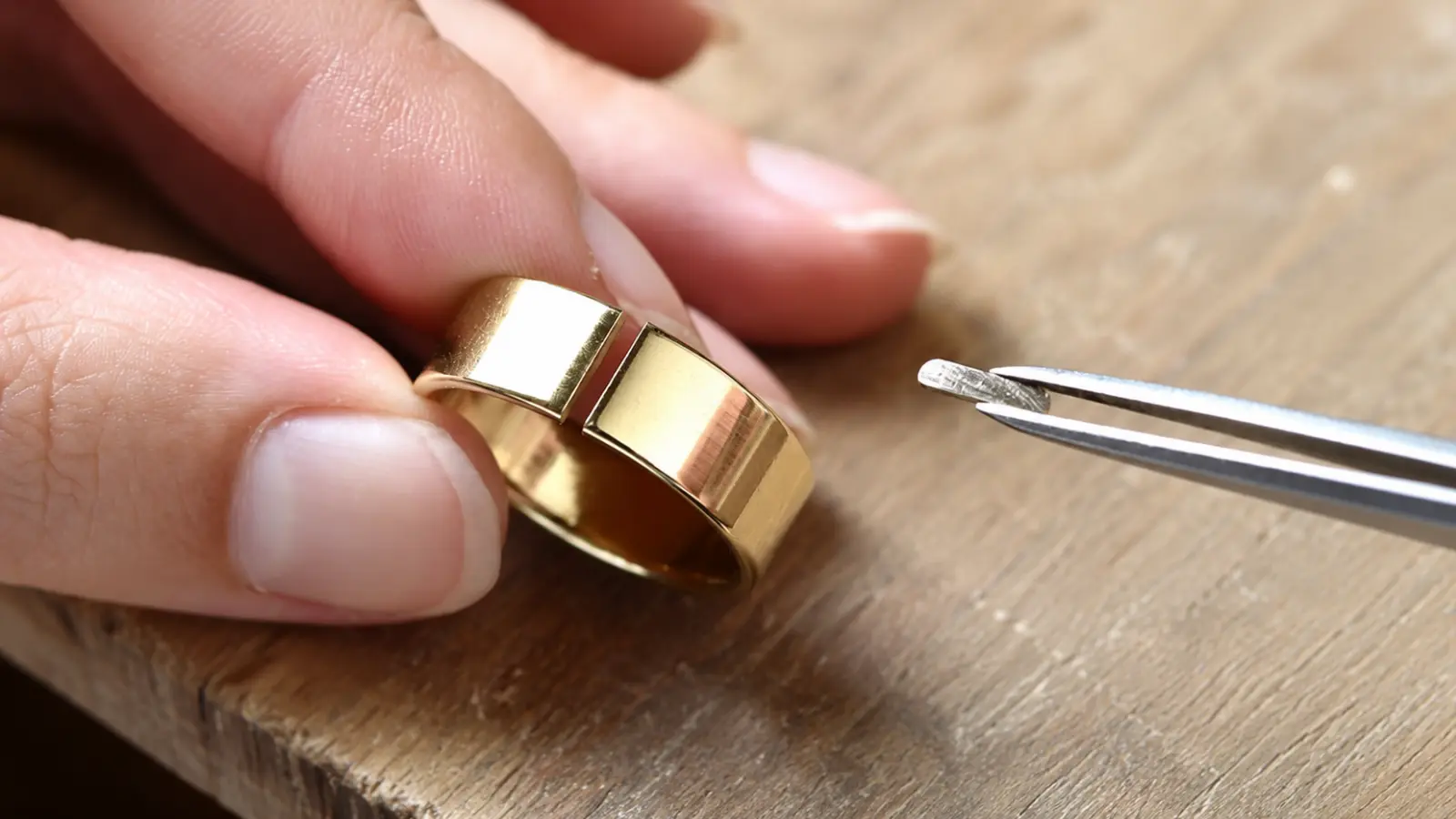
For many traditional ring materials, yes — resizing is a routine jewelry service, and it’s worth understanding both what it involves and what its limits are, since “can it be resized” is really a question with several layers depending on the ring’s design and material.
How Resizing Works
For a typical band in a resizable metal, sizing down generally involves cutting out a small section of the band, then re-soldering and reshaping the remaining metal into a slightly smaller circle. Sizing up generally involves cutting the band and adding a small section of matching metal, then soldering and reshaping. Both processes are followed by polishing and finishing to blend the repair with the rest of the band.
The Typical Range
Most jewelers can resize a standard band within about two sizes up or down from its original size, though wedding ring resizing can be more limited with certain design features — engraving that wraps the band, textured finishes that are difficult to replicate in a soldered section, or stones set close to where the resizing cut would need to happen.
What Makes Resizing More Difficult or Impossible, Even in Resizable Metals
Even within metals that generally accept resizing, certain design choices can limit or rule it out. Worth checking for before assuming a ring can simply be adjusted later:
- Eternity bands. A band with stones set continuously around its full circumference has no “plain” section to cut and adjust — resizing would require removing stones, which is more invasive and not always practical.
- Bands with full-circumference engraving or inlays. A design element that wraps the entire band — an inlay of a different material, a continuous engraved pattern — can be difficult to seamlessly extend or interrupt during resizing, since the resized section would need to match a pattern that runs continuously.
- Stones set very close to the cut point. Even a ring that isn’t a full eternity band can have stone placement that makes resizing risky if the cut needs to happen near a set stone — heat from soldering near a stone can sometimes affect it, depending on the stone type.
None of these features make a ring a poor choice — they’re simply worth raising with a jeweler before purchase, so any future resizing limitations are known up front rather than discovered later.
Resizing and Warranty or Care Plans
Some jewelers include a complimentary resize within a certain window after purchase, recognizing that initial sizing — even when done carefully — doesn’t always account for how a ring feels after being worn daily for the first time, as opposed to tried on briefly. Asking about this policy at the time of purchase is worthwhile, since it can turn what might otherwise be an out-of-pocket adjustment into something covered by the original purchase.
Materials That Cannot Be Resized
For a specific set of popular ring materials, resizing isn’t a routine service — it’s something that often can’t be done at all using standard jewelry techniques, which makes getting the size right at the point of purchase considerably more important than it is for gold or platinum.
Tungsten
Tungsten carbide is one of the hardest materials commonly used in rings — part of its appeal is exactly this durability and scratch resistance. That same hardness is why tungsten rings generally cannot be resized: the cutting and reshaping process that works for gold or platinum requires a material that can be cut and bent with standard tools, and tungsten’s hardness resists both. For tungsten rings, the size at purchase is, for practical purposes, the size for the life of the ring.
Ceramic
Ceramic rings share a similar limitation to tungsten, for related reasons — the material’s hardness and the way it’s manufactured (often through a high-heat sintering process) don’t lend themselves to the cutting and reshaping that resizing requires. Like tungsten, ceramic rings are generally a “get it right at purchase” category.
Titanium
Titanium occupies a middle position. It’s softer than tungsten or ceramic, and some specialized jewelers with the right equipment can resize titanium rings within a limited range — but this isn’t a service offered by most general jewelers, and many titanium rings, particularly those with certain finishes or designs, cannot be resized using standard methods. Anyone considering a titanium band should ask specifically about resizing before purchase, rather than assuming it works the same way it would for gold.
What This Means Practically
| Material | Resizing | What This Means for Buying |
|---|---|---|
| Gold, platinum, palladium, silver | Generally resizable, often within ~2 sizes | Some margin for error; minor sizing issues are usually fixable |
| Titanium | Limited, specialist-dependent, often not possible | Treat sizing as largely final; confirm with the seller before assuming otherwise |
| Tungsten, ceramic | Generally not possible | Get sizing right at purchase — there’s effectively no second chance |
For anyone choosing one of these harder, non-resizable materials, the steps covered earlier in this guide — measuring at the right time of day, accounting for the actual band width being purchased, and considering comfort fit — matter more than they would for a metal that offers a safety net. If finger size is known to fluctuate noticeably, or if there’s any uncertainty about the measurement, it may be worth choosing a resizable metal for the wedding band specifically, even if a harder material is preferred for other reasons.
Wedding Ring Size Guide
Finding the right wedding ring size depends on more than a measurement chart. Explore our guide for ring sizing tips, width comparisons, comfort fit explanations, resizing information, and details that help you choose a wedding ring that feels comfortable every day.
Choosing a Wedding Ring Size That Feels Right Every Day
The best wedding ring size is not only the number that matches a chart — it is the size that works with your ring design, your daily routine, and the natural way your finger changes over time. A ring should feel secure enough to stay with you and comfortable enough to become part of everyday life.
Whether you choose a thin gold band, a wider design, a comfort fit style, or a material that cannot easily be resized, taking the time to understand fit before choosing helps create a ring that feels as right years from now as it did on the day you first wore it.
Frequently asked questions (FAQ)
How do you find your correct wedding ring size?
The best way to find your correct wedding ring size is to measure under realistic conditions. A professional ring sizing tool is usually the most accurate option, but measuring a ring that already fits well can also help. For better results, measure later in the day, avoid extremely hot or cold conditions, and remember that the final fit depends on the band width and design — not only the size number.
Is it better for a wedding ring to be slightly tight or slightly loose?
A wedding ring should feel secure but comfortable. It should slide over the knuckle with some resistance and stay in place without causing discomfort. A ring that is too loose may spin or risk slipping off, while a ring that is too tight can become uncomfortable when fingers naturally swell. The right fit allows for normal changes throughout the day.
Should you size up or down for a wedding band?
Whether you should size up or down depends on the wedding band style. Wider bands often feel tighter and may require a slightly larger size, while comfort fit bands with rounded interiors can feel roomier than standard bands. The best size is based on the exact ring you plan to wear, not only a measurement from a thin sizing tool.
Does finger size change during the day?
Yes. Finger size naturally changes because of temperature, activity, time of day, and other normal factors. Fingers are often smaller in cold conditions and can become slightly larger in heat or later in the day. This is why measuring only once, especially during unusual conditions, can lead to choosing a size that does not represent everyday wear.
Can wedding rings be resized if the size is wrong?
Many wedding rings made from traditional metals like gold and platinum can be resized, depending on the design. However, resizing can be difficult with eternity bands, detailed patterns, certain stone settings, or alternative materials. Some metals, including tungsten and ceramic, generally cannot be resized, making accurate sizing especially important before purchase.
What is the biggest mistake people make with wedding ring sizing?
One of the biggest mistakes is choosing a size based only on a number without considering the actual ring design. Band width, comfort fit, lifestyle, temperature changes, and material all affect how a wedding ring feels. A size that works perfectly for one style may feel different in another, which is why testing a similar band whenever possible is important.