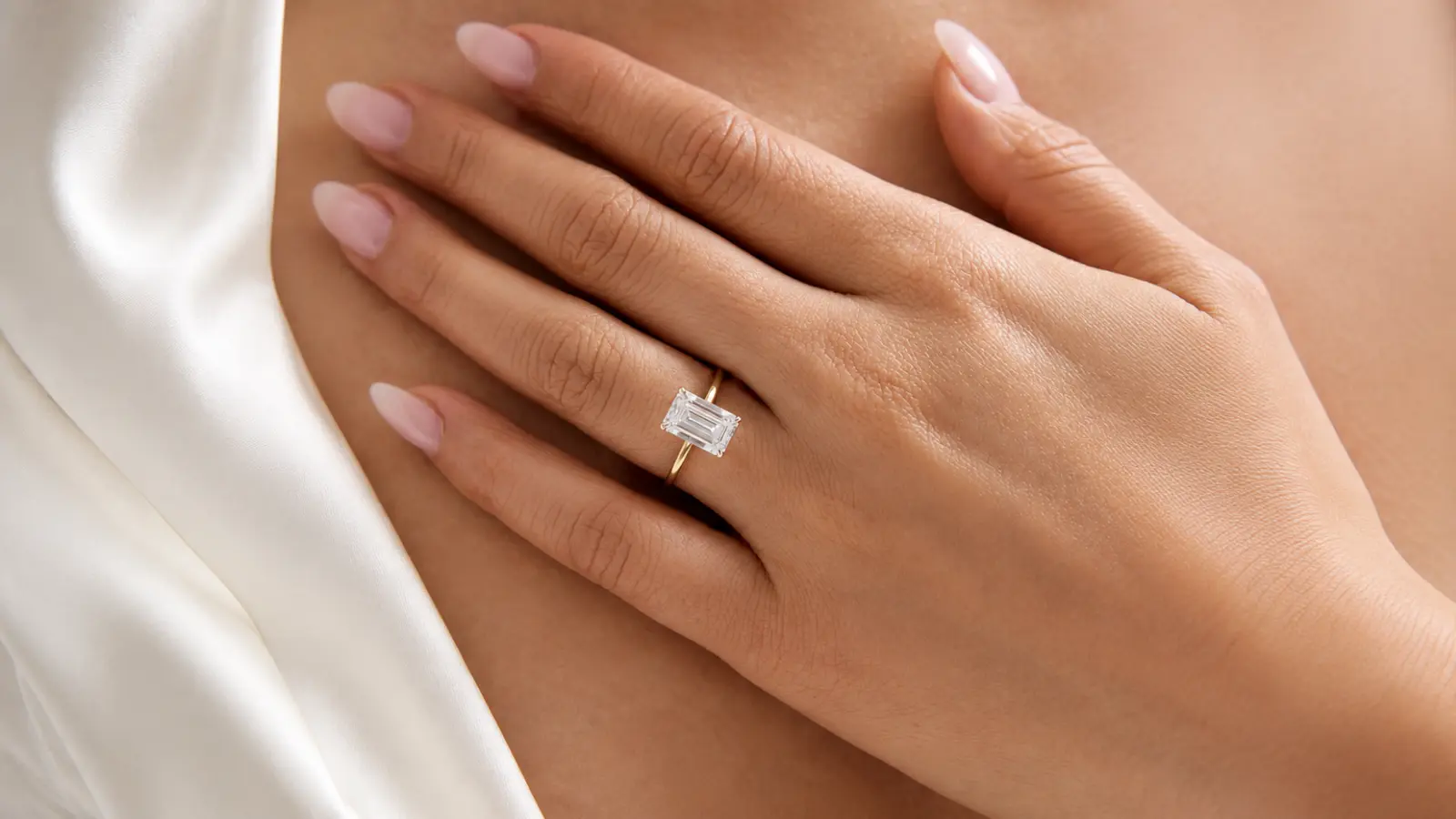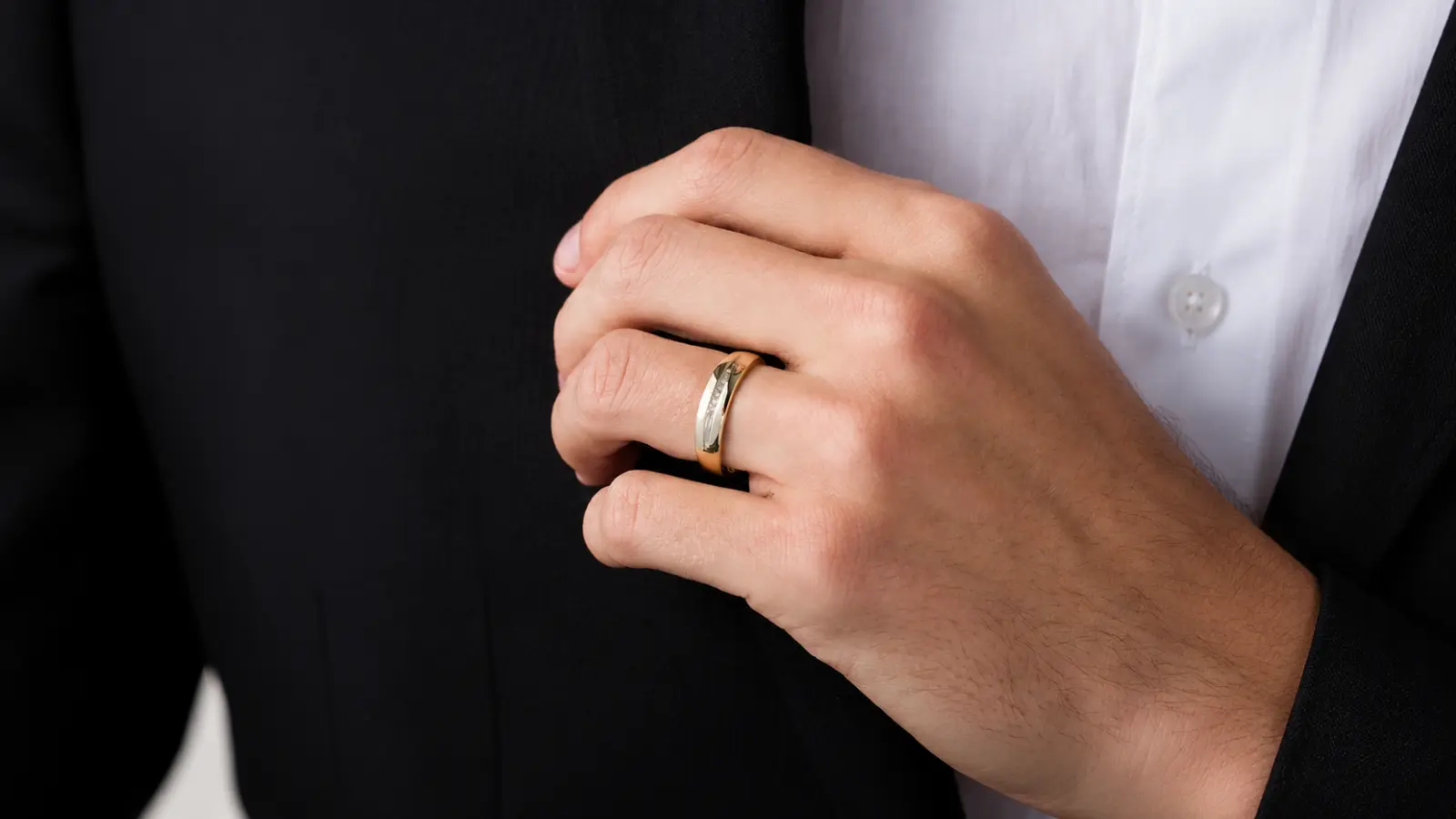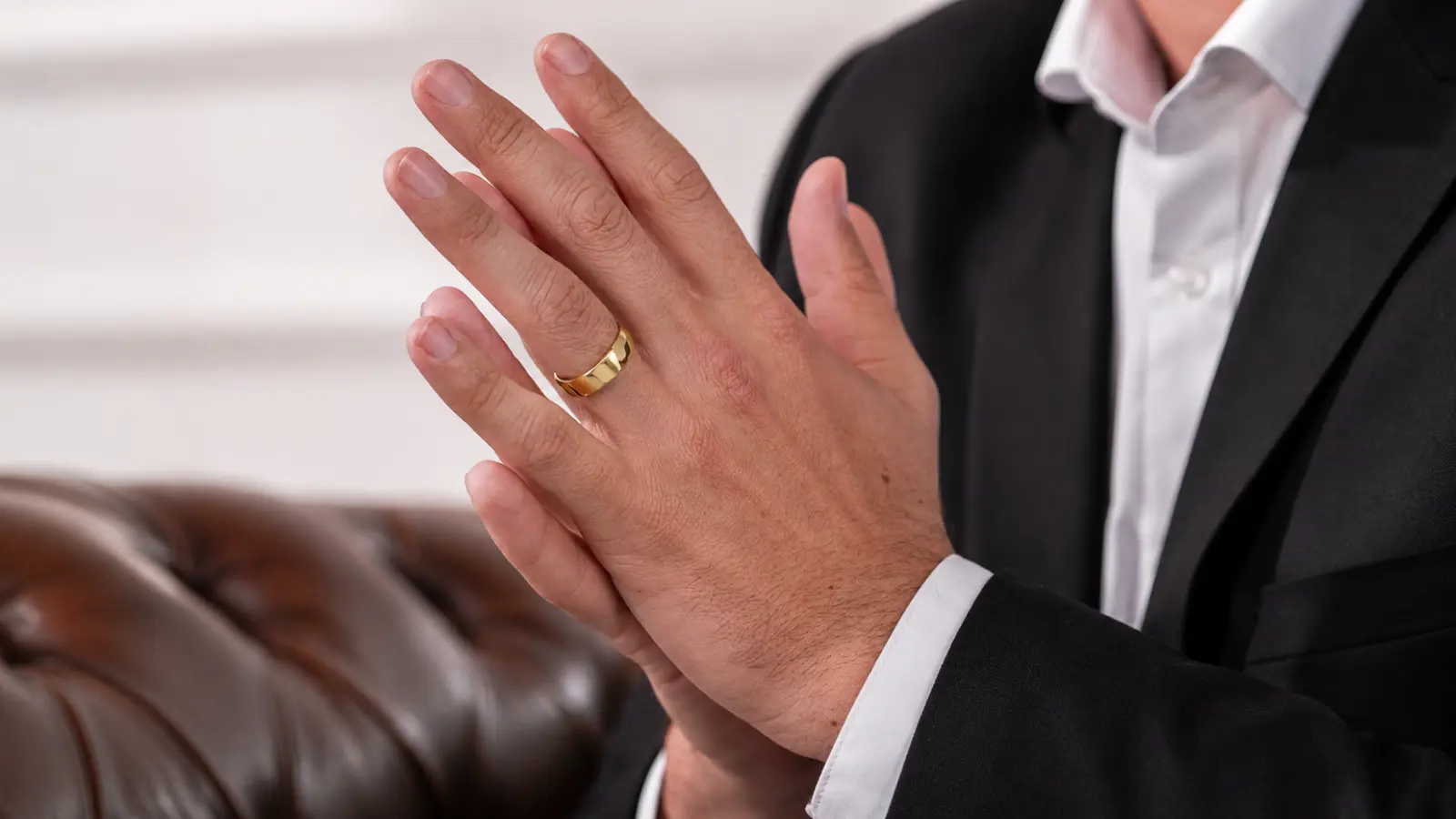
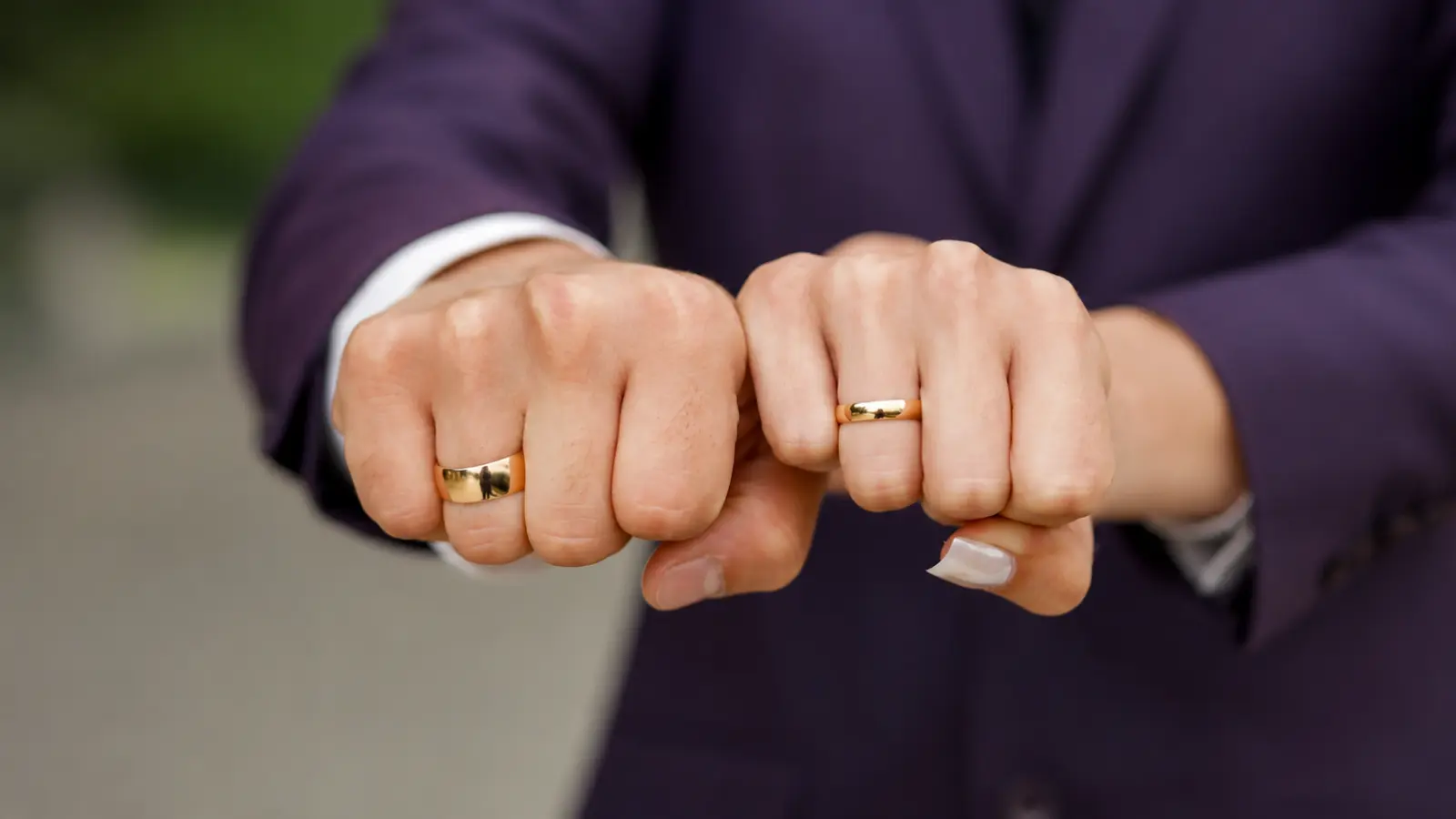
Gold wedding rings are wedding rings made from gold alloys designed for everyday wear, available in different colors such as yellow gold, white gold, and rose gold. Each type of gold has its own appearance, durability, maintenance needs, and style considerations, making the choice about more than color alone.
Choosing the right gold wedding ring means understanding how different gold types behave over time. Yellow gold offers a classic warm appearance, white gold creates a bright platinum-like look, and rose gold provides a softer tone with unique durability benefits. Karat, lifestyle, comfort, and how the ring pairs with other jewelry all influence the final decision.
This guide explains gold wedding rings, including yellow vs white vs rose gold, 10k vs 14k vs 18k gold, durability, maintenance, options for men and women, and how to choose the gold wedding ring that fits your style and everyday life.
Yellow Gold Wedding Rings
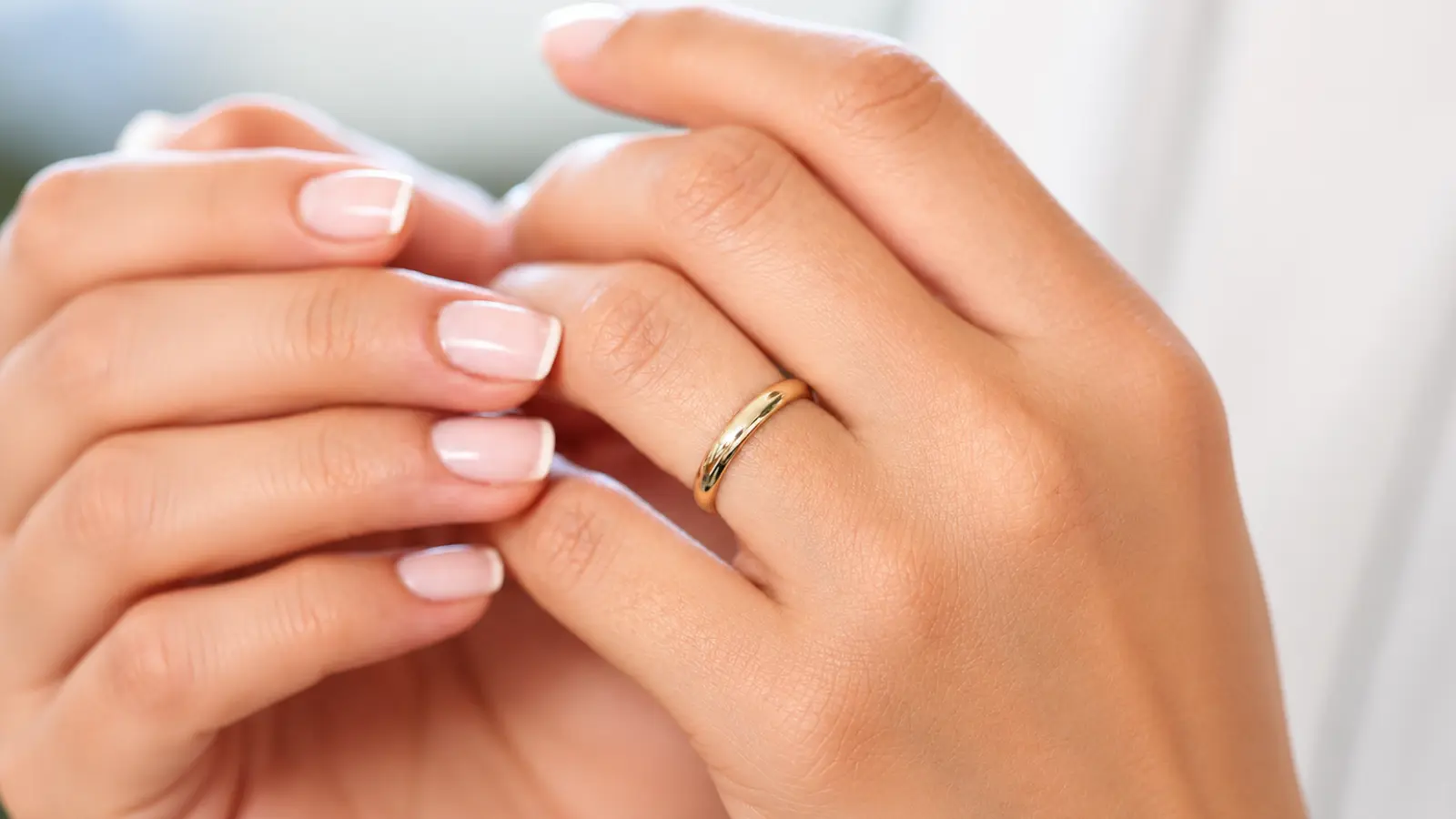
Yellow gold is what most people picture when they think of a wedding ring — the warm, rich tone that has been used for this purpose longer than any other metal. Its color comes from the alloy composition: pure gold is naturally yellow, and yellow gold alloys preserve that warmth by combining gold with silver and copper in proportions that maintain the characteristic tone while adding the hardness that pure gold lacks.
What yellow gold looks like
The depth of yellow gold’s color varies by karat. 18k yellow gold has a deep, saturated warmth — noticeably richer than 14k, which has a slightly lighter, more moderate tone. 10k yellow gold is the most muted of the three, and most people who care about color richness find 10k’s tone noticeably cooler and less saturated than expected.
For those who want the classic, full-warmth yellow gold look, 18k produces it most reliably. 14k sits comfortably in the middle for most tastes — rich enough to read unmistakably as yellow gold, durable enough for everyday wear.
Yellow gold has a strong design tradition. It is the metal most associated with vintage, antique, and heirloom ring styles — milgrain details, filigree work, and engraved motifs all read most naturally in yellow gold, where the warm tone amplifies the craftsmanship. It also suits simple, modern designs: a flat yellow gold band is among the cleanest, most timeless ring choices available.
Durability and maintenance
Yellow gold scratches — but this is not a flaw specific to yellow gold. All gold alloys scratch, because gold is a relatively soft metal even when alloyed. What varies is how visible the scratches are and how the metal ages around them.
On a polished yellow gold band, fine scratches accumulate into a soft patina over time that many people find attractive — the ring begins to look lived-in rather than worn out. A jeweler can polish it back to its original bright finish if the patina is unwanted. Yellow gold requires no maintenance specific to its color. Unlike white gold, it has no surface coating that wears away — the ring’s color is inherent to its alloy composition, which means it looks the same whether bought last month or worn for thirty years. Sizing and repairs are straightforward, and yellow gold is one of the easiest metals for a jeweler to work with.
Who tends to choose yellow gold
Yellow gold tends to appeal to people drawn to warmth — in jewelry, in interiors, in their general aesthetic — and to those who value the traditional resonance of the metal. It suits rings with intricate design details and suits very simple bands equally well. It is a strong choice for anyone whose wardrobe leans warm (earth tones, camel, olive, warm neutrals), and it is also worn confidently by people whose wardrobes are otherwise quite cool. The ring carries its own warmth regardless of what surrounds it.
White Gold Wedding Rings
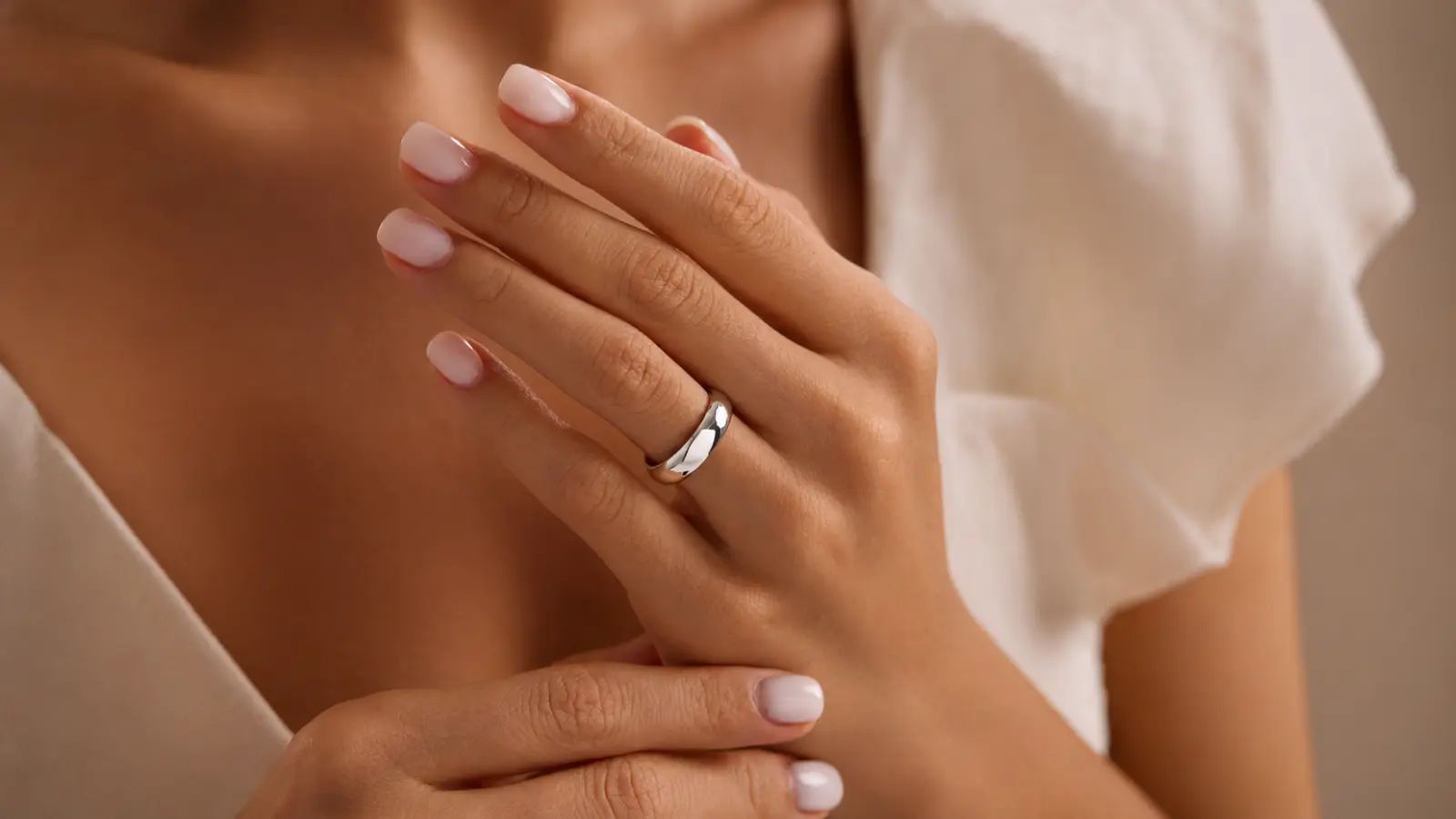
White gold is not a naturally occurring metal — it is an alloy created by combining gold with white metals, typically palladium, nickel, or manganese, then coating the surface with rhodium, a platinum-group metal that gives it its characteristic bright, silver-white finish. The result looks similar to platinum at a meaningfully lower price point, which is how white gold became the dominant gold color for wedding jewelry in the United States for several decades.
What white gold looks like
A freshly rhodium-plated white gold ring is bright and cool — visually very close to platinum, with a clean, mirror-bright surface that reads as contemporary and precise. Over time, as the rhodium plating wears from daily friction, the ring’s appearance shifts slightly: it may show a faint warmth or grey tone in areas of highest wear, like the underside of the band. This shift is gradual and often goes unnoticed for months before the ring is taken in for replating.
The brightness of white gold wedding rings photographs exceptionally well — they reflect light cleanly and hold their visual clarity across a wide range of lighting conditions. This makes it a strong choice for rings with diamond or stone settings, where the cool, high-contrast background amplifies the stones rather than competing with them.
The replating requirement
This is the practical fact that most white gold buyers either do not know or underestimate before purchase: white gold requires periodic rhodium replating to maintain its appearance. The rhodium coating wears away with daily use — typically faster in areas of high friction, such as the underside of the band. Most people have their white gold rings replated every one to three years.
The process is quick (often done while you wait) and inexpensive — typically $50–$100 at most jewelers — and it restores the ring to its original bright white finish immediately. Whether this is a meaningful inconvenience depends entirely on the individual. For some, a biennial jeweler visit is a minor errand. For others, the knowledge that the ring needs ongoing intervention to maintain its appearance is a reason to consider platinum instead. The rings themselves are equally beautiful; the distinction is entirely about maintenance preference.
White gold and nickel sensitivity
Some white gold alloys use nickel as the white metal component. Nickel is one of the most common contact allergens — a meaningful percentage of people react to prolonged skin contact with nickel-containing alloys, and a ring worn continuously is exactly the kind of prolonged contact that triggers reactions. If you know you are nickel-sensitive, ask specifically about the alloy composition of any white gold ring before buying. Palladium-white gold alloys are nickel-free and hypoallergenic; these are worth seeking out if sensitivity is a concern.
White gold vs platinum
White gold and platinum look nearly identical when both are polished, which is why the comparison comes up so often. The practical differences: platinum costs significantly more, never needs replating, develops a satiny patina over time (which some people prefer and others find less appealing than a polished surface), and is denser — a platinum ring feels noticeably heavier than a white gold ring of the same size. For a full comparison, see the platinum wedding rings.
Rose Gold Wedding Rings
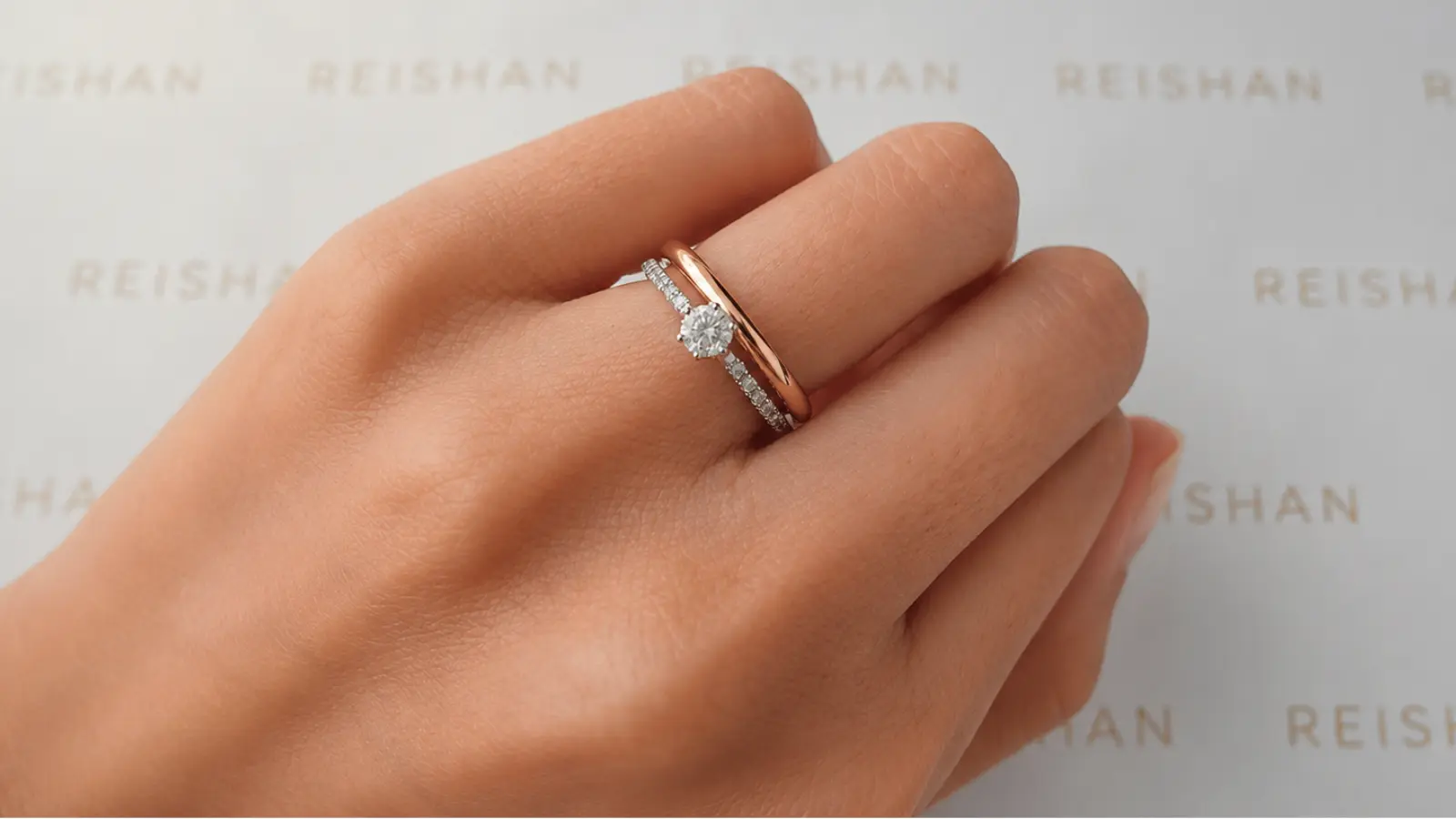
Rose gold is the newest of the three gold colors to find widespread use in wedding jewelry. It became prominent in the early nineteenth century in Russia (sometimes called Russian gold), fell out of fashion for much of the twentieth century, and returned in the 2010s as a dominant trend in fine jewelry that has since moved into the mainstream. Its characteristic blush-pink tone comes from a higher copper content in the alloy, which gives it both its color and a practical durability advantage over its counterparts.
What rose gold looks like
Rose gold’s color exists on a spectrum depending on the copper content of the specific alloy. At higher copper concentrations, it reads as a deeper, more distinctly pink or even slightly reddish tone. At lower concentrations, it is softer — closer to what is sometimes called blush gold, a warm pinkish hue that is subtle enough to read as a warm neutral in some contexts. Most rose gold jewelry in the current market falls toward the softer end of this spectrum.
Karat affects rose gold’s color in the same direction as yellow gold: lower karat rose gold has a less saturated tone (and more copper, which deepens the pink), while higher karat rose gold is slightly closer to yellow gold in warmth. 14k rose gold is the most widely available and represents the middle of the rose gold color range for most buyers.
Durability
Rose gold is the most durable of the three gold colors by a meaningful margin. Copper, which gives rose gold its color, is a harder metal than gold, silver, or palladium — the metals that form the alloy basis of yellow and white gold. A rose gold ring at any given karat will be slightly more scratch-resistant than a yellow or white gold ring at the same karat, simply because of its alloy composition.
For people who are active, work with their hands, or have had previous rings show wear faster than expected, rose gold’s inherent hardness is a practical advantage worth factoring into the decision.
Maintenance
Rose gold requires no surface treatment to maintain its color. Unlike white gold, its tone comes from the alloy itself, not a plating — which means the color is essentially permanent and self-sustaining. Over years of wear, rose gold does develop a patina, a subtle softening and deepening of the copper tones that many people find adds character. The ring can be polished back to its original brightness by a jeweler if the patina is unwanted.
Who tends to choose rose gold
Rose gold wedding rings appeal across a wide range of aesthetics, which is part of why the metal’s resurgence has been so sustained. It suits romantic and vintage-inspired designs naturally — the warmth of the metal amplifies filigree work, milgrain details, and floral motifs in a way that feels historically resonant. It also reads well in very modern, minimal designs, where the soft pink tone provides warmth without the stronger saturation of yellow gold.
Rose gold is often chosen by people whose wardrobes include warm neutrals, blush tones, earthy colors, and pastels — aesthetics where the blush tone of the metal feels at home rather than out of place. That said, it reads well on a wider range of wearers than its reputation as a “romantic” metal suggests.
10k vs 14k vs 18k Gold
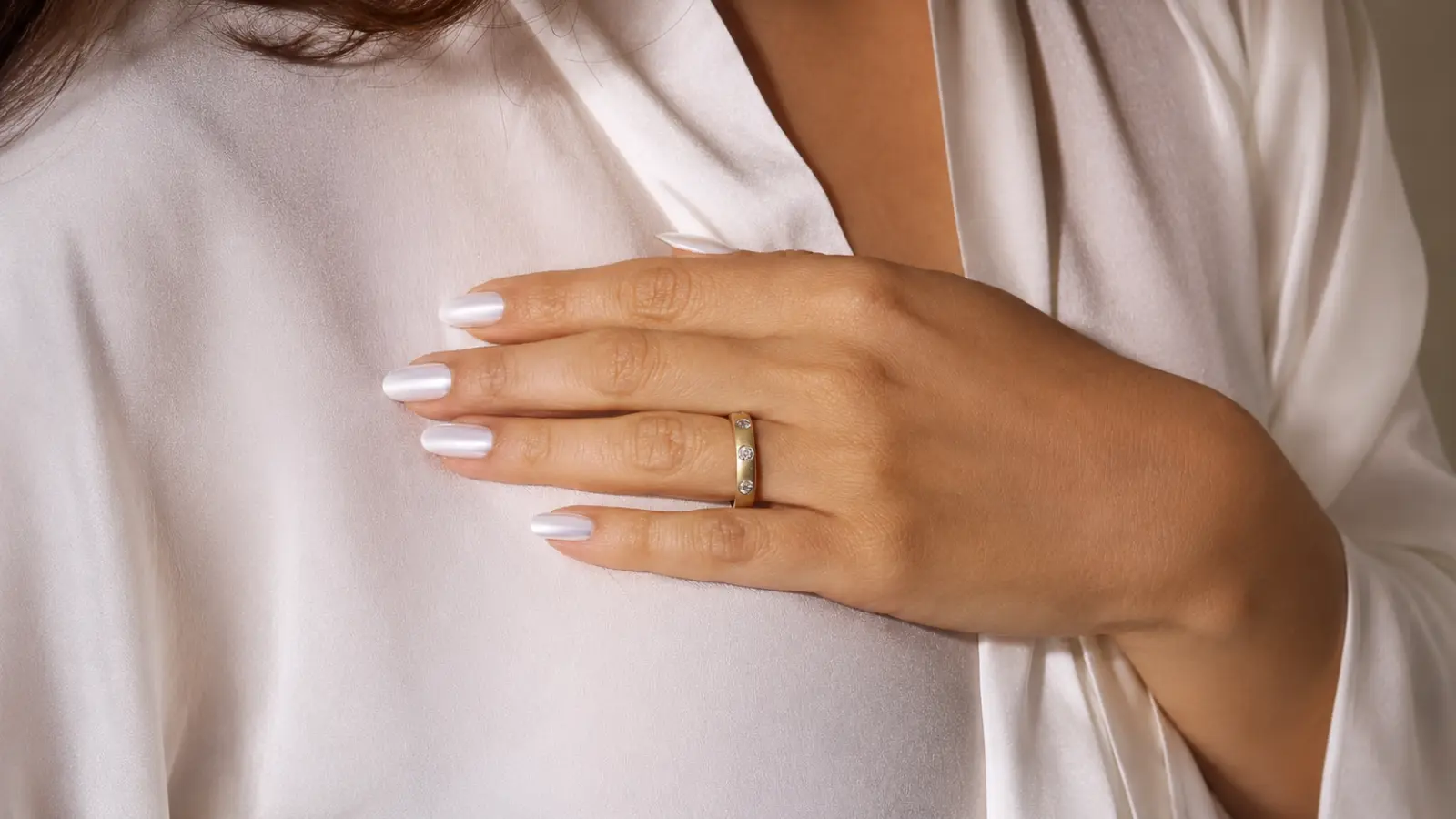
Karat measures the proportion of pure gold in an alloy. The karat number divided by 24 gives the fraction of pure gold: 18k is 75% pure gold; 14k is 58.3%; 10k is 41.7%. The remaining percentage is other metals whose specific composition determines the ring’s color (yellow, white, or rose), its hardness, and its hypoallergenic properties.
Understanding what karat means in practical terms — not just in percentages — is what makes the decision clearer.
Color depth
Higher karat gold has more pure gold in the alloy, which means its color is richer and more saturated. This is most visible in yellow gold: 18k has a noticeably deeper, warmer tone than 14k, which is slightly lighter and more moderate, which in turn is noticeably warmer than 10k. In rose gold and white gold, karat affects color in subtler ways — white gold looks white at any karat because of the rhodium plating; rose gold’s depth of pink varies with karat and copper content.
Hardness and scratch resistance
The relationship between karat and hardness runs in the opposite direction from color: higher karat gold is softer. Pure gold (24k) is too soft to hold its shape in a ring worn daily. 18k gold is harder than pure gold but softer than 14k or 10k, because the alloy content — metals that are generally harder than gold — is lower at higher karats. 14k is harder than 18k, and 10k harder still.
For a ring worn every day in an active lifestyle, lower karat tends to hold up better to physical wear and daily friction. For someone who is careful with their ring or removes it during demanding activities, 18k’s color advantage may outweigh the softness trade-off.
Hypoallergenic properties
Higher karat gold is generally safer for sensitive skin because it contains less of the metals most likely to cause reactions — particularly nickel, which is found in some white gold alloys. 18k gold’s higher pure gold content means less potential allergen in contact with skin. 14k gold is well-tolerated by most people. 10k gold’s higher alloy content means a higher concentration of potentially reactive metals, which makes it more likely to cause reactions in people with sensitivities.
If nickel sensitivity is a known concern, palladium-white gold alloys are preferable regardless of karat.
Cost
Higher karat gold uses more pure gold, which is more expensive. 18k rings cost more than 14k rings of the same design, which cost more than 10k. The price difference is noticeable but not dramatic for most ring sizes — it is one factor in the decision, but rarely the deciding one when the other practical differences already point toward a particular karat.
| Karat | Gold Content | Color Depth | Hardness | Best For |
|---|---|---|---|---|
| 10k | 41.7% | Most muted | Hardest | Budget-conscious buyers; very active lifestyles; those who prioritize durability above color richness |
| 14k | 58.3% | Balanced | Very good | Most buyers; best all-around balance of color, durability, and cost; standard for U.S. wedding jewelry |
| 18k | 75% | Richest | Good | Buyers who prioritize color richness or have metal sensitivities; more common in European jewelry; softer under daily wear |
The 14k default — and when to deviate from it
14k is the karat most American jewelers recommend as a starting point for wedding rings, and for good reason: it sits in the center of the trade-off between color and durability, and it is the karat that most fine jewelry in the United States is made to. Choosing 14k means working within the widest selection of designs, most consistent pricing, and a metal that holds up well to daily wear for the large majority of people.
Deviating toward 18k makes sense when color depth matters significantly (particularly in yellow gold, where the difference is clearly visible), when skin sensitivity is a known concern, or when the wearer is accustomed to European jewelry, where 18k is the more common standard. Deviating toward 10k makes sense when budget is the primary constraint or when the ring will be exposed to very high levels of physical wear.
Gold Wedding Rings for Men
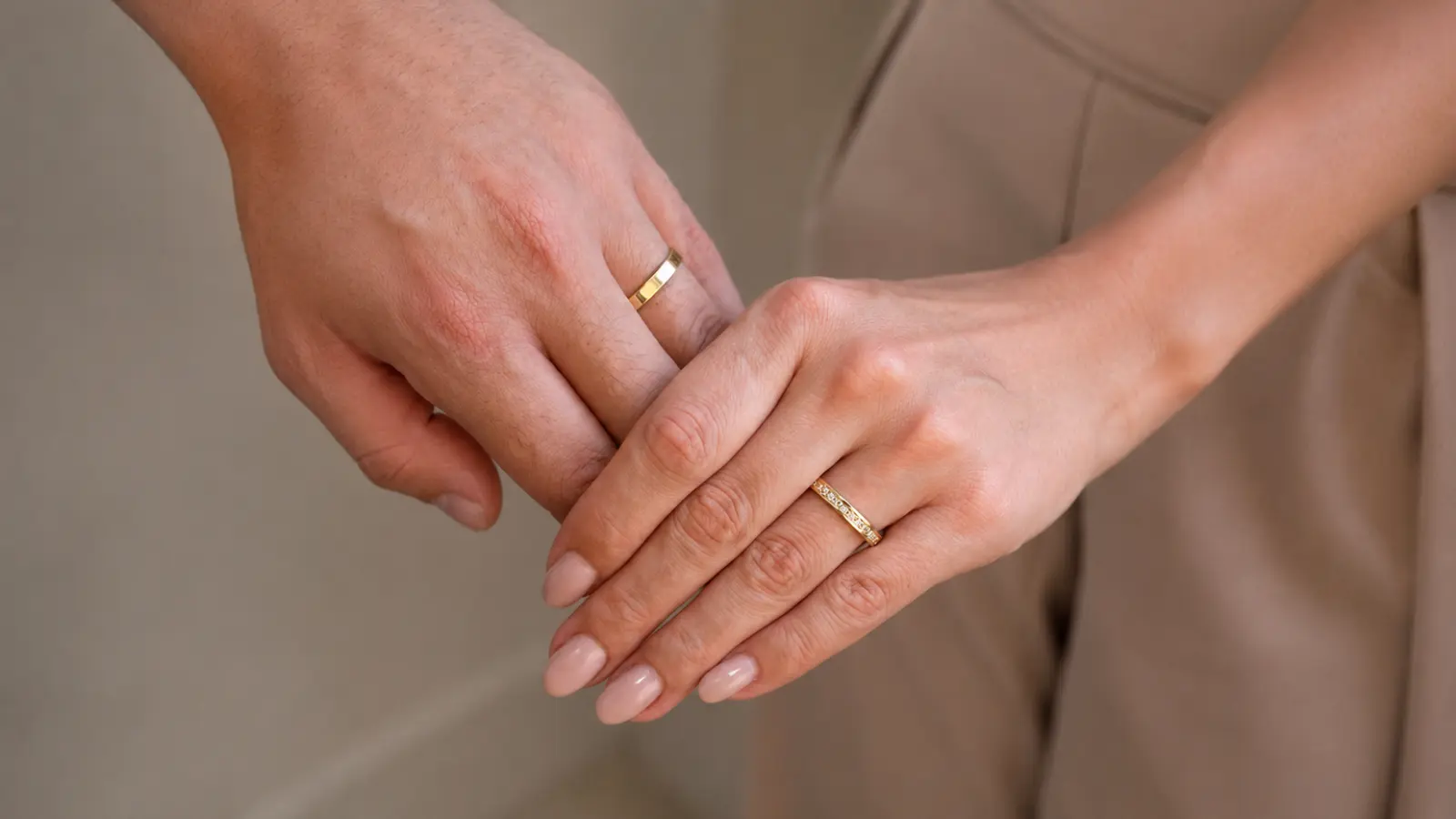
Men’s gold wedding rings have their own design vocabulary — one that overlaps significantly with women’s, but with different priorities around width, finish, and style. The practical considerations of durability and maintenance apply equally to both, but the aesthetic conventions differ enough to address separately.
Width and profile
Men’s gold bands typically run wider than women’s — a range of 5mm to 8mm covers most of what is commonly chosen, with 6mm and 7mm being the widths most frequently settled on. Wider bands have a more substantial presence on the hand and tend to suit men who want the ring to be visible and intentional. Narrower men’s bands — 4mm and below — are available and suit men who prefer a more understated presence.
Profile matters in men’s rings more than it is usually discussed. A flat band has clean, geometric lines and a modern quality. A comfort-fit band (domed slightly on the interior) is easier to put on and remove and tends to feel better over long periods of wear, particularly for men who are not accustomed to wearing rings. A half-round or domed exterior has a classic, traditional quality. The profile decision is usually more about feel than appearance — try several before deciding.
Which gold color for men
Yellow gold has the longest tradition in men’s wedding rings and remains a strong choice for men who want a ring that reads as classic and unfussy. A plain yellow gold band in 14k carries a visual directness that suits the aesthetic of many men’s rings.
White gold has been widely chosen by men who prefer a cooler metal or whose wardrobe runs toward silver tones. It reads as modern and contemporary, and it is particularly well-suited to men who want a wedding ring that integrates naturally with other silver-tone accessories — watches, cufflinks, belt hardware. Rose gold is increasingly chosen by men who want warmth without yellow gold’s strong saturation. The blush tone reads differently on a wider, plainer men’s band than it does on a delicate women’s ring — more understated, and less distinctly pink.
Finish for men
Matte and brushed finishes are particularly popular in men’s gold rings. The non-reflective surface reads as more low-key and contemporary than a polished band, conceals everyday scratches more effectively, and suits the wider, simpler profiles that are common in men’s ring design. A combination finish — brushed center with polished edges or rails — adds definition without committing fully to either aesthetic.
For full guidance on styles, widths, and metals for men’s rings, see the men’s wedding bands.
Gold Wedding Rings for Women
Women’s gold wedding rings span a wider design range than men’s — from the very simple to the highly detailed, from plain bands to fully diamond-set eternity rings. The gold color and karat questions are the same as for any ring, but the way they interact with specific design choices differs in some meaningful ways.
Gold color and engagement ring stacking
For women who will wear the wedding ring alongside an engagement ring, the gold color decision is partly determined by the engagement ring’s existing metal. Stacking two rings in the same metal creates the cleanest, most unified look — a yellow gold wedding band and a yellow gold engagement ring read as a natural set; a white gold band and a platinum engagement ring are nearly indistinguishable and stack cleanly.
Mixing metals is possible and sometimes preferred, but it requires more deliberate decision-making about whether the contrast is wanted or incidental. If the engagement ring is in a metal the wearer is now less certain about — white gold that has begun to yellow between platings, rose gold that was chosen in a different aesthetic moment — the wedding band is not the moment to try to work around it. For guidance on combining rings that do not naturally sit together, see the how to wear wedding rings.
Yellow gold and detailed designs
For women’s rings with design detail — milgrain edges, engraving, filigree, floral motifs, vintage-inspired elements — yellow gold is the metal that amplifies those details most naturally. The warmth of yellow gold has a centuries-long association with these design traditions, and the combination reads as coherent and intentional in a way that the same details in white or rose gold do not quite replicate.
Women drawn to antique, vintage, or Art Deco aesthetics often find that yellow gold is not merely a stylistic choice but the only metal that genuinely fits the ring they want.
White and rose gold for diamond settings
White gold and rose gold are both strong choices for diamond or gemstone settings, though for different reasons. White gold’s cool tone provides a high-contrast, neutral background for white diamonds — the stones read as brighter and more brilliant against a white metal. Rose gold creates a different effect: the warm contrast between the blush metal and white diamonds produces a softer, more romantic visual quality.
Neither is objectively better — the choice depends on whether a crisp, bright-contrast look or a warm, blush-toned look is more appealing. For diamond wedding ring options in gold, see the diamond wedding rings for women.
Width considerations for women
Women’s wedding band widths most commonly range from 2mm to 5mm, with 2mm to 3mm being the most frequently chosen for rings that will be stacked with an engagement ring. Narrower bands sit more naturally alongside an engagement ring’s setting and create less visual competition. A 2mm band is delicate to the point of near-invisibility beside some engagement rings; a 3mm to 4mm band has more presence while still reading as proportional on most hands.
Women who will wear the wedding ring alone — without an engagement ring — often choose a slightly wider band that can stand on its own visually. For styles and guidance specific to women’s rings across all metals, see the wedding rings for women.
How to Choose the Right Gold Wedding Ring
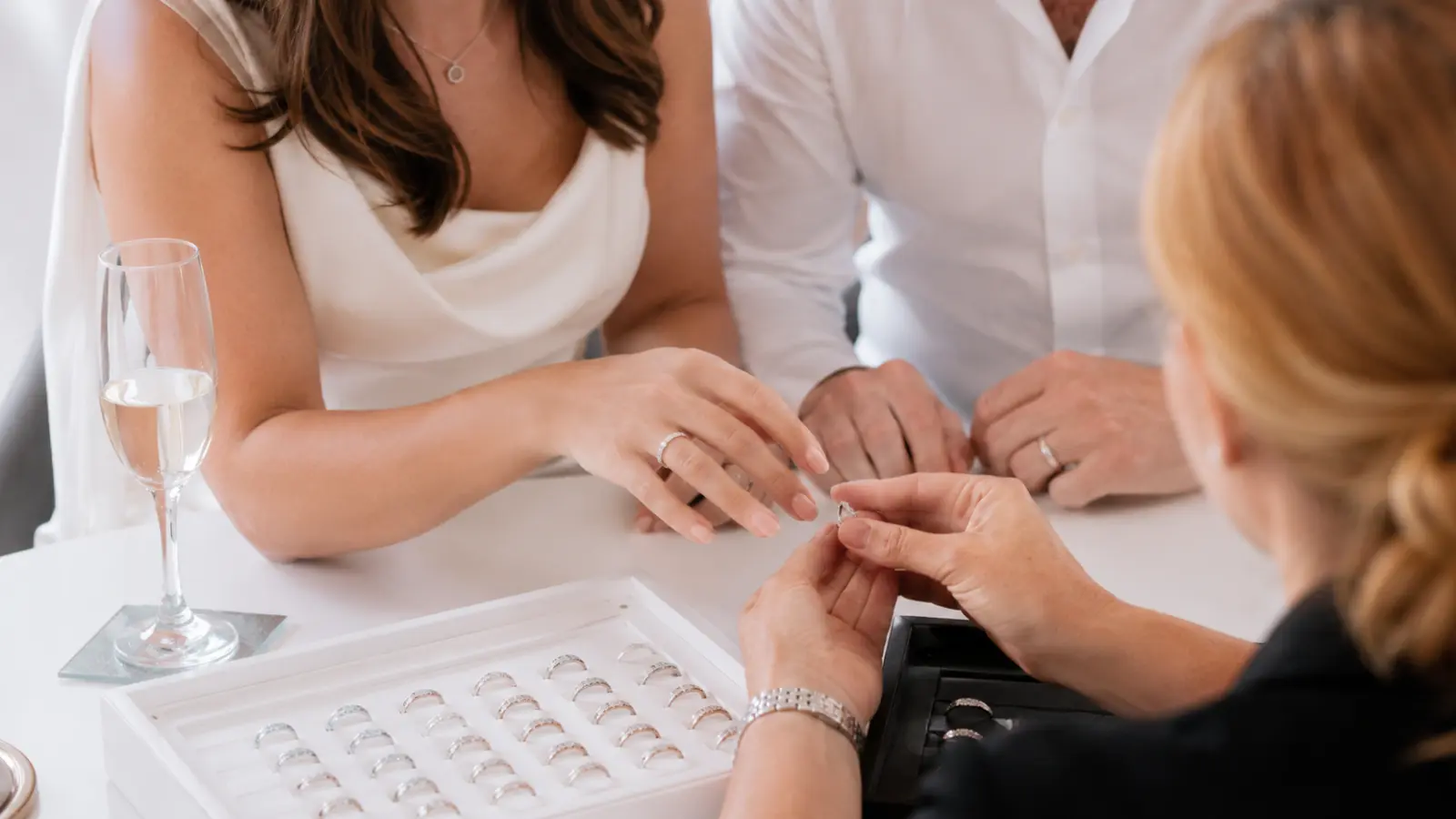
The number of variables in a gold wedding ring decision — color, karat, width, profile, finish, design — can make the process feel more complicated than it needs to be. The decisions resolve quickly when approached in the right order.
Start with color, in person
The single most important principle in choosing a gold color: try all three on your hand before deciding. The way yellow, white, and rose gold read on a screen or in a photograph is a poor proxy for how they read against your skin and in the light of your daily environment. Some people who are certain they want white gold try rose gold and find the warmth is more appealing than expected. Some people who assume yellow gold is too traditional put on an 18k band and find they like how it reads against their hand.
Most jewelers will let you try multiple options side by side without any pressure. If shopping online, scheduling an appointment with a local jeweler to compare the color options in person is worth the time before buying.
Consider what the ring will be worn alongside
If the ring will be stacked with an engagement ring, the engagement ring’s metal creates a strong default starting point. Matching the metal is simpler and usually produces the cleanest visual result. If there is a specific reason to choose a different metal — deliberate mixed-metal contrast, a sensitivity to the engagement ring’s alloy, or a preference that genuinely overrides the coordination impulse — make that decision deliberately rather than by default.
If the ring will be worn alone, the coordination question disappears and the decision is entirely about what looks and feels right on the wearer’s hand. A solo wedding ring has the latitude to be more expressive — wider, more detailed, more substantial — than one that will compete for visual space with an engagement ring.
Match the karat to how the ring will be worn
Active hands — people who work physically, exercise regularly, or do work that exposes the ring to friction and impact — tend to be better served by 14k than 18k, because the added alloy content makes the ring meaningfully harder. Hands that are treated more gently, or on which the ring is sometimes removed during high-wear activities, can be served equally well by 18k.
Skin sensitivity, if it is a known factor, tips the decision toward higher karat and specifically toward palladium-alloyed white gold rather than nickel-alloyed white gold. If in doubt, ask the jeweler about the specific alloy composition before purchasing.
What most people overlook
Width decisions made without trying the ring on are unreliable. A width that looks proportional in a photograph may read very differently on the actual finger — wider or narrower than expected. Try the specific width before committing. Profile affects feel more than appearance — a ring that looks comfortable in a photograph may feel restricting after a full day of wear if the profile is not suited to the wearer’s hand. Leave it on for at least twenty minutes before deciding.
White gold’s replating requirement is not a dealbreaker, but it is a reality that should be known before purchase. Factor it into the decision consciously rather than as a surprise later.
| If you want… | Consider |
|---|---|
| Maximum warmth and traditional richness | 18k yellow gold |
| Warm tone with better durability | 14k yellow gold or 14k rose gold |
| Cool, silver-white tone at a lower cost than platinum | 14k white gold (palladium alloy if sensitive skin) |
| Warm, blush tone with highest durability in gold | 14k rose gold |
| No maintenance requirements, permanent color | Yellow gold, rose gold, or platinum (not white gold) |
| Most hypoallergenic option in gold | 18k gold (any color) or palladium-alloyed white gold |
| Best value for money without sacrificing quality | 14k gold in any color |
| Maximum hardness and scratch resistance | 10k gold or rose gold at 14k |
Use the table as a starting point, not a final answer. The right gold is the one that makes the most sense given your lifestyle, your existing jewelry, and how you actually feel when you try it on.
Gold Wedding Ring Inspiration
Gold wedding rings come in many styles, from classic yellow gold bands to modern white gold designs and romantic rose gold rings. Explore our inspiration board for simple gold bands, diamond gold rings, vintage details, matching gold wedding bands, and ideas to help you find the style that feels right for you.
Choosing a Gold Wedding Ring Made for Everyday Life
Gold wedding rings are not only chosen for how they look on the wedding day, but for how they will feel after years of everyday wear. The right choice depends on the balance between beauty, durability, comfort, maintenance, and the personal meaning behind the ring.
Whether you choose the classic warmth of yellow gold, the clean appearance of white gold, or the soft character of rose gold, the best gold wedding ring is the one that feels natural every time you wear it. A wedding ring is not just a piece of jewelry chosen once it becomes part of your everyday story.
Frequently asked questions (FAQ)
What is the best gold for wedding rings?
The best gold for wedding rings depends on lifestyle, appearance preference, and durability needs. For most people, 14k gold offers the strongest balance between everyday durability, beautiful color, and value. 18k gold provides a richer color and higher gold content, while 10k gold offers more hardness but less pure gold.
What is the difference between yellow gold, white gold and rose gold wedding rings?
Yellow gold has a classic warm appearance and keeps the natural color most associated with traditional gold jewelry. White gold has a cooler silver-toned appearance and is often chosen as an alternative to platinum. Rose gold has a warmer pink tone created by copper in the alloy and is known for its distinctive color and durability.
Is 14k or 18k gold better for a wedding ring?
Neither option is better for everyone. 14k gold is usually preferred for everyday wedding rings because it is stronger, more resistant to wear, and more affordable. 18k gold contains more pure gold, has a richer color, and may be preferred by people who prioritize gold content or have certain metal sensitivities.
Are gold wedding rings durable?
Yes. Gold wedding rings are durable enough for everyday wear when made with the right alloy. Because pure gold is naturally soft, wedding rings are usually made with 10k, 14k, or 18k gold mixed with other metals for strength. Proper care and occasional maintenance can help a gold ring last for decades.
How long do gold wedding rings last?
A well-made gold wedding ring can last for generations with proper care. Longevity depends on the karat, thickness of the ring, daily activities, and maintenance. Gold may develop scratches or a natural patina over time, but it can usually be polished and restored by a jeweler.
Does white gold need to be replated?
Yes. Most white gold wedding rings are coated with rhodium, which creates their bright white appearance. Over time, this coating can wear away with daily use and may need to be reapplied. How often replating is needed depends on the ring, lifestyle, and amount of wear.