Rose gold wedding rings are wedding rings made from a gold and copper alloy that creates the metal’s signature warm pink tone. Unlike a surface coating, the color comes from the metal itself, which means rose gold does not require replating and develops its character naturally over years of wear.
There is a reason rose gold became one of the most recognizable jewelry choices of the last decade — and a reason it has remained. The metal feels romantic without being overly delicate, distinctive without being difficult to wear, and offers a balance between vintage inspiration and modern style.
This guide explains rose gold wedding rings, including what rose gold is made of, durability, pros and cons, styles for women and men, diamond and gemstone pairings, and how to decide where rose gold fits among other wedding rings and wedding bands.
What Is Rose Gold?
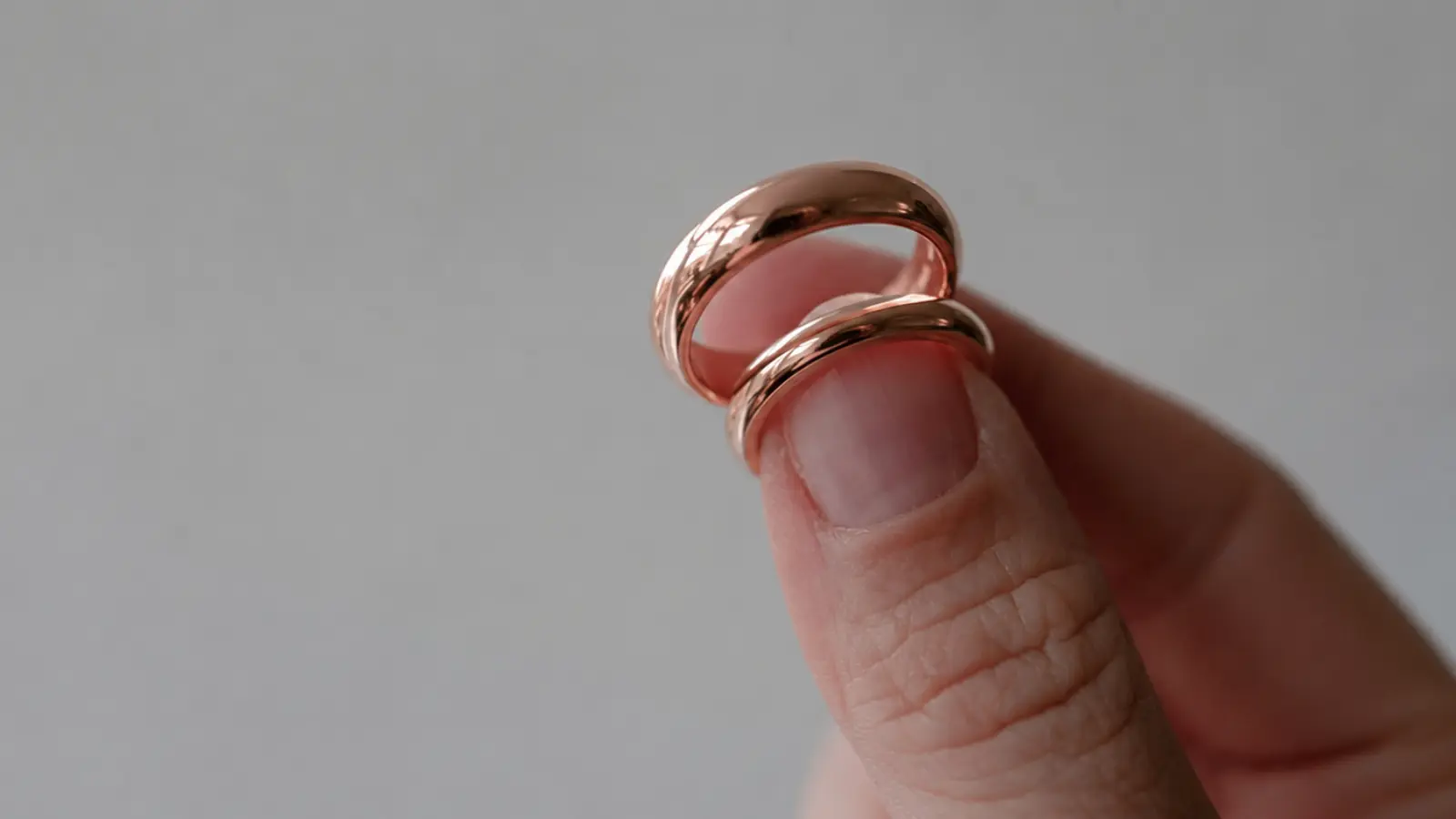
Rose gold is a gold alloy — the same base material used in other gold wedding rings, but mixed with a different set of secondary metals. Where yellow gold is alloyed with copper and zinc to preserve its warm golden tone, rose gold uses a higher proportion of copper, which pushes the color toward pink. The more copper in the alloy, the deeper and redder the pink; less copper produces a lighter, blush-toned result. Most rose gold jewelry available in the United States today sits in a range that reads as a warm, soft pink rather than an overtly red or orange tone.
The karat system works identically to other gold alloys. 14k rose gold is 58.3% pure gold; 18k rose gold is 75% pure gold. The remainder in both cases is primarily copper, with a small amount of silver added to balance the color and improve workability. 14k rose gold tends to have a slightly more pronounced pink tone than 18k, because the higher copper content comes through more strongly relative to the gold.
A metal with genuine history
Rose gold is sometimes discussed as a recent invention — a product of the Instagram era. It is not. The alloy has been used in fine jewelry since at least the early nineteenth century, when it became associated with Russian craftsmen and was widely called Russian gold in European jewelry markets. Carl Fabergé used it extensively in the imperial eggs that defined a generation of luxury jewelry. It moved in and out of fashion across the twentieth century: popular in the 1920s Art Deco period, less so in the mid-century, resurgent in the 1980s, then dormant again before its dramatic return in the 2010s.
That history matters for couples choosing rose gold today. A rose gold ring is not referencing a trend from a few years ago — it is drawing from a tradition that predates most modern jewelry conventions.
What rose gold is not
Rose gold is not plated. This is one of the most important practical distinctions between rose gold and white gold. White gold’s color comes from a rhodium coating applied over a yellow gold alloy; that coating wears and requires periodic replacement. Rose gold’s color comes from the alloy itself — it is the same all the way through the ring, with no underlying metal of a different color waiting to emerge as the surface wears.
The ring will develop a subtle patina over decades as the copper oxidizes slowly, which can deepen the warm tone slightly. But it will not yellow, fade, or require replating. For most wearers, that aging process is part of what makes rose gold feel like a ring worth keeping.
Rose Gold Wedding Rings for Women
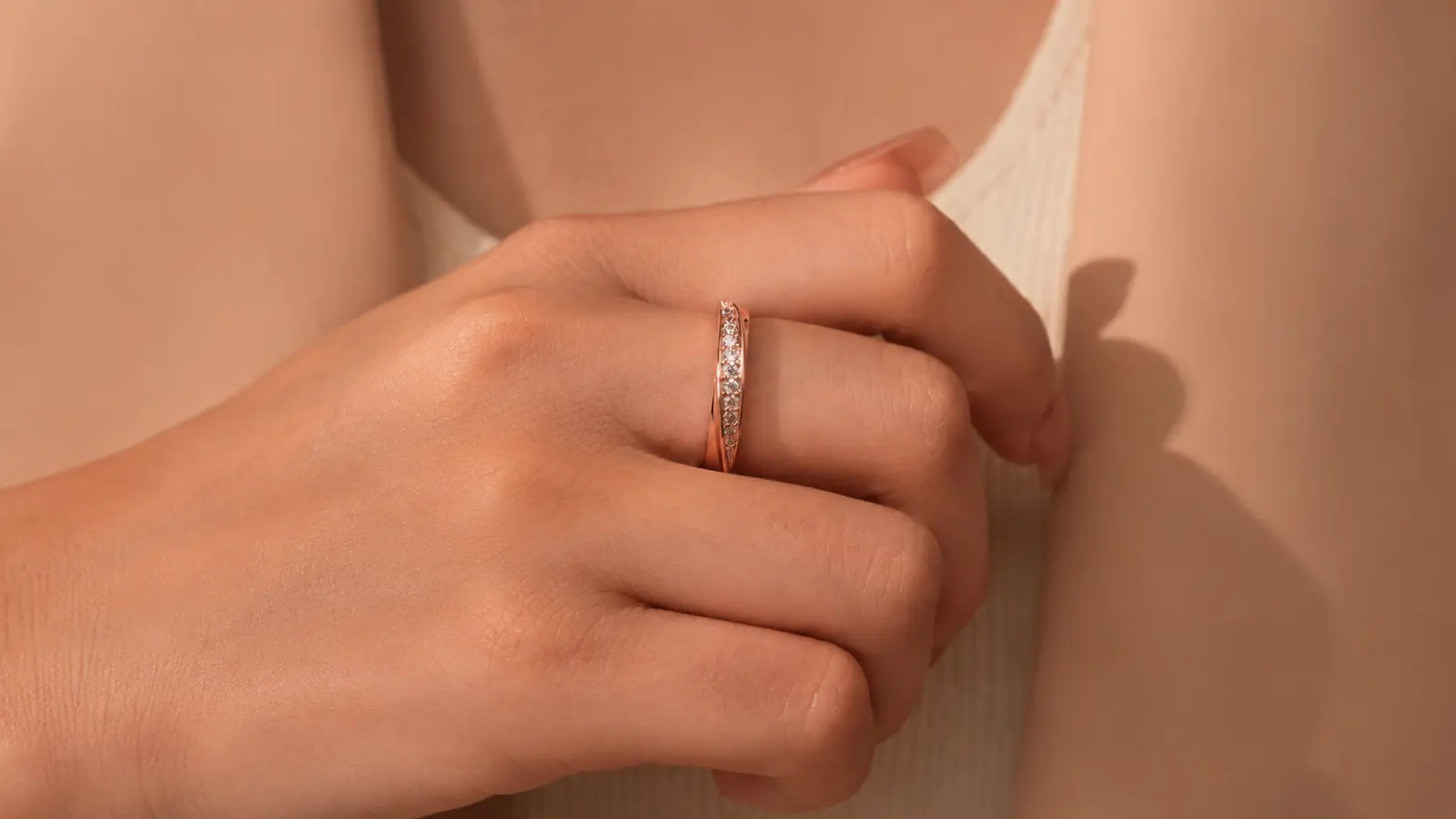
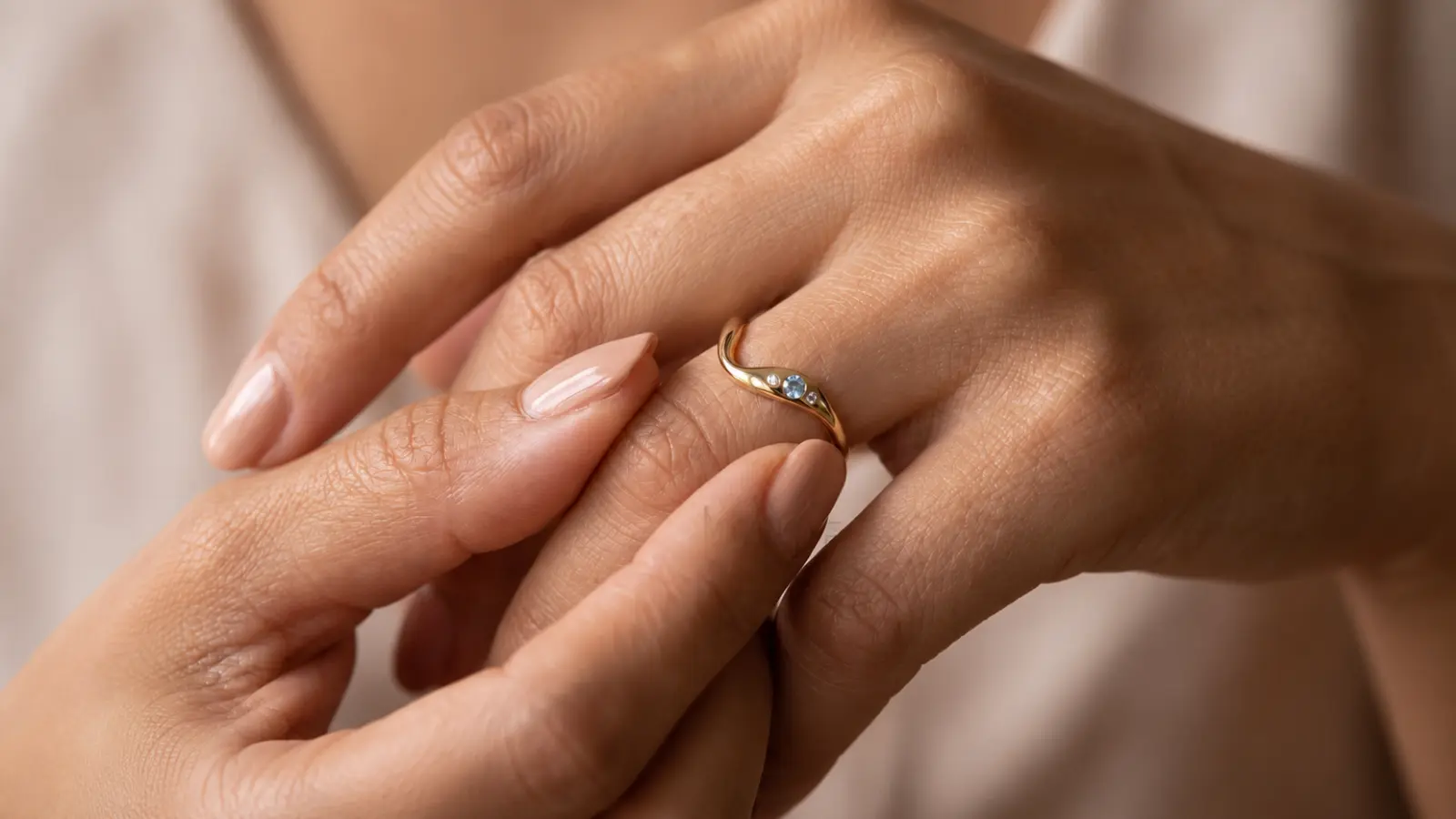
Rose gold has found its most devoted audience in women’s wedding jewelry, and the range of styles available reflects that. From a 1.5mm stacking band to a fully pavé eternity ring set with pink sapphires, the metal works across aesthetic territory that few others cover with the same ease. The warmth reads as romantic without being sentimental — a fine line, and rose gold manages it consistently.
Vintage and Art Deco styles
Rose gold’s association with the Victorian and Art Deco periods makes it a natural metal for vintage wedding rings. Milgrain edging — the tiny beaded border that defines much Victorian jewelry — looks more authentically antique in rose gold than it does in white gold, which reads as too clean and contemporary for the effect to land fully. Filigree settings, carved band details, and old European cut diamonds all find a natural home in rose gold. If a vintage or antique aesthetic is the goal, rose gold is often the most convincing path to it.
Minimalist and modern styles
The same metal that works so well for vintage designs also translates cleanly into modern minimalism — which says something about its versatility. A simple, plain rose gold band in a satin or brushed finish carries a quiet warmth that polished yellow gold and white gold do not quite replicate. The color reads as intentional at any level of ornamentation. A 2mm plain rose gold band worn alone can be as complete a statement as a more elaborate design, which is why it has become a frequent choice for couples who want a single ring that feels personal rather than decorative.
Stacking and layering
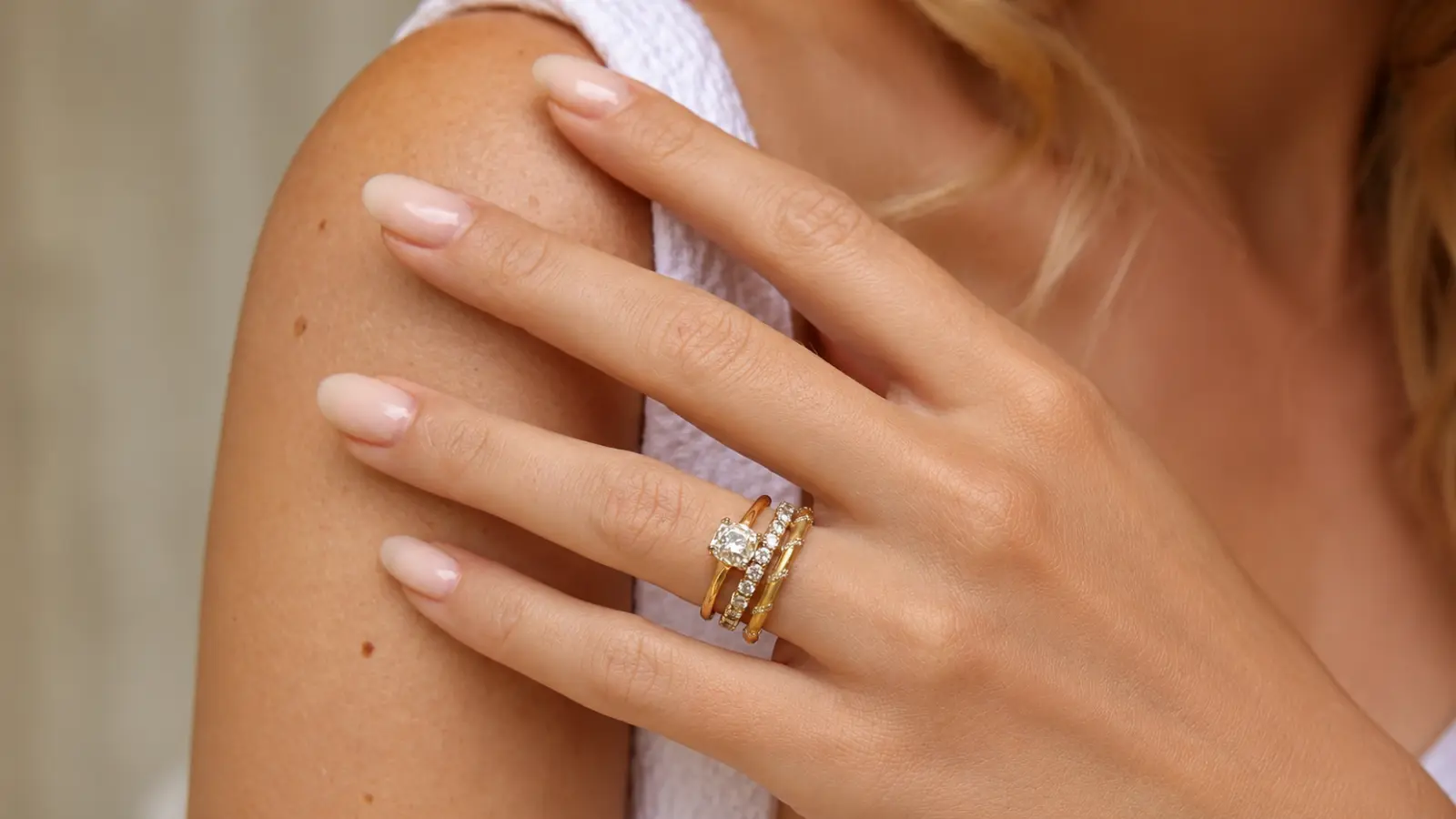
Rose gold stacks particularly well with itself — thin bands in varying widths and finishes build a layered look that feels curated rather than assembled. It can also be stacked with yellow gold, which creates a warm tonal layering more harmonious than mixing rose gold with white gold or platinum, where the contrast can feel jarring rather than intentional. Some couples choose a rose gold wedding band specifically to pair with a yellow gold engagement ring for this reason.
Width and proportion
Women’s rose gold bands most commonly run between 1.5mm and 4mm. Knowing the range helps narrow the choice quickly before trying rings on:
- 1.5mm to 2mm — the stacking choice: light enough to wear multiples without bulk, and delicate enough to disappear under a substantial engagement ring.
- 2.5mm to 3.5mm — the most versatile range; works alone and paired, with enough presence to be worn without an engagement ring without feeling slight.
- Above 4mm — makes a stronger independent statement, for someone who wants the wedding ring to be the ring, full stop.
As a general rule: if you plan to stack, start narrow. If the wedding band will often be worn alone, the 2.5mm to 3.5mm range gives it the presence it needs to stand on its own.
For a complete guide to women’s wedding ring styles across all metals, see our wedding rings for women.
Rose Gold Wedding Bands for Men
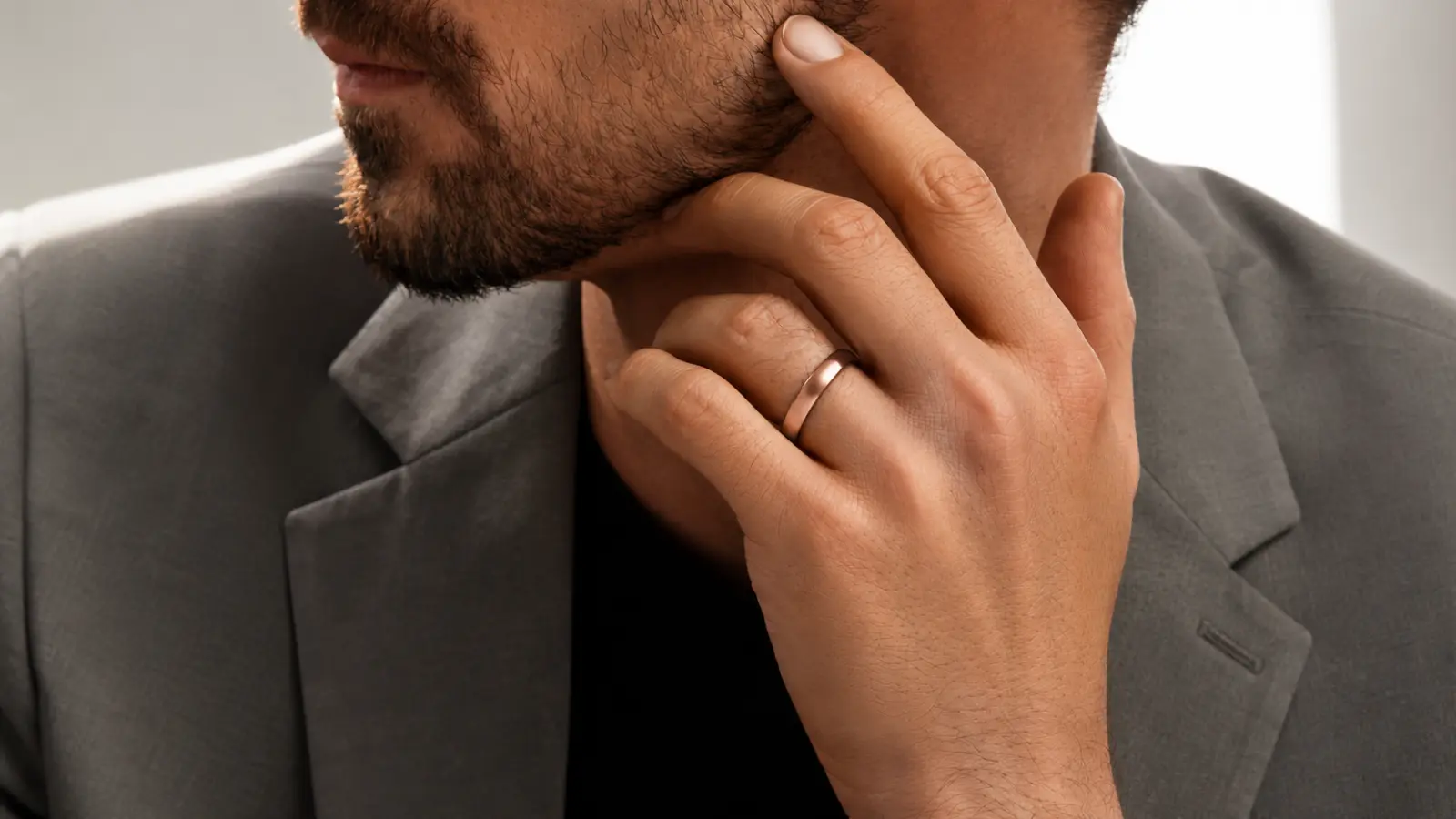
Men’s rose gold wedding bands exist in a more interesting cultural space than they did a decade ago. The metal has moved from a choice that required some confidence to explain into one that many men make without a second thought — particularly those who want something warmer and more distinctive than white gold or platinum, and who are drawn to the idea of a ring that looks deliberately chosen rather than conventionally expected.
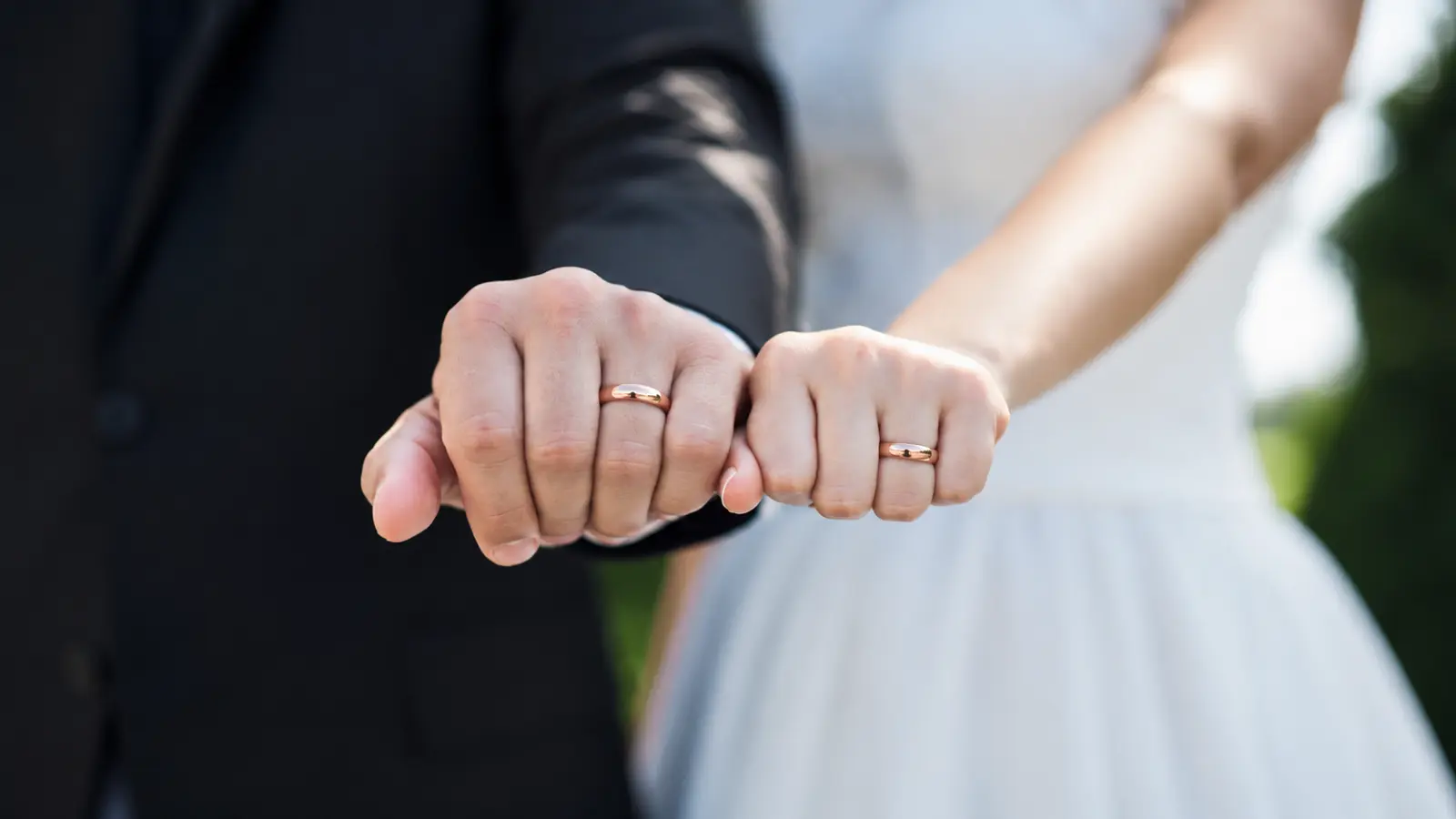
The aesthetic works especially well for men who lean toward a modern, slightly unconventional style. A brushed rose gold band at 6mm or 7mm has a quiet distinctiveness that a brushed yellow gold band at the same width does not quite achieve — the color is familiar enough to read as jewelry but different enough to register as a real choice. It is particularly popular with couples where both partners wear rose gold, since matching metals in two visually different band styles creates cohesion without uniformity.
Finish options for men’s rose gold bands
High-polish reads as formally elegant and more traditionally jewelry-like. The reflective surface shows the color at its most vivid and saturated. It also shows scratches more clearly than a matte finish — worth considering for men who work with their hands or are new to wearing rings.
Brushed or satin is the more practically durable choice. The texture conceals minor surface scratches and gives the ring a contemporary, low-key look that many men find more comfortable than a high-polish piece. Rose gold’s warmth comes through in brushed finishes as clearly as in polished ones.
Combination finish — brushed center channel with polished edges — is the most popular configuration for men’s rose gold bands. It creates visual structure without requiring a diamond or engraving, and the contrast between textures adds depth to what would otherwise be a simple ring. This approach also tends to photograph well, which matters more than most couples anticipate before the wedding day.
Width and wearability
Men’s rose gold bands most commonly run between 5mm and 8mm. The width affects how a ring feels at the end of a long day as much as how it looks on the hand, so it is worth trying both ends of the range before deciding:
- 5mm to 6mm — understated presence; visible but not dominant. A good starting point for men who have not worn rings before.
- 7mm to 8mm — makes a clearer statement. Works well for men with larger hands or who want the ring to read as a design choice rather than a subtle accent.
Men who are new to wearing rings tend to be more comfortable at the narrower end of the range initially, and often wish they had gone wider once they are used to the feel. Both widths are available in all three finish options.
For the full range of men’s styles and metals, see our men’s wedding bands.
Rose Gold with Diamonds and Stones
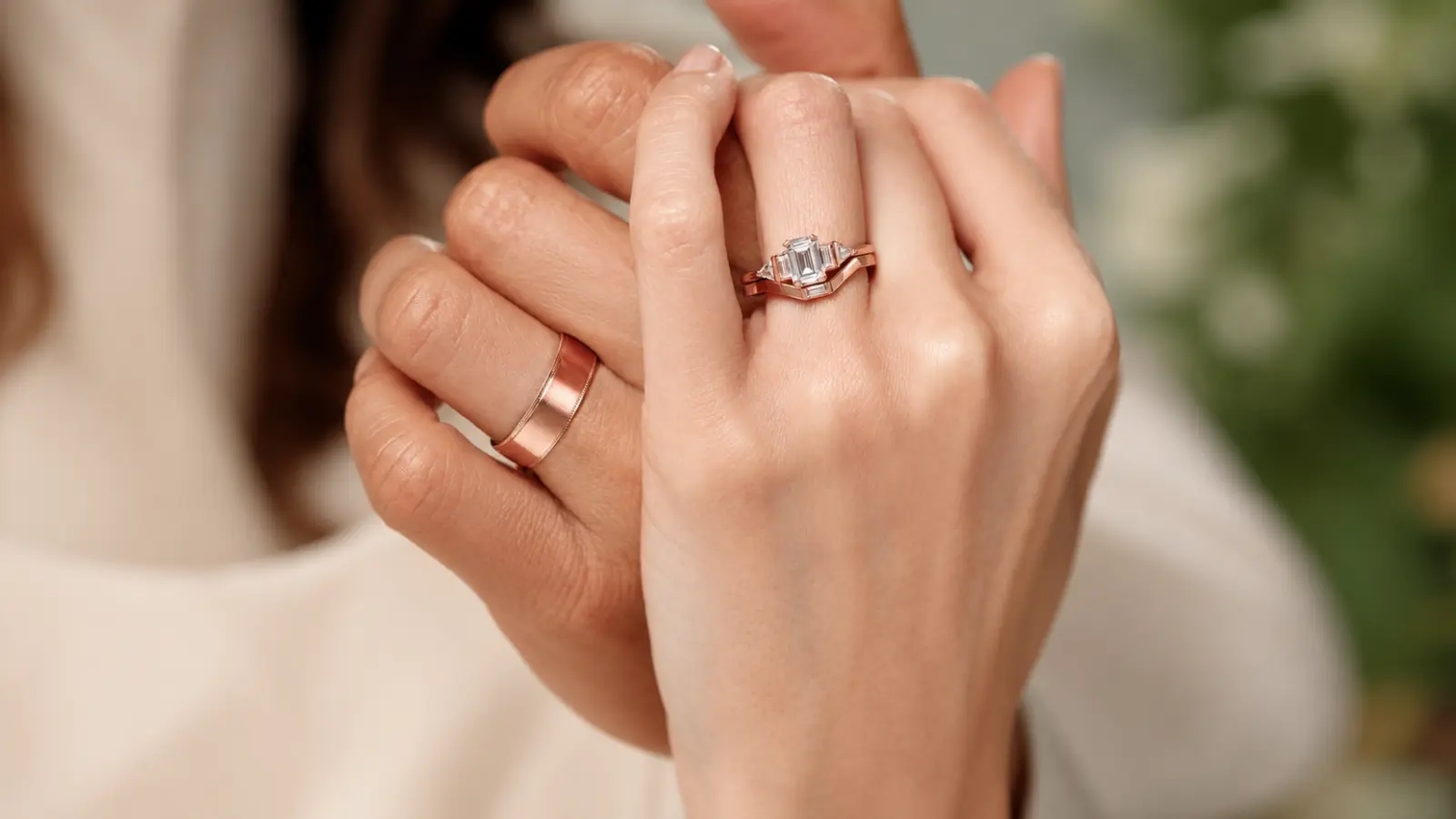
Rose gold and diamonds have a specific visual relationship worth understanding before committing to a diamond-set ring in this metal. The warmth of the rose gold reflects into the stone — not enough to dramatically change a high-quality diamond’s appearance, but enough to matter when the diamond’s color grade is lower on the scale.
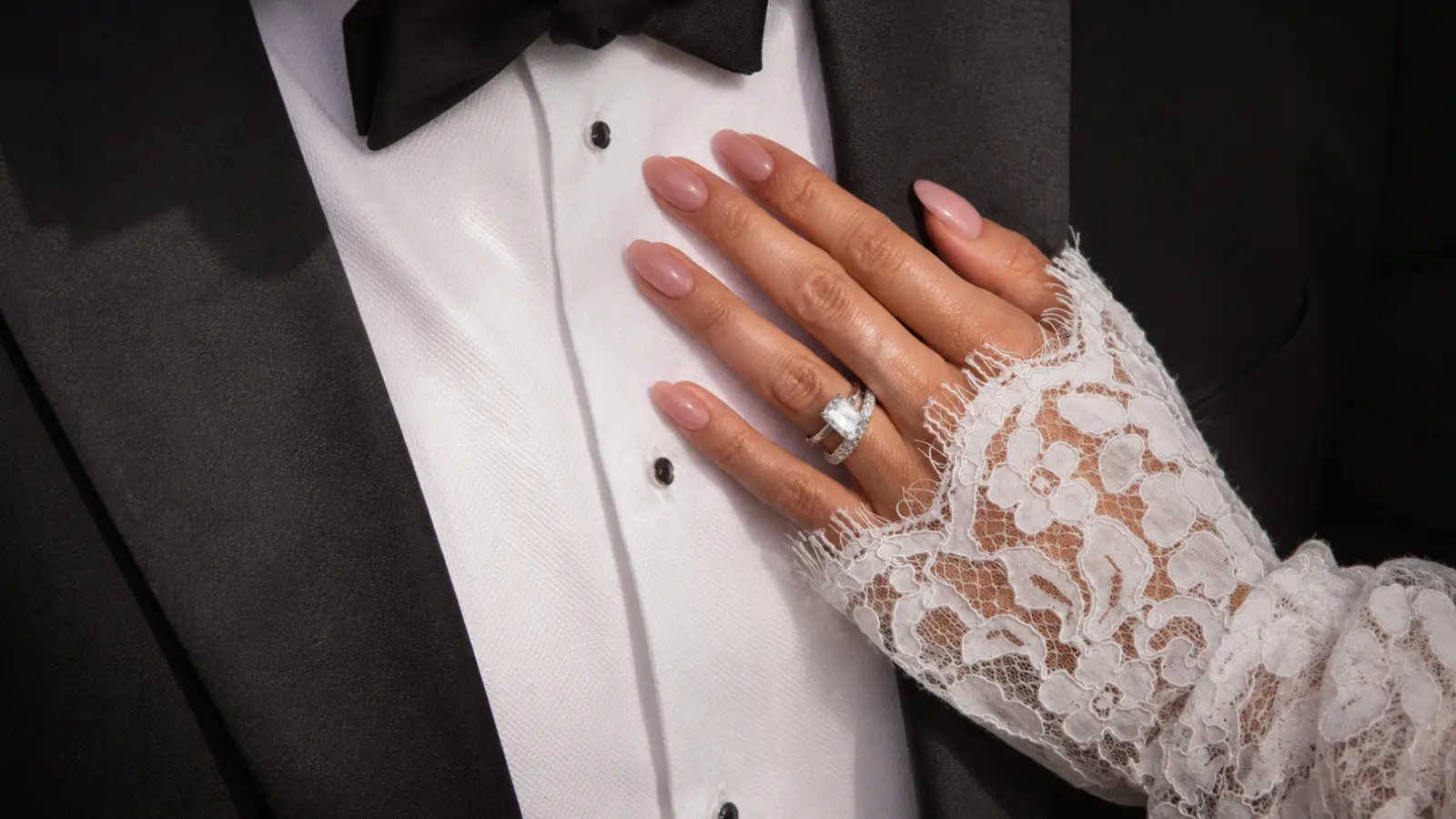
For diamonds rated G or above on the GIA color scale, the effect is minimal. The stone reads as white and brilliant against the warm metal, and the contrast between a colorless stone and the pink band can be genuinely beautiful. Below approximately H color, the rose gold’s warmth can make the stone appear slightly warmer than it would in a white gold or platinum setting. This is not a dealbreaker — warm-toned diamonds in rose gold can look intentional and romantic rather than like a compromise — but it is worth knowing if a bright, icy white diamond is the specific goal.
Where rose gold and stones are genuinely exceptional together
Champagne diamonds — natural diamonds with a warm, brownish or golden hue — look extraordinary in rose gold in a way they simply do not in white settings, where their color can read as a deficiency rather than a feature. The metal brings out the warmth in the stone and makes the combination feel curated rather than coincidental.
Morganite is perhaps the stone most associated with rose gold settings. The peach-pink stone and the pink metal share enough of the same color family to create harmony without being identical, and the combination has become a defining aesthetic of the rose gold era in bridal jewelry. It is worth noting that morganite is softer than diamond and more vulnerable to chips in daily wear — but for couples who understand the care requirements, the visual effect is difficult to replicate in any other combination.
Pink sapphire, pink tourmaline, and ruby all work beautifully in gemstone wedding rings set in rose gold: the warm metal creates a color story rather than a neutral backdrop. These combinations tend to read as more maximalist and more distinctly personal than a diamond solitaire — which, depending on the couple’s aesthetic, is either exactly the point or exactly the concern.
Diamond band styles in rose gold
A diamond eternity band in rose gold is one of the most popular women’s wedding ring choices in this metal. The continuous circuit of diamonds creates a bright, consistent sparkle that contrasts cleanly against the pink band. The metal visible between and beneath the stones ties the whole design together with a warmth that white gold eternity bands, for all their brilliance, do not replicate.
A pavé band — small diamonds set closely together across the surface — works similarly, with the rose gold visible only at the ring’s edges. This style is at its best when the diamonds are set precisely and the pavé is dense enough that the metal reads as a frame rather than a ground.
For the full range of diamond wedding ring options, see our diamond wedding rings.
Pros and Cons of Rose Gold Wedding Rings
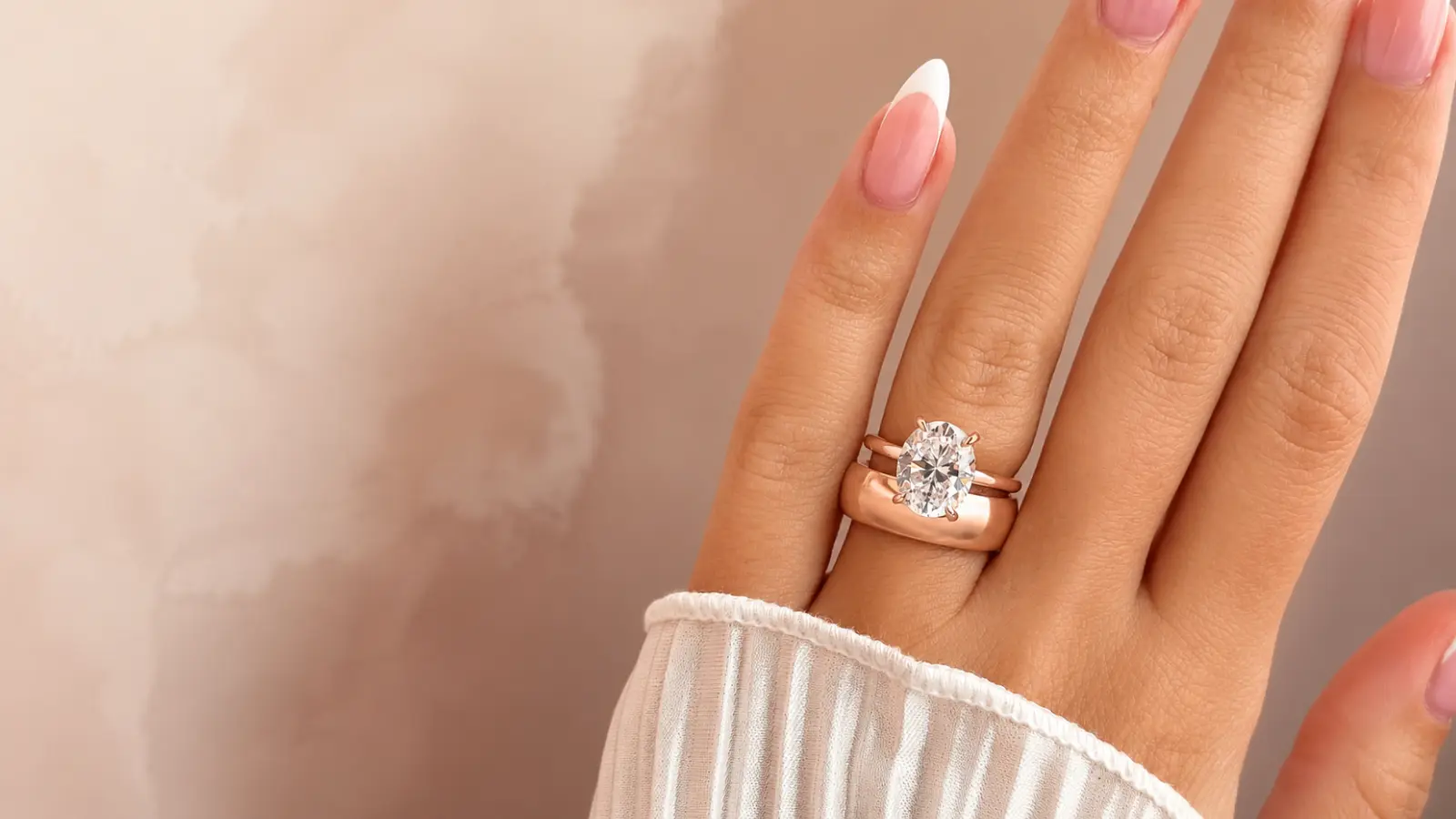
Rose gold rewards the couples who choose it for the right reasons — its warmth, its versatility, its genuine heritage. It is not the right choice for every wearer or every context, and understanding both sides of that honestly is more useful than a list of reasons to buy.
What rose gold does well
The color requires no maintenance. The pink tone is in the alloy itself, not in a coating — the practical advantage that separates rose gold from white gold in a meaningful way. As the ring wears, it may develop a very subtle patina (a slight deepening of the warm tone as the copper oxidizes over years), but it will not yellow, pale, or require a trip to the jeweler to restore its color. For buyers who find the rhodium replating requirement of white gold to be a genuine inconvenience, rose gold removes that consideration entirely.
It is harder than yellow gold. The copper content that creates rose gold’s color also increases the alloy’s hardness relative to yellow gold of the same karat. A 14k rose gold ring is more resistant to scratching and denting than a 14k yellow gold ring. This is not a dramatic difference — both are appropriate for daily wear — but it is a meaningful one for wearers with active lifestyles or hands-on work.
It flatters an unusually wide range of skin tones. The warm pink tone harmonizes with warm and medium skin undertones, and creates a soft, romantic contrast against cool and fair skin. It is one of the few metals that genuinely works across the full spectrum rather than clearly favoring certain complexions.
It is distinct without being unusual. Rose gold reads as a real choice — deliberate, personal, slightly outside the conventional yellow-or-white binary — without looking eccentric. For couples who want something that expresses personality without requiring explanation, this is a meaningful quality.
Where rose gold requires consideration
It does not mix easily with other metals. Rose gold’s warmth creates clear visual contrast against white gold and platinum. Couples pairing a rose gold wedding band with a white gold or platinum engagement ring should look at the combination carefully before committing. Some couples make the contrast intentional — wearing a rose gold band alongside a platinum engagement ring as a deliberate aesthetic statement. Others find it unsatisfying once they see it in practice. This is worth resolving before purchase rather than after.
Copper sensitivity is rare but real. Rose gold contains copper, and a small number of people develop skin reactions to copper-containing alloys. If you have reacted to copper-containing jewelry or accessories in the past, discuss the alloy composition with your jeweler. 18k rose gold contains less copper than 14k and may be better tolerated by sensitive skin.
The patina is not universally welcome. Most wearers find the gradual deepening of the ring’s warm tone to be an attractive feature. But some people prefer their jewelry to maintain a consistent, uniform appearance over time. If that describes you, the slow patina development of rose gold — and the fact that it cannot be reversed without professional polishing — is worth considering honestly before purchase.
Taken together, the picture is clear: rose gold is an excellent choice for buyers who want low maintenance, a distinctive aesthetic, and a metal with real history behind it. The considerations are real but narrow, and for most couples they are not deciding factors.
Is Rose Gold Still in Style?
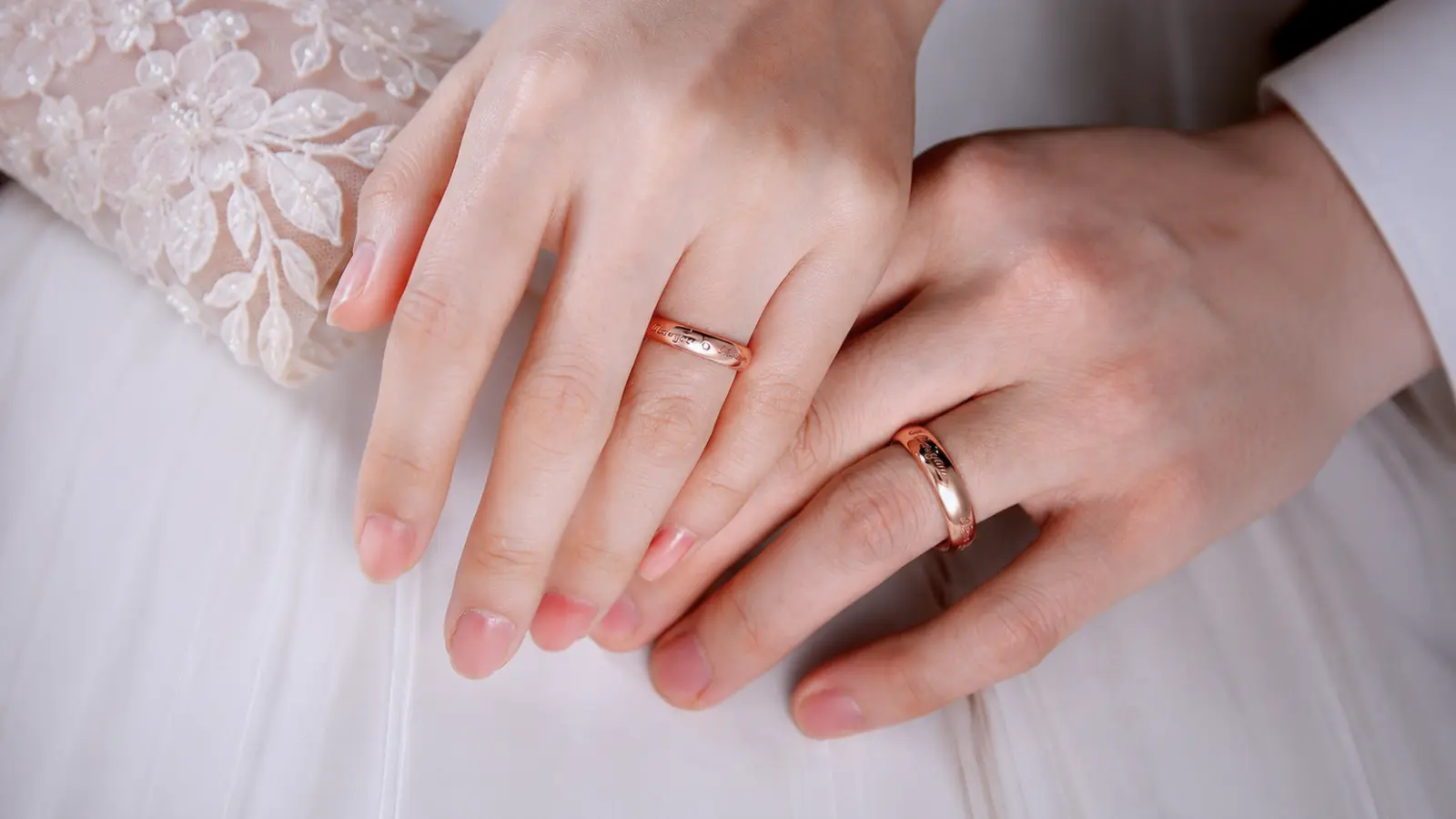
This is the question that follows rose gold everywhere since its peak — and it deserves a more nuanced answer than a simple yes or no. The short version: yes. The fuller version is more interesting.
Rose gold’s cultural moment was roughly 2014 to 2018. During those years, it appeared simultaneously in fine jewelry, fashion accessories, consumer electronics, kitchen appliances, and interior design. That kind of cross-category saturation is the hallmark of a trend at its peak — and the reliable precursor to a backlash. By 2019 and 2020, rose gold had become shorthand in certain design circles for a particular aesthetic: Instagram-ready, aspirational, perhaps slightly oversaturated.
What happened after the backlash
What happened after the backlash is more interesting than the backlash itself. Rose gold did not disappear. It contracted — pulled back from consumer electronics and temporary lifestyle applications — and consolidated into the jewelry contexts where it has always made the most sense. In bridal and wedding jewelry specifically, it has held its position more durably than in any other category. Couples continue to choose it at rates that are meaningful rather than residual, not because they are following a trend but because the metal genuinely works for the aesthetic they are after.
A rose gold wedding ring chosen today will not date itself the way a trend-specific design choice might. The metal has been in fine jewelry for nearly two centuries; its association with a particular cultural moment in the 2010s is an overlay on a much longer history, not its defining characteristic. Jewelers who specialize in bridal work consistently report that rose gold remains a standard request rather than a special one.
The right question to ask
The more relevant question for couples considering rose gold is not whether it is currently fashionable, but whether it is the right choice for the person who will wear it every day for decades. A wedding ring should be chosen for the long view — for the life the ring will accompany rather than the year in which it is purchased.
If yellow gold feels too traditional and white gold feels too expected, rose gold is not a compromise between them — it is its own thing, with its own logic. That has been true since the nineteenth century, and it remains true now.
For couples drawn to rose gold alongside other less conventional choices, see our unique wedding rings guide for styles that prioritize personal expression over convention.
Rose Gold Wedding Ring Inspiration
Rose gold wedding rings can range from simple everyday bands to romantic vintage designs and diamond styles. Explore our inspiration board for rose gold bands, pavé rings, gemstone settings, brushed finishes, modern designs, and wedding ring ideas for women and men.
Choosing a Rose Gold Wedding Ring That Feels Timeless
Rose gold wedding rings are not only chosen for their color. The warmth of the metal, the way it ages, the history behind it, and how naturally it fits into everyday life are all part of what makes the choice meaningful.
Whether you choose a simple rose gold band, a diamond design, a vintage-inspired ring, or a modern style, the best rose gold wedding ring is the one that feels connected to you beyond a trend or a single moment in time.
Frequently asked questions (FAQ)
Are rose gold wedding rings real gold?
Yes. Rose gold wedding rings are made with real gold mixed with other metals, mainly copper, to create the signature pink color. The karat number works the same way as yellow or white gold: 14k rose gold contains 58.3% pure gold, while 18k rose gold contains 75% pure gold. Rose gold is not a coating or a different type of metal — it is a genuine gold alloy.
Why do people choose rose gold wedding rings?
Many people choose rose gold wedding rings because they want something warm and classic but slightly different from traditional yellow gold or white gold. Rose gold is often associated with romantic, vintage-inspired, and personalized jewelry styles. It also requires less color maintenance than white gold because its tone comes from the metal itself.
Does rose gold plating wear off?
A solid rose gold wedding ring does not have plating that wears off. The pink color comes from copper mixed throughout the gold alloy, so the entire ring has the same tone. This is different from rose gold-plated jewelry, where only the surface layer contains the rose color and can wear away over time.
Will I regret choosing a rose gold wedding ring?
Most people who love rose gold choose it because of its warmth and personal style rather than because it is trending. The best way to avoid regret is to choose a design that fits your long-term taste. A simple rose gold band, classic diamond setting, or vintage-inspired design is less likely to feel tied to one specific fashion moment.
Does rose gold look more pink or more gold?
Rose gold can range from a subtle blush tone to a stronger pink color depending on the alloy. 14k rose gold often appears slightly more pink because it contains more copper, while 18k rose gold usually has a warmer golden tone because of its higher gold content. The exact color can vary between jewelers.
Is rose gold harder to match with other jewelry?
Rose gold can be mixed with other jewelry metals, but the contrast is more noticeable than with neutral metals. Some people prefer wearing only rose gold pieces for a coordinated look, while others intentionally mix rose gold with yellow gold, white gold, or platinum for a modern mixed-metal style.