A wedding band and a wedding ring usually refer to the same piece of jewelry: the ring exchanged during a wedding ceremony to represent marriage and commitment. In modern American usage, the terms are often used interchangeably, although they can carry slightly different meanings in jewelry and shopping contexts.
If you have used the two terms in the same sentence without stopping to question whether they mean something different, you are in very good company. Most Americans use wedding band and wedding ring interchangeably, and most jewelers understand both terms.
This guide explains the difference between wedding bands and wedding rings, including the history behind each term, how jewelers use them, why men’s and women’s rings are sometimes described differently, and which term to use when shopping.
What Is a Wedding Band?
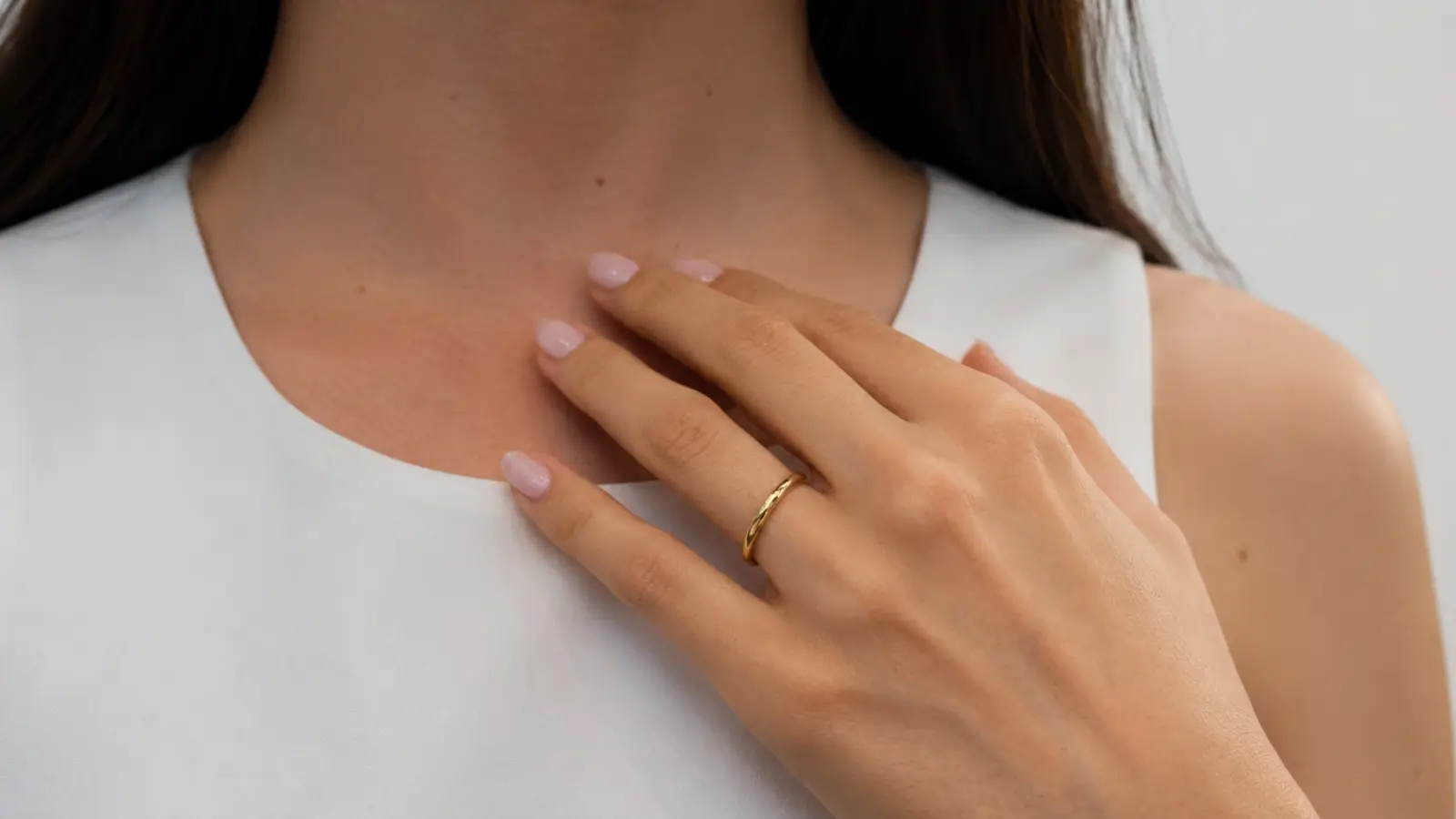
A wedding band is the ring exchanged between partners during a wedding ceremony. That is the functional definition, and it is identical to the definition of a wedding ring, which is part of why this question exists at all.
Where the word band comes from is worth understanding. In the jewelry context, a band refers to a continuous circle of metal: a ring whose structure is the metal itself, rather than a metal frame built around a stone. A plain gold circle with no setting, no stones, and no break in the metal is a band in the most literal sense. The term entered common use for wedding jewelry precisely because the classic ceremony ring was exactly that: a plain, unbroken circle of metal placed on the finger during the vows.
What the word still carries today
This is where the historical connotation of “wedding band” still lives: simplicity. A plain band. A clean metal circle. No elaboration. And even though that connotation no longer restricts what gets labeled a wedding band in a modern jewelry store (pavé diamond wedding bands exist in abundance), the word still carries a faint association with the understated version of the ring. When someone says “he just wanted a simple wedding band,” the mental image is clear: a plain gold ring, probably yellow gold, probably around 5mm to 6mm wide, no stones.
That image is useful, even if it no longer represents the full picture of what the term encompasses. “Band” retains a design suggestion that “ring” has largely shed, and that suggestion matters when you are shopping or communicating your preference to a jeweler who will take it seriously.
What Is a Wedding Ring?
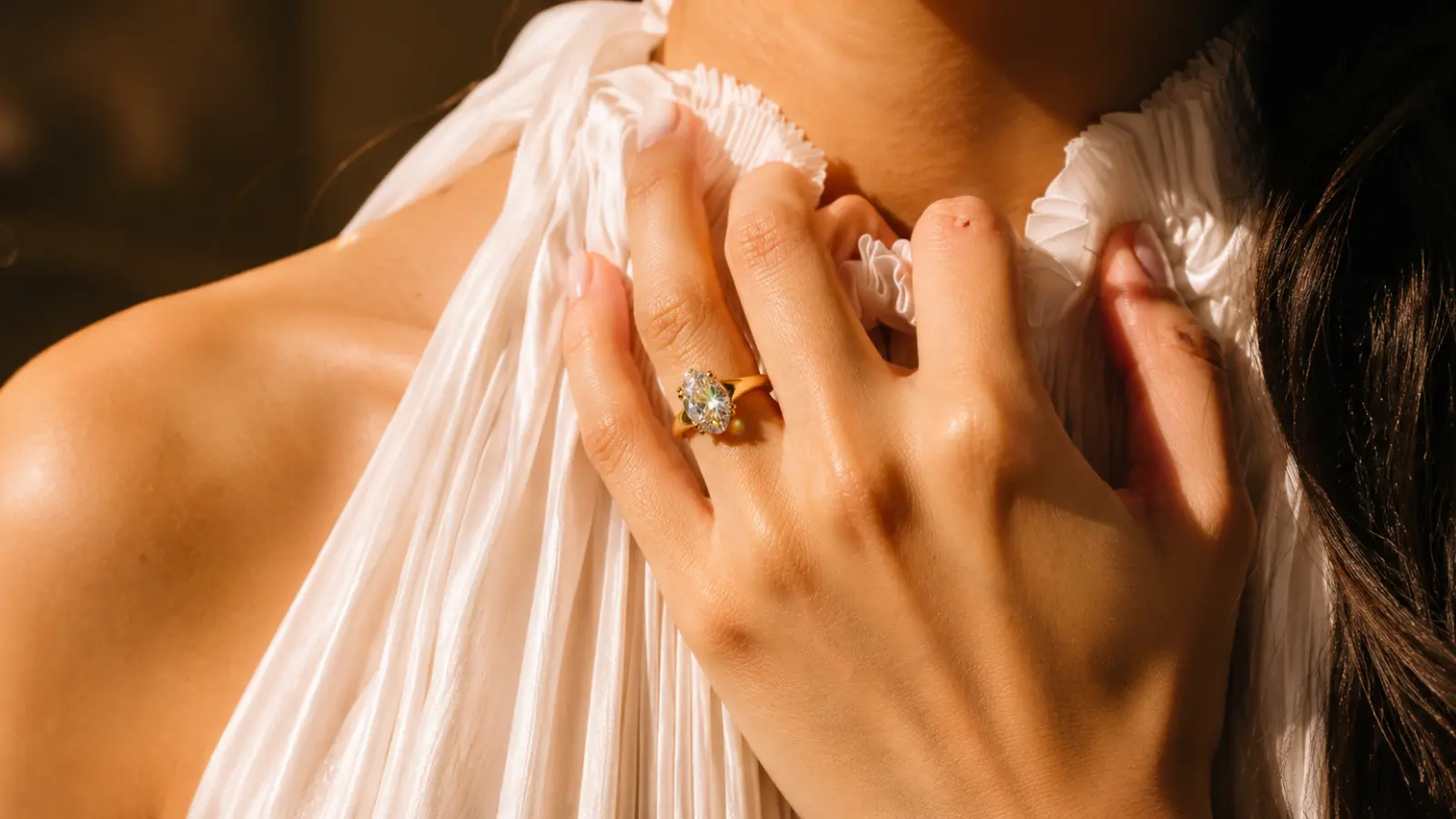
A wedding ring is also the ring exchanged during the wedding ceremony. The functional definition is the same. What differs is the word’s range of association.
“Ring” is the broader term. In everyday English, a ring can be anything worn on a finger: a signet ring, a cocktail ring, an engagement ring, a class ring, a mood ring. The word carries no implied design. When “wedding” is placed in front of it, the meaning narrows to ceremony context, but the design implication remains open. A wedding ring can be plain or elaborate, metal only or set with stones, simple or ornate. The term does not suggest a particular aesthetic the way “band” gently does.
Why it dominates everyday speech
This breadth is why “wedding ring” is the more common term in everyday conversation. It makes no assumptions about what the ring looks like. When a married person says “my wedding ring,” they mean whatever ring they wear to mark their marriage, with no design information conveyed and none expected. The term is most natural when discussing wedding ring meaning and symbolism rather than product descriptions.
It is also the term most couples use when they are not thinking about which word to choose, which is most couples, most of the time. That ease of use is part of what makes it the more emotionally resonant of the two words. “Wedding ring” has been in continuous everyday use long enough that the phrase itself carries the cultural weight of the tradition.
Are Wedding Bands and Wedding Rings the Same?
In modern American usage, yes. The two terms refer to the same object: the ring exchanged during the wedding ceremony. Using one over the other communicates no meaningful difference in what you are talking about. An officiant saying “exchange your wedding bands” and an officiant saying “exchange your wedding rings” are conducting identical ceremonies. A jeweler who calls something a “men’s wedding band” and a jeweler who calls the same product a “men’s wedding ring” are selling the same category of product.
The historical distinction is real but no longer operative. For most of Western jewelry history, a band specifically referred to a plain metal circle, while a ring could include stones and more elaborate design elements. That distinction began collapsing in the mid-twentieth century, as diamond-set ceremony rings became more widely available and consumers started using both terms for any ceremony ring regardless of design. By the time the American wedding industry fully expanded in the postwar period, the two terms were effectively synonymous in commercial and social usage.
What the distinction left behind is a faint connotational residue. There is a sense that “band” implies something plainer, and “ring” implies something potentially more elaborate, and that sense still influences how the terms are used in certain contexts. But it is a connotation, not a definition. Calling a fully paved diamond ceremony ring a “wedding band” is consistent with modern usage. So is calling a plain gold circle a “wedding ring.” Neither would confuse anyone.
At a glance: how the terms compare
The table below shows where the two terms converge and where they still carry slightly different implications in practice.
| Wedding Band | Wedding Ring | |
|---|---|---|
| Same thing? | Yes, in modern usage | Yes, in modern usage |
| Original meaning | Plain, unadorned metal circle | Any ring exchanged at the ceremony |
| Design implication today | Faint association with simplicity | No design implication; broader |
| Where used most | Retail product categories, men’s jewelry | Everyday conversation, women’s jewelry |
| Associated with | Plain metal designs, product descriptions | The ceremony itself, the symbol |
| Interchangeable? | Yes | Yes |
The most useful takeaway: the difference between the terms is real but shallow. It matters for shopping and product navigation; it does not matter for the ceremony, the marriage, or what the ring means once it is on the finger.
Wedding Band vs. Wedding Ring in Real Life
The distinction between the two terms shows up most clearly not in dictionaries or jewelry history books, but in the specific contexts where each word tends to appear. Pay attention to where each term is used, and a pattern emerges that is genuinely useful for shopping and research.
When you are likely to hear “wedding band”
At the jeweler’s counter, particularly in the men’s section. In retail category headings: “men’s wedding bands,” “diamond wedding bands,” “alternative metal wedding bands.” In conversations about simpler, plainer rings, since someone describing a “classic wedding band” tends to mean something without stones. And at the ceremony itself, in the phrasing many officiants use: “as you exchange these wedding bands.”
The word “band” carries a slight specificity in jewelry contexts. It suggests the ring was chosen deliberately as a particular type of object rather than simply being the ring someone happened to get married in. This is why it shows up more in professional and commercial contexts than in casual conversation.
When you are likely to hear “wedding ring”
In everyday speech, outside a jewelry store. In the question “where is your wedding ring?” (which few people phrase as “where is your wedding band?”). In conversations about the symbol and meaning of what is being worn, rather than the product itself. Among women more than men, particularly when the ring in question has stones or a more elaborate design that makes the word “band” feel like an understatement.
The word “ring” is more emotionally neutral and conversationally natural. It is the word people reach for when they are not thinking about which word to use, which is most of the time for most people. “Wedding band” is slightly more descriptive; “wedding ring” is slightly more felt.
Where the terms genuinely diverge
There is one context where the two terms are reliably not interchangeable, and it is worth knowing: when someone says “just a band,” they tend to mean something plain and minimal, with no stones, clean metal, and a simple profile. “Just a ring” does not carry the same implication. If someone says “I want just a band,” they are communicating a design preference as much as a category choice. A jeweler who hears that will show a different set of options than one who hears “I want a ring.”
“Band” retains a design implication that “ring” has largely shed. It is a tendency rather than a rule, but it is a tendency clear enough to be useful when communicating what you want to someone who can help you find it.
How the Terms Differ for Men and Women
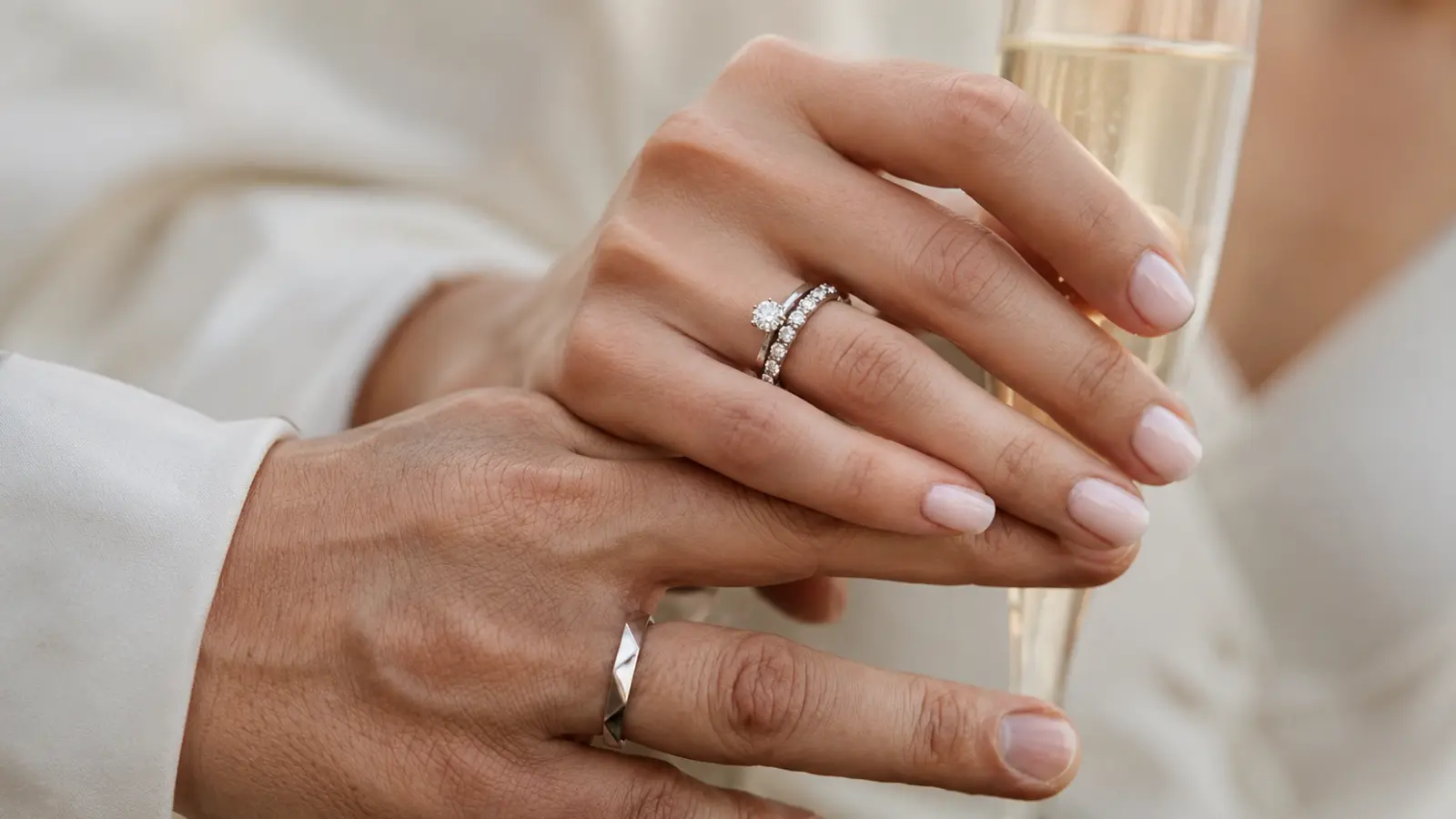
OOne of the more consistent patterns in how these terms are actually used: “wedding band” appears far more frequently in the context of men’s rings, while “wedding ring” appears more frequently in the context of women’s rings. This is not a rule anyone established. It emerged from the way these products are marketed, sold, and discussed, and it reflects genuine differences in how men’s and women’s ceremony rings have traditionally been designed.
Men’s wedding bands
The term “men’s wedding bands” is essentially the industry standard for this product category. Walk into any jewelry store or browse any major retailer online, and the men’s section will be labeled as wedding bands, not wedding rings. This reflects the fact that men’s ceremony rings have historically skewed toward plain metal designs: a yellow gold band, a platinum band, a tungsten carbide band. Simple, unadorned, exactly what the original meaning of “band” describes.
This has shifted somewhat as men’s wedding rings have grown more varied, with hammered textures, two-tone designs, wood inlays, carbon fiber, and gemstone accents all now available. But the product category label has not changed. Men’s jewelry retail still calls them bands, and men themselves tend to reach for the word “band” when describing what they wear. Many men feel that “band” sounds appropriately understated for a piece of jewelry they may not have worn before getting married.
For a full guide to the styles, metals, and options in this category, see men’s wedding bands.
Women’s wedding rings
Women’s ceremony rings are more likely to be called “wedding rings” in everyday speech, and the reason connects directly to design. Women’s ceremony rings more often include diamonds, pavé settings, eternity designs, and elaborate metalwork that feels visually like more than “just a band.” Calling a fully diamond-paved eternity ring a “band” is technically consistent with modern usage, but it feels like underselling the object. “Ring” accommodates the full range of what women’s ceremony jewelry looks like without implying minimalism.
That said, many women specifically choose plain bands: a simple 2mm yellow gold ring, a hammered platinum circle. The term tends to follow the design in these cases. A woman who wears a plain band is more likely to say “band” than a woman who wears a diamond eternity design. The pattern tracks with design complexity, not gender as a fixed rule.
For a full guide to women’s ceremony ring options, see wedding rings for women.
What both share
Regardless of which term is used, the ring on the finger carries the same meaning. The ceremony does not care whether the officiant says “bands” or “rings.” The marriage is not affected by which word the wearer uses when someone asks about it. The distinction between these two terms is a linguistic and commercial one. It matters for finding what you want in a search bar and for communicating a design preference to a jeweler. It does not matter for anything more significant than that.
How Jewelers Actually Use the Terms
Professional jewelers have a more nuanced relationship with this terminology than most consumers expect. In product categories, most jewelers use “wedding band” because it makes the engagement ring vs. wedding ring distinction clearer. This is a deliberate choice. “Band” distinguishes ceremony rings from engagement rings more cleanly than “ring” does, because an engagement ring is also a ring, and using the same word for both creates product category confusion. “Band” says, without ambiguity: this is not the stone ring, this is the circle that goes on the finger during the ceremony.
In conversation with a customer, the same jeweler will use both terms freely and interchangeably, following the customer’s lead. If a customer walks in and says “I’m looking for a wedding ring,” the jeweler does not correct them. The professional use of “band” in product categories does not translate into a professional insistence on terminology. There is no correct term. There are just two terms that mean the same thing.
One additional use of “band” in jewelry contexts is worth noting: the anniversary band. An anniversary band is a ring given to mark a wedding anniversary, typically a diamond eternity design, worn alongside the existing wedding ring and engagement ring as a new addition to the stack. The word “band” here signals a ring designed to complement what is already on the finger rather than stand alone. This is a niche usage, but it illustrates how the word can carry intentional precision in commercial jewelry contexts even while functioning as a synonym in everyday speech.
Which Term Should You Use When Shopping or Researching?
This is where the distinction becomes genuinely practical. On most retail jewelry platforms, both major national chains and independent boutiques, the two search terms return meaningfully different results. Not because the products themselves are categorically different, but because of how retailers have labeled and organized their inventory.
Search “wedding band” when:
- You are looking for a plain or relatively simple ring: a clean metal circle, no stones, or minimal design detail
- You are shopping in the men’s category, where “band” is the near-universal product label
- You want the broadest selection of a specific metal, since “14k gold wedding band” returns more targeted results than “14k gold wedding ring” on most platforms
- You are looking at alternative metals such as tungsten, titanium, cobalt, or silicone, which are catalogued almost exclusively under “bands”
- You want to filter for simpler, more classic designs and reduce the number of elaborate stone-set options in your results
In short: “band” narrows your results toward simplicity and men’s jewelry, which is exactly what you want when those are your priorities.
Search “wedding ring” when:
- You are looking for a stone-set design in diamond, sapphire, or another gemstone, where the ring category is broader
- You are shopping in the women’s category, where both terms are used but “ring” often returns a wider and more varied set of results
- You are researching the tradition, meaning, or etiquette of what you are buying rather than a specific product, since “wedding ring meaning” and “wedding ring tradition” are more natural search forms
- You are comparing options across a broader range of design styles without wanting to narrow toward simplicity from the start
In short, “ring” opens your search to a broader range of wedding ring styles before you commit to one design direction.
The most efficient approach
Run both searches on any platform you are using and compare what comes back. The overlap is significant: most products that appear under “wedding band” will also appear under “wedding ring” if you scroll far enough. But the top results will differ in ways that reflect the connotational distinction. “Wedding band” leads with simpler, more metal-forward designs; “wedding ring” leads with a broader mix that includes more elaborate options prominently.
When you find what you are looking for, the term the retailer uses matters only for navigating their site. It carries no implication about quality, durability, or what the ring will mean when it is on your finger. If you are still in the early stages of figuring out what you want, the complete wedding rings covers every style, metal, and decision framework in one place.
Wedding Band and Wedding Ring Inspiration
Wedding bands and wedding rings come in many different styles, from simple gold bands to diamond designs and modern alternatives. Explore our inspiration board for classic wedding bands, matching rings, minimalist styles, men’s bands, and timeless wedding ring ideas to discover which style fits your relationship.
Choosing the Words and the Ring That Feel Right
The difference between a wedding band and a wedding ring is, in most moments of real life, very small. The ceremony does not require one word over the other, and the meaning of the ring does not change based on what you call it.
Understanding the distinction simply helps you navigate jewelry stores, compare styles, and communicate what you are looking for. Whether you choose a simple wedding band, a diamond wedding ring, or a design that sits somewhere between the two, the meaning is the same: a ring chosen to represent the commitment and life you are building together.
Frequently asked questions (FAQ)
Is a wedding band the same as a wedding ring?
Yes. In modern usage, a wedding band and a wedding ring usually mean the same thing: the ring exchanged during the wedding ceremony. Traditionally, a wedding band referred to a simple metal band, while a wedding ring could describe a wider range of designs, but today most couples and jewelers use both terms interchangeably.
What is the difference between a wedding band and an engagement ring?
A wedding band is exchanged during the wedding ceremony and represents the marriage itself. An engagement ring is usually given during the proposal and often features a center stone, such as a diamond. Many people wear both together after the wedding, with the wedding band placed closest to the hand.
Why do jewelers call them wedding bands instead of wedding rings?
Jewelers often use the term wedding band because it clearly separates the ceremony ring from the engagement ring category. “Band” is commonly used for the rings exchanged at the wedding, while “engagement ring” usually refers to the proposal ring with a center stone.
Do women wear wedding bands or wedding rings?
Women can wear either — the terms describe the same type of jewelry. Some women choose simple metal wedding bands, while others prefer diamond bands or more detailed wedding rings. The choice depends on personal style, lifestyle, and how the ring pairs with an engagement ring.
Do men wear wedding bands or wedding rings?
Both terms are correct, but “men’s wedding bands” is more common in jewelry stores. This is because men’s wedding jewelry has traditionally been simpler metal bands, although modern men’s rings now include many different metals, textures, and designs.
Should you search for wedding bands or wedding rings when shopping?
It is usually helpful to search both terms. Wedding band searches often show classic, simple, and men’s styles, while wedding ring searches may show a wider variety of designs, including diamond and decorative options.