An engagement ring and a wedding ring are two different pieces of jewelry that represent different moments in a couple’s relationship. An engagement ring is traditionally given during a proposal to symbolize the promise of marriage, while a wedding ring is exchanged during the wedding ceremony to represent the marriage itself.
Although the terms are sometimes used interchangeably, these rings have different meanings, designs, traditions, and purposes. Understanding the difference can help couples decide what to buy, how to wear both rings together, and whether they even want both.
This guide explains everything couples need to know about engagement rings vs wedding rings, including when each ring is given, which ring goes on first, design and cost differences, traditions, and how to choose the option that feels right for your relationship and lifestyle.
What Is an Engagement Ring?
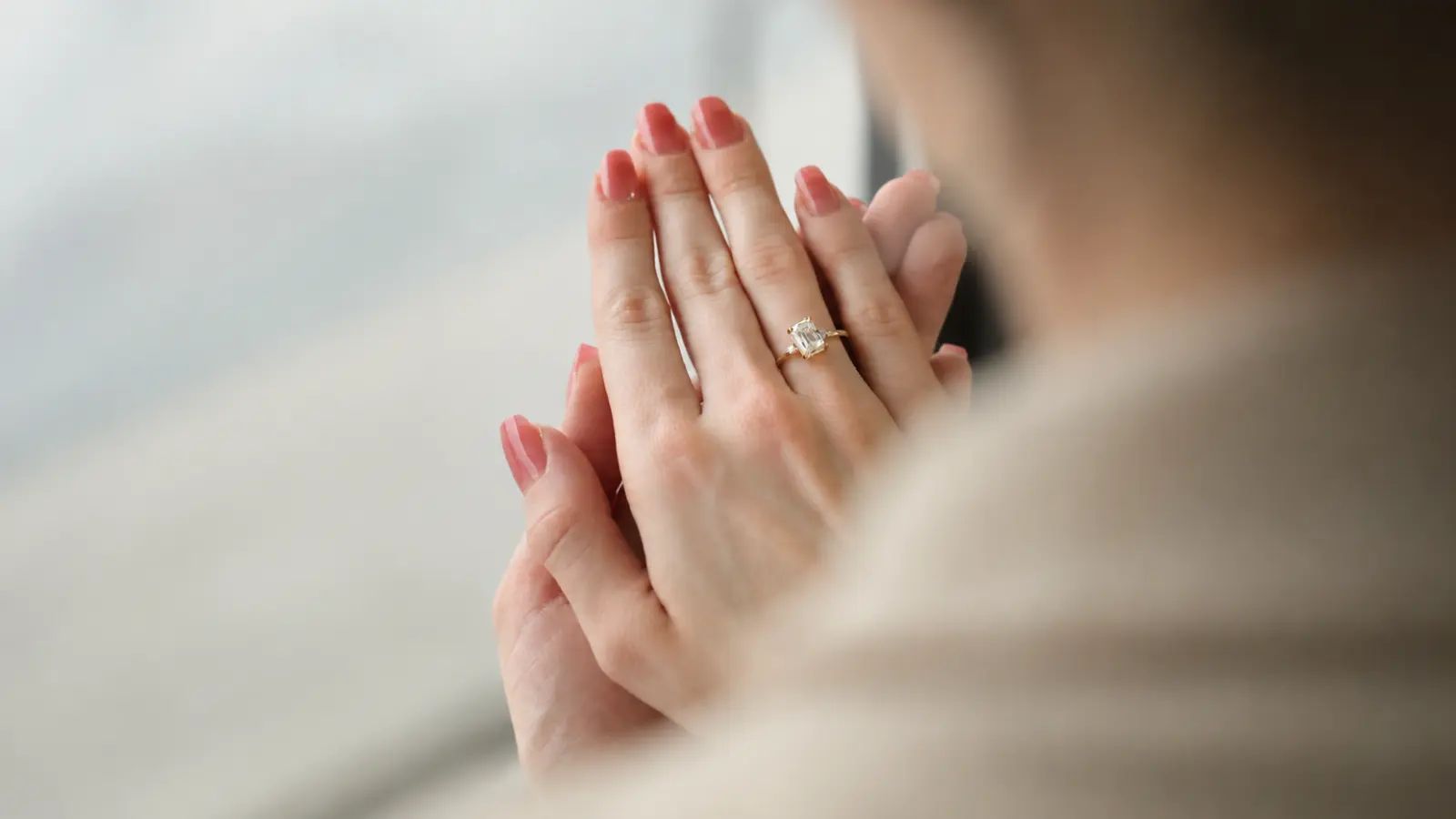
An engagement ring is the ring given during a marriage proposal. It marks the beginning of the engagement period — the time between the proposal and the wedding — and it is the physical object that says, before any ceremony, that two people have decided to get married.
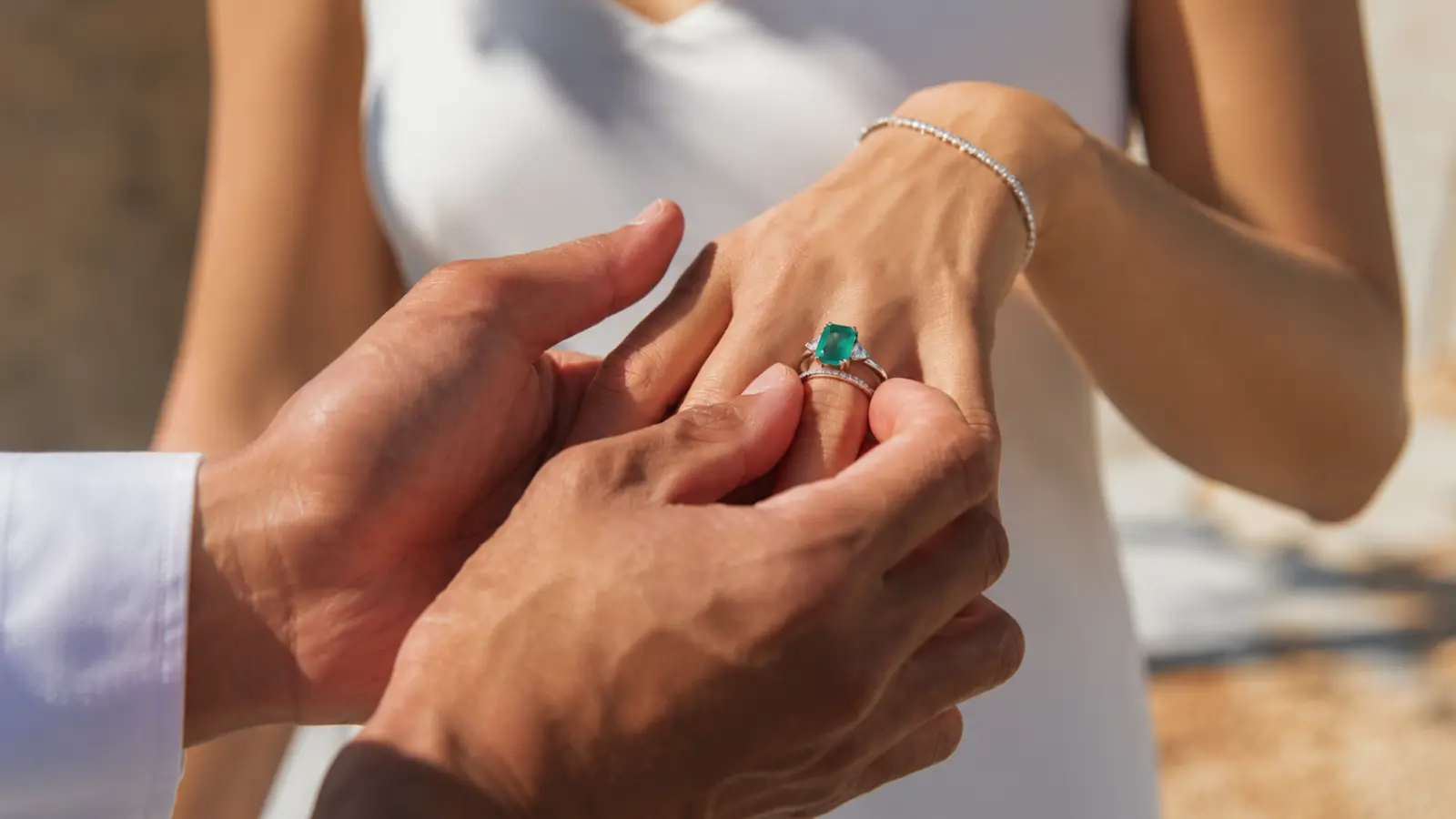
Traditionally worn by one partner (historically the woman, though this is evolving), the engagement ring is typically the more elaborate of the two rings a person will wear. It usually features a center stone — the most common choice in the United States is a diamond, though sapphires, moissanites, emeralds, and other gemstones are increasingly popular — set in a design that is meant to be noticed. The ring is a gift and an announcement simultaneously. Its visual presence is part of the point.
The engagement ring has been a Western custom since at least the fifteenth century, when the Archduke Maximilian of Austria gave a diamond ring to Mary of Burgundy as a betrothal gift. The practice was largely confined to royalty and aristocracy until the late nineteenth and early twentieth centuries, when diamond supply increased and marketing campaigns made diamonds and elaborate engagement rings a middle-class expectation. The “two months’ salary” guideline, widely treated as a timeless tradition, was an advertising campaign from the mid-twentieth century. It is worth knowing this if you feel pressure to spend more than makes sense for your situation.
What an engagement ring does and does not need to be
The engagement ring communicates a commitment in progress. It is a promise to marry, not the marriage itself. This distinction matters more than it might seem: it means the engagement ring’s design and cost are evaluated against a different set of priorities than the wedding ring’s. An engagement ring is a statement piece. It is chosen to be impressive, distinctive, and memorable.
It does not need to be the most comfortable ring you will ever wear, because it is not the ring you will wear in every context for the rest of your life — the wedding ring serves that function. Many people who find their engagement ring uncomfortable at the gym, in the kitchen, or at work discover that this is not a problem with the ring. It is a natural result of wearing a high-profile, prong-set, center-stone ring in contexts it was not designed for. This is one of the most practical arguments for having both an engagement ring and a separate wedding ring: each can be optimized for its actual purpose.
What Is a Wedding Ring?
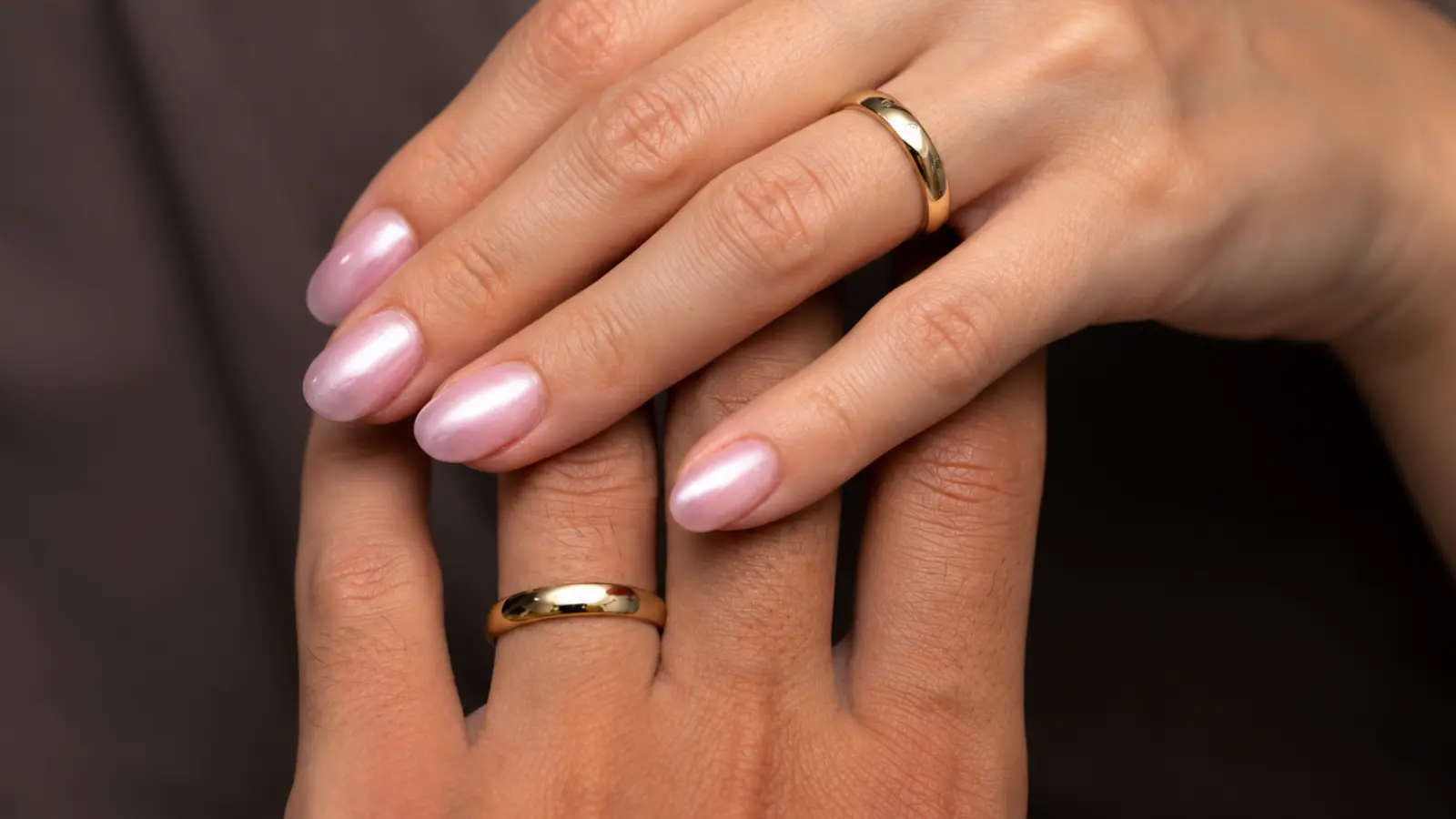
A wedding ring is the ring exchanged between both partners during the wedding ceremony. Not given in advance, not worn during the engagement — placed on the finger at the exact moment the marriage becomes official, during the vow exchange, in front of everyone who came to witness it. That specific act of exchange is what makes it a wedding ring, regardless of what it looks like.
Wedding rings tend to be simpler in design than engagement rings, and this is not an accident. A wedding ring is meant to be worn every single day for the rest of your life — through dishes and workouts and cold weather and gardening and everything else that constitutes a real daily life. The design priorities shift accordingly: comfort on the finger, durability of the metal, low profile that does not catch on things, and an appearance that still looks exactly right forty years from now.
A note on the history
Both partners exchanging wedding rings in most American wedding ceremonies became standard after World War II, when men who had worn rings during military service found the habit comfortable, and the cultural image of the wedding as a shared, mutual commitment began to be reflected in the shared wearing of rings. Before that, it was common for only one partner — typically the wife — to wear a wedding ring. The symmetry of the modern exchange is relatively recent.
What a wedding ring needs to account for
A wedding ring does not need to be plain. It does not need to be gold. It does not need to be expensive. The only thing it needs to be is the ring you actually want to wear, exchanged during the ceremony, on the hand you intend to wear it on. A simple 14k gold band and a fully diamond-paved eternity ring are both wedding rings. So is a silicone band chosen because the wearer works with their hands. The symbolic weight comes from the exchange, not the object.
What a wedding ring does need to account for — in ways an engagement ring does not — is the rest of your life. It will be in every photograph taken of your hands from now on. It will sit next to the engagement ring (if you have one) and needs to work with it physically and visually. The design should be chosen for the long view, not only for how it looks in the wedding photos.
Engagement Ring vs. Wedding Ring: Key Differences
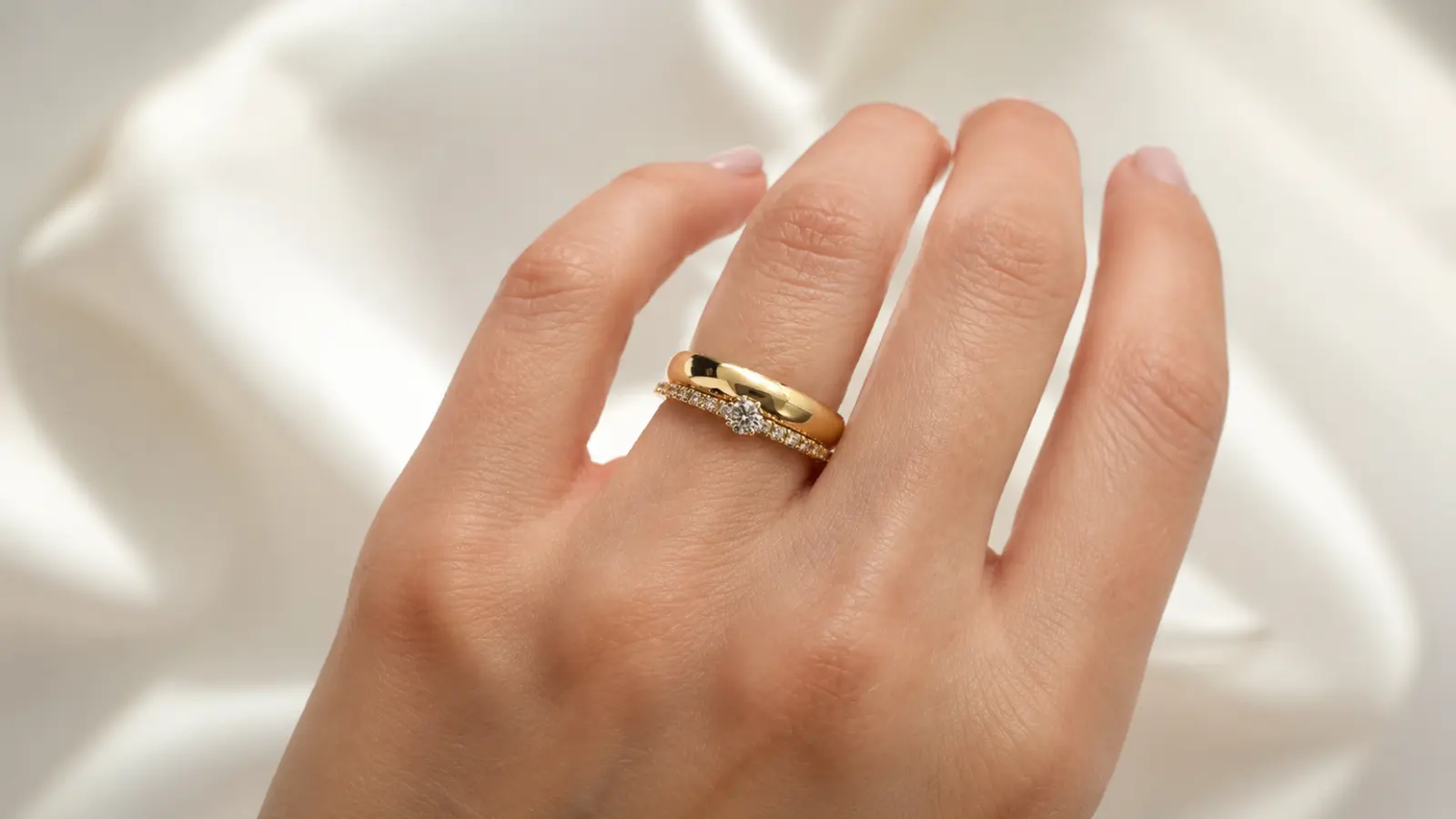
Put side by side, the two rings differ across nearly every practical dimension. Understanding these differences makes it easier to shop for each with the right priorities in mind, rather than evaluating both rings against the same set of criteria.
| Engagement Ring | Wedding Ring | |
|---|---|---|
| When given | At the proposal, before the wedding | During the wedding ceremony |
| Who wears it | Traditionally one partner; increasingly both in some couples | Both partners, in nearly all traditions |
| What it marks | The promise to marry; the engagement period | The marriage itself; the ceremony |
| Typical design | Center stone, elaborate setting, high visual impact | Simpler band, lower profile, built for daily wear comfort |
| Design priority | Statement and visual presence | Comfort, durability, and longevity |
| Typical cost | Higher — center stone drives significant cost | Lower — plain bands start well under $500 |
| Stacking position | Worn on top of the wedding ring | Worn beneath the engagement ring, closest to the hand |
| Required? | No — optional | No — optional, but the more traditional of the two |
| Can serve as both | Yes, if simple enough for daily wear | Yes, if substantial enough to stand alone |
One distinction worth sitting with: the wedding ring is technically the more symbolically significant of the two. The engagement ring is a promise; the wedding ring is the fulfillment of it. This is why, in the stacking tradition, the wedding ring sits closest to the heart — not because it is smaller or plainer, but because the moment it represents is the central one.
Do You Need Both an Engagement Ring and a Wedding Ring?
No. This question has a clear answer, even though the wedding industry does not always make it easy to find one. Neither ring is required, and both are optional. The combination of an engagement ring and a wedding ring is a tradition, not a rule — and like all traditions, it is worth examining whether it fits your actual situation before assuming you need to follow it.
The couples who choose only a wedding ring typically do so for one of a few reasons: they prefer simplicity, they have a budget that does not support two separate rings, or one person simply does not want to wear a ring during the engagement period. All of these are valid reasons that require no defense. A wedding ring worn alone carries exactly the same symbolic weight as a wedding ring worn alongside an engagement ring.
The couples who choose only an engagement ring — wearing it as their sole ring after the ceremony — often have an engagement ring that is already functioning as a complete, statement piece. If the engagement ring is something you love completely and intend to wear every day for the rest of your life, the addition of a second band is a choice, not a necessity.
What most couples actually do
In practice, most American couples do have both. The engagement ring is given at the proposal; the wedding ring is purchased separately and exchanged at the ceremony. But the proportion of couples making different choices has grown meaningfully. Younger couples in particular are more likely to make a deliberate, considered choice about this rather than defaulting to what is expected — which tends to produce better outcomes on both the financial and symbolic fronts.
What the couples who feel most satisfied with their ring situation tend to share: they made a choice rather than following a default. Whether that choice is one ring, two, or none at all, the decision was deliberate and suited to their specific life. That intentionality is what gives the ring its meaning — not the industry standard.
The budget reality
Having both rings means two separate jewelry purchases. Engagement rings vary enormously in price — from under $1,000 to well above $20,000 — with the average frequently cited in the $5,000 to $7,000 range, though that figure is pulled upward by purchases at the higher end. Wedding bands add to that: a plain gold wedding band might typically run $200 to $600; a diamond wedding band for a woman can run $1,000 to $5,000 or more; men’s bands in alternative metals can be found well under $200.
For couples managing a finite wedding budget, the question of whether to have both rings is also a resource allocation question. If having two rings means taking on debt or compromising elsewhere, it is worth asking honestly whether the second ring adds proportionate meaning — or whether one ring chosen thoughtfully is the more honest answer for your situation.
Which Ring Goes On First?
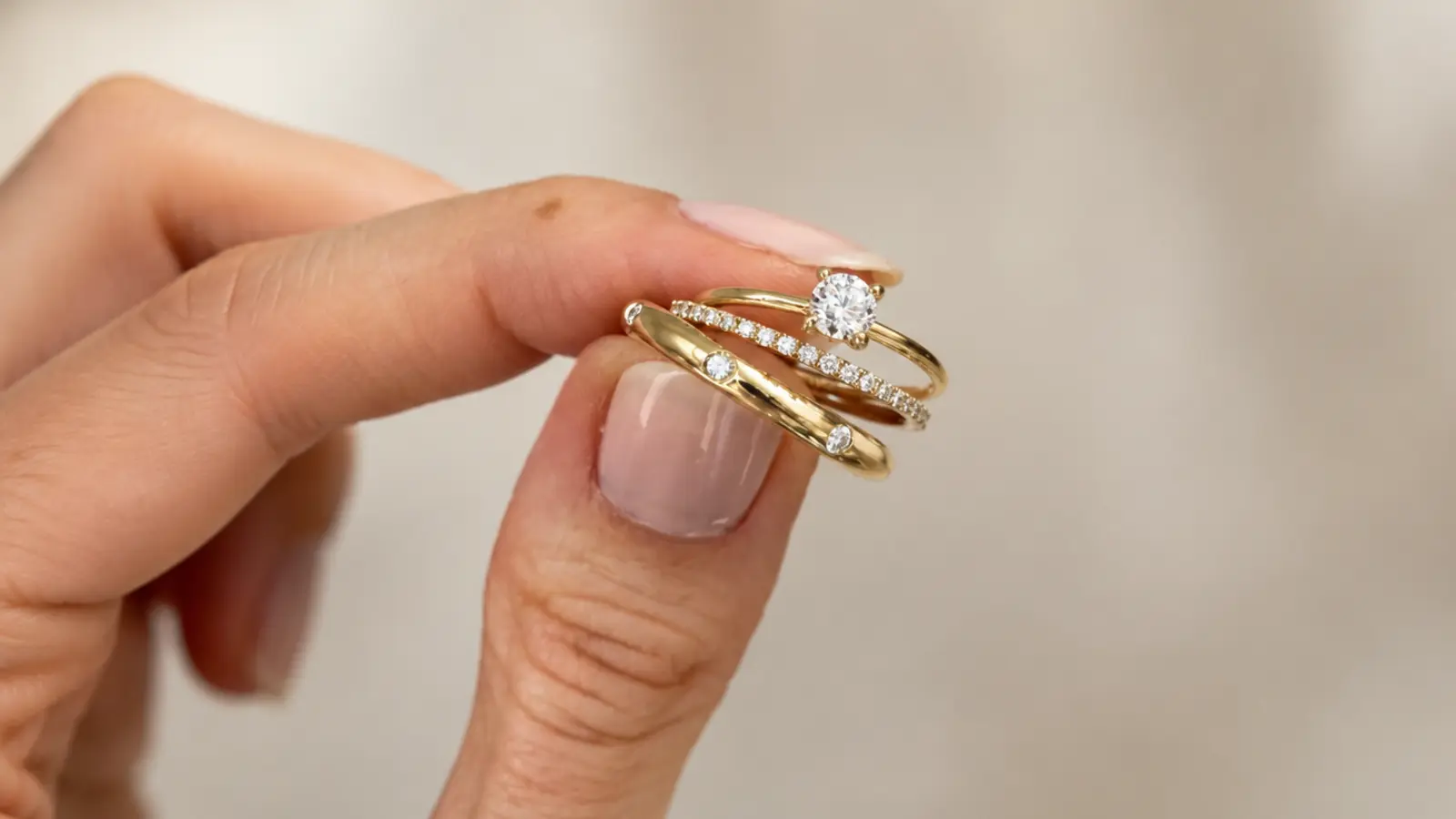
The wedding ring goes on first — placed on the bare ring finger during the ceremony, before the engagement ring returns to that hand. This is not arbitrary. It is the origin of the tradition that the wedding ring sits beneath the engagement ring after the ceremony: the ring placed first ends up closest to the hand.
In practice, this is handled in one of a few ways at the ceremony. The most common approach: the person receiving the wedding ring moves their engagement ring to their right hand before the ceremony begins, allowing the wedding ring to be placed on the bare left ring finger during the vows. After the ceremony, the engagement ring moves back to the left hand and sits on top of the wedding ring, resulting in the conventional stacking order — wedding ring beneath, engagement ring on top.
Some couples give the engagement ring to the best man or maid of honor to hold during the ceremony, with the same end result. Others simply place the wedding ring on top of the engagement ring during the vows, then reverse the order afterward. And many couples leave them in whatever order they land and consider the stacking question settled from that moment forward.
Does the order actually matter?
Only if it matters to you. The tradition of the wedding ring going beneath — closer to the heart — is meaningful to many people. For others, the physical comfort of whichever stacking arrangement feels better on their hand is more important than the symbolic order. Both are completely legitimate, and no etiquette standard requires one over the other. What does matter is that you make a conscious choice rather than ending up in an order that bothers you every time you look at your hand.
For practical guidance on how the two rings sit together across different engagement ring settings, see our how to wear wedding rings guide.
Can Your Engagement Ring Be Your Wedding Ring?
Yes — and this works better than many people expect. The scenario looks like this: one partner receives an engagement ring at the proposal, wears it throughout the engagement, and then exchanges or blesses it during the ceremony, after which it serves as the only ring they wear. No separate wedding band is purchased. The engagement ring does both jobs.
When this works well
When the engagement ring is simple enough to wear every day without issue — a plain solitaire on a clean shank, a low-profile setting, a ring that sits flat against the finger — it is already functioning as the kind of ring a wedding band would be. The elaborate prong-set halo with a high cathedral setting is a harder case for everyday-only wear; the simple bezel-set solitaire is a more natural fit.
It also works well when the couple prefers not to wear two rings permanently. Some people find two rings on one finger uncomfortable, impractical for their work, or visually cluttered relative to their personal style. For these people, the engagement ring as the sole ring is not a compromise — it is the right choice.
And when the engagement ring budget was significant but a wedding band budget was not built in, buying one ring well rather than two rings in a split is sometimes the cleaner financial decision, particularly if the ceremony will include a meaningful exchange of that ring.
Making it feel ceremonially complete
The most common hesitation about using one ring for both purposes is the feeling that the wedding ceremony needs a ring to be placed on the finger — that the act of exchange is what makes the wedding ring meaningful. This is a real concern with a simple solution: the couple can remove the engagement ring before the ceremony and exchange it during the vows, placing it back on the finger as a wedding ring. The object is the same; the ceremony is complete. Some officiants will adapt the ring ceremony language to reflect this explicitly.
Alternatively, some couples use the ceremony to exchange a different token briefly, while retaining the engagement ring as the permanent ring. Others simply say the vows with the engagement ring already in place and consider it the wedding ring from that moment forward. All of these approaches are valid.
How the Design Priorities Differ
Design is where the practical difference between the two rings is most visible. Engagement rings and wedding rings are evaluated against different criteria because they serve genuinely different functions — and shopping for each goes better when those criteria are clear before you walk into a jeweler.
Engagement ring design priorities
An engagement ring is a statement. The design priorities are visual impact, distinctiveness, and the quality of the center stone — because the center stone is what the ring announces itself with. The setting is chosen to maximize the stone’s presence: prong settings that hold the stone high and let light enter from every angle, halo settings that make a smaller stone appear larger, cathedral settings that elevate the stone dramatically above the band. The ring is worn during a period when people will notice it, comment on it, and take photographs of it on its own.
This is also the ring that gets the most consideration relative to personal style. The design of an engagement ring — vintage-inspired, modern, minimalist, maximalist — reflects a deliberate aesthetic choice in a way that most wedding bands do not need to.
Wedding ring design priorities
A wedding ring is a daily wear object. The design priorities are comfort on the finger, durability of the metal and construction, and an appearance that ages well over decades without going out of fashion. A comfort-fit interior — a slightly domed inner surface that reduces contact between the band and the finger — matters more than any exterior detail. Low-profile settings, if stones are included, matter because a wedding ring gets bumped and caught on things constantly. A plain band chosen for timeless elegance today should feel equally right twenty or thirty years from now.
The wedding ring also needs to work physically with the engagement ring if both will be worn on the same finger. This is a practical design constraint that most engagement rings are chosen without considering — because the wedding band has not been bought yet. Couples who choose the wedding band specifically to complement an existing engagement ring tend to end up with a more comfortable and visually coherent result than couples who choose them entirely independently.
The most common design mismatch
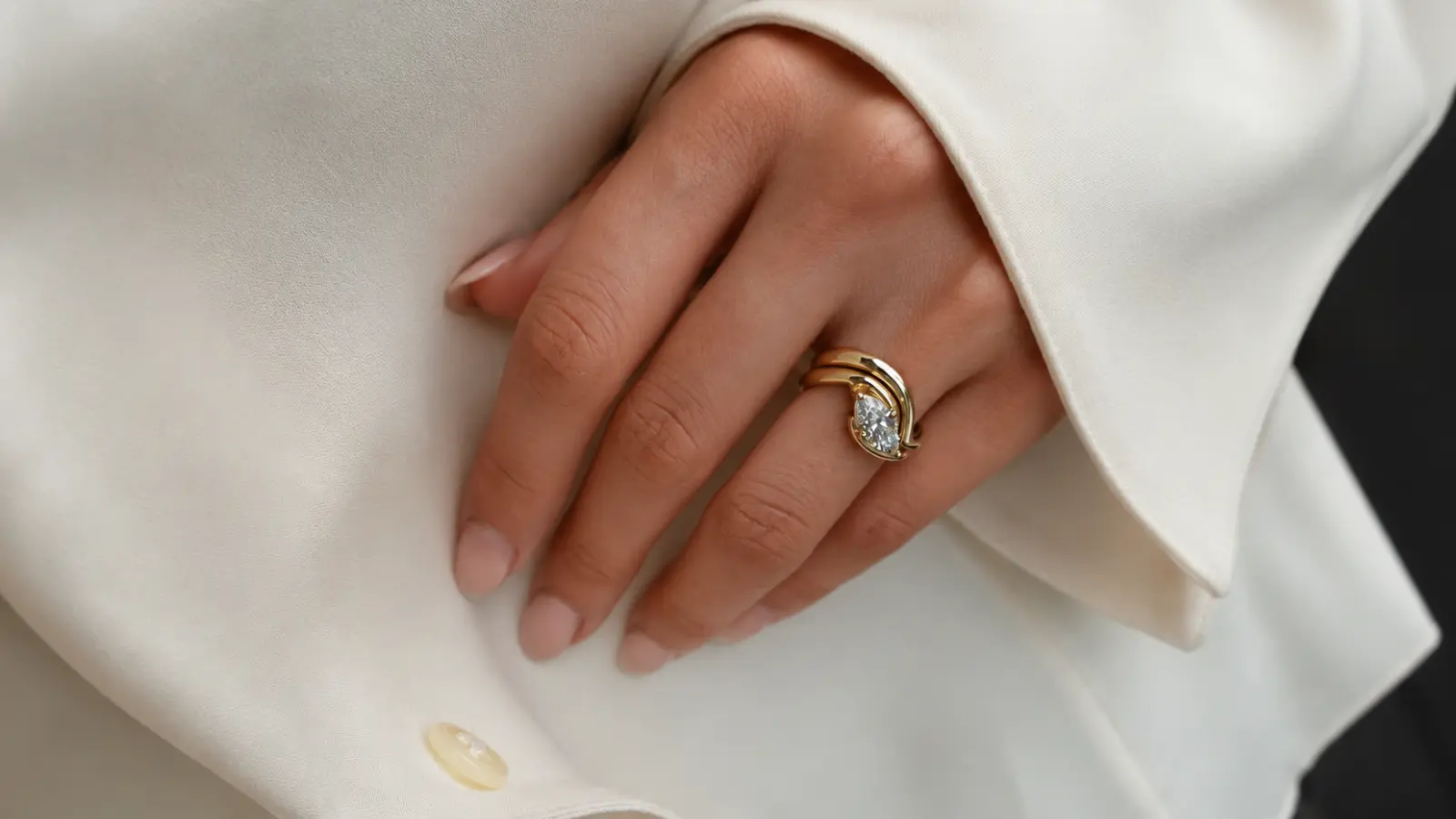
The most frequent problem couples encounter is a wedding ring and engagement ring that do not sit well together on the finger. The engagement ring has a setting that extends above the band level, and the straight wedding ring leaves a visible gap against it. The solution is either a contoured or curved wedding band designed to nest against the engagement ring’s profile, or accepting the gap as a natural result of the two rings existing as separate pieces — which many couples find they stop noticing quickly.
What tends to be worth considering early: if the engagement ring has been chosen and you know you want a wedding band to sit flush against it, bring the engagement ring to the jeweler when choosing the wedding band. A curved band can be designed specifically around the profile of the existing ring. See our wedding ring sets guide for more on how bridal sets and matching bands are designed to solve exactly this problem from the start.
Cost Differences and What to Expect
Engagement rings and wedding rings operate in different cost brackets, for reasons directly connected to their design priorities. The center stone of an engagement ring is typically the most expensive element of any jewelry purchase a couple will make — diamonds, sapphires, and other precious gemstones carry costs that no wedding band approaches unless it is fully paved in diamonds.
What engagement rings typically cost
The national average for an engagement ring is frequently cited between $5,000 and $7,500, but this average is pulled upward by purchases at the higher end of the market. Couples spending under $2,000 often find excellent rings with moissanite centers, lab-grown diamonds, or smaller natural diamonds in simple, quality settings. Couples with larger budgets are typically investing in larger center stones or higher-color, higher-clarity grades that affect price significantly.
What drives engagement ring cost most:
- The center stone. The single largest cost component. Diamond price scales exponentially with carat weight — a one-carat stone does not cost twice what a half-carat costs; it often costs three to four times as much. Color and clarity grades also move the price significantly.
- The metal. Platinum settings cost more than gold; the difference per ring is typically $200 to $800 depending on the setting complexity.
- The setting style. A simple solitaire has minimal labor cost. An intricate vintage-inspired setting with milgrain, filigree, and side stones has substantially more.
Understanding what drives the price makes it easier to find where your budget is best spent — many couples find that going slightly smaller on the stone and investing in a setting they love produces a more satisfying result than the reverse.
What wedding bands typically cost
Wedding bands occupy a much wider and more accessible price range than engagement rings. A few common reference points across the main categories:
- Men’s tungsten or titanium bands: $50 to $200 — extremely durable, good-looking, and available from quality retailers at prices that work at any budget
- Plain gold bands (14k): $200 to $600 depending on width and weight — the classic option, available at every price point
- Plain platinum bands: $600 to $1,500 — the premium version of the plain band, worth the investment for durability and low maintenance
- Diamond wedding bands for women: $500 to $5,000+ depending on the number, size, and quality of stones and the setting style
- Eternity bands (fully set with diamonds): $1,000 to $10,000+ — the most elaborate category of wedding band
These ranges reflect what couples typically encounter in standard retail. The same quality ring can cost noticeably less through independent jewelers or direct-to-consumer fine jewelry retailers than through large chain stores — a detail worth exploring before assuming the first price you see is the only one.
Budgeting for both
The most useful framework for couples navigating both purchases: treat them as separate decisions with separate budgets rather than a single combined jewelry budget split two ways. The engagement ring budget reflects what the proposing partner — or both, in couples who shop together — can reasonably spend on a gift. The wedding band budget is determined by what each person wants to spend on a ring they will wear every day permanently.
For couples where the engagement ring required a significant budget and the wedding band budget is limited, a simple plain gold or platinum band is not a compromise. Many people find, years into wearing both rings, that the wedding band is the one they feel most attached to — the simpler, quieter ring that was present at the actual moment of the marriage. The plainness can be the point. For more options across price points, the wedding rings for women guide covers the full range.
How to Wear Both Rings Together
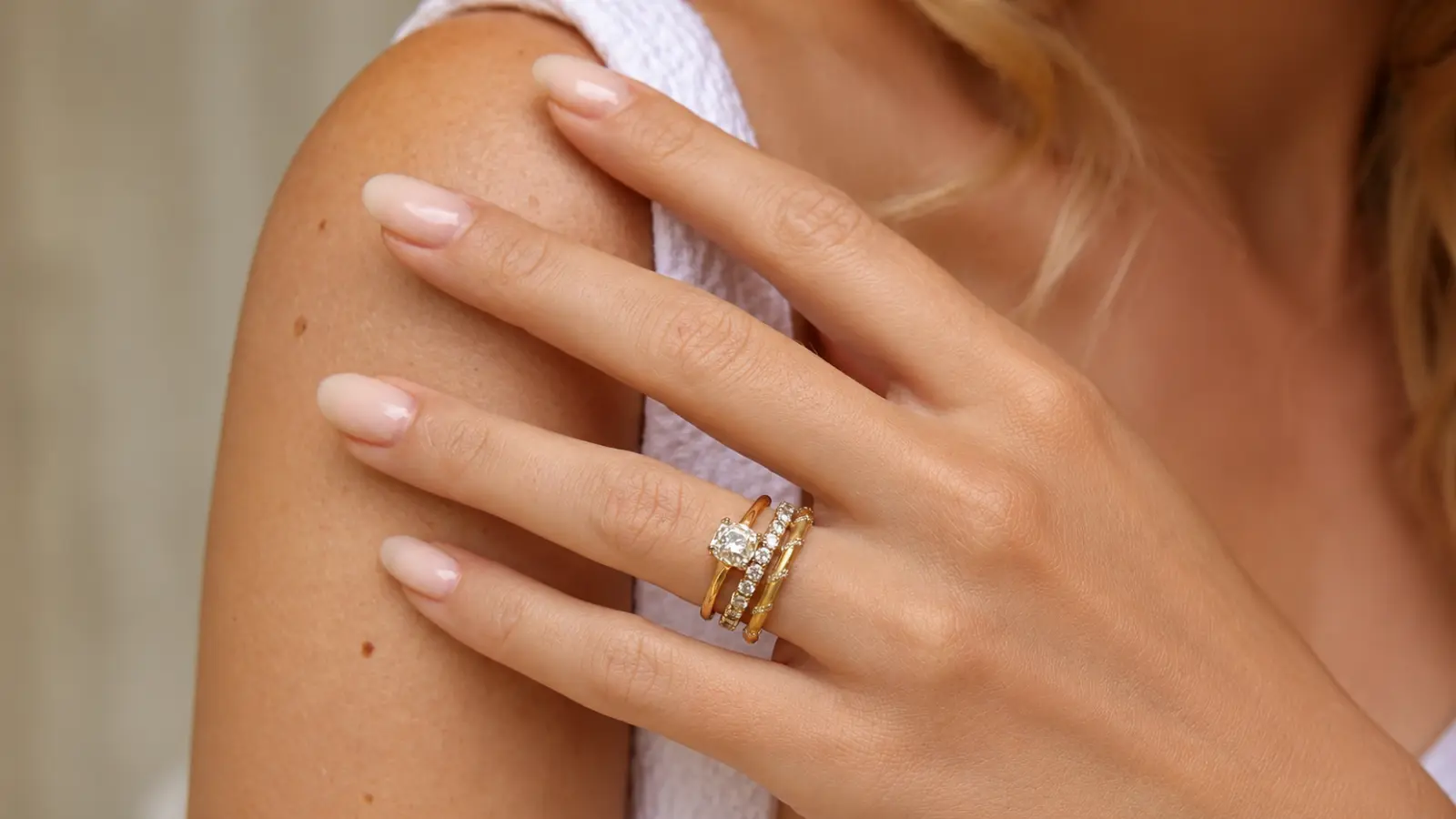
Once both rings are on the same finger, the practical questions shift from “which ring do I want” to “how do these two rings actually work together.” The answers are not always obvious, and the physical reality of two rings on one finger involves considerations most couples encounter for the first time when they are already standing at the altar.
The stacking order
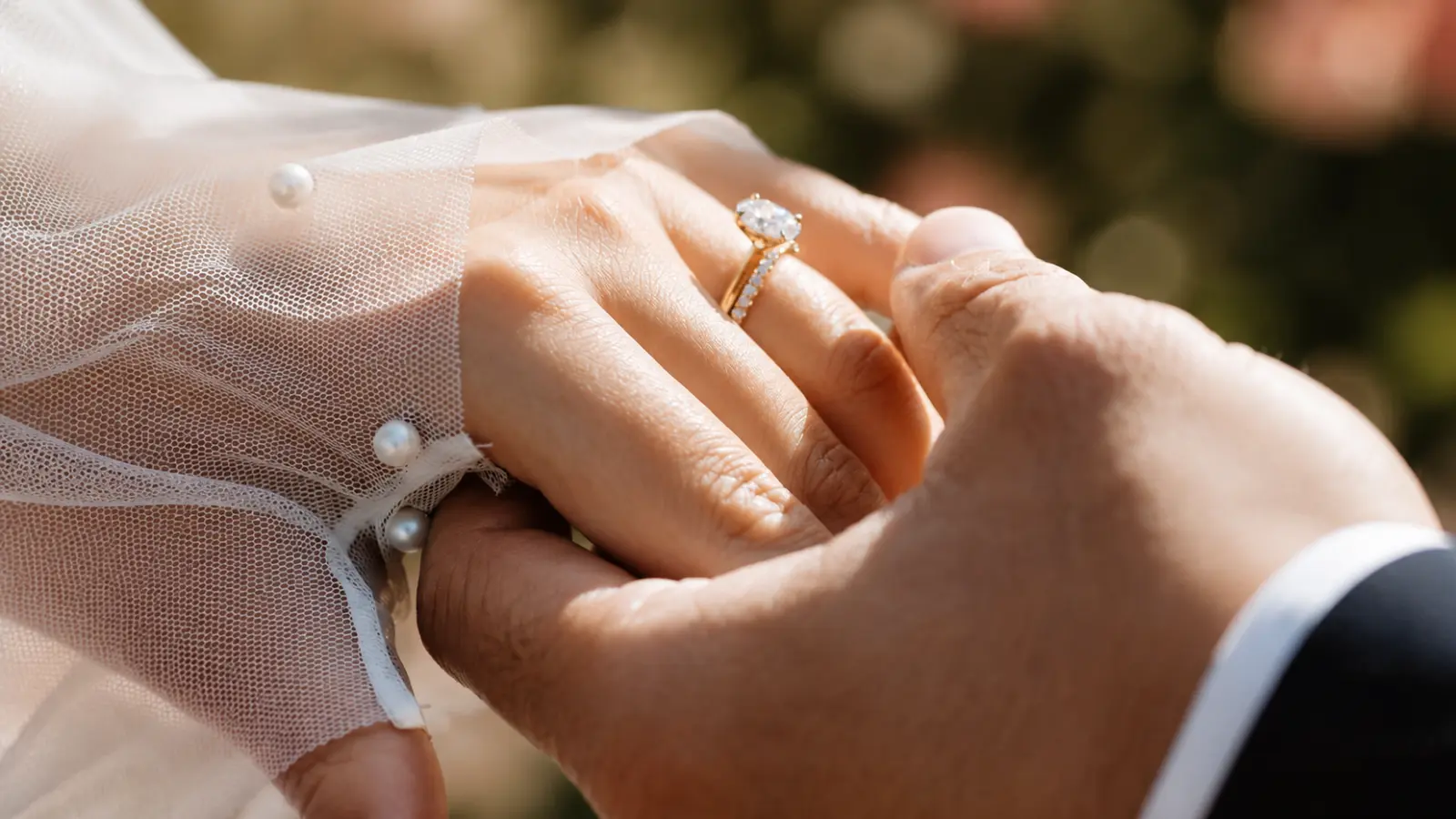
The convention in the United States is wedding ring beneath (closest to the hand), engagement ring on top. This tradition comes from the practice of placing the wedding ring on a bare finger during the ceremony — which naturally puts it closer to the hand — and then replacing the engagement ring over it. Many couples wear both rings in this order for life; others reverse them if the engagement ring fits more naturally on the bottom, or wear them on separate hands entirely.
There is no meaningful etiquette rule requiring one order over the other. The tradition is pleasant and has an internal logic, but it is not a requirement. Wear them in whichever order is more comfortable and looks better on your specific hand with your specific rings.
When the rings do not sit well together
Some engagement rings and wedding bands simply do not sit comfortably side by side. An engagement ring with a prominent raised setting will push a straight-sided wedding band away from the finger, leaving a gap. A very wide wedding band may make the overall stack feel bulky. A wedding band in a different metal may create a color contrast that catches your eye every time you look at your hand.
These are worth anticipating rather than discovering after the purchase. The cleanest solution is to choose the wedding band with the engagement ring physically present — try them together before committing. A jeweler who specializes in bridal jewelry will often have insight into which wedding band profiles work with which engagement ring settings. A curved or scalloped wedding band designed to nest against a specific setting profile is worth the slight additional cost if the alternative is an uncomfortable fit you will wear for decades.
Wearing the rings separately
Many people remove their engagement ring in certain situations — exercise, manual work, food preparation — and wear only the wedding band. This is practical rather than symbolic, and it is one of the reasons a wedding band that functions beautifully on its own is worth choosing deliberately. If the wedding band only makes sense as part of the engagement ring stack, it may feel incomplete during the substantial amount of time spent wearing it alone.
For a full breakdown of wearing options, stacking combinations, and practical daily-wear guidance, see our how to wear wedding rings.
Engagement Ring and Wedding Ring Inspiration
Engagement rings and wedding rings can look completely different depending on the style, setting, metal, and how both pieces are worn together. Explore our inspiration board for diamond engagement rings, classic wedding bands, bridal sets, stacked rings, matching metals, and timeless combinations to help you find a pairing that fits your style.
Choosing the Ring Tradition That Fits Your Story
The engagement ring and the wedding ring are not competing with each other — they represent two different moments in the same journey. The engagement ring represents the decision, the promise, and the beginning of a new chapter. The wedding ring represents the ceremony, the commitment, and the life that follows.
Whether you choose an engagement ring, a wedding ring, both, or a different tradition entirely, the most important choice is finding something that reflects your relationship, your lifestyle, and the meaning you want your rings to carry for years to come.
Frequently asked questions (FAQ)
What is the difference between an engagement ring and a wedding ring?
An engagement ring is traditionally given during the proposal and represents the decision to get married. It usually features a more noticeable design, often with a center stone. A wedding ring is exchanged during the wedding ceremony and represents the marriage itself. Wedding rings are usually designed for everyday comfort and long-term wear.
Do you need both an engagement ring and a wedding ring?
No. Many couples choose to wear both, but it is not required. Some people wear only a wedding ring, while others use their engagement ring as their only ring after marriage. The most important part is choosing a ring tradition that feels meaningful and practical for your relationship.
Which ring goes on first after marriage?
Traditionally, the wedding ring goes on first, closest to the hand, followed by the engagement ring. This placement comes from the idea that the wedding ring should sit closer to the heart. However, many people choose a different order based on comfort, style, or how their rings fit together.
Can an engagement ring also be a wedding ring?
Yes. An engagement ring can become the wedding ring if the couple prefers wearing only one ring. Some couples include the same ring during the wedding ceremony to give it additional meaning instead of buying a separate wedding band.
Why are engagement rings usually more expensive than wedding rings?
Engagement rings usually cost more because they often include a center stone, such as a diamond, and more complex design details. Wedding rings are usually simpler because they are created for everyday durability, although diamond wedding bands and custom designs can also be expensive.
Is the wedding ring or engagement ring more important?
They represent different moments, so one is not more important than the other. The engagement ring represents the promise to marry, while the wedding ring represents the marriage commitment made during the ceremony. Some couples value one more personally depending on their traditions.