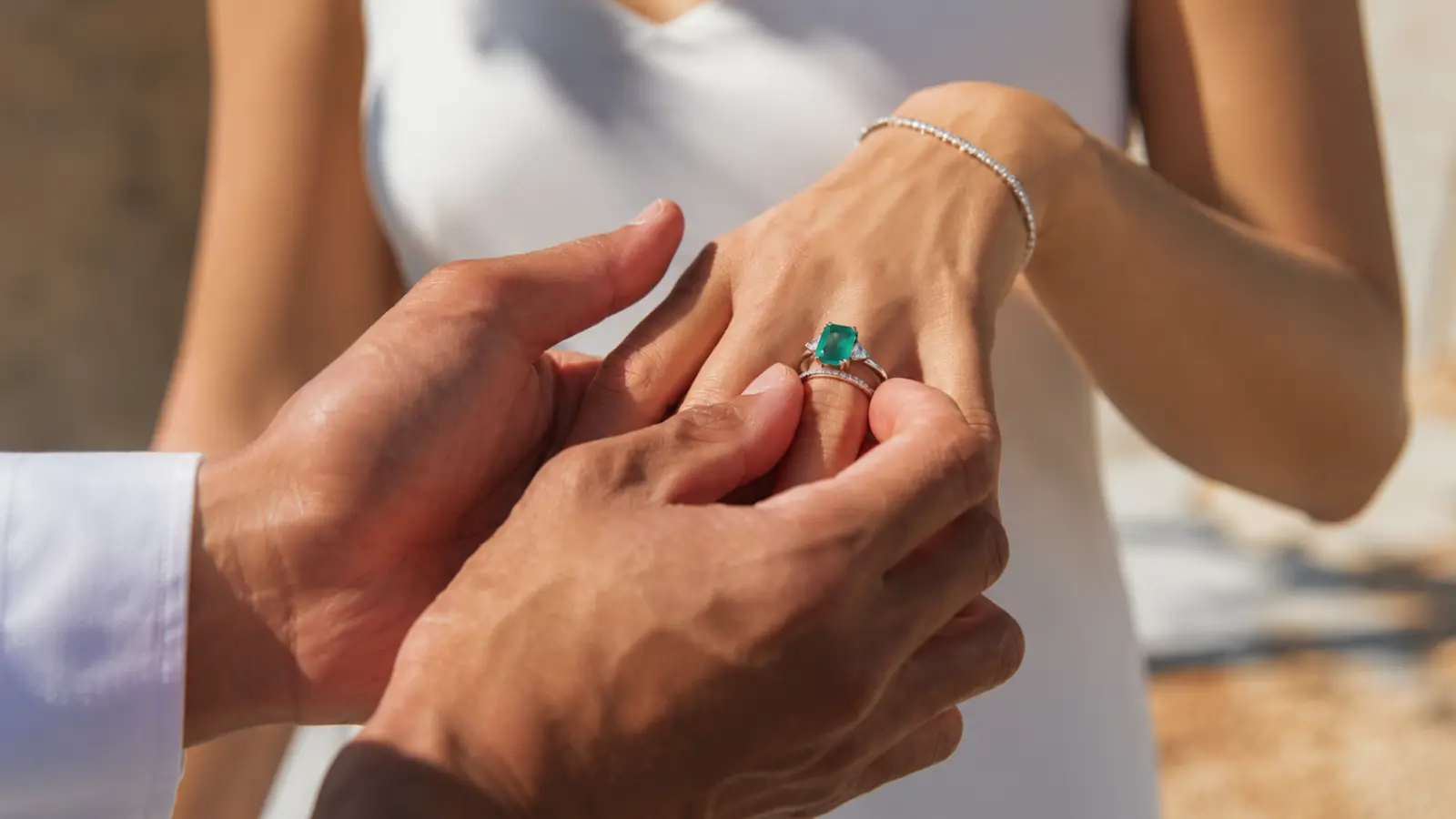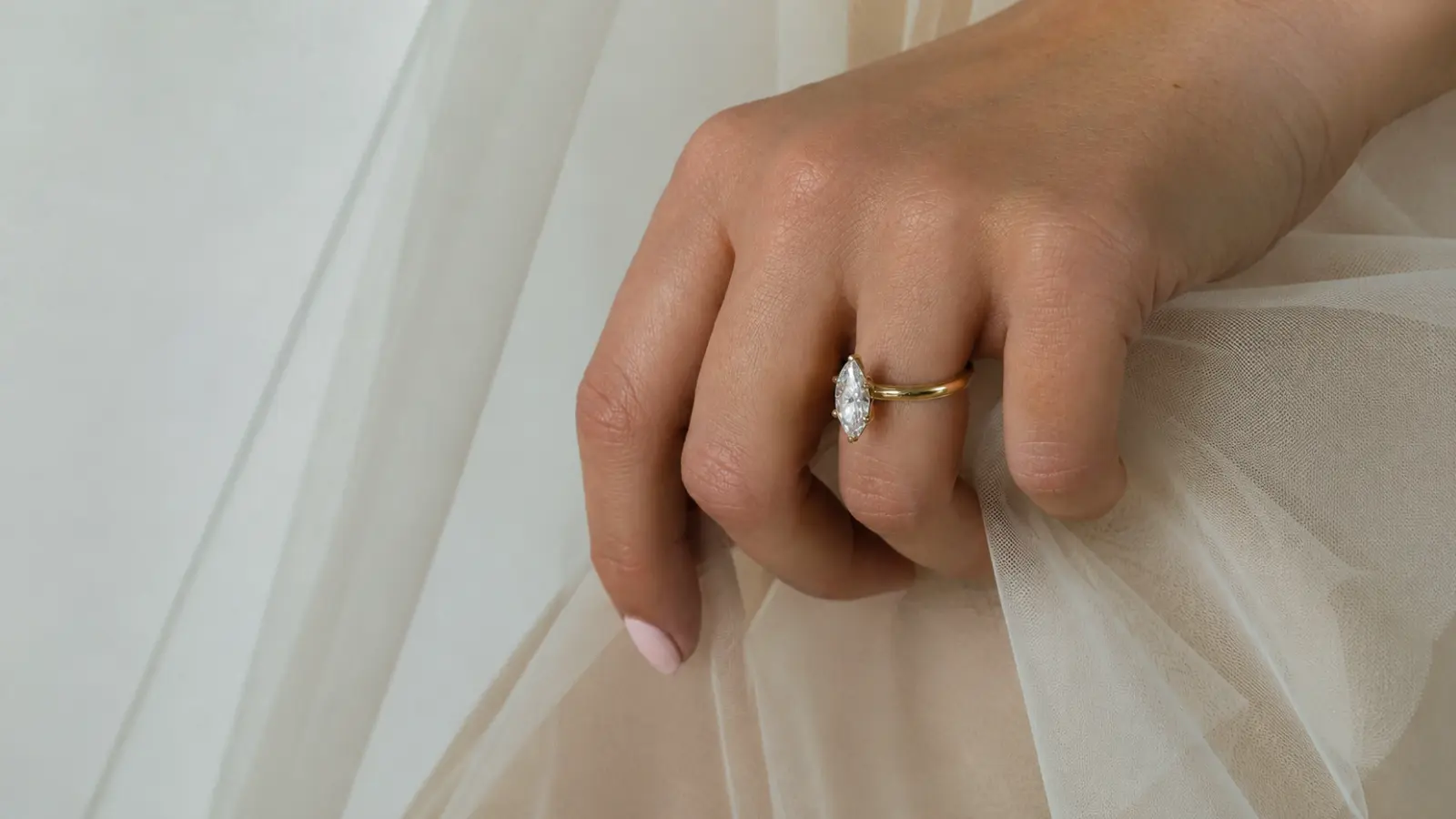
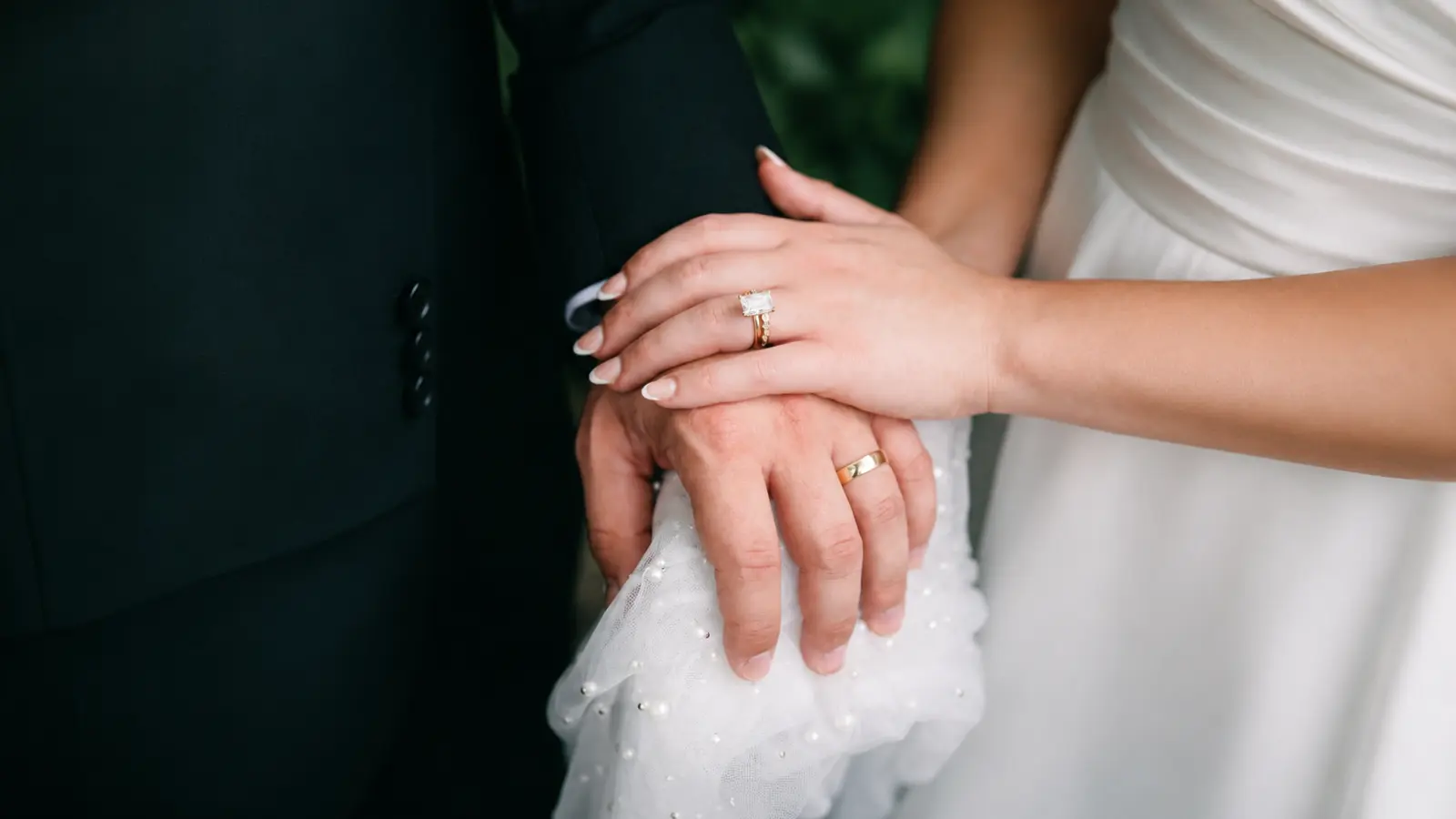
Wedding ring sets are collections of two or more rings designed to be worn together or coordinated as part of a couple’s wedding jewelry. They can include an engagement ring with a matching wedding band, two partner wedding bands, or complete trio sets depending on the style and purpose of the set.
Choosing a wedding ring set is about more than buying rings that look similar. The right set should consider how the rings fit together, how each person will wear their ring every day, and whether a coordinated design actually supports the couple’s lifestyle and preferences.
This guide explains wedding ring sets, including bridal sets, engagement ring and wedding band sets, trio wedding ring sets, his and hers wedding rings, matching vs non-matching options, and how to decide whether buying a set is the right choice.
What Is a Wedding Ring Set?
A wedding ring set is any collection of rings sold together as a designed unit rather than as individual pieces. The rings share at least one element — the same metal, the same finish, the same stonework aesthetic, or a profile specifically shaped to sit well against another ring in the group — that makes them more cohesive worn together than rings chosen independently would be.
The concept exists to solve a real problem. When an engagement ring and a wedding band are chosen entirely separately, they may not sit well together on the finger. The wedding band may leave a visible gap against the engagement ring’s setting, or the metals may differ slightly in shade, or the proportions may feel off in ways that are hard to anticipate from looking at each ring individually. A set eliminates most of these issues because the design relationship between the rings was worked out before they were made, not after they are on the hand.
The Four Main Types of Wedding Ring Sets
Before shopping, it helps to know what category you actually need — because these terms are used loosely in stores and online, and the differences between them matter:
- Bridal sets are the most common type — an engagement ring and a matching wedding band sold together. The band is shaped to sit flush against the engagement ring’s specific setting, which is what distinguishes a bridal set from two independently chosen rings that happen to share a metal.
- Trio sets add a second wedding band to the bridal set, creating a three-piece package: one engagement ring and two wedding bands, one for each partner. All three pieces share a consistent aesthetic.
- His and hers sets are two coordinated wedding bands — one styled for a woman’s ring, one for a man’s — without an engagement ring. They are matched in metal and finish but scaled to the proportions appropriate for each wearer.
- Wedding band sets are two matching or closely coordinated bands without any engagement ring involved, intended to be worn as the couple’s only ceremony rings. These are increasingly common among couples who prefer a simpler approach — one ring each, designed to look like they belong together.
That is the central value of a set: intentional coordination built in from the start. Whether it is the right choice depends on whether coordination is actually the problem you need to solve.
Bridal Sets vs. Wedding Band Sets
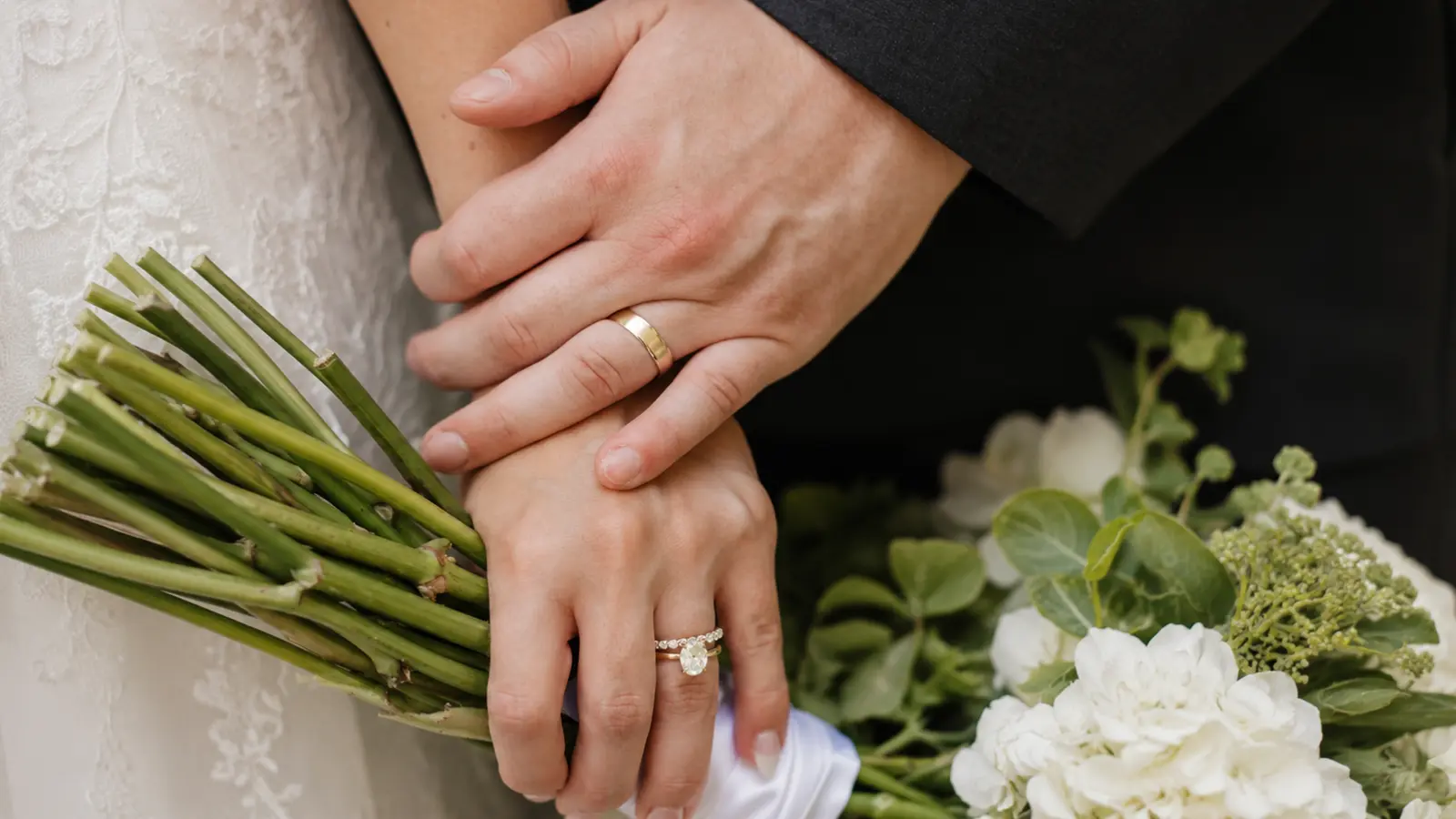
These two terms are often used loosely, but they describe meaningfully different things — and the distinction matters if you are searching for something specific.
What Makes a Bridal Set Distinct
A bridal set always includes an engagement ring. It is the combination of an engagement ring and its matched wedding band, sold as a unit, designed to be worn by one person on the same finger. The defining feature is that the wedding band was made with that specific engagement ring in mind — its curvature, height, and width are calibrated against the engagement ring’s profile so the two pieces meet cleanly rather than leaving a gap. This physical relationship is what separates a bridal set from two separately purchased rings that happen to share a metal color.
What a Wedding Band Set Is
A wedding band set — sometimes called a couples’ set or a wedding set — typically refers to two bands without an engagement ring. The emphasis is on both partners’ ceremony rings rather than on the stacking relationship between an engagement ring and a band. Wedding band sets are designed around a shared aesthetic between two rings meant to be worn by different people, not two rings meant to sit on the same finger.
The practical difference: a bridal set is chosen primarily for how the two rings sit together on one hand. A wedding band set is chosen primarily for how the two rings look together as a visual pair, even though they will be on different hands.
Both types are sometimes marketed under the same “wedding ring sets” banner — which is why knowing whether you need a stacking solution for one person’s rings, or a coordinated pair for both partners, will save significant time and confusion at the counter.
Engagement Ring and Wedding Band Sets
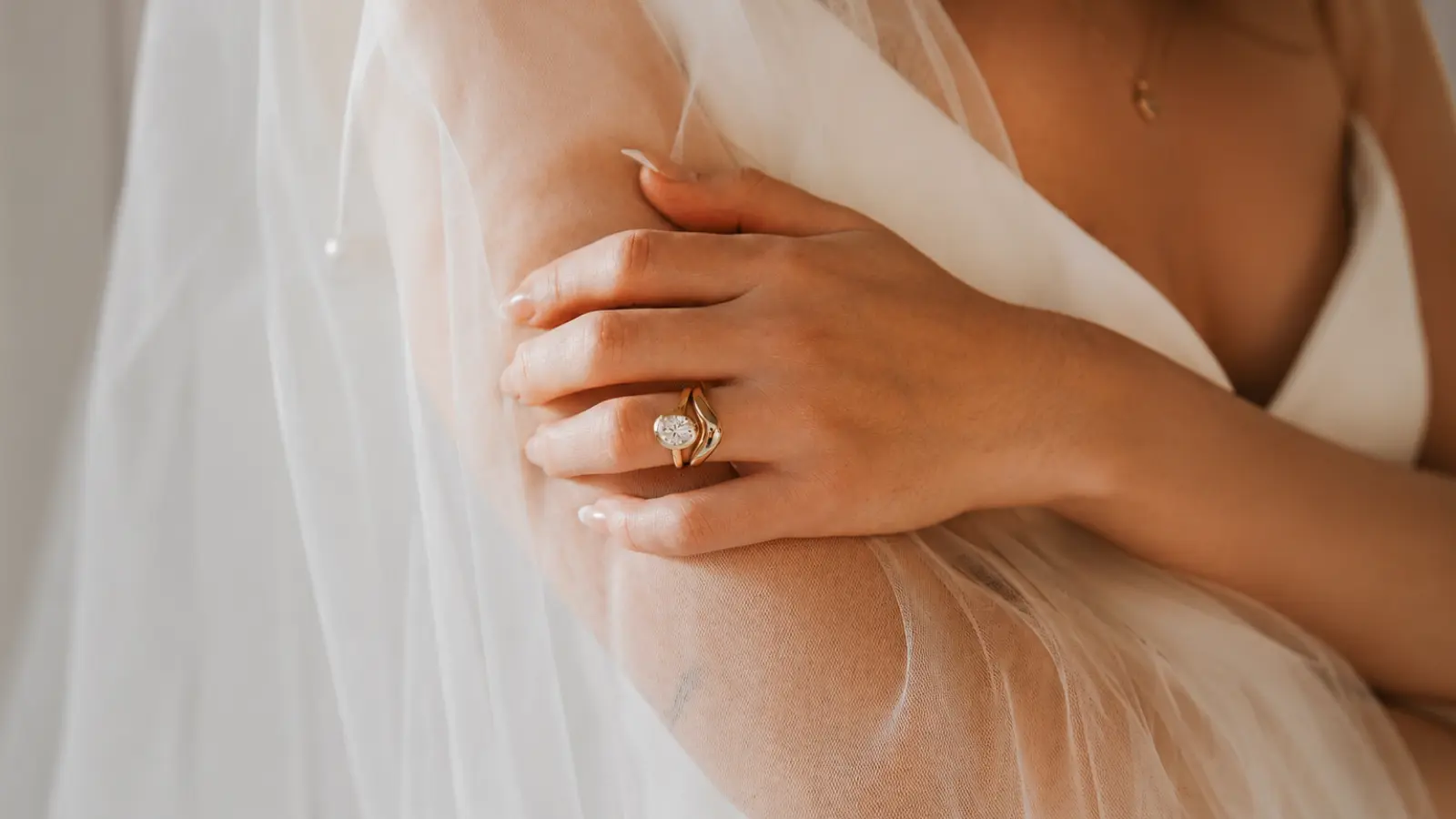
The most common reason couples consider a set purchase is the problem of fit. An engagement ring and wedding band set places two separate rings on the same finger, and the physical relationship between them is something most people do not think carefully about until they are trying both on together and discovering the combination is not what they imagined.
The Fit Problem Sets Are Designed to Solve
Many engagement rings have settings that extend above the level of the band — prong settings, halo settings, bezel settings with significant height — which means a straight wedding band cannot sit flat against the engagement ring. The two rings meet at the base but separate as they curve around the finger, leaving a visible, wedge-shaped gap. For some people this is not worth solving; for others, it bothers them every time they look at their hand. A bridal set eliminates this issue because the wedding band’s inner profile has been shaped to accommodate the engagement ring’s setting from the start.
The Visual Coherence Advantage
Beyond fit, there is the question of visual consistency. Rings designed at the same time, by the same jeweler, from the same collection share an aesthetic uniformity that independently sourced rings can approximate but rarely match exactly. The metal color will be identical rather than close. The stone quality will be calibrated to look right side by side. The widths and proportions will be chosen in relation to each other rather than in isolation. For people who notice and care about these details, a bridal set is the cleaner solution.
What a Bridal Set Does Not Guarantee
What a bridal set does not do is guarantee that both rings are what you would have chosen had you shopped for each one independently. Sets are designed to work together, which sometimes means the engagement ring is slightly more conventional than it might be if chosen alone, or the wedding band is shaped for the specific engagement ring rather than being the simplest possible band. If you have a strong, specific vision for either ring, a set may constrain that vision. If you are starting from scratch and coordination matters to you, a set is often the most efficient path to a result you will be happy with.
One detail worth knowing: many jewelers sell the wedding band from a bridal set separately, even when the engagement ring was purchased elsewhere. Bringing the existing engagement ring to the appointment and trying the band against it is the only reliable way to confirm fit before committing.
For more on the physical and visual relationship between two rings on the same finger, the how to wear wedding rings guide covers stacking order, gap solutions, and daily wear in detail.
Trio Wedding Ring Sets
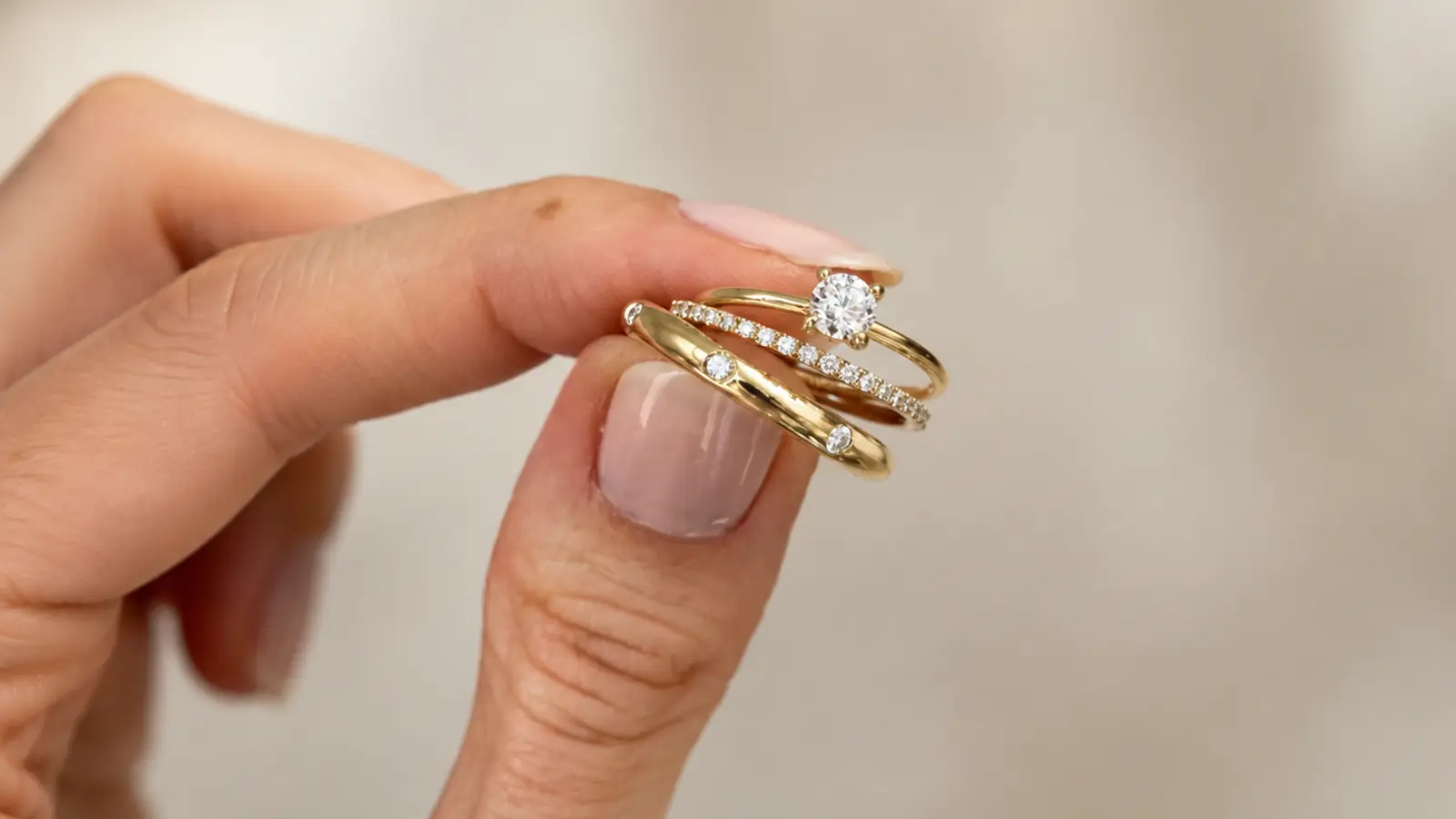
A trio set is a three-piece package: one engagement ring and two wedding bands, scaled and styled for each partner. All three rings share the same metal, finish, and aesthetic — the engagement ring typically carries the most design detail, the woman’s wedding band is shaped to complement it, and the man’s band is a simpler, wider version in the same metal.
Why Couples Choose Trio Sets
The appeal is primarily practical. Purchasing all three rings as a package is almost always less expensive than assembling three individually designed pieces that match. The design work of making them cohesive has already been done. And the decision-making is consolidated into a single shopping event rather than spread across multiple purchases and jewelers. For couples who shop for the engagement ring together rather than keeping it a surprise, a trio set is a genuinely efficient approach — the coordination problem is solved before it can become one.
Where Trio Sets Fall Short
The man’s band in a trio set is designed to share a visual language with the engagement ring and woman’s band, which often means it leans toward a more traditional look rather than the full range of styles available when shopping men’s bands independently. If the man in the couple has a specific preference for a hammered finish, an alternative metal like titanium, or an unconventional design, those preferences are unlikely to be accommodated in a trio set. Men’s bands in trio sets are typically yellow or white gold in a classic, relatively plain profile — exactly right for many couples, and limiting for others.
The same applies to the woman’s wedding band. A band designed as part of a set is shaped to sit flush against the specific engagement ring in that set. If either ring is ever upgraded or significantly altered, the fit relationship that made the set work may no longer apply. Couples who anticipate wanting to change their rings over time may find that the coordinated-but-independent approach gives more flexibility in the long run.
For the couples it suits — those who want a complete coordinated solution at a single price point, with a traditional aesthetic across all three pieces — a trio set is one of the better-value purchases available in the bridal jewelry category. The price tends to be notably lower than what three individually designed rings would cost, while achieving a cohesive result that independently sourced pieces would require significant effort to match.
His and Hers Wedding Ring Sets
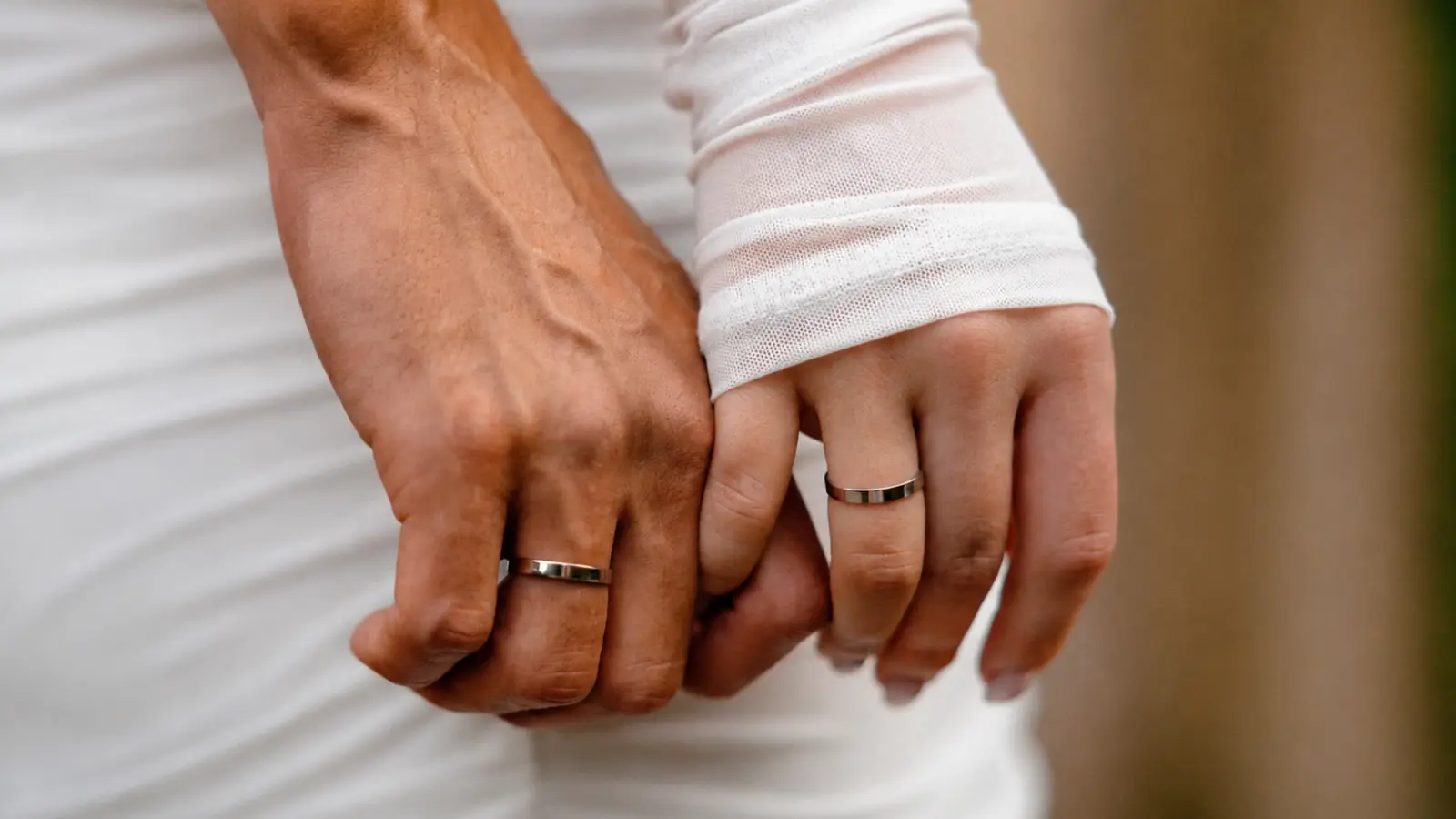
His and hers wedding ring sets are two coordinated bands designed to be worn by both partners — not stacked on the same finger, but worn on separate hands as a visual pair. They share a metal, a finish, or a design element that makes them look like they belong to the same marriage, even though they are on different people.
The Appeal: Shared Visual Identity
The appeal is symbolic as much as aesthetic. For couples who value the idea that their rings reflect a shared commitment rather than two completely separate choices, matching or coordinating bands carry a clear visual message. When both rings share a yellow gold finish with a satin texture, or the same thin channel-set diamonds, or even just the same profile and width proportional to each hand, they read as a pair in a way that entirely independent rings do not.
The Proportions Challenge
The practical challenge in his and hers sets is proportions. Men’s and women’s rings are genuinely different objects in terms of width, weight, and scale. A ring that sits elegantly on a woman’s hand at 3mm wide would look underwhelming on most men’s hands, where 5mm to 7mm is more typical. A ring that reads as bold and graphic on a man’s hand at 7mm may be too wide for the woman’s hand beside it. Designing a truly matched pair requires accounting for these differences, which means the rings in a his and hers set are usually not identical — they are proportionally adjusted versions of the same design.
When His and Hers Sets Work Well — and When They Don’t
The decision comes down to whether both partners’ preferences can actually be served within the design constraints of a pre-made pair. A quick way to assess that:
- A good fit: couples who share a preference for a specific metal and finish, who both want relatively simple bands, and for whom a coordinated look is a genuine priority. Yellow gold translates especially well across different band widths — a narrow band on one hand and a wider one on the other can look clearly related without being identical, because the metal color does the visual work of connecting them.
- A harder fit: when one partner’s taste runs toward a more minimal or unconventional ring that the set’s design language cannot accommodate, or when the proportional differences between the rings make one feel like a compromised version of what that person actually wanted.
For couples who want coordination without the constraints of a pre-designed pair, a good jeweler can help identify two independently chosen rings that share enough — the same metal, a similar finish, a compatible width ratio — to function as a visual pair without being bought as a set. Trying both rings on both hands simultaneously, not just one at a time, is the only reliable way to assess whether the pair actually works before committing.
Men’s wedding band options, including the full range of styles and metals available when shopping independently, are covered in the men’s wedding bands guide.
Matching vs. Non-Matching Wedding Ring Sets
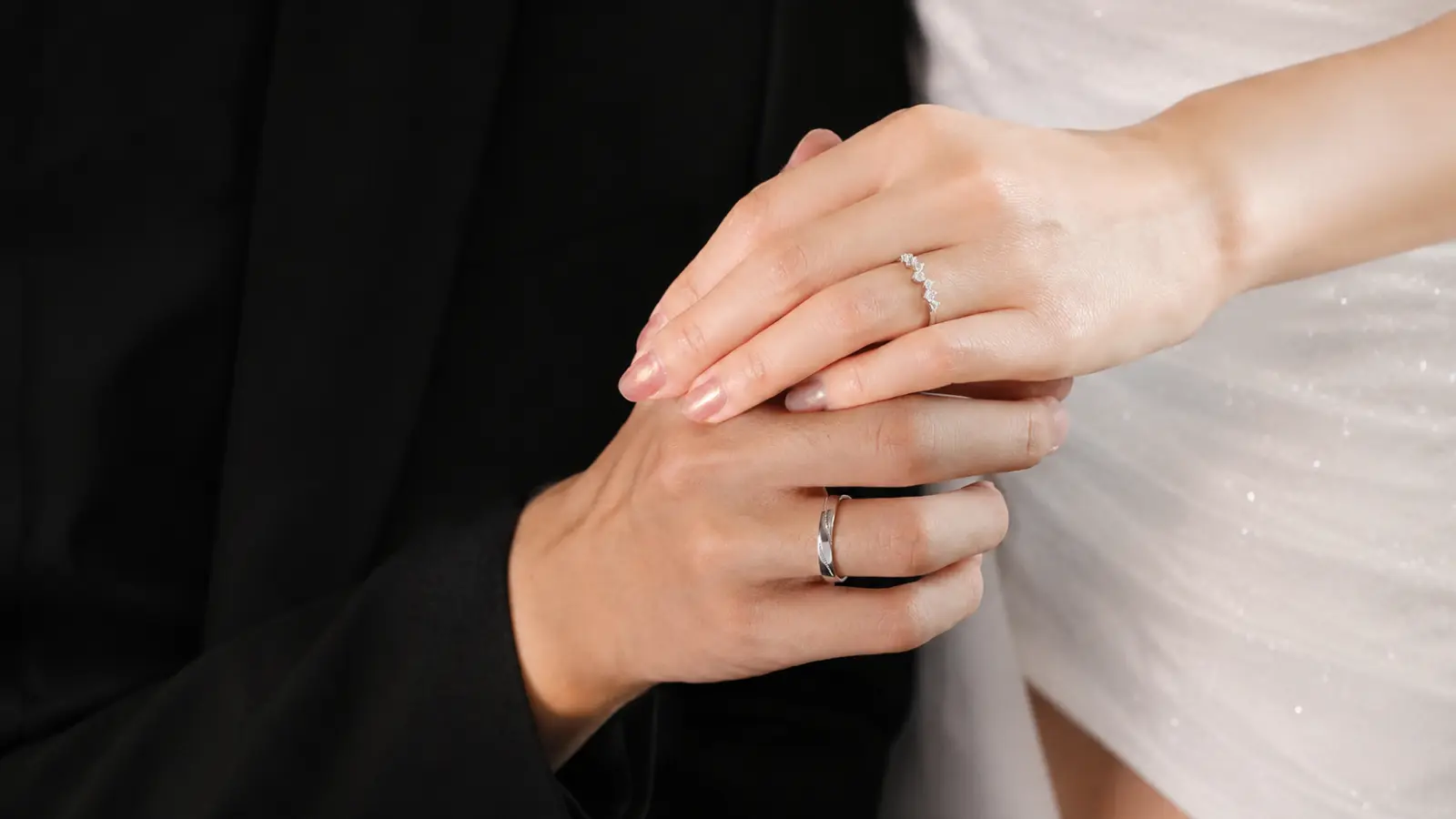
One of the more persistent questions couples navigate is whether their wedding rings need to match — and the short answer is that they do not, even if you are buying a set. The longer answer involves understanding what matching actually achieves, what it costs in terms of flexibility, and when a coordinated-but-not-identical approach produces a better result for both people.
Truly Matching
A truly matching set means both rings are identical or near-identical — the same metal, same finish, same profile, with only the size different. This is the clearest visual statement of a shared commitment, and it is genuinely what some couples want. It is also the approach that most constrains each individual’s ring to the design the set allows. When one person strongly prefers yellow gold and the other has no strong preference, matching is easy. When one prefers a hammered titanium band and the other wants a pavé diamond ring, matching is functionally impossible.
Coordinated Without Matching
A coordinated set means the rings share one or two connecting elements — a metal color, a finish, a width relationship — but are otherwise different. The woman’s ring might be a diamond eternity band in 14k white gold; the man’s might be a plain 14k white gold band in a wider width. They are not the same ring, but the shared metal creates matching wedding bands visually without requiring either person to wear a ring that was not designed for them. This is how many couples arrive at a ring situation that photographs well as a pair and feels personally right for each person.
Fully Independent
A non-matching approach means each ring is chosen entirely independently, for the individual wearing it, with no deliberate attempt to coordinate them as a pair. This is increasingly common, particularly among couples who recognize that the meaning of the rings comes from the ceremony, not from whether the two rings look like siblings on the nightstand.
The factor that most often determines which approach makes sense: how much the two people’s aesthetic preferences naturally overlap. Couples who share a taste for simple, classic jewelry often end up with coordinating rings naturally without trying. Couples with genuinely different tastes often produce their most satisfying ring situation by choosing entirely independently and letting the relationship between the rings be about the people wearing them rather than the objects themselves.
One consideration worth naming explicitly: the rings will almost never appear in the same photograph in a context that makes their coordination obvious. Wedding photos will feature them side by side for perhaps a few images. Every other photograph taken of either person’s hands for the rest of their lives will show the ring on its own. Optimizing for how the rings look in a single photo category — the paired ring shot — at the expense of how each ring looks as a daily wearable is a trade-off worth recognizing before you make it.
Should You Buy the Engagement Ring and Wedding Band Together?
This is the decision most couples encounter when they begin thinking seriously about wedding rings, and it is one where the right answer genuinely depends on the specific situation rather than any universal rule.
The Case for Buying Together
The case for buying together — as a bridal set — is strongest when the fit problem is a real concern. If the engagement ring has a prominent setting, a high profile, or any shape that would cause a straight-sided wedding band to leave a visible gap on the finger, buying a band designed specifically for that ring solves the problem at the source. It also ensures that the metal, stone quality, and design details of both rings are matched at the same moment by the same designer — the most reliable way to achieve visual coherence between the two pieces.
Buying together also tends to be less expensive. A bridal set priced as a package is almost always a better value than the same engagement ring and a separately sourced band that achieves the same fit and quality. If budget is a meaningful consideration, a set is often the more efficient allocation.
The Case for Buying Separately
The case for buying separately is strongest when the engagement ring choice is already settled or is being kept as a surprise, when the person who will wear both rings has a specific vision for the wedding band that may not be available in set form, or when the engagement ring’s setting is relatively low-profile and any well-chosen wedding band would sit comfortably beside it without a custom fit. A thin, low-bezel solitaire on a plain shank works with many wedding bands; a high cathedral halo works with far fewer.
There is also a sentimental dimension that some couples value: the wedding band being a separate purchase, made closer to the wedding date, with its own moment of selection and meaning. For couples where the engagement ring was a surprise proposal gift and the wedding band is the first piece of jewelry chosen together, buying separately preserves the wedding band’s independent significance. That matters to some couples and not at all to others — but it is worth naming as a consideration rather than dismissing it as sentimentality.
A Practical Middle Path
One practical option: buy the engagement ring first, then find the wedding band from the same bridal set. Most jewelers sell the components of their bridal sets separately, which means you can often source a band designed for the engagement ring — with all the fit benefits of a set — even if the engagement ring was purchased first and the band comes later. The only requirement is bringing the engagement ring to the appointment so the fit can be verified with the actual rings together.
The one situation where buying separately requires the most care: when the engagement ring has a non-standard profile — an asymmetrical design, a wide or unusually shaped setting, a custom piece — and the wedding band needs to accommodate it. A custom-fitted band, made by a jeweler with the engagement ring in hand, is often the cleanest solution. It costs more than an off-the-shelf band from a matching set, but less than the frustration of a band that never quite fits right.
For a full discussion of what the engagement ring and wedding ring each are and how they relate to each other, the engagement ring vs. wedding ring guide covers the decision from the beginning.
How to Choose a Wedding Ring Set
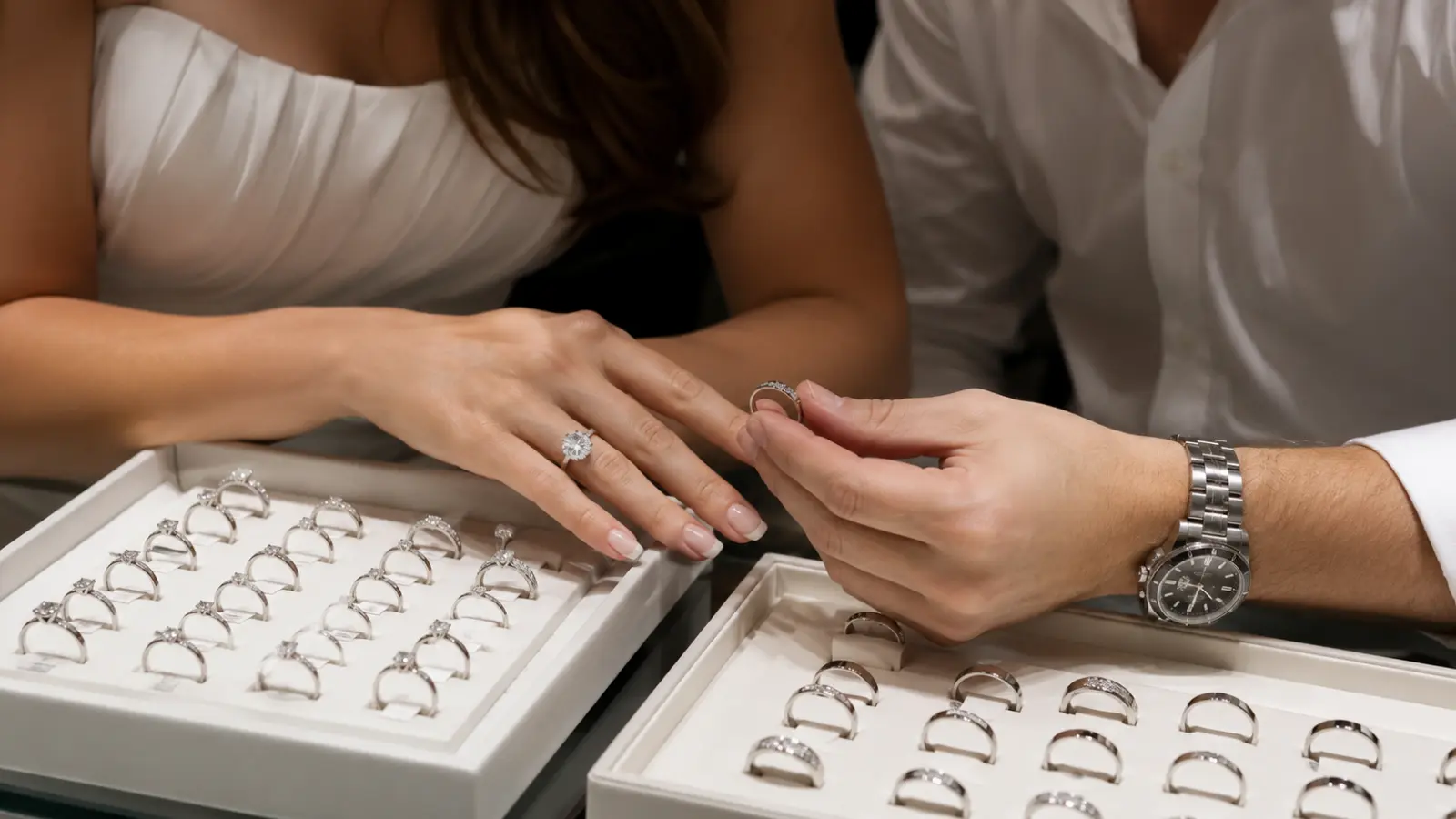
Choosing a set well is less about finding the most attractive rings in a display case and more about matching the type of set to the actual problem you are trying to solve. The starting point is clarity about what the set needs to accomplish.
Start with the Fit Question
If the engagement ring is already chosen (or being chosen simultaneously), the most important factor in selecting a bridal set or matching band is whether the wedding band’s profile accommodates the engagement ring’s setting. A straight band sits cleanly against a flat, low-profile setting and may not sit cleanly against anything with significant height above the shank. A contoured or curved band is designed to nest against a specific engagement ring shape. The correct choice depends entirely on the specific engagement ring’s geometry — which means the only reliable way to assess this is with both rings physically present, on an actual hand, not from photographs or from trying one ring at a time.
Confirm That Both Rings Are Built for Daily Wear
Sets designed primarily for visual impact in bridal displays sometimes use prong settings, high profiles, or design details that wear uncomfortably over years of daily use. The wedding band in a set should have a comfort-fit interior — a slightly domed inner surface that reduces friction against the finger — and any stones should be set low enough that they do not catch on fabric or present a snagging risk. The engagement ring’s long-term wearability matters equally: settings that require careful maintenance, expose stones to impact, or trap debris in hard-to-clean areas all become daily realities after the wedding.
Evaluate the Man’s Band Independently
In trio sets and his and hers pairs, the man’s band is designed to coordinate with the woman’s ring — which is reasonable, but it means the band was not necessarily designed with the man’s preferences and comfort as the primary consideration. Width, finish, and metal all matter more for the person wearing the ring every day than for the visual relationship between two rings in a paired photograph. If the man in the couple has any meaningful preference for how his ring looks and feels, it is worth spending time on that ring separately rather than defaulting to whatever the set includes.
Consider Resizability Before Committing
Certain metals commonly used in men’s bands — tungsten, titanium, certain cobalt alloys — cannot be resized once purchased. If the ring is part of a his and hers set and the man’s band is in an alternative metal, confirm the sizing process before purchasing. Rings that cannot be resized need to be sized with a degree of precision that rings in gold or platinum do not require. For more on how specific metals affect wearability and sizing, the complete wedding rings covers every metal in the full context of long-term wear.
Try the Set as It Will Actually Be Worn
For a bridal set, this means trying the engagement ring and the wedding band on the same finger, in the correct stacking order, and assessing the combination — not each ring individually. The gap (or lack of one), the visual balance between the two rings, and the comfort of the combined stack are all things that photographs and individual try-ons cannot reliably reveal. If you are shopping online, most reputable jewelers offer try-at-home programs or return policies specifically for this reason — use them.
Give Each Ring a Long-View Test
The engagement ring will be shown off extensively in the weeks after the proposal; the wedding band will be noticed less consciously but worn more constantly. Both rings need to earn a permanent place on the finger over decades rather than simply winning the approval of the moment of purchase. The best question to ask about any set is not “does this look beautiful right now” but “will I still want to wear every piece of this in fifteen years?”
For couples who want to explore options beyond traditional matched sets, the unique wedding rings guide covers designs that are distinctive without being impractical — a useful counterweight to the more conventional set formats covered here.
Wedding Ring Set Inspiration
Wedding ring sets can range from perfectly matching designs to coordinated rings that reflect each person’s individual style. Explore our inspiration board for bridal sets, engagement ring and wedding band combinations, his and hers rings, matching bands, and timeless wedding ring ideas for couples.
Choosing a Wedding Ring Set That Fits Your Story
A wedding ring set is not only about choosing rings that look good together. The best sets balance design, comfort, meaning, and the way each person will actually wear their ring throughout everyday life.
Whether you choose a perfectly matched bridal set, coordinated wedding bands, or rings that reflect completely different styles, the right choice is the one that feels intentional for both people wearing them long after the wedding day.
Frequently asked questions (FAQ)
What is a wedding ring set?
A wedding ring set is a collection of rings designed and sold together as a coordinated group. The most common type is a bridal set, which includes an engagement ring and a matching wedding band designed to be worn together. Other types include trio sets with three rings and matching wedding band sets for couples.
What is included in a wedding ring set?
What comes in a wedding ring set depends on the type of set. A bridal set usually includes an engagement ring and wedding band for one person. A trio wedding ring set includes an engagement ring plus two wedding bands. A couple’s wedding band set usually includes two coordinated wedding rings without an engagement ring.
What is the difference between a bridal set and a wedding ring set?
A bridal set specifically refers to an engagement ring and matching wedding band designed for one person. A wedding ring set is a broader term that can include bridal sets, trio sets, matching couple bands, or his and hers wedding rings. Because jewelers use these terms differently, it is always important to confirm exactly which rings are included.
Is it better to buy an engagement ring and wedding band together?
Buying an engagement ring and wedding band together can be a good choice if you want the rings to match perfectly and sit comfortably together. A set helps avoid issues like gaps, mismatched metals, or different proportions. Buying separately gives you more flexibility if you want each ring to have its own style.
Are wedding ring sets cheaper than buying separately?
Wedding ring sets are often more cost-effective because the rings are purchased together instead of individually. However, the final price depends on the metal, diamonds, craftsmanship, and brand. A set is only a better value if you genuinely like every ring included and would choose those designs separately.
Do wedding rings have to match as a set?
No. Wedding rings do not have to match. Some couples love the symbolism of matching bands, while others choose completely different metals, styles, or designs. The most important factor is that each person has a ring they enjoy wearing every day.