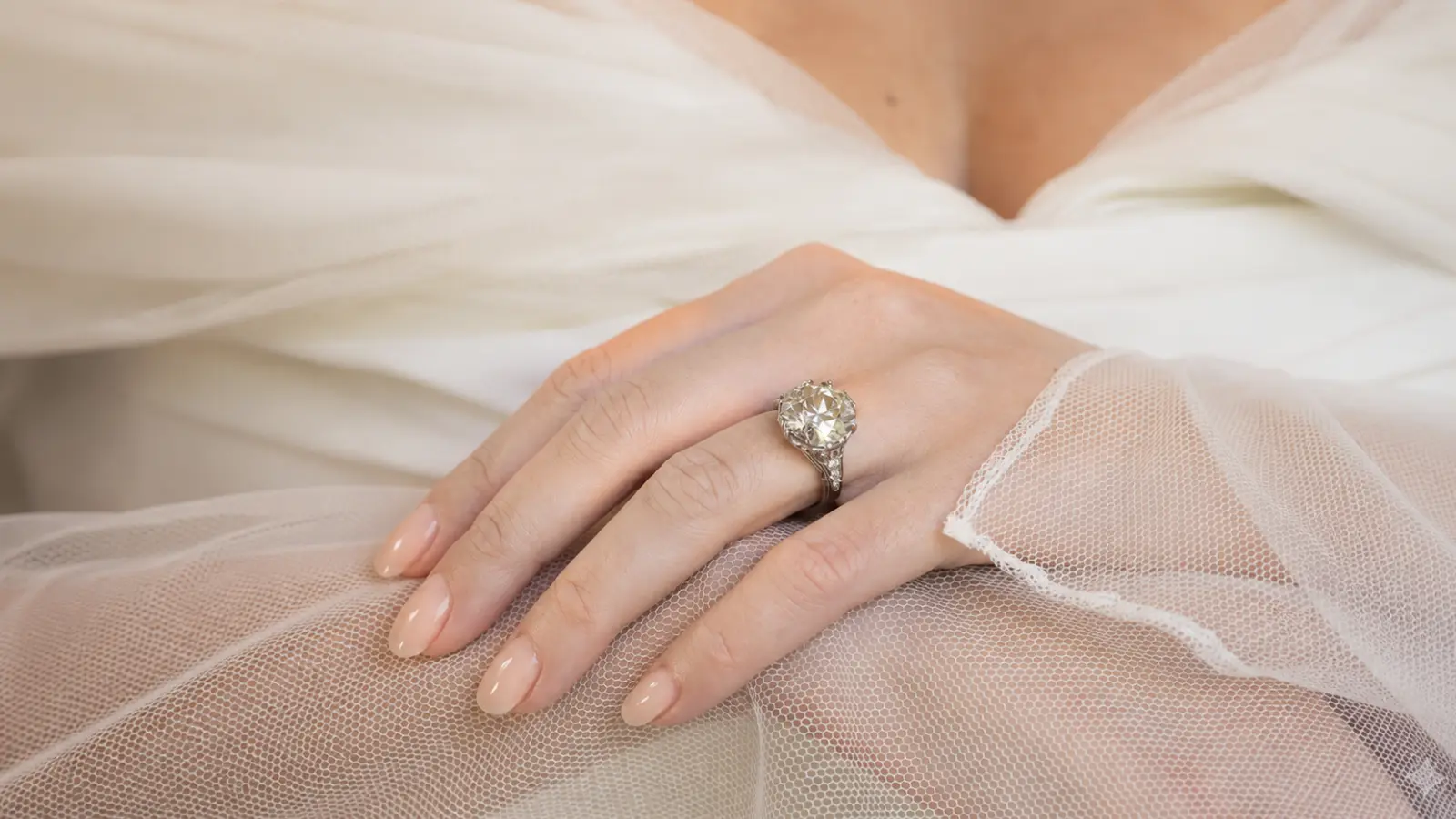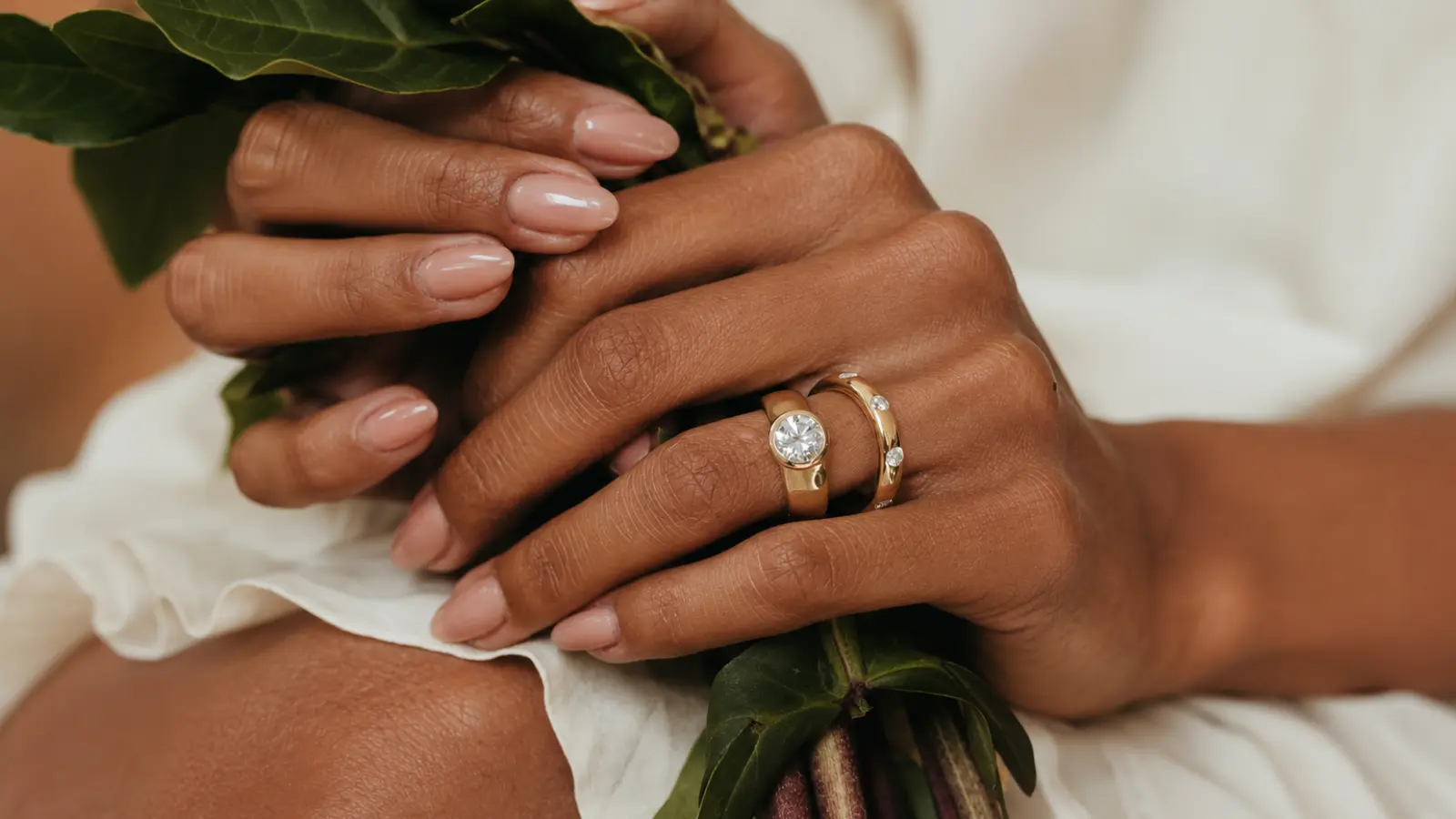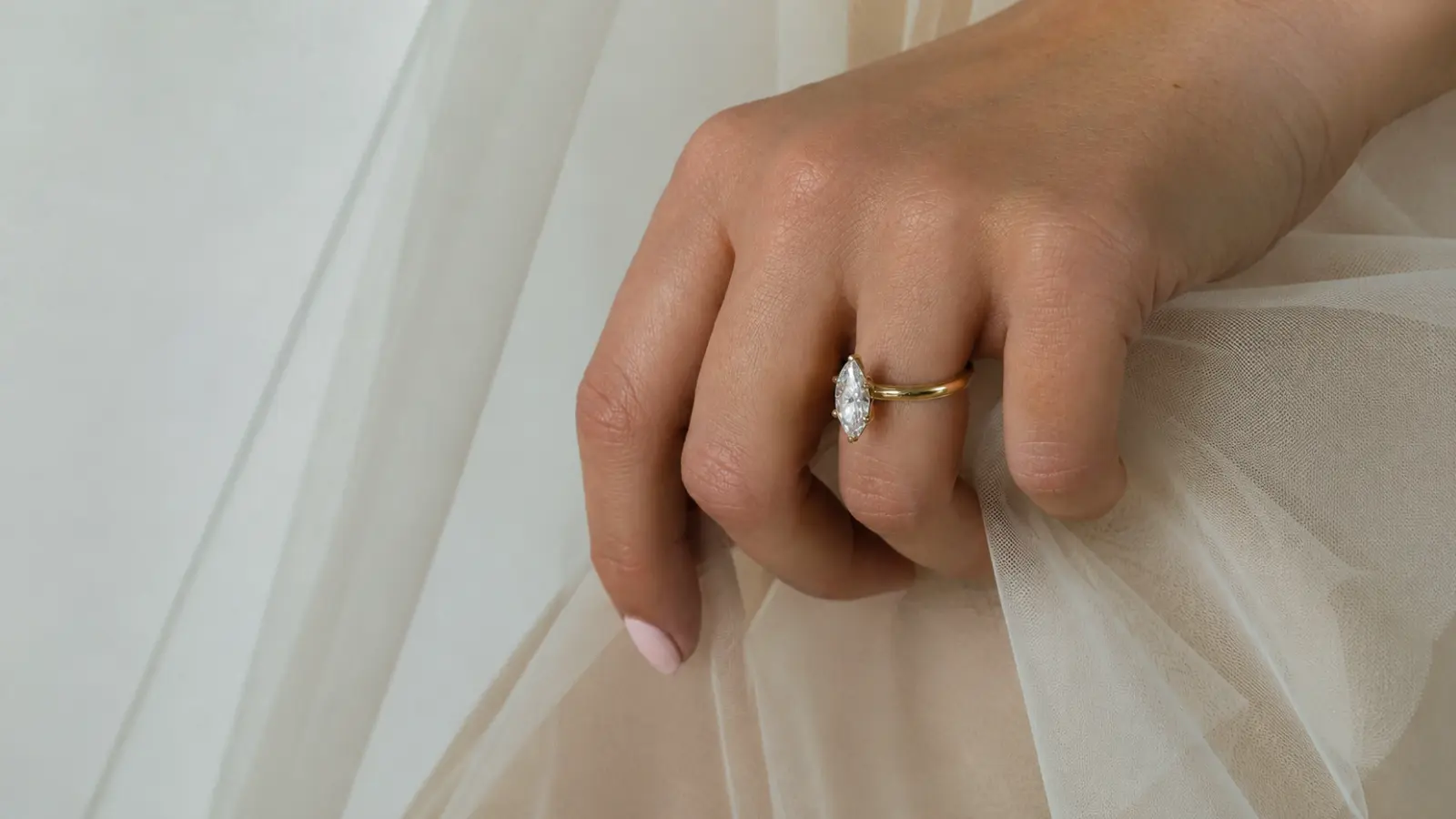
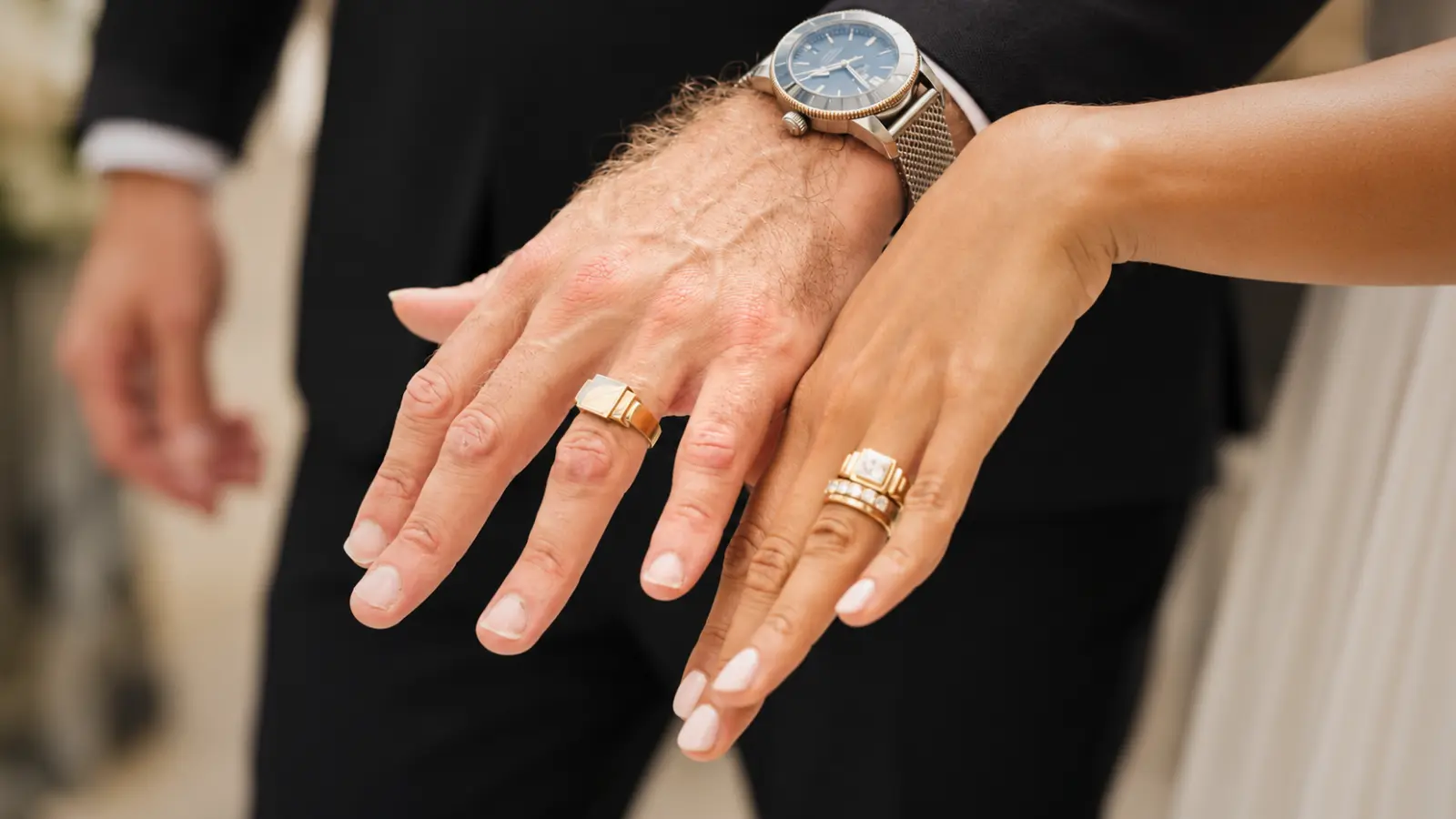
His and hers wedding rings are wedding bands chosen as a pair to represent a couple’s marriage, either through matching designs, coordinated details, or personal elements that connect the two rings. They can look identical, share only one feature, or be completely different while still carrying the same meaning.
Choosing wedding rings as a couple is not only about finding two bands that look good together. Each person has a different style, hand shape, lifestyle, and relationship with jewelry, which means the best pair of rings is often the one that balances connection with individuality.
This guide explains his and hers wedding rings, including whether wedding bands need to match, matching vs coordinated designs, metal choices, engraving ideas, and how to choose rings that feel connected while still fitting each person who wears them.
What Are His and Hers Wedding Rings?
His and hers wedding rings refer to a pair of wedding bands — one for each partner — chosen with some deliberate relationship between them. The term implies a wedding ring set: two rings that, while worn on different hands by different people, share enough of a visual or personal connection that they register as belonging to the same marriage.
The phrase itself is borrowed from an older, gendered framing of couples, and it has limitations worth naming. Same-sex couples, non-binary couples, and couples who simply reject the binary framing find the term beside the point. What they are choosing is not a his ring and a hers ring but two rings for two people who happen to be getting married. This guide uses “couples’ rings” and “partners’ rings” alongside “his and hers” throughout, and treats the question of how or whether to connect two rings as one that belongs to any couple, in any configuration.
What the question of his and hers rings is really asking is: how much visual or symbolic connection do you want between the two rings you will wear as a couple? The answers range from identical rings to completely independent choices, and most couples land somewhere in between. Where they land tends to reflect something true about how they think about their partnership — which is why the ring question is more interesting than it first appears.
Do Wedding Rings Have to Match?
No. There is no wedding tradition — in any culture, in any century — that requires a couple’s rings to match. The expectation that they should is a modern retail convention, not a historical or cultural requirement. Jewelers began marketing matched bridal sets aggressively in the mid-twentieth century, and the visual of two identical rings sized differently became the dominant image of what a couple’s rings were supposed to look like. That image is a marketing artifact, not a tradition.
The history of wedding rings actually supports variation rather than uniformity. For most of Western history, only one partner wore a wedding ring — typically the wife. Men’s wedding rings became standard practice in the United States largely after World War II, when soldiers who had worn rings during service brought the habit home. The two-ring marriage is barely two generations old. The matched two-ring marriage is even newer than that.
None of this means matching rings are wrong. For some couples, matching rings are genuinely what they want — a clear, visible statement that the two people chose the same thing on purpose. That preference is real and valid. What is not valid is the assumption that not matching represents a lapse or a compromise. Non-matching rings are not a consolation prize for couples who could not agree. They are, often, the most honest expression of two people with different hands, different aesthetics, and different relationships to jewelry who chose rings that actually fit those realities.
The question worth asking is not “should our rings match?” but “what do we each actually want to wear for the rest of our lives?” That question leads naturally to one of three places: matching rings, coordinated rings, or fully independent rings. All three are legitimate — only one of them starts from the right place.
Matching vs. Coordinated Wedding Bands
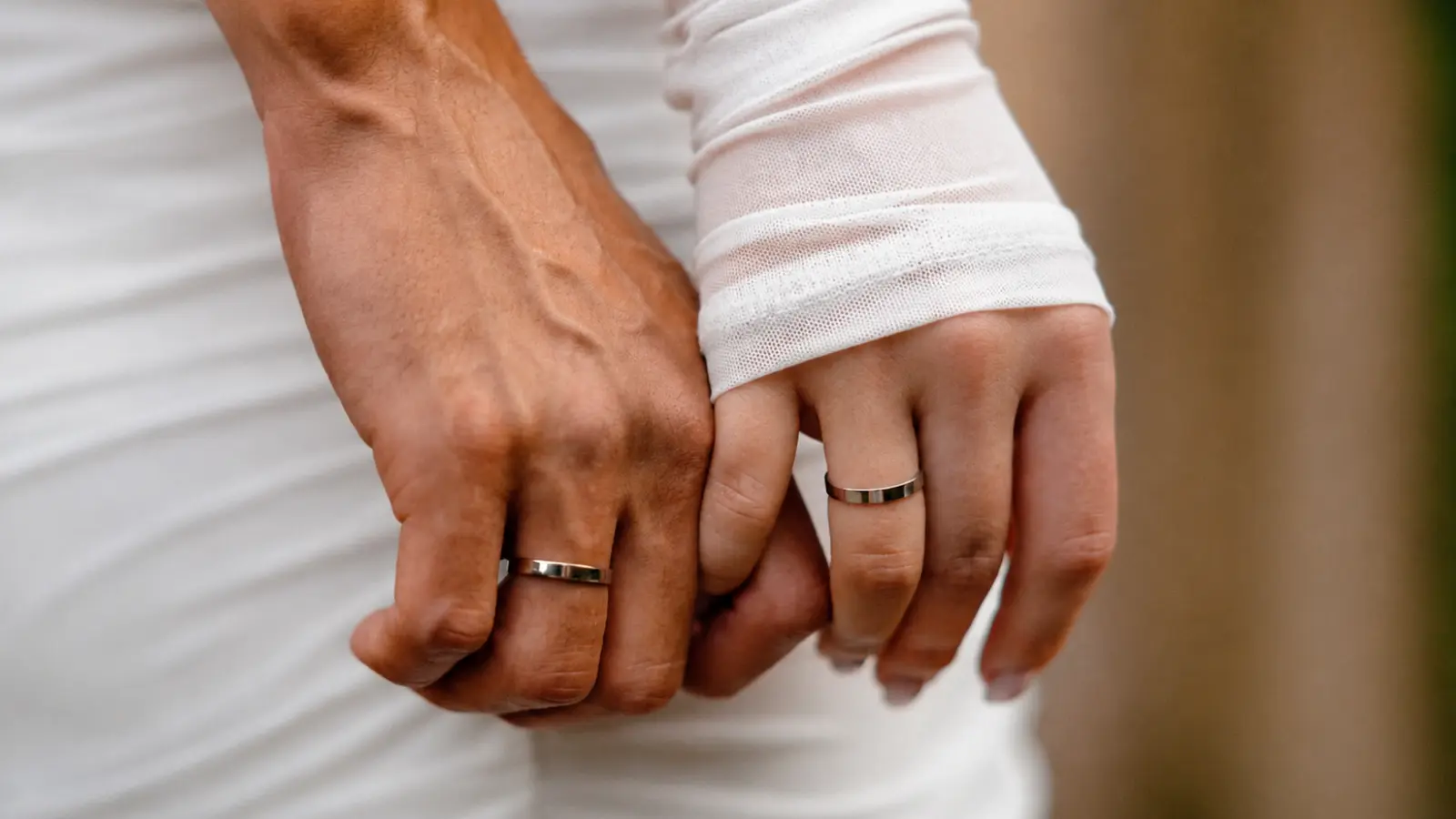
The distinction between matching and coordinated is where most of the practical decision-making lives. It is worth being precise about what each one means before deciding which approach fits.
What Matching Actually Means
Matching rings are identical in design — the same profile, the same finish, the same stonework, the same visual identity in every detail except size. The appeal is clarity: there is no ambiguity about the intentionality of the connection. The two rings are visibly the same object, worn by two different people. For couples who want the rings to announce their pair status clearly and who both genuinely prefer the same aesthetic, matching wedding bands are the cleanest expression of that preference.
The limitation is that matching optimizes for the visual relationship between the rings rather than for each individual ring’s relationship to the person wearing it. A design that reads as elegant on one hand — a certain width, a certain profile — may read as too delicate or too heavy on a different hand. Matching rings ask both people to wear the ring that looks right as part of a pair, rather than the ring that looks right on their specific hand. For couples whose hands and aesthetics are genuinely similar, this is not a real trade-off. For couples with different builds, different lifestyles, or different tastes, at least one person may end up wearing a ring that was not quite their first choice.
What Coordinated Means — and Why It Often Works Better
Coordinated rings share one or two connecting elements while differing in everything else. The most common shared element is metal — the same alloy, the same color — because metal color is visible at a glance and does the work of visually linking two rings without requiring any other sameness. A 3mm yellow gold plain band and a 6mm yellow gold band with a brushed finish: coordinated. A narrow diamond eternity band in platinum and a wide plain platinum band: coordinated. The connecting element is clear; the differences are real; each ring was chosen to work for the person wearing it within the constraint of that one shared element.
Coordinated rings tend to wear more naturally over time for a simple reason: each ring was chosen partly for the person who wears it. The width is right for that hand. The finish suits that person’s preference. The visual weight is appropriate for that lifestyle. Many couples who start the ring conversation by assuming they want matching rings end up with coordinated rings once they discover that coordination communicates what they wanted without the constraints that matching imposed.
The Case for Fully Independent Rings
There is a third approach that deserves equal standing: fully independent rings, chosen by each person entirely for themselves with no deliberate coordination between the two. This produces the most individually satisfying rings for couples whose aesthetics, lifestyles, and preferences diverge significantly — and it is more common than the wedding industry makes it appear. The connection between two people is not diminished because their rings look different. The rings were exchanged at the same ceremony, in the same moment, and carry the same meaning regardless of whether they share a metal or a design.
Best Ways to Coordinate Your Rings
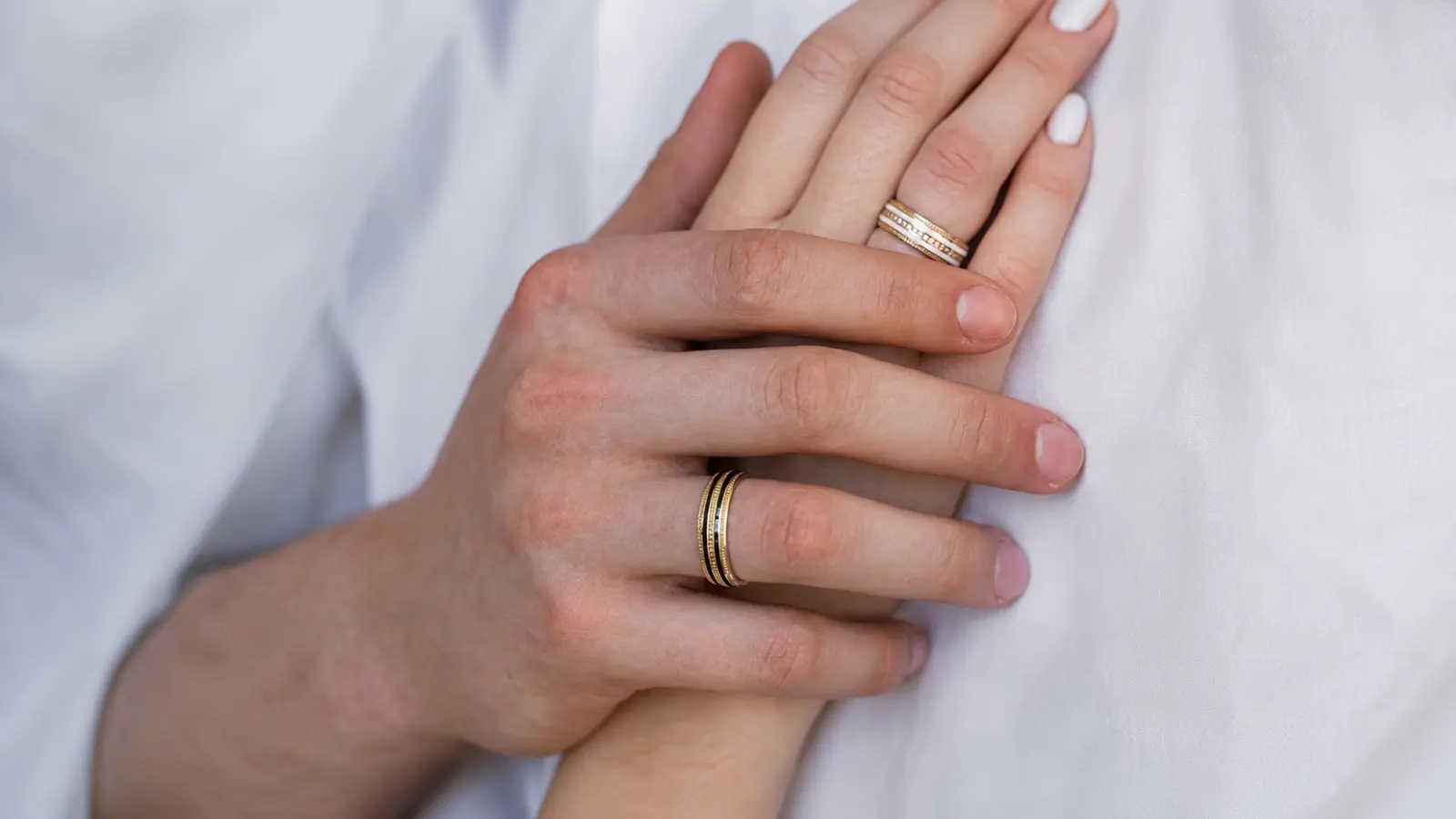
For couples who want their rings to feel connected without being identical, the challenge is finding the single shared element that does the most visual and symbolic work — and then letting everything else be different. The most effective coordination strategies tend to be simple ones, because simplicity makes the connection legible rather than cluttered.
Same Metal, Different Design
Metal color is the most powerful visual connector between two rings. When both rings are in the same metal — 14k yellow gold, white gold, platinum, rose gold — they read as a pair at a glance, even if every other design element differs. A narrow plain band and a wide hammered band in the same yellow gold are visibly related without being similar in any other way.
This approach works because metal color is what the eye reads first and registers most durably; design details take more attention to process. Same metal, different design is the most forgiving coordination strategy — it accommodates the widest range of individual preferences while producing a clearly connected result. It is also the easiest to achieve, since most jewelers stock coordinated widths and profiles within the same collection.
Same Finish, Different Design
Finish is subtler than metal color but equally effective for couples already working within the same metal. Two rings in 14k yellow gold — one with a high polish, one with a satin finish — look like a deliberate contrast rather than a coordinated pair. Two rings in 14k yellow gold, both with a matte finish, look like they belong together even if they differ in width, profile, and stonework. Common finish options worth knowing:
- High polish — traditional, high reflectivity, the most widely chosen
- Satin or brushed — soft, directional texture, less glare than polish
- Matte — flat, contemporary, suits modern and minimalist aesthetics
- Hammered — irregular texture with depth, handmade quality, works well in yellow gold and rose gold
Mixed finishes — one partner’s ring in polished, the other’s in matte — can read as an oversight rather than a choice unless the contrast is sufficiently dramatic and clearly intentional.
Same Width Ratio, Different Ring
A subtler approach: choosing widths that sit in a deliberate proportional relationship. A ring at 6mm and a ring at 3mm are in a 2:1 ratio that reads as intentional — the narrower ring is clearly half the width of the wider one, suggesting a design decision rather than a coincidence. This works well when the two rings share a metal but have genuinely different design languages, because the width relationship provides a structural link without requiring any other coordination.
Mixed Metals, Intentional Contrast
For couples who want different metals — one strongly prefers yellow gold, one strongly prefers platinum — mixing metals can look deliberate when the contrast is sufficiently clear. Two rings in metals that are close but not identical (white gold and platinum, for example) tend to look like an accident. Two rings in metals that are clearly different (yellow gold and platinum) read as a choice. The shared element in this case is not metal but the quality and intentionality of the decision itself — both rings are clearly deliberate, clearly chosen by someone who knew what they wanted.
For couples exploring unconventional ring designs — mixed materials, textured surfaces, non-traditional metals — the unique wedding rings covers the full range of what is available beyond plain metal bands and standard diamond designs.
Engraving Ideas for Couples Rings
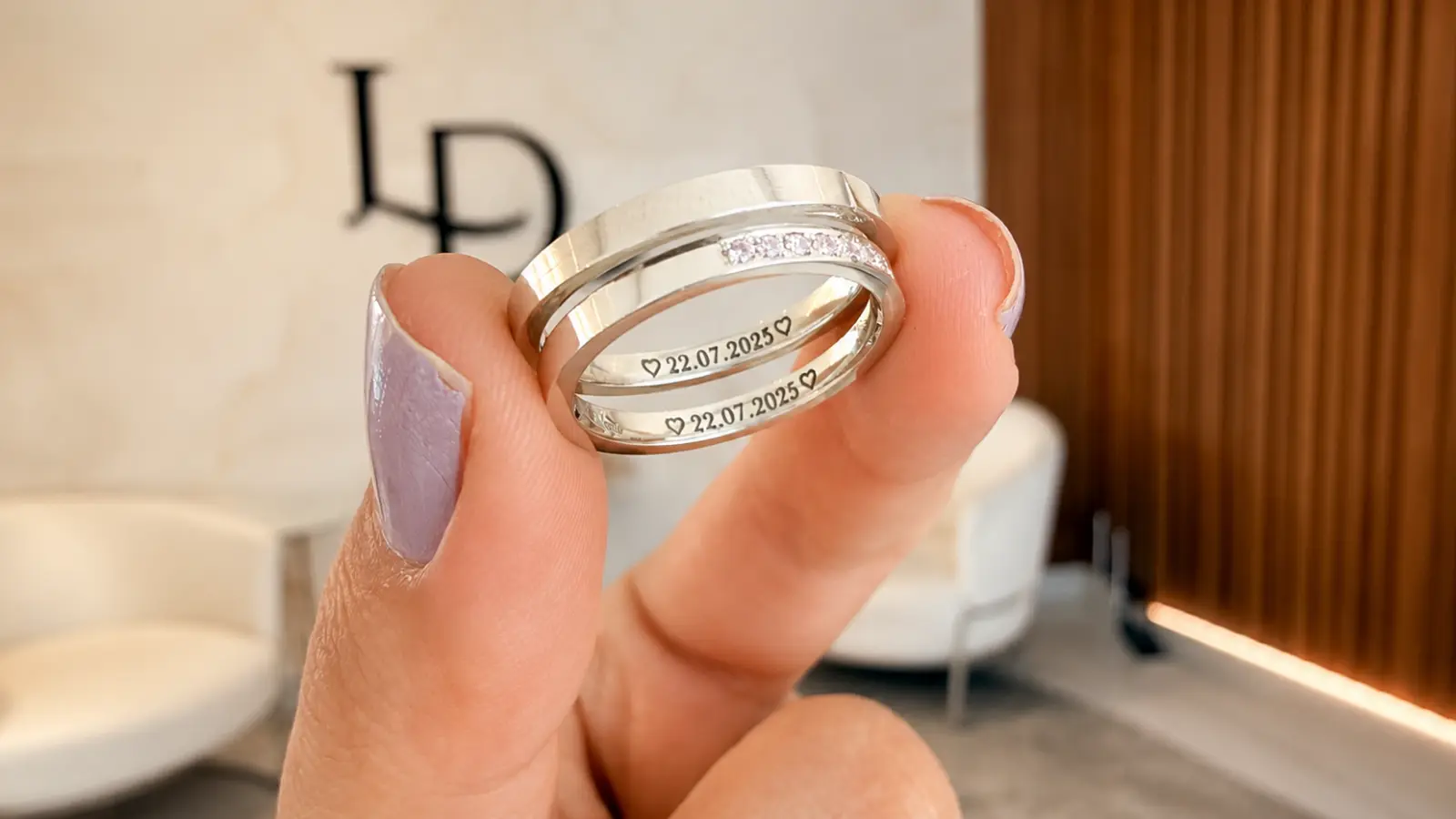
Engraving is the most private form of coordination available to any couple. Whatever a ring looks like on the outside — however different it is from its partner’s ring in metal, width, and finish — the inside of both bands can carry something that belongs only to the two people who wear them. No one else sees it. No one else needs to. It is the connection that exists not in the visual relationship between the rings but in the meaning they share.
For couples whose rings are entirely different on the outside, engraving is often the most satisfying way to link them without compromising either person’s individual choice. The rings look like what each person actually wanted to wear. Inside, they share something no one at the wedding or in any photograph will ever see. That privacy is part of the appeal.
The Six Engraving Approaches That Last
These are the choices that tend to resonate most over time — not just on the wedding day, but forty years later.
- The same date. The wedding date (or the proposal date) engraved inside both bands. Simple, permanent, and shared — both rings carry the same moment in time. It does not require finding the perfect phrase, and it does not go out of style.
- Complementary phrases. The first half of a sentence inside one ring, the second half inside the other. The two rings complete each other in a way that only makes sense if you know the other exists. Song lyrics, lines from literature, original vows, or private phrases all work here.
- Each other’s name or initials. Each person wears the other’s name inside their ring. Understated and lasting — the person who sees it most is the one wearing it. Full names, initials only, or a private nickname all work equally well.
- Geographic coordinates. The exact coordinates of a place that holds meaning — where they met, where the proposal happened, where they feel most like themselves together. Specific, compact, and opaque to anyone who does not know the story.
- A phrase in another language. Something that carries meaning in a language connected to heritage, or that gives the phrase a quality it would not have in English. The same phrase in two different languages — one inside each ring — is a quiet way of honoring a connection the rings themselves might not otherwise reflect.
- A single shared word. One word that means something specific only to the couple. Inside both rings: the same word. The constraint of choosing one word often produces more meaning than a longer phrase, because it forces the couple to identify what the most essential thing is.
A few practical notes: most jewelers offer engraving at modest additional cost. Block or sans-serif fonts engrave more cleanly at small scales than script fonts. The inside of most bands accommodates roughly fifteen to twenty-five characters, depending on the ring’s inner circumference. And engraving is generally permanent — choose something you will want to read in forty years, not just something that feels right today. Those two things are usually the same, but it is worth checking.
For the full range of engraving options — fonts, placement, and what to inscribe — the wedding ring engraving covers the topic in depth.
How to Choose Rings That Feel Connected but Personal
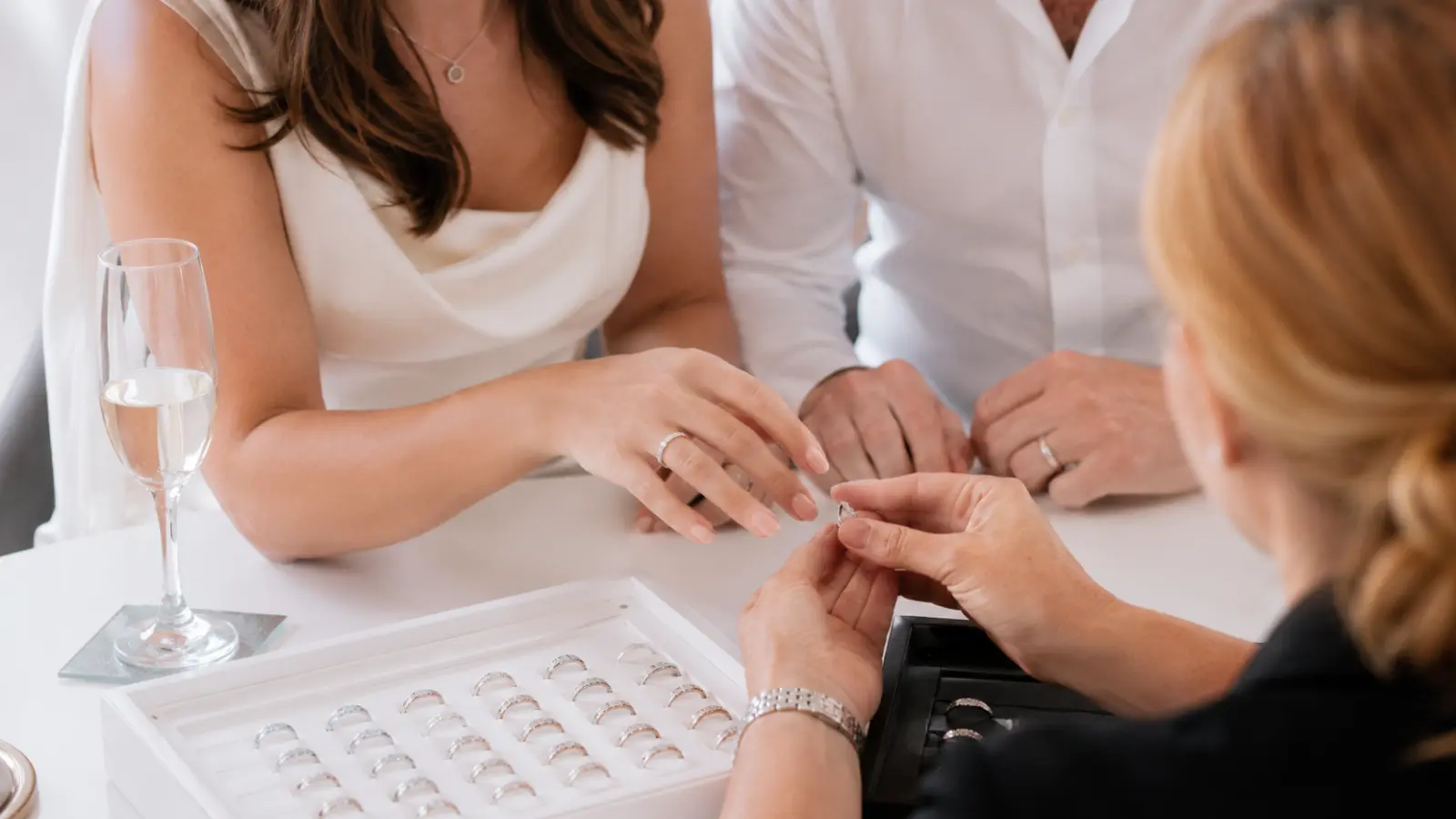
The tension most couples navigate when thinking about whether their rings should match is not really about aesthetics. It is about the relationship between unity and individuality — how much of a couple’s identity is shared and how much belongs to each person separately. The ring decision externalizes that question in a concrete way, which is part of why it produces more conversation than most jewelry purchases.
Couples who tend to feel most satisfied with their rings years after the wedding share a common approach: they started with what each person actually wanted to wear, and then looked for the connection between those individual choices — rather than starting with a concept of coordination and working backward to rings that fit within it. Starting from individual preference and finding the connection produces rings that feel genuinely right to the person wearing them. Starting from the idea of a set first can produce rings that are visually cohesive but feel like compromises to the individuals who wear them.
Four Questions That Create Useful Clarity
These questions tend to move the conversation from abstract to practical quickly, and they work for any couple regardless of configuration.
- What metal does each person feel most drawn to, independently? If both partners answer yellow gold without knowing the other’s answer, the coordination question is largely solved. If the answers differ, the conversation becomes about whether to compromise on metal — usually not worth it, since metal choice is durable and personal — or to make the contrast deliberate and own it.
- What width feels right on each person’s hand? Width is the variable that most directly affects how a ring looks on a specific hand. A ring that photographs well at a certain width on one hand may look entirely different on another hand with different proportions. Trying rings at multiple widths on the actual hand is the only reliable way to determine this.
- How important is the visual connection when the rings are seen together? Most wedding photographs that feature both rings together are taken close to the ceremony. After that, the two rings are almost never in the same photograph again. Optimizing for how the rings look together at the expense of how each ring feels on its own, in daily life, for decades, is a trade-off worth being explicit about.
- Does each person want to wear the same ring every day, or different rings in different contexts? If one partner wears a delicate diamond band daily through everything and the other switches to a silicone ring for physical work, the question of whether those rings match is largely academic — they will rarely be on the same hands at the same time.
A Note for Same-Sex and Non-Binary Couples
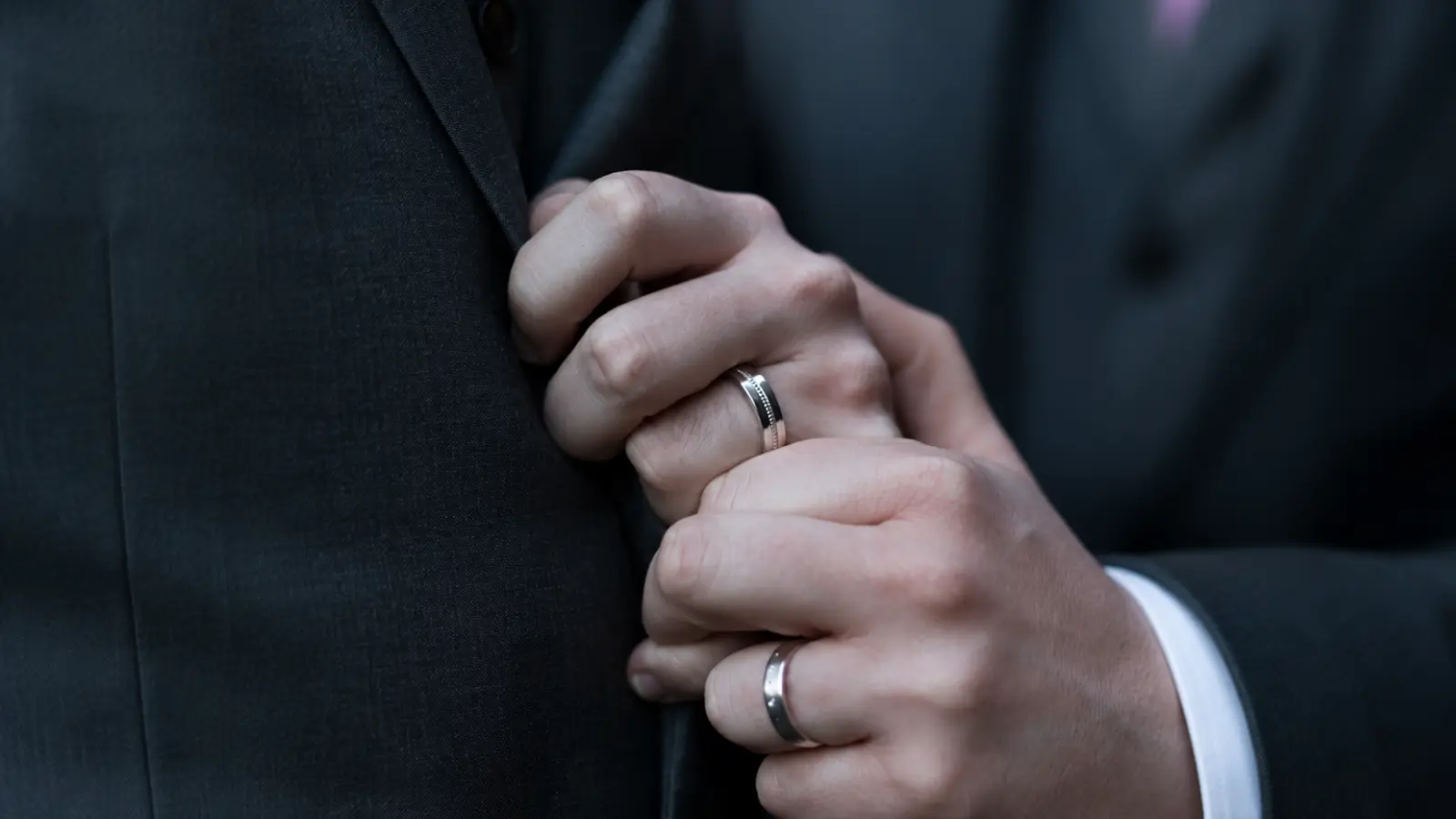
For same-sex couples, non-binary couples, and couples who do not fit the his-and-hers framing, the same principles apply. The rings should fit the people wearing them. The connection between the rings should reflect the connection the couple actually wants to express — which might be maximum coordination, complete independence, or the same private engraving inside two rings that look nothing alike on the outside. All of these are honest answers to what the rings are for, and any of them is better than defaulting to an expectation that was never really a tradition to begin with.
The men’s wedding bands and the wedding rings for women cover the full range of options available when each partner shops with their own priorities first — a useful starting point for couples who want to find the connection after they have found what each person actually wants.
His and Hers Wedding Ring Inspiration
His and hers wedding rings can match perfectly or simply share meaningful details that connect both designs. Explore our inspiration board for matching wedding bands, coordinated couple rings, gold wedding bands, engraving ideas, mixed metals, and unique wedding ring combinations.
Choosing Rings That Represent Both of You
The best his and hers wedding rings are not always the ones that look exactly alike. A meaningful pair of rings should represent the marriage they share while still feeling natural for the two different people who will wear them every day.
Whether you choose matching bands, coordinated details, or two completely different designs, the most important connection is not how similar the rings appear — it is the commitment and story they represent together.
Frequently asked questions (FAQ)
What are his and hers wedding rings?
His and hers wedding rings are a pair of wedding rings chosen for two partners with some type of connection between them. They may be identical matching bands, coordinated rings with shared details, or two different designs connected by metal, engraving, or personal meaning. The goal is choosing rings that represent the couple while still fitting each person’s individual style.
Do wedding rings have to match?
No. Wedding rings do not have to match. Some couples love identical rings because they symbolize unity, while others prefer different designs that reflect each person’s personality and lifestyle. The meaning of wedding rings comes from the commitment they represent, not from whether they look exactly the same.
What is the difference between matching and coordinating wedding rings?
Matching wedding rings usually have the same design, metal, finish, and overall appearance. Coordinating wedding rings share one or more elements — such as the same metal, color, engraving, or style — while allowing each partner to choose a ring that feels right for them. Coordinating is often a good balance between connection and individuality.
What are the best his and hers wedding rings?
The best his and hers wedding rings are the ones both partners genuinely enjoy wearing. Classic matching gold bands, coordinated rings in the same metal, different-width bands, and personalized engraved rings are all popular choices. The best option depends on lifestyle, comfort, personal style, and how much visual connection the couple wants.
Should couples choose the same wedding ring metal?
Couples do not need to choose the same wedding ring metal. Matching metals create a more traditional coordinated look, but mixing metals can also work when it feels intentional. One partner may prefer yellow gold while another chooses platinum, white gold, rose gold, or another material based on personal preference.
Should his and hers wedding bands be the same width?
No. Wedding bands do not need to be the same width. Different widths often look better because each person’s hands, comfort preferences, and style are different. Many couples choose the same metal or finish but adjust the width so each ring looks balanced on the person wearing it.