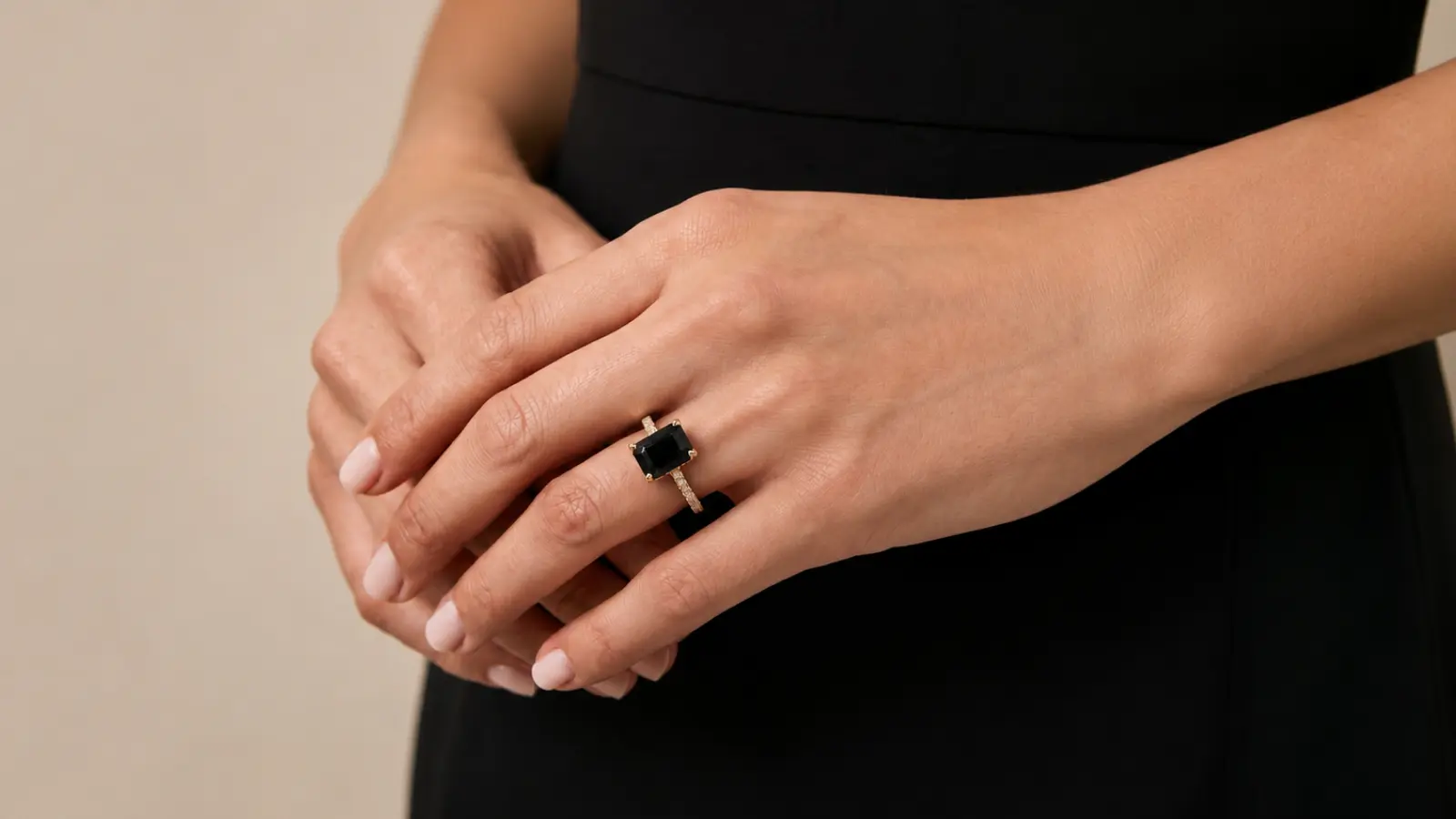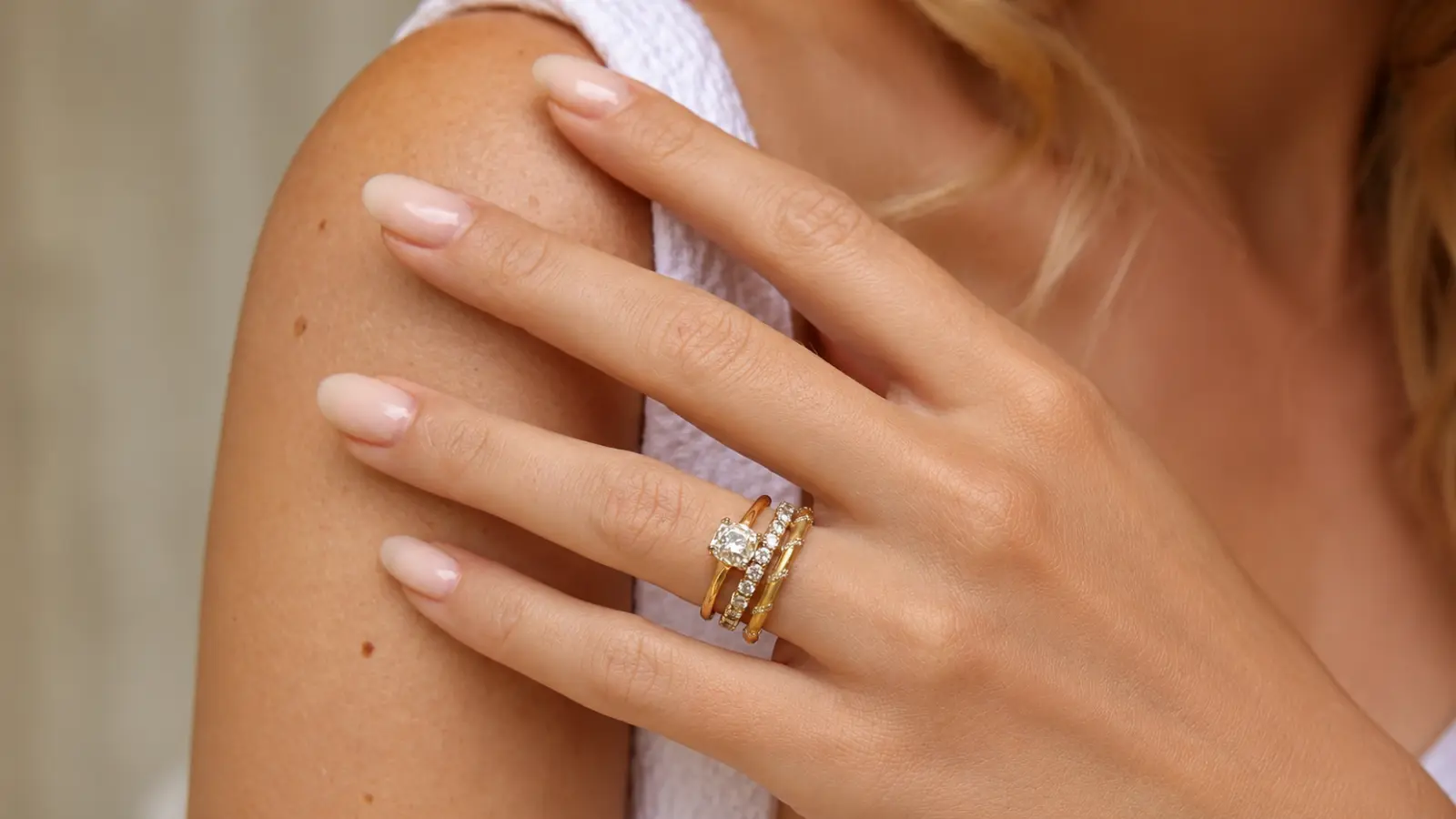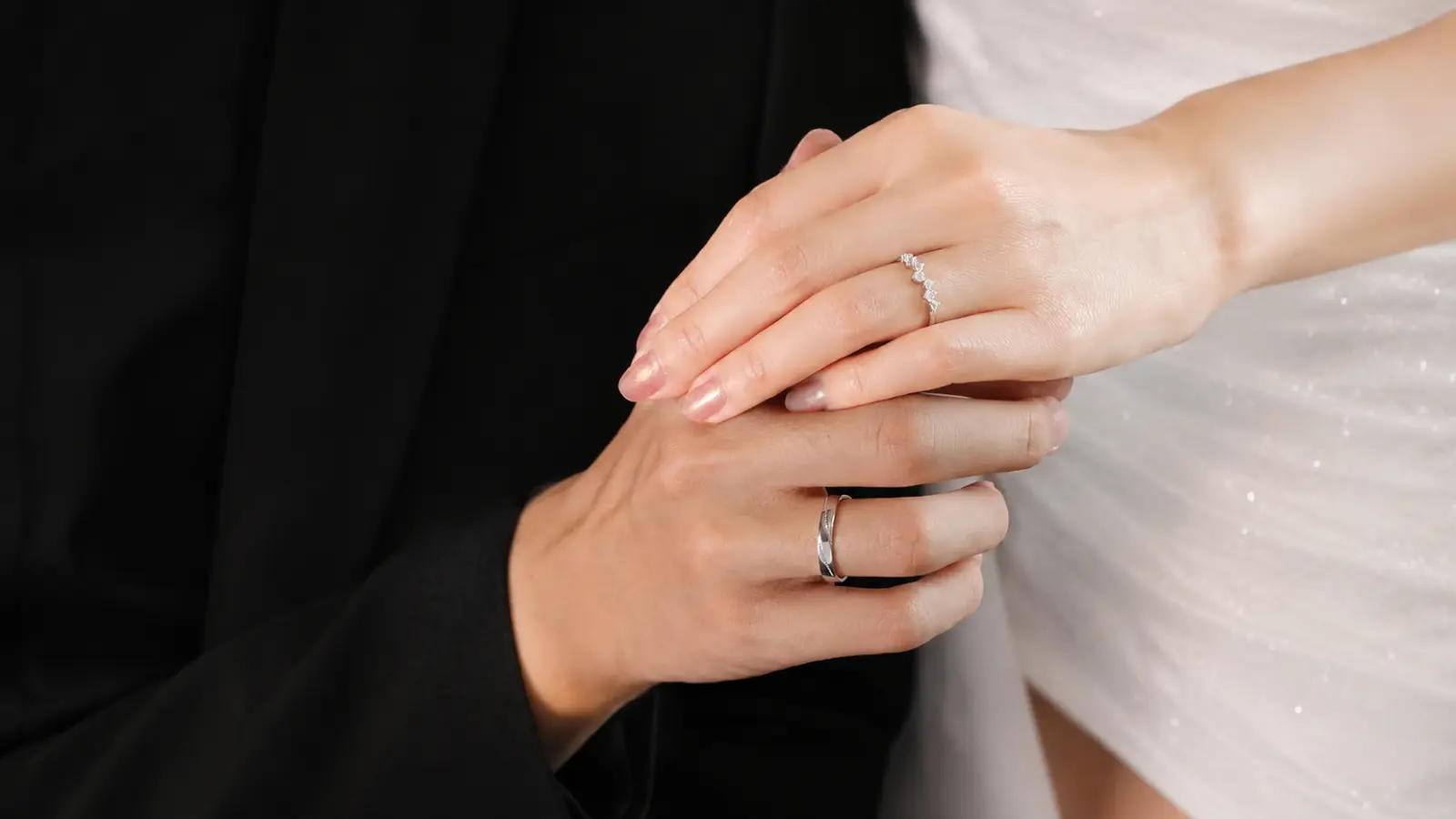
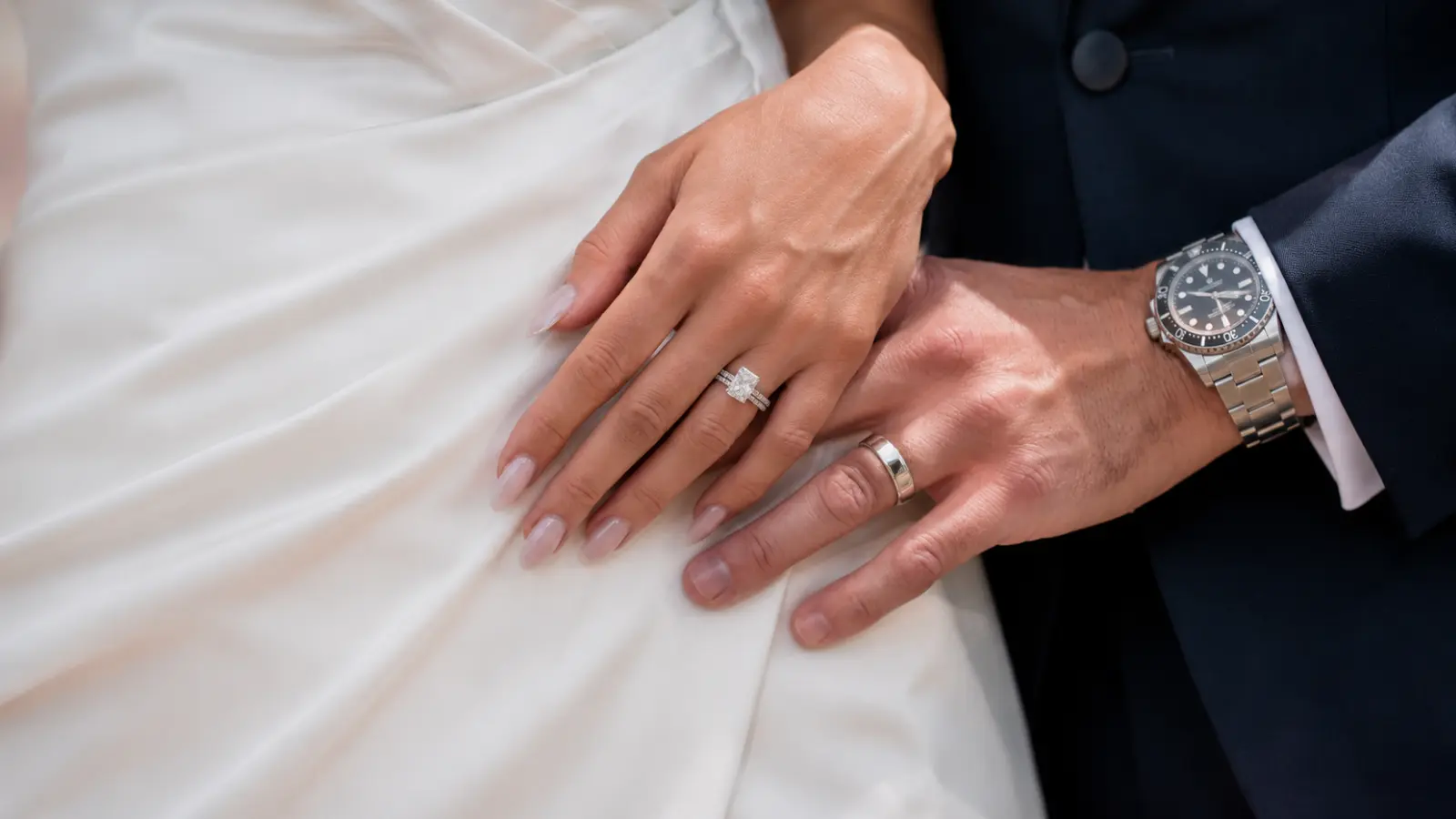
Wedding ring meaning refers to the symbolism, history, and personal significance behind the wedding ring, although many people also use the term wedding band interchangeably. Traditionally, a wedding ring represents commitment, unity, and the lifelong connection between two partners, with its circular shape symbolizing continuity and lasting love.
Although wedding rings been worn for thousands of years, their meaning has continued to evolve across different cultures, religions, and generations. A wedding ring can represent tradition, family, personal memories, or simply the commitment two people choose to honor together.
This guide explores the meaning of wedding rings, including what they symbolize, why wedding rings are circular, where the tradition began, the meaning behind the ring finger tradition, and how couples interpret this symbol today.
What Does a Wedding Ring Symbolize?
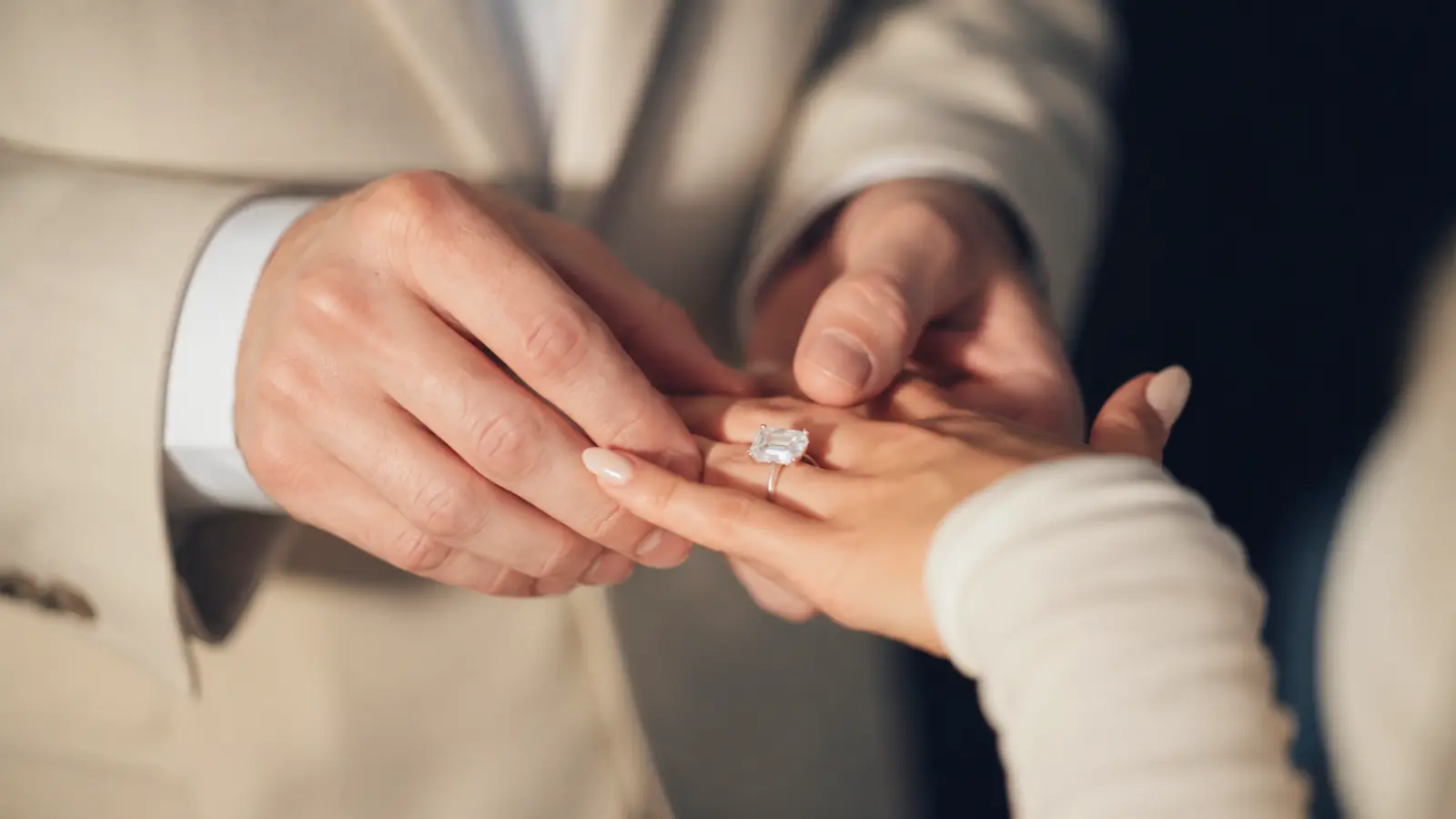
At its most fundamental level, a wedding ring symbolizes three things: commitment, continuity, and public declaration. The commitment is the marriage itself — the decision to build a life with another person, formalized in a ceremony and represented by an object. The continuity is embedded in the ring’s shape — a circle, with no beginning and no end, communicating that the commitment does not have a termination point. The public declaration is what wearing the ring on the hand accomplishes — it makes the private commitment visible to everyone who sees it, at all times.
These three layers of meaning have been present in wedding ring symbolism across virtually every culture and historical period that has used rings as wedding symbols. What changes across time and culture is the specific form the ring takes, the hand and finger it occupies, the ritual in which it is exchanged, and the personal significance the couple brings to it. What remains constant is the underlying symbolic structure: a circle placed on the hand at a specific moment, worn continuously afterward.
The commitment the ring represents
The wedding ring is not the commitment itself — the commitment is made in words, witnessed by others, and exists in the legal and personal terms of the marriage. What the ring does is make that commitment tangible. It gives the abstract — a promise, an intention, a legal status — a physical form that can be seen, touched, lost, resized, engraved, and worn down over years of daily life. Many people find that the physical presence of the ring reinforces the commitment in ways that are hard to articulate: the weight of it on the finger, the habit of noticing it, the moment of awareness that comes when it catches the light in an ordinary moment.
The public nature of the symbol
Part of the wedding ring’s specific function — distinct from a private keepsake or a piece of sentimental jewelry — is that it is worn externally, on the hand, where it is visible to others. The ring signals marital status to the world, while how you wear wedding rings reflects both tradition and personal preference. A ring on the fourth finger of the left hand communicates, in most Western contexts, something specific about the person wearing it. This public dimension is what distinguishes the wedding ring from a private token: it is a declaration worn in the world, not just a possession kept at home.
Why Are Wedding Rings Circular?
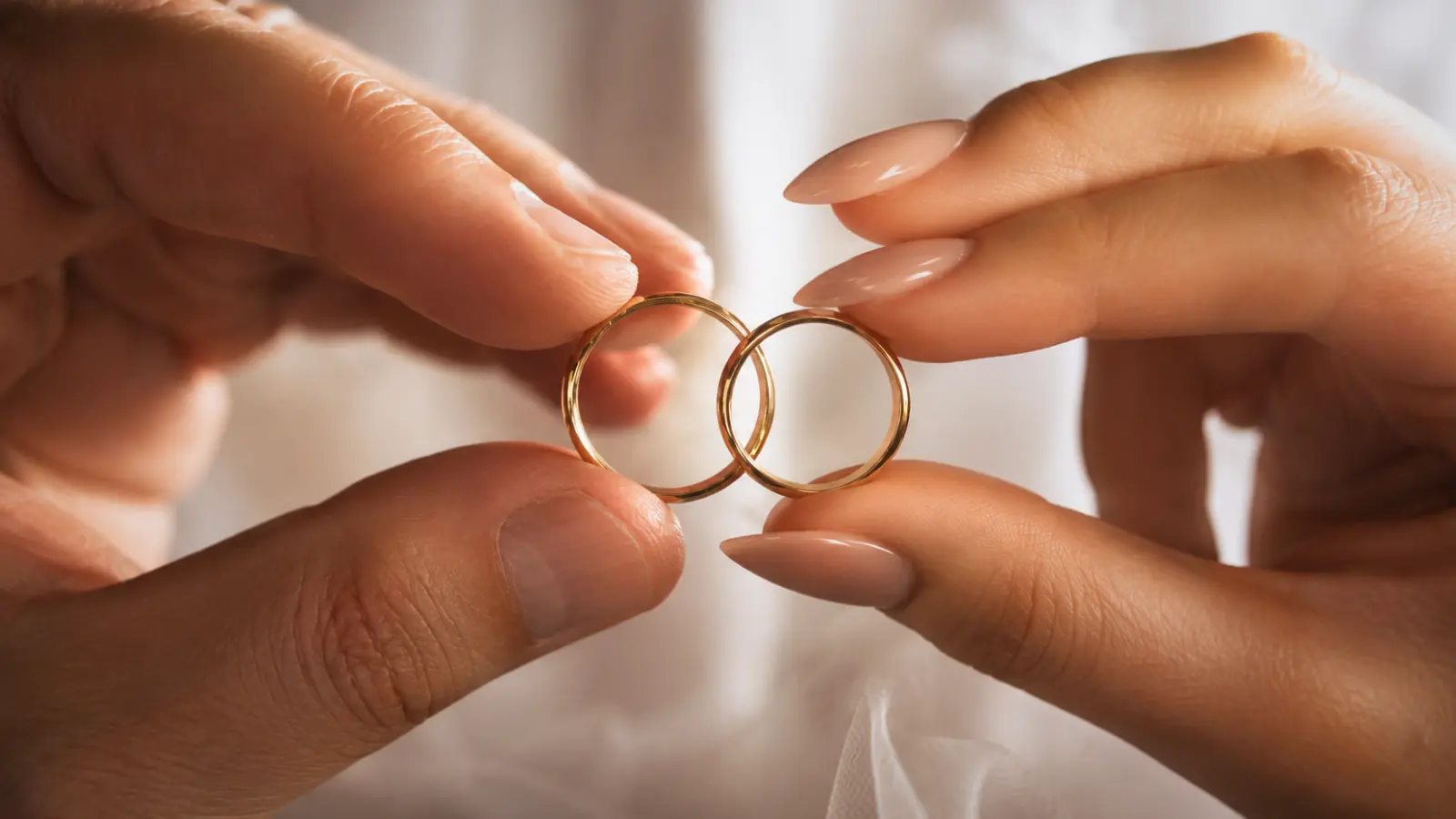
The circle is not an arbitrary shape for a commitment symbol — it is probably the most logical shape imaginable for one. A circle has no beginning and no end. It is an unbroken line that returns to itself, which makes it the natural visual representation of something that is meant to continue without a stopping point. When ancient cultures first sought an object to symbolize the bond of marriage, the circle was the obvious answer: it said, in physical form, what the vow was trying to say in words.
The earliest wedding rings were not made of precious metal. Egyptian rings from roughly 3,000 years ago were woven from reeds, hemp, and rushes — materials that would decay quickly, making their symbolic meaning more significant than their material value. The choice of the circular form was already present in these earliest examples, suggesting the symbolism of the shape preceded any concern with durability or display. Later adaptations — iron rings in Rome, gold rings in later periods — changed the material while keeping the form exactly as it was.
The hole at the center
Some historical accounts of ring symbolism include the negative space — the hole at the center of the circle — as a meaningful element. The opening was sometimes interpreted as a gateway: to the future, to a shared life, to the unknown. Not just an unbroken line, but an enclosed space through which something passes. Whether this interpretation was a widely held belief or a later poetic reading applied to an existing tradition is difficult to establish with certainty.
What is clear is that the circular form has been constant across every variation of the wedding ring tradition, in every culture that has adopted some version of the practice. The shape has never needed explanation — it communicates its meaning immediately, without translation.
A Brief History of Wedding Rings
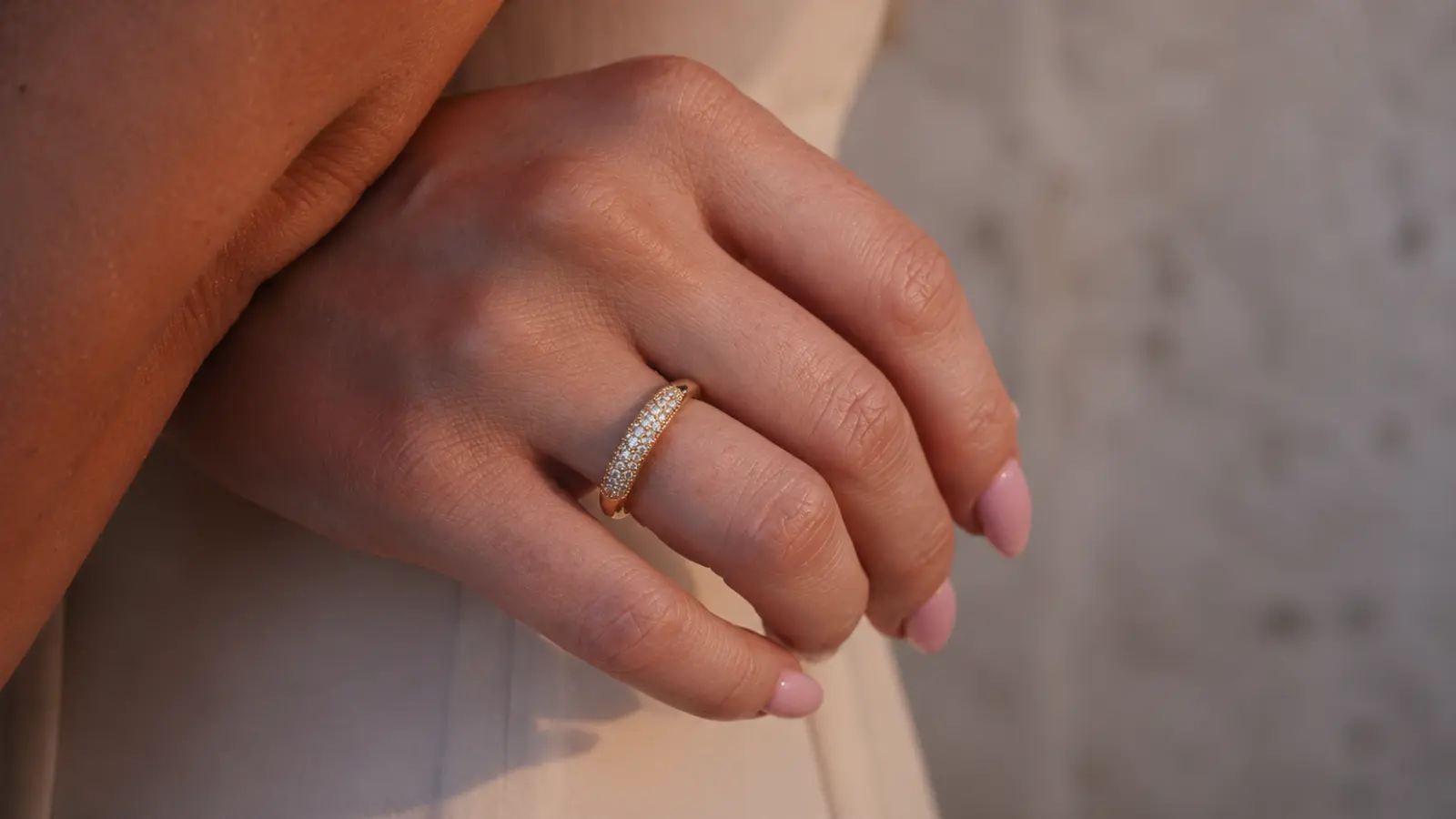
The wedding ring is among the oldest surviving marriage traditions in Western culture. Its origins trace back roughly 3,000 years to ancient Egypt, where circles of woven plant material were exchanged between partners as symbols of union. The Egyptians placed these rings on the fourth finger of the left hand based on a belief that a specific vein — later romanticized as the “vena amoris,” the vein of love — ran from this finger directly to the heart. The anatomical claim was inaccurate, but the tradition it created proved remarkably durable.
Rome and the formalization of the metal ring
When Rome absorbed Egypt’s cultural practices, the wedding ring came with them. Roman rings were initially made of iron — a material associated with strength and permanence — before transitioning to gold as prosperity increased. The Roman practice of the “anulus pronubus” established the ring as a formal symbol of a legal agreement between families, given by the groom and worn by the bride. At this stage, the ring was still not symmetrical — only one partner wore one.
Christianity and the ring in ceremony
As Christianity became the dominant religious framework for marriage in Europe, the wedding ring was absorbed into the ceremony with relatively little friction — the symbol translated easily into Christian theology, where the circle’s continuity could represent eternal love, divine blessing, or the unbroken covenant of marriage. By the early medieval period, the ring exchange had become a formalized part of Christian wedding liturgy in most of Europe, appearing in ceremony texts and theological writing as an established practice rather than a borrowed custom.
The Reformation and the right-hand split
The Protestant Reformation in the sixteenth century brought a significant but often overlooked split in the wedding ring tradition. Protestant reformers in several Northern and Eastern European countries moved the wedding ring from the left hand to the right — partly to distinguish Protestant practice from Catholic ceremony, and partly because the right hand carried associations with oaths and covenants in scripture. Germany, Poland, Norway, Russia, and several other countries adopted the right-hand convention during this period, and those countries still follow it today. England and its cultural descendants — including the American colonies — returned to or maintained the left hand. This is the origin of the geographic split in ring-hand convention that still exists between Western and Eastern European wedding traditions.
The nineteenth century: sentiment over contract
The Victorian era shifted the cultural understanding of the wedding ring significantly. Where earlier traditions had emphasized the ring as a legal token — a symbol of contract and property — Victorian sentiment reframed it as a symbol of romantic love and personal devotion. Rings from this period were often engraved with sentimental phrases, set with meaningful stones, or designed with motifs like hands, hearts, and flowers that emphasized the emotional rather than the contractual dimension of marriage. The contemporary understanding of the wedding ring as a love symbol rather than a legal marker is largely a Victorian inheritance.
The Left Hand and the Ring Finger
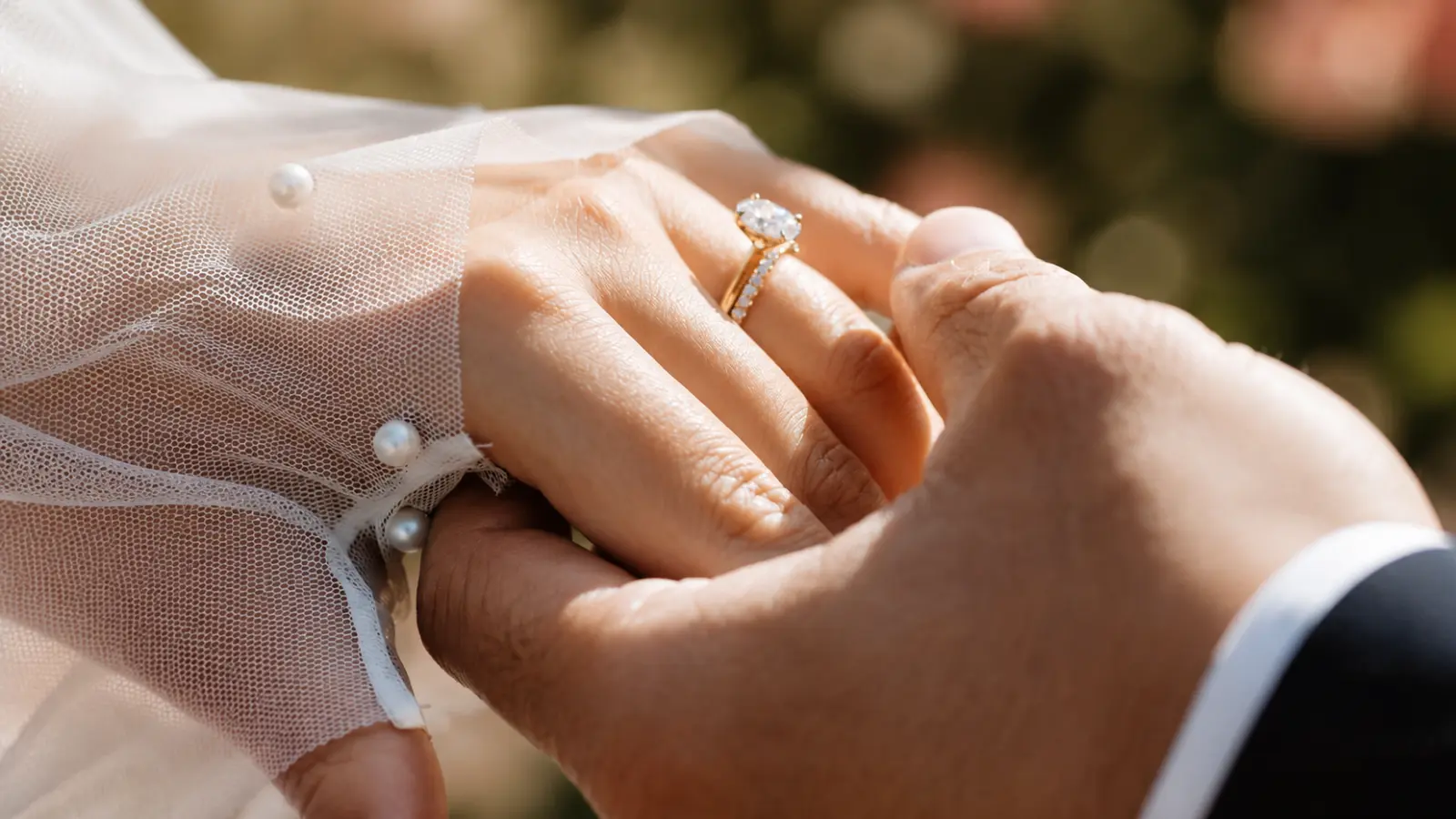
The fourth finger of the left hand is called the ring finger not because of any anatomical distinction, but because the wedding ring tradition designated it. The finger became the ring finger through the practice — the practice did not emerge because of any property of the finger itself.
The Roman rationale was the “vena amoris” — the vein of love — believed to run from the fourth finger of the left hand directly to the heart. The concept appears in Aulus Gellius, a Roman writer of the second century AD, who offered it as the explanation for why the betrothal ring was placed on this specific finger. Modern anatomy does not support the existence of this vein as distinct from the circulatory system shared by every finger. But the idea was compelling enough that it was repeated without serious challenge for roughly fifteen centuries, during which time the left ring finger became so thoroughly associated with marriage that the explanation became unnecessary. The tradition was self-sustaining.
For more on which hand wedding rings go on across different cultures and traditions, the full guide to wedding ring hand conventions covers the global picture in detail.
When Men Started Wearing Wedding Rings
The mutual exchange — both partners receiving and wearing a ring — is so deeply embedded in the contemporary understanding of a wedding ceremony that it can be difficult to believe it was not always the case. But for most of Western wedding history, the ring was worn by the woman and given by the man. The groom’s ring was not part of the ceremony, making today’s men’s wedding bands a relatively recent tradition.
The double-ring ceremony as a widespread American practice dates primarily to the years after World War II, when American soldiers wore wedding rings while deployed overseas as a way of maintaining connection to their families. The practice became associated with devotion under difficult circumstances, and it returned home with the soldiers as a new convention. By the mid-twentieth century, the double-ring ceremony had become the American standard — and most officiants, jewelers, and couples in the U.S. now assume the mutual exchange without question.
This shift is a useful reminder that some traditions that feel most ancient and fixed are, in fact, quite recent. The double-ring ceremony as Americans know it is not a medieval practice or a Victorian one. It is a mid-twentieth century development that gained cultural momentum quickly enough to become the default within a single generation.
Wedding Ring Meaning Today
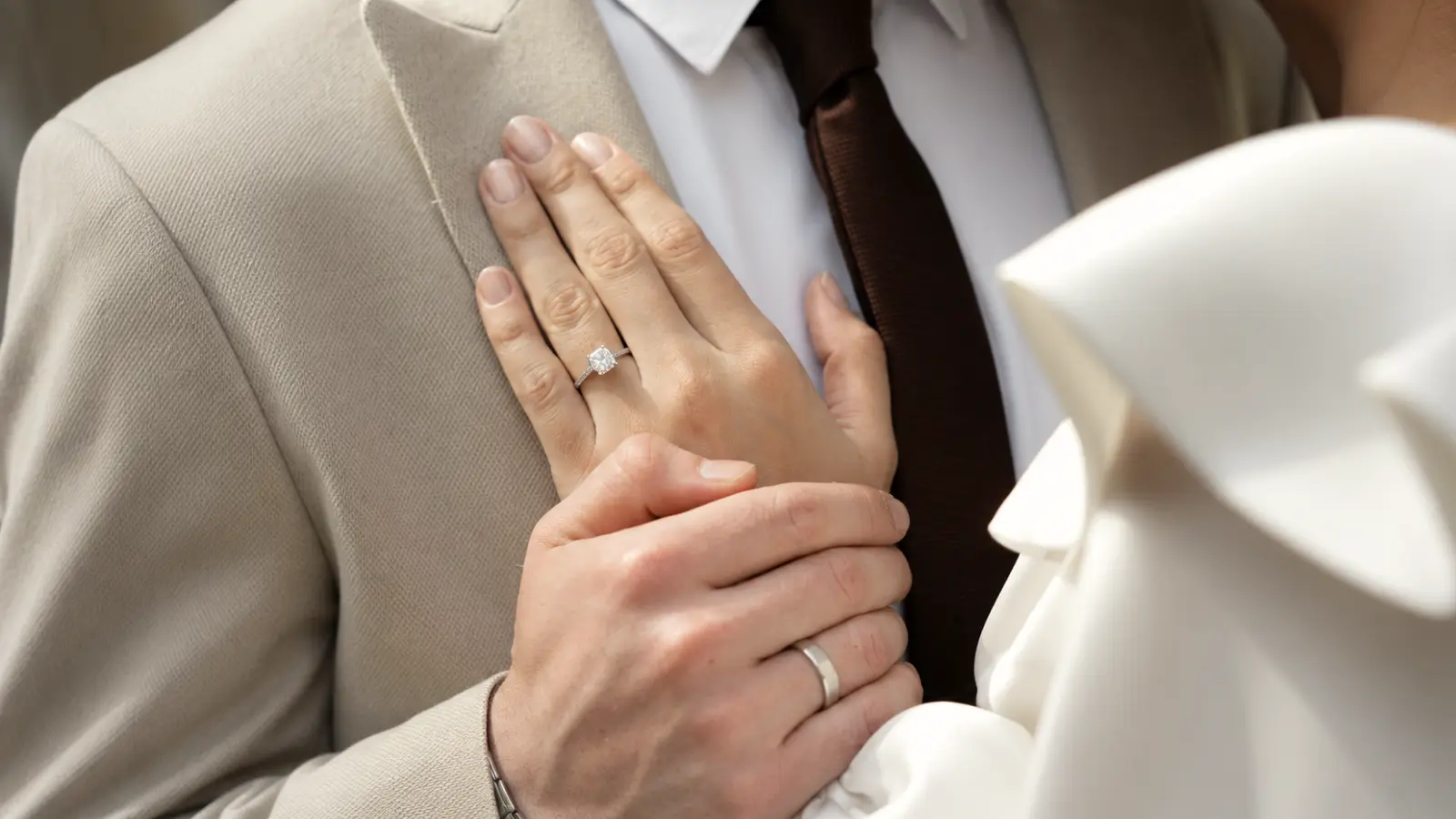
The contemporary wedding ring carries the accumulated weight of all of the history above — the Egyptian circle, the Roman vein of love, the Christian ceremony, the Victorian sentiment, the wartime devotion — while also meaning something specific to each individual couple who exchanges one. This is one of the more interesting qualities of the wedding ring as a symbol: it is simultaneously a shared cultural object with a long and specific history, and a profoundly personal one that belongs to the couple who chose it and the moment in which it was placed.
The ring as a daily reminder
Many people who have worn their wedding ring for years describe a specific quality to the experience of noticing it — catching the light on the hand, feeling its weight during an ordinary task, seeing it on the finger of a partner across a room. These are small moments, unremarkable in themselves, but collectively they make up a significant part of what continuous wearing actually does. The ring keeps the commitment present in daily life in a way that no document or photograph quite replicates. It is there in moments of happiness and in moments of difficulty, in private and in public, unchanged by what surrounds it.
The ring as identity
After enough years of continuous wear, many people report that the wedding ring stops feeling like jewelry and starts feeling like part of the hand. This shift — from object to extension of self — is a version of what the original symbolism intended: the ring merging with the person, the commitment becoming inseparable from the identity of the one who carries it. Some people find this meaningful. Others find it practical. A few find it slightly alarming. All of these responses are reasonable reactions to an object that was designed to be permanent.
Does the Ring’s Design Affect Its Meaning?
No — not the symbolic meaning. A plain gold band and a diamond eternity ring represent the same commitment when exchanged in the same ceremony. The design choices made in selecting a wedding ring reflect personal taste, lifestyle considerations, and budget priorities. They do not reflect the depth or sincerity of the commitment being made.
This is worth saying clearly because a significant commercial infrastructure has grown up around the idea that a more expensive or more elaborate ring communicates a more serious commitment. It does not. For most of Western wedding history, the standard wedding ring was a plain metal band — and the marriages it represented were no less real or enduring than those represented by elaborate modern designs.
What design choices do communicate
While design does not affect the ring’s symbolic meaning as a marriage symbol, it does say something about the person wearing it and the couple who chose it together. A simple platinum band communicates a different aesthetic sensibility than a vintage filigree ring set with colored stones. An engraved inside inscription communicates a different kind of personal investment than a ring left blank. These choices are meaningful in the way that all personal aesthetic choices are meaningful — they say something about who you are and what matters to you. They just do not say anything about the validity or depth of the marriage itself.
For couples interested in making the ring more personally meaningful through customization, wedding ring engraving is one of the oldest and most intimate ways to add a private layer of meaning to an object that is otherwise visible to everyone.
Do Couples Have to Wear Wedding Rings?
No. There is no legal requirement to wear a wedding ring, and no universal cultural obligation that applies to all couples in all contexts. The wedding ring is a tradition — one of the oldest and most widely observed in Western marriage culture — but tradition and obligation are different things. Many couples choose not to exchange rings, or exchange them at the ceremony and rarely wear them afterward. The marriage does not depend on the ring.
Reasons some couples skip the ring
The reasons vary widely and are all legitimate. Some people work in professions where wearing a ring is genuinely dangerous — surgical environments, electrical work, construction, certain athletic professions — and choose not to wear one rather than managing the daily calculation of when to remove it. Some people find rings physically uncomfortable. Some couples simply do not feel that the tradition resonates with how they understand their relationship, and choose a different way to mark the commitment — a tattoo, a different piece of jewelry, a shared object with personal meaning.
Alternatives that carry similar meaning
Some couples choose alternatives that serve the same symbolic function as a ring — a permanent reminder of the commitment, worn continuously or kept close. Matching tattoos on the ring finger have become more common, particularly among couples who cannot wear rings professionally or who prefer the permanence of a tattooed symbol to the removability of a ring. Other couples choose a different piece of jewelry — a bracelet, a necklace pendant — that carries the same personal significance. None of these are lesser substitutes. They are adaptations of the same underlying impulse: making a commitment tangible and visible in a form that fits the people making it.
The wedding ring is a symbol. Symbols are powerful, but they are not the things they represent. A marriage exists in the commitment and the shared life — the ring is a representation of that, not a component of it.
Wedding Ring Symbolism Inspiration
Wedding rings carry different meanings through their history, design, traditions, and personal details. Explore our inspiration board for meaningful wedding rings, symbolic details, timeless bands, engraved rings, family traditions, and ideas that celebrate the story behind each ring.
Understanding the Meaning Behind Your Wedding Ring
The meaning of a wedding ring comes from both the tradition behind it and the life created around it. For thousands of years, rings have represented commitment, continuity, and the decision to make a private promise visible through a simple object worn every day.
A wedding ring is not what creates a marriage it is the symbol carried forward from that moment. Whether your ring follows centuries of tradition or represents something entirely personal, its deepest meaning comes from the story, memories, and commitment connected to it.
Frequently asked questions (FAQ)
What does a wedding ring symbolize?
A wedding ring symbolizes marriage, commitment, love, and the promise two people make to each other during the wedding ceremony. Its circular shape represents continuity because a circle has no beginning or end. Over time, the ring also becomes a personal reminder of the relationship, memories, and life built together.
Why do couples exchange wedding rings?
Couples exchange wedding rings as a visible symbol of the vows and promises made during the wedding ceremony. The exchange creates a physical reminder of an emotional commitment, turning the words spoken during the ceremony into something that can be worn every day.
Why are wedding rings shaped like a circle?
Wedding rings are circular because a circle traditionally represents eternity, unity, and an unbroken connection. The shape has no beginning or ending point, which made it a powerful symbol for a lasting marriage commitment across many cultures.
Where did the tradition of wedding rings come from?
The wedding ring tradition dates back thousands of years, with early examples connected to ancient Egypt. The practice later developed through Roman and European traditions, where rings became symbols of commitment, marriage agreements, and eventually romantic love.
What does a wedding ring mean spiritually?
The spiritual meaning of a wedding ring depends on personal beliefs and traditions. For many people, it represents unity, loyalty, partnership, and a lifelong promise. In religious ceremonies, the ring may also symbolize a sacred commitment made before God or a faith community.
Why do people wear wedding rings on the ring finger?
The tradition comes from the ancient belief in the “vena amoris,” or vein of love, which was thought to connect the ring finger directly to the heart. Although modern anatomy does not support this idea, the symbolism became a lasting wedding tradition.