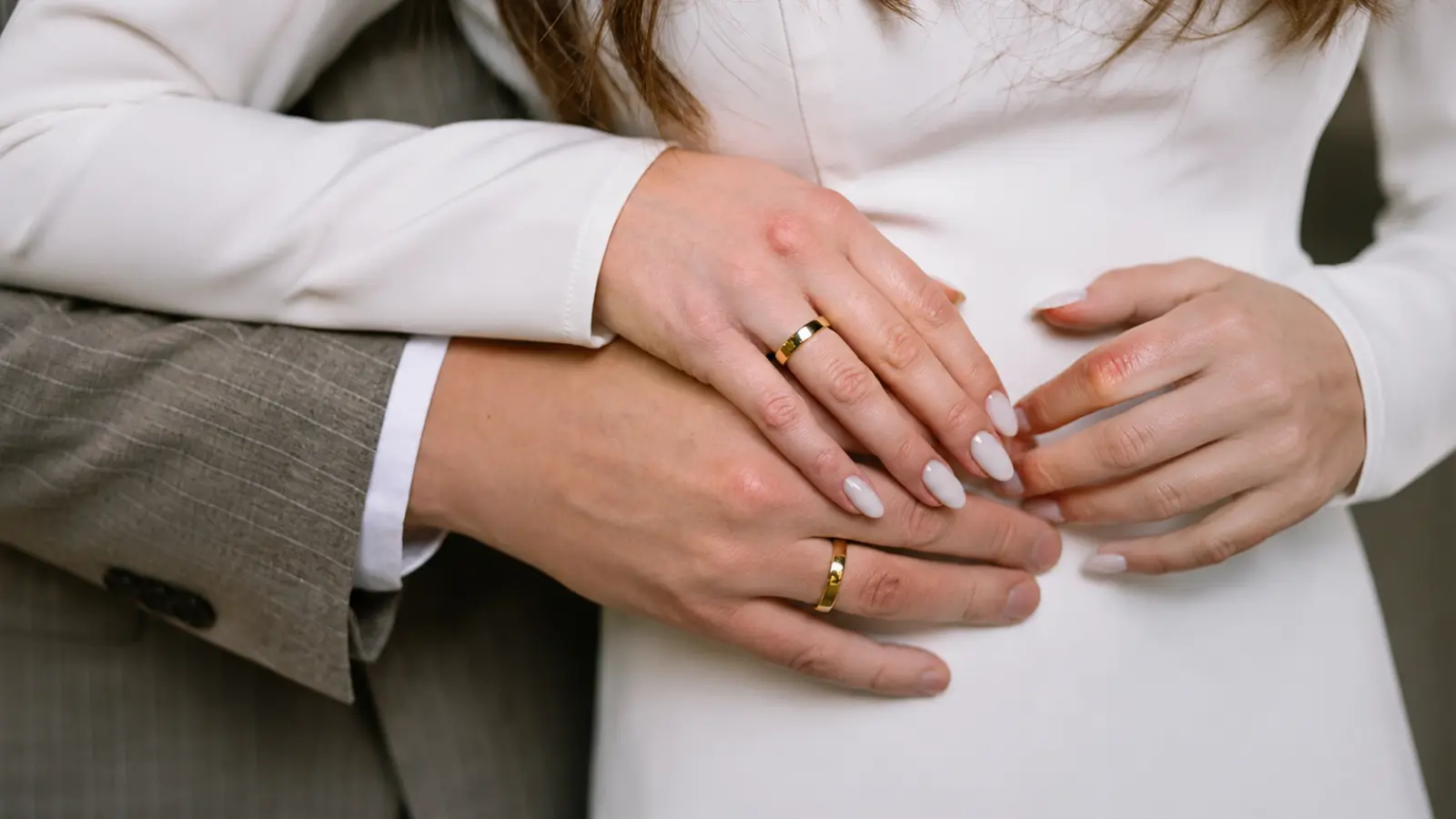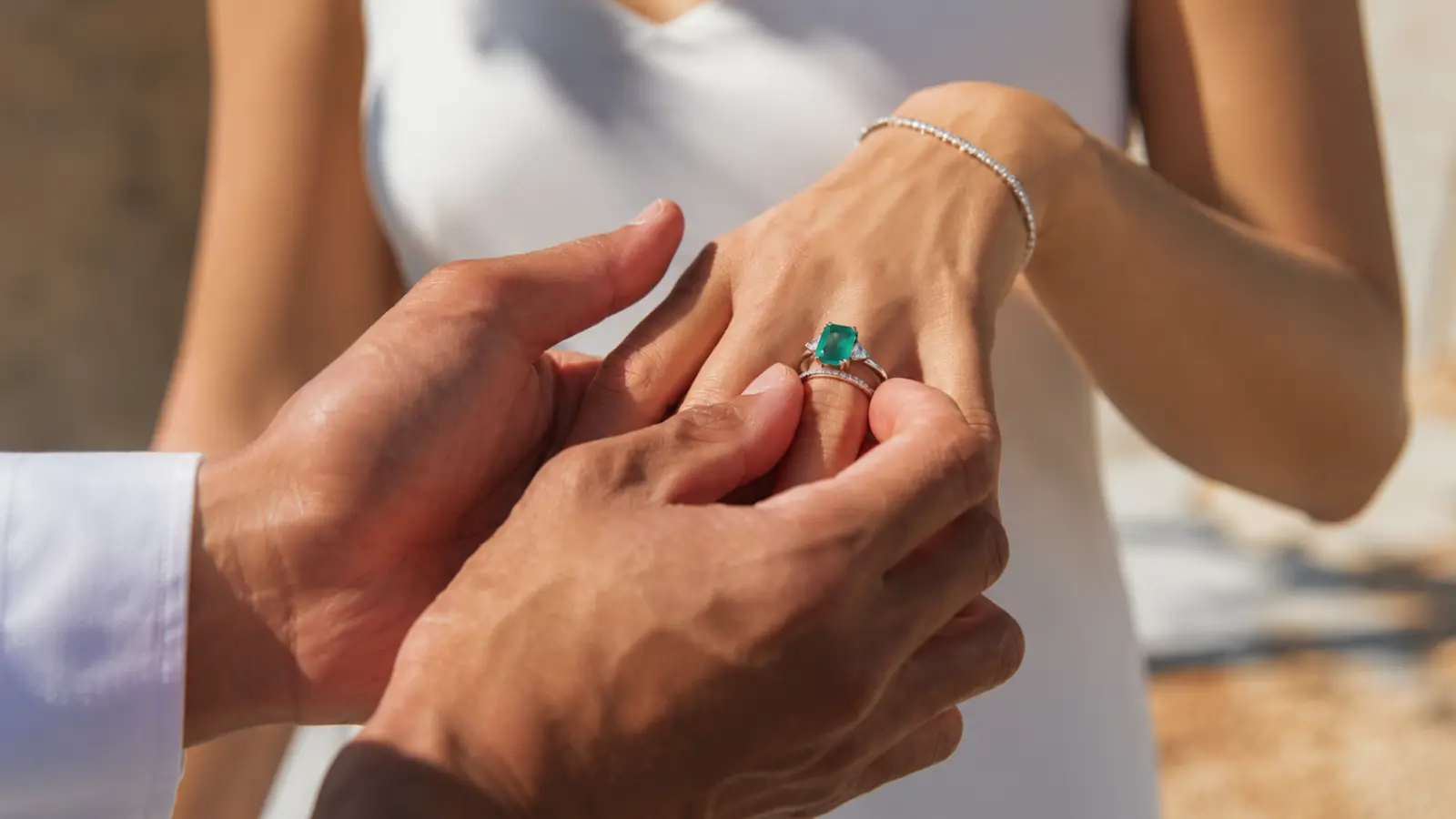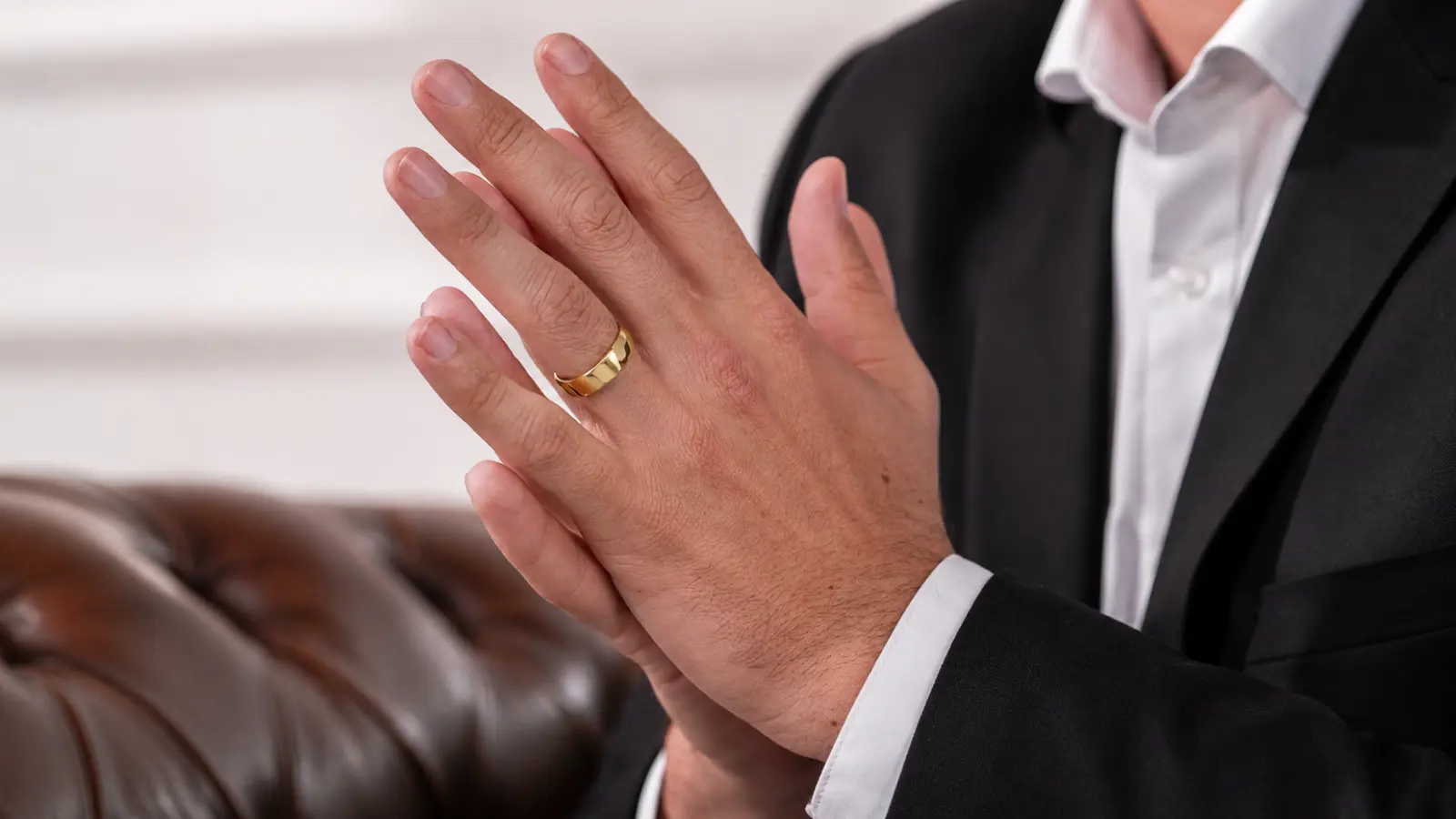
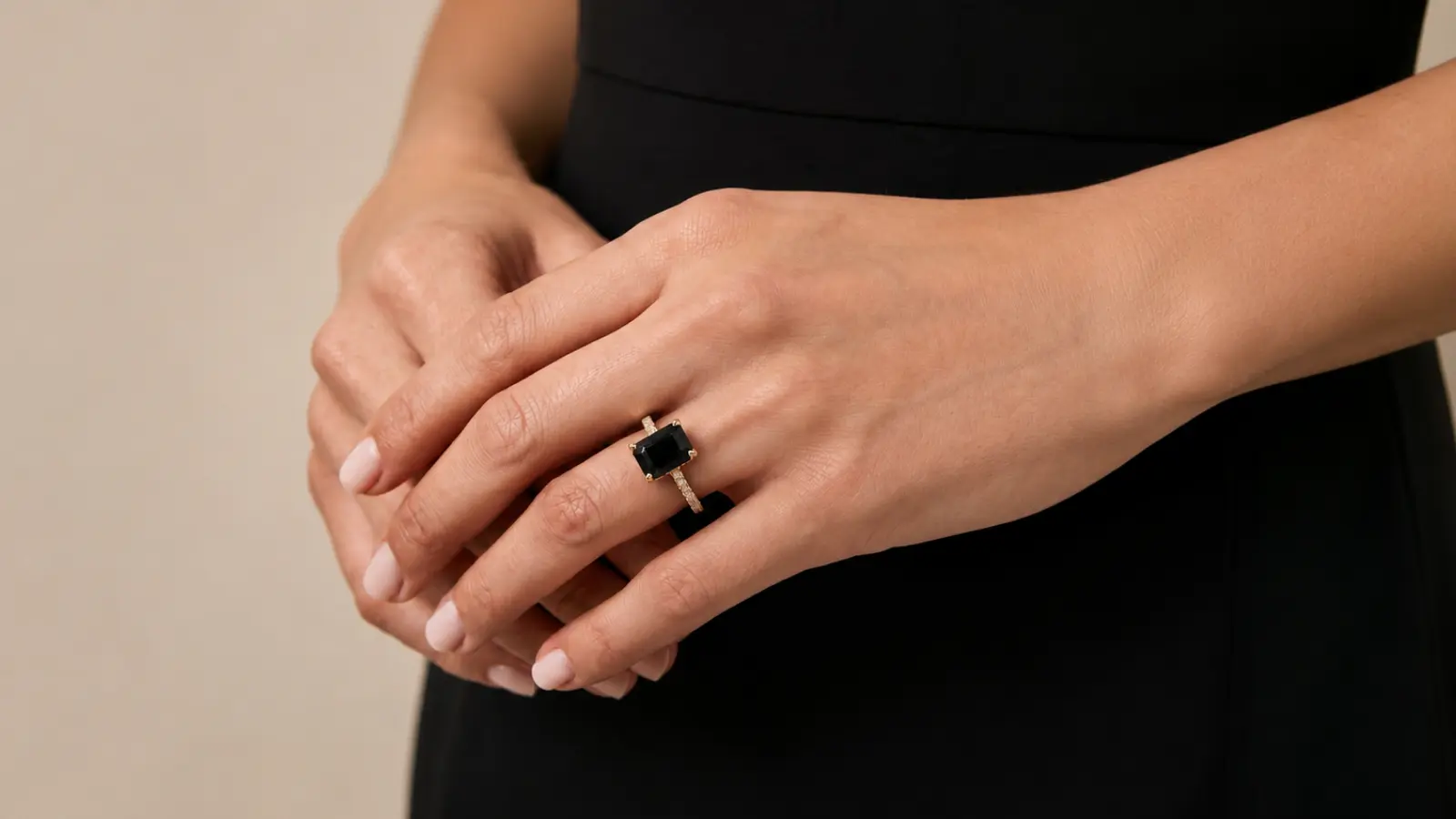
Black wedding rings are wedding rings designed with a dark or fully black appearance, created through materials such as black tungsten, black titanium, black zirconium, black ceramic, or through black diamonds and specialized finishes. Although the color feels different from traditional gold or platinum rings, a black wedding ring carries the same meaning of marriage and commitment.
Choosing a black wedding ring is often about personal style, lifestyle, and finding a ring that feels connected to the person wearing it. For some couples, black offers a modern and understated look; for others, durable materials like tungsten or ceramic provide a practical choice for everyday wear.
This guide explains black wedding rings, including their meaning, common myths, styles for men and women, black tungsten vs. titanium, black diamond options, durability, materials, and how black designs compare with other wedding rings and wedding bands.
What Does a Black Wedding Ring Mean?
The question comes up in almost every black wedding ring conversation, and it deserves a direct answer: a black wedding ring means the same thing as any other wedding ring. It is a symbol of commitment exchanged between two people during or around a marriage ceremony. The color does not change that meaning. It is a design choice, not a symbolic one.
What couples often find when they ask this question is that they are testing something underneath it: whether choosing a black ring will be misread, whether guests will find it unconventional, whether the departure from gold or silver carries an implication they are not intending. The honest answer is that black rings are widely enough understood as a legitimate wedding ring choice that the question of meaning does not come up for most people who encounter one. A ring on the left ring finger reads as a wedding ring. The color is secondary.
Personal Meaning vs. Conventional Meaning
Some couples assign their own meaning to a black ring choice that goes beyond aesthetics: a ring that reflects the way they actually dress and live rather than conforming to a tradition that doesn’t feel specific to them, a ring that matches both partners’ rings precisely when one partner wears gold and the other does not, or a ring that suits a profession in which a traditional gold band would be impractical. These are personal meanings, not universal ones, but they’re real, and often more specific and more honest than the conventional meanings assigned to gold or platinum rings that most people choose without much reflection.
For the broader history and symbolism of wedding rings across cultures and traditions, the wedding ring meaning provides more context on what wedding rings have represented across different periods and places.
The Myth About Black Rings: Addressed Directly
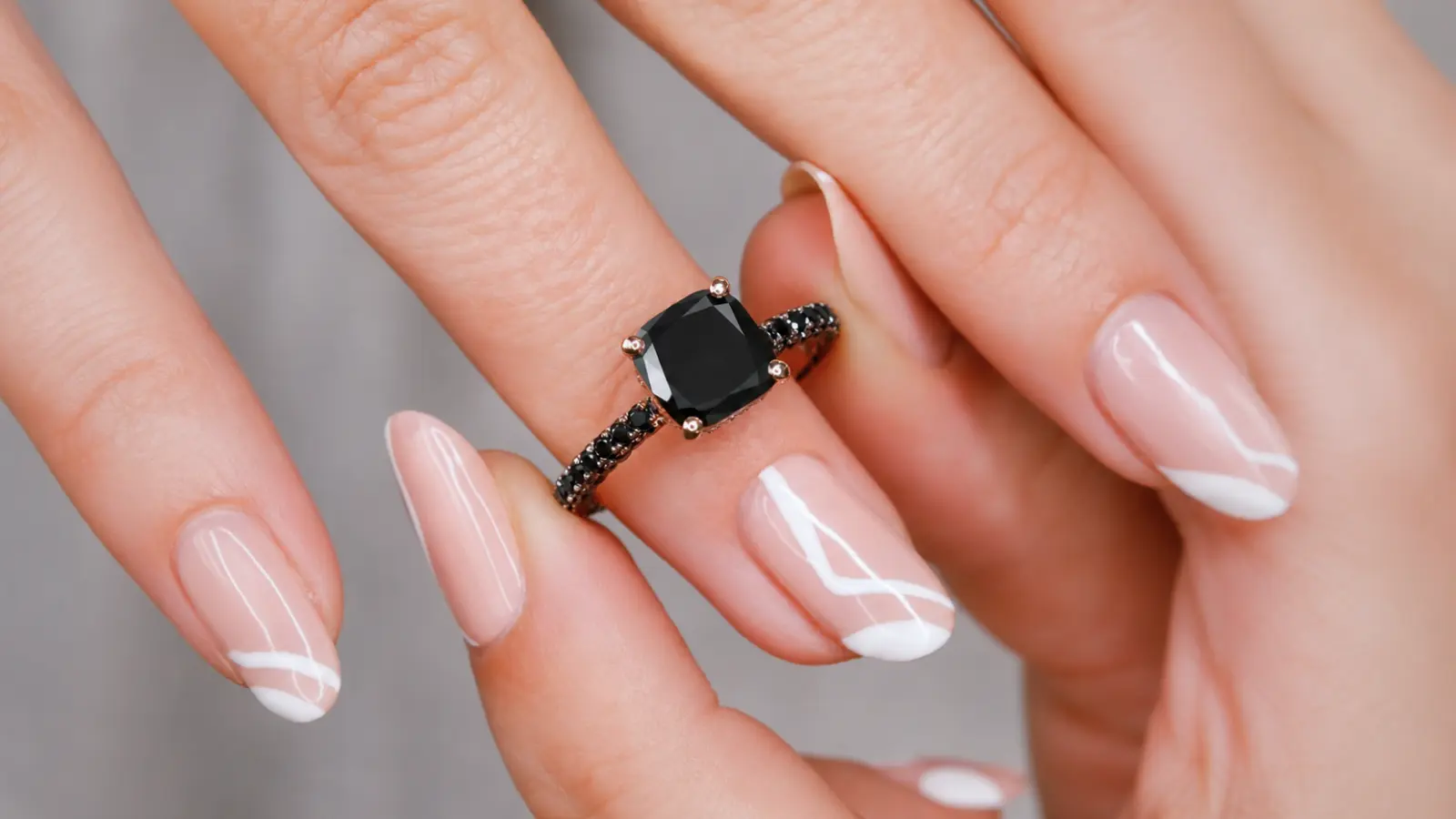
A search for “black wedding ring meaning” will often surface a claim that a black ring signals infidelity, participation in an open relationship, or membership in some kind of alternative arrangement. This claim circulates widely online and causes genuine concern among people considering black rings.
It does not reflect any established or widely recognized convention. There is no such signal in mainstream use, and the two contexts that get conflated online are actually unrelated:
- Left ring finger: In every conventional context, a black ring here is simply a wedding ring. There is no secondary meaning attached to it.
- Right hand, middle finger: A small online community has informally associated a black ring worn here with asexuality. It’s a niche, community-specific symbol that the overwhelming majority of people, including most who wear black rings of any kind, are unaware of.
Couples who have been told otherwise were almost certainly reading content that conflated those two unrelated contexts and presented the result as fact. The concern is understandable; it’s also unfounded.
Black Wedding Rings for Men
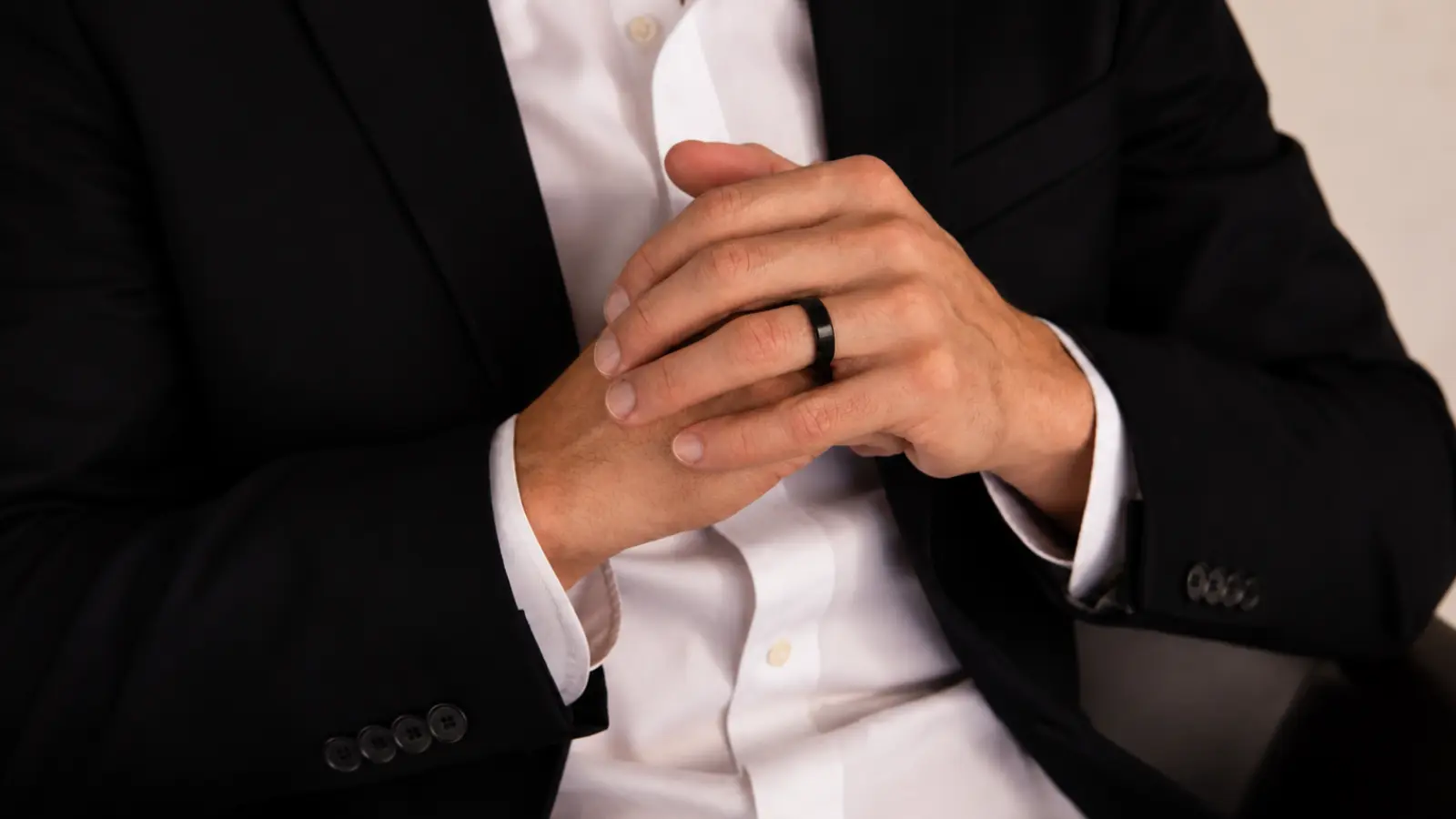
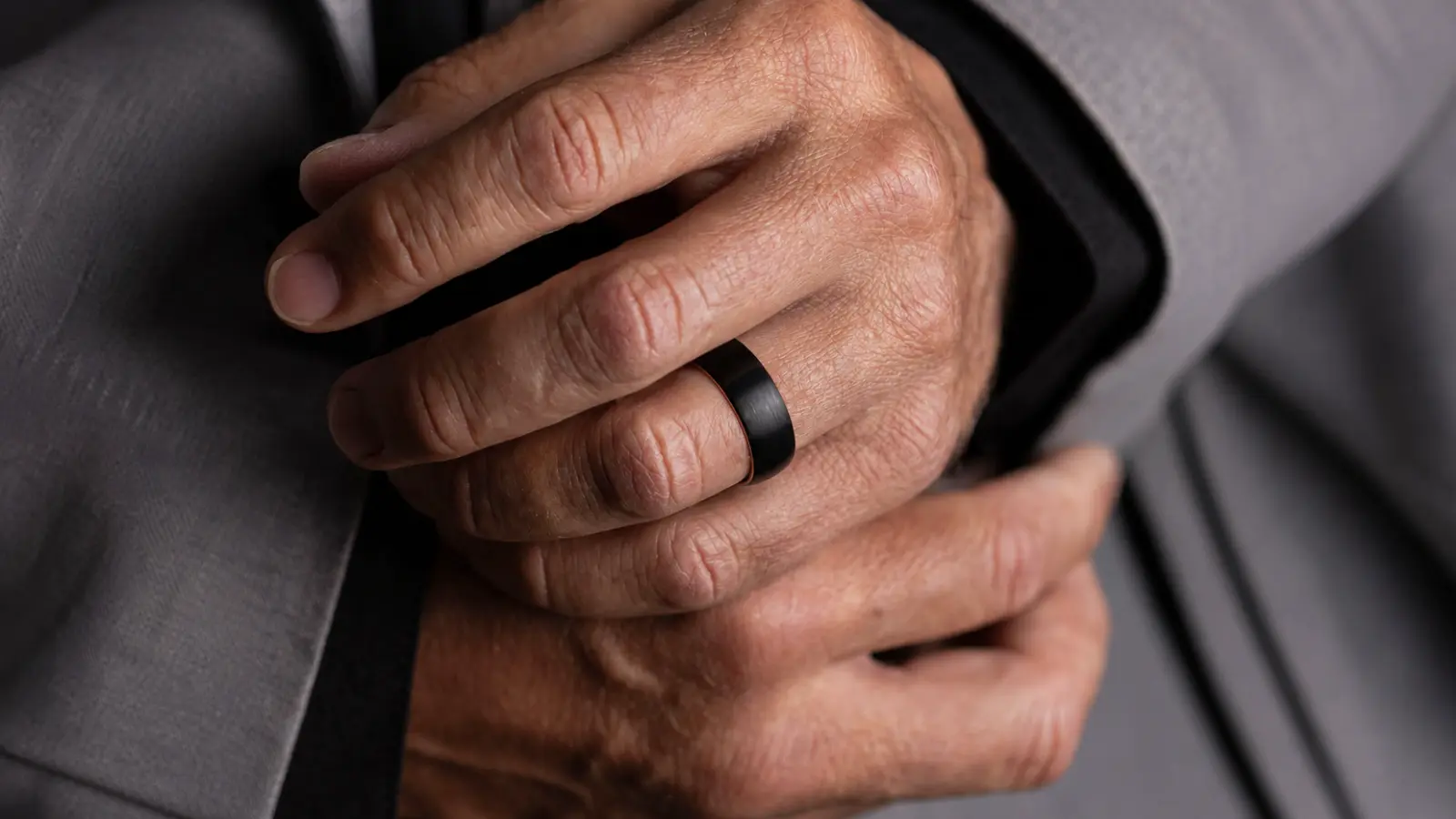
Black wedding rings are significantly more common in men’s styles than in women’s, for reasons that are partly aesthetic and partly practical. For men who wear predominantly dark clothing and accessories, a black ring fits an existing visual language in a way gold or silver may not. For men in physically demanding professions, construction, firefighting, military service, outdoor work, a black tungsten or ceramic ring is often among the most durable options available, holding its appearance under conditions that would surface-mark a gold band quickly. For a broader look at men’s band styles beyond color, see our guide to wedding bands for men.
Width and Profile
Men’s black rings typically run between 6mm and 10mm wide, wider than most women’s bands, with a visual presence that suits larger hands. The most common profile is flat or slightly domed, which gives the band a clean, graphic quality that photographs with clarity. A very flat-profile black tungsten band, in particular, has a visual weight and precision that many men find more satisfying than the rounded profile of traditional precious metal rings.
Finish Variations
Black rings for men are available in polished, matte, and brushed finishes. A polished black tungsten band reflects light with an almost lacquer-like quality, dark and reflective at once. A matte or brushed black band absorbs light rather than reflecting it, producing a surface that reads as industrial and deliberate. Many men’s black ring designs combine the two finishes, a matte exterior with polished edges, or a polished band with a matte inlay, creating a two-texture design that adds visual interest to an otherwise simple form.
Design Combinations
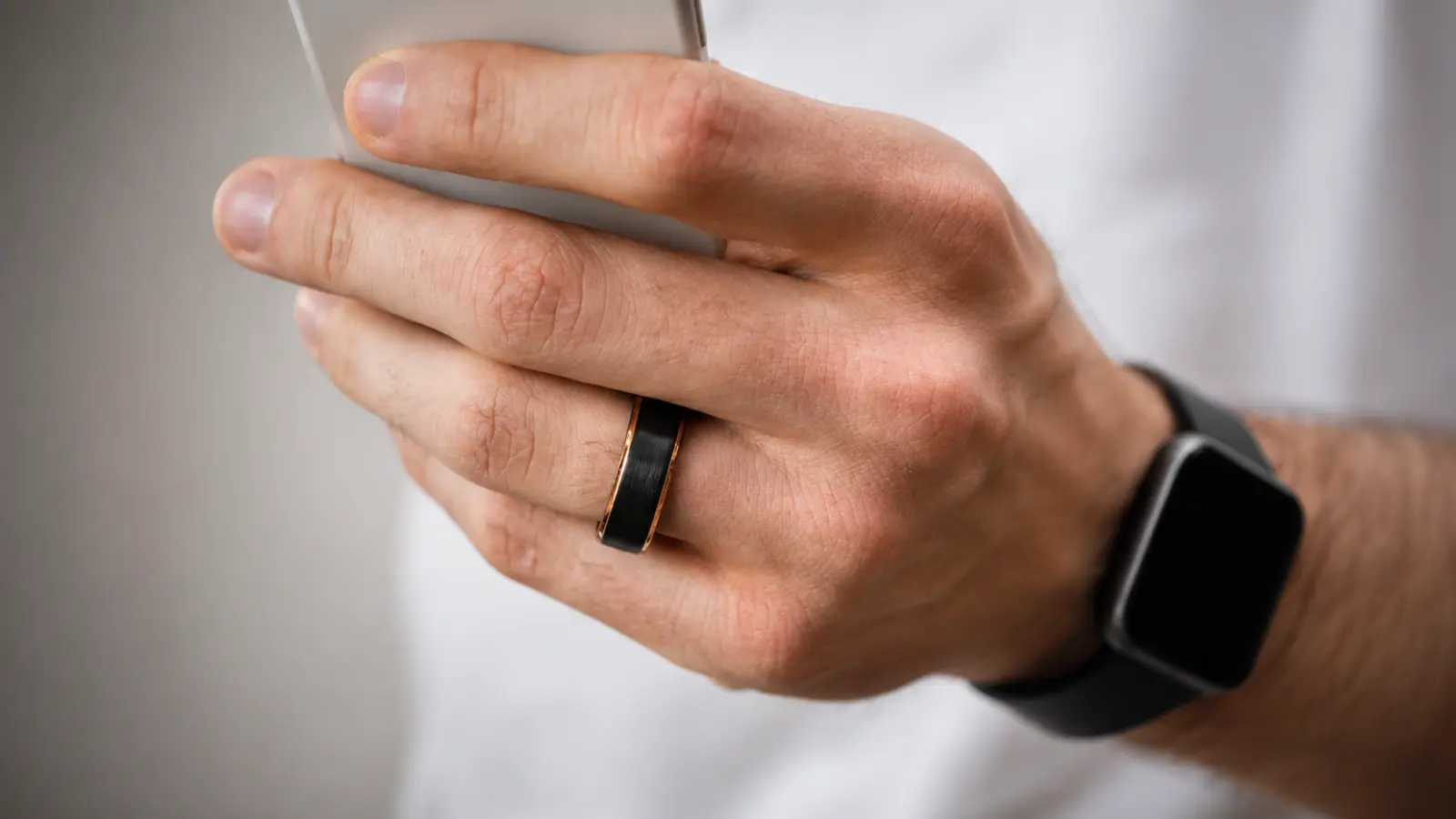
Black rings for men frequently incorporate contrasting materials: a black tungsten band with a rose gold, silver, or carbon fiber inlay running along the center. These combinations add visual complexity without departing from the dark aesthetic, and they often solve the pairing problem for men who want a black ring but wear watches or other accessories in gold or silver. A thin stripe of the matching metal creates continuity without requiring the entire ring to match.
Black Wedding Rings for Women
Women’s black wedding rings tend toward two distinct directions: the alternative-aesthetic band (thin black ceramic or zirconium, minimal and clean) and the black diamond ring (precious metal with dark stones, a different material category that often gets grouped with black rings in searches). Both are legitimate and very different choices in practice. For women considering simpler styles in general, our guide to simple wedding rings for women covers the broader category these bands belong to.
Black Bands for Women
A thin black ceramic or black zirconium band is among the most elegant simple ring choices available for women who prefer a non-traditional aesthetic. The visual effect, a clean, dark band with a precise profile, sits in the same design territory as a plain gold band but in a different material language. It photographs well in monochromatic images and works naturally with dark metal jewelry, silver accessories, and a generally minimal wardrobe.
Black bands for women typically run 2mm to 5mm wide. At the thinner end, a black band has a delicacy that reads as fashion-forward rather than industrial, an important distinction for women who are drawn to the aesthetic but uncertain whether a black ring will look too masculine. A 2mm black zirconium band is not a men’s ring in a different size; it’s a genuinely different object.
Pairing a Black Band with an Engagement Ring
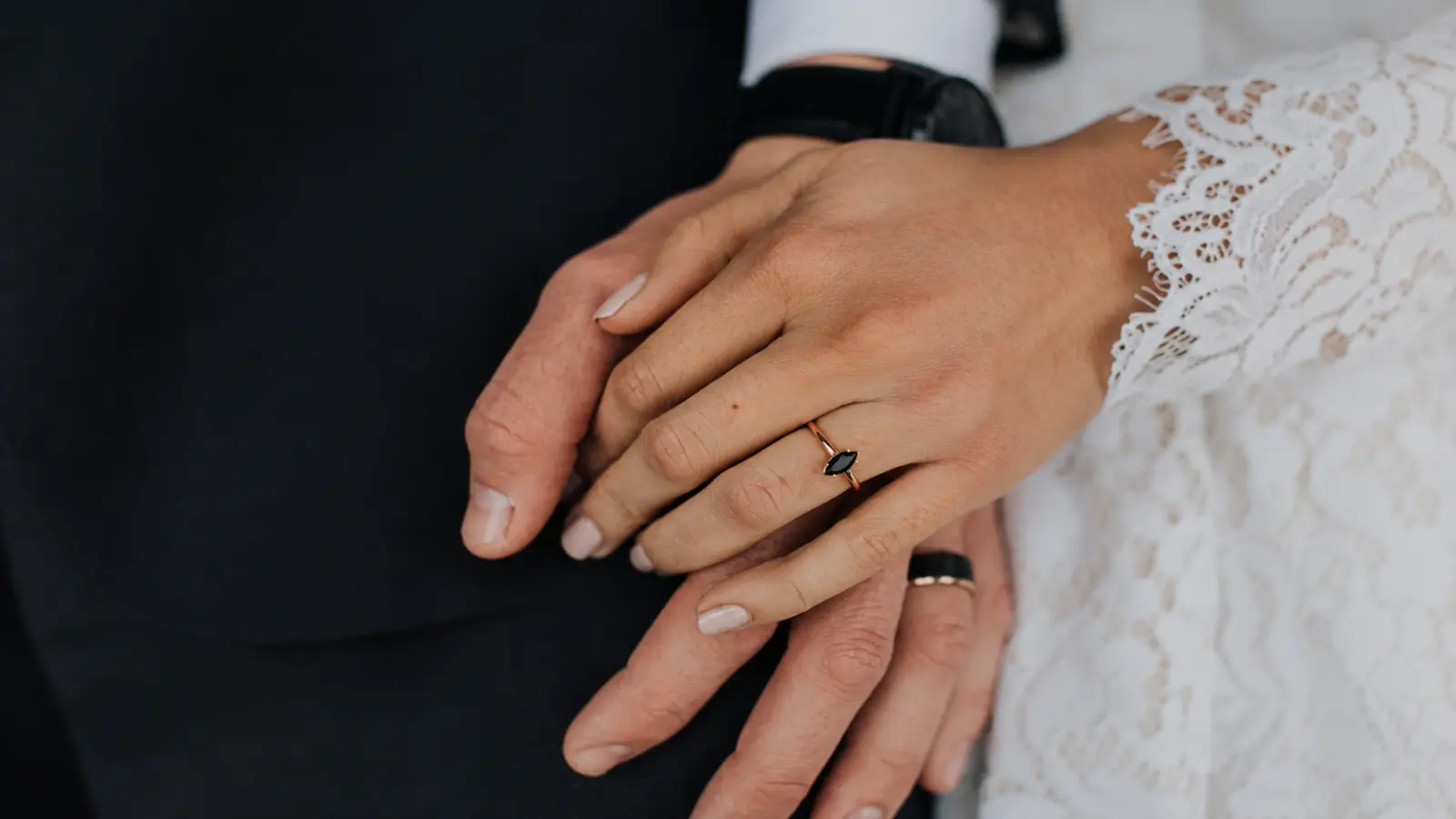
A black wedding band paired with a colorless diamond engagement ring creates a strong visual contrast that many women find striking. The dark band makes the white diamond appear brighter by comparison, and the combination has a graphic quality a gold or platinum band doesn’t produce. The reverse pairing, a black band with a colored stone engagement ring, requires more care, because a black band can compete visually with certain stone colors. Against a blue sapphire or emerald, a black band can look intentional and sophisticated; against a lighter stone, the contrast may simply read as heavy.
Black Tungsten vs. Black Titanium
This is the most practically useful comparison for anyone seriously considering a black metal wedding ring. These two materials are the most commonly available, and they differ in ways that matter significantly for daily wear.
Black Tungsten Carbide
Tungsten carbide is one of the hardest materials used in tungsten wedding rings. Tungsten carbide is one of the hardest materials used in jewelry. It rates 9 to 9.5 on the Mohs hardness scale, compared to gold’s 2.5 to 3 and platinum’s 4 to 4.5. A black tungsten ring will not scratch under normal daily wear conditions; surface-marking it requires materials harder than the tungsten itself, which essentially means industrial diamond-tipped tools.
The trade-offs are specific and worth understanding before purchase:
- Cannot be resized. Tungsten’s hardness makes it impossible to cut and reshape the way gold can be. If your ring size changes, the ring is replaced, not resized.
- Heavy. Tungsten is approximately four times the density of titanium. A 6mm tungsten band has a weight some wearers find grounding and others find uncomfortable over long wear periods. It’s worth trying on before purchasing to assess comfort.
- Brittle under extreme pressure. Tungsten will shatter rather than bend under very high lateral force. In a medical emergency requiring ring removal from a swollen finger, a tungsten ring can’t be cut off; it must be broken. Medical professionals and jewelers know this and have the tools for it, but it’s a distinction from gold or titanium, which can be cut with standard tools.
- The black finish. Black tungsten rings typically get their color through physical vapor deposition (PVD) coating or ion plating, a thin layer of black material applied over the tungsten surface. The coating is durable but not permanent. In areas of heavy friction, the underside of the ring, where it contacts surfaces, it may wear through over years of daily wear to reveal the silver-toned tungsten beneath. This is gradual and varies significantly by wearer.
Black Titanium
Titanium rates approximately 6 on the Mohs scale, harder than precious metals but meaningfully less hard than tungsten. A black titanium ring will develop surface scratches with daily wear over years, a different long-term appearance than a tungsten band, but it also means the material is more workable and more forgiving.
- Lightweight. Titanium is approximately half the weight of tungsten and considerably lighter than gold. For wearers sensitive to weight on their hands, or those who have never worn rings before, titanium is typically the more comfortable option.
- Can be cut off in an emergency. Titanium can be cut with standard medical-grade tools, which matters for surgeons, firefighters, and others whose work involves emergency ring removal.
- Cannot be resized. Like tungsten, titanium rings can’t be traditionally resized, though some retailers offer exchange programs.
- The black finish. Like tungsten, most black titanium rings get their color through coating rather than the metal’s inherent color. Black titanium in the truest sense refers to titanium that’s undergone anodization to produce surface color, but this process typically produces dark grey-blue tones rather than a true black. Confirm with the jeweler exactly how the black color is achieved.
The Decision Between Them
Scratch resistance and durability of finish favor tungsten significantly. Weight and emergency removability favor titanium. For people whose primary concern is that the ring maintain its appearance for decades without maintenance, black tungsten, or the more premium black zirconium, is the stronger choice. For those who prioritize lightweight comfort and practical safety considerations, titanium wedding rings are well-suited to the purpose.
Black Zirconium and Black Ceramic
Beyond tungsten and titanium, two materials in the black ring category are worth knowing specifically because they address limitations the more common options carry.
Black Zirconium
Zirconium is a metal that, when heated to high temperatures, develops a black oxide layer on its surface. Unlike the coatings applied to tungsten and titanium, this black oxide isn’t a separate material deposited on top; it’s the zirconium itself, transformed.
- It is harder than titanium and considerably lighter than tungsten, sitting between the two in weight.
- It can be cut off in an emergency, but it cannot be resized.
- It tends to be more expensive than black tungsten because the material and process are more specialized, and it’s typically available from custom and specialty jewelers rather than mass-market chains.
For a black ring intended to be worn indefinitely without concern about the finish wearing through, black zirconium is the most technically sound choice in this material category. The color is as permanent as the ring itself.
Black Ceramic
Black ceramic rings are made from high-tech ceramic, a compressed and fired material that’s genuinely black throughout its structure, not coated. Like black zirconium, the color of a black ceramic ring doesn’t fade or wear through, because there’s no coating to fail. Ceramic rates approximately 9 on the Mohs hardness scale, comparable to tungsten, which means it’s extremely scratch-resistant but brittle under sharp impact force.
Black ceramic is the lightest material in this category, lighter even than titanium, which makes it the most comfortable choice for wearers sensitive to weight. It has a slightly different visual quality from metal: the surface absorbs light differently, giving it a depth polished metal doesn’t quite replicate. It can’t be resized and can’t be cut with standard tools in a medical emergency; it has to be broken, similar to tungsten.
Black Diamond Wedding Rings
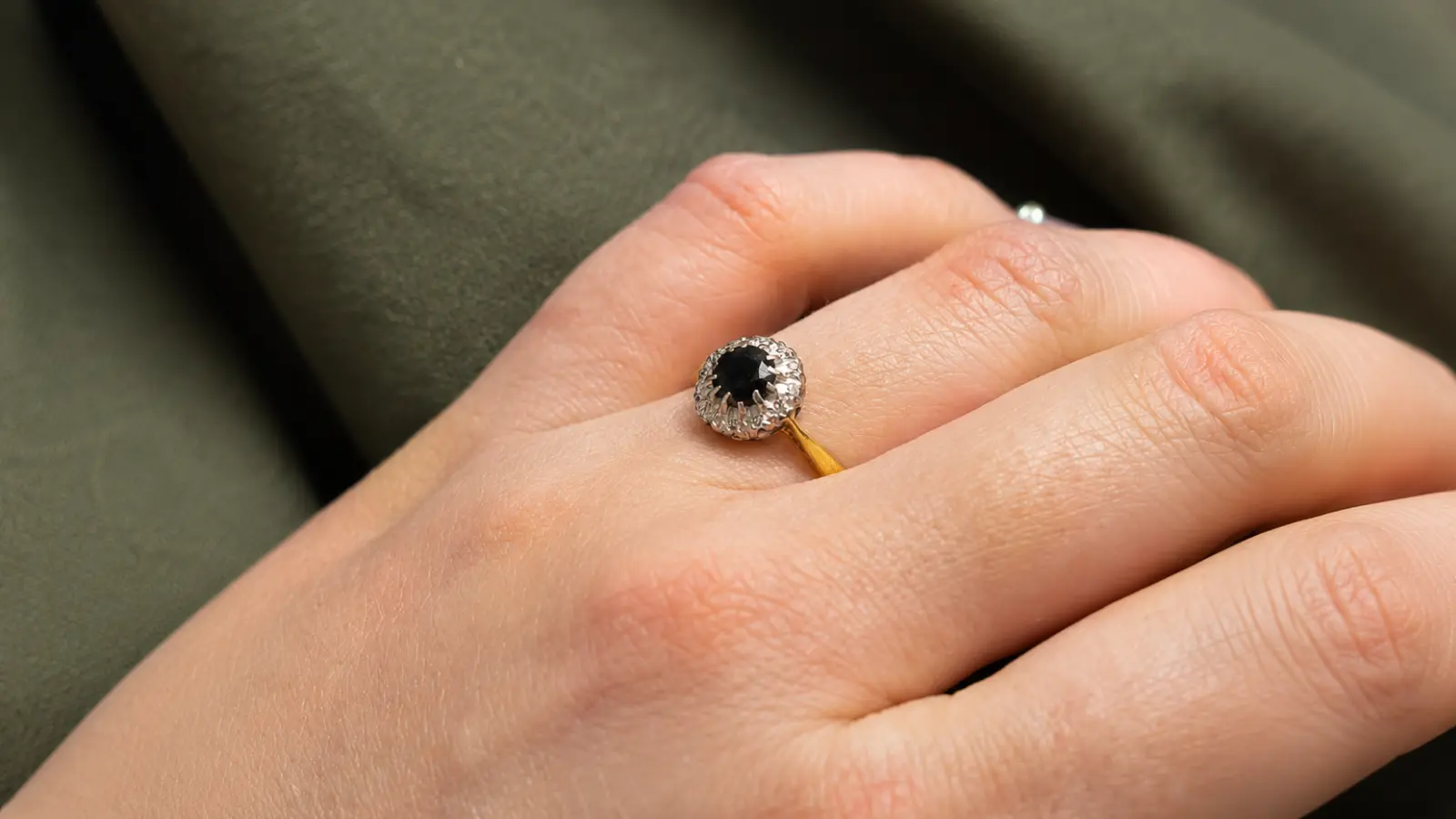
Black diamond wedding rings are a distinct category from alternative metal bands. Like other diamond wedding rings, they’re typically made in white gold, yellow gold, or platinum, with black diamonds as the primary or accent stones. The visual result reads very differently from a black metal band: the precious metal setting is visible, and the black diamonds provide color and light reflection within a traditional ring format.
What Black Diamonds Actually Are
Black diamonds are real diamonds, carbon crystals, but their color comes from inclusions of graphite, iron, or other minerals distributed throughout the stone. Unlike colorless diamonds, which are graded for clarity and color on standardized scales, black diamonds are opaque and aren’t graded by the same criteria. Their value comes primarily from carat weight and cut quality.
Natural black diamonds and treated black diamonds are both available. Treated black diamonds are colorless or near-colorless diamonds that have undergone irradiation or heat treatment to produce their color. Both are used in wedding jewelry; natural black diamonds are less common and more expensive, though in either case the stone’s visual appearance is similar.
Settings for Black Diamond Rings
Black diamonds in wedding rings are most commonly set in pavé rows, channel settings, or as a single larger solitaire. A full pavé band of small black diamonds, similar in form to a white diamond pavé band, produces a ring that’s visually dense and richly dark. A single bezel-set or prong-set black diamond in a thin band reads as a statement piece while keeping the simple band format.
White gold and platinum are the most common metal pairings for black diamond rings because the contrast between the silver-white metal and the black stones is graphically striking. Yellow gold with black diamonds creates a more Art Deco quality that some women find compelling, and rose gold with black diamonds is a less common combination that works for specific aesthetic contexts.
Coated vs. Inherently Black Rings: The Most Important Question
The single most important material question for anyone buying a black wedding ring is this: is the black color a coating applied to the surface of a base metal, or is it inherent to the material itself?
The distinction matters because coatings wear. PVD coating, ion plating, and anodization applied to a silver-colored base metal produce a black surface that’s durable, far more durable than paint, but not permanent. In areas of heavy friction (the interior of the band where it contacts the finger, the underside where it rests on surfaces), the coating gradually thins and eventually reveals the metal beneath. For some wearers and lifestyles, this takes decades; for others, it becomes visible within a few years.
Materials where the black color is not a coating:
- Black zirconium: The black oxide surface is the metal itself, transformed through heating. It doesn’t peel or wear through.
- Black ceramic: The material is black throughout its structure. No coating, no underlying metal of a different color.
- Black tungsten carbide (some versions): Some black tungsten rings use tungsten carbide that’s inherently dark grey-black rather than coated. Ask specifically whether the ring’s color comes from the material or from a coating.
When shopping, the questions worth asking directly are: “Is the black color on this ring from a coating, and if so, what kind?” and “What does this ring look like after five years of daily wear?” A retailer who can’t answer those questions clearly, or who deflects with vague assurances about durability, isn’t the right place to buy a ring meant to be worn for life.
Caring for a Black Wedding Ring
Material durability and day-to-day care are related but not the same thing. A ring can be highly scratch-resistant and still benefit from a few simple habits that keep it looking its best for longer, especially for the styles that rely on a coating rather than an inherently black material.
- Rinse off residue regularly. Lotion, sunscreen, and soap can build up on any ring. A quick rinse with warm water and a soft cloth keeps the surface clean without needing harsh products.
- Skip abrasive cleaners on coated finishes. Polishing compounds and abrasive cloths that are fine for solid gold can wear a thin coating faster than normal daily contact would.
- Remove the ring for heavy manual work when the material is brittle. Tungsten and ceramic resist scratching extremely well but can chip or crack under sharp, direct impact, so it’s worth taking the ring off for tasks with real risk of a hard knock.
- Store it away from harder materials. Even scratch-resistant rings can mark each other in a jewelry box; a separate compartment or pouch avoids unnecessary surface contact.
Inherently black materials, such as zirconium and ceramic, ask very little beyond this short list. Coated metals require more care when you clean a wedding ring at home, because repeated abrasive contact can eventually wear a coating thin.
Are Black Wedding Rings Still in Style?
Black wedding rings have moved from a distinctly alternative choice into a recognized and stable category at most jewelers that carry men’s rings, and at an increasing number of jewelers that carry women’s styles. Whether they’re “in style” in the sense of being on-trend depends partly on where and how you shop. They aren’t featured heavily in conventional bridal jewelry advertising, which still centers on gold and white diamonds, but they’re consistently present in jewelers’ inventory and have been for long enough to read as an established choice rather than a novelty.
The more useful question than “are they trendy” is whether the choice will feel dated in twenty years. The honest answer is that black rings, like plain gold bands, are rooted in a stable aesthetic preference that doesn’t cycle in and out of fashion the way more decorative styles do. A person drawn to black as a consistent element of their visual life, their clothing, their watch, their other jewelry, tends to remain that person across decades, and the ring that fits that aesthetic at purchase tends to remain a fit.
The style more likely to feel dated isn’t “black ring” but “black ring with a very specific design detail,” a particular inlay pattern, a branded texture, a decorative edge popular in one narrow window of time. The most timeless black rings are the most formally simple ones: a plain flat black band, a clean polished surface, or a black stone in an unelaborate setting. For other directions in non-traditional ring design beyond color, our guide to unique wedding rings covers the broader category.
Who Black Wedding Rings Suit Well
A black wedding ring tends to be a strong choice for specific situations. It isn’t the right ring for everyone, and one of the more useful things this article can do is be honest about that rather than describing black rings as universally appropriate.
People for Whom Black Rings Consistently Work Well
Those who wear predominantly dark or monochromatic aesthetics, whose existing jewelry, watch, and accessories are already in dark metals or black, find that a black wedding ring coheres with an existing visual language without requiring any accommodation. The ring fits the wardrobe rather than departing from it.
People in physically demanding professions who need a ring that maintains its appearance under real working conditions also tend to do well with black rings. Black tungsten, ceramic, and zirconium hold up under conditions that would rapidly scratch and dent a gold band, which is a practical rather than purely aesthetic consideration for tradespeople, outdoor professionals, and others whose hands take daily impact.
Couples who prefer matching rings and find that both partners are drawn to non-traditional aesthetics round out this group. A coordinated pair of black rings can work as his and hers wedding rings for couples whose visual sensibility runs toward the dark and minimal.
Where Black Rings Require More Thought
Black rings in alternative metals can’t be resized, which matters for people whose ring size is likely to change or whose current size is uncertain. The inability to resize isn’t unique to black rings, it applies to most alternative metals, but it’s worth factoring in specifically because the ring’s color and material aren’t easily replicated if the original needs replacing.
Black rings may also invite conversation in very traditional family contexts, where the departure from gold or silver could raise comment or concern. That’s not a reason to avoid the choice, a wedding ring is worn by the people getting married, not by their families, but it’s context worth being aware of before the day itself.
Black Wedding Ring Inspiration
Black wedding rings can range from bold and modern to simple, minimal, and timeless. Explore our inspiration board for black tungsten bands, black titanium rings, black diamonds, matte finishes, black and gold designs, and unique wedding ring ideas.
Choosing a Black Wedding Ring That Fits Your Style
A black wedding ring is not about rejecting tradition — it is about choosing a version of tradition that feels personal. The strongest designs are the ones chosen with intention, whether that means a durable material, a darker aesthetic, or a ring that simply feels more natural to wear every day.
Whether you choose black tungsten, titanium, zirconium, ceramic, or a black diamond design, the right wedding ring is the one that continues to feel connected to your lifestyle and your story. A meaningful ring is not defined by its color, but by the commitment it represents.
Frequently asked questions (FAQ)
What does a black wedding ring mean?
A black wedding ring has the same meaning as any other wedding ring: commitment, marriage, and the bond between two partners. The black color itself does not have one universal meaning. Many people choose black wedding rings because they match their personal style, feel more modern, suit their lifestyle, or offer a different look from traditional gold and silver bands.
Do black wedding rings have a negative meaning?
No. Black wedding rings do not have a widely recognized negative meaning. Online myths sometimes connect black rings with unrelated symbolism, but a black ring worn as a wedding ring is simply a wedding ring. The meaning comes from the couple wearing it, not from the color alone.
Do black wedding rings fade or scratch over time?
It depends on the material. Some black rings use a surface coating that can slowly wear down with years of friction, while materials like black ceramic and black zirconium maintain their color because the black appearance is part of the material itself. Before buying, it is important to understand whether the ring is naturally black or finished with a coating.
What is the best material for a black wedding ring?
The best material depends on your priorities. Black tungsten is extremely scratch-resistant and works well for people who want a strong, low-maintenance ring. Black titanium is lightweight and comfortable. Black zirconium is often chosen by people who want a premium black metal where the color is part of the surface rather than only a coating.
Are black wedding rings just a trend?
Black wedding rings are not only a temporary trend. While they are more modern and non-traditional than classic gold bands, their appeal comes from a consistent preference for darker, minimalist, or alternative styles. A simple black wedding band is more likely to age well than a design chosen only because it is currently popular.
What should you know before choosing a black wedding ring?
Before choosing a black wedding ring, consider more than the appearance. Check the material, whether the color can wear away, whether the ring can be resized, and how the style fits your everyday look. A black wedding ring works best when it matches your long-term personal style rather than being chosen only because it feels different.