Simple wedding rings for women are wedding rings designed around clean details, timeless shapes, and everyday wear rather than elaborate decoration. They include plain gold bands, thin wedding bands, minimalist diamond rings, and low-profile designs that focus on quality, comfort, and lasting style.
Choosing a simple wedding ring does not mean choosing something less meaningful or less special. A well-made simple band can feel intentional, elegant, and personal because the focus stays on the material, craftsmanship, and how naturally the ring becomes part of everyday life.
This guide explains different types of simple wedding rings for women, including plain gold bands, thin styles, minimalist diamond designs, metal choices, comfort, and how to choose a wedding ring that will still feel beautiful years from now.
What Makes a Wedding Ring Simple and Why That Matters
A simple wedding ring is not defined by what it lacks. It is defined by what it prioritizes: the material, the form, the finish. When the design removes everything that is not essential, what remains has to be exactly right — which is why the best simple rings tend to be the ones made with the most attention to the fundamentals.
The category covers a wide range of styles. A plain polished gold band with no stones and no texture. A very thin pavé band with a single row of small diamonds. A flat-surfaced band with a matte or brushed finish. A slightly tapered band that is wider at the top and narrower at the sides. What these share is a visual quietness — a ring that does not announce itself before the hand it is on, but rewards a closer look.
Simple is Not the Same as Minimal Effort
One thing most jewelers will tell you: a plain gold band is easier to design than an elaborate one, but it is harder to make well. Without stones, settings, or decorative elements to draw the eye, the quality of the metal itself and the precision of the surface finish are fully exposed. A slight unevenness in the band’s width, a small roughness on the interior, a polish that is slightly off — these are invisible on a ring with diamonds set across its surface and immediately visible on a plain one.
Choosing a simple ring is, in this sense, a choice that demands quality over decoration. The ring has nowhere to hide, which means it has every reason to be exactly right.
Who Tends to Gravitate Toward Simple Rings
Women who choose simple wedding rings tend to share a few qualities: a preference for things that function well over things that perform well, an aesthetic sensibility that leans toward quality materials over surface embellishment, and a practical awareness that the wedding ring will be worn every day for decades — not just photographed at the wedding.
Simple rings are also a natural choice for women who already have — or plan to have — an elaborate engagement ring. The plain band allows the engagement ring to remain the visual centerpiece of the stack without competition. That is not a compromise; it is a design decision made with confidence.
Plain Gold Wedding Rings
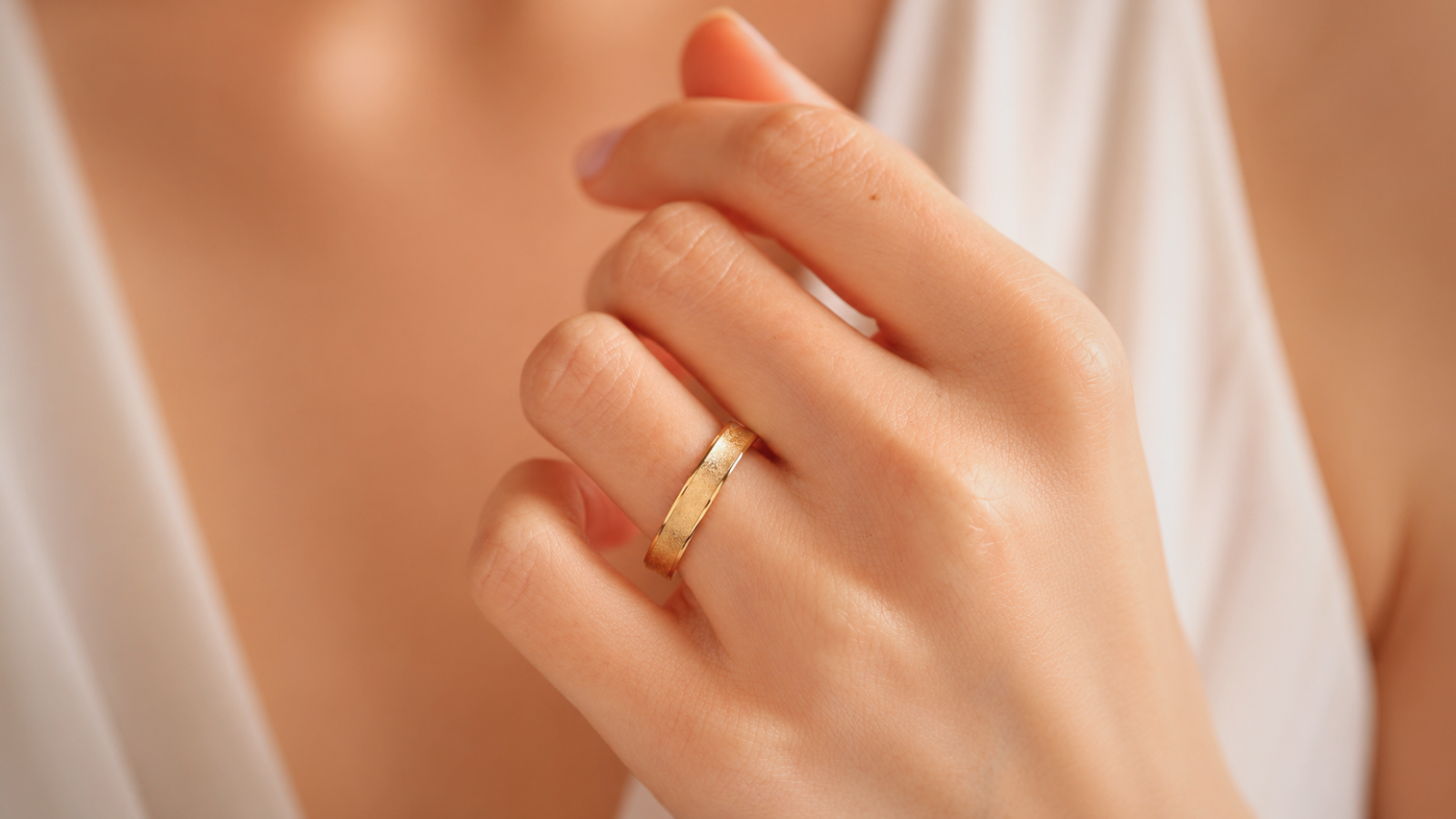
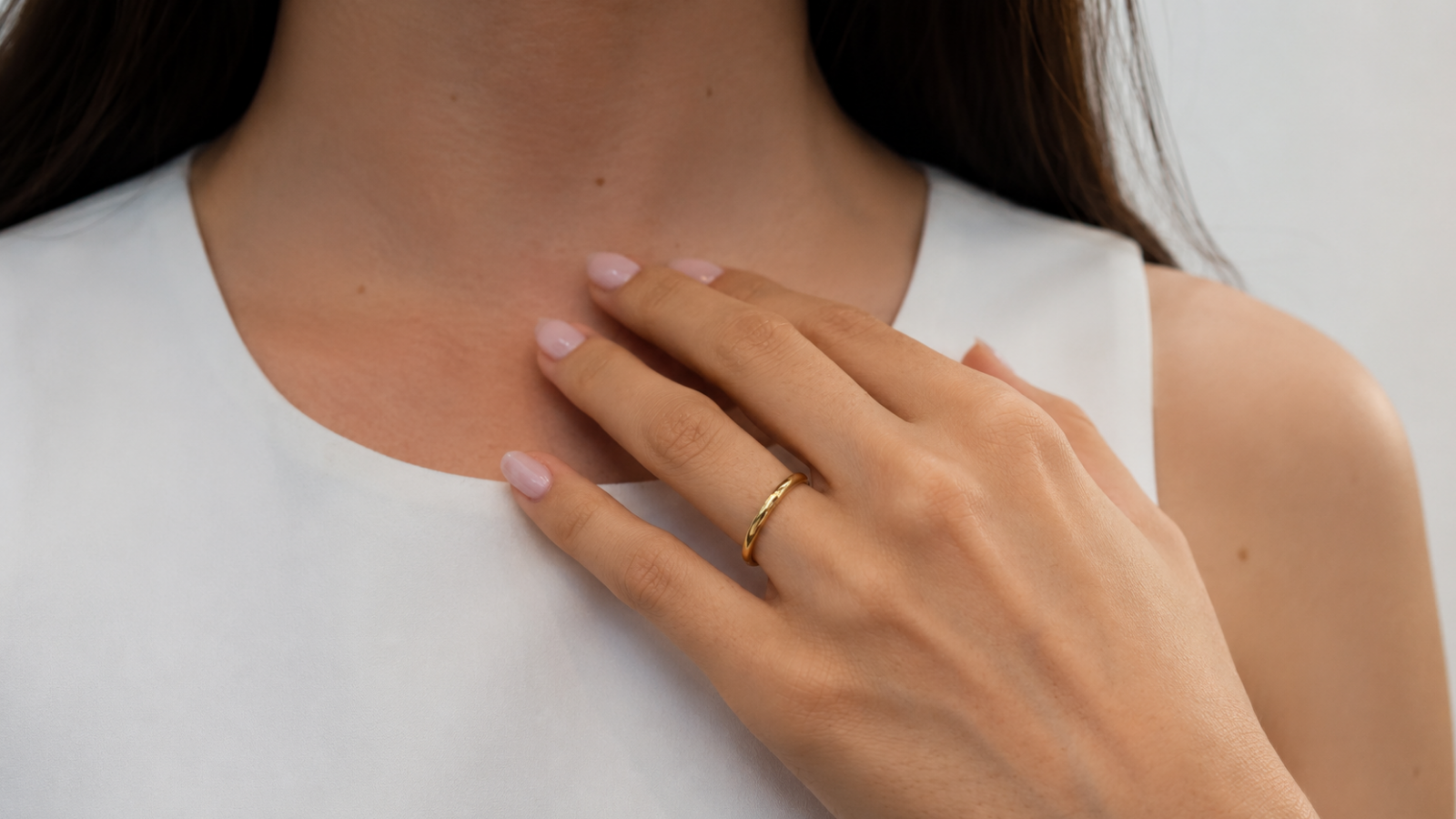
A plain gold wedding ring is the oldest and most enduring version of this jewelry category. In essentially this form — a smooth metal circle, worn on the left ring finger — it has been exchanged at weddings for centuries. The continuity is not accidental. A ring that has been meaningful across that span of time and culture has survived because it genuinely works: beautiful in the way that durable, well-made objects are beautiful, without requiring a specific design moment to feel current.
Surface finishes and what they communicate
Plain gold rings are not all the same, and the surface finish is the most significant design decision within this category. Each option behaves differently in light, ages differently with wear, and communicates a slightly different aesthetic intention.
- High polish is the most reflective finish — the gold surface acts almost like a mirror, picking up and concentrating light. It is the most traditional finish for a wedding band, and the one most likely to show scratches over time, which many women come to view as part of the ring’s character rather than a flaw.
- Matte or brushed finish has a soft, velvety quality that does not catch light the way polished gold does. Scratches blend into the texture rather than standing out. It carries a quieter, more contemporary quality — particularly popular in the context of quiet luxury aesthetics.
- Hammered finish has a deliberately irregular surface created by the jeweler’s hammer, catching light at multiple angles. Still firmly within the plain gold category, it adds tactile interest without stones or engraving and carries a handcrafted quality that many women find more personal.
- Satin finish falls between polished and matte — a subtle fine-grained texture that is softer than full polish without the completely diffused quality of brushed. Often used on the exterior with a polished interior edge, creating a two-finish effect that is more interesting than either alone.
If you are deciding between finishes, it helps to see them in person at a jeweler. The difference between matte and satin reads very differently under store lighting versus natural daylight, and it is a distinction worth understanding before committing.
Karat considerations for plain gold bands
For a plain gold band worn every day, the karat choice matters more than it might for an occasional ring. Higher karat gold is softer and more susceptible to scratching; lower karat gold is harder and more durable but contains a higher proportion of alloy metals. Neither is wrong — they suit different priorities.
- 18k gold (75% pure gold) offers the richest, most saturated color and is the standard for fine jewelry in much of the world. It develops a patina over decades rather than maintaining a factory-fresh surface — which many women consider an advantage rather than a drawback.
- 14k gold (58.3% pure gold) is more durable and more resistant to surface scratching. The color is slightly less warm but still unambiguously gold. For women with very active lifestyles or professions that are hard on hands, 14k is often the more practical choice.
- 10k gold is available and durable, but the lower gold content (41.7%) means the color can read as slightly off, and it is less commonly associated with fine jewelry intended as a permanent piece.
For a ring intended to be worn and kept for a lifetime, the choice typically comes down to whether you prioritize the richest possible gold color (18k) or the most durable daily-wear surface (14k). Both are excellent choices — it depends on which quality matters more to the life you actually live.
Thin Wedding Bands
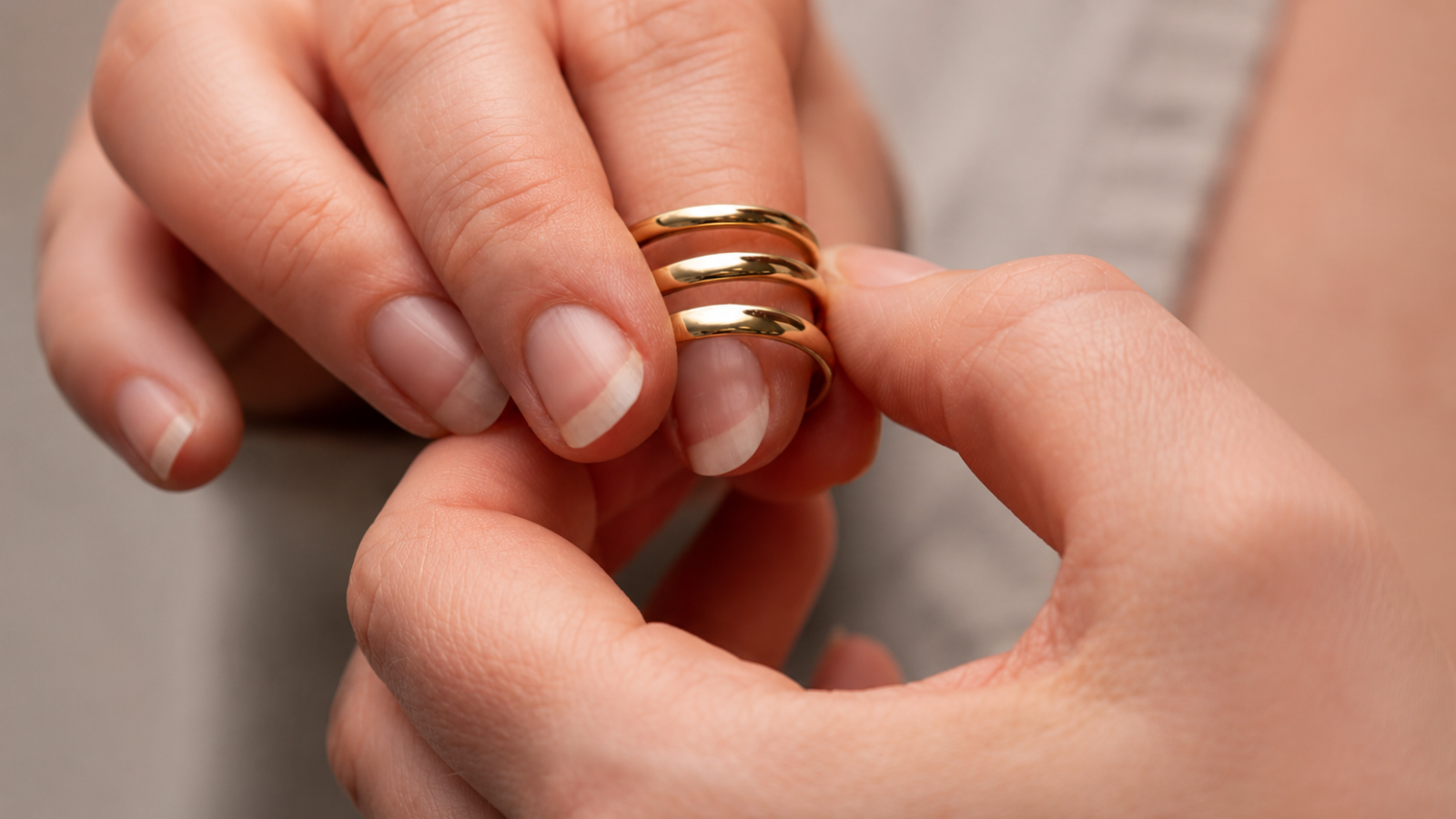
Thin wedding bands — generally defined as bands between 1.5mm and 2.5mm wide — are among the most frequently requested simple ring styles at jewelers who work with minimalist aesthetics. The appeal is immediate and practical: a thin band sits quietly alongside an engagement ring without competing for visual space, is more comfortable for women who are not accustomed to wearing rings, and carries a delicacy that many women find genuinely more beautiful than a more substantial band.
What “thin” actually means in jewelry terms
Ring width is measured in millimeters across the front face of the band. A 1.5mm band is genuinely very delicate — on an average hand, it appears almost like a fine line of metal around the finger. A 2mm band is slightly more substantial but still firmly in the thin category. A 3mm band begins to have a more noticeable visual presence, and bands above 4mm are generally considered medium to substantial width.
For context: a standard sheet of paper is approximately 0.1mm thick. A 2mm band is twenty sheets of paper wide. This helps calibrate expectations when shopping — a ring that looks substantial in photographs is often considerably more delicate in person, which can be either a pleasant surprise or an adjustment depending on what you were expecting.
The width-to-finger proportion
Thin bands tend to be most flattering on narrower fingers and smaller hands. On larger hands or wider fingers, a band under 2mm can look slightly lost — not as a deliberate choice, but as a ring that is simply too narrow for the hand. Women with larger hands who are drawn to the thin aesthetic often find that 2.5mm to 3mm achieves the same visual effect without disappearing.
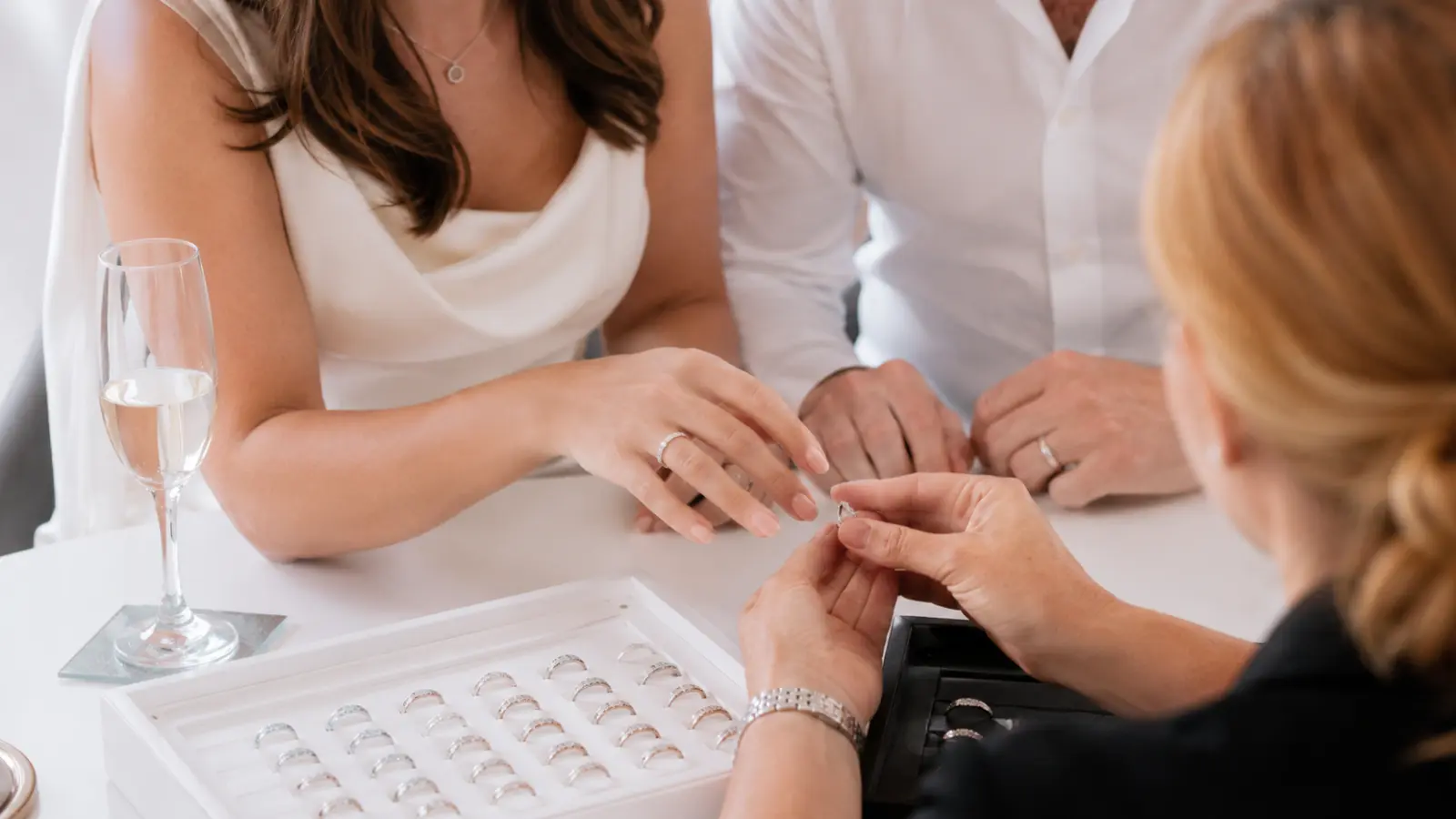
A jeweler who works frequently with simple rings can show how different widths sit on a hand of your specific size. This in-person calibration is one of the most useful things a fitting provides and is difficult to replicate from photographs alone — the proportions read very differently on an actual hand than they do on a velvet display or a model’s hand.
Thin band durability
Very thin bands in softer metals — 18k gold in 1.5mm or under — require some awareness. They can be bent out of round by significant pressure, which is more likely if the ring is worn during activities that put lateral stress on the band. Many women who choose very thin gold bands develop the habit of removing them for specific activities, a practical adjustment that most find becomes natural within a few weeks.
Platinum in thin widths is more resistant to bending than gold because of the metal’s density and stiffness — a meaningful difference if durability during daily activity is a priority.
Stacking with thin bands
Thin bands are the most natural choice for ring stacking — wearing multiple bands together on the same finger. A thin wedding band and a thin engagement ring shank sit together without the bulk that wider bands create. Women who enjoy stacking occasionally add a second or third plain band from a significant anniversary, creating a quiet visual record of the relationship in the simplest possible form. It is one of the more personal things a simple ring can become over time.
Minimalist Diamond Wedding Rings
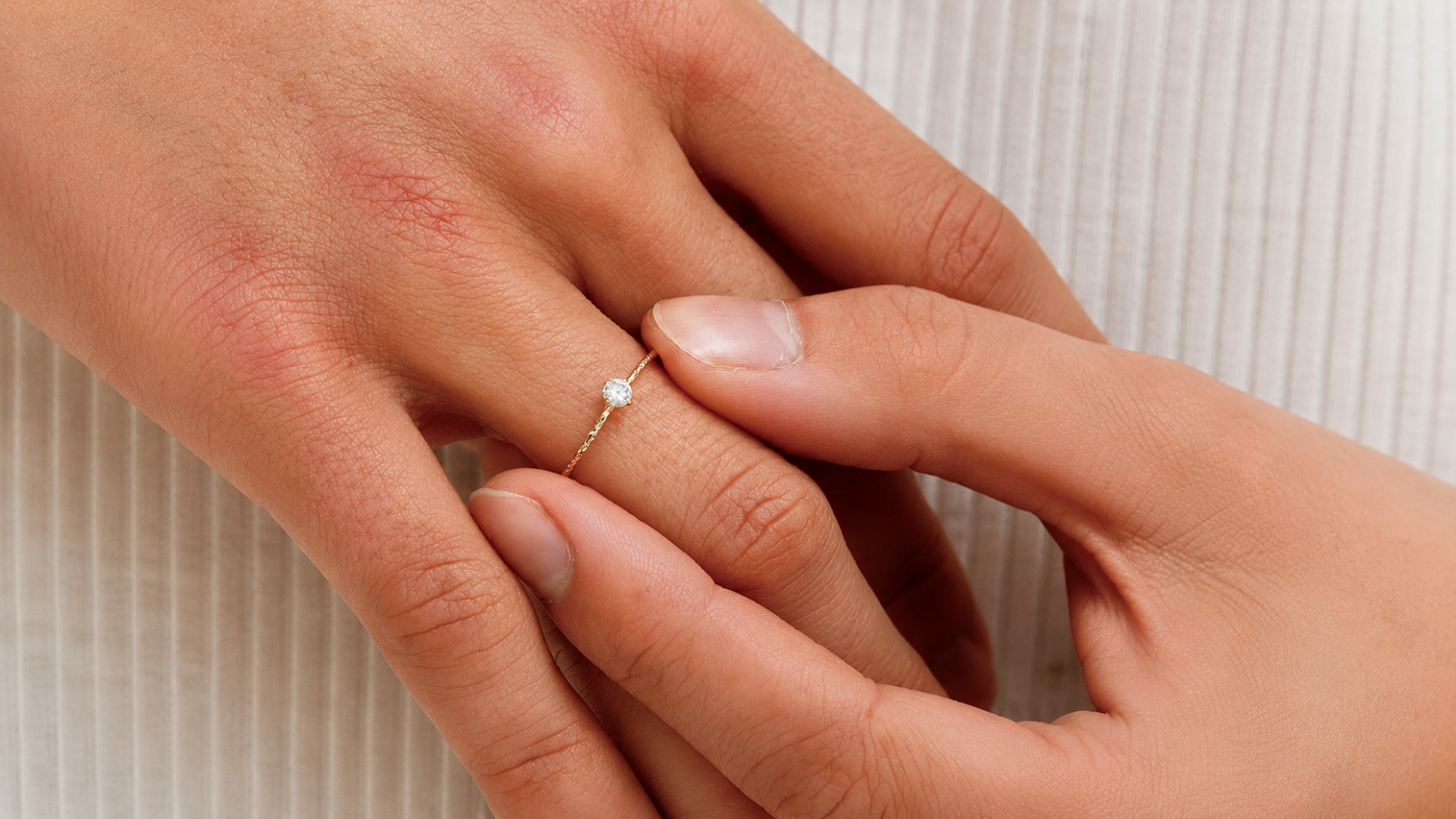
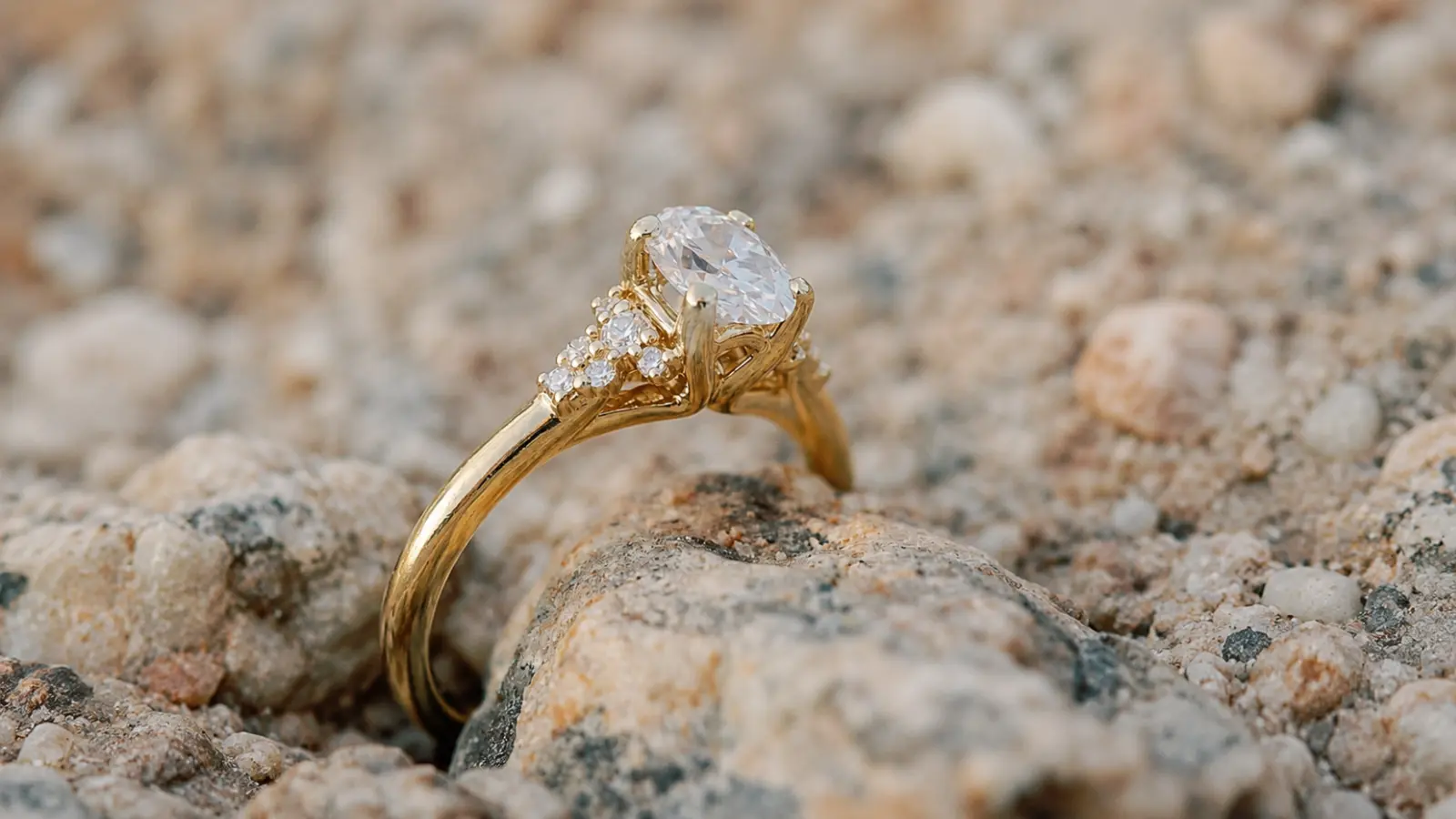
A ring can be simple and include diamonds, as long as the relationship between the two is clear: in a minimalist diamond wedding ring, the band is the design and the diamonds are an accent within it. The moment the diamonds become the design — covering the full circumference, dominating the visual surface — the ring has moved out of the minimalist category and into something else. Restraint is what defines this style.
The thin pavé row
One of the most requested minimalist diamond styles is a very thin pavé band — a narrow band, typically 1.5mm to 2mm wide, with a single row of small round diamonds set close together along the top surface. The diamonds are correspondingly tiny (often 0.01 to 0.02 carats each), set so that the metal prongs are almost invisible and the stones appear to float in a continuous line.
The effect is a ring that catches light with every movement but remains visually quiet when the hand is still. It pairs naturally with a solitaire engagement ring, adding diamond presence without competing with the center stone. The diamonds in this style are virtually maintenance-free — small, low-profile, and set in a way that catches very little debris.
Channel-set and flush-set accents
Channel-set diamond bands have diamonds set into a channel cut into the metal, held along the sides rather than with prongs. The surface of the ring is smooth — no prongs to catch on fabric or accumulate dirt — and the diamonds are protected by the channel walls. This setting works well for women with active lifestyles who want some diamond presence without the maintenance demands of prong settings.
Flush-set diamonds (also called gypsy-set) are set directly into the metal surface, with the top of the stone level with the band. The effect is a plain band with occasional pinpoints of light — an understated look that reads as intentional and specific. Flush-set diamonds are the most low-maintenance of any setting style because the stone is fully protected by the surrounding metal.
The bezel-set solitaire band
Worth noting in the minimalist category: a band with a single small bezel-set diamond — typically 0.05 to 0.15 carats — as the only stone. The bezel wraps completely around the stone, securing it with metal rather than prongs, and the stone sits level with or very slightly above the band surface. The result is a ring that functions as a wedding band while carrying a single deliberate point of diamond presence. For women who want something between a fully plain band and a diamond band, this is a specific and satisfying option — and one that competitors rarely discuss in enough detail.
How Simple Rings Photograph
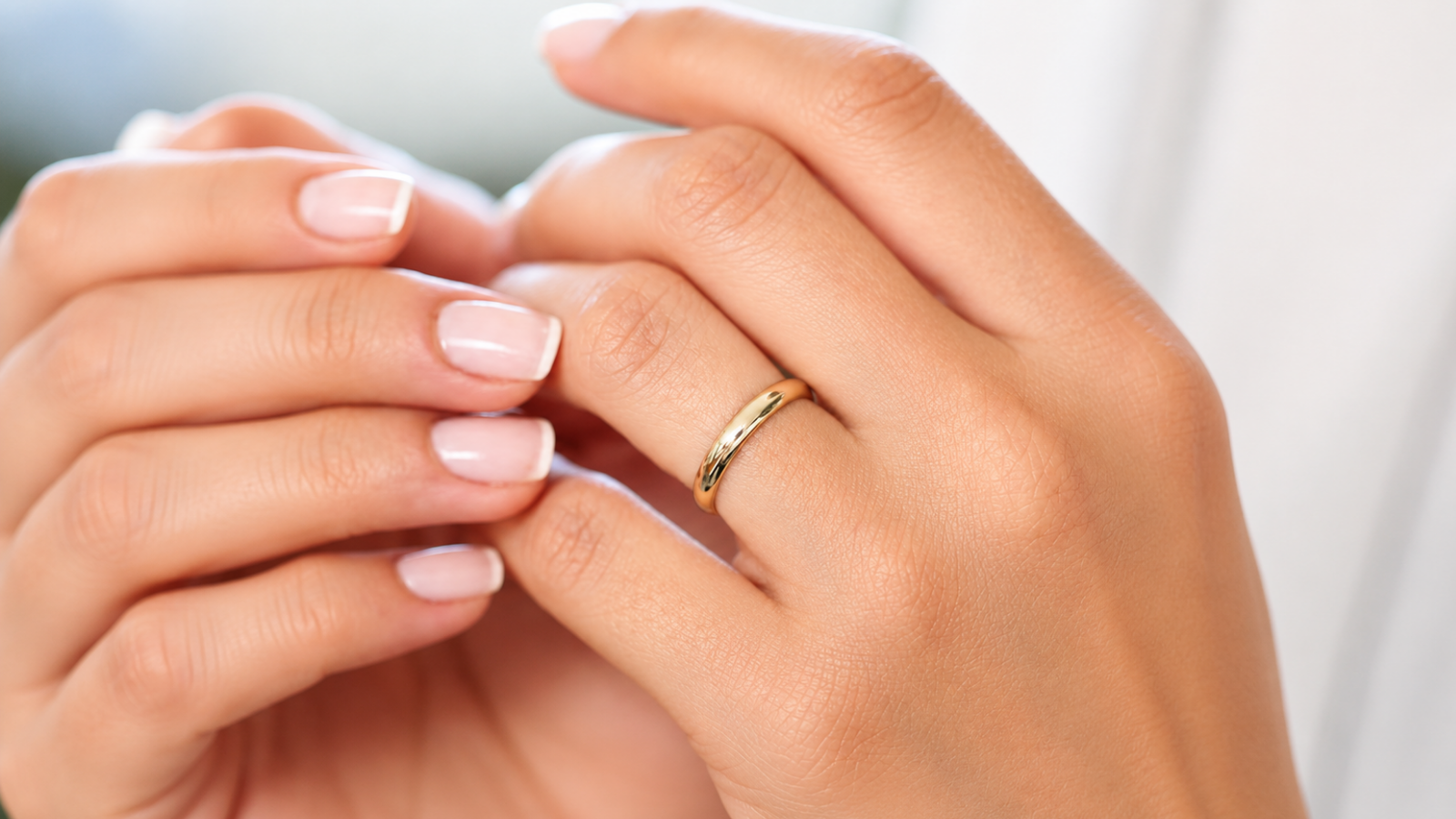
This is a consideration most wedding ring guides skip entirely, and it is genuinely worth understanding before making a final decision. Simple rings and elaborate rings photograph differently — not better or worse, but in specific ways that are worth knowing, especially if the ring-focused photographs from your wedding matter to you.
What polished plain gold does in photographs
A high-polish plain gold band in wedding photography captures light as a single, clean arc of reflection — the ring reads as one coherent luminous object. In close-up ring shots, the simplicity of the form is magnified and the quality of the finish becomes very evident. A well-polished plain band from a quality jeweler photographs with an almost graphic clarity: the ring as an object is undeniable.
In group shots or wider angles, a plain band can be less immediately visible than a diamond ring, which catches light from multiple small reflections across its surface. This is a known characteristic of plain bands, not a flaw — it simply means that ring-focused wedding photographs will be closer shots for a plain band than they might be for a more elaborate ring. A conversation with your photographer in advance helps them plan for it.
Thin bands and close-up photography
Very thin bands (1.5mm and under) can be difficult to capture clearly in wider shots and in certain outdoor lighting conditions. Photographers who work regularly with minimalist rings often compensate by shooting closer and at angles that allow the band to be in sharp focus with the hand slightly oblique. The result can be exceptionally beautiful — the delicacy of the band becomes a visual asset at close range rather than a limitation.
If you choose a very thin band and ring photographs matter to you: let your photographer know the width in advance. It is a simple adjustment to plan for, and it makes a real difference in how the shots turn out.
Matte finishes and flatlight photography
Matte and brushed finish bands photograph differently from polished ones under the same conditions. In the diffused light common in many indoor venues, a matte band can appear almost flat — the absence of specular reflection means it does not pick up light the way a polished band does. In directional natural light, the same matte band can look strikingly textured and dimensional.
Neither is a problem, but it is worth discussing the lighting conditions of your ceremony and reception with your photographer so they can plan how to shoot the ring accordingly. Matte finishes can be some of the most beautiful in the right light — they just require a slightly different approach to capture well.
Simple Wedding Rings by Metal
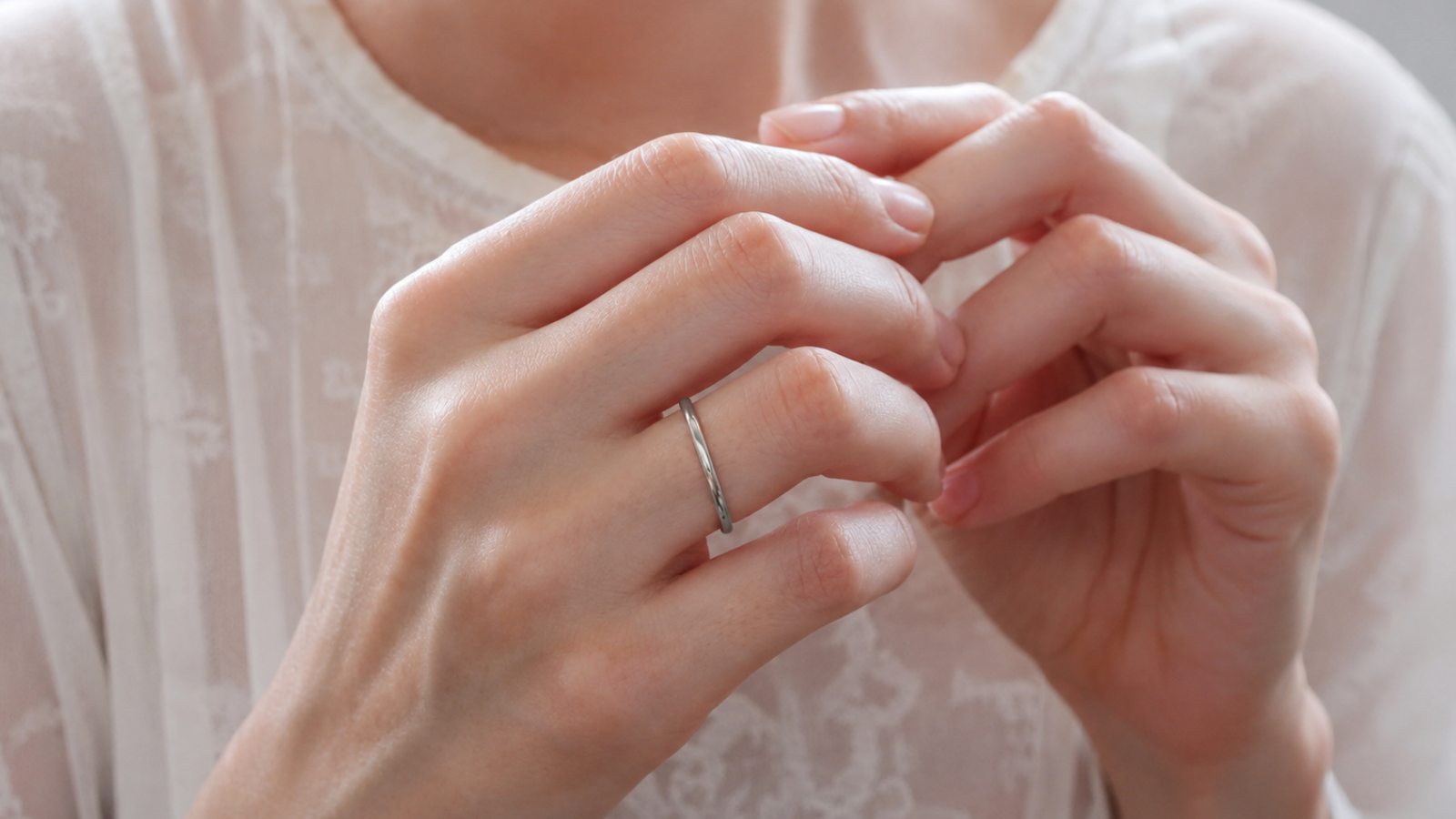
Metal choice is the single most consequential decision in a simple wedding ring. With no stones or elaborate decoration to draw the eye, the metal is what the ring is — its color, its surface quality, and its behavior over time are the ring’s entire aesthetic. The following covers what each metal does well, what it requires, and which situations tend to suit it best.
Yellow gold
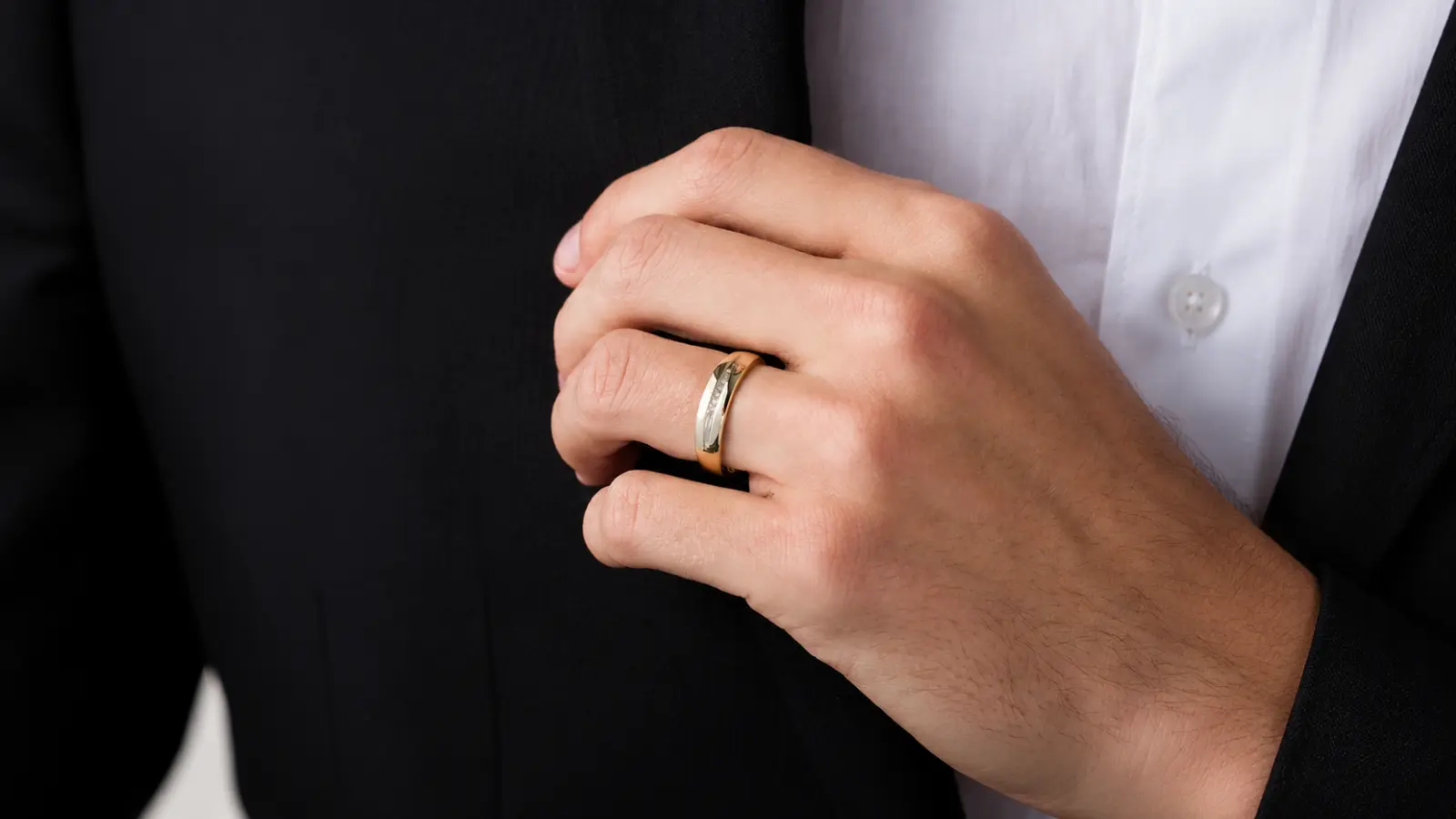
Yellow gold is the most traditional wedding ring metal and, for many women, the most immediately recognizable as such. Its warmth suits a wide range of skin tones — particularly olive, warm neutral, and deeper skin tones — and it pairs naturally with vintage, antique, and Art Deco engagement ring styles. It is the metal most associated with the quiet luxury aesthetic because it does not try to approximate another material; it simply is what it is.
Yellow gold’s behavior over time is worth understanding: it develops a gentle patina as tiny surface scratches accumulate and reduce the reflectivity of the surface. Many women come to prefer this to the original factory finish — the ring begins to look worn-in and specific rather than new. A jeweler can re-polish it to factory condition at any point, but this is a choice, not a necessity.
Platinum
Platinum is the densest and most durable precious metal used in jewelry. It does not wear down in the way gold does — instead of losing material with surface scratches, platinum displaces metal from one place to another, developing a patina that can be removed by re-polishing if desired. It is naturally white and does not require rhodium plating to maintain its color (unlike white gold), and it is hypoallergenic, which matters for women with metal sensitivities.
Platinum suits cool skin tones and pairs naturally with white diamond engagement rings and white metal settings. In a thin simple band, platinum’s weight is perceptible — it is noticeably heavier than gold of the same dimensions, which some women find grounding and others find uncomfortable. Platinum rings typically cost more than gold rings of the same design, reflecting the metal’s higher density and market price.
White gold
White gold is yellow gold alloyed with palladium or nickel to produce a white or silver-colored metal, then typically plated with rhodium to achieve the bright white finish most associated with white gold jewelry. The critical thing to know: the rhodium plating wears off over time, typically within one to five years of daily wear depending on the ring’s surface area and the wearer’s chemistry. When it does, the underlying yellow-white color of the gold shows through.
For a simple plain band, re-plating is a straightforward and relatively inexpensive service that any quality jeweler can provide. Some women schedule it every two to three years as routine maintenance; others let the ring gradually shift to its natural color and have it re-plated only when they notice the change. This is an ongoing maintenance consideration that platinum does not require — one reason many women with a strong preference for white metal choose platinum for a ring they plan to wear indefinitely.
Rose gold
Rose gold suits warm and medium skin tones particularly well, and the copper alloy that gives it its pink-bronze color also makes it somewhat harder than yellow gold of the same karat — a 14k rose gold band is slightly more durable than a 14k yellow gold band in terms of scratch resistance.
One practical consideration specific to rose gold: it does not pair with white metal engagement rings as naturally as yellow gold or white metal bands do. A rose gold band next to a platinum-set solitaire can look like a mismatch rather than a deliberate design choice. Women with yellow gold or rose gold engagement ring settings, or those who wear the wedding ring independently of an engagement ring, tend to find rose gold more versatile in practice.
A note on skin tone and metal color
The relationship between skin tone and ring metal is a guideline, not a rule — and many women wear metals outside the conventional recommendations with results they prefer. That said, the conventional guidance reflects a genuine optical principle, and seeing it laid out clearly can help narrow the decision:
- Cool skin tones (pink, blue, or purple undertones) tend to be flattered by platinum and white gold
- Warm skin tones (yellow, peach, or olive undertones) tend to be flattered by yellow gold and rose gold
- Neutral skin tones work well with most metals, which gives the most flexibility
- Deeper skin tones tend to look particularly striking with yellow gold, which provides high contrast and warmth
The most reliable way to assess this is to hold actual rings of different metals against your inner wrist in natural daylight. The vein color on your wrist indicates skin undertone, and natural light reveals how each metal reads against your specific coloring. Any jeweler will allow you to do this during a fitting — and it takes about two minutes to learn something that photographs will never tell you.
Comfort and Lifestyle Fit
The most overlooked consideration in wedding ring shopping is also the most practical: the ring needs to work for the life the person wearing it actually lives. A ring that is beautiful in a display case and uncomfortable to wear during a twelve-hour workday is not the right ring, regardless of how it photographs. For women who choose simple rings, this is often an easier conversation to have because the simplest designs are also, frequently, the most practical ones.
Interior profile — comfort fit vs. standard fit
A comfort-fit ring has a rounded interior, so the ring slides onto and off the finger with less friction and sits with less pressure when worn. A standard-fit ring has a flat interior, which is slightly less comfortable for all-day wear but allows for a more consistent interior surface — useful for engraving and for rings with interior detailing.
For women who have never worn a ring every day, comfort fit is almost always the better choice — particularly in widths above 2mm where the flat interior of a standard band can be noticeable against the knuckle. Many women who switch from a standard-fit band to a comfort-fit band report that they forget they are wearing it within the first week. That is probably the most useful endorsement of the option.
Professions and activities that affect the choice
Medical and healthcare professions involve frequent handwashing, glove use, and proximity to patients — most women in these fields find that a plain, smooth-exterior band with no prongs or stones is the most practical choice, and many hospital policies require removing rings with prong settings. A plain comfort-fit band in 14k gold is one of the most common choices among physicians, nurses, and other healthcare workers who want to wear a wedding ring on the job.
Manual work, athletics, and outdoor professions put different demands on a ring. Very thin bands may be prone to bending in these contexts. Women in these situations often do well with a slightly more substantial plain band (2.5mm to 3mm) in 14k gold or platinum. The popular approach of wearing a medical-grade silicone band during physical work and switching to the gold band for everything else is also worth knowing — it keeps the meaningful ring safe while maintaining the habit of wearing something on the finger.
Office and creative professional environments place the fewest restrictions on ring choice. The full range of simple ring styles is available without practical constraint — which means the decision is purely aesthetic and comfort-based, which is actually the most enjoyable version of this conversation to have.
Why Simple Rings Age Well
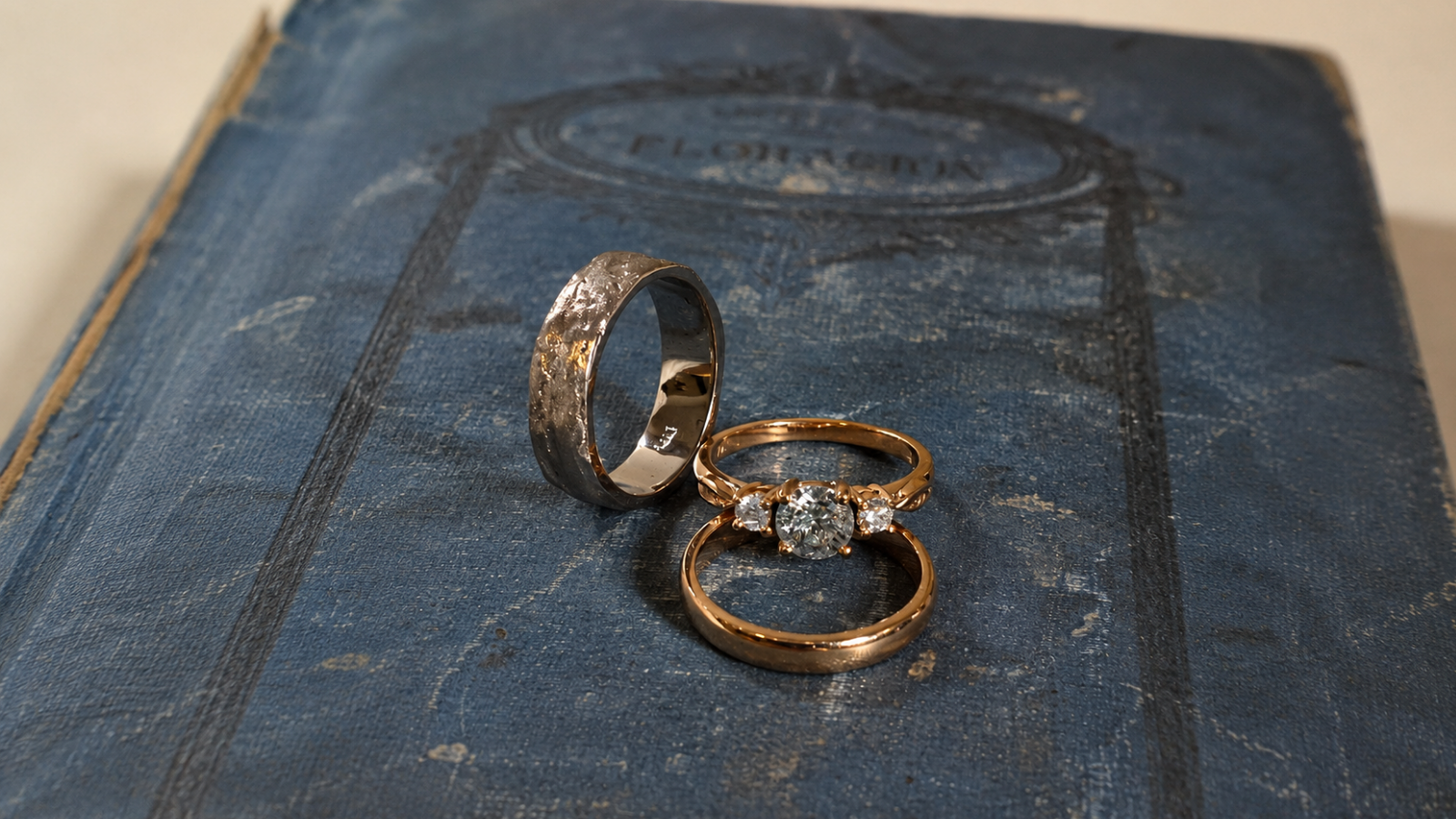
This is the section that matters most to the decision, and the one most guides skip. A wedding ring will be worn for the rest of a marriage — twenty, thirty, fifty years of daily wear. During that time, fashion changes, tastes change, and the trends that felt current in the year the ring was chosen will move through several cycles of being current, dated, and perhaps nostalgic again. The question worth asking before any ring purchase is: will I still be glad I chose this in thirty years?
Simple rings have a specific advantage in answering that question honestly: they were not designed to be current. A plain gold band or a thin diamond pavé ring was not responding to a trend when it was made. It was responding to a formal and very old question — what is the most beautiful, lasting, and appropriate expression of a marriage commitment in metal? — and the answer has been essentially the same for centuries.
What ages less well in ring design
For perspective on why simplicity matters over time: the ring styles that tend to look most dated are those that were designed to be current. Rings that incorporated design elements specific to a particular decade — the yellow gold rope twists of the 1980s, the wide channel-set baguette diamonds of the early 2000s, certain geometric pavé patterns that reached peak saturation in a specific five-year window — are recognizable by era in a way that a plain gold band simply is not. A plain gold band is recognizable as a wedding ring. Nothing else. That distinction becomes more meaningful, not less, over decades of wear.
Patina and physical aging
A gold band worn every day for thirty years develops a surface patina that is distinct from either a new ring or a freshly polished one. Tiny scratches accumulate and soften the reflectivity of the metal, creating what many women — and jewelers — describe as a more beautiful surface than the original. The ring begins to look inhabited. This process is not a defect; it is the ring’s record of being worn.
For women who prefer their ring to maintain its original finish, re-polishing is available from any jeweler and costs relatively little. But many women who began their marriages preferring a perfectly polished band find, over years of wear, that they stop sending the ring to be polished — and begin to prefer the version it has become.
What simple rings communicate over time
There is a quality that very old, very plain wedding rings communicate that elaborate rings rarely match: the sense that the ring was never the point. A woman who has worn the same plain gold band for forty years has a ring that is clearly not performing wealth, not demonstrating taste, not competing with anyone else’s ring. It is simply the physical sign of a commitment, worn so long it has become part of the hand. That is, for many people, the most moving thing a wedding ring can be.
How to Choose a Timeless Wedding Ring
The decisions that produce a ring that will still feel right in thirty years are different from the decisions that produce a ring that photographs beautifully at the wedding. Both matter — but understanding the difference between them clarifies the choice significantly.
Start with the engagement ring, if applicable
If you have or plan to have an engagement ring, the wedding band needs to be considered in relation to it. The most important practical questions: Does the engagement ring have a standard round shank, or a wave, scroll, or shaped setting that requires a contoured band to sit flush? What metal is the engagement ring’s setting — and is the wedding band you are considering the same metal or a compatible one? A plain gold band in the same metal as the engagement ring setting is one of the most reliable pairing choices because it creates visual continuity without demanding perfect design coordination.
Try it on your actual hand in natural light
Photographs of rings — even good ones — are unreliable guides to how a ring looks on a specific hand. Ring width, surface finish, and metal color all behave differently on different hands and in different lighting. A ring that looks substantial in a photograph can appear either larger or smaller than expected on your hand. The only reliable guide is an actual fitting, with the ring on your hand, in daylight if possible. This is not optional advice; it is the most useful thing you can do in this process.
Think about engraving now, not later
A plain band’s interior is the natural location for an engraving — a date, initials, a phrase, a place, a small symbol. Many couples who choose simple rings add an interior engraving that makes the ring specific to this marriage in a way that is invisible to everyone except the person wearing it. If you plan to engrave, confirm with your jeweler that the width, metal, and interior profile are appropriate for the text or design you have in mind before the ring is ordered. Very thin bands (under 2mm) and comfort-fit interiors can limit engraving options.
Choose quality over embellishment
For a simple ring, the budget allocation that most consistently produces a ring people are glad they chose is toward material quality and craftsmanship rather than additional design elements. A plain band in 18k gold from a quality jeweler will outlast and outperform a more elaborate band in lesser materials in both appearance and durability. The design does not need to justify the cost — the metal and the making do.
Questions worth asking your jeweler
- What is the interior profile of this ring — comfort fit or standard?
- Is this a solid band or is the metal hollow in any part? (Hollow bands are lighter but less durable over time)
- What finish is on the exterior, and how does that finish behave with daily wear?
- Can this ring be resized if needed in the future? (Some metals and some styles resist resizing)
- What does the warranty or service policy cover for normal wear over time?
- If I choose diamonds, how are they set, and what is the maintenance expectation for that setting?
These are not difficult questions for any jeweler who works with simple rings regularly. The quality of the answers will tell you a great deal about whether you are in the right place.
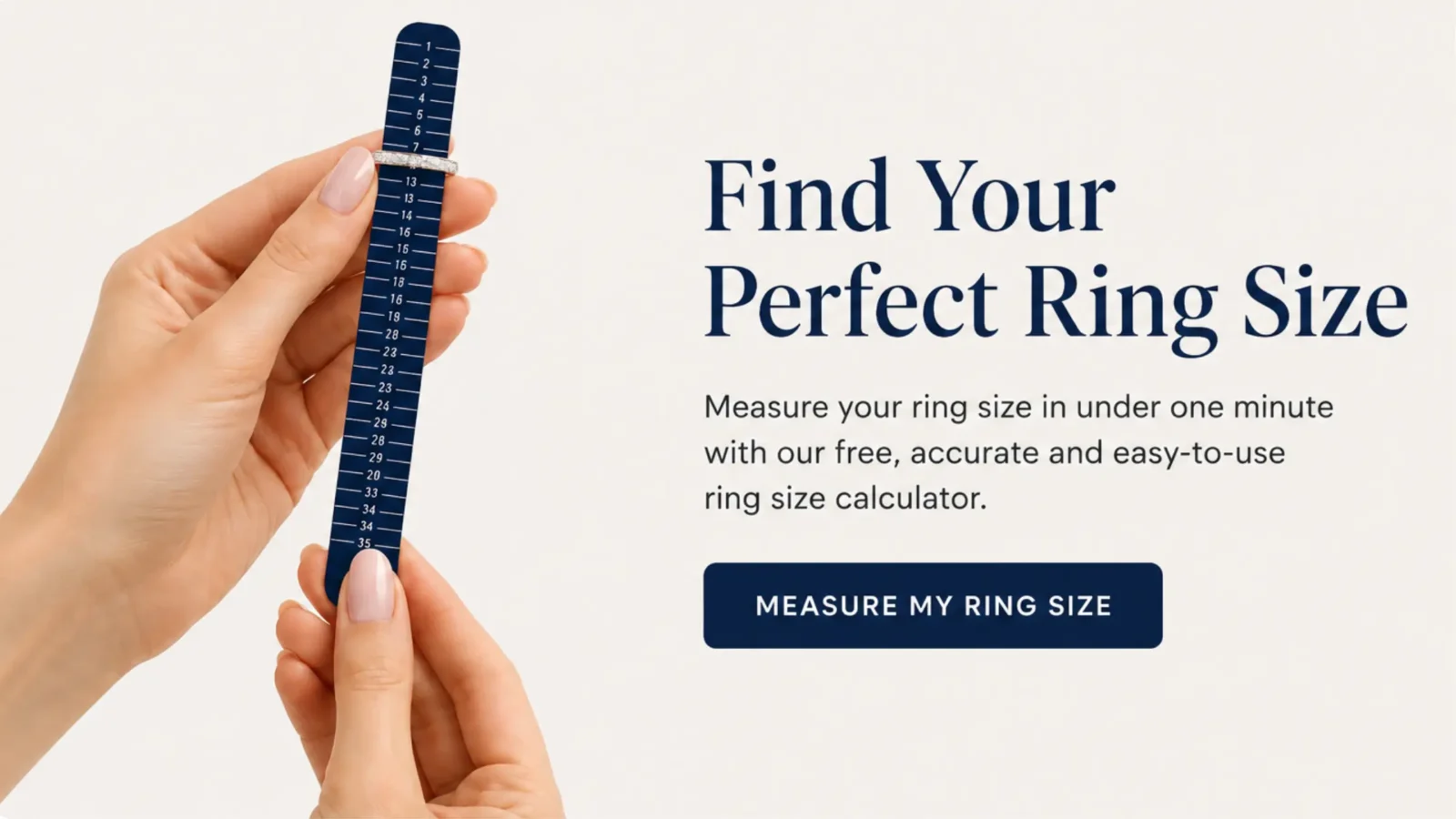
Find Your Ring Size Before You Order
Measure an existing ring, enter a known measurement, or measure your finger at home. Get your US size and international conversions instantly.
Simple Wedding Ring Inspiration
Simple wedding rings for women focus on timeless details, beautiful materials, and designs made for everyday wear. Explore our inspiration board for classic gold bands, thin wedding rings, minimalist diamond styles, and elegant ideas that prove simple designs can still feel meaningful and personal.
Choosing a Simple Wedding Ring That Lasts
A simple wedding ring is not what you choose because you cannot decide on something more elaborate. It is what you choose when you understand what you truly want: a ring that feels natural in your everyday life, reflects your personal style, and continues to feel meaningful through years of wear.
Whether you choose a plain gold band, a thin minimalist ring, or a simple design with a small diamond detail, the best wedding ring is not the one that follows every trend. It is the one that still feels like yours long after the wedding day has passed.
Frequently asked questions (FAQ)
What are the best simple wedding rings for women?
The best simple wedding rings for women are designs that balance timeless style, comfort, and everyday durability. Popular choices include plain gold bands, thin wedding bands, platinum bands, and minimalist diamond rings. The best option depends on your lifestyle, personal style, and whether you plan to wear the ring alone or with an engagement ring.
Do simple wedding rings look cheap?
No. A simple wedding ring does not look cheap when it is made with quality materials and good craftsmanship. A plain gold or platinum band can look elegant and intentional because the focus is on the metal, shape, and finish rather than extra decoration. Poor quality makes a ring look cheap — not simplicity.
What is the most timeless wedding ring style for women?
A plain gold wedding band is one of the most timeless wedding ring styles because its design has remained meaningful across generations. Simple rounded bands, comfort-fit bands, and minimal diamond accents tend to age well because they are not strongly connected to one temporary trend.
Is a simple or diamond wedding ring better?
Neither choice is better for everyone. Simple wedding rings are usually easier to maintain, comfortable for daily wear, and naturally timeless. Diamond wedding rings add sparkle and detail but may require more care depending on the setting. The best choice depends on lifestyle and personal preference.
What metal is best for a simple wedding ring?
Gold and platinum are the most common choices for simple wedding rings. Yellow gold offers a classic and traditional appearance, platinum is valued for durability and its naturally white color, and rose gold or white gold may suit different style preferences. The best metal depends on daily wear, maintenance, and personal taste.
What width should a simple wedding band be?
Many women choose simple wedding bands between about 1.5mm and 3mm wide. Thinner bands create a delicate look and pair easily with engagement rings, while slightly wider bands feel more noticeable and can work well when worn alone.