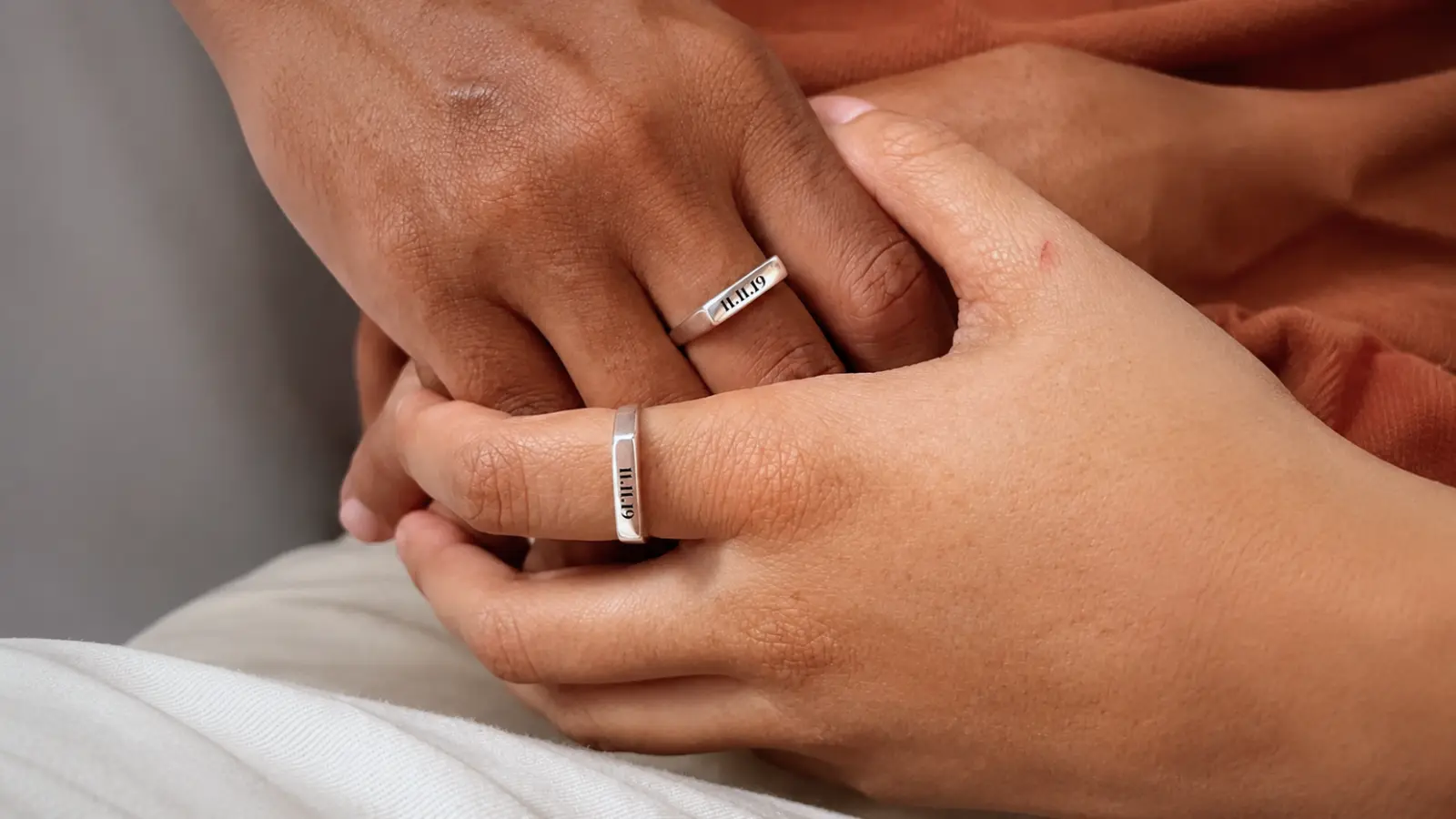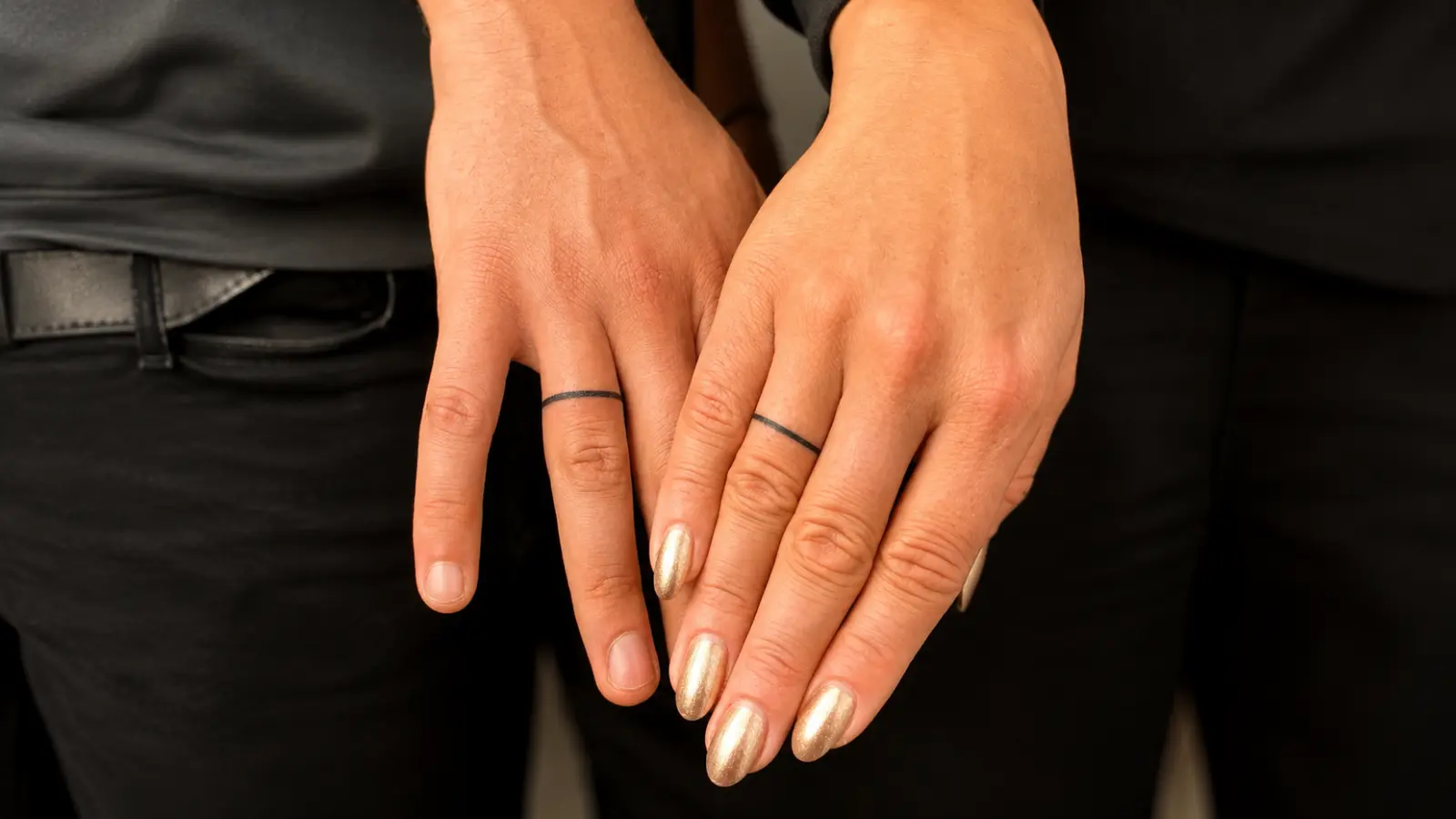
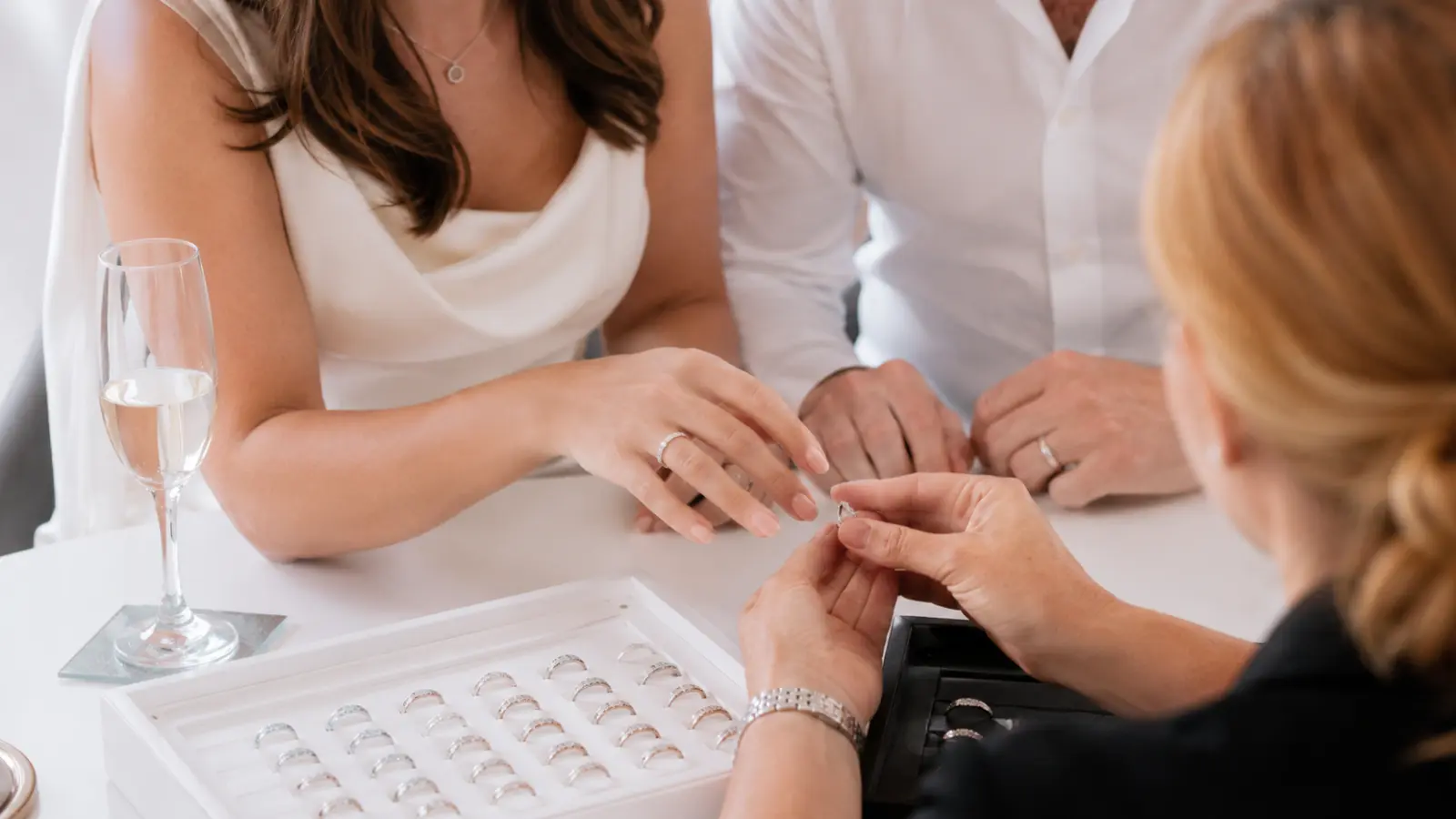
Who buys the wedding rings traditionally depends on wedding etiquette, but the classic American custom is that each partner buys the other person’s wedding ring. Traditionally, the groom buys the bride’s wedding band, while the bride buys the groom’s wedding band.
Today, many couples approach wedding ring buying differently. Some purchase both rings from a shared wedding budget, some split the cost, and others each choose and pay for their own ring based on what works best for their relationship and finances.
This guide explains who buys the wedding rings according to tradition, who pays for each wedding band today, modern wedding ring etiquette, how couples split costs, and how to talk about the wedding ring budget before buying.
Traditional Wedding Ring Buying Etiquette
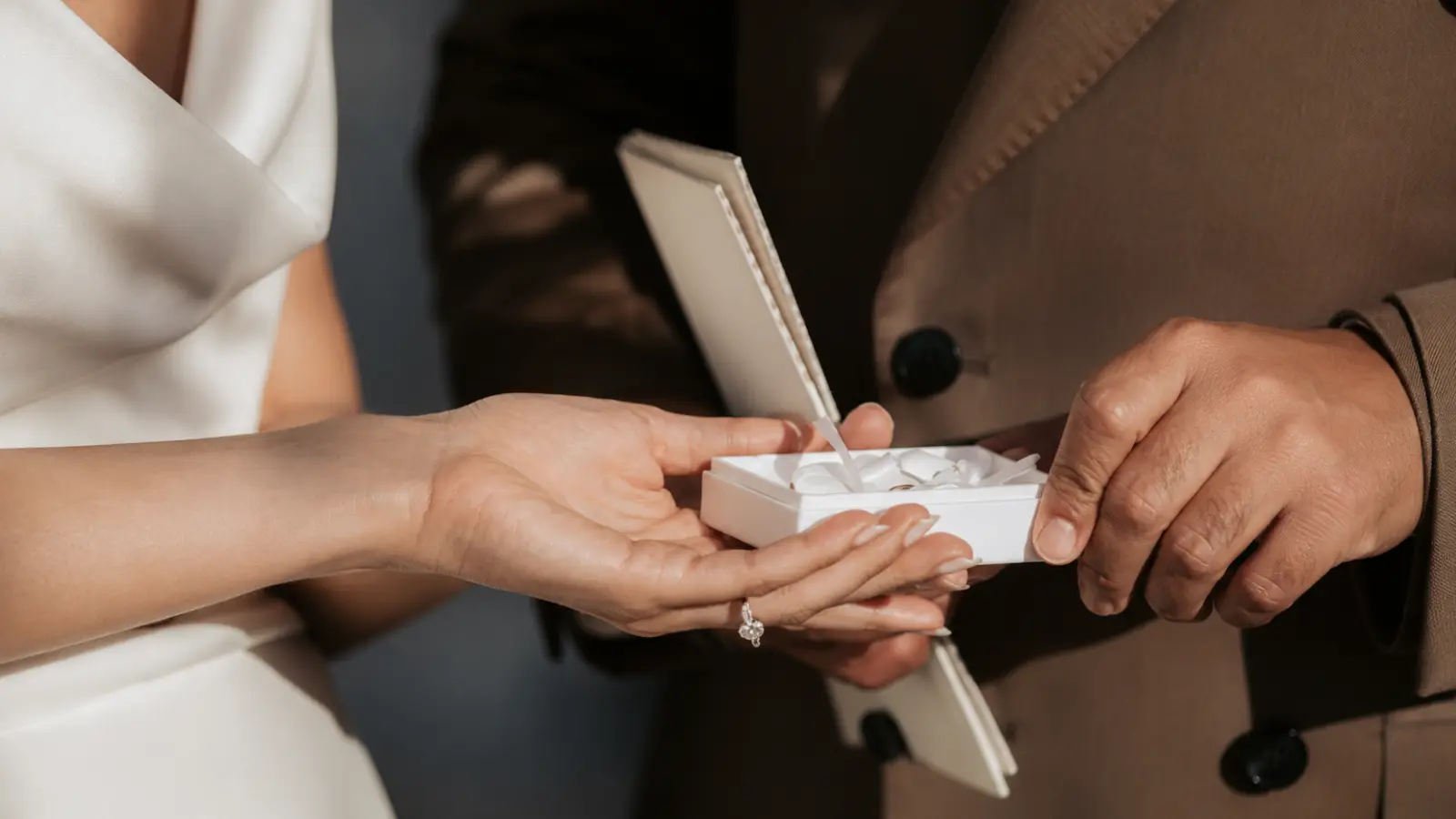
The traditional American etiquette rule is straightforward: each partner buys the other’s wedding ring. The groom purchases the bride’s band; the bride purchases the groom’s band. This creates a symmetry in the exchange itself — each person is giving, and each person is receiving, and the ring on each finger was placed there by the other.
This convention developed as a natural extension of the engagement ring tradition. Understanding the difference between an engagement ring and wedding ring helps explain why the traditional model assigns each purchase differently. Together, the two purchases represent a kind of financial reciprocity: neither partner simply receiving without also giving.
Where the tradition comes from
The traditional model was built around a specific mid-twentieth century version of American marriage: a heterosexual couple where the man was typically the primary earner, the engagement ring was the man’s responsibility, and the mutual ring exchange at the ceremony was a relatively new convention that needed an etiquette framework. The tradition that emerged — each buys the other’s — made sense within that structure.
That structure describes fewer and fewer couples today. Many couples share finances, enter marriage with established careers and independent incomes, plan weddings as genuinely joint projects, and approach financial decisions collaboratively rather than through assigned roles. The traditional etiquette persists as a known convention, but it now sits alongside several other approaches that are equally common in practice.
Does the tradition still apply?
As a guideline rather than a rule, the tradition remains meaningful for couples who connect the wedding ring meaning to each partner purchasing the ring the other will wear. As a strict obligation, it is observed far less consistently than it once was. The tradition is worth knowing mainly because it explains why the question gets asked at all: without the traditional framework, there would be no convention to follow or depart from, and the question would answer itself.
Who Buys the Groom’s Wedding Band?
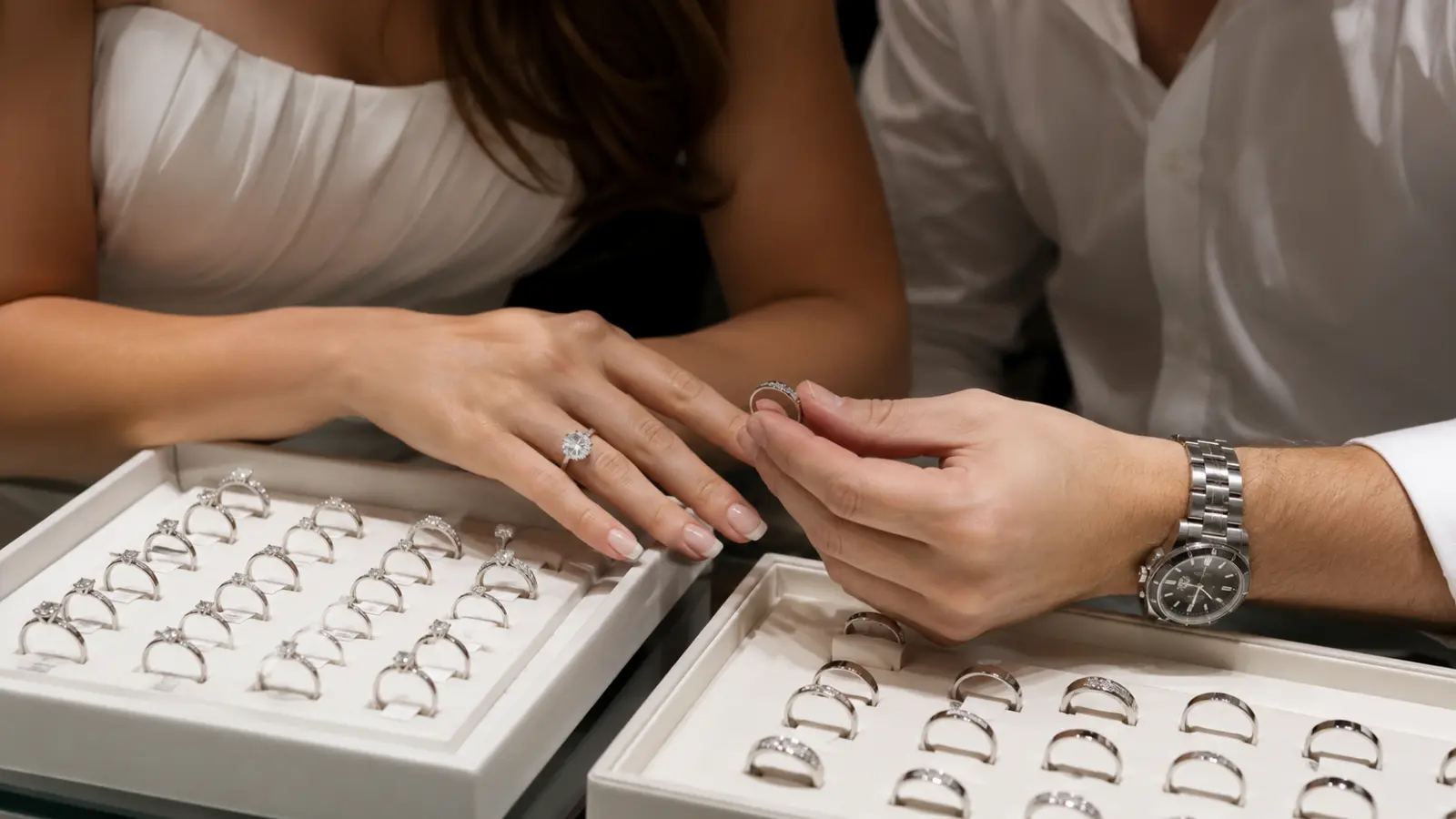
Traditionally, the bride purchases the groom’s wedding band. This is the counterpart to the eTraditionally, the bride purchases the groom’s wedding band. This is the counterpart to the engagement ring: the groom provides the engagement ring and the bride’s wedding band; the bride provides the groom’s. The exchange is mutual — both partners making a financial investment in the ring the other will wear.
In practice, this plays out in a wide range of ways. Some couples follow the traditional model exactly, with each partner independently selecting and purchasing the other’s ring as a kind of gift to be exchanged at the ceremony alongside the vows. Others shop together, choose rings collaboratively, and pay from a joint account — which technically means both rings are purchased jointly rather than by either individual. Some couples each buy their own ring, finding this more practical and more in keeping with how they handle money generally.
What tends to work well
If the traditional model appeals — each partner purchasing the other’s ring as a gift — a few practical adjustments tend to make it smoother. Shop together before the individual purchases happen, so you each know what the other wants, the rings work well as a pair, and you can follow a reliable wedding ring size guide before ordering. A surprise ring purchase runs a real risk of buying the wrong ring: the wrong width, the wrong metal, the wrong fit.
Most couples who follow the traditional model today shop jointly for both rings, then handle the financial piece separately. This preserves the symbolic intent of the tradition without the logistical risk of a fully unilateral purchase. For a closer look at men’s ring options and what to consider when buying, the men’s wedding bands guide covers styles and metals in detail.
Who Buys the Bride’s Wedding Band?
Traditionally, the groom purchases the bride’s wedding band. This extends the engagement ring convention — in which the groom provides the ring at the proposal — into the wedding band purchase as well. Under the traditional model, the groom’s ring-related financial responsibilities include both the engagement ring and the wedding band. The bride’s responsibility is the groom’s wedding band.
For couples following this framework, the bride’s wedding band is often purchased alongside or shortly after the engagement ring, since both are the groom’s responsibility and it is efficient to handle them together. Some couples use the same jeweler for both to ensure the rings coordinate in metal and finish.
When the traditional model doesn’t fit
The traditional approach places a significant financial burden on the groom — engagement ring plus bride’s wedding band — while the bride’s contribution covers only the groom’s band. For many couples, this imbalance does not reflect the financial reality or the spirit of their relationship. Both partners may be equally capable financially. Both may have strong opinions about what each ring should look like. Both may prefer to approach the purchase as a joint decision rather than a set of separate assigned tasks.
In these cases — which describe a large share of contemporary couples — departing from the traditional model is not a breach of etiquette. It is a reasonable adaptation to a different financial and relational reality. The tradition was designed for a specific model of marriage. If that model does not describe your relationship, the etiquette that grew from it is not necessarily the most useful framework for your situation. Explore what is available for her at the wedding rings for women guide.
Do Couples Usually Split the Cost?
Many couples today pay for both wedding rings from a shared wedding budget — a category that sits somewhere between the traditional model and each person buying independently. Rather than assigning purchases by role, many couples establish one total budget for both rings and then explore his and hers wedding rings based on each person’s preferences. It is a practical approach that appeals to couples who manage finances jointly, treating the rings the same way they treat every other wedding expense.
When ring costs are unequal
A practical reality worth naming: the two rings often do not cost the same amount. A diamond-set wedding band costs more than a plain metal band. Platinum runs higher than gold at the same width. If one partner wants a more elaborate ring than the other, the total will not divide evenly — and trying to force equality can mean one partner settles for a ring they do not love, or the other gets a more expensive ring than they wanted just to balance the numbers.
A more useful framing is a total budget for both rings rather than a per-ring budget. Within the total, each person gets the ring they want, and the allocation reflects those preferences rather than an arbitrary rule about equal spending. If one ring costs $400 and the other costs $1,200, and a combined $1,600 works for the budget, that conversation is simpler than it might initially seem. For couples who are working with tighter numbers, the affordable wedding rings covers what is genuinely available at lower price points.
Each person buying their own ring
Some couples each buy their own wedding ring independently — selecting, sizing, and paying for the ring they will wear themselves. This approach gives each partner full agency and avoids any financial negotiation between the two purchases. The main consideration is coordination: rings bought separately may not match in metal, width, or overall aesthetic. Couples who want matching wedding bands should compare both rings before finalizing separate purchases.
Modern Wedding Ring Etiquette
Contemporary wedding ring etiquette is less a set of rules and more a set of reasonable principles. The tradition exists, most couples know it, and most feel free to adapt it. What has replaced the traditional model as the dominant convention is not a single alternative — it is the understanding that the couple determines the approach that makes sense for them, and any approach they agree on is the right one.
Both partners should be involved in the decision
Whatever the financial arrangement, both partners should have meaningful input into what both rings look like. A ring purchased entirely without the wearer’s input — even a well-intentioned surprise — runs a real risk of being the wrong ring for someone who will wear it every day for decades. Input does not have to mean joint shopping at every step; it can be as simple as knowing the wearer’s preferences, size, and style before making a solo purchase. Some form of consultation tends to produce a better result than a fully unilateral decision about a ring someone else will wear.
The financial arrangement should reflect how the couple actually manages money
Couples who have separate finances and handle purchases independently may find the traditional model — each buys the other’s ring — feels natural. Couples who share all finances and make joint purchases together may find a shared budget approach more consistent with how they handle everything else. Couples with one higher earner may find it more honest to acknowledge that the ring budgets come from a household income rather than assigning purchases that imply equal individual financial standing. The etiquette framework should serve the relationship, not the other way around.
No approach requires justification
If anyone — a parent, a vendor, a well-meaning friend — questions why you are not following the traditional model, a brief and confident explanation is more than sufficient. “We handled it differently” covers the full range of modern alternatives without inviting further commentary. Wedding ring etiquette is a guideline, not a legal or ceremonial requirement, and couples are not accountable to it in the way they are accountable to, say, the marriage license.
Same-Sex and Non-Traditional Couples
The traditional wedding ring etiquette model was designed around a specific set of gender role assignments that do not apply to same-sex couples — and that an increasing number of different-sex couples also find do not fit their relationship. For these couples, the traditional framework is not a starting point that needs modification. It simply does not translate.
Same-sex couples typically approach the wedding ring purchase the same way many modern couples do: as a joint decision from a shared budget, as individual purchases each partner handles for their own ring, or as some version of the traditional exchange model adapted to fit their relationship. There is no established etiquette convention specific to same-sex couples for ring purchasing, which means each couple determines the approach that fits without a specific tradition supporting or constraining the decision.
The freedom in the absence of convention
For couples who do not fit the traditional model neatly, the absence of a specific prescribed convention is, practically speaking, a form of freedom. There is no authority to consult and no tradition to feel pressure to follow or deliberately depart from. The question of who buys the wedding rings is answered entirely by what the couple decides — which is, arguably, how it should be answered for every couple, regardless of what tradition historically prescribed.
What tends to matter most — for same-sex couples, for non-traditional couples, and for couples who simply want to think clearly about the decision — is that both partners end up with rings they genuinely want to wear, and that the financial arrangement reflects how the couple actually relates to money in their shared life. That outcome is achievable through any of the approaches described here.
How to Talk About Budget Without Making It Awkward
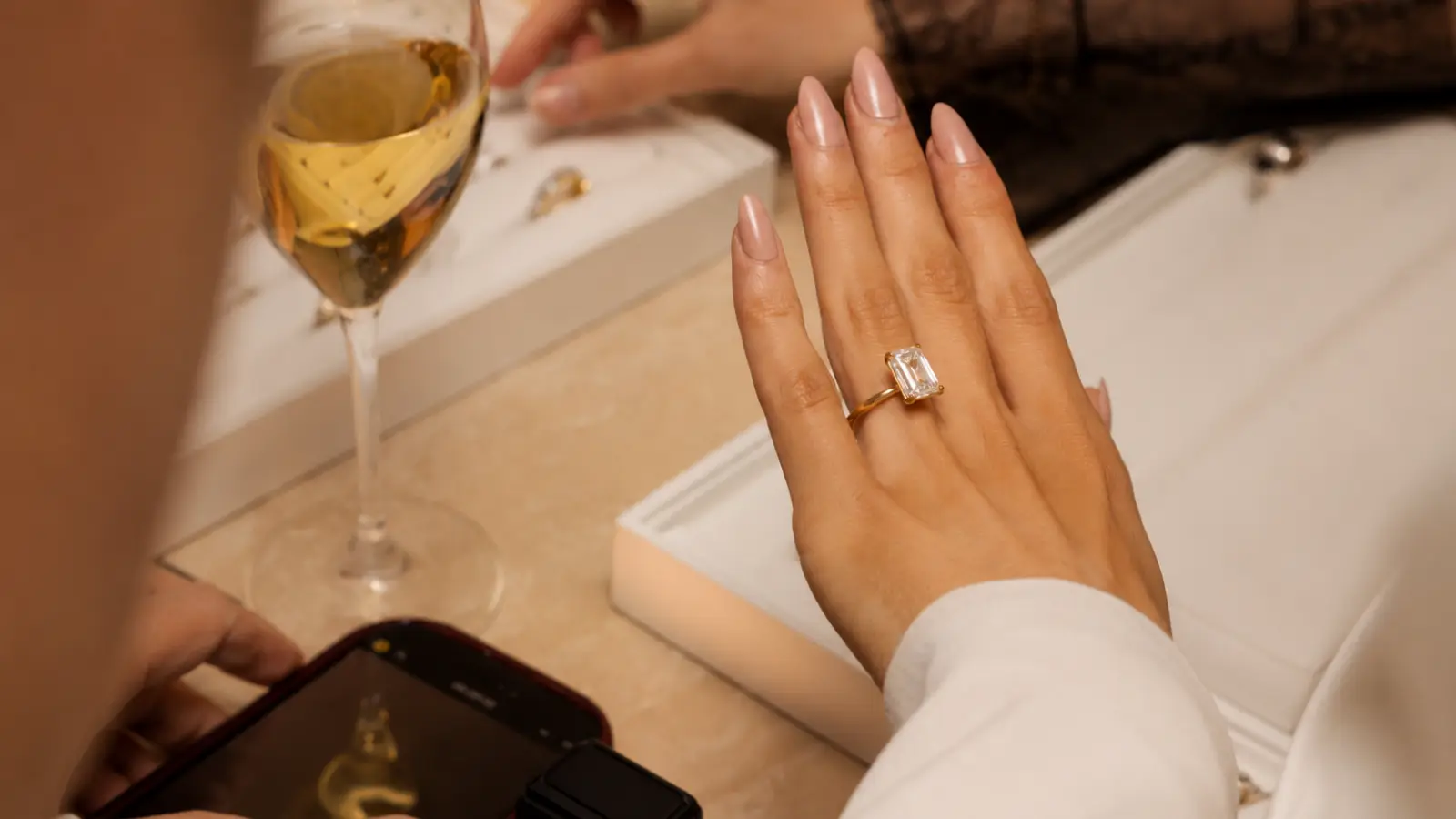
The ring budget conversation has a reputation for awkwardness that it does not entirely deserve. Most of the discomfort comes from approaching it indirectly — talking around numbers, assuming the other person has the same expectations, or discovering a significant mismatch in assumptions during an appointment at a jeweler when it is too late to reframe things comfortably.
The most effective approach is direct and early: agree on a total budget for both rings before walking into any store or browsing any price ranges. A specific number, or a specific range, makes every subsequent decision easier. Within a known budget, the conversation about which ring costs how much becomes a practical allocation discussion rather than a negotiation about unspoken expectations.
Starting the conversation
The easiest entry point is the wedding budget overall. If you have established a total for the wedding, the rings are a line item in it — the same as the venue or the flowers. Working backward from a total allows both of you to think about what proportion feels right for the rings, which produces a number to start from without either person having to propose a figure in isolation.
If you have not established a wedding budget yet, the rings can actually be a useful place to start. They require a concrete number early in the planning process, and working through the ring budget often surfaces useful information about how aligned your spending instincts are more broadly. Better to find that out over ring shopping than over venue deposits.
When one person wants to spend significantly more
This comes up more often than couples expect. One person may have a strong preference for platinum over gold, which costs significantly more. One may want a diamond-set band while the other prefers something plain. These preferences are legitimate, and they do not need to be reconciled into identical spending. What they do need is an honest conversation: what does the total look like, does the allocation between the two rings make sense, and are both people genuinely comfortable with the result?
The goal is not equal spending on both rings. The goal is both partners having a ring they genuinely want to wear every day for the rest of their lives. If that requires an unequal allocation, the unequal allocation is the right answer.
If the conversation surfaces real tension
When the ring budget conversation brings up genuine friction — about money, priorities, or one partner’s expectations feeling unreasonable to the other — it is worth pausing and recognizing what is actually happening. The rings are a relatively small financial decision in the context of a life together. If the conversation around them is difficult, it may be reflecting a broader conversation about money that the wedding planning process is making visible for the first time. That broader conversation is worth having directly, rather than through the proxy of a ring budget discussion.
Wedding Ring Planning Inspiration
Wedding rings are not only about choosing a style they are also part of the wedding planning process and the decisions couples make together. Explore our inspiration board for wedding ring ideas, budgeting tips, matching rings, meaningful traditions, and ways couples choose rings that fit their relationship.
Choosing the Ring Tradition That Works for Your Relationship
Who buys the wedding rings can depend on tradition, personal values, finances, and the way each couple makes decisions together. The traditional approach of buying each other’s rings is still meaningful for many couples, but it is no longer the only accepted way to handle this part of wedding planning.
Whether you follow tradition, split the cost, use a shared budget, or create your own approach, the most important part is choosing rings through a process that feels honest and comfortable for both of you. The meaning of a wedding ring comes from the commitment behind it, not from who paid for it.
Frequently asked questions (FAQ)
Who traditionally buys the wedding rings?
Traditionally, each partner buys the other’s wedding ring. The groom purchases the bride’s wedding band, and the bride purchases the groom’s wedding band. This tradition was based on the idea that both partners exchange a meaningful gift during the wedding. Today, many couples adapt this tradition by buying rings together, using a shared budget, or choosing the arrangement that works best for their relationship.
Who buys the groom’s wedding band?
Traditional wedding etiquette says the bride buys the groom’s wedding band. However, many modern couples handle this differently. Some use a shared wedding budget, some split the cost of both rings, and others have each person purchase their own ring. The right choice depends on the couple’s finances and preferences.
Who buys the bride’s wedding band?
Traditionally, the groom buys the bride’s wedding band, often along with the engagement ring. Today, the bride’s wedding band may also be purchased together as part of the couple’s wedding budget. Modern etiquette focuses more on communication and agreement than following one specific rule.
Do couples buy each other’s wedding rings?
Some couples do. Buying each other’s wedding rings can make the exchange feel more symbolic because each person gives the other something they will wear throughout the marriage. Other couples prefer choosing and paying for the rings together because it feels more practical.
Do couples usually split the cost of wedding rings?
Many couples split the cost or pay for both wedding rings from a shared budget. This approach is especially common when couples already manage finances together. Other couples prefer the traditional method where each person buys the other’s ring. Both options are considered acceptable today.
Is it okay to shop for wedding rings together?
Yes. Many couples shop for wedding rings together because it helps them choose the right style, size, metal, and budget. Shopping together does not take away the meaning of the rings — for many couples, choosing them together makes the experience more personal.