Titanium wedding rings are wedding rings made from titanium, a lightweight and highly durable metal known for its strength, comfort, corrosion resistance, and hypoallergenic properties. Unlike heavier metals such as gold, platinum, or tungsten, titanium offers a barely-there feel that makes it especially appealing for everyday wear.
One of titanium’s biggest advantages is how naturally it fits into daily life. Its light weight makes it popular among people wearing a ring for the first time, while its strength and biocompatibility make it a practical choice for active lifestyles and sensitive skin. However, titanium has important limitations, including surface scratching and limited resizing options.
This guide explains titanium wedding rings, including pros and cons, comfort, durability, titanium vs tungsten, hypoallergenic benefits, resizing limitations, styles for men and women, and how titanium compares with other wedding rings and wedding bands.
What Is Titanium?
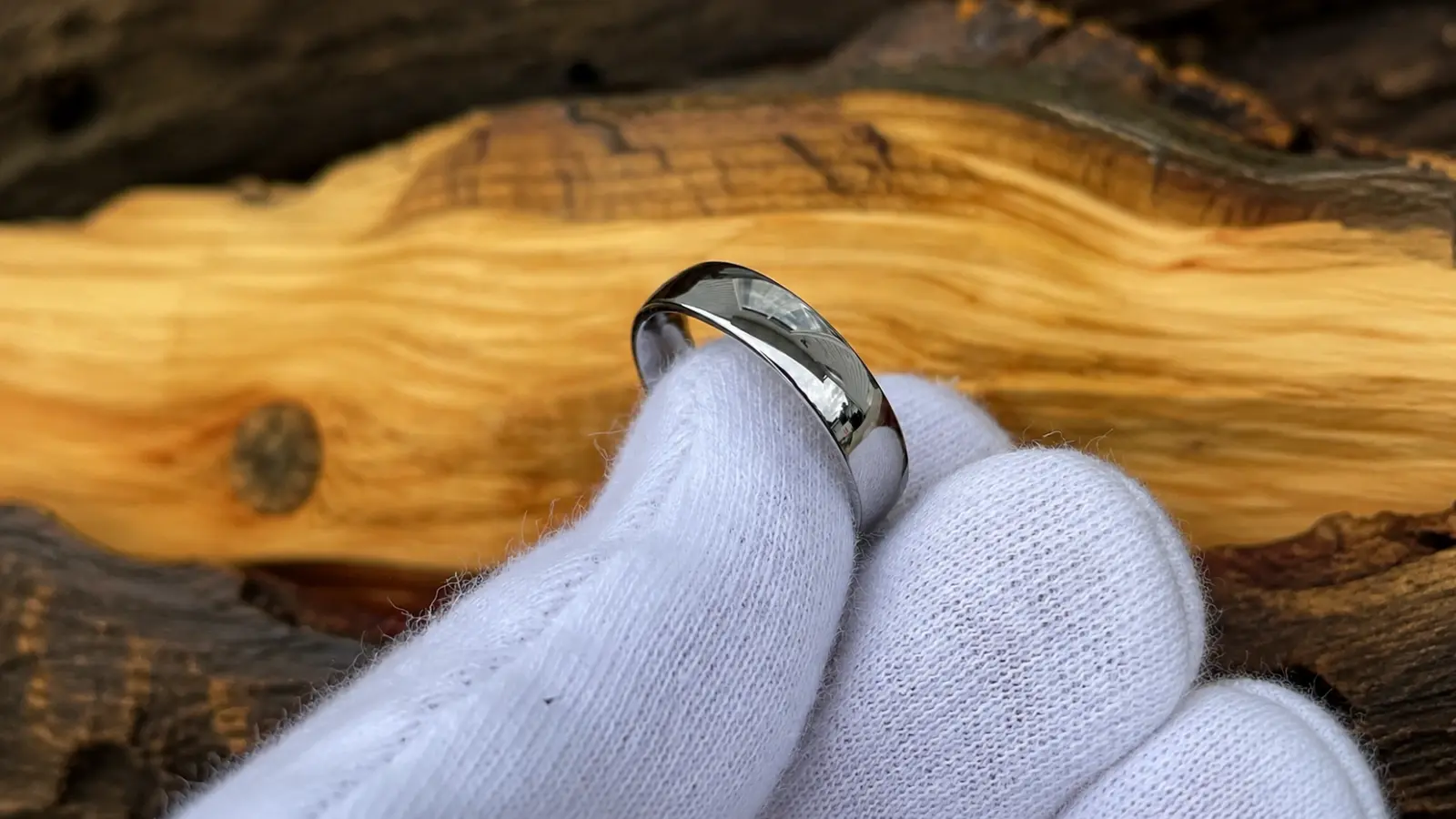
Titanium is a naturally occurring metallic element with one of the highest strength-to-weight ratios of any material used in jewelry. In ring form, it is almost always used as an alloy rather than in pure elemental form. The standard for quality jewelry is Grade 23, designated Ti-6Al-4V ELI — a compound of titanium, aluminum, and vanadium that achieves greater hardness and workability than pure titanium while maintaining full biocompatibility. This is the same alloy used in orthopedic implants and surgical instruments, and its use in wedding rings means the material has been thoroughly validated for long-term skin contact with no adverse effects.
Titanium’s color is a natural silver-gray — cooler and slightly darker than polished silver or rhodium-plated white gold. It can be finished in polished, brushed, matte, or sandblasted surfaces, and it can be anodized to produce blues, purples, and other colors through an electrochemical process that alters the oxide layer on the surface. Those anodized colors are created without coatings or dyes — the color comes from light interference on the oxide layer itself — which gives them a distinctive, slightly iridescent quality unique to titanium.
One practical note worth knowing before you shop: titanium is genuinely difficult to work with using conventional jewelry techniques. It cannot be soldered easily, cannot be cast in the same way as gold, and requires specialized equipment for cutting and finishing. This is why not all jewelers carry titanium, and why resizing a titanium ring is genuinely limited compared to gold. The limitation is a direct result of the material’s strength and how it behaves under heat — not a matter of jeweler preference.
Titanium Wedding Rings: Pros and Cons
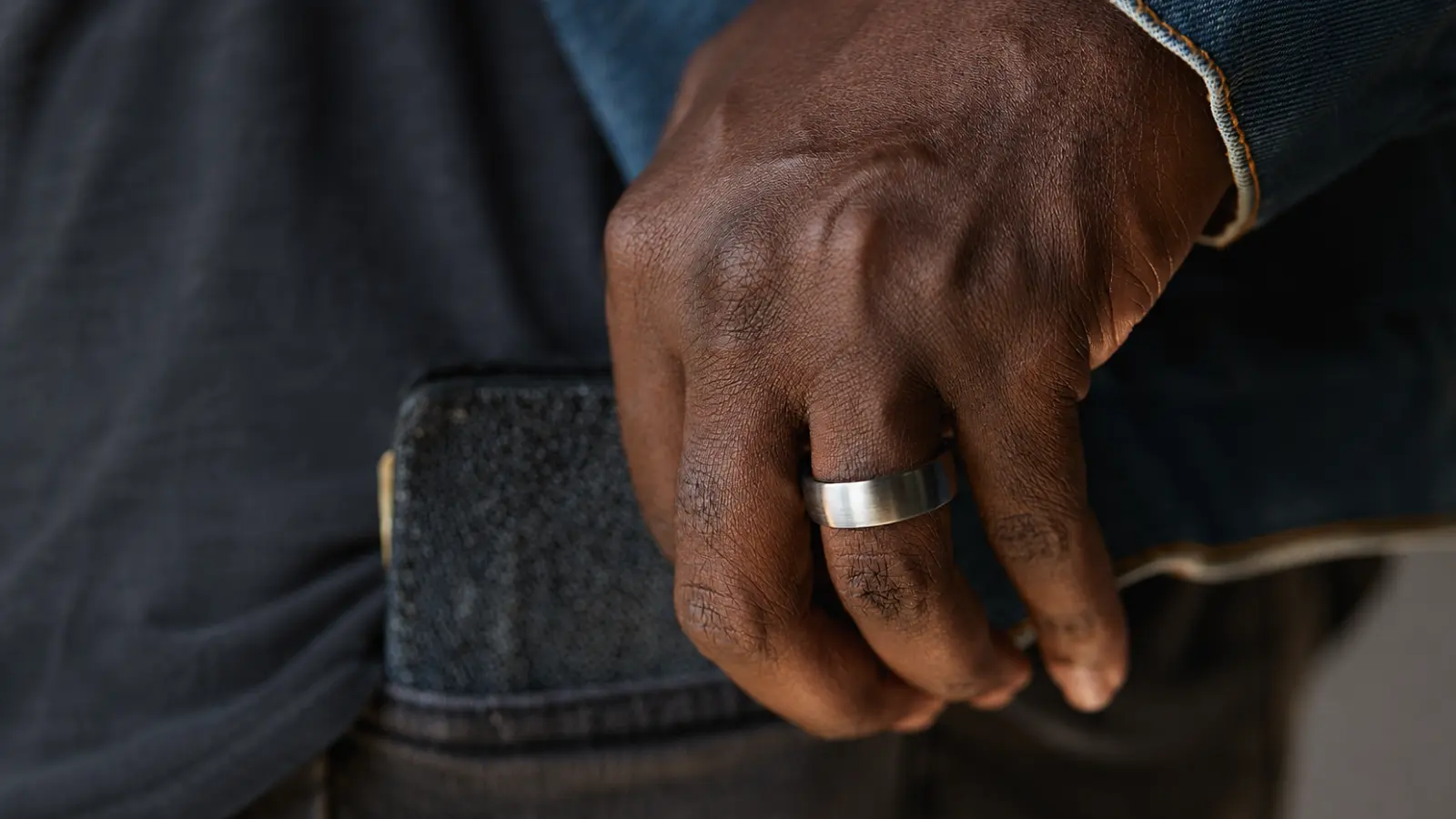
The case for titanium rests on three qualities that reinforce each other: it is light, it is strong, and it is inert. Titanium does not sacrifice one of its core properties to achieve another — which is unusual in materials used for jewelry. Gold achieves beauty and workability at the cost of softness. Platinum achieves durability and prestige at significant cost in both price and weight. Tungsten achieves scratch resistance at the cost of weight and complete inflexibility on resizing. Titanium holds its own ground across all three dimensions without giving one up for another.
The Advantages
Weight is the quality most people notice first and remember longest. A titanium ring of average width feels nearly weightless in the hand and barely perceptible on the finger during a full day. For someone who has never worn a ring and is concerned about adapting to the constant presence of something on their hand, titanium removes much of that friction. Many wearers report forgetting the ring is on entirely — not a description most people apply to gold or tungsten.
Hypoallergenicity is titanium’s strongest advantage for a specific group of buyers. White gold commonly contains nickel, one of the most prevalent contact allergens. Sterling silver contains copper, which causes reactions in some people. Titanium contains neither. It is the same material trusted in surgical implants — applications where incompatibility with human tissue would have immediate consequences. For anyone with a known metal sensitivity or a history of reactions to jewelry, titanium offers a level of confidence that most ring metals cannot.
Corrosion resistance rounds out the practical case. Titanium does not tarnish, rust, or react with sweat, water, chlorine, or salt water. A titanium ring requires no special storage and maintains its surface condition through the demands of daily life without chemical reaction — an advantage over silver and even some gold alloys.
The Limitations
Scratch resistance is the honest gap. Titanium rates around 6 on the Mohs scale — harder than gold and silver, but softer than tungsten carbide at 8.5 to 9.5. Surface scratches will accumulate over months and years, particularly on polished finishes. The good news: unlike tungsten, a scratched titanium ring can be polished or re-brushed by a jeweler. The surface can be restored to close to its original appearance, which makes surface wear a manageable situation rather than a permanent one — but it does require an occasional jeweler visit for people who care about the ring’s appearance.
Resizability is the most significant limitation, and it deserves honest treatment. Titanium can be adjusted slightly, but major wedding ring resizing is generally not feasible. Many jewelers will not attempt any resizing at all and instead offer a size exchange program. Checking your fit with our ring size calculator and confirming the exchange policy before purchase makes this limitation much easier to manage.
Titanium vs. Tungsten: Which Should You Choose?
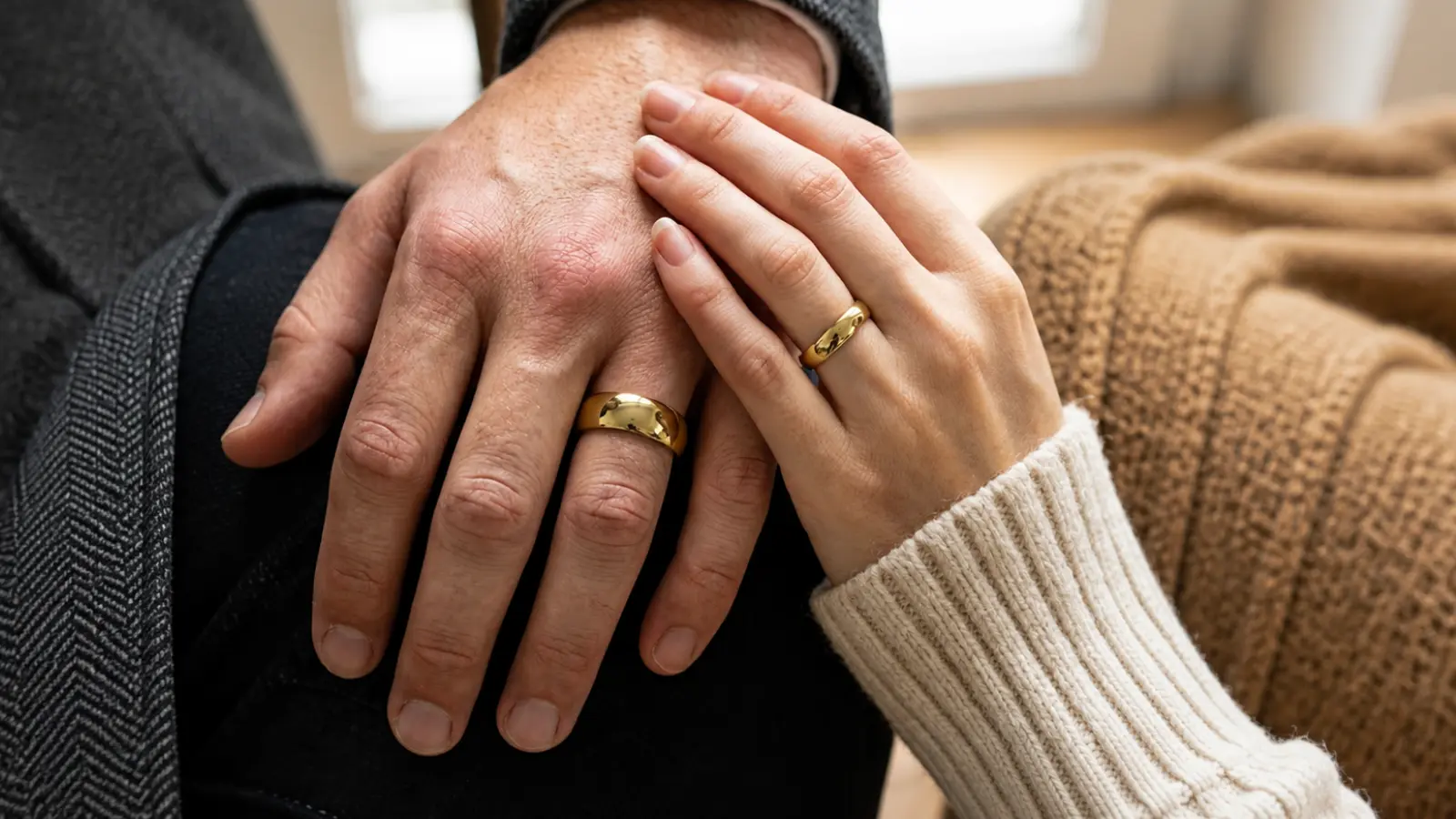
Titanium and tungsten are the two most popular alternative metals in men’s wedding bands, and they share enough in common — similar price ranges, contemporary aesthetic, low maintenance — that the comparison is natural and frequent. But they are genuinely different materials that reward genuinely different priorities. A full breakdown is in our tungsten wedding rings; here is how the comparison plays out on the qualities that matter most.
| Feature | Titanium | Tungsten |
|---|---|---|
| Scratch Resistance | Good (Mohs ~6) | Excellent (Mohs 8.5–9.5) |
| Weight | Very light | Heavy |
| Resizable | Rarely, with limitations | No |
| Emergency Removal | Cut with ring cutters | Cracked with pliers |
| Surface Restoration | Yes — jeweler can re-polish | No — surface cannot be reworked |
| Color Options | Anodized blues, purples, others | Surface coating (black, etc.) |
| Price Range | $50–$400 | $50–$300 |
Scratch resistance is tungsten’s decisive advantage. Tungsten carbide is nearly scratch-proof in daily wear; titanium will show surface marks over time, particularly on polished finishes. For someone who wants a ring that looks the same at year ten without any maintenance, tungsten is the stronger material.
Weight is titanium’s decisive advantage. The difference between the two in the hand is not subtle — tungsten is among the densest metals used in jewelry, titanium among the lightest. For someone who wants a ring that disappears into daily life and does not interfere with grip or movement, titanium is in a different category entirely.
Surface recovery gives titanium a meaningful long-term edge. When a tungsten ring develops deep surface damage, the ring cannot be reworked — it must be replaced or lived with. A titanium ring that has developed scratches can be taken to a jeweler for re-polishing or re-brushing. That ability to restore the ring’s appearance is something tungsten simply cannot offer.
Emergency removal also favors titanium in a practical sense. Titanium can be cut with standard high-quality ring cutters — the tools emergency responders carry. Tungsten must be cracked off with locking pliers. Both methods work safely, but the ability to cut a titanium ring off a swollen finger with a standard tool is a genuine advantage in a medical situation.
The practical summary: if scratch resistance is the priority, choose tungsten. If weight, comfort, surface recovery, and color options matter more, choose titanium. Both are strong alternative wedding rings with different trade-offs, and neither is objectively superior across all situations.
Men’s Titanium Wedding Bands: Styles and Options
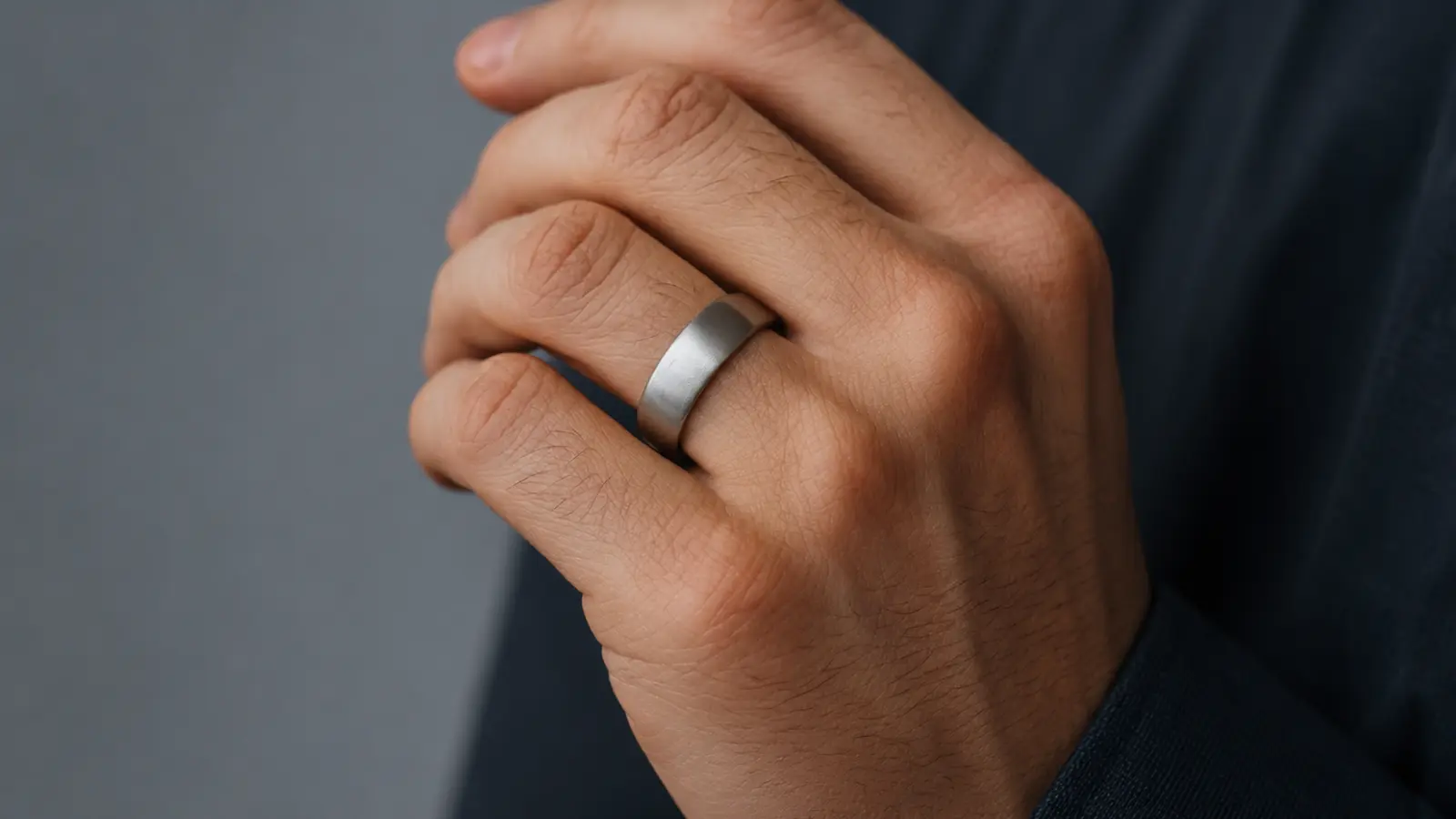
Titanium has become a leading material in men’s wedding bands, and the range of styles available reflects its established position. From minimal high-polish bands to complex inlay designs, titanium covers a broad range of aesthetics — including some that are only possible in this specific material.
Width and Finish
The most popular widths for men’s titanium bands run from 6mm to 8mm, with 6mm being a versatile choice that reads as substantial without overwhelming a medium or slim hand. Men with larger hands or stronger aesthetic preferences often move to 8mm or 10mm for more visual presence. Narrower bands in the 4mm range appeal to men who want something minimal, or who want the ring to sit alongside a watch without competing for attention.
Brushed and matte finishes are particularly popular in titanium for a practical reason: they hide everyday surface scratches far more effectively than polished finishes. A brushed titanium ring develops a consistent, even texture over time that reads as intentional rather than worn. A polished titanium ring that scratches will show those marks more visibly against the reflective surface. For men who want low maintenance in both care and appearance, brushed is often the smarter finish choice.
Anodized Colors
Anodized color options are a genuinely titanium-specific feature that no other common ring metal can replicate. Blue and purple anodized titanium rings have a distinctive look created by the oxide layer on the surface itself — not by paint, coating, or plating. The color comes from light interference on the metal, giving it a slightly iridescent quality that shifts subtly in different lighting. These rings appeal to buyers drawn to modern wedding rings that feel individual without being theatrical.
One honest note on anodized rings: the color can wear in areas of high friction over years of heavy daily use, and the underlying gray titanium that appears is the natural metal rather than a different-colored undercoat. For most wearers in ordinary daily conditions, anodized titanium holds up well. For very active wearers or those in abrasive work environments, a standard brushed or polished finish is more consistent long-term.
Inlay Styles
Inlay designs — titanium bands with strips of wood, carbon fiber, antler, or meteorite set into the band — are popular for the same reasons they work in tungsten: they give a contemporary metal ring a personal or organic quality that a plain band cannot. These create genuinely unique wedding rings for men who want something that does not look like every other ring at the reception. Titanium’s lighter base weight is actually an advantage in inlay designs, which can otherwise run heavier than expected. Wood inlays in particular benefit from occasional conditioning oil to prevent cracking over time — something worth knowing before purchasing.
Are Titanium Rings Comfortable for Daily Wear?
Comfort is the quality titanium wears most naturally, and the reason is simple: it weighs almost nothing. Among common wedding ring metals, titanium is consistently regarded as one of the most comfortable options for daily wear — particularly for people who are not used to wearing jewelry.
The Weight Advantage
The adjustment period for a new wedding ring — getting used to the constant awareness of something on the hand — is real, and it varies significantly by person. The weight of the ring plays a major role in that adjustment. A heavy ring creates more awareness of itself; it shifts noticeably on the finger, it makes itself known throughout the day. A titanium ring, by contrast, tends to disappear into the background of daily sensation more quickly because there is simply less of it present.
Many people who transition to titanium from gold or platinum report that within a few weeks, they genuinely forget the ring is there during most of the day. That is not a description most people apply to tungsten or platinum. For first-time ring wearers who are uncertain whether they will adapt to the daily presence of a ring, titanium reduces that concern more than any other common ring metal.
Comfort-Fit Interior
The comfort-fit interior profile — available in many titanium rings — adds a secondary layer of wearability. A comfort-fit band has a slightly domed inner surface rather than a flat-edged interior, which reduces the contact area between the ring and the skin and allows the ring to slide on and off more smoothly. Fingers swell slightly throughout the day and in warm weather, and a comfort-fit interior gives that swelling somewhere to go without the ring feeling tight. This feature is not exclusive to titanium, but it is widely available in titanium rings and worth seeking out — especially for someone new to wearing a ring daily.
One context where titanium’s lightness can be a disadvantage: some people actively want to feel their ring — they find meaning in its physical presence on the hand as a constant reminder. That preference is real and valid, and titanium does not meet it in the way platinum or tungsten does. For someone who wants a ring with genuine physical weight and presence, titanium may feel insubstantial. The answer is not that titanium is wrong for everyone — it is that it is the right choice specifically for people whose ideal ring is one they can forget they are wearing.
Who Should Choose Titanium?
Titanium finds its best audience among a few distinct groups. Recognizing whether you fit one of them is a reliable guide to whether this is the right material for your wedding ring.
Titanium Is a Strong Fit If You…
- Have never worn jewelry before. First-time ring wearers — particularly men uncertain about adapting to daily ring-wearing — tend to do exceptionally well with titanium. The light weight removes most of the physical adaptation challenge. Instead of spending weeks aware of something unfamiliar on the hand, most new titanium wearers find the ring fades into the background quickly.
- Have metal allergies or sensitive skin. Titanium’s biocompatibility record — built through decades of use in medical implants — offers a level of confidence that most jewelry metals cannot match. For anyone who has experienced reactions to gold or silver in the past, titanium is among the most reliable options available.
- Live an active lifestyle. Titanium does not interfere with grip or movement. Its corrosion resistance means sweat, chlorinated water, and salt water do not affect it. It is strong enough to handle physical work without bending, and its light weight means it does not become an annoyance during high-movement activity. Athletes, outdoor enthusiasts, and people in physically demanding work environments often find it a better daily companion than heavier alternatives.
- Want modern style at an accessible price. Quality titanium rings at $50 to $400 are genuinely well-made — the price reflects the material and manufacturing cost rather than a compromise on quality. For couples who want a real metal ring with a clean, contemporary look, titanium delivers without the premium that gold or platinum carries. Our affordable wedding rings covers more options across materials if you are comparing price ranges.
If several of these describe you, titanium deserves serious consideration over other alternatives in the same price range.
Titanium May Not Be the Right Fit If You…
- Want traditional precious metal significance. Gold and platinum carry centuries of cultural and symbolic weight in marriage traditions. Titanium is a modern industrial material, and it does not carry those associations. For buyers who find the symbolic dimension of their ring material important, titanium is an honest miss.
- Anticipate meaningful size changes. Anyone expecting significant weight fluctuation or other finger size variation takes on real risk with a ring that can only be adjusted in very limited increments. Size exchange programs help, but they require a continuing relationship with the original retailer.
- Want a ring with physical presence. If the appeal of a wedding ring includes its weight on the finger — the constant, solid reminder it provides — titanium will feel insubstantial by comparison to tungsten, platinum, or even gold. That preference is legitimate, and titanium does not serve it.
Being honest with yourself about which list describes you more accurately is worth more than any feature comparison. Titanium is a genuinely excellent ring for the right person — and a mild disappointment for the wrong one.anges in the coming years, given the resizing limitations. And for people who find a heavy ring meaningful and satisfying, titanium’s lightness will read as absence rather than elegance.
Titanium Wedding Ring Inspiration
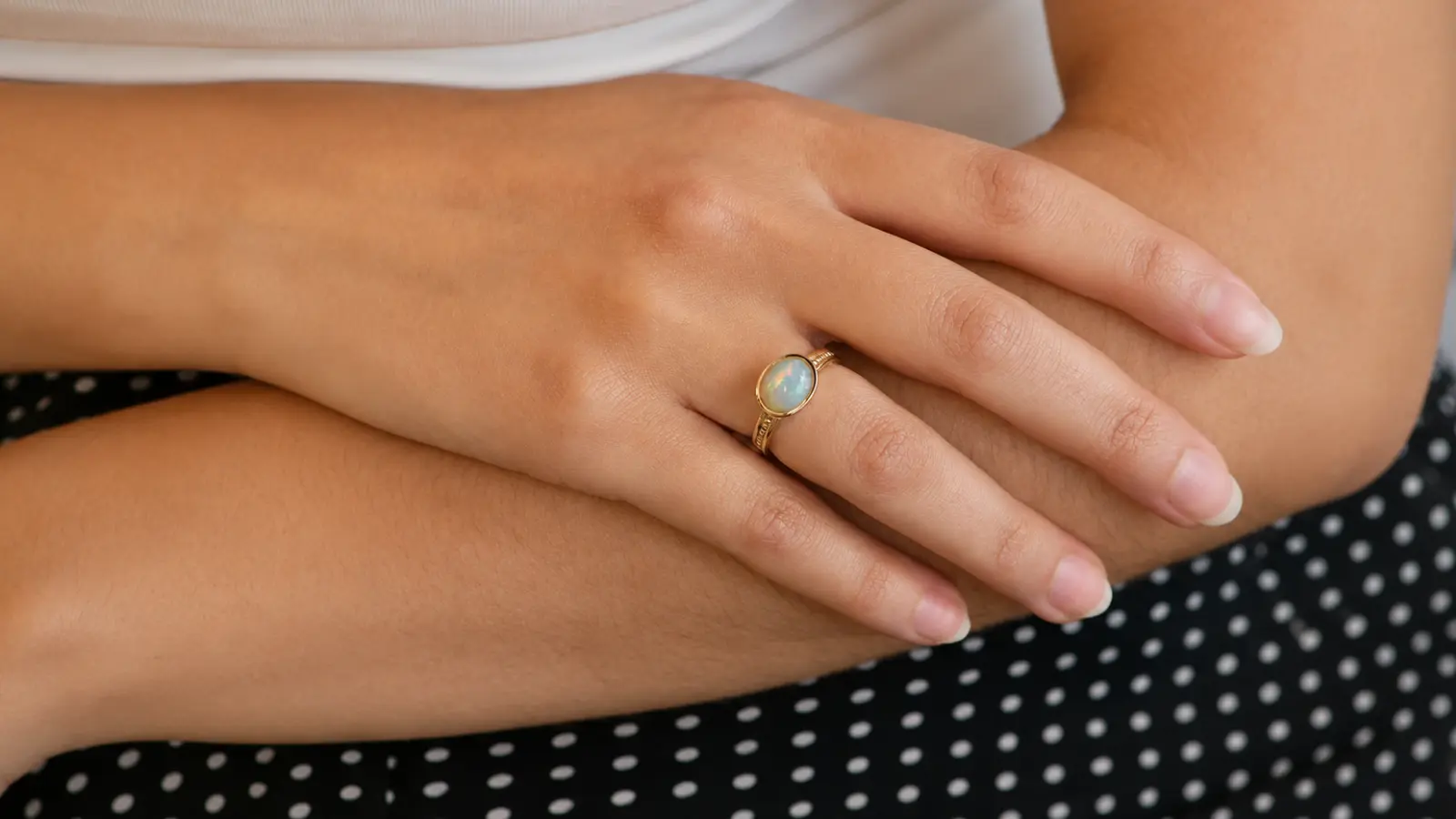
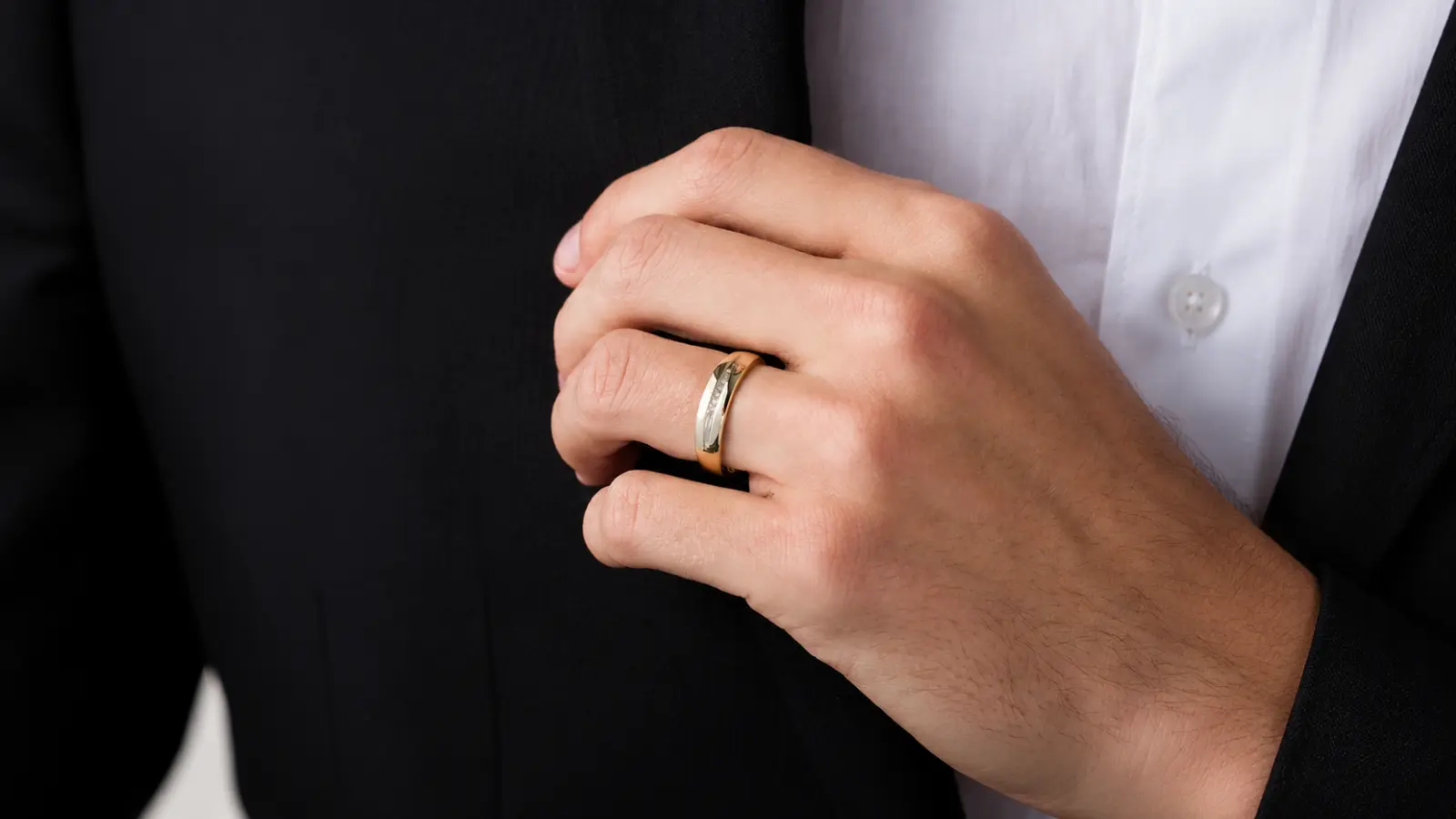
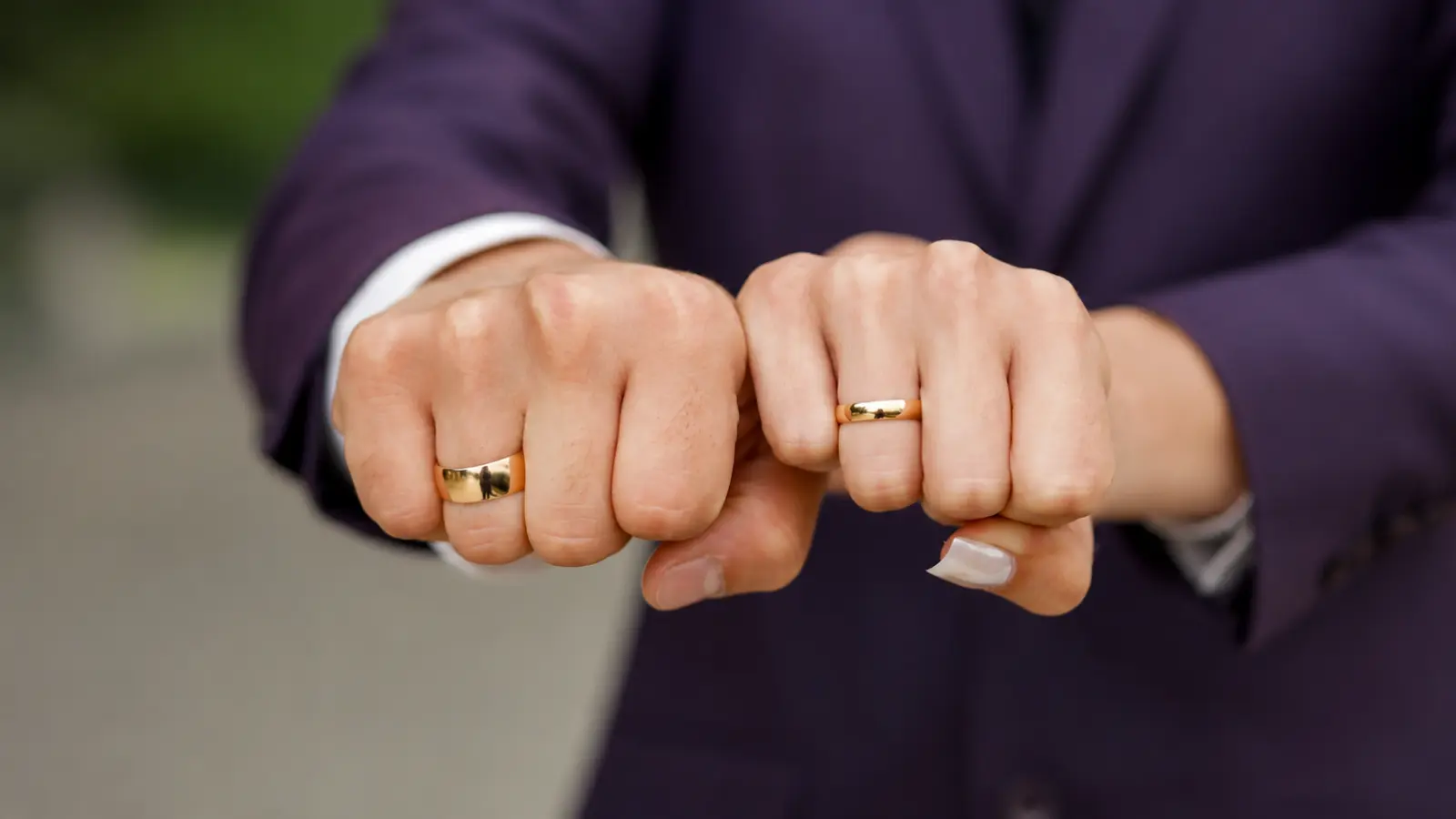
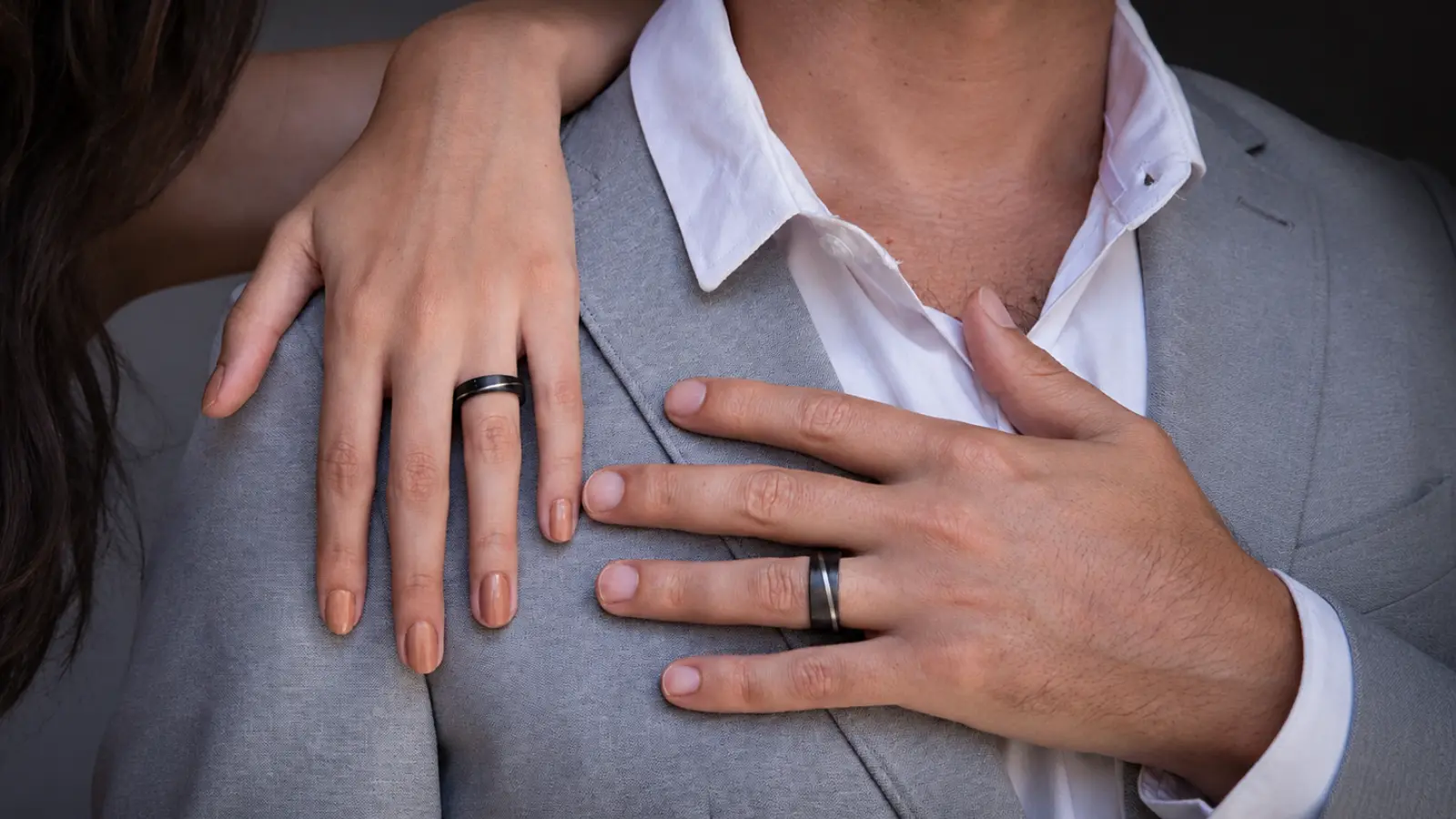
Titanium wedding rings can range from simple lightweight bands to modern textured and colorful designs. Explore our inspiration board for brushed titanium rings, matte finishes, black titanium bands, wood inlays, anodized colors, and comfortable wedding ring ideas for everyday wear.
Choosing a Titanium Wedding Ring Made for Everyday Life
A titanium wedding ring is not about choosing the heaviest, most traditional, or most expensive metal. It is about choosing a ring that feels natural in your daily routine — comfortable, practical, and suited to the way you actually live.
Whether you choose titanium for its lightweight feel, modern appearance, hypoallergenic qualities, or another reason entirely, the best wedding ring is one that feels effortless to wear not only on your wedding day, but throughout the years that follow.
Frequently asked questions (FAQ)
Does a titanium wedding ring feel too light or cheap?
No. Titanium wedding rings feel extremely light because titanium has a very high strength-to-weight ratio, not because the material is low quality. Some people love that barely-there feeling because the ring is comfortable for everyday wear. Others prefer the heavier feel of metals like platinum or tungsten. The right choice depends on whether you want a ring you notice or one that almost disappears on your finger.
Is titanium strong enough for a lifetime wedding ring?
Yes. Titanium is strong enough for a lifetime wedding ring because it does not rust, corrode, or easily bend during normal wear. Its strength is one reason titanium is used in demanding industries and medical applications. The surface will develop scratches over time, but the structure of a quality titanium ring can last for decades.
Why do titanium rings scratch if titanium is so strong?
Titanium is strong, but strength and scratch resistance are different qualities. Titanium resists bending and breaking, but harder materials can still leave surface marks. Over time, these scratches create normal wear, especially on polished finishes. Many titanium rings can be refinished by a jeweler to restore the surface.
Is titanium better than tungsten for a wedding ring?
Titanium is better for people who want a lightweight, comfortable ring with more flexibility, while tungsten is better for people who want maximum scratch resistance and a heavier feel. Titanium can develop surface scratches but is less brittle. Tungsten stays looking new longer but cannot be resized and can crack under strong impact.
Can you wear a titanium wedding ring all the time?
Yes. Titanium is one of the easiest wedding ring metals to wear every day because it is lightweight, hypoallergenic, and resistant to water, sweat, and corrosion. It works especially well for people who are active, work with their hands, or dislike the feeling of heavier jewelry.
What should you consider before buying a titanium wedding ring?
Before choosing titanium, consider whether you like a very lightweight ring and whether limited resizing could become an issue later. Titanium offers excellent comfort, durability, and value, but it does not have the traditional precious-metal status of gold or platinum. It is best for someone choosing a ring based on practicality rather than tradition.