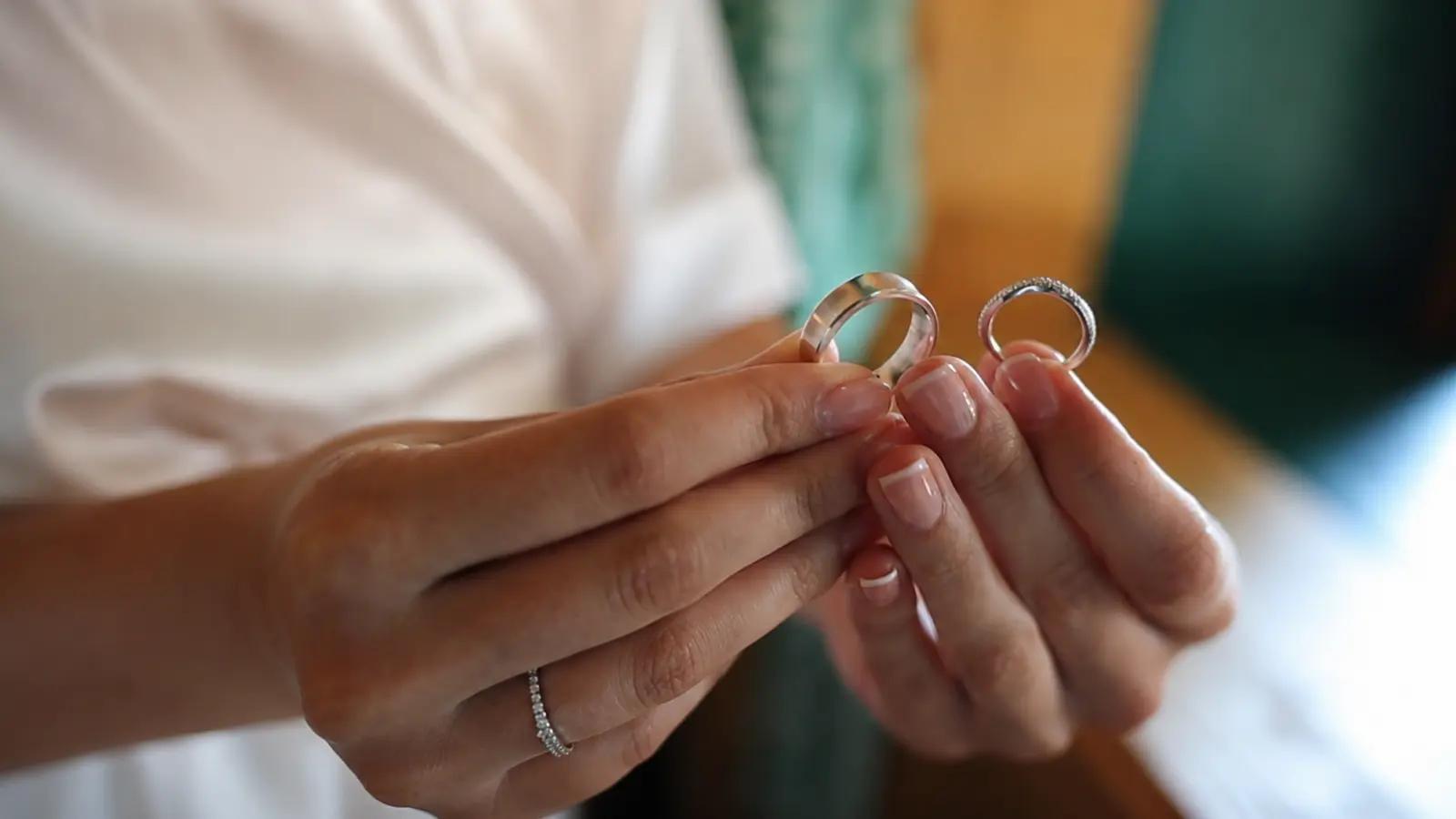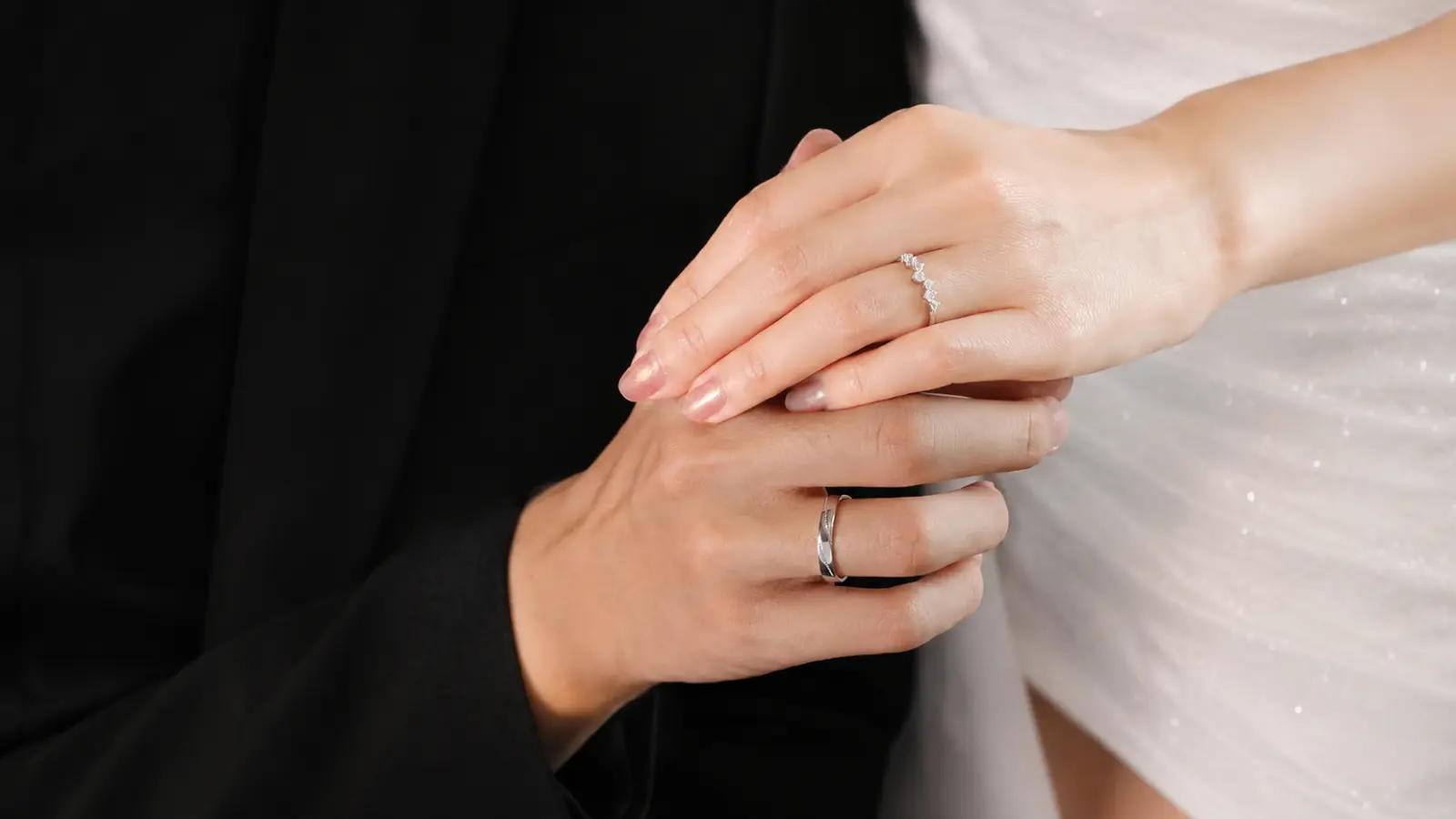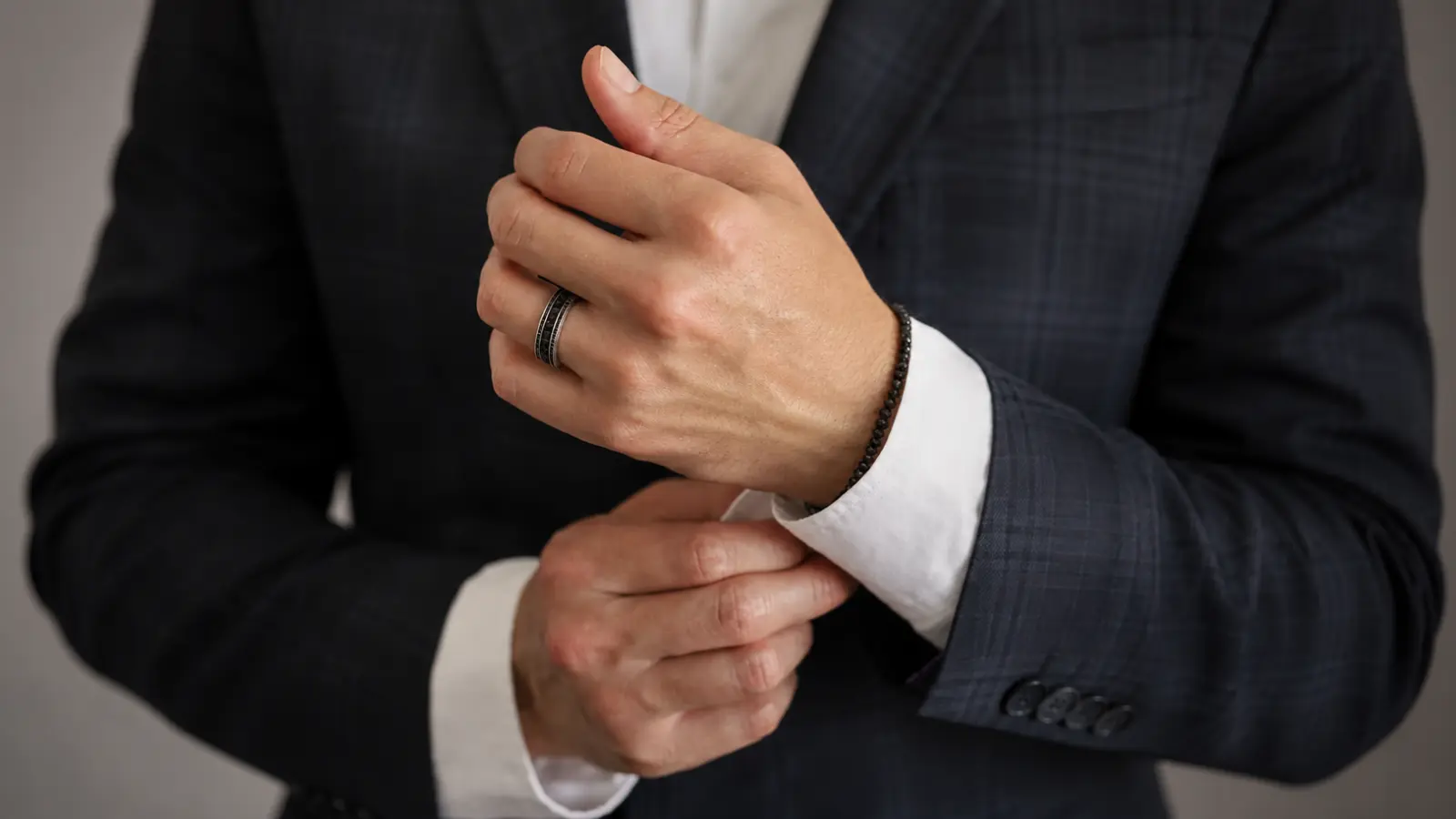
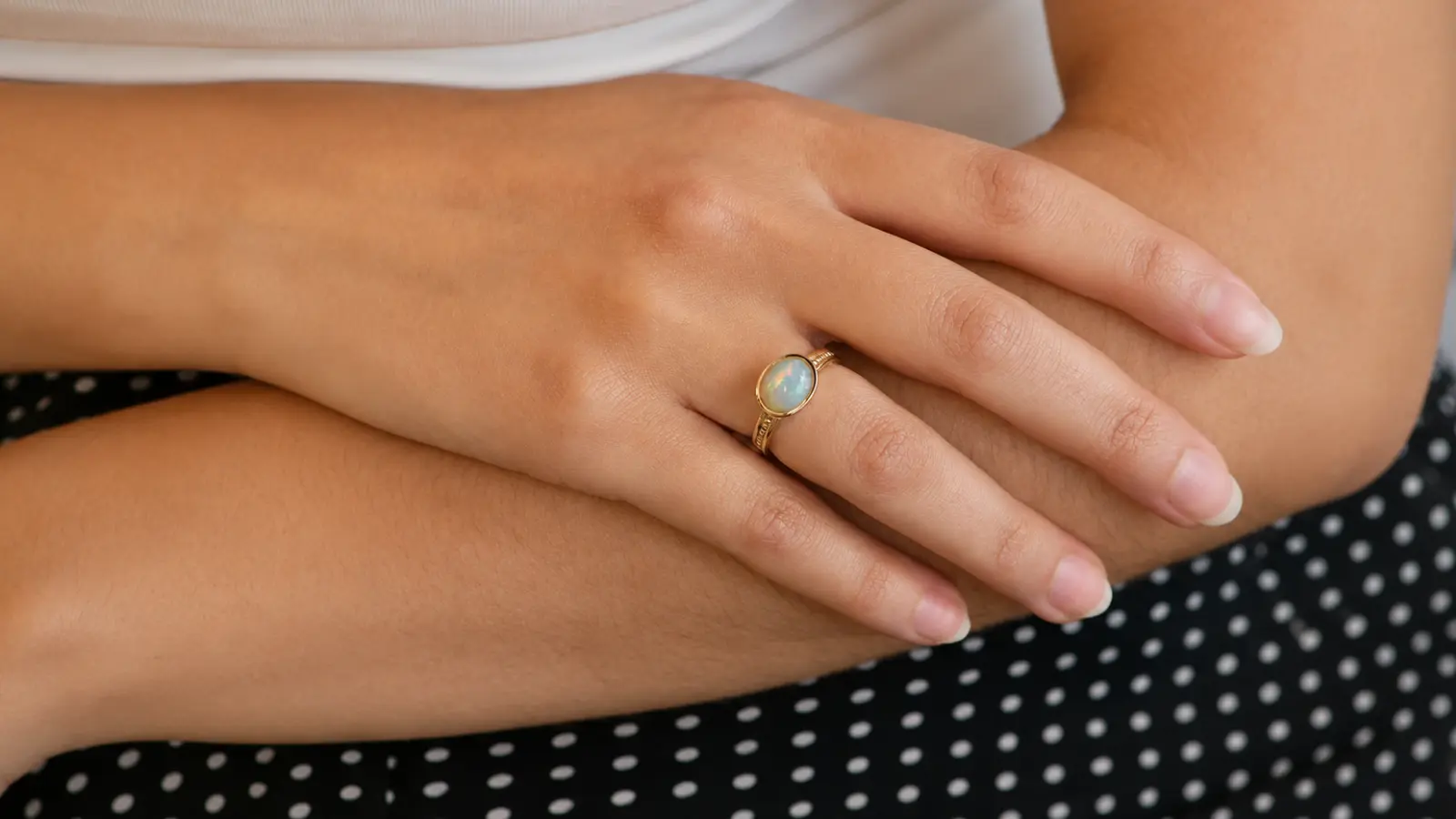
Opal wedding rings are wedding rings that feature opal gemstones, known for their unique play-of-color, where flashes of different colors appear to shift across the stone as it moves in the light. Unlike traditional gemstones chosen mainly for brilliance or hardness, opals are valued for their individuality, color patterns, and one-of-a-kind appearance.
Choosing an opal wedding ring requires understanding both its beauty and its limitations. Opal is softer and more delicate than diamonds, sapphires, and many other wedding ring gemstones, which means durability, daily habits, and proper care are important parts of the decision.
This guide explains opal wedding rings, including their meaning, durability, black opal styles, opal wedding bands, solid vs doublet vs triplet opals, care requirements, and how opal compares with other wedding rings and wedding bands for everyday wear.
Are Opal Wedding Rings a Good Idea?
The answer depends entirely on who is wearing the ring and how they live, which is a more honest answer than most buying guides offer. Opal ranks between 5.5 and 6.5 on the Mohs hardness scale. For context: diamond is a 10, sapphire is a 9, emerald sits between 7.5 and 8, and common quartz — present in household dust — is a 7. Ordinary dust can scratch an opal. That is the starting point for any honest assessment of opal as a daily-wear gemstone.
The vulnerability goes beyond hardness. Opal is a hydrated silica mineral, meaning it contains water, typically between three and twenty percent of its weight. That water content is part of what creates the play-of-color effect. It is also a source of structural fragility. When opal loses moisture too quickly, in low-humidity environments, under hot lights, or through exposure to sudden temperature changes, it can develop crazing: a network of fine surface cracks that permanently damage the stone’s appearance and integrity. A crazed opal cannot be repaired.
None of this makes opal a bad choice. It makes it a specific choice — one that suits particular lifestyles well and others poorly. The couples who wear opal rings successfully are the ones who genuinely want this stone, understand what maintaining it requires, and find that those requirements are compatible with how they actually live. For them, the ring is exactly what it looks like: something rare, something singular, something that no harder stone replicates.
Pros and Cons of Opal Rings
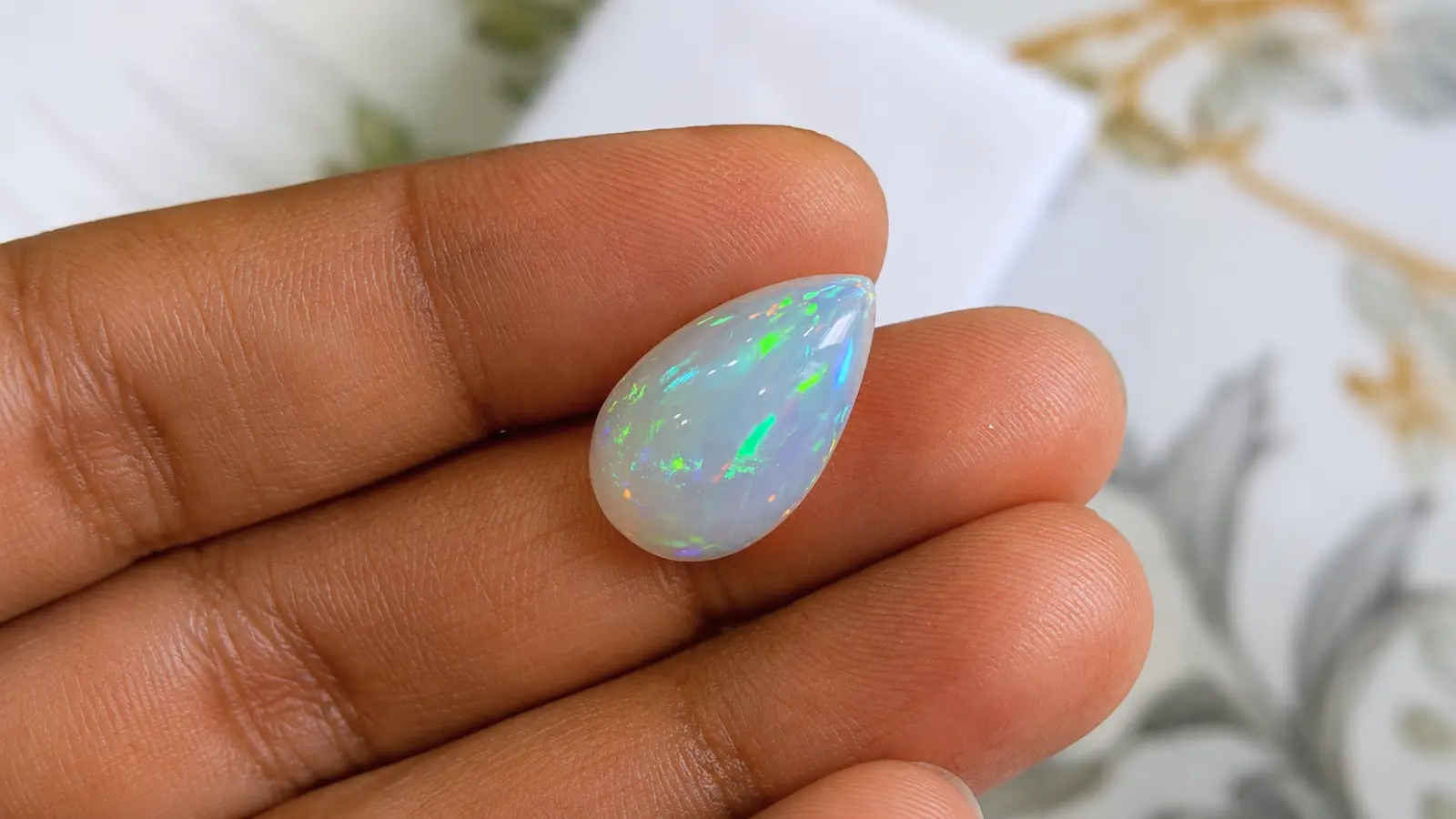
What makes opal genuinely extraordinary
The play-of-color in a quality opal is unlike anything else available in jewelry. Each stone is unique — the pattern, the color range, the intensity, and the way the colors shift with movement are specific to that individual stone and will never appear in exactly the same combination in any other. A well-chosen opal ring is not just distinctive among wedding rings; it is distinctive among all opal rings. That level of uniqueness is genuinely rare in fine jewelry at any price point.
Opal also carries significant historical and romantic associations. It was one of the most prized gemstones in ancient Rome, which considered it a stone of good fortune. In more recent history, it became associated with October birthdays, with Australian gemological tradition, and with a particular quality of feminine mystique that other gemstones do not capture in the same way. For couples who care about wedding ring meaning beyond a standard choice, opal offers a history and identity of its own.
The color range available in opal is also unmatched by any single other stone. Depending on the specimen, an opal can show red, orange, yellow, green, blue, and violet — sometimes all in the same stone, shifting as the viewing angle changes. This means an opal ring can genuinely complement almost any color palette, which is not something that can be said of a ruby, sapphire, or emerald.
The real limitations
Opal scratches more easily than almost any other gemstone used in wedding rings. A stone that can be scratched by household dust is a stone that will show wear over years of daily use if not protected carefully. Under normal conditions, the surface of an opal ring worn continuously will begin to look duller than it did when new — the play-of-color diminishing slightly as microscopic scratches accumulate on the surface.
Crazing is the most serious risk. Once a stone crazes, and not all opals do, but the risk is real, the damage is permanent. No polishing, no treatment, and no repair restores a crazed opal. The stone must be replaced. The conditions that most commonly trigger crazing are rapid temperature change (taking a ring from a very cold environment into a heated one), prolonged dehydration (wearing the ring constantly in a very dry climate or heated indoor environment without any humidity management), and direct impact to the stone’s surface.
Doublet and triplet opals, composite stones made from thin opal slices bonded to a backing and sometimes capped with quartz, face an additional vulnerability: water delamination. If water penetrates the bond between layers, the stone’s appearance becomes permanently foggy or clouded, and the layers can physically separate. These composite stones are significantly more affordable than solid opals, but they are also significantly less suited to daily wear in a ring.
Solid, Doublet, and Triplet: The Opal Type That Matters Most
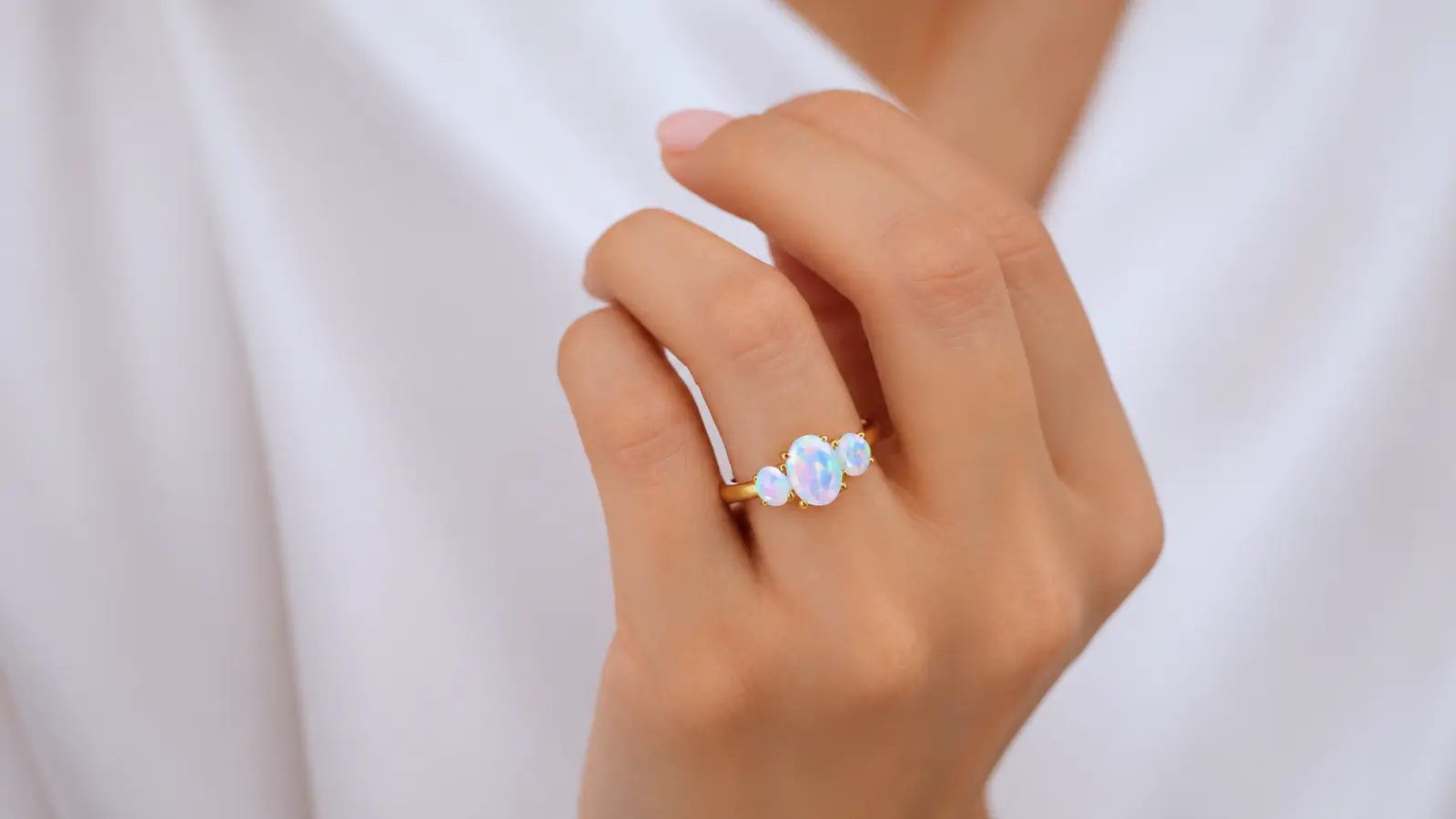
Before choosing any opal ring, understanding which type of opal it contains is the single most important technical question to ask. The difference in daily wear suitability is substantial.
Solid opal is a single piece of natural opal with no backing, no capping, and no bonding to other materials. It is the most expensive opal option and the most appropriate for a ring intended for daily wear. Because it has no layers to delaminate, water exposure, while still something to minimize, does not carry the delamination risk of composite stones. A solid opal ring can last decades with proper care.
Doublet opal is a thin slice of natural opal bonded to a dark backing material, typically black potch (common opal) or onyx, which enhances the play-of-color by darkening the background beneath the stone. The dark backing makes the opal appear to have the deep body tone of black opal at a fraction of the price. Doublets are visually appealing and significantly more affordable than solid stones, but the adhesive bond between layers is vulnerable to water. Prolonged contact with water, including swimming, frequent hand-washing, and dishwashing, can cause the layers to separate over time, permanently damaging the stone’s appearance.
Triplet opal adds a clear quartz or glass dome cap over the opal slice, providing magnification and additional surface protection. Triplets are the most affordable opal option and the most fragile for daily wear — they have two bond lines rather than one, and the quartz cap can scratch despite its additional hardness. Triplet opals are appropriate for occasion jewelry; they are not well suited to daily-wear wedding rings.
| Opal Type | Structure | Water Risk | Daily Wear | Relative Cost |
|---|---|---|---|---|
| Solid natural opal | Single piece | Low–moderate | Best option | High |
| Doublet opal | Opal + dark backing | High (delamination) | Limited | Moderate |
| Triplet opal | Cap + opal + backing | Very high | Not recommended | Low |
When shopping for an opal wedding ring, always ask the jeweler explicitly which type of opal the ring contains. The visual appearance of all three types can look similar in photographs and sometimes in person — the distinction is not always volunteered, and it matters significantly for long-term wear.
Black Opal Wedding Rings
Black opal is the most visually spectacular variety of precious opal, and one of the rarest gemstones in the world. What distinguishes black opal from other opal varieties is its body tone: a dark gray to jet-black base that provides a dramatic backdrop against which the play-of-color appears at its most vivid. The same flashes of red, orange, green, and blue that appear in a light opal become extraordinary against a black background — more saturated, more intense, and more complex in the way they layer and shift.
The primary source of fine black opal is Lightning Ridge, a small town in New South Wales, Australia, which produces virtually all of the world’s gem-quality black opal. The combination of extreme rarity, exceptional visual impact, and geographically limited supply places fine black opals among the most valuable gemstones per carat — with top-quality specimens occasionally exceeding the per-carat value of diamonds.
Black opal in a wedding ring setting
A black opal wedding ring stands apart even among unique wedding rings because very few gemstones can match its visual character. The stone’s dark body absorbs light in a way that creates genuine depth — it does not simply sit on the surface of the ring but appears to contain something behind the color, which is part of what makes the best black opals feel almost otherworldly on the finger.
The care requirements for black opal are identical to those for other precious opals — the same hardness, the same sensitivity to impact, temperature change, and dehydration, and the same cleaning restrictions. The rarity and cost of a fine black opal ring makes the case for careful maintenance even more compelling: a stone that is expensive to replace deserves the full routine of protection its nature requires.
For couples considering black opal, it is also worth knowing that synthetic black opal and laboratory-created versions are available at significantly lower prices. Lab-created black opal replicates the dark body tone and play-of-color of natural specimens and carries the same hardness limitations, but offers the aesthetic at a fraction of the cost of a genuine Lightning Ridge stone. For couples drawn to the look rather than specifically to natural provenance, lab black opal is a practical alternative worth exploring.
Opal Wedding Bands
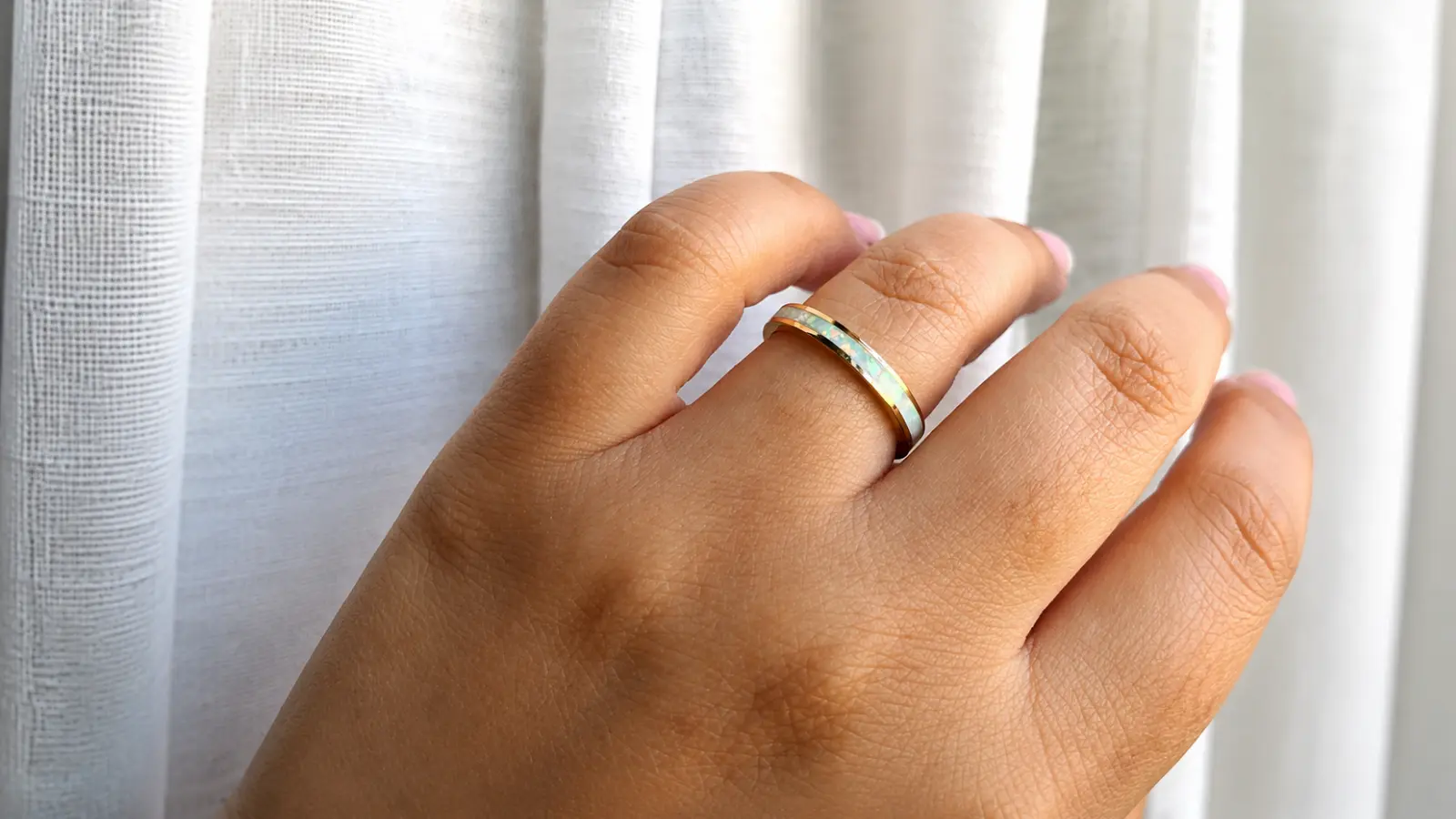
Opal wedding bands, rings where opal appears as accent stones set into the band rather than as a large center stone, represent a more practical approach to opal in daily-wear jewelry. When opal is inlaid into the band itself, channel-set, or used in small bezel-set clusters along the ring’s surface, the exposure of any individual stone is significantly reduced compared to a solitaire opal in a raised prong setting.
Inlay opal bands
One of the most distinctive formats for opal wedding bands is the crushed opal inlay, a technique where opal material is ground, mixed with resin, and set flush into a carved channel in the band. Tungsten, titanium, and wood bands frequently feature crushed opal inlays, and the result is a ring surface that shows the play-of-color across the full width of the band without any raised stone to catch on clothing or sustain impact. Inlay opal is significantly more protected than a mounted stone — the flush surface and surrounding metal absorb impact that a raised gem would otherwise receive directly.
Crushed opal inlay bands are one of the more practical wedding ring styles for couples who love opal’s appearance but prefer a lower-maintenance format. The trade-off is that an inlaid opal ring does not have the visual depth and three-dimensionality of a genuine solid opal stone — the effect is beautiful but distinctly different.
Opal accent bands
Rings featuring small opal cabochons as accent stones, set alongside diamonds or sapphires in a band designed to wear wedding rings together in an engagement-ring stack, provide flashes of opal color without the vulnerability of a large center stone. Smaller stones present smaller targets for impact; a cluster of small bezel-set opals is more protected than a single large prong-set stone. This format allows couples to include opal in the ring story without committing to a large exposed stone as the primary feature.
How to Care for Opal Rings
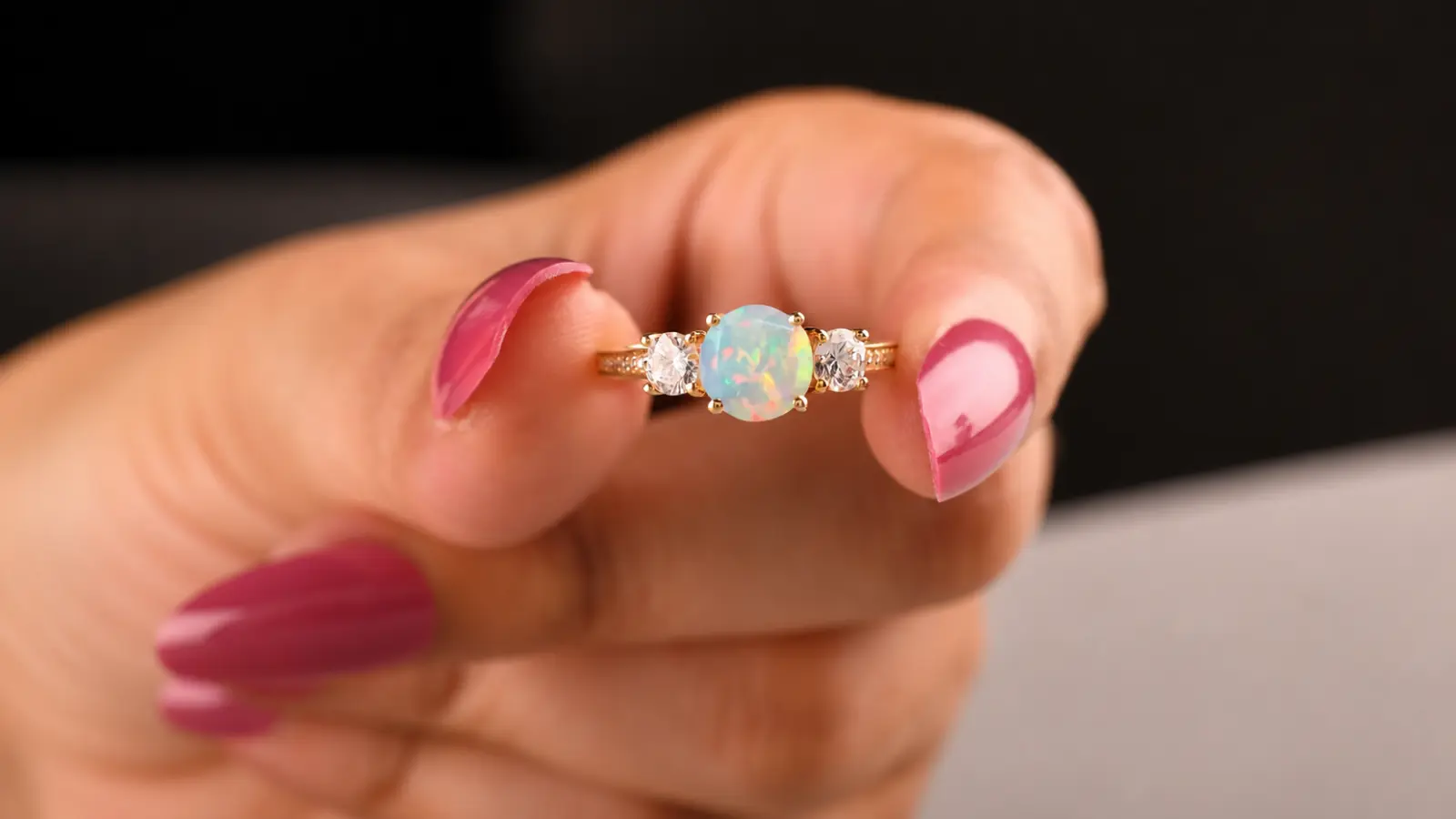
Opal ring care is not complicated, but it is non-negotiable. The stone’s combination of low hardness, moisture sensitivity, and thermal sensitivity means that the habits that work for diamond or sapphire rings will damage an opal ring over time. This care routine should be established before the ring is ever worn, not after the first sign of damage appears.
Cleaning
Clean with a soft, slightly damp cloth — no more than that. No soap, which can leave residue in the stone’s surface and affect its appearance over time. No ultrasonic cleaners, which can initiate crazing through vibration and cause composite stones to delaminate. No steam, which combines heat and moisture in exactly the way opal least tolerates. No commercial jewelry cleaning solutions, which contain chemicals that can damage the stone’s surface. A soft cloth and occasional barely-damp wiping is the entire cleaning protocol for an opal ring.
Water and chemical exposure
Remove the ring before washing hands, swimming, bathing, washing dishes, and any activity involving water. This applies to solid opals as well as doublets and triplets — while solid opals are more resistant to delamination, prolonged water exposure can still affect a natural opal’s appearance over time, and composite stones face serious delamination risk with any sustained water contact. Remove before any contact with cleaning chemicals, chlorine, and cosmetics.
Temperature and humidity
Avoid exposing the ring to rapid temperature changes — moving between very cold and very warm environments repeatedly puts thermal stress on the stone that can contribute to crazing over time. In very dry climates or during winter in heated indoor environments, periodic moisture exposure helps prevent the stone from dehydrating: storing the ring occasionally with a slightly damp cloth in the ring box is enough to maintain appropriate moisture levels without causing water damage.
Physical activity and storage
Remove the ring before any exercise, physical work, or activity where the ring might be struck. Store separately from harder stones — diamond rings, sapphire rings, and any other harder-stone jewelry will scratch an opal surface if they share storage space. A padded individual ring compartment or a soft pouch is appropriate.
Professional maintenance
Have a jeweler inspect the setting once a year to ensure prongs or bezels have not loosened — a stone as fragile as opal cannot afford to sit insecurely in its mounting. Unlike emeralds, opals do not require re-treatment or re-oiling, but the setting inspection is genuinely important.
Who Should Avoid Opal?
The opal wedding ring is genuinely the wrong choice for certain lifestyles, and identifying those situations clearly is more useful than hedging the answer. Opal asks for a kind of daily attention that not every routine can accommodate, and recognizing that honestly upfront saves a lot of disappointment later.
- People who work with their hands. Healthcare workers who wash their hands ten to fifteen times a day, people who work in kitchens, construction, agriculture, mechanics, or any environment with regular chemical exposure, physical impact, or sustained water contact. The ring will sustain damage in these conditions regardless of care intention.
- People who live in very dry climates. Desert climates, or any environment with very low humidity for extended periods, create chronic dehydration risk for opal stones. Managing this through storage habits helps, but the ongoing vigilance required is higher than in more humid environments.
- People who forget to remove jewelry. Opal does not accommodate the kind of habitual forgetfulness that most ring wearers practice occasionally. If the ring stays on during exercise, cooking, cleaning, and bathing because it is never thought about, it will sustain damage — and that is simply incompatible with what opal requires, not a moral failing.
The same caution applies to two other common situations that are easy to underestimate at the time of purchase:
- People who want a low-maintenance ring for the long term. A diamond ring, a sapphire ring, even a well-chosen emerald ring all require less consistent daily management than an opal. If the appeal of the wedding ring is partly its invisibility in everyday life, opal does not deliver that experience.
- People choosing a doublet or triplet on a budget. Composite opals at lower price points are not appropriate for daily-wear wedding rings. If the budget does not extend to a solid opal, the alternatives below — or a different gemstone category entirely — serve the couple better than a composite stone that will struggle with continuous wear.
None of this is a verdict against opal itself. It is simply a more honest map of who tends to be happy with the choice five years in, and who tends to regret it — which is exactly the kind of detail worth knowing before, not after, the ring is sized and engraved.
Durable Alternatives for the Same Visual Effect
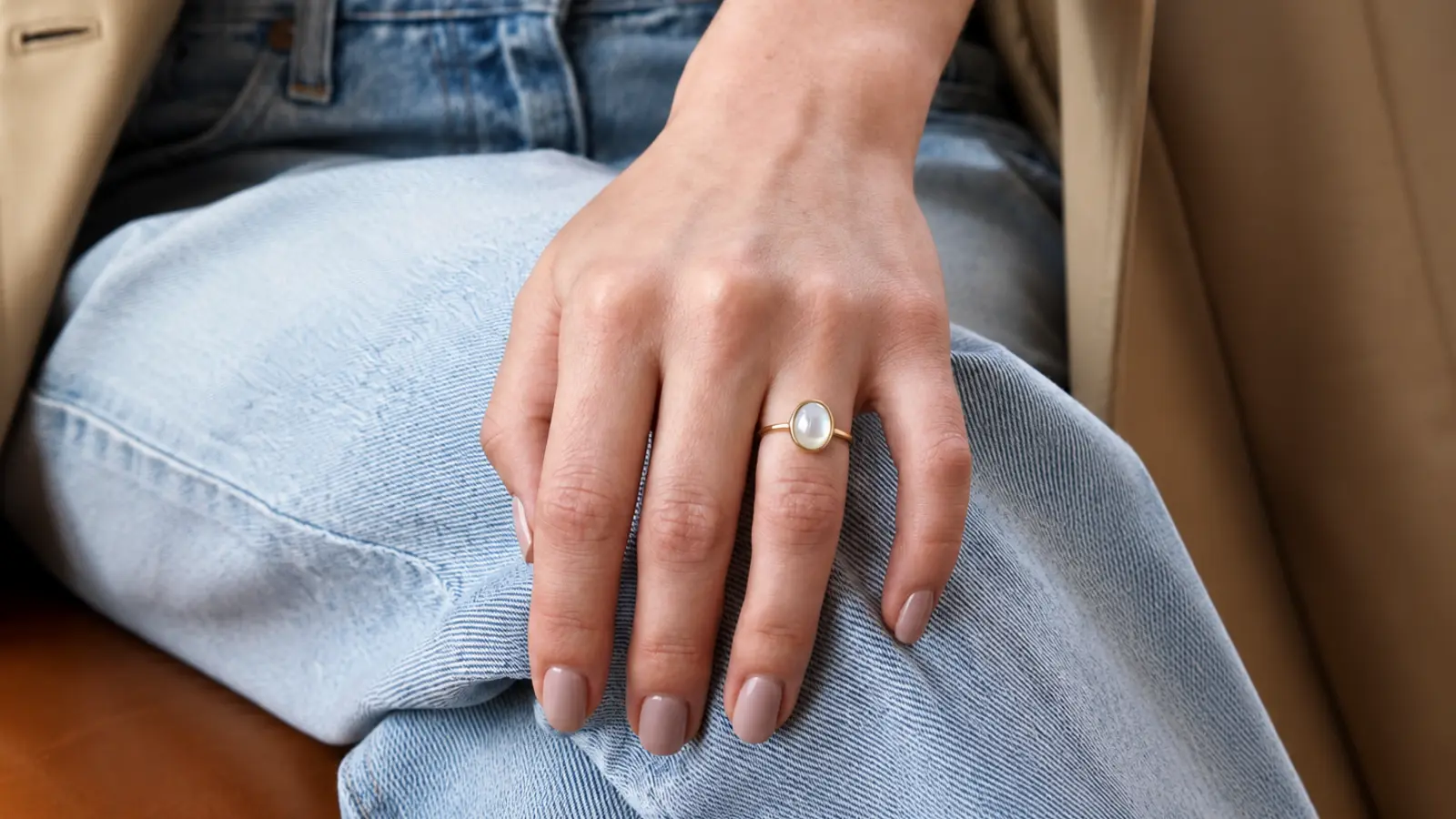
For couples attracted to opal’s iridescence and color play but unwilling to accept its fragility, several alternatives provide comparable visual interest at significantly higher durability ratings.
| Stone | Mohs Hardness | Visual Effect | Key Advantage vs. Opal |
|---|---|---|---|
| Labradorite | 6–6.5 | Labradorescence — blue, green, gold color shift | Similar iridescence, no crazing risk, more affordable |
| Moonstone | 6–6.5 | Adularescence — soft glow that moves with light | Comparable hardness, no dehydration risk, romantic quality |
| Alexandrite | 8.5 | Color change — green in daylight, red-purple in incandescent | Dramatically higher hardness, no fragility concerns, near-diamond durability |
| Lab-Created Opal | 5.5–6.5 | Identical play-of-color to natural opal | Lower cost, more consistent structure, fewer natural inclusions |
| Rainbow Moonstone | 6–6.5 | Blue flash with transparent body — closest moonstone to opal’s effect | No dehydration or crazing risk, widely available, distinctive appearance |
Labradorite and moonstone are the closest visual equivalents to opal’s play-of-color effect, both producing a shifting iridescence that catches light in a way that static gemstones do not. They share opal’s softness range, which means they are not dramatically more durable, but they do not carry opal’s specific dehydration and crazing risks, which are the most serious long-term threats to opal’s appearance. Among gemstone wedding rings, alexandrite is a stronger option for someone who wants color-shift drama with significantly greater durability. Lab-created alexandrite brings the color-change effect to a more accessible price point.
For couples interested in other non-traditional stone options, the unique wedding bands covers the full range of colored stone and alternative material choices available in wedding ring design. The emerald wedding rings covers another distinctive gemstone choice with its own durability profile and care requirements.
Opal Wedding Ring Inspiration
Opal wedding rings are loved for their unique colors, natural patterns, and one-of-a-kind appearance. Explore our inspiration board for black opal rings, vintage designs, opal and diamond styles, gold settings, colorful stones, and unique wedding ring ideas.
Choosing an Opal Wedding Ring With Confidence
An opal wedding ring is not chosen because it is the strongest gemstone or the easiest one to maintain. It is chosen because no other stone creates the same combination of color, movement, individuality, and natural beauty.
For the right couple, the care an opal requires is part of understanding the stone rather than a reason to avoid it. The best wedding ring is not always the one that needs the least attention — it is the one whose meaning, beauty, and place in your life still feel right years later.
Frequently asked questions (FAQ)
Are opal wedding rings too fragile for marriage?
Opal wedding rings can last, but they are one of the most delicate gemstone choices for everyday wear. Opal is softer than diamond, sapphire, and emerald, and it requires protection from impact, harsh conditions, and certain daily activities. For someone who loves the stone enough to care for it intentionally, opal can be a meaningful wedding ring. For someone who wants a ring they never need to think about, a harder gemstone is usually a better choice.
Why do opal rings crack or become damaged?
Opal rings can become damaged because opal is a softer gemstone that contains water within its structure. Sudden temperature changes, dryness, impact, and improper care can contribute to surface cracks known as crazing. Protecting an opal from extreme conditions and treating it as a delicate gemstone greatly improves its long-term durability.
What type of opal is best for a wedding ring?
A solid opal is usually the best choice for a wedding ring because it is one complete piece of opal without bonded layers. Doublet and triplet opals can create a beautiful appearance at a lower price, but their layered construction makes them more vulnerable to water damage and separation over time. For daily wear, the structure of the opal matters as much as its appearance.
Is a black opal wedding ring worth it?
A black opal wedding ring can be worth it for someone who wants one of the most dramatic and unique gemstone appearances available. The dark background makes the flashes of color appear especially vivid, creating a look that is difficult to duplicate. However, black opal has the same care requirements as other opals, so rarity and value do not make it a low-maintenance stone.
Who should not choose an opal wedding ring?
An opal wedding ring may not be the best choice for someone who works heavily with their hands, frequently exposes jewelry to water or chemicals, or wants a ring that requires almost no maintenance. Opal works best for people who are comfortable removing their ring during certain activities and treating it as a more delicate piece of jewelry.
What should you know before buying an opal wedding ring?
Before buying an opal wedding ring, understand that you are choosing uniqueness over maximum durability. Opal offers a color effect that no diamond, sapphire, or emerald can truly replicate, but it requires more awareness and care. The best opal buyers choose it because they specifically love opal — not because they expect it to behave like a traditional wedding gemstone.