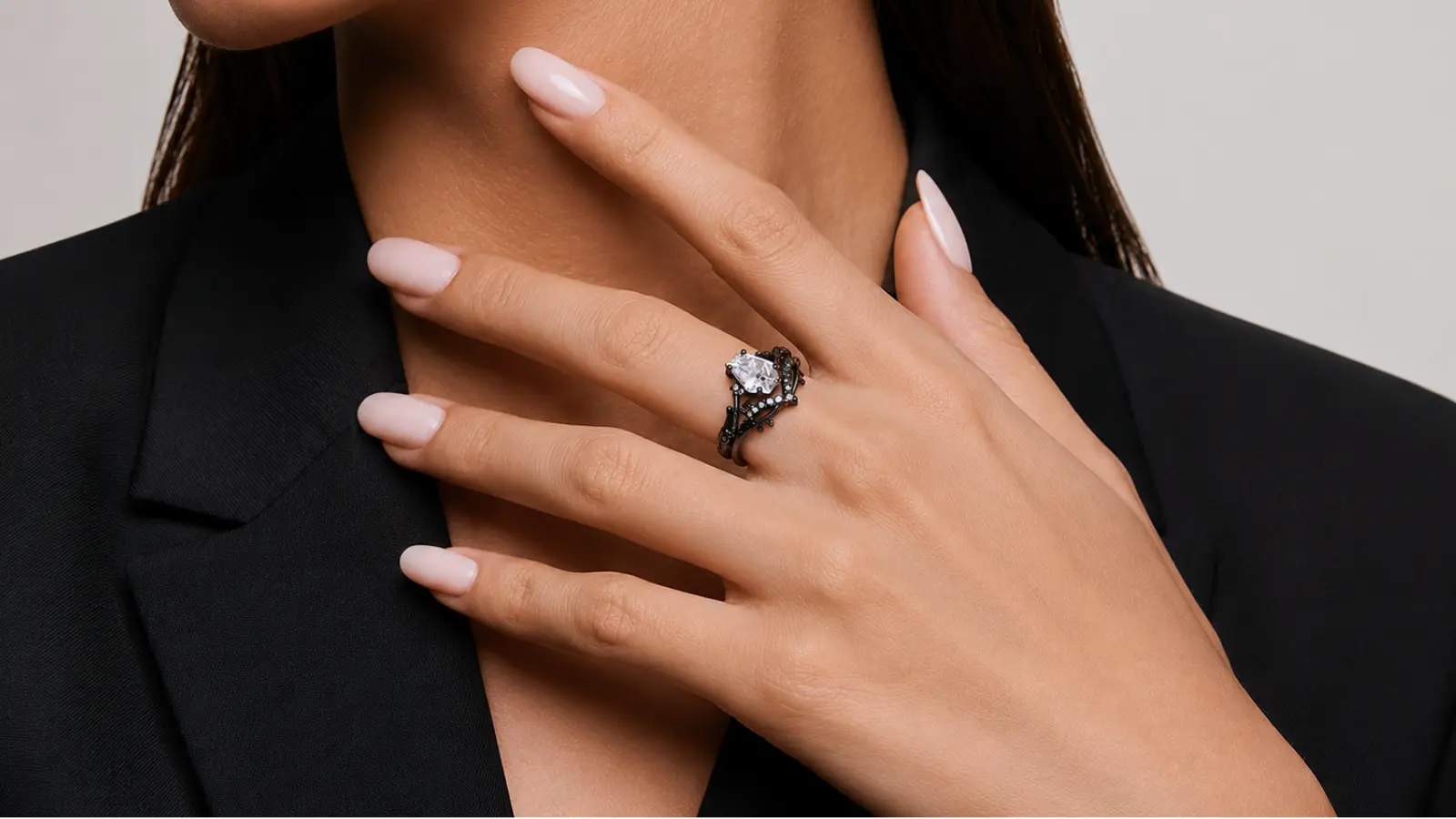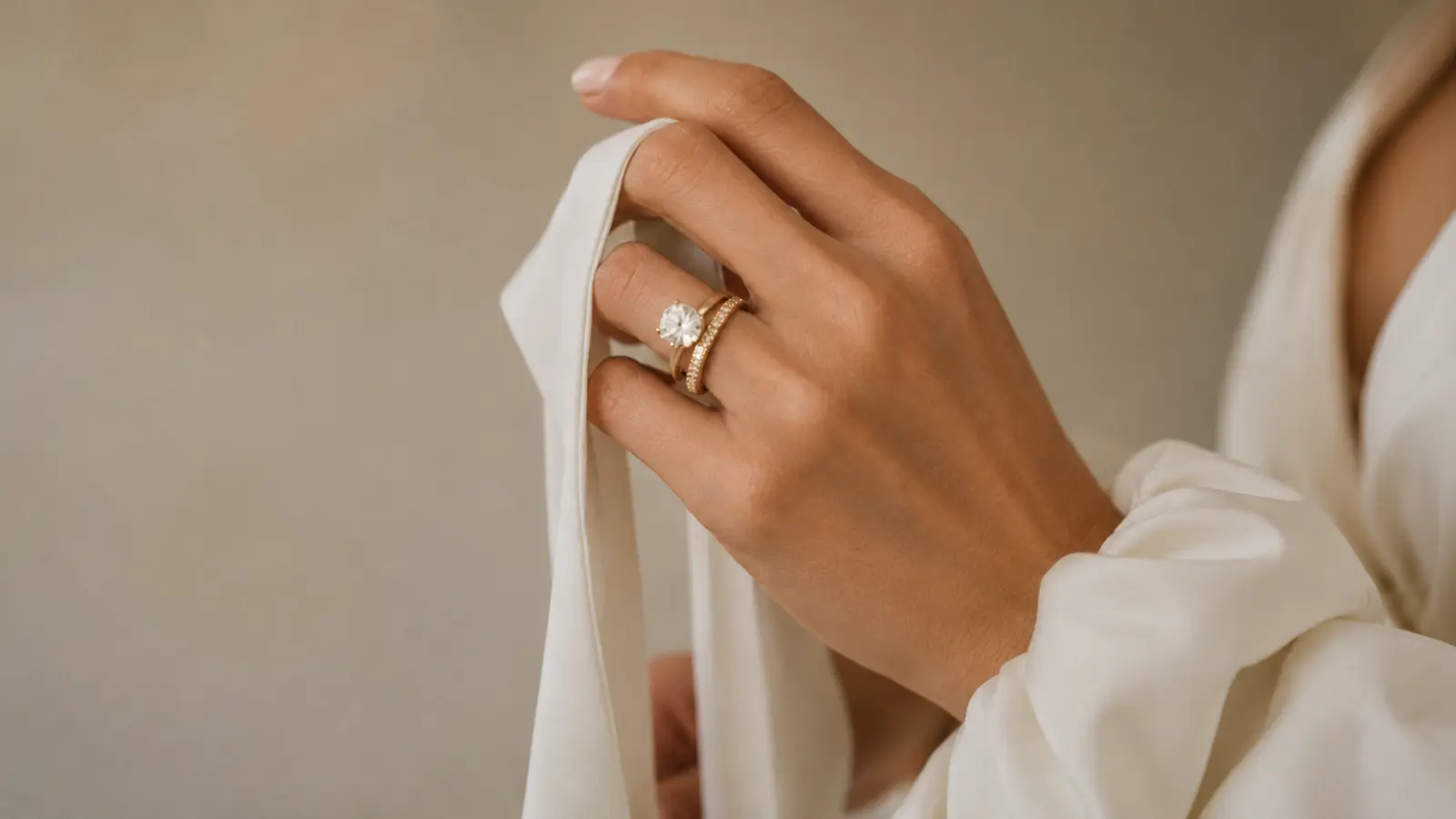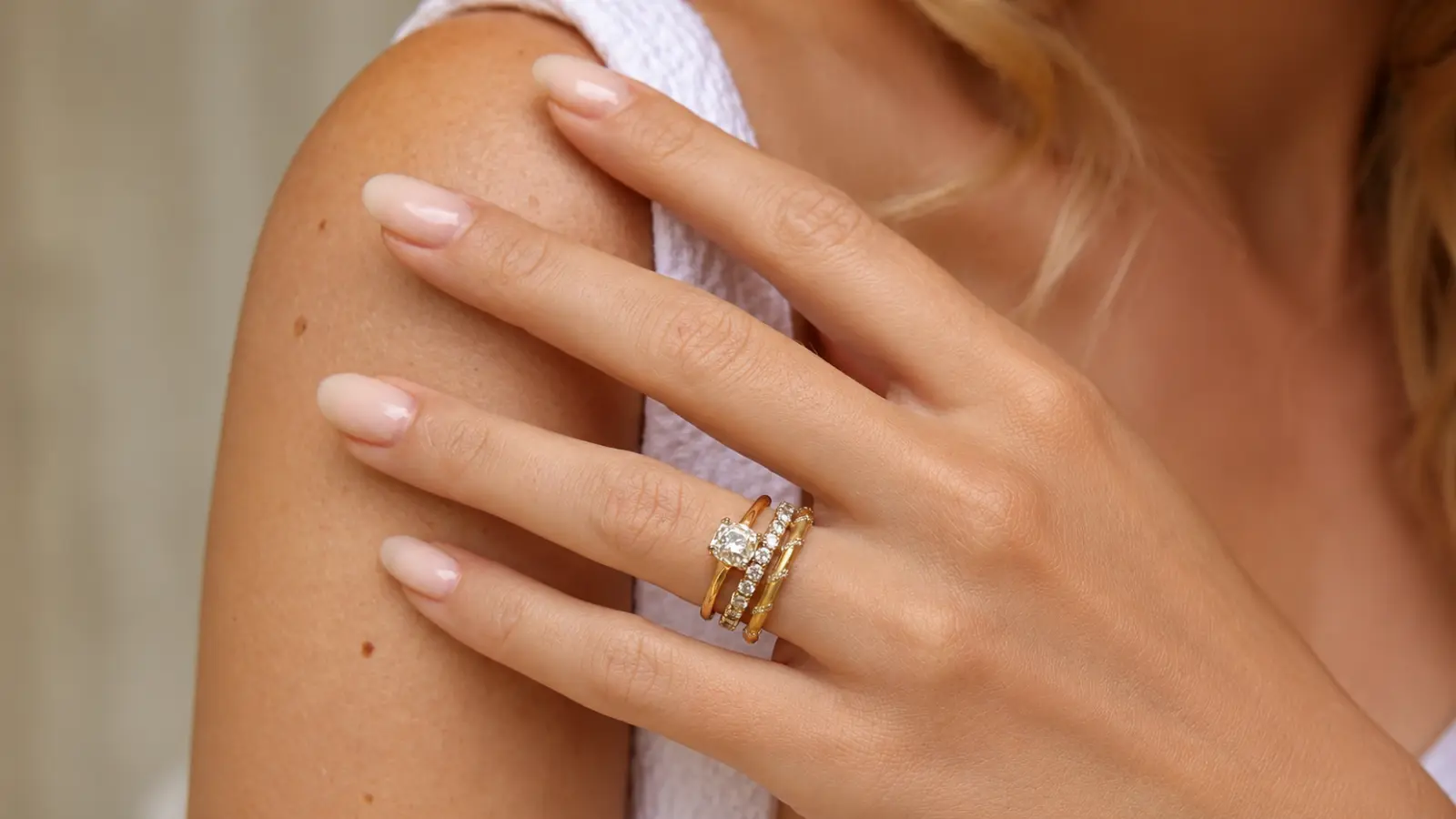
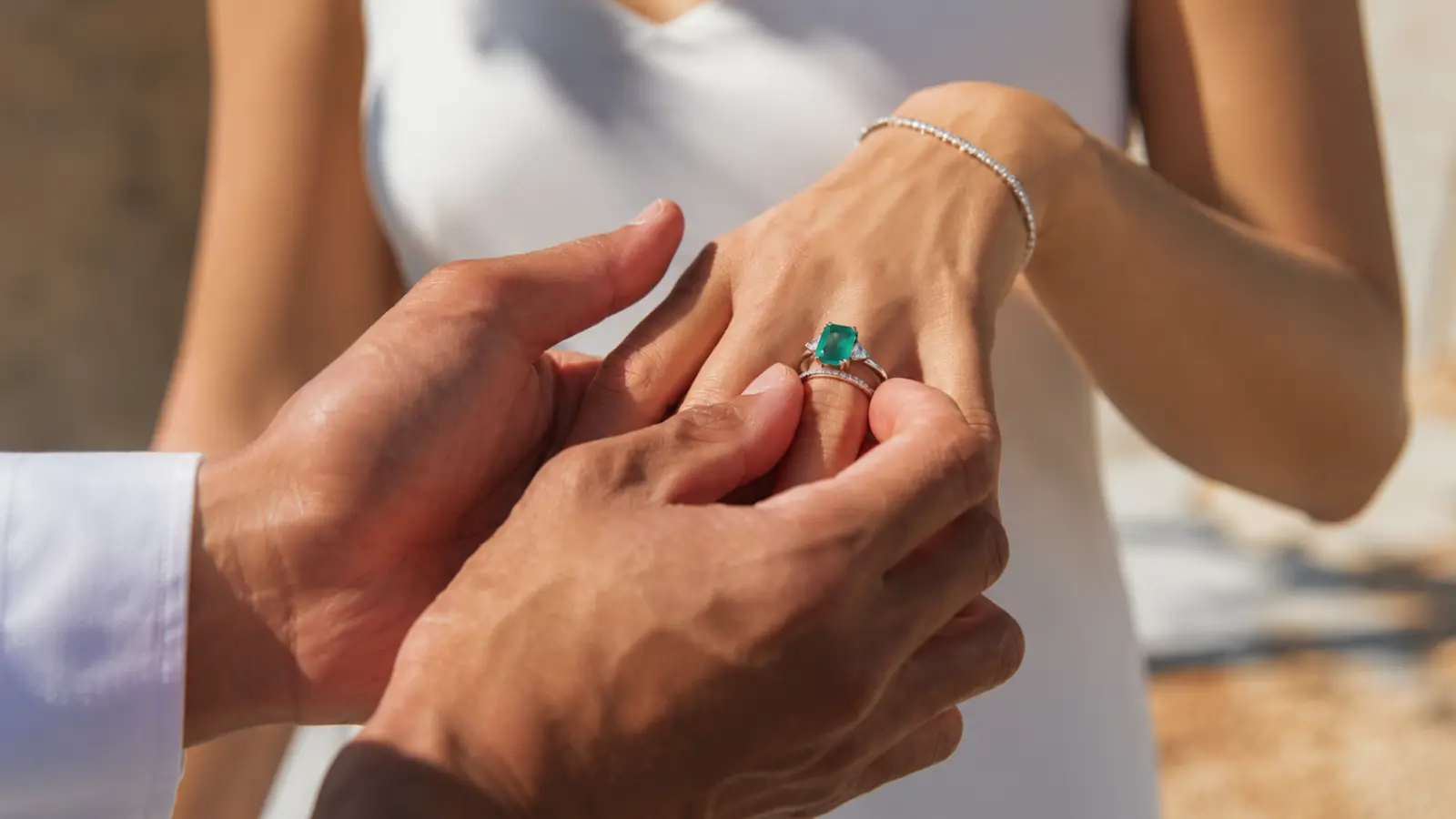
Gemstone wedding rings are wedding rings that feature colored gemstones, such as sapphire, ruby, emerald, opal, aquamarine, or other meaningful stones, instead of relying only on diamonds or plain metal designs. They allow couples to choose a ring based on color, symbolism, personality, and a style that feels more personal.
Choosing a gemstone wedding ring involves more than selecting a beautiful color. Different gemstones vary dramatically in hardness, durability, maintenance, and suitability for everyday wear. A sapphire ring and an opal ring may both be meaningful choices, but they require very different expectations over a lifetime.
This guide explains the best gemstones for wedding rings, including sapphire, ruby, emerald, opal, aquamarine, moonstone, birthstone options, gemstone meanings, durability, and how colored stones fit into different wedding rings and wedding bands.
Best Gemstones for Wedding Rings
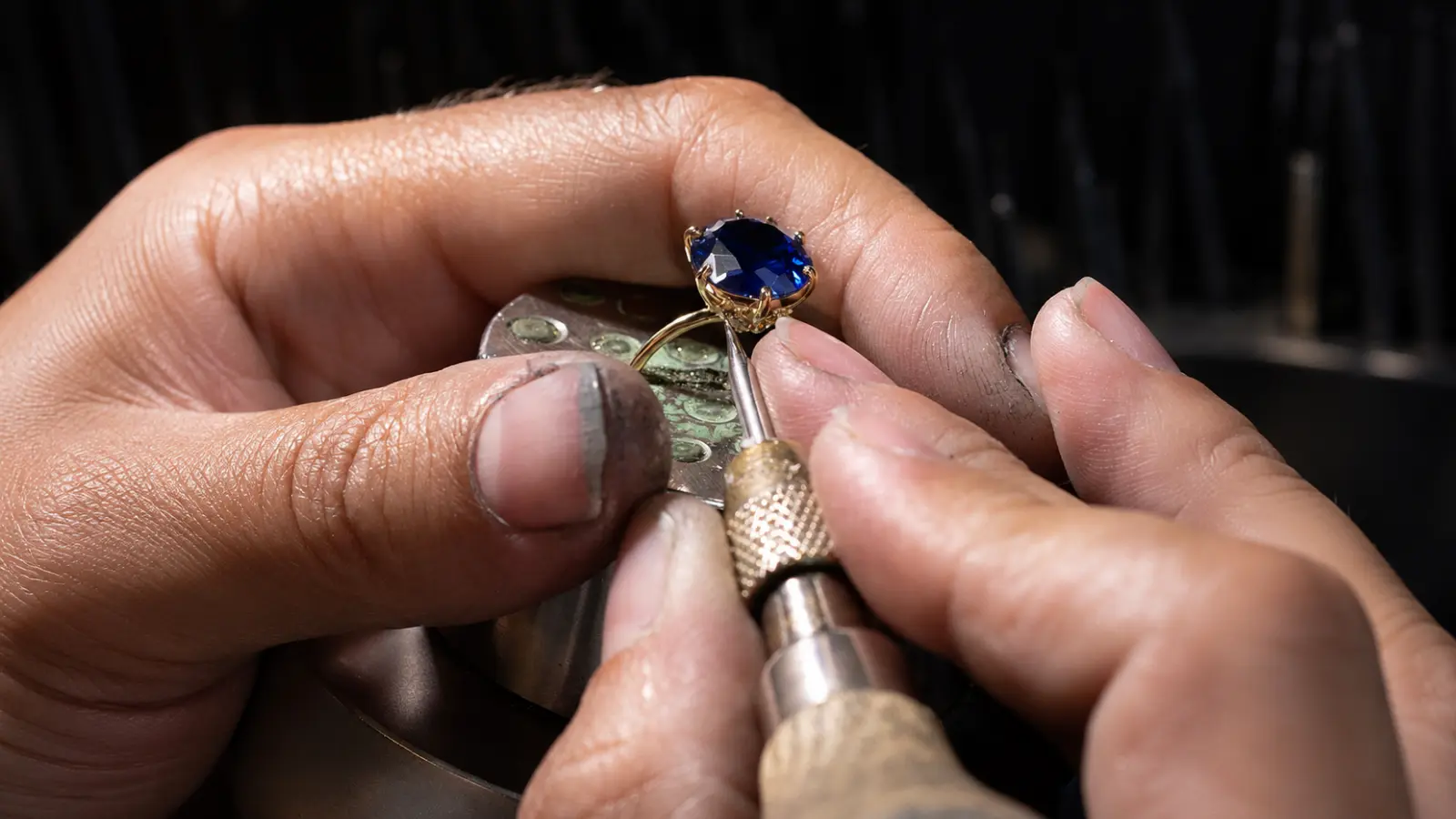
Not all gemstones are equal when it comes to a ring worn every day. The most important factor — before color, before price, before meaning — is hardness. Gemologists measure this using the Mohs scale, a 1-to-10 rating of how resistant a mineral is to surface scratching. For a wedding ring that lives on your hand through cooking, typing, gardening, and everything else, a stone below a 7 is going to show the wear. Below a 6, it will show it quickly.
The Mohs Scale and Why It Matters for Wedding Rings
At the top of the scale, diamond wedding rings use a stone rated 10 for hardness, while sapphire and ruby share a 9. Most quartz-family stones (amethyst, citrine) sit at a 7. Common dust and grit contain quartz particles, which means any stone below a 7 will be scratched by ordinary dirt encountered in daily life — not from dramatic impacts, just from being worn.
| Gemstone | Mohs Hardness | Daily Wear Suitability | Best Setting |
|---|---|---|---|
| Diamond | 10 | Excellent | Any |
| Sapphire | 9 | Excellent | Any |
| Ruby | 9 | Excellent | Any |
| Aquamarine | 7.5–8 | Good — some care needed | Bezel or four-prong |
| Emerald | 7.5–8 | Moderate — inclusions increase fragility | Bezel or halo strongly recommended |
| Amethyst | 7 | Moderate — borderline for daily wear | Protective setting recommended |
| Moonstone | 6–6.5 | Low — scratches with regular wear | Bezel only |
| Opal | 5.5–6.5 | Low — delicate, heat-sensitive | Bezel or full-bezel only |
| Pearl / Turquoise / Coral | 2.5–6 | Not recommended for daily wear | Occasional wear only |
The Setting Is as Important as the Stone
Hardness tells you how resistant a stone is to scratching, but it does not tell the whole story. A brittle stone can be hard and still chip from impact. A softer stone in a bezel setting — where a rim of metal wraps around the entire perimeter — is meaningfully more protected than the same stone in a six-prong setting that leaves the edges exposed.
When choosing a softer gemstone for a wedding ring, the setting design is not a secondary consideration. It is the thing that determines whether the ring survives daily life intact. For couples who want to go deeper on setting choices and ring construction, the complete wedding rings guide covers metal and design fundamentals that apply to gemstone rings just as much as diamond bands.
Sapphire Wedding Rings
Sapphire is, by almost every practical measure, the best non-diamond gemstone choice for a wedding ring. It scores a 9 on the Mohs scale — the same mineral family as ruby, called corundum — which means it resists scratching as well as any stone available outside of diamond. It does not require the extra caution that emerald demands, does not crack from temperature changes the way opal can, and holds its color and surface appearance across decades of wear without special maintenance.
The deep blue that most people picture when they think of sapphire — velvety, rich, slightly violet-tinged — is what gemologists call cornflower blue, most famously associated with stones from Kashmir and Ceylon (now Sri Lanka). It is also the color of Princess Diana’s engagement ring, now worn by Catherine, Princess of Wales, which contributed meaningfully to the popularity of sapphire bridal jewelry in the past two decades.
Sapphire Comes in More Colors Than Most People Realize
Blue is the most familiar, but sapphires occur naturally in nearly every color except red — red corundum is classified separately as ruby. Pink sapphires, ranging from the palest blush to a vivid hot pink, have become one of the most sought-after colored stone choices in bridal jewelry. Yellow sapphires have a warm, antique quality. White sapphires, colorless, are sometimes chosen as a more accessible diamond alternative, though they lack the diamond’s refractive fire.
Padparadscha sapphires — a rare peachy-pink-orange variety from Sri Lanka — are among the most prized gemstones in the world. All of these share the same mineral structure, and therefore the same 9 Mohs hardness. The color is not a durability factor, which is one reason sapphire wedding rings are such a flexible choice for daily wear.
What Sapphire Works Best With
Blue sapphire pairs exceptionally well with white gold and platinum, where the cool metal emphasizes the depth of the stone’s color. It also works beautifully with yellow gold in a vintage or Victorian-inspired setting, where the contrast between warm metal and cool stone creates a richness that feels intentional. Pink sapphires are particularly well-suited to rose gold. White sapphires read most naturally in platinum or white gold, where they most closely approximate a diamond look.
The Symbolism
Sapphire has carried associations with loyalty, fidelity, and wisdom across centuries of cultural history — in medieval Europe, clergy wore sapphires as a symbol of heaven; in ancient Persia, the sky was believed to be painted by a giant sapphire. For a wedding ring, the loyalty symbolism resonates naturally. It is one of the few gemstones where the traditional meaning aligns directly with the purpose of the ring itself.
Emerald Wedding Rings
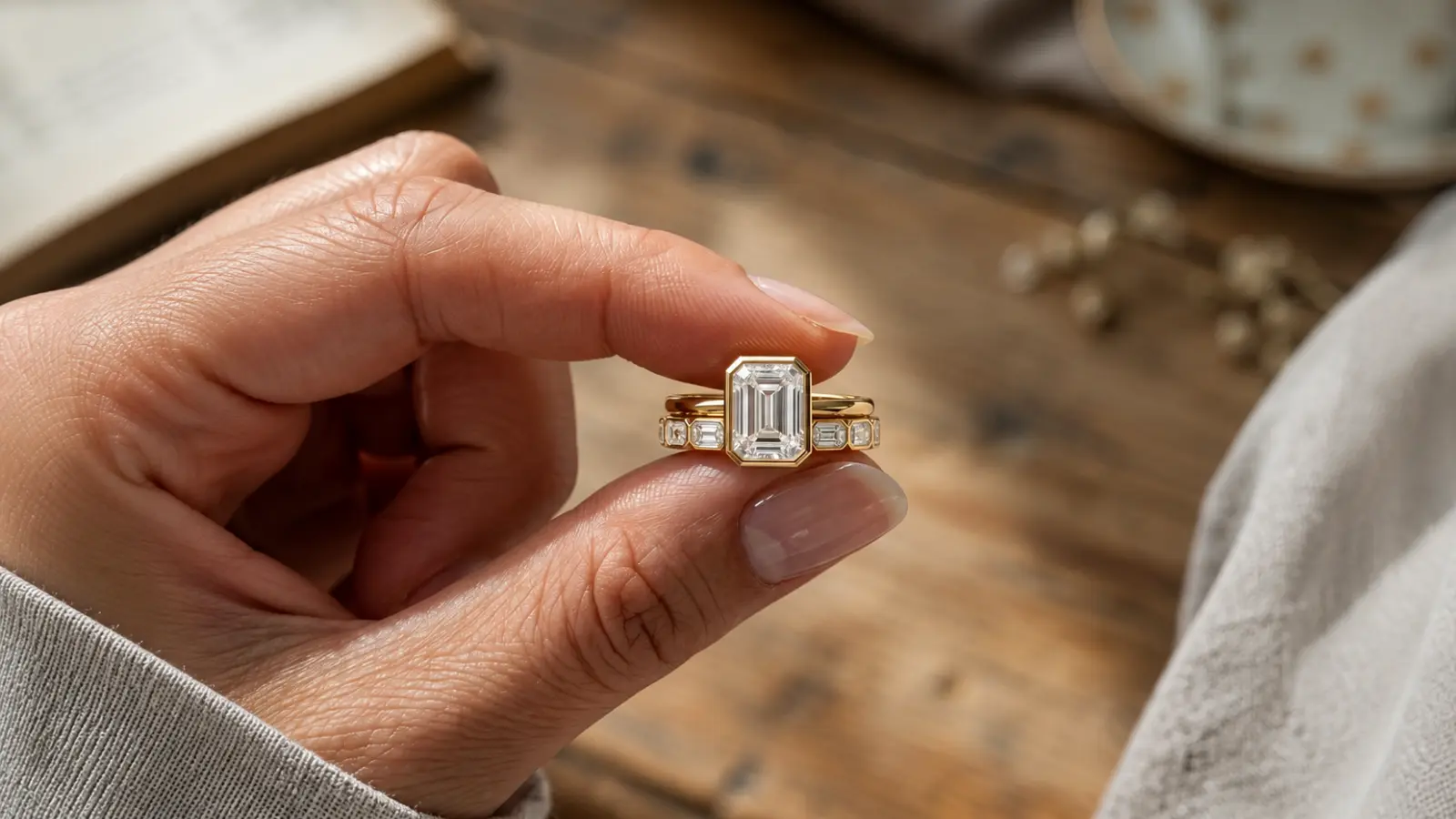
Emerald occupies a complicated position in the world of wedding rings. The color — a deep, saturated green unlike anything else in the gemstone world — is extraordinary. The history is ancient and genuinely romantic: emeralds were prized by Cleopatra, mined by the Incas, treasured across South Asian royal jewelry traditions for thousands of years. And the Mohs hardness of 7.5 to 8 is not terrible. The complication is in what hardness does not measure.
The Jardin Problem
Nearly all natural emeralds contain internal fractures, inclusions, and surface-reaching cracks that gemologists collectively call jardin — French for garden, a poetic name for what is essentially a web of internal imperfections. These inclusions are so common in emeralds that the trade accepts them as a defining characteristic rather than a flaw. A “clean” emerald — one with no visible inclusions — is extraordinarily rare and commands prices comparable to fine diamonds.
The practical consequence is that emeralds chip and crack more easily than their hardness number suggests. An impact that a sapphire would survive without incident can fracture an emerald along an existing inclusion. This does not mean emeralds cannot be worn in wedding rings — many people do, happily, for decades — but it does mean the setting choice matters enormously, and it means you should expect to be more protective of the ring than you would be with a sapphire or ruby.
Setting Recommendations for Emerald
A bezel setting, where metal fully encircles the stone’s perimeter, offers the most protection for an emerald. A halo setting — where smaller stones surround the main gem — also helps buffer the center stone from side impacts. Open prong settings, which leave the girdle of the stone exposed, are the most vulnerable configuration for a stone with internal inclusions. If you choose an emerald wedding ring and want it to last decades, the setting deserves as much thought as the stone itself.
Most Emeralds Are Treated
The vast majority of emeralds on the market — typically over 90 percent, by most trade estimates — are treated with oil or resin that fills surface fractures and improves clarity. This treatment is widely accepted and fully disclosed by reputable jewelers, but it has a maintenance implication: ultrasonic cleaners and steam cleaners can remove or displace the filler, which changes the stone’s appearance.
Emerald rings should be cleaned only with warm water and a soft brush — never in an ultrasonic machine. This is not a burdensome requirement, but it is one that applies for the life of the ring, so knowing about it before purchase is important.
The Symbolism
Emerald is associated with growth, renewal, and hope — symbolism that translates naturally to a marriage. Green in its most saturated, living form. For couples with a connection to nature, to Irish heritage, or simply to the color itself, an emerald wedding ring carries a meaning that is specific and genuine.
Ruby Wedding Rings
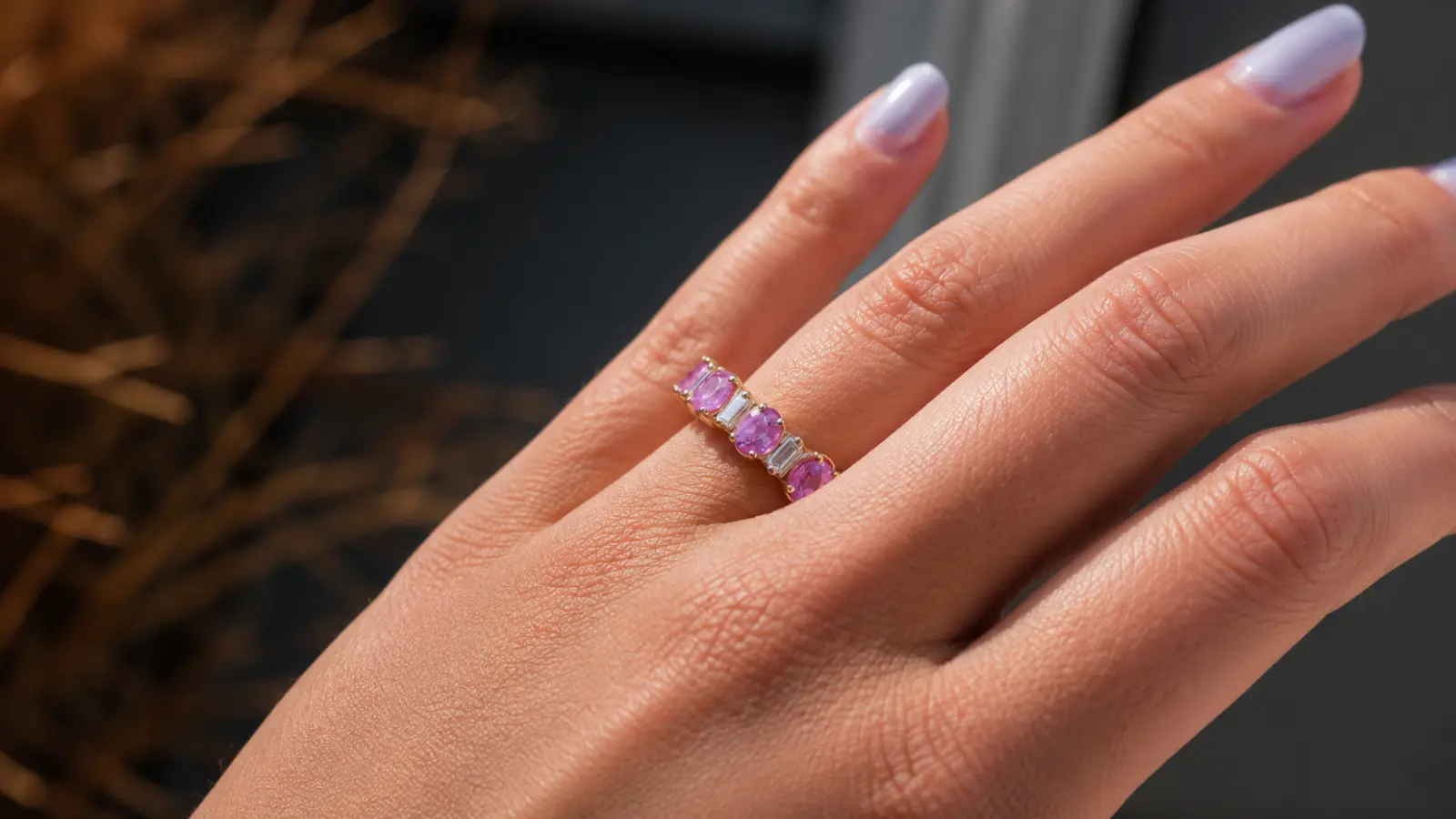
Ruby and sapphire are the same mineral — corundum — distinguished only by color. Red corundum is ruby; every other color is sapphire. This shared mineral identity means rubies carry the same Mohs hardness of 9, making them just as practical for daily wear as sapphire. The difference between the two, for a wedding ring, is almost entirely aesthetic and emotional.
The red of a fine ruby — what gemologists call pigeon’s blood red, a pure vivid crimson with a slight blue fluorescence — is one of the most intensely beautiful colors in gemology. Fine rubies from Myanmar (Burma) are considered the benchmark; Mozambique has emerged as a significant secondary source producing stones of comparable quality. Heat treatment to improve color and clarity is standard practice in the ruby trade and fully accepted.
What Ruby Works Best With
Ruby’s warm red reads most powerfully against yellow gold, which heightens the warmth of the stone. Against white gold or platinum, the contrast is sharper and more graphic — a strong visual statement. Rose gold sits between the two: the pinkish undertone of the metal softens the intensity of the ruby slightly, creating something warmer and more romantic than platinum but less traditional than yellow gold. All three combinations work; the choice depends on whether you want the ruby to vibrate with intensity or sit in a slightly softer register.
Ruby Versus Garnet — a Distinction Worth Knowing
Garnet, which occurs in deep reds similar to ruby, is frequently offered as a ruby alternative at significantly lower prices. Garnet is a legitimate and beautiful stone (Mohs 6.5–7.5 depending on variety), but it is not an equal substitute for daily wear — it scratches more easily and lacks the color depth of a fine ruby.
If you are comparing prices and encountering something significantly less expensive than expected for a “ruby,” confirm the stone identity with a certified gemologist before purchasing. The difference in long-term durability and color quality is meaningful.
The Symbolism
Ruby has carried associations with passion, love, protection, and vitality across cultures for millennia — in Sanskrit, the word for ruby, ratnaraj, translates roughly to “king of gemstones.” The association with passionate love gives ruby a particularly strong wedding ring meaning that feels earned rather than assigned.
Opal Wedding Rings
Opal is unlike any other gemstone — not in degree but in kind. The way it interacts with light is not the same mechanism as a ruby’s color or a sapphire’s depth. Opal’s play-of-color — the shifting flashes of green, blue, orange, and red that seem to move inside the stone — comes from the diffraction of light through silica spheres arranged in microscopic layers. The result is a gemstone that looks different every time the angle of light changes, producing colors no other stone can replicate.
That optical quality is also what makes opal a more complicated wedding ring choice than any stone covered so far. Understanding both sides of that equation is what allows the decision to be made well.
The Durability Reality
Opal scores between 5.5 and 6.5 on the Mohs scale — significantly softer than sapphire, ruby, aquamarine, or even amethyst. In practical terms, this means opal scratches. Not in catastrophic ways, necessarily, but with the accumulated contact of everyday life: keys in a bag, countertops, normal hand-to-surface friction. A white or crystal opal worn every day for ten years will have a surface that looks noticeably different from when it was new.
There is a second concern specific to opal: it is sensitive to sudden temperature changes, to prolonged heat, and to extremely dry conditions. Doublet and triplet opals — composite stones that layer a thin slice of opal over a backing material — are more vulnerable than solid opals and should not be submerged in water, as the adhesive can fail. For a wedding ring that will be washed daily along with the hands it sits on, this is a meaningful distinction to understand before buying.
How to Wear an Opal Wedding Ring Well
None of this disqualifies opal from a wedding ring — it disqualifies it from a low-maintenance wedding ring. Couples who choose opal wedding rings tend to be genuinely drawn to the stone’s irreplaceable visual quality and willing to be thoughtful about how they wear it. A bezel setting in yellow gold, which both protects the stone’s edges and complements the warm fire of most opals, is the most practical configuration.
Some couples choose an opal for a ring they wear on special occasions or in lower-risk situations, pairing it with a simpler band for daily wear. That approach preserves the stone’s appearance over time while keeping the meaning fully intact.
Opal Varieties Worth Knowing
Black opals from Lightning Ridge, Australia — where the dark body tone makes the play-of-color dramatically more vivid — are among the most sought-after and expensive opals in the world. White opals are more common and more accessible. Ethiopian opals, which have entered the market in significant quantities in recent years, often show brilliant color but can absorb water and change appearance temporarily when wet — worth understanding before purchase.
The Symbolism
Opal has been associated with creativity, imagination, and emotional truth. In the ancient world it was considered the most fortunate of stones, capturing the colors of all other gems within a single stone. The Victorian superstition that opal was unlucky — for anyone not born in October — has largely faded. It was always more marketing myth than cultural history, and opal deserves better than that reputation.
Aquamarine and Moonstone Wedding Rings
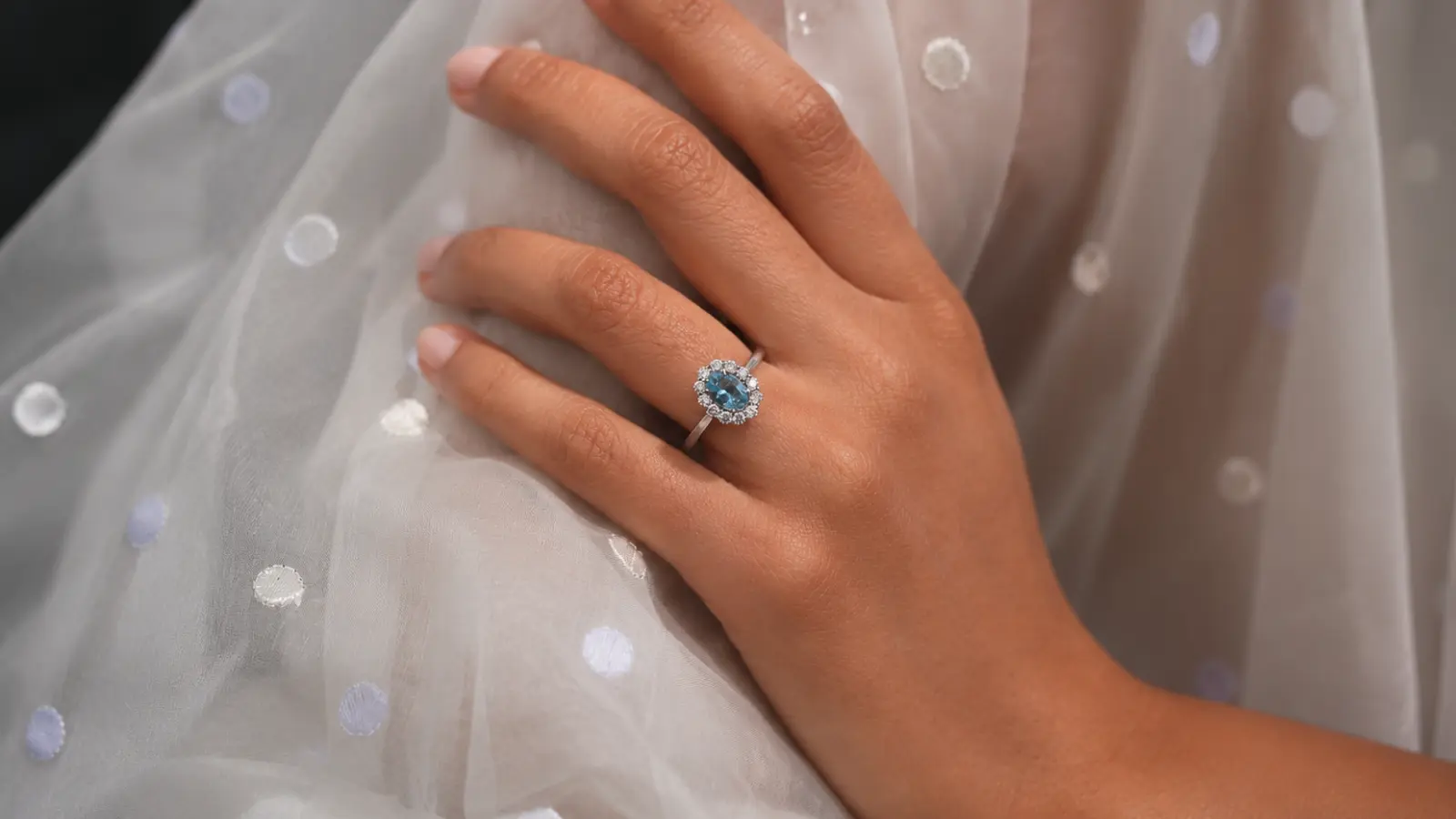
These two stones occupy very different positions on the durability scale, but they share a quality that draws couples to them: a lightness of color and feeling that more saturated gemstones do not offer. Aquamarine’s pale blue and moonstone’s floating glow are distinctive in a way that feels personal rather than traditional. Here is what each one actually involves for a wedding ring.
Aquamarine
Aquamarine is the blue-green variety of beryl — the same mineral family as emerald, though without emerald’s inclusions and fragility concerns. It scores 7.5 to 8 on the Mohs scale and tends to be naturally clean, meaning stones at this price point carry fewer internal flaws than their emerald cousins. The color ranges from the palest icy blue to a deeper sea-green, with the most prized examples showing a pure, medium blue without green overtones.
Aquamarine is a practical and genuinely beautiful option for a wedding ring. It does not have sapphire’s hardness, so it will accumulate surface scratches over time more than a 9-rated stone would — but it is durable enough for daily wear with reasonable care. The stone pairs naturally with white gold and platinum, where the cool blue reads as sophisticated and clean. It also works well with yellow gold, where the contrast creates something warmer and more vintage-inflected.
Aquamarine is the birthstone for March, which makes it a meaningful choice for couples with that birth month connection. It is also associated with serenity, clarity, and courage — historical associations tied to its resemblance to clear ocean water.
Moonstone
Moonstone is one of the most distinctive gemstones available for jewelry, and one of the most misunderstood in terms of durability. Its characteristic visual effect — a soft, floating glow called adularescence, which appears to move beneath the surface of the stone — is created by light scattering between microscopic layers of feldspar minerals. The result is luminous and genuinely ethereal.
It is also a stone that scores only 6 to 6.5 on the Mohs scale and has perfect cleavage in two directions, meaning it can split cleanly from impact along those planes. For a wedding ring worn daily, moonstone requires a protective setting — a bezel that fully surrounds the stone is not optional, it is the difference between a ring that holds up and one that chips within the first year.
Rainbow moonstone, which shows a blue adularescence against a white or transparent body, is among the most popular varieties; classic moonstone typically shows a white-blue glow against a white or cream background. Moonstone is the birthstone for June and has long been associated with feminine energy, intuition, and the cycles of nature. For couples drawn to its otherworldly quality, the care requirements are a known tradeoff rather than a surprise — provided they know about them before the ring is purchased.
Birthstone Wedding Rings
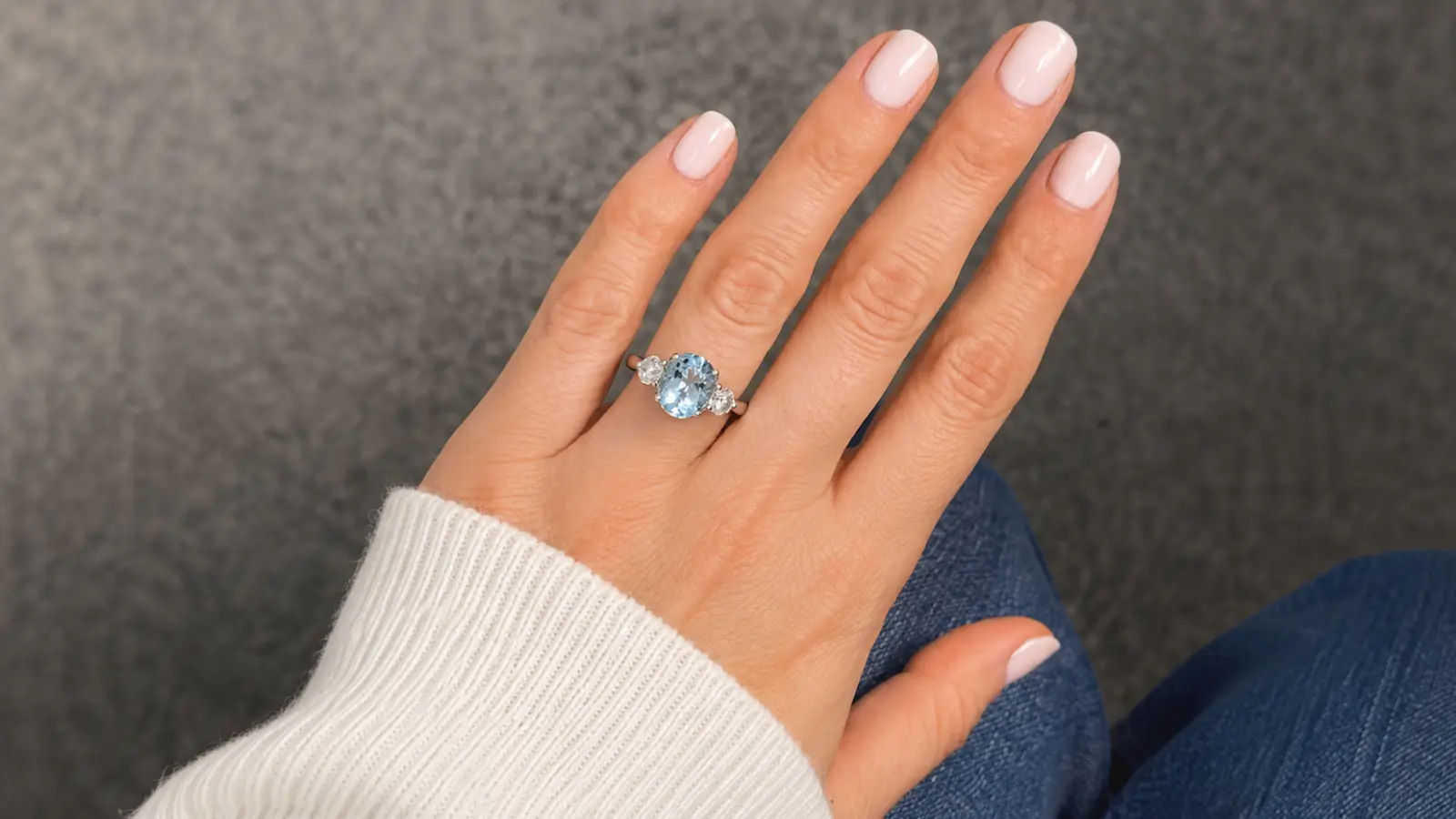
A birthstone wedding ring layers personal meaning onto an already meaningful object. The stone is not just beautiful — it is yours specifically, tied to the month you were born, or to a partner’s birth month, or to the month of the wedding itself. That specificity resonates with couples drawn to unique wedding rings that carry a personal story rather than a general tradition.
The Modern Birthstone List and Wedding Ring Suitability
The durability column below is the most important one for a ring intended for daily wear. Several months have alternate birthstones worth considering when the primary stone is too soft for everyday contact.
| Month | Primary Birthstone | Mohs | Daily Wear |
|---|---|---|---|
| January | Garnet | 6.5–7.5 | Moderate — choose protective setting |
| February | Amethyst | 7 | Moderate — borderline, protect from impact |
| March | Aquamarine | 7.5–8 | Good — practical for daily wear |
| April | Diamond | 10 | Excellent |
| May | Emerald | 7.5–8 | Moderate — inclusions increase fragility |
| June | Pearl / Moonstone / Alexandrite | 2.5–6.5 / 8.5 | Pearl and moonstone: low · Alexandrite: good |
| July | Ruby | 9 | Excellent |
| August | Peridot / Spinel | 6.5–7 / 8 | Peridot: moderate · Spinel: good |
| September | Sapphire | 9 | Excellent |
| October | Opal / Tourmaline | 5.5–6.5 / 7–7.5 | Opal: low · Tourmaline: moderate |
| November | Citrine / Topaz | 7 / 8 | Citrine: moderate · Topaz: good (avoid impact) |
| December | Blue Topaz / Tanzanite / Turquoise | 8 / 6.5 / 5–6 | Blue Topaz: good · Tanzanite: moderate · Turquoise: not recommended |
Choosing a Birthstone Ring Thoughtfully
The most common mistake with birthstone wedding rings is falling in love with the meaning first and learning about the durability second — after the ring is purchased. For months with softer primary birthstones, it is worth considering the secondary or alternate birthstone, which is often more durable. June’s alternative is alexandrite (Mohs 8.5), one of the hardest and most fascinating gemstones available — a color-change stone that shifts from green in daylight to red under incandescent light. October’s alternative is tourmaline, more durable than opal and available in an extraordinary range of colors.
If the primary birthstone is the only stone that carries meaning for you, a protective setting — particularly bezel — and thoughtful daily habits make most choices workable. What matters is going in with accurate information rather than discovering the stone’s limitations through the ring itself.
Gemstones to Avoid for Daily Wear
Some gemstones are genuinely beautiful and genuinely unsuitable for a ring worn every day without exceptional care. This is not a judgment on the stone — it is a function of physics. Below a 7 on the Mohs scale, daily life will visibly degrade the surface of a ring over time. Below a 6, that degradation happens quickly enough to matter within the first few years of wear.
Stones With Significant Limitations for Wedding Rings
Each of these stones is beautiful in the right context — the limitations below are specifically about daily, through-everything wear.
- Pearl (Mohs 2.5–4.5): One of the softest materials used in fine jewelry. Pearls scratch from contact with almost anything harder than they are — which is nearly everything. Hairspray, perfume, skin care products, and even sweat are acidic enough to damage the nacre over time. Pearl rings are lovely for occasional wear; they are not suited to a ring worn continuously through daily life.
- Turquoise (Mohs 5–6): Porous, relatively soft, and highly sensitive to oils, chemicals, and prolonged sunlight, which can cause color fading and surface discoloration. Turquoise has a strong presence in Southwestern and Native American jewelry traditions and can be beautiful in a ring designed around its limitations. As a daily-wear wedding ring worn through water, soap, and skin care products, it will show the effects of that exposure faster than almost any other stone.
- Amber (Mohs 2–2.5): Not technically a mineral — amber is fossilized tree resin — and one of the softest materials used in jewelry. It scratches from contact with fingernails. Beautiful as a statement piece; not appropriate for a ring worn every day.
- Coral (Mohs 3–4): Organic, soft, and acid-sensitive. Shares many of pearl’s limitations. Also subject to increasing ethical and legal restrictions as coral reef ecosystems are protected globally.
- Tanzanite (Mohs 6.5): More durable than the stones above, and genuinely beautiful — a violet-blue stone found only in one location in Tanzania. However, tanzanite has perfect cleavage, meaning it can split cleanly from a sharp impact. For a ring worn daily by someone with an active lifestyle, the cleavage risk is worth taking seriously before committing.
What “Avoid” Actually Means in Practice
None of these are forbidden. Some couples deliberately choose alternative wedding rings with softer stones because the personal meaning outweighs the additional maintenance. What “avoid for daily wear” means is: do not choose these stones expecting the same low-maintenance, wear-it-through-everything experience that sapphire or ruby offers.
For couples who love a softer stone’s look but want something more practical, a ring with that stone set into a pendant or earrings — paired with a more durable wedding ring — is a genuinely good solution. It preserves the meaning without the daily-wear compromise, and it means both pieces get worn rather than only the one you feel safe putting on.
Gemstone Wedding Ring Inspiration
Gemstone wedding rings bring color, symbolism, and personality into a design that feels unique to each couple. Explore our inspiration board for sapphire rings, emerald styles, ruby wedding bands, birthstone ideas, vintage designs, and colorful gemstone wedding inspiration.
Choosing a Gemstone Wedding Ring With Meaning
A gemstone wedding ring is not only about choosing a different color. It is about finding a stone whose beauty, symbolism, and practical qualities match the life it will become part of every day.
Whether you choose the timeless strength of sapphire, the richness of emerald, the passion of ruby, or a gemstone connected to your own story, the right choice is the one you understand completely. A wedding ring becomes more than the stone it holds — it becomes the meaning and memories created around it.
Frequently asked questions (FAQ)
What gemstone is best for a wedding ring you wear every day?
Sapphire and ruby are usually the best colored gemstones for everyday wedding rings because they combine beauty, meaning, and durability. Both score 9 on the Mohs hardness scale, making them highly resistant to scratches from normal daily wear. Other gemstones, such as aquamarine and emerald, can also work well but usually require more thoughtful settings and care.
What gemstones should you avoid for everyday wedding rings?
Softer gemstones such as opal, pearl, turquoise, coral, and amber are usually not ideal for a wedding ring worn every day without special care. These stones can scratch, chip, or change appearance more easily because they are lower on the Mohs hardness scale. They can still be meaningful choices, but they work best for someone who understands their maintenance needs.
Is an emerald too fragile for a wedding ring?
An emerald can be used in a wedding ring, but it requires more care than sapphire or ruby. Although emerald has a respectable hardness rating, natural emeralds often contain internal inclusions that make them more vulnerable to chipping. A protective setting, such as a bezel or halo, is especially important for an emerald ring intended for regular wear.
Should you choose a gemstone wedding ring for meaning or durability?
The best choice balances both. A wedding ring is an emotional piece of jewelry, so the color, symbolism, and personal connection matter. However, because the ring is usually worn every day for years, durability should also influence the decision. A meaningful stone that does not match your lifestyle may become difficult to maintain over time.
Are birthstone wedding rings a good idea?
Birthstone wedding rings can be a beautiful way to add personal meaning, but not every birthstone has the same durability. Stones like diamond, sapphire, ruby, and aquamarine are naturally better suited for daily wear. Softer birthstones, such as pearl or opal, may require protective settings or more careful wearing habits.
What should you know before buying a gemstone wedding ring?
Before buying a gemstone wedding ring, look beyond color alone. Consider the gemstone’s hardness, resistance to chipping, setting style, maintenance requirements, and how the ring fits your daily routine. The best gemstone wedding ring is not simply the most beautiful one — it is the one you can enjoy wearing for decades.