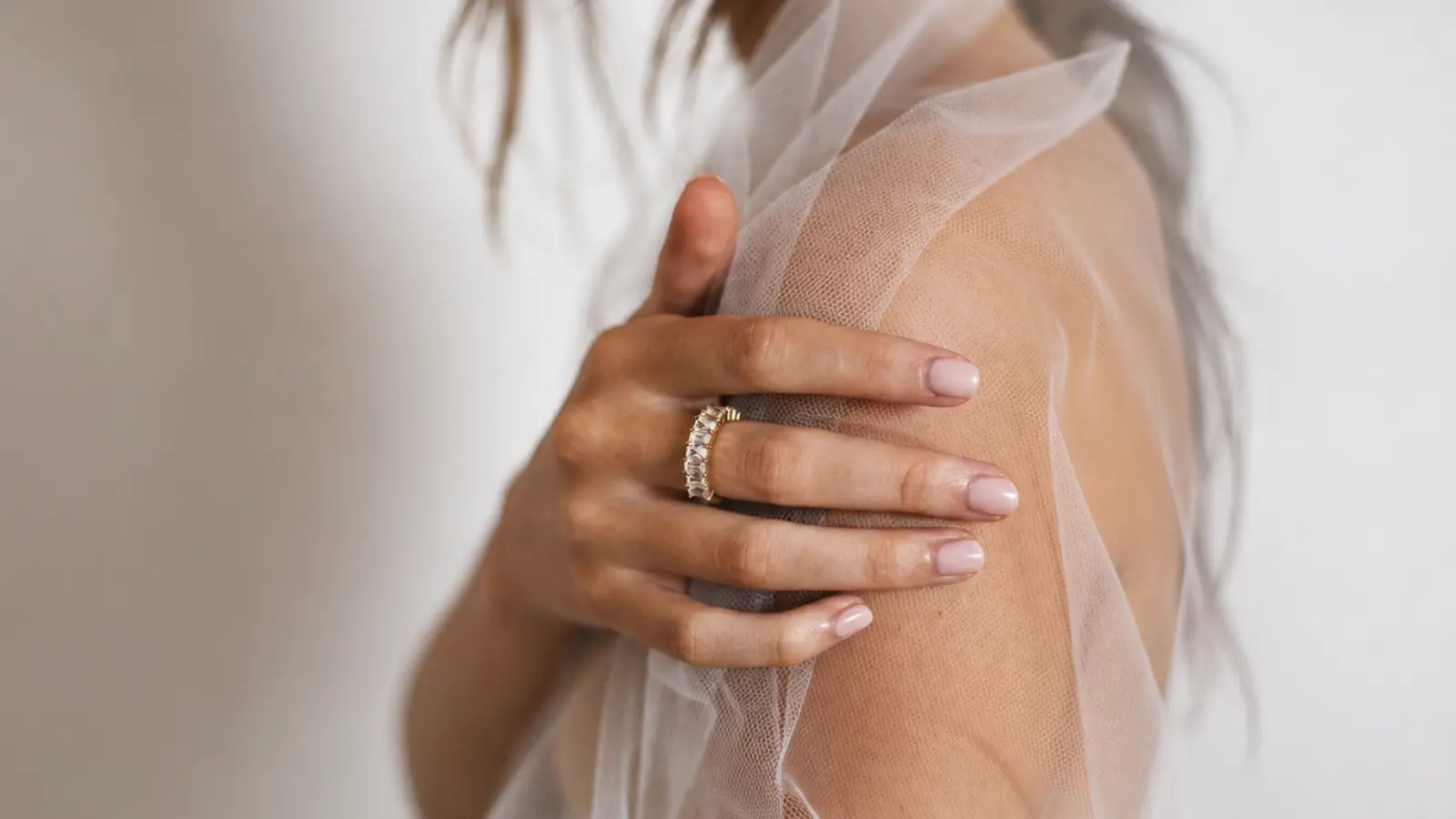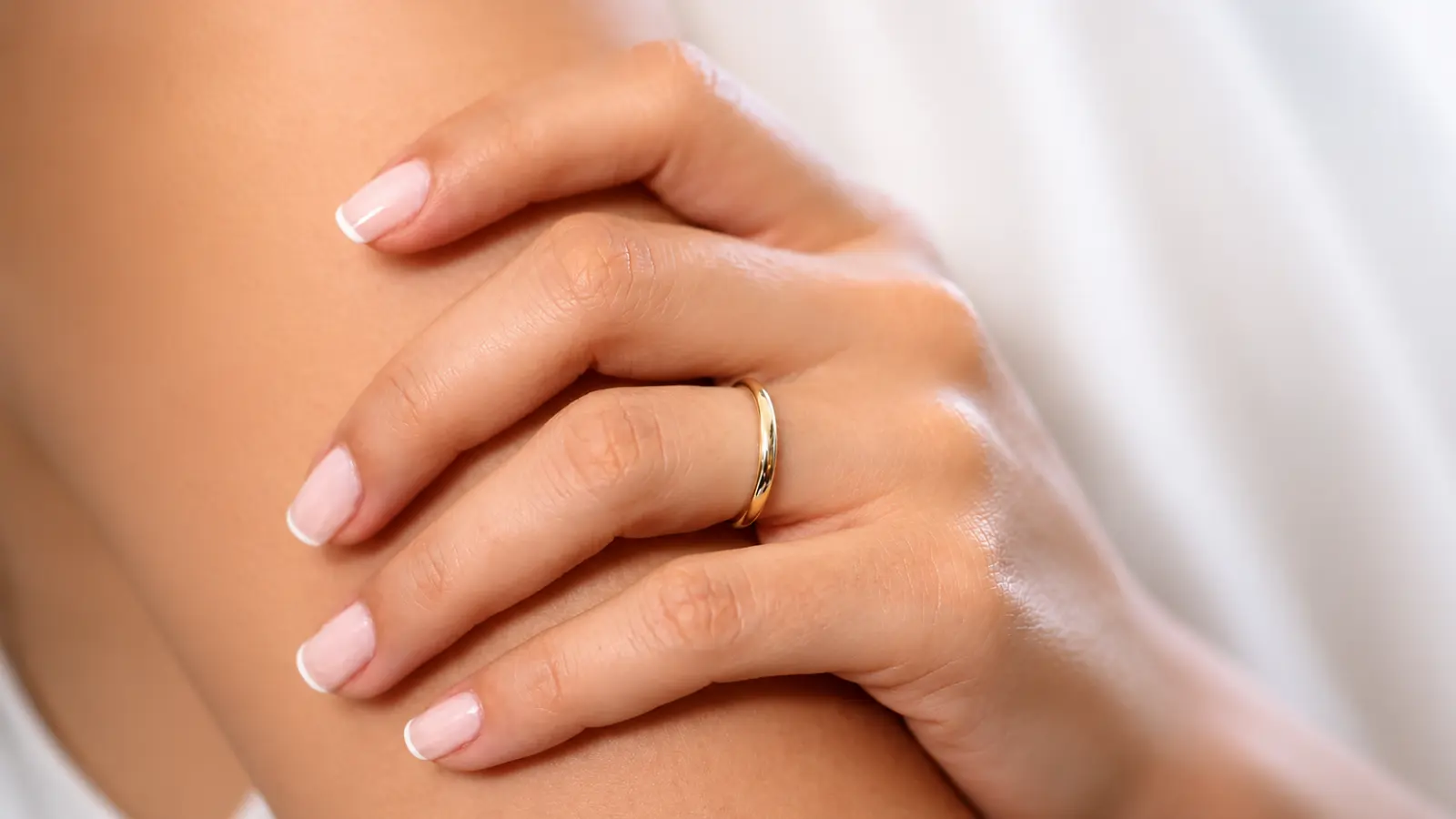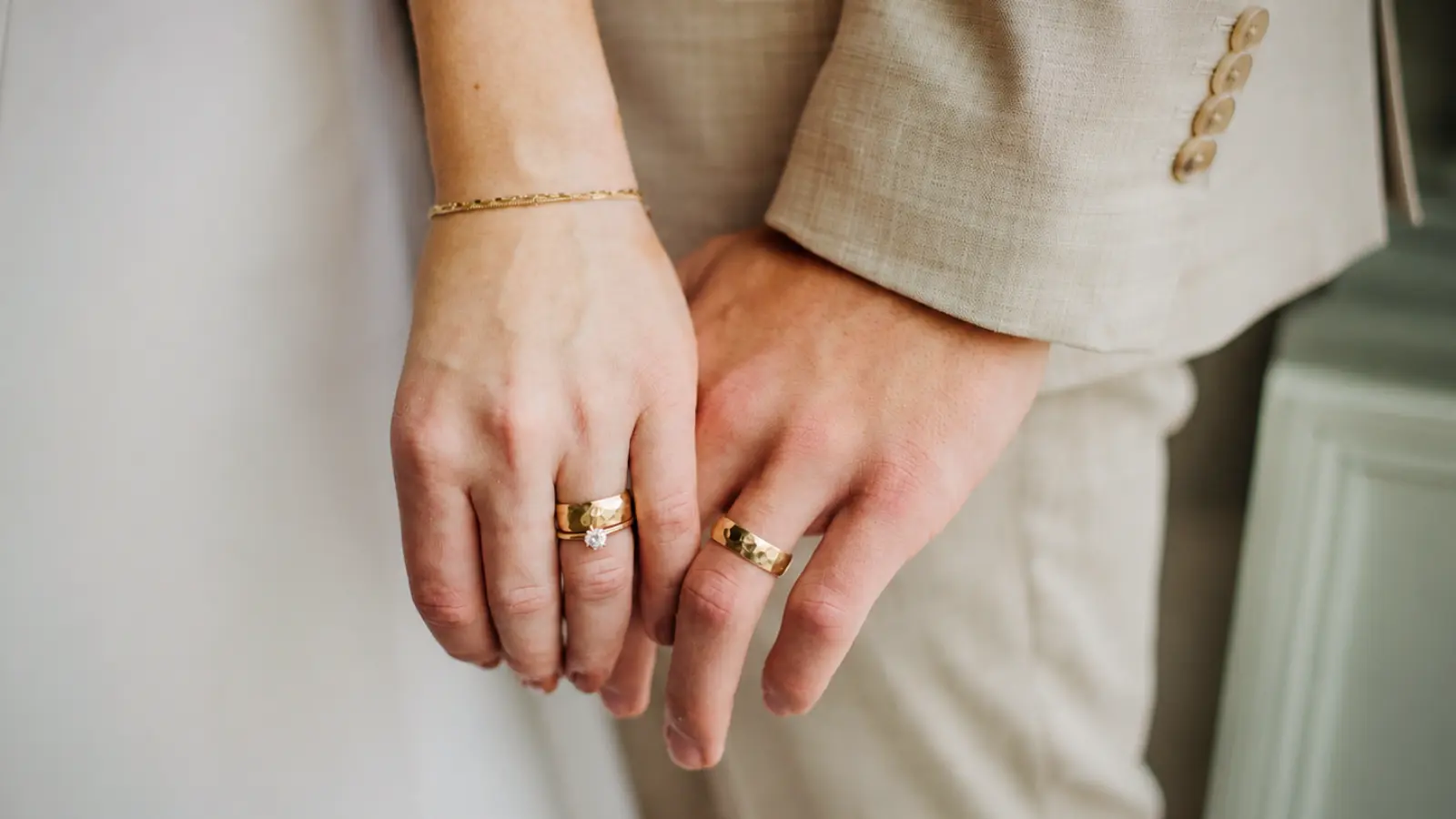
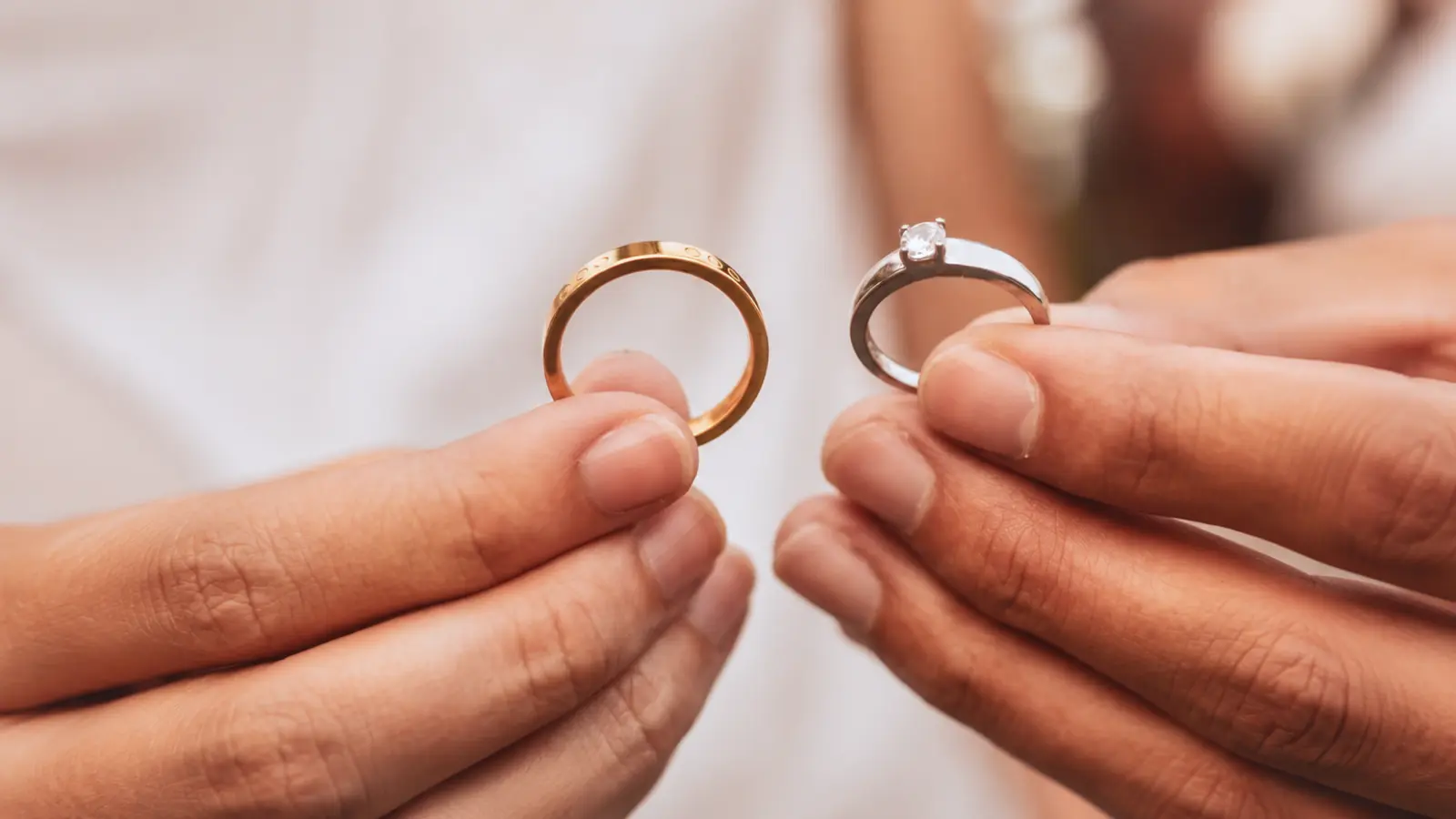
Alternative wedding rings are non-traditional rings or ring substitutes chosen instead of classic gold, platinum, or diamond designs. They can include colored gemstones, unusual materials, vintage pieces, custom designs, silicone bands, tattoos, or meaningful details that reflect the person wearing them.
Choosing an alternative wedding ring is not only about finding something different. The best unconventional rings balance personal meaning with durability, comfort, maintenance, and how the design will feel after years of daily wear.
This guide explores alternative wedding rings, including non-diamond options, unique materials, vintage designs, tattoos, travel rings, practical considerations, and how these choices fit within the broader world of wedding rings and wedding bands.
Non-Traditional Wedding Ring Ideas
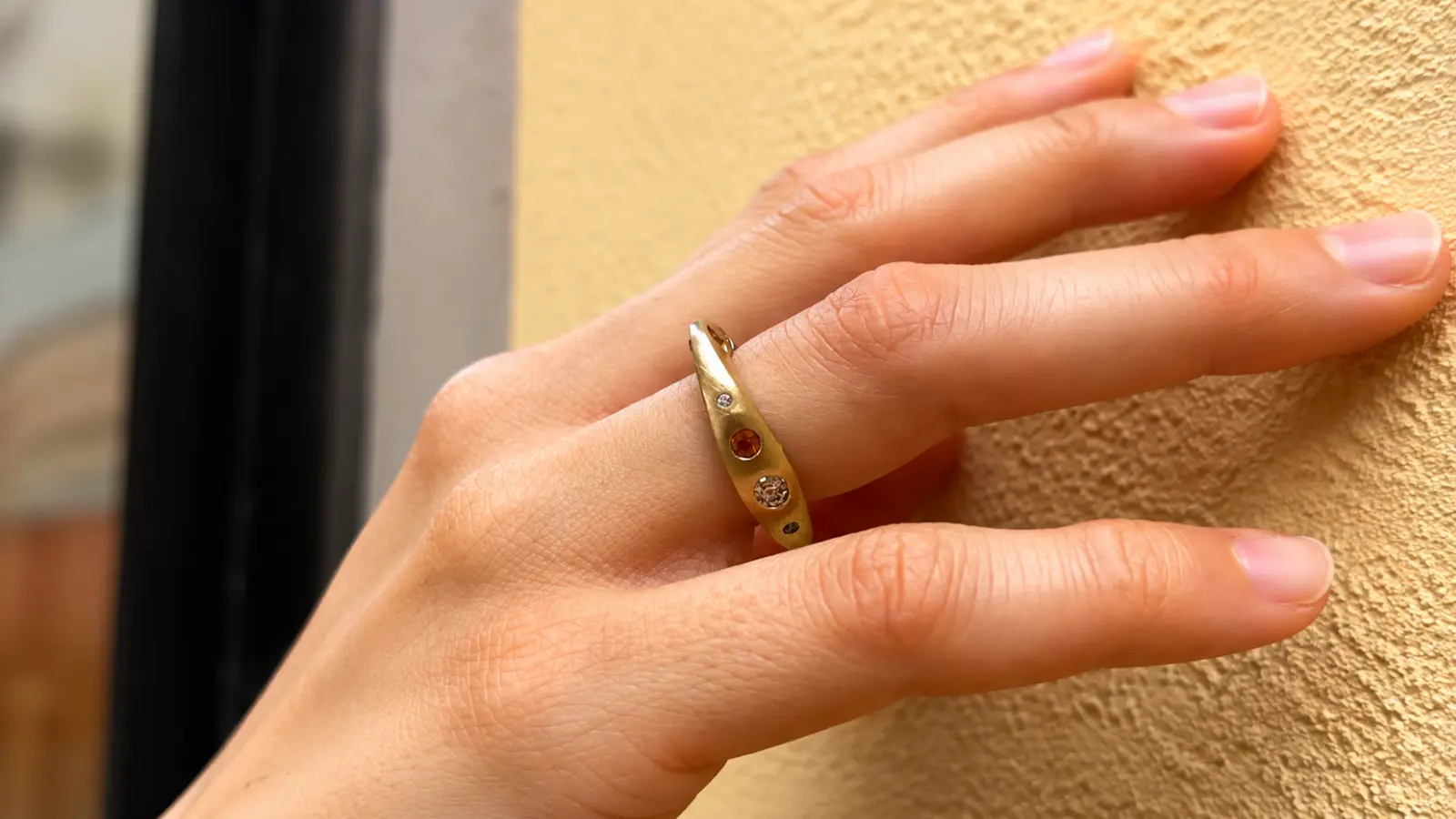
Non-traditional wedding rings span a much wider range than the phrase suggests. The most visible category — colored gemstones, unusual metals, organic materials — is only one dimension of what makes a ring non-traditional. A plain gold band with a meaningful engraving that references something entirely private is, in its own way, more unconventional than a ring that looks distinctive but was chosen from a commercial display case. The distinction that matters is not between common and unusual materials, but between rings that were chosen and rings that were defaulted to.
That said, material and design are the most practical starting points for people who know they want something different but have not identified what. The non-traditional options that have established real staying power tend to fall into a few distinct categories, each with its own logic and trade-offs.
Colored Gemstone Rings
Colored gemstone rings replace the diamond with a stone chosen for its color, its symbolism, or its personal significance. Sapphire is the most commonly chosen, in part because it is the most durable colored stone available and in part because it has a long history as a ring stone in its own right. But the range of colored stones is wide: ruby, emerald, aquamarine, morganite, tanzanite, opal, tourmaline, garnet, and others, each with different hardness ratings, care requirements, and visual characters. Choosing a colored stone means choosing not just a color but a relationship to maintenance — softer stones require more protection than diamond or sapphire, and that reality needs to be part of the decision.
Vintage and Antique Rings
Vintage and antique rings are rings that existed before the couple who now wears them — a ring purchased at an estate sale or antique dealer, a ring inherited from a family member, or a ring once worn by someone significant. Much of the appeal of vintage wedding rings comes from the history they already carry; their physical character was shaped by someone else’s life before entering this one, and that accumulated presence is something a new ring cannot replicate. Vintage rings also tend to offer more distinctive design at a lower price point than equivalent new production, because the design work was done in an era when the conventions were different.
Custom-Designed Rings
Custom-designed rings are built from the ground up around a specific vision rather than chosen from existing inventory. The process behind custom wedding rings ranges from modifying an existing design to commissioning an entirely original piece through sketches, wax models, and iterative approval. Custom rings are slower and more expensive than purchasing from existing inventory, and the result is a ring that exists nowhere else. For people with a clear vision that current production does not accommodate, custom is the most satisfying path available.
Alternative Material and Symbolic Rings
Alternative material rings replace traditional precious metal with wood, meteorite, titanium, tungsten, carbon fiber, ceramic, or other materials with their own visual and physical character — covered in depth below. The short version: they range from extremely durable (tungsten, titanium) to visually stunning but practically demanding (wood, antler, opal inlays), and the choice should be informed by how the ring will actually be worn, not only by how it looks in a photograph.
Rings with personal symbolism built in — incorporating metal from a deceased family member’s jewelry, a stone from a meaningful location, a design that references a specific moment or relationship — occupy a category that transcends material. Their significance comes from what was incorporated into them, not what they are made of or how they look. These rings are often custom-designed by necessity, and they are among the most durable in terms of personal attachment, because the meaning is specific and private and does not depend on the ring staying fashionable.
Non-Diamond Wedding Rings
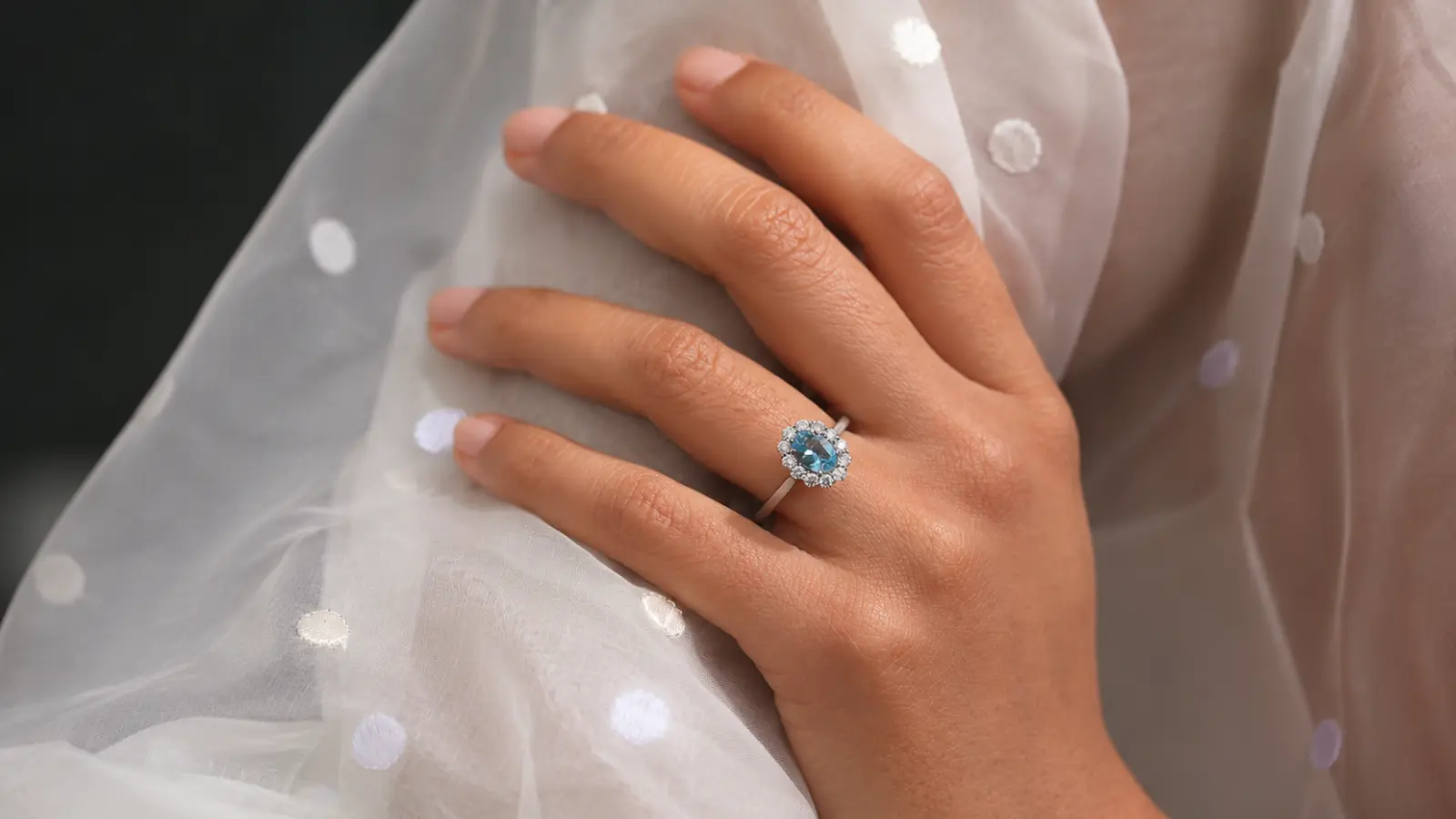
Diamond became the default gemstone for engagement and wedding rings through a combination of genuine scarcity, genuine beauty, and one of the most effective marketing campaigns in consumer history. De Beers’ “A Diamond is Forever” campaign created the cultural equation between diamond rings and permanent commitment that most people now experience as a natural tradition rather than a constructed one. Recognizing this history is not an argument against diamonds — it is a reason to choose them, or not choose them, on the actual merits rather than on an assumption that the convention was always there.
Why Diamond Remains a Genuine Option
The merits of diamond for a daily-wear ring are real: at Mohs 10, it is the hardest natural material on earth and will not scratch under any ordinary daily wear condition. It is colorless, which means it works with any metal and any aesthetic, and it is available in an enormous range of cuts, sizes, and price points. Lab-grown diamonds, chemically and physically identical to mined diamonds, have made the diamond ring accessible at significantly lower price points than mined equivalents. Lab-grown diamonds are not a compromise; they are the same material by every measure except origin.
Sapphire and Moissanite: The Two Most Practical Alternatives
Sapphire is the practical choice for anyone who wants color and durability without compromise. At Mohs 9, it is harder than any other colored stone and will hold up to daily wear in a way that softer stones cannot reliably promise. White sapphire in particular serves as a transparent alternative to diamond at a significantly lower cost, though sapphire disperses light differently than diamond and does not have the same brilliance — some people prefer this, others find it insufficiently sparkly.
For many people, moissanite wedding rings are the closest practical substitute to diamond and one of the most sensible non-diamond options for everyday wear. At Mohs 9.25, it is harder than sapphire and nearly as hard as diamond, colorless or near-colorless in higher grades, and significantly less expensive than diamond for equivalent carat weight, often by a factor of five to ten or more. Moissanite has a slightly different refractive index than diamond, producing a dispersion pattern sometimes described as more rainbow-like — beautiful in some lighting conditions, different from diamond in others. Seeing moissanite in person, in multiple lighting conditions, is the reliable way to assess whether it suits the aesthetic.
Ruby and Emerald: Color With Different Trade-Offs
Ruby shares sapphire’s hardness at Mohs 9 — they are both corundum, distinguished only by trace element composition. Ruby’s deep red is distinctive in a way no other stone duplicates, and its association with love and passion gives it its own symbolism. High-quality rubies can be more expensive than equivalent diamonds; more affordable rubies are widely available, typically trading off color saturation or clarity.
Emerald is the most beloved soft stone for jewelry and one of the most practically demanding. At Mohs 7.5 to 8, it will scratch under daily conditions that sapphire or diamond would handle without consequence, and emeralds contain natural inclusions — called a “jardin” — that make them more vulnerable to chipping. Emerald is best suited to people who understand the maintenance requirements and are prepared to care for the ring accordingly: removing it for physical work, cleaning it carefully, and inspecting the setting periodically.
Softer Stones: Morganite, Opal, and Other Distinctive Options
Morganite, aquamarine, and tanzanite are popular for their colors — morganite’s peachy pink, aquamarine’s pale blue-green, tanzanite’s violet-blue — and all three sit in the Mohs 7 to 8 range, softer than the corundum stones. They can work well in protective bezels or low-profile settings that shield the stone from impact, and they are best suited to people who are thoughtful about when and how they wear their rings.
Opal, moonstone, and turquoise are among the most visually distinctive stones available and among the most demanding in terms of care. Opal rates Mohs 5.5 to 6.5 and is sensitive to thermal shock and impact; moonstone rates 6 to 6.5 and is prone to chipping along its natural cleavage planes; turquoise rates 5 to 6 and is porous, absorbing liquids and discoloring over time. All three are genuinely beautiful and genuinely fragile for a ring worn daily through ordinary life — worth considering for people who will treat their ring with corresponding care, or who want a ring worn occasionally rather than constantly. For a complete exploration of colored stones and their different characteristics, the gemstone wedding rings covers the category in greater detail.
Alternative Materials
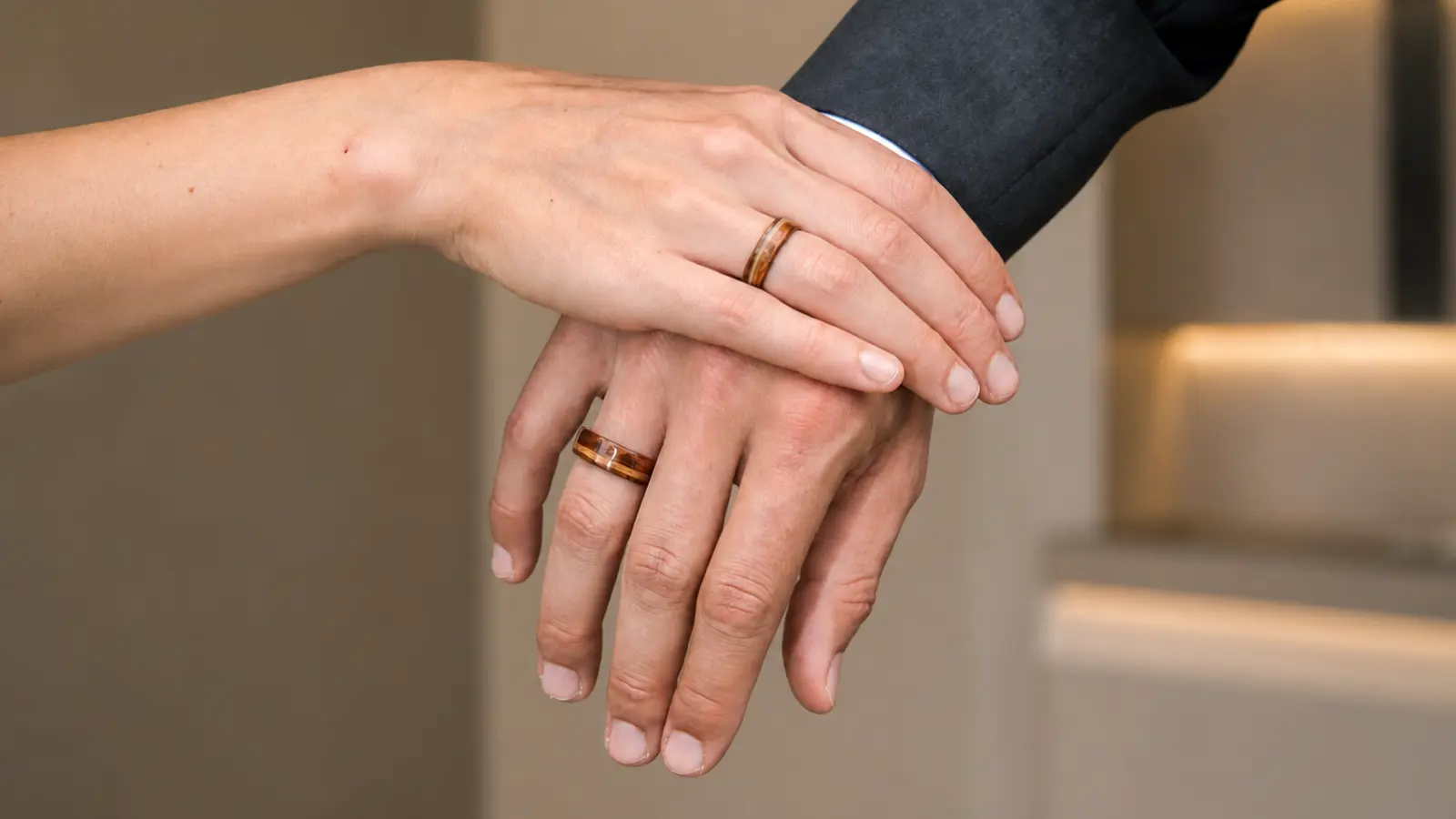
The shift toward alternative ring materials in the last two decades reflects something real about how people think about jewelry: the idea that the material itself can carry meaning, not just the design or the stone. A ring made from wood harvested on the couple’s land, or from metal reclaimed from a meaningful object, or from meteorite — material that fell from space before any human being existed — carries a different kind of significance than a ring made from commercially produced gold, even when the design is identical. The practical reality of these materials is more varied than the visual appeal suggests, and understanding the specific characteristics of each before choosing it is the single most important step.
Tungsten Carbide and Titanium
Tungsten carbide is the hardest of the commercially available alternative ring metals — nearly impossible to scratch under ordinary daily conditions and significantly heavier than gold or titanium. Tungsten rings cannot be resized, because the material’s hardness makes it impossible to cut and reshape with conventional jewelry tools, and in a medical emergency they must be shattered with a vice grip rather than cut. Some people find the weight and permanence of tungsten wedding rings reassuring; others consider the inability to resize a meaningful limitation.
Titanium is significantly lighter than gold and platinum while being stronger than either, and it is hypoallergenic, a practical choice for people who react to gold alloys. Titanium can be resized in some cases but with more difficulty than gold, within a limited range. It scratches more easily than tungsten but is more workable and, critically, can be cut off in a medical emergency with standard tools.
Cobalt Chrome and Carbon Fiber
Cobalt chrome occupies a middle ground between tungsten and titanium — harder than titanium, more workable than tungsten, bright white in color and often compared visually to platinum. It is hypoallergenic, polishes to a high shine, and can be cut off in emergencies with diamond-tipped tools, the same category of equipment used for tungsten removal.
Carbon fiber is the lightest of the commonly available alternative ring materials, to a degree some wearers describe as initially disconcerting. It is extremely strong in the direction of its fiber orientation and can be strikingly beautiful with its distinctive woven pattern, though it cannot be resized and may crack under sufficient lateral force.
Wood, Meteorite, and Antler
Wood is the most organic of the alternative ring materials and the most demanding in terms of ongoing maintenance. Wood rings are typically stabilized with resin under vacuum and finished with a protective coating that must be periodically renewed; they should be removed for water exposure and protected from impacts. The appeal is the warmth and individuality of the material — no two pieces of wood are exactly alike, and a ring made from wood with personal significance carries meaning a commercially sourced wood ring does not. For people who understand the maintenance commitment, wood rings can be genuinely beautiful objects that hold up over years.
Meteorite inlay uses material, typically Gibeon meteorite, set into a ring alongside a metal band, displaying a distinctive Widmanstätten pattern when cut and etched, unique to each piece. Meteorite is iron-based and can rust if not properly sealed; rings with meteorite inlays require periodic oiling or sealing to prevent oxidation. The appeal is both visual and conceptual — wearing material that predates the solar system is a different kind of permanence than gold.
Antler is processed deer or elk antler, typically used as an inlay alongside wood or metal, with a warm, creamy tone and natural texture. Like wood, it requires protective coating and care and is more vulnerable to impact and moisture than metal. It is particularly popular in rings designed for people who hunt, work with animals, or feel connected to the natural world.
Ceramic
Ceramic rings are made from zirconium oxide — scratch-resistant, lightweight, hypoallergenic, and available in colors including black, white, and gray. Ceramic rings are brittle and can shatter under significant impact, a characteristic different from the gradual wear of metal rings, and they cannot be resized. In matte black or other color options, they offer a dramatically different aesthetic from conventional metal rings while maintaining reasonable durability under ordinary wear.
Wedding Ring Tattoos
A wedding ring tattoo is the most permanent alternative to a metal ring and the one that requires the most thought before committing. Unlike any material alternative above, a tattoo cannot be resized, taken off for a medical procedure, lost, or exchanged for something different if tastes change. It is on the body. The permanence is the defining feature, and it is both the primary appeal for people who choose tattoos intentionally and the primary source of regret for people who choose them impulsively.
Finger tattoos fade faster than tattoos on most other parts of the body, because finger skin is thin, constantly moving, constantly exposed to sun and soap and water, and regenerates more quickly than skin elsewhere. Most finger tattoos require touch-ups every few years to maintain their original appearance, and bold, simple designs in dark ink hold significantly longer than fine-line or detailed work. The people best suited to a wedding ring tattoo are those who cannot safely wear a metal ring at work, and those for whom the permanence of the tattoo is specifically the point — people who have wanted that for long enough to be certain it reflects a genuine preference rather than a momentary instinct.
For couples who want coordinated ring tattoos, the same questions apply as for any couples’ ring decision: how much to match, how much to let each design be its own thing, and whether both people are choosing the tattoo independently for their own reasons. The complete wedding ring tattoos guide covers design options, couples’ tattoos, fading and healing realities, and pros and cons in full detail.
Travel and Substitute Wedding Rings
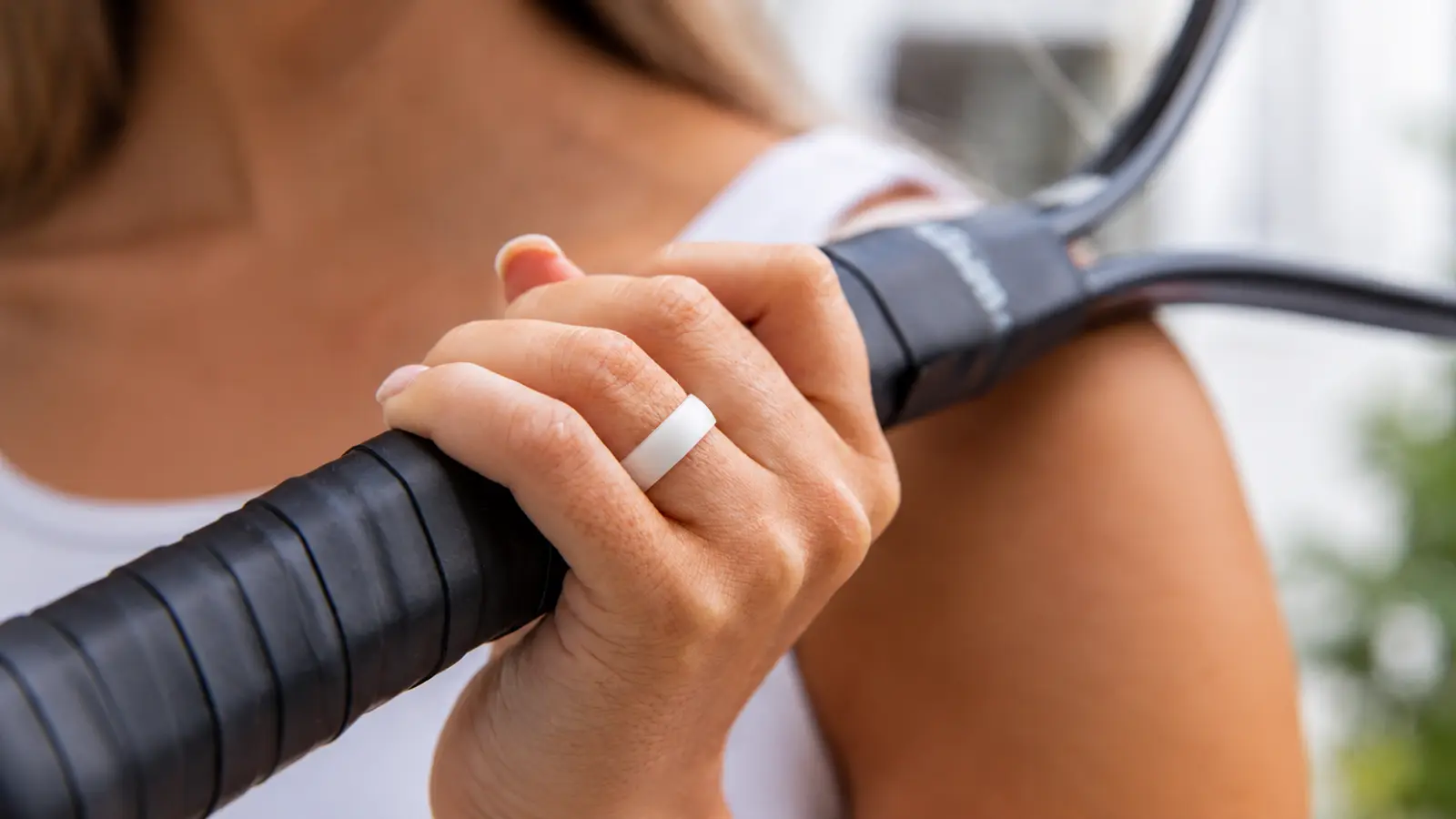
A travel ring is an inexpensive substitute for the primary wedding ring, worn in situations where losing or damaging the original is a meaningful risk. In this context, travel wedding rings are practical tools for protecting the original while still having something meaningful to wear.
When a Travel Ring Makes Sense
The situations are specific: international travel to destinations where theft is a concern, adventure activities like surfing, climbing, diving, or skiing where the primary ring could be lost or damaged, beach vacations where a ring is routinely removed for swimming, or any context where the primary ring’s presence creates anxiety rather than comfort. Travel rings are typically simple metal bands in sterling silver or gold-filled metal, or silicone bands, priced low enough that losing one is inconvenient rather than distressing. The point is not to find a travel ring that looks like the primary ring; it is to find something that does the social and personal work of having a ring present, without the stakes of the real one.
Silicone as a Substitute Category
Silicone rings deserve specific mention because they have developed into a genuine product segment with their own aesthetic range and quality tiers. Medical-grade silicone rings are flexible, non-conductive, and designed to break away under pressure, the safety feature that makes them appropriate for people whose work environments prohibit metal rings. The limitation of silicone as a primary wedding ring, rather than a substitute, is that it does not carry the material weight or permanence most people associate with a wedding ring. For people who work in environments where metal rings are prohibited most of the week and wear the metal ring only on weekends, the silicone ring functions as the daily ring by default, and some couples arrive at that reality and feel entirely fine about it.
A variation worth knowing: some couples purchase a dedicated “home ring,” a slightly more substantial ring worn around the house, while cooking, cleaning, or gardening, while the primary ring is reserved for occasions where it will be seen and not subjected to the mechanical wear of domestic life. This extends the life of the primary ring by limiting its exposure to everyday wear conditions.
How to Choose an Alternative Ring Without Regret
The specific regret associated with alternative wedding rings is almost always one of two things: either the ring stopped looking the way it looked when chosen, because the material was not suited to daily wear and the aging process was not anticipated, or the ring stopped meaning what it meant when chosen, because the choice was driven by aesthetics or novelty rather than something durable in the wearer’s values. Both regrets are preventable with the same approach: separating what you find beautiful right now from what you will want to wear every day for several decades, and choosing from the intersection of those two things.
Start With Durability, Not Design
Before looking at any specific ring, be honest about how it will actually be worn. Will it come off for physical work, cooking, gardening, exercise, swimming? Will it stay on through everything? A ring made of opal or wood is a different object for someone who removes it before washing dishes than for someone who wears it through everything without thinking about it. Knowing which category you are in is more useful than knowing which material is technically most beautiful.
Understand the Resizing Situation
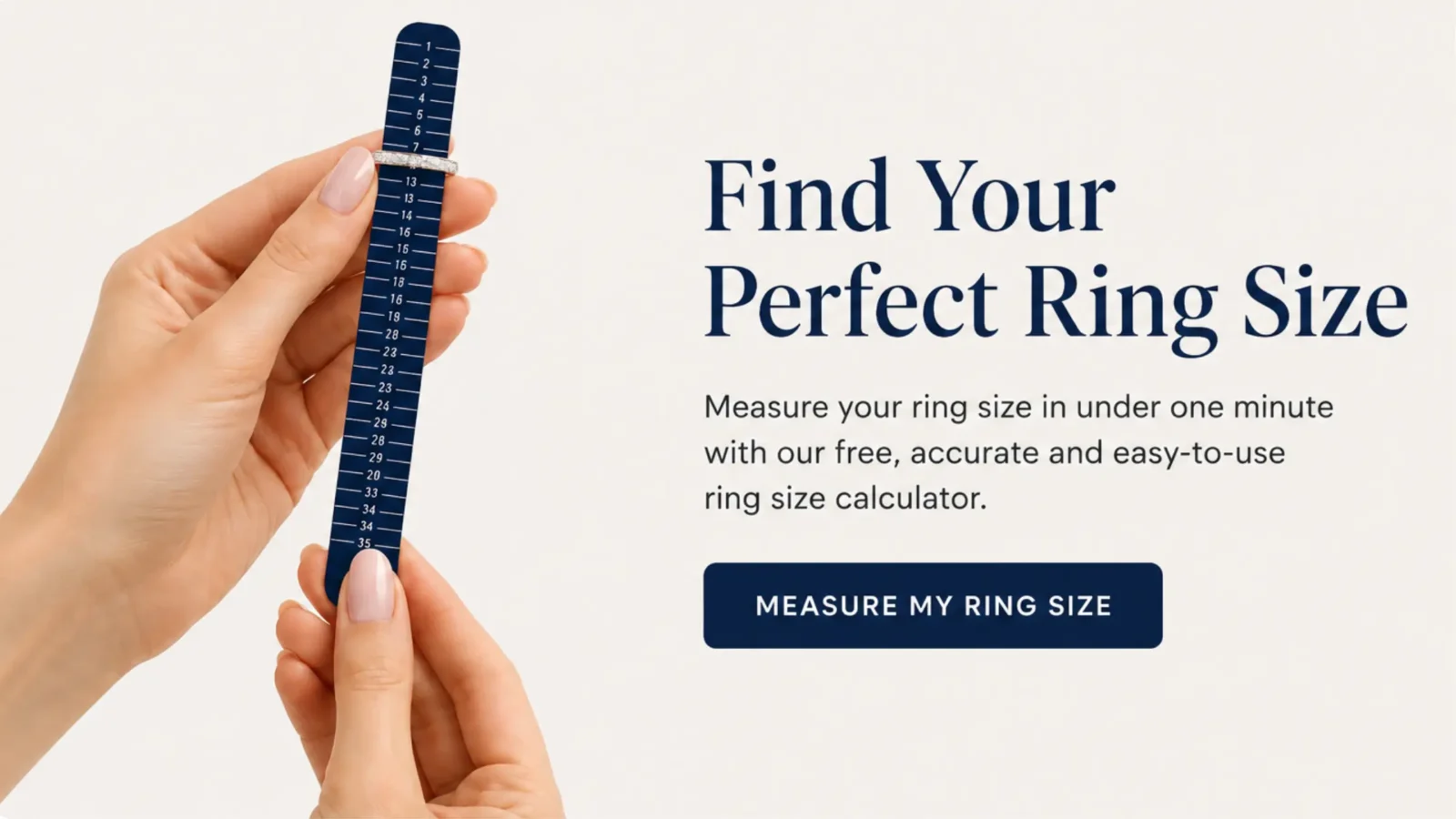
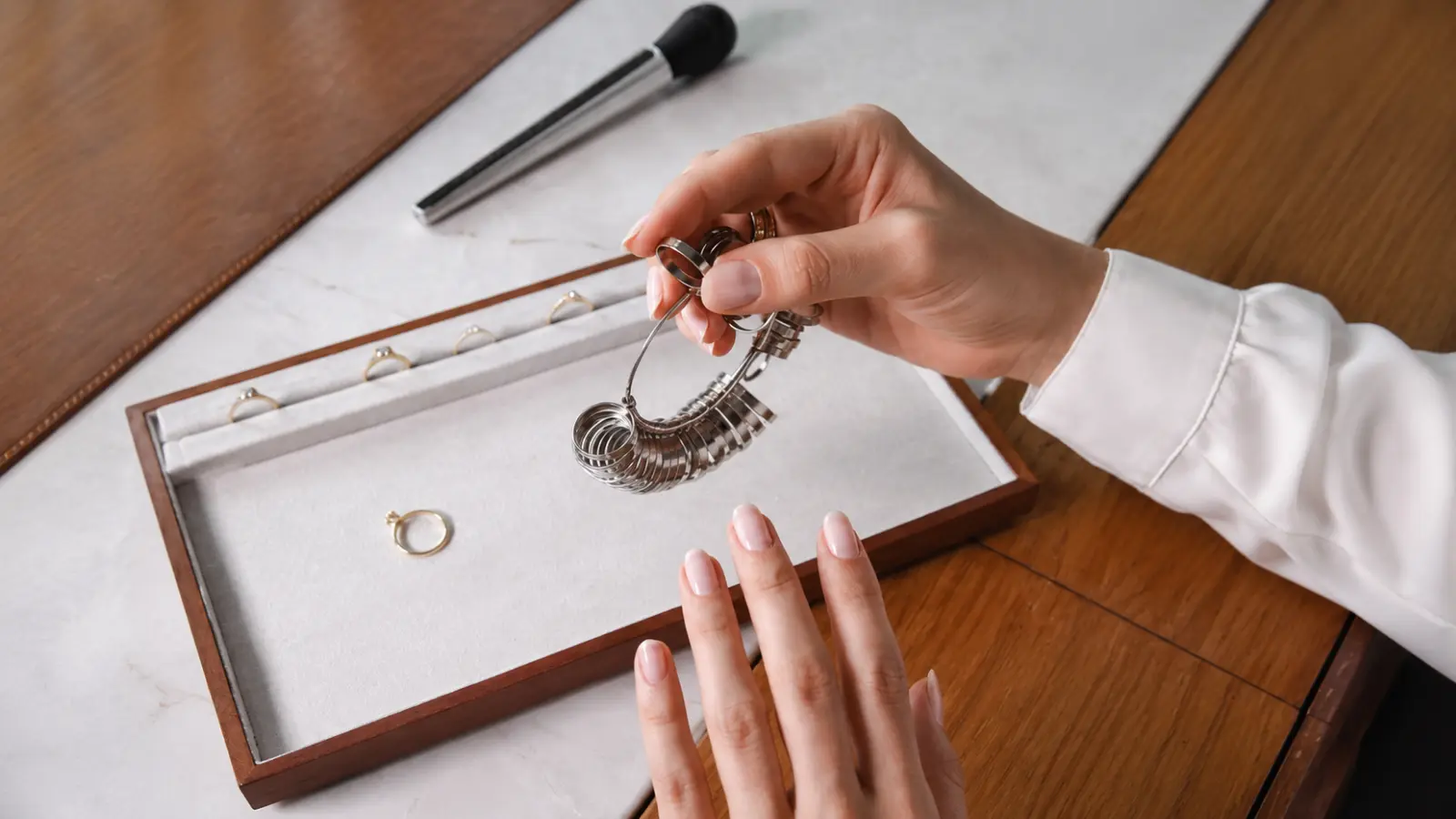
Tungsten, carbon fiber, and ceramic rings cannot be resized. Titanium can be resized within a limited range. Most gold, silver, and platinum rings can be resized up or down by several sizes. Finger size changes with age, weight fluctuation, pregnancy, and seasonal temperature, which is why future wedding ring resizing should be considered before choosing a material. This is a practical consideration that doesn’t override design preference but needs to be part of it, particularly for materials where resizing is impossible.
See the Material in Person, Test the Idea Over Time
Alternative materials photograph extremely well under studio lighting conditions that differ significantly from daily wear conditions. Wood looks different in morning light than studio light; meteorite’s pattern is more visible in person than in most photographs; moissanite’s dispersion looks different in direct sunlight than under jewelry display lighting. The ring needs to be assessed on the hand, in the light of actual daily life. The idea also deserves time to be tested: the alternative ring that feels certain today should feel equally certain in three months. Ideas driven by a specific aesthetic moment can feel less essential once the immediacy of discovery has passed, while ideas that remain just as true after a few months of occasional consideration are significantly more likely to produce a ring the wearer is satisfied with for decades.
Ask Why Unconventional Is the Point
The most honest question for anyone considering an alternative ring is not “what unconventional option do I like best?” but “why does unconventional matter to me?” If the answer is specific — a material with personal significance, a design reflecting something true about the person, a stone with a history that resonates — the choice is grounded in something durable. If the answer is primarily “I don’t want to look like everyone else,” that is a legitimate preference but a less stable foundation for a choice made once and worn permanently. What matters in daily life is whether the ring suits the person wearing it, not whether it differs from convention.
All rings age — gold gets scratched, wood requires refinishing, sapphires chip if struck hard enough, silicone fades and stretches. The ring you choose is not the ring it looks like in the first week; it is the ring it looks like in ten years, twenty years, the rest of a life. Asking how a material ages and whether you’ll be comfortable with that aging is one of the most underused questions in the ring selection process. For the full range of design approaches in non-conventional wedding bands, the unique wedding bands guide is the natural next step, and for couples thinking through how two different rings can feel connected without being identical, the his and hers wedding rings guide covers the coordination question from every angle.
Alternative Wedding Rings Ideas
Alternative wedding rings can include gemstones, unique materials, vintage pieces, tattoos, and meaningful designs that feel personal. Explore inspiration for non-traditional rings, modern styles, and creative wedding ring alternatives.
The Best Alternative Ring Is the One You Actually Chose
The best alternative wedding ring is not the one that looks the most unusual. It is the one that feels intentional — a ring chosen because the material, design, or meaning connects with the person wearing it.
A colored gemstone, a vintage piece, a custom design, a tattoo, or even a simple traditional band can all be the right choice when they are chosen deliberately. The goal is not to avoid tradition. The goal is to choose a symbol that feels honest every time you wear it.
Frequently asked questions (FAQ)
What are alternative wedding rings?
Alternative wedding rings are rings or ring substitutes that move beyond traditional gold, platinum, or diamond designs. They can include colored gemstones, unique metals, wood, silicone, vintage rings, custom designs, tattoos, or materials with personal meaning. The best alternative rings are not simply different for the sake of being different — they reflect the wearer’s lifestyle, values, and long-term preferences.
What are the best alternatives to traditional wedding rings?
The best alternatives to traditional wedding rings depend on what you want to change about the traditional design. Colored gemstones and moissanite offer alternatives to diamonds, while materials like titanium, tungsten, wood, and meteorite create a different look and feel. Silicone rings work well for active lifestyles, and tattoos offer a permanent non-jewelry option. The right choice depends on durability, comfort, symbolism, and daily wear.
Are alternative wedding rings durable enough for everyday wear?
Some alternative wedding rings are very durable, while others require more care. Materials like titanium, tungsten, sapphire, moissanite, and lab-grown diamonds are well suited for daily wear. Softer gemstones, wood, and organic materials may need more protection and maintenance. Before choosing an alternative ring, it is important to understand how the material will age over years of everyday use.
What is the best non-diamond wedding ring option?
The best non-diamond wedding ring option depends on whether you want a similar appearance to diamond or a completely different style. Moissanite is one of the strongest diamond alternatives because it is highly durable and has a brilliant appearance. Sapphire is one of the best colored gemstone choices because it combines beauty with excellent durability. Other gemstones can work well but may require more careful wear.
Are silicone wedding rings a good alternative?
Silicone wedding rings can be a good alternative for people who cannot safely or comfortably wear metal rings during work, sports, travel, or daily activities. They are flexible, lightweight, and designed for practical situations where a traditional ring may not work. Some people use silicone rings as their main wedding symbol, while others use them as a temporary substitute to protect their original ring.
How do you choose an alternative wedding ring you won’t regret?
Choose an alternative wedding ring by considering how it will fit your real life, not only how it looks when new. Think about durability, maintenance, resizing, comfort, and whether the design has personal meaning beyond being unusual. The strongest alternative ring choices usually come from knowing what matters to you — not just wanting something different from everyone else.