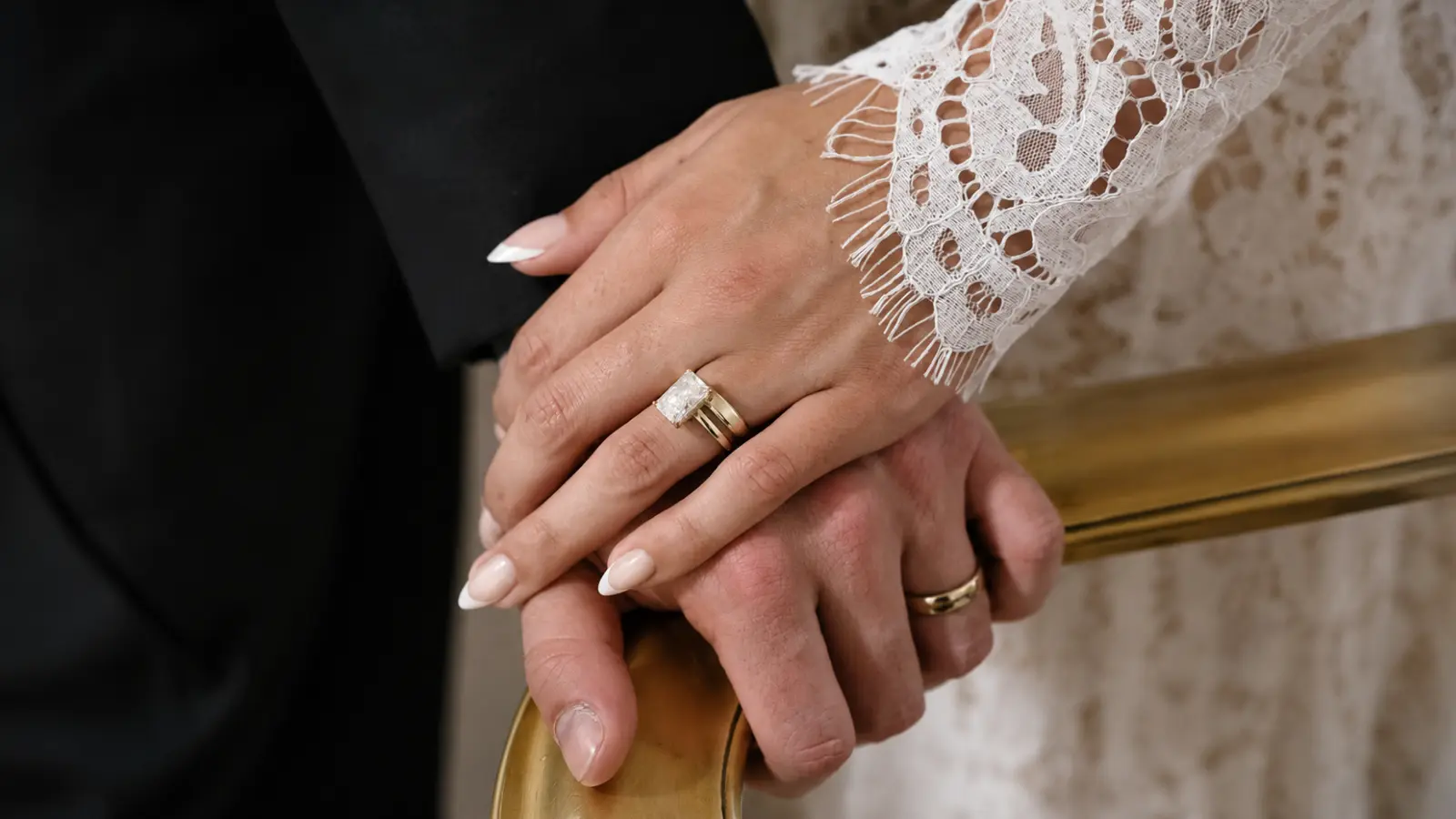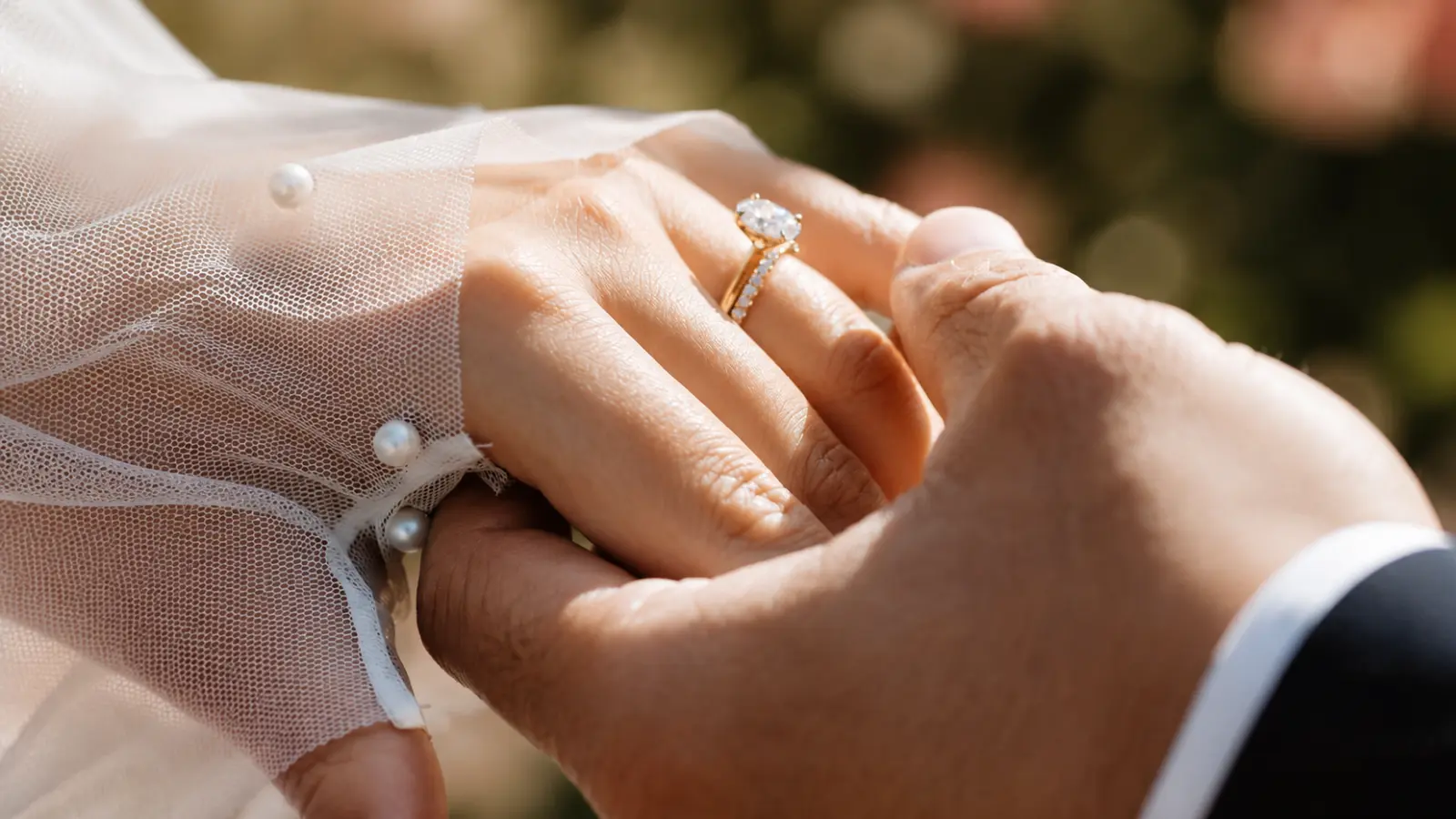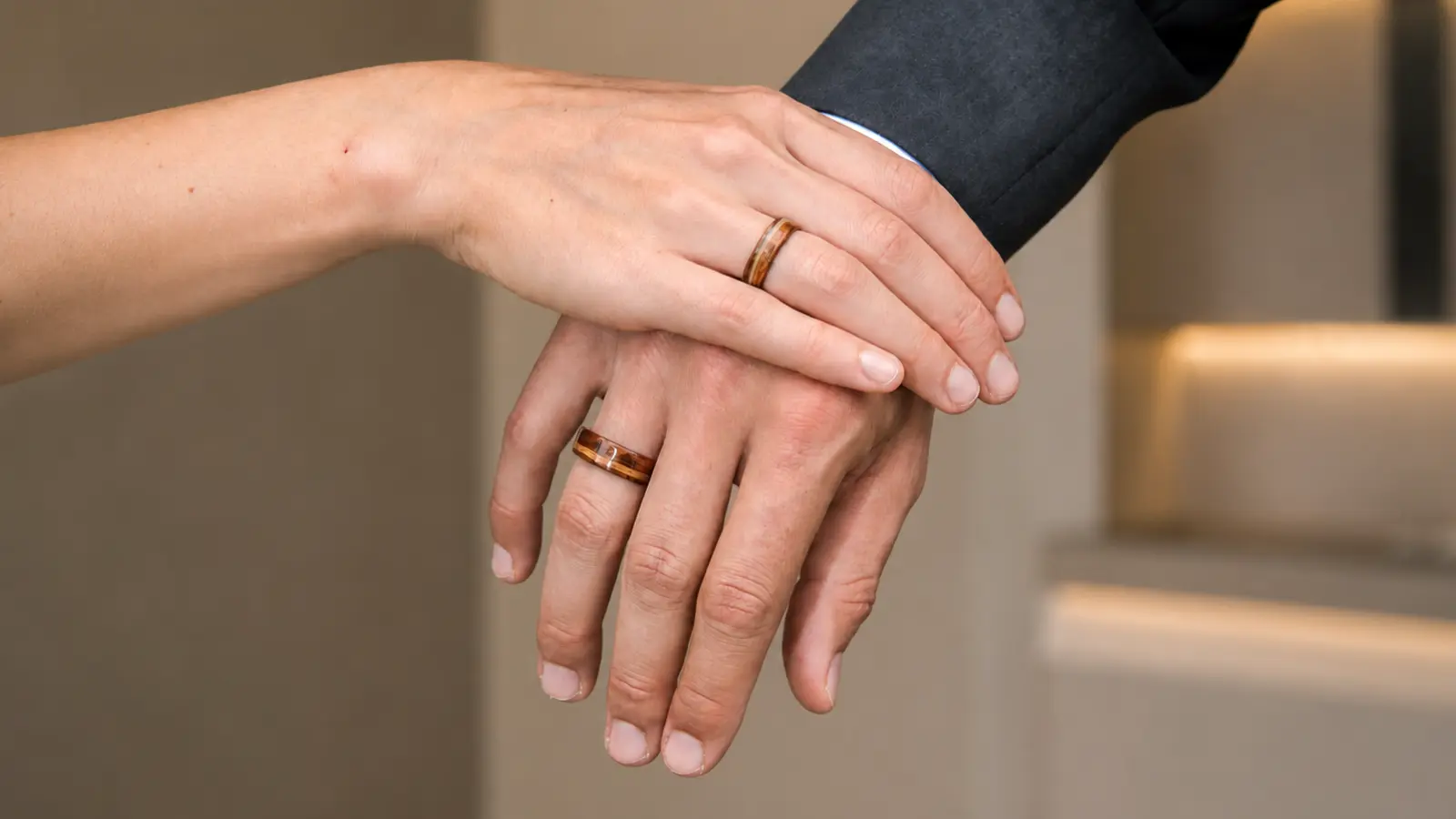
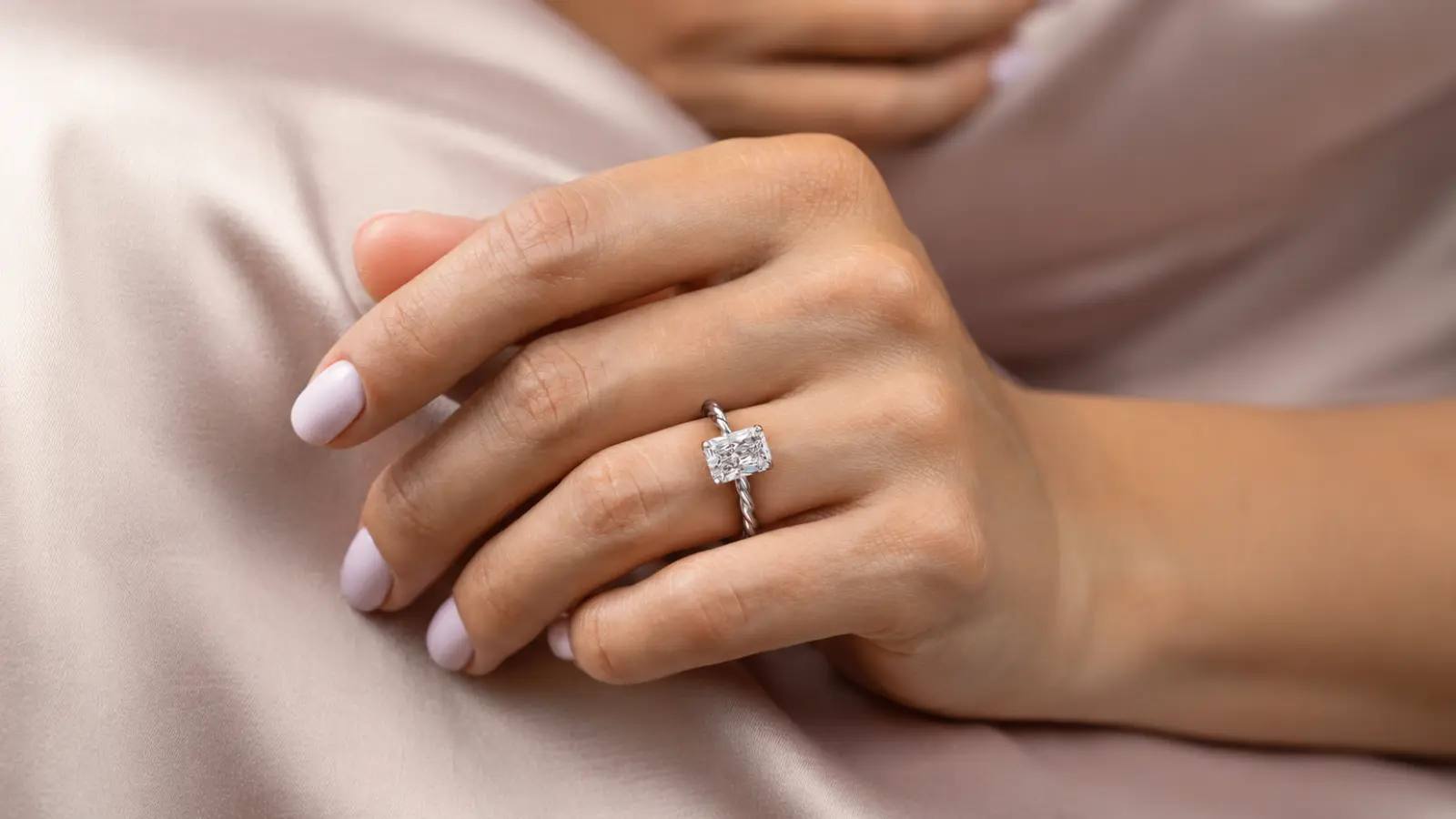
Moissanite wedding rings are wedding rings set with moissanite, a lab-created silicon carbide gemstone known for its exceptional durability, intense brilliance, and colorful fire. Unlike cubic zirconia or other diamond simulants, moissanite is a distinct gemstone with its own chemical composition and optical properties rather than a simple imitation of diamond.
The appeal of moissanite comes from its balance of beauty, strength, and value. It is harder than almost every gemstone used in jewelry, produces more fire than diamond, and offers a larger or more detailed design at a significantly lower price. However, its unique sparkle, lack of diamond identity, and limited resale value are important considerations before choosing one.
This guide explains moissanite wedding rings, including moissanite vs diamond differences, pros and cons, durability, cost, wedding band styles, everyday wear, and how moissanite compares with other wedding rings and wedding bands.
What Is Moissanite?
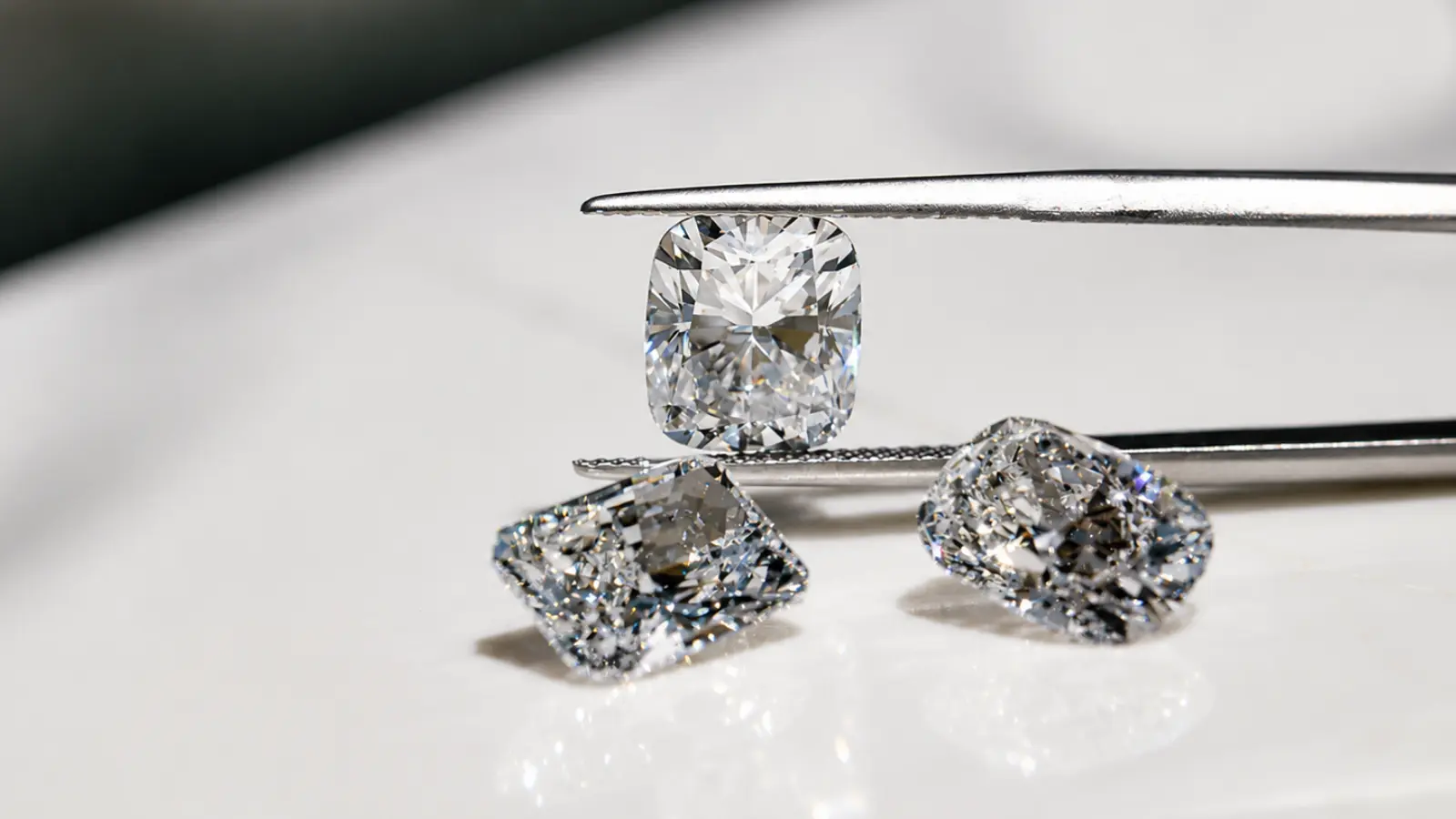
In 1893, Nobel Prize-winning chemist Henri Moissan was examining rock samples from a meteor crater in Canyon Diablo, Arizona, when he found tiny crystals he initially believed were diamonds. They were not. They were silicon carbide — a compound that had never before been found occurring naturally on earth. The mineral was eventually named moissanite in his honor, and for most of the following century it remained a scientific curiosity with almost no practical application in jewelry, because natural moissanite is so rare as to be essentially unavailable at any scale.
What changed the picture was the laboratory. In the 1990s, researchers developed a process for growing moissanite in a controlled environment, and the first moissanite jewelry stones reached the commercial market in 1998. Nearly all moissanite used in fine jewelry today is lab-created — not because natural moissanite cannot be found, but because it almost never occurs in gem-quality sizes anywhere on earth. Lab-created moissanite is not a lesser version of the stone; it is simply the only form available in sufficient quality and quantity for fine jewelry use.
What Moissanite Is Not
Cubic zirconia (CZ) is a zirconium oxide crystal designed entirely as a diamond simulant. It is significantly softer than moissanite, loses its brilliance over time as it accumulates surface scratches, and carries no identity of its own beyond its resemblance to diamond. Moissanite is not in that category.
Moissanite has a distinct chemical composition, its own place in gemological classification, and optical properties that are not imitative of diamond but genuinely different from it — in some ways more extreme. The comparison to cubic zirconia is one that moissanite sellers work to correct, and correctly.
How Moissanite Is Made Today
Modern moissanite is grown in a laboratory through a proprietary thermal process that produces large silicon carbide crystals, which are then cut and polished using the same techniques applied to natural gemstones. The result is a stone available in any shape used for diamonds — round brilliant, oval, cushion, emerald, pear — and graded on color using a scale parallel to diamond color grades.
Most moissanite sold today falls into the colorless (D–F equivalent) or near-colorless (G–I equivalent) range. Earlier generations of moissanite had a faint yellow or greenish cast under certain lighting; the stones available today are significantly improved in this respect, particularly in sizes under two carats.
Moissanite vs. Diamond
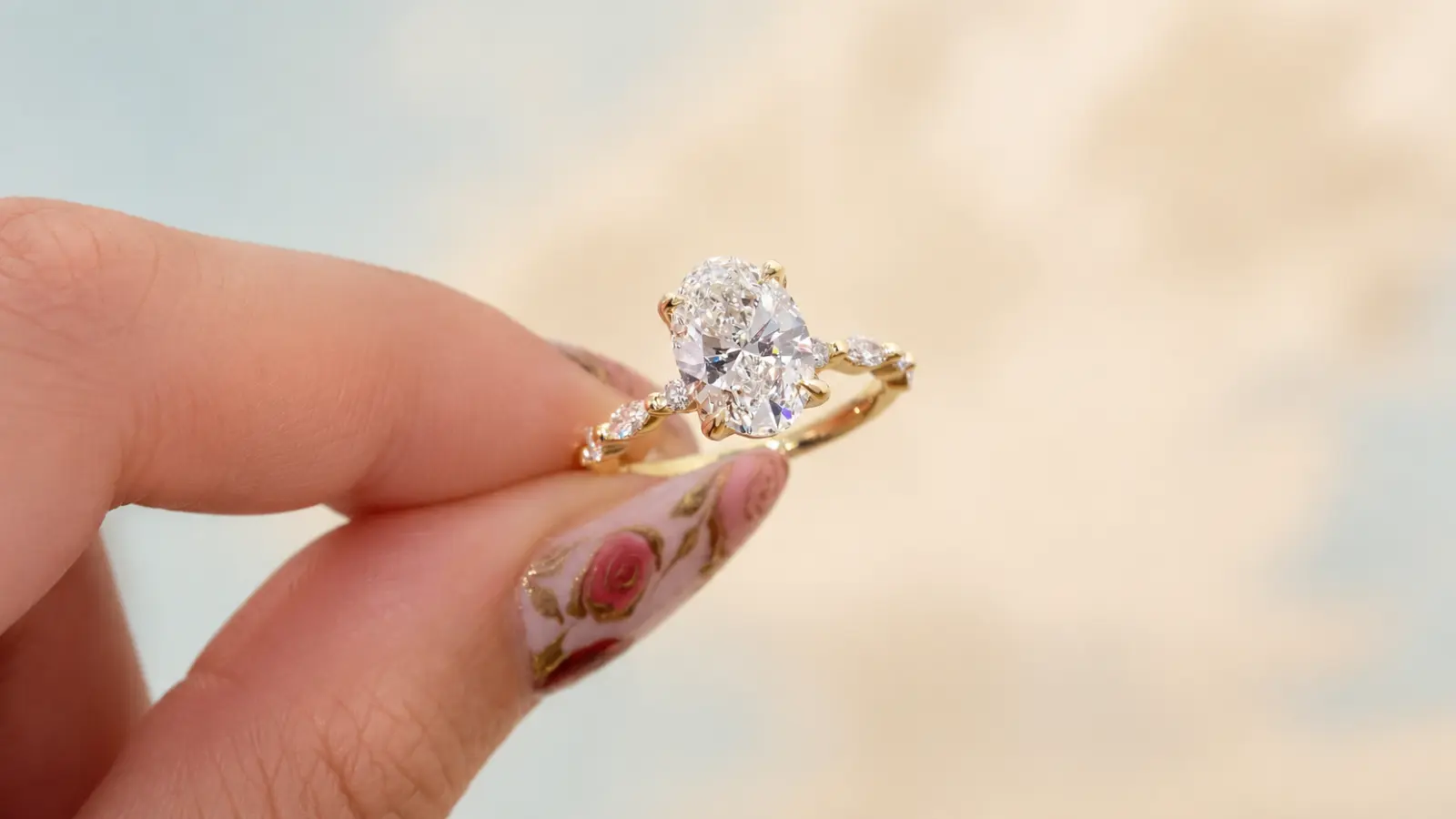
This comparison is worth taking seriously rather than resolving with a quick bullet list. The differences between moissanite and diamond are real and specific — and knowing exactly what they are is what allows the decision to be made clearly rather than by assumption.
Composition
Diamond is pure carbon — a single element arranged in a specific crystal lattice under extreme heat and pressure. Moissanite is silicon carbide — two elements bonded together, grown in a laboratory. This difference in composition is the source of essentially all the other differences between the two stones.
It is not a quality distinction; it is a materials distinction. Neither compound is inherently more valuable than the other. The price difference between moissanite and diamond exists because of supply, history, and market forces — not because of any fundamental hierarchy in the materials themselves.
Hardness
Diamond scores 10 on the Mohs hardness scale — the maximum. Moissanite scores 9.25. The difference sounds small and is, in practical terms, almost irrelevant for a wedding ring worn in daily life.
Moissanite is harder than sapphire (9), harder than ruby (9), and harder than every other gemstone commonly used in fine jewelry. The only material that can scratch a moissanite is a diamond. In daily life, the surfaces a ring encounters — countertops, fabrics, metal, skin — are all dramatically softer than moissanite. The 0.75-point gap on the Mohs scale has no observable consequence in ordinary circumstances.
Brilliance and Fire
This is where moissanite and diamond genuinely diverge, and where the choice becomes most personal. Brilliance refers to the white light a gemstone reflects; fire refers to the colorful, rainbow-like light dispersion that results from the stone splitting light into its spectral components.
Moissanite has a higher refractive index than diamond — 2.65 to 2.69, compared to diamond’s 2.42 — which means it produces more brilliance and more fire than a diamond of equivalent size and cut quality. In practical terms, this means moissanite sparkles more intensely and produces more colorful flashes. Under direct sunlight or bright indoor lighting, the difference is visible.
Some people find moissanite’s fire beautiful and prefer it. Others find it too flashy — reading as obviously not a diamond to anyone who looks closely in good lighting. Neither response is wrong; they reflect different aesthetic preferences. Worth noting: in photographs — particularly the kind taken at weddings and shared on phones — moissanite and diamond are very difficult to distinguish. The high-fire quality of moissanite becomes more apparent in person, under varied lighting, than it does in most images.
Color
Modern premium moissanite is sold in colorless and near-colorless grades visually equivalent to high-quality diamonds in those color ranges. Earlier generations of moissanite had a more visible yellow or green cast, particularly in larger sizes and under natural light.
That issue has been largely resolved in stones produced by leading manufacturers today, but it is worth asking specifically about the color grade of any moissanite you consider — especially in sizes above one carat, where color becomes more perceptible to the eye.
Cost
The price difference between moissanite and diamond is substantial at every size. Here is how the numbers typically compare:
| Stone Type | Typical Cost (1 Carat) |
|---|---|
| Moissanite | $400 – $800 |
| Lab-Grown Diamond | $500 – $1,500 |
| Natural Diamond | $4,000 – $6,000 |
For a wedding band with multiple stones, the difference scales accordingly. A full moissanite eternity band can often be purchased for $800 to $2,000, at a stone size and coverage level that would cost considerably more in any diamond category. Moissanite does not carry a meaningful resale market — but neither does most jewelry. The secondary market for fine jewelry in general returns a fraction of retail value, so for a ring intended to be worn for life, resale value is rarely the relevant consideration.
Identity and Meaning
A diamond carries centuries of cultural association with marriage, commitment, and rarity. That wedding ring meaning does not automatically transfer to moissanite, and it was never intended to. Moissanite has its own origin story: a cosmic discovery, a scientific curiosity turned gemstone, a material that outperforms diamond on some measurable dimensions and offers something genuinely different rather than merely cheaper.
For couples who value that distinction — who prefer owning a stone that stands on its own terms rather than being evaluated against another — moissanite has a more interesting identity than “diamond alternative” suggests.
Pros and Cons of Moissanite Wedding Rings
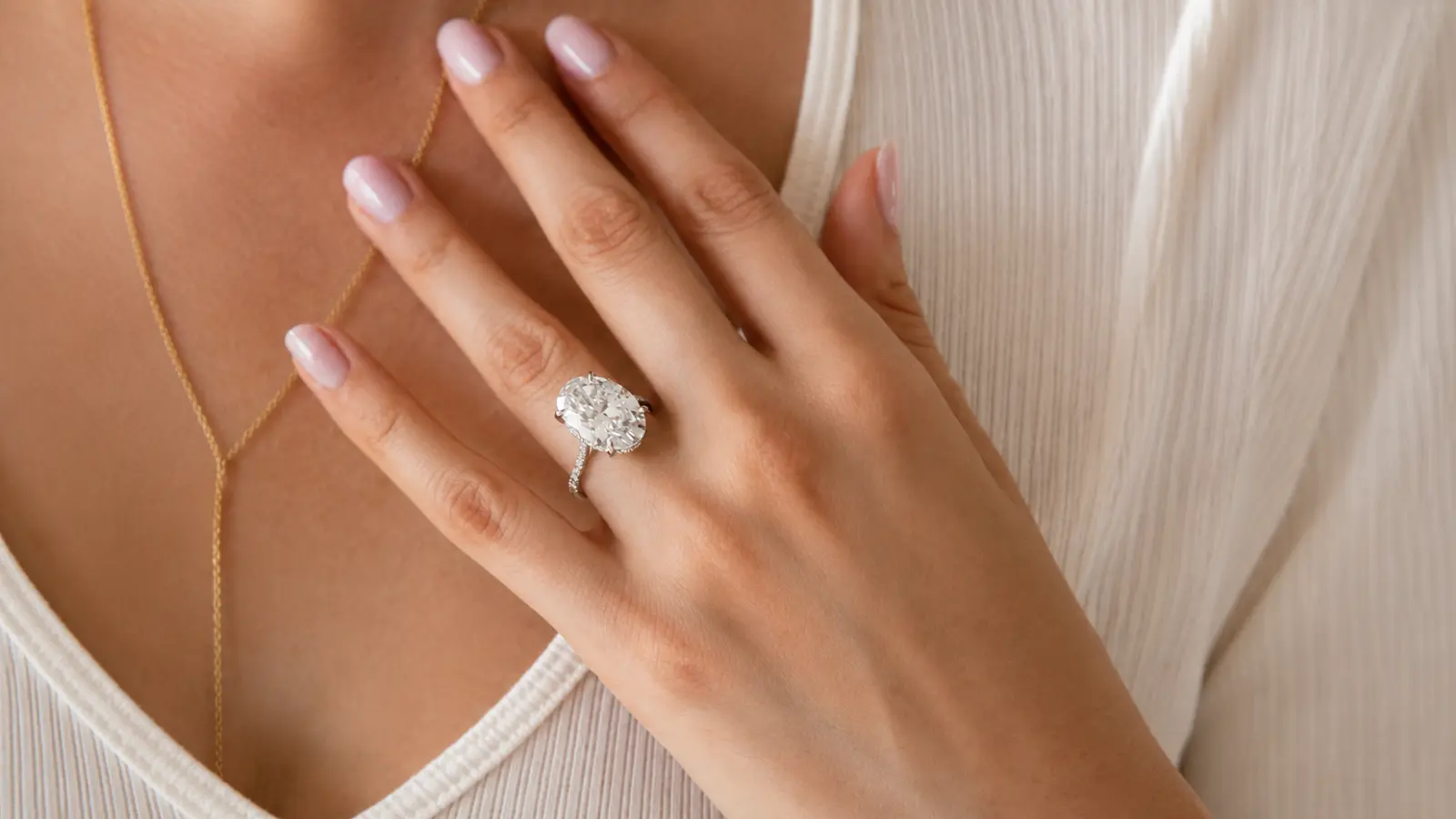
The honest version of this comparison does not declare a winner. It identifies what moissanite does well, where it has genuine limitations, and which of those factors are likely to matter for a specific buyer. The goal here is clarity, not advocacy.
Where Moissanite Has a Clear Advantage
Cost is the most significant. At a fraction of diamond’s price — including lab-grown diamond — moissanite makes it possible to have a substantially larger stone, more coverage across a band, or a more elaborate setting without increasing the budget. A couple who wants a dramatic full eternity band or a large center-stone look can achieve it in moissanite at a price point that a diamond option would not reach.
Durability is another genuine strength. At 9.25 on the Mohs scale, moissanite withstands decades of daily wear without scratching from any surface encountered in ordinary life. It does not cloud, fade, or change optically over time. The stone at the ceremony will look the same thirty years later with only the basic care any fine jewelry ring requires.
Brilliance rounds out the list. For buyers who want maximum sparkle — the most light, the most fire, the most dramatic visual presence — moissanite delivers more of it than a diamond of the same size. This is not opinion; it is a function of the stone’s higher refractive index. Whether that level of brilliance is desirable is personal, but objectively, it is more.
Where Moissanite Has Real Limitations
The visual distinction from diamond is the most consequential limitation for many buyers. Under certain lighting conditions — particularly direct bright light — moissanite’s higher fire produces a more colorful, more intense sparkle than diamond’s. To someone familiar with both stones, this difference is identifiable. For buyers who specifically want the look of a diamond and would feel self-conscious about the distinction being noticed, moissanite presents a real consideration worth sitting with before deciding.
Resale value is largely absent. This is broadly true of all jewelry, including diamond rings, but natural diamonds do retain more secondary market value than moissanite. If the stone is ever intended to be sold or used as a financial asset, moissanite is not appropriate.
Cultural weight is the third factor. A moissanite is not a diamond, and for some couples — because of family expectation, personal belief in the diamond’s significance, or the simple importance of having the material itself — this distinction is not negotiable. That is a completely valid position. No amount of comparable hardness or superior brilliance changes it for buyers who find the meaning important.
What Most Buyers Overlook
Size calibration matters more with moissanite than most buyers expect. Because moissanite produces so much more fire than diamond, very large stones — particularly in a solitaire or prominent center-stone position — can read as over-the-top in person in a way they do not in photographs. Many moissanite buyers find that a slightly smaller stone than they initially considered looks better in real lighting than the size they were drawn to on screen.
This is worth factoring into the shopping process: try the stone in person if possible, or order from a retailer with a generous return window. The ring you are most satisfied with long-term is rarely the one that looked best in the product photo.
Moissanite Wedding Bands
For buyers considering alternative wedding rings, moissanite is particularly well-suited to wedding band use, depending on aesthetic preferences. In a band setting, where many smaller stones are distributed across the ring rather than one prominent stone being evaluated alone, moissanite’s high fire reads as elegantly brilliant rather than flashy. The difference from diamond is also less immediately apparent in small stones than in large ones, which makes moissanite a particularly effective and cost-efficient choice for pavé, channel-set, and eternity band designs.
Pavé Moissanite Wedding Bands
A pavé moissanite band is one of the most visually striking options in the wedding ring category at any budget level. The dense stone coverage combined with moissanite’s high brilliance produces a ring that catches light from every angle. Because moissanite costs a fraction of diamond, a pavé moissanite band can offer significantly more stone coverage than a comparable diamond pavé band at the same price — or the same coverage at substantially lower cost.
The maintenance requirements are the same as any pavé ring: annual inspection of the small prongs that hold each stone in place. With that basic upkeep, a well-made pavé moissanite band holds up to daily wear without issue.
Eternity and Half-Eternity Moissanite Bands
Full eternity bands — stones all the way around the shank — and half-eternity bands — stones across the top half only — both work well in moissanite. The cost advantage is particularly visible here: a full moissanite eternity band in stones of meaningful size can be purchased for a fraction of what a comparable diamond eternity band would cost.
As with any eternity band, the full version makes wedding ring resizing impossible once made, while the half-eternity can be adjusted using the plain section of the shank. For a ring meant to last decades, resizability is worth factoring into the choice regardless of stone type.
Moissanite Wedding Bands for Men
Men’s moissanite wedding bands tend to follow the same design conventions as men’s diamond bands — channel-set rows of stones across a wider band, flush-set single accents, or occasionally a more understated single-stone feature in a heavier metal profile. Because moissanite’s fire is most noticeable in larger stones and direct light, smaller channel-set stones in a men’s band often read as nearly indistinguishable from diamond in person.
For men who want a detail stone presence in their wedding band without the cost of a diamond option, moissanite is a practical and well-suited choice. For a broader look at men’s wedding band options across metals and stone types, see our men’s wedding bands.
Wearing Moissanite Alongside a Diamond Engagement Ring
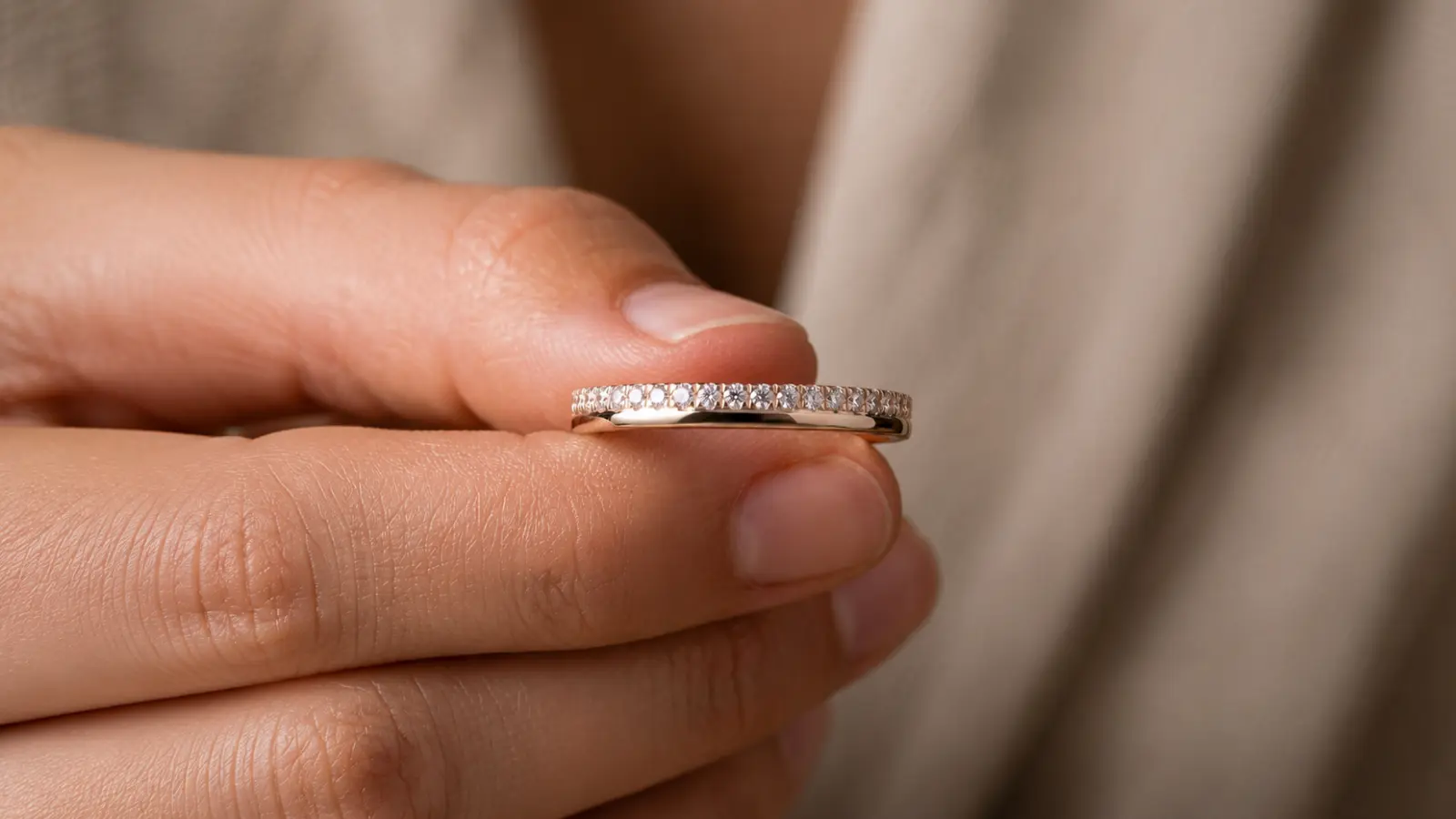
Some couples choose a moissanite wedding band to wear alongside a diamond engagement ring — often for budget reasons, and it is a combination that works. It is worth being aware of the visual dynamic, though: next to a diamond, moissanite’s higher fire can be more apparent in direct comparison. Whether that contrast is noticeable enough to matter is highly individual.
Many couples wear this combination without ever thinking about it, while others find the side-by-side difference distracting. If you are considering this pairing, seeing both rings together in person before committing is the most useful step. For stacking and wearing guidance, see our how to wear wedding rings guide.
Are Moissanite Rings Durable?
Yes — moissanite is one of the most durable gemstones available for use in jewelry, and it is genuinely well-suited for a ring worn every day for decades. Durability concerns about moissanite tend to come from confusion with softer simulants like cubic zirconia; the comparison does not apply here.
Hardness in Real-World Terms
At 9.25 on the Mohs scale, moissanite sits above every other gemstone commonly set in fine jewelry. Sapphire and ruby, both considered premium durable stones, score 9. Topaz scores 8. Quartz — the mineral that makes up most of the dust and grit encountered in daily life — scores 7.
A moissanite stone can only be scratched by another moissanite or by a diamond. In the environments a wedding ring actually occupies — kitchens, offices, gyms, bathrooms, cars, children’s bedrooms — there is essentially no surface it contacts that is hard enough to mark it. For daily wear, moissanite’s hardness is not a compromise.
Does Moissanite Cloud or Change Over Time?
No. Moissanite does not cloud, lose its optical properties, or change color over time. It is chemically stable under the conditions of daily wear, including exposure to soap, water, lotion, cleaning products, and temperature variation.
A moissanite wedding ring that is cleaned regularly and inspected once a year will look the same at year thirty as it did at the ceremony. This is one area where moissanite has no meaningful distinction from diamond: both stones are essentially permanent under ordinary conditions.
Setting Matters as Much as the Stone
The durability of any stone-set ring depends as much on the setting and metal as on the stone itself. Moissanite set in a high-quality platinum or 14k gold mounting, with well-constructed prongs or a channel setting, will outlast a lesser-quality metal holding a natural diamond.
When evaluating a moissanite wedding ring, the same questions apply as for any fine jewelry purchase: What is the metal purity? How are the stones secured? Is the construction from a jeweler whose work holds up over time? The stone’s hardness is only one part of a ring’s long-term integrity.
Who Should Choose Moissanite?
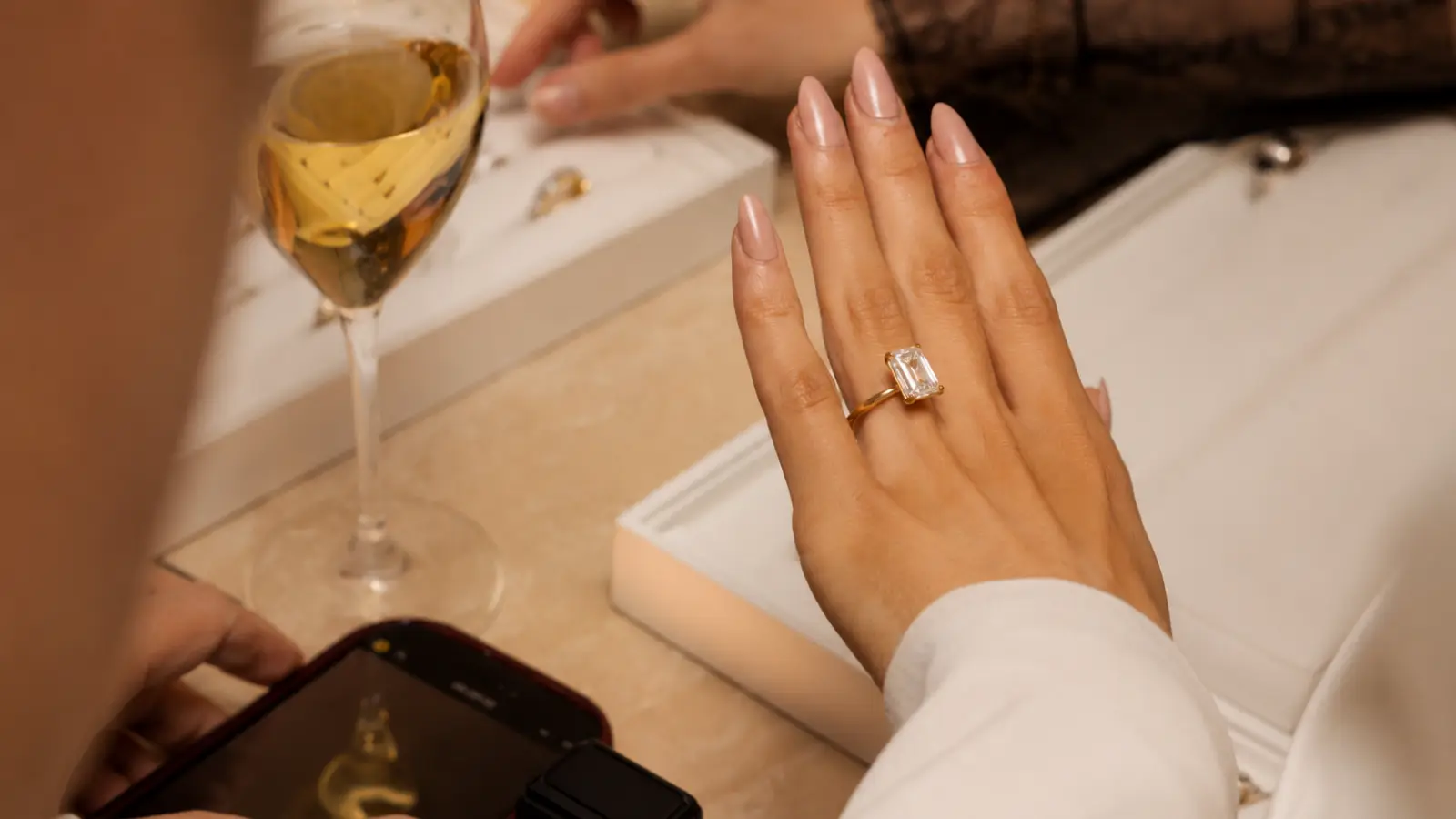
Moissanite is not the right stone for everyone, and it is a better decision when made deliberately rather than by default. The following is an honest framework for who it serves well — and who might be better served by a different choice.
Moissanite Tends to Work Well For:
- Couples who want a beautiful, durable stone and are not attached to diamond specifically. This is a larger group than it might seem. Many buyers come to the decision with no strong prior attachment to diamond as a material and find, once they understand what moissanite actually is, that there is no meaningful reason it is not the right choice for them.
- Buyers working within a specific budget who want more stone presence. A couple who can spend $1,500 on a wedding band can have a notably different ring in moissanite than in any diamond option at the same price. If stone coverage, stone size, or visual presence within a budget is a priority, moissanite is the most efficient choice available.
- People who wear jewelry practically and prioritize durability over provenance. A moissanite wedding ring worn daily for fifty years by someone who values the ring’s function and beauty — rather than its place in a cultural tradition — is an entirely defensible choice made on entirely defensible terms.
- Buyers who genuinely prefer moissanite’s fire over diamond’s sparkle. This is a real aesthetic preference held by real people. Moissanite catches light more dramatically and more colorfully than diamond, and some people simply prefer that quality in a stone they plan to wear for the rest of their lives.
What these buyers share is that the choice feels like a decision, not a trade-off. That distinction tends to predict long-term satisfaction with the ring.
Moissanite Is Probably Not the Right Choice For:
- Couples who specifically want a diamond — for personal, symbolic, or family reasons — and would feel that a moissanite ring was a substitution rather than a choice. A ring worn every day for decades needs to feel right to the person wearing it. If the stone’s identity as “not a diamond” would be a recurring source of dissatisfaction, the cost savings are not worth it.
- Buyers who place weight on geological history. Moissanite is lab-created and lacks the billions-of-years formation story of a mined stone. For some people this matters; for others it does not. It is worth being honest with yourself about which category you fall into before making a purchase you will live with for a long time.
- People who want a stone with resale or investment value. Moissanite has essentially none. For a ring worn for life, this is largely irrelevant. For a stone that might be sold or upgraded, it is a real constraint.
A Note on How to Make the Decision
The most useful thing to do before committing to moissanite is see one in person — specifically in varied lighting conditions, not just in a jewelry case under optimized store lighting. Take it outside. Hold it under an office light. Look at it in natural daylight.
The fire that photographs so beautifully can read very differently in person depending on the size of the stone and the conditions, and the only way to know whether you love it or find it too much is to see it in environments that resemble your actual life. For context on how other stone options and settings compare, our diamond wedding rings and lab-grown diamond wedding rings lay out the full range of available choices.much is to see it in environments that resemble your actual life.
Moissanite Wedding Ring Inspiration
Moissanite wedding rings offer brilliant, durable designs with a unique sparkle and style of their own. Explore our inspiration board for moissanite eternity bands, pavé designs, vintage styles, gold settings, minimalist rings, and wedding ring ideas for every style.
Choosing a Moissanite Wedding Ring That Feels Right
A moissanite wedding ring is not about choosing a replacement for something else. It is about choosing a stone for what it truly offers — brilliance, durability, personality, and a look that stands on its own.
Whether you choose moissanite for its sparkle, value, story, or simply because you love the way it looks, the best wedding ring is the one that feels meaningful every time you wear it. A ring’s importance is not only defined by the material it comes from, but by the life and memories it becomes part of.
Frequently asked questions (FAQ)
Is a moissanite wedding ring considered fake?
No. A moissanite wedding ring is not fake — it uses a real gemstone with its own chemical composition and optical properties. Moissanite is not a diamond, but it is also not glass, cubic zirconia, or an imitation material. The best way to view moissanite is as a separate gemstone choice rather than a “fake diamond.”
Will people be able to tell my ring is moissanite?
Most people will not recognize a moissanite ring in everyday situations, especially in smaller stones or wedding bands. The main visual difference appears under certain lighting, where moissanite can create stronger rainbow-colored flashes than diamond. Some people love this extra brilliance, while others prefer the more subtle sparkle of a diamond.
Does moissanite lose its sparkle over time?
No. Moissanite does not become cloudy, fade, or lose its brilliance over time. It is a highly durable gemstone designed for everyday jewelry. Like diamonds, moissanite can collect dirt, oils, and residue from normal wear, but regular cleaning restores its original sparkle.
Is moissanite too sparkly compared to a diamond?
It depends on personal preference. Moissanite reflects more colorful light than diamond because of its higher fire and brilliance. Some people see this as an advantage and love the extra sparkle, while others feel larger moissanite stones can look more dramatic than the classic diamond appearance.
Should you choose moissanite or a lab-grown diamond?
Choose moissanite if you want maximum sparkle, durability, and a lower price without needing the stone to be a diamond. Choose a lab-grown diamond if having an actual diamond matters to you but you prefer a lower price than a mined diamond. Both options can be beautiful and long-lasting; the difference is identity, not quality.
What should you know before buying a moissanite wedding ring?
Before buying a moissanite wedding ring, understand that you are choosing a different gemstone, not a cheaper version of a diamond. Consider whether you like its stronger fire, whether you have seen it in real lighting, and whether the meaning of owning a diamond matters to you. The best moissanite buyers choose it because they love moissanite itself.