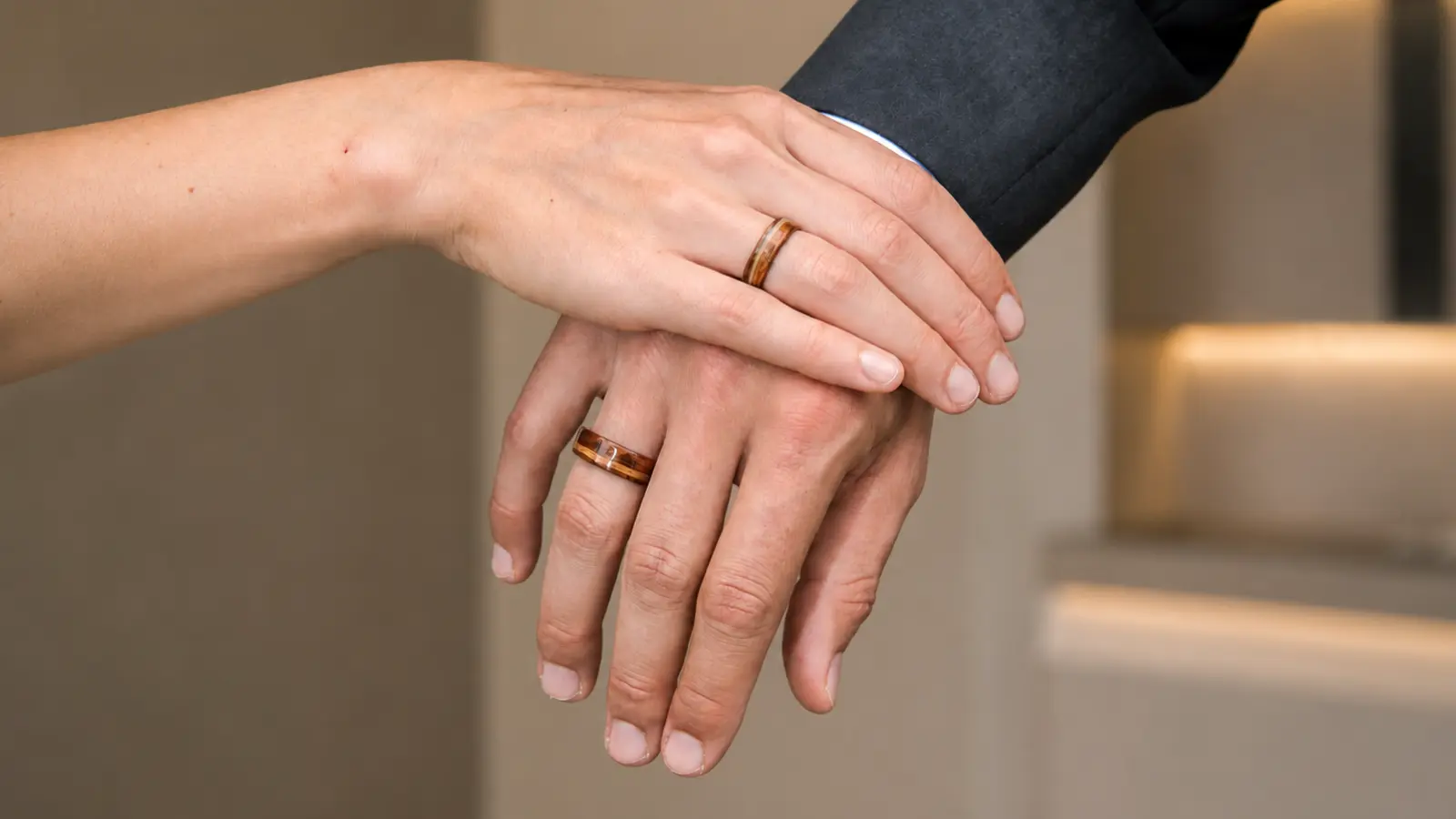
Wood wedding rings are wedding bands made with real wood, either as a wood inlay combined with materials like titanium or tungsten or as a full wooden ring. Known for their natural appearance, unique grain patterns, and personal character, wood rings offer a meaningful alternative to traditional metal wedding bands — but they also require different care and expectations.
Unlike gold or platinum, wood brings an organic element to a wedding ring. Every grain pattern is different, and many couples choose wood because it represents nature, personal history, craftsmanship, or a connection to a meaningful place. However, choosing wood also means understanding durability, water exposure, maintenance, and how the ring will age over time.
This guide explains wood wedding rings, including wood inlay vs full wood rings, popular wood types, pros and cons, durability, care, men’s styles, and how wood compares with other wedding rings and wedding bands for everyday wear.
What Are Wood Wedding Rings?
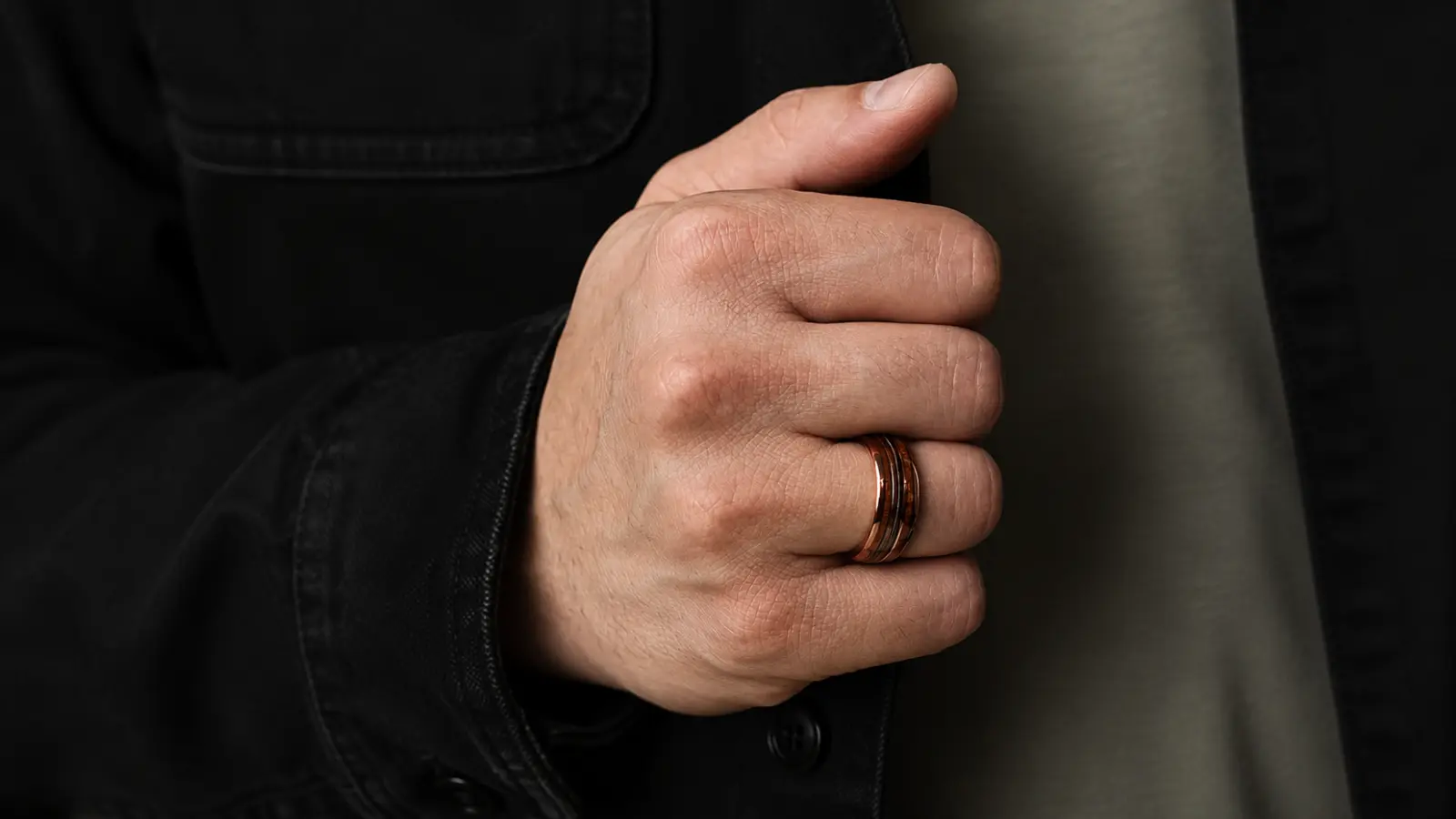
A wood wedding ring is a band that uses real wood as either a decorative element or a primary structural material. Within that definition, there are two meaningfully different products — wood inlay rings and full wood rings — and understanding the distinction is the first step to choosing well.
The more widely available type is the wood inlay ring: a band made primarily from metal, usually titanium, tungsten carbide, or sterling silver, with a strip or panel of real wood set into a recessed channel along the outer face. The metal provides the structure and durability; the wood provides the visual warmth and character. The second type is the full wood ring — a band made almost entirely from wood, sometimes reinforced with a thin metal or resin inner sleeve. Full wood rings are typically handcrafted by individual artisans and chosen by people who want as much of the natural material as possible.
Wood species vary considerably, and the choice of wood affects both the look and the longevity of the ring. Here are the ones most commonly used in wedding rings:
- Koa — a Hawaiian hardwood with warm reddish-brown tones and a strong, distinctive grain. Among the most popular choices for wedding rings, and carries cultural resonance for couples connected to Hawaii.
- Ebony — one of the densest, darkest woods available, with a fine-grained surface that contrasts sharply with metal. Produces a minimalist, high-contrast look that appeals to couples who want a natural material without a rustic feel.
- Rosewood and bocote — rich, exotic hardwoods with strong grain patterns and deep coloring. Both tend to look their best on wider bands where the grain has room to be seen.
- Walnut and maple — domestically available, relatively sustainable, and more subtle in appearance. Walnut has a warm brown tone; maple is pale and understated. Both suit couples who want natural material without visual drama.
- Reclaimed and sentimental wood — whiskey barrel staves, wine barrel wood, wood from a family property or a meaningful location. These options require working with a custom maker but produce a ring that carries a layer of personal history no other material can replicate.
Many makers also offer stabilized wood — wood vacuum-infused with resin to harden it and reduce moisture sensitivity. Stabilized wood holds up better in ring applications than untreated natural wood and is a practical choice for anyone prioritizing longevity.
Pros and Cons of Wooden Wedding Rings
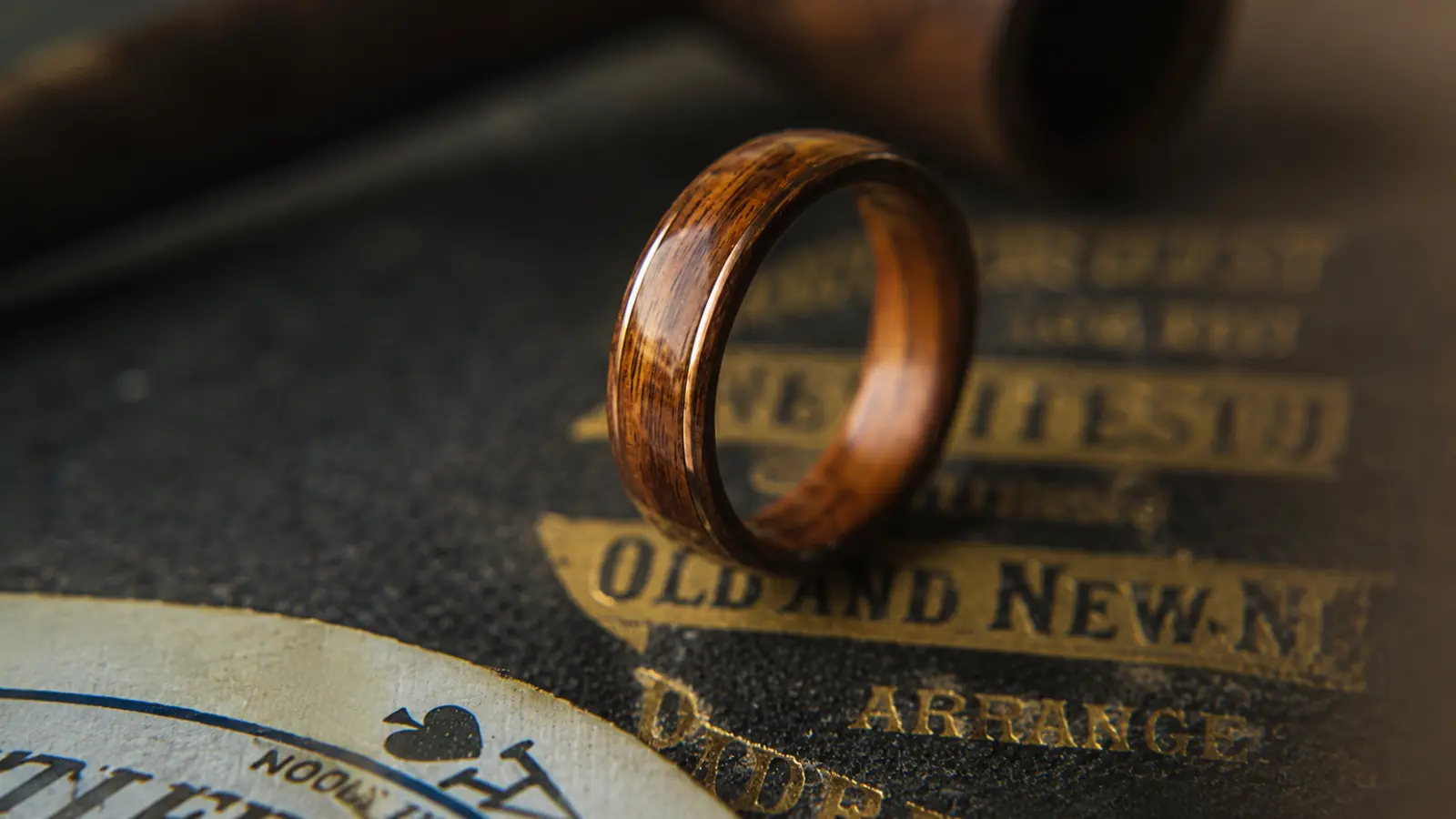
Wood wedding rings are genuinely appealing, and some of the reasons people fall in love with them are also reasons that create complications over time. Here is an honest look at both sides.
What Works Well
Visual warmth and individuality. No two pieces of wood are identical. The grain, color variation, and figure of a wood inlay make each ring effectively one-of-a-kind — something metal rings, even custom ones, cannot fully replicate. Couples exploring alternative wedding rings will often find wood a natural fit.
Connection to place and material. Wood carries meaning in a way that metals tend not to. A ring made from wood harvested near where you got engaged, from a family property, or from a barrel that held a wine shared on a meaningful occasion carries a story in the material itself. That resonance tends to grow rather than diminish over time.
Lightweight and comfortable. Titanium-and-wood inlay rings are among the lightest wedding bands available. Couples who find metal rings heavy or uncomfortable often find wood inlay rings far easier to wear for extended periods.
Price. A well-made wood inlay ring from an independent maker can typically be found in the $150–$400 range — well below the entry price for most precious metal bands. The accessible price point is partly because the materials cost less, and partly because most wood ring makers work in alternative metals like titanium rather than gold.
What Requires Realistic Expectations
Ongoing maintenance. Wood rings require care that metal rings do not. The wood needs to be oiled every few months to stay hydrated and retain its finish. Neglect it over time and the inlay will dry out, dull, and eventually develop fine surface cracks. The habit takes minutes and costs almost nothing, but it is a commitment.
Water sensitivity. Wood and prolonged water exposure are genuinely incompatible. Repeated wetting and drying causes the wood to expand and contract, which can crack the inlay, loosen it from the setting, or warp a full wood ring over time. Removing the ring before showering, swimming, and washing dishes becomes a daily habit — and one that not everyone finds easy to maintain consistently.
Cannot be resized. Titanium and tungsten — the metals most commonly used as bases for wood inlay rings — cannot be resized through conventional jewelry methods. If the ring stops fitting due to weight change or aging, wedding ring resizing may not be possible and replacement can become the only option. This is the most significant practical limitation, and the one most often overlooked at the time of purchase.
Surface wear over time. Wood is softer than metal and will accumulate fine scratches with daily wear. A wood ring will look different after five years than it does on the wedding day — some people find that character appealing, others prefer a ring that looks pristine indefinitely. Knowing which camp you fall into before buying is worth a moment of honest thought.
Wood Inlay vs. Full Wood Rings
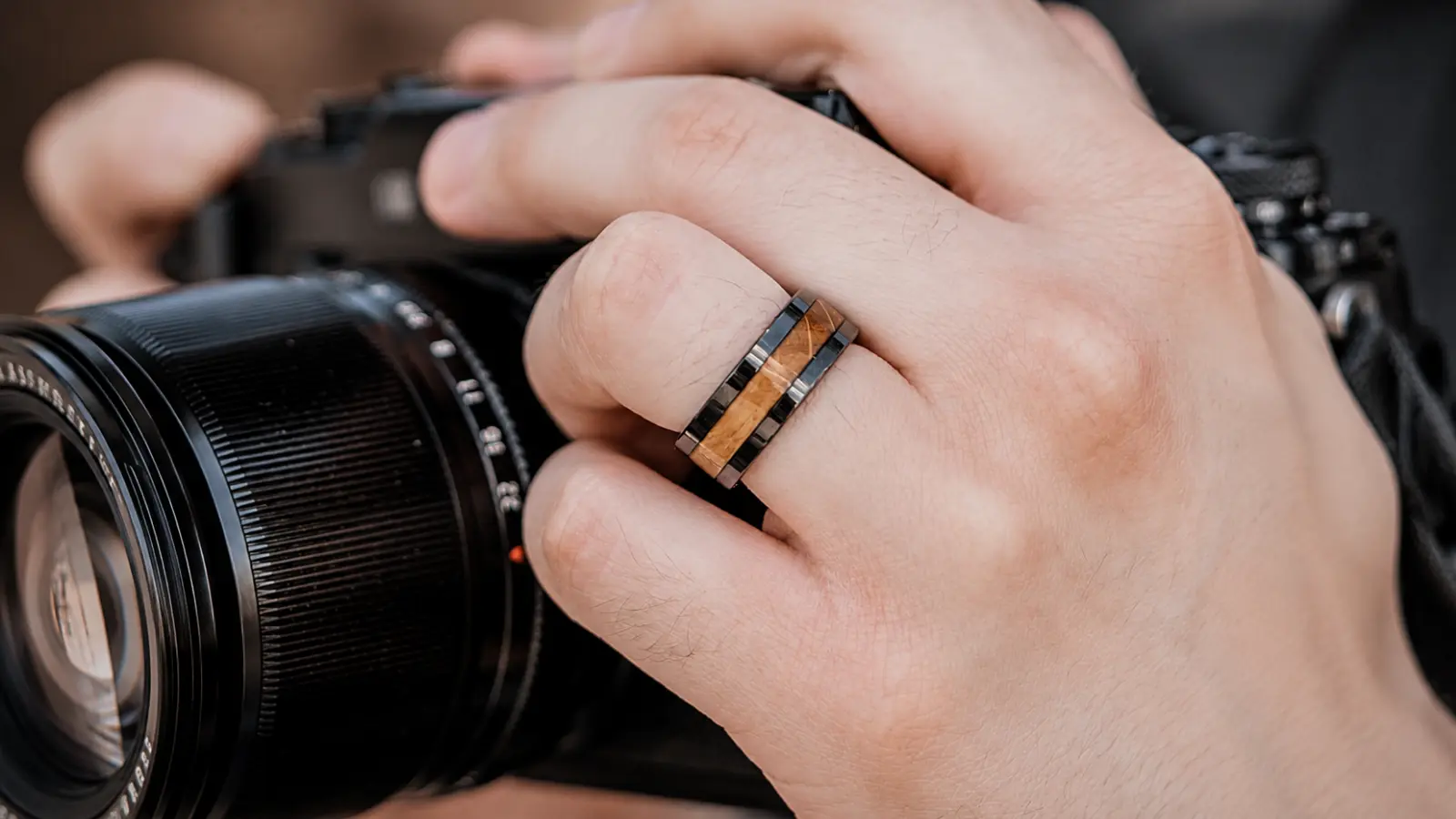
The choice between a wood inlay ring and a full wood ring is not primarily aesthetic — it is a question of how you plan to use the ring and how much ongoing care you will realistically commit to.
Wood Inlay Rings
A wood inlay ring has a metal structural shell — most often titanium, tungsten carbide, or sterling silver — with real wood set into a channel on the outer face. In many titanium wedding rings, the metal does the structural work while the wood provides the visual element. The inlay is protected on either side by raised metal edges, which significantly extends its lifespan compared to an exposed wood surface. Most well-made inlay rings also apply a coat of protective resin or lacquer over the wood, reducing the frequency of oiling needed and adding another layer of durability.
Titanium is the most popular base for wood inlay rings — exceptionally light, hypoallergenic, and durable. Wood inlays used in tungsten wedding rings gain a heavier, nearly scratch-proof structural base, though the weight is noticeable. Sterling silver produces a warmer, more traditional look but is softer and will scratch more readily over time.
For most people who want a wood ring for daily wear, the inlay style in a titanium base is the practical choice. It delivers the visual warmth and character of wood without requiring the ring to bear its own structural load.
Full Wood Rings
Full wood rings are made primarily from wood, sometimes with a thin metal or resin inner liner for reinforcement. They offer the most completely natural aesthetic — no visible metal, the entire outer surface is wood — and tend to be lighter than inlay rings.
The limitations are equally clear. Wood is not as structurally sound as metal, and a ring made primarily from it is more vulnerable to cracking, splitting, and moisture damage. Most reputable makers of full wood rings are transparent about this and recommend wearing them as occasion rings or ceremonial pieces rather than as rings worn continuously through daily life.
For some couples, that works well: the ring is exchanged at the ceremony and worn on meaningful occasions, while a simpler band handles everyday wear. Others choose full wood rings knowing they will need to care for them attentively and accept that the ring will change over time. What would be a problem is buying a full wood ring expecting it to behave like a gold band in the shower.
Which to Choose
If the ring will be worn daily through an active lifestyle — cooking, outdoor work, regular hand-washing — a wood inlay ring in a titanium base is the sensible choice. The wood is present and beautiful without bearing the full structural burden. If the priority is maximum natural material and the wearer is committed to careful daily habits, a full wood ring is achievable. The most honest version of this decision is checking your fit with our ring size calculator, considering which habits you will actually maintain, and choosing the ring that matches the realistic answer.
Men’s Wood Wedding Rings
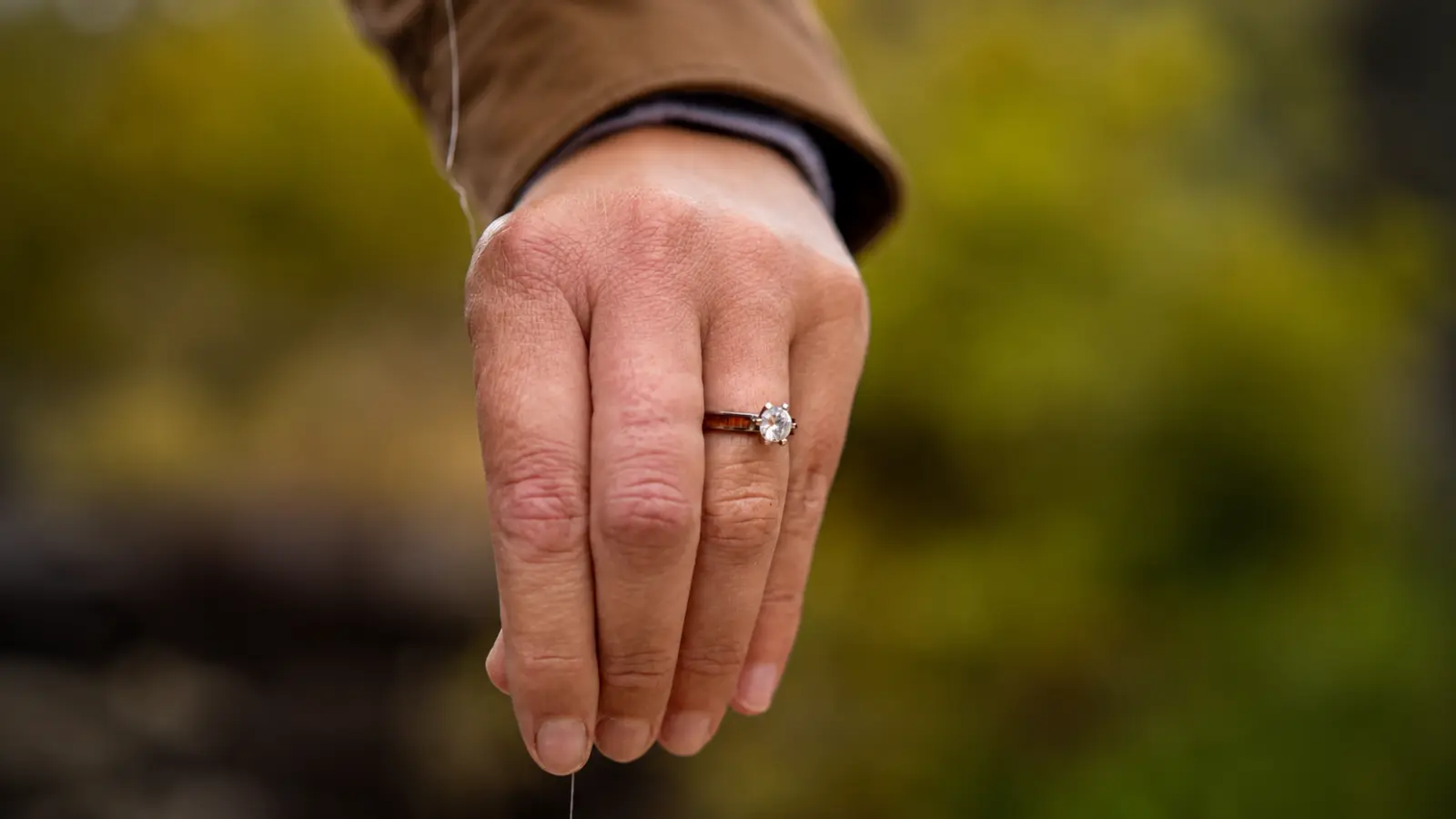
Men represent a significant share of the wood ring market, and for good reason. Many men who feel genuinely indifferent to traditional gold or platinum find that wood — particularly combined with titanium or tungsten — produces a band that reflects something about who they are rather than simply fulfilling a convention.
The physical proportions work in wood’s favor at men’s ring widths. Men’s wedding bands typically run 6mm to 10mm wide, and at that scale, a wood inlay has enough visual presence to define the ring. The grain of koa, walnut, or rosewood across an 8mm band is genuinely striking in a way a narrower ring might not convey as clearly.
Styles That Tend to Work Well
Koa and titanium. The warm reddish-brown of Hawaiian koa against the cool silver of titanium is one of the most popular men’s wood ring combinations. The contrast is strong without being jarring, and koa’s grain variation means no two rings are identical.
Dark wood and tungsten. Ebony or black walnut set into tungsten carbide produces a ring that reads as modern and understated — dark, substantial, and quietly unusual. This combination appeals to men who want something distinctive without being flashy.
Whiskey barrel wood. Reclaimed barrel wood — typically charred oak that has absorbed the color and character of what was aged in it — has a particular following among men who appreciate the material’s history. A whiskey barrel wood inlay carries a story in the material itself, which tends to hold more meaning than purely aesthetic choices for many wearers.
Mixed-material inlays. Many makers combine wood with antler, turquoise, crushed stone, or carbon fiber in a single band. These appeal to men who find a single-material inlay too simple and want a ring that reflects a more layered set of interests. The unique wedding rings covers mixed-material options in more depth.
A Practical Note for Men Who Work With Their Hands
Men in construction, mechanical work, outdoor labor, or any field where the ring is regularly exposed to rough surfaces, moisture, or chemicals should lean strongly toward a titanium or tungsten inlay ring over a full wood option. Some men in these fields choose a silicone ring for work and reserve the wood ring for off-hours — a practical arrangement worth considering. The men’s silicone wedding bands covers that option in detail.
Are Wood Wedding Rings Durable?
The honest answer depends on which type of wood ring is under discussion and what conditions it will face.
Wood inlay rings with a titanium or tungsten base are reasonably durable for daily wear under normal conditions. The metal frame bears the structural load; the wood is protected on its sides by the raised metal edges and, in most well-made rings, sealed with resin or lacquer. The inlay will accumulate fine surface scratches over years of wear, and without periodic oiling it will begin to look dry and dull, but a properly maintained inlay ring worn with reasonable care will last many years. The metal base will last indefinitely.
Full wood rings are meaningfully less durable. Wood is a porous, organic material that responds to its environment — it absorbs moisture, expands, contracts, and changes with temperature and humidity. A full wood ring worn daily through an average American lifestyle will show real wear within a few years and may crack sooner if water habits are not carefully maintained.
Wood Species Matter More Than Most People Realize
Not all wood behaves the same way under the conditions a ring encounters. Hardness, porosity, and grain density all affect how the wood holds up to surface contact, moisture, and daily wear. Koa, ebony, bocote, and rosewood are among the harder, denser species that tend to perform well in ring applications. Softer woods — pine, cedar, basswood — are occasionally used by less experienced makers but are poorly suited to rings intended for active daily wear. When evaluating options, asking about the wood species’ Janka hardness rating is a useful filter for quality.
Stabilized Wood Extends Lifespan Significantly
Wood that has been vacuum-infused with resin and hardened performs considerably better than untreated natural wood in ring applications. The resin fills the wood’s pores, reduces moisture absorption, hardens the surface, and makes the wood less prone to cracking. Many of the best wood ring makers work primarily in stabilized wood for exactly these reasons. If longevity is a priority, a stabilized wood inlay ring from a reputable maker is the most practical choice in this category.
How to Care for a Wood Ring
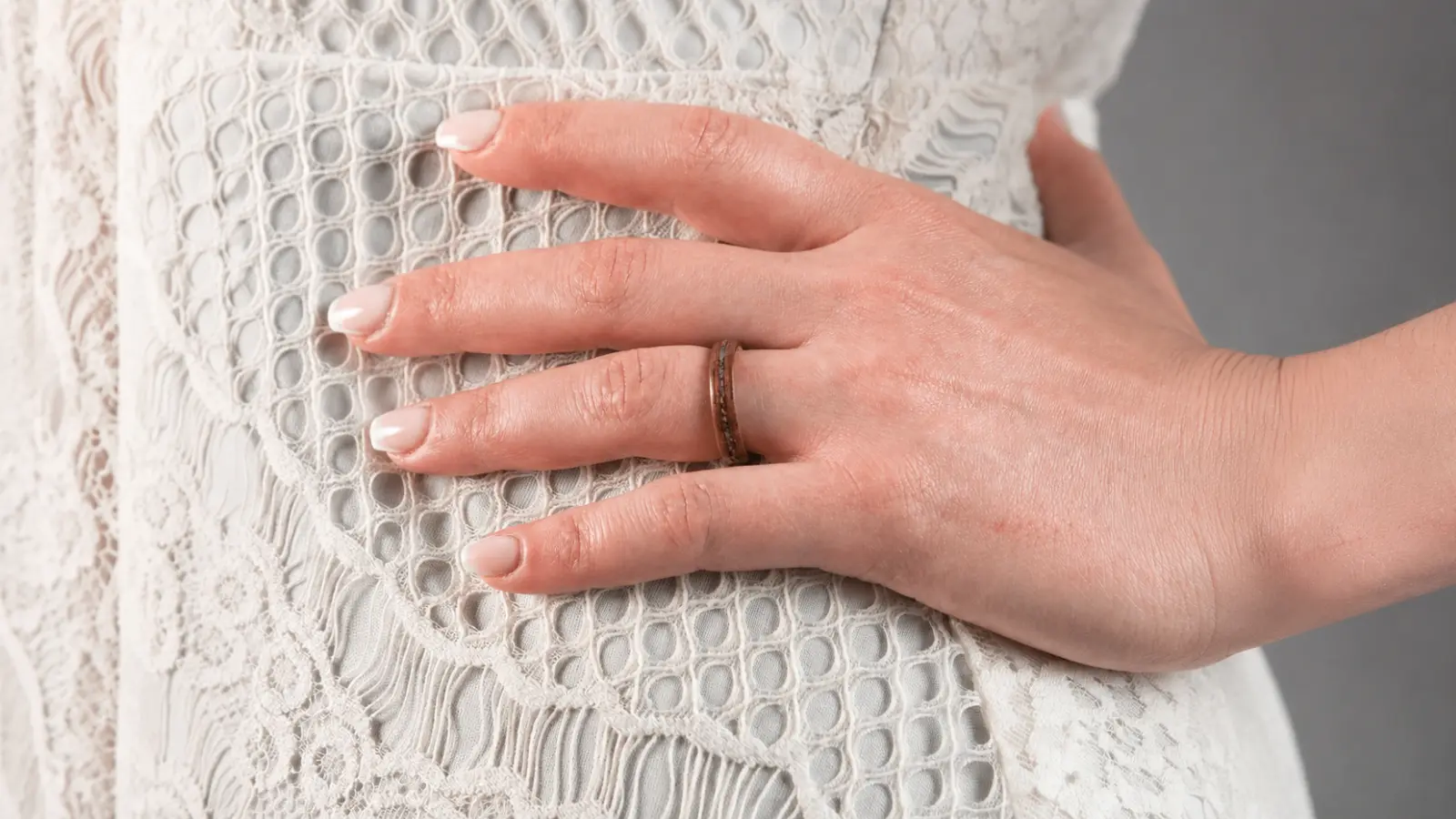
Caring for a wood wedding ring is not complicated, but it is an ongoing commitment — easy to forget during busy stretches of life, and whose consequences become visible when it is consistently neglected.
Oiling
The most important maintenance step is periodic oiling. Wood dried out by air conditioning, heat, and daily wear becomes dull, loses color depth, and develops fine surface cracks if not re-hydrated. Applying a small amount of mineral oil, fractionated coconut oil, or a beeswax-based product (many makers recommend or sell their own) to the wood surface every two to three months takes about thirty seconds and makes a visible difference. Apply with a fingertip or soft cloth, let it absorb for a few minutes, and wipe off the excess. Done consistently, this one habit will extend the life of the ring considerably.
Water Exposure
Remove the ring before showering, swimming, washing dishes, or any activity involving prolonged or repeated water contact. A single brief encounter with water is not going to ruin a well-finished inlay ring, but the cumulative effect of the wood expanding and contracting through repeated wetting and drying cycles — over months and years — is what causes the inlay to crack, separate from its setting, or warp. Building the habit of removing the ring before water contact is the single most protective thing a wood ring wearer can do.
Avoiding Chemicals and Direct Sunlight
Cleaning products, hand sanitizer, sunscreen, and chlorine are all hard on wood finishes. Remove the ring before using cleaning products, and if the ring comes into contact with hand sanitizer frequently, plan on refinishing it more often. Direct sunlight over time will also fade the color of most wood species — storing the ring out of sunlight when not being worn will help it retain its original depth longer.
Professional Refinishing
Many wood ring makers offer a refinishing service — sanding down the inlay, re-applying finish, and re-oiling — for rings that have become significantly scratched or dull after years of wear. This is typically less expensive than replacing the ring, and for a ring with sentimental value, it is a meaningful option. When purchasing, ask whether the maker offers this service and what the process and turnaround involve.cing the ring. When purchasing a wood wedding ring, it’s worth asking whether the maker offers this service and what the process involves.
Wood Wedding Ring Inspiration
Wood wedding rings combine natural textures, unique grain patterns, and meaningful materials in designs that feel personal and different from traditional metal bands. Explore our inspiration board for koa wood rings, wood inlay bands, rustic styles, mixed materials, and nature-inspired wedding ring ideas.
Choosing a Wood Wedding Ring With Meaning
A wood wedding ring is not about choosing the strongest, most traditional, or most expensive material. It is about choosing a ring with character — something shaped by natural patterns, personal meaning, and a connection that feels different from a standard metal band.
Whether you choose a koa wood inlay, a reclaimed wood design, or a simple wood and metal combination, the best choice is one that matches both your story and your everyday life. A wedding ring should not only represent the day it was exchanged, but the years of memories it collects afterward.
Frequently asked questions (FAQ)
Do wood wedding rings actually last?
A well-made wood wedding ring can last for many years, but longevity depends heavily on the design. Wood inlay rings with a titanium or tungsten base are much more durable because the metal protects the structure while the wood provides the appearance. Full wood rings require more care because natural wood reacts to moisture, temperature changes, and daily wear.
What is the biggest problem with wood wedding rings?
The biggest challenge with wood wedding rings is that wood needs more attention than traditional metals. Water exposure, dryness, and lack of maintenance can affect the appearance and condition of the ring over time. A wood ring is best for someone who appreciates natural materials and is willing to care for them, not someone who wants a completely maintenance-free wedding band.
Are wood wedding rings waterproof?
Most wood wedding rings are water-resistant, not fully waterproof. A small amount of water usually will not ruin a quality ring, but repeated exposure from showering, swimming, or washing dishes can damage the wood over time. Removing the ring before prolonged water contact is one of the easiest ways to extend its life.
Is a wood inlay ring better than a full wood ring?
For everyday wear, a wood inlay ring is usually the better choice because the metal base provides strength while still showing the natural wood design. Full wood rings offer a more organic look but require more careful handling. The right choice depends on whether durability or a completely natural appearance matters more to you.
Why do people choose wood wedding rings?
People often choose wood wedding rings because they want something personal, natural, and different from a traditional metal band. The unique grain patterns mean no two rings look exactly alike, and some couples choose meaningful woods connected to a place, memory, or personal story.
What should you know before buying a wood wedding ring?
Before choosing a wood wedding ring, understand that it behaves differently from metal. It may need occasional maintenance, usually cannot be resized, and should be protected from harsh conditions. For the right person, those qualities are not disadvantages — they are part of owning a natural material with character.