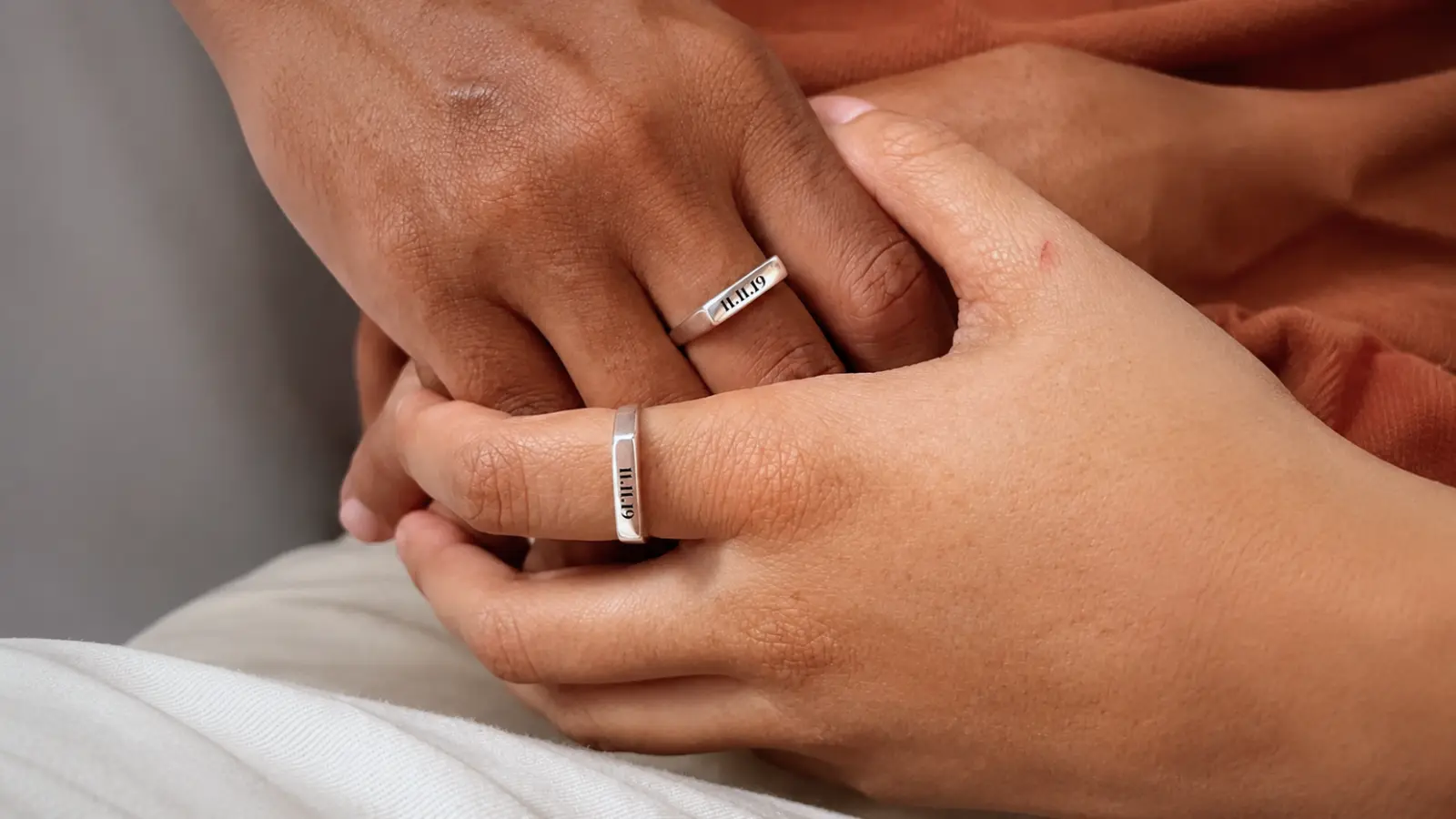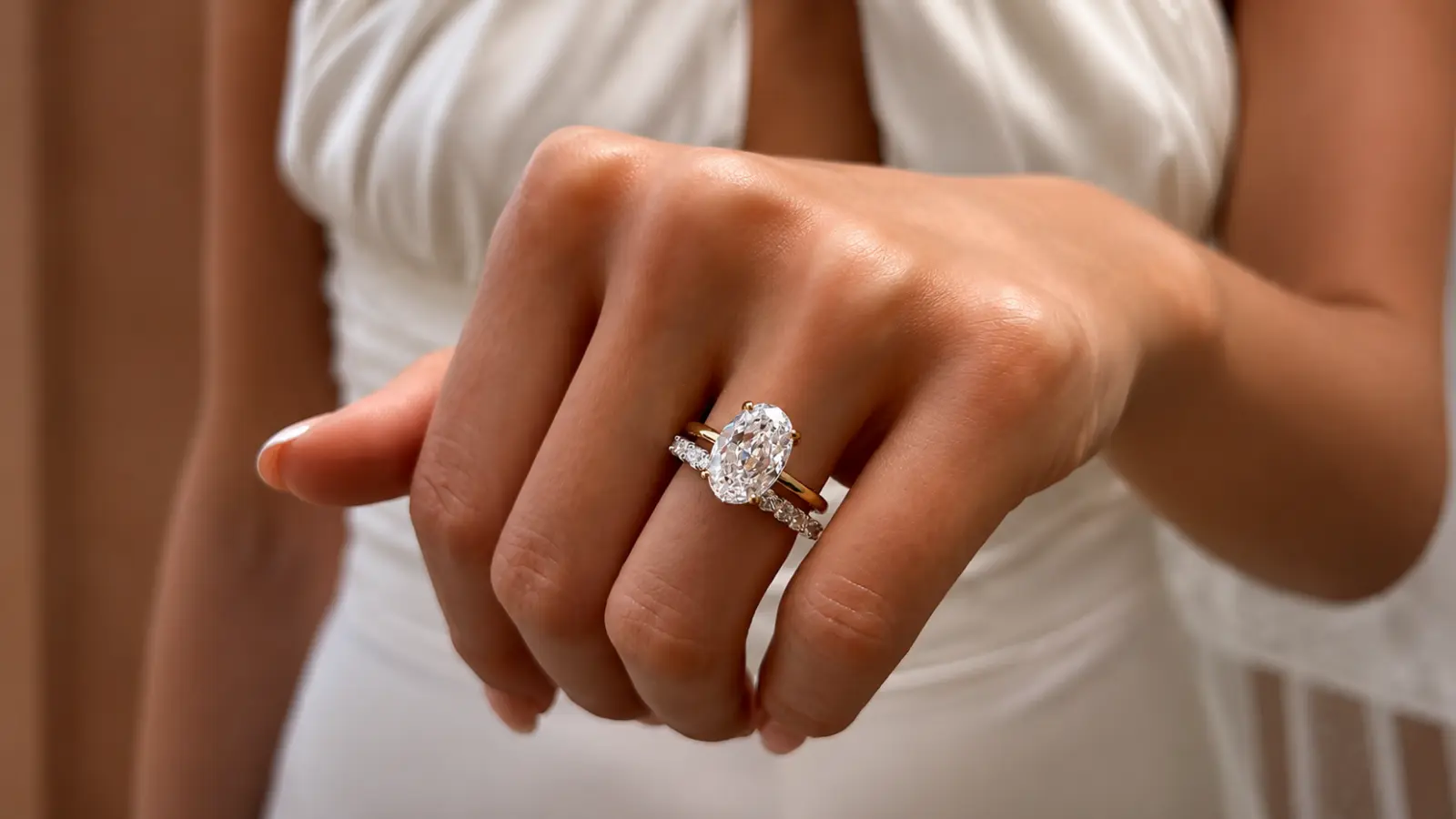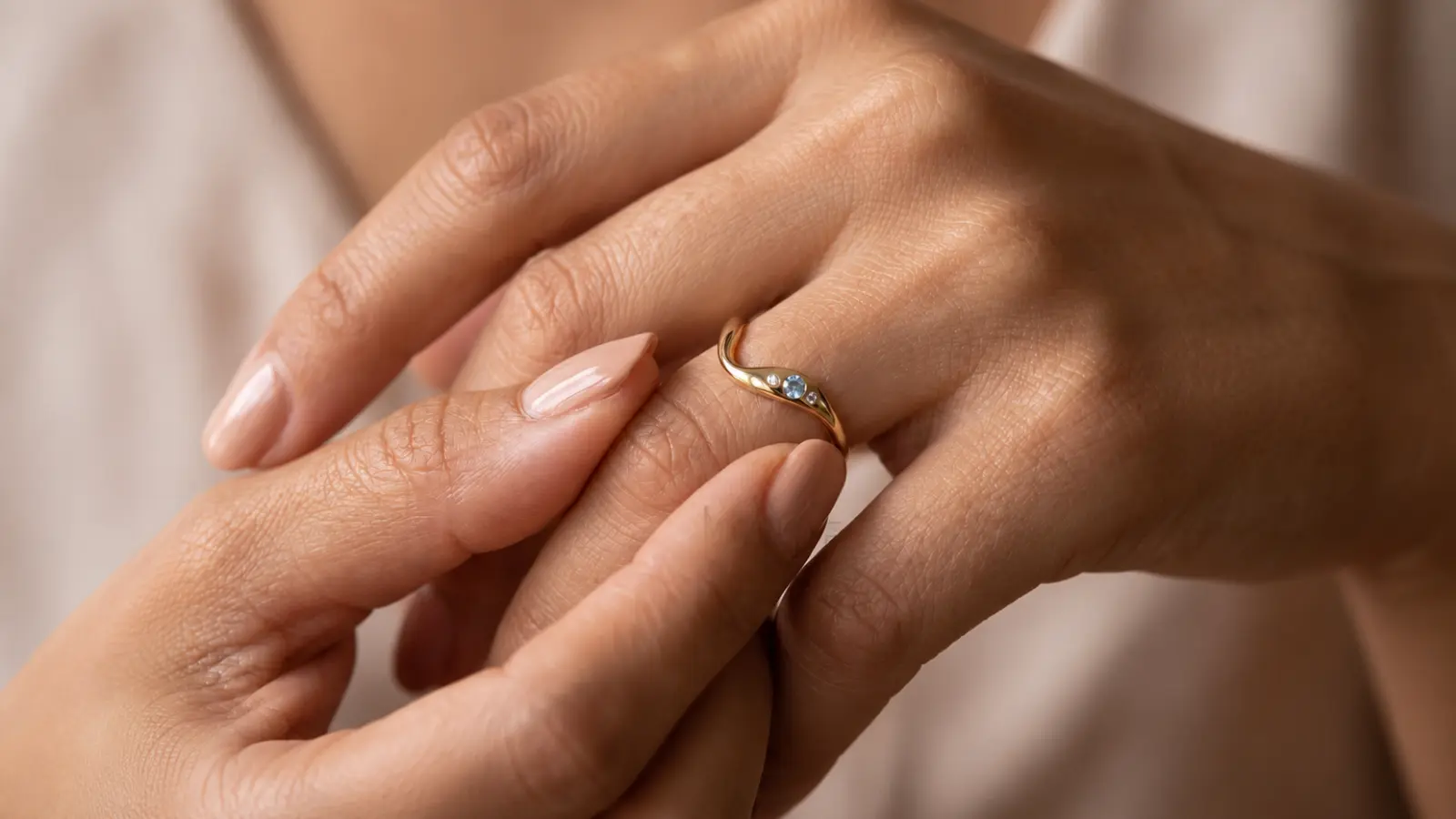
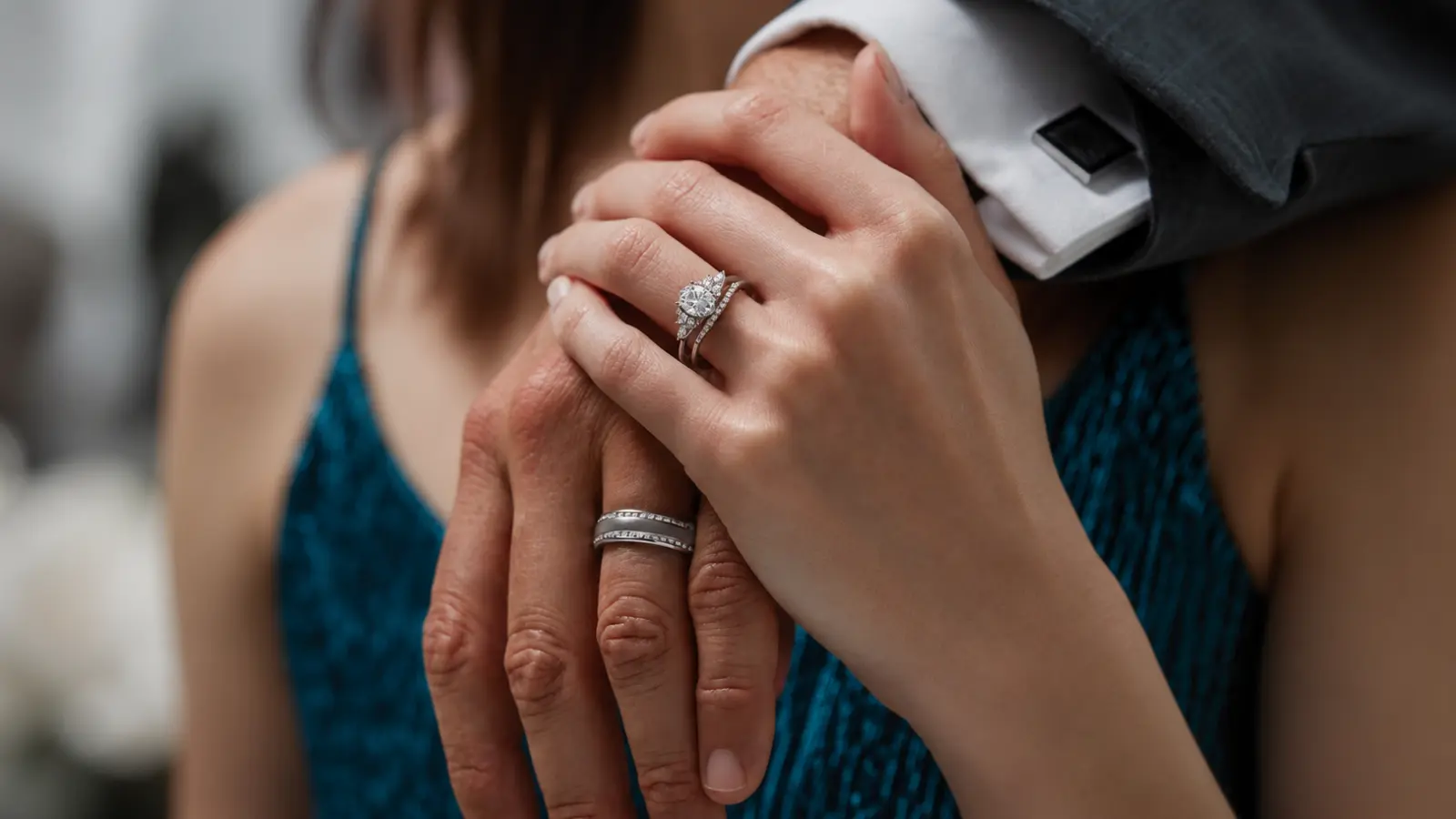
Diamond wedding rings are wedding bands set with one or more diamonds and exchanged during the wedding ceremony as a symbol of marriage and commitment. Unlike diamond engagement rings, which usually focus on a prominent center stone, diamond wedding rings are designed for everyday wear with diamonds incorporated into the band itself.
Choosing the right diamond wedding ring involves more than selecting the most beautiful design. The setting, metal, diamond type, lifestyle, and how the ring pairs with an engagement ring all affect how comfortable and practical it will be over decades of daily use.
This guide explains diamond wedding rings, including popular styles, pavé and channel settings, eternity bands, natural vs lab-grown diamonds, men’s and women’s options, costs, care, and how diamond designs compare with other wedding rings and wedding bands.
Diamond Wedding Rings Explained
The phrase “diamond wedding ring” covers a wide range of actual objects — from a barely-there band with a single row of 1.5mm stones to a full pavé eternity ring that catches light from every angle. What all of them share is a design priority that differentiates them from engagement rings: they are built to be worn every day, to hold up to the friction and impact of real life, and to look intentional rather than merely decorative.
In the United States, diamond wedding bands have been a popular choice for women since at least the mid-twentieth century. Today they are one of the most popular wedding ring categories across every price range, in styles that work for minimalist aesthetics and statement looks alike. Men’s diamond wedding rings have followed suit over the past two decades — once uncommon, they are now a mainstream option in the bridal jewelry category.
Diamond Ring vs. Diamond Band — Is There a Difference?
In practical use, no. Diamond wedding ring and diamond wedding band refer to the same category of product. The historical distinction — band as plain, ring as stone-set — has dissolved, and jewelers use both terms interchangeably for ceremony rings with diamonds. The one place the language still carries a faint signal is in retail search: “diamond wedding band” tends to surface slightly plainer, more metal-forward designs, while “diamond wedding ring” returns a broader mix. If you are shopping online, running both searches and comparing results is worth a few minutes.
What Makes a Diamond Wedding Ring Different From a Diamond Fashion Ring
A wedding ring — diamond or otherwise — is designed to be worn permanently and to function well in that context. Diamond fashion rings may have exposed prongs, elaborate architecture, and elevated stone settings that make them beautiful but impractical for daily wear. A well-designed diamond wedding ring keeps stones as protected as possible, maintains a low profile that does not snag clothing, and is built in a metal durable enough for continuous use. When shopping, this distinction matters: a ring marketed as “stackable fine jewelry” or “fashion ring” may not be constructed to the same standard as one specifically sold as a wedding band.
Diamond Wedding Bands vs. Engagement Rings
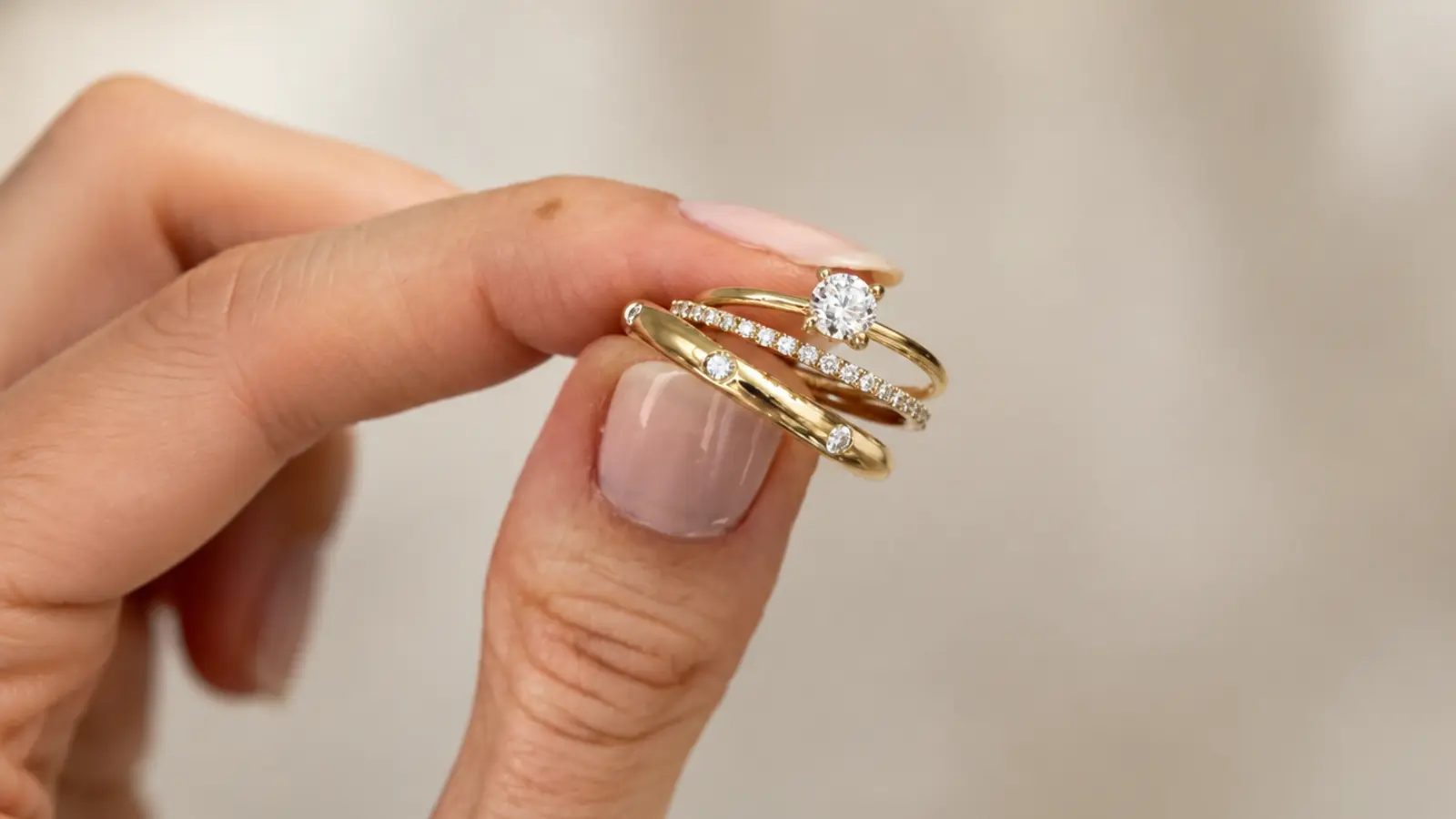
These two rings are related but designed for different purposes — understanding the difference is useful whether you are buying one or both, because it changes what you should prioritize in each purchase.
A diamond engagement ring is a statement piece. Its design is organized around a single center stone — typically a round brilliant, oval, or cushion cut — set to maximize visibility and light performance. It is meant to be noticed, to mark the proposal moment, and to communicate something significant at a glance. After the ceremony, it shares the left ring finger with the wedding ring for the rest of the marriage.
A diamond wedding ring is a supporting character in most stacks, but not a lesser one. Its diamonds are distributed across the band rather than concentrated in a center stone. Its profile is lower, its construction engineered for decades of daily wear. Many people find that the wedding ring, worn alone on ordinary days when the engagement ring is at home, becomes the ring they feel most themselves in.
When the Two Rings Need to Work Together
If you have or plan to have both, the wedding band needs to be chosen with the engagement ring physically present — or at minimum with specific knowledge of its profile. An engagement ring with a high cathedral setting leaves a gap above the finger that a curved or contoured wedding band fills well, while a straight-sided band leaves a visible space. A pavé engagement ring with micro-set diamonds along the shank may clash with a second pavé band right beside it, making one of them disappear.
The wedding ring does not need to match the engagement ring — it needs to work with it. For couples who want both to feel like a designed set, bridal ring sets offer an engagement ring and matching wedding band shaped specifically to nest together. For couples who prefer to choose the two rings independently, the key is trying them together before committing to either. For a deeper comparison of how these rings differ across design, cost, and timing, see our engagement ring vs. wedding ring.
Can a Diamond Wedding Ring Replace an Engagement Ring?
Yes, and many couples make this choice deliberately. A substantial diamond wedding band — an eternity ring, a wide pavé band, or a half-eternity with meaningful stone size — can function as the only ring on the finger without feeling incomplete. Some couples skip the engagement ring entirely and invest in a single, beautifully designed diamond wedding ring that serves both symbolic purposes. The meaning comes from the commitment, not the ring count.
Natural vs. Lab-Grown Diamonds for Wedding Rings
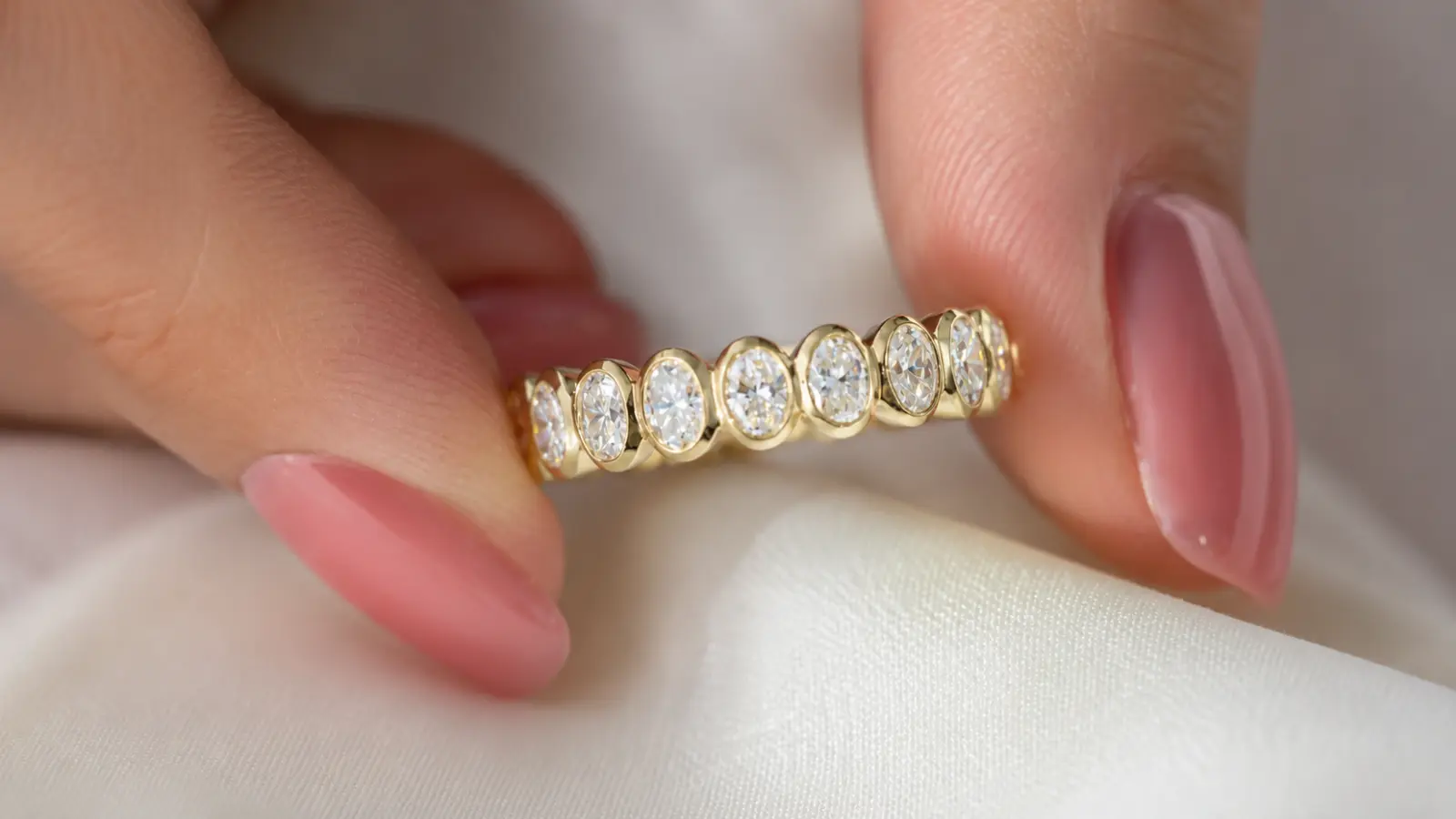
This is the question that has changed most significantly in the diamond market over the past decade, and it is worth understanding clearly before making any purchase decision. Lab-grown diamonds are not simulants — they are not cubic zirconia or moissanite. They are real diamonds, with the same carbon crystal structure, the same hardness (10 on the Mohs scale), and the same grading criteria. The difference is origin: natural diamonds formed underground over billions of years; lab-grown diamonds are created in a controlled environment over weeks.
What Lab-Grown Diamonds Offer
The primary advantage is cost — typically 50 to 80 percent less than natural diamonds of comparable size and quality. For lab-grown diamond wedding rings, where the goal is often maximum stone coverage across the band, this price difference matters enormously. A couple with a $1,500 budget can afford a notably different ring in lab-grown stones than in natural ones at the same quality grade.
Lab-grown diamonds also tend to have fewer inclusions than natural stones at the same price point, because the controlled growth environment produces fewer imperfections. For a wedding ring where you want stones to look their best in a low-profile setting, that is a practical advantage worth noting.
What Natural Diamonds Offer
Natural diamonds carry a geological rarity that lab-grown stones do not — each stone is billions of years old, formed under specific conditions that no laboratory can replicate. For some couples, this is meaningful. Natural diamonds also have a longer track record of holding resale value, though a wedding ring worn for life is not typically purchased as an investment. For people who connect the ring’s meaning to its origin, the premium is worth it.
Which Is Better for a Wedding Ring?
There is no universally better answer. If stone coverage, visual impact within a budget, or environmental preference drives the decision, lab-grown diamonds offer a compelling advantage. If the age, rarity, and geological origin of the stone carry meaning, natural diamonds are worth the cost. Both are real diamonds. Both will look identical to a non-gemologist in every ordinary context. Neither choice diminishes the ring — the decision is genuinely personal.
One practical note: lab-grown diamond prices have dropped significantly over recent years and continue to drop as production scales. The resale market for lab-grown stones is thin. For a ring worn for life, this rarely matters. For someone who might want to upgrade or sell the stone later, natural diamonds remain the more stable choice.
Diamond Settings for Wedding Rings
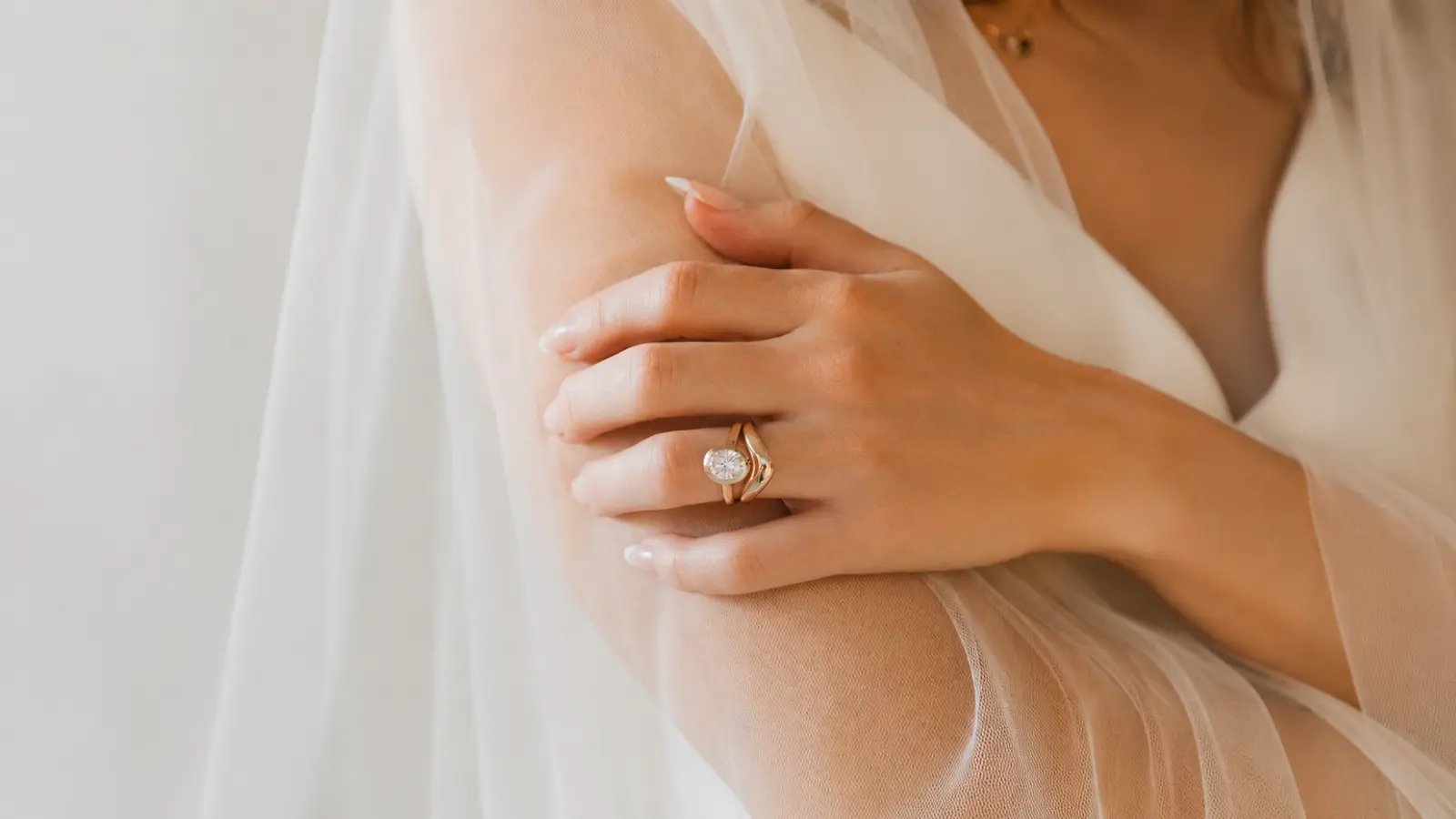
The setting is how diamonds are secured in the band, and it affects nearly everything that matters for a wedding ring: durability, maintenance, comfort, and visual character. There are four main setting styles for diamond wedding bands, each with a distinct look and a different practical profile. Understanding them before you shop saves a great deal of second-guessing afterward.
Pavé
Pavé (from the French for “paved”) is the most popular diamond wedding ring setting. Small diamonds are set very close together across the surface of the band, held in place by tiny prongs or beads of metal, creating a surface that appears almost continuously covered in stones. The effect is maximum brilliance from relatively small individual diamonds — a pavé band produces significant sparkle at a fraction of the cost of a larger-stone design.
The trade-off is maintenance. Those tiny prongs are small, and over years of daily wear they can bend or wear down, increasing the risk of losing a stone. A pavé wedding ring should be inspected by a jeweler at least once a year and kept away from activities involving impact or pressure on the band. Micro-pavé — a finer version with even smaller stones — looks extraordinarily refined but requires more careful attention and is better suited for lighter daily wear.
Channel Set
In a channel setting, diamonds are secured in a linear row between two raised rails of metal — no prongs visible, no exposed individual settings. The metal walls on either side hold the stones firmly in place, making channel-set rings among the most durable and low-maintenance diamond settings available.
Channel-set bands have a clean, architectural look and tend to suit a modern, minimalist aesthetic. They work well for people who use their hands actively. The one limitation: the continuous metal channel makes resizing more complex than resizing a plain band — possible, but something to discuss with your jeweler before purchasing.
Eternity and Half-Eternity Bands
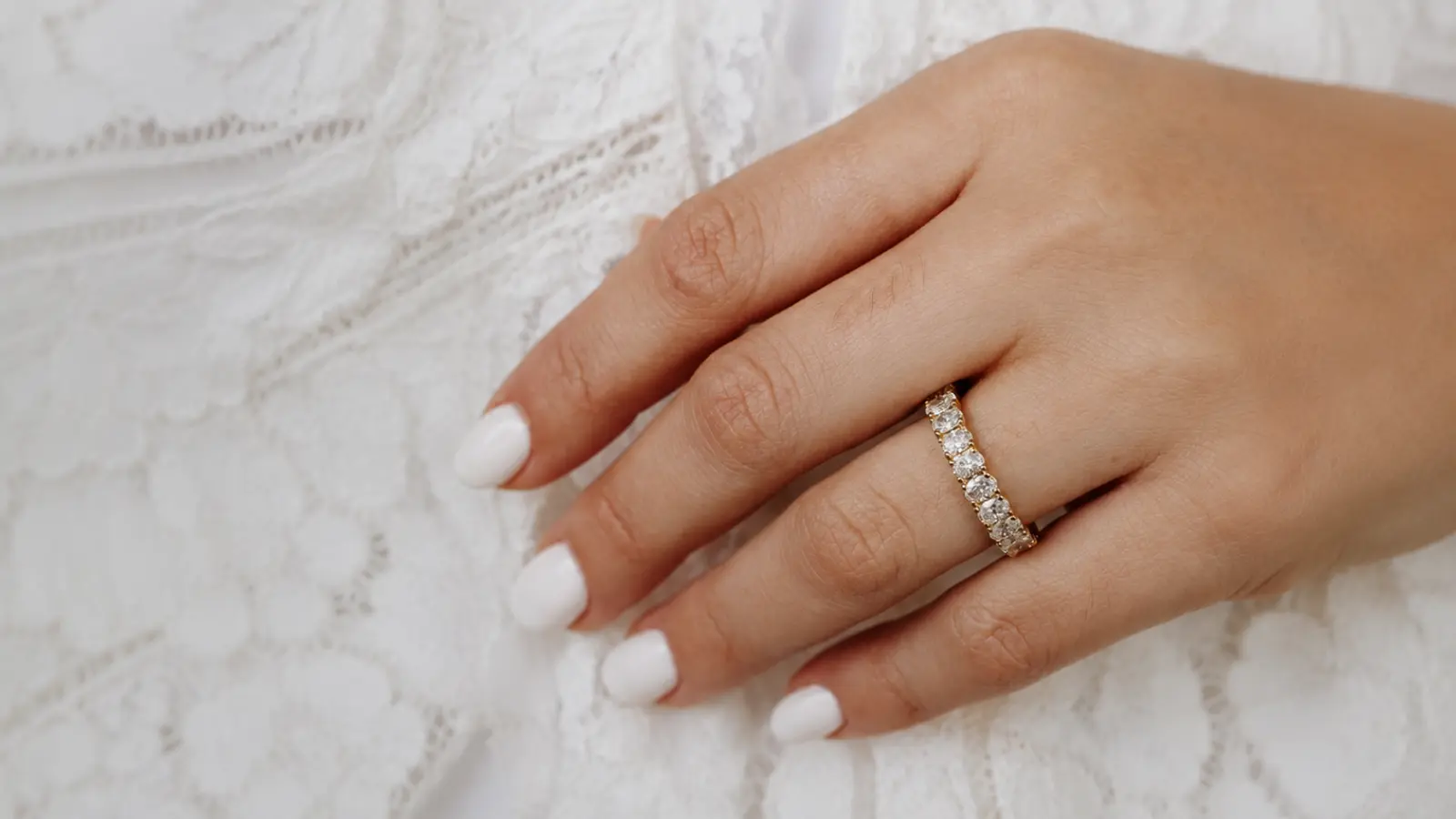
An eternity band has diamonds set all the way around the shank. A half-eternity band has diamonds across the top half only, with a plain metal shank on the bottom. This distinction has more practical consequence than many buyers realize.
- Full eternity: Cannot be resized. Stones run all the way around, leaving no plain metal section for adjustment. More expensive, more diamonds, more sparkle.
- Half-eternity: Can be resized using the plain shank — a meaningful long-term advantage. Usually costs less. From the front, it looks identical to a full eternity band.
For a ring meant to be worn for decades, the half-eternity design offers practical flexibility that a full eternity band simply cannot provide. Most people never regret choosing the resizable option.
Bezel Set
In a bezel setting, each diamond is encircled by a thin wall of metal that rises up around the stone, holding it completely in place without prongs. Bezel-set diamond rings are the most secure setting available — stones cannot loosen the way they can in prong-set or pavé designs — and they create a smooth, snag-free profile ideal for daily wear.
The bezel does cover more of each stone than a prong setting, which can slightly reduce brilliance. For a wedding ring worn every day in ordinary conditions, many people find this trade-off entirely worth it. Bezel-set bands are particularly well-suited to people who work with their hands, wear gloves frequently, or want the lowest-maintenance diamond option available.
A Note on Prong-Set Bands
Some diamond wedding rings use individual prong settings across the band — the same style used for center stones in engagement rings. These can be beautiful, particularly for three-stone or five-stone wedding ring designs. The maintenance requirement is the same as any prong setting: prongs need regular inspection and eventual re-tipping as they wear down. For a ring worn every day for decades, factor in the long-term maintenance cost when comparing prong-set against channel or bezel options.
Diamond Wedding Rings for Women
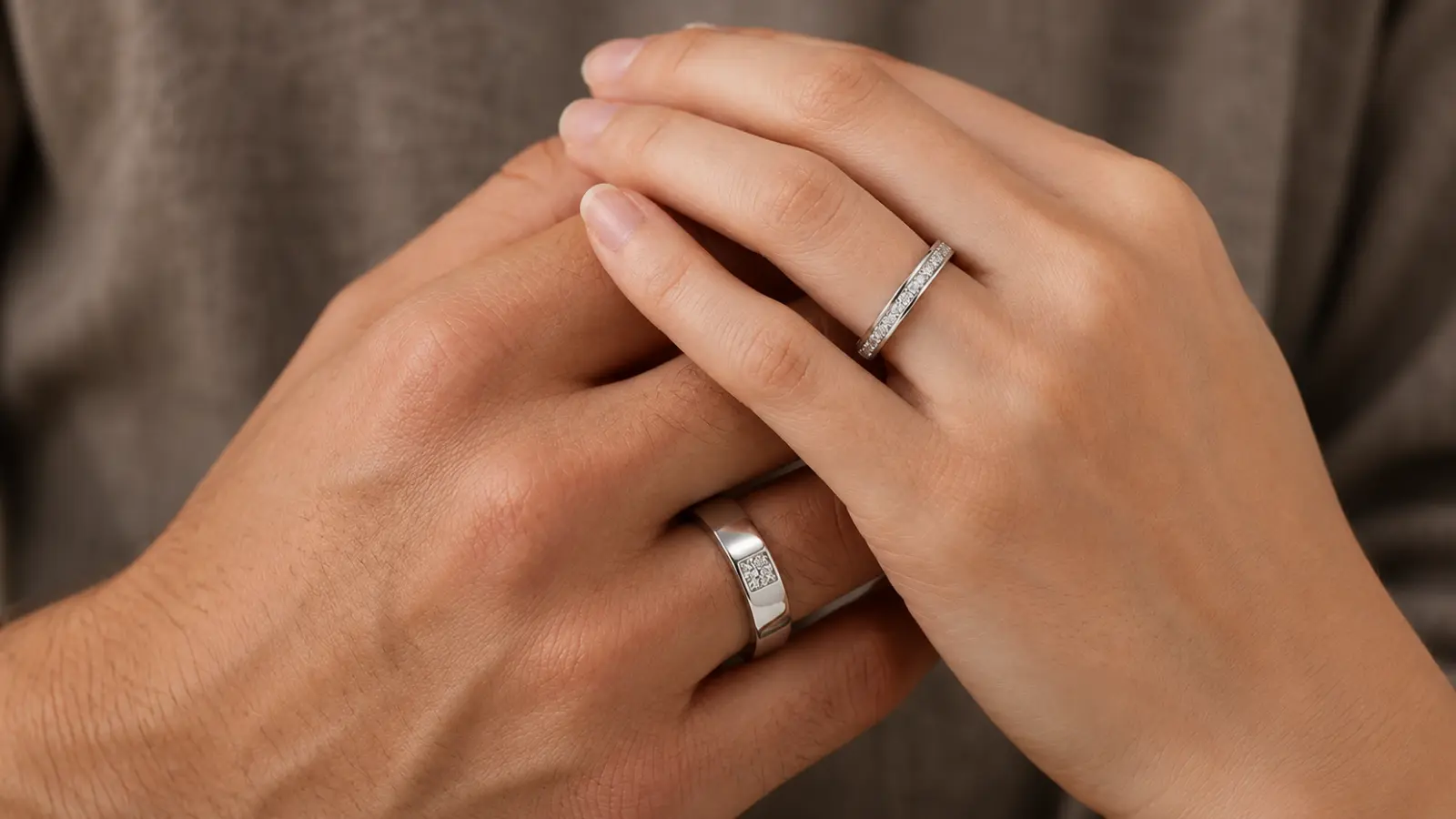
Diamond wedding rings are one of the most popular categories in women’s bridal jewelry, and the range of styles is wide enough to work for essentially any aesthetic — from the most delicate minimalist band to an eternity ring that holds its own alongside a statement engagement ring.
Choosing a Style That Works With Your Engagement Ring
For women who have or plan to have an engagement ring, the wedding band’s most important relationship is with that ring. A carefully chosen curved wedding band can hug the engagement ring’s setting and create a seamlessly integrated look. A straight band worn alongside a solitaire leaves a clean gap between the two rings — which some people love and others find visually unresolved. Both approaches are valid; what matters is that the choice is deliberate.
Width is another variable that interacts significantly with the engagement ring. A very wide diamond band next to a delicate solitaire can overwhelm it visually. A band too narrow next to a large-stone engagement ring can disappear. As a general principle, the wedding band’s width should complement the engagement ring rather than compete with it. A jeweler with bridal experience can show you combinations in person, which is far more useful than imagining the pairing from product photos.
Popular Styles for Women’s Diamond Wedding Rings
Pavé bands remain the most broadly popular choice, particularly for women who want diamond coverage without visual heaviness. Thin pavé bands in the 2mm to 3mm range are elegant enough to work with most engagement rings without competing for attention. Half-eternity pavé bands in the 4mm to 5mm range read as a more deliberate statement — more presence, more sparkle, still comfortable for daily wear.
For women whose wedding aesthetic leans vintage or romantic, milgrain-edged diamond bands and antique-cut stone designs (old European cut, rose cut) create a softer, more textured look than modern brilliant-cut pavé. These require the same maintenance as any prong-set or pavé design but offer a distinctly different character.
For a full exploration of women’s wedding ring options beyond diamond styles, see our wedding rings for women.
Metal Choices for Women’s Diamond Wedding Rings
Platinum and white gold remain the most popular metals for diamond wedding rings, because the white metal color lets diamond brightness read cleanly without the warm contrast of yellow or rose gold. That said, yellow gold diamond rings have become increasingly popular — the warm metal against bright white diamonds creates a contrast that many people find more interesting than the all-white combination.
Platinum is the stronger long-term choice for diamond settings: it holds prongs and bezels more securely than gold, develops a patina rather than wearing away, and is hypoallergenic. It costs more than gold, but for a ring held daily for decades, the additional cost has practical justification. For more on how these metals compare, see our platinum wedding rings and gold wedding rings.
Diamond Wedding Rings for Men
Men’s diamond wedding rings were uncommon as recently as two or three decades ago. Today they are a mainstream option — the difference from women’s styles is that diamonds function as a design element within a ring built for masculine proportion, rather than as the primary visual statement.
What Men’s Diamond Wedding Rings Actually Look Like
The most common configuration is a wider band — typically 6mm to 8mm — with a single row of channel-set or flush-set diamonds running along the center. The diamonds add light and texture without making the ring look delicate. This is a different visual from a women’s pavé band: in the men’s version, the metal is dominant and the diamonds are accent.
Black diamonds are another popular option for men, often channel-set in a tungsten or titanium band. They read as bold and contemporary, pairing well with darker, heavier metals without the softness that white diamonds can sometimes carry. For men who want the personal significance of a diamond without any conspicuous jewelry presence, a single flush-set stone — level with the band surface, nearly invisible from a distance — is a well-regarded choice.
Metal Considerations for Men’s Diamond Wedding Rings
Tungsten and titanium are popular for men’s wedding rings because of their durability and scratch resistance, and both work well with channel-set or flush-set diamond designs. The key trade-off: tungsten cannot be resized — an important consideration for any ring meant to last decades. Platinum and gold are resizable and hold diamond settings with the same precision as in women’s rings, and both are available in men’s widths and proportions. For a full exploration of men’s wedding ring options, see our men’s wedding bands.
How to Choose a Diamond Wedding Ring
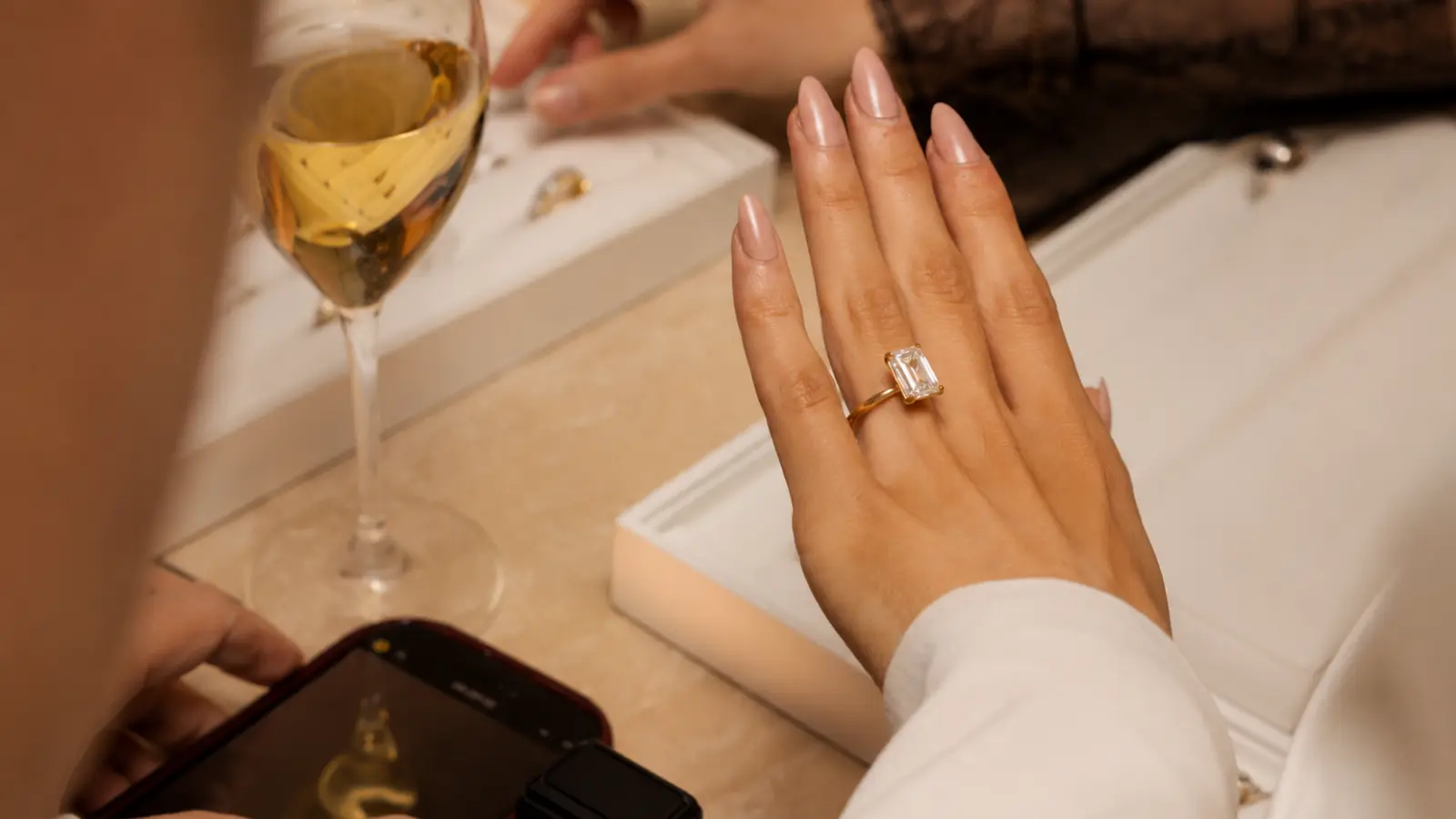
The decision has more variables than most people anticipate — but they are navigable if you approach them in the right order. Start with how you live, then choose the setting, then decide on stone type, then consider metal and budget. Style comes last, not first.
Start With Your Daily Life
A diamond wedding ring worn by someone who works in a hospital, a kitchen, or a machine shop lives very differently than one worn by someone who works at a desk. For people with hands-on lifestyles, channel-set or bezel-set diamonds are meaningfully better choices than pavé or prong-set designs. The diamonds stay put longer, and the ring requires less maintenance over its life. If you know you will remove the ring during your most demanding activities — which is perfectly reasonable — a more delicate setting becomes more viable, because it spends less time in the environments that stress it.
Decide on Stone Type Before the Setting
The natural vs. lab-grown decision affects your budget significantly and should be made before you start comparing specific rings. At a given price point, you can afford meaningfully more diamond coverage with lab-grown stones than with natural ones. If the origin of the stone matters to you, commit to natural and adjust style expectations to your budget. If the look and quality matter more than origin, lab-grown diamonds offer a genuine practical advantage for wedding rings.
Match the Wedding Ring to the Engagement Ring
If you are buying a diamond wedding band to wear alongside an existing engagement ring, try them together before committing. The profile of the engagement ring’s setting determines what sits comfortably against it — a cathedral solitaire creates a gap that a contoured band fills naturally, while a flat-profile engagement ring sits cleanly against a straight-sided band. Pavé alongside pavé can look intentional or cluttered depending on stone sizes and proximity. If you are buying both rings at once, a bridal ring set designed to nest together is the most efficient path.
Consider Resizability Honestly
Full eternity bands cannot be resized. If there is any chance your ring size will change over your lifetime — and for most people there is — check your current fit with our ring size calculator before choosing a half-eternity or full eternity design. The visual difference from the front is negligible. The practical difference, twenty or thirty years from now, could be significant.
Budget for Maintenance, Not Just the Purchase
A diamond wedding ring is not a single purchase — it is an object you will maintain professionally for the rest of your life. Here is a quick summary of what different settings require:
| Setting | Annual Inspection | Main Maintenance Need |
|---|---|---|
| Pavé / prong-set | Yes — required | Prong re-tipping as they wear down |
| Channel set | Recommended | Low; channel rails rarely need attention |
| Bezel set | Recommended | Lowest maintenance of all settings |
| White gold (any setting) | Yes | Rhodium replating every few years |
| Platinum (any setting) | Yes | Patina polishing (optional, not required) |
None of these maintenance costs are prohibitive — but they are real, and the setting you choose determines how much attention the ring needs. Factor in the full cost of ownership, not just the purchase price.
What Couples Most Often Overlook
Two things consistently surprise people after the purchase: width and how the ring feels at the end of the day. A pavé band that looks exactly right in the store can feel bulkier than expected after eight hours, particularly for first-time ring wearers. Going slightly narrower than your first instinct is rarely something people regret. The second surprise is how the engagement ring stacking relationship changes once both rings are worn continuously — rings that look great in photographs together do not always feel right in the hand. Comfort over decades matters more than visual appeal in product photos.
For guidance on how to wear both rings day to day — including stacking order and practical etiquette — see our how to wear wedding rings.
Diamond Wedding Ring Inspiration
Diamond wedding rings come in many styles, from delicate pavé bands to classic eternity rings and modern diamond designs. Explore our inspiration board for diamond wedding bands, vintage styles, gold and platinum rings, minimalist designs, and ideas for pairing a wedding ring with an engagement ring.
Choosing a Diamond Wedding Ring for a Lifetime
A diamond wedding ring is not only about choosing the brightest stones or the most impressive design. It is about finding a ring that feels beautiful, comfortable, and practical through years of everyday moments.
Whether you choose a delicate pavé band, a timeless eternity ring, a lab-grown diamond design, or a classic natural diamond wedding ring, the right choice is the one that matches both your style and your life. A wedding ring begins with a ceremony, but its real meaning is built in every day that follows.
Frequently asked questions (FAQ)
Can you wear a diamond wedding ring every day?
Yes. Diamond wedding rings are designed for daily wear, but the setting style matters. Low-profile settings such as channel-set and bezel-set rings usually offer more protection because the diamonds are secured by surrounding metal. More delicate styles like pavé bands can also be worn every day but may require regular inspections to make sure the small stones remain secure.
What diamond wedding ring style loses stones the least?
The most secure diamond wedding ring styles are usually bezel-set and channel-set bands because the diamonds are protected by metal instead of relying only on tiny prongs. Pavé and prong-set rings create more sparkle but have more small components that can wear over time. For someone with an active lifestyle, the setting can be more important than the number of diamonds.
Is a full eternity diamond ring a good idea?
A full eternity diamond ring is beautiful because diamonds continue around the entire band, but it comes with practical trade-offs. Full eternity rings are harder or impossible to resize, usually cost more, and have diamonds on the underside of the finger where they receive more wear. Many people choose half-eternity bands because they create a similar look with more flexibility.
Should you choose natural or lab-grown diamonds for a wedding ring?
Both natural and lab-grown diamonds can be excellent choices because they are real diamonds with the same physical structure. Lab-grown diamonds usually allow for larger stones or more diamond coverage at the same budget, while natural diamonds appeal to people who value geological rarity and traditional diamond origin. The better choice depends on what matters most to the couple.
Should a diamond wedding ring match the engagement ring?
A diamond wedding ring does not have to match the engagement ring exactly, but the two rings should work well together. The height, shape, width, and setting style affect how comfortably they sit on the same finger. Some couples prefer a perfectly matched bridal set, while others intentionally mix metals, shapes, or diamond styles for a more personal look.
What should you consider before buying a diamond wedding ring?
Before buying a diamond wedding ring, consider durability before appearance alone. Think about how often you use your hands, whether the ring will be worn with an engagement ring, how much maintenance the setting requires, and whether future resizing matters. A wedding ring should be chosen for decades of everyday life, not only for how it looks in photos.