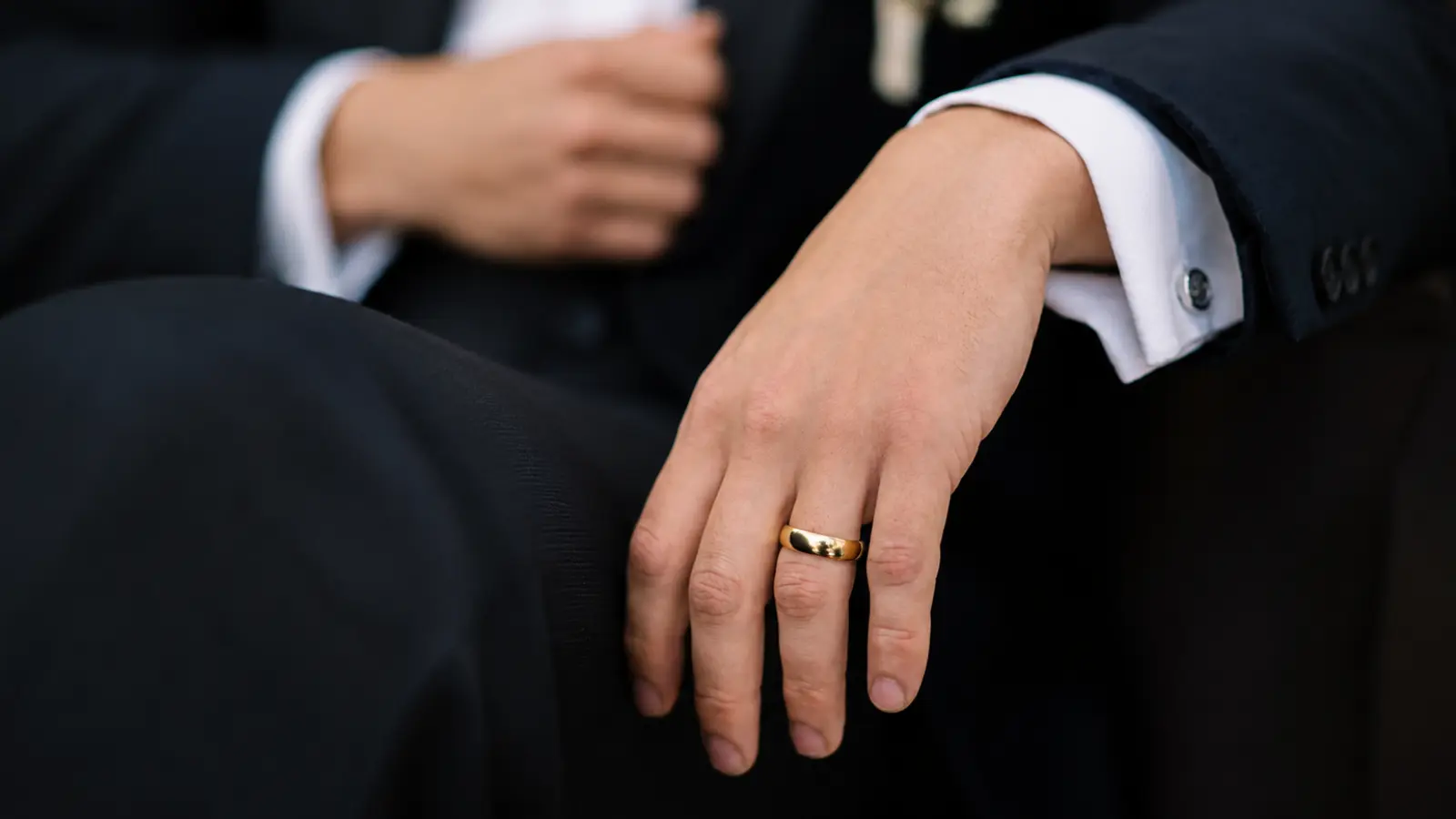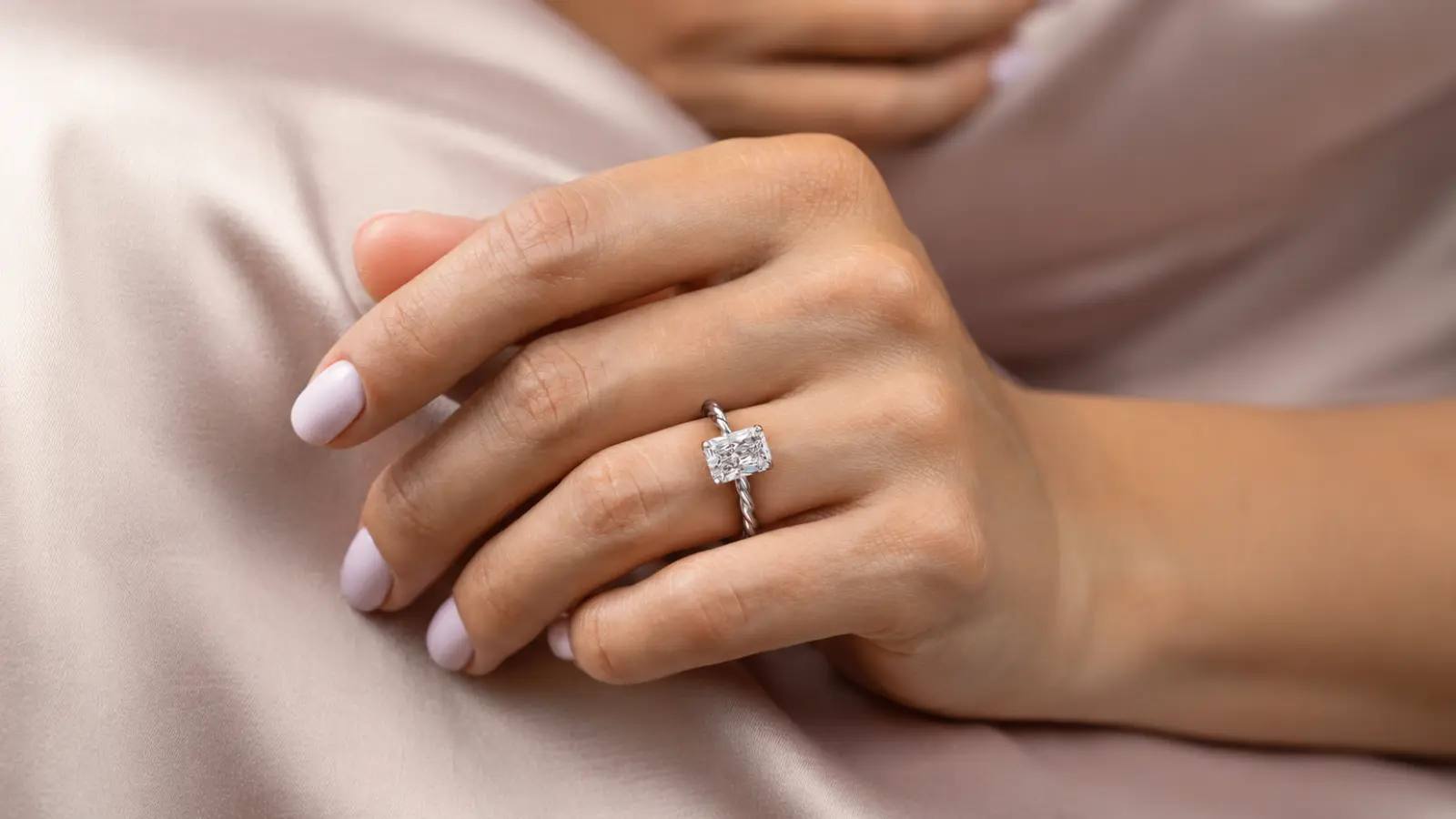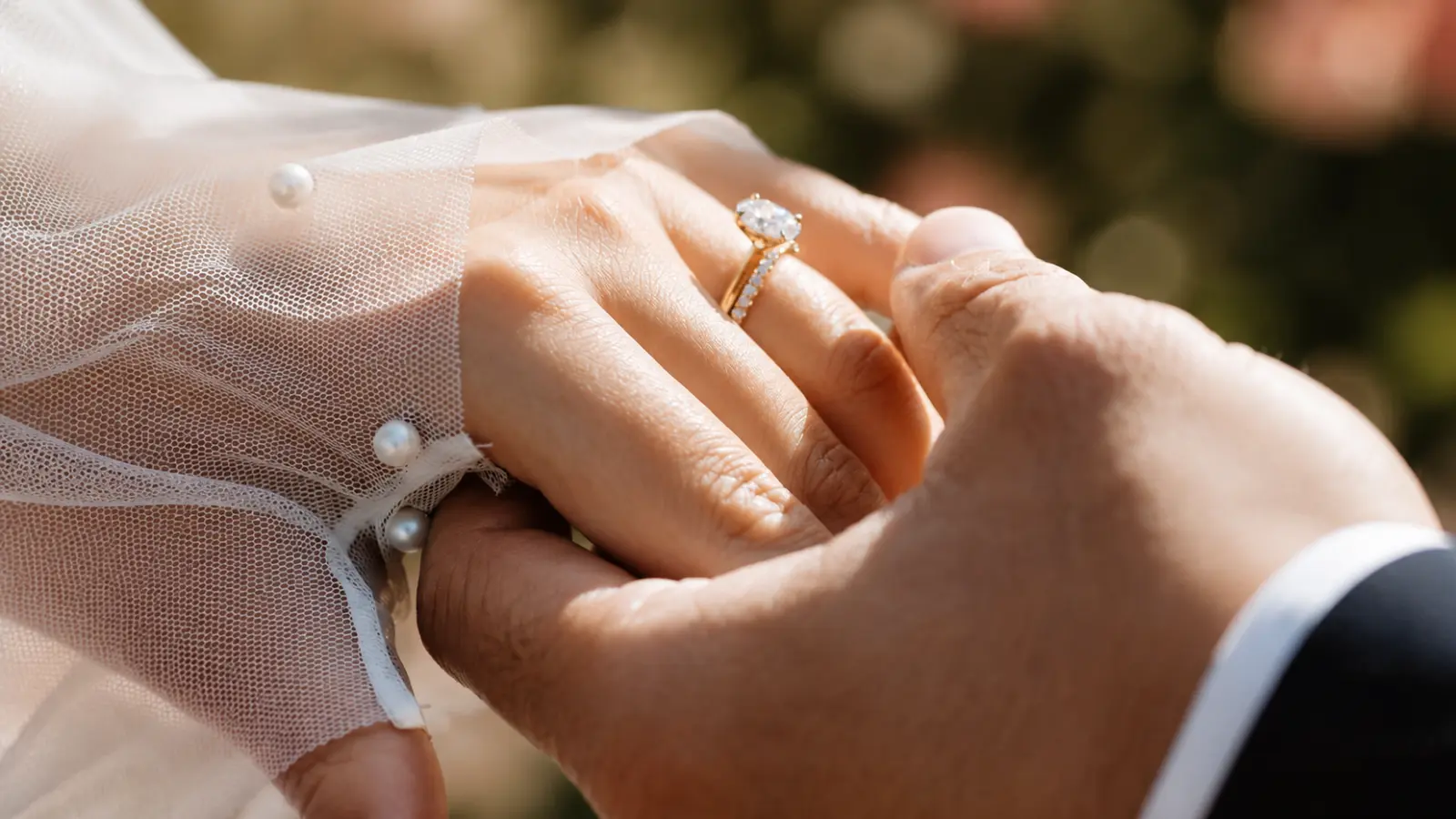
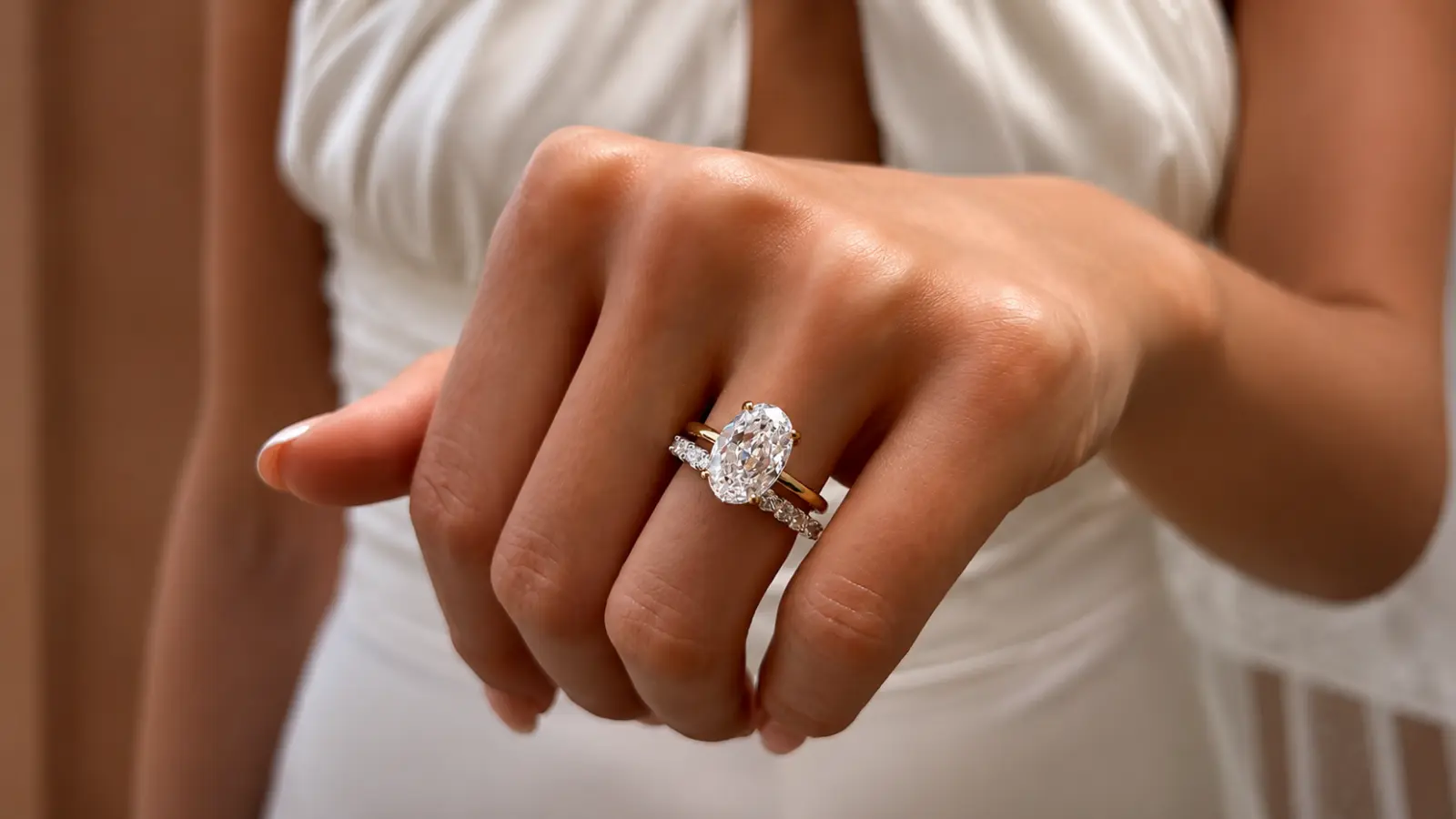
Lab-grown diamond wedding rings are wedding rings set with diamonds created in a controlled laboratory environment rather than mined from the earth. These diamonds have the same chemical composition, crystal structure, hardness, and optical properties as natural diamonds — the difference is their origin, not whether they are real diamonds.
The appeal of lab-grown diamonds comes from the ability to choose a larger or higher-quality diamond design at a lower price, but the decision involves more than cost. Resale value, personal meaning, sustainability claims, certification, and long-term expectations all play a role when comparing lab-grown and natural diamonds.
This guide explains lab-grown diamond wedding rings, including how they are made, lab-grown vs natural diamonds, pros and cons, cost differences, certification, sustainability, and what to check before choosing among different wedding rings and wedding bands.
What Are Lab-Grown Diamond Wedding Rings?
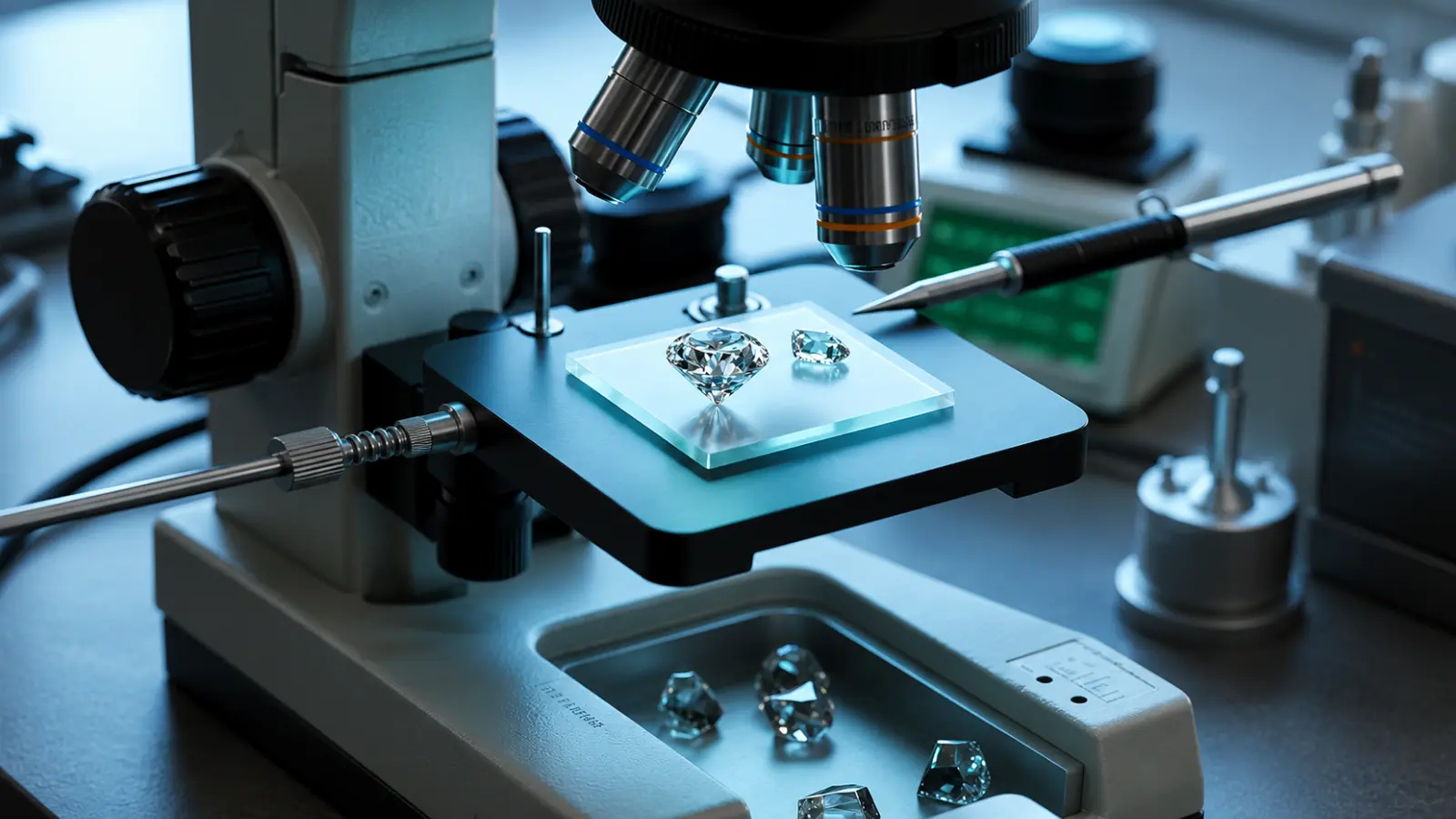
A lab-grown diamond wedding ring is a wedding band set with diamonds that were created in a laboratory rather than mined from the earth. The diamonds themselves are not simulated, coated, or engineered to merely resemble diamonds. They are diamonds — the same carbon atom arrangement, the same crystal lattice, the same result on any gemological test that does not specifically look for growth characteristics.
Two processes are used to grow gem-quality diamonds. The first, HPHT (high-pressure, high-temperature), replicates the conditions under which natural diamonds form — extreme heat and pressure applied to a carbon source in the presence of a diamond seed. The second, CVD (chemical vapor deposition), builds a diamond layer by layer in a low-pressure chamber filled with carbon-rich gas. Both produce stones graded by the same four Cs — cut, color, clarity, and carat weight — using the same standards applied to natural diamonds.
What They Are Not
Cubic zirconia, moissanite, and white sapphire are simulants — materials that can resemble a diamond visually but are composed of entirely different materials with different properties. Lab-grown diamonds are in a categorically different position: they are diamonds. The Federal Trade Commission updated its guidelines to reflect this, removing the word “synthetic” from its preferred terminology for lab-grown diamonds and recognizing them as genuine gemstones. The only accurate distinction between a lab-grown and a natural diamond is geological origin.
How They Appear in Wedding Ring Settings
Lab-grown diamonds are available in every cut, size, and quality grade used for natural diamonds, which means they work in every setting style used for wedding rings — pavé, channel-set, eternity, half-eternity, bezel-set, and prong-set. The design options for a lab-grown diamond wedding ring are not narrower than for a natural diamond ring; they are identical. What changes is how much ring the same budget buys. For a full breakdown of settings and how each affects daily wear, see our diamond wedding rings.
Lab-Grown vs. Natural Diamonds
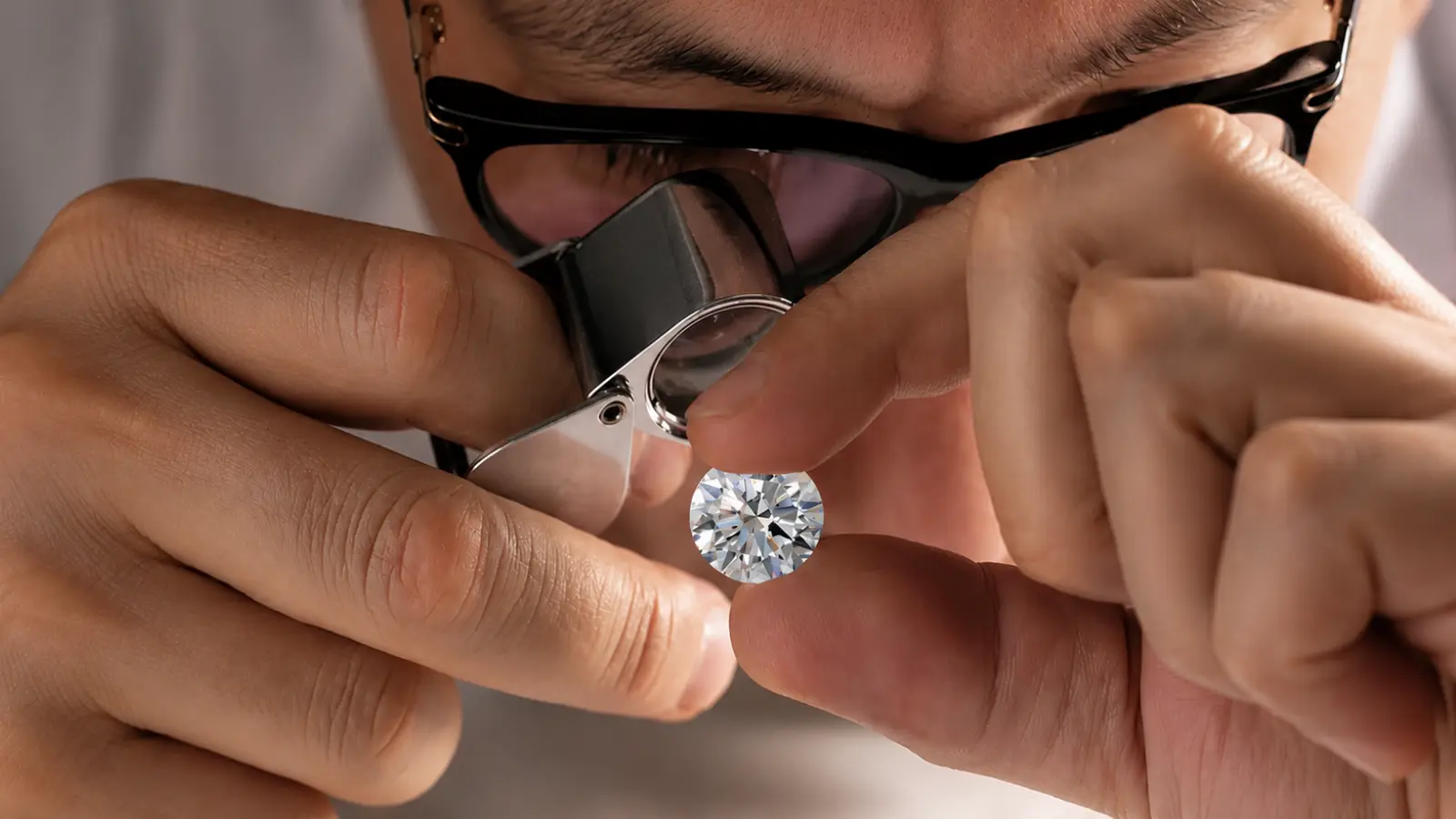
This comparison gets simplified — often in both directions — more than almost any other topic in bridal jewelry. Here is what the evidence actually shows across each variable that matters for a wedding ring purchase.
| Variable | Lab-Grown | Natural |
|---|---|---|
| Appearance | Identical — indistinguishable to the naked eye | Identical — indistinguishable to the naked eye |
| Hardness | 10 Mohs — same as natural | 10 Mohs |
| Price | 50–80% less than comparable natural | Higher; stable pricing tier |
| Resale value | Very limited; prices continue to drop | Retains some value on secondary market |
| Origin story | Made in weeks in a controlled facility | Billions of years old, formed underground |
| Certification | IGI or GIA — independent grading required | GIA, IGI, AGS — same standards |
| Sustainability | No mining, but energy-intensive; source matters | Mining disruption; improved sourcing standards |
The table above covers the variables that matter for a practical purchase decision. A few of them deserve fuller context.
On Price
Lab-grown diamonds currently cost between 50 and 80 percent less than natural diamonds of comparable size and quality. A one-carat round brilliant of VS1 clarity and G color that sells for $5,000 in natural form may sell for $800 to $1,200 in lab-grown form. For a pavé or eternity wedding band — where total carat weight across many small stones adds up quickly — this difference translates directly into how much ring is achievable within a given budget.
Lab-grown diamond prices have dropped substantially over the past several years and continue to do so as production scales. A stone purchased a few years ago at lab-grown prices is worth considerably less on the secondary market today than it was at purchase. That trajectory is expected to continue — which is why resale value is a meaningful consideration for anyone who may not keep the ring for life.
On Origin and Meaning
Natural diamonds are billions of years old, formed under conditions that cannot be replicated, and extracted from specific places on earth. For some buyers, this geological history carries genuine meaning — the stone is not just a material object but a fragment of deep time. Lab-grown diamonds have none of that history: they were made recently, in a facility, over weeks. Whether this matters depends entirely on what the buyer values in the ring beyond its appearance and wearability. Neither position is more rational than the other; they reflect different ideas about wedding ring meaning and what makes an object meaningful.
Pros and Cons of Lab-Grown Diamonds
The decision is clearer when the trade-offs are laid out plainly rather than framed as an obvious winner on either side. Here is an honest account of where each type genuinely has an advantage.
Where Lab-Grown Diamonds Have a Genuine Advantage
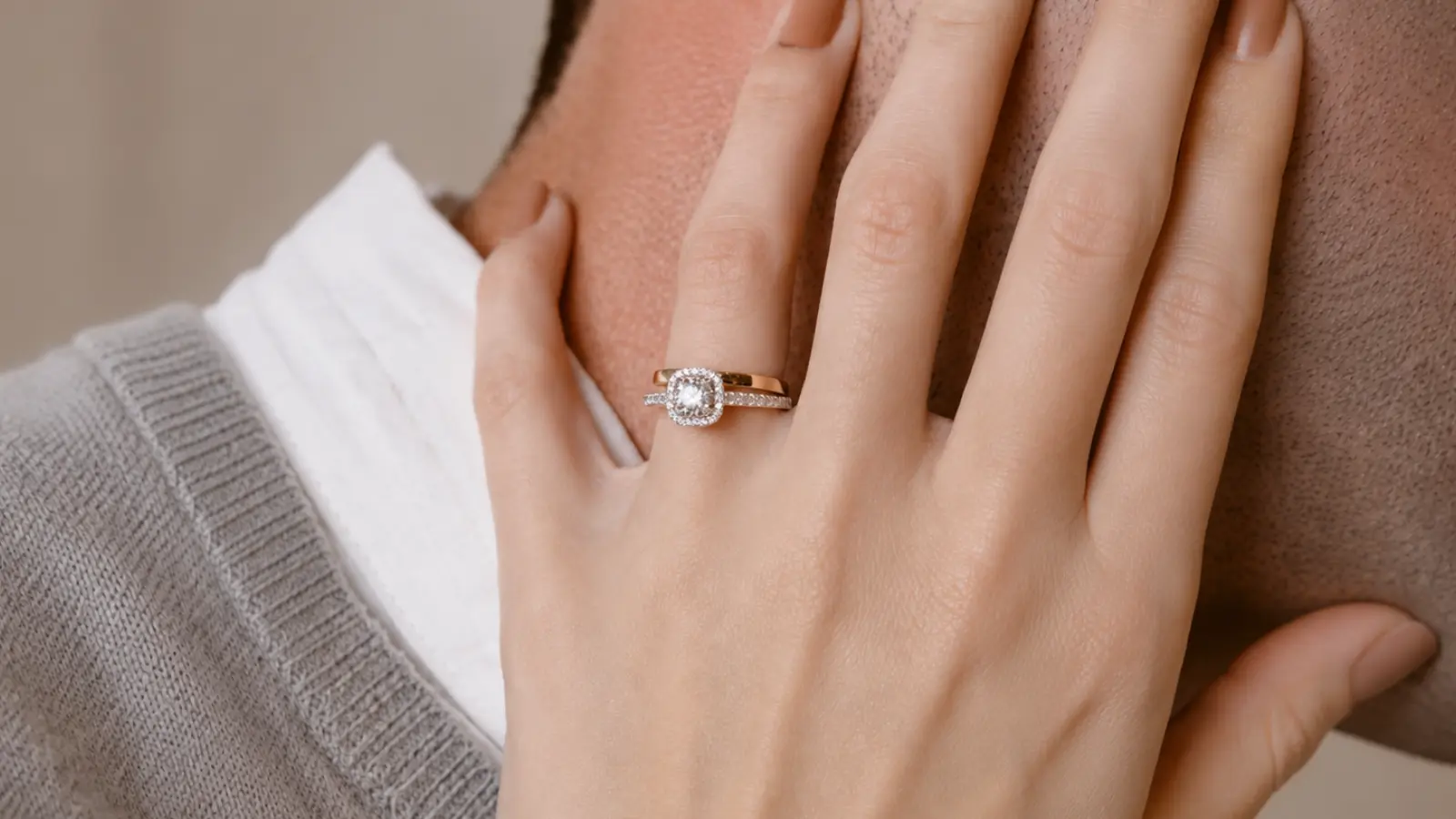
Cost and coverage. The same budget that buys a half-eternity band with modest natural diamonds can buy a full eternity band with larger, higher-quality lab-grown stones. For couples who want meaningful diamond coverage — whether for a band worn alone or stacked with an engagement ring — lab-grown stones allow a result that would otherwise require a substantially higher budget.
Quality consistency. Because lab-grown diamonds are produced in a controlled environment, they tend to have fewer inclusions at a given price point than natural stones of the same grade. A VS1 lab-grown stone and a VS1 natural stone are graded identically, but the lab-grown stone may have been less expensive to produce at that clarity level — which means the cost gap at higher clarity grades is often larger than the overall 50 to 80 percent figure suggests.
Provenance certainty. Natural diamond mining has historically been associated with labor and conflict issues in parts of the supply chain, though responsible sourcing practices have improved. A lab-grown diamond has a documented, controlled origin. For buyers who want certainty about where their stone came from, lab-grown offers that in a way that mined stones cannot always match.
Where Natural Diamonds Hold an Advantage
Resale value. A well-certified natural diamond of good quality retains a portion of its purchase price on the secondary market. Lab-grown diamonds do not. For anyone who considers the stone an asset rather than a permanent personal possession, this difference is real and should not be minimized.
Geological origin. A natural diamond’s age and formation history are facts that cannot be replicated in a laboratory, and for some people this rarity is part of what makes the stone feel appropriate for a wedding ring — an object meant to last a lifetime. For families who carry jewelry traditions across generations, a mined stone may hold a kind of weight that a lab-grown stone simply cannot replicate. That is not an irrational position; it is a personal one.
On Sustainability — a Careful Read
Lab-grown diamonds are frequently marketed as the environmentally responsible choice, and the argument has real merit on one dimension: they do not require excavating the earth. Diamond mining disturbs land, uses significant water, and creates waste rock at a scale that laboratory production does not.
However, growing diamonds in a laboratory — particularly using the HPHT process — requires enormous amounts of energy sustained over weeks. Whether a lab-grown diamond has a lower carbon footprint than a mined one depends on what powers the production facility. A laboratory running on renewable energy produces a very different environmental profile than one powered by fossil fuels. No blanket claim that lab-grown diamonds are environmentally superior to mined ones holds without knowing the specific production source — and that information is not always disclosed or easily verified. If sustainability is a genuine priority, ask the retailer where and how their lab-grown stones are produced.
Are Lab-Grown Diamonds Good for Wedding Rings?
Yes — with the same qualifications that apply to any diamond wedding ring choice. The stone is durable, looks identical to a natural diamond, and holds up to daily wear exactly as a natural diamond does. For couples who plan to wear the ring for life and are not focused on resale value, lab-grown diamonds are a genuinely practical and aesthetically equivalent choice.
The context that makes lab-grown diamonds particularly well-suited to wedding rings: a wedding ring is worn every day, in contact with surfaces and environments that create real wear over time. It is not stored in a safe or purchased as a financial instrument. It is an object of daily life with symbolic meaning — and for that purpose, a diamond that performs identically to a natural stone, costs significantly less, and allows for more stone coverage within a real budget is a strong option.
When a Natural Diamond May Suit a Wedding Ring Better
If you are buying the wedding ring as part of a set where the engagement ring features a large natural center stone, there is a reasonable aesthetic argument for using a natural diamond wedding band to match. Some buyers find that knowing both rings contain natural stones creates a coherence they value.
And if you anticipate that the ring might change hands — either as an upgrade you plan to fund by selling the original stone, or as an heirloom with financial as well as sentimental value — a natural diamond’s stronger resale position is worth weighing honestly. The decision is not always about the ring as it stands today; it is about what the ring needs to be twenty or thirty years from now.
Lab-Grown Diamond Wedding Bands
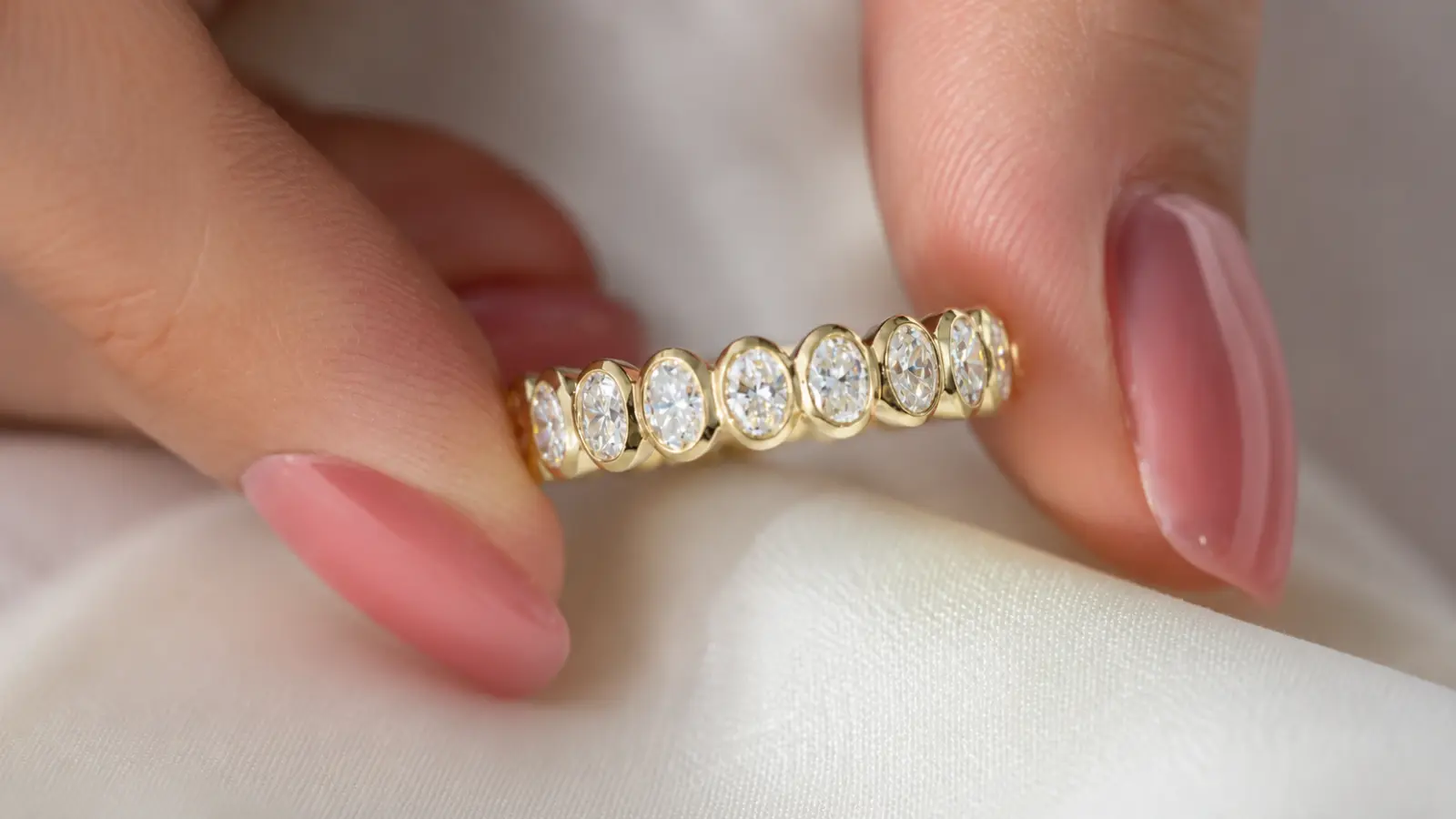
The most popular application for lab-grown diamonds in wedding jewelry is the wedding band — and it is easy to see why. A pavé or eternity band that displays many stones across its entire visible surface requires a significant number of diamonds, and at natural diamond prices, the total cost accumulates quickly. The same band in lab-grown diamonds can represent a dramatically different budget conversation.
Eternity and Half-Eternity Bands
Full eternity bands — diamonds set all the way around the shank — benefit perhaps more than any other style from the lab-grown price advantage, because they require the most stones. A full eternity band in natural diamonds at a meaningful stone size can easily exceed $5,000 to $8,000 in platinum. The same design in lab-grown stones may come in at $1,500 to $2,500 for comparable carat weight and quality.
Half-eternity bands — diamonds across the top half only, with a plain metal shank — offer the same visual read from the front at a lower stone count, and they can be resized, which full eternity bands cannot. For a ring intended to be worn for decades, resizability is worth considering regardless of stone type. For more on this distinction, see our diamond wedding rings.
Pavé Bands
Pavé settings — many small diamonds set close together across the band surface — are the style where the lab-grown advantage is most visible at entry-level budgets. A pavé band with thirty or forty small stones starts at a much lower price point in lab-grown form than in natural, making meaningful sparkle accessible for couples working within a tighter budget. The maintenance requirements are the same regardless of stone origin: tiny prongs in a pavé setting need annual jeweler inspection.
Channel-Set Bands
Channel-set lab-grown diamond bands — stones secured between two raised metal rails — are the most durable option among diamond wedding bands and require less maintenance than pavé or prong-set designs. They are a strong choice for people with active lifestyles or hands-on work. The clean architectural look works well for both women’s and men’s rings, and the protected stone position makes them well-suited to daily wear over decades.
Men’s Lab-Grown Diamond Wedding Bands
Lab-grown diamonds appear in men’s wedding bands in the same configurations as in women’s — channel-set rows, flush-set single accents, and black lab-grown diamonds as a contrast element in darker metals. The visual difference between lab-grown and natural stones is no more detectable in a men’s band than in any other ring, and the cost advantage is the same. For men who want a subtle diamond detail without the cost of a natural stone, lab-grown is a particularly efficient choice. For more on men’s band options across all styles, see our men’s wedding bands.
What to Check Before Choosing One
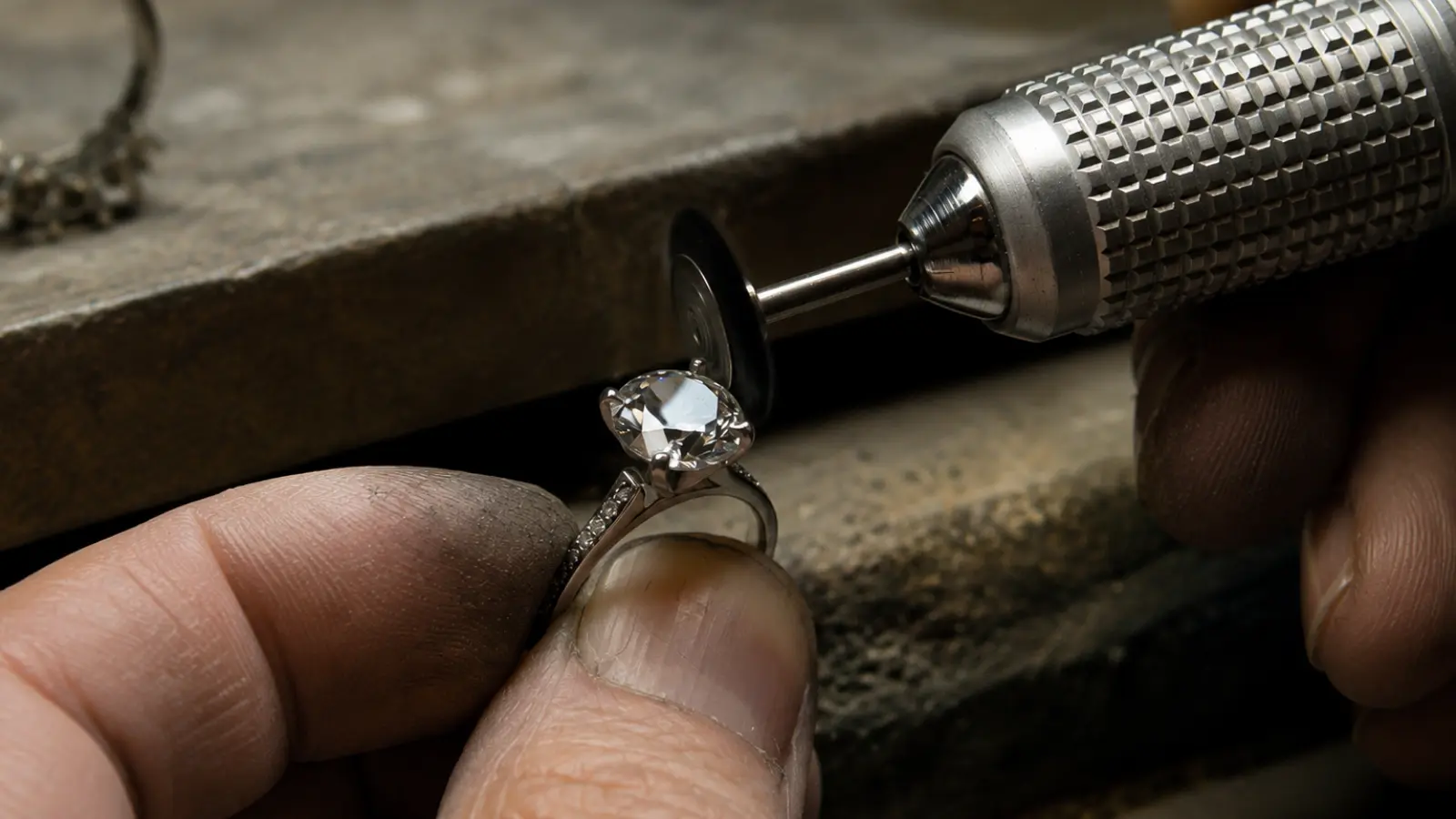
The lab-grown diamond market has expanded very quickly, and with that expansion has come significant variation in quality, disclosure, and service. Knowing what to verify before purchasing protects you from the aspects of the market that are less reliable. These are the five things that matter most.
Independent Certification — Non-Negotiable
Any lab-grown diamond worth purchasing comes with a grading report from an independent, third-party gemological laboratory. IGI (International Gemological Institute) is the most commonly used certification body for lab-grown diamonds and is accepted by virtually all major retailers. GIA (Gemological Institute of America) also certifies lab-grown stones and carries the widest name recognition in gemological grading globally. Both are reputable and their reports are comparable in reliability.
What to avoid: a jeweler’s in-house certificate or a generic “quality card” that documents only carat weight and metal. These carry no independent verification of the stone’s actual quality grade. An independent grading report is the only document that lets you compare stones across retailers accurately — and without it, you cannot verify what you are actually buying.
Laser Inscription
Many certified lab-grown diamonds are laser-inscribed on the stone’s girdle — the thin edge around the widest part — with a microscopic code corresponding to the grading report. This inscription is invisible without magnification but serves as permanent documentation of the stone’s identity and origin. Ask whether the stone you are considering carries this inscription, and ask the jeweler to show you the marking with a loupe before purchasing.
Growth Process: CVD or HPHT
CVD (chemical vapor deposition) and HPHT (high-pressure, high-temperature) both produce real diamonds, but some buyers have a preference — HPHT more closely mimics natural formation conditions; CVD is more commonly used for larger, higher-clarity stones. Your grading report will typically indicate which process was used. If the stone is ungraded, you cannot verify this independently, which is another reason certification matters.
Return and Upgrade Policy
Because lab-grown diamond prices have dropped consistently, some retailers have introduced upgrade programs that allow you to exchange your stone for a larger or higher-quality one in the future, with the original purchase price applied toward the upgrade. This is worth asking about, particularly if you anticipate wanting to increase the ring’s diamond presence later. Not all retailers offer this, and the terms vary significantly between those that do. Return policies also vary widely — understand them before purchasing, especially for online orders, and check your fit with our ring size calculator before choosing a size.
Metal Quality and Long-Term Service
The metal quality of a lab-grown diamond wedding ring matters as much as it does for any other ring. Platinum holds diamond settings more securely over decades of daily wear than gold, does not wear away, and is hypoallergenic. 14k gold is the most practical choice for most budgets. White gold requires rhodium replating every few years to maintain its color. Whatever metal the ring is sold in, verify the purity marking — 14k or 18k for gold, 950 for platinum — and not just the retailer’s description.
Beyond the metal, confirm that the jeweler can service the ring after purchase: inspect prongs, clean the stone, and re-polish the band. A jeweler who can only sell you the ring but not maintain it is not the right long-term relationship for a piece you will wear every day for the rest of your life. For more on how metals compare over long-term daily wear, see our platinum wedding rings and gold wedding rings.
Questions Worth Asking Directly
A few direct questions reveal a great deal about whether a retailer is a reliable source for a lab-grown diamond purchase. Before committing, ask:
- Does this stone have an independent grading report (IGI or GIA), and can I see it before purchasing?
- Is the stone laser-inscribed, and can you show me that inscription?
- Which growth process was used — CVD or HPHT?
- What is your return policy, and do you offer an upgrade program?
- Can you service this ring after purchase — inspect prongs, clean the stone, re-polish the band?
A jeweler who answers these questions directly and without deflection is giving you a meaningfully different level of trust than one who redirects toward the ring’s appearance or the brand story. If you are buying online, most reputable retailers will provide clear answers in their product descriptions or in writing via customer service before purchase.em in writing via customer service before purchase.
Lab-Grown Diamond Wedding Ring Inspiration
Lab-grown diamond wedding rings offer the same sparkle and design possibilities as natural diamonds, with options ranging from delicate pavé bands to full eternity styles. Explore our inspiration board for lab-grown diamond bands, modern settings, classic designs, gold styles, and wedding ring ideas for every budget.
Choosing a Lab-Grown Diamond Wedding Ring With Confidence
A lab-grown diamond wedding ring is not about choosing a “lesser” version of a traditional diamond. It is about understanding what matters most to you — appearance, origin, budget, meaning, and how you want your ring to represent your story.
Whether you choose a lab-grown diamond for its value, a natural diamond for its history, or simply the ring that feels right for your life, the best choice is the one made with clarity. A wedding ring’s meaning comes not only from where the stone began, but from everything it represents after it becomes yours.
Frequently asked questions (FAQ)
Are lab-grown diamond wedding rings actually real diamonds?
Yes. Lab-grown diamond wedding rings use real diamonds with the same chemical structure, hardness, and optical properties as mined diamonds. They are not diamond alternatives like cubic zirconia or moissanite. The difference is not what the diamond is made of — it is where and how the diamond was created.
Will people know if my wedding ring has lab-grown diamonds?
No. People cannot tell whether a wedding ring contains lab-grown or natural diamonds by looking at it. Lab-grown and mined diamonds have the same appearance and sparkle when they have similar cut, color, and clarity grades. Identifying the difference requires specialized testing equipment or checking the diamond’s certification details.
Why are lab-grown diamond rings so much cheaper if they are real?
Lab-grown diamond rings cost less because the diamonds can be produced through controlled technology instead of relying on rare geological formation and mining. The lower price does not mean the diamond is fake or lower quality. It reflects differences in supply, production, rarity, and market value.
What is the biggest downside of a lab-grown diamond wedding ring?
The biggest downside is resale value. Lab-grown diamonds usually do not retain value the same way natural diamonds historically have because production continues to become more efficient and prices have decreased. This matters most for buyers who view diamonds as financial assets. For a wedding ring intended to be worn permanently, resale may be less important.
Should you choose a bigger lab-grown diamond or a smaller natural diamond?
The answer depends on what you value more. A lab-grown diamond allows you to choose a larger stone, higher quality, or more diamond coverage for the same budget. A natural diamond offers geological rarity and traditional value. Neither choice is automatically better — they represent different priorities.
What should you check before buying a lab-grown diamond wedding ring?
Before buying a lab-grown diamond wedding ring, check that the diamond has an independent certification, understand the quality grades, verify the metal and setting durability, and ask about service policies. The biggest mistake is focusing only on getting a larger diamond instead of choosing a well-made ring designed to last.