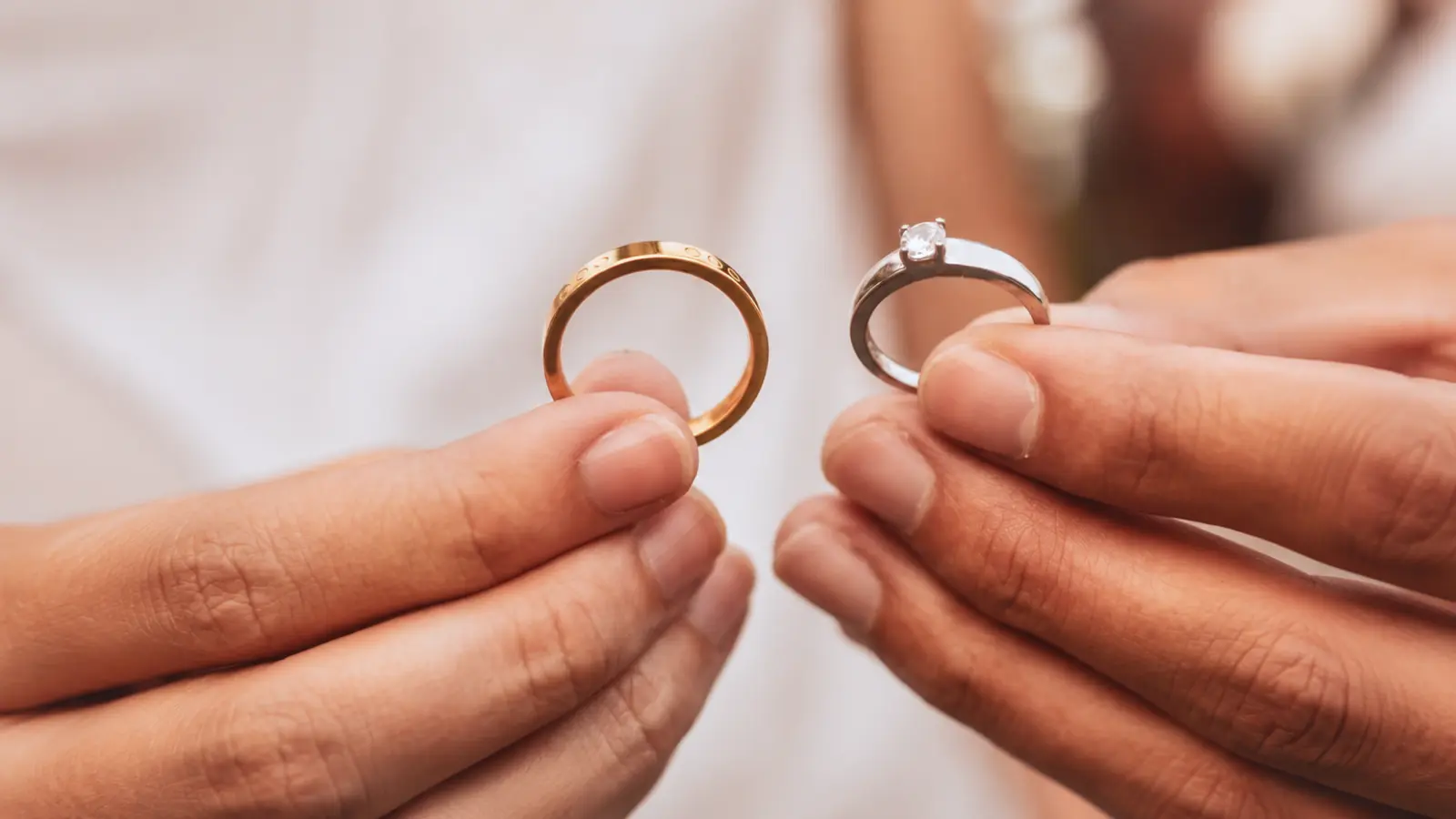
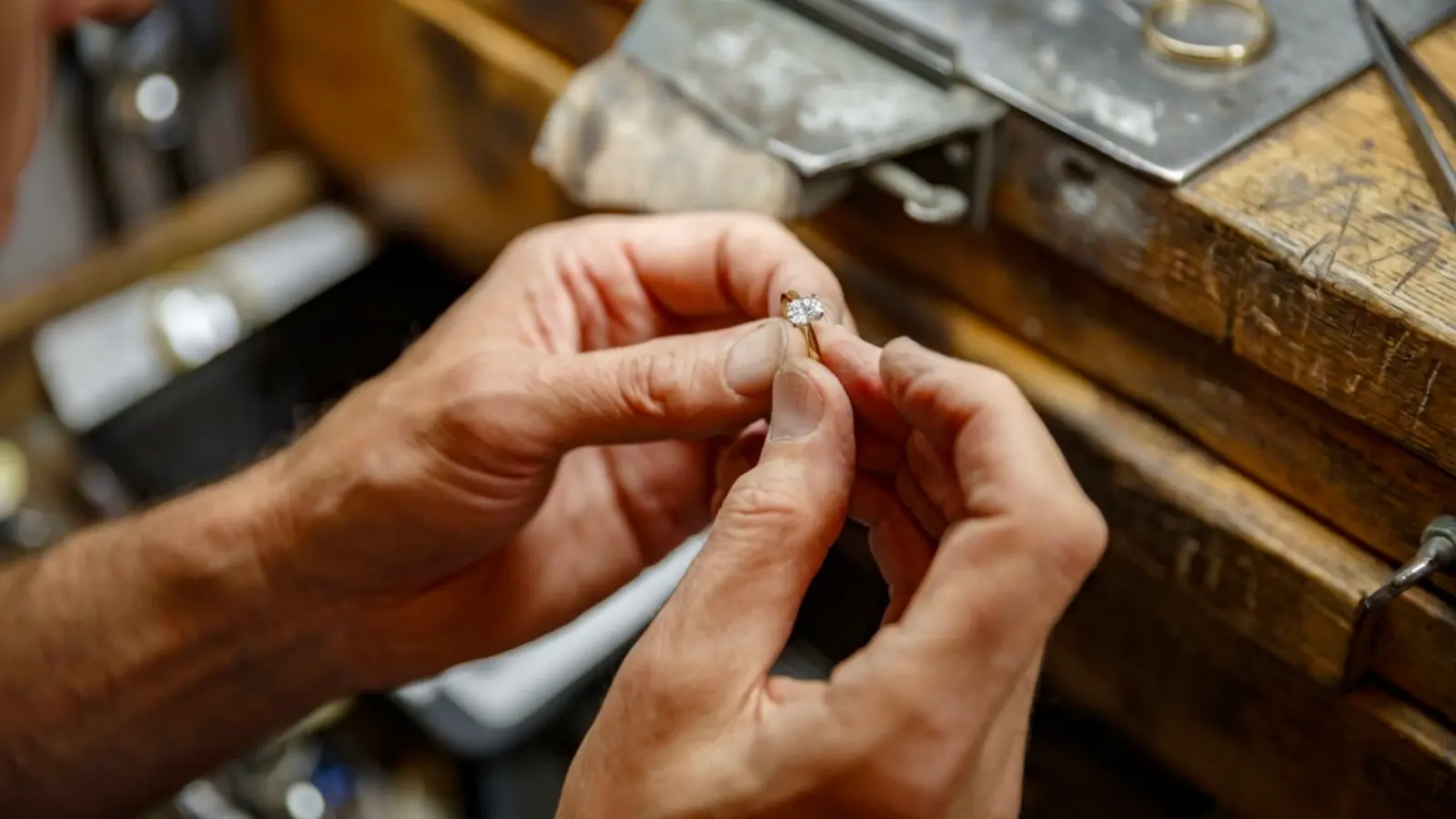
A wedding ring upgrade is the process of changing, redesigning, or replacing an original wedding ring after years of marriage. It may involve resetting the original stones, adding new details, choosing a different design, or creating a new ring that better reflects the person wearing it today.
The decision is rarely only about jewelry. The original wedding ring was part of the ceremony, the vows, and the beginning of the marriage. Upgrading it means balancing what the original ring represents with what feels right for the next chapter.
This guide explains when a wedding ring upgrade makes sense, how to preserve sentimental value, upgrade ideas, resetting original stones, what to do with the original ring, and how that decision fits within the broader choice of wedding rings and wedding bands.
When Do Couples Upgrade Wedding Rings?
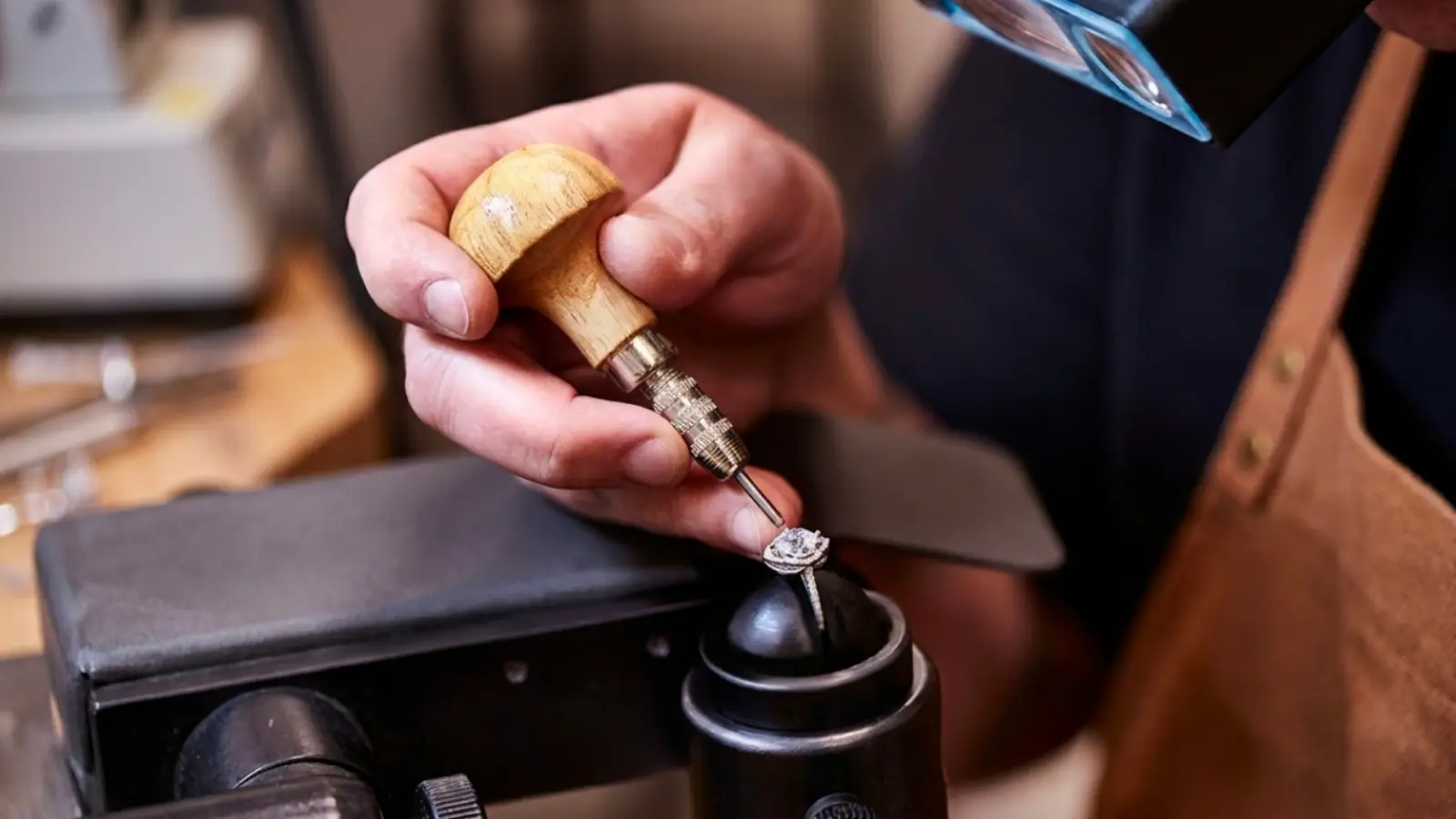
Wedding ring upgrades tend to happen at identifiable moments — occasions where the distance between the original ring and what the wearer would choose today has become large enough to act on. The most common of these are milestone anniversaries, but they are far from the only context in which upgrades happen.
Milestone Anniversaries
The 10th, 25th, and 50th anniversaries are the occasions where wedding ring upgrades are most frequently discussed, because these milestones naturally prompt a reassessment of where the marriage is and what it deserves. A couple celebrating twenty-five years has, in most cases, significantly more financial flexibility than they had at the wedding. They also know each other — and each other’s taste — in ways that were not possible to know when the original ring was chosen. The combination of greater resources and better knowledge often produces a ring that feels more genuinely right, which is why anniversary rings and upgrades are both natural choices at major milestones.
When the Original Ring Was Budget-Constrained
Many couples choose their wedding rings under financial pressures that include the cost of the wedding itself, early career incomes, student debt, and a general sense that the ring should be what is affordable now rather than what is wanted eventually. “We’ll upgrade it later” is a thought many people have while choosing a ring they feel ambivalent about. “Later” sometimes never arrives, and the ring becomes a permanent fixture rather than a deferred improvement. An upgrade gives “later” an actual date.
When the Ring Has Structural Problems
Rings wear out. A band that has undergone repeated wedding ring resizing can become thin where metal was added or removed. A prong setting that has held a stone for decades may have worn to the point where the stone’s security is genuinely at risk. A setting that has been repaired several times may reach a point where further repair is not practical — where the cost of maintenance exceeds the cost of redesign. In these situations, an upgrade is not a luxury; it is the practical response to a ring that has reached the end of its structural life in its current form. The stones can be preserved; the metalwork is replaced.
When Tastes Have Changed Significantly
A person’s aesthetic preferences at the age of a wedding and at a significant anniversary ten or twenty years later are not always the same. The ring chosen in a different era of personal style — a different dominant aesthetic in the culture, a different sense of what jewelry should look like — can become a ring that feels out of place relative to everything else the wearer wears and how they present themselves. This is a legitimate reason to upgrade, and one that is sometimes harder to articulate directly: “the ring no longer feels like me” is a complete and sufficient reason, even though it requires some reflection to say clearly.
After a Significant Life Change
A meaningful financial change — an inheritance, a career milestone, a business outcome — sometimes prompts a ring upgrade not because the ring was inadequate before but because the life change makes it possible and the occasion feels right. These upgrades often happen outside of anniversary milestones, timed instead to the moment the means become available. They can also happen after a loss: some people choose to upgrade a ring after the death of a parent or grandparent, incorporating a stone from that person’s ring into the new design in a way that adds meaning rather than simply changing appearance.
Is It Okay to Upgrade Your Wedding Ring?
Yes — but the question almost always contains a more specific concern than its surface phrasing suggests. When people ask whether it is “okay” to upgrade a wedding ring, they are usually asking one of several different questions: whether the upgrade will be seen as disrespectful to the original ring or to the person who gave it; whether changing the original ring means changing something about the marriage it represents; or whether wanting a different ring says something unflattering about them as a person.
The short answer to all of these is: no, it does not. A ring is an object. The marriage is not the ring. Upgrading the ring does not change the original wedding ring meaning established at the ceremony, nor does it make the first ring or gesture insufficient. What it suggests is that the wearer is now in a different position than they were then: more settled in their taste, more financially capable, or simply at a stage of the marriage where a different ring reflects where they are rather than where they were.
The Concern That Deserves the Most Attention
The concern worth examining carefully is not whether upgrading is okay in principle. It is whether both partners are genuinely aligned on the decision. An upgrade that one partner wants enthusiastically and the other is quietly ambivalent about is not a ring upgrade — it is a conversation that hasn’t happened yet. The original ring may carry more meaning for the partner who chose it than for the partner who is wearing it. That asymmetry matters, and it is worth surfacing directly rather than assuming. See the discussion section below for how to approach this.
What the Culture Says vs What Actually Matters
Some corners of the internet treat wedding ring upgrades as inherently materialistic or as evidence that the wearer is more concerned with appearances than with the meaning of the ring. This framing is not useful. A person who has worn the same ring for twenty-five years and now wants a ring that better reflects who they are is not being materialistic; they are being honest about the relationship between an object and the person it is supposed to represent. The ring is a symbol. Symbols can be updated without the thing they symbolize being diminished.
How to Keep Sentimental Value
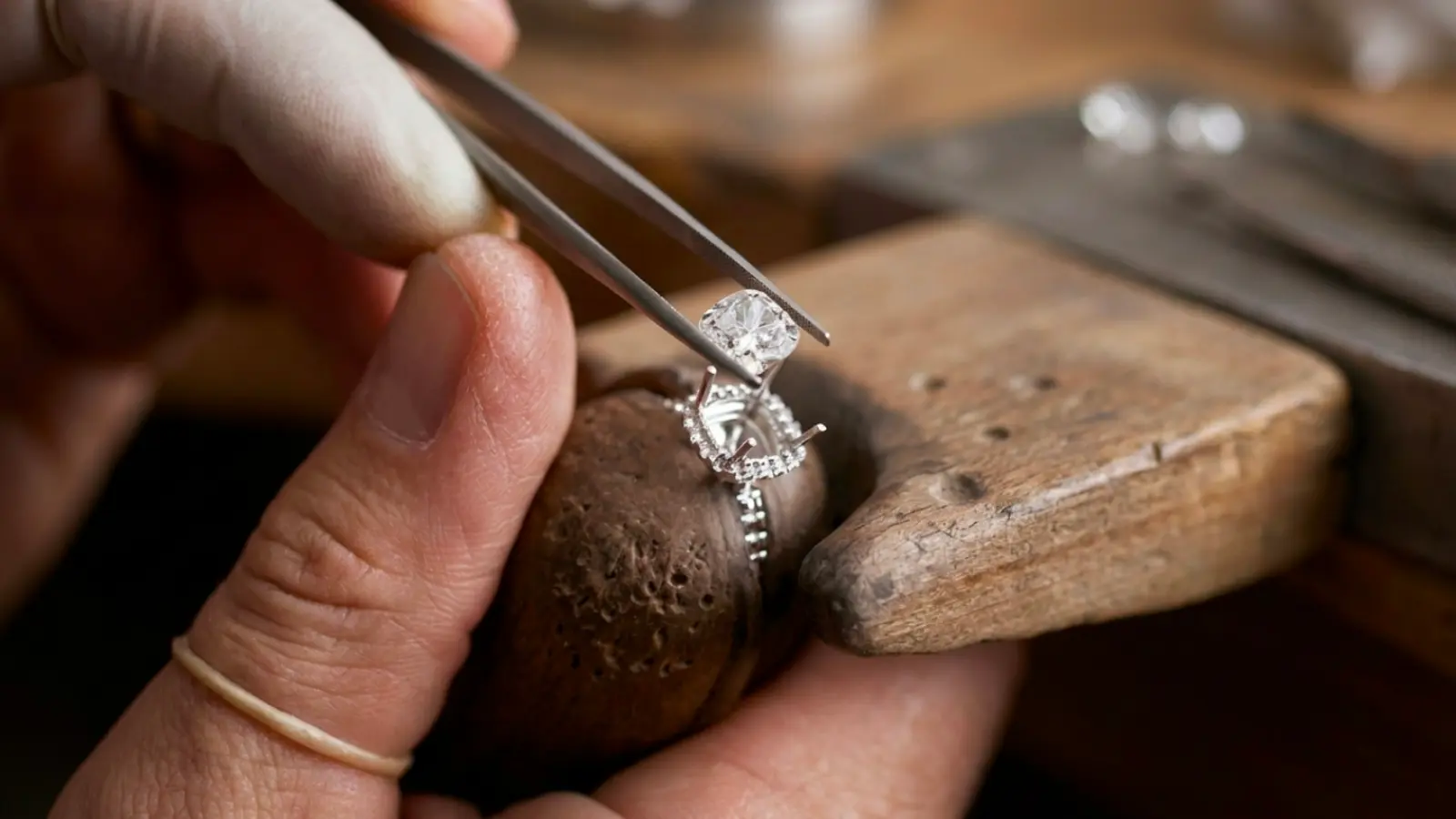
The sentimental value of an original wedding ring is a real consideration — not one to be dismissed or talked around, but also not one that should make a thoughtful upgrade impossible. The question worth asking is not “how do I get rid of the sentimental value problem” but “where does the sentimental value actually live, and how do I preserve it?”
The Stone vs the Setting
For most people, the sentimental weight of a ring lives primarily in the stone — particularly the center diamond or the stones that were present at the ceremony — rather than in the metal work around it. The setting is the part that changes with style, with wear, with preference; the stone is the part that was present when the ring was placed on the finger. Resetting the original stones into a new design preserves the objects that carry the most meaning while changing the elements that have become dated, insufficient, or structurally compromised.
This is not universally true. Some people feel that the specific setting — the way the ring looked at the ceremony — is as meaningful as the stone. For them, resetting the stone into a completely different design would feel like losing the original ring rather than updating it. Understanding which category applies to the wearer is the first step in deciding how to approach the upgrade.
Wearing the Original Ring Alongside the Upgraded One
One of the cleanest resolutions to the sentimental question is keeping the original ring exactly as it is and adding a new ring rather than replacing it. This is the anniversary ring approach: the upgraded ring goes on the finger alongside the original, and nothing is changed or surrendered. The original ring continues to be worn; the new ring adds to the stack. Some people find this the most satisfying outcome — they have both things, and neither is lost.
This approach requires that the original ring be in wearable condition, that the stack of two rings is comfortable on the finger, and that the wearer genuinely wants to wear both rather than simply feeling obligated to retain the original. A ring that sits in a stack out of obligation rather than affection is not being honored by that arrangement. For guidance on how to wear multiple rings together, see the how to wear wedding rings.
Repurposing the Original Ring
If the original ring is being fully replaced rather than stacked, having it repurposed into a different piece of jewelry keeps the object in use without requiring it to occupy the same position it held before. A pendant using the original stone. A right-hand ring redesigned from the original metal and stone. A piece of jewelry intended specifically for a child or grandchild, made from the original ring with its history documented. A bracelet incorporating the original band. Any of these keeps the object in the family and in use, rather than in a drawer.
The most meaningful repurposing tends to be the most intentional: a piece designed to hold a specific place in the family’s story, given to a specific person for a specific reason, accompanied by an account of where the original ring came from. The object and its meaning travel together.
Incorporating a Design Reference
For couples who want the new ring to have a visible connection to the original, a design element from the original ring can be carried forward into the new design: a motif that was in the original setting replicated in a different form in the new one, a metal detail that references the original’s proportions, or an engraving inside the new ring that records the date and the stone’s history. These references do not make the new ring the same as the old one — they make it a successor to it, which is a different and meaningful relationship. For ideas on engraving, see the wedding ring engraving.
Wedding Ring Upgrade Ideas
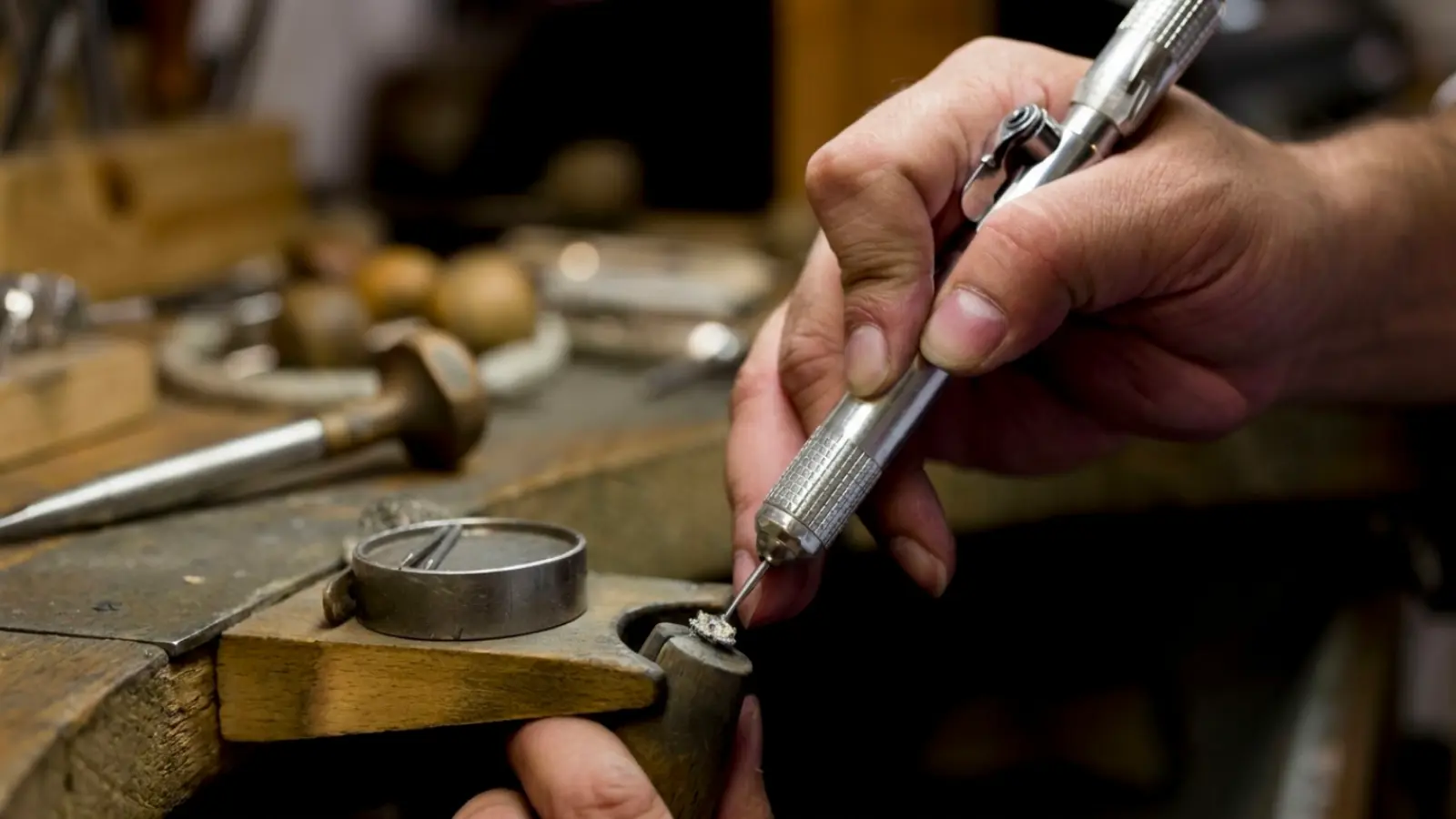
The range of upgrade options is wider than it may initially appear, and the right choice depends heavily on what the wearer actually wants to wear going forward — not on what seems like a proportionate improvement to the original ring. Starting from the desired outcome, rather than from the original ring, tends to produce better decisions.
New Setting for the Original Stone
The most common upgrade path: the original center stone stays, and the metal work around it changes. A solitaire that was set in a simple four-prong setting can be placed in a halo setting that adds surrounding stones and dramatically increases the ring’s presence. A stone in a dated setting can be moved into a more contemporary design. A stone in a yellow gold setting can be reset in white gold or platinum if the wearer’s preference has shifted toward cooler metals. The stone is the constant; everything else is redesigned to what the wearer actually wants.
This approach has a practical prerequisite: the original stone needs to be evaluated before any redesign begins. A jeweler should assess the stone’s cut grade, condition, and whether the dimensions are compatible with the proposed new setting. Some stones are better candidates for resetting than others — stones with unusual proportions or existing damage require more careful consideration about what settings will work.
Adding Stones to an Existing Ring
Some upgrades do not replace the setting but add to it. A plain solitaire can have side stones added — baguettes, pear shapes, or round diamonds flanking the center — to create a three-stone ring from what was originally a single-stone design. A plain band can have a pavé or channel-set row of diamonds added to its surface. These additive approaches preserve the original ring’s structure while meaningfully changing its appearance, and they tend to cost less than a full redesign because they retain more of the existing metalwork.
Upgrading to a Larger or Higher-Quality Center Stone
If the original stone was chosen as the best option within a limited budget, and the wearer has always wanted something different, this is the upgrade that addresses that directly. The original stone may be sold, traded in, or set into a different piece of jewelry; a new stone of preferred size, quality, or cut is set in either the original setting (if it can accommodate the new stone) or a redesigned setting. This is the most significant upgrade in terms of cost and the most significant departure from the original ring — it changes the stone, not just the setting around it.
A Full Redesign or Replacement
A complete replacement — a new ring that does not incorporate any element of the original — is the most significant upgrade and the one that requires the most deliberate thought about what happens to the original. It is also the approach with the fewest constraints, allowing custom wedding rings to be designed around what the wearer genuinely wants rather than around the original stone or setting. This is the right approach when the original ring has too many compromises to build from, or when the desired ring is sufficiently different that incorporating elements of the original would produce an awkward combination rather than a meaningful successor.
Considering Budget Honestly
The cost of an upgrade varies widely depending on which approach is chosen. Adding stones to an existing ring or resetting an existing stone is typically less expensive than replacing the stone or commissioning a fully custom design. A realistic budget conversation — with the jeweler about what different approaches actually cost, and with both partners about what is affordable without creating financial stress — belongs early in the process, not after a design has been selected. The upgrade that creates financial strain disproportionate to the improvement it produces is not a good outcome regardless of how much better the ring looks.
Resetting Stones from the Original Ring
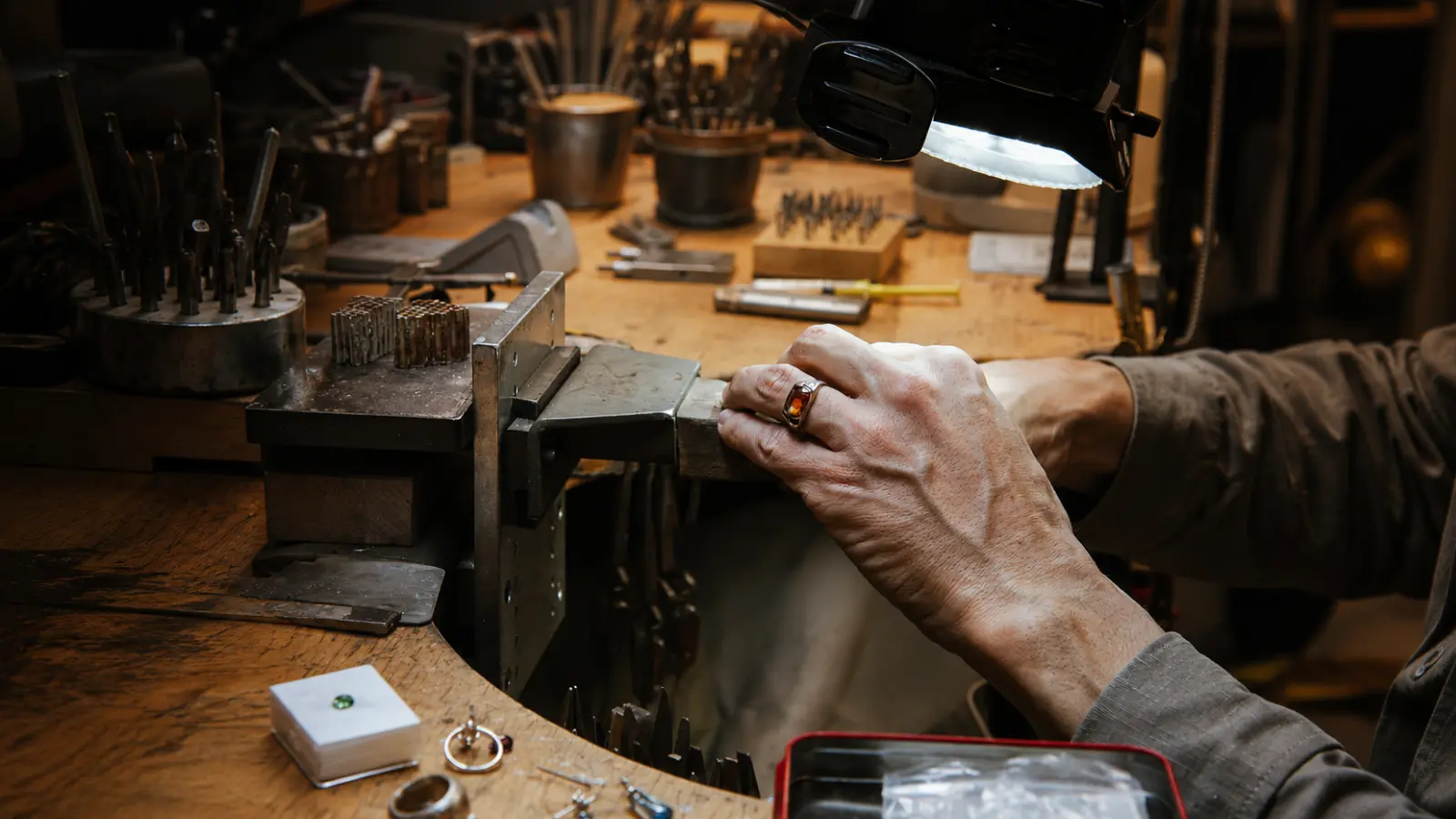
Resetting the original stones is the approach that most directly addresses the sentimental question, and it is also the most technically nuanced part of a ring upgrade. Understanding what it involves — and what can and cannot be preserved through the process — helps set appropriate expectations before the work begins.
How Resetting Works
A jeweler removes the stones from the existing setting by carefully manipulating the prongs, bezel, or channel that holds them in place. The existing setting is then either modified (if the redesign builds on the existing metalwork) or retired (if the upgrade is a full redesign). The stones are evaluated — their condition, their dimensions, any existing damage — and the new setting is designed or selected with those specific stones in mind. The stones are then set into the new piece.
The original metal, if it is not being incorporated into the new design, is typically not returned to the client — it stays with the jeweler. If the original metal has personal significance, this is worth discussing in advance; some custom jewelers will work with the original metal if specifically requested, though this is not standard practice.
What the Jeweler Needs to Assess First
Before any resetting begins, a qualified jeweler should examine the stone under magnification to assess: any existing damage, particularly chips or fractures that could worsen during the setting process; the quality of the existing cut and whether it will perform well in the proposed new setting; the stone’s dimensions, which determine what settings will be compatible; and the stone’s current condition relative to its certificate or appraisal, if one exists. A stone that has been worn for twenty years may have surface wear, scratches, or minor damage that was not present when it was originally set. These factors affect what is possible in the new design.
The Risk of Resetting
Resetting is not a risk-free process. Moving a stone from one setting to another requires physical manipulation that, rarely but genuinely, can result in damage to the stone or the stone being lost. This risk is higher with older prong settings that have worn significantly, with stones that have existing fractures, and with settings that grip the stone in ways that require more force to open. A reputable jeweler will identify these risks in advance and discuss them — not to discourage the upgrade, but so the decision is made with full information. For a valuable stone, verifying that the current insurance covers the stone during the resetting process is also worth confirming. See the wedding ring insurance for details on what jewelry insurance typically covers.
Finding the Right Jeweler
Not every jeweler does resetting work, and the quality of resetting work varies significantly. For a stone with meaningful financial or sentimental value, a jeweler with specific experience in custom work and resetting — as distinct from a general retail jeweler — is worth seeking out. Asking to see examples of previous resetting work, getting multiple quotes, and verifying the jeweler’s credentials (certification from the Gemological Institute of America or equivalent) are all reasonable steps before committing the original stone to the process.
What to Discuss Before Upgrading
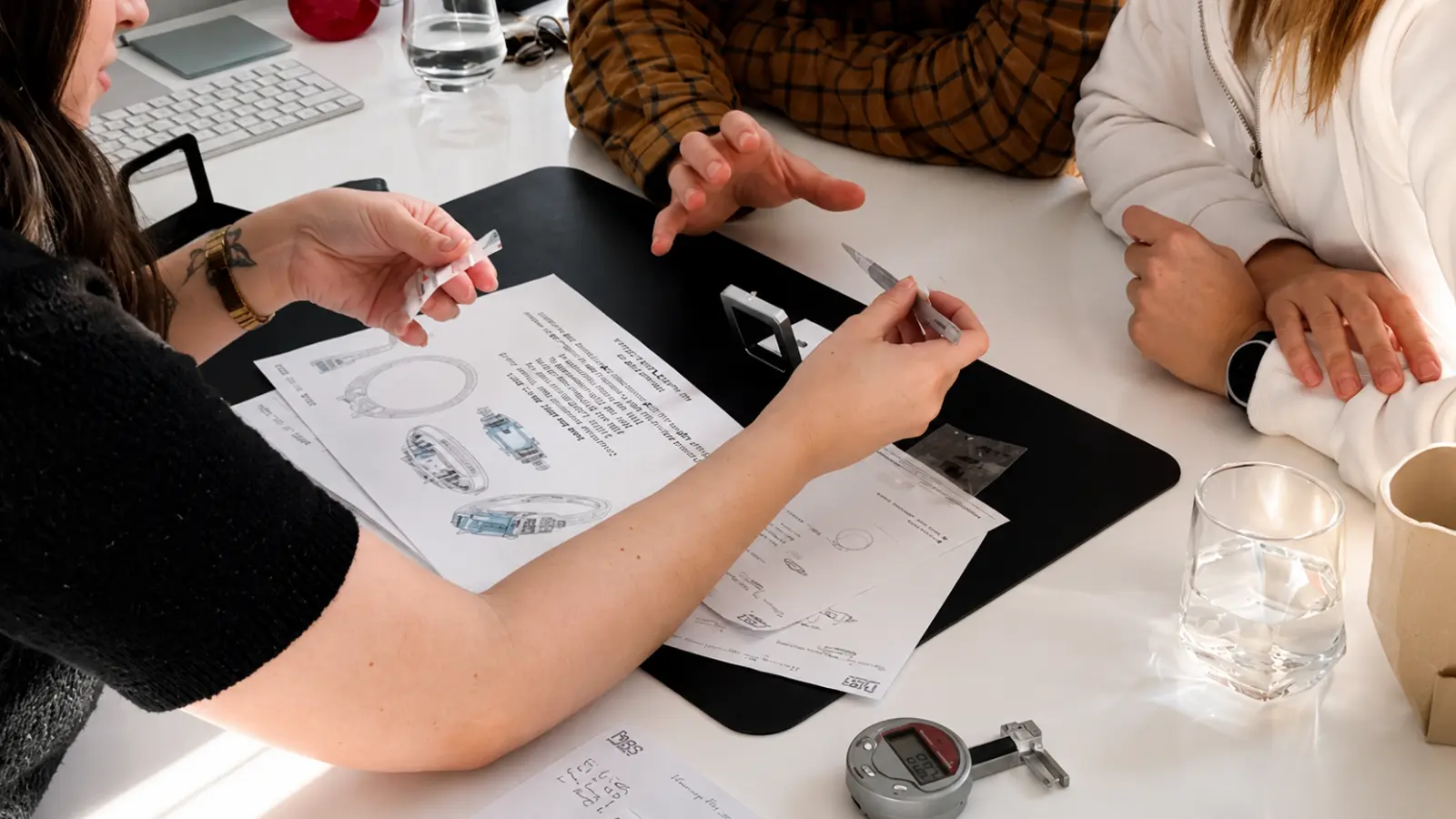
A wedding ring upgrade is almost never an entirely solo decision, even when it is primarily driven by one partner’s preferences. The conversations that need to happen before the upgrade — and the order they happen in — matter as much as the upgrade itself.
Whether Both Partners Genuinely Want It
This is the conversation that is most often avoided because it feels unnecessary — one partner wants the upgrade, assumes the other will be supportive, and proceeds without a real conversation about alignment. Sometimes the assumption is correct. Sometimes the other partner has feelings about the original ring — about what it represents, about having chosen it, about what changing it means — that were never expressed because no one asked.
The conversation worth having is not “would you be okay with this?” but “how do you actually feel about it?” The first question invites accommodation; the second invites honesty. If the answer is genuinely that both partners are excited about the upgrade, the conversation is brief and the process can move forward. If the answer reveals ambivalence or reluctance in one partner, that ambivalence is information — about the ring, about the relationship, or about something else entirely.
What Happens to the Original Ring
The question of what happens to the original ring after an upgrade deserves its own conversation rather than being resolved as an afterthought. Options range from keeping it stored, to wearing it alongside the new ring, to having it repurposed, to selling it. Each option carries different implications and may matter differently to each partner. The partner who chose and gave the original ring may have strong feelings about what happens to it. The partner who is wearing it may have equally strong feelings in a different direction. Naming this decision explicitly — rather than leaving it to be resolved organically — avoids a situation where the original ring ends up in a place neither partner is fully comfortable with.
The Motivation and Whether the Ring Is What It Is Really About
This is the hardest question to ask, and the most important one. Ring upgrades are almost always genuinely about the ring. But occasionally they are about something else: a desire for acknowledgment in a marriage where recognition has been sparse; a response to a difficult period that has not been addressed directly; a way of marking a transition that has not found another expression. When the upgrade is being driven by something other than the ring itself, the ring is not what will resolve it. Asking honestly — privately, or with a partner willing to have a real conversation — whether the desire for the upgrade is about the ring or about something deeper is worth doing before any jeweler is contacted.
Budget in Both Directions
Budget conversations about ring upgrades tend to run in one direction: how much the upgrade will cost. The full conversation includes the other direction too: what the original ring might sell for (often less than people expect — jewelry resale value is a small fraction of retail), what the upgrade will cost across different approaches (resetting an existing stone, adding stones, full redesign), and what both partners consider a reasonable expenditure given the current financial situation. A ring upgrade that one partner considers proportionate and the other considers excessive is a budget conversation that has not been finished.
Timing and Whether It Is the Right Moment
Some upgrade conversations are prompted by the right occasion — a milestone anniversary, a life event, a moment that genuinely calls for a significant gift. Others are prompted by a feeling that the moment is long overdue without there being a specific occasion. Both are legitimate starting points. What is worth examining is whether the timing is right in context: whether the financial situation supports it without creating stress, whether the relationship is in a place where a significant shared decision feels natural, and whether the couple has the bandwidth to make the decision thoughtfully rather than quickly. A ring upgrade decided quickly often regrets something that a slower decision would have caught. The ring will be worn for decades; the process of choosing it well is worth the time.
A New Ring Without Losing the Original Story
A wedding ring upgrade does not erase the moment when the original ring was placed on your finger. That ceremony, that promise, and that beginning remain part of the story regardless of how the ring changes later.
At its best, an upgrade is not a replacement of meaning — it is an acknowledgment that a marriage has continued, changed, and entered another chapter. The original ring carried the beginning. A new ring can carry what the beginning became.
Frequently asked questions (FAQ)
Is it okay to upgrade your wedding ring?
Yes. Upgrading a wedding ring is a personal decision, and many couples choose to do it after years of marriage, milestone anniversaries, or life changes. A thoughtful upgrade does not erase the meaning of the original ring or the moment it represented. The most important part is making sure both partners understand the reason for the change and feel comfortable with what happens to the original ring.
When should you upgrade your wedding ring?
Many couples upgrade a wedding ring during major anniversaries, after financial circumstances change, when the original ring no longer matches their style, or when the ring needs significant repair. There is no required timeline. The right moment is usually when the upgrade feels meaningful and intentional rather than based only on comparison, pressure, or wanting something newer.
How can you upgrade a wedding ring without losing sentimental value?
You can preserve sentimental value by keeping parts of the original ring connected to the new design. Many people reset the original stones, reuse meaningful design details, add engraving, or keep the original ring as a separate piece. The goal is not necessarily to replace the history of the first ring, but to carry that history into the next version.
What are the best wedding ring upgrade ideas?
Popular wedding ring upgrade ideas include resetting the original stone into a new setting, adding diamonds or gemstones, changing the metal, redesigning the band, creating a custom ring, or choosing a new style that better reflects your current taste. The best upgrade is one that improves how the ring feels to wear while still respecting what the original represented.
What happens to your original ring after an upgrade?
After a wedding ring upgrade, the original ring can be kept, worn alongside the new ring, redesigned into another piece of jewelry, passed down as an heirloom, or preserved as a sentimental object. There is no single correct choice. The best option depends on how much emotional value the original ring carries and whether you want it to remain part of your daily life.
When should you not upgrade your wedding ring?
You may want to wait before upgrading a wedding ring if the decision is driven mainly by outside pressure, comparison, or a temporary feeling rather than a genuine desire for change. It is also worth reconsidering if one partner feels uncomfortable with changing the original ring or if the cost creates unnecessary stress. A good upgrade should add meaning, not create regret.