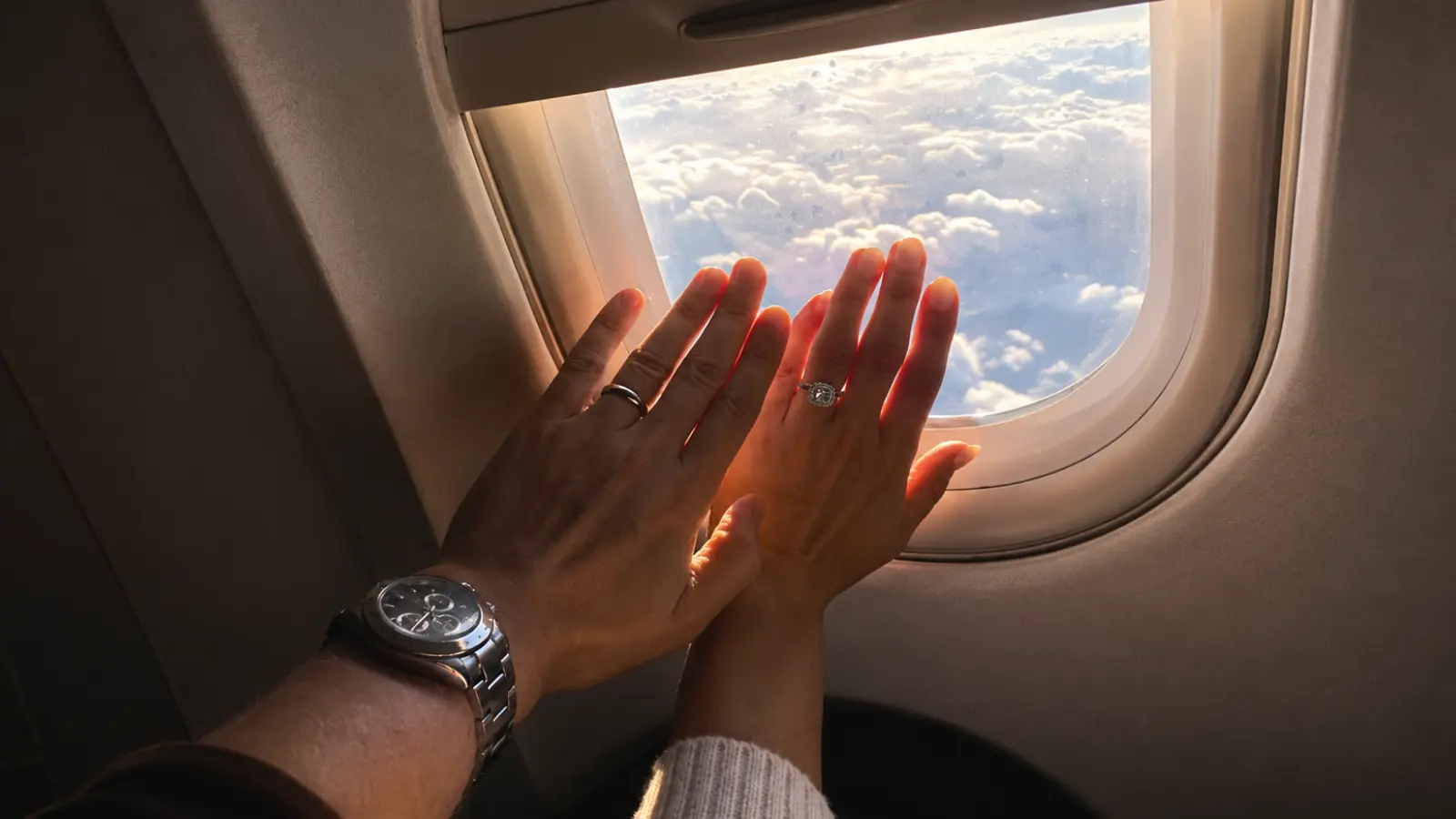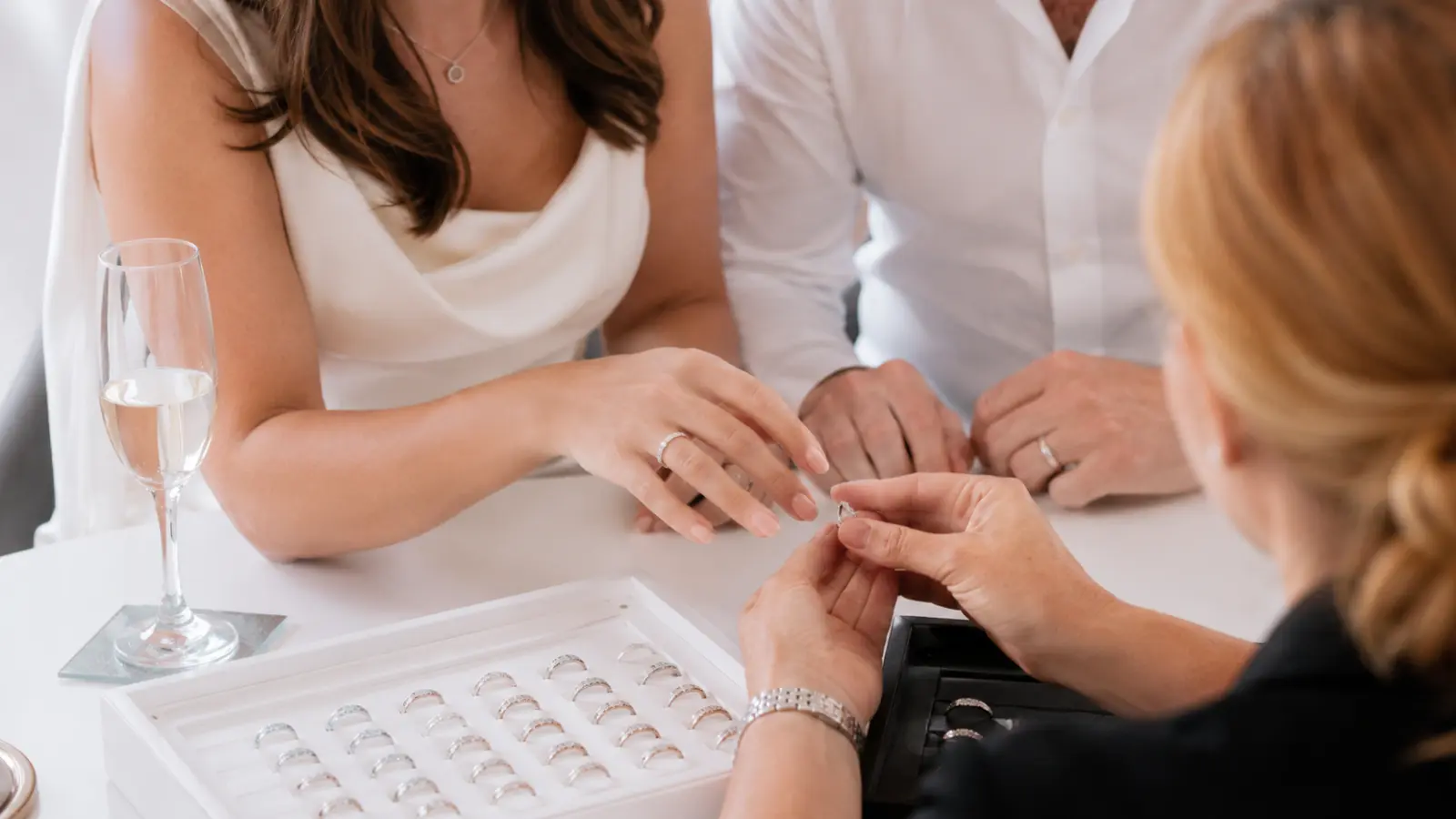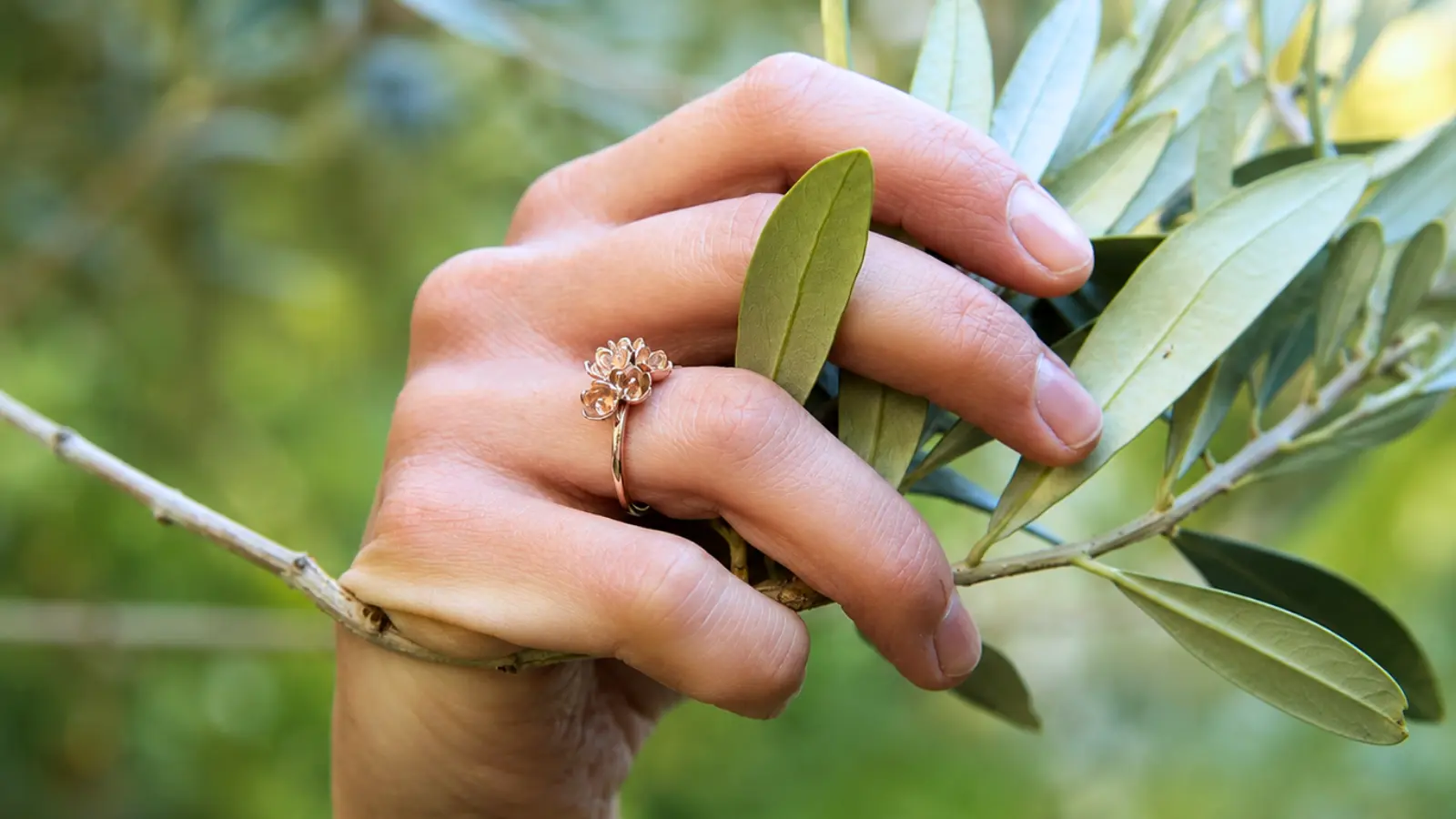
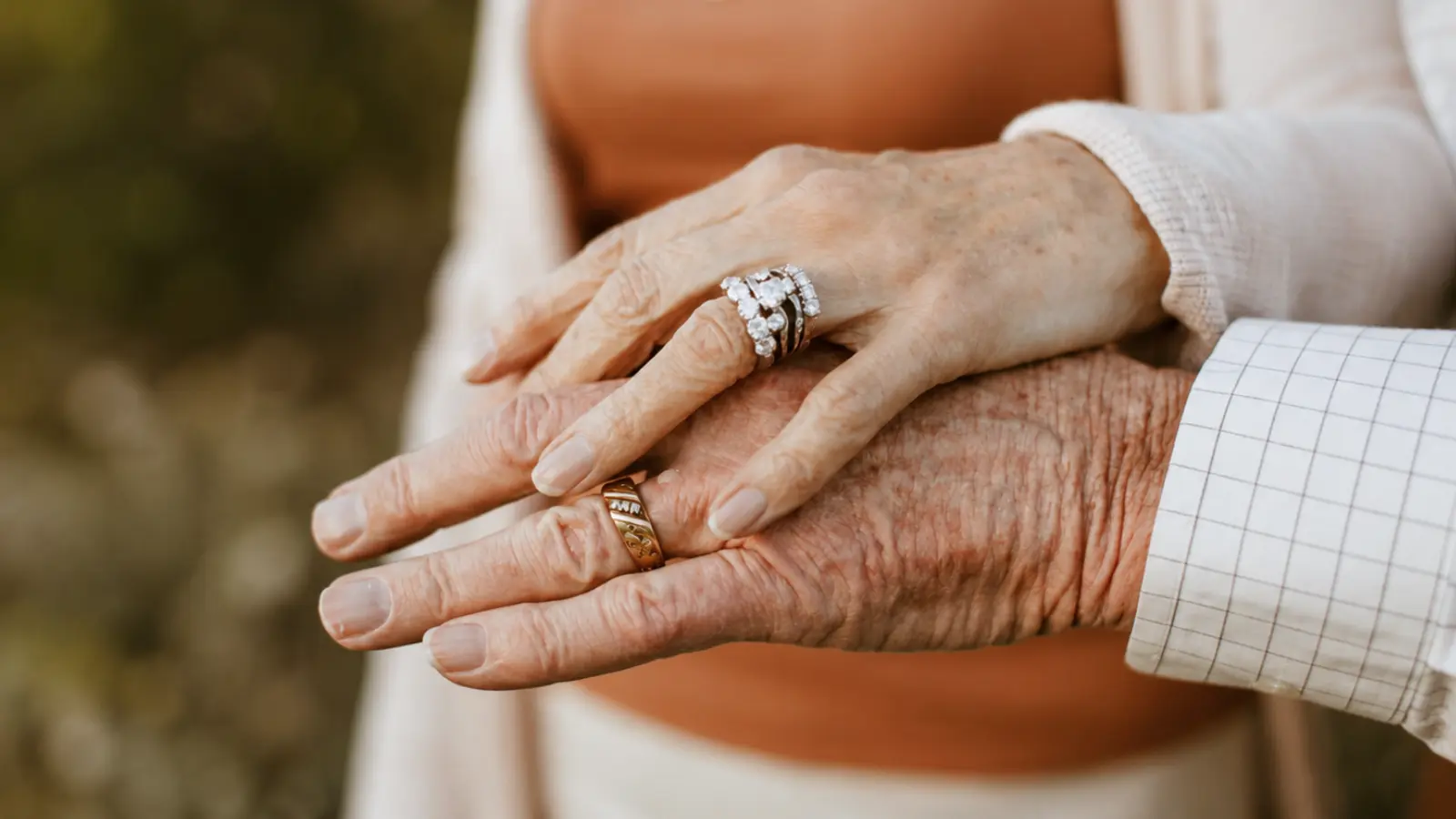
Anniversary rings are rings given to celebrate a marriage milestone after the wedding day, often marking years of commitment, memories, and a life built together. They are commonly diamond bands, eternity rings, gemstone rings, or custom designs worn alongside the original wedding ring.
Unlike a wedding ring, which represents the beginning of a marriage, an anniversary ring represents what happened after that beginning. A wedding ring is chosen before the story unfolds. An anniversary ring is chosen with the knowledge of the years already lived — the first marks a promise; the second marks what the promise became.
This guide explains anniversary rings, including their meaning, how they differ from wedding rings, when to give one, milestone anniversary ideas, how to wear them, and whether an anniversary band or wedding ring upgrade is the right choice.
What Is an Anniversary Ring?
An anniversary ring is a ring given by one spouse to the other to mark a significant year of the marriage. It is not the wedding ring — it is an additional ring, chosen and given after the marriage has been lived for some period of time, and worn alongside the original wedding ring rather than in place of it.
The most common form is the diamond eternity band: a ring set with stones that run continuously around the full circumference of the band, with no break. The symbolism is intentional — the continuous circle of stones represents a love and a marriage with no interruption, sustained across the years the ring is marking. A half-eternity band, with stones on the front half only, achieves a similar visual effect with more comfort for some wearers and the practical advantage of being easier to resize.
Anniversary rings do not have to be diamond eternity bands. They can be any ring chosen to mark a marriage milestone — a simple gold band, a ring with a significant stone, a colored gemstone ring, or custom wedding rings designed around something specific in the marriage. The form follows what the couple values and what the milestone feels like it calls for. The occasion is the constant; the ring it produces depends on the people involved.
What Anniversary Rings Are Not
Anniversary rings are not a replacement for the original wedding ring. This is worth stating plainly because the question comes up often when one or both partners are less certain about the original ring than they once were — when the engagement ring or wedding band chosen years earlier no longer feels like the right expression of who they are. An anniversary ring added to a stack does not remove or diminish the original rings; it adds to them. If the original ring is the one that needs to change, that is a different decision with a different name. The upgrade question is addressed separately below.
Anniversary Ring vs Wedding Ring
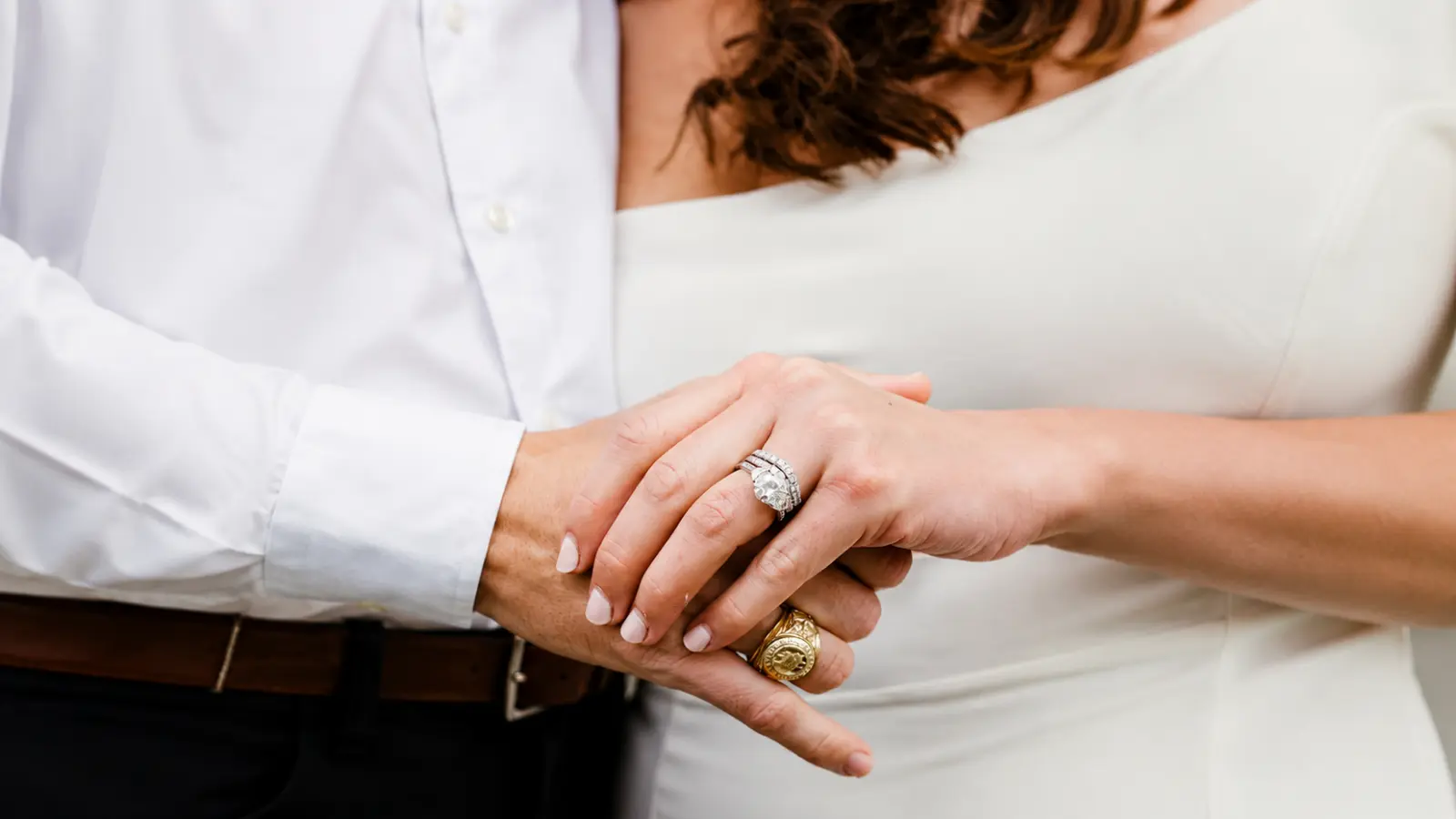
The practical differences between anniversary rings and wedding rings are fewer than people expect; the meaningful differences are almost entirely about timing and what that timing carries with it.
The Occasion They Represent
A wedding ring is exchanged at the ceremony. It is present at the moment the vows are made — it is, for many people, the most tactile and lasting object from that day. Much of its wedding ring meaning remains inseparable from the moment it was placed on the finger. An anniversary ring does not have that origin story. What it has instead is something that the wedding ring, by definition, could not have: it was chosen in the knowledge of what the marriage has actually been. That knowledge — accumulated across years of living together, building something together, choosing each other through circumstances that could not have been anticipated at the wedding — is what an anniversary ring represents.
How They Are Chosen
Wedding rings are chosen before the marriage, often under the pressures of engagement and wedding planning. Many people choose wedding rings with relatively limited experience of what they will actually want to wear for the next several decades. Anniversary rings are chosen without that pressure — after years of knowing what it feels like to wear a ring every day, what the original ring’s style has come to mean, what the person receiving the ring actually values in jewelry. The anniversary ring benefits from information that was not available when the wedding ring was chosen.
Design Relationship
Wedding rings are often chosen to complement an engagement ring — sized and styled to sit flush against it, to stack without gaps, to feel like a pair. An anniversary ring becomes part of an existing set of stackable wedding rings and needs to work within that arrangement. This changes the design constraints: the anniversary ring needs to sit well alongside what is already there, but it does not need to be the same style, the same metal, or the same visual weight as the originals. Many anniversary rings look quite different from the wedding ring they are stacked with, and the combination is more interesting for it.
When Do You Give an Anniversary Band?
There is no required anniversary for giving a ring, and no etiquette rule that mandates one at a particular milestone. The decision is about what the occasion means to the couple and what feels proportionate to the years being marked.
The Milestone Logic
Most anniversary rings are given at significant milestone anniversaries — years that feel like genuine markers in the marriage rather than routine annual occasions. The three most common are the 10th, the 25th, and the 50th, which correspond to the traditional anniversary materials of tin/aluminum, silver, and gold. These milestones are when the length of the marriage becomes itself a subject worth honoring — when a decade or a quarter century or half a century of a shared life calls for something more than a dinner or a trip.
Other milestones produce anniversary rings too: the 5th anniversary (wood, in the traditional list — not a natural ring material, but a milestone that many couples feel deserves more than its traditional material suggests), the 15th (crystal), the 20th (china), and the 30th (pearl). The milestone that calls for a ring is the one that genuinely feels significant to the couple — not the one on a conventional list.
Outside of Milestones
Some anniversary rings are not given at round-number milestones at all. They are given at the anniversary following a particularly meaningful year — after the birth of children, after a difficult period the couple navigated together, after an achievement or a transition that marked a genuine turning point in the marriage. The ring marks not just the passage of time but a specific chapter of the marriage that deserves recognition. An anniversary ring given in this context often carries more specific meaning than one given because the calendar arrived at a significant number.
As a First Ring or Addition
Some couples who married without engagement rings — or with simple, budget-constrained wedding rings — give anniversary rings as a way of adding something they wanted but could not afford at the time of the wedding. This is a distinct and equally valid use of the anniversary ring: not a milestone marker so much as a deferred addition, chosen now with the resources and the knowledge that was not available at the wedding. The ring is technically an anniversary gift, but its meaning is closer to a completion of what the original ring stack was always intended to be.
How to Wear an Anniversary Ring
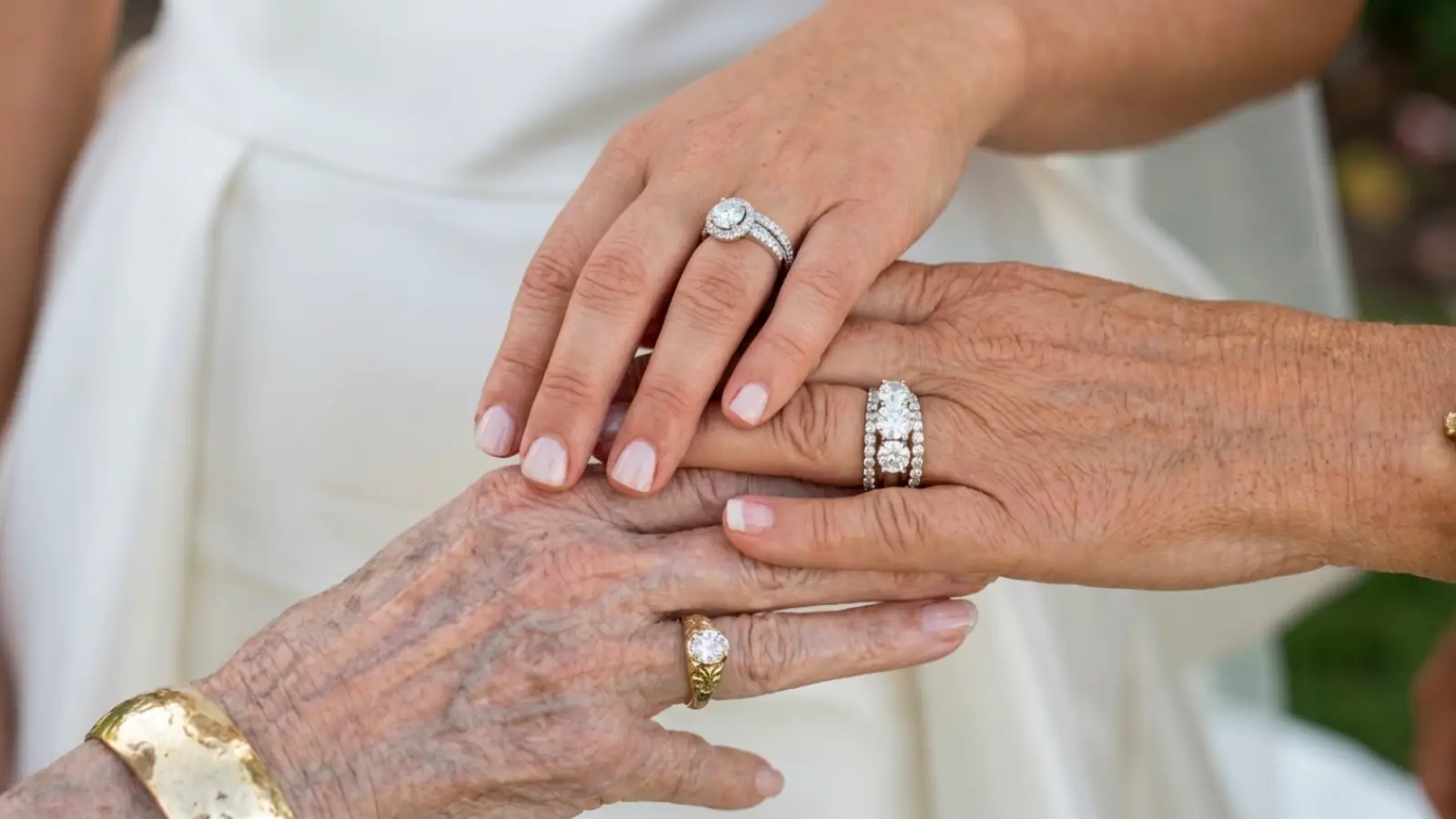
The most common way to wear an anniversary ring is stacked on the ring finger of the left hand, alongside the existing wedding and engagement rings. Beyond that, the specific position within the stack and the decision of which hand to use are both matters of personal preference — there is no etiquette rule that governs either.
Position Within the Left-Hand Stack
Three positions are commonly used for an anniversary ring within the existing stack, and each has a different logic:
- Below the wedding ring, closest to the hand. This position mirrors the traditional placement of the wedding ring itself — the ring closest to the hand is considered most intimate and foundational in the stack. Placing the anniversary ring here gives it a primary position that some people feel reflects its significance. It also creates a practical challenge: the existing wedding ring, which may have been worn continuously for years, must be repositioned to accommodate the addition.
- Above the wedding ring, between the wedding and engagement rings. This is a common position for anniversary rings that are designed to be worn between the original wedding ring and engagement ring — either because the anniversary ring was made specifically to coordinate with both, or because the space between them naturally accommodates a thinner addition. It requires no repositioning of the original rings if the anniversary ring can slip between them.
- Above all existing rings, at the top of the stack. This is the simplest position logistically — the anniversary ring goes on top of whatever is already on the finger. It requires no repositioning of existing rings and places the anniversary ring in the most visible location. Some people prefer this; others find it reverses the emotional logic of the stack (oldest rings lowest, newest on top).
The position that is actually most comfortable — the one that makes all the rings sit flat, stack without twisting, and feel right over a full day of wear — takes precedence over any symbolic preference. If the rings in a proposed arrangement do not sit well together, the arrangement is worth reconsidering regardless of its logic. For detailed guidance on stacking multiple rings, see the how to wear wedding rings.
The Right Hand as an Alternative
Wearing the anniversary ring on the right hand is a clean solution to the stacking problem and is increasingly common, particularly for couples where the left-hand stack is already full or where the anniversary ring is in a sufficiently different style that it works better as a standalone piece. On the right hand, the anniversary ring is its own object — it does not compete with or need to coordinate with the rings on the left. Many people find this a more natural position for a ring that they think of as distinct from the wedding ring rather than as part of a continuous stack.
| Position | Logic | Best When |
|---|---|---|
| Below wedding ring, closest to hand | Most foundational position; mirrors wedding ring logic | Anniversary ring is meant to anchor the stack; wearer is comfortable repositioning existing rings |
| Between wedding and engagement rings | Ring fills the space designed for it; connects the original pair | Anniversary ring is designed to nestle between the originals; stack sits flush |
| Above all rings, top of stack | Most visible; easiest to add; no repositioning needed | Simplest logistical solution; wearer wants the anniversary ring most visible |
| Right hand, ring finger | Separate from the wedding stack; ring as its own object | Left hand stack is full or already coordinated; anniversary ring is a different style; wearer prefers it as a standalone piece |
Anniversary Ring Ideas by Milestone
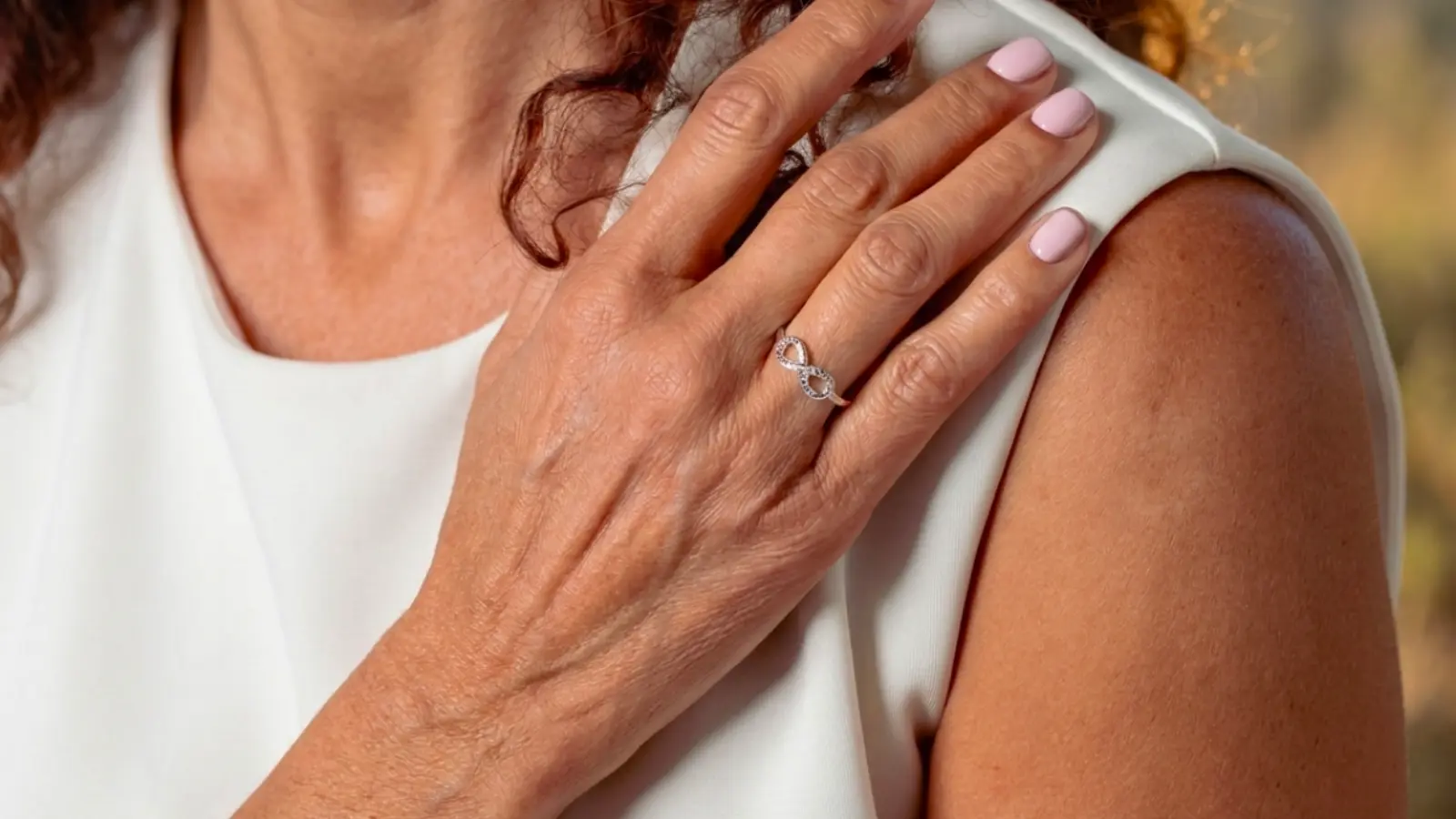
The milestone anniversaries that most commonly prompt anniversary rings each have a character of their own — a specific quality in the marriage they are marking that shapes what kind of ring fits the occasion. These are not prescriptions; they are observations about what tends to feel proportionate at each milestone.
10th Anniversary — The First Decade
Ten years is the first major milestone that feels genuinely different from the years before it. The first decade of a marriage is also the one most likely to have contained significant life changes — moves, careers shifted, children arrived or did not, the contours of the actual marriage revealed as distinct from what was anticipated. An anniversary ring at the 10th tends to be more modest in scale than later milestones, not because ten years is less significant, but because the ring is the first in what will likely be a series — and starting with the most elaborate version leaves nowhere to go.
The traditional material for the 10th anniversary is tin or aluminum, which offers limited ring inspiration — most couples replace the material logic with something more meaningful. A diamond half-eternity band in the metal of the original rings is among the most common choices: it is clearly an anniversary ring (stones running partway around the band), it coordinates well with the existing stack, and it is appropriate in scale for a first milestone ring. A simpler gold band with a single significant stone — the birthstone of a child born during the first decade, or a stone chosen for another specific reason — is a more personal and less expected option. → For anniversary gift context: wedding anniversary gifts by year.
25th Anniversary — A Quarter Century
The 25th anniversary is when the scale of the milestone starts to be genuinely difficult to overstate. A quarter century of a marriage is not something that happens easily or automatically — it is the product of choices, accumulated over time, to keep choosing each other. An anniversary ring at the 25th has earned the right to be substantial.
The traditional material is silver, and silver-set rings are appropriate — but most couples who give anniversary rings at the 25th do so in the metal of the original rings (yellow, white, or rose gold, or platinum) rather than in silver specifically. A full diamond eternity band is one of the most traditional diamond wedding rings for this milestone, with stones running completely around the band. A three-stone ring — representing past, present, and future — is another form with particular resonance at a milestone that sits so clearly at the midpoint of a long marriage.
50th Anniversary — A Half Century
The 50th anniversary ring is the one with the clearest mandate to be significant. Fifty years of a marriage is an extraordinary thing — not common, not simple, not achieved without real commitment sustained through everything a half century of life brings. The ring that marks it should acknowledge that.
The traditional material is gold, which is also the most natural choice for a ring: yellow gold is the most historically resonant, but white gold or rose gold are equally appropriate depending on what the existing rings are made of. In terms of design, a full diamond eternity band in gold is the standard for milestone anniversary rings at this scale. A ring with a significant center stone — a diamond or a colored stone with personal meaning — is an alternative that suits couples who want something more like a statement piece than a band. The 50th anniversary ring has room to be the most elaborate ring in the stack; after fifty years, that is a proportionate response to the occasion.
Other Milestones
| Anniversary | Traditional Material | Ring Approach | Scale |
|---|---|---|---|
| 5th | Wood | Simple band or single-stone ring; first milestone — modest and personal | Understated |
| 10th | Tin / Aluminum | Half-eternity band or birthstone ring; first decade marked meaningfully | Moderate |
| 15th | Crystal | Diamond or gemstone ring; growing in scale with the years | Moderate–substantial |
| 20th | China | Diamond band; two decades deserve more than the traditional material suggests | Substantial |
| 25th | Silver | Full eternity band or three-stone ring; a quarter century | Significant |
| 40th | Ruby | Ruby-set band or significant diamond ring; four decades of sustained commitment | Significant |
| 50th | Gold | Full diamond eternity band in gold or significant center-stone ring; the milestone most deserving of the most substantial ring | Most significant |
Wedding Ring Upgrade vs Anniversary Band
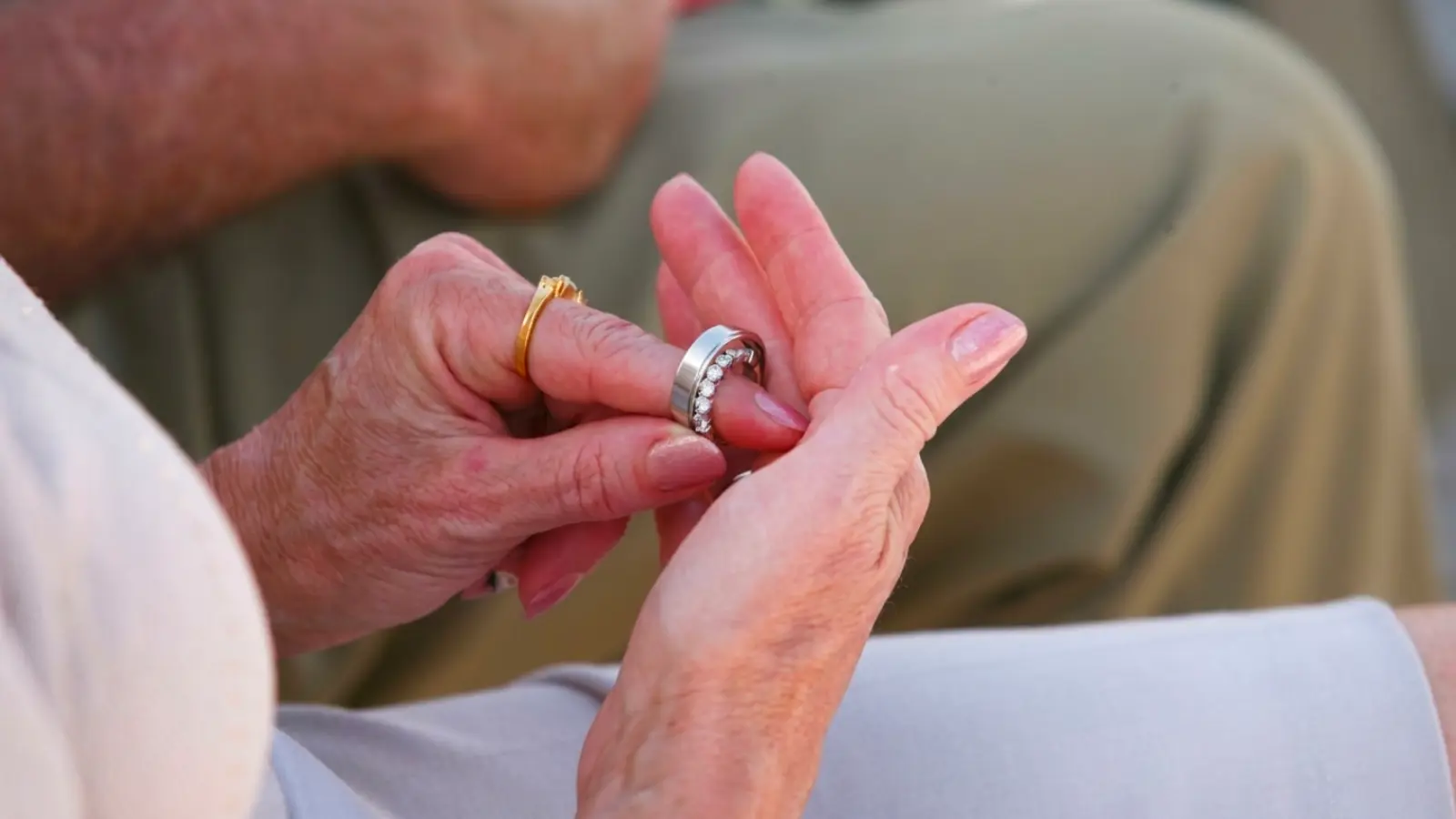
The question of whether to upgrade the original wedding ring or add an anniversary ring is one of the more practically complex decisions in this territory — not because the answer is difficult to arrive at, but because the two options are often conflated when they are actually quite different in what they do to the original ring.
What an Upgrade Is
A wedding ring upgrade modifies or replaces the original ring. A wedding ring upgrade can involve resetting the original stones, adding detail to an existing band, or replacing the original ring with a higher-quality or different design. The original ring, in any of these scenarios, is changed — either physically altered or superseded. It no longer exists in its original form, or it is no longer being worn.
This is a genuine consideration for many couples at milestone anniversaries, particularly those whose original rings were chosen under budget constraints that no longer apply. A ring bought at twenty-four on a tight budget may not be the ring that suits the same person at forty-nine — in quality, in style, in what it communicates about who they are now. The upgrade addresses this directly: it makes the ring the person actually wants to wear, rather than the one they were wearing out of habit or sentiment.
What an Anniversary Ring Does Instead
An anniversary ring leaves the original rings exactly as they are. The original wedding ring — the one from the ceremony, the one that was on the finger when the vows were made — remains unchanged and continues to be worn. The anniversary ring is added to the stack alongside it. The person ends up with both: the ring from the beginning, and a new ring that marks where the marriage is now.
For many couples, this is the right answer precisely because of what it preserves. The original ring is not a museum piece; its value is partly in being worn. But it also carries a specific meaning — the meaning of the ceremony itself — that an upgraded version does not inherit. An anniversary ring honors both things: the original ring’s continued presence, and the addition of something new that marks the years since.
When an Upgrade Is the Right Choice
There are situations where an upgrade genuinely serves the couple better than an anniversary ring. If the original ring has structural problems — a setting that has worn to the point of being unsafe, a stone that needs re-securing, a band that has been sized so many times it is wearing thin — addressing those problems while also updating the ring’s design is a practical and reasonable combination. If the person wearing the ring genuinely does not like the original and has not for years, an upgrade removes a daily friction that an anniversary ring alongside it would not resolve. And if the original ring was a placeholder — a simple band chosen because the right ring was not yet affordable — replacing it with the ring that was always intended is not diminishment; it is completion.
When They Can Be Combined
Some couples combine the two approaches: the original wedding ring is upgraded (a new setting, a larger stone, a more substantial band) and an anniversary ring is added to the stack alongside it. This preserves the continuity of the original ring’s presence while also marking the milestone with a new addition. It is the most elaborate option and not necessary for most couples — but for those for whom both things matter, the combination is available. For advice on wearing multiple rings together after a ring upgrade or addition, see the how to wear wedding rings and the matching wedding bands.
Anniversary Rings Ideas
Anniversary rings celebrate the years and memories built after the wedding day. Explore eternity bands, diamond rings, gemstone styles, milestone anniversary ideas, and beautiful ways to wear them with your wedding ring.
A Ring for the Story That Came After
The wedding ring belongs to the beginning the promise, the ceremony, and the moment everything started. An anniversary ring belongs to the years that followed: the memories built, the changes experienced, and the commitment that continued long after the wedding day.
What makes an anniversary ring meaningful is not only its stones, metal, or design. It is the fact that it is chosen with a knowledge that did not exist at the wedding — the story of the marriage itself.
Frequently asked questions (FAQ)
What is an anniversary ring?
An anniversary ring is a ring given to celebrate a marriage milestone after the wedding. Unlike a wedding ring, which represents the beginning of a marriage, an anniversary ring represents the years, memories, and experiences built together afterward. Anniversary rings are often diamond bands, eternity bands, gemstone rings, or meaningful designs chosen to honor a specific chapter of the relationship.
What is the difference between an anniversary ring and a wedding ring?
The main difference between an anniversary ring and a wedding ring is when and why they are given. A wedding ring is exchanged during the wedding ceremony as a symbol of commitment at the start of marriage. An anniversary ring is given later to celebrate the marriage that has already been built. It is usually added alongside the original rings rather than replacing them.
When should you give an anniversary ring?
There is no required year to give an anniversary ring. Many couples choose major milestones such as the 10th, 25th, or 50th anniversary, but an anniversary ring can be given whenever a couple wants to recognize an important moment in their marriage. The most meaningful timing is based on what the milestone represents, not only the number of years.
How do you wear an anniversary ring?
An anniversary ring can be worn stacked with the wedding ring and engagement ring on the left hand or worn separately on the right hand. Some people place it above their existing rings, while others wear it closer to the hand or as a standalone piece. The best position is the one that feels comfortable and creates a balanced look with the rings already being worn.
Should you upgrade your wedding ring or get an anniversary ring?
Choosing between a wedding ring upgrade and an anniversary ring depends on what you want to preserve. An upgrade changes or replaces the original ring, often because the style, size, or design no longer fits. An anniversary ring adds something new while keeping the original wedding ring unchanged. Both choices can be meaningful, but they represent different approaches to honoring the marriage.
Should an anniversary ring match your wedding ring?
An anniversary ring does not have to match your wedding ring exactly. It should feel intentional with your existing rings, especially if you plan to stack them together, but many anniversary rings have different designs, stones, or styles. Because they are chosen later in the marriage, they often reflect your current taste rather than the style you chose on your wedding day.