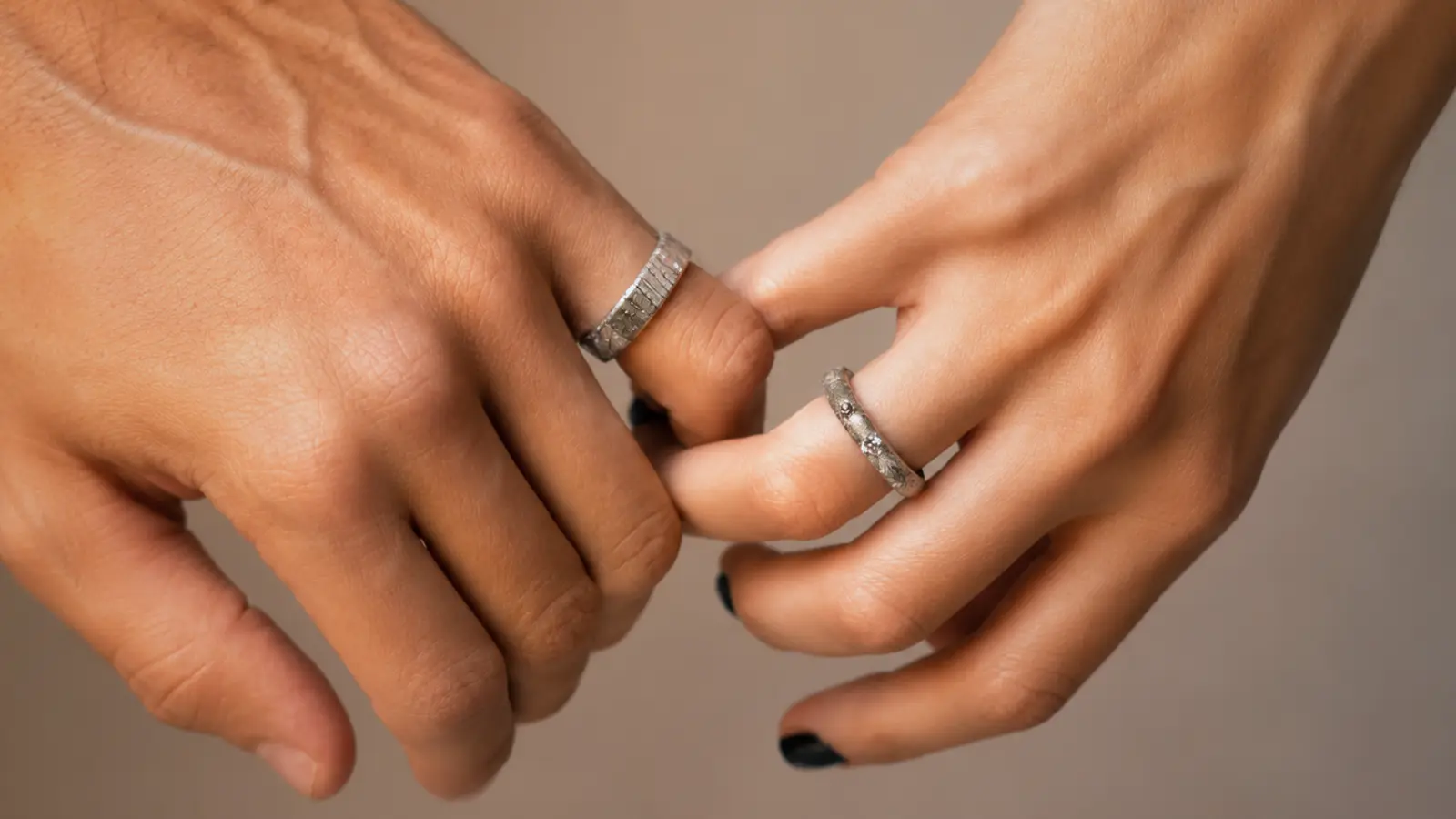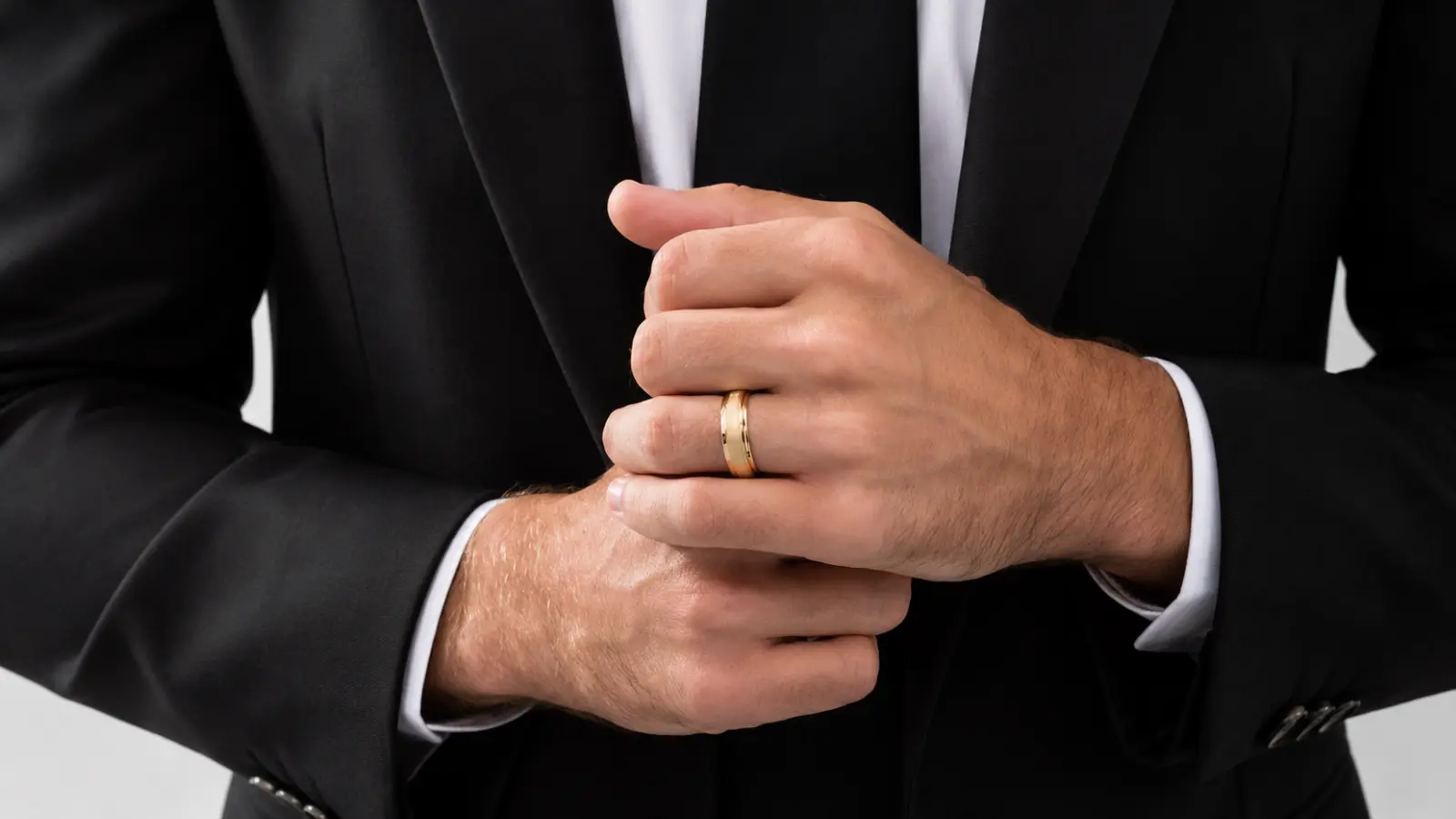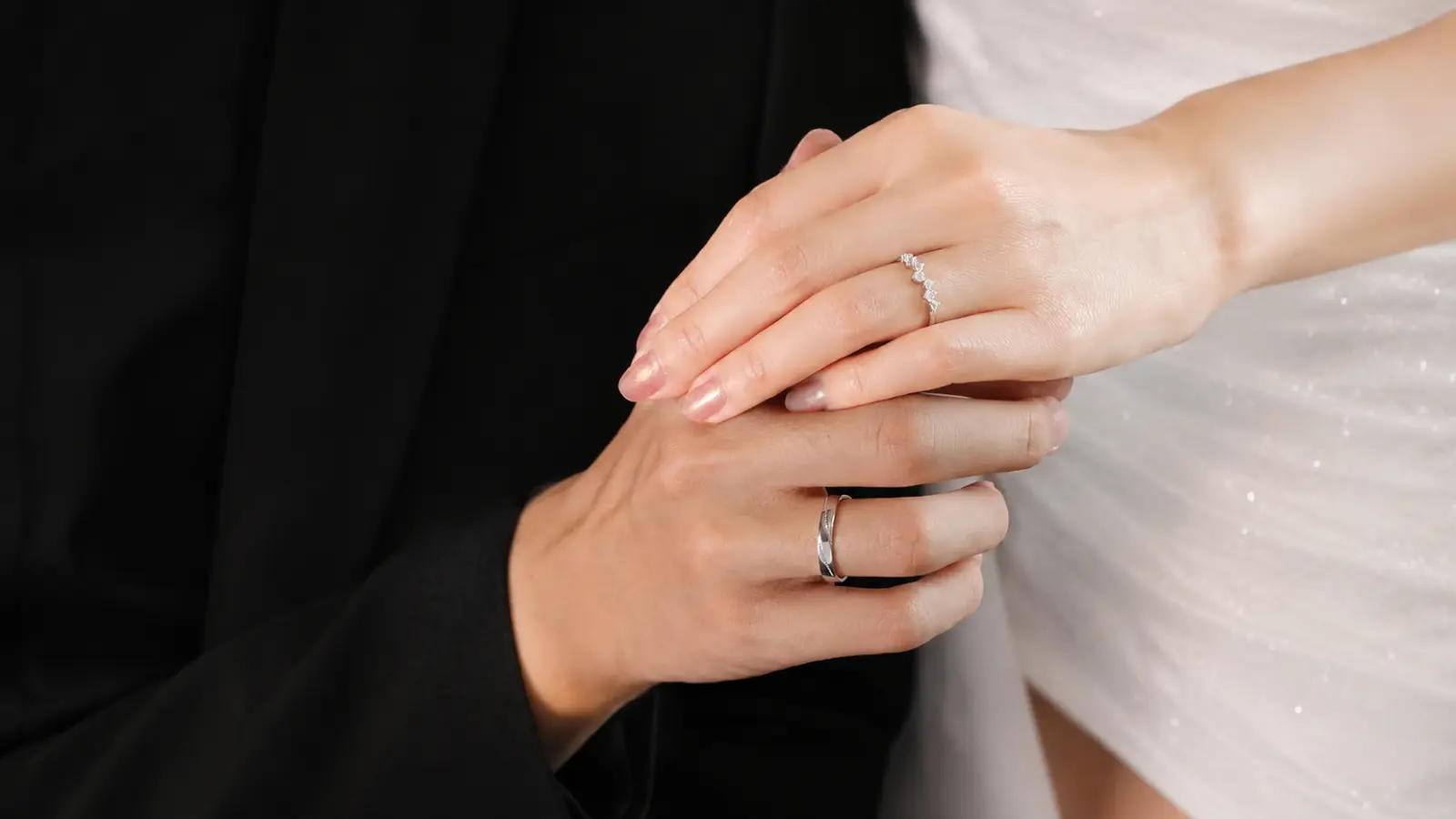

A travel wedding ring is a substitute ring worn during trips instead of your original wedding ring to reduce the risk of loss, damage, or theft. It can be a silicone band, an inexpensive metal ring, or another alternative that lets you keep a symbol on your finger while protecting the original piece.
Choosing whether to wear your real wedding ring while traveling depends on your destination, activities, insurance, and how you personally feel about leaving the original ring behind. For some trips, wearing the real ring makes sense. For others, a substitute offers peace of mind without changing what the ring represents.
This guide explains travel wedding rings, including when to wear your original ring, when to leave it safely at home, silicone vs. metal substitutes, honeymoon considerations, insurance, and how these choices fit within wedding rings and wedding bands more broadly.
What Is a Travel Wedding Ring?
A travel wedding ring is a substitute ring worn in place of a real wedding ring during travel. The category overlaps with other alternative wedding rings, including silicone bands, inexpensive metal bands, cubic zirconia, and moissanite substitutes, a cubic zirconia ring designed to approximate the look of a diamond engagement ring, or a moissanite ring that is close enough in appearance to a real diamond ring that most people would not know the difference at conversational distance.
What all of these share is the same logic: the wearer wants to wear something on the ring finger (for the personal significance of that, for the social signal it provides, or simply because going without feels wrong) without risking the actual ring whose loss would be financially or emotionally significant.
Travel rings are not a new concept, but they have become significantly more visible in the last decade as the silicone ring market has grown and as the conversation about travel safety has expanded. The product category has also improved: early silicone rings were obviously rubber bands; current options include textured, stackable designs in a range of finishes that read as intentional jewelry rather than placeholder objects.
Who Uses Them
Travel rings are most commonly used by couples who travel to destinations with a known higher risk of pickpocketing or targeted tourist theft; by people who engage in water sports, outdoor activities, or physically active travel where the ring could slip off or be damaged; and by anyone who finds that wearing the real ring while traveling creates a persistent low-level anxiety that detracts from the trip itself. That last category is more common than it is usually discussed: the decision to use a travel ring is sometimes not about objective risk at all, but about removing one thing to worry about.
Why Couples Use Substitute Rings for Travel
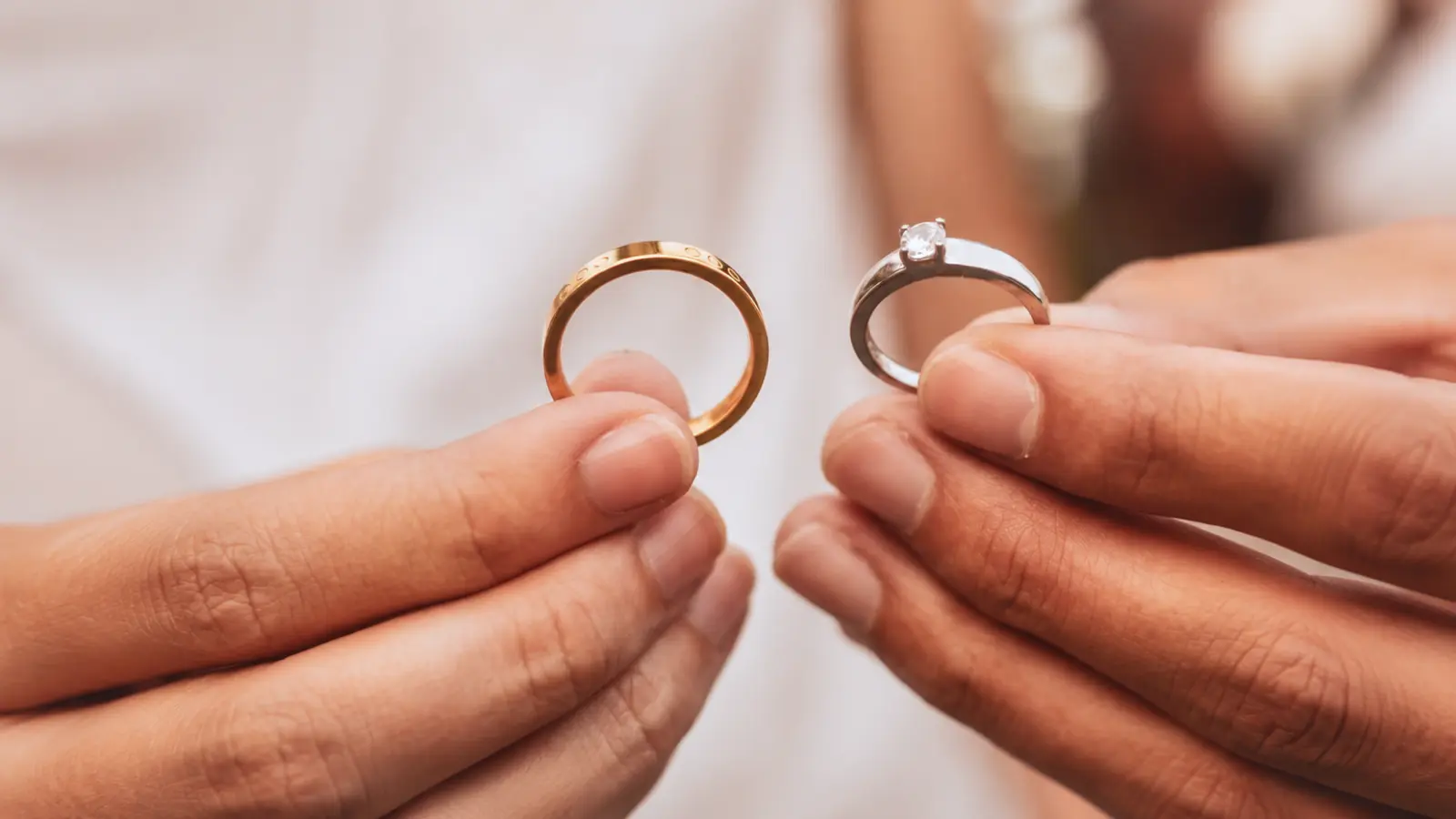
The reasons couples choose travel rings are more varied than the “theft prevention” framing usually suggests. Understanding the actual reason behind the choice helps in selecting the right substitute — because a silicone ring is an excellent answer to one problem and a poor answer to another.
Theft Risk
Pickpocketing and opportunistic theft targeting tourists are real in certain destinations — busy markets, crowded transit systems, areas with high tourist density and lower policing. A ring is a visible, removable object with concentrated value, and a large diamond engagement ring in a high-risk area draws more attention than a plain gold band. The calculation here is about visibility as much as risk: a travel ring reduces the signal that there is something worth taking. A simple substitute ring in a lower-risk area where the real ring would not attract unusual attention is more precaution than the situation requires.
Activity Risk
This is the risk category most often underweighted relative to theft. A ring on a finger that is in water (particularly open water, cold water, or water where the hand is working against resistance) faces a risk that has nothing to do with other people. Fingers contract in cold water. A ring sized correctly for a warm hand can slip off a cold hand underwater and become a lost wedding ring in an instant. Open-water swimming, snorkeling, surfing, kayaking, rock climbing with frequent glove removal, skiing — any activity where the ring could come off the finger and be unrecoverable belongs in a separate risk category from “walking through a busy market.”
A silicone ring solves the activity-risk problem in a way that a substitute metal ring does not: it is flexible enough to stay on through most activities, and if it comes off, losing a twenty-dollar silicone ring is a genuinely inconsequential outcome. This is the use case that silicone rings are actually designed for, and it is where they work best.
Peace of Mind
Some people wear their real ring every day at home without thinking about it, and find that traveling with it creates a low-level preoccupation that is disproportionate to the actual risk. The ring becomes something to manage — to take off before swimming, to check when leaving a hotel room, to think about in contexts where they would not normally think about it. For these people, the travel ring is not about risk management; it is about removing a mental load from the trip. The substitute ring does not need to look exactly like the real one or have any particular quality. It just needs to be something the wearer can stop thinking about.
The Honeymoon Specifically
The honeymoon is the trip where this question comes up most often, and where the sentimental weight of the answer is highest. Most couples wear their real rings on their honeymoon, and most report no problems. The specific activities of the honeymoon matter more than the occasion: a resort honeymoon with beach access is a different risk profile from a backpacking honeymoon through multiple countries, which is different from a honeymoon that involves significant water sports. Deciding based on the actual trip rather than the word “honeymoon” produces better outcomes than deciding based on the occasion’s symbolic significance.
Silicone vs Faux Diamond Travel Rings
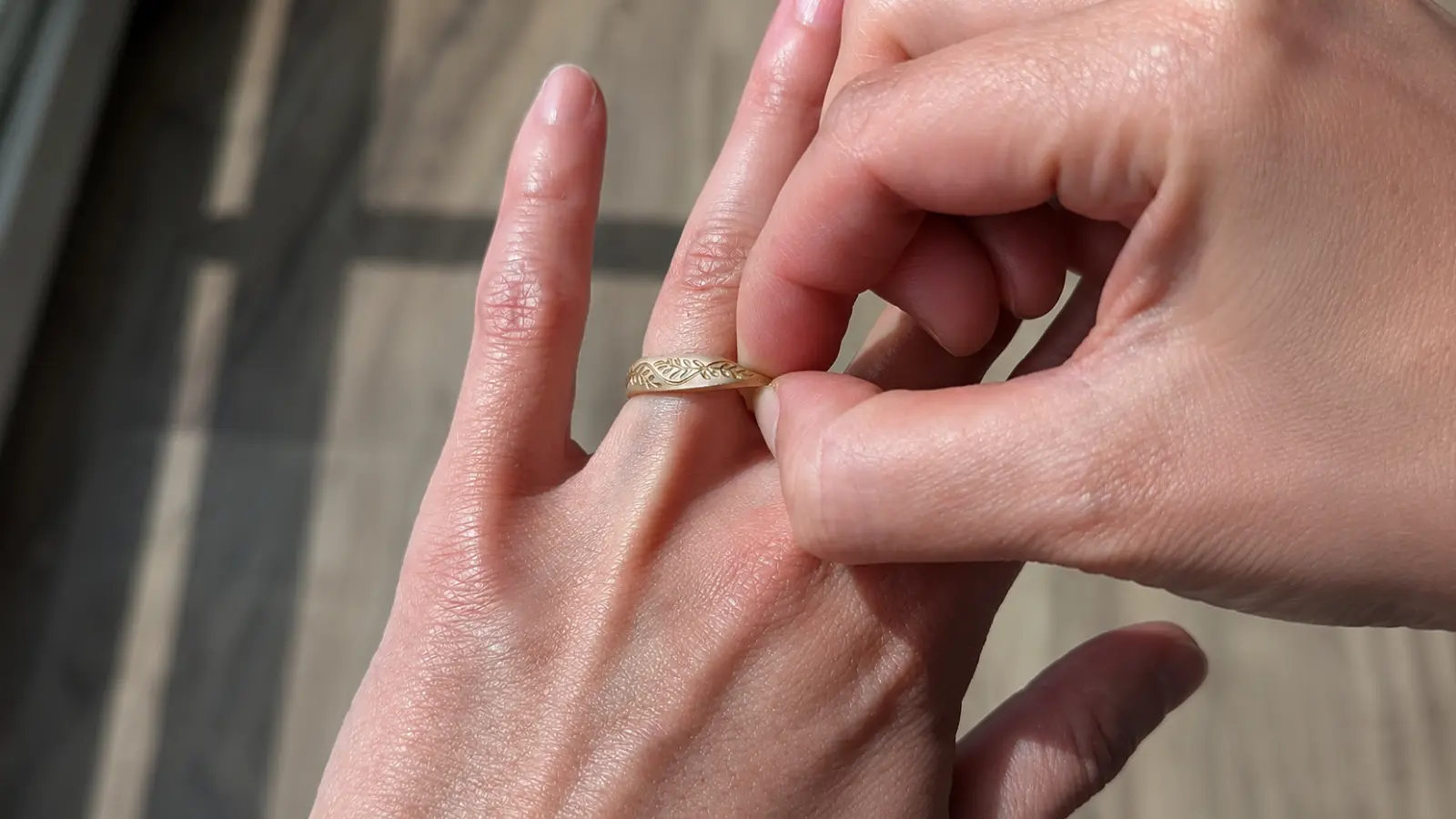
The two most common categories of travel ring serve different purposes and suit different travelers. Choosing between them is straightforward once the actual need is identified.
Silicone Rings
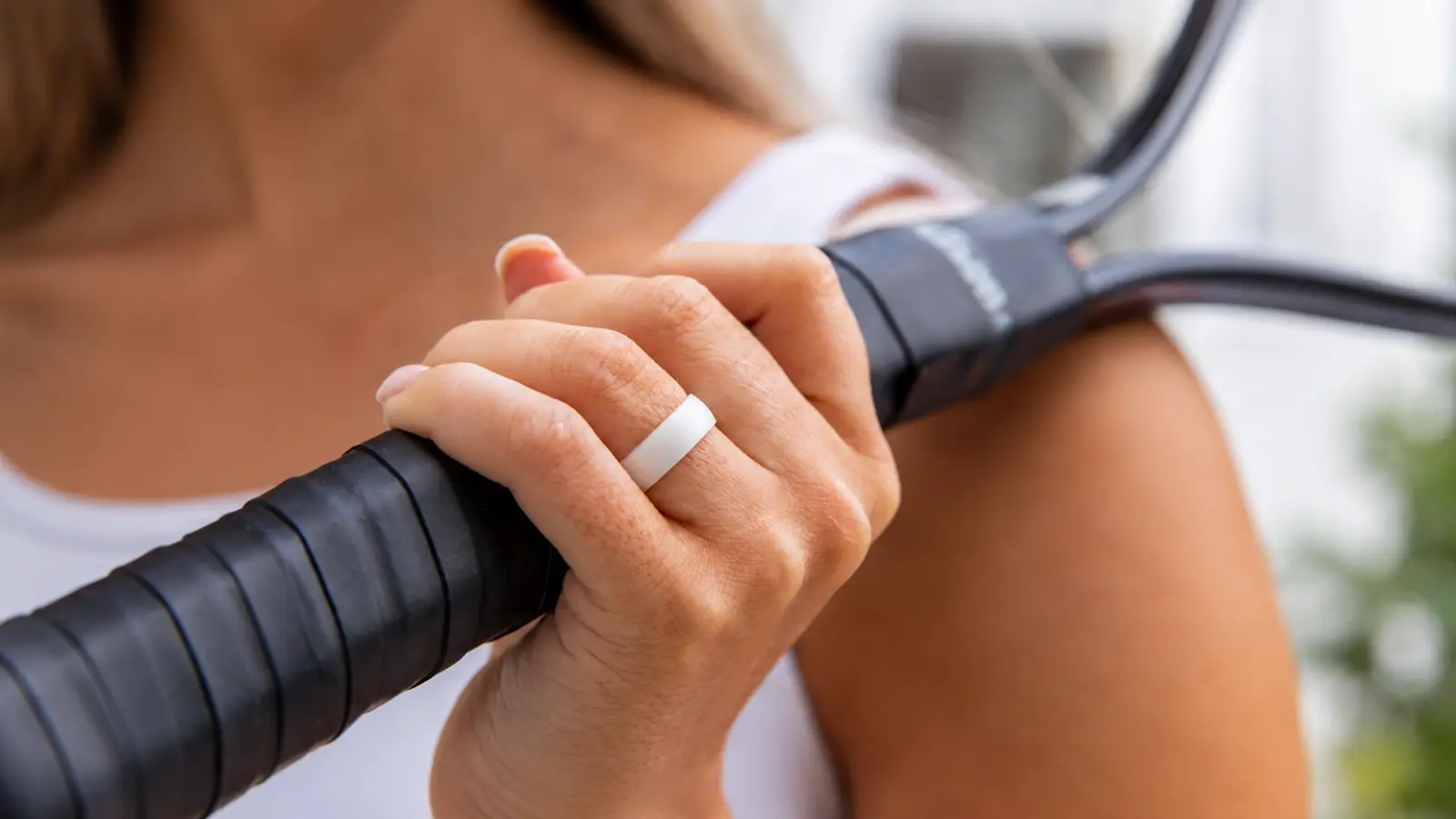
Silicone rings are the travel ring category most focused on practicality at the expense of appearance. They are flexible, lightweight, and comfortable for extended wear in a way that metal rings often are not during physical activity. They are safe for activities where a rigid metal ring would create risk — silicone will break or flex rather than causing degloving injury in situations where a finger is subjected to sudden force. They are available in a price range from around $10 to $40, which makes losing one genuinely inconsequential.
What they are not is visually convincing as a substitute for a fine metal ring. Silicone has a characteristic matte, rubber-like appearance that reads clearly as silicone at close range. Current designs are significantly better than they were a decade ago (some have textured surfaces, beveled edges, or metallic finishes that read as more jewelry-like) but anyone looking at the ring closely will know it is not metal. For travelers who simply want to wear something on the ring finger without concern for appearance, this is not a problem. For travelers whose real ring is elaborate and visible and who want a substitute that reads similarly, silicone is the wrong choice.
For full guidance on silicone ring options, durability, and when they work well outside of travel, see the silicone wedding rings.
Simple Inexpensive Metal Bands
A plain band in 10k gold or sterling silver (bought at a mid-range jewelry store or online for $50–$150) reads as a real wedding ring at conversational distance. It has the weight and sheen of metal; it sits on the finger the way a real ring does; and its appearance in photographs is essentially indistinguishable from a more expensive band. The tradeoff: it is not safe for the physical activities where silicone is the right choice (it will not break rather than cause injury), and it is worth enough that losing it is not entirely inconsequential, even if it is not devastating.
A simple metal travel band is a strong choice for travel that involves urban exploration, cultural tourism, dining, and social contexts where the ring’s appearance matters — and where the wearer is not planning to do the activities that make silicone specifically practical. Many couples who travel frequently end up with one travel ring in each category: a silicone ring for adventure days and a simple metal band for city days.
Cubic Zirconia and Moissanite Travel Rings
For travelers who typically wear an engagement ring alongside a wedding band, a simple substitute band does not replicate the look of the full stack. A cubic zirconia ring in a simple solitaire setting, or a moissanite ring in a similar design, provides a closer visual approximation of the engagement ring’s look without the financial risk of traveling with the real stone.
The distinction between cubic zirconia and moissanite matters here. Cubic zirconia is less expensive (a simple CZ solitaire in a sterling silver setting can be found for $20–$60) and is clearly not a diamond to anyone who looks at it closely — it has a different refractive quality and does not hold up well to extended wear. Moissanite is significantly more expensive (even in inexpensive settings, $100–$300 for a simple solitaire) but is nearly indistinguishable from a diamond to the naked eye and holds up well to daily wear. For travelers who want a convincing substitute, moissanite wedding rings offer the closer visual approximation.
| Travel Ring Type | Visual Similarity | Physical Safety | Cost Range | Best For |
|---|---|---|---|---|
| Silicone band | Low (clearly rubber) | Highest (breaks under force) | $10–$40 | Active travel, water sports, adventure days |
| Simple metal band (10k / sterling) | Good (reads as real band) | Standard | $50–$150 | Urban travel, dining, social contexts where appearance matters |
| Cubic zirconia ring | Moderate (approximates diamond) | Standard | $20–$60 | Approximating an engagement ring look at lowest cost |
| Moissanite ring | High (nearly indistinguishable from diamond) | Standard | $100–$300+ | Travelers who want the closest visual approximation of the real ring |
None of these four options is the universally correct choice — the right one depends on what the trip actually involves. A traveler doing both a hiking excursion and a nice dinner in the same week may reasonably pack two of them rather than forcing one ring to cover both situations.
When to Leave Your Real Ring at Home
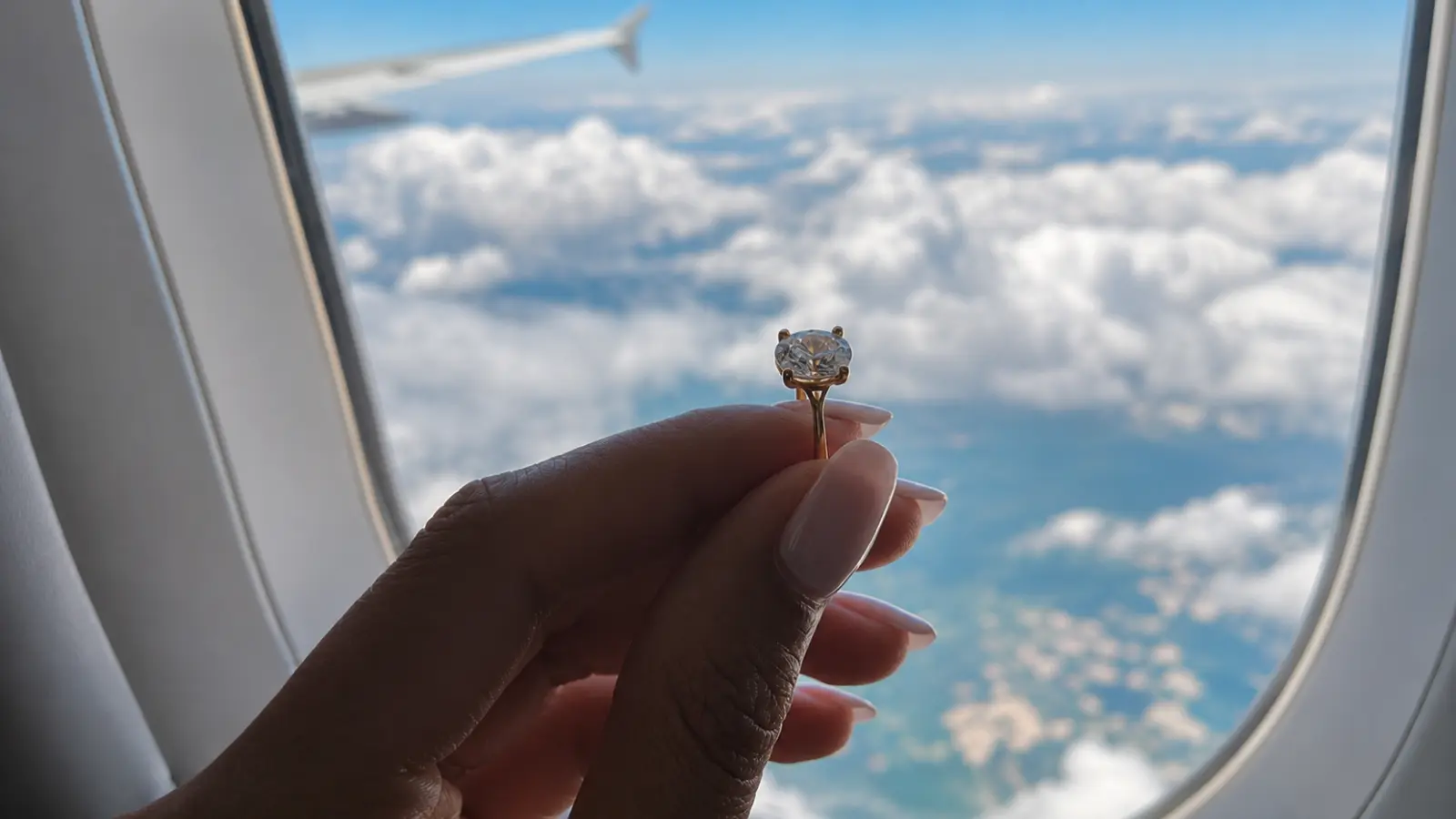
Choosing to leave a wedding ring at home for a trip is not a straightforward decision for most people, because the ring is not just an object. It is the ring from the ceremony. For some people, the thought of traveling without it feels symbolically wrong in a way that is hard to reason around, even when the reasoning in favor of leaving it behind is sound. That feeling is worth acknowledging rather than dismissing — and it is worth weighing honestly against the risk of losing the ring permanently, which is also a significant outcome.
Destinations with Specifically High Pickpocket Risk
Certain destinations have well-documented, persistently high rates of tourist-targeted pickpocketing and opportunistic jewelry theft. These tend to be high-density tourist areas in cities where organized theft is common: certain areas of Barcelona, Rome, Prague, Paris, and a number of other major European tourist destinations have this reputation for good reason, as do popular markets and transit hubs in Southeast Asia and South America. The risk is not universal across these cities — it is concentrated in specific areas and specific contexts (crowded transit, busy markets, tourist-dense public spaces).
For a ring that is visually prominent (a large solitaire diamond, an elaborate setting, something that would attract attention in any context) traveling to a high-pickpocket area with it on the hand is a genuine risk that a substitute ring eliminates. For a simple plain band that does not draw particular attention, the risk profile is different.
Activities with High Loss Risk
The activities where the risk is not theft but loss belong in a separate category, and they deserve more weight than they usually receive in this conversation. Open-water swimming of any kind (ocean, lake, river) is the highest-risk activity for ring loss. A ring that slips off a finger in the ocean is gone. Cold water causes fingers to contract; active swimming moves water against the hand in ways that loosen rings; and the ring that fits perfectly on a warm, dry hand may not stay on a cold, wet one.
A few other activities deserve the same caution, even though they come up less often in this conversation:
- Surfing — the forces involved in wiping out are enough to strip a ring off the hand without the wearer noticing until later.
- Kayaking or whitewater activities — repeated hand contact with cold, moving water creates the same finger-contraction risk as open-water swimming.
- Rock climbing — gloves are frequently removed mid-climb, and a ring can catch on rock in a way that causes injury before it causes loss.
- Skiing or snowboarding — cold temperatures and glove changes both raise the odds of a ring coming off unnoticed.
For any activity on this list (where losing the ring would mean it is gone for good) leaving it at home or switching to a silicone ring is the sensible call, not an overcautious one.
Extended Trips
A week of travel is different from a month. For shorter trips, the calculus of wearing the real ring (keeping it on, taking it off for specific activities, thinking about it occasionally) is manageable. For extended travel where the ring’s safety would be a persistent, low-level concern for weeks, the quality of the trip is a legitimate factor. The substitute ring is not a lesser option; it is the option that removes a recurring concern from an extended experience and allows the traveler to be more present.
When the Ring Is Uninsured
An uninsured ring that is lost or stolen is gone in a way that an insured ring is not. The financial replacement cost (which can range from hundreds to tens of thousands of dollars) is borne entirely by the owner. The sentimental loss is the same regardless of insurance, but the financial outcome is dramatically different. If the ring is not currently insured and the trip is imminent, leaving it at home removes the financial risk entirely while the insurance situation is resolved. See the following section on what ring insurance actually covers and what it costs.
Travel Ring Safety Tips
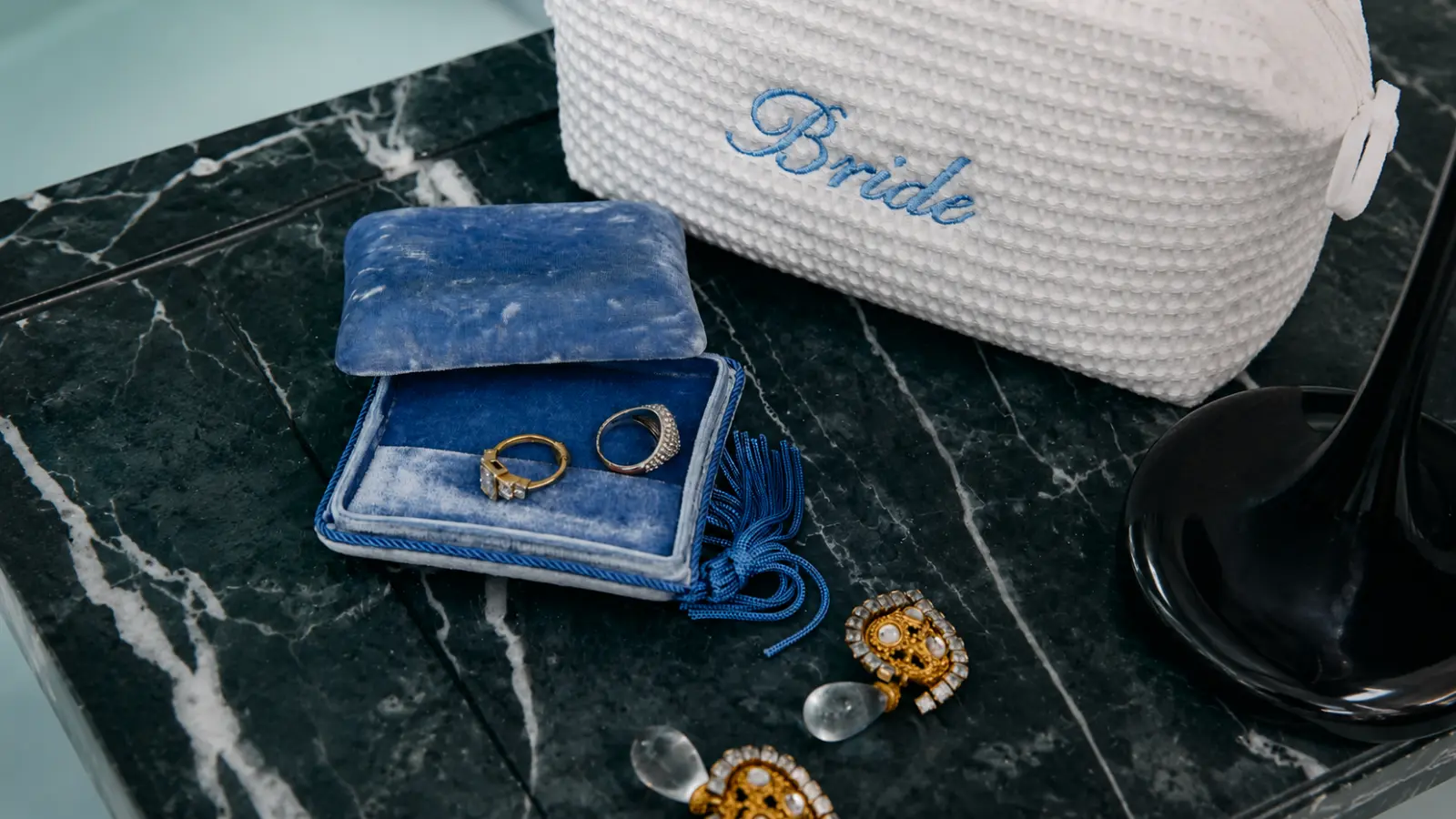
For travelers who choose to bring and wear their real ring, the precautions that actually reduce risk are practical rather than elaborate.
Storage in Transit and at Accommodations
The ring is most vulnerable when it is not being worn — when it has been taken off at a hotel room, left on a bathroom shelf, or placed in a bag during an activity. A ring left on a hotel room surface is more at risk from housekeeping incidents (not theft, but the ring ending up in the drain or off the shelf) than from most other scenarios. A small, hard-sided ring case that travels in a carry-on bag, with the ring inside it when not being worn, eliminates almost all accommodation-related loss risk. Hotel safes are a reasonable option for rings not being worn overnight, though in-room safes vary in quality.
Never leave the ring on the edge of a sink — a bathroom sink drain receives a meaningful number of rings every year, and the loss is as permanent as theft. If the ring is removed for handwashing or skincare, put it somewhere intentional: a ring dish that travels with you, a small pouch in a toiletry bag, or simply back on the finger before anything else happens.
Avoiding Display in High-Risk Contexts
A large diamond ring on an outstretched hand while consulting a map in a crowded tourist area draws attention in a specific way that a plain band does not. This is not a reason to leave the ring at home; it is a reason to be thoughtful about context. Navigating in an unfamiliar area, particularly in a crowded or high-traffic location, is not the moment to have the ring prominently displayed. The same common-sense awareness that applies to phones and wallets applies to visible jewelry in tourist-dense areas.
Water Activities
Remove the ring before any water activity where the risk of loss is real — and decide in advance rather than in the moment. The moment a person is at the water’s edge with fins in their hand is not the moment for a calm decision about the ring. Establish a personal policy before the trip for how to wear wedding rings safely: which activities require removal and where the ring will be stored. A waterproof pouch in a secured pocket, a locked zipper pouch in a bag on the beach, or left in the hotel safe — the specific choice matters less than having made the decision before the activity begins.
Travel Insurance vs Jewelry Coverage
Travel insurance and jewelry insurance are different products covering different things. Travel insurance typically includes some coverage for lost or stolen personal property, but with low limits (often $500 or less per item) and significant exclusions that frequently apply to jewelry. Dedicated jewelry insurance (either a floater on a homeowner’s or renter’s policy, or a standalone policy) provides coverage specific to the ring’s appraised value and without the travel-specific exclusions. If the ring is being insured specifically for travel, verify that the policy covers international travel and check the theft documentation requirements: most policies require a police report for theft claims.
Do You Need Ring Insurance?
The short version: if the ring’s replacement value is higher than what your existing homeowners or renters insurance policy’s jewelry sublimit covers, then a ring without additional insurance is an uninsured financial risk — and that risk does not begin and end with travel. It exists at home, too.
What Most Homeowners and Renters Policies Cover
Standard homeowners and renters insurance policies include personal property coverage, but almost always with a jewelry sublimit — a cap on the amount the policy will pay for jewelry losses, regardless of the total policy limit. This sublimit commonly falls between $1,000 and $1,500. For a ring worth $5,000, $10,000, or more, the standard policy covers a fraction of the loss. Many people discover this gap after the loss occurs rather than before.
The coverage also typically applies only to specific perils — theft being the most relevant for travel, but fire and some other scenarios as well. Loss (as in, the ring simply fell off and cannot be found) is frequently excluded from standard policies. This is one of the most significant coverage gaps: the most common way to lose a ring (it slips off, it goes down the drain, it is lost in an activity) is not covered by a standard policy.
Scheduled Jewelry Coverage
A scheduled jewelry floater, added to an existing homeowners or renters policy, covers a specific item for its appraised replacement value. It requires a current appraisal (jewelers typically provide these; independent appraisers also do) and adds a modest premium to the existing policy — commonly $1–$2 per $100 of appraised value annually, meaning a $5,000 ring might cost $50–$100 per year to insure. Scheduled coverage typically includes loss, theft, and damage, which is meaningfully broader than standard property coverage. For the full breakdown of options and what to ask an insurer, see the wedding ring insurance.
Standalone Jewelry Insurance
Standalone jewelry insurance policies (offered by companies that specialize in jewelry coverage) often provide the broadest protection, covering loss, theft, damage, and disappearance under a single policy without requiring an existing homeowners or renters policy. They are particularly useful for renters who may not carry renters insurance and for rings that hold enough value to warrant a dedicated policy. Premium costs are similar to scheduled floaters.
The Timing Issue for Travelers
Most jewelry insurance policies have a waiting period between when coverage is purchased and when it takes effect — typically 24 to 72 hours, though some policies specify longer periods. Buying insurance on the morning of departure does not create meaningful coverage for that trip. If insurance is being added specifically in preparation for travel, allow time for the coverage to take effect before departure.
What Insurance Does Not Solve
Insurance covers the financial dimension of a ring’s loss. It does not cover the sentimental dimension, which is the part that most people find harder to reckon with. The ring from the ceremony (the one that was on the finger during the vow exchange) is not replaceable by an identically designed ring purchased with insurance proceeds. A replacement ring is a new object, however similar. The couples who feel most conflicted about the decision to wear or not wear the real ring while traveling are often not thinking about the financial loss at all. They are thinking about the wedding ring meaning attached to the original — and why having an identical copy is not emotionally the same thing. That is a real consideration, and it belongs in the decision.
Travel Wedding Rings Guide
Travel wedding rings can help protect your original ring while still keeping a meaningful symbol with you. Explore ideas for silicone bands, substitute rings, honeymoon travel, safety tips, and when leaving your real ring at home makes sense.
Traveling With the Meaning, Not Just the Ring
Choosing a travel wedding ring does not mean the original ring matters less. Sometimes protecting something meaningful means recognizing when and where it should be worn — and when keeping it safe is the better choice.
Whether you travel with your original ring, wear a substitute, or choose no ring at all for certain moments, the meaning behind the wedding ring is not defined by the object being on your finger every second. It comes from the commitment the ring represents and the story attached to it.
Frequently asked questions (FAQ)
What is a travel wedding ring?
A travel wedding ring is a substitute ring worn instead of your original wedding ring while traveling. It can be a silicone band, a simple metal ring, or another inexpensive alternative that lets you keep a ring on your finger without risking a piece with higher financial or sentimental value. Travel rings are most useful for trips involving water, adventure activities, higher-risk destinations, or situations where worrying about your original ring would take away from the experience.
Should you wear your real wedding ring while traveling?
Whether you should wear your real wedding ring while traveling depends on your destination, activities, and comfort level. Many people travel with their original rings without any issues, especially on lower-risk trips. However, a substitute ring may make sense for beach vacations, outdoor adventures, areas where jewelry theft is a concern, or situations where losing the original ring would create significant stress.
What is the best substitute wedding ring for travel?
The best substitute wedding ring depends on how you plan to travel. Silicone rings are ideal for active trips, sports, swimming, and situations where comfort and safety matter most. Simple metal bands work well when you want something that looks closer to a traditional wedding ring. Cubic zirconia or moissanite rings can replace the appearance of an engagement ring while keeping the original safely stored.
Should you wear your wedding ring on your honeymoon?
Many couples choose to wear their real wedding rings on their honeymoon because of the emotional connection to the ceremony. The best choice depends less on the honeymoon itself and more on the destination and activities planned. A relaxing trip with minimal risk is different from a honeymoon involving ocean activities, adventure travel, or situations where the ring may frequently need to be removed.
Should you insure your wedding ring before traveling?
Wedding ring insurance is worth considering before travel if replacing the ring would be financially difficult or if the ring has significant value. Standard homeowners or renters insurance may have jewelry limits or exclusions, while dedicated jewelry coverage may offer broader protection. Insurance can help replace the financial value of a ring, although it cannot replace the sentimental history attached to the original piece.
When should you leave your wedding ring at home when traveling?
Leaving your wedding ring at home may be the better choice when traveling somewhere with a higher risk of loss or theft, participating in activities where the ring could easily disappear, or taking a long trip where protecting the ring would become a constant worry. A travel ring allows you to keep the symbol of wearing a ring without putting the original piece at unnecessary risk.