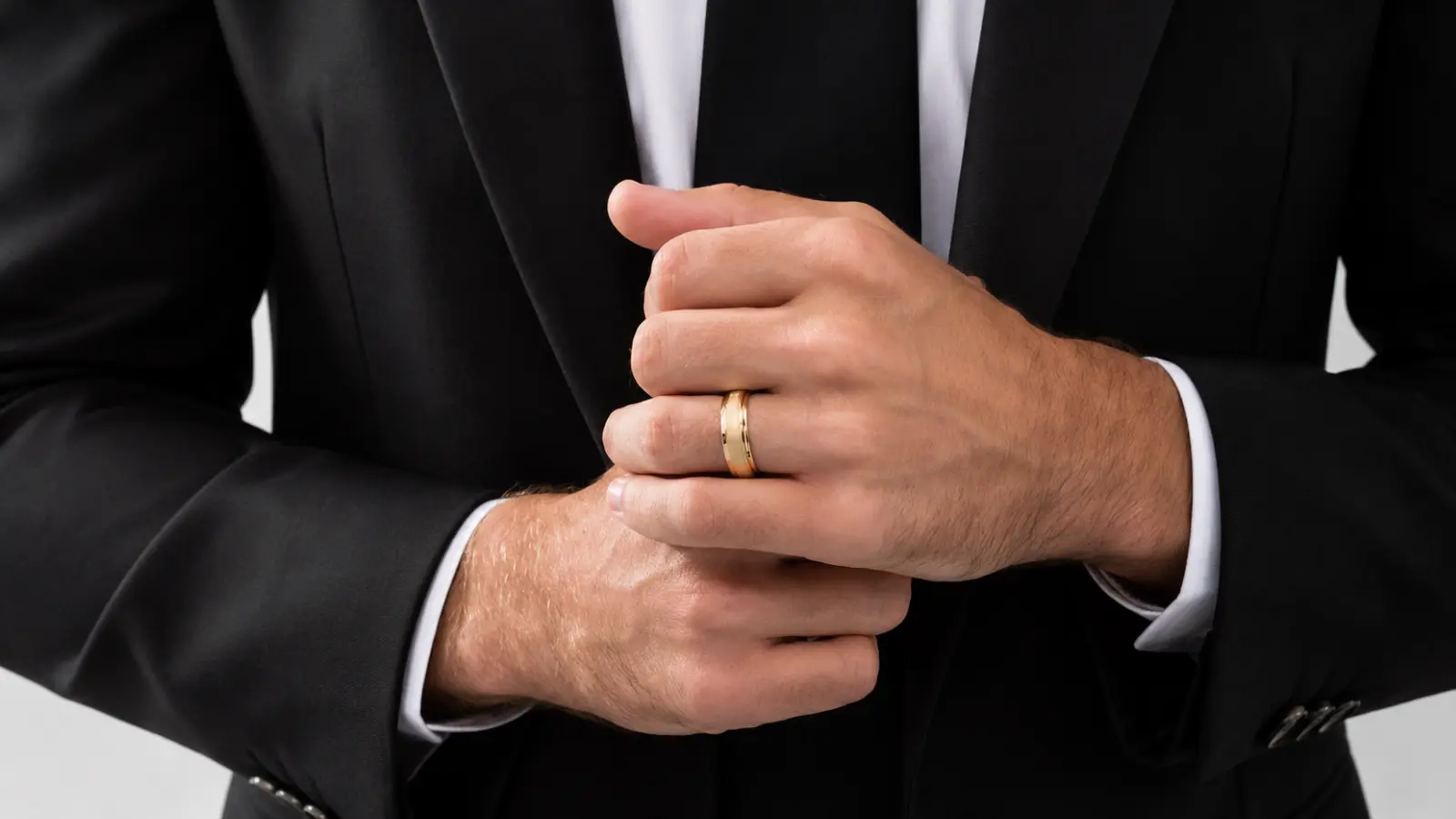
The best men’s wedding bands are not defined by one material, price, or design. The right choice depends on the man wearing the ring his lifestyle, personal style, comfort preferences, and how the band will fit into everyday life.
Most searches for the best men’s wedding bands return product lists, but a list of rings does not help if you do not yet know which style makes sense. Choosing between classic gold, modern metals, simple designs, unique details, or active lifestyle options starts with understanding what each type does best.
This guide explains the best men’s wedding band styles to consider, including classic bands, modern designs, simple styles, unique options, durable materials, and how to choose a wedding band he will actually want to wear every day.
Best Classic Men’s Wedding Bands
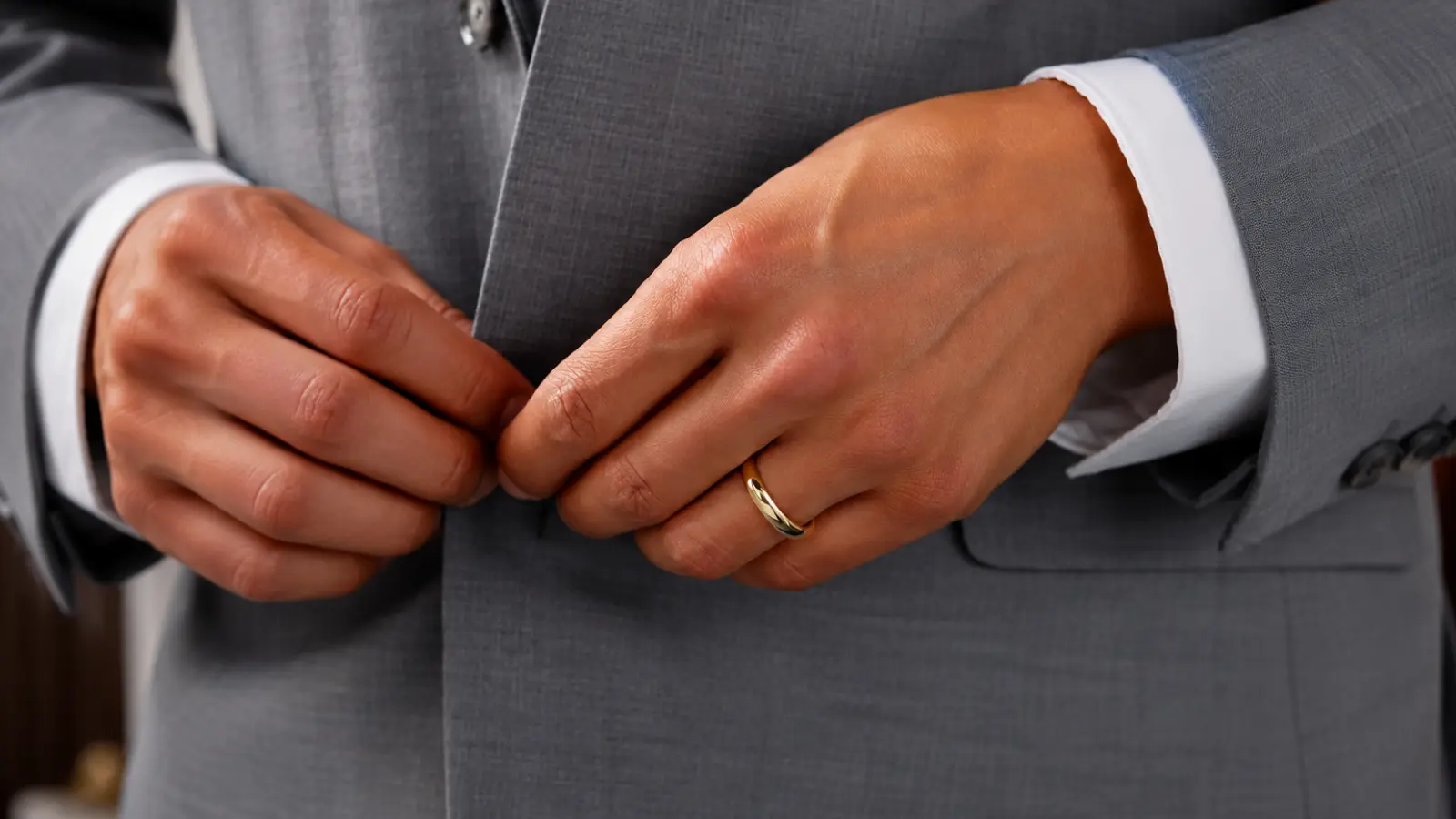
Classic is not a style limitation — it is a style commitment. A man who chooses a classic band is choosing a ring that has worked for generations and will continue to work after every current trend has dated. He is also choosing something he will never be embarrassed to wear in a formal setting, a casual one, or anywhere in between.
Plain yellow gold, 6mm–8mm
The plain yellow gold band in a 6mm or 8mm width is the most direct expression of the classic style. Yellow gold is what most Americans picture when they picture a wedding ring — and for good reason. It has been the standard material for men’s wedding bands in the United States since the tradition became widespread in the mid-twentieth century. It holds its color without treatment, can be resized by any jeweler as finger size changes with age, and develops a warm patina over decades that most men come to prefer over a brand-new ring’s appearance.
14k gold is the right choice for most men — harder and more wear-resistant than 18k, and still more than half pure gold by weight. 18k has a deeper, more saturated color visible when the two are placed side by side; it suits men who wear the ring in lower-contact settings and value the color richness. For men who will wear it through everything, 14k holds up better.
Polish versus brushed finish is worth deciding deliberately. Polished yellow gold is the most traditional expression of the style — warm, light-catching, formal. Brushed yellow gold reads as slightly more contemporary and shows the wear of daily use far less. Both are correct within the classic orientation; the choice comes down to whether the wearer wants the ring to look the same in ten years with minimal maintenance (brushed), or whether he is willing to have it professionally polished every few years (polished).
Plain platinum, 6mm–8mm
Platinum occupies the same classic design space as yellow gold with a different visual character: cooler, whiter, more understated in a modern context. Unlike white gold, a plain platinum band does not need rhodium plating to maintain its color, which means it genuinely requires almost no maintenance over time. It develops a soft patina as it wears, which a jeweler can polish away if preferred — or which can simply be left as the ring ages naturally.
Platinum costs significantly more than gold, and that premium reflects real material and manufacturing differences. For men who want to spend once, choose well, and never revisit the decision, platinum makes a strong argument. For men who need to apply that budget elsewhere, 14k yellow gold is the more practical expression of the same classic intention.
More on how the two metals compare in daily wear is in the gold wedding rings and platinum wedding rings guides.
What makes classic the right choice
A classic band is right for a man whose personal style is traditional or neutral, who works in environments where a distinctive ring would feel out of place, or who simply does not want to spend mental energy on jewelry. It is also the right choice for men who know they will change over time — in style, in size, in profession — and want a ring flexible enough to remain correct through all of it. A plain gold or platinum band is one of the few wedding purchases that appreciates in relevance rather than dating.
Best Modern Men’s Wedding Bands
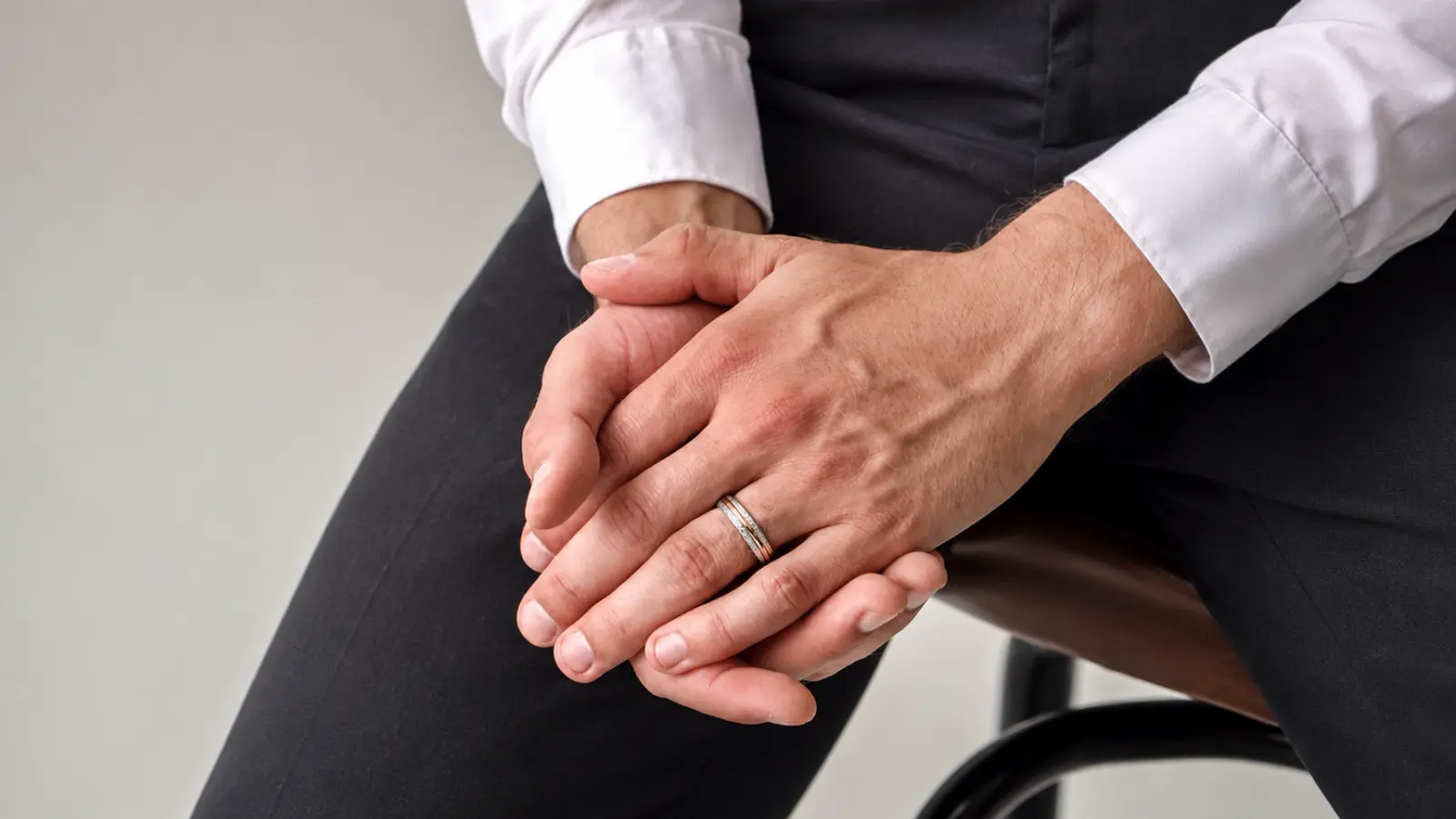
Modern men’s wedding bands depart from the plain metal band in deliberate and specific ways. The departure might be material — alternative metals, inlay designs, mixed compositions. It might be surface — textured finishes, carved details, structural channels. It might be color — black rings, two-tone combinations, matte treatments with no equivalent in traditional precious metal design. What modern bands share is a willingness to use the wedding ring as a design object as well as a symbol.
Brushed alternative metals
Tungsten carbide and titanium bands with a brushed or matte surface represent modern design executed with restraint. They look nothing like a traditional gold wedding ring — the color is cooler, the texture has an industrial quality, the weight distribution is different — but they read as considered rather than loud. These are bands for men who want to step clearly away from tradition without making a declaration about it.
Brushed tungsten in a 7mm or 8mm width, or brushed titanium in the same range, are among the most consistently worn modern styles because they are distinctive without requiring explanation. They also hold their matte finish well over years of daily use, which means the look at purchase is close to the look at year ten.
Two-tone and mixed-metal bands
A band that combines two metals — yellow gold paired with a white gold or platinum inlay channel, or a titanium core with gold sleeve detailing — creates visual complexity within a clean silhouette. These rings look conventional from a distance and reveal their design upon closer inspection, which is appealing for men who want something considered without something conspicuous.
Two-tone bands also have a practical advantage: the two metals can be chosen to serve different functions, with a harder metal at the high-contact interior and a more visually distinctive material on the exterior face. For the right man, that kind of designed intention is part of what makes the ring feel like his.
Structural channels and beveled edges
A band with structural detailing — a center channel running around the circumference, beveled edges that create shadow lines on the band’s profile, or a stepped design with multiple surface levels — adds dimension to a plain band without introducing additional materials or elaborate patterning. Men who find plain bands too minimal but find inlay and textured designs too decorative often find this category exactly right. The ring is clearly a band; it has simply been considered more carefully than the default version.
What makes modern the right choice
Modern bands tend to suit men who already have a developed personal aesthetic — who wear watches with intention, who have opinions about their clothing, who have encountered traditional gold bands and found them correct but somehow not quite right. The modern style gives those men a ring that feels like them rather than like a default. It also tends to suit younger couples and more casual or creative wedding styles, where a plain gold band might feel like a costume of tradition rather than an expression of it.
Best Metals for Active Lifestyles
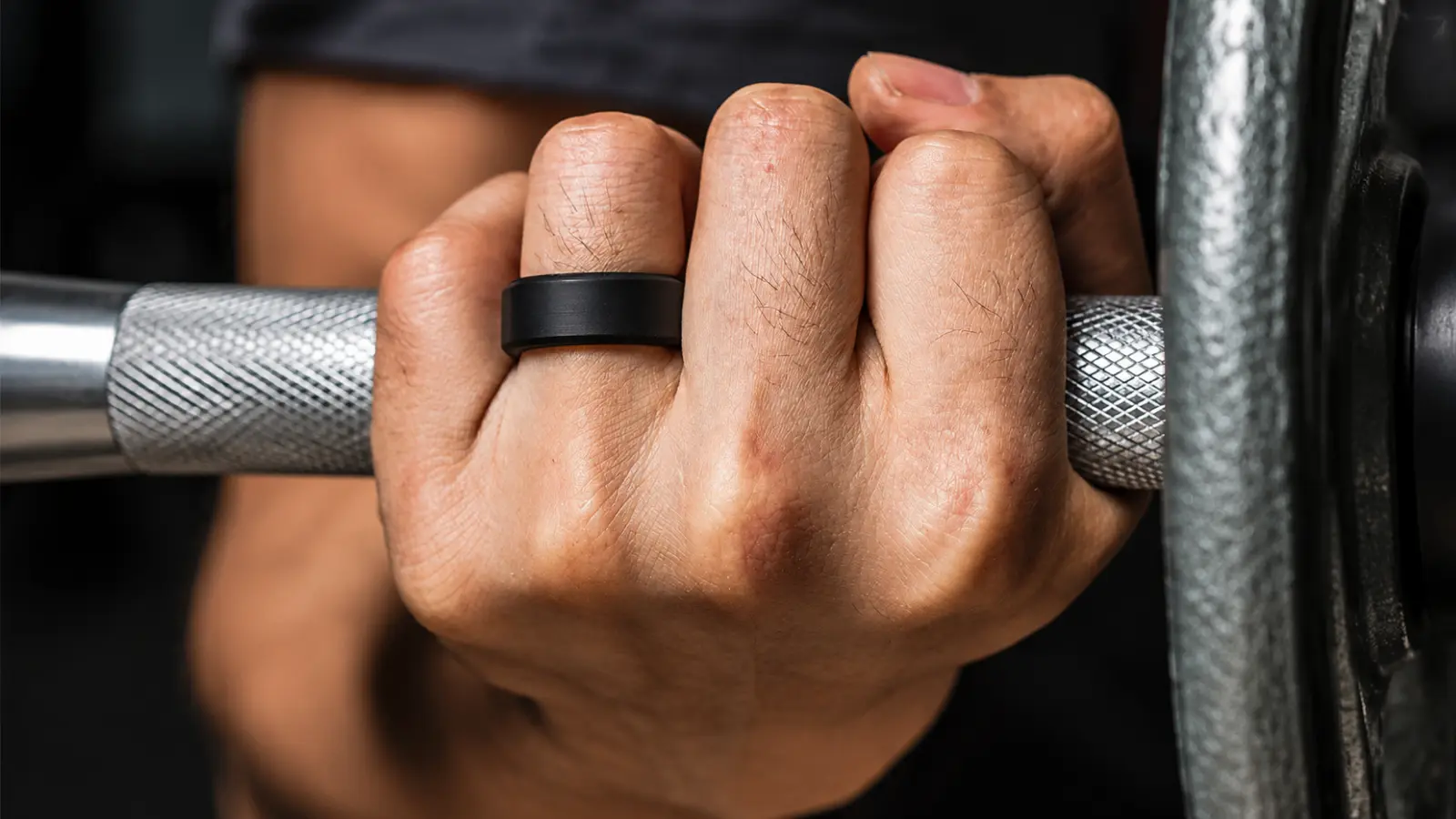
An active lifestyle does not mean one style of ring — it means a set of practical constraints that certain materials handle well and others do not. The constraints are worth naming clearly, because the right solution depends on which ones actually apply to the man who will wear it daily.
The two-ring solution
The most reliable answer for men whose daily life includes physical work, regular exercise, or any environment where a metal ring creates safety concerns is to maintain two rings. A titanium or silicone band worn during high-activity contexts, and a gold or platinum band worn everywhere else. This approach separates the functional question from the symbolic one: the metal band can be chosen for what it means and how it looks, without engineering it for survival through conditions it was not built for.
Silicone bands cost roughly $20 to $60 and are the appropriate choice for men whose work creates genuine ring avulsion risk — construction, electrical work, rock climbing, gym movements that involve catching a bar. Silicone breaks under pressure rather than creating a tourniquet effect, which is the safety property that makes it the right material in those contexts. The silicone wedding bands covers the specific professions and activities where silicone is the right call.
Titanium for active daily wear
For men who want one metal band that holds up through most daily activity without a silicone backup, titanium is the strongest practical choice. It is lighter than steel, hypoallergenic, and completely corrosion-resistant. Men in medical professions find it holds up to the repeated hand-washing, glove use, and sanitizer exposure that degrades softer metals over time. Men who train regularly find that titanium’s minimal weight eliminates the discomfort that heavier rings create during extended physical activity.
The limitation worth knowing: titanium cannot be resized by standard jeweler methods. If ring size changes significantly over time, the ring will need to be replaced. Many men who choose titanium treat the ring as a practical daily object and factor in eventual replacement accordingly — rather than as a permanent heirloom. Both orientations are valid.
Tungsten for scratch resistance above all else
Tungsten carbide is right for active men whose primary concern is a ring that will not scratch or show wear through years of physical use. It holds a polished finish through conditions that would deeply scratch gold within weeks. Men who work in environments where the ring will be in contact with rough surfaces, tools, or hard materials consistently find that tungsten outlasts every other option visually.
The trade-offs are significant: tungsten cannot be resized under any circumstances, and it cannot be cut off in a standard medical emergency — it requires cracking, which emergency rooms can do but which takes longer than cutting through softer metals. Men in professions where medical ring removal could become urgent should factor that into the decision before purchasing.
Active lifestyle metals at a glance
| Context | Best Metal | Why |
|---|---|---|
| Daily office + gym | Titanium | Lightweight, durable, holds up through workouts |
| Manual trade work | Silicone (at work) + titanium or gold (off work) | Safety first; metal band preserved for other contexts |
| Medical profession | Titanium or silicone | Withstands sanitizer and gloves; hypoallergenic |
| Outdoors / physical recreation | Titanium for daily; silicone for climbing or bar work | Weight and safety considerations both resolved |
| Scratchy environments (tools, machinery) | Tungsten carbide | Highest scratch resistance of any ring material |
| Water (frequent swimming, marine work) | Titanium or platinum | Both fully corrosion-resistant; platinum also resizable |
The table above is a starting point. Most active men sit in more than one row — the goal is to identify which context creates the most risk or inconvenience, and solve for that one first. Everything else falls into place after.
Best Simple Men’s Wedding Bands
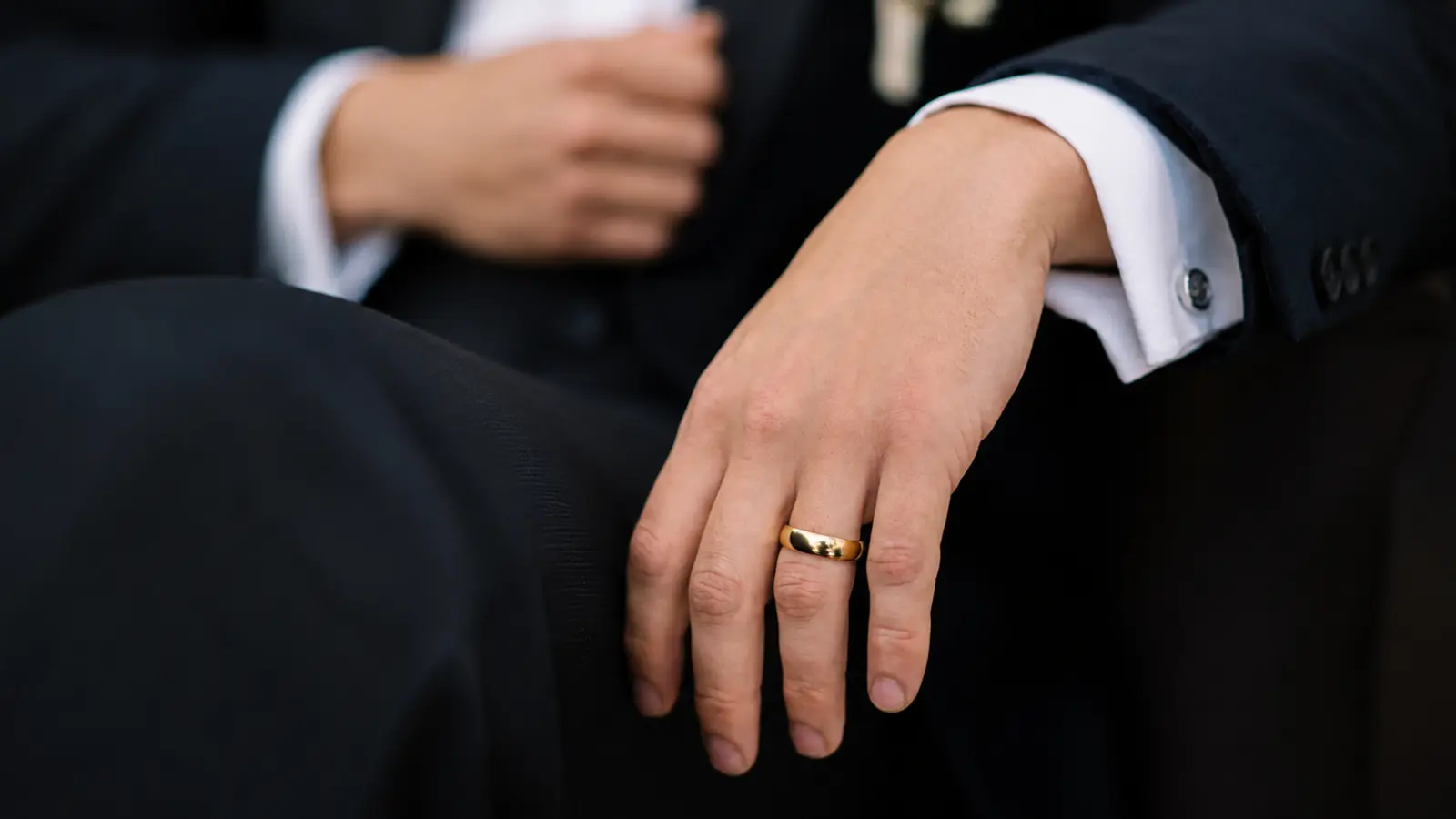
Simple is a precise aesthetic goal, not a budget constraint or a lack of imagination. A man who wants a simple wedding band knows exactly what he is after: a ring that does not call attention to itself, that feels natural on the hand within days, and that will be as correct in thirty years as it is now. Simplicity in a wedding ring is its own design discipline — the wrong simple band is just a generic one, while the right simple band is the ring the wearer stops noticing because it has become part of him.
Narrow comfort fit bands
The most effective simple band for most men is a narrow comfort fit ring: 4mm to 6mm wide, with a rounded interior that minimizes surface contact against the finger. The rounded interior is the detail that matters most for men who find jewelry distracting — it is the difference between a ring the wearer is aware of and one he forgets is there.
At 4mm, a comfort fit band in titanium can weigh so little and sit so naturally against the finger that new wearers regularly forget it is on. That is not a failure of presence; it is the point. Simple bands are not chosen to be noticed. They are chosen to be worn — through everything, without a second thought.
Titanium for the man who has never worn jewelry
For men who have never worn jewelry and are genuinely uncertain whether they will be comfortable in a ring, titanium is the style recommendation that resolves most of the concern. Its minimal weight eliminates the heaviness that makes some men aware of a ring. Its hypoallergenic properties eliminate skin reaction concerns. Its matte or brushed finish reads as understated in virtually every context.
A 5mm brushed titanium comfort fit band is perhaps the most invisible wedding ring available — present enough to be meaningful, unobtrusive enough to stop being noticed after the first few weeks. For men who genuinely wonder whether they are ring people, this is the best way to find out.
Plain 14k gold for simple with precious-metal value
For men who want simplicity alongside the long-term symbolic and material value of a precious metal, a plain 14k gold comfort fit band in a narrow width is the right combination. It does not announce itself visually. It does not require explanation. It is the most traditional simple choice, with the comfort fit interior making it more wearable for daily life than the standard fit bands that dominated earlier decades.
A plain narrow gold band is also the easiest ring to resize as size changes over the years — a practical advantage that alternative metals simply cannot offer. For men who think in thirty-year horizons, that matters.
Finish choice for simple bands
For men who prioritize simplicity and low maintenance together, a matte or brushed finish is the better choice over high-polish. Polished metal looks clean initially and then accumulates fine scratches that undermine its appearance without actively damaging the ring. A brushed finish absorbs those scratches into its texture, maintaining a consistent appearance through years of daily use with no maintenance at all. Simple bands in matte finishes earn their own patina over time. The ring ends up looking like it belongs — because it does.
Best Unique Men’s Wedding Bands
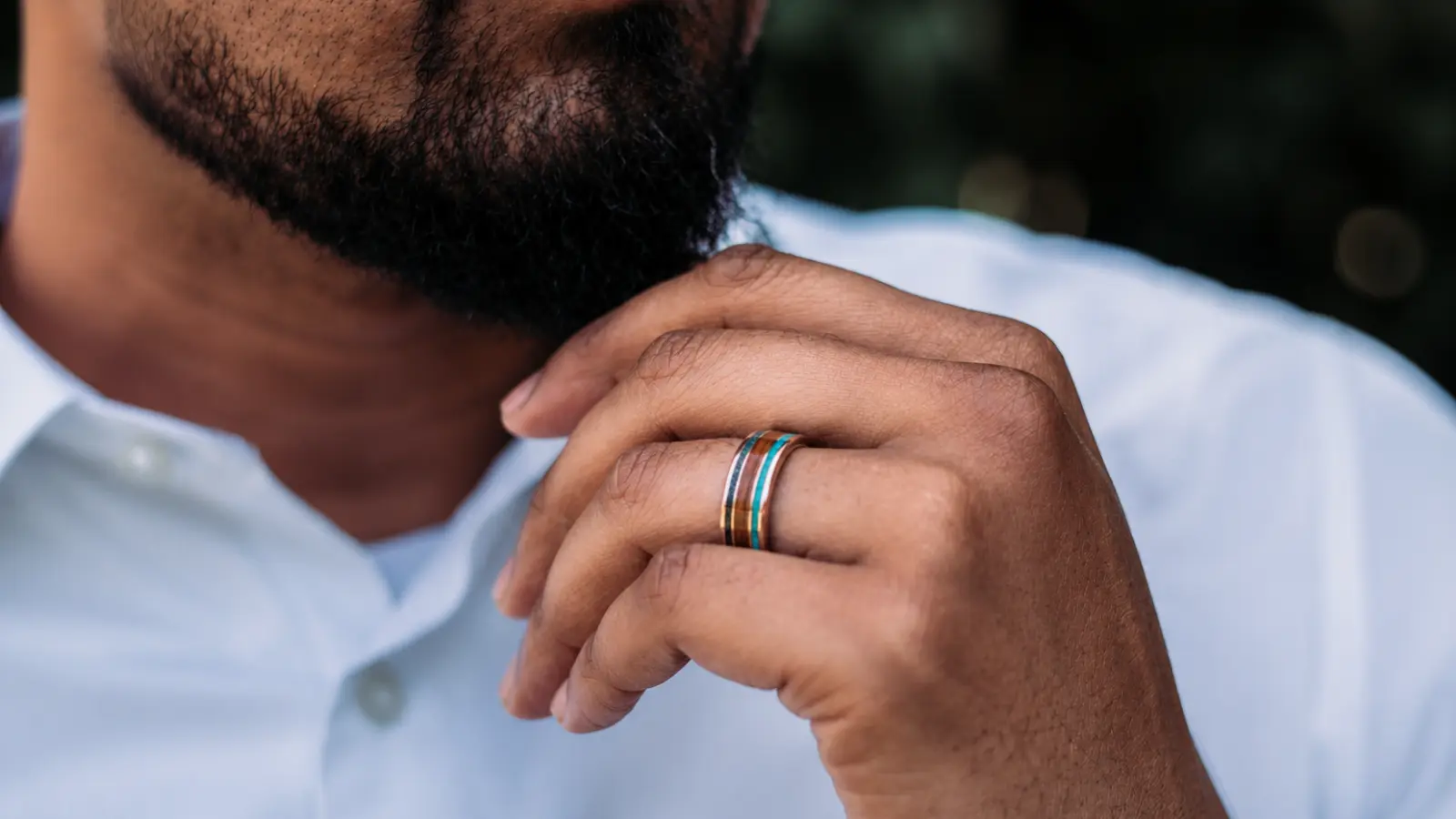
Unique, in the context of men’s wedding rings, means something the wearer will recognize as specifically his — not generically correct, but genuinely reflective of something about who he is or what this marriage means to him. That quality does not require elaborate design or expensive materials. The most successfully unique bands tend to be distinctive in one dimension while remaining wearable in all others.
Natural material inlays
A band with a natural material set into a channel within the metal — wood, meteorite, antler, abalone, turquoise — carries a narrative dimension that plain metal bands simply do not. The material can be sourced from a meaningful place, chosen to reference a shared interest, or simply selected because the wearer responds to it in a way he does not respond to plain metal. These rings are most commonly made with a titanium or tungsten carbide exterior and the inlay set into a recessed groove along the top of the band.
The practical consideration: organic inlay materials (wood, antler) require more care than inorganic ones. Extended water exposure and impact can affect organic inlays more significantly than metal. Carbon fiber and meteorite inlays are considerably more durable and better suited to men who will wear the ring through active daily life without thinking about it. Asking about specific material care before purchasing prevents the disappointment of an inlay that degrades within the first few years.
Hammered and hand-textured surfaces
A hammered finish — small indentations pressed into the metal surface, creating a faceted, irregular texture — gives a band visual distinctiveness without any additional material or structural complexity. Hammered gold and platinum bands have a quality that reads as handmade and considered rather than factory-produced, even when the technique is applied industrially. They also scatter light differently from polished or uniformly brushed bands, which gives them a visual interest that changes with the angle of view.
Men who want a ring that is clearly theirs without departing radically from traditional materials and form often find hammered metal exactly the right distance from convention. It is a band that earns a second look without demanding one.
Carved designs and interior engraving
Interior engraving — text, coordinates, a date, a short phrase — makes a wedding band unique in a way that is entirely invisible to anyone except the wearer. This approach suits men who want the ring to carry personal meaning privately, without expressing that meaning on the ring’s visible exterior. It also pairs naturally with any other style: a plain classic band, a brushed modern band, a simple narrow band — any of them can carry an engraved interior that makes it specifically and irreversibly his.
Exterior carving — geometric patterns, Celtic knotwork, organic forms, custom designs — makes the distinctiveness visible from the outside. These rings photograph with a strong identity and suit men whose personal style accommodates visual detail. The guide to unique wedding bands covers the full range of design approaches, from subtle surface variation to fully custom designs.
Black rings as a unique style statement
A black wedding band — in black ceramic, black tungsten, or ion-plated titanium — is one of the most visually immediate ways to step outside the conventional gold-and-silver ring vocabulary. It is a distinctive choice that reads as coherent and intentional on a man whose broader style leans dark and minimal. The black wedding bands guide covers which materials hold their color best and what to expect over years of daily wear.
How to Choose the Best Style for Him
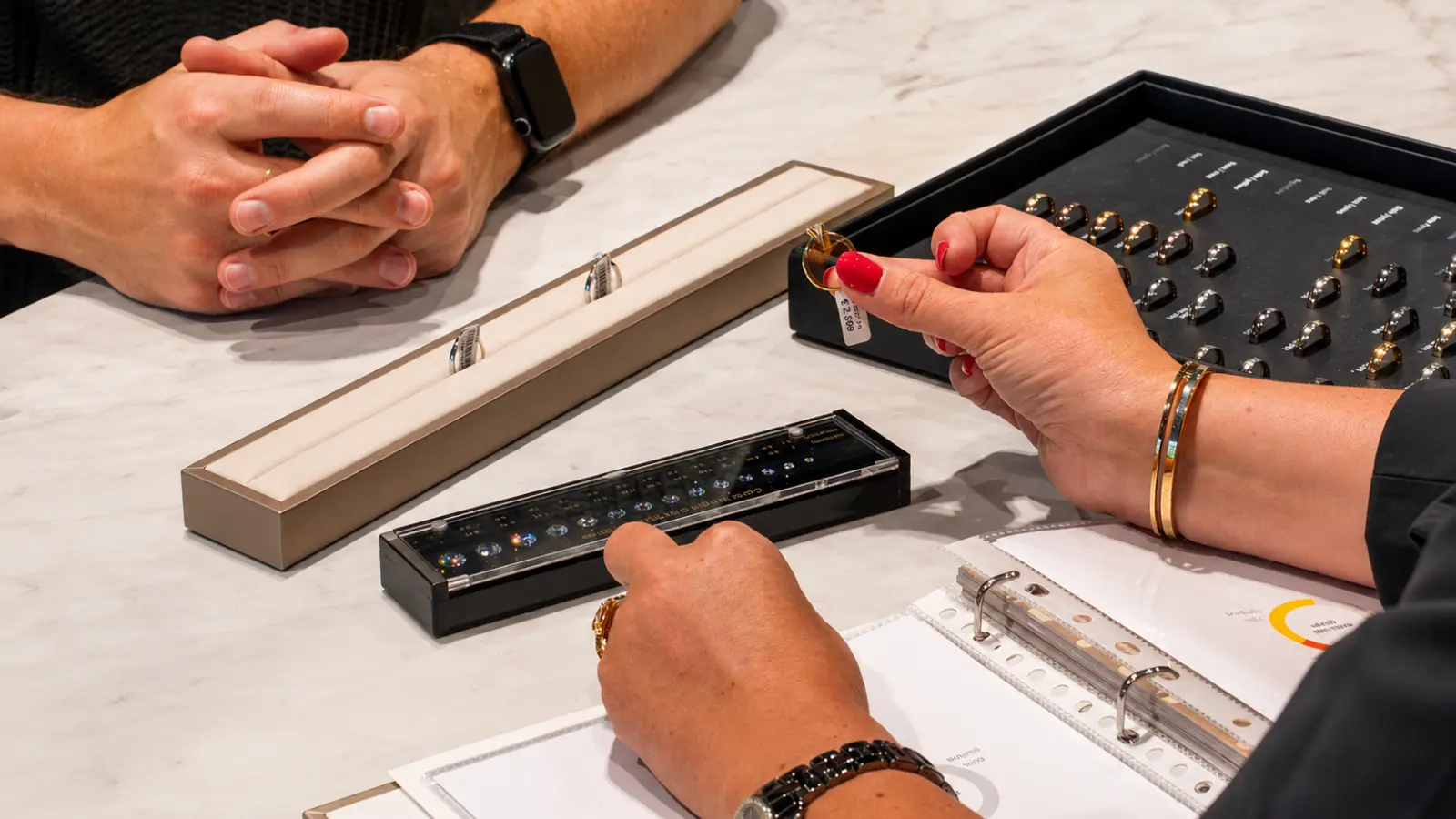
The style question in men’s wedding bands is easier to answer than it seems, once it is approached from the right direction. The mistake most men make is starting with what they like visually and working backward to whether it is practical. The more reliable approach is to start with lifestyle and work forward to what fits within it — then, within that range, find what feels like him.
Start with two lifestyle questions
Two questions cut through most of the complexity. First: does he work with his hands, engage in physical activity that involves hand contact, or have any profession where a metal ring creates a practical problem? If yes, the two-ring approach is almost always the right framework — a practical band for those contexts, a meaningful band for everything else.
Second: how does he feel about jewelry generally? Men who find jewelry uncomfortable or distracting are not going to enjoy a wide, heavy band with elaborate detailing, regardless of how it looks on a display stand. The answers to those two questions eliminate most of the wrong directions. What remains is a narrower range of styles, and within that range, the personal aesthetic question — classic, modern, simple, unique — becomes a genuine choice rather than a default.
The maintenance question
A wedding ring is worn every day for decades. How much maintenance a man is realistically willing to do on a ring is a relevant factor in which style will actually hold up as intended. Polished gold and white gold require periodic professional attention to look their best — most jewelers recommend a polish every two to three years. Platinum, titanium, and tungsten require essentially no maintenance. Matte and brushed finishes absorb wear into their texture. Organic inlay materials need occasional care to stay in good condition.
There is no wrong answer to the maintenance question — it is simply worth being honest about. A man who genuinely will not take a ring to a jeweler should choose a metal and finish that rewards neglect rather than one that shows it.
The durability horizon
A wedding ring should be chosen with a thirty-year horizon rather than a three-year one. Style preferences change; ring size sometimes changes; the profession that made tungsten practical at thirty may not be the same profession at fifty. Resizability — the ability of gold and platinum to be adjusted by any jeweler as finger size changes over time — is a practical advantage that alternative metals cannot offer, and it is worth weighing against the durability advantages those metals provide.
Men who are very young when they marry, or who expect significant lifestyle changes, may find that resizability deserves more weight in the decision than it typically gets. A ring that fits perfectly at thirty and cannot be altered at fifty becomes a harder problem than it needed to be.
Style Decision Table
Most men find that they fit more than one row below — or that their lifestyle pulls in one direction while their aesthetic pulls in another. When those two things conflict, lifestyle almost always wins in the long run. A ring that is beautiful but impractical for the life it will be worn through gets taken off. A ring that suits the life tends to stay on, and becomes beautiful through that continued presence.
| If he is… | Best style | Best metal | Width to try |
|---|---|---|---|
| Traditional, professional, neutral style | Classic plain band | 14k yellow gold or platinum | 6mm–8mm |
| Contemporary, fashion-aware, strong personal style | Modern — brushed metal, two-tone, or structural detail | Tungsten, titanium, or white gold | 7mm–10mm |
| Physically active, works with hands | Active — titanium daily + silicone for work | Titanium + silicone backup | 6mm–8mm |
| New to jewelry, finds rings uncomfortable | Simple — narrow comfort fit band | Titanium or 14k gold | 4mm–6mm |
| Wants the ring to carry personal meaning | Unique — inlay, hammered finish, engraved interior | Depends on design; titanium or gold most common | 7mm–8mm |
| Minimalist aesthetic, dark style preferences | Modern black — ceramic or black tungsten | Black ceramic or black tungsten carbide | 6mm–8mm |
| Wants maximum long-term value and resizability | Classic or simple — plain precious metal | Platinum or 14k gold | 6mm–8mm |
| Low maintenance priority above all | Any style, matte or brushed finish | Platinum or titanium | Any — try in person |
For deeper coverage of metals, widths, comfort fit, and the practical mechanics of men’s ring buying, the men’s wedding bands guide and the men’s wedding rings guide cover those decisions in full.
Men’s Wedding Band Inspiration
The best men’s wedding bands balance style, comfort, durability, and everyday wear. Explore our inspiration board for classic gold bands, modern designs, black rings, unique materials, simple styles, and wedding band ideas for different lifestyles.
Choosing the Wedding Band He Will Wear for Life
The best men’s wedding band is not the one that looks impressive for a moment — it is the one that continues to feel right through years of everyday life. The right choice should match his routine, his style, his comfort, and the way he wants his wedding ring to become part of his story.
Whether that means a classic gold band, a modern design, a simple titanium ring, or something completely unique, the best wedding band is ultimately the one he will still want to put on every day long after the wedding.
Frequently asked questions (FAQ)
What are the best men’s wedding bands overall?
The best men’s wedding bands are the ones that balance style, comfort, durability, and daily wear. Classic gold bands, platinum bands, titanium rings, tungsten bands, and modern designs can all be excellent choices. The best option depends less on the most popular style and more on the man’s lifestyle, work, personal taste, and how the ring will be worn every day.
What is the best wedding band style for a man?
The best wedding band style depends on the wearer. A classic gold or platinum band works well for men who want something timeless. Modern brushed, black, or textured bands suit men with a stronger personal style. Simple comfort-fit bands are often best for men who prefer minimal jewelry, while unique designs work for men who want something more personal.
What is the best metal for a men’s wedding band?
There is no single best metal for every man. Gold is traditional and easy to resize, platinum is durable and low maintenance, tungsten is extremely scratch-resistant, and titanium is lightweight and practical for active lifestyles. The best metal depends on what matters most: tradition, durability, comfort, or maintenance.
What is the most durable men’s wedding band?
Tungsten is one of the most scratch-resistant wedding band materials, making it popular for men who want a ring that keeps its appearance. Platinum offers excellent long-term durability among precious metals, while titanium provides a strong, lightweight option for active lifestyles.
What is the best men’s wedding band for everyday wear?
The best everyday wedding band is comfortable, durable, and easy to maintain. Many men prefer comfort-fit designs, moderate widths, and materials that match their routine. A ring worn every day should feel natural on the hand, not just look good when it is new.
What is the most classic men’s wedding band?
A plain gold wedding band remains one of the most classic choices for men. Its simple design has remained popular for generations because it works with almost every personal style and setting. Platinum bands offer a similar timeless look with a different color and feel.