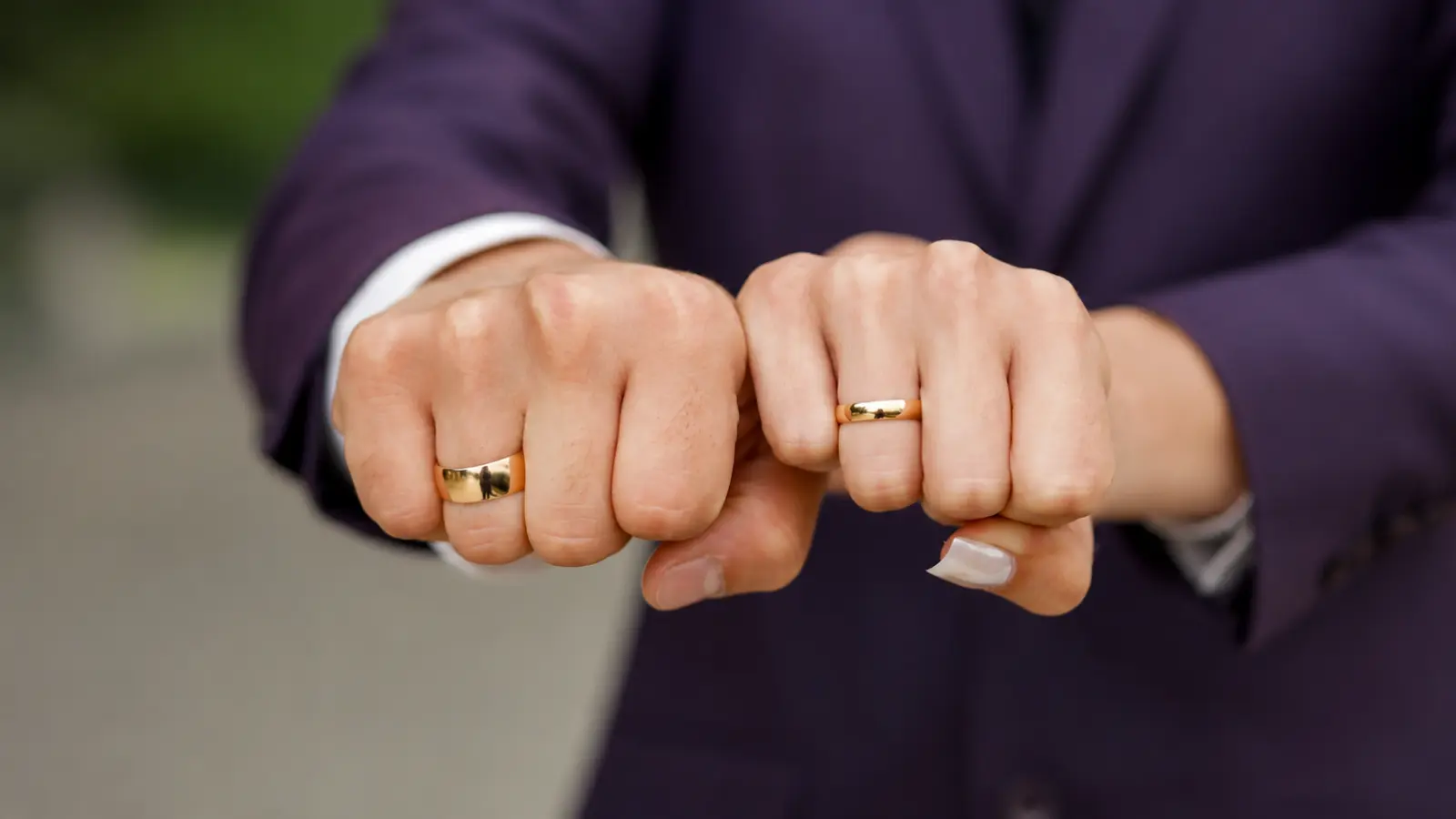
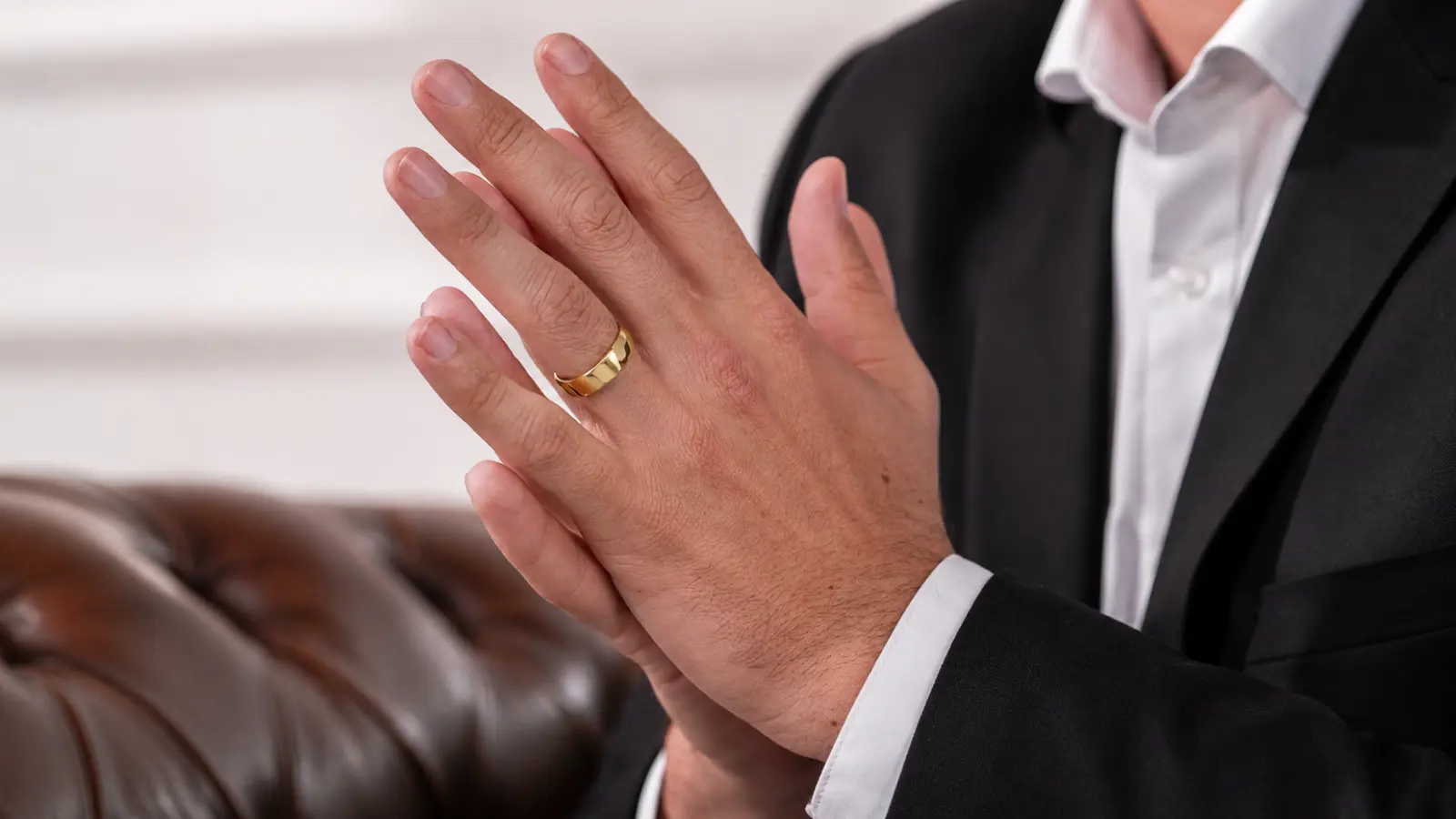
Men’s gold wedding bands are wedding rings made from gold alloys and designed to represent marriage while offering the durability needed for everyday wear. They come in different gold colors, including yellow gold, white gold, and rose gold, as well as different purity levels such as 10k, 14k, and 18k.
Gold is the most traditional wedding band material in the United States, but choosing a gold band involves more than simply picking a color. The right choice depends on how the ring looks on his hand, how much maintenance he wants, how active his lifestyle is, and how the metal will age over decades of wear.
This guide explains men’s gold wedding bands, including yellow vs white vs rose gold, 10k vs 14k vs 18k differences, durability, finishes, maintenance, and how to choose the right gold wedding band for everyday life.
Yellow Gold Wedding Bands for Men
Yellow gold is the default wedding band color in American wedding tradition — and the fact that it has been for most of the last century is not simply inertia. Yellow gold at 14k is genuinely the most practical precious metal choice for a ring worn daily for decades: warm in color, durable in construction, resizable by any competent jeweler, and available at a price that does not require significant financial compromise elsewhere in the wedding budget.
Color, karat, and how they relate
The color of yellow gold is not fixed — it deepens and becomes richer as the karat increases. A 10k yellow gold band has a noticeably paler, slightly cooler tone because the gold content is low relative to the alloying metals. A 14k band is the warm, clearly gold color most people visualize when they picture a yellow gold ring. An 18k band is noticeably deeper and more saturated — the color that gives fine jewelry its richness. For men choosing primarily on appearance, the difference between 14k and 18k yellow gold is visible and worth considering, particularly when worn against deeper or olive skin tones where the richer color reads more distinctively.
How yellow gold actually wears
Yellow gold does scratch — this is the most common concern men raise, and it is worth addressing directly. All gold scratches in daily wear. The question is what scratching does to gold versus what it does to harder metals. In titanium or tungsten, a scratch removes material from the surface — it is a loss. In gold, a scratch is a displacement: the material moves across the surface rather than being removed, creating the patina that develops over years of wear. That patina is not damage in the way a scratch on a harder surface is. A jeweler can polish the ring back to its original finish at any point, and many men come to prefer the lived-in look that develops naturally.
Width and who yellow gold suits best
The width of a yellow gold men’s band is a design decision that warrants more thought than it often receives. A 4mm or 5mm band is understated — traditional and minimal. A 6mm band is the most popular width because it provides visible presence without bulk. A 7mm or 8mm band makes a deliberate statement, most effective on larger hands where narrower bands can look proportionally small.
Yellow gold tends to work best for men with warm or olive skin tones, where the color reads most naturally; for men whose partners’ rings are in yellow gold and who want the visual connection of matching metals; and for men whose style runs toward the classic rather than the contemporary.
White Gold Wedding Bands for Men
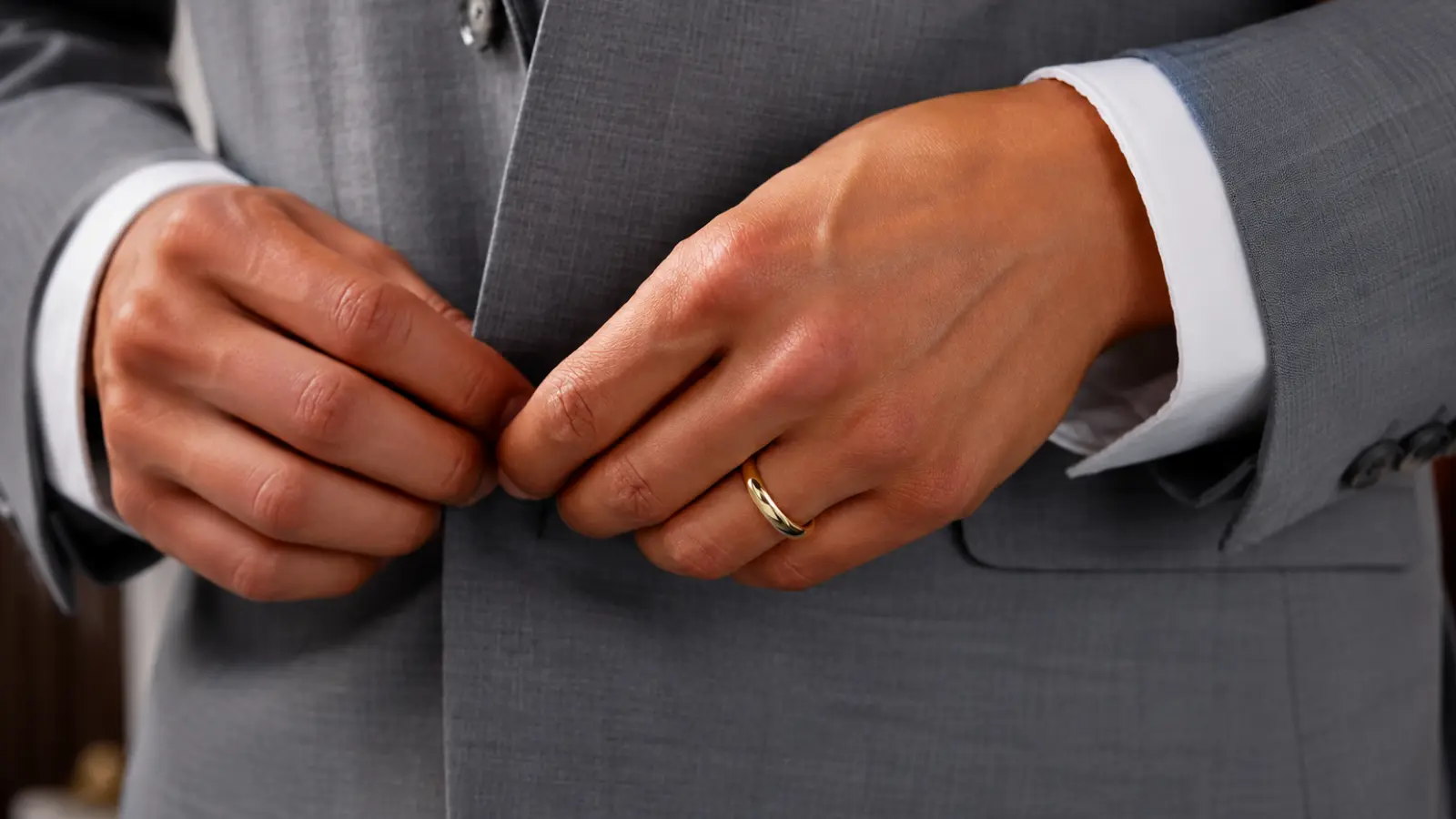
White gold became mainstream in the mid-twentieth century, partly as a more affordable alternative to platinum and partly because its neutral silver-white color coordinates more easily with a wider range of jewelry and personal styles than yellow gold. Today it is a genuinely distinct aesthetic choice rather than just a platinum substitute — men who choose white gold are typically choosing it for its specific appearance and what it does for their overall look.
What white gold actually is — and why it matters
Pure gold is yellow. To create white gold, jewelers alloy it with white metals: palladium, silver, nickel, or some combination. The result is a pale yellow-grey color that is close to white but not identical. To achieve the bright, clean white finish that appears on the ring at purchase, white gold is plated with rhodium — a hard, brilliantly white metal from the platinum family. That rhodium plating is what makes a white gold ring look the way it does when new.
The maintenance implication: rhodium plating wears off with daily use. The rate depends on skin chemistry, activities, and how the ring is handled, but most white gold rings show some loss of plating brightness after two to five years of regular wear. As the plating thins, the underlying alloy’s yellow-grey color begins to show through — usually first at the inner surface and edges. Replating restores the original appearance and costs relatively little (typically $50 to $150 at most jewelers), and most white gold owners replate every two to four years.
White gold vs. the platinum alternative
For men who want a silver-toned ring and are comfortable with periodic replating, white gold is a strong choice. For men who want a silver-toned ring with no maintenance, platinum is the alternative — it is naturally white, requires no plating, and is actually more durable than white gold. The price difference between 14k white gold and platinum is meaningful; 18k white gold and platinum are closer in cost, at which point platinum’s maintenance advantage becomes more compelling. More detail on this comparison is in the platinum wedding rings guide.
One practical note: some men develop skin sensitivity to nickel used in certain white gold alloys. Nickel-free white gold (palladium-based) is widely available and hypoallergenic — worth specifying if there is any history of metal sensitivity. Most reputable jewelers can confirm the alloy composition before purchase.
Rose Gold Wedding Bands for Men
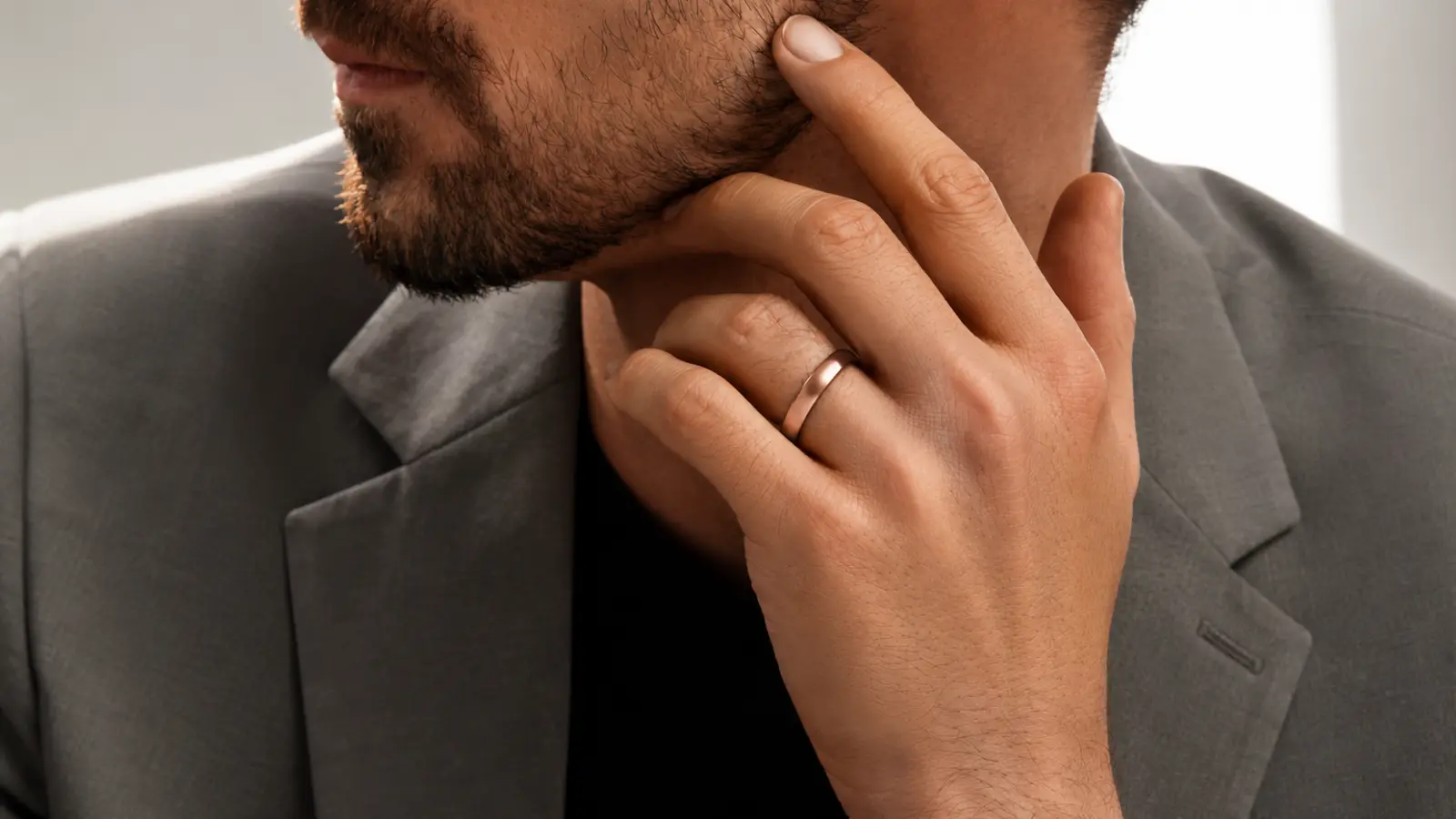
Rose gold occupies a distinctive position in the men’s wedding band market — it is the choice that generates the most questions before purchase and the most satisfaction after. Men who choose rose gold consistently report that the warm, copper-inflected color reads differently in person than they expected: less obviously pink than it appears in photographs, more warm-toned than conventional pink-coded connotations suggest, and more versatile against different skin tones than either yellow or white gold.
Where the color comes from
The color of rose gold comes entirely from the copper content of the alloy. Pure gold is yellow; add copper, and the color shifts toward red-gold. The proportion of copper determines the intensity: 14k rose gold contains more copper relative to gold than 18k does, which makes 14k rose gold pinker and slightly redder, while 18k rose gold is a subtler, more golden rose. This is the opposite of most people’s intuition — higher karat means slightly less pink, not more. For men who want the rose gold look without the most intense pink tone, 18k is worth considering.
Rose gold does not require rhodium plating — the color is inherent to the alloy, not a surface treatment. This gives it the same low-maintenance advantage as yellow gold. What it does do over time is develop a slightly deeper, richer tone as the copper in the alloy oxidizes very gently with wear — many wearers consider this development an improvement.
Finish, skin tone, and the in-person test
Finish matters more with rose gold than with the other gold colors. A polished rose gold band is bright and warm — it reads clearly as pink-gold. A brushed or matte finish reduces the saturation of the color, making the rose tones subtler and giving the band a more structured appearance. Many men who want rose gold but are uncertain about the color intensity find that a brushed finish resolves the uncertainty: the muted surface reads as warm and distinctive without announcing itself.
Rose gold tends to read most naturally against warm and medium skin tones. Against very fair, cool-toned skin, it can read as more noticeably pink. Against deeper skin tones, the warm contrast is particularly striking. The best approach is to see the metal in person against the actual hand — photographs can misrepresent rose gold’s color more than any other gold tone. A 6mm brushed rose gold band in 14k is a well-received choice that tends to look better in daylight than in product photography.
10k vs. 14k vs. 18k Gold — What the Karat Actually Means
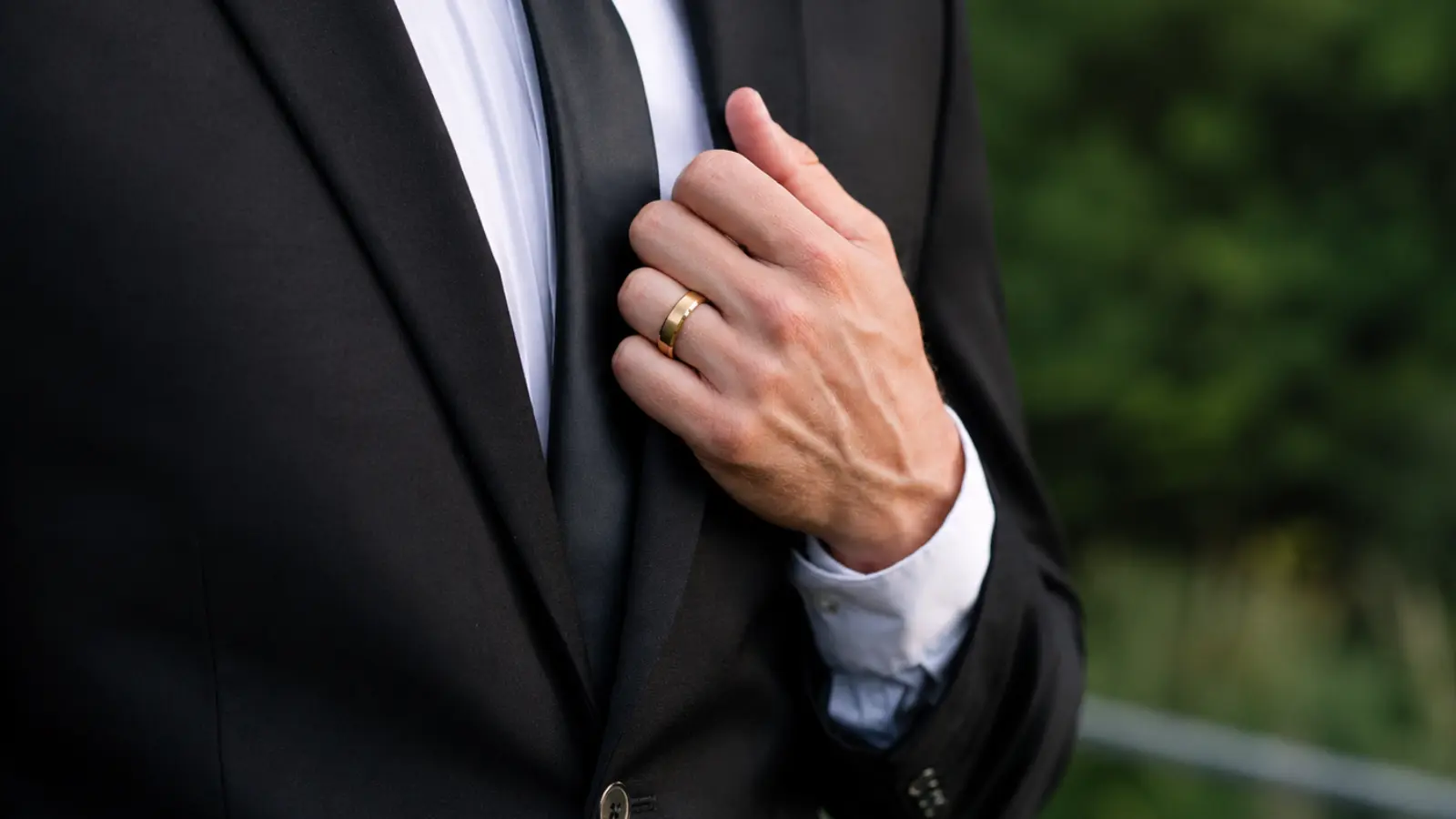
The karat system is the most misunderstood aspect of gold wedding band selection, because it seems like a simple purity measurement but carries practical implications for color, hardness, durability, and long-term value that most buyers do not consider until they are already wearing the ring. Understanding how the numbers translate into real daily experience makes the choice much easier.
The measurement itself is straightforward: karat describes what proportion of the alloy is pure gold, expressed as parts out of 24. 18k is 75% gold. 14k is 58.3% gold. 10k is 41.7% gold — the minimum legal standard in the United States for a piece to be sold as gold.
| Karat | Gold Content | Hardness | Color Depth | Best For |
|---|---|---|---|---|
| 10k | 41.7% | Hardest | Paler, slightly cooler yellow | Maximum budget; most scratch-resistant gold option |
| 14k | 58.3% | Hard | Classic warm yellow — the standard | Most men’s wedding bands — best overall balance |
| 18k | 75% | Softer | Deeper, richer yellow — visibly different from 14k | Men who prioritize color depth; less active hands |
| 24k | 99.9% | Very soft | Pure yellow — deep, saturated | Not practical for wedding rings — too soft for daily wear |
Why 14k tends to be the right choice for most men
14k gold hits the practical sweet spot for daily wear because it is hard enough to resist scratching and deformation across the activities most men’s hands encounter, without sacrificing the warm, clearly gold color that is the point of choosing gold in the first place. The 41.7% alloying metals in 14k provide the hardness that 18k’s higher gold content cannot. 14k is also the most readily available karat in the American men’s wedding band market, which means more style and width options at this karat level than at 18k or 10k.
When 18k is worth choosing
18k gold makes sense for men drawn to the color — the deeper, richer yellow is genuinely different from 14k’s classic warm gold, and for men who notice that difference, it is worth choosing. It also makes sense for men whose daily activities involve minimal ring risk: office workers, men who remove the ring during physical work, or those who treat the ring as an object to care for rather than wear-and-forget jewelry. 18k is also the right choice when the partner’s ring is in 18k and matching karat depth matters visually — the color difference between the two is visible when directly compared.
10k — when it is and is not the right answer
10k gold is the hardest gold alloy available and the least expensive per gram. The compromise is color: the lower gold content produces a noticeably paler, slightly cooler tone in yellow gold that many buyers find underwhelming. In white gold, 10k looks essentially the same as 14k under rhodium plating. In rose gold, 10k produces a slightly more intense pink due to the higher copper proportion. For men whose primary concern is getting a gold ring at the lowest possible price, 10k is legitimate and will last. For men who care about the depth and warmth of the color, 14k is the better starting point even at a modestly higher price.
Are Gold Wedding Bands Durable?
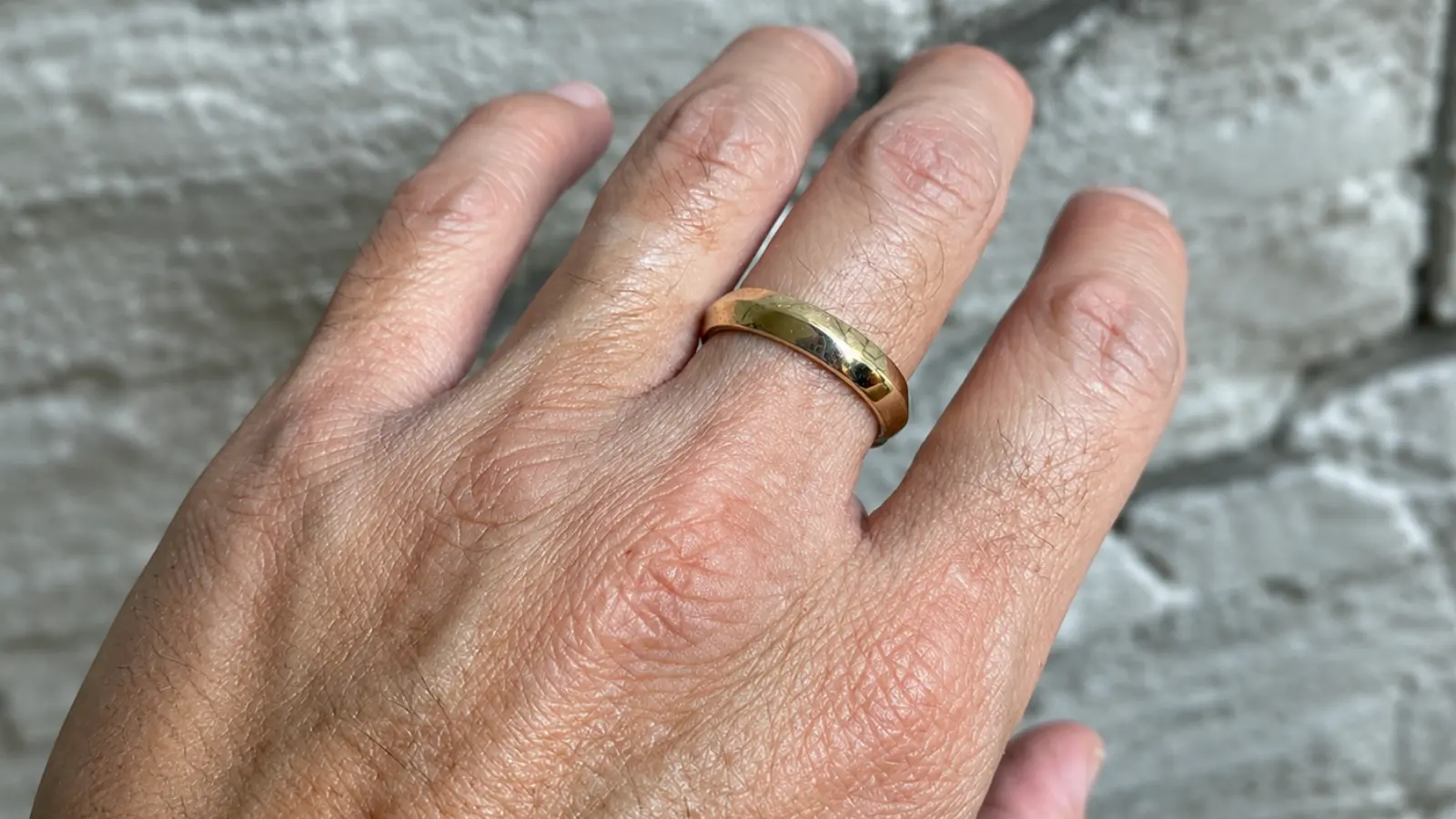
Yes — and the more accurate answer is that gold is durable in a way specific to gold, and different from what most people mean when they use the word. Understanding how gold actually wears makes the durability question easier to answer for a specific lifestyle.
How gold wears differently from harder metals
Gold is relatively soft by jewelry standards — softer than titanium, softer than tungsten. When a gold ring encounters a hard surface, the ring surface will scratch. But the scratch in gold works differently than in harder materials: displaced gold atoms do not leave the ring. They redistribute across the surface, creating the gradual surface texture jewelers call a patina. The ring’s total gold content does not decrease from scratching; the surface just changes appearance.
This means a scratched gold ring can be returned to its original polish by a jeweler at any point. The process removes a very thin layer of surface gold to level the surface — but over many decades and multiple polishings, this is so gradual as to be essentially immeasurable for most wearers. For most purposes, a gold wedding ring can be polished throughout a lifetime without significant material loss.
Activities that warrant removing a gold ring
Gold wedding bands hold up to ordinary daily wear — desk work, driving, cooking, moderate physical activity — without special precautions. The situations that genuinely warrant removing the ring are heavy manual labor with tools that could crush or deform the metal, activities with strong chemicals (certain cleaning agents, pool chemicals at high concentration, and industrial solvents can affect the surface), and contact sports or gym movements where the ring could catch on equipment.
Many men in these environments develop the habit of removing their gold ring for work hours and wearing it at all other times. A ring dish by the door or a consistent spot on the bathroom counter makes this habit easy without the risk of misplacing the ring. Some men who work in physically demanding environments choose a silicone band for work and keep the gold ring for everything else — a practical division that costs very little and solves the problem entirely.
The long view on gold durability
A 14k yellow gold wedding band, maintained with occasional professional inspection and polishing, can last a lifetime and beyond — it is a piece that can be handed down. The rings that fail are typically those with structural issues at a setting (for stone-set bands) or sizing done incorrectly. A plain gold band, sized correctly and worn as a ring rather than a tool, is one of the most durable daily-wear objects a person can own.
Gold vs. Platinum for Men’s Wedding Bands
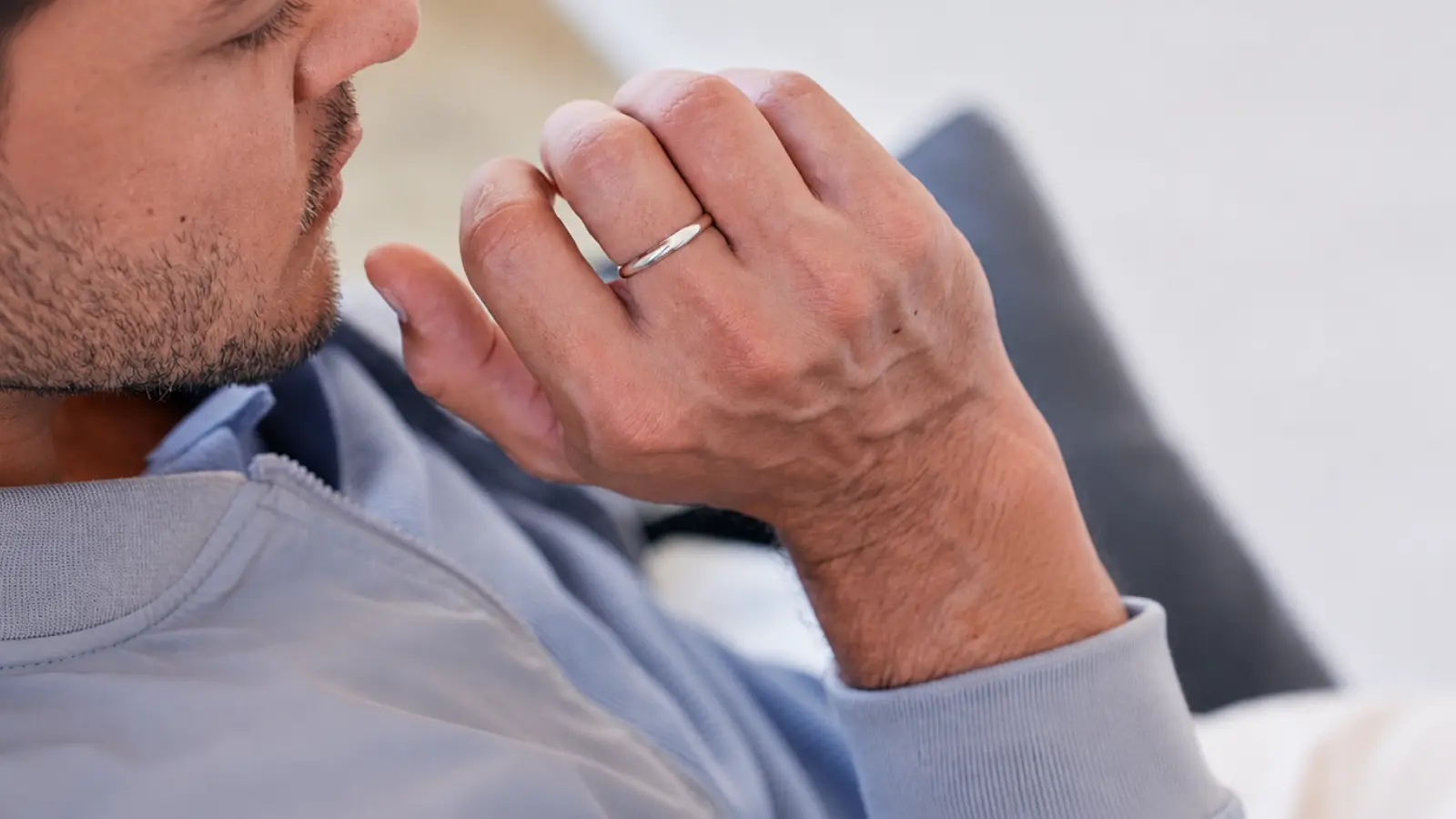
The comparison between gold and platinum comes up frequently for men choosing precious metal wedding bands. The practical differences are significant and not always obvious from the way the two metals are typically presented in jewelry stores.
| 14k Gold | 18k Gold | Platinum | |
|---|---|---|---|
| Color | Yellow, white, or rose (plated for white) | Richer yellow, white, or rose (plated for white) | Naturally white — no plating needed |
| Durability | Good — scratches but does not lose material | Slightly less scratch-resistant than 14k | Excellent — develops patina; material not removed by scratching |
| Maintenance | Yellow and rose: minimal · White: replating every 2–4 years | Same as 14k by color | None — naturally white, develops patina over time |
| Weight | Medium | Medium | Noticeably heavier — denser metal |
| Hypoallergenic | Usually yes, unless nickel alloy in white gold | Generally yes | Yes — no known allergens |
| Resizable | Yes | Yes | Yes — requires a platinum-experienced jeweler |
| Price range (plain band) | $300 – $900 | $500 – $1,400 | $800 – $2,500+ |
| Best for | Most men — best overall balance of properties | Men who prioritize color richness over scratch resistance | Men who want a silver-toned band with no maintenance and maximum precious-metal durability |
The decision between white gold and platinum is the most consequential comparison, because both serve a similar visual purpose but have fundamentally different maintenance profiles. White gold requires replating. Platinum does not. At similar price points — 18k white gold and platinum are closer in cost than 14k and platinum — the maintenance advantage of platinum becomes a meaningful practical argument that is hard to dismiss.
Platinum is also denser than gold, which means a platinum band feels heavier on the hand than a gold band of the same dimensions. Some men specifically want that — a substantial, weighty feel that makes the ring’s presence more physical. Others find the weight intrusive. If weight is a consideration, trying both metals in person is worth the time. For men who want yellow or rose gold, the platinum comparison is not relevant — platinum is only naturally white, and in those cases the choice comes down to gold color and karat level.
Polished, Brushed, and Matte — How Finish Affects the Ring
The finish of a gold wedding band — the surface texture applied to the exterior — affects the ring’s appearance at least as much as the choice of gold color. It is often the last decision couples make and the one they have thought least about. Understanding what each finish actually does in daily wear helps make the choice intentional rather than incidental.
Polished finish
A polished finish is the mirror-bright, highly reflective surface most people picture when they think of a gold ring. It catches light dramatically, reads as formal and traditional, and is the Platonic version of a wedding band — recognizable, warm, and unmistakable. The practical trade-off is visibility of wear. A polished surface shows fine scratches more clearly than any other finish, because the scratches interrupt the mirror quality of the surface. For men who are hard on their hands, a polished finish may develop a scuffed appearance within months. A jeweler can restore the polish, but the cycle of scratching and repolishing is a reality of polished gold for active hands.
Brushed finish
A brushed finish has fine, parallel directional lines across the metal surface, created by drawing an abrasive across the gold in one direction. The result is a satin-like texture that catches light differently at different angles — not reflective the way polished is, but not flat either. Brushed gold reads as contemporary and understated, which is partly why it has become the dominant finish in modern men’s wedding band design.
The practical advantage: minor scratches are far less visible against a brushed surface because the texture already contains directional lines that a new scratch simply blends into. A brushed band worn hard for six months looks essentially the same as when purchased; a polished band worn the same way looks noticeably different. For men who use their hands actively, brushed is the most maintenance-free choice in gold. The one thing a brushed finish loses with enough wear is the directionality of the lines — a jeweler can re-brush the surface to restore the look, which is quicker and less expensive than a full repolish.
Matte finish
A matte finish is similar to brushed but without the directional texture — abraded in multiple directions to produce a uniformly flat, non-reflective surface. The result is the most understated of the three: no shine, no texture direction, just the color of the metal in a quiet, flat state. Matte gold looks slightly industrial in the best sense — deliberate, modern, and stripped of traditional jewelry signals. It behaves similarly to brushed in daily wear, hiding minor scratches reasonably well.
Combination finishes
Many men’s gold bands combine finishes for visual interest — the most common is a brushed center channel with polished beveled edges, which creates a clean geometric distinction between the two surfaces. This combination also partially solves the wear problem: the brushed center hides daily scratches, and the polished edges are narrow enough that their wear is less visible. Combination finish bands represent the mainstream of contemporary men’s gold wedding band design and are widely available across most jewelry collections.
How to Choose the Right Gold Tone
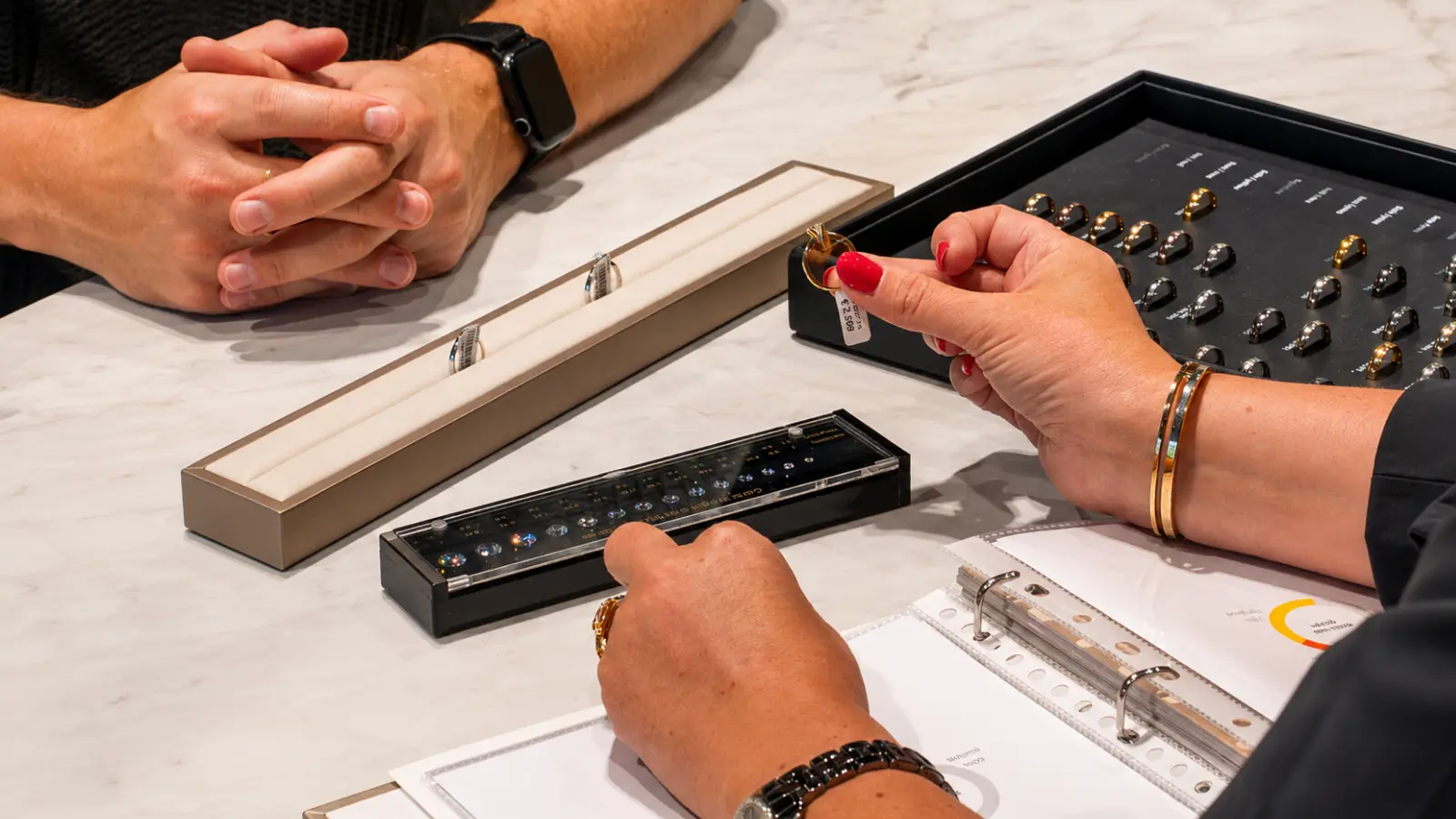
The gold tone decision — yellow, white, or rose — is ultimately personal, but it is personal in a way that benefits from a few specific frameworks. This ring will be on the hand every day for the foreseeable future, in every photograph, and in every interaction where the hand is visible. Getting it right matters.
Skin tone as the first filter
Gold colors read against skin in specific ways worth understanding before falling in love with a ring on a white display card. Yellow gold tends to complement warm and olive skin tones most naturally, where the warmth of the gold aligns with the underlying tone of the skin. Against cooler, paler skin, yellow gold creates a contrast that some men love and others find too prominent. White gold and platinum work across a wider range of skin tones because their neutrality does not align or contrast with any particular undertone. Rose gold reads most distinctively against warm and medium tones, creating a warmth that is particularly striking against deeper skin.
Coordinating with a partner’s ring
The choice that matters most here is metal color, not karat or finish. Matching metal colors — both in yellow gold, both in white, both in the same metal — creates the strongest visual connection between the two rings. Different metals can work deliberately, but they work deliberately, meaning the difference needs to be a conscious choice rather than the result of shopping independently and ending up with rings that unintentionally clash. Many couples choose complementary rather than matching approaches: the same metal color in different widths or finishes, which creates visual coherence with individual variation.
Existing jewelry and the overall look
For men who wear a watch daily, the metal tone of the watch is worth considering — a yellow gold band against a silver-toned watch is a combination some men are comfortable with and others find jarring. Matching the ring metal to the primary jewelry tone already being worn creates a more coherent overall look. For men who wear no other jewelry, this consideration does not apply, and the ring can be chosen purely on its own terms.
The in-person test — which nothing replaces
What tends to work against making a good decision: choosing a gold tone based primarily on what is most popular nationally, what appears most frequently in wedding photography, or what someone else recommended without reference to the specific hand it will be worn on. Gold wedding bands photograph differently than they look in person — rose gold in particular looks more intensely pink in some photographic lighting than it does in natural light.
The practical recommendation: narrow the choice to two finalists, try both in the actual metal and width intended, look at them in natural light on the actual hand, and let that experience make the decision. Most men know immediately which ring is right once they see it on their own hand. The frameworks above make it easier to get to that moment with the right two options in front of you.
Men’s Gold Wedding Band Inspiration
Men’s gold wedding bands can look completely different depending on the color, finish, width, and style you choose. Explore our inspiration board for yellow gold bands, white gold wedding rings, rose gold designs, brushed finishes, classic styles, and modern gold wedding band ideas.
Choosing a Gold Wedding Band Made to Last
A gold wedding band is not only a choice about color or metal it is something that becomes part of everyday life. The right ring should feel natural on his hand, match his personal style, and age in a way that makes the years of wear part of its story.
Whether he chooses the timeless warmth of yellow gold, the modern look of white gold, or the distinctive character of rose gold, the best wedding band is the one he will still feel connected to decades after the wedding day.
Frequently asked questions (FAQ)
What are the best gold wedding bands for men?
The best gold wedding bands for men depend on lifestyle, preferred color, and maintenance expectations. 14k yellow gold is one of the most popular choices because it balances durability, appearance, and price. White gold works well for men who prefer a silver-toned look, while rose gold offers a warmer and more distinctive style.
What is the best type of gold for a men’s wedding band?
For most men, 14k gold offers the best balance between durability and gold content. It is harder than 18k gold, more resistant to daily wear, and still has the classic appearance people expect from a gold wedding band. 18k gold has a richer color but is softer, while 10k gold is stronger but contains less pure gold.
Is 14k or 18k gold better for a men’s wedding band?
Neither option is better for everyone. 14k gold is usually preferred for everyday wedding bands because it offers more durability and a lower price. 18k gold contains more pure gold and has a richer color, but it is softer and may show wear more easily. The right choice depends on lifestyle and personal preference.
Is yellow gold or white gold better for men?
Yellow gold and white gold offer different advantages. Yellow gold has a classic warm appearance and does not require plating maintenance. White gold has a modern silver-toned look but usually needs rhodium replating over time to maintain its bright white finish. The better option depends on style preference and maintenance expectations.
Are gold wedding bands durable enough for men?
Yes. Gold wedding bands, especially 14k gold, are durable enough for everyday wear for most men. Gold can develop scratches over time, but many people consider this natural aging part of the character of the ring. Regular care and occasional professional polishing can help maintain its appearance.
How long does a gold wedding band last?
A well-made gold wedding band can last for decades and often becomes a piece passed down through generations. Longevity depends on the gold karat, ring thickness, daily activities, and maintenance. Simple gold bands are especially known for lasting because they have fewer details that can wear over time.