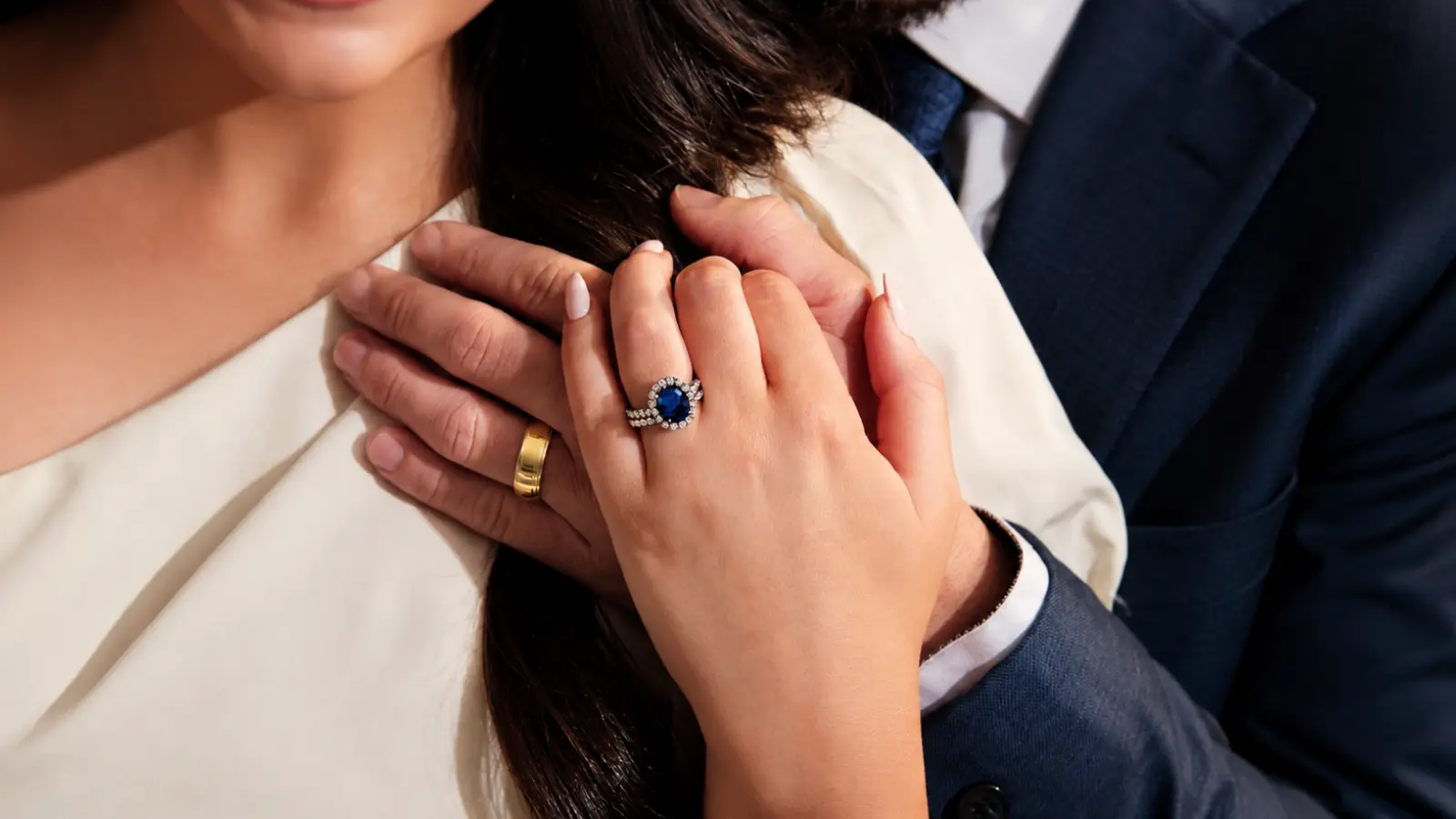
Sapphire wedding rings are wedding rings that feature sapphire, a highly durable gemstone from the corundum family known for its rich color, symbolic meaning, and exceptional strength for everyday wear. Although blue sapphire is the most traditional choice, sapphires also come in shades of pink, yellow, white, and rare peach-orange tones.
The appeal of sapphire comes from its balance of beauty and practicality. With a 9 rating on the Mohs hardness scale, sapphire is one of the few colored gemstones durable enough for a lifetime of daily wear, while still offering the personality and symbolism many couples want from a non-diamond ring.
This guide explains sapphire wedding rings, including their meaning, durability, colors, blue sapphire styles, sapphire and diamond designs, wedding bands, metal pairings, and how sapphire compares with other wedding rings and wedding bands.
What Do Sapphire Wedding Rings Mean?
The symbolism attached to sapphire is not the result of one culture’s invention or a modern marketing effort. It appears independently across Persian history, medieval European tradition, ancient South Asian courts, and the Catholic Church, all of which assigned sapphire the same cluster of meanings: loyalty, fidelity, truth, and wisdom. That kind of convergence, across cultures with little to no contact, suggests the symbolism is genuinely rooted in something, likely the stone’s blue color and its associations with sky, heaven, and constancy.
In medieval Europe, clergy wore sapphires not as decoration but as a theological statement: the stone was believed to reflect the holiness of the wearer and to protect against impurity. In ancient Persia, the earth was believed to rest on a sapphire whose color painted the sky. In Hindu tradition, sapphire is associated with the planet Saturn and is believed to bring clarity and protection. In each case, the stone carries a sense of permanence and fidelity that maps directly onto what a wedding ring is meant to represent.
Why the Symbolism Matters for a Wedding Ring Specifically
Many gemstones have symbolic associations, but most of them are assigned rather than earned, a marketing decision made at some point in the last century. Sapphire’s fidelity symbolism predates the modern jewelry industry by millennia. For couples who care about wedding ring meaning beyond material value, sapphire is one of the few stones where the historical resonance is genuine.
The blue of the stone does some of this work on its own. Blue is the color most associated with constancy and depth across cultures: the color of still water, of sky that does not change. A blue sapphire on a wedding ring communicates something before anyone asks what the stone is or what it means. The meaning is visible in the color itself.
The Diana Connection and Its Legacy
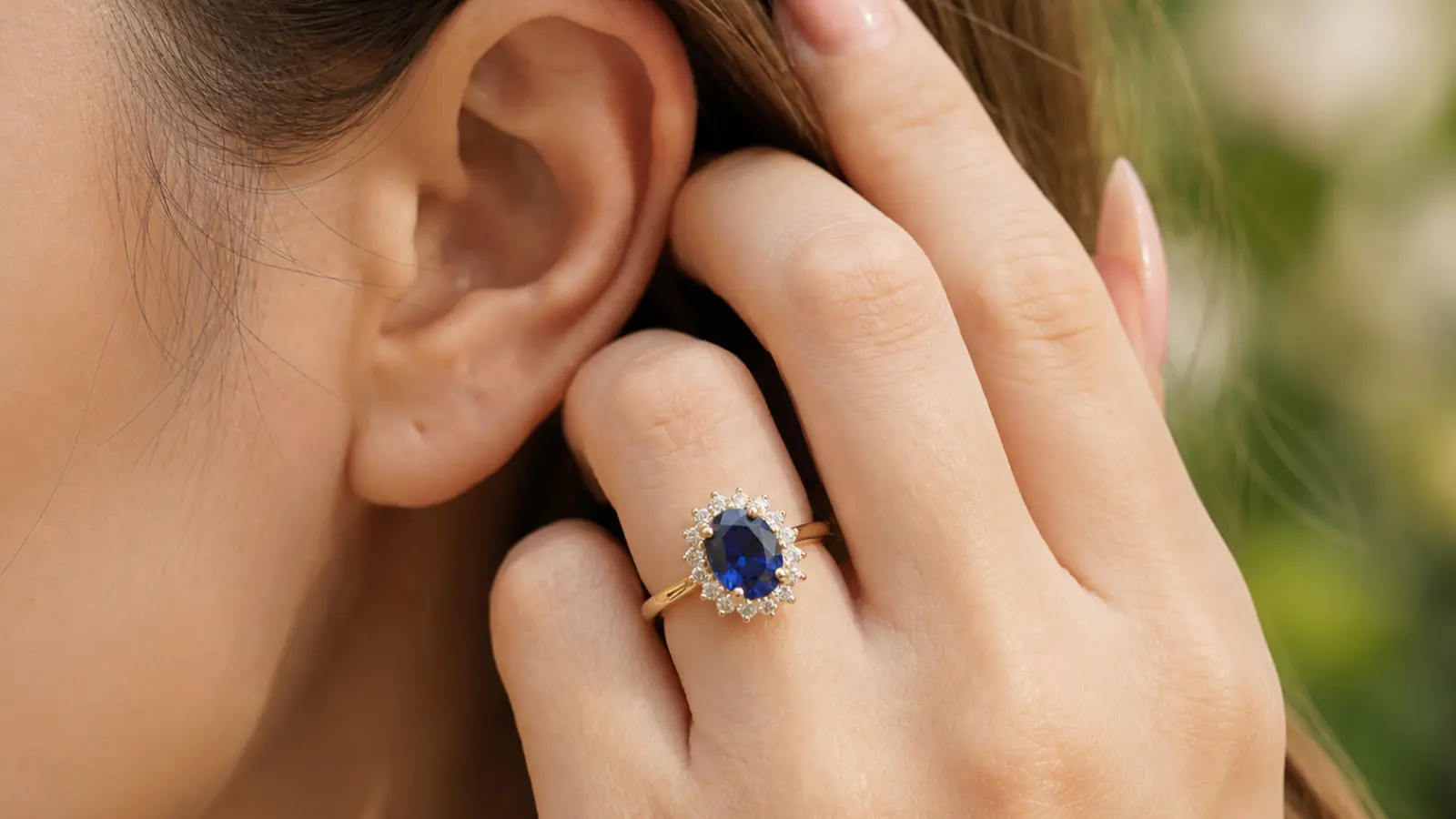
Princess Diana’s engagement ring, an 18-carat oval blue sapphire surrounded by diamonds in white gold and created by Garrard, is now worn by Catherine, Princess of Wales, and remains one of the most recognized pieces of jewelry in the world. Its influence on sapphire’s popularity in bridal jewelry over the past four decades has been significant. But sapphire’s place in royal jewelry predates Diana considerably: sapphires appear in British, French, Russian, and Indian royal jewelry collections across centuries, which is part of why the stone reads as both historically weighty and immediately recognizable.
Are Sapphire Rings Durable Enough for Daily Wear?
Yes, and more durably than almost any other colored gemstone option available. Sapphire scores a 9 on the Mohs scale of mineral hardness, which measures a stone’s resistance to surface scratching. Diamond is a 10; everything else is below sapphire. In the context of daily wear, the practical difference between a 9 and a 10 is negligible: both resist the kinds of contact that a ring encounters in everyday life without leaving visible marks.
What Mohs hardness does not measure is toughness, a stone’s resistance to chipping and breaking from impact. Here, sapphire also performs exceptionally well. Unlike emerald, which has a comparable hardness rating but is made fragile by its natural internal inclusions, sapphire is a structurally stable stone with no inherent cleavage planes that make it prone to splitting. An impact that would fracture an emerald along an existing inclusion is unlikely to damage a sapphire significantly.
How Sapphire Compares to Other Gemstones for Daily Wear
| Gemstone | Mohs | Toughness | Daily Wear |
|---|---|---|---|
| Diamond | 10 | Good (cleaves on impact) | Excellent |
| Sapphire | 9 | Excellent | Excellent |
| Ruby | 9 | Excellent | Excellent |
| Aquamarine | 7.5–8 | Good | Good — some care |
| Emerald | 7.5–8 | Poor (inclusions) | Moderate — protective setting |
| Moonstone | 6–6.5 | Poor (cleavage) | Low |
| Opal | 5.5–6.5 | Poor (brittle) | Low |
The table makes the comparison easy to see at a glance: sapphire and ruby are the only colored stones that match diamond’s everyday resilience, which is exactly why both show up so often in wedding jewelry meant to be worn without a second thought.
What About Heat Treatment?
The vast majority of sapphires on the market, typically estimated at 80 to 95 percent by trade sources, are heat-treated to enhance color and clarity. This is fully accepted practice in the gemstone industry, and it does not compromise durability. A heat-treated sapphire is just as hard, just as tough, and just as durable as an untreated one. The treatment changes the appearance of the stone, not its physical properties.
Untreated sapphires (stones certified to show no evidence of heat treatment) command significant price premiums because they are rarer. For a wedding ring, the choice between treated and untreated is primarily a budget and rarity question, not a durability one.
Cleaning and Care
Sapphire requires almost no special maintenance. Warm water, a soft-bristle brush, and mild dish soap are usually enough to clean a wedding ring at home safely. Unlike emerald, sapphire is safe in an ultrasonic cleaner, though it is always worth confirming with your jeweler before the first cleaning. The ring can be worn through normal hand-washing, swimming, and daily activities without concern. The metal it is set in may require more care than the stone itself: yellow gold scratches and develops patina over time, white gold may need replating, and platinum develops a matte surface sheen. The sapphire will outlast most of those concerns.
Blue, Pink and White Sapphire Wedding Rings
Blue sapphire is the default, the image most people form immediately when they hear the word sapphire. And the range within blue sapphire is wider than it might initially seem. The most prized shade, cornflower blue, is a medium-to-medium-deep blue with a slightly violet undertone and a velvety visual quality that does not darken to near-black in low light. That quality, maintaining visible color saturation across different lighting conditions, is what separates a genuinely fine blue sapphire from one that looks beautiful in a jeweler’s spotlight and disappoints everywhere else.
Origins and What They Mean for Color
Kashmir sapphires, from a remote region in northwestern India, are considered the world benchmark for blue sapphire color. They have a distinctive silky appearance that comes from microscopic inclusions that scatter light within the stone, creating a velvety depth that no treatment can replicate. Kashmir sapphires have not been commercially mined in significant quantities since the early twentieth century, which makes them extraordinarily rare: museum pieces and auction lots more than everyday jewelry options.
Ceylon sapphires, from Sri Lanka, are the most widely available and prized of the accessible options. They range from pale cornflower to deeper royal blue and are the origin behind most fine blue sapphires in the current market. Burmese sapphires tend to be deeper and more intensely saturated, closer to royal blue, with less of the violet-blue nuance associated with Kashmir or Ceylon. Madagascar has emerged as a significant sapphire source producing stones in a wide range of qualities and colors.
What to Look for When Buying
Color is the most important factor in a sapphire purchase, more so than in diamonds, where cut drives brilliance. A stone that shows its color well in natural daylight, in indoor incandescent light, and in mixed lighting is worth significantly more than one that only performs under ideal conditions. Ask to see the stone in different light sources before purchasing. Evaluate the color when the stone is face-up; the body color viewed from the side is less relevant to how it will actually look on the hand.
Avoid stones that are very dark, near navy or near-black, as they lose the luminosity that makes sapphire beautiful. Avoid stones that are very light and pale without any depth, unless the pale quality is intentional and appealing to you. The sweet spot is a stone that holds its color across conditions without going dark or washed-out.
The Full Blue Sapphire Color Spectrum
Within blue sapphire, there is considerable variation worth understanding: pale sky blue, medium cornflower, medium-deep violet-blue, deep royal blue, and inky near-black. Each reads differently in a ring setting and pairs differently with metals. Lighter stones read as fresh and modern; deeper stones read as more traditional and dramatic. A stone in the medium-to-medium-deep range tends to work best across the widest range of settings, styles, and daily lighting conditions.
Pink and White Sapphire Wedding Rings
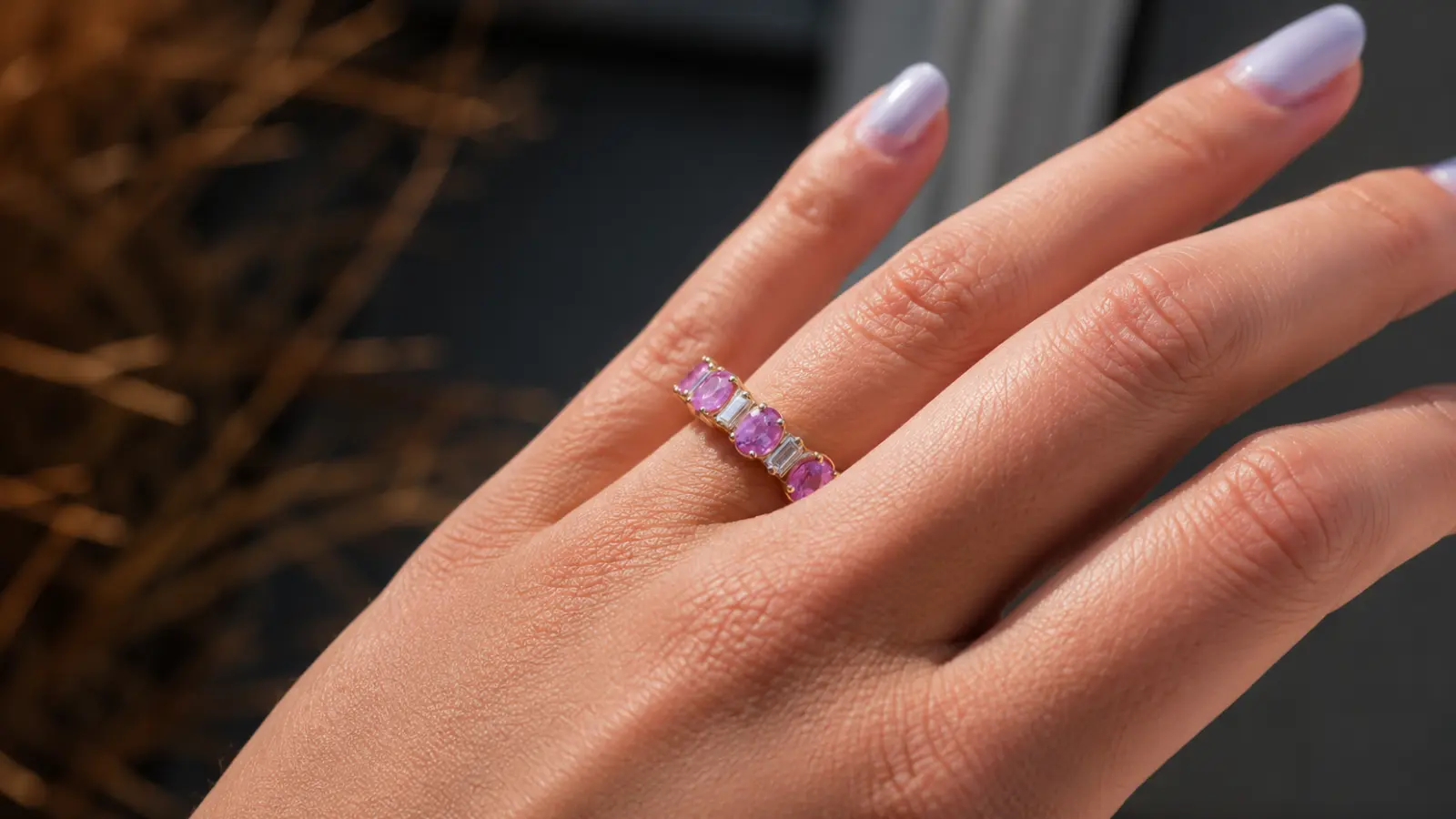
Blue gets most of the attention, but pink and white sapphire each solve a different problem for a different bride. A pink sapphire wedding ring carries the same hardness and durability as its blue counterpart, with a softer, more romantic presence that pairs naturally with rose gold and reads as distinctly feminine without crossing into pastel territory. Hot pink stones lean bold and modern; pale blush stones lean soft and vintage.
A white sapphire wedding ring solves a different problem entirely. It is colorless, like a diamond, but typically priced well below diamond at comparable size, and it carries the same 9 on the Mohs scale that makes blue and pink sapphire so practical. It will not match a diamond’s fire and brilliance stone for stone, since diamond’s optical properties are unique to diamond, but for a bride who wants the clean, classic look of a colorless stone on a sensible budget, white sapphire is a credible option worth seeing in person before deciding.
Sapphire and Diamond Wedding Rings
The combination of sapphire and diamond has a long history in fine jewelry, for practical reasons that go beyond aesthetics. Diamonds and sapphires share a hardness compatibility that means they can be set in the same ring without one stone damaging the other over time. This is not the case with all stone pairings: setting a soft stone adjacent to a harder one risks the harder stone abrading the softer over years of wear.
The visual dynamic between blue sapphire and diamonds is one of contrast and emphasis. Diamonds are colorless and brilliant, meaning they reflect white light in spectacular ways. Sapphire holds color: it absorbs certain wavelengths and reflects others, giving it a deep, saturated presence rather than brilliance. Together, diamond wedding rings with sapphire accents create a combination where each stone makes the other look better. The diamonds make the sapphire appear richer; the sapphire gives the diamonds a color reference that makes their white light more dramatic.
Design Configurations
Sapphire and diamond come together in a handful of configurations that have stood the test of decades in bridal jewelry, each suited to a slightly different taste:
- Sapphire center stone with diamond halo. The most recognizable configuration: a sapphire of any shape surrounded by a frame of small diamonds. The halo amplifies the apparent size of the sapphire and adds brilliance around its perimeter. This is the design that most closely resembles Diana’s ring and is among the most popular bridal jewelry configurations currently in production.
- Sapphire and diamond eternity band. Alternating sapphires and diamonds set all the way around the band, or alternating sections of each. The combination gives the band constant visual interest that a single-stone eternity band does not have. It works both as a standalone wedding ring and as a complement to a plain engagement ring or solitaire.
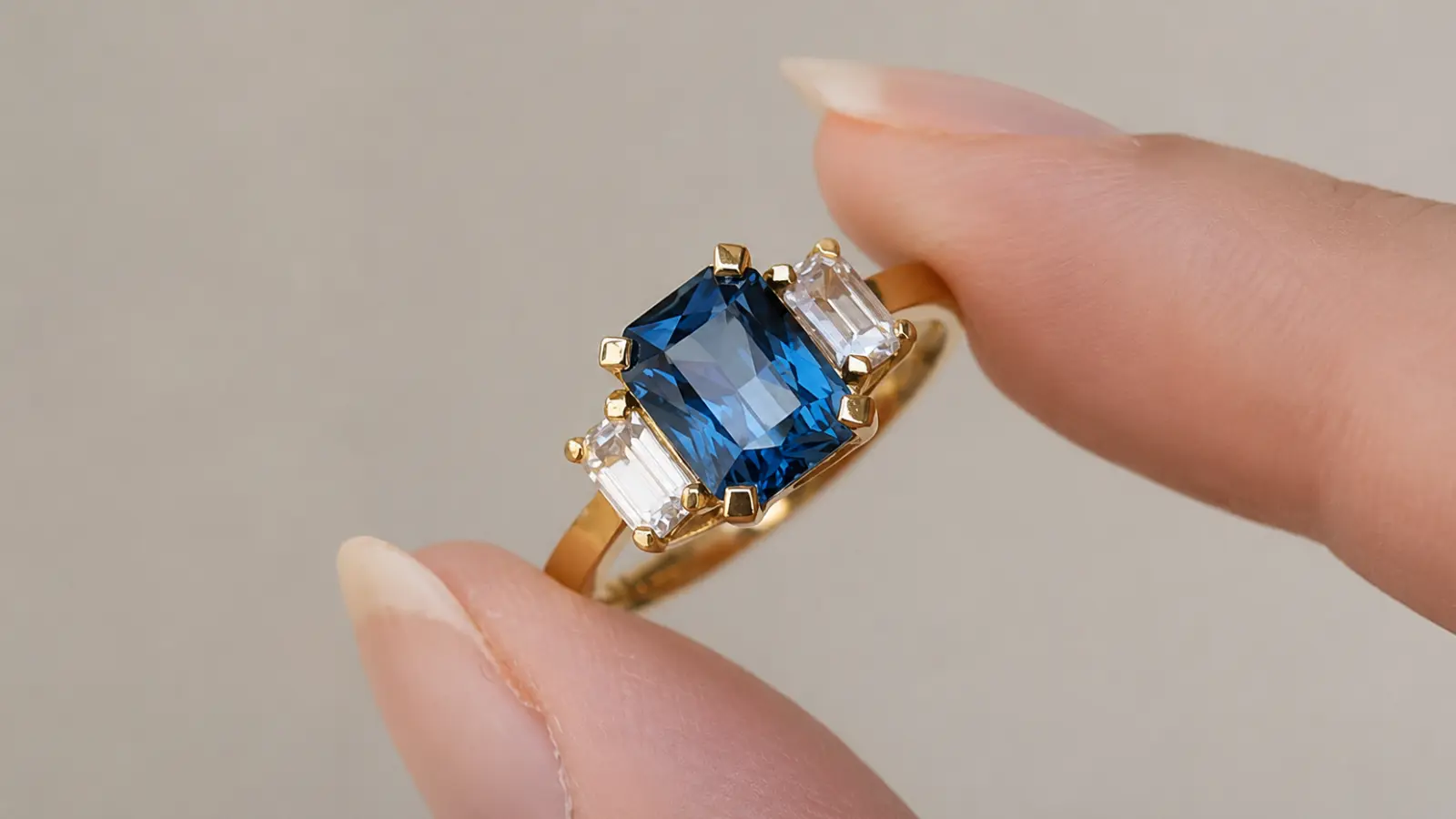
- Three-stone with sapphire and diamonds. A sapphire flanked by two diamond side stones, or a diamond center flanked by two sapphires. The three-stone configuration traditionally represents the past, present, and future of a relationship, which gives it its own layer of symbolism independent of the stones.
- Diamond band with sapphire accents. A more subtle approach: small sapphires channel-set or pavé-set among diamonds in an otherwise standard wedding band. This works particularly well for couples who want a primarily metal-and-diamond ring with a hint of personal color.
None of these configurations is more “correct” than another. The right one usually comes down to how much color the couple wants the sapphire to contribute versus how much brilliance they want the diamonds to carry.
Metal Choices for Sapphire and Diamond Combinations
Platinum is the most structurally ideal metal for a ring that combines sapphire and diamonds: it is the hardest of the precious metals, does not wear down over time, and its natural white color does not require replating as white gold does. White gold is a close second visually and significantly more affordable. Yellow gold creates a warmer overall look that some couples prefer for its vintage quality; the combination of yellow gold, blue sapphire, and diamonds appeared frequently in Edwardian and Art Deco jewelry from the early twentieth century and is experiencing renewed popularity. For more on metal choices, the gold wedding rings and platinum wedding rings cover the decision in full.
Sapphire Wedding Bands
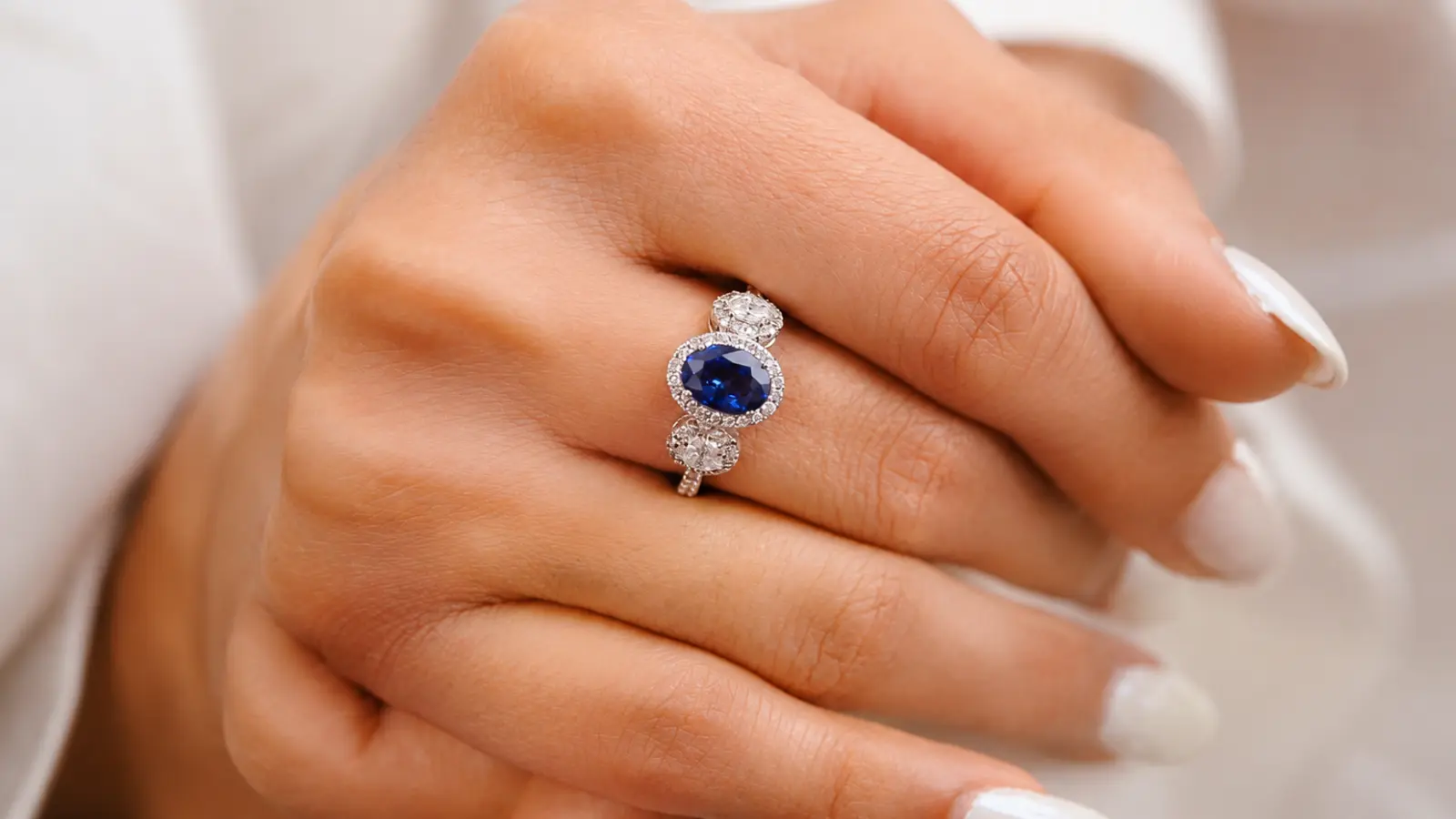
A sapphire wedding band, a ring in which sapphires are set into the band itself rather than presented as a prominent raised center stone, is a different aesthetic proposition from a sapphire solitaire or halo ring. The band configuration keeps a lower profile on the finger, tends to be more comfortable for daily wear, and presents the stone or stones in a way that reads as continuous color rather than a single focal point.
Style Options Within the Band Category
A band-style setting groups into a few recognizable formats, each with its own tradeoffs around comfort, visual impact, and resizing:
- Full sapphire eternity band. Sapphires set all the way around the circumference of the ring. The result is a ring with color visible from every angle. Significant visual impact, though it comes with a sizing consideration: rings with stones set all the way around cannot be resized as easily as plain bands or rings with stones only on the top half. This is worth knowing before purchasing, particularly if ring size changes over time are anticipated.
- Half-eternity sapphire band. Sapphires on the front half of the ring, with plain metal on the back. This is the more comfortable daily-wear configuration and, practically speaking, the most common choice. The stones are visible when looking at the hand; the plain metal section sits against the palm without digging in. Half-eternity bands are also easier to resize than full eternity bands.
- Three-stone sapphire band. Three sapphires, typically graduating in size from smaller side stones to a larger center, set into a low-profile band. Minimal, clean, and highly compatible with plain engagement rings or solitaires. The color shows through without competing for attention.
- Channel-set sapphire band. Sapphires set flush into a channel in the metal, with no prongs visible. The stones are protected by the metal walls on either side, which makes this one of the most durable settings for daily wear. The resulting look is sleek and modern: color embedded into the ring rather than sitting above it.
For a bride choosing between these, the practical question usually settles it faster than the aesthetic one: how much resizing flexibility matters, and how much color is wanted on every angle of the hand versus just the top.
Sapphire Wedding Bands for Men
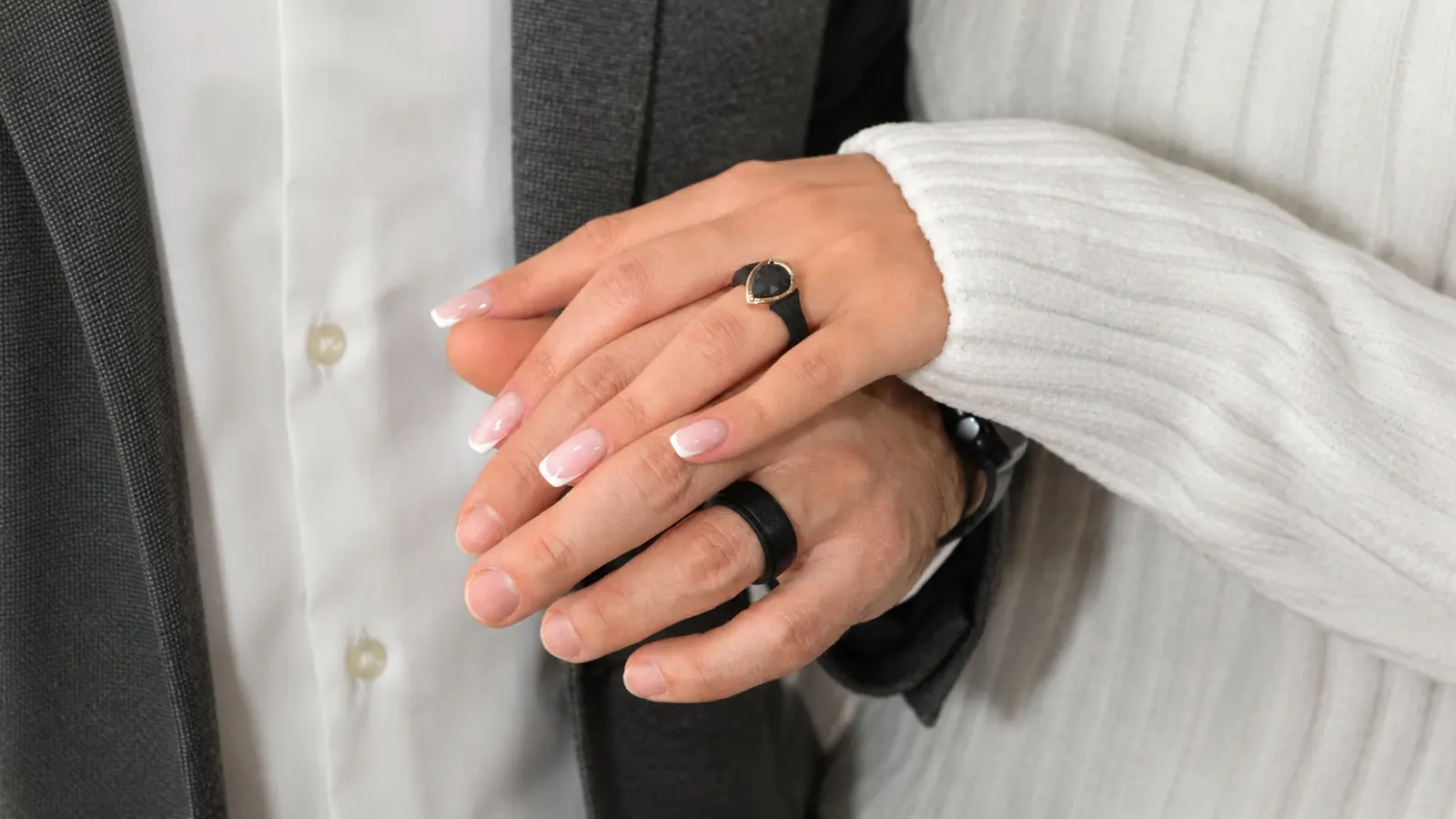
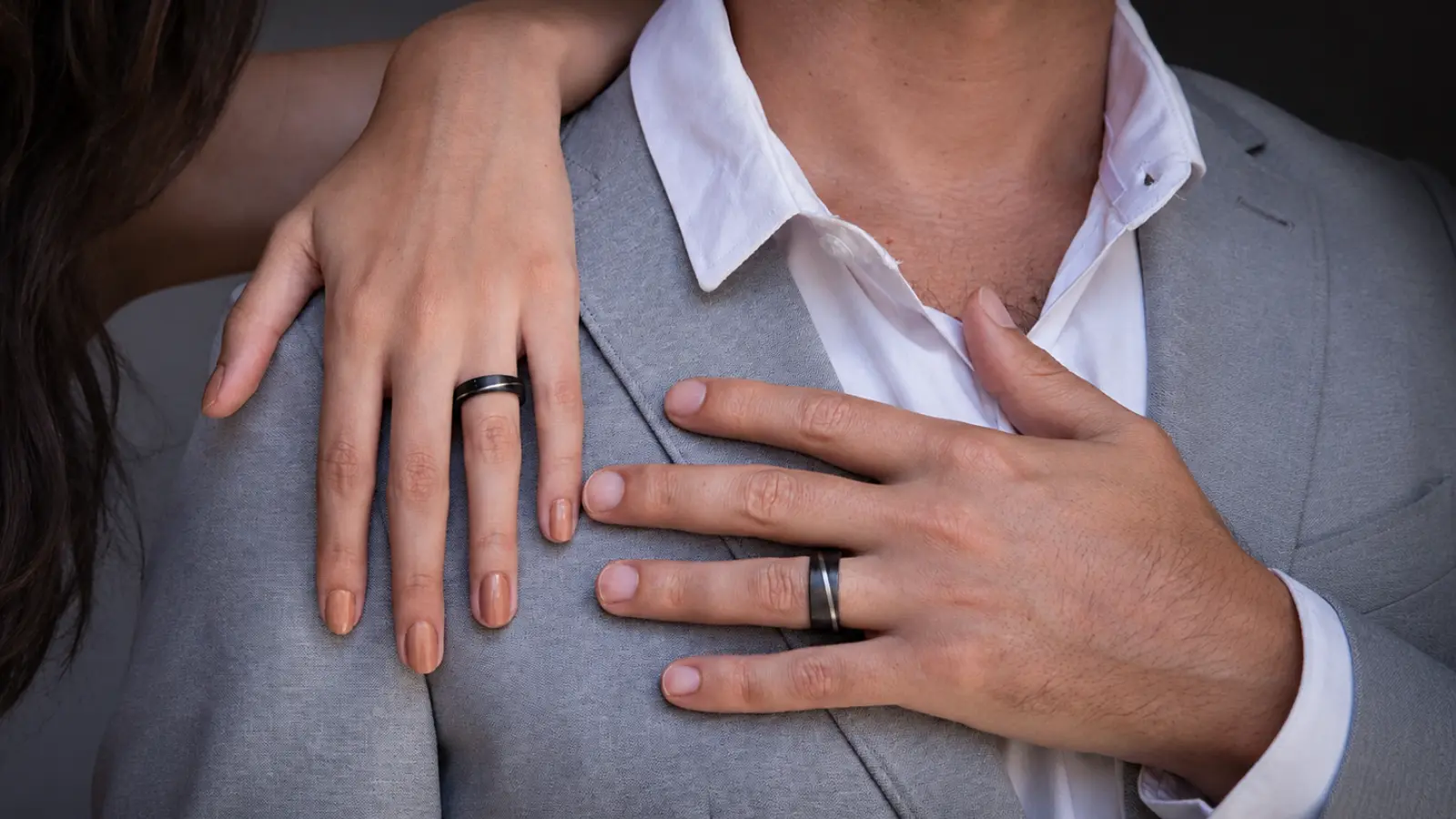
Sapphire in men’s wedding bands is significantly more common than it might seem, and the options are better than many couples realize. A wide yellow gold band with a single deep blue oval sapphire set into the center reads as substantial and confident rather than delicate. Black sapphire, a deeply saturated, nearly opaque variety, has a muted, steely quality that works well in wider bands alongside darker metals or oxidized finishes. Small accent sapphires channel-set along the edge of a metal band add color without prominence. For men drawn to a less conventional ring, a sapphire element in a metal band offers a recognizable gemstone that reads as sophisticated rather than flashy. See the men’s wedding bands for full context on style and design for men’s rings.
Vintage Sapphire Wedding Bands
Sapphire has appeared in fine jewelry across every major design period of the twentieth century: Edwardian designs with filigree settings and milgrain edges, Art Deco pieces with geometric channel-setting and strong color contrast, Mid-Century modern rings with clean lines and minimal ornamentation. All of these design vocabularies are available both as genuine antique pieces and as contemporary rings made in vintage style. Yellow gold with bezel-set oval sapphires, or platinum with old-cut diamonds and calibré-cut sapphire accents, are both configurations with a genuine historical lineage. For couples drawn to the visual language of another era, sapphire is the gemstone most consistently present across those periods of jewelry history.
Who Should Choose a Sapphire Wedding Ring?
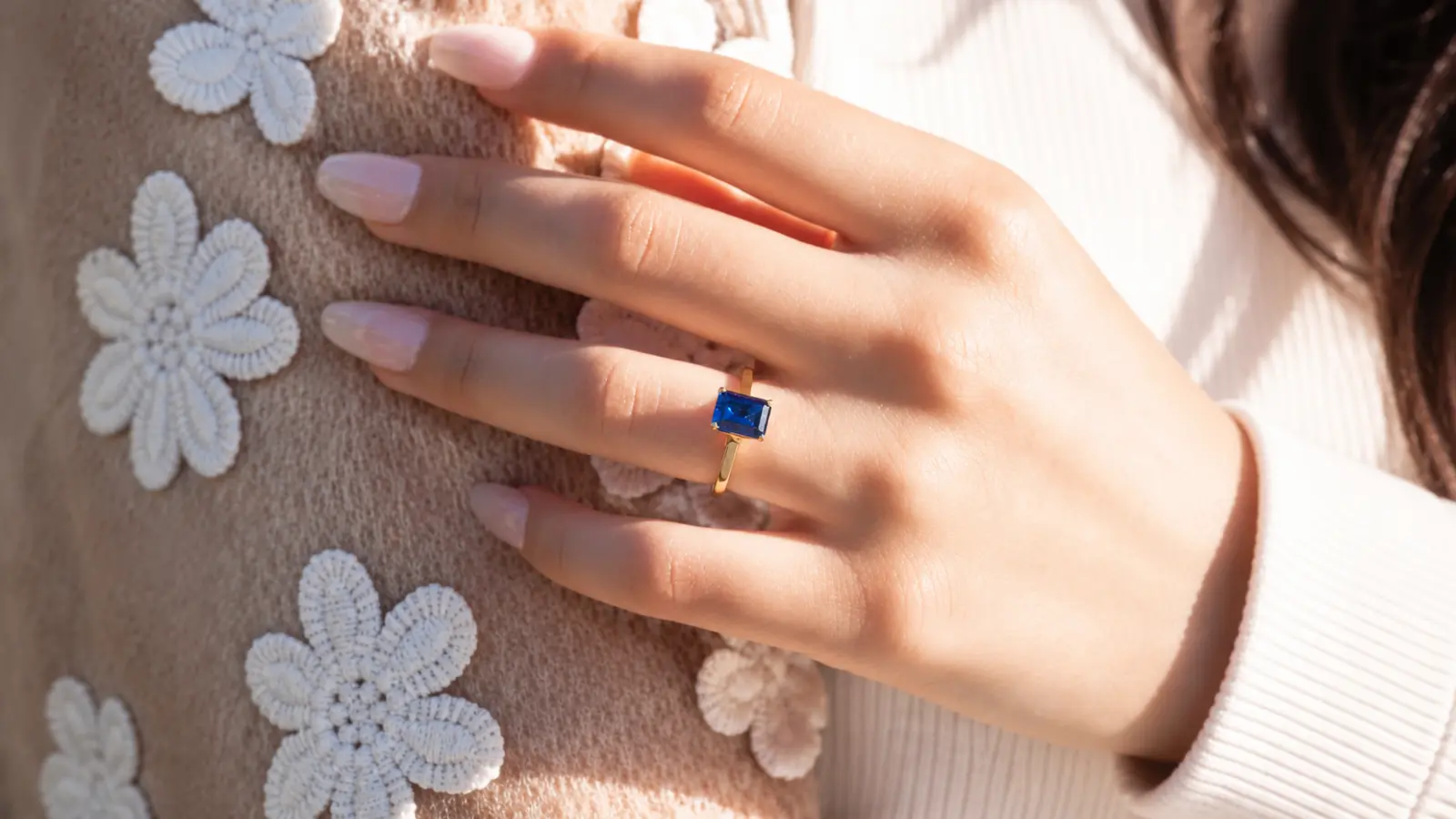
The case for sapphire is unusually strong across a wide range of couples, which is part of what distinguishes it from other gemstone options. Most colored stones involve a meaningful tradeoff between beauty and practicality. Sapphire, at a 9 on the Mohs scale and with genuine toughness, does not require that tradeoff.
Sapphire Works Particularly Well For
Sapphire tends to be the right call for a fairly specific set of priorities. Five types of couples consistently come back to it once they understand what it actually offers:
- Couples who want color but need durability. If the question is “what colored stone can I wear through everything the way I’d wear a diamond band?” the answer is sapphire. It is the only colored gemstone that consistently delivers the same wear-and-forget quality that diamond offers. Ruby comes close (same hardness), but sapphire’s broader color range makes it more versatile.
- People with an active lifestyle or hands-on work. The same qualities that make sapphire durable, hardness, toughness, no need for protective settings, make it the right choice for anyone who does not want to think about the ring while living their life. It will hold up to a kitchen, a garden, a hospital, a workshop.
- Couples drawn to vintage or historical aesthetics. Sapphire appears more consistently across antique and estate jewelry from the Victorian, Edwardian, and Art Deco periods than almost any other colored stone. A vintage-inspired sapphire ring has genuine historical precedent, which gives it a depth that a trend-driven choice does not.
- People who want a non-diamond ring without extra care requirements. Opal, moonstone, and emerald are beautiful alternatives to diamond, each with its own distinct visual quality, but all three require more attention and care than diamond. Sapphire does not. It delivers on the non-diamond promise without the maintenance compromise.
- Couples for whom the symbolism is meaningful. Sapphire’s association with loyalty and fidelity is ancient and cross-cultural. For couples who want their wedding ring to carry historical resonance, not a meaning invented by a marketing department but one that predates the modern jewelry industry, sapphire has that in a way few stones do.
Not every couple needs all five reasons to apply. Even one of them is usually enough to justify the choice.
What to Consider Before Committing
Sapphire is not the right choice for everyone. The stone’s primary characteristic is color, not brilliance: sapphire does not produce the sparkle that a diamond does. Couples who are primarily drawn to brilliance and light reflection may find that a diamond wedding band, or a diamond eternity band, better satisfies what they are actually looking for.
Color preference also matters more than most couples initially recognize. Falling in love with a specific blue sapphire in a photograph and then discovering that the color looks different in person (darker, lighter, greener, more violet) is a common experience. Seeing the specific stone in person, in different lighting conditions, before purchasing is strongly recommended. The color of a sapphire varies more between individual stones than a cut grade varies between diamonds; the photo cannot tell you what the stone will look like on your hand in your home.
For a full comparison of sapphire against other colored stone options, including ruby, emerald, opal, and birthstone choices, see the gemstone wedding rings. For context on how sapphire compares to diamond across all dimensions of a wedding ring decision, the complete wedding rings guide covers the full picture.
Sapphire Wedding Ring Inspiration
Sapphire wedding rings combine rich color, lasting durability, and timeless symbolism. Explore our inspiration board for blue sapphire rings, vintage designs, sapphire and diamond styles, gold settings, modern bands, and colorful sapphire wedding ideas.
Choosing a Sapphire Wedding Ring That Lasts
A sapphire wedding ring is a rare combination of beauty, meaning, and practicality. It offers the color and personality of a gemstone while providing the durability needed for a piece of jewelry meant to be worn through everyday life.
Whether you choose a classic blue sapphire, a vintage-inspired design, a sapphire and diamond combination, or a color that feels completely personal, the right ring is the one that continues to feel meaningful years from now. A wedding ring is not only about the stone you choose — it is about the story it carries with you.
Frequently asked questions (FAQ)
Are sapphire wedding rings good for everyday wear?
Yes. Sapphire is one of the best gemstones for a wedding ring worn every day because it combines color, durability, and low maintenance. With a 9 on the Mohs hardness scale, sapphire resists scratches better than almost every gemstone except diamond. It is strong enough for daily activities and does not require the special handling needed by softer stones like opal, moonstone, or emerald.
Is sapphire better than diamond for a wedding ring?
Sapphire is not necessarily better than diamond — it offers a different kind of beauty. Diamond provides unmatched hardness and classic brilliance, while sapphire offers rich color, historical symbolism, and excellent durability. For someone who wants a traditional clear sparkle, diamond may be the better choice. For someone who wants color and individuality without sacrificing everyday wear, sapphire is one of the strongest alternatives.
Do sapphire wedding rings lose their color or fade?
No. Natural sapphires do not fade from normal everyday wear. Their color comes from the structure and trace elements within the gemstone, not from a surface coating that wears away. A quality sapphire wedding ring can keep its color for generations with basic cleaning and proper care.
What color sapphire is best for a wedding ring?
Blue sapphire is the most traditional choice, especially medium to deep shades like cornflower blue. However, the best color depends on personal style. Pink sapphires create a romantic look, yellow sapphires feel warm and distinctive, white sapphires offer a colorless appearance, and rare padparadscha sapphires are valued for their peach-pink tone. All sapphire colors share the same durability.
Are sapphire wedding rings timeless or just a trend?
Sapphire wedding rings are considered timeless because sapphires have been used in meaningful jewelry for centuries. Their popularity has changed over time, but they are not a modern trend. Royal jewelry, antique designs, and vintage rings have featured sapphires for generations, giving the stone a history that extends far beyond current fashion.
What should you know before buying a sapphire wedding ring?
Before buying a sapphire wedding ring, pay close attention to color, setting, and how the stone looks in different lighting. Sapphire is extremely durable, but each stone is unique, and color variations can dramatically change the appearance of the ring. The best sapphire is not simply the darkest or most expensive one — it is the one with a color and style you will still love years later.