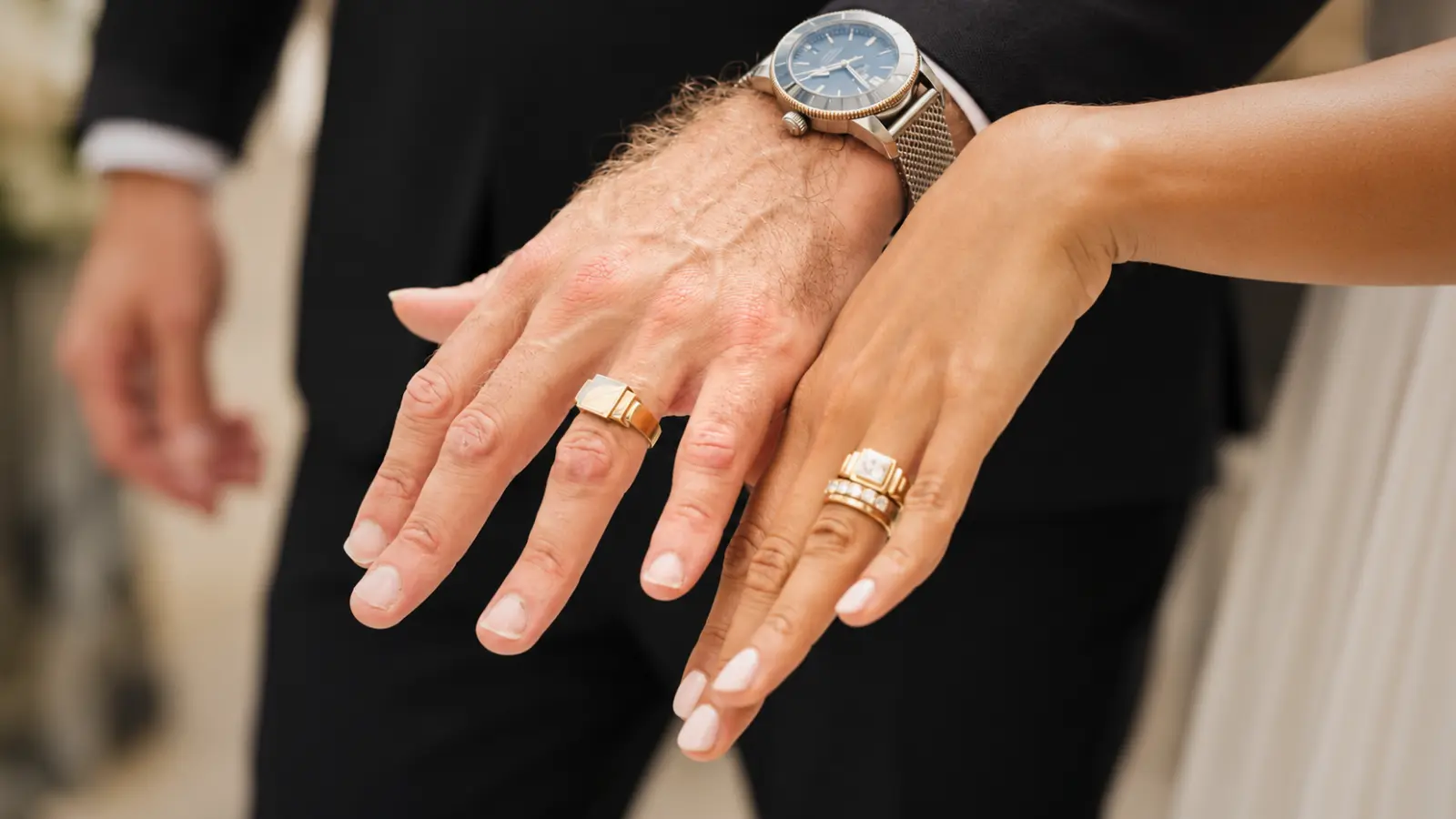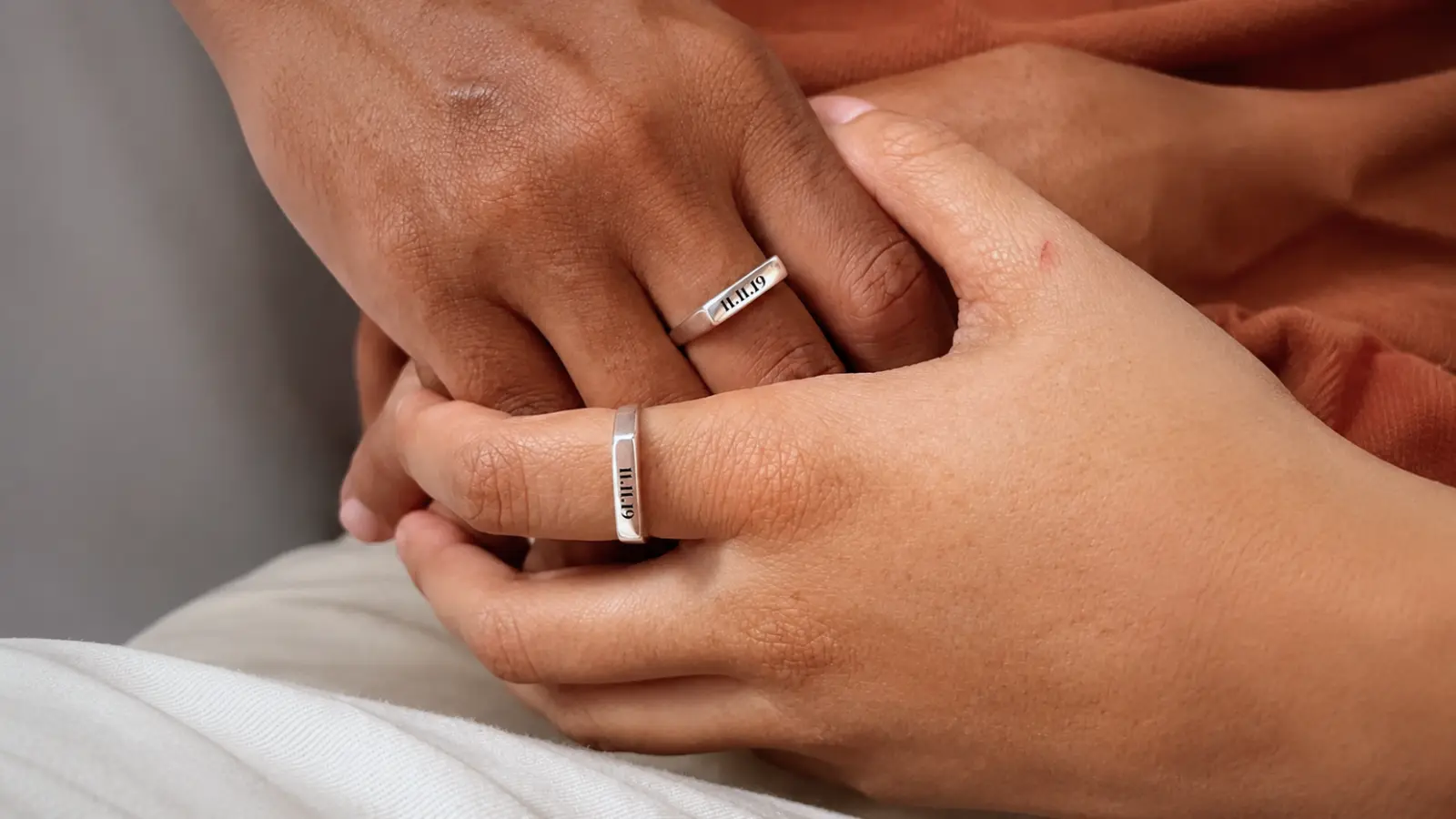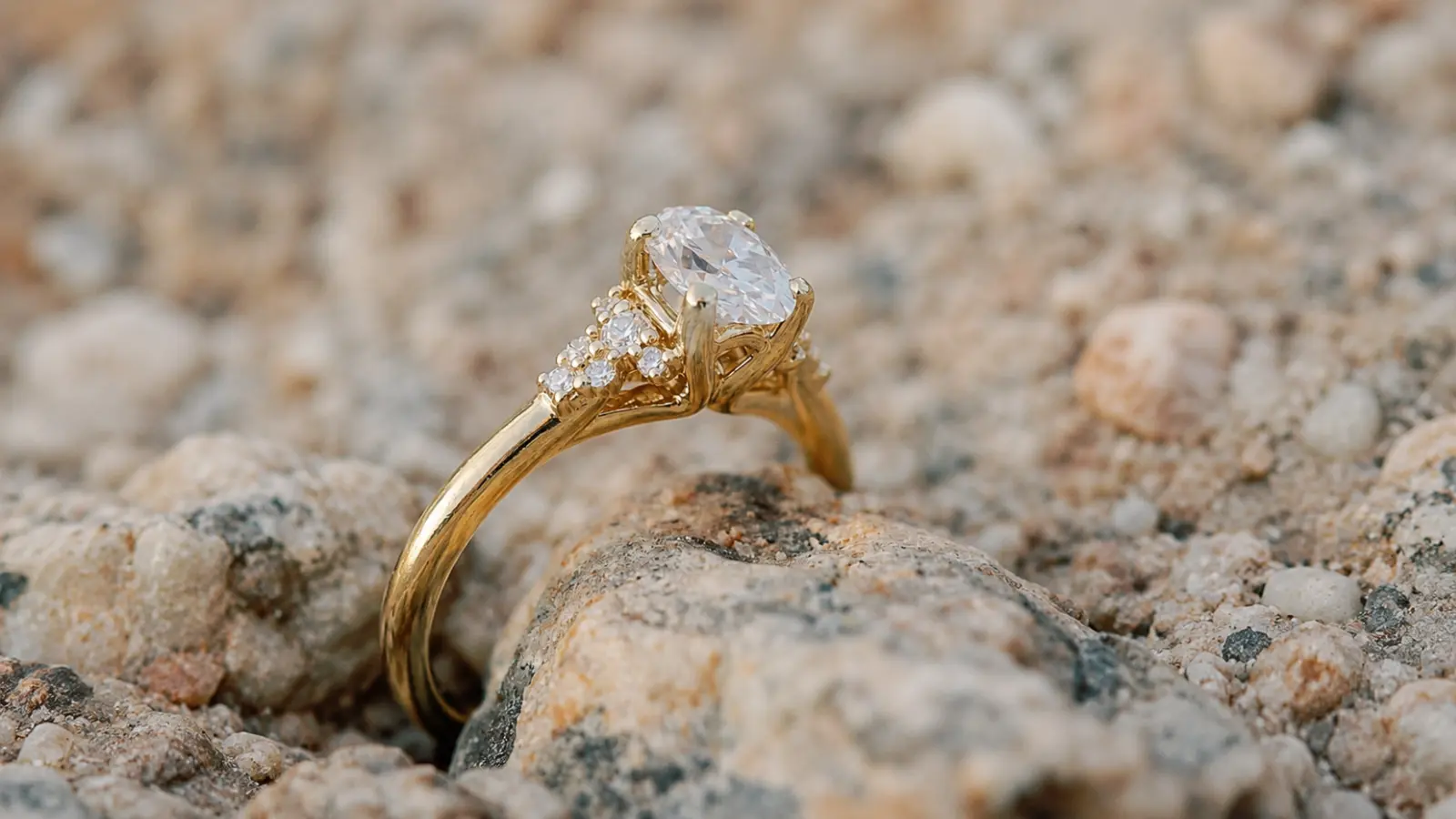
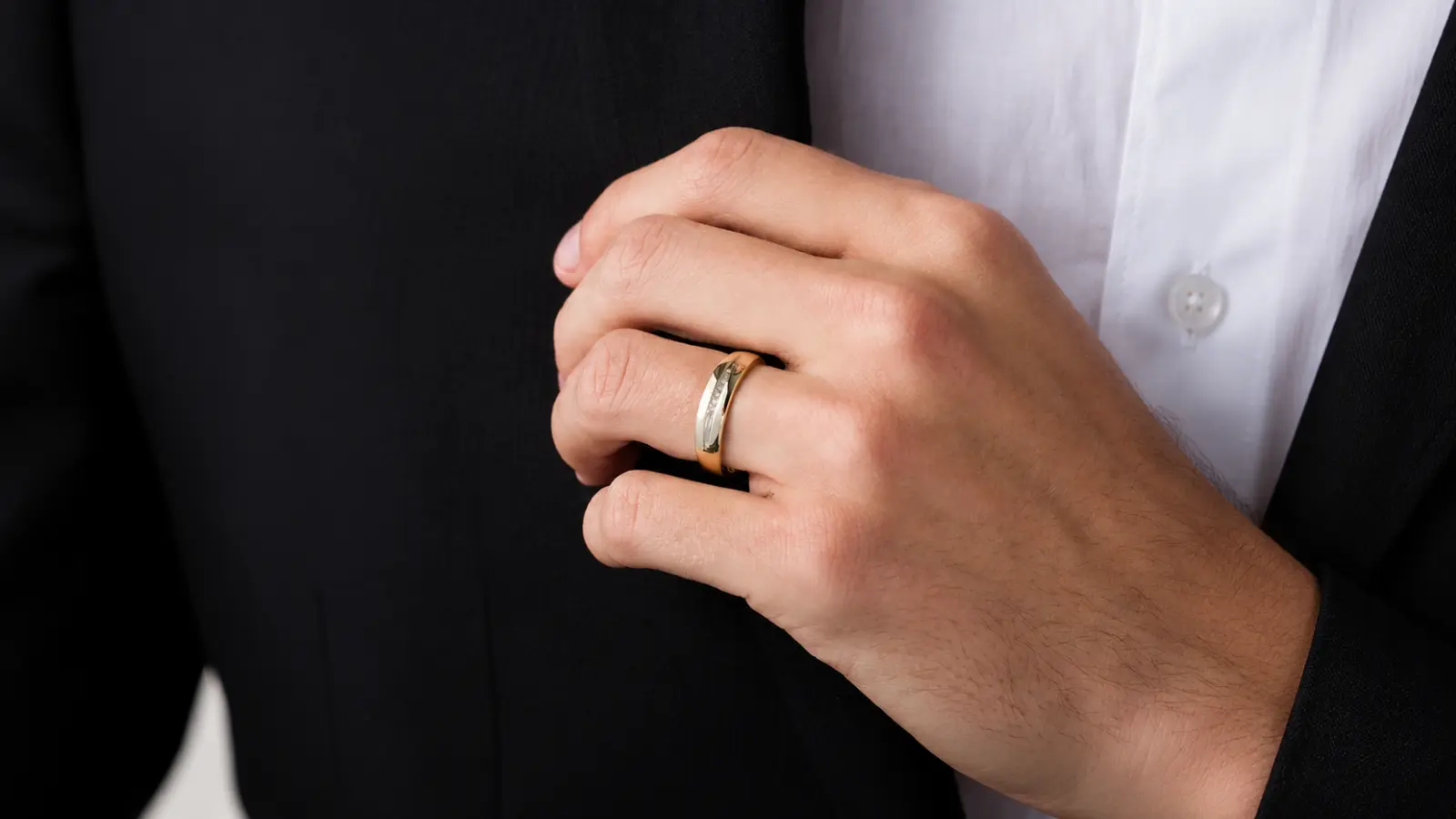
Men’s diamond wedding bands are wedding bands designed with one or more diamonds added to the metal, creating extra detail while still functioning as an everyday symbol of marriage. Modern designs range from subtle flush-set diamonds to black diamond accents, channel settings, and more distinctive styles.
For many men, choosing a diamond wedding band is less about wanting a ring that looks expensive and more about finding the right balance between detail and simplicity. The best designs allow the diamond to complement the band’s metal, width, and finish instead of becoming the only feature people notice.
This guide explains men’s diamond wedding band styles, including subtle diamond accents, black diamonds, channel and flush settings, gold vs platinum options, durability considerations, and how to choose a design that feels natural for everyday wear.
Men’s Wedding Bands With Diamonds
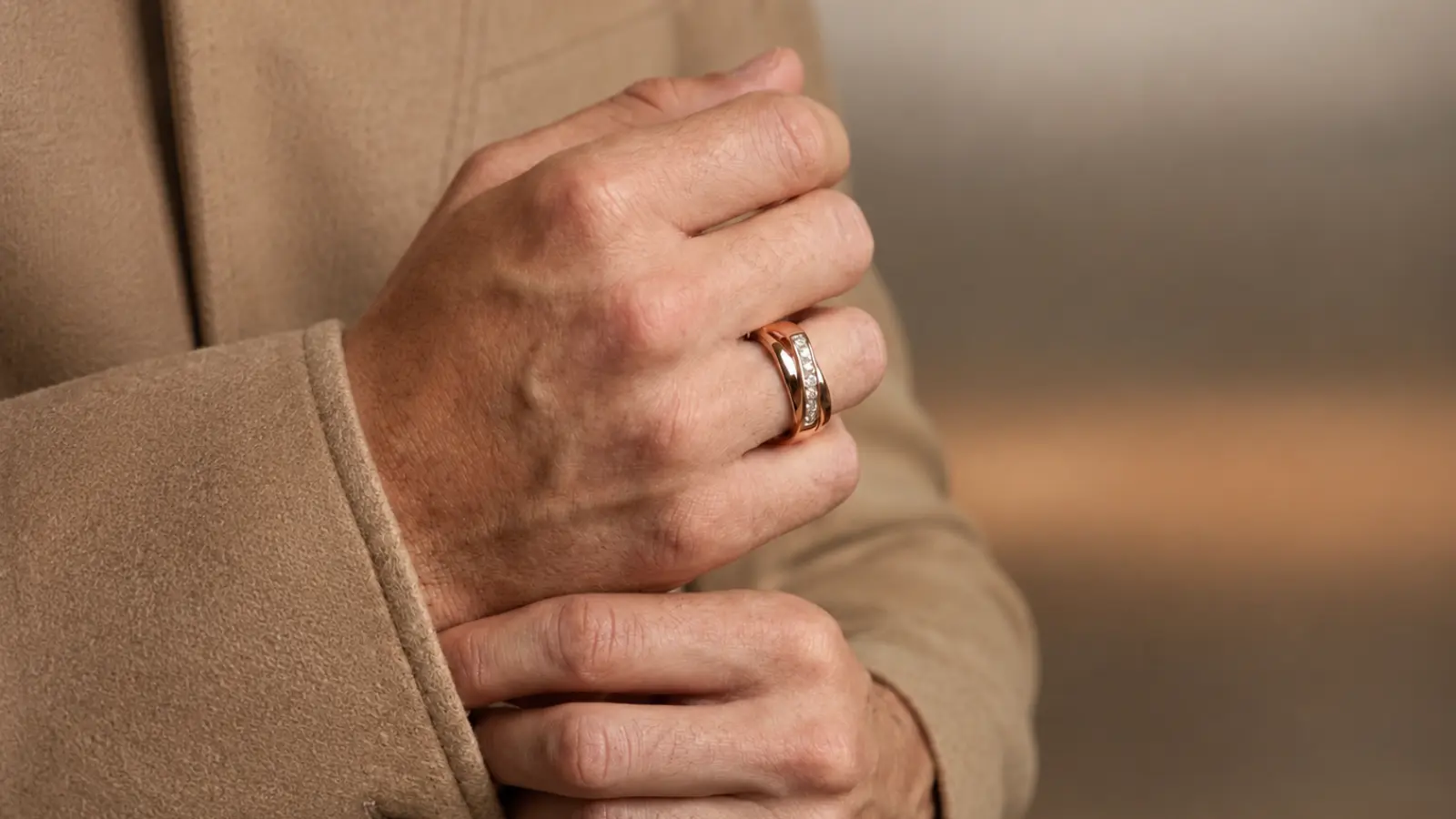
The category of men’s diamond wedding bands is broader than the phrase might suggest. At one end are bands with a single small stone — barely visible unless the hand catches the light at a particular angle. At the other end are bands with diamonds running the full circumference, closer in presence to a women’s eternity band. Most men’s diamond bands fall somewhere in between: a cluster or row of stones along one section of the band, set into the metal rather than raised above it.
What tends to distinguish a men’s diamond band from a women’s is less the diamonds themselves and more everything around them — the band’s width, finish, and proportions. A 6mm to 8mm band in a brushed or matte finish, with diamonds set low into the surface, reads as a men’s ring even with several stones present. The same diamonds on a thin, high-polish band would read very differently. This is the central principle that runs through most of the styles in this guide: the diamonds are one element of the design, not the design itself—a principle that applies to diamond wedding rings of every style.
Where diamonds typically appear on a men’s band
A few placement patterns show up consistently across men’s diamond bands, each producing a different visual result. Understanding them makes the decision easier before walking into a store or browsing online.
- A single accent stone. Often positioned on the outer face of the band, sometimes off-center. This is the most understated placement — a detail someone might not notice until they are looking closely at the ring.
- A small cluster. Two to five stones grouped together, often at the center of the band’s outer face. More presence than a single stone, but still contained to one area rather than running the full band.
- A row along part of the band. A line of small stones running across a portion of the band’s width. Creates a textural line that catches light as the hand moves without covering the whole ring.
- A full channel. Stones running the entire circumference, set into a continuous groove. The most visually prominent option in this category — the band’s width and finish still differentiate it from a women’s eternity band, but this is the closest a men’s ring comes to one.
For the broader range of men’s wedding band styles — including non-diamond options in alternative metals — the men’s wedding bands covers the full category.
Subtle Diamond Wedding Bands

For many men, the appeal of a diamond wedding band is specifically the subtle version — something that adds depth and detail to the ring without anyone immediately registering “that’s a diamond ring.” Achieving that effect comes down to a combination of factors working together: stone size, setting style, finish, and placement.
What makes a diamond band read as subtle
Small stone size is the most direct lever. Diamonds in men’s subtle bands are typically in the range of 0.01 to 0.03 carats each — noticeably smaller than engagement ring center stones, and smaller than what would typically appear in a women’s solitaire band. At this size, the stone’s contribution is closer to a glint of light than a visible gem. Combine that with a recessed setting, and you have a stone that catches light only at certain angles rather than reflecting continuously the way a raised prong-set stone does.
The finish of the band matters too, and in a slightly counterintuitive way. A high-polish band amplifies everything on its surface, including set stones — light bounces off the polished metal and the stones simultaneously, creating more overall shine. A brushed, matte, or hammered finish absorbs more light across the band’s surface, which means the stones stand out as the only reflective points. This contrast can make small stones more noticeable in a quiet way, while the band overall still reads as understated because of the matte metal around them.
| Design Choice | Effect on Subtlety |
|---|---|
| Smaller stones (0.01–0.03ct) | Reduces visual size and overall sparkle — the most direct way to keep the look quiet |
| Flush or recessed setting | Stones sit level with the metal rather than raised, catching light only at certain angles |
| Matte or brushed finish | Reduces overall shine of the band, making the ring feel quieter even with visible stones |
| Black, gray, or champagne diamonds | Stones blend tonally with darker metals rather than contrasting brightly against them |
| Single stone or small cluster placement | Concentrates the detail to one area rather than distributing it around the band |
What tends to work against subtlety, even when the stones themselves are small: a high-polish white gold or platinum band with multiple white diamonds in raised prongs. Each individual choice might seem minor, but together they compound — small stones in a setting designed to maximize light return, on a surface designed to maximize reflection, can end up reading as more prominent than the carat weight alone would suggest.
Black Diamond Wedding Bands for Men

Black diamonds have become one of the more commonly chosen options for men specifically because they solve the subtlety question in a different way than setting choices alone. Rather than minimizing a white diamond’s sparkle through size or placement, a black diamond changes the stone’s relationship to light entirely — it absorbs rather than reflects, producing texture and depth instead of brightness.
What black diamonds actually are
Black diamonds are genuine diamonds — the same mineral, carbon under extreme pressure, graded on the same hardness scale as white diamonds. What makes them black is a very high concentration of internal inclusions and structural irregularities, often graphite or other minerals trapped within the stone during formation. Where a white diamond’s inclusions are flaws to be minimized, a black diamond’s inclusions are what create its color — the stone is essentially opaque because light cannot pass through the density of internal material.
This composition has a practical consequence worth understanding: the same inclusions that create the black color also create more internal stress points within the stone. Black diamonds are not softer than white diamonds on the hardness scale, but they can be more prone to chipping along sharp edges under impact, because the internal fractures provide more places for a crack to begin. This is part of why many jewelers steer black diamond settings toward flush or bezel mounts — settings that protect the stone’s edges — rather than raised prong settings that leave the facets more exposed.
Why black diamonds tend to suit men’s bands
A black diamond set into oxidized silver, black zirconium, black titanium, or a darkened finish on traditional metal creates minimal contrast — the stone becomes part of the band’s overall dark surface rather than a bright point against it. In most lighting, a black diamond reads less as “a gemstone” and more as a dark, faceted detail — closer to a decorative element than a jewel. For men who like the idea of some detail on the band but are wary of anything that reads as “jewelry” in the traditional sense, this distinction matters considerably.
Black diamonds also pair naturally with industrial and modern aesthetics. They tend to appear most often in bands that already lean toward a darker look — black wedding rings in tungsten, gunmetal, or brushed black titanium. The stones extend an aesthetic the band’s metal has already established, rather than introducing a new one.
What to ask before choosing a black diamond band
Two questions are worth raising with any jeweler before purchasing. First: whether the black color is natural or treated. Most black diamonds on the market are treated — typically through irradiation or high-temperature processes — to enhance or create the black color, since naturally occurring black diamonds are rare. Treated black diamonds are widely sold, generally less expensive, and perform similarly in a finished ring. Knowing which you’re buying matters mainly for cost expectations and resale considerations, not for how the ring will look or wear day to day.
Second: what setting is being used. As covered above, flush or bezel settings protect a black diamond’s edges better than prong settings. If a band is described as having black diamonds, asking specifically how they’re set is a reasonable question — and one a knowledgeable jeweler should be able to answer clearly.
Channel-Set vs. Flush-Set Diamond Bands
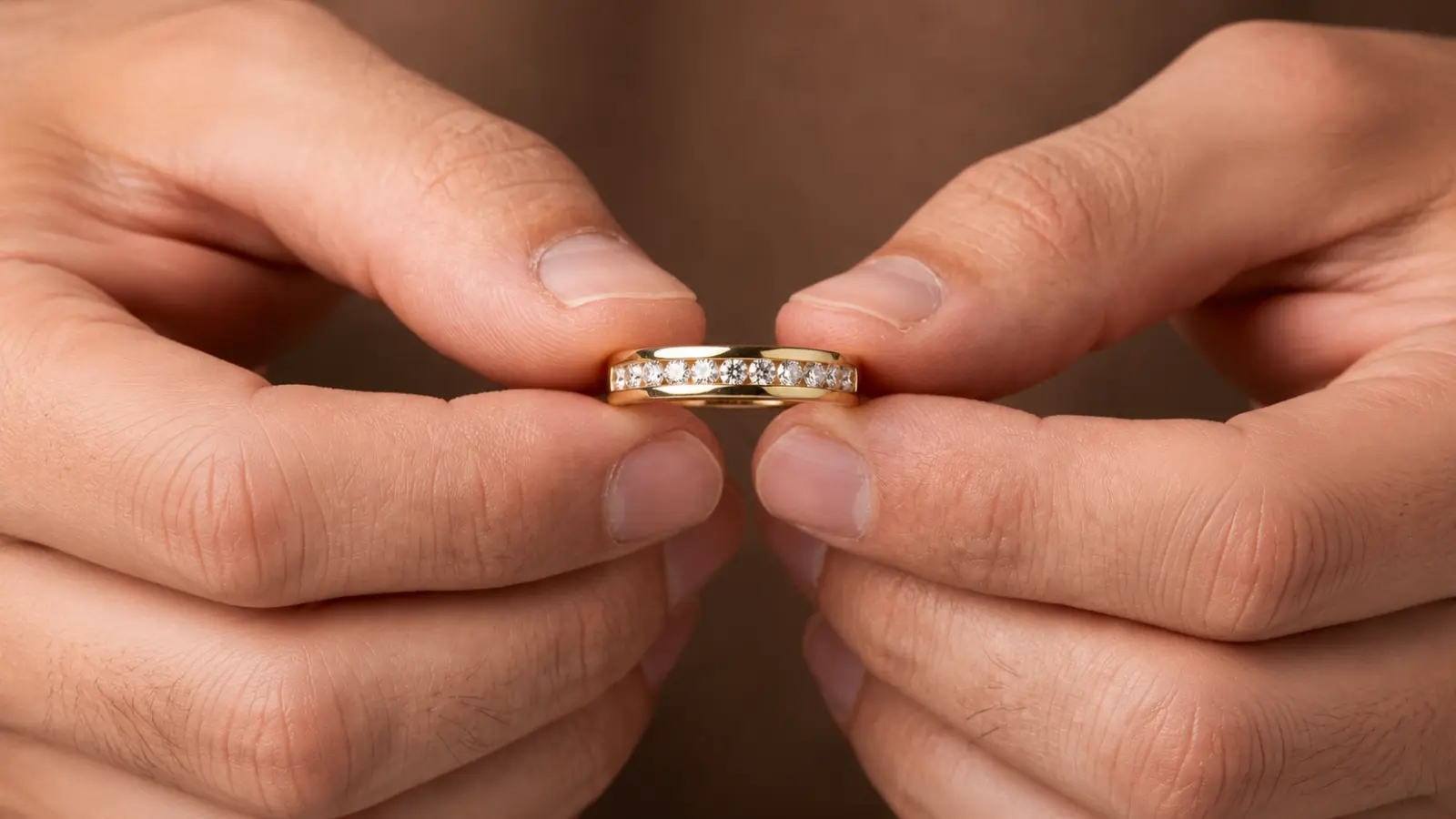
Channel setting and flush setting are the two settings most commonly used for diamonds in men’s bands, and understanding the difference between them clarifies what a given band will actually look and feel like on the hand. The choice between them isn’t just visual — it also affects how many stones the band can carry and how the ring behaves under daily wear.
How channel setting works
In a channel-set band, a groove is cut into the metal and stones are placed into that groove side by side. The metal walls on either side of the groove are pushed slightly over the edges of each stone, holding them in place without any prongs or visible metal between stones. The result is a row of diamonds that sit close to flush with the surrounding metal surface, with a continuous line of metal bordering the row on both sides.
Channel setting is the standard approach for a row of multiple small stones. It is significantly more secure for a sequence of stones than individual prong settings would be, and it produces a cleaner, more continuous line. The stones in a channel sit lower than prong-set stones would, which contributes to the lower-profile look that tends to suit men’s bands well.
How flush setting works
A flush-set stone — sometimes called a gypsy-set stone — sits in a hole drilled directly into the band, with the metal around the hole’s rim hammered or pushed over the stone’s edge to hold it in place. The stone sits level with the surrounding metal surface, with no groove or channel. Flush setting is most often used for individual stones or small groupings rather than a continuous row, since each stone requires its own drilled setting point. It is among the lowest-profile settings available, with genuinely nothing extending above the band’s surface.
| Factor | Channel Setting | Flush Setting |
|---|---|---|
| Best for | A row of multiple stones | A single stone or a small number of individual stones |
| Visual result | A continuous line of stones bordered by metal walls | Individual points of light set directly into the surface |
| Profile | Low — stones sit close to flush within the channel | Lowest — stones sit completely level with the surface |
| Security | Metal walls protect stones from the sides | Metal surrounds the stone’s entire edge |
| Maintenance note | Channel walls can thin over many years and should be checked periodically | Metal around each stone can also thin over time, particularly with softer metals |
Both settings share the central advantage that makes them common choices for men’s bands: nothing extends above the surface of the ring. A prong-set stone has metal claws rising above the band, which can catch on fabric, gloves, or equipment, and which present an edge that can be bent or damaged by impact. Channel and flush settings eliminate that entirely — the band’s surface is, for practical purposes, a continuous shape with stones embedded in it rather than stones sitting on top of it.
Are Diamond Bands Practical for Men?
The practicality question comes up for nearly every man considering a band with set stones, and the honest answer is that it depends on the setting, daily activities, and what “practical” needs to mean for a specific life. A diamond band is not as low-maintenance as a completely plain band — but for many men, the difference is smaller than expected, particularly with the settings covered above.
What actually affects practicality
Setting type matters more than the presence of diamonds. A flush or channel-set band with small stones can be worn through most daily activities without much more concern than a plain band — there’s nothing protruding to catch or bend. A prong-set diamond band, by contrast, introduces real practical considerations: prongs can catch on clothing, bend slightly under impact, and over years of wear may need to be checked and re-tightened to keep stones secure.
Stone placement on the band matters too. Stones positioned on the outer-facing portion of the band — the part visible when the hand is at rest — see different wear than stones positioned where the band contacts the palm or grips tools. Some men choose bands with diamonds set only on the upper or outer portion specifically because that area sees less direct impact than the inner-facing surface.
Metal choice and long-term security
The metal holding a set stone in place needs to remain thick enough around the stone to hold it securely over time. Softer metals worn against rough surfaces daily can, over many years, thin enough that a stone becomes loose. This isn’t an immediate concern — it’s a multi-year consideration that periodic jeweler inspections address.
Platinum is denser and more malleable than gold, which means it can be worked around a stone’s edge without becoming as thin or brittle over years of micro-movement and wear. Platinum also doesn’t require replating, unlike white gold, which matters for a band where the metal’s condition around each stone affects both the setting’s appearance and its security.
14k gold is harder than 18k and is a durable, widely available option for diamond-set bands at a more accessible price. The trade-off is less about immediate performance — a well-made 14k gold channel-set band will look and wear well for years — and more about long-term maintenance. The metal around each stone in a gold band may need a jeweler’s check slightly more often than the same setting in platinum wedding rings. Neither is the wrong choice; it’s a question of how much periodic attention feels normal versus how much upfront cost is worth avoiding it.
A practical framework many men use
For men whose work or hobbies involve frequent hand impact — construction, mechanics, certain sports, outdoor manual work — a common approach is maintaining two bands: a plain or simple band for daily work wear, and the diamond band for occasions, travel, or lower-impact days. Many men who do this report that having a “dress ring” separate from a “work ring” becomes a natural habit within a few weeks, not unlike switching watches for different contexts.
For men without regular hand-impact activities — office work, most professional contexts, daily life without heavy manual tasks — a flush or channel-set diamond band tends to hold up to daily wear without needing this kind of rotation. The practical gap between a plain band and a well-set diamond band, in these contexts, is smaller than it might seem from the outside.
How to Choose a Masculine Diamond Band
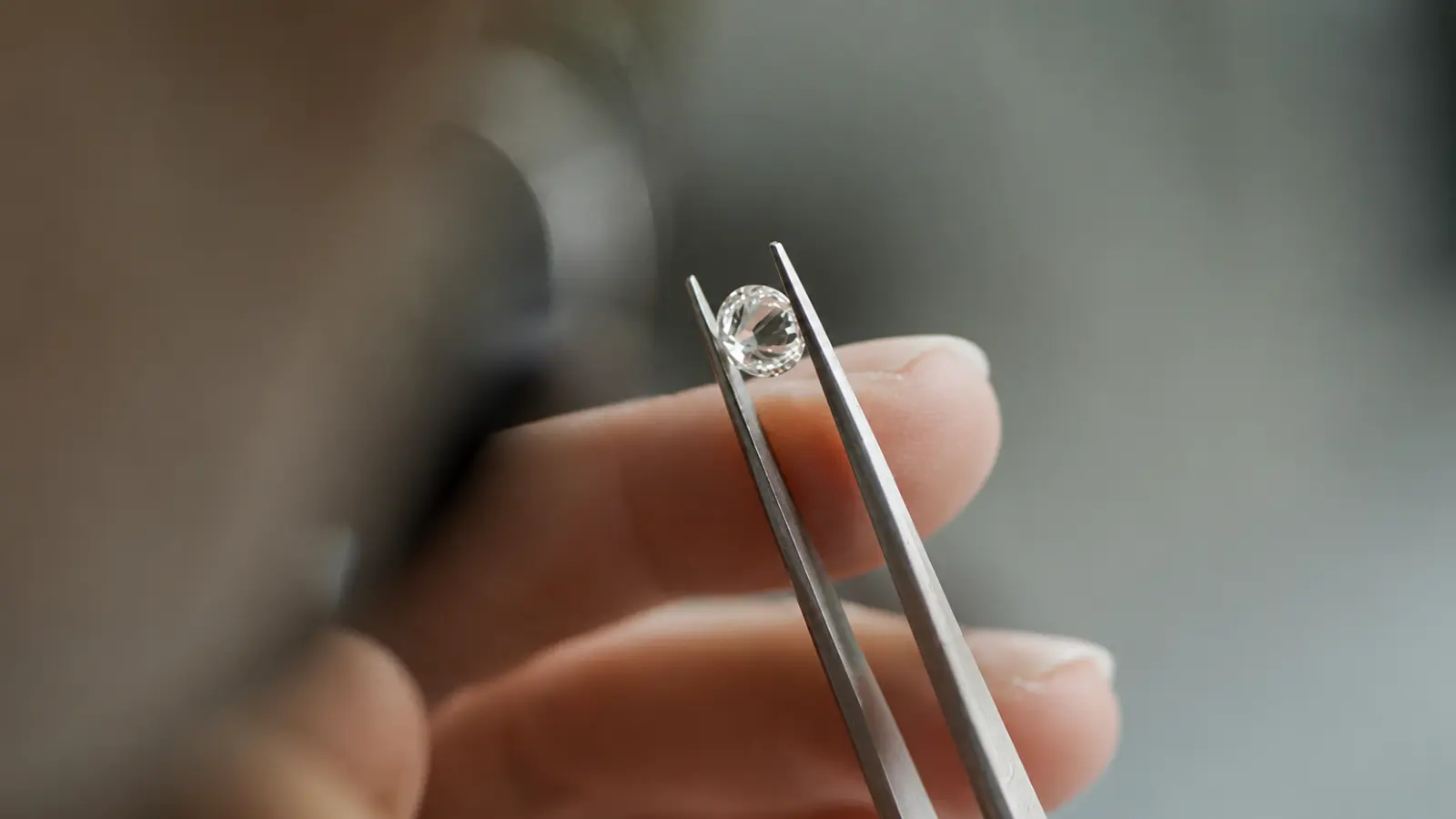
“Masculine” is doing a lot of work in this phrase, and it’s worth being specific about what it tends to mean in practice — because it isn’t really about the diamonds at all. It’s about everything else on the ring working together so that the diamonds become one detail among several, rather than the defining feature.
Start with the band, not the stones
The most effective approach for many men is choosing the band’s width, metal, and finish first — as though the diamonds weren’t part of the decision — and then considering where and how stones might be added. A 7mm brushed titanium band has a clear identity before a single stone is added. Adding a small flush-set black diamond to that band doesn’t change its identity; it adds to it. The reverse approach — starting with “I want diamonds” and building the band around displaying them — tends to produce designs where the diamonds are the point. That’s a valid kind of ring, but a different one than most men describe wanting when they use the word “subtle.”
Match the setting to the look you actually want
The goal shapes the setting choice more than any general rule does. A few common goals and what tends to achieve them:
- A hint of detail most people won’t notice: A single flush-set stone, ideally in black, gray, or a color that matches the band’s tone, positioned on the outer face.
- Texture that catches light as the hand moves: A short channel of small stones — three to seven — along one section of the band’s width.
- A band that quietly references the eternity band tradition without mimicking it: A full channel running the circumference, in a wider band (7mm+) with a matte or brushed finish to differentiate it from a typical women’s eternity band’s polished, narrower profile.
For men who already wear other rings, or who may add an anniversary band over the years, a flush-set band’s smooth surface tends to sit comfortably against adjacent jewelry without the catching or wear pattern that two raised-setting rings can create against each other over time. For more on how multiple rings interact on the same hand, the how to wear wedding rings guide covers stacking and daily-wear considerations in more depth.
Consider resizing flexibility upfront
If there’s a reasonable chance the ring will need resizing in the future — and for most men in their twenties and thirties, finger size can change meaningfully over decades — it’s worth choosing a design where the diamonds are positioned away from where resizing cuts typically happen (usually the back of the band). A full eternity channel running the entire circumference removes this flexibility entirely; a band with stones concentrated on the front or outer face leaves the back open for resizing work without affecting the stones. Easy to overlook at the point of purchase, and genuinely useful ten or twenty years later.
A simple test before committing
One practical way to evaluate whether a design achieves the “subtle” goal: hold the ring at arm’s length in normal indoor lighting, the way it would typically be seen by someone shaking hands or sitting across a table. If the diamonds are not the first thing that registers — if the band’s metal, width, and finish register first, with the stones as something noticed only on closer look — the design is likely achieving what most men mean by “subtle.” If the diamonds are the first thing that catches the eye even at that distance, the ring is in a different category. Which isn’t wrong, but is worth knowing before it’s purchased rather than after.
Men’s Diamond Wedding Band Inspiration
Men’s diamond wedding bands can range from subtle details to bold modern designs depending on the setting, metal, and finish. Explore our inspiration board for black diamond bands, flush-set diamonds, channel settings, gold styles, platinum rings, and modern diamond wedding band ideas.
Choosing a Diamond Wedding Band That Feels Timeless
A men’s diamond wedding band works best when every detail feels intentional. The metal, width, finish, and setting create the foundation of the ring, while diamonds add personality, texture, and meaning without needing to define the entire design.
Whether he chooses a single subtle diamond, a black diamond accent, or a modern channel-set band, the right wedding ring is the one that feels natural today and still feels connected to his style years from now.
Frequently asked questions (FAQ)
Do men wear diamond wedding bands?
Yes. Diamond wedding bands for men have become a popular option, especially in subtle designs with small accent diamonds, flush settings, or channel-set stones. Many men choose diamond bands because they add texture and detail without making the ring feel overly decorative. Modern men’s diamond bands range from a single understated stone to designs with multiple diamonds.
What are the best diamond wedding bands for men?
The best diamond wedding bands for men depend on personal style, lifestyle, and how the ring will be worn every day. Popular choices include subtle flush-set diamonds, channel-set diamond bands, black diamond bands, and wider bands with small accent stones. The best design is usually one where the diamonds complement the metal, width, and finish instead of becoming the only feature of the ring.
Are black diamond wedding bands good for men?
Yes. Black diamond wedding bands are a popular choice for men who want the detail of diamonds with a darker and more understated appearance. Black diamonds create texture instead of traditional sparkle and often pair well with matte finishes, black metals, and modern wedding band designs.
What is the difference between a channel-set and flush-set diamond wedding band?
A channel-set diamond band places diamonds inside a groove between two metal edges, creating a smooth row of stones protected by the band. A flush-set diamond sits directly inside the metal surface so the stone is level with the ring. Both settings are popular for men’s wedding bands because they create a lower-profile design that works well for daily wear.
Can men wear diamond wedding bands every day?
Yes. Many men’s diamond wedding bands are designed for everyday wear, especially styles with secure, low-profile settings. Flush-set and channel-set diamonds are usually more practical than raised settings because the stones sit closer to the metal. Lifestyle, job, metal choice, and regular maintenance all affect long-term durability.
Are men’s diamond wedding bands expensive?
Men’s diamond wedding bands can range from affordable to expensive depending on the metal, diamond size, number of stones, and craftsmanship. A band with one or a few small accent diamonds usually costs much less than a full diamond band. Platinum, larger diamonds, and more complex settings typically increase the price.