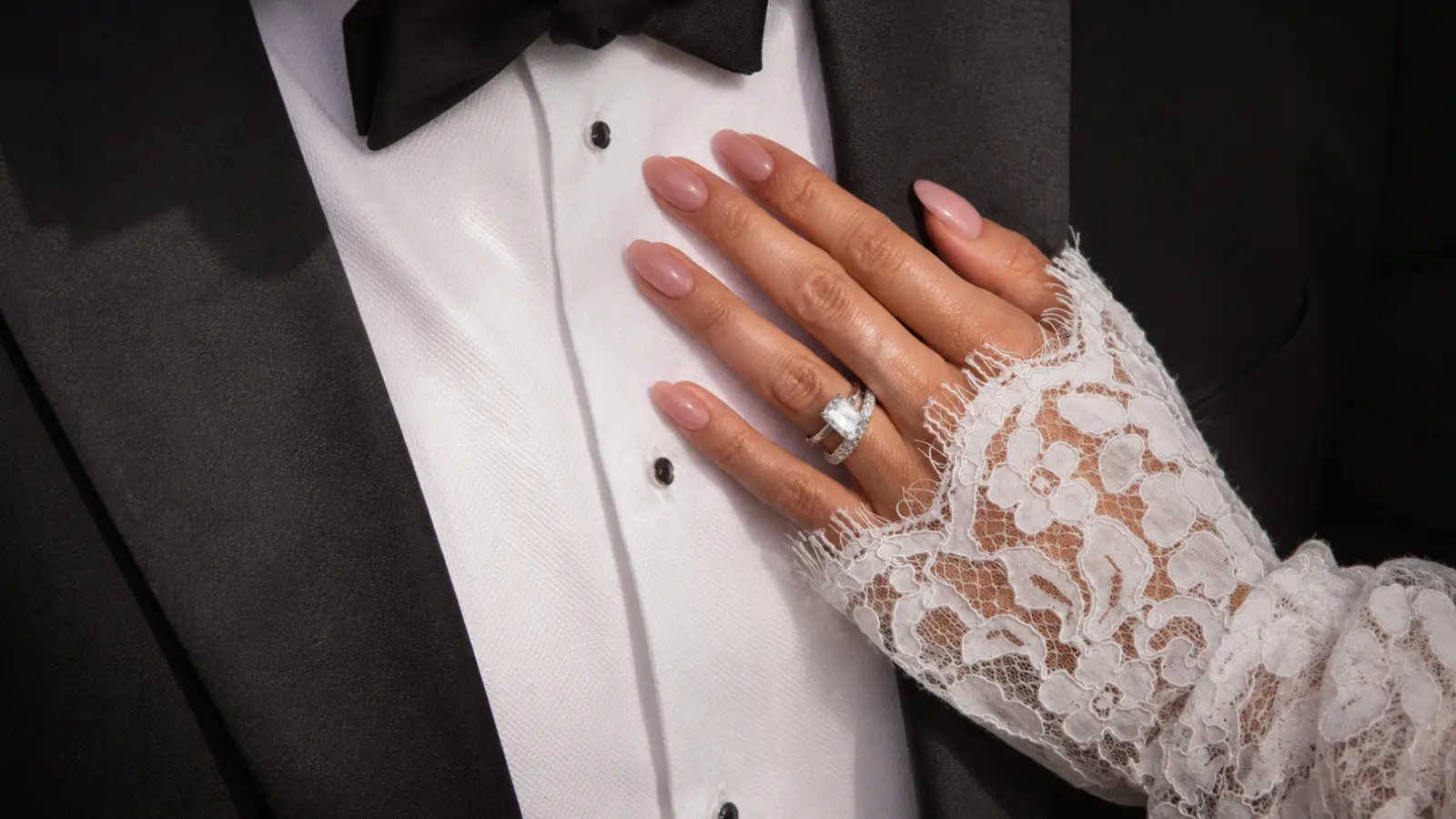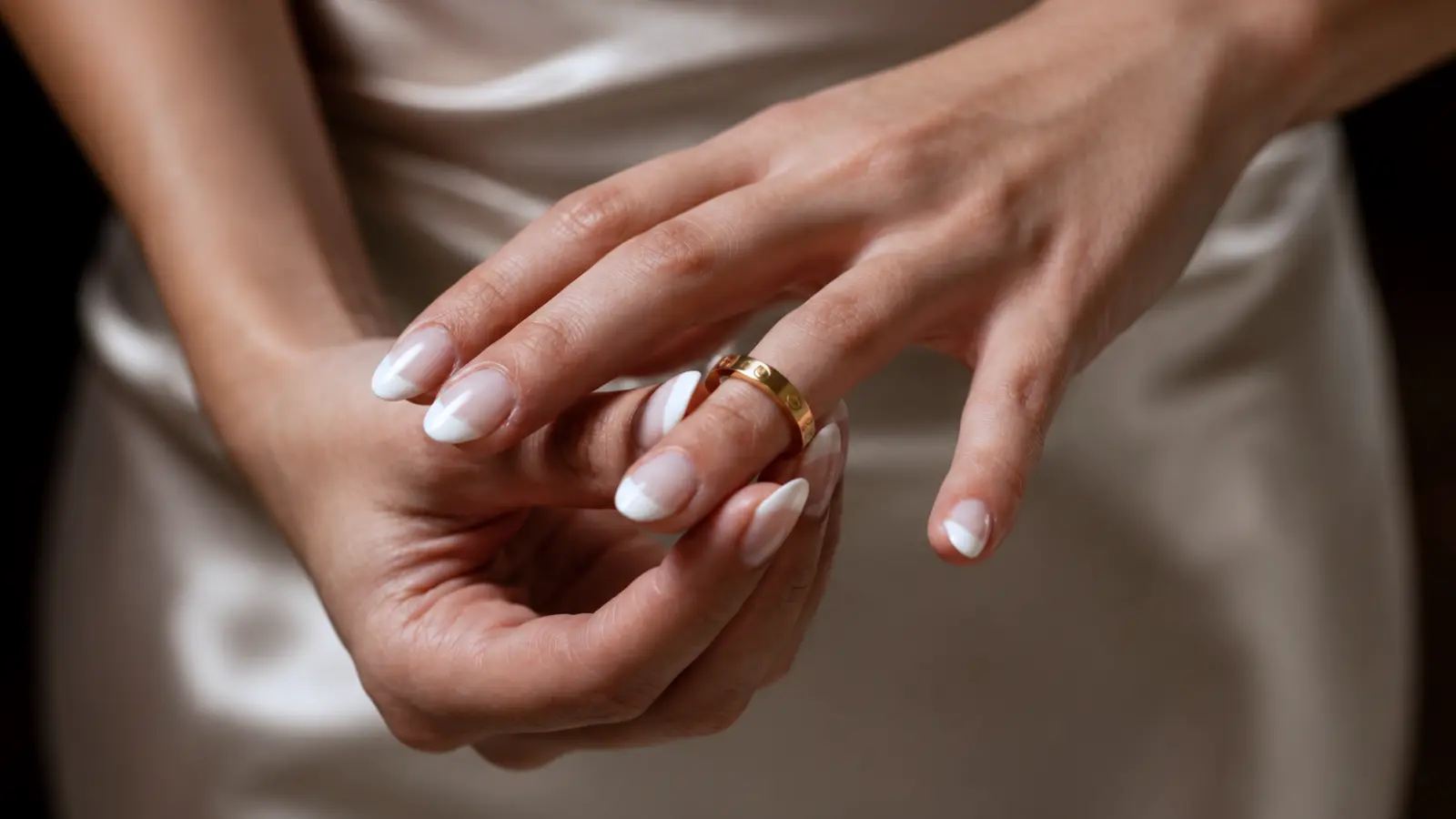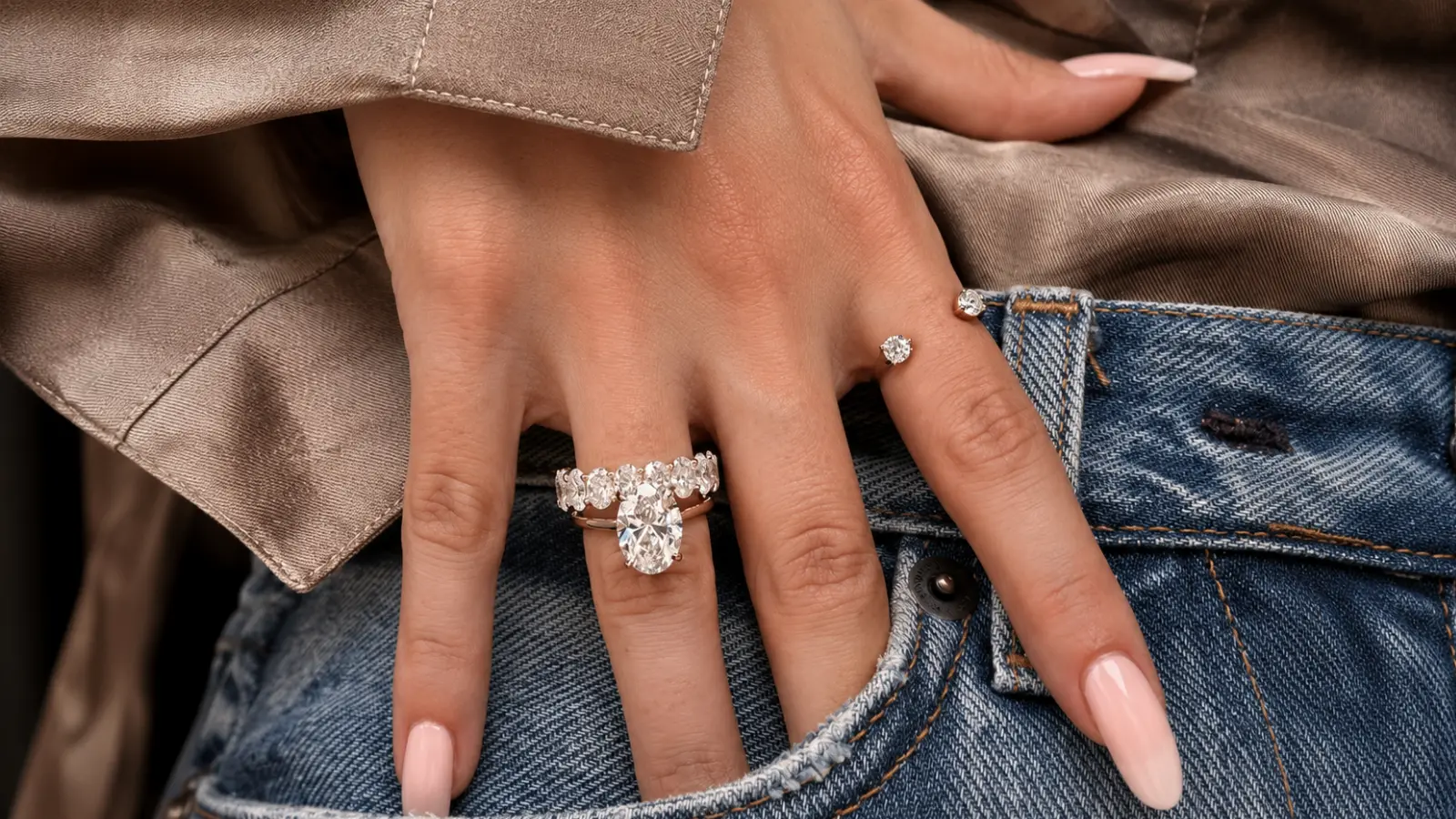
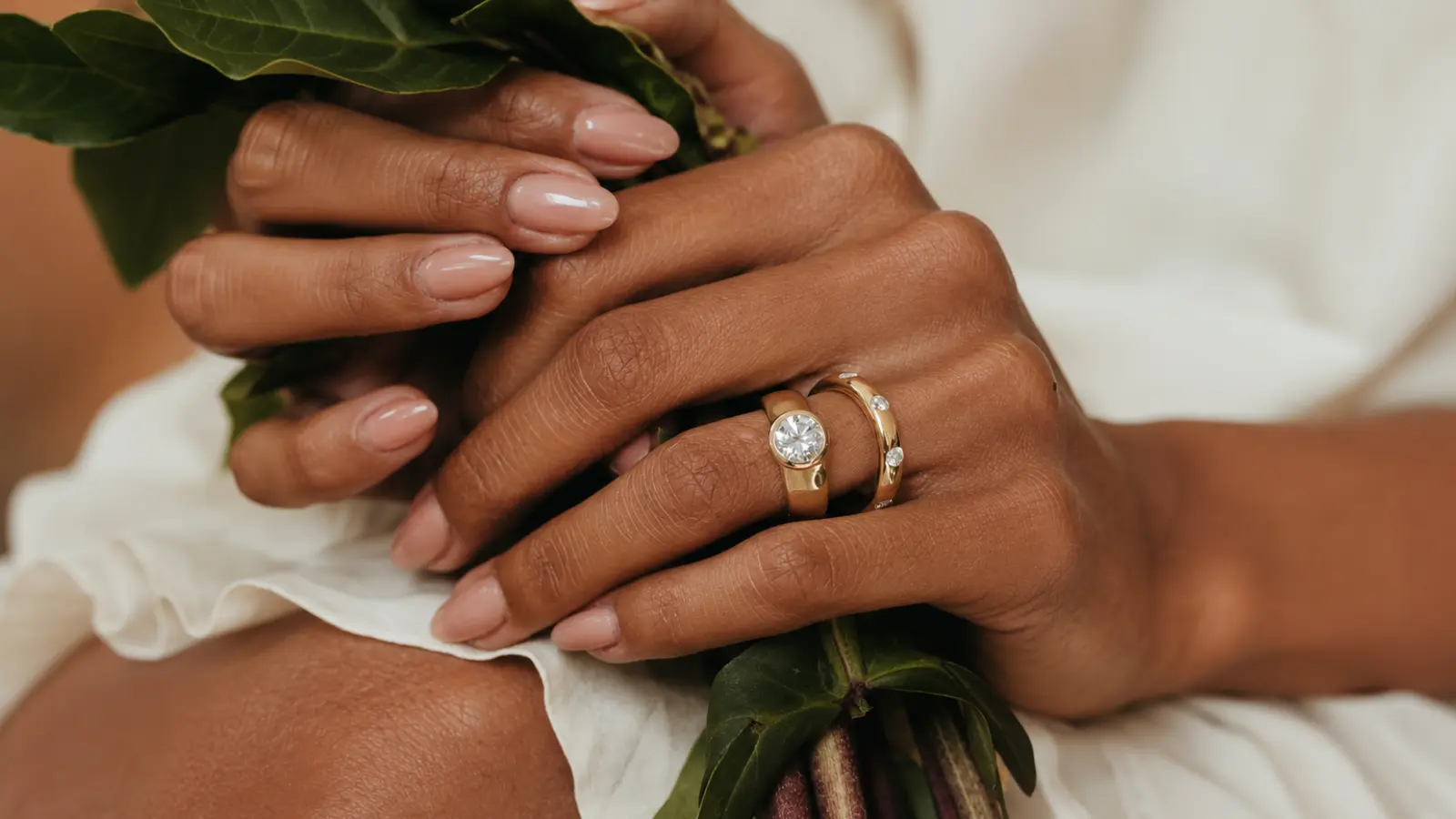
Modern wedding rings are wedding rings designed with contemporary elements such as clean lines, minimalist shapes, geometric details, mixed metals, matte finishes, and intentional simplicity. Unlike traditional designs that often focus on classic curves and familiar details, modern rings use form, texture, and contrast to create a distinctive style.
Choosing a modern wedding ring is not about choosing something different just because it feels new. The strongest modern designs balance personality with longevity, using thoughtful details that continue to feel intentional rather than tied to a temporary trend.
This guide explains modern wedding rings for women and men, including minimalist designs, geometric bands, mixed metals, matte and brushed finishes, modern versus classic styles, and how contemporary designs fit within different wedding rings and wedding bands.
What Makes a Wedding Ring Modern?
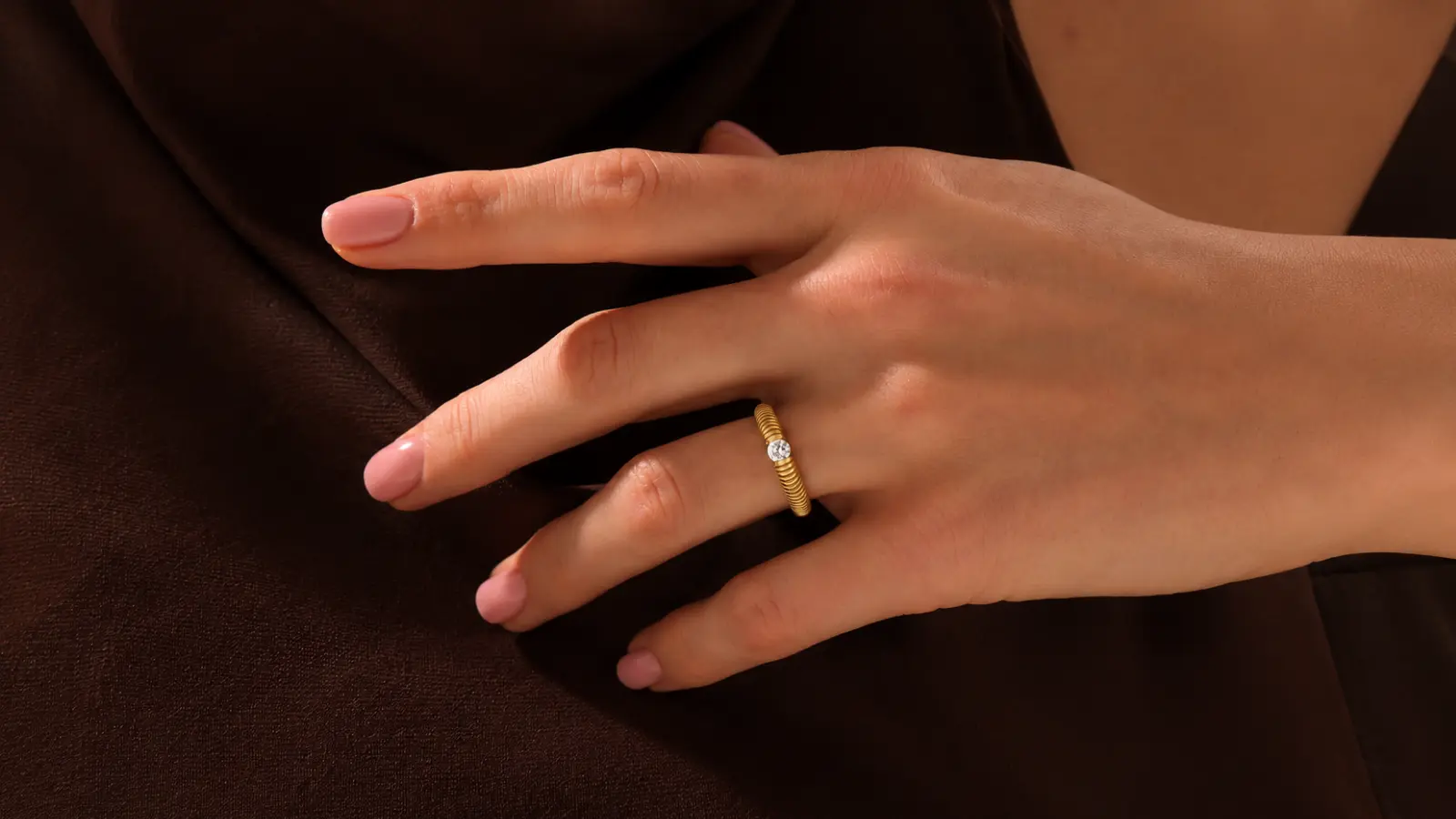
The word “modern” gets attached to a wide range of wedding ring designs, which can make the term feel almost meaningless. Underneath that variety, though, a few consistent principles tend to show up across designs that genuinely earn the label.
Clean Lines
Clean lines are the most foundational. A modern ring tends to have edges and transitions that are precise and deliberate, such as a sharp bevel, a crisp transition between a polished and matte section, or a band that’s exactly as wide as it needs to be with no extra visual weight. This is different from a classic ring’s smoothness, which tends toward continuous curves; modern clean lines often involve at least some flat planes or defined edges, even on an otherwise simple band.
Geometric Form
Geometric form is the next layer. Where classic rings are built almost entirely around the circle, both the band itself and, often, round brilliant diamonds, modern designs frequently introduce other shapes into the mix: a hexagonal cross-section instead of a round one, a band with a flat top and angled sides, or diamonds in emerald, baguette, or other geometric cuts used in linear or symmetrical-but-angular arrangements rather than the traditional single row of rounds.
Texture as a Design Element
Texture as a design element is perhaps the most distinctly modern principle, and the one that didn’t really exist as a major design language in wedding rings until relatively recently. A matte or brushed finish isn’t simply “polish, but less.” It’s a different surface treatment that changes how the ring interacts with light entirely, often used deliberately in contrast with a polished edge or inlay to create visual interest without adding any stones or surface ornamentation at all.
Intentional Asymmetry or Contrast
Intentional asymmetry or contrast rounds out the picture. This might mean a band that’s wider on one side than the other, a mixed-metal design where the two metals meet at an angle rather than in a simple stripe, or a ring where one section is deliberately plain against a more detailed section elsewhere. Classic design tends to resolve toward symmetry and balance; modern design is often more comfortable letting one element be different from another, as long as the overall composition still feels considered.
What ties all of this together is that none of these principles are about the ring being “less” than a classic design. A modern ring with a brushed finish, a geometric profile, and a mixed-metal inlay can involve just as much design complexity and craftsmanship as an ornate classic ring. The complexity is simply expressed differently, through form, finish, and contrast rather than through surface decoration and symmetry.
Modern Wedding Rings for Women
For women, modern wedding ring design tends to show up most clearly in band profile, stone placement, and finish, areas where classic design defaults to fairly predictable choices and modern design introduces variation.
Profile and Silhouette
In terms of profile, modern bands often move away from the traditional rounded or domed shape toward something flatter, with crisper edges. A band with a flat top surface and beveled (angled, rather than rounded) sides is one of the more common modern silhouettes. This kind of profile catches light differently than a domed band; rather than a single continuous highlight along the top, a beveled band creates distinct planes that each reflect light separately, giving the ring a faceted appearance even without any stones.
Stone Placement
Stone placement is another area where modern design diverges from classic. Rather than a single row of round diamonds running across the front of the band, modern designs more often use asymmetrical placement: a small cluster of stones off to one side, a single stone set flush with the band’s surface (sometimes called a “tension” or “flush” setting) rather than raised on prongs, or stones in geometric cuts like baguettes used as accents rather than as the band’s main feature.
Minimalist Details
Minimalist designs, bands that are extremely simple but with one specific modern detail such as a single thin line of a contrasting metal inlaid into an otherwise plain band, represent a meeting point between modern and classic principles. They keep the simplicity of minimalist wedding rings, but with a detail that reads as distinctly contemporary rather than traditional. This kind of design tends to appeal to women who want the low-maintenance, easy-to-wear quality of a plain band but want it to feel like a considered choice rather than a default one. For more on how these and other styles compare for daily wear, see our guide to wedding rings for women.
Modern Men’s Wedding Bands
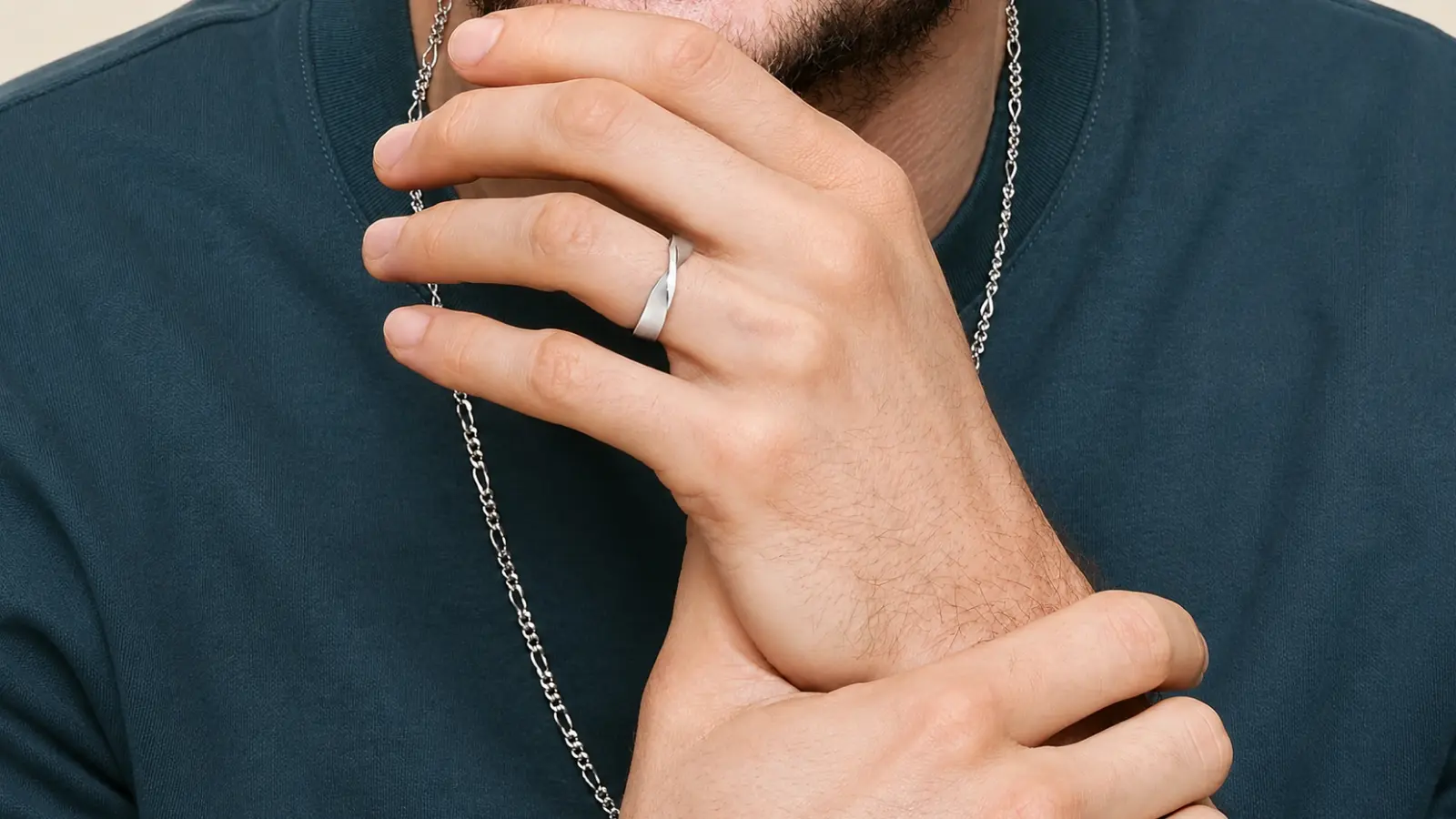
Modern design has arguably had a larger relative impact on men’s wedding bands than on women’s, simply because the starting point, historically a fairly narrow range of plain or simply finished bands, left more room for new design language to make a visible difference.
Brushed and Matte Finishes
Brushed and matte finishes have become close to a default modern choice for men’s bands, to the point that a brushed metal band is often the first thing people picture when “modern men’s wedding ring” comes up. The appeal is partly aesthetic, since a brushed finish has a quieter, less reflective presence than a high-polish band, and partly practical, since brushed surfaces show fingerprints, water spots, and minor surface marks less visibly than polished ones, which matters for a ring that’s rarely removed.
Geometric Cross-Sections
Geometric cross-sections are another area where modern men’s bands have moved noticeably away from the traditional rounded or flat-topped band. Hexagonal, octagonal, or beveled-edge profiles give a band a more architectural look and a different feel against the finger, generally still comfortable, since the interior of the band can remain rounded regardless of the exterior shape, but visually distinct from a traditional round band.
Mixed-Metal and Mixed-Material Designs
Mixed-metal and mixed-material designs have become particularly associated with modern men’s bands: a band that combines a metal, often with a brushed finish, with an inlay of a contrasting material, whether that’s a different metal tone, a dark material like carbon fiber or ceramic, or a wood inlay for men drawn to a more rustic-modern aesthetic. These designs tend to read as more personal and less “off the shelf,” which is often part of the appeal for men choosing a ring that feels distinct from more traditional options without becoming overly elaborate.
Mixed Metal Wedding Rings
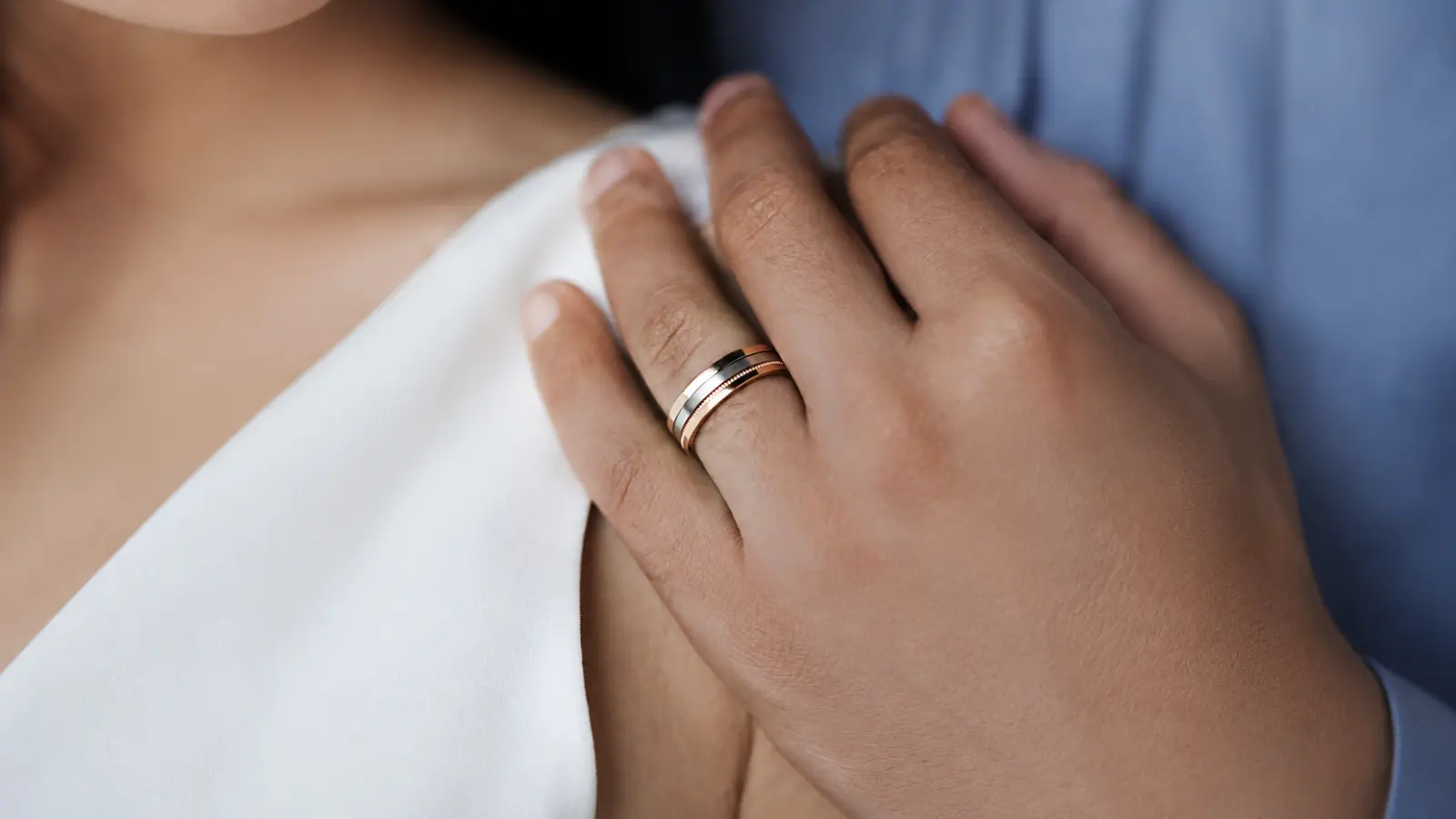
Mixed metal designs, rings that combine two or more metal tones either within a single ring or across the rings worn together on one hand, represent one of the more significant departures from traditional wedding ring convention, where matching metal tones throughout was close to a firm rule.
Mixing Metals Within a Single Ring
Within a single ring, mixed metal usually takes one of a few forms. A two-tone band might combine different gold wedding rings influences, such as yellow gold with a platinum edge or white gold with a rose gold inlay. A more contemporary approach uses mixed metals as larger, more deliberate sections, with half the band in one tone and half in another, meeting at a clean, defined line rather than blending gradually.
Mixing Metals Across a Stack
Across a stack of stackable wedding rings, including an engagement ring, wedding band, and additional bands, mixed metals work somewhat differently. Here, the metals aren’t combined within a single piece of jewelry but worn alongside each other, a look that has become widely accepted even though it departs from the older convention of matching every piece. The detail that tends to determine whether a mixed-metal stack looks intentional or accidental isn’t really about the metals themselves. It’s about whether there’s some other element tying the pieces together: a similar finish across all the pieces, a shared design language (all minimalist, for example, even in different metals), or simply a stack that was clearly assembled with some thought to how the pieces sit together, rather than several unrelated rings worn at the same time.
Getting the Proportion Right
For a ring within a single design, rather than a stack, mixed metal tends to work best when the proportion between the two metals is deliberate rather than arbitrary. A thin accent of a second metal against a dominant primary metal reads as an accent; two metals in roughly equal proportion read as a more balanced two-tone design. Both can work, but they’re different design decisions, and a ring that seems to be attempting both at once, such as a roughly-even split that was clearly meant to be an accent or vice versa, is one of the more common ways a mixed-metal design can end up looking unresolved rather than intentional.
Matte and Brushed Finishes
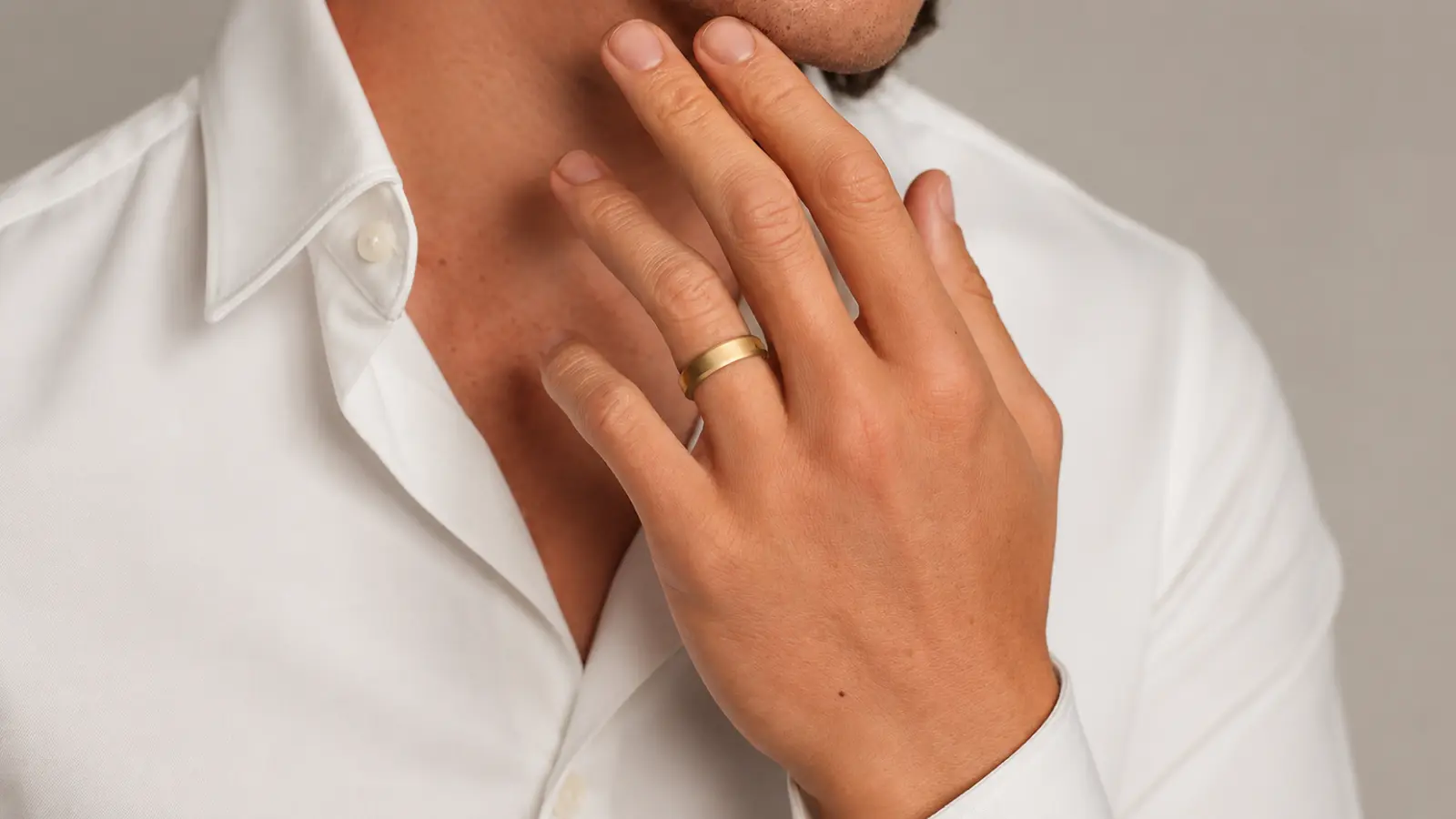
Matte and brushed finishes have become so closely associated with modern wedding ring design that it’s worth understanding what they actually are, beyond “not shiny,” because the distinction between matte and brushed, and how either compares to polished, affects both appearance and day-to-day experience.
Polished, Brushed, and Matte: What’s the Difference?
A polished finish is smooth and highly reflective. Light hits the surface and reflects back in a single, clear direction, which is why polished metal looks bright and mirror-like.
A brushed finish has fine, directional lines applied to the surface (literally brushed in one direction during finishing), which scatters light along those lines rather than reflecting it in one direction; the result is a soft, linear sheen rather than a mirror effect.
A matte finish goes further, with a more random, non-directional texture that scatters light broadly, producing a finish with almost no shine at all, closer to the appearance of stone or ceramic than traditional polished metal.
Does Finish Affect Durability?
One detail that surprises people: matte and brushed finishes don’t make a ring more scratch-resistant. The underlying metal is affected by daily contact at the same rate regardless of finish. What changes is visibility. A brushed or matte surface already has texture, so a new mark tends to blend into the existing texture rather than standing out sharply the way a fresh scratch does against a smooth, reflective polished surface. This is the real basis for brushed and matte finishes being described as “practical” for daily wear: not because the ring is more durable, but because the appearance of normal wear is less noticeable over time, which for many people amounts to the same thing in practice.
It’s also worth knowing that brushed and matte finishes aren’t permanent in the sense of being unchangeable. A brushed ring can be re-polished to a high shine, or a polished ring can be given a brushed finish, by a jeweler, if someone’s preference changes later. This is a relatively minor and inexpensive service, which means choosing a finish isn’t quite as final a decision as it might feel at the time of purchase.
Modern Rings vs. Classic Rings
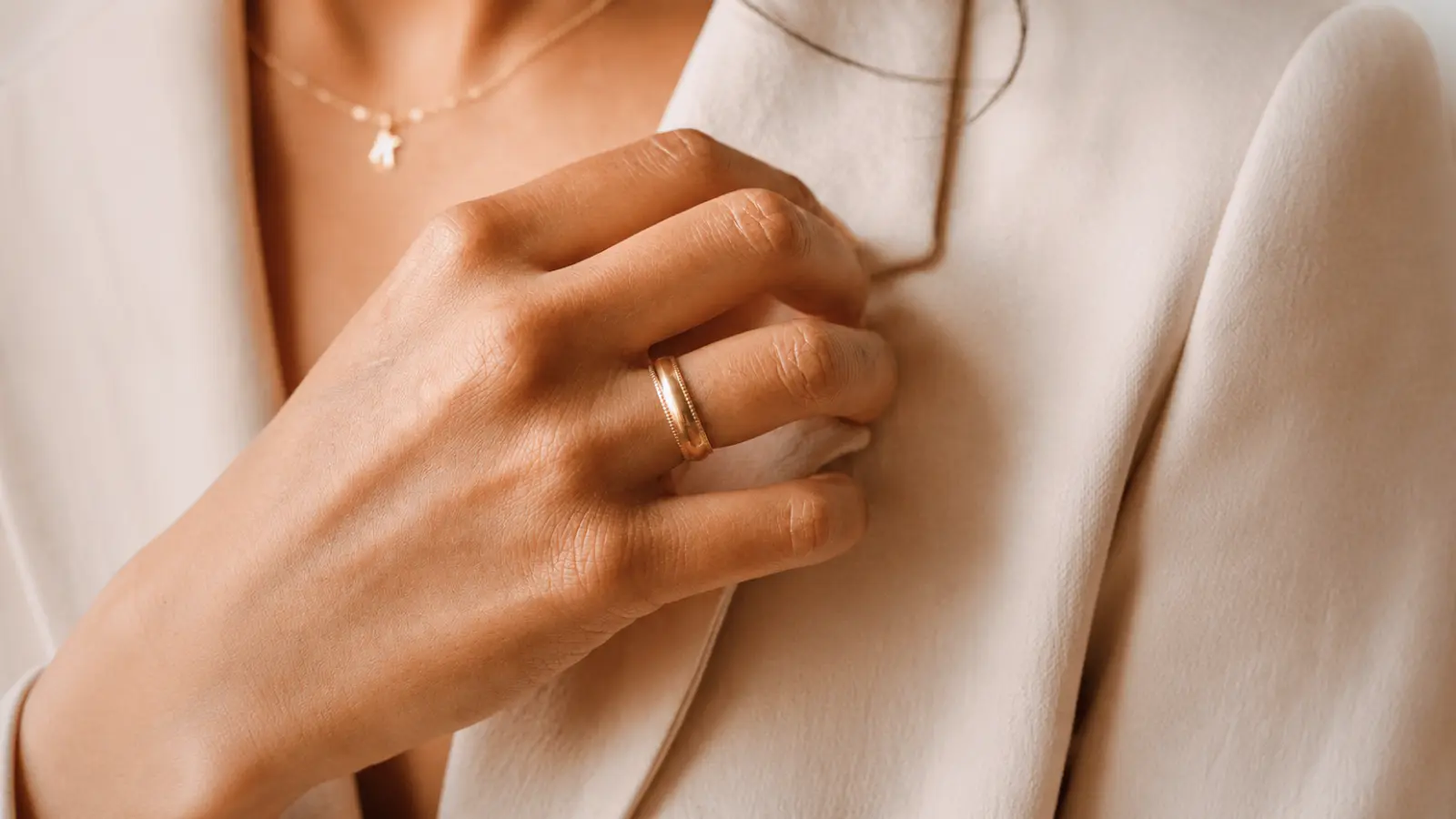
Modern and classic aren’t opposites in the sense of one being “right” and the other “wrong.” They represent different design priorities, and understanding the actual difference helps clarify which one, or what combination, fits a particular person.
What Classic Design Prioritizes
Classic design, as covered in our guide to classic wedding rings, prioritizes restraint and proportion within a set of forms, primarily circles and rounded shapes, that have remained consistent for generations specifically because they don’t depend on any particular design era to look appropriate. The defining quality of classic design is that it doesn’t ask to be noticed as belonging to “now.”
What Modern Design Prioritizes
Modern design, by contrast, is comfortable being identifiably contemporary. It just aims to be contemporary in a way that reflects a sustained design direction, such as clean lines, minimalism, geometric form, and texture, rather than a narrow, specific trend. A modern ring isn’t trying to look timeless in the same way a classic ring is; it’s reflecting a design language that itself has staying power, even if the specific ring is more clearly “of its time” than a classic design would be.
Modern vs. Trendy
This is also where the modern-versus-trendy distinction becomes genuinely useful. A trendy detail is usually narrow and specific, such as a particular stone shape that becomes briefly fashionable, a very specific metal color tied to a current aesthetic moment, or a silhouette closely associated with a single style era. A modern design built around broader principles, such as clean lines, geometric form, brushed finishes, and intentional minimalism, is less likely to feel dated quickly, in the same way a well-proportioned piece of minimalist furniture or architecture from a decade ago can still look current, while a piece built around a very specific trend from the same period might not.
In practice, many people end up somewhere between the two categories: a fundamentally classic band (a plain, comfort-fit profile) with one modern detail (a brushed finish, or a thin mixed-metal inlay), or a fundamentally modern design (geometric profile, asymmetrical stone placement) executed with classic restraint (a single metal, no unnecessary additional elements). The two categories are less a binary choice than different wedding ring styles whose principles can be combined in proportions that fit individual taste.
Modern Wedding Ring Inspiration
Modern wedding rings combine clean design, thoughtful details, and contemporary style through shapes, textures, and materials. Explore our inspiration board for minimalist bands, geometric rings, matte finishes, mixed metals, modern diamond bands, and unique wedding ring ideas.
Choosing a Modern Wedding Ring That Lasts
A modern wedding ring is not defined by removing details — it is defined by choosing the right ones. Clean lines, geometric shapes, mixed metals, and unique finishes can create a design that feels personal while still being thoughtful enough to grow with you over time.
The strongest modern rings are not the ones that only capture a current moment. They are the ones built around intentional design, comfort, and details that continue to feel connected to your style years later. A wedding ring can feel modern today while still becoming a timeless part of your everyday life.
Frequently asked questions (FAQ)
What makes a wedding ring look modern?
A modern wedding ring usually looks modern because of intentional design choices such as clean lines, geometric shapes, matte finishes, mixed metals, asymmetry, or minimalist details. Modern does not always mean unusual or complicated. Many modern rings are simple, but they use proportion, texture, and structure differently from traditional wedding ring styles.
Will modern wedding rings go out of style?
A modern wedding ring is less likely to feel outdated when it is based on broad design principles rather than short-term trends. Clean shapes, balanced proportions, and thoughtful materials usually age better than details connected to one specific fashion moment. The safest modern designs feel personal and intentional instead of simply following what is popular right now.
Are modern wedding rings comfortable for everyday wear?
Yes, many modern wedding rings are designed for everyday comfort, but the specific design matters. A geometric exterior, wider band, or textured finish can still be comfortable if the inside of the ring has a smooth profile. When choosing a modern style, comfort, durability, and lifestyle should matter just as much as appearance.
Are matte wedding rings better than shiny rings?
Matte wedding rings are not automatically better than polished rings — they simply create a different look. Matte and brushed finishes have a softer, less reflective appearance and can make small signs of daily wear less noticeable. Polished rings create a brighter, more traditional shine. The better choice depends on the style and maintenance preferences of the wearer.
Can you mix modern and classic wedding ring styles?
Yes. Many people combine modern and classic elements to create a balanced design. A traditional gold band with a brushed finish, a classic diamond ring with a geometric shape, or a simple band with a modern detail can feel both current and timeless. Modern and classic styles do not have to be opposites.
What should you know before choosing a modern wedding ring?
Before choosing a modern wedding ring, think about whether you love the design itself or only the current trend around it. Consider comfort, maintenance, how the ring pairs with other jewelry, and whether the style reflects your long-term taste. The best modern rings feel contemporary without depending on a temporary fashion moment.