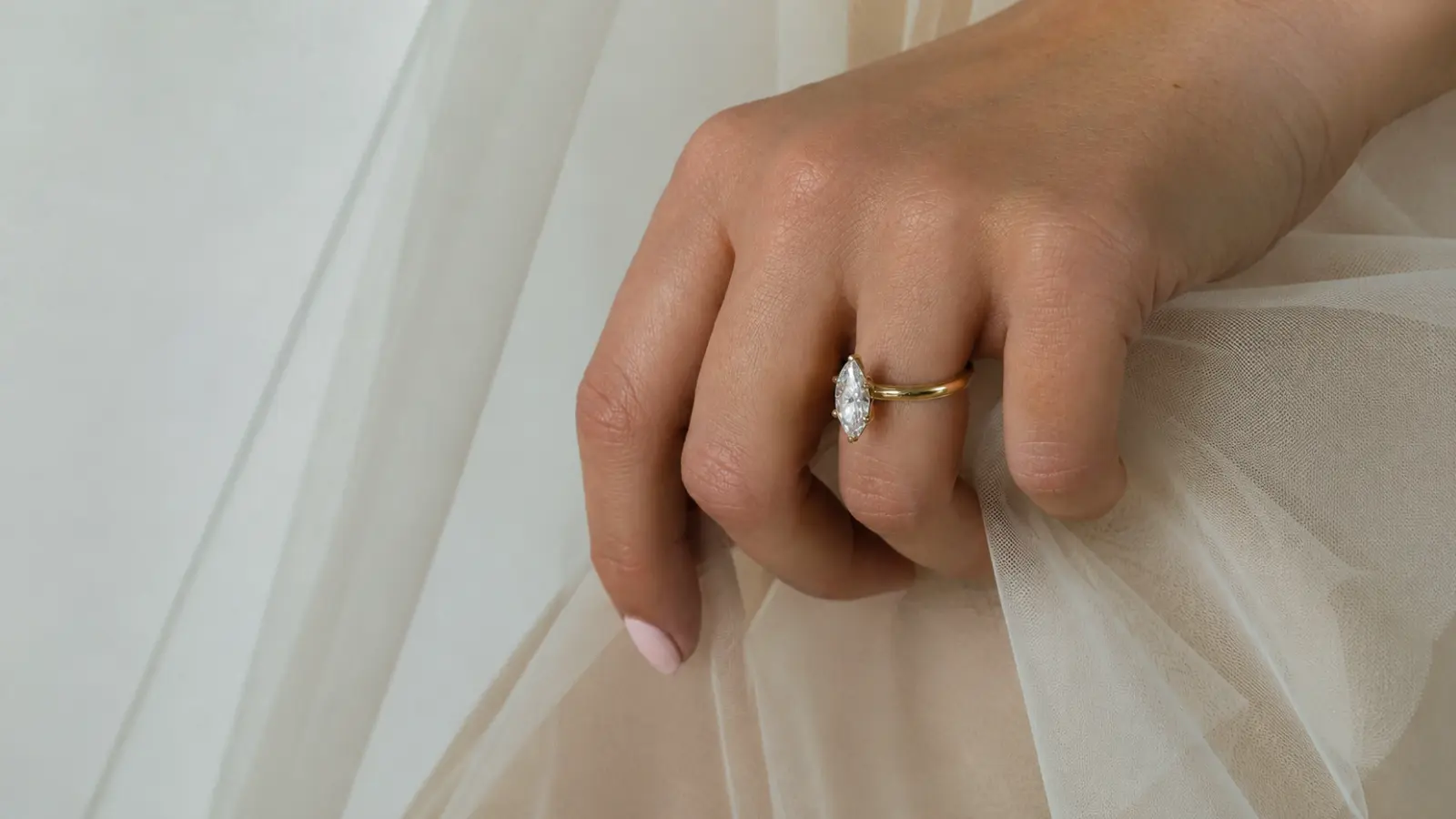
Wedding bands for marquise engagement rings are designed to work with one of the most distinctive diamond shapes: an elongated stone with two pointed ends that requires careful balance, proportion, and fit. Because the marquise shape extends beyond a traditional round silhouette, the right wedding band needs to complement the design without creating awkward gaps or putting unnecessary pressure on the points.
Choosing the right wedding band is not only about finding a beautiful match. Curved bands, V-shaped designs, open bands, and carefully chosen straight bands all create different effects depending on the engagement ring setting, stone height, and the way you want both rings to sit together.
This guide explains everything about wedding bands for marquise engagement rings, including curved vs. V-shaped bands, open designs, stack ideas, point protection, fit problems, and how these choices fit within the wider world of wedding rings and wedding bands.
Why Marquise Rings Need a Different Approach to Wedding Bands
The marquise cut, also called the navette from the French word for small boat, has been in use since the eighteenth century, when it was reportedly commissioned by Louis XV to reflect the shape of the mouth of his mistress, the Marquise de Pompadour. Whether or not the story is accurate, the shape that resulted is one of the most flattering cuts available: its elongated form visually extends the finger, and its 58 facets produce a brightness comparable to a round brilliant despite the different silhouette.
The Fit Problem, Explained
The same points that make the marquise visually distinctive create the wedding band fit challenge. A round or oval stone has a continuous curved base, and a band that curves to match that base will meet it consistently around the setting’s perimeter. A marquise stone has two termination points that extend outward from the center of the ring. A straight wedding band placed against a marquise ring has three possible outcomes, none of them ideal: it sits flat against the finger and away from the setting entirely, leaving a significant gap at the points; it curves to follow the ring’s center oval and leaves smaller gaps at the tips; or it is forced into contact with the points, creating lateral pressure on the stone’s most vulnerable areas.
What makes the marquise fit problem different from other fancy shapes, such as pear, oval, or elongated cushion, is the sharpness of the termination. An oval stone ends in a curve, so even a moderate gap between an oval and a straight band reads as a design choice. A marquise stone ends in a sharp point, and a gap at that point draws the eye directly to the mismatch. The fit needs to be either precisely right or deliberately absent, with less middle ground than most other shapes allow.
Why Setting Height Matters for Band Choice
The setting height of the marquise ring affects the band choice significantly. A low-set marquise in a bezel or flush setting places the stone close to the finger, which gives a curved or contour band better access to the ring’s outline. A high-set solitaire marquise, raised several millimeters on a cathedral or high prong setting, creates clearance between the stone and the finger. This actually makes some band styles easier to wear, because the band sits at finger level while the setting rises above it. High-set marquise rings often work well with open or bypass bands for exactly this reason.
Best Wedding Bands for Marquise Rings
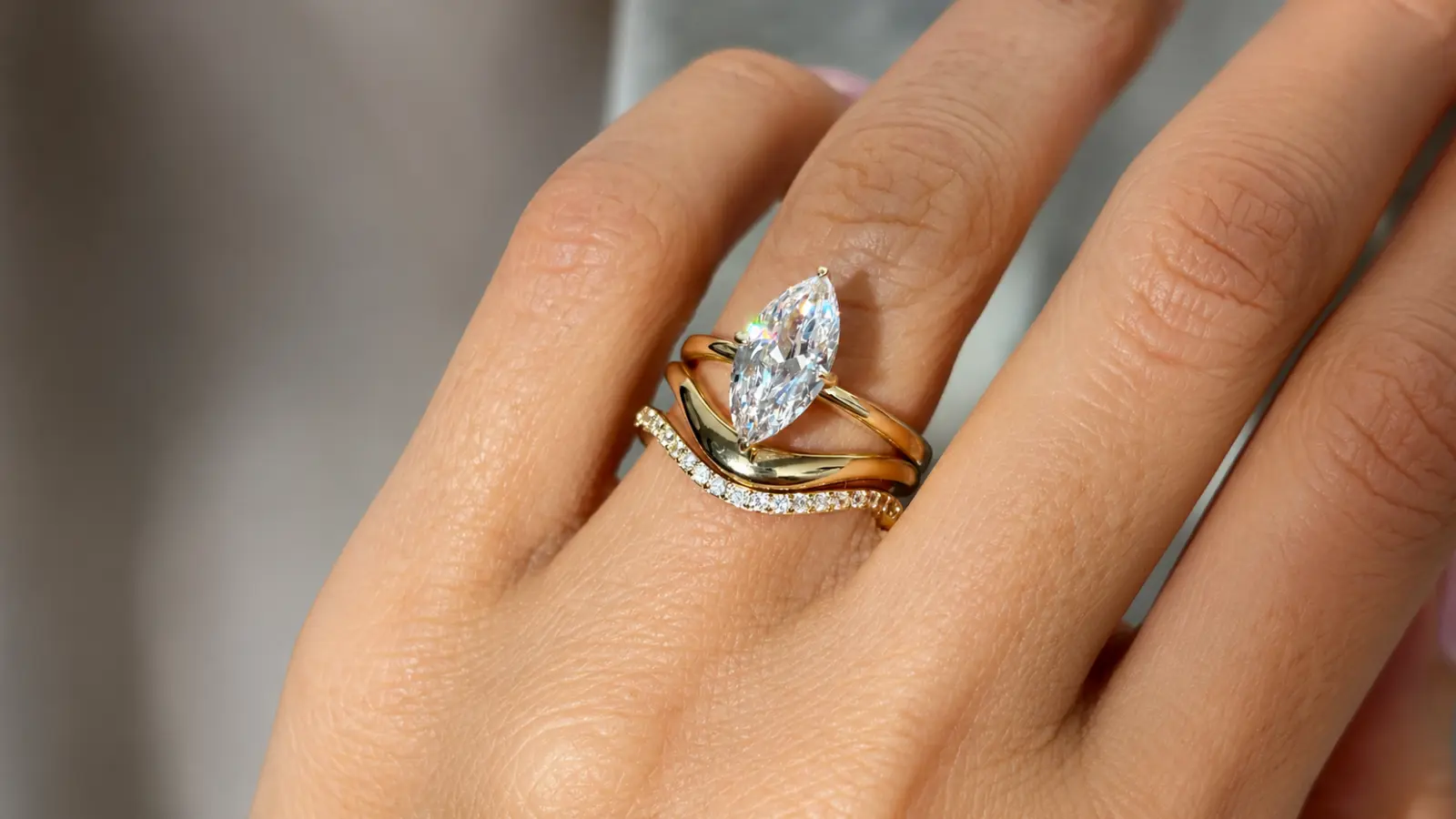
Three band styles consistently address the marquise fit challenge well, each through a different design logic. The best choice among them depends on the specific ring, including its setting height and the profile of its points, as well as the wearer’s preference for how closely the band and engagement ring should interact.
| Band Style | How It Works | Best Setting Height | Visual Effect |
|---|---|---|---|
| Curved / contour band | Shaped to follow the marquise setting’s outline closely | Low to medium settings, needs access to the ring’s perimeter | Fitted and cohesive; ring set looks intentionally matched |
| V-shaped / chevron band | Meets the points with an angled V-notch in the band | Works across setting heights; V meets the point wherever it falls | Graphic and angular; adds a deliberate geometric element to the stack |
| Open / bypass band | Sits beside the engagement ring without touching the points | Most effective with high settings; creates intentional visual space | Airy and modern; the gap becomes part of the design |
| Slim straight band | Worn deliberately beside rather than under the setting | Works best with high settings where the band sits below the stone | Minimal and understated; the engagement ring remains the focal point |
The curved contour band and the V-shaped band are the two options that most directly address the marquise fit problem. The open band and slim straight band sidestep it rather than solving it. All four are legitimate choices; which one is right depends on the wearer’s aesthetic priorities and how much visual interaction between the two rings feels right for this particular ring and hand.
V-Shaped Wedding Bands
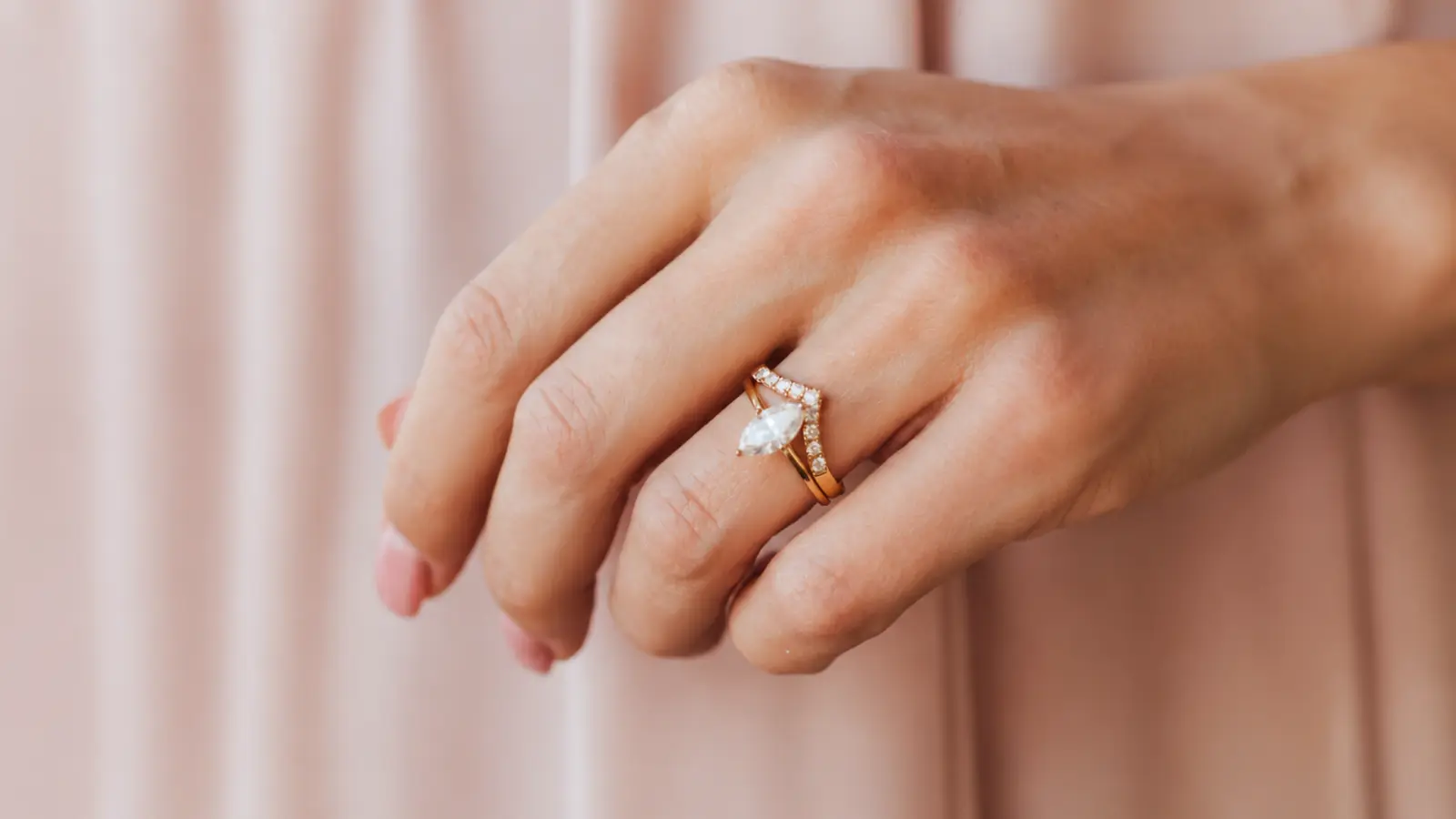
A V-shaped wedding band, also called a chevron band, notched band, or pointed band, has a sharp or softly angled indentation at the top where it meets the engagement ring. When positioned against a marquise setting, the V of the band nests against the pointed tip of the stone, allowing the two rings to sit flush at the contact point without pressing against the stone itself.
The mechanics of a well-fitted V-band are worth understanding before choosing one: the angle and depth of the V need to match the angle and degree of extension of the marquise’s point. A V that is too shallow will still leave a gap; a V that is too deep will create awkward visual space above the engagement ring. This is why trying the band in person, or ordering from the same design collection as the engagement ring, tends to produce better results than ordering a V-band online based on dimensions alone.
Plain Metal V-Bands
A plain metal V-band in the same metal as the engagement ring, whether yellow gold, white gold, rose gold, or platinum, is the cleanest and most versatile interpretation of the style. The angular shape reads as a deliberate geometric choice rather than an accommodation to the ring’s shape, which is part of why V-bands have developed an independent aesthetic identity beyond their functional role. A thin plain V-band in 14k gold adds structure without weight, and the chevron shape is visually distinctive from above in a way that a curved band is not.
Pavé and Diamond-Set V-Bands
A V-band with pavé or channel-set diamonds is one of the more visually striking wedding band choices available for any engagement ring shape, and it works particularly well with the marquise because the angular lines of the V echo the geometry of the cut. Diamonds set into the arms of the V lead the eye toward the pointed tip of the marquise stone, creating a visual line that frames the engagement ring rather than simply sitting beside it. A half-pavé V-band, with stones set on the visible top portion of the arms and plain metal underneath, is a practical middle ground that delivers the stone-set look without covering the entire inner surface of the band.
What the V-Band Does to the Ring’s Visual Proportions
One thing most wearers notice after choosing a V-band is that the shape changes how the engagement ring reads from above. The two angled arms of the V draw the eye toward the center stone in a way that a round or curved band does not, effectively framing the marquise within the geometric context of the chevron. For rings where the marquise stone is the clear visual priority, this framing effect is an advantage. For very ornate settings where the band is meant to recede, a plain curved band may be a better match.
Curved Wedding Bands
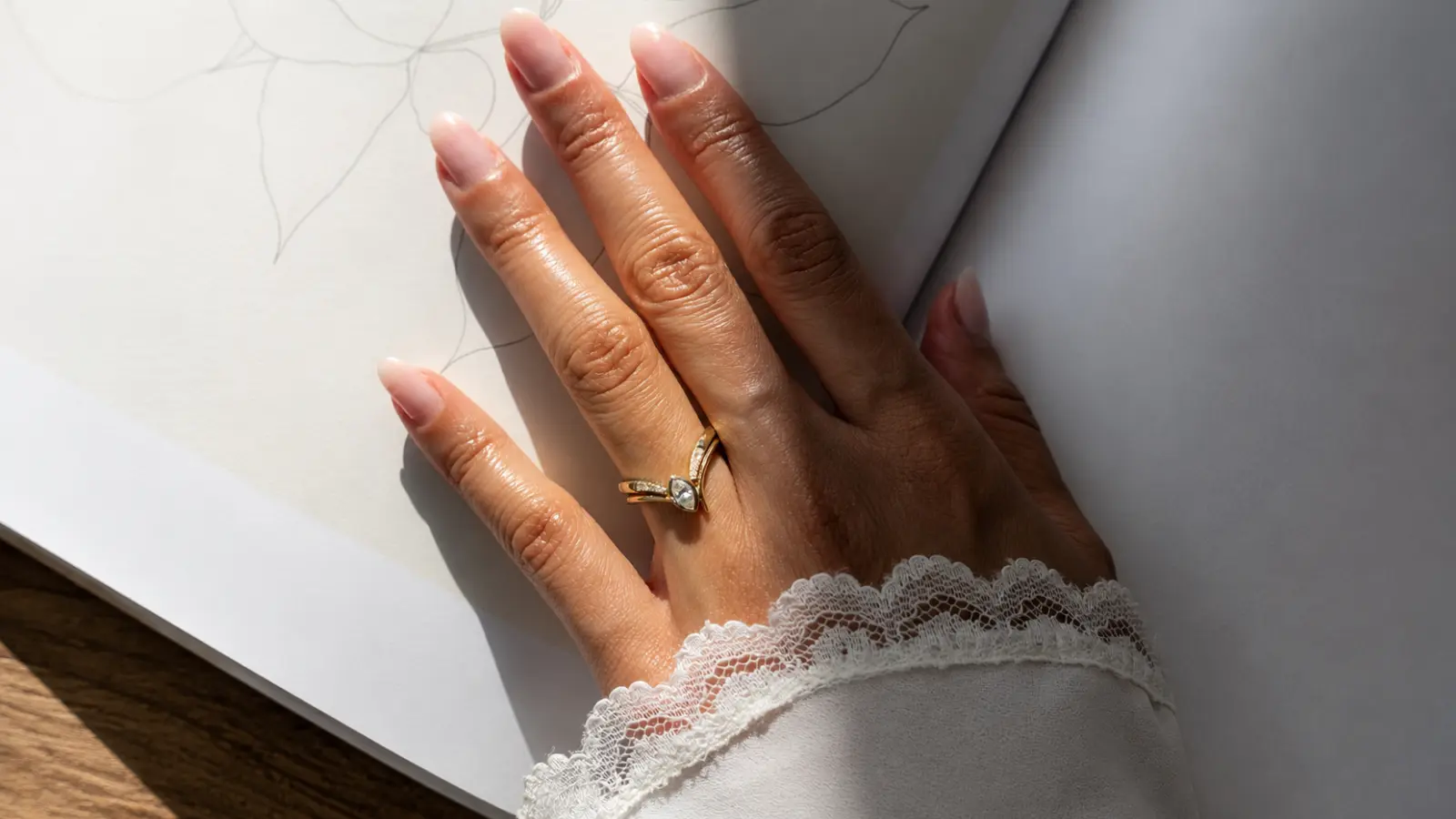
A curved wedding band, also called a contour band, shadow band, or fitted band, is shaped to follow the outline of a specific engagement ring rather than sitting as a straight or uniformly round piece. For a marquise ring, the curve needs to address not just the central oval of the stone but also the pointed ends, and this is where generic curved bands and custom contour bands diverge significantly in their results.
Generic Curved Bands vs. Matched Contour Bands
A generic curved band from a jeweler’s standard inventory is designed to follow the approximate outline of a variety of ring shapes: it curves at the center and straightens toward the sides. For a marquise ring, this curve addresses the central oval but typically leaves small gaps or awkward contact at the pointed ends. Whether those gaps are noticeable depends on the degree of curve, the height of the marquise setting, and how closely the wearer looks. For many rings, a well-chosen generic curved band produces a result that reads as fitted from normal viewing distance even when it is not geometrically flush at the tips.
A matched contour band, made specifically to nest against the exact setting profile of the engagement ring, offers the precise fit that curved wedding bands are designed to create. The jeweler or manufacturer takes the engagement ring’s exact dimensions and creates a band whose curve accounts for every element of the setting, including the height of the prongs, the extension of the points, and the curvature of the shank. The result is a band that sits against the engagement ring as if they were designed to be together, because they were. This is most reliably achieved by purchasing the wedding band from the same bridal collection as the engagement ring, where matched sets are a standard offering.
Curved Bands and Vintage Aesthetics
The marquise cut has a natural affinity with vintage jewelry design. Its history stretches back three centuries, and its elongated, pointed silhouette appears in Art Deco, Edwardian, and Victorian jewelry with regularity. Curved wedding bands with vintage detailing, such as milgrain edges, filigree metalwork, engraved patterns on the shank, or small rose-cut stones, complement this historical resonance in a way that a plain modern band does not.
A milgrain-edged curved band is one of the most consistent performers in the marquise bridal set category. The tiny beaded edge detail is a defining element of antique and vintage jewelry, and it bridges the visual gap between a curved band and a marquise setting that has its own decorative elements without competing with the center stone. For marquise rings with vintage-inspired or antique settings, a milgrain curved band is often the most cohesive choice available without choosing custom wedding rings.
Curved Bands in Different Metals
A curved wedding band does not need to match the engagement ring’s metal exactly, though matching is the most cohesive option. Two-tone contour bands, which use one metal for the main shank and another for an accent or inner layer, can bridge engagement rings in mixed metals or create an intentional contrast that reads as a design choice. Rose gold curved bands paired with white gold marquise rings, or yellow gold curved bands alongside platinum settings, are combinations that appear frequently in editorial wedding photography and that many wearers find more distinctive than a fully matched set.
Open Wedding Bands
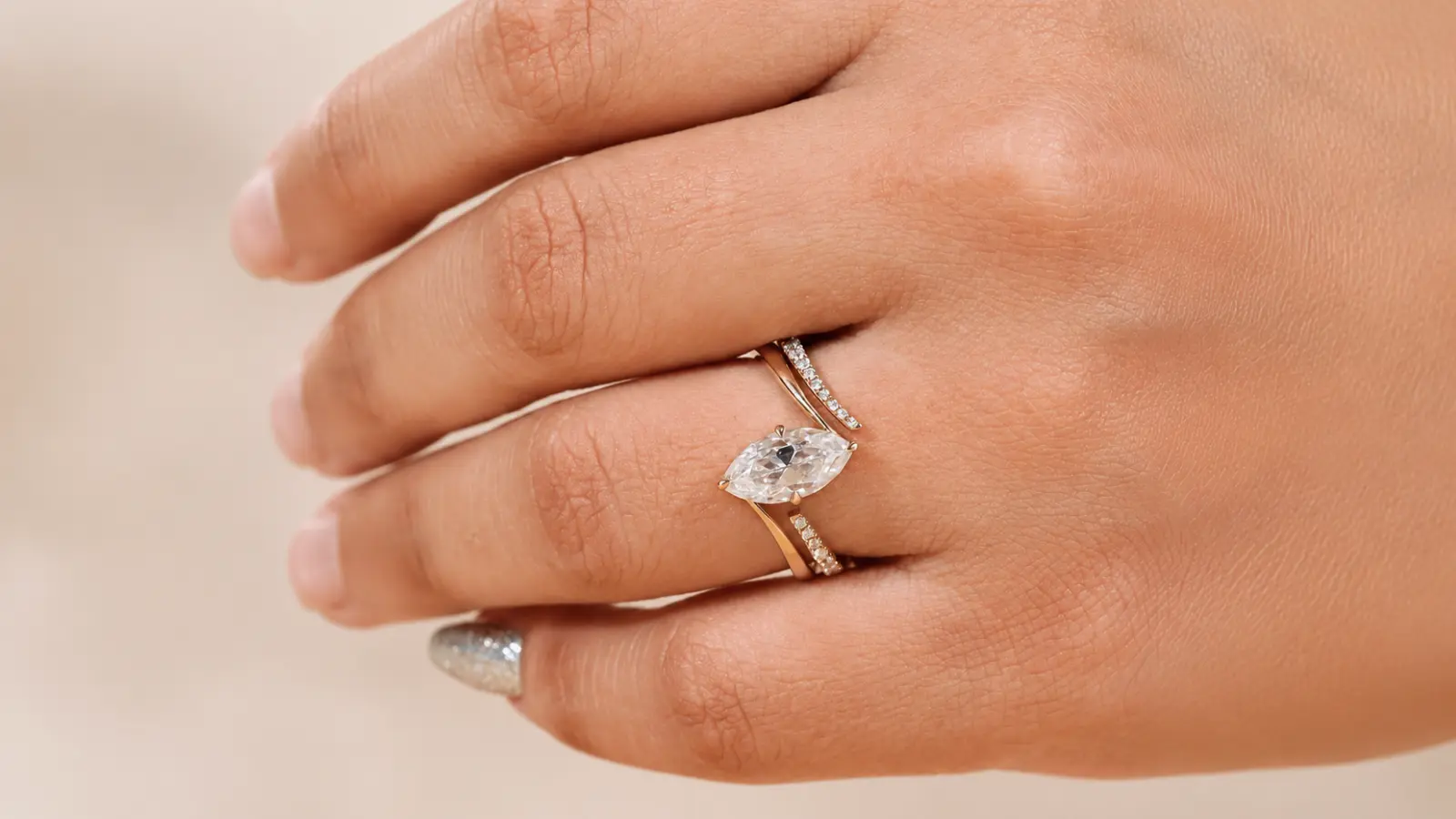
An open wedding band, sometimes called a bypass band, split band, or gap band, has a break or opening at the top that allows the engagement ring’s setting to sit within or beside the gap without contact. The open design sidesteps the marquise fit problem entirely: rather than accommodating the pointed ends of the stone, the band simply does not touch them.
This approach is particularly effective for high-set marquise rings, where the stone is raised several millimeters above the finger on a cathedral or gallery setting. The gap in the open band allows the prongs and base of the marquise setting to pass through visually, and the band sits at finger level while the stone floats above it. The visual effect is airy and modern: the engagement ring is clearly elevated, and the wedding band frames it from below without competing for the same plane.
Design Variations in Open Bands
Open bands for marquise rings come in several distinct interpretations. A simple split band has two tapered ends that separate at the top, clean and minimal, working well in thin profiles where the openness reads as deliberate rather than interrupted. A bypass band has the two ends sweeping past each other rather than simply separating, creating a more dynamic and sculptural effect. Some open bands incorporate stones at the tips, small diamonds or colored stones where the two ends terminate, which adds sparkle at the point where the band’s visual interest is highest.
The most understated interpretation of the open band is a simple 2mm to 3mm band with a narrow gap at the top, often worn in the same metal as the engagement ring. From a normal viewing distance, this reads as a conventional band with a sophisticated detail; closer inspection reveals the gap and the design logic behind it. This version suits wearers who want the benefit of the open design without the band itself drawing attention away from the engagement ring.
What Open Bands Do Not Do
An open band does not protect the points of the marquise stone from lateral impact. Unlike a curved or V-shaped band that provides some physical enclosure around the setting, an open band leaves the pointed ends of the marquise fully exposed. This is not a structural problem, since the engagement ring’s setting and prongs provide the primary protection for the stone, but it is worth noting that the band itself does not add to that protection the way a close-fitting contour band would. For wearers concerned about the pointed ends of their marquise stone, the setting’s prong quality, particularly V-prongs at each tip, matters more than the band style in terms of structural protection.
Marquise Ring Stack Ideas
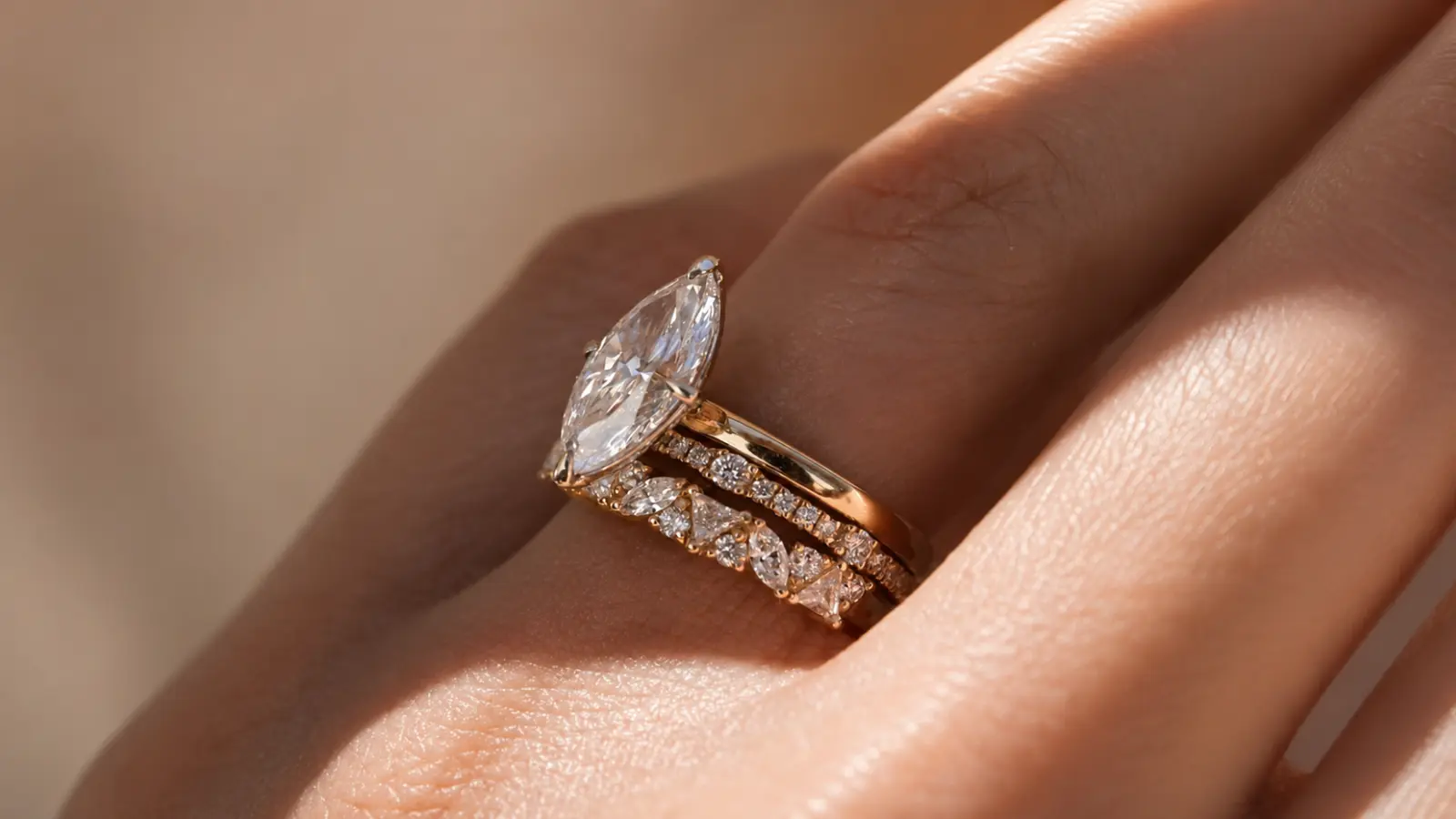
The marquise shape’s elongated silhouette and pointed ends make it one of the more interesting engagement ring shapes to build a stack around, since the stone’s distinctive geometry gives every surrounding band a visual anchor to work with. The stacks that read as most intentional are the ones that treat the marquise’s shape as the organizing principle rather than trying to make it look like a round-stone stack in a different shape.
The Classic Two-Ring Stack
The simplest and most enduring marquise stack is a single curved contour band on one side of the engagement ring, typically below it on the hand toward the fingertip. A matched contour band in the same metal sits cleanly against the setting and creates the fitted bridal set look that has been the standard for matched ring pairs for decades. For wearers who want simplicity and coherence, this two-ring combination is complete: the engagement ring is the clear focal point, and the band frames it without competing.
The Symmetrical Two-Band Stack
Two V-shaped or two curved bands, one on each side of the marquise engagement ring, create a symmetrical frame around the center stone that emphasizes the elongated shape of the marquise by echoing its pointed geometry on both ends. This look works particularly well when the two flanking bands are identical in metal, width, and finish, because the symmetry creates a sense that the entire set was designed as a unit. Asymmetrical flanking bands can also work, but stackable wedding rings require more deliberate styling to read as intentional.
The Vintage-Inspired Stack
A marquise engagement ring with the historical detailing often found in vintage wedding rings, such as milgrain edges, filigree work, or old mine cut diamonds, pairs naturally with a stack that references the same era. A curved band with milgrain edges below the engagement ring, a slim eternity band set with rose-cut or old European-cut diamonds above it, and the marquise solitaire centered between them creates a cohesive vintage-inspired stack where every element belongs to the same design vocabulary. This is the stack that tends to work best for wearers who chose a marquise cut specifically because of its historical resonance.
The Modern Mixed-Metal Stack
A marquise diamond in a platinum or white gold setting, flanked by a rose gold V-shaped band and a slim yellow gold eternity band, is a contemporary stack approach that uses the contrast between metals as a deliberate design choice. The white of the diamond and its white metal setting reads as the neutral center, while the warm metals on each side create warmth and depth without overwhelming the stone. This approach needs to look intentional rather than accidental, which means choosing metals that work together across the full hand rather than just the ring set in isolation.
The Elevated Stack
For high-set marquise rings with stones elevated significantly above the finger, a stack of two or three slim bands worn between the engagement ring and the finger creates a visual base that the elevated marquise sits above. The bands do not touch the setting; they encircle the finger at a lower elevation while the marquise floats above them on its own setting. This creates a layered, architectural effect that only works well with genuinely high-set rings, but it is one of the more visually distinctive marquise stack looks available.
Whichever stack approach you choose, the marquise’s distinctive geometry rewards a deliberate plan more than a piece-by-piece accumulation. For more stacking guidance across different ring shapes, see the how to wear wedding rings.
Fit and Comfort Tips
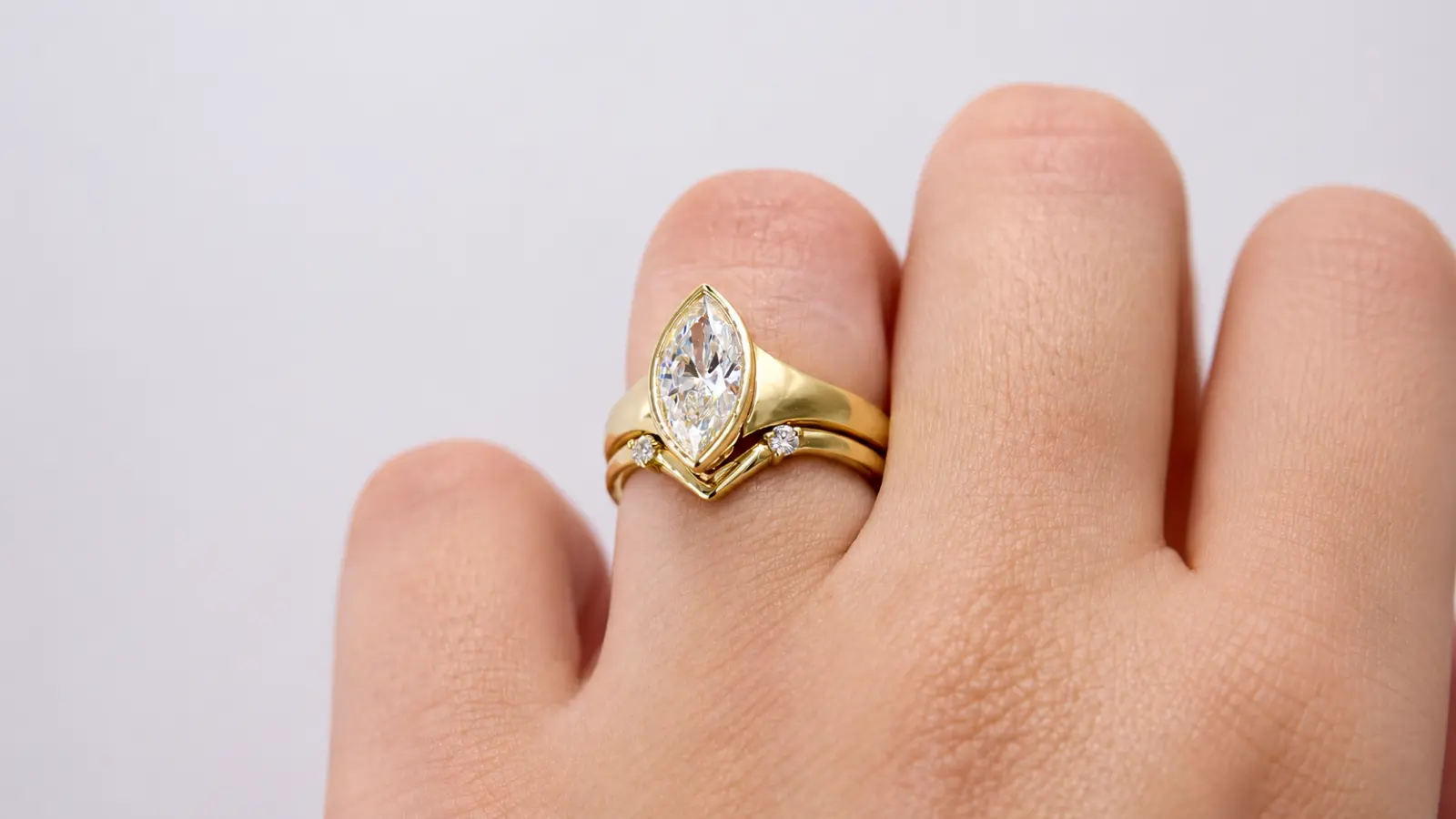
Finding a wedding band that sits correctly with a marquise engagement ring takes more care than the same process with a round stone, and getting the fit right before the wedding, rather than discovering the problem on the day, is worth the time it requires.
Try Before You Commit
Bring the engagement ring to every wedding band appointment. This is the single most important practical step in finding a marquise-compatible band. No photograph or description of a band tells you as much as holding it against the actual ring on the actual hand. What looks like a good match in product photography may gap visibly in person; what looks incompatible in isolation may nest precisely against the actual setting. Many jewelers who specialize in bridal jewelry have demonstration bands in common shapes specifically for this purpose.
When trying bands, look at the ring from above, from the side, and from slightly below the hand, since these are the angles from which the ring will be seen in photographs and in person. A gap that is invisible from above can be prominent from the side; a band that looks well-matched from above can show awkward contact with the setting from a lower angle.
Consider the Setting Profile
The height and overall profile of the marquise setting determines which band styles are actually viable. A low bezel-set marquise, sitting close to the finger, is best served by a contour band made specifically for that setting, since generic curved bands often cannot reach close enough to the bezel’s edge to create a fitted look. A high cathedral solitaire marquise, elevated well above the finger, works with open bands and slim straight bands that would leave awkward gaps against a lower setting.
The width of the ring’s shank at the base also affects band fit. A tapered shank, wider at the top and narrowing as it curves under the finger, means that a curved wedding band needs to be designed to match that taper, not just the stone’s outline. Many contour bands are designed for uniform-width shanks; a tapered shank engagement ring may need a custom band to achieve a flush fit all the way around.
Account for the Points When Sizing
Marquise ring points that extend past the edges of the setting profile can catch on curved or V-shaped bands while putting the rings on or taking them off. If the points extend significantly outward, test the combination of rings for ease of wear by sliding both rings on and off together, since that is typically how they will be managed daily. Some wearers find that the engagement ring and the wedding band need to be removed separately; others find that the shape of the bands allows both to slide as a unit. Know which situation applies before committing to a band style.
The Sizing and Width Relationship
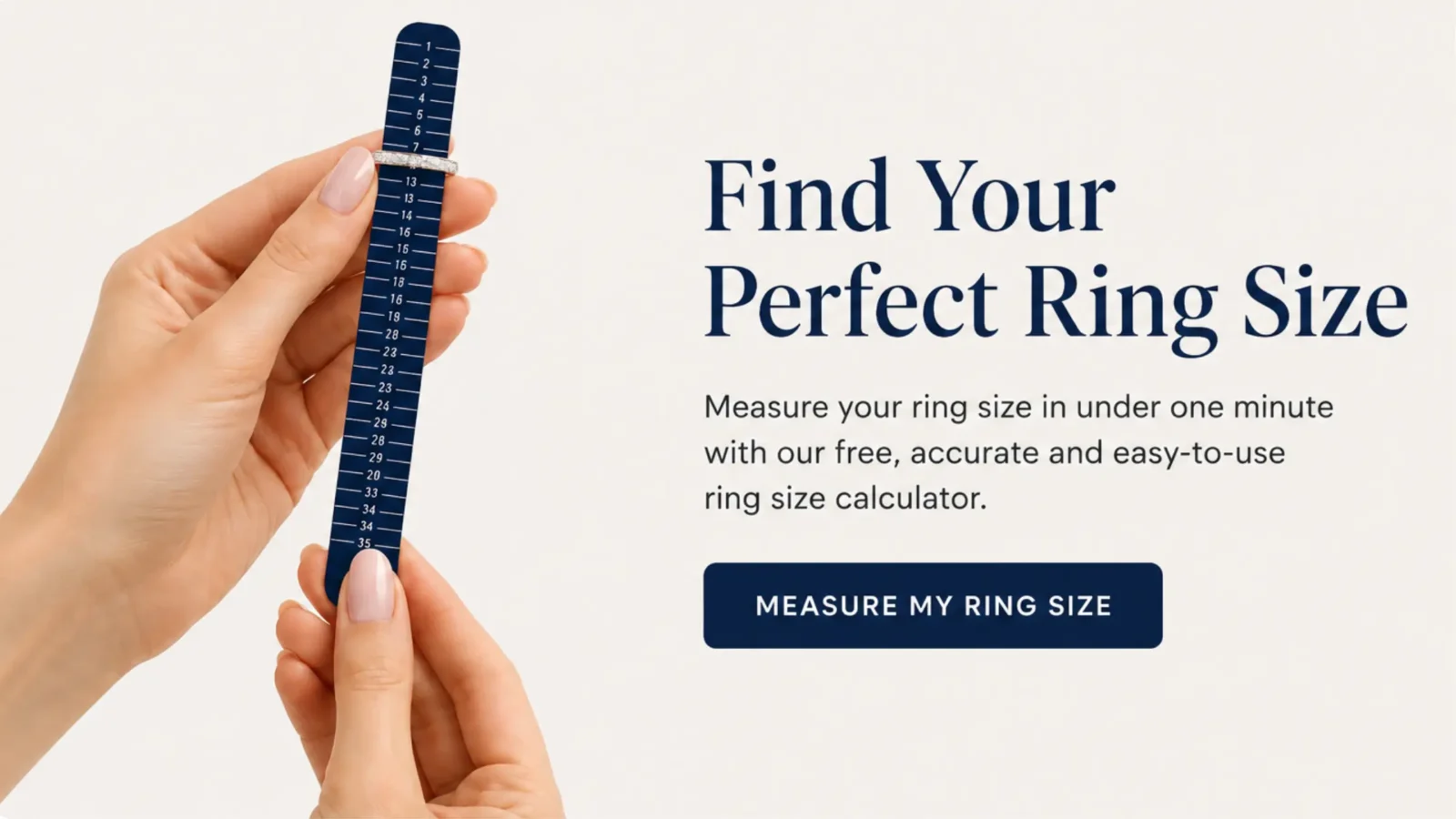
Curved and V-shaped bands sometimes need to be sized slightly differently from a straight band of the same nominal size, because the curvature changes how the ring sits against the finger. A contour band that curves significantly may need to be half a size larger than a straight band of the same intended fit, because the curve lifts the band slightly away from the finger at the sides. Most jewelers who regularly work with shaped bands account for this, but checking a reliable wedding ring size guide is still useful when sizing a shaped wedding band.
Soldering as a Permanent Solution
Some wearers choose to have the engagement ring and wedding band soldered together after the wedding, welded at the point of contact into a single piece that cannot shift independently. Soldering eliminates the fit and gap problem permanently: the two rings become one ring, and they sit exactly as they did when soldered for as long as the solder holds. The trade-off is that soldered rings cannot be worn separately, cannot be resized as easily, and require unsoldering and resoldering if the settings need significant work. For wearers who are confident they will wear the rings together long-term and whose ring size is stable, soldering is a practical option. For others, a well-fitted contour or V-band that sits correctly without soldering is the more flexible choice.
Marquise Engagement Ring Wedding Band Inspiration
Wedding bands for marquise engagement rings can create completely different looks depending on the shape, setting, and style you choose. Explore our inspiration board for curved bands, V-shaped designs, open bands, vintage styles, diamond stacks, and elegant marquise ring combinations.
Choosing a Wedding Band That Complements Your Marquise Ring
The best wedding band for a marquise engagement ring is not simply the one that removes every gap or follows every line perfectly. It is the band that understands the shape you already chose — highlighting the length, elegance, and distinctive points that make a marquise ring unique.
Whether you choose a curved band, a V-shaped design, an open style, or a carefully balanced stack, the right pairing should make your engagement ring feel more complete without hiding the details that made you love it. A wedding band should not fight the shape of your ring — it should become the piece that makes the entire design feel intentional.
Frequently asked questions (FAQ)
What wedding band looks best with a marquise engagement ring?
The best wedding band for a marquise engagement ring is one that works with the stone’s elongated shape and pointed ends. Curved bands, V-shaped bands, and open bands are popular choices because they are designed around the marquise silhouette instead of forcing a straight band to fit. The best option depends on the ring setting, how much space exists around the points, and whether you prefer a seamless or more dramatic look.
Does a marquise engagement ring need a curved wedding band?
A marquise engagement ring does not always need a curved wedding band, but many marquise rings benefit from a shaped design. Because the stone has two pointed ends, a standard straight band can sometimes leave visible gaps or sit awkwardly against the setting. Curved, contour, or custom bands help follow the shape of the ring and create a more intentional fit.
Is a V-shaped wedding band good for a marquise ring?
Yes. A V-shaped wedding band can be one of the strongest pairings for a marquise engagement ring because the chevron shape naturally follows the pointed silhouette of the stone. The V shape can frame the marquise, highlight its length, and create a balanced stack. The exact angle of the band should match the proportions of the engagement ring for the best result.
Can you wear a straight wedding band with a marquise engagement ring?
Yes, a straight wedding band can work with a marquise engagement ring, especially with higher settings where the band can sit underneath the stone. However, some straight bands create a visible gap near the pointed ends. Some people like this separated look, while others prefer curved, V-shaped, or custom bands for a closer fit.
How do you protect the points on a marquise engagement ring?
The pointed ends of a marquise engagement ring are usually protected by the ring setting itself, especially with secure tip prongs. Choosing a wedding band that fits properly is also important because a poorly matched band can create unnecessary pressure against the points. A well-designed pairing should frame the marquise shape without pushing against the stone.
What mistakes should you avoid when choosing a wedding band for a marquise ring?
Common mistakes include choosing a band without trying it next to the engagement ring, ignoring the height of the setting, forcing a straight band to sit flush when it does not naturally fit, or choosing a shaped band that does not match the marquise proportions. The best wedding band should enhance the unique shape of the stone instead of hiding or fighting against it.